



Abstract
For years, U.S. prison systems have struggled to staff their prison officer ranks. As such, many agencies have increased advertisements and incentives to specific populations of prospective employees. Particularly, military service member and veteran applicants are highly valued and often qualify for preferential hiring. Thus, it is important to evaluate the assumption that these individuals have unique skills and attributes that set them apart from their non-military background counterparts. Using a sample of newly hired U.S. prison officers (n = 673), this research compares officers with and without a military background on their self-efficacy related to teamwork, leadership, and interpersonal skills. Findings indicate that prison officers with military backgrounds have significantly higher self-efficacy in their teamwork, leadership, and interpersonal skills, controlling for relevant factors. Future research should expand the scope of inquiry into prison officers with military backgrounds, who now comprise up to 35% of the officer workforce in some jurisdictions.
Understaffing has been a serious issue in U.S. correctional institutions for decades, with staff vacancy rates between 20% and 50% becoming commonplace (Santo & Neff, 2020). In Texas, for example (the largest state correctional system in the United States), more than 40% of prison officers left their positions in 2021 (Collier, 2022). The alarming rate of prison officers quitting their positions has led corrections stakeholders to ask two key questions: (a) Why are so many officers quitting and (b) who should be hired to take their places? Although decades of research have focused on answering the former question (Doweden & Tellier, 2004; Udechukwu et al., 2007; Vickovic et al., 2022), much less attention has been paid to the latter (Burton et al., 2022, 2023a, 2024b).
Due to the struggles encountered with staffing prison officers, corrections departments have increased hiring initiatives targeting individuals they believe will be ideally suited to work in a prison environment: individuals with military backgrounds. Accordingly, veterans have been recruited to fill prison officer positions on the basis of their specialized training and distinct skillsets and on the perception that they are well equipped to thrive in a prison environment (California Department of Corrections and Rehabilitation, 2024; Federal Bureau of Prisons, 2021; Michigan Department of Corrections, 2024; Montgomery County Maryland, 2024). The increase in targeted recruitment efforts is noteworthy, with “Veterans’ Preference” initiatives resulting in an estimated 15% to 35% of the U.S. prison officer workforce possessing some form of military experience (California Department of Corrections and Rehabilitation, 2024; Federal Bureau of Prisons, 2021; Kipper, 2018; Logan et al., 2022; Michigan Department of Corrections, 2024; Montgomery County Maryland, 2024).
As state departments of correction continue to recruit and hire officers with military backgrounds, a key empirical question becomes whether these individuals possess measurably higher levels of relevant prison work skills compared to officers without military backgrounds prior to training or beginning the job. In other words, are individuals who embark on a prison officer career a monolithic group? Or, do some individuals, such as those with military backgrounds, clearly differ in ways that are beneficial to succeeding in a prison work environment?. This study uses survey data from prison officer trainees (n = 673) across three states to examine whether officers with military experience have greater levels of self-efficacy (i.e., confidence) in their teamwork, leadership, and interpersonal skills than their non-military background counterparts. Evaluating these possibilities will begin to quantitatively unpack characteristics of officers state corrections departments are getting for their efforts recruiting and hiring individuals with military backgrounds.
Veterans’ Preference and Hiring Initiatives in America
Although an estimated 6% to 7% of the U.S. general working population either is serving or has served in the military, various hiring initiatives have resulted in greater rates of service members in public service-related occupations (e.g., 35% of some state prison workforces have prior military experience) (Hylton, 2021; Schafer et al., 2015). Several state and federal government agencies maintain a “Veterans’ Preference” by which veterans and service members are hired over candidates with similar qualifications (Federal Emergency Management Agency [FEMA], 2024; Montgomery County Maryland, 2024; U.S. Office of Personnel Management, n.d.). Four states take “Veterans’ Preference” one step further—Massachusetts, New Jersey, South Dakota, and Pennsylvania—offering what is called an “absolute preference” which “gives veteran applicants a bump to the front of the hiring line even if other, non-veteran candidates are more qualified” (Brown, 2019). Other privileges of veteran status can include guaranteed interviews, credit toward annual leave, and paid military leave if they are serving in the National Guard (Michigan Department of Corrections, 2024).
In addition to the preferential hiring of veterans, other initiatives targeting veterans and service members are used by U.S. prison systems. Specifically, as of 2018, more than 70% of states report that they actively target retired military personnel networks to recruit new prison officers (Burton et al., 2018). Furthermore, some state veterans’ commissions partner with first responder agencies when hosting hiring events to target service members (Texas Veterans Commission, 2022). Likewise, various cities have postings for police, fire, and emergency medical technician positions dedicated to recruiting service members and veterans for open jobs (City of Austin, n.d.).
Considering employment rates of veterans and service members, it is clear that veterans’ preference practices and hiring initiatives have led to increased placements in first responder positions. Employment estimates for first responders in 2014 indicated approximately 18.6% of firefighters and 10% of emergency medical technicians were veterans who had served on active duty (Shafer et al., 2015). Furthermore, approximately 20% to 30% of police officers are military-affiliated (Lewis & Pathak, 2014; Shafer et al., 2015). Overall, this indicates that veterans serve as first responders at a rate approximately 3 times higher than the general workforce.
Likewise, departments of correction have long sought military veterans to fill their ranks.
The Federal Bureau of Prisons (2021) and various state departments of correction actively support the hiring of military veterans for a variety of rolls including prison officers and counselors (Burton et al., 2022; Ericson, 2021; State of Maine Department of Corrections, 2022). Furthermore, the private prison company CoreCivic “has been recognized as a Military Friendly Employer since 2007 for its commitment to hiring and recruiting veterans who are transitioning out of the military” (CoreCivic, 2021, para. 5). Today, over 35% of the Federal Bureau of Prisons’ (2023) workforce possess military experience, and veterans comprise approximately 15% to 18% of corrections staff is some states (Ericson, 2021; State of Maine Department of Corrections, 2022).
The Case for Hiring Veterans
The primary rationale for prison systems to hire former or reserve military personnel is that their specialized training and unique skillsets will likely suit them well in a prison environment (Busse, 2023; U.S. Department of Veterans Affairs, 2021). Much of the scholarship supporting these claims comes from the armed forces and military science literatures. Research in these fields of study indicates that veterans are acutely experienced with discontinuous or diverse work settings, have strong team-building skills, and demonstrate increased organizational commitment (Busse, 2023; Institute for Veterans and Military Families at Syracuse University (IVMF), 2016). These skills are largely fostered through general military culture and the advanced training that military personnel receive (Redmond et al., 2015).
Although service members develop desirable skills and attributes through advanced training, several potential negative effects of military service could hinder success with prison work. Compared to civilians, veterans are at increased risk of developing post-traumatic stress disorder (PTSD) and/or traumatic brain injury (TBI) (Aldwin et al., 2018; Dolan et al., 2012; Loignon et al., 2020). More specifically, an estimated 29% of all Operation Iraqi Freedom and Enduring Freedom veterans experience PTSD at some point in their lives; however, for those who experienced combat, the risk may increase three-fold (Department of Veterans Affairs, 2025). Veterans also are at an increased risk of experiencing other mental health challenges such as anger, substance misuse, sleep problems, and depression (Department of Veterans Affairs, 2025). Due to the stressful and unpredictable nature of the prison environment, there is reason to believe these issues could be exacerbated.
Furthermore, research on prison officers with military experience indicates that they are less supportive of rehabilitative practices and ideals, which may contradict one of the primary goals of prisons (Burton et al., 2023b). Moreover, prison officers with military backgrounds might be at an increased risk of using force in the course of their work. Although work examining this possibility is limited, research finds that police officers with military experience are involved in more use of force incidents (Escobedo & Gordon, 2024; Gonzalez et al., 2019; Morin & Mercer, 2017) and have higher rates of citizen complaints (Henson et al., 2010; Terrill & Ingram, 2016; Terrill & Paoline, 2015) when compared with their non-military affiliated counterparts.
To fully understand how military experience may benefit prison work, it is important to examine how members of the U.S. Armed Forces develop their skillsets in preparation for service. Although training and preparation vary by branch (e.g., Army, Air Force), individuals entering the military generally receive 6 to 12 weeks of basic training which consists of a variety of topics such as teamwork, leadership, self-discipline, marksmanship, and problem solving, among other related topics (Smith, 2012). After basic training is completed, advanced individual training (AIT) is provided to each service member based on their chosen Military Occupational Specialty (MOS). Across all military branches, there are more than 10,000 different MOS options, with varying skills, requirements, and levels of responsibility (Jackson, 2022). This phase of training lasts between 4 and 53 weeks depending on the specialty and branch, and it consists of classroom and hands-on learning (Jackson, 2022; U.S. Army, n.d.). Overall, basic training and AIT teach and reinforce positive traits such as trustworthiness, ingenuity, resilience, communication, and diversity competencies (IVMF, 2016; Jeffers, 2018; U.S. Department of Veterans Affairs, 2021).
Although there could be a selection effect, meaning that individuals opting into and being selected for military service already hold these desirable skills (Soeters et al., 2006), those with military experience still possess qualities that are beneficial in U.S. prison work, regardless of whether they were present before service or not. Overall, these individuals are prepared for the multifaceted, unpredictable work that is commonplace in U.S. prisons (Ferdik & Smith, 2017). Prisons comprise a diverse social milieu, with ethnic, cultural, and religious differences abound (Berg & DeLisi, 2006). Prison officers are expected to settle disputes between those in their custody and to anticipate situations that may result in violence and other forms of misconduct (Infante et al., 2023). Responding to such disputes requires cultural competence, leadership, and interpersonal skills, among other traits (Arnold, 2017). Officers must also use teamwork to effectively collaborate with each other to conduct their duties; this is especially true for tactical teams (Kakuk, 2020).
Due to understaffing, prison officers are forced to perform these challenging tasks in organizations that have historically had poor culture and climate (Camp et al., 2001). This is particularly salient when considering that officers often rely on building relationships with coworkers to adapt to the stress that accompanies long shifts and little opportunity for respite (Miller et al., 2022a). Officers often consider these relationships their lifelines, and they contribute to retention and burnout prevention for those in the role (Minor et al., 2011; Worley et al., 2019). Officers must use leadership skills to not only ensure compliance with their requests from those serving time, but also to motivate fellow officers to persevere when faced with sudden challenges (e.g., riots during periods of understaffing) within the prison (Martin et al., 2012).
Although prison officers are the “front-line bureaucrats of the prison institution” who enforce rules and maintain order, they are also responsible for performing various administrative tasks, such as contraband search and seizure, dispute resolution, head counts, transport of incarcerated persons, and paperwork, among other tasks (Burton et al., 2018; Ferdik & Smith, 2017 p. 1). All of these tasks are required to take place in the unique setting of prisons, which are often dangerous environments mired by psycho-social, mental, and physical health risks (Ferdik & Smith, 2017). Considering these challenges and the diversity of skills required, it is clear why federal and state departments attempt to target certain individuals to work in their prisons. Thus, in this context, possessing a military background might signal that these individuals possess skill sets that equip them well to manage rule enforcement, stress, burnout, injury, long hours, understaffing, and co-worker relations in a dynamic prison work environment. This study empirically explores such possibilities.
The Current Study
Within the past decade, criminal justice scholars have begun studying the intersection of service members and military veterans and the criminal justice system. For example, in an international context, research has focused on veterans and the path they take to become prison officers (Ricciardelli & Martin, 2017; Turner & Moran, 2023), the prevalence of military experience among prison officers (Moran & Turner, 2021), and the impact of military service on prison-workplace culture (Moran & Turner, 2022). Within the U.S. prison system, the existing work focuses on: (1) veterans’ interactions with the criminal justice system as justice-involved individuals (e.g., Baldwin & Hartley, 2022; Brooke & Gau, 2018; Greenberg et al., 2007; Hartley & Baldwin, 2016; Tsai et al., 2016; White et al., 2012) and (2) veterans as law enforcement officers (e.g., Campbell & Campbell, 2010; Escobedo & Gordon, 2024; Gau et al., 2021; Gonzalez et al., 2019; Morin & Mercer, 2017; Oberfield, 2012; Patterson, 2002; Webster, 2012). More recently, Logan and colleagues (2022, 2023) explored the role of veteran status on prison workplace outcomes, such as burnout. Similarly, Higgins and Swartz (2022) examined the motivations for pursuing and staying in prison officer positions, finding military service to be a common factor among the officers. In line with this recent scholarship, this study examines the relationship between military backgrounds and newly hired officers’ self-efficacy (i.e., confidence) related to teamwork, leadership, and interpersonal skills.
Drawing on the related research and the primary rationales given for hiring individuals with military background to work in prison (e.g., their prior training and experiences), the following three hypotheses guide the analyses:
Given the importance of these skills in working in a prison environment, it is critical to assess how confident newly hired prison officers feel in carrying out these skills and whether differences exist between officers with and without military backgrounds.
Methods
Data Collection
Data were collected as part of a larger study investigating the overall impact of prison officer training on officers’ attitudes toward incarcerated people, their thoughts on rehabilitative and custodial roles, and their confidence in job-related tasks (Burton et al., 2022, 2023; Miller, Burton, et al., 2022a, 2022b, 2023b) Newly hired pre-service prison officers (i.e., officers that have not undergone academy basic training) from three states were recruited to participate in the survey that took place from 2017 to 2018. Prior to data collection, the researchers received permission from their institutional review board, [University of Cincinnati IRB 2017–3493], and were provided with letters of support from each state’s department of correction to conduct the research. A total of 764 trainees were eligible to participate in the survey request. In total, 673 of the 764 trainees sampled returned a completed survey, a response rate of 81.1%.
Sample
The sample drawn for this study is unique in that it consists solely of pre-service prison officers (hired but not yet trained). In other words, it reflects the types of officers that these three states had recently recruited and hired to join their prison officer ranks. Utilizing a pre-service sample is especially beneficial for this study’s research questions, as Veterans’ Preference practices in corrections agencies are based on the idea that military service members possess unique skills that are beneficial to prison work prior to academy training or any other formal work assignment. Thus, the sample allows us to assess how prior military experience is related to the outcome variables in newly hired pre-service officers as opposed to active-duty officers (i.e., officers that have completed basic training and have spent time in their posts), which virtually all research relies on when studying prison officers (Butler et al., 2019).
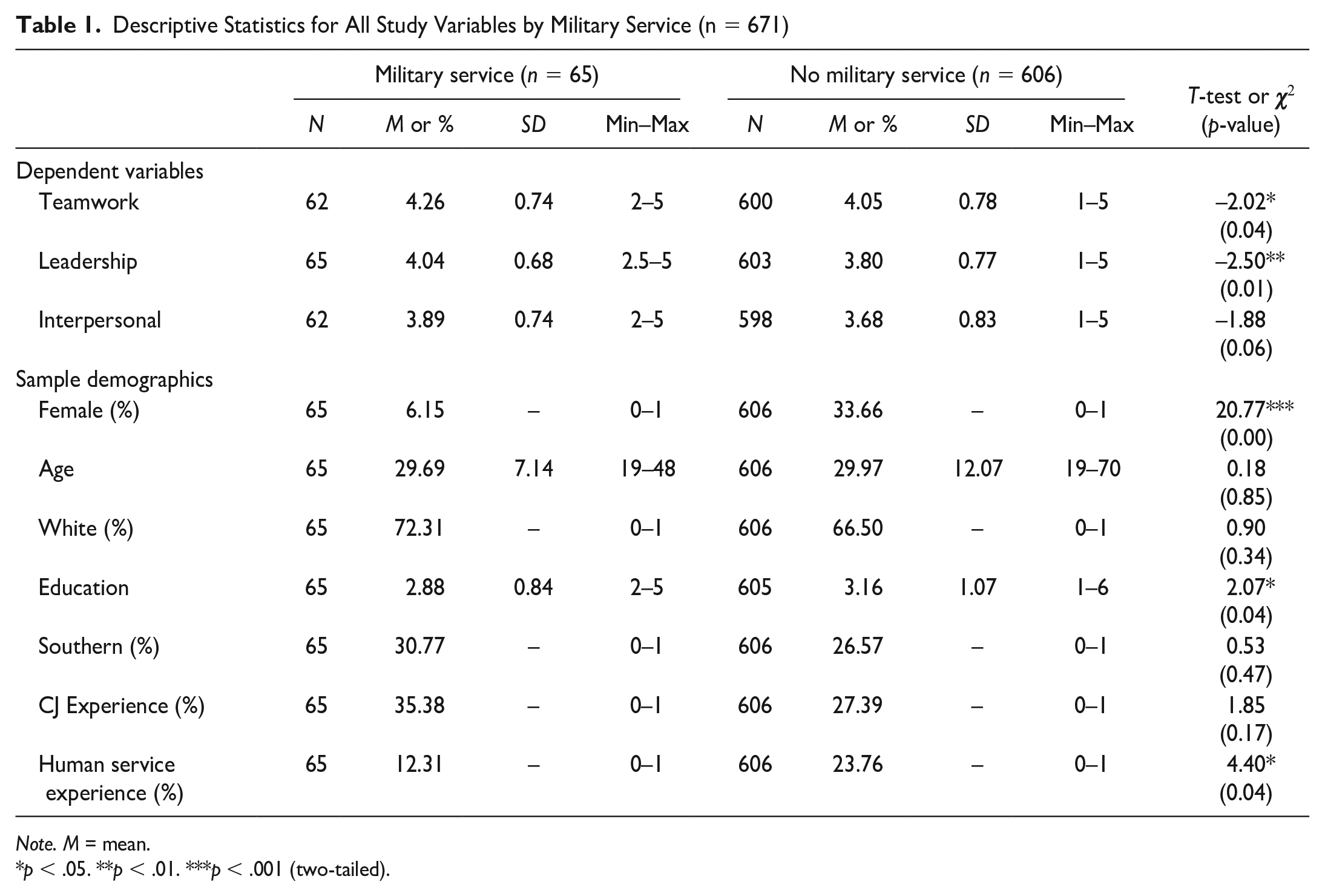
Table 1 presents the demographic characteristics of the sample and reports whether any significant differences exist between officers with and without military experience. Considering those with military experience, 6.15% identified as female and 72.31% were White. The average age was 29.69 (SD = 7.14). Almost one-third of the sample (30.77%) were from a Southern state. Regarding previous employment experiences, 35.38% reported prior criminal justice occupations (e.g., police officer) and 12.31% reported prior working experiences in human service focused occupations (e.g., nurse).
Descriptive Statistics for All Study Variables by Military Service (n = 671)
Note. M = mean.
p < .05. **p < .01. ***p < .001 (two-tailed).
Turning to those in the sample without military experience, 33.66% identified as female and 66.50% as White. The average age was 29.97 (SD = 12.07). Considering location, 26.57% were from a Southern state. Regarding previous employment, 27.39% reported prior criminal justice work experiences and 23.76% reported having worked in human service-oriented occupation. The groups differed significantly with regard to their sex (p < .001) and their experiences working in human service occupations (p < .05).
Primary Independent Variable: Military Service
Military Service is a dichotomous measure created by asking participants if they had ever served in the United States Armed Forces. Of the 671 individuals who responded to the question, 65 (9.7%) indicated they had some form of military experience. Thus, the variable was coded such that 1 = has prior military experience and 0 = does not have prior military experience.
Control Variables
The analyses control for a variety of demographic and occupational factors that might confound the relationship between military experience and self-efficacy. Specifically, Sex (1 = Female) and race (1 = White) are included and coded dichotomously, and Age (measured continuously in years) is controlled for as well. In addition, Education is measured as ordinally, with options ranging from 1 = “Some High School” to 6 = “Graduate School.” Location is measured dichotomously, capturing whether the officers in the sample are in training in a Southern or Midwestern state (1 = Southern). Finally, employment history is captured using two binary variables 1 = CJ Experience and 1 = Human Service Experience. These variables were created from the following question “What were your prior three occupations?” Two coders assessed the responses, and any respondents reporting a previous criminal justice job (e.g., police officers and probation officers) were coded as a 1 for CJ Experience and those without such experience were coded as a 0. For Human Service Experience, anyone reporting previous employment in a human service focused occupation (e.g., mental health counselor, nurse, social worker) were coded as a 1 and those without such experience were coded as a 0. See Table 1 for the descriptive statistics of all the variables in the analyses.
Dependent Variables
The dependent variables in this study are the newly hired officers’ self-efficacy in performing tasks related to teamwork, leadership, and interpersonal skills. Self-efficacy is often used to describe an individual’s belief in their ability to perform a specific task (Bandura, 1977). Within the last two decades, self-efficacy has received considerable attention as a variable of interest within prison officer research. Self-efficacy is associated with a robust set of outcomes, including prison officers’ job performance, secondary trauma, and post-traumatic stress symptoms (Gayle, 2020; Jaegers et al., 2019), depression (Liu et al., 2013), duration of employment (Compton et al., 2023; Morgan, 2021), engagement in health-promoting behaviors (Godin et al., 2001; Ha & Choi, 2014), response to overdose incidents (Anthony-North et al., 2018), job commitment and satisfaction (Law & Guo, 2016; Rawa, 1995), adaptation to prison work (Rawa, 1995), and emotional intelligence (Harper, 2016).
Importantly, self-efficacy leads to more than just a perception of one’s confidence—it has been linked to actual behaviors and performance (Mustafa et al., 2019; Tziner et al., 2007). Moreover, another salient aspect of self-efficacy is that those with higher levels of it for a skillset or task are more likely to persist and continue executing the skill or task even when it increases in difficulty (Luneburg, 2011). These individuals are also more likely to seek help when needed (Williams & Takaku, 2011) and to adhere to protocols (Clark et al., 2020). These findings have led scholars to assess self-efficacy in both prison officers and military cadets (Bekesiene, 2023; Burton et al., 2024a; Miller et al., 2023; Talpade et al., 2012; Fosse et al., 2016; Myrseth et al., 2018).
This study draws from three self-efficacy measures adapted from the CAPA Confidence Inventory (Betz & Borgen, 2010), a widely used vocational psychology assessment. All the items that comprise the dependent variables are measured on 5-point Likert-type scales, where 1 = no confidence, 2 = very little confidence, 3 = moderate confidence, 4 = much confidence, 5 = complete confidence. The three outcome variables are described below.
Teamwork Self-Efficacy
The dependent variable Teamwork was created using a scale that measures confidence in working with others. The items used to form the scale are (1) “contributing ideas to a work team,” (2) “helping a group of people to cooperate better,” and (3) “developing cooperative working relationships with others.” The scale has high reliability (α = .91), with a mean of 4.07 and a range of 1 to 5. Higher values on the scale indicate higher self-efficacy in performing these tasks.
Leadership Self-Efficacy
The dependent variable Leadership was created using a scale that focuses on one’s confidence in their ability to motivate people. The items used to form the scale are (1) “providing the leadership to motivate people,” (2) “inspiring others through leadership,” (3) “motivating others to follow leadership,” and (4) “motivating others to tackle challenging assignments.” The scale has high reliability (α = .91), with a mean of 3.82 and a range of 1 to 5. Higher values on the scale indicate higher self-efficacy in performing these tasks.
Interpersonal Self-Efficacy
The dependent variable Interpersonal was created using a scale that focuses on conflict resolution and individual differences—such as race, gender, religion, and culture—that prison officers face daily within their job capacity. The items used to form the scale are (1) “reducing or resolving conflict among group members,” (2) “promoting racial harmony,” (3) “developing new views about gender roles,” (4) “understanding religious differences,” and (5) “recognizing cultural differences.” The scale has high reliability (α = .87), with a mean of 3.70 and a range of 1 to 5. Higher values on the scale indicate higher self-efficacy in performing these tasks.
Analytic Strategy
The primary analytic strategy is to assess whether newly hired prison officers with military backgrounds differ in their teamwork, leadership, and interpersonal skills self-efficacy levels compared with their nonmilitary background counterparts. Our analyses proceed in the following way: First, the percentage of officers reporting either “much confidence” or “complete confidence” on each item that comprise the outcome variable scales are compared among the two groups. Specifically, Z-score tests are used to assess if the proportion of officers with military backgrounds differ than those without a miliary background in their level of confidence for each item. Next, OLS regression models are estimated to explore whether prior military experience is associated with the outcome variables, net of the control variables. These analyses allow for a test of the study’s three research hypotheses. As a prelude to discussion the OLS results, OLS regression assumptions were assessed and did not appear to be violated. Moreover, multicollinearity was not found in the models. Variance inflation factors (VIF) ranged from 1.02 to 1.32 (M = 1.13) and no two independent variables shared a correlation above 0.462. Thus, multicollinearity was not present in the models (Burton, 2021).
Results
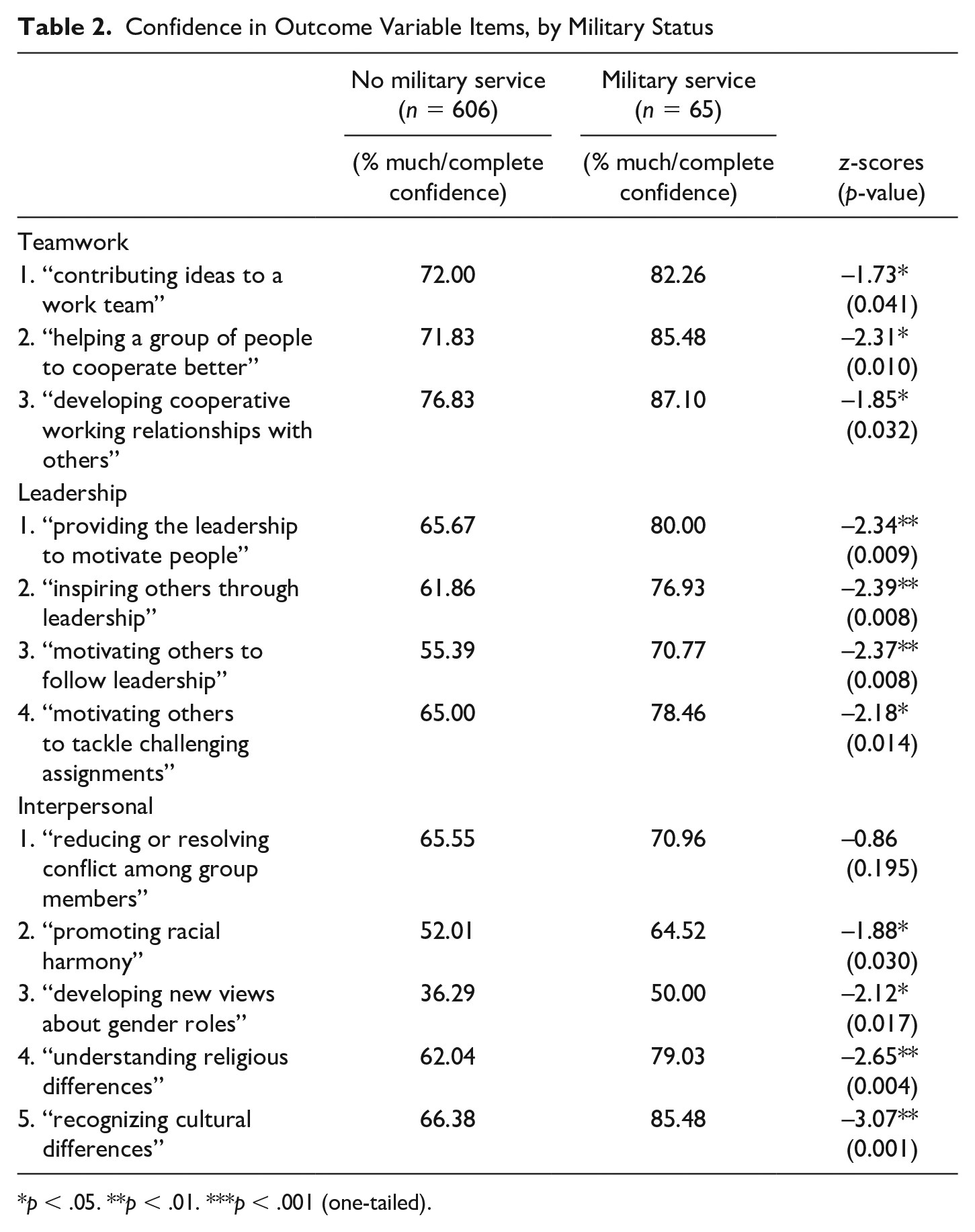
Are newly hired prison officers with military backgrounds more confident in executing tasks related to teamwork, leadership, and interpersonal skills than officers without such backgrounds? Table 2 reveals they are. As shown, the percentage of officers with military backgrounds reporting “much confidence/complete confidence” for all the items listed is higher than for officers without military backgrounds. In fact, the smallest difference between any of the items was 5.4% (Interpersonal, Item 1) and the largest was 19.1% (Interpersonal, Item 5). The average difference between all the items is 13.3% (in favor of officers with military backgrounds possessing more confidence). Z-scores were calculated to estimate whether the proportion of officers reporting “much/complete confidence” differed significantly between the two groups. In total, 11 of the 12 Z-scores were significant, indicating that officers with military backgrounds are more confident in performing tasks related to teamwork, leadership, and interpersonal skills.
Confidence in Outcome Variable Items, by Military Status
p < .05. **p < .01. ***p < .001 (one-tailed).
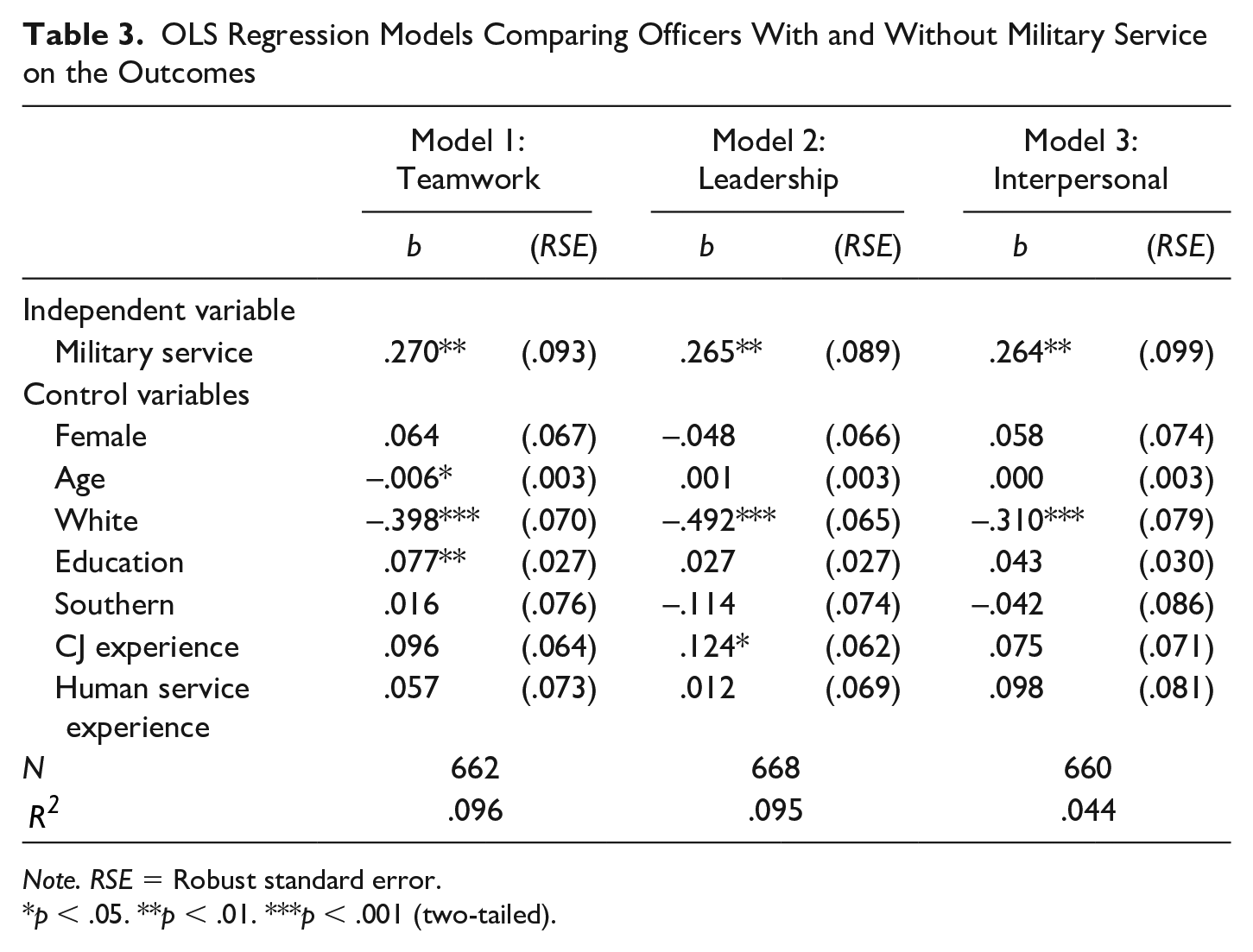
Turning to Table 3, the study’s three hypotheses are tested. Three OLS regression models were estimated for each of the outcome variables. As shown, the coefficient for the military service variable is positive and significant (p < .01) in each model, net of the control variables. These results demonstrate support for all three hypotheses: officers with prior military experience have significantly higher levels of self-efficacy in teamwork (Hypothesis 1), leadership (Hypothesis 2), and interpersonal (Hypothesis 3) skills. Several other findings emerged that warrant mentioning: First, newly hired White prison officers were significantly less confident in teamwork, leadership, and interpersonal skills compared with their non-White counterparts. Second, those with higher levels of education were significantly more likely to espouse greater levels of confidence in teamwork skills. Third, those with previous criminal justice experience had significantly more confidence in their leadership skills compared with those without such occupational backgrounds. The most variation explained by the independent and control variables was in the teamwork model (R-squared = .096).
OLS Regression Models Comparing Officers With and Without Military Service on the Outcomes
Note. RSE = Robust standard error.
p < .05. **p < .01. ***p < .001 (two-tailed).
Discussion
A host of issues in the U.S. corrections industry over the past few decades has led departments of correction to target and preferentially hire service members and veterans because of the skills they possess. The primary issue facing U.S. corrections institutions is unprecedented understaffing with up to 50% vacancy rates in some facilities (Santo & Neff, 2020). Coupled with the staffing-crisis, corrections work has been cited as a dangerous, unpredictable work environment and requires officers to possess countless competencies (Ferdik & Smith, 2017). Considering the teamwork, self-discipline, leadership, problem solving, and other interpersonal skills service members receive in preparation for military duty, it is not surprising that more than 70% of state corrections agencies heavily target veterans (Burton et al., 2018). This project examined whether prison officers with a military history had higher confidence in their teamwork, leadership, and interpersonal skills at the time of their hire compared with other individuals that chose this multidimensional and challenging line of work. The results supported all three hypotheses, indicating that newly hired prison officers with military experiences do have higher self-efficacy in their teamwork, leadership, and interpersonal skills than non-military affiliated officers before training or any work assignment has begun.
Applying this to corrections - specific needs, it was found that military-affiliated prison officers have higher confidence in “helping a group of people cooperate better” and “developing cooperative working relationships with others.” These skills could aid in officers’ abilities to manage and reduce conflict among fellow staff and between incarcerated individuals. Furthermore, these officers may be better equipped to increase morale among fellow officers through their ability to “provid[e] leadership to motivate people” and “motivate[e] others to tackle challenging tasks,” thereby helping to reduce burnout or job fatigue. Moreover, departments of correction consist of diverse individuals across staff, officers, and incarcerated persons. The ability of military-affiliated prison officers to “understand[d and recognize] religious differences,” “promote racial harmony,” and “reduc[e] or resolv[e] conflict among group members” is a skill that is needed and highly valued in the corrections environment. Therefore, empirical support seems to exist for a military to prison-work pipeline.
In addition, as corrections agencies continue to recruit service members and utilize Veterans’ Preference initiatives, it is important to note the shifting landscape of veterans in the United States and to understand the potential implications for departments of correction. Over the next several decades, the veteran population is expected to become more demographically diverse (Schaeffer, 2023). In other words, today’s veteran will not be tomorrow’s veteran. In the next 25 years, the number of female veterans is expected to increase by 7%, the number of Hispanic veterans is expected to nearly double (from 9% to 15%), and the percentage of veterans younger than 50 is expected to increase by 6% (Schaeffer, 2023).
In this study’s sample, 6.15% of the veterans were female, 27.69% were non-White, and the average age was 29.69. Thus, in two decades, samples of officers with military backgrounds will likely become more demographically diverse and younger. As such, U.S. prison agencies should be aware of these shifting demographics while recruiting service members. It is unknown how these changes will reflect current recruiting efforts by state departments of correction. Moreover, another implication of heavily recruiting military service members in corrections can be seen in policing: the militarization of the profession. As Campbell & Campbell, (2010) note, although veterans bring unique skillsets to their civilian careers, they may also bring and apply military characteristics to their positions, resulting in role convergence. Future research should consider this possibility and assess militarization in studies of prison culture and climate.
One final point of discussion is the implication of the study’s findings for prison officer training. Service members and veterans are targeted and hired because of the skills and knowledge they possess, and as shown here, they come into corrections positions with higher levels of confidence in their teamwork, leadership, and interpersonal skills. Because these skills are coveted, prison officer training academies should seek to incorporate training—similar to that taught to military recruits—to help boost these skills in nonmilitary affiliated trainees. Research shows that academy training can create tangible change in officer competencies and orientations toward their work (Burton et al., 2024c). Furthermore, as Logan and colleagues (2023) explain, officers with a military history demonstrate less emotional exhaustion, which may partly stem from their confidence in their ability to perform their duties effectively. In other words, incorporating additional training that boosts trainees’ teamwork, leadership, and interpersonal skills has the potential to create better prison officers overall.
Limitations and Future Research
To help address some of the limitations of this study and expand the scope of this work, future research should further explore the intersection between military experience and prison officers. Although our study examines whether confidence in teamwork, leadership, and interpersonal skills are present at the hiring stage, future researchers should incorporate a longitudinal design to see (a) how self-efficacy develops over job tenure, (b) if the skill gap between military and nonmilitary increases or decreases as job tenure increases, and (c) if military-affiliated prison officers differ regarding turnover/burnout, infractions, job satisfaction, and other aspects relevant to working in corrections. In addition, although research has linked self-efficacy to actual performance and behaviors (see Mustafa et al., 2019; Tziner et al., 2007), future research should evaluate whether self-efficacy is linked to behaviors in the specific context of teamwork, leadership, and interpersonal skills in officers working in prison environments.
Research should also incorporate more exhaustive measures of “military experience” to determine if specific aspects of service have additional influence on the skills and perceptions of officers (e.g., combat exposure, MOS, branch, and time served). This is especially important because, although service members share a similar culture, individual-level experiences may differ dramatically (Redmond et al., 2015; Soeters et al., 2006). Moreover, although the data used for this study do not allow for an examination of the potential negative effects of military service, it is important for future studies to examine the impact of military service on correctional officers’ misconduct, physical and mental health, and attitudes toward prison operational goals. Specifically, factors such as PTSD, TBI, anger, depression, substance misuse, and sleep problems should be studied in samples of prison officers with and without military experience. Furthermore, other individual-level characteristics—such as perspectives on rehabilitation, punitiveness, and levels of empathy—should be evaluated to determine what other differences may exist between prison officers with and without military experience. These efforts were not possible with this study due to the nature of the military service question used in the survey and the small subsample of officers with military backgrounds. Finally, future studies should also consider whether the prison culture and environment becomes more militarized due to hiring more officers with military service.
Conclusion
This study contributes to the literature by assessing whether individuals with a military history have higher self-efficacy in their teamwork, leadership, and interpersonal skills at the time of hiring. The findings indicate that these individuals do have significantly higher levels of self-efficacy in these critical prison-work-related skills. Therefore, at least empirically, there is evidence that preferential hiring of veterans due to their self-efficacy in desirable skills might prove to be a fruitful endeavor for state departments of correction. By extension, there is room to increase these skills in individuals without military experience. Looking forward, more research should discern the extent to which officers with military backgrounds differ from other officers in more diverse characteristics, such as support for rehabilitation or resilience. Given the significant resources invested in hiring prison staff and their importance to prison culture and climate, it is important to better understand who is hired to work in U.S. prisons (Burton et al., 2024b).
Footnotes
Declaration of Conflicting Interests
The author(s) declared no potential conflicts of interest with respect to the research, authorship, and/or publication of this article.
Funding
The author(s) received no financial support for the research, authorship, and/or publication of this article.
