




Abstract
There is a growing concern that the mental health of adolescents is worsening and that this deterioration may influence adolescents’ willingness and ability to complete military service. The purpose of this study is to investigate yearly relationships between self-reported mental health indicators and motivation for military service. To accomplish this, nationwide yearly percentile records from repeated cross-sectional records of Norwegian cohorts (N = 891,600) collected from 2009 to 2022 were evaluated. The results show that the number of adolescents with self-reported mental health diagnoses increased every year for both males and females. Well-being and coping decreased over time for females (but not males), although absolute levels were high throughout the study period. Despite evidence of worsening mental health and well-being, self-described motivation and aptitude for military service were largely stable over time for both genders. The negative trends in mental health are not associated with functional consequences for adolescents’ motivation and aptitude to complete military service.
This research note will present the theoretical and empirical background to the relationship between motivation and military service and mental health, and present yearly statistics on these trends in Norway. It ends with a discussion on how to interpret the increase in mental health problems and consequences for enlistment decisions within the Armed Forces. The psychological and social factors associated with enlistment decisions is of interest in both countries with volunteer and conscription-based systems. While the factors influencing enlistment in Norway, with a conscription system, may be different in countries with a volunteer system, the worry over the availability of qualified and able servicemembers is arguably a common concern for all countries that experience a surge in mental health problems among youths.
Most studies investigating enlistment motivation lean on the framework of the Moskos (1977) Institutional-Occupational model. These studies seek to delineate the forces driving individuals toward military service, presenting two sometimes competing motivations—self-interest, primarily characterized by financial gain, and a set of intrinsic values encapsulating patriotism, duty, adventure, and the like. Empirical evidence suggests both self-interest and intrinsic, non-market values such as love for country, the thrill of adventure, and camaraderie significantly influence enlistment behavior (Bury, 2017; Eighmey, 2006; Griffith, 2008). Other factors, including genetic predisposition and family ties, or having a relative in the military, also increase the likelihood of enlistment (Johnsen et al., 2009; Miles & Haider-Markel, 2019). Given this study context of enlistment under a conscription system, it is also pertinent to review the available evidence on the social pressure to enlist, because it may interact with changes in mental health. Although there is little recent evidence, studies from the Vietnam era suggest that being eligible to be drafted is associated with an increased likelihood of enlisting (Shields, 1980). Despite the wealth of literature on enlistment motivations, a conspicuous gap is evident—the understanding of how mental health ties into these motivations and its subsequent impact on recruitment and selection processes. The escalating mental health crisis among adolescents raises several pertinent questions for the broader field of military enlistment and mental health research. Among these are “How does mental health impact the decision to enlist?” and “How are recruitment and selection processes affected by the mental health status of potential recruits?” These questions are crucial for a comprehensive understanding of the interplay between mental health and military service. However, it is important to clarify that this study does not directly address these specific questions. Instead, it serves as a descriptive and exploratory endeavor, examining yearly trends of indicators of mental health and motivation to enlist. The aim is to contribute to the broader discussion and understanding of these issues. The study sheds light on the general landscape of mental health and enlistment motivations without delving into the detailed dynamics of how mental health directly influences enlistment decisions or recruitment and selection processes. Therefore, while the study adds valuable insights into the overall theme, the specific impact of mental health on enlistment decisions and the nuances of recruitment and selection processes in the context of mental health remain areas for future, more targeted research. The overarching questions posed earlier represent critical areas that the field, as a whole, needs to address comprehensively in subsequent studies. Recent reviews show that rates of psychological problems among adolescents have increased in many high-income countries over the past decades, particularly for females (Bor et al., 2014; Collishaw, 2015). Although there is some debate regarding the nature of these trends (Protzko & Schooler, 2019) several lines of evidence from multiple countries indicate that adolescent mental health has been in decline since 2012 in western countries (Haidt & Twenge, n.d.; Twenge, 2000). In Norway, the prevalence of self-reported psychological problems among adolescents has increased over the past three decades (Knapstad et al., 2021; Krokstad et al., 2022; Reneflot et al., 2018). Several large repeated cross-sectional records of adolescents aged 13 to 19 years show secular increases in symptoms of anxiety and depression in the time period 1992 to 2022 (Bakken, 2022; Potrebny et al., 2019; von Soest & Wichstrøm, 2014). The increases are particularly pronounced for older adolescent girls.
An adolescent mental health crisis might have consequences for recruitment and conscription to the armed forces and impact the availability and quality of military personnel. Surveys suggest that adolescents within the armed forces show parallel alarming rates of self-harm and low mental well-being and coping (Lewis et al., 2022), and there is a growing worry that this will negatively impact motivation and aptitude for military service (Molinari, 2022). In addition, a surge of mental health problems may also affect the quality of available servicemembers. Psychological health in military personnel is associated with a higher likelihood of being deployed, even after accounting for pre-deployment medical fitness (Wilson et al., 2009). As such possible impact of mental health reductions on military service is significant. This is particularly true for countries with many female servicemembers, like Norway. Recently, Norway decided to increase the number of women in military service (Forsvarsdepartementet, 2021). In recent years, a mere 13% of the yearly eligible cohort in Norway have enlisted and completed military service, with females constituting 29% of this group (Forsvaret, n.d.).
Based on the previously cited findings, we identify two pressing needs: First, to identify whether or not the negative trends in mental health and well-being and coping are observed in the population cohorts that complete military service in Norway. Second, to observe the self-described motivation and aptitude to complete military service within the same time. These developments, when combined, may illuminate both whether or not there has been a decrease in mental health, but also what these trends entail for the quality and quantity of future servicemembers. Thus, the aim of this descriptive study is twofold. First, to investigate the yearly trends of mental health indicators (psychiatric problems, well-being and coping) among adolescent males and females from 2009 to 2022. Second, to determine if these trends coincide with changes in motivation and self-described aptitude to complete military service, within the same time.
Method
Sample and Data
Norwegian 17-year-olds were routinely assessed in a multi-stage process to determine their eligibility as service members in the Norwegian Armed Forces, at yearly intervals between 2009 and 2022. The first stage was a mandatory electronic survey which is administered to the entire cohort. This survey is the first part of the Norwegian conscription process to complete 1 year of military service and contains questions regarding a wide range of behaviors and preferences. Among these are both indicators of mental health and well-being and coping as well as self-reported motivation and aptitude for military service. Answers on the survey have consequences for the possibility of completing military service, and the participants are told to answer truthfully. The survey includes an affirmation that answers are correct and truthful and that misrepresentation or failure to provide correct information may cause criminal prosecution by Norwegian law on conscription. Excluded from the survey are individuals on welfare benefits due to severe health problems, individuals with a criminal record, and individuals that are deemed to be unqualified due to security risks. The few who did not respond were sent the survey again in the two following years. New Norwegian citizens and Norwegian citizens who move home to Norway receive the survey the following year. For the years 2010 to 2016, everyone who was in the process of completing a 4-year upper secondary school was given a postponement and was administered the survey the following year. Thus, the participants in this study include almost every person in the yearly cohort, and the yearly change in N reflects changes in the Norwegian population (Folkehelseinstituttet, 2022). The only systematic demographic difference is a change in who was screened in the year 2010 to 2016, where some previously deemed eligible individuals were included in the screening again. This increases the number of screened individuals within this period, but only has consequences where there are changes in motivation or state and health from the first measurement where they were eligible individuals. The data are registered electronically. Due to their sensitive nature and functional role not being designed for research, access to individual data points is very limited. However, yearly reports of aggregated data for use in the armed forces are more readily available. This study utilizes these aggregated year-by-year data, and no identifiable person level data were utilized in this study. Before considering reporting the yearly results from the survey records, the authors reviewed the ethical implications and consequences of using these reports on empirical research. The candidates were not able to consent to research, and their responses and person-sensitive data are not available to the researchers. Research use of the data pertaining to the present study was formally approved by the independent Research Commission at the Norwegian Defense University College, and the authors of this study used aggregated report data, exclusively. Based on this approval, and the relevance and importance of the research questions, we deemed the use of the results from the records as ethically acceptable.
Measures
All items and response options are presented in Online appendix C in the original Norwegian language. Unfortunately, some individual items were changed over the years to include different response options. We present the results of items that remain overall similar but included items that had small changes to either response options or wording, or both.
Indicators of Well-Being and Coping
The records contained four items indicating well-being and coping, including social adjustment. The items (1) “I am generally happy with my friends in and after school,” (2) “I cope well with stress and deadlines,” and (3) “I am usually a calm and harmonious/well-adjusted person” were all recorded for all years. The latter item replaced the word harmonious with well-adjusted in 2013. Both items share the same overall content before and after 2013. An additional item: “I regularly socialize with multiple friends” was recorded from 2012 to 2020. These four items were scored on a 4-point scale: not at all, disagree, somewhat agree, and agree, where higher scores reflect increased well-being and coping and adjustment. The records contain percentages for each response option each year split on gender, in Online Appendix B. The results describe the yearly mean of males and females when responses were coded from 4 (agree) to 1 (not at all).
Mental Health Diagnosis and Anxiety/Depression
An item concerning being diagnosed with a psychiatric disorder was recorded from 2013 but changed in wording in 2015, 2019, and 2022. From 2013 to 2015 the item was from a list of physical and mental disabilities with the following instruction: “Please mark if you have any of the disabilities listed below. The diagnosis has to be set by a physician.” The item read: “Severe psychosis, anxiety or depression in need of treatment.” In 2016, the list was changed to both include the presence of social phobia and permitted a diagnosis by a psychologist: “Please mark if you have any of the disabilities listed below. The diagnosis has to be set by a physician or a psychologist.” And the item changed to “Severe psychosis, anxiety, social phobia or depression in need of treatment.” Both items were recorded as yes/no. In 2019, the item changed to remove the preamble for all physical and mental disabilities, including removing the phrase the diagnosis has to be set by a physician or psychologist. Instead, a single item read: Do you have/ or have you had severe psychosis, anxiety, depression, or social phobia? Finally, in 2022, the item was changed to remove psychosis: Do you have/ or have you had severe, anxiety, depression, or social phobia?
In addition, the item: “Do you experience anxiety or depression that impedes day-to-day functioning,” was recorded from 2013 to 2019. From 2013 to 2015 the response options were “No,” “yes to a small extent,” and “yes and I am currently in treatment with a physician or psychologist.” In 2016 the response options also included a fourth option. The options were: “No,” “yes to a small extent,” “yes to a considerable extent,” and “yes and I am currently in treatment with a physician or psychologist.”
Indicators of Motivation and Aptitude for Military Service
Motivation was recorded as a single item: I want to complete military service in the Norwegian Armed Forces. Aptitude was recorded with the item I consider myself both physically and mentally fit to complete service in the Norwegian Armed Forces, from 2009 to 2012. From 2013 to 2020 the wording changed to I consider myself fit to complete service in the Norwegian Armed Forces. The responses to both motivation and aptitude questions were recorded on a 4-point scale from 2009 to 2012: not at all, disagree, somewhat agree, and agree. An additional neutral response—I don’t know—option was added from 2013 to 2020. The results describe the yearly mean of males and females. Responses were coded from 5 (Completely agree), to 1 (Completely disagree).
Procedure and Analyses
Given the sum statistic nature of the data, we chose an exploratory descriptive approach. The main focus is on the descriptive trends over time and a large number of respondents each year is likely to reflect true population trends that are less ambiguous than sampled data. For this purpose, we present graphical depictions of the time trends. We also include a visualization of the relationship between indicators of well-being and motivation for military service and plot trend lines for males and females separately. Data were gathered as yearly reports in the form of what percentages of males and females chose what response option, for every question. These percentages (available in Online Appendix B) were converted to yearly mean scores for males and females by simulating 100,000 responses and coding response options based on percentile scores, before calculating the yearly mean. Male and female means were calculated separately. Yearly aggregated reports from this process form the basis for the current study. The mean yearly response rate was 95.56% (SD = 0.76%) ranging from 95.15% to 97.86%. Given the representativeness of the data, the results are presented as meaningful yearly means and year-level relationships.
Results
The number of males and females completing the first stage of conscription to the Norwegian Armed Forces as well as the yearly percentage of individuals reporting a diagnosed psychiatric disorder is shown in Tables A1 and A2 in Online Appendix A and is presented in their raw form in Online appendix B.
Diagnosed psychiatric disorder: The results show that from 2013 to 2015 and 2016 to 2019 the number of males and females who report being diagnosed with a psychiatric disorder increased. Although the changes in the phrasing of the question make it difficult to interpret absolute changes, the average yearly change within the time periods with identical phrasings of the item indicates a yearly increase of 14% for males and 12% for females. Females are on average more than three times as likely to report being diagnosed with a psychiatric disorder compared with males. This trend was also seen in the number of males and females who responded no to the question of whether or not they experience anxiety that impedes day-to-day functioning. For males, the number of no responses was reduced from 87% in 2013 to 80% in 2019. For females, the number was reduced from 76% in 2013 to 62% in 2013. Curiously, there was no clear increase in the number of males or females responding Yes, and I am currently in treatment at the same time. It is important to consider that this increase might partially reflect a greater openness about psychiatric conditions in society. As individuals become more comfortable discussing their mental health, there may be a corresponding rise in the reporting of these disorders. This factor should be considered when interpreting these trends.
Well-being and coping: The trends for males and females in well-being and coping can be viewed in Figure 1. As shown, the absolute level of well-being and coping of both males and females are very high. The vast majority of respondents either completely agreed or agreed with the well-being and coping statements, but the agreement was notably lower for coping with stress and deadlines. For males, the well-being and coping trends over time were largely stable from 2009 to 2020. For females, the trends showed a notable reduction over the same time period. Reductions in well-being and coping for females were observed for all indicators, with the largest reduction in coping with stress and deadlines. From 2009 to 2012, males and females showed approximately equal well-being and coping but developed into a sizable gender disparity by 2020. The number of males and females who endorsed the lowest response option on well-being and coping is low overall but shows a notable worsening. For males, there is a twofold increase in the number of individuals who do not at all agree with the statements regarding being generally happy and usually being calm and almost a twofold change in coping with stress. For females, the absolute numbers are also low, but the relative changes are even more drastic. The number of females who did not at all agree with the statements regarding being happy and coping with stress increased by a remarkable factor of four. The number of females not at all agreeing to regularly socializing with friends and being calm doubled.
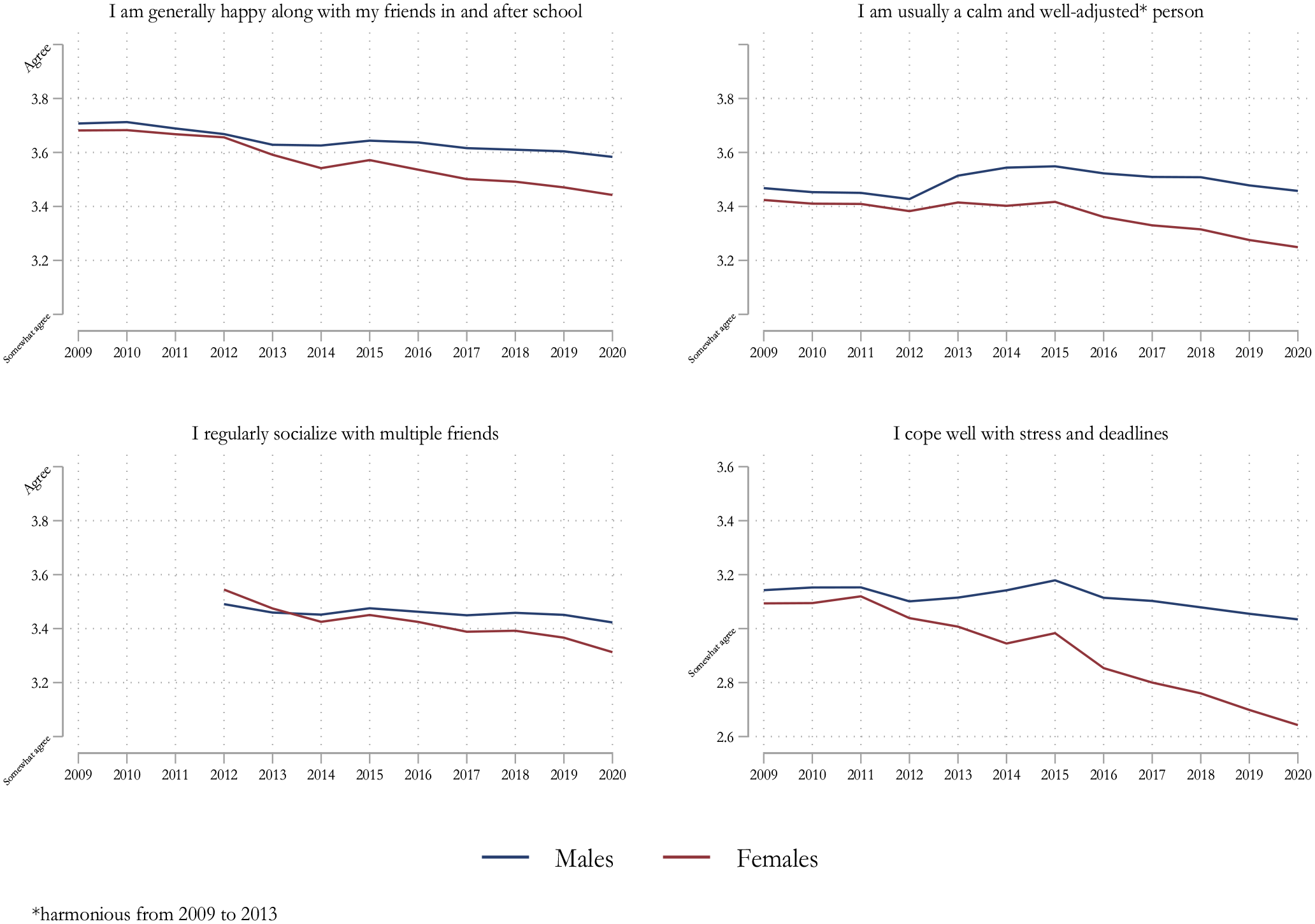
Male and Female Trends on Indicators of General Well-being and Coping From 2009–2020 With Truncated y-axis.
Motivation and aptitude: The motivation and self-described aptitude for military service of males and females are described in Figure 2. The two measures were closely related, and males evaluated themselves consistently as more motivated and fit to complete military service. The overall absolute level of motivation as well as self-described aptitude for military service was moderate for males. Across all years, most males either agreed or completely agreed with the aptitude and motivation items. For females, more respondents disagreed than agreed with the aptitude and motivation statements. A sizable portion of males and females answered I don’t know, but this proportion was reduced over the years. This means that both the number of motivated and nonmotivated potential increased. The relative changes in motivation and self-described aptitude were quite stable for males and females. They do not correspond to the notable increases in reported mental health diagnoses or reductions in well-being and coping for females. The increase in motivation for both genders in 2015 corresponds to the introduction of gender-neutral conscription and may be a result of increased media attention to the possibility of completing military service this year, for both males and females.
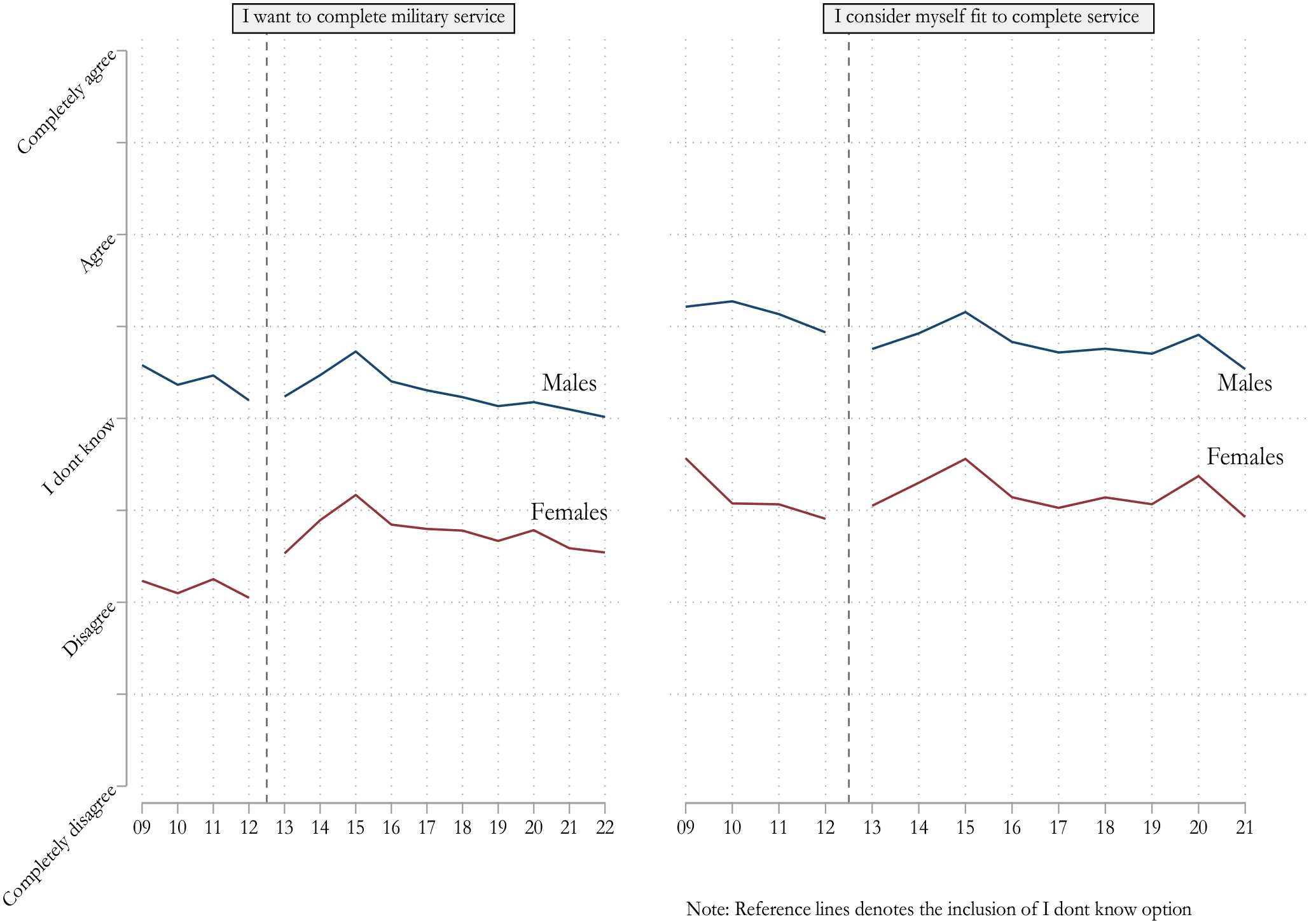
Yearly Trends in Self-described Motivation and Aptitude for Military Service from 2009–2022 for Males and Females.
Associations between motivation and mental health indicators: The yearly association between well-being and coping and motivation for military service is presented in Figure 3. The association showed a curious interaction with gender. For males, years with lower well-being and coping correspond to years with lower motivation to complete military service. For females, a seemingly contradictory effect was found. Years with lower well-being and coping correspond to years with higher motivation to complete military service. The change in format in the mental health diagnostic question render itself less useful for the same year-to-year comparison, but the observed increase in reported mental health diagnoses for both genders does not map onto the stable trends of motivation and military aptitude.
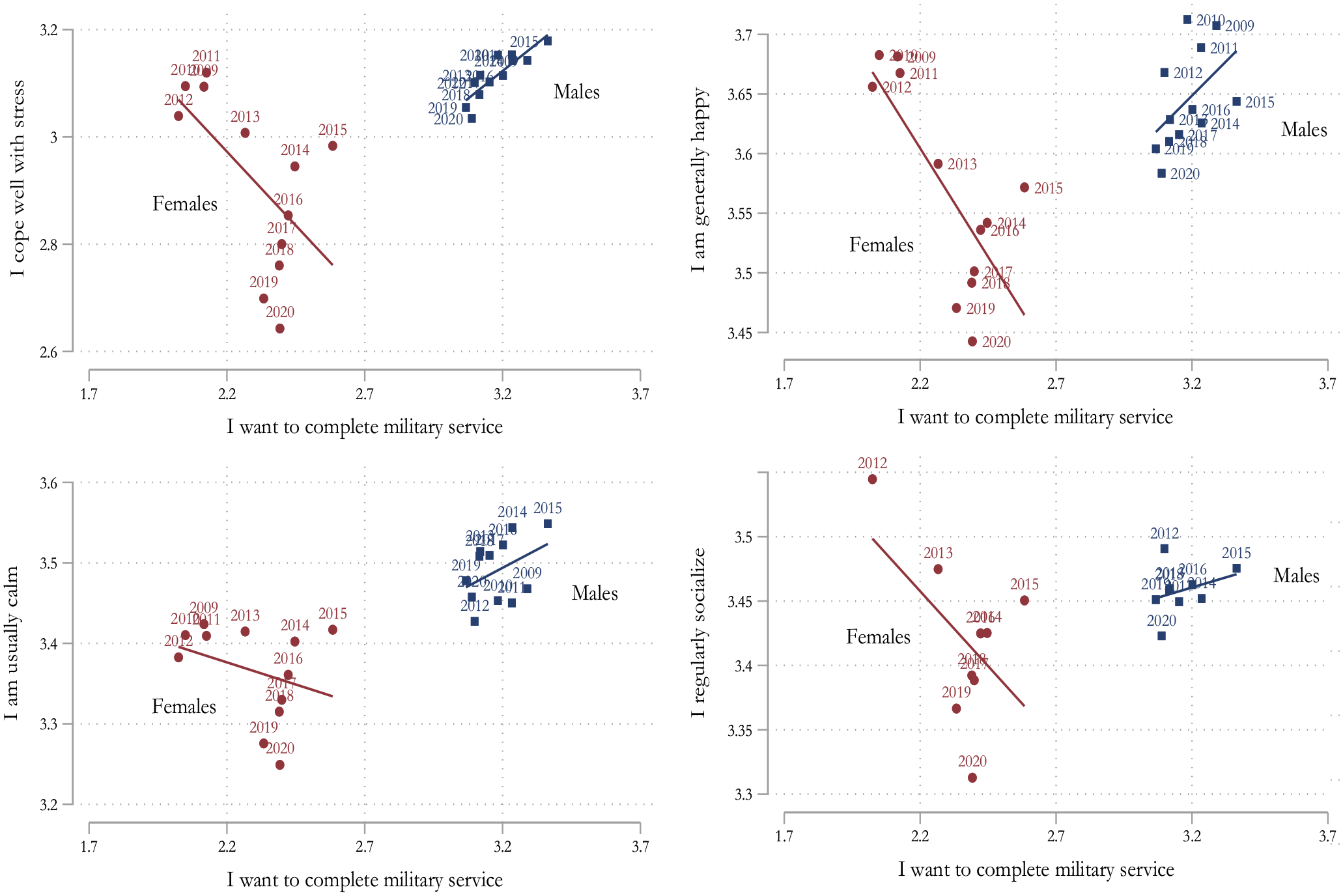
Yearly Linear Associations Between Well-being and coping with Motivation for Military Service for Males and Females from 2009–2022.
Discussion
The primary objective of this study was to elucidate cross-cohort trends in adolescent mental health, general well-being and coping, along with trends in self-described motivation and aptitude for the Norwegian Armed Forces. The trends we uncovered suggested a paradoxical relationship between mental health indicators and motivation for military service. Despite an apparent decline in mental health, particularly among females, motivation and aptitude for military service remained stable across time. This stability occurred regardless of the increase in reported diagnosed mental health problems for both genders and the deterioration in well-being and coping among females. These findings align with previous cross-cohort research indicating that mental health problems have proliferated among Norwegian adolescents during the past decades, particularly among females (Ask et al., 2019; Krokstad et al., 2022; Potrebny et al., 2021; Reneflot et al., 2018). Similarly, studies from other populations reflect the same trends (Collishaw, 2015; Haidt & Twenge, n.d.). Several factors, including social media exposure, are hypothesized to have contributed to the observed decrease in female well-being and coping around 2012 (Twenge & Campbell, 2019). Despite the increasing mental health challenges, our findings revealed that these trends do not negatively impact overall self-reported motivation and aptitude for military service. The finding seems paradoxical or self-contradictory, as it suggests that the negative changes in well-being and coping do not have clear functional debilitating consequences in the context of military recruitment. In fact, motivation and self-reported aptitude for military service remained stable, despite the increase in self-reported mental health diagnoses, which traditionally might disqualify individuals from service. Given the ongoing increase in such diagnoses and the planned expansion of cohorts to complete military service, automatic disqualification may not be a tenable practice in the future. In light of the desire to increase the proportion of female servicemembers (Forsvarsdepartementet, 2021), such disqualifications could drastically reduce available personnel, particularly among females. One interpretation of this seeming paradox could be that adolescents’ subjective perception of mental health and well-being is changing, with an increasing number of males and females labeling themselves as not calm, happy, sociable, or capable of coping with stress and deadlines. Yet, these labels do not seem to translate into clear and meaningful behavioral consequences or impact their aptitude for military service. This interpretation is further supported by the results of our study, which conforms to the idea of adolescents growing dutifulness and performance in all areas of life while increasing pressures to perform reduces mental health and well-being (Bakken et al., 2019).
Another interpretation is that the trends might not necessarily be paradoxical. The increased openness regarding mental health issues, especially among women, could lead to more individuals reporting mental health struggles. Yet, this may not deter their motivation to serve in the military. Personal development, camaraderie and social coping may be something that everyone wants to partake in, regardless of mental health. In addition, the nature of the mental health issues faced by individuals might actually align with motivations for military service. For instance, struggles such as stress due to an abundance of choices, decision-making challenges, economic instability, or uncertainty post-high school can be significant factors. In such scenarios, the structured environment and clear direction provided by military service could appear as an attractive option. This perspective makes the results less paradoxical, as it aligns with the motivations and challenges faced by individuals in contemporary society.
While our study’s data are drawn solely from Norway, it is important to consider the broader global context. The observed trends—an increase in mental health diagnoses among adolescents, an overall decline in well-being, particularly among females, and yet a stable motivation and aptitude for military service—could potentially be reflective of larger, global societal shifts. Several reasons exist to support this extrapolation. First, we see similar trends in mental health issues being reported in other developed countries (Collishaw, 2015; Haidt & Twenge, n.d.), suggesting that the escalation of mental health diagnoses might not be a uniquely Norwegian phenomenon. Similarly, societal pressures, changing social norms, and factors like increased exposure to social media—speculated contributors to the observed decrease in well-being—are also largely common across developed nations (Twenge & Campbell, 2019). Moreover, while the specifics of military recruitment and the role of the military may vary across different national contexts, many of the aptitudes and motivations associated with military service—discipline, duty, resilience—are fairly universal. However, despite these plausible reasons, caution must be exercised when extending our findings to a global context. Each country has its unique sociocultural context and health systems, which could influence the observed trends. Therefore, additional research is warranted to validate our findings in other countries and to delve deeper into understanding these complex global phenomena among youth. It is also important to note the limitation of a lack of individual-level data, which would allow for more precise explorations of person-level hypotheses. Our results are based on descriptive yearly cross-sections of the population and cannot determine whether or not the relationship between mental health and motivations for military service changes from year to year. The quality of the data is limited in terms of quality of measurement, as the measures of mental health and motivation are not designed for empirical research. Ideally, future research could contrast subjective reports of mental health to rates of diagnoses. In addition, future research with person level data is needed to determine any cohort interaction between motivation and mental health. If younger cohorts interpret questions about mental health and well-being differently, leading them to report more mental health issues, then this change in interpretation would create a moderating cohort effect. Specifically, it would decrease the strength of the relationship between mental health and the motivation to enlist in the military. In addition, there is also a pressing need to determine if there is an increase in the number of servicemembers who are interrupted in their military service and training due to mental health issues.
In conclusion, our findings suggest that the presence of a self-reported diagnosed mental health condition might be less prognostic of military service potential than traditionally assumed. The implications of this study underscore the importance of further research in this area, particularly in examining these trends in other cultural and societal contexts, and exploring the evolving interplay between mental health, gender, and motivation to serve in the military. A deeper understanding of these issues will inform recruitment practices, mental health support within the military, and help shape policies that ensure the well-being of our servicemen and servicewomen.
Supplemental Material
sj-docx-1-afs-10.1177_0095327X241236890 – Supplemental material for Declining Mental Health Without Diminished Military Service Motivation in Norwegian Adolescents From 2009 to 2022: A Research Note
Supplemental material, sj-docx-1-afs-10.1177_0095327X241236890 for Declining Mental Health Without Diminished Military Service Motivation in Norwegian Adolescents From 2009 to 2022: A Research Note by Morten Nordmo, Lasse Bang, Anders Øvergaard and Ole Christian Lang-Ree in Armed Forces & Society
Supplemental Material
sj-docx-2-afs-10.1177_0095327X241236890 – Supplemental material for Declining Mental Health Without Diminished Military Service Motivation in Norwegian Adolescents From 2009 to 2022: A Research Note
Supplemental material, sj-docx-2-afs-10.1177_0095327X241236890 for Declining Mental Health Without Diminished Military Service Motivation in Norwegian Adolescents From 2009 to 2022: A Research Note by Morten Nordmo, Lasse Bang, Anders Øvergaard and Ole Christian Lang-Ree in Armed Forces & Society
Supplemental Material
sj-docx-3-afs-10.1177_0095327X241236890 – Supplemental material for Declining Mental Health Without Diminished Military Service Motivation in Norwegian Adolescents From 2009 to 2022: A Research Note
Supplemental material, sj-docx-3-afs-10.1177_0095327X241236890 for Declining Mental Health Without Diminished Military Service Motivation in Norwegian Adolescents From 2009 to 2022: A Research Note by Morten Nordmo, Lasse Bang, Anders Øvergaard and Ole Christian Lang-Ree in Armed Forces & Society
Footnotes
Declaration of Conflicting Interests
The authors declared no potential conflicts of interest with respect to the research, authorship, and/or publication of this article.
Funding
The authors received no financial support for the research, authorship, and/or publication of this article.
Ethical Statement
Before considering reporting the results from the survey records, the authors reviewed the ethical implications and consequences of using these reports on empirical research. The candidates were not able to consent to research, and their responses and person-sensitive data are not available to the researchers. Research use of the data pertaining to the present study was formally approved by the independent Research Commission at the Norwegian Defense University College, and the authors of this study used aggregated report data, exclusively. Based on this approval, and the relevance and importance of the research questions, we deemed the use of the results from the records as ethically acceptable.
Patient Consent Statement & Clinical Trial Statement
Not relevant.

Data Availability
All data presented in appendix.
Supplemental Material
Supplemental material for this article is available online.
Author Biographies
References
Supplementary Material
Please find the following supplemental material available below.
For Open Access articles published under a Creative Commons License, all supplemental material carries the same license as the article it is associated with.
For non-Open Access articles published, all supplemental material carries a non-exclusive license, and permission requests for re-use of supplemental material or any part of supplemental material shall be sent directly to the copyright owner as specified in the copyright notice associated with the article.
