



Abstract
In this study, a total of 102 high-ranking commanders from a military and police background were included in a simulation involving hybrid attacks on Norway. The aim was to explore the commanders’ decision-making in the context of hybrid warfare and changing threats. Data were collected in a simulated national headquarters and analyzed by a multinominal logistic regression method using a scenario that transformed from peacetime into war and returned to peace. The results demonstrated significant differences in the commanders’ preferences for unilateral or interagency forces depending on whether decisions were made in peacetime, war or the post-conflict phase. The results also showed how the commanders’ level of operational experience was associated with an increased preference for interagency forces. The current findings are new empirical insights into a thus far neglected aspect of decision-making research and have implications for improving police-military interoperability in major security crises.
Keywords
Ever since the turn of the 21st century, scholars have focused on the ways in which hybrid warfare blurs the lines between internal and external security (Angstrom & Ledberg, 2021). This obscures people’s binary ideas about war and peace (Wither, 2016) and converge the gap between state security and public safety (Kalkman, 2020). Consequently, the police and military are becoming more alike (Collins & Hall, 2022; Wilén & Strömbom, 2022), making it more difficult for police and military commanders to identify the strategic context within which they are operating (Caliskan & Liégeois, 2021). The hybrid warfare conducted by Hezbollah in Israel (Najžer, 2020), Iran in Syria (Piotrowski, 2017), ISIL in Iraq (Feakin, 2014), and Russia in Crimea (Erol, 2015) exemplifies the difficulties involved in understanding the numerous interpretations of hybrid attacks (Malerud et al., 2021). The precise form that future hybrid attacks will take is difficult to predict, but it is certain that they will traverse police-military boundaries, requiring decision-makers to cooperate and accommodate sectoral differences (Baumann, 2012, p. 43). The subsequent demand for more flexible frameworks has led scholars to question whether existing security concepts are compatible with the challenges posed by hybrid warfare (Tóth, 2018).
The above illustrates a larger trend: homeland defense against hybrid attacks is too complex to be divided into strict categories and there is consequently a need to develop knowledge about police-military interoperability in hybrid warfare contexts (Birkemo, 2013). Many scholars have discussed the dynamics that shape the dividing lines between the roles and responsibilities of the police and military in modern globalized societies (Delaforce, 2019; Turner & Fox, 2019; Weiss, 2011). In the Norwegian context, efforts have been made to improve police-military interoperability (Røksundutvalget, 2016) by facilitating cooperation and enlisting shared responsibilities between the police and military in case of hybrid attacks (Tamnes, 2015). However, very little empirical research has been conducted into the extent to which new and emerging police-military interfaces impact decision-making (Shortland et al., 2019, p. 47).
On this basis, this study aims to explore how operational level commanders from a police or military background engage in decision-making in the context of hybrid warfare by asking the following questions: (a) To what extent does the police and military’s shared responsibility to counter hybrid attacks impact decision-making in a Norwegian context? (b) To what extent do changing threats that traverse sectoral boundaries impact the decision-making of police and military commanders? The study’s general expectation was that the police and military commanders would demonstrate differential decision-making because their understanding would be largely based on previous work-related experiences. Specifically, they would have different interpretations about who has the necessary capabilities, and therefore make different decisions about the security forces that would conduct operations. Furthermore, as hybrid attacks have numerous social and contextual features (i.e., actions will not only have an immediate impact on the ground reaction forces but also on others who partake in the overarching effort) the analysis explored the commanders’ social cognitive foundations for decision-making in collaborative crisis management.
Starting with an original dataset, the study’s exploratory approach 1 not only analyzed the independent variables of occupational background and operational experience but also how the transition between peace, war and a post-conflict phase impacted the commanders’ decision preferences regarding the dependent variable, force composition. The analysis revealed new empirical findings about how the actions of police and military commanders can diverge and produce decision-making differences that impact police-military interoperability in collaborative crisis management efforts. A more detailed discussion of the specific hypotheses is presented after a brief description of the analysis’ rationale.
The next section presents a description of the Norwegian decision environment in relation to recurring debates from recent security crises, followed by a presentation of the theoretical framework and hypotheses. Section “Method” presents the scenario, research design and method. Section “Statistics” deals with statistics and variable specifics. Section “Results” describes the results of the analysis with emphasis on the degrees to which the data supported the hypotheses. Section “Discussion” discusses the significant findings and their implications. The last section concludes by providing a tentative statement about the differences between police and military decision-making in hybrid attacks.
Recurring Debates
In the wake of the growing interest in hybrid warfare and governmental decision-making, two core debates have emerged. The first debate was triggered by rising concerns about the ways in which military forces are involved in police matters in security crises (Kalkman, 2019; Loader, 2017). Nevertheless, several studies have explored police-military cooperation in international peace operations (Horne et al., 2022), but there is a remarkable lack of empirical evidence about police-military sector differences in national security crises (Dahlberg & Dalgaard-Nielsen, 2020). As such, scholars argue that an improved understanding of sectoral differences is crucial for improving police-military interoperability (Penney et al., 2022).
In this context, reporting from recent security crises indicate inadequate interactions between governmental sectors in the United Kingdom (Murphy, 2006), Norway (Gjørv et al., 2012), Israel (Matthews, 2011), and the United States (Hoffman et al., 2015). In all these cases, the reports’ conclusions underline how the crisis management efforts were flawed because the importance of interagency collaboration was underestimated. Overall, these examples support the claim that the interface between the police and military in modern societies is unclear (Auglend, 2016; Bossong & Rhinard, 2021), and why it is increasingly important to understand the extent to which the police and military have become more enmeshed in the security crises of modern societies (Kraska, 2007).
The second core debate is how decision-making research has increasingly focused on uncertain decision-making environments, team interactions and the previous experience of professionals (Montgomery et al., 2004; Mosier et al., 2018). Furthermore, a number of studies describe how security crises create unique cognitive demands for decision-makers (Bartone, 2010) and highlight the importance of understanding the mechanisms that enable cognitive readiness and adaptability in rapidly changing threat conditions (Grier, 2012). In this context, scholars have demonstrated how uncertainty invalidates people’s ability to reach meaningful conclusions about events (Hardaker et al., 2015) and causes decision-makers to collect more information, make assumptions, weigh the pros and cons, forestall decisions or ignore undesirable information (Lipshitz & Strauss, 1997). In extraordinary events such as hybrid attacks, research also describes how decision-making is difficult if multiple sectors are involved since their existing mechanisms will not provide appropriate responses to unexpected actions (Marchau et al., 2019, p. 30).
From this perspective, the role of cognitive processes has become increasingly important to explain decision-making (Brust-Renck et al., 2021), but the lack of empirical research on hybrid warfare contexts is evident (Giegerich, 2016; Weissmann et al., 2021). Even so, findings from similar domains involving uncertainty and multiple actors have demonstrated significant disparities in how professionals make decisions.
The main drivers of the decision preferences of professionals have been identified as disputes about task definitions, code of conduct, responsibility and risks (Keddell, 2014). Research has shown how previous experience determine which factors are considered, how responsibilities are recognized, and the resultant dilemmas stemming from different opinions and uncertainty (DeLong-Hamilton et al., 2016). Ashton (2004) also shows how previous experience impacted the decision variability of professionals differently. Molina-Mula & Gallo-Estrada (2020) found similar trends when they compared the decisions of less experienced decision-makers with those who had more experience. However, Walsh et al. (2012) found mixed results regarding the influence of previous experience when investigating the reporting practices of experienced decision-makers in cross-sectoral scenarios. As such, it is evident that decision preferences not only depend on verifiable actions and contextual determinants but also on the decision-maker’s anticipatory and affective reactions (Graham et al., 2015; Sniazhko, 2019).
Social Cognitive Theory as a Framework for Explaining the Decision-Making of Professionals
The overarching theme of this study was that decision-making in an operational headquarters entails a social context in which commanders vicariously oversee a series of interrelated actions conducted by others. Thus, the theoretical framework of this study was Bandura’s (2001) Social Cognitive Theory (SCT). It is based on an ontologically irreducible individual existing self and a plurality of emergent interactive agentic processes that enable people to be intentional doers, despite uncertainty (Bandura, 1991). The belief systems formed by SCT’s cognitive dynamics explain how decision-making relies on people’s ability to monitor and analyze actions, reflect on consequences, and self-regulate behavior toward desirable pursuits and away from undesirable consequences (Stajkovic & Sergent, 2019).
SCT has several associated theories describing how people make decisions involving uncertainty, such as the concepts of heuristics, biases and framing effects (Kahneman & Tversky, 2013), as well as recognition-primed decision-making (Klein, 2017). These models are similar to SCT in the sense that all of them contend the importance of mentally simulating outcomes, but are primarily descriptive (Brust-Renck et al., 2021). In contrast, SCT uses process level explanations to describe a decision’s personal and social foundations. As such, SCT can be used to explain decision-making differences and how people’s preferences can be adjusted if ongoing events are interpreted as justifying “new” solutions (Bandura, 1999, p. 155).
There were four reasons why SCT was believed to be useful for explaining the decision preferences of the police and military commanders in this study. First, SCT acknowledges that commanders operate in the environment through self-referent thinking (Bandura, 2012, p. 24) and, unlike economic decision models, SCT can explain the “least-worst” decisions inherent in security crises (Shortland et al., 2020) through the cognitive dynamics of self-monitoring, self-regulation and self-evaluation. Second, SCT describes how these self-referent processes cause selective attention that determines what information is extracted and translated into motivated actions (Bandura, 1999, p. 171). Third, SCT explains that even if people have the knowledge and skills to succeed, cherished methods will be discarded if they doubt their ability to realize desirable outcomes (Stajkovic & Sergent, 2019). Fourth and most importantly, SCT describes why the commanders’ decision preferences are not only a product of pure cognition but just as much an expression of how contextual influences and emotions are activated according to preexisting beliefs derived from previous experience (Bandura, 1999, p. 190). As such, SCT explains why people from contrasting backgrounds may prefer different courses of action in one and the same situation.
In sum, the cognitive appraisals conceptualized by SCT describe how the thoughts of police and military commanders will be shaped by the norms of their originating sector. In turn, their actions will reflect their anticipatory estimations of what is required to achieve the desired outcomes through the lens of previous experience. Thus, this study expected police commanders to demonstrate a predisposition toward choosing law enforcement units, and military commanders would be predisposed toward choosing military units (Hypothesis 1 (H1)).
Furthermore, the study expected that the relevance of the commanders’ previous experience would diminish as the scenario transformed into war. Consequently, they would adapt to change by becoming more exploratory. As interagency efforts have been encouraged, but not yet fully recognized in current security concepts (Yanakiev, 2018), this study expected that the transition from peace to war would make the commanders of both sectors demonstrate an increased preference for interagency forces (Hypothesis 2 (H2)).
Likewise, it was assumed that the de-escalating conditions of the post-conflict phase would make events more recognizable. At this point, the unpredictable events recently encountered in times of escalation make it unlikely that their preexisting beliefs would have changed substantially (Bandura, 2001). Thus, it was expected that the retransition from war to the post-conflict phase would make the commanders of both sectors demonstrate a lower preference for interagency forces (Hypothesis 3 (H3)).
From an SCT perspective, commanders with high levels of operational experience would be less self-centered and more self-reflective and task oriented than those commanders with less operational experience. This is mainly because the experienced commanders’ beliefs would have been formed by personal appraisals of how well the Norwegian crisis management system can handle the efforts required to deal successfully with hybrid attacks. This suggests that the more experienced commanders would have a high level of belief in their ability to enact the interagency potential available to them. Thus, this study expected that experienced commanders would show greater preferences for interagency forces than commanders with less operational experience (Hypothesis 4 (H4)).
Method
Scenario
The current hybrid warfare scenario (see Figure 1) was utilized because Norway’s strategic environment was considered as a relevant context through which to achieve the study’s aim. First of all, scholars contend that the functional boundaries between Norwegian police and military are highly sectorized but the way they are practiced have varied over time (Fimreite, 2014). The police unquestionably have the leading role in civilian crisis management (Regjeringen, 2013), while for the military, it is a secondary role (Regjeringen, 2021). However, in any armed attacks on Norway, the military will take the lead and cooperate with the police on tasks that are within the scope of their respective areas of responsibility (Forsvarsdepartementet, 1949).
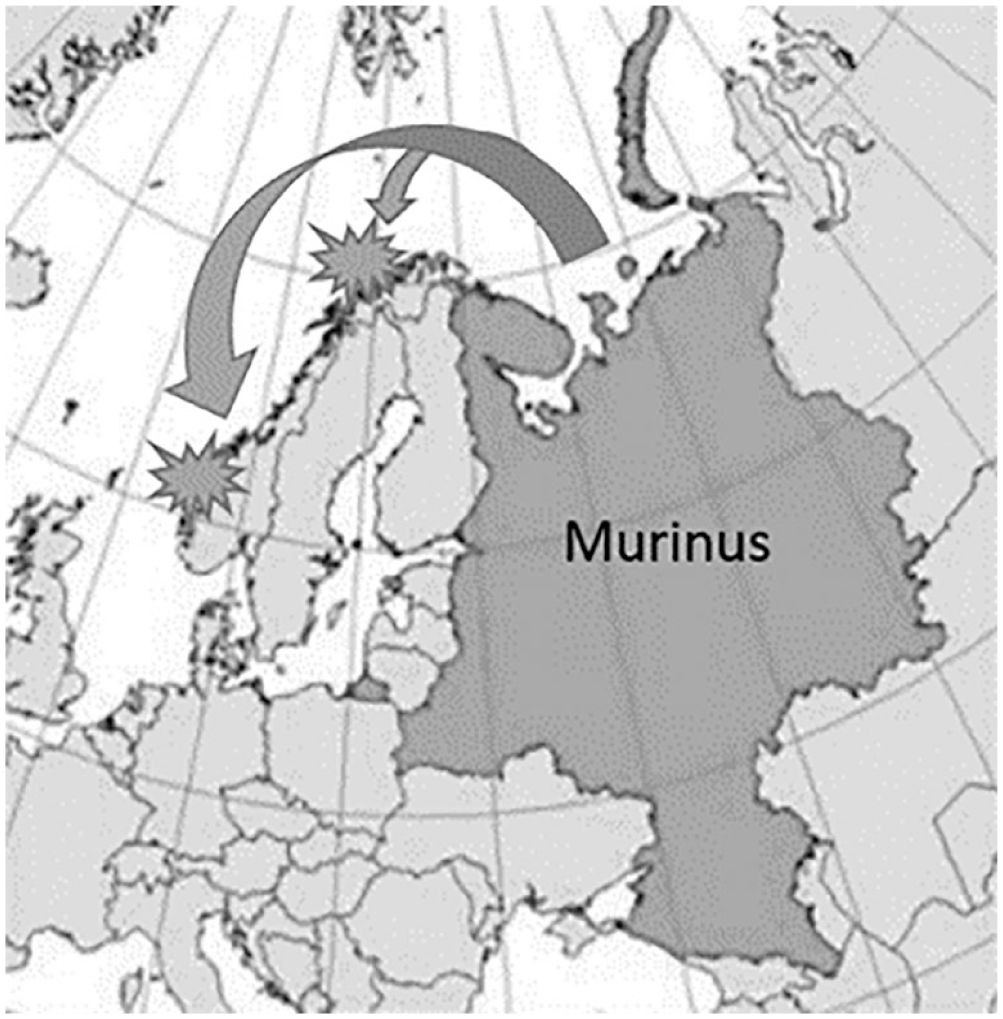
The simulation’s scenario.
Second, scholars discuss how hybrid attacks will bring about unusually difficult decision-making due to Norway’s inherent societal vulnerabilities and sectoral constraints (Diesen, 2018). Third, serious shortcomings in the Norwegian emergency response system were identified in recent security crises and the need for improvements in police-military interoperability has been asserted in government whitepapers (Regjeringen, 2018; Røksundutvalget, 2016). Fourth, it makes sense to analyze police-military decision-making differences in Norway because the Norwegian police claim to be civilian-oriented (Spurkland, 2021), while scholars argue that Western police and military forces are gradually becoming more similar (Kraska, 2021; Lutterbeck, 2004). Finally, Norway’s increasing importance as Europe’s largest supplier of natural gas (Glover, 2022) makes the Norwegian oil and gas infrastructure a likely target for hybrid attacks (Hultgreen, 2022).
Respondents
A total of 102 volunteers (88 males and 14 females) completed the simulation. In addition, one respondent was lost because of equipment failure, and one respondent withdrew on the day of the simulation. The inclusion criterion of the police and the military group was a minimum of 5 years of active duty in their respective sectors.
The 59 military respondents were selected from all services (mean age = 44 years, range = 31–58) with 8 to 39 years active duty and ranks ranging from captain (OF2) to major-general (OF7) or equivalent. The previous operational experience from crisis management operations and/or exercises ranged from 0 to 35 significant incidents (M = 8.2).
The 43 police respondents were selected from the national police directorate and police districts (mean age = 45 years; range = 29–56; employment 6–35 years; number of exercises − range/mean of exercises 0–30/4.0).
Instruments
A laboratory cubicle was arranged as a simulated operations center/workstation with a keyboard and screen facing the respondents. The stimuli were physical handouts (i.e., organizational chart, attribute list of subordinate forces, legal information, maps, intelligence updates and policy documents) and digital slides (i.e., mission vignettes and multiple answer options) with pictures and text projected onto the screen. Computer software (iMotions 9.1.0.6) controlled the sequence of the slides and recorded all the respondents’ responses. The transition from peace to war was established by a royal decree declaring a state of war. The transition from war to the post-conflict phase was done by a repeal of the earlier declared state of war. These kinds of royal decrees are authorized through a special provision in the Norwegian defense act that allows the military to establish police-military cooperation and resist with all means available in the event of an armed attack on Norway (“The Constitution of the Kingdom of Norway,” 1917, p. §25). For a detailed description of the study design, see Figure 2.
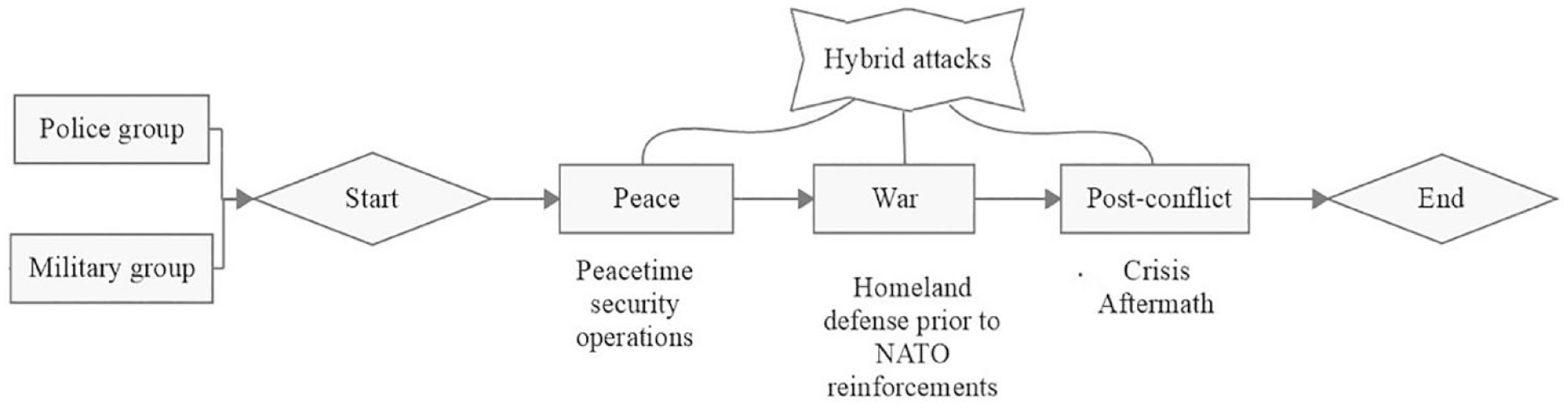
Study design.
To allow for realistic dilemmas in the stimuli, scenario, background documentation and mission vignettes were based on documentation from NATO’s exercise Trident Juncture 2018 (North Atlantic Treaty Organization [NATO], 2018). The exercise tested and trained NATO’s collective military and civilian efforts (i.e., police) during interagency crisis management (Joint Warfare Center [JWC], 2018). Demographic information (age, gender, profession, years of employment, and operational experience) were collected on the day of the simulation using a printed questionnaire.
Force composition was used as a dependent variable when testing H1 to H4. The variable involved matching police and military units to organize a force they considered feasible for various missions. Multiple answer options allowed the respondents to choose any combination of the available police and military forces (see Table 1). The respondents could choose to request support or reject missions. Details about support or justifications for rejecting missions were not collected.
Force Composition Options.
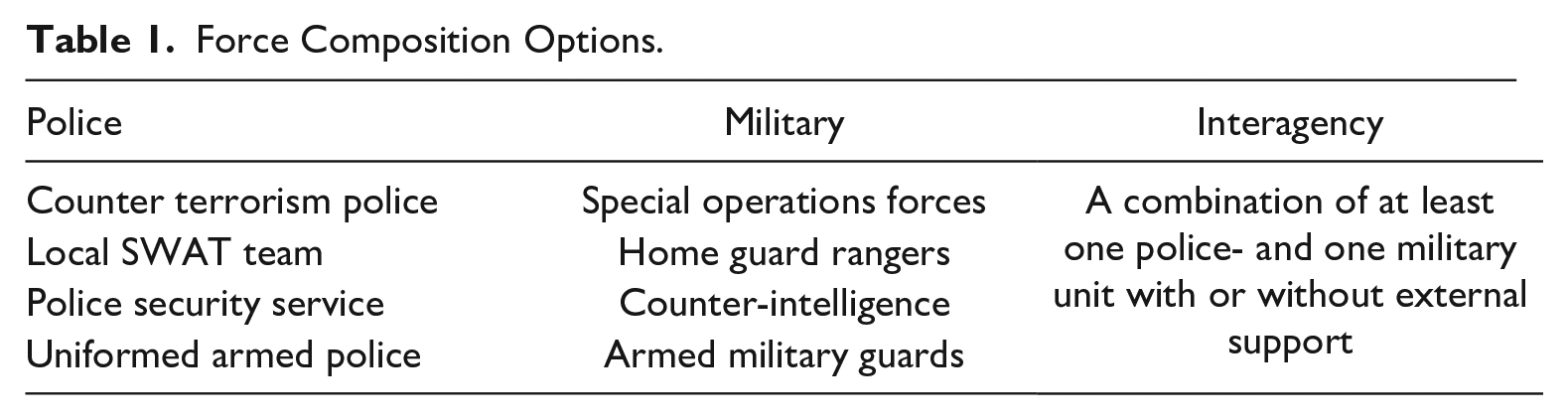
The force composition data comprised the following categories: (a) Police forces (a single police unit or combination of police units). (b) Military forces (a single military unit or any combination of military units). (c) Interagency forces (a combination of at least one police and one military unit with or without external support). (d) Reject (none of the available forces).
Assessments of force composition were included as they are crucial in operational planning (NATO, 2019) and are particularly interesting in the domain of hybrid warfare (Crowther, 2021). In addition, force composition was regarded as replicating the way in which commanders in field settings accomplish tasks vicariously through the coordinated efforts of others (De Holan & Mintzberg, 2004).
Operational experience was collected by a single item asking: “How many crisis management operations and/or exercises have you participated in?” In this context, one question sufficed (Schmidt, 2018).
Procedure
Prior to the day of the simulation, the respondents were e-mailed information about the simulation’s goals, the crisis scenario and what was expected of them. It included an approval letter from the Norwegian Center for Research Data (NSD) and an informed consent form consistent with international ethical standards of scientific research.
Before starting the simulation, the respondents were informed through a standardized briefing that explained the purpose of the study and how their job was to command an operational level headquarters. Further, they were informed about the conflict scenario and how they would be exposed to dilemmas through screen-based multiple answer options. They were told the simulation had no time limit and that it was being remotely observed by a researcher. They were told that their task was to allocate subordinate forces to missions, request support if needed, or choose to reject missions if they considered this to be appropriate. Once they had completed the task, they were told that computer software would communicate their decisions to the chain of command. Next, the respondents completed the demographics sheet.
They were informed that they could withdraw from the study at any point. During the introduction they were invited to ask questions. However, once the simulation started there was no communication between the respondents and the researcher. All respondents tested the same conditions (i.e., all missions and all phases) in an identical sequence.
The study comprised 54 independent missions across three phases (peace, war, and post-conflict) involving the same number of missions and task categories (direct action, arrest/detention, surveillance, and close protection). Each of the missions had unique and phase-specific vignettes.
Statistics
Hypotheses 1, 2, 3, and 4 were analyzed in SPSS 27 using a stepwise multinominal logistic regression involving 66 comparisons, of which 38 related to our hypotheses. Multinomial logistic regression is frequently used for calculating likelihood estimates of categorical data with continuous or categorical independent variables (Bull & Donner, 1987). Although our hypothesis required repeated measures, we were still able to use logistic regression as it is comparable with the methods used for longitudinal data (Fitzmaurice et al., 2012). The dependent nominal variable was Force composition (police force, military force, interagency force, and reject). The independent nominal variables of Sector (police/military) and Phase (peace, war, and post-conflict) were listed as factors. The independent continuous variable of Operational experience was used as a covariate.
A stepwise analysis was conducted in three stages: The first stage analyzed the between-group main effects of Sector and the interaction effects of Sector × Phase. The second stage analyzed the within-group interaction effects of Sector × Phase. The third stage analyzed the within-group interaction effects of Sector × Phase × Operational experience. The fit between the final model that only contained the intercept and data improved when we added the predictor variables, χ2 = 306.862, p < .001. Thus, the independent variables as a group significantly contributed to predicting the outcome (Laerd, 2018). There were no missing data.
Results
Force Composition, Between-Group Effects
When analyzing the between-group effects of Sector and Phase, one of four comparisons testing police forces versus military forces reached significance (see Table 2). One main effect supported H1, showing that police and military commanders overall were 19% more likely to use their own sector’s forces unilaterally than use the other sector’s forces only. The interaction that tested the preference of police commanders for using police forces in peacetime was borderline significant (p = .056). The interactions of wartime and the post-conflict phase did not reach significance.
Between-Group Odds Ratios for the Police and Military Commanders’ Decision Preferences (Police Forces vs. Military Forces) Across the Simulation’s Three Phases (Peace, War, and Post-Conflict).
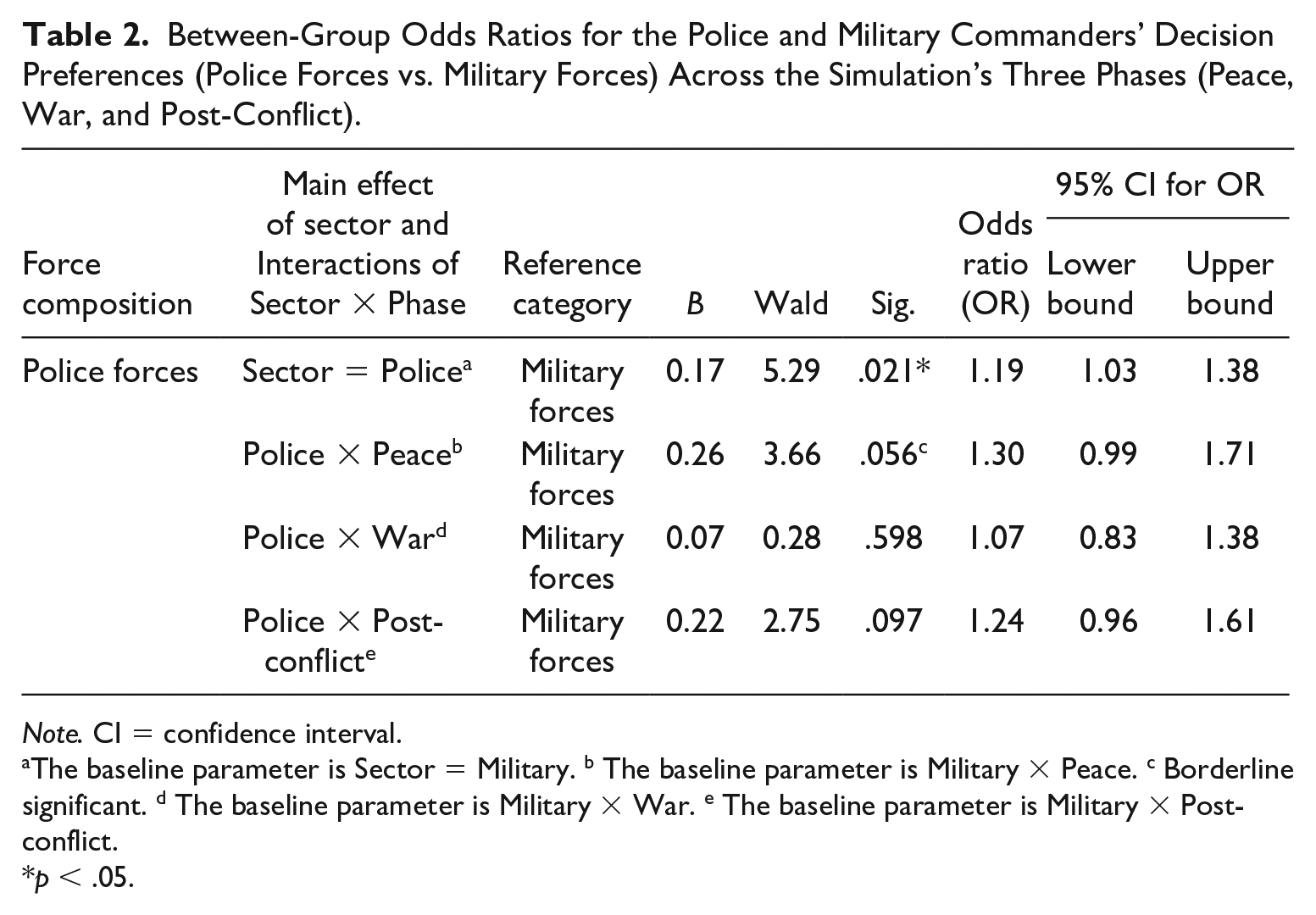
Note. CI = confidence interval.
The baseline parameter is Sector = Military. b The baseline parameter is Military × Peace. c Borderline significant. d The baseline parameter is Military × War. e The baseline parameter is Military × Post-conflict.
p < .05.
To ensure the expertise of the respondents, a one-way ANOVA (analysis of variance) was conducted (see Note 2). It demonstrated that the respondents made better decisions compared with a none-expert control group. 2
Force Composition, Within-Group Effects
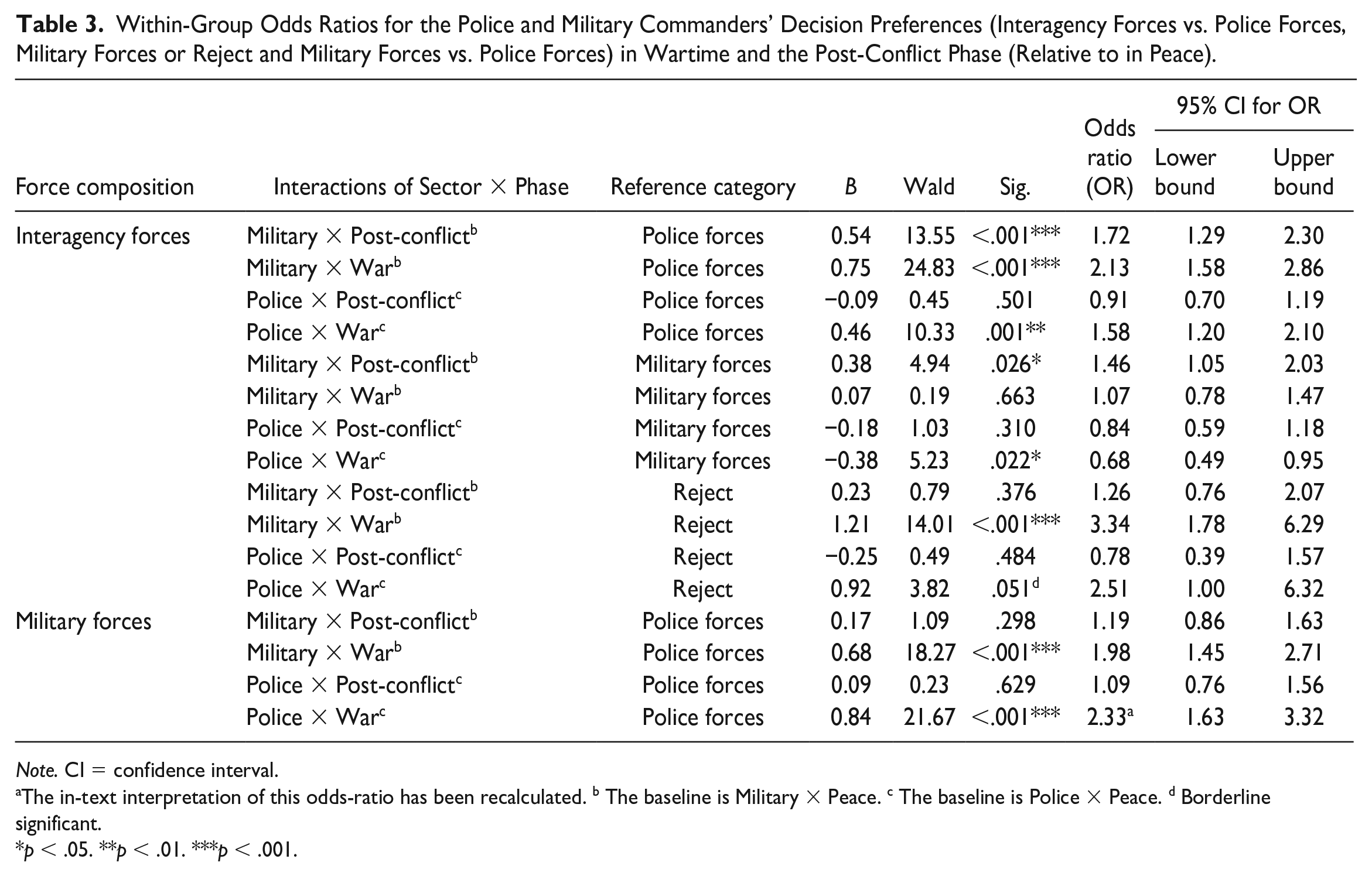
When analyzing the within-group effects of Sector × Phase, eight out of 16 comparisons reached significance when peace was used as the baseline. As shown in Table 3, one interaction supported H1 for the military and one interaction contradicted H1 for the police. Three interactions showed support for H2, and one interaction contradicted H2 for the police. Finally, two interactions contradicted H3, as demonstrated by the military commanders.
Within-Group Odds Ratios for the Police and Military Commanders’ Decision Preferences (Interagency Forces vs. Police Forces, Military Forces or Reject and Military Forces vs. Police Forces) in Wartime and the Post-Conflict Phase (Relative to in Peace).
Note. CI = confidence interval.
The in-text interpretation of this odds-ratio has been recalculated. b The baseline is Military × Peace. c The baseline is Police × Peace. d Borderline significant.
p < .05. **p < .01. ***p < .001.
Military commanders were 98% more likely to prefer military forces over police forces in war (relative to peacetime), supporting H1. However, police commanders were 57% less likely to prefer police forces over military forces in war (relative to peacetime), contradicting H1.
When exploring H2, military commanders were 113% more likely to choose interagency forces over police forces in war (relative to peacetime). Similarly, military commanders were 234% more likely to choose interagency forces than reject missions in war (relative to peacetime). These findings support H2. For the military commanders, the comparison of interagency forces over military forces in war did not reach significance (p > .05).
Police commanders were 58% more likely to prefer interagency forces over police forces in war (relative to peacetime). This also supports H2. However, police commanders were 32% less likely to prefer interagency forces over military forces in war (relative to peacetime), which contradicts H2. For police commanders, the comparison of interagency forces versus reject in war was borderline significant (p = .051).
Our analysis did not show support for H3. However, it demonstrated sector differences in the post-conflict phase. For military commanders, H3 was contradicted by showing how they were more likely to prefer interagency forces in the post-conflict phase. As such, military commanders were 72% more likely to choose interagency forces over unilateral police forces, and 46% more likely to choose interagency forces over unilateral military forces in the post-conflict phase (relative to peacetime). In contrast, the preference of police commanders for interagency forces in the post-conflict phase (relative to in peacetime) was nonsignificant.
The Effect of Operational Experience
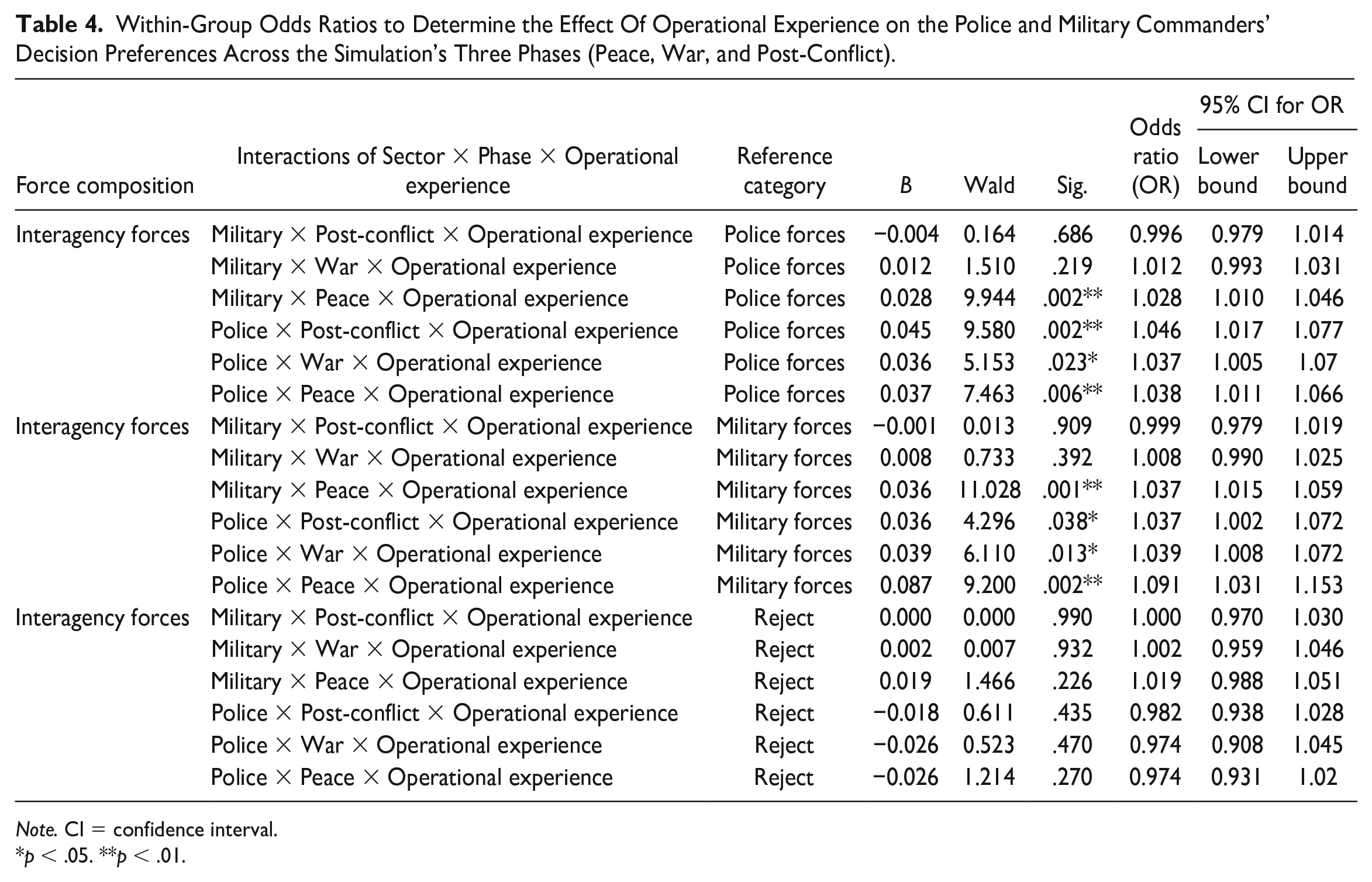
When analyzing the effects of Sector × Phase × Operational experience, eight out of 18 interactions supported H4 (see Table 4).
Within-Group Odds Ratios to Determine the Effect Of Operational Experience on the Police and Military Commanders’ Decision Preferences Across the Simulation’s Three Phases (Peace, War, and Post-Conflict).
Note. CI = confidence interval.
p < .05. **p < .01.
The analyses demonstrated that the more experienced military commanders showed greater preference for interagency forces over both police forces and military forces (relative to the less experienced military commanders) in peacetime, thereby supporting our H4. In this context, a military commander’s preference for interagency forces over police forces increased by 2.8% per increment of operational experience. For example, military commanders with previous experience of at least ten crisis management operations were 28% more likely to prefer interagency forces compared with military commanders with no such experience. Similarly, further support for H4 was found as the preference of military commanders for interagency forces over military forces in peacetime increased by 3.7% per increment of operational experience. For military commanders, this effect of operational experience did not reach significance in either wartime or the post-conflict phase.
Significant effects were found for the preference of police commanders for interagency forces over police forces (relative to the less experienced police commanders) across all phases. Their preference for interagency forces increased by 3.8% per increment of operational experience in peacetime. In wartime, their preference for interagency forces increased by 3.7% per increment of operational experience. In the post-conflict phase, their preference for interagency forces increased by 4.6% per increment of operational experience.
Experienced police commanders also had a higher preference for interagency forces over military forces (relative to less experienced police commanders) throughout the simulation. In peacetime, their preference for interagency forces increased by 9.1% per increment of operational experience. During wartime, their preference for interagency forces increased by 3.9% for each increment of experience. The last finding was in the post-conflict phase in which the preferences of police commanders for interagency forces increased by 3.7% per increment of operational experience.
Discussion
This study showed how professional experiences over long-term careers shaped self-referent capabilities (Bandura, 2001) that facilitated differences in the way in which the police and the military preferred to organize their forces to conduct a given mission.
Hypothesis 1 (H1) was supported by a main effect of sector background across the simulation, irrespective of phase transitions. It showed that police commanders in general favored police forces over military forces and military commanders favored military forces over police forces. There were also interaction effects showing mixed support for H1 in wartime, in which it was supported by the military commanders but contradicted by the police commanders. This sector difference could be interpreted as commanders’ decisions were intentionally motivated by self-referent thinking to ensure that missions were conducted in line with previous experience. Thus, the reported sector difference loosely showed how, when confronted by uncertainty, commanders were predisposed to go beyond the evidence given by events and translated their beliefs into distinct behavior using their occupational preferences.
Hypothesis 2 (H2) on the effect of conflict escalation was partially supported. Our analysis showed that a change from peace to war increased the preference of commanders for interagency solutions. As such, it could be argued that commanders adjusted their beliefs dynamically by monitoring themselves and the outside world (Bandura, 1997). We found evidence that escalation made military commanders prefer interagency solutions more than any other options in wartime. However, we only found mixed evidence for this among the police commanders. The police commanders’ preference for interagency forces increased if the only other option was to use police forces, although not when interagency forces were compared with military forces.
The varying effect of escalation due to contrasting backgrounds demonstrated the selective nature of self-referent thoughts (Jones, 1989). Thus, the partial support of H2 indicates how self-referent mechanisms have a dual function. They can be both inhibitive through self-sanctioning and proactive through self-motivation of the actions needed to produce feasible results (Bandura, 1999, p. 162). As such, it can be claimed that commanders knew the risks of cognitive complacency and actively used their previous experience to avoid decision inertia by heightening their cognitive readiness (Cosenzo et al., 2007) when confronted by uncertainty. For example, the commanders did not allocate all their resources to one mission. Instead, they constructed adequate solutions and kept units in reserve for contingencies. However, the demonstrated sector differences appeared to indicate that the commanders’ self-referent thinking resulted in distinct behavioral adjustments as the conflict was escalated. It is therefore important to recognize that escalation not only led to a selective increase in the preference for certain options (i.e., interagency and military forces) but also led to inhibitions of the other options (i.e., police forces and reject). Thus, our results showed that inhibitive forces are as important as proactive forces. We believe that understanding this dual functioning is essential for improving interagency efforts.
Hypothesis 3 (H3) on the effects of conflict de-escalation was not supported. However, sector differences were found as police and military commanders had different interpretations of how the post-conflict phase resembled the pre-war peacetime phase. From a social cognitive perspective this makes sense, as their distinct occupational beliefs would not have significantly converged because the highly uncertain links between events and actions complicated the learning process (Bandura, 1986, p. 66). Consequently, it would appear that their previous experience rather than the actual situation prescribed the actions in the post-conflict phase. Interestingly, our analysis showed that the police’s preferences for interagency forces in the post-conflict phase did not differ significantly when compared with peacetime. In contrast, military commanders seemed to prefer interagency solutions more in the post-conflict phase than in peacetime.
The police’s post-conflict preferences, juxtaposed with the military’s preference in the post-conflict phase, will be important to take into consideration in future crises. As shown, the relative contribution of the commanders’ self-referent thoughts changed differently according to their respective sector backgrounds. Thus, like in wartime, it could be argued that the commanders had different interpretations of what was and what was not happening after transitioning into a new phase. It may well be that police commanders saw hostilities as something similar across situations and therefore kept their conduct in line with their established beliefs, whereas the military commanders may have believed that changing circumstances warranted a more flexible interpretation of events. This is an interesting finding that should be addressed in future research.
Hypothesis 4 (H4) on operational experience received mixed support. Since domain-specific self-referent thinking enhance people’s ability to act efficiently despite uncertainty (Bandura, 2006, p. 176), we hypothesized that experienced commanders would relapse into preexisting behavioral patterns to a lesser extent than their less experienced counterparts. Experienced commanders would have demonstrated more competence than their less experienced colleagues. This was extended to suggest that commanders with higher levels of operational experience were predisposed toward preferring state-of-the-art interagency solutions. Our analysis showed that experienced police commanders had a significantly higher preference for interagency solutions (relative to less experienced police commanders) throughout the simulation. For the military commanders, this effect of operational experience occurred only in peacetime.
This sector difference showed the functional value of operational experience, and how self-referent thinking resulted in different behavior according to the context and a commander’s background. It also loosely demonstrated how the effect of operational experience may disappear if contextual shifts are construed as a discontinuation rather than a continuation of the patterns used to explain the relative contribution and functional dependence of events. As shown by SCT (Bandura, 1986), people’s decisions are not only influenced by their expectations of the immediate consequence but also by their judgments of future outcomes should they stick to current preferences. In this way, the police commanders seemed to have expected that persistence would provide favorable outcomes. In contrast, the military commanders seemed to have expected that a continuation of peacetime preferences would be less effective as the crisis evolved. Interestingly, our temporal analyses seemed to illustrate SCT’s explanation of the links between preferences and context, and how behavior is partially governed by the way in which cognitive processes interact with contextual, affectual, and biological events (Bandura, 2001). The way in which higher levels of operational experience resulted in sector differences could point to such a triadic process. In this context, the commanders’ occupational background and previous experience would have given their behavior substance and direction.
One potential explanation of the sector differences demonstrated by our study is that behavior will be enduring unless it happens to be changed by a significant event (Bandura, 1999, p. 177). Thus, our results would appear to indicate that the police and the military construed the gradations of environmental changeability across the simulation differently. On an intuitive level this makes sense, since the previous experience of police commanders is mainly from taking charge of immediate operations and demanding responsive and dynamic decision-making (Lundgaard, 2021). In contrast, a military commander’s experience is based on more deliberate operations, and often implies a broader dimension of time and space (Høiback, 2016). Once again it appears that the distinct belief systems of the police and the military make them think differently about various courses of actions and the effects they may achieve in homeland defense. Interestingly, by demonstrating how contrasting backgrounds resulted in distinct but equally feasible decisions, our analysis expands previous findings which show that the more domain-specific experience an individual has, the more feasible their choice will be (Klein et al., 1993).
Given this discussion, future studies can gain more knowledge about the behavior of commanders from contrasting backgrounds in dynamic contexts by using psychological theories, quantitative methods, and statistical tests. While the current analysis explored established operational factors such as force composition, its findings could be expanded by measuring the ways available forces, resources and time are utilized to achieve strategic objectives. Self-efficacy theory (Bandura, 1997) might be particularly relevant to explain a commander’s capacity to conduct high level coordination and whether or not operational events trigger behavioral change. More research is also needed on the decision-making of command teams. Future research could test the ways single or multiple agency command teams adapt to changing circumstances, as well as investigating the boundary conditions between the decision-making of command teams and individual commanders.
This study used SCT to explain why sector differences can occur but did not explore the effects of SCT’s subprocesses (i.e., self-efficacy) or any other interdisciplinary aspects that could offer alternative explanations. For example, we found distinct predispositions in the preferences of the police and the military, but we cannot explain why we did not find the expected effect of operational experience. This could suggest that the measurements were too coarse, or our choice of decision elements could have included other elements (i.e., the information aspect). This could have resulted in further explanations but was excluded due to our choice of statistical tests and experimental design. However, the study’s hybrid warfare scenario was professionally relevant and engaged all our respondents. This, together with our simulation’s naturalistic features of experienced decision-makers, inadequate information, strategic aims, dynamic conditions, and coordination of subordinates (Klein et al., 1993), likely mitigated some of the adverse effects of the simulated environment (Levitt & List, 2007).
It could be argued that the respondent sample had wide differences in rank. As such, the analysis cannot ascribe the outcome to the respondents’ rank, but more importantly it measured the effects of domain-specific operational experience. This approach is reasonable since it reflects how decision-making will span several levels of rank due to the broad ranging nature of staff-work in crises (Thürmer et al., 2020). In this context, our comparisons are consistent with how earlier work on the behavior of professionals (Ericsson et al., 2007) recommend that the level of task knowledge should be assessed instead of assuming competency based on seniority or rank.
In addition, the respondent sample was mainly restricted to high-ranking male commanders and the results may not be fully generalizable to other groups or sectors. Including sectors with a higher proportion of women, sectors including fewer high stakes and less uncertainty (e.g., education), sectors with more fixed environments (e.g., transport), and sectors in which issues are mainly dealt with on a tactical level (e.g., autonomously managed nongovernmental organizations). However, homeland defense is much the same as other comprehensive efforts in which professionals cooperate in extraordinary circumstances. This makes it likely that our results are generalizable to other groups that work with crisis management (e.g., health care, economic, fire, and rescue).
Conclusion
This study provides new empirical findings that expand the assertions of previous research discussing that the military and police professions are significantly different in spite of surface similarities (Campbell & Campbell, 2010). The hypotheses predicted that the commanders’ occupational background and previous experience would impact their decision-making to the extent threats were interpreted as changed across the phases of a hybrid attack-scenario. In this context, the analysis demonstrated several significant differences in the ways the transitions between war and peace had different effects on the police and military commanders’ decision-making.
With respect to the commanders’ postulated predisposition toward favoring their own sector’s forces, the results supported the hypothesis. The data also supported the hypothesis about increased preferences for interagency forces in wartime. Concerning the hypothesized decreased preference for interagency forces in the post-conflict phase, the police commanders demonstrated no support for this hypothesis while it was contradicted by the military commanders. Finally, in the peace phase, there was support for the hypothesis that the effects of operational experience increased the commanders’ preference for interagency forces. However, in the war and post-conflict phase this effect was only demonstrated by the police commanders.
The present findings elaborate how the police and military’s decision-making differences likely originate in the respective sectors’ professional development of domain-specific skills. Such development shapes a commander’s aspirations and the benchmarks they select as marks of adequacy when interpreting change. SCT describes how these self-referent structures grow progressively as knowledge is acquired and challenges are met (Bandura, 2001). Given the current results, these psychological mechanisms could explain the demonstrated sector differences and differing effects of phase-transitions and operational experience between police and military commanders.
The findings can also account for some of the interoperability issues currently experienced by the police and the military. For example, why information sharing across agencies can be cumbersome (Pardo et al., 2008) and why ideas about roles and responsibilities often diverge in the security sectors (Bjerga & Håkenstad, 2013; Diesen, 2013; Winge, 2021). If, as indicated by our analysis, the disaggregated means of hybrid attacks erode the established norms of traditional police and military operations in ways that makes unilateral efforts increasingly less preferable, it seems evident how multiple lines of operations that traverse police-military boundaries can help enable opportunities for a full-spectrum set of governmental responses. Thus, the current findings support the way Johnson (2018, p. 159) argues that efficient approaches to hybrid attacks require decision-makers to understand the threats’ true implications rather than turning them into something they are not. These emerging and interactive social cognitive aspects of hybrid attacks underscore why effective interagency efforts need prudent decision-making to find the middle ground between fully conforming to situational demands and stubbornly honoring preexisting beliefs when managing the high stakes of homeland defense.
To that end, our results constitute new empirical findings that extend the research on decision-making in high stakes and uncertain contexts in which outcomes are difficult to predict, and there are no ideal options (Marchau et al., 2019; Shortland et al., 2019; van den Heuvel et al., 2012). The results also support previous findings showing how hybrid warfare has distinct implications for decision-making and strategy (Monaghan, 2019). In addition, the results add new knowledge about sector differences that can be used to improve governmental decision-making processes.
Footnotes
Acknowledgements
This study could not have been undertaken without the support of the Norwegian Armed Forces Joint Headquarters and the Norwegian Police Directorate, who generously provided knowledge and expertise. We are also grateful to the military branches and police districts for feedback and participation.
Declaration of Conflicting Interests
The authors declared no potential conflicts of interest with respect to the research, authorship, and/or publication of this article.
Funding
The author(s) disclosed receipt of the following financial support for the research, authorship, and/or publication of this article: This work was supported by the Norwegian Defence University College.