




Abstract
In Swedish military policy, the concept of kompetens (competence) describes the skills and capability of military personnel. Furthermore, “competence-in-use,” a multidimensional conceptual tool, has been used for decades in Swedish military instruction and training without having ever been empirically proven. In this pilot study, designed as an exploratory case study, we will try to connect theory to practice by examining the actual situations in which military competence is used. This article has two aims: First, to examine the relevance of the concept of competence-in-use in Swedish military practice abroad, and second, to combine and evaluate two methods in an exploratory case study. To capture firsthand experiences of real combat situations, we selected a sample of 28 firsthand narratives from Swedish service members. Our mapping identifies the blurred transition between combat and noncombat situations. By way of conclusion, we suggest that our analysis tool is further tested, for example, in comparative studies between nations.
How does a person know they are capable of doing what they need to do when it really matters? An organization’s ability to accomplish objectives, carry out tasks, and act effectively depends on the ability of skilled employees to make decisions and act accordingly. In turn, employees are dependent on the conditions provided by the organization. Consequently, the person and the organization are mutually dependent, and a military organization is no exception. In European public administration, the concept of competence is an established and recurrent explanatory factor for success and goal attainment:
“competence” is defined as “the ability to mobilise and deploy relevant values, attitudes, skills, knowledge and/or understanding in order to respond appropriately and effectively to the demands, challenges and opportunities that are presented by a given type of context.” (Council of Europe, 2016, p. 23)
Even in the Swedish military context, the concept of competence is frequently used (Försvarsmakten, 2006; Rolf, 1998). Acting competently when it really matters means, in a military context, handling a variety of tasks of varying complexity in both routine and nonroutine situations. This article, based on an exploratory case study, uses Swedish service members’ varied experiences of having been tested overseas. Here we attempt to analyze their skills using the concept of competence-in-use (explained below under “Theory” section). For Swedish service members, being tested in this way comes with being part of international forces.
In this article, the expeditionary era is recognized as the period when combat takes place abroad, and when combat skills, state-building efforts, humanitarian tasks, and various kinds of partnerships create the conditions for service members’ professional practice of mission tasks (Ben-Ari, 2018; King, 2015; Tillberg et al., 2017). The expeditionary trend is jointery and combined operations. Here systematic integration broadly forms the cooperation and procedures (Dorman et al., 2007, p. 4). The expeditionary era denotes the military development described by Moskos et al. (2000) as postmodern: a development where conflict management and small rapid reaction forces with elite skills and operations within alliances’ borders have overtaken territorial defense (Sookermany, 2011, p. 475). Expeditionary warfare is conducted without fixed frontlines, in gray-zone areas, and in contexts where enemies can be difficult to distinguish from friends (Victor Tillberg, 2021; Victor Tillberg & Tillberg, 2013). Even if the expeditionary era can be said to be returning to a more national and territorial focus, several of the above factors are still fundamental prerequisites for military operations. Cooperation and integration both within and between states, at various levels, and to varying degrees will continue to be the modus operandi of Western armed forces (Bengtsson, 2020). Therefore, there is a good reason to examine and highlight the concept of competence. The article has two aims: First, to examine the relevance of the concept of competence-in-use in Swedish military practice abroad, and second, to combine and evaluate two methods in an exploratory case study. We will try to connect theory to practice by examining the actual situations in which military competence is used.
Literature Review
The concept of competence is multifaceted and assumes different meanings in different contexts. It appears mainly in the work–life context and denotes the ability of professionals to carry out certain tasks (Sandberg, 2000). Delamare Le Deist and Winterton (2005) argue that the concept of competence is multidimensional and hard to define. The New Oxford Dictionary of English (n.d.) defines “competence (also competency) as the ability to do something successfully or efficiently; the scope of a person’s or group’s knowledge or ability; a skill or ability.” The dictionary further describes competence as used synonymously or overlapping with the term skill, defined as a person’s “ability to do something well” and as “an expertise.” Competence is used as an umbrella term to include an individual’s various abilities: “a dynamic process in which a competent individual mobilises and deploys clusters of psychological resources (values, skills, attitudes, knowledge and critical understanding) in an active and adaptive manner in order to respond to new circumstances as they arise” (Council of Europe, 2016, p. 10). Even in the Swedish Armed Forces (SAF), the term is recurrently used, as expressed, for example, in the manual Pedagogiska grunder [Pedagogical Foundations] (Försvarsmakten, 2006). Here competence is defined as “an individual’s ability in relation to a specific task or situation (p. 26).” 1 Furthermore, based on the SAF’s values, the later SAF policy document “Our military profession—action when action is required” explicitly states that “[o]ur personnel are the most important resource that enables the Swedish Armed Forces to carry out their tasks. Our competence and cohesion are founded on all personnel identifying with the military profession” (authors’ translation and italics; Försvarsmakten, 2016, p. 13). Providing a more accurate description rooted in a military context, Granberg (2013) describes competence in terms of the potential to act in relation to a specific task where “competence in the potential to act arises in the interaction between people’s subjective understanding, knowledge, skills and experiences, and different kinds of artifacts that enable certain actions” [authors’ translation] (p. 17). Competence, viewed from this perspective, is not only what people “can do,” individually or together, but also what they have access to in the form of physical resources, tools, and instruments as well as instructions, methodology, and rules. Military competence seemingly resembles a moving target. It thus calls for research that can account for this contemporary shift in conditions. However, specific empirical studies of military competence are rare. Searches on “military competence” in databases, such as SCOPUS and Web of Science, generate mostly references to the potential of using reserve officers when staffing international missions (Danielsson & Carlstedt, 2011), cross-cultural competence (e.g., Hajjar, 2010, 2014), or competence issues related to family and social situations after service and/or in situations when treating, for example, post-traumatic stress disorder (e.g., Masten, 2013). Competence-related issues have so far mainly been approached from either a professional (Gates, 1985; Huntington, 1960) or an identity perspective (e.g., Bandlitz Johansen et al., 2014). Although such studies may make important suggestions for military personnel training and have interesting implications for real-life situations, they arguably have limitations when it comes to conduct and decision-making in the complexity of real combat situations (Victor Tillberg & Tillberg, 2013). In addition, many studies designed to suggest training improvements for officers and service members rely on observations from exercises and scenarios made during peacetime simulation games (e.g., Hedlund, 2017; Österberg et al., 2021). Thus, this general description of competence shows that “on paper” we do not lack descriptions of the concept’s meaning.
This article examines the relationship between the concept of competence and its practical application. We, therefore, focus on competence in critical situations where service members (individuals rather than the organization) carry out in practice the tasks for which their instruction and training are designed. Following Yin (1981), we want to examine this phenomenon (competence) in its real context because we see competence as a context-dependent phenomenon where “the boundaries between phenomenon and context are not clearly evident (p. 59).” In the case of Sweden, which has enjoyed over 200 years of peace, this means focusing on international experiences since the Swedish military has not been “tested” in warlike situations in the country. Another reason for focusing on real situations is the inherent complexity of overseas missions. Military personnel have provided plenty of testimony describing that they all too rarely encounter what they had trained for (Brønd et al., 2021; Henricsson, 2013; Isberg & Victor Tillberg, 2012). Following Goffman (1974), Ydén (2021) problematizes what distinguishes military training experience from real-life overseas mission experience:
It is difficult to argue, certainly in a military context, that experience from genuine operations or missions, where actions have real consequences, would provide less valuable learning opportunities than experiences made in the course of education and training, where actions, being simulated are removed from their real consequences […] Education and training with simulations of reality are certainly necessary, but should not be axiomatically treated as superior to to practical experience with respect to the development of professionalism. For professionalisation, both are necessary. (Ydén, 2021, p. 174)
We see, especially in the case of Sweden, a lack of knowledge of the relevance and usefulness of the concept of competence applied to military professional practice. In view of this, to further examine the relevance of competence, this article focuses on military experiences from challenging real-life situations abroad. For our study, we have, therefore, used Ellström’s (1998) multidimensional and situation-focused concept of competence-in-use as a theoretical lens. This concept will be explained in further detail below.
The article is structured as follows. In the next section, the competence-in-use framework is presented and discussed regarding its military application. We then describe the method, data, and analytical approach of our study—a pilot study—that aims to examine the relationship between the concept of competence and its practical application. The results, including five themes—reactions to combat, making sense of the situation, managing people, adjusting one’s worldview, and reflections on “my mission”—are presented. We then discuss the results in relation to the initial aim, namely, analyzing the concept of competence in military practice in connection with real-life experiences. This is done using a new combination of two scientific methods. Finally, we propose avenues for future research.
Contribution
We see this article contributing to the literature on military competence in the following ways. First, by examining competence-in-use as a focal concept in the military context, studies of such real-life experiences can be systematically analyzed. Consequently, this enables researchers to provide better accounts of service members’ firsthand experiences of complex situations. Implications for training informed by a productive interplay between theory and practice can thus be suggested accordingly. Second, it demonstrates that the combination of Dialogue Seminar Method (DSM) and Critical Incident Technique (CIT), which are explained below in the “Method” section, provides a qualitative method suitable for retrieving data based on firsthand experiences. Third, aspects of military competence-in-use are identified drawing on the empirical analysis of the pilot study. These aspects could be used in educational settings as topics included in the preparatory training for military personnel before their international missions. Fourth, the suggested analytical procedure presents a framework for further aggregated research on military competence-in-use.
Theory
The Concept of Military Competence-in-Use
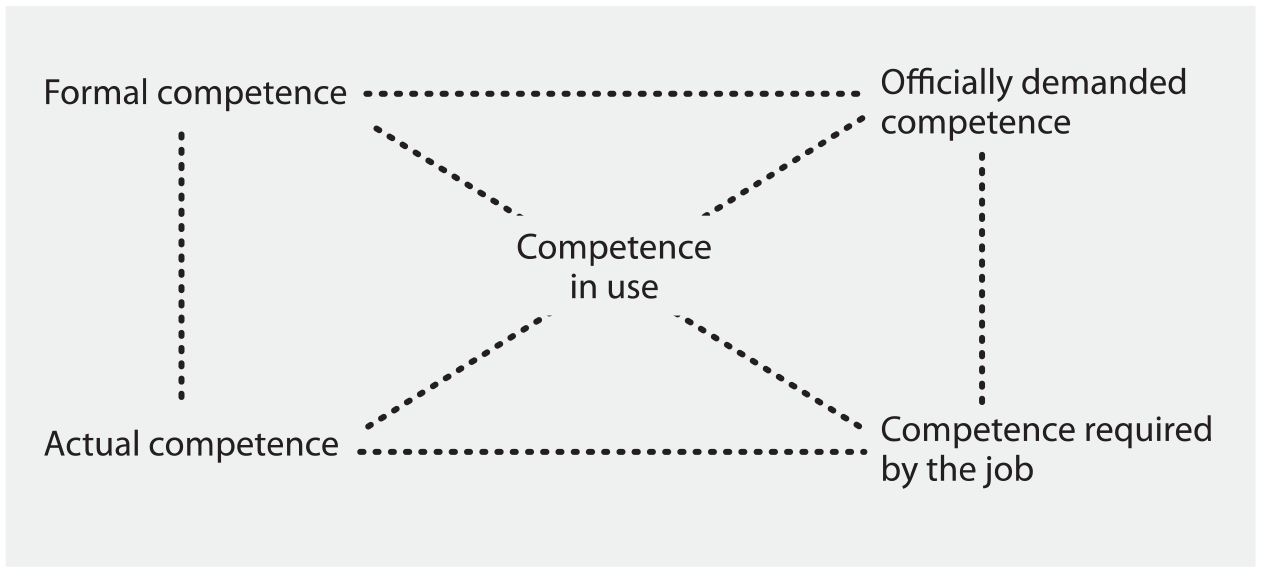
Our literature survey has shown that competence is described as an all-embracing concept with multifaceted meanings. For our study, which focuses on military practice, we have found Ellström’s structured model for the concept of competence useful. At a general level, two major streams of competence research can be distinguished: (1) competence seen as an attribute of the individual and (2) competence viewed as a job requirement (Ellström, 1998, pp. 41–42). The individual dimension, most often seen as skills, knowledge, and/or abilities that a person possesses, can further be divided into formal and actual competence. The former includes formal education and training “measured, for example, by years of schooling completed or by the credentials received by an individual” (p. 41).
In contrast, the latter, typically based on experience, may include judgment and tacit knowledge related to a position, job, or situation. It also denotes the potential capacity of an individual to successfully handle a certain situation or complete a specific task. Actual competence, as described by Ellström (1998), “includes not only the outcomes of education, but also the learning outcomes of work and a wide range of different informal activities” (p. 41).
The job requirement dimension focuses on prescribed job requirements and can also be divided into two parts: (3) officially required competence and (4) competence required by the job. The officially required competence is typically found in job advertisements. Finally, competence required by the job can be seen as the organization’s job specification, that is, a manual specifying competence that an organization requires for a position (p. 41).
Ellström (1998) has synthesized these two views into a third integrative view and put a fifth type of competence, (5) “competence-in-use,” in the center (see Figure 1). This third view emphasizes that competence is neither an attribute of the worker nor primarily an attribute of the job. Accordingly, competence-in-use might be seen as a dynamic factor mediating between the potential capacity of the individual and the requirements of the job (p. 43).
Ellström’s Competence-in-Use Framework (1998)
Structured like this, competence is neither primarily an attribute of the worker nor the job. Ellström’s (1998) concept of competence-in-use is thus multidimensional and interactive; multidimensional in the sense that it is an integration of the other four types of competence (a–d), and interactive in the sense that the competence used depends on the task and the situation at hand. Accordingly, sense-making, situational awareness, and an adaptive ability become central in this view on competence. By using Ellström’s competence-in-use as the basis for our study, we have, therefore, identified the need for finding instances of real-life military situations where competence can be examined.
Method
Research Design
This article has two aims: First, to examine the relevance of the concept of competence-in-use in Swedish military practice abroad, and second, to combine and evaluate two methods in an exploratory case study. We have designed the study to increase our understanding of military competence from the vantage point of the service members’ personal experiences of missions abroad. To fulfill these aims, we used an exploratory case study comprised of two sequential methods: the data were collected from a series of narratives using the DSM and analyzed with a modified version of CIT. The study is descriptive in that we use this constructed method to examine the concept of competence as demonstrated in military practice (Casula et al., 2020; Stebbins, 2001). Because our study is small, we do not claim to produce generalizable facts. However, our ambition is for our study to give a more precise and in-depth description of the concept’s validity in Swedish military practice. Furthermore, our study aims to identify and problematize a well-used and recurring concept as well as propose questions for further research.
What can we do to come close and gain access to military professional practice when it really matters? So that we could research real-life situations, we drew on source material from a years’-long research project on military professionalism.
Dialogue Seminar Method
For this project, we have collected first-person accounts from service members using DSM (Ratkic, 2006). The overall data collection, whose sample this article is based on, was conducted between 2016 and 2018. It is, however, part of a larger research project titled Modern Military Professionalism (MMP), a longitudinal qualitative study documented in a series of anthologies that began in the late 1990s. MMP investigates Swedish military professional skills by allowing service members and officers to describe experiences of situations in which their judgment has been tested and their skills demonstrated (Kaulio, 2003; Tillberg et al., 2017; Victor Tillberg, 2018, 2020; Victor Tillberg & Tillberg, 2013).
DSM (Göranzon et al., 2006) stems from a group of researchers at KTH Royal Institute of Technology interested in eliciting experience-based knowledge, particularly skills related to technology. The approach can be characterized as follows: First, it is based on the participant’s active reflection on their firsthand experiences. Second, writing is used as a method for (self-)reflection. The service members and officers were asked to “describe a situation where your judgment has been tested.” They wrote short narratives (1–2 pages) based on this question, followed the DSM approach (Göranzon & Hammarén, 2007), and selected the narratives with the criterion of reflecting on a situation where their skills were put to the test. In that sense, they are nonroutine or critical situations. The narratives were written in the service members’ own words and from the first-person point of view. Third, the narratives that originate from the individual written reflection are then presented and discussed in a 1-day workshop with eight to 10 people. The service members were present when the incidents were discussed. Sharing narratives and reflections has the purpose of cross-learning as well as validating and critically examining the situation presented in the specific narrative. All the narratives produced using this method have been discussed in a way where key informants from military practice “comment on the familiarity and reasonableness of observations” (Stebbins, 2001, p. 26).
From this already partially published material, we selected narratives that cover the era of interest, namely, the expeditionary era.
Critical Incident Technique
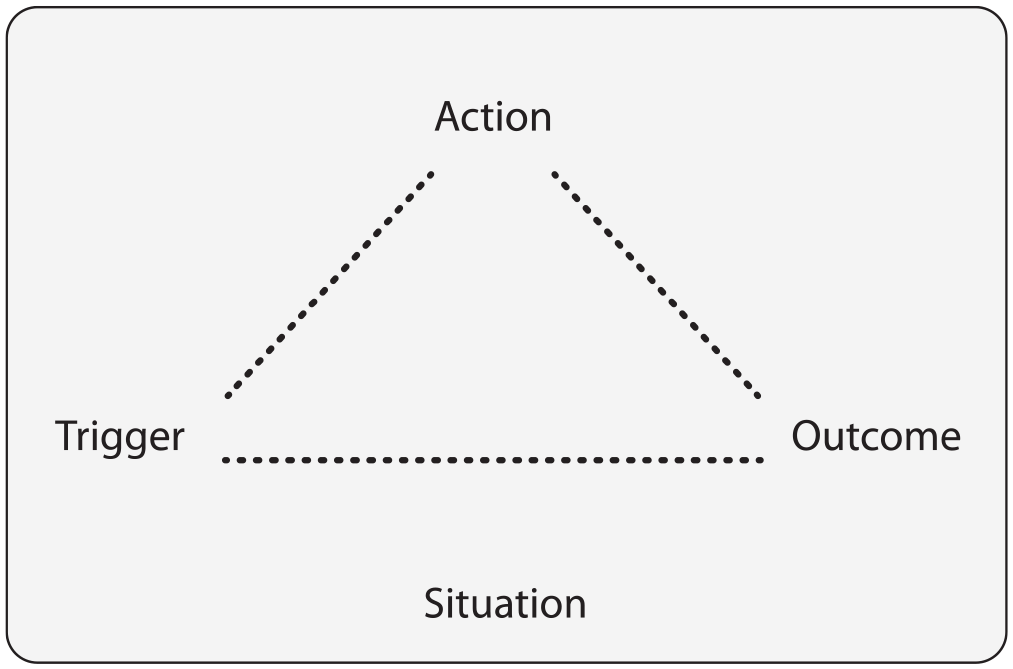
The narratives emerging from the dialogue seminars were analyzed using a modified version of the CIT approach. As a research method, CIT (Chell, 1998; Flanagan, 1954) is an interviewing approach that focuses on identifying negative or positive critical incidents. It has been applied to many social science areas, such as service management (Gremler, 2004), alliance leadership (Kaulio & Uppvall, 2009), project leadership (Thorkildsson et al., 2015), and employee motivation (Herzberg, 1966). In an organizational context, the unit of analysis can be found in the events (referred to as critical incidents) and is commonly defined as an incident that deviates, either positively or negatively, from the respondent’s expectations. In relation to the aim of this article, CIT has been used as the analytical framework for each narrative. In analyzing the narratives from a CIT perspective, we took an approach similar to Kaulio (2003) and Kaulio and Uppvall (2009). Each narrative was analyzed using the components presented in Figure 2.
Overall Guiding Model in the Narrative Analysis
Selection of narratives: we chose a maximum variation sample, with a focus on critical cases (Flyvbjerg, 2006, p. 229). In total, the examined material comprised 62 narratives (incidents), all containing information about the situation at large, a description of what triggered the service member to act, what action was taken, and what outcome the decision and/or action led to. To be included in the category for analysis, the chosen narratives needed to (1) describe a situation that took place in a foreign country, (2) describe a situation that occurred in a crisis and conflict environment, (3) take the form of an eyewitness report, and (4) describe a situation where the person’s judgment has been tested. Narratives that did not meet these criteria were excluded, leaving 28 narratives for analysis. The rejected narratives described, for example, a real-life situation, but one where the author had not been directly involved. In addition, each of the 28 remaining narratives should be unique, that is, they should not be describing the same situation. Since the focus of this study is to understand what kind of challenging situations Swedish service members encountered during missions abroad, some of the service members (whose written narratives qualified in accordance with the criteria above) contributed with multiple texts on different critical incidents.
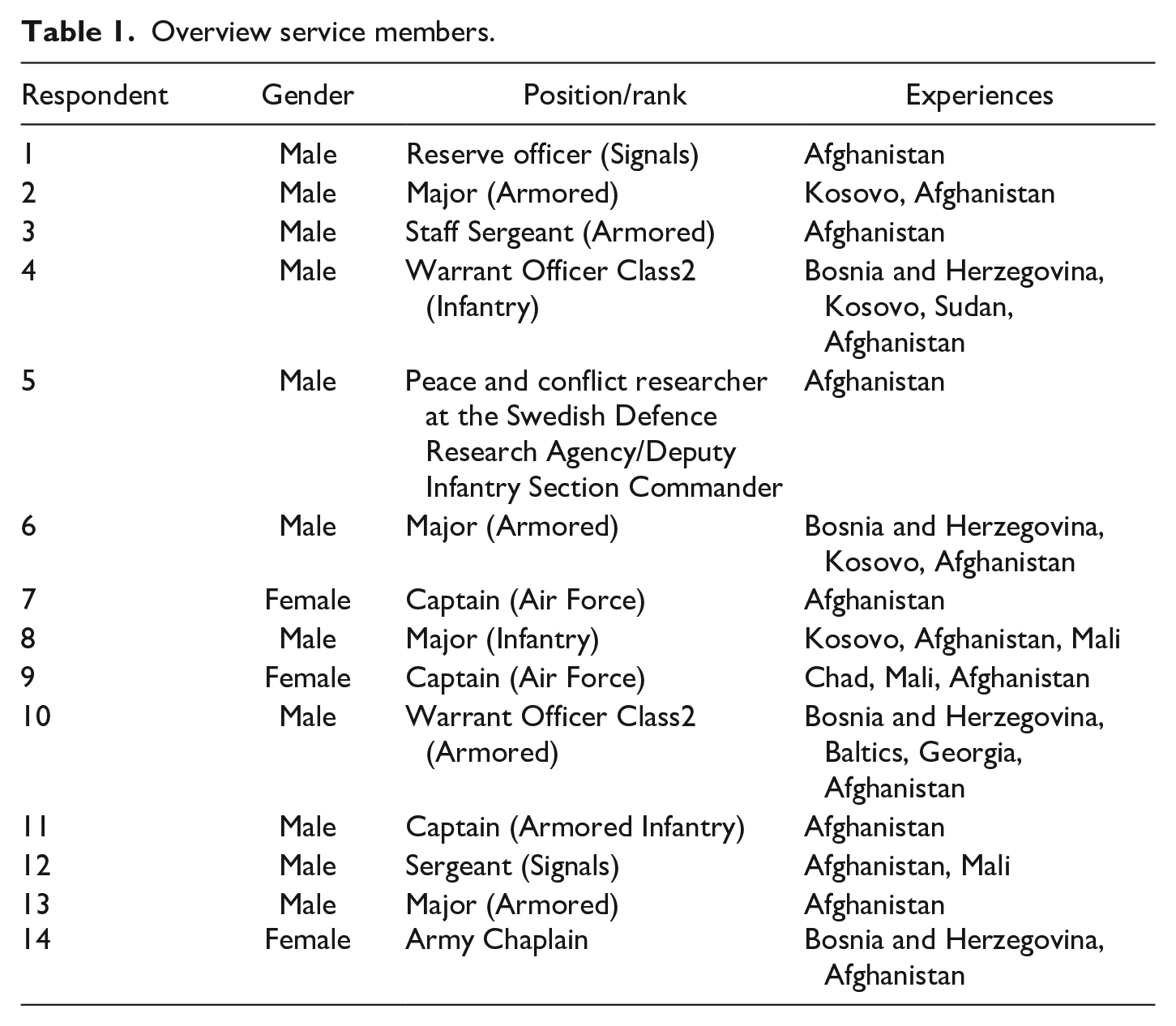
The group of participating service members comprised both men (11) and women (3). They represented different positions in the military organization as well as different military ranks. Their ages ranged from 25 to 60, and all (except one) represented a generation that had gone through the Swedish conscription system. Table 1 shows an overview of the respondents’ characteristics.
Overview service members.
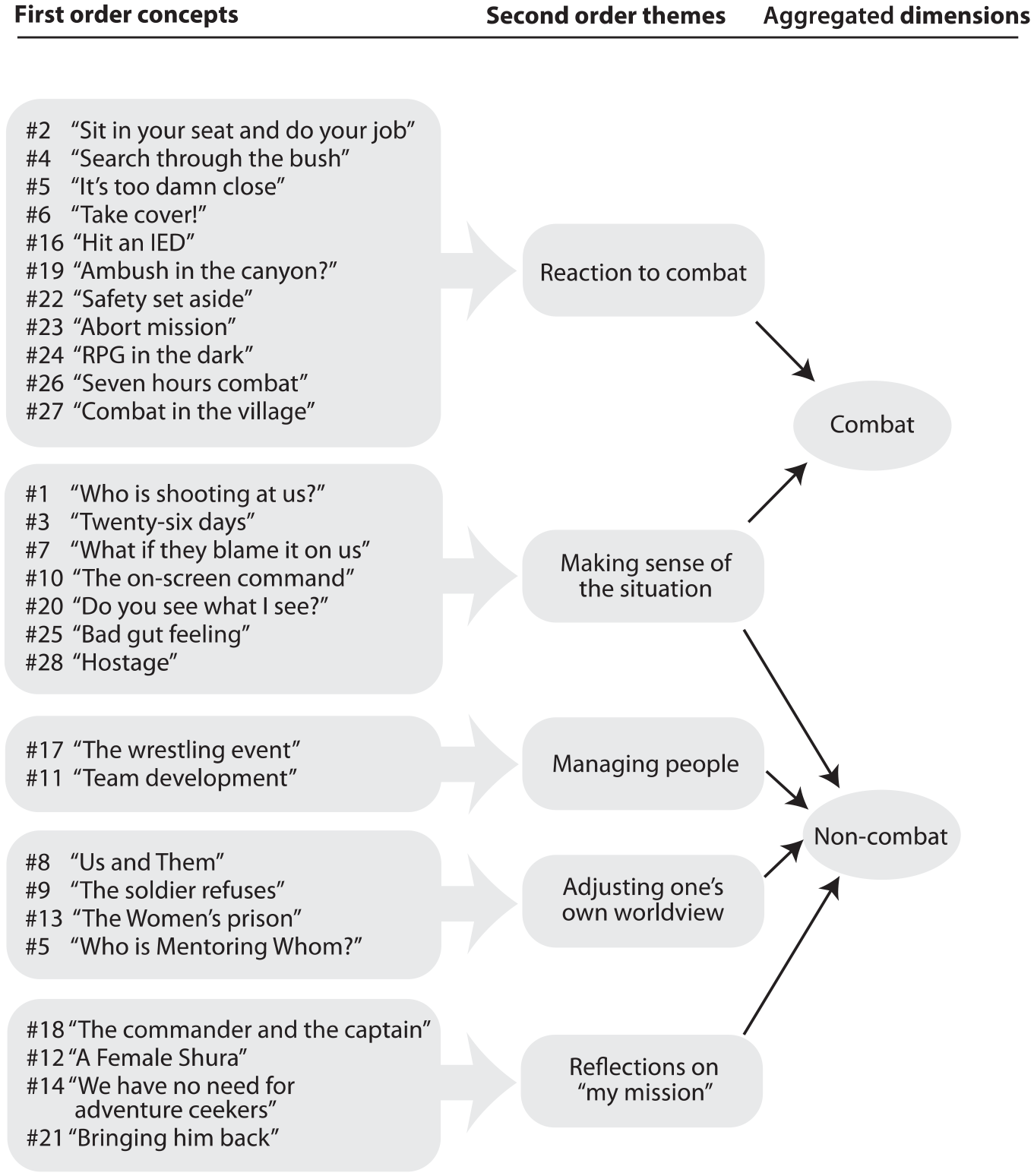
To create an aggregated picture of the analyzed incidents, an approach based on the Gioia et al. (2013) methodology was used where the first-order concepts (in this case, the narratives) were grouped into second-order themes, namely, the researchers’ umbrella terms for the activities described by the informants. These themes were not predetermined but emerged from the data. First, the collected material was analyzed by each researcher, and then together they formulated the following headings and categories. This procedure was conducted in accordance with Gioia’s description: “If agreements about some coding are low, we revisit the data, engage in mutual discussions and develop understandings for arriving at consensual interpretations” (Gioia et al., 2013, p. 22). See Figure 3.
Overview of the Findings
We, the authors of this article, come from different disciplines and have, as a result, been able to highlight and analyze the collected material from various perspectives. The combination of DSM and CIT is a form of method triangulation (Alvesson & Sköldberg, 2000, p. 46) where an epistemological method for data collection (the first-person narrative) provides the foundation for an analysis conducted using CIT, a method often used in the field of organizational theory.
The research team for this study has varying degrees of familiarity with military professional practice, which we drew on in the analysis. Our researcher positions are “outside insiders” and “outside outsiders” (Koss Hartmann et al., 2018, p. 16). One of us is a researcher with a military background, another a researcher with long experience of researching military professional practice, another an organizational researcher, and another a philosopher. We have thus been able to analyze the data using various perspectives as well as theory triangulation (Yin, 2018, p. 128).
Results
In the following, we present the findings elicited using the Gioia methodology (2013). Figure 3 shows the overall findings of our study. (More detailed information about collected data can be found in the appendix). On the aggregated level, two categories emerged: combat and noncombat situations. In general, it can be said that the findings highlight the problem of making a distinction—when does fighting actually begin and end? This is especially the case for those situations categorized in our study as noncombat. Described as blurry terrain, they nevertheless require decisions and action. Second, at the next level (second-order themes), we identified five categories: reactions to combat, making sense of the situation, managing people, adjusting one’s worldview, and reflections on “my mission.” Consequently, the presentation of the findings is structured around these second-order themes. At this point, it may be worth repeating that in using the CIT methodology, the respondents were free to choose, describe, define, and delineate their narratives as they experienced them. Therefore, a narrative in one specific category will not be exactly comparable to another in the same category.
Reaction to Combat
Twelve out of 28 narratives were categorized into this second-order theme, all of them related to combat situations. An important situation described in the combat narratives (#2, #5, #6) was that of being ambushed/shot at. “Taken by surprise” is a common theme in these three narratives. “What do you do?” “How do you react?” and “What can you do?” were common reflections on these situations. The respondents’ actions are related to basic military training, such as maintaining radio communication (#5), running and getting into the vehicle and ducking (#2), and trying to get the troops somewhere safe (#6). However, these actions are not part of a larger plan; rather, in the words of respondent 6, “[n]ow it is no longer possible to do everything right, only to do as little wrong as possible.” The findings from this category confirm the importance of “combat skills” as a core part of military competence-in-use.
Making Sense of the Situation
Seven narratives involved making sense of the situation. This category highlights the consequences of decisions that could affect the lives of both military personnel and civilians; they could also have strategic implications. At the heart of these narratives was a dilemma in using violence. For example, narrative #2 describes a complex situation where the local interpreter escapes. Is he a traitor? The Swedish military unit begins the search with a Unmanned Aerial Vehicle (UAV). Suddenly the unit is under machine-gun fire. When civilians come in between the machine gun and the unit, one of the soldiers starts blaming the interpreter. They face the decision to fire or not. Later on, the village elders thank the commander for not firing. Afterward, the platoon sings the national anthem. The interpreter is also replaced.
Narrative #10 describes a situation where the platoon receives a text message through the communication channels. Another platoon is engaged in combat not far away but cannot be contacted; nevertheless, the platoon advances to support them. The platoon under fire is briefed by text, but all they get is the auto-reply. At the same time, the first platoon is advancing in battle formation toward the combat zone. No order is given to patrol or link up with the platoon in combat. What should they do?
In narrative #7, another dilemma is described. The unit encounters several mutilated bodies, those of foreigners, according to the locals. The question is who is to blame for these desecrated bodies. And if there are no witnesses, what if they blame us? These are situations where the commander faces the dilemma of weighing up the risks and benefits. All the narratives highlight the dilemma of deciding to fight or not. As the situations are new and complex, and the outcomes uncertain, they represent an “unforgiving decision.”
The findings from this category suggest the classic view of military competence has been expanded to also include the situationally anchored sense-making process, professional judgment, and the service members’ decision-making ability as core parts of military competence-in-use. Due to their degree of complexity and ambiguity, the rules governing action offer limited guidance in critical situations. In addition, the parts that make up competence-in-use are strongly related to the question of “when not to fight.” In this regard, experience and a long-term perspective on the overall mission are paramount.
Managing People
With only two narratives, “managing people” is the smallest category. Despite its size, we kept this category since the two narratives highlight a clear theme not found in the other narratives. Narratives #11 and #17 deal with leadership challenges in noncombat situations. The latter can be seen as a classic catch-22 situation. The platoon wanted to arrange a boxing match, but Swedish law and work environment regulations prohibited this. The former relates to the officer’s concern about “keeping the troops active” and their morale up. Both narratives are typically leadership-oriented and illustrate the creativity needed to endure the monotonous waiting between missions.
Adjusting One’s Worldview
This category contains five narratives where a significant change in the service members’ worldview took place. Generally, they describe encounters with the society and the people the International Security Assistance Force was to protect. In some cases, such as narratives #8, #9, and #15, these people’s life experiences differed greatly from the service members. Such observations often led to a deeper understanding of the foreign society but also to a distancing in the sense that they triggered thoughts such as “what are we doing here?”
Reflections on “My Mission”
The main question repeated in the six narratives in this category was “What is our/my mission?” In several cases, the service members doubted that their work had a positive effect or that their efforts had made any difference in the long run. They struggled to find reasons to believe that their actions mattered. For example, one narrative is about an encounter between (female) soldiers and women in a village that had earlier come under fire. When the female soldiers arrived there to talk about how they could help make the village safer, the women did not want to talk with them. Another theme is reflections on how to cope with frictions and negative feelings, such as fear, anxiety, and injustice. The (self-)reflections in this category addressed more general events and have characteristics of a more existential nature. In that sense, they lacked the closeness to a specific situation that the other narratives had. However, they did provide insights into how the service members made sense of their experiences and, in particular, how these experiences influenced them as people.
Discussion
This article addresses two aims: First, to examine the relevance of the concept of competence-in-use in Swedish military practice abroad, and second, to combine and evaluate two methods in an exploratory case study. To these aims can be added an ambition to widen the concept of military competence—taking into account the importance of Swedish service members’ firsthand experiences and the contemporary battlespace conditions of hybrid warfare. In this concluding discussion, we want to outline a conceptual framework that might be used as a point of departure for the theoretical and empirical analysis of overseas deployed service members’ encounters with challenging situations. This concluding discussion has two parts: the first addresses the article’s initial question about competence-in-use being useful for developing the understanding of Swedish military professional practice “when it really matters.” The second concerns the chosen method’s (DSM + CIT) relevance, possibilities, and limitations.
Competence-in-Use: An Action-Oriented Concept
Competence-in-use first becomes apparent when a task or situation requires an intervention. Before a situation arises, a task is performed, or a problem is solved, competence-in-use is just hypothetical (Blomgren, 2007; Tillberg et al., 2008). The service member can therefore possess knowledge demonstrated and tested during training. It can meet official and formal requirements but is never tested in critical situations. It is this relationship that makes competence-in-use, a useful concept since de facto it focuses on the actual action.
Using Ellström’s concept (1998) of competence-in-use, we discerned five categories from 28 narratives based on the analysis by Gioia et al. (2013). The aggregated dimensions of our study show a general distinction between combat and noncombat situations (Figure 3). The first category—reactions to combat—represented narratives of combat incidents and took the form of exchanges of fire, ambushes and improvised explosive device (IED)-related incidents. The second category—making sense of the situation—is a narrative containing both a real and clear fighting situation but also an expanded reflection on the consequences and resulting actions. The main theme of all incidents in this category was the sense-making process related to “combat or not” [the blurry line between when to use force and when not to].
Past research has framed this type of decision situation in terms of situation awareness (SA; e.g., Endsley, 1988). Originating from the air force, SA was introduced as early as World War I by Oswald Boelcke, who realized “the importance of gaining an awareness of the enemy before the enemy gained a similar awareness” (Endsley, 1988, p. 97). More recently, it has been stated that “[d]eveloping and maintaining a high level of situation awareness (SA) is a difficult part of many Army jobs. It is one of the most critical and challenging tasks in combat today” (Bolstad & Endsley, 2003, p. 369). Our results could have been related to SA. However, an important aspect of these incidents was that interpreting the situation was central. The officers’ and service members’ main task were to make sense and decide to refrain from firing. As, for example, in incident #1, the decision not to open fire—a decision that contradicts both the professional military spirit and training—could, in the short term, be seen as a failure but a success in the long term. For that reason, in Figure 3, we link the theme making sense of the situation to both combat and noncombat situations. Developing this ability to make well-judged decisions presents a challenge as it requires experience to remain calm in stressful situations. This ability is characteristic of the expert rather than the novice as these narratives concerned situations where rule-following was not enough to lead (Dreyfus & Dreyfus, 1986; Victor Tillberg, 2020). The third category—managing people—is small but highlights a recurrent phenomenon in international operations: dealing with the wait. It can be interpreted as the competence of “managing in between” missions. The fourth category—adjusting one’s worldview—places the individual in the overall context of their mission. These narratives reflect on the individual’s role in the “big picture.” In these narratives, situations are described as being, in one way or another, frictional, where one’s values clash with the reality one encounters. The fifth category, “reflections on my mission,” comprises narratives that, in one way or another, reflect the individual’s contribution and what is required of them in a larger context. They all take the general view that their respective missions are important and require persistence and a long-term perspective. However, in several cases, the respondents had difficulty seeing the direct impact of their specific action. Previous research on international operations has introduced the concept of cultural stretching (Hajjar, 2010). Here the service member and the military advisor have to “stretch their cultural, physical, and moral boundaries” in order to build relationships with foreign counterparts (p. 661). We believe that the theoretical approach provided by Ellström’s concept of competence-in-use is useful for a more in-depth analysis of military practice “when it really matters.”
Two Sequential Methods: DSM + CIT
This article aimed to also combine two methods: one for data collection, DSM, with one for the analysis of collected data, CIT. This methodological innovation came about because of our earlier experiences of using the respective methods in our fields of research. When researching military professionalism, every researcher has to deal with the problem of access to the “field.” How do you get close to, and go into depth in, a professionalism that (often) occurs far away and in dangerous conditions? This is where DSM, which collects what Denzin (1989) calls “thick descriptions,” is an alternative to participatory observation. One advantage of DSM is that it (systematically and correctly used) collects data from many people simultaneously. The process of discussing the texts in a group after they have been read out loud is a genuine part of the validation process. When answering a survey from, or being interviewed by, the often less experienced questioner, the informant can stray from the subject and exaggerate their contribution. The informant produces accurate facts and details by describing a course of events to colleagues with similar experiences and intimate knowledge of the mission environment. The downsides of this method are that it is time-consuming and administratively burdensome. Having selected the narratives, we then analyzed the material using Gioia et al.’s (2013) variation of CIT (Figure 3). We analyzed every situation described using the guiding model set out in Figure 2. We found that this way of working—to subsequently look for what triggered the situation, which resulted in action and then outcome—worked well for this purpose. The informants were not instructed to use these concepts for their writing or reflection. Instead, they gave written answers to a more open question: “Describe a situation where your judgment has been tested.” We have thus learned that when we next conduct a series of dialogue seminars, the concepts of trigger/action/outcome will be more clearly included in the writing instructions. We believe our combination of methods is a promising approach suitable for in-depth studies on how theory and practice can be used through the conceptual frame of reference provided by competence-in-use.
Conclusion
Although huge resources are being put into examining and evaluating military training and practice, fewer studies examine the relationship between theory and practice, with a focus on the actual professional practice. It is in this context that our study is unique. This study demonstrates that DSM, combined with CIT, provides a qualitative method suitable for retrieving data based on firsthand experiences. This method can, thus, help build a more nuanced and precise picture of military competence as it plays out in real-life situations. Studies of such experiences can be systematically analyzed by introducing competence-in-use as the focal concept in this context. Consequently, this enables researchers to give better accounts of service members’ firsthand experiences of complex situations. Implications for training informed by a productive interplay between theory and practice can thus be suggested accordingly. The findings of the five aspects of military competence-in-use reflect the complexities in the expeditionary era. These aspects could be used in educational settings as part of the preparatory training for military personnel before their international missions. Finally, the analytical procedure suggested presents a framework for further research on military competence-in-use.
We conclude with some remarks on the limitations of our study with the aim of suggesting future research. First, being a pilot study, it is based on a relatively small sample size, with 28 narratives written by the respondents. It would be interesting to see future studies include larger sample sizes to identify typical critical situations in international operations. It would also be of interest to describe the same situation from different service members’ perspectives or make comparisons between different countries. Second, this study relies on written material. Today’s soldiers have helmet cameras and other technology that can be used as supplementary source material. Other forms of data could be analyzed using the same technique as presented in this article, leading to an even more realistic experience of different situations.
The SAF (2021) states that “the skilled military profession requires proficiency and effectiveness beyond armed combat” (p. 22). Our findings in this article correspond to what is hidden in the aforementioned “beyond.” In the expeditionary era, hybrid conflict situations emerge where the friend–enemy distinction is increasingly blurred, and the frontlines are harder to distinguish. Modern military missions typically fall into this category of gray-zone situations. Today’s international operations are different in that they seldom lead to peace. As a result, defeating the enemy has, in recent years, taken on new meanings. To, thus, meet the contemporary requirements, expanding the traditional understanding of military competence is called for.
Supplemental Material
sj-docx-1-afs-10.1177_0095327X221118928 – Supplemental material for Military Competence-in-Use in the Expeditionary Era: A Swedish Example From Missions Abroad
Supplemental material, sj-docx-1-afs-10.1177_0095327X221118928 for Military Competence-in-Use in the Expeditionary Era: A Swedish Example From Missions Abroad by Lotta Victor Tillberg, Matti Kaulio, Peter Tillberg and John Haglund in Armed Forces & Society
Footnotes
Acknowledgements
The authors would like to thank the participating Swedish soldiers and officers who have shared their experiences from missions abroad. They also thank the reviewers for their thoughtful and useful comments on our manuscript.
Declaration of Conflicting Interests
The authors declared no potential conflicts of interest with respect to the research, authorship, and/or publication of this article.
Funding
The authors disclosed receipt of the following financial support for the research, authorship, and/or publication of this article: The authors received financial support for the research from the Swedish Armed Forces Research and Technical Development program and from the Modern Military Profession project at the Institute for Management of Innovation and Technology (IMIT), Swedish Armed Forces grant no. AT.9225360.
Supplemental Material
Supplemental material for this article is available online.
Notes
Author Biographies
References
Supplementary Material
Please find the following supplemental material available below.
For Open Access articles published under a Creative Commons License, all supplemental material carries the same license as the article it is associated with.
For non-Open Access articles published, all supplemental material carries a non-exclusive license, and permission requests for re-use of supplemental material or any part of supplemental material shall be sent directly to the copyright owner as specified in the copyright notice associated with the article.
