




Abstract
More than 75 women have successfully graduated from the U.S. Army Ranger Course since the integration of women into elite military combat training. This study sought to identify the psychological characteristics and sociological variables that contributed to their motivation and success. A guided interview and demographic and psychological questionnaires were used to assess characteristics of 13 women who successfully completed elite military combat training. Collectively, these women were college graduates and had well educated fathers, possessed high levels of grit and resiliency, and described themselves as self-competitive challenge seekers. These women all had a strong male influence in their lives. The characteristics of these pioneer women may be unique from subsequent cohorts as female participation in elite military combat training becomes the norm and as attitudes and experiences change for graduates of female combat training over time.
Understanding the psychosocial characteristics of the first women to successfully complete physically demanding elite military combat training is important in defining factors for successful integration of women into combat roles. It can be argued that these women are pioneers with challenges similar to the first female astronaut candidates (Ryan et al., 2009), the first graduates of the US Army Military Academy (West Point) (O’Connor, 2020), and some of the first women in science, technology, engineering, and math (STEM) (Klinman et al., 2021). Are they exceptional for their pioneering spirit of rising to the challenge of being the first, or are they exceptional as an elite group, accomplishing something that other women cannot or will not be motivated to attempt? We sought to determine what motivated these women to pursue these challenging trainings, and what enabled them to be successful.
Elite military combat training provides opportunities to learn and test an individual’s physical, cognitive, and psychological capabilities required to meet these unique challenges of being an elite combat Warfighter. Ranger training and other elite military combat training teach small unit leadership skills which include self-awareness under stress. Leadership on the battlefield necessitates proper combat readiness training such as provided by the elite military combat training schools like the U.S. Army Ranger School, U.S. Army Special Forces Assessment School (SFAS), U.S. Marine Infantry Officer Course (IOC), and the U.S. Navy Sea, Air, and Land (SEAL) training. With the combat exclusionary rule lifted (Tilghman, 2015), women seeking to lead in combat, need to obtain the skills and credentials these combat training schools/courses provide. These schools/courses are difficult for both men and women alike. Prior studies have examined the psychological attributes successful male graduates in elite combat training possess (Everly et al., 2012). However, because this training was not open to women, this research could not be done.
Within the last 5 years, more than 75 women have successfully completed these schools/courses (Swick & Moore, 2018). Studying the attributes these first few graduates possess enables a glimpse into better understanding the psychological characteristics and sociological dynamics important to becoming an elite female combat Warfighter. A review of key components of ground-breaking women from other fields (e.g., medicine, politics, entertainment, science, space exploration, etc.) enables some insights into understanding these elite female Warfighters.
The impact of the feminist movement has been examined in detail from defining the term, originating in France in the late 1800s, to what components comprise feminism (Freedman, 2002). Freedman (2002) stated there are four components: equal worth, male privilege, social movements, and intersecting hierarchies. It can be argued, that the quest for rights by the common people during the American and French Revolutions illustrated that if people were to be free from status imposed by aristocrat rule, then that should include women as well as men (Freedman, 2002). In 1837, the first women were admitted to colleges or universities in the United States with the acceptance of women at Oberlin College in Ohio (Parker, 2015). About a decade later, the first meeting on women’s voting rights was convened in Seneca Falls, NY in 1848 (Progressive Women’s Leadership, 2018). Essays collected by Scott (1997) describe the history of feminism as complex and intertwined with race and culture around the world. However, the rise of feminism and its history also sheds light on the necessary conditions to elicit change and success in a chosen field. To simplify, feminism has been defined: “. . . that you believe women should be allowed the same rights, freedoms, and opportunities as men and be treated in the same way, personally and professionally (Progressive Women’s Leadership, 2018, p. 3).” As defined by the Progressive Women’s Leadership (2018), four important waves of feminism in United States history include the Women’s Suffrage (1840s to early 1900s), that is, the right to vote as the first wave. The second wave includes what is thought of as the Women’s Liberation Movement (1960–1980), with such activities as abortion rights, access to birth control, workplace equality, and women’s right to hold credit cards and apply for mortgages in their own name as some major initiatives. Within this third wave, Women’s Empowerment and Diversity (1990–2000), included such issues as body positivity, lesbian, gay, bisexual and transgender rights, race, fair maternity leave practices, and job equality and pay equity. Crenshaw (1989) specifically argues that an analysis of feminism must include an analysis of race if it is to include a progression of non-white women. Crenshaw’s analysis focused on Black women but by extension, the integration of all racial minorities should be included. Finally, culminating in the most recent and fourth wave, seeking gender equality, women in leadership roles, and sexual assault awareness as the key components (the 2000s) (Progressive Women’s Leadership, 2018). Women seeking and obtaining leadership positions in military combat roles most closely align within this fourth wave of pursuing gender equality. The change in social norms was necessary for women to have the opportunity to pursue these combat leadership roles.
Examples of pioneer women striving for equality in traditionally male domains include women who trained and were tested to become astronauts in the 1960s. These women demonstrated they were comparable or superior to male astronaut candidates in all cognitive/brain-related measurements assessed (Ryan et al., 2009). However, even in the 1990s, women comprised only about 2% of U.S. Air Force (USAF) pilots. At this time, they were only allowed to fly in non-combat missions, such as providing transport and participating in training exercises, due to the Department of Defense (DoD) non-combat policy (King et al., 1997). In a study of female USAF pilots, it was shown they exhibited higher levels of extraversion, agreeableness, and conscientiousness than male pilots. Female pilots also scored higher on these scales than military non-pilot women and scored lower on measures of neuroticism than non-pilot women. This study concluded that the traits these women possessed are highly adaptive for USAF combat pilots given the nature of modern military operational requirements demanding less individual “dog fighting” aerial piloting skills to those compatible and important to multi-crew, coordinated missions (King et al., 1997). As Friedl (2016) has noted, taking advantage of characteristics more prevalent in female Warfighters could allow for changes in how some missions are conducted, improving overall mission performance.
Although women were not always permitted to participate, history has shown them to be successful in combat. Women have fought valiantly for years in combat roles in the United States Army as early as the Revolutionary War. Margaret Corbin, fought alongside her husband disguised as a male Soldier, during the Battle of Fort Washington in 1776 (Michals, 2015). Similarly, many years later during the Civil War, women again disguised as men fought for both the Confederate and Union Armies. These examples are important because they demonstrate that some women, although disguised as men, performed similarly to male peers in battle (Blanton, 1993). Historically, these examples show that when select women were held to the same standards as men by military leaders, they were able to successfully complete combat military tasks alongside their male peers.
In 2013, the U.S. Secretary of Defense (SECDEF), Leon Panetta lifted the military’s combat exclusion policy regarding women, opening the door to the first three female candidates and graduates of the U.S. Army Ranger School (Ft. Benning, GA). That change was followed by SECDEF Ashton Carter’s declaration to open all combat jobs to women “with no exceptions” in December 2015 (Tilghman, 2015). As women are now allowed in combat roles, they can now elevate their training and military career opportunities with selection into elite military combat training courses such as the Army Ranger and SFAS schools, Marine IOC, and the Navy’s SEAL and Basic Underwater Demolition/Sea, Air, Land (BUD/S) training. Selection into these elite military combat courses involve unique operational and mission capabilities that require high levels of physical and psychological competencies and often take years to complete training requirements necessary for entry into the course. Selection into such training schools/courses does not promise successful completion. The level of attrition experienced by men across such training is difficult to determine but has been reported in the range of 50–75% (Pavelko, 2017). Successful completion of these physically demanding courses requires extreme mental fitness as well as the obvious physical fitness (Van Hoof et al., 1992; Zazanis et al., 1999). With regard to cognitive measures, it was shown that Soldiers scoring in the bottom 20% on the cognitive Wonderlic test (McKelvie, 1989) were less likely to succeed at SFAS (Zazanis et al., 1999). Predicted course success to varying degrees is related to personal grit and psychological measures such as intelligence, aptitude, and resilience (Bartone et al., 2008; Beal, 2010; and Zazanis et al., 1999). The present study sought to identify the psychological characteristics and sociological variables of some of the first women who have successfully graduated from elite military combat training courses and are likely related to that success.
Methods
Participants
Participants consisted of 13 women who successfully completed an elite military combat training course or school (12 U.S. Army Ranger School Graduates and 1 Marine IOC Graduate). These military women each successfully graduated from elite military combat training school/courses between 2015 and 2019. We invited all known female graduates through December 2019 from both the Ranger School and Marine IOC to participate in the study to ensure the study sample was as representative as possible of those first female graduates of when sex integration of these training courses began. Included in the study sample were two of the first three female graduates from Ranger School (Cox, 2015; Cox, 2018). A primary reason for nonparticipation was unavailability from current Army assignments including key young leader assignments. Data collection took place during September 2019 and March 2021. All participants provided written informed consent prior to study involvement. The study was reviewed and approved by the U.S. Army Medical Research and Development Command’s Institutional Review Board (Fort. Detrick, MD). Investigators adhered to the policies regarding the protection of human volunteers as prescribed in Army Regulation 70–25, and the research was conducted in adherence with the provisions of 32 CFR Part 219.
Procedures
To assess the psychological and personal characteristics, as well as the sociological conditions these elite female Warfighters possess or experienced, a combination of a guided interview and demographic and psychological questionnaires were used. The questionnaires were completed electronically and were used to gather background information (education and military experiences, etc.) and to assess personal grit, resilience, and hardiness.
Structured Lifestyle Interview
The in-person structured lifestyle interview was conducted 48–72 hours into a larger study (i.e., physiological and physical performance data not presented in this paper were also collected) (McClung et al., 2022) to allow rapport between the participant and the interviewers prior to the structured interview. Interviews lasted anywhere from one to two hours and were conducted by the same trained research staff with no financial or professional stake in the data obtained during the interview. Interviewers followed general guidelines recommended by Then et al. (2014) for focus group interviews that also pertain to guided interviews, such as not using jargon, and validating each idea or experience as important. Interview topics were consistent and planned, and proceeded from 21 pre-developed general questions to more specific or secondary questions (two to six) to clarify answers (Then et al., 2014). For example, the interviewer first asked: “Were there specific strategies you used to help you through elite military combat training?” For those that said “Yes,” they were asked about the specific strategies; for example, if they “used a strategy” in preparation for the school/course or during the school/course itself. They were then asked if they thought that strategy did indeed contribute to their success in their elite military combat training. Interview questions were focused on three areas or pillars hypothesized to contribute to successful completion of elite military training: (1) personal background, (2) preparation for the school/training, and (3) factors related to success that took place during training. Structured lifestyle interviews were conducted in person with two trained interviewers and video-taped to ensure no information was lost and to capture tone and context of response statements. The following are primary level interview topics that were discussed.
Pillar I: Personal Background/Characteristics
Questions that were asked included: (1) What role, if any, did your parents play to influence your lifestyle, that is, do you feel your parents influenced your nutrition, physical activity, or how you view yourself from a psychological perspective? (2) Did you go to college and did you graduate from college? (3) What type of person do you feel you are? (4) How did you feel about yourself growing up?”
Pillar II: Preparation Activities/Behaviors for Elite Military Combat Training
Questions that were asked included: (1) What military training (schools/positions) did you attend prior to going to elite military combat training? (2) What specific military or physical exercise training (types, duration, and frequency) did you complete to prepare for elite military combat training? (3) What was your motivation to go to elite military combat training? (4) Did military superiors, peers, and subordinates support your decision to go to elite military combat training? (5) Did you verbalize your intentions to go to elite military combat training?
Pillar III: Activities/Behavior during Elite Military Combat Training
Questions that were asked included: (1) What strategies did you use to successfully complete the training course? (2) Did peers, instructors, or others at elite military combat training help you succeed? If so who and how did they help? (3) What, if anything would you do differently to prepare for elite military combat training?
Upon completion of the interview, a transcript was generated from the filmed interview session. The transcript was then analyzed to establish a set of key variables. The process was completed manually, following the method described in the IBM SPSS Text for Analytics for Surveys (IBM Corporation, 2012). Similar automated functions used in SPSS were completed manually to include: (1) extract key concepts and opinions, (2) create categories and categorize text responses, (3) refine categories, and (4) summarize findings. Variables were categorical (e.g., what strategies did you use), continuous (e.g., how many months did you prepare for the training course: 2, 6, 10, etc.) or unique descriptive (e.g., “I did not use music to train because I knew during the course that it would not be available”). Some variables created, took a common concept and created a similar response by paraphrasing one or more participant responses (e.g., “I was motivated to go to Ranger School to obtain leadership skills” would be categorized into the same response as “I wanted to become a leader”). To maintain consistency, the same study team members completed the interview transcription and analysis into quantitative output variables.
Psychosocial Measures
Determination/Grit
Assessment of one’s determination or grit, defined as trait-level perseverance and passion for long-term goals was assessed using the 8-item modified Grit and Ambition Scale (Grit-S) (Duckworth & Quinn, 2009). The GRIT-S was electronically administered and is measured on a 5-point Likert scale (1 = not like me at all to 5 = very much like me) and has been demonstrated to have high internal consistency for the overall scale and each factor (Duckworth & Quinn, 2009). The eight item scores are summed and averaged. Items 1, 3, 5, and 6 are reversed scored, that is, 1 = very much like me and 5 = not very much like me. Internal consistency of the GRIT-S score across six studies ranged from α = 0.73 to 0.83 (Duckworth & Quinn, 2009).
Resiliency
Resiliency was assessed with an electronic administration of the Connor–Davidson Resilience Scale 25 (CD-RISC-25) most notably used to assess resiliency or lack of as related to Post-Traumatic Stress Disorder. It has been used in both clinical and non-clinical populations with good psychometric properties in each. The CD-RISC-25 is a 25-item questionnaire that measures stress coping ability on a 5-point Likert scale (0 = not true at all to 4 = nearly true all the time). Outcome scores range from 0 (lower resilience) to 100 (higher resilience) and differentiate the general population from clinical populations with anxiety disorders (Connor & Davidson, 2003; Davidson, 2018). The Cronbach’s α for the total scale was α = 0.89 (Connor & Davidson, 2003).
Resiliency/Hardiness
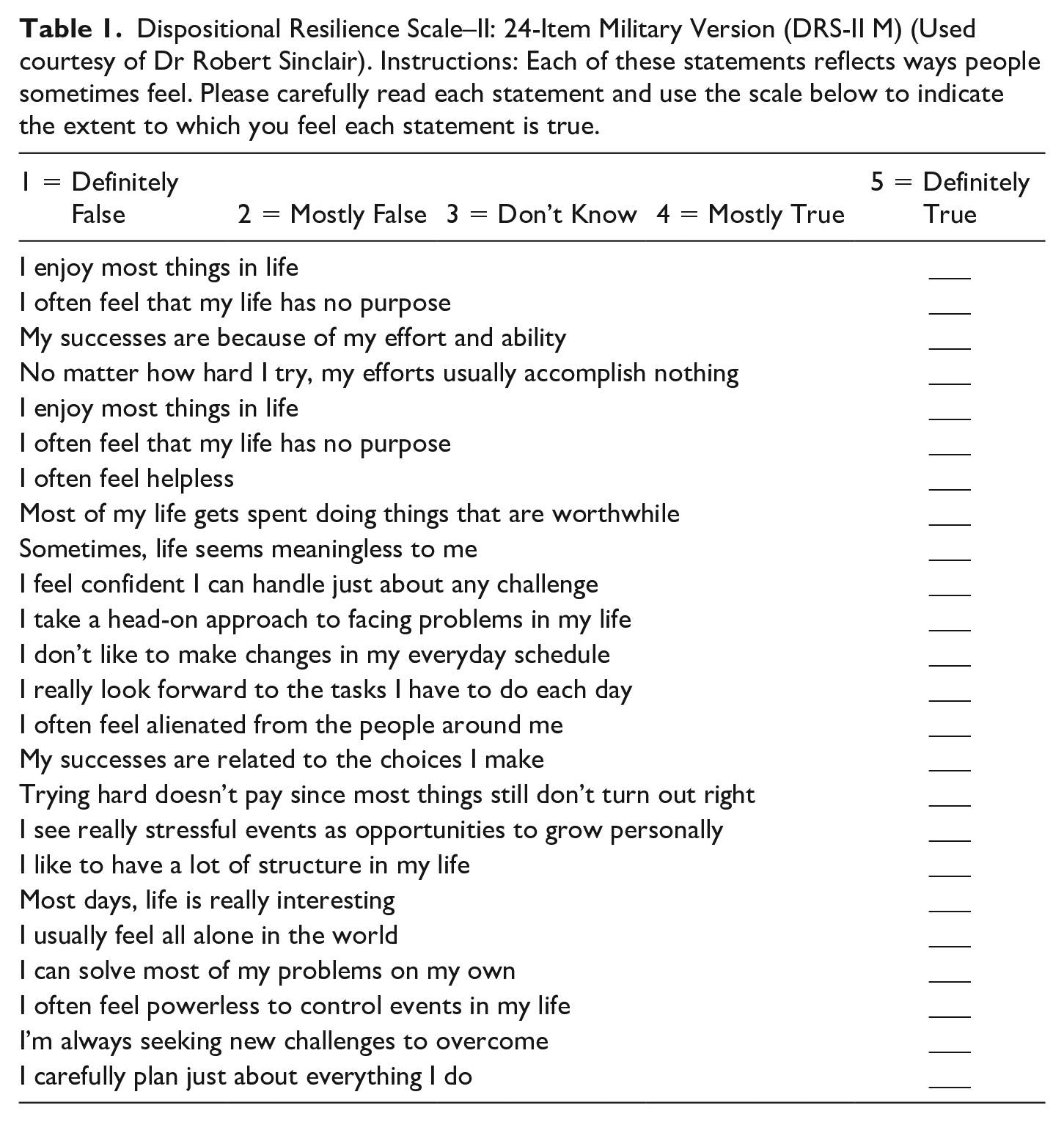
The Dispositional Resilience Scale II Military Version (DRS-II M) was also used as another means to assess resilience and hardiness (Sinclair, 2004). This 24-item version (Table 1) is an adaptation of the 18-item DRS-II (short version) (Sinclair & Oliver, 2004) adding six items that are relevant to the military population. The DRS-II M has six subscales with high internal consistency as measured by Cronbach’s alpha, three positive scales: commitment (α = 0.83), control (α = 0.80), and challenge (α = 0.83), and three negative scales: of alienation (α = 0.91), powerlessness (α = 0.93), and rigidity (α = 0.72) (Sinclair, 2004). These reliability measures are slightly higher, that is, more reliable, than found for the more widely used 18-item DRS-II short version (Sinclair & Oliver, 2004). For the positive dimensions, higher subscale scores represent higher levels of hardiness and for the negative dimensions, lower scores represent higher levels of hardiness (Sinclair, 2004). Each statement in the survey is assessed on a Likert scale (1 = definitely false to 5 = definitely true) regarding how that statement pertains to the respondent. The construct hardiness is based on three interrelated components: commitment versus alienation, control versus powerlessness, and challenge versus rigidity. This DRS-II M has been used previously to assess hardiness in a military population (Lovering et al., 2015). The two surveys of resiliency were used to ensure comparative data was available to describe the current population. Briefly, the Sinclair (2004) scale was designed to be militarily relevant, and used descriptive subscales, however its use has been limited. Conversely, the Connor–Davidson scale (Connor & Davidson, 2003) while not designed particularly for assessment of military personnel has been more widely used, including assessment of military personnel’s resiliency.
Dispositional Resilience Scale–II: 24-Item Military Version (DRS-II M) (Used courtesy of Dr Robert Sinclair). Instructions: Each of these statements reflects ways people sometimes feel. Please carefully read each statement and use the scale below to indicate the extent to which you feel each statement is true.
Statistical Analysis
All data were entered into and analyzed by SPSS version 26 (International Business Machines (IBM) SPSS Statistics; Armonk, NY). Descriptive statistics were tabulated for all variables. For continuous variables, means, standard deviations (SD), medians, and ranges were calculated. For categorical variables, frequency counts were computed. This study was descriptive in nature only due to the small sample size and no inferential statistical analyses were computed.
Results
Structured Lifestyle Interview
Pillar I: Personal Background/Characteristics
Of the 13 participants, 12 were officers and one was an enlisted National Guard Soldier. Additionally, of the 12 officers, 10 were U.S. Army Soldiers, one was a National Guard Soldier, and one was a U.S. Marine. The women averaged 30 ± 6 years of age with a range of 24–42 years of age. A summary of their background demographic and sociological characteristics is provided in Table 2. Because a college degree is necessary to become an officer, if the volunteer had an officer rank (of which 12 of the 13 did) they would also have a college degree. Of the 12 officers, four came from the United States Military Academy (West Point, NY). No other military academies were represented. Six women participated in their universities’ Reserve Officer Training Corps (ROTC). Two officers had neither a West Point nor ROTC experience, when admitted to military officer training, although they did have a college degree.
Background Sociological Characteristics*.
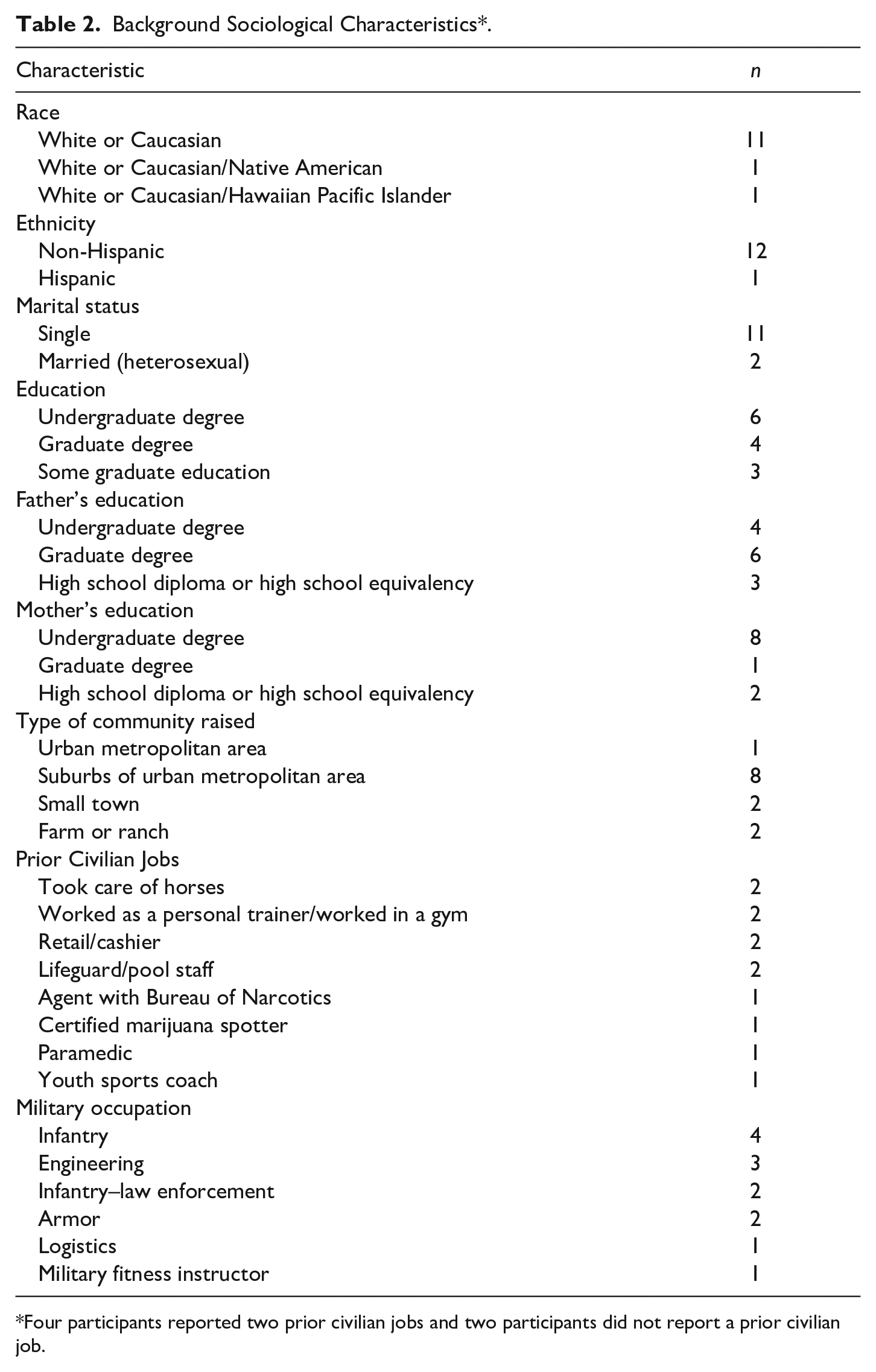
Four participants reported two prior civilian jobs and two participants did not report a prior civilian job.
Participants were asked to characterize the type of person they are and how they felt about themselves when they were growing up. The most frequent characteristic mentioned by eight women was being a competitive or very competitive person (see Table 3). Of those who provided further information on their competitiveness, all women were competitive with themselves or against a standard as opposed to wanting to beat others. A few of their detailed responses include: (1) “…I try and beat the male standards,” (2) “…I don’t feel I need to compete with others, I just worry about myself and challenge myself,” (3) “…mostly competitive with myself to do the best that I can,” and (4) “…I wanted to be the first to make it through Ranger School without a recycle and I did that.”
Type of Person I Feel I am or How I Felt About Myself Growing Up.*
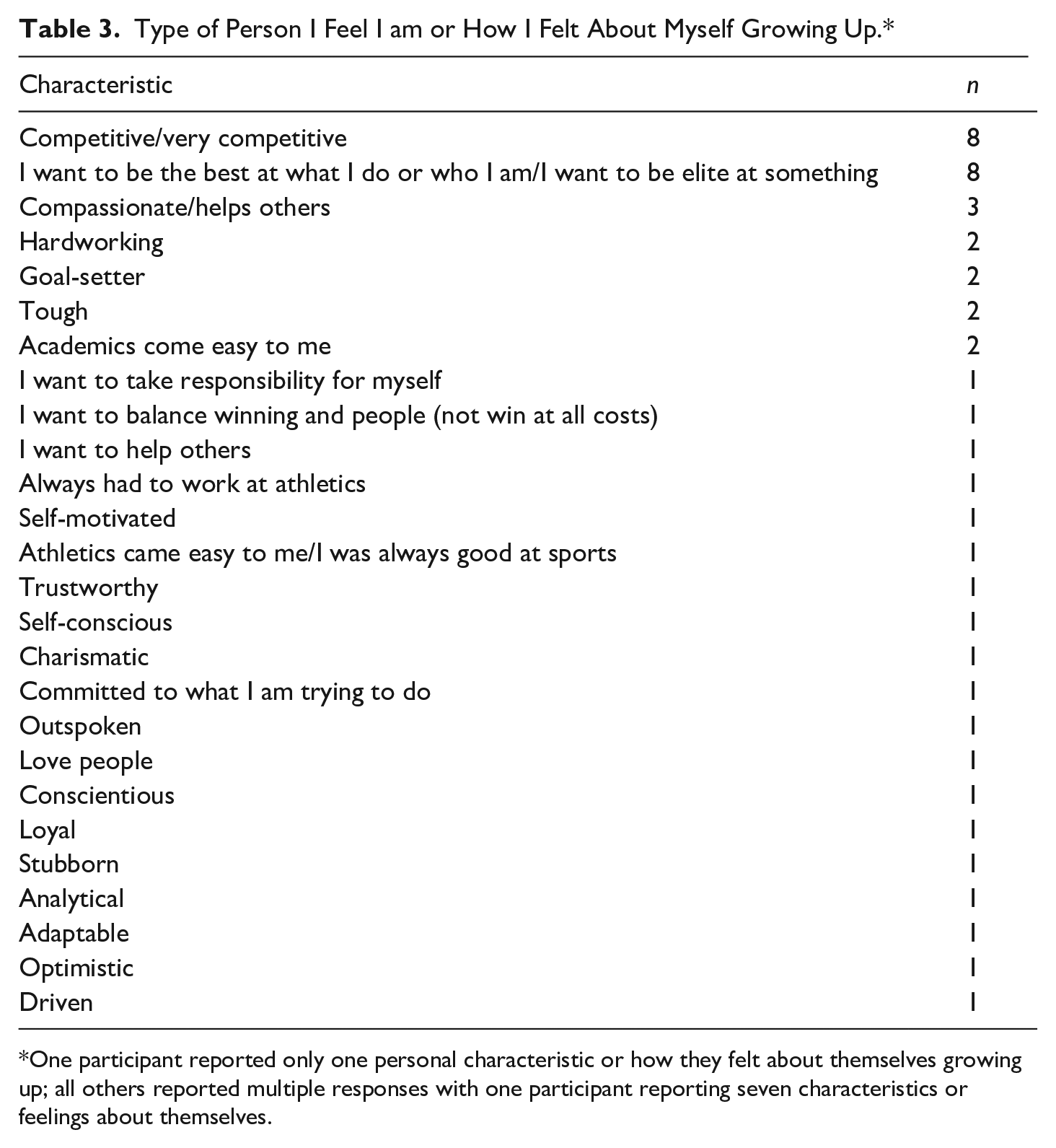
One participant reported only one personal characteristic or how they felt about themselves growing up; all others reported multiple responses with one participant reporting seven characteristics or feelings about themselves.
During the guided interview, participants were not asked specifically about hardships they experienced growing up. However, in their narratives, eight of the 13 women discussed hardships they and their families had experienced. Table 4 lists the types of challenges they experienced. Three women most likely did not experience any significant hardships based on their narratives. They came from stable families, and mentioned no social, health, or economic problems. Two other women did not mention specific hardships but they may have experienced them as their narratives were not completely positive. Some women experienced multiple struggles during their upbringing. For example, some women’s parents were divorced and they faced economic hardships.
Types of Hardships Experienced While Growing Up.*
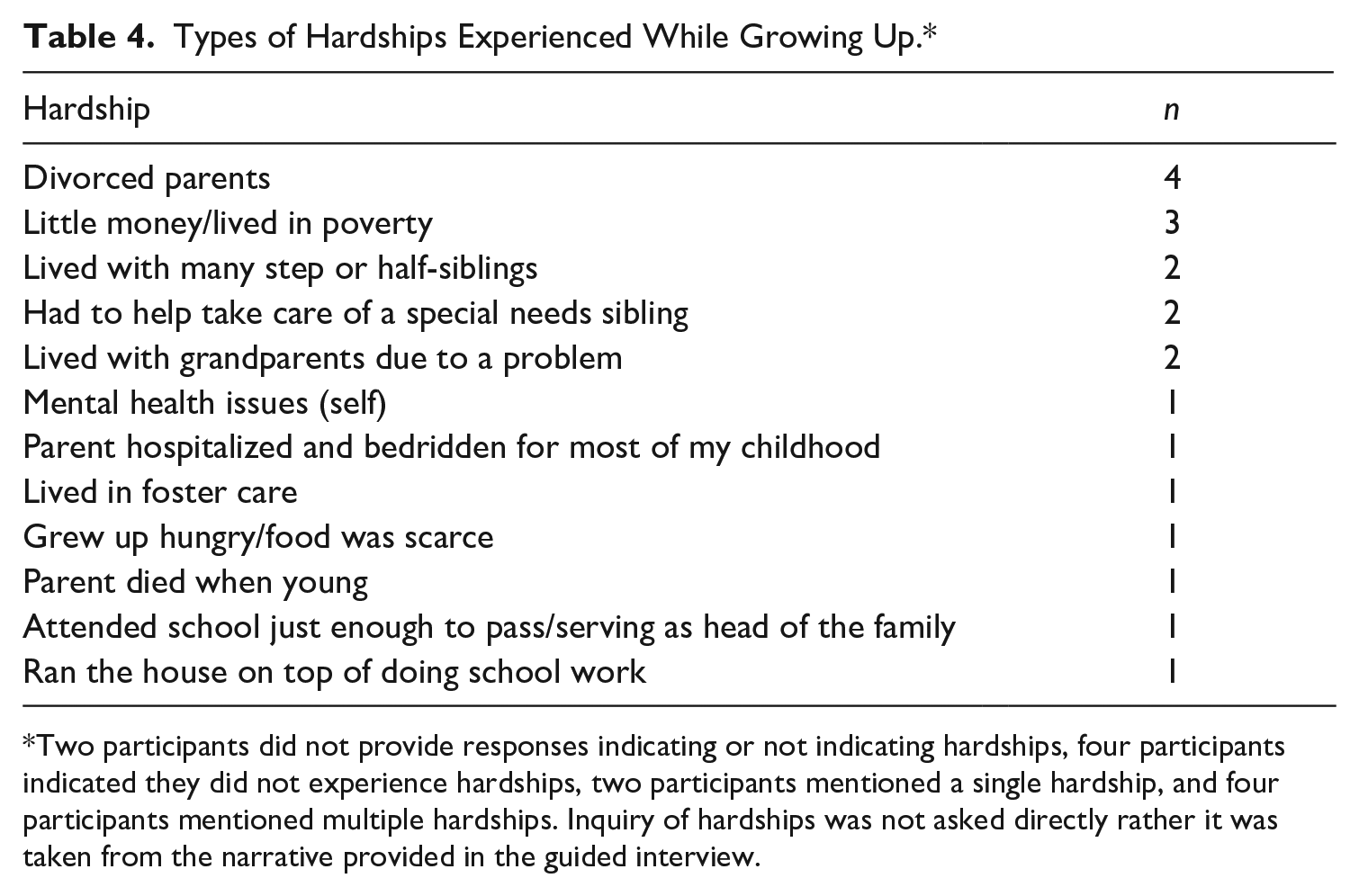
Two participants did not provide responses indicating or not indicating hardships, four participants indicated they did not experience hardships, two participants mentioned a single hardship, and four participants mentioned multiple hardships. Inquiry of hardships was not asked directly rather it was taken from the narrative provided in the guided interview.
All participants believed one or both of their parents had a significant influence, with 12 of the 13 women believing at least one parent had a positive influence. Nine women reported their father as being very supportive while one woman reported their father was not supportive. Six women reported their mother was supportive and three had overall negative comments about their mother.
The following are more detailed positive and negative comments about participants’ mothers and fathers. Positive comments included: “…Both my mom and dad were very strict about what we ate; there were no fried foods and candy in the house, but this was for good reasons.” “…I am very much like my dad. I want to emulate my father.” “…I was such a tomboy, and my mother really supported me.” “…My dad was very health conscious with both diet and exercise.”
“…I would go hunting and fishing with my dad, we had a great relationship.” “…My mom mandated physical activity, and I did pull-ups with my step-dad. All were supportive of me.” “…I would go running with my dad which was really helpful and I enjoyed it.” “…My dad was a pilot in the Air Force, and my grandmother was in the WACs in World War II. My boyfriend was in the Ranger Regiment and went to Ranger School. Everyone was very supportive.” “Both my parents were doctors and they said you need to play a sport, learn a musical instrument and a foreign language.”
The specific negative comments included: “…Both of my parents, grandfather and brother were in the military. But no one in my family really supported me. I had a boyfriend who said “It was Ranger School or me” and I chose Ranger School.” “…My mom would help me with my weight concerns but would make comments that hurt my feelings.”
Pillar II: Preparation Activities/Behaviors for Elite Military Combat Training
Table 5 lists responses these participants provided when asked “What are your military goals?” Most women provided multiple answers but the most frequently stated answer (n = 7) was they wanted to be a leader. Women were asked if they publicly verbalized their intentions prior to going to an elite military combat training school/course. 10 of 12 women affirmed they publicly verbalized their intention, while one woman did not respond to this question.
Stated Military Goals.*
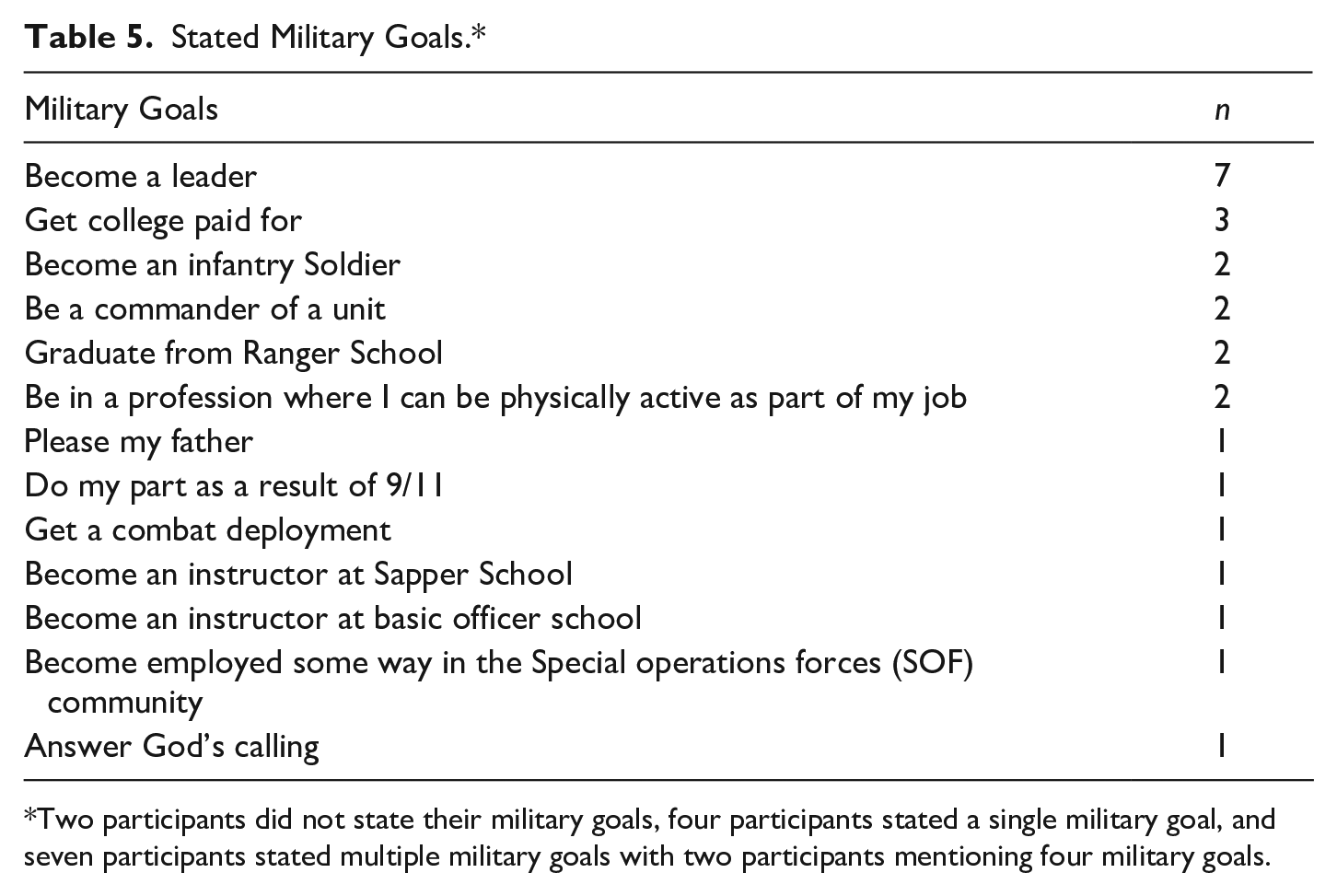
Two participants did not state their military goals, four participants stated a single military goal, and seven participants stated multiple military goals with two participants mentioning four military goals.
The main reason for going to an elite military combat training school course was for the challenge, with 11 of 13 women stating that as a reason (see Table 6). All women addressed this issue in their narrative, with some women providing multiple reasons for wanting to pursue this type of training. When asked how they felt about these elite military combat training schools historically being closed to women the leading response was feeling frustrated (n = 5).
Reasons for Wanting to Go to Elite Military Combat Training School/Courses.*
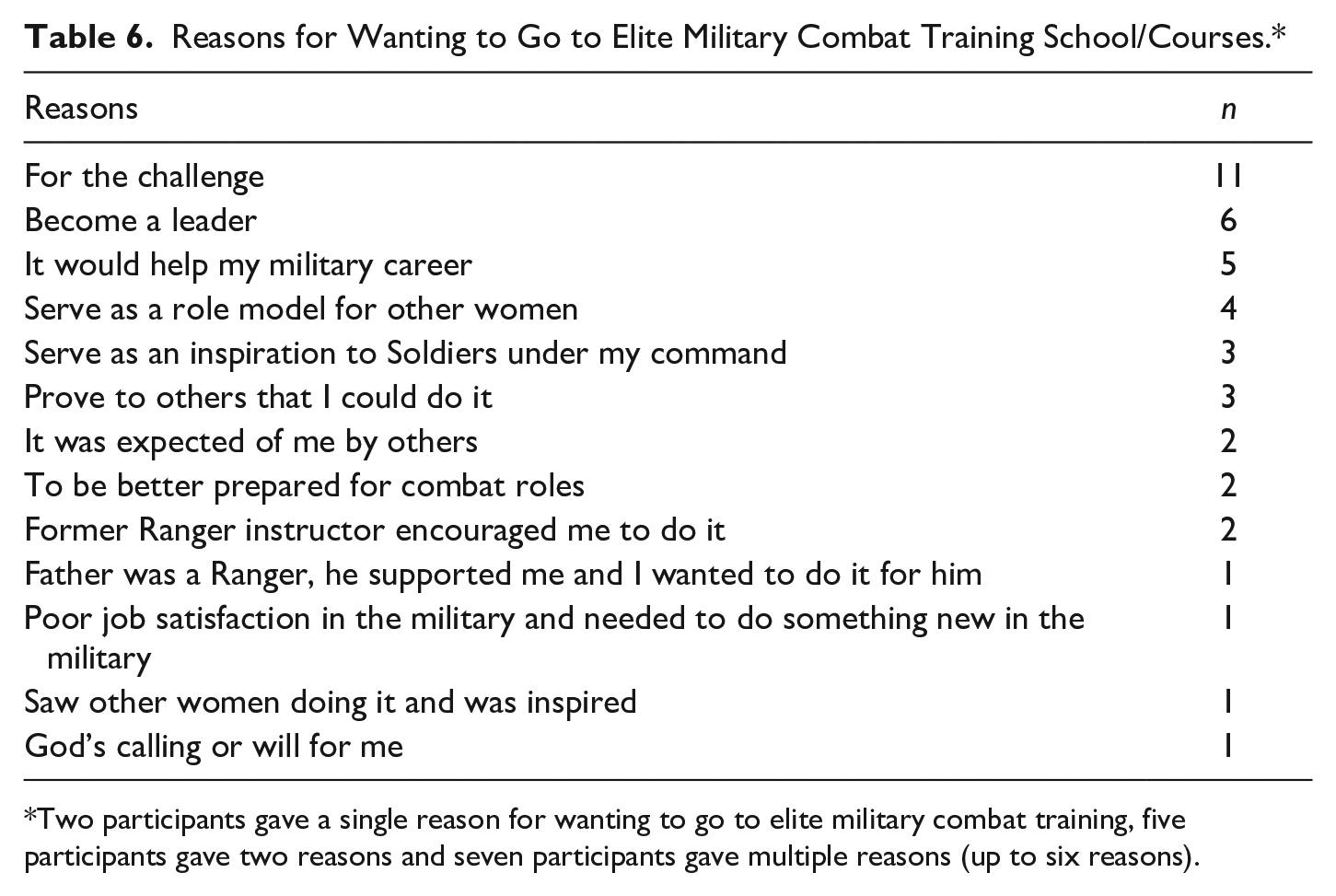
Two participants gave a single reason for wanting to go to elite military combat training, five participants gave two reasons and seven participants gave multiple reasons (up to six reasons).
When participants were asked what made them decide to go to an elite military combat training course, five participants said they made their decision on their own for internal reasons or goals. Four participants said they were influenced by their father, and three others were influenced by military personnel. Two examples of the personal statements about internal decisions were: (1) “This was one of my goals” (two women) and (2) “I always wanted to be a leader and knew this was what I had to do.” The influence of fathers was most often associated with knowledge of the military and support of their daughter’s aspirations. Likewise, male military supervisors, usually recognized women that were talented and had the right attributes and encouraged these women to pursue their careers within the military by going to elite military combat training schools.
With regard to these participants’ physical fitness, 10 women believed their fitness was above that of other military women, while three reported being similar or about average. The women that reported being about average placed greater emphasis on the mental aspect than the physical aspect during their preparation. Two women believed that most military women they train with could be a lot better regarding their fitness and they were frustrated their female colleagues did not seem to take physical training as seriously as they did. Some specific comments mentioned were: “. . .Except for the first time I did my PT test, where I missed the maximum points by two points due to my run, I felt good about my fitness. I identified my weak point and then started running and doing marathons. My self-doubt was more about the infantry tactics not the physical stuff. Also in the mountain phase, I am terrified of heights, which is a problem but not a fitness issue.” “…I could run faster than most women in the military, but I could not even do one pull-up which was a concern.” “I was better than most of the men, and it always seemed they had excuses on why they failed or did not try something.” “…On being more fit, I found it motivating but frustrating. I liked that I felt I was in better shape than most women but I felt frustrated that women in general could use lack of fitness as an excuse for not achieving in the military.” “…I was always stronger than most women with my upper body strength, but running was always a problem.” “…I have always been good at athletics and sports. I try and always compete with the boys and use their standards.” “…It doesn’t make me feel good that I am superior in fitness compared to other women. It is disappointing to me others will not push themselves.” “…I have always been good at physical things.” “…I always thought I was just average and often would feel I was not good enough. Then I took my first PT test and got my score and realized my fitness was superior to other women.” “…I thought I was pretty good concerning my fitness but I struggled with push-ups and getting them exactly right.” “…When I first started out in ROTC I was about average but through consistent training I became above average.”
When participants were asked about strategies, they used to make it through elite military combat training, most reported strategies they used during the actual training and these are summarized under the Pillar III section below. However, five women reported a strategy they used to prepare for the course. They were: (1), getting a list of all the Ranger Assessment Phase (RAP) week events (i.e., the first graded events of Ranger School) and practicing those specific events (n = 3), (2) video-taping themselves doing pushups which was a known weakness, and (3) not listening to music during working out because they knew it was not allowed during training at the Ranger School.
Participants were asked about whether their male and female superiors, peers, and subordinates at their unit were supportive of their decision to go to elite military combat training. All participants addressed this question in their narratives. Most participants received support from their male superiors. All four women who had female superiors reported that their female superiors were supportive. Six participants indicated they did not receive support from female peers while five participants did receive support. These female peers were these women’s peers at their unit, not other female elite military combat training students. Table 7 is a summary by sex and group and whether support was provided or not. Related, in Table 8 is a list of the specific people that provided support or helped the participant prepare for elite military combat training.
Supervisors, Peers, and Subordinates Support or Lack of Support on the Decision to Go to Elite Military Combat Training.*
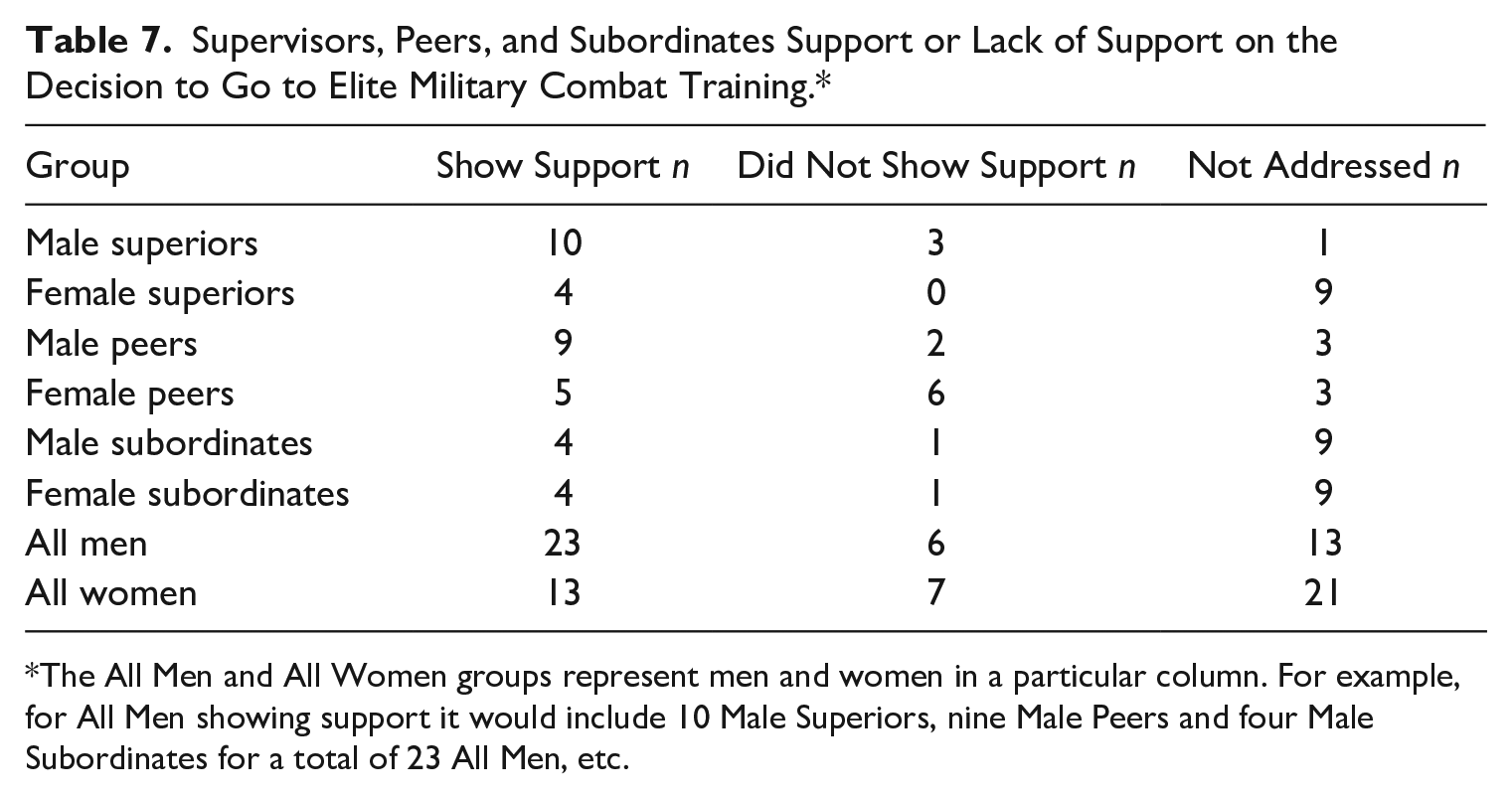
The All Men and All Women groups represent men and women in a particular column. For example, for All Men showing support it would include 10 Male Superiors, nine Male Peers and four Male Subordinates for a total of 23 All Men, etc.
People That Provided Support or Helped Prepare for Elite Military Combat Training.*
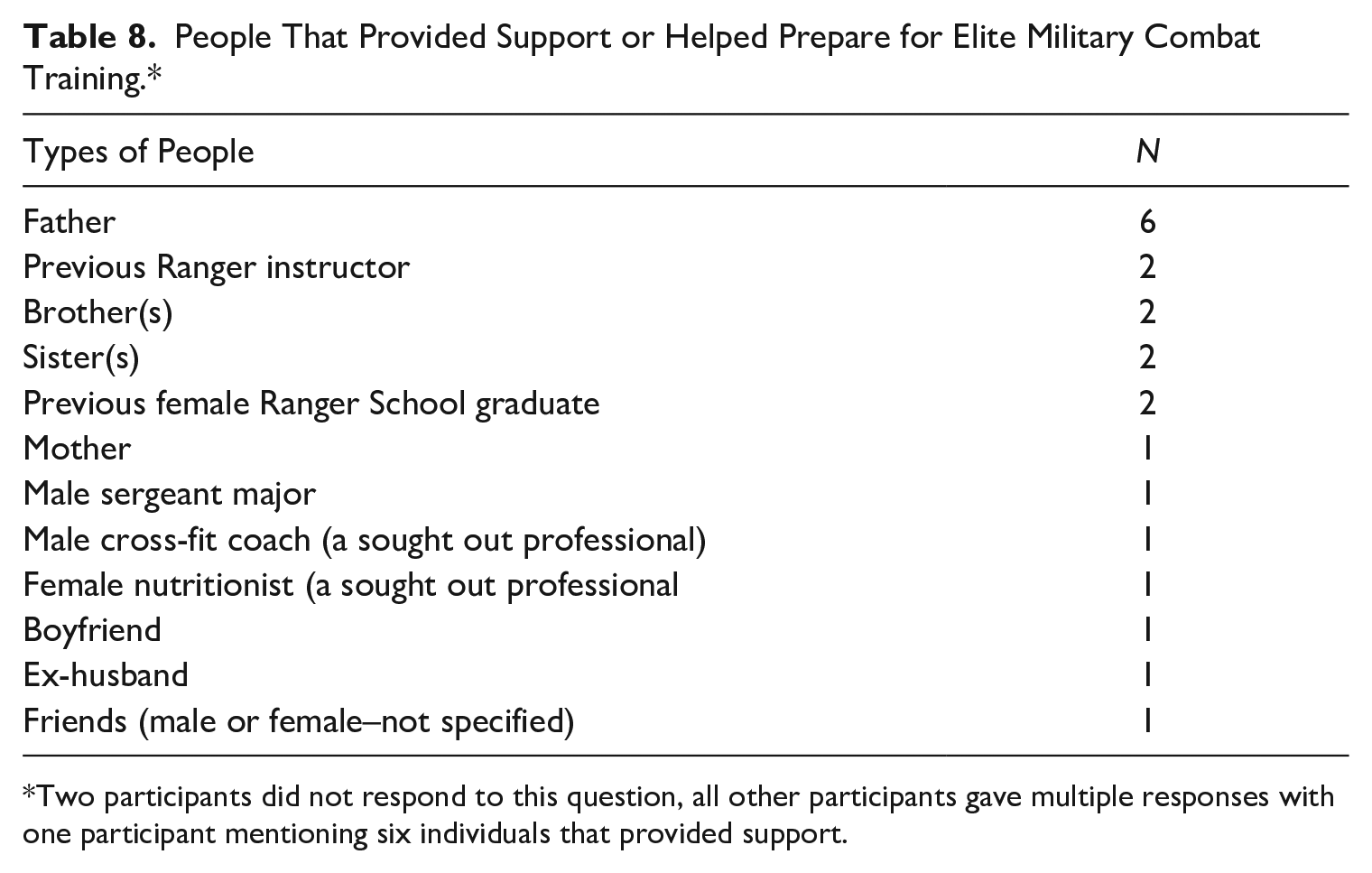
Two participants did not respond to this question, all other participants gave multiple responses with one participant mentioning six individuals that provided support.
The following were specific detailed comments (both positive and negative) about the support or lack of support participants received prior to going to elite military combat training. Positive comments included: “…Drill Sergeants were always fighting over me to see if I could be in their group because of my fitness.” “…After my PT test score, people said I should go to Ranger School if I can.” “…My Commander supported me and all the Commanders I trained with supported me. When I came back from Ft. Benning having failed, I did the walk of shame but people were completely supportive of what I was trying to do. Eventually, I passed and everyone was proud of me.” “…My Commanding Officer supported me, even when I kept having difficulty passing the pushup test.” “…A senior Colonel became my mentor. He took me seriously and was very supportive.”
The following negative comments were made: “…There were a lot of negative comments made about me wanting to go to Ranger School. Overall, people were supportive, but there were a lot of negative comments too. Going in, my male superiors were very supportive. Male peers were supportive like, hey she is doing the same things as we are,” but the females in my unit were not supportive, they were more like, ‘she is trying to make us look bad.’” “…I didn’t really have a superior support me, but part of that is because I didn’t come from a unit that could sponsor me. My male peers were supportive saying I was such a beast and stud but I didn’t like it because they were judging me by such low female standards.” “…Because I had a daughter, some of my female peers said if you are not there for them for the little things, they will not want you there for the big things. But my now ex-husband took care of them and was completely supportive of me.” “…Generally all around me, people were supportive until there was a backlash from the general public on the fear that standards were going to be lowered to let a woman graduate. Standards were not lowered.” “…Some were supportive, but others, especially female peers, were not. They were jealous of what I was trying to do.”
Pillar III: Activities/Behavior During Elite Military Combat Training
Participants were asked if the elite military combat training school instructors helped and encouraged them to succeed. Six of the 13 women said that instructors encouraged them and were important to their success during the elite military combat training. Seven women did not address this question, but none of the women said that instructors did not help them. When asked more generally if there were people that helped them during the elite military combat training while they were actually in the course, a number of responses indicated that they received encouragement from the outside or from non-traditional individuals who assisted them. Some of this happened during the recycle period where women who did not pass a section of the course were waiting to rejoin the next class and encouragement or assistance was provided by non-instructors. Others received encouraging letters from home (e.g., from siblings, parents, and/or their boyfriend) while actually in the course. Two women made it through the course without being recycled. 11 of 13 women were recycled at some point, and recycling could and did occur during all phases of Ranger Training. Table 9 provides a summary of those that provided assistance while these women were in the course or during the recycle period.
People Who Provided Assistance/Encouragement While Participant Was Actually in Elite Military Combat Training.*
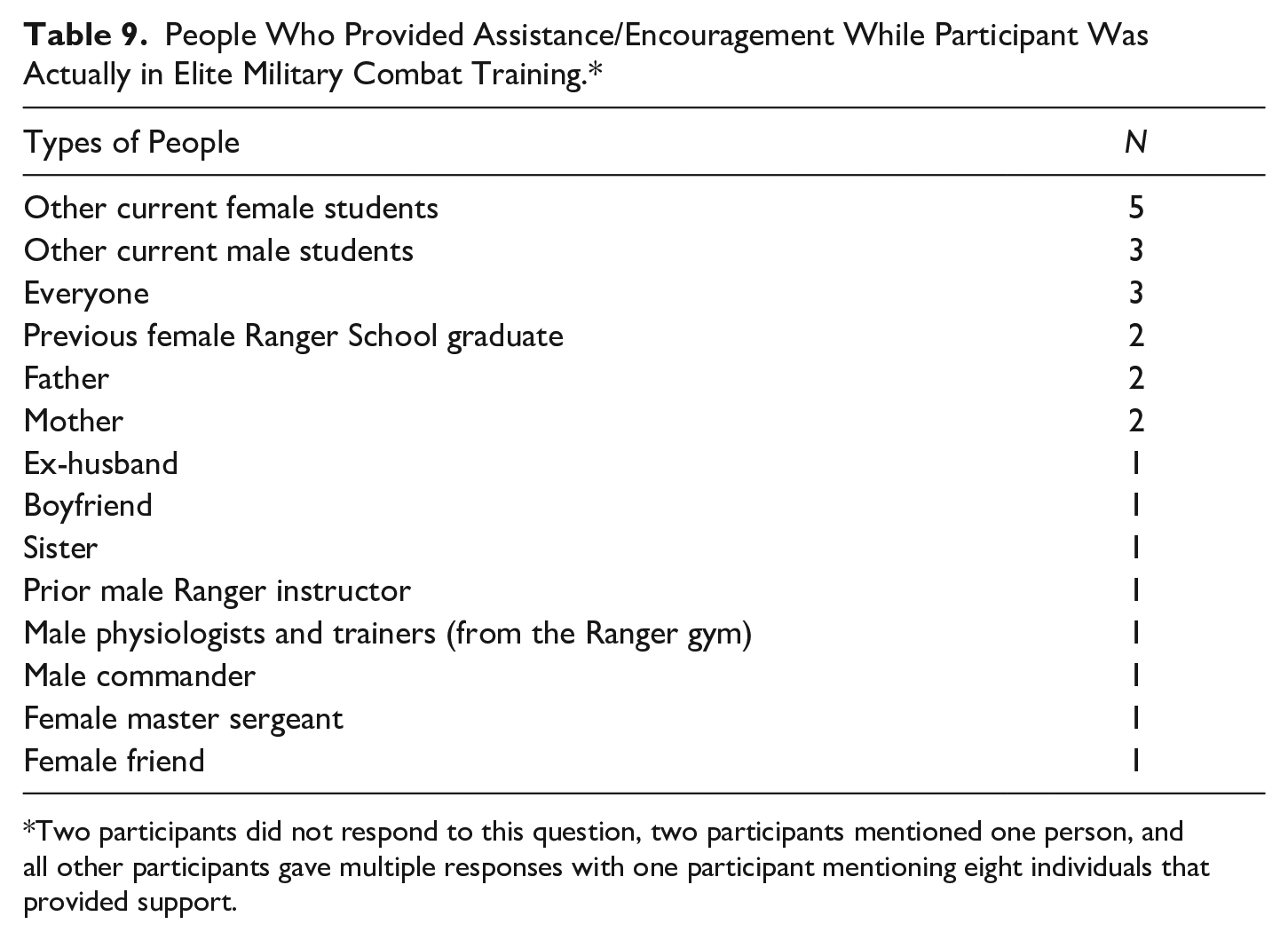
Two participants did not respond to this question, two participants mentioned one person, and all other participants gave multiple responses with one participant mentioning eight individuals that provided support.
Participants were asked what strategies they used during the course. Ten women addressed this question and reported using multiple strategies. The most frequently cited response was taking the attitude of never quitting regardless of their performance on a particular task, with seven women each reporting using this strategy. The next two most frequent strategies reported were using positive self-talk and dedicating the course to myself and others to make those people feel proud. Table 10 is a list of strategies participants used to complete their elite military combat training.
Strategies Used to Complete Elite Military Combat Training.*
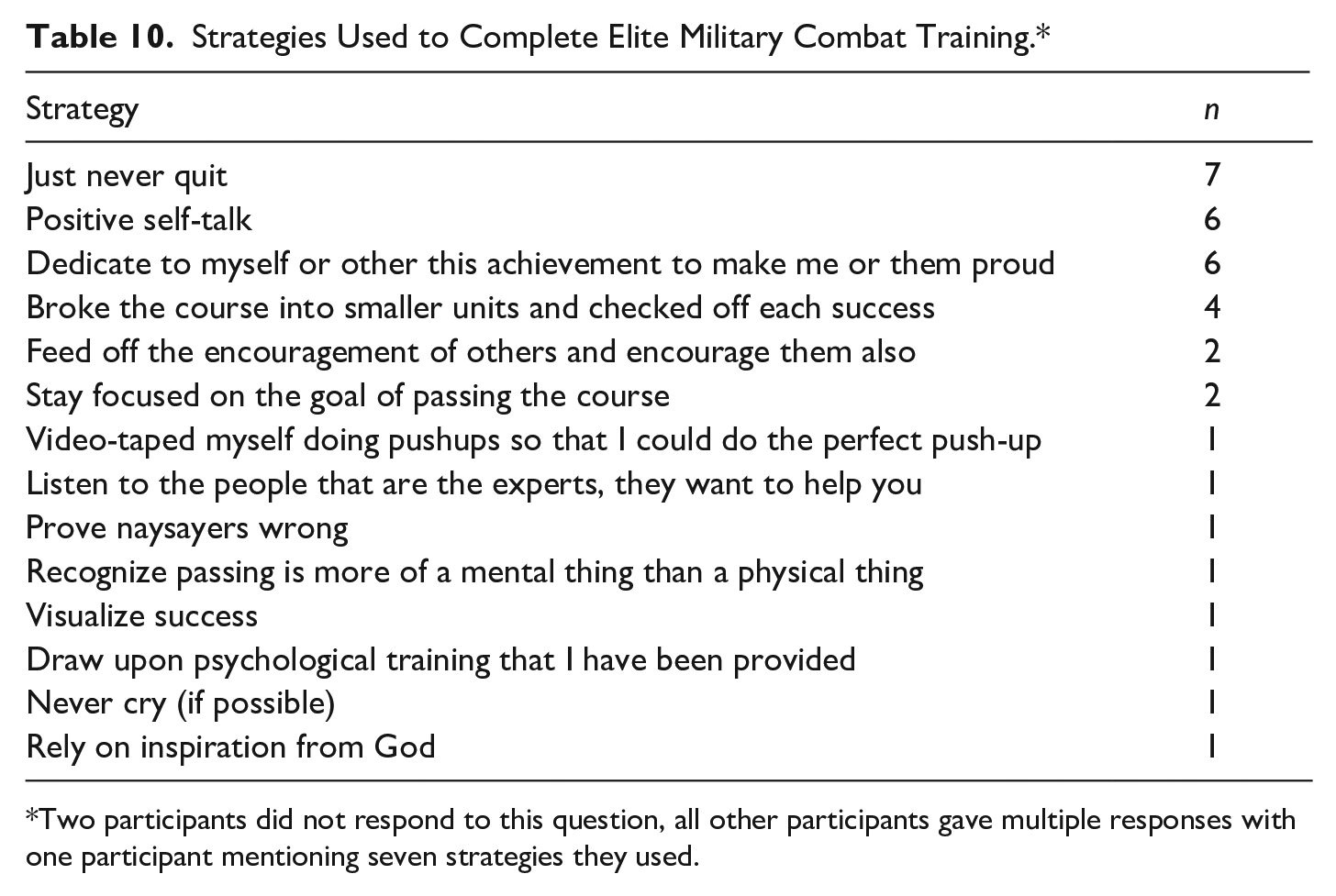
Two participants did not respond to this question, all other participants gave multiple responses with one participant mentioning seven strategies they used.
When participants were asked if they had feelings of self-doubt during the course, eight women responded that they did, four did not, and one did not respond to this question. However, this question was taken in the context of strategies used and feelings toward passing. These women reported at the time they did not know if they could do what was necessary but they would not voluntarily quit. The concern was more related to whether they had the physical skills to complete certain tasks rather than a lack of willingness to accept the challenge. One woman specifically said she had no self-doubt about her decision to go to Ranger School, her self-doubt was more focused on whether she would be able to physically pass each challenge presented. However, she also stated that she would not quit; if she failed it would be because the instructors failed her for not passing a graded task at the school.
Participants were asked what they would do differently if they had a chance to do it over again or knew what they know now. Twelve of the 13 participants answered this question with many giving multiple answers (Table 11). Three individuals said they would not change anything. The most frequent responses surrounded nutritional or dietary behaviors with six items related to these types of changes. The other common theme was that their pre-course training should have been geared more toward the specific activities that would be graded at the elite military combat training school, as opposed to more general fitness training. For example, tasks such as carrying a weighted backpack as part of their daily routine (n = 6) or learning the military tactics that are taught at the schools, such as ambush techniques, etc. (n = 6). One interesting strategy was theoretical in nature, “go to Ranger School when younger,” but that was impossible because Ranger School was not open to women when they were younger.
Things I Would Do Differently.*
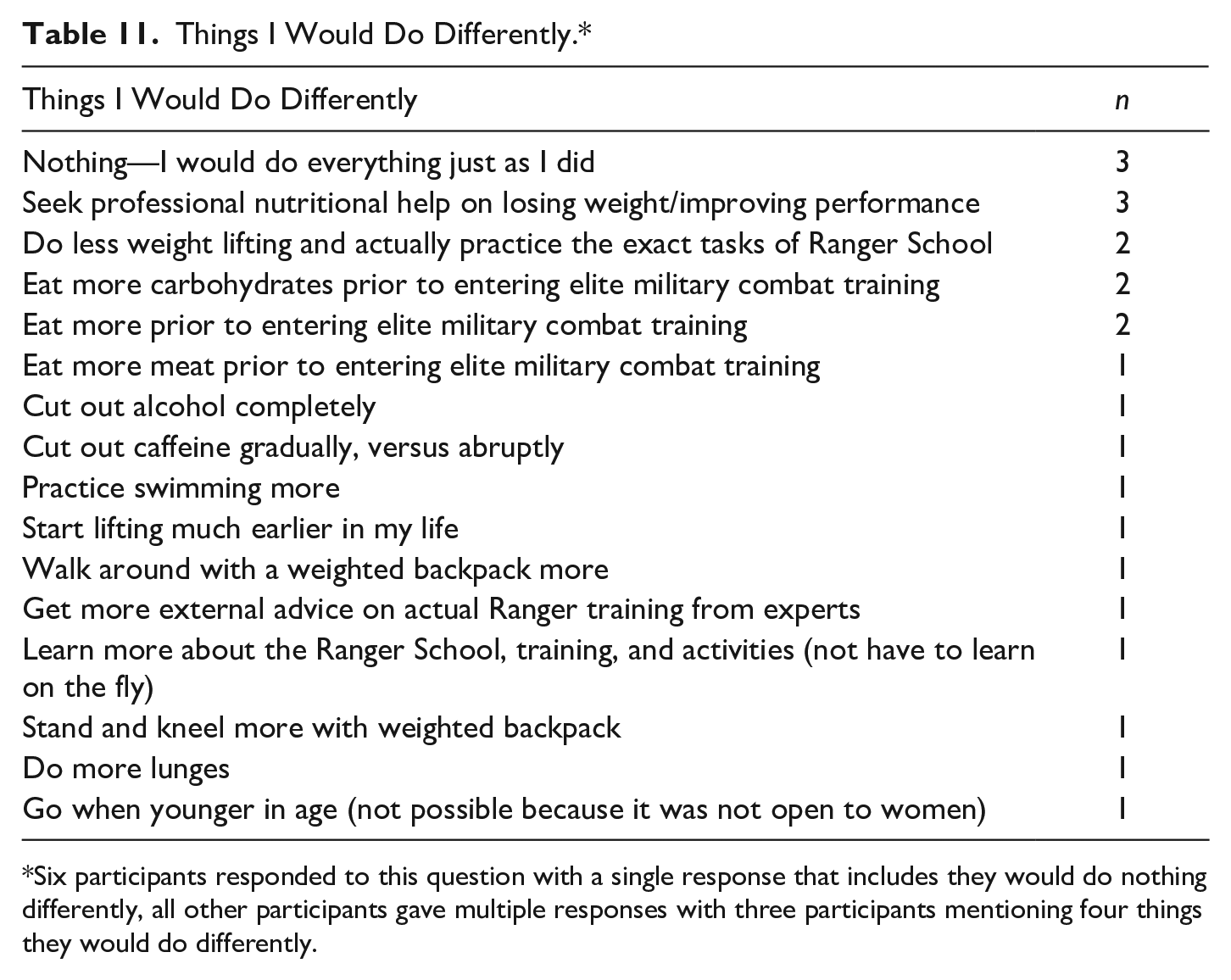
Six participants responded to this question with a single response that includes they would do nothing differently, all other participants gave multiple responses with three participants mentioning four things they would do differently.
Psychosocial Measures
Psychosocial scale scores are shown in Table 12. The mean GRIT-S Scale score was 4.13 ± 0.42, indicative of a high grit score (Duckworth & Quinn, 2009). The mean summary score for resiliency on the Connor–Davidson Resiliency Scale was 83.8 ± 8.8 which is higher than the U.S. normative mean of 80.4 (Connor & Davidson, 2003). The DRS-II M showed these women had high levels of accepting challenges 4.50 ± 0.50 and low levels of powerlessness 1.35 ± 0.43 compared to normative values (Sinclair, 2004). It should also be noted that the women showed lower levels of positive hardiness measure of control 4.21 compared to normative value of 4.24, a small 0.03 difference, and higher levels of negative hardiness of rigidity 3.25 compared to normative value of 3.17 (Table 12).
Grit and Resiliency Scores from Validated Surveys.
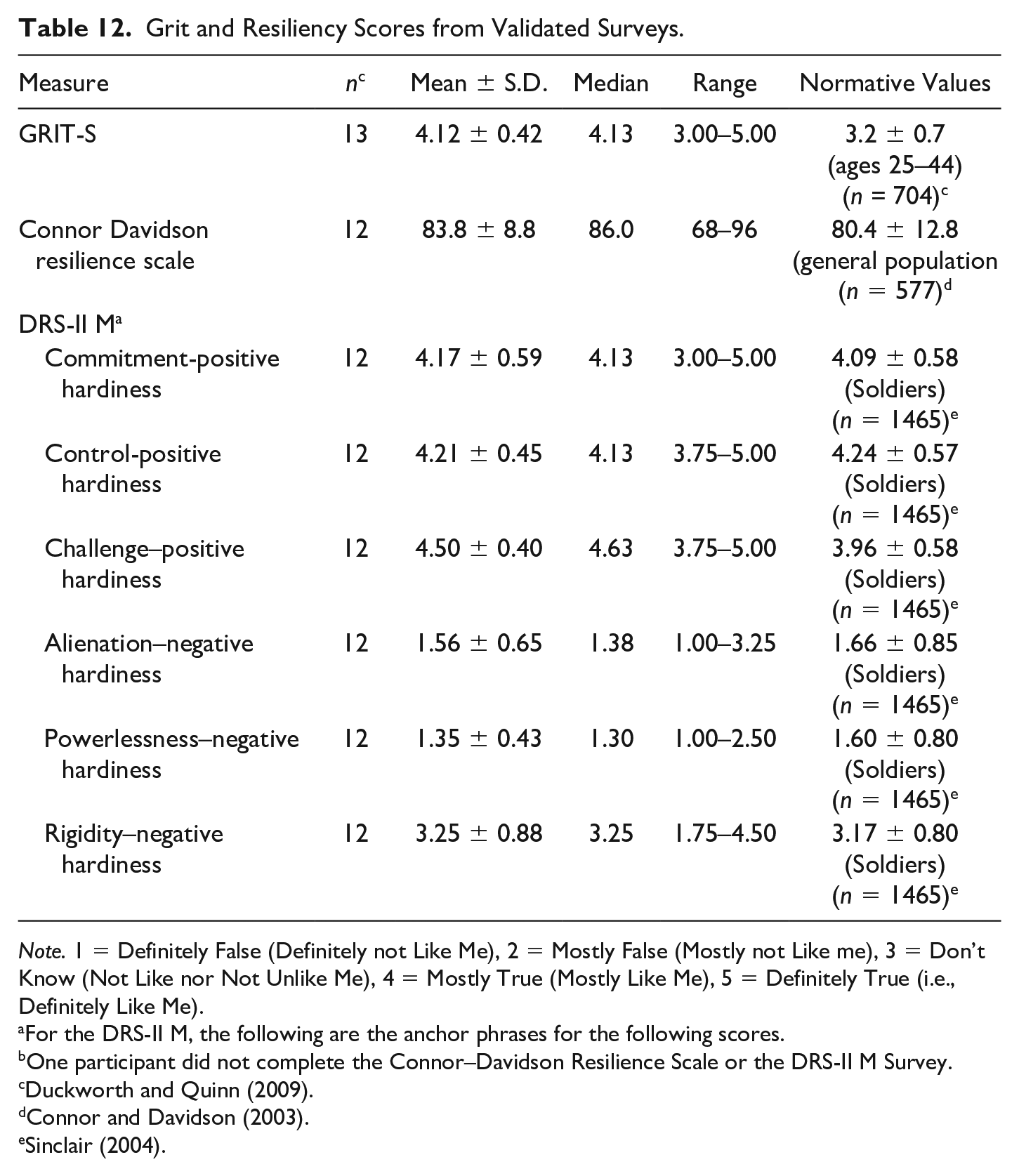
Note. 1 = Definitely False (Definitely not Like Me), 2 = Mostly False (Mostly not Like me), 3 = Don’t Know (Not Like nor Not Unlike Me), 4 = Mostly True (Mostly Like Me), 5 = Definitely True (i.e., Definitely Like Me).
For the DRS-II M, the following are the anchor phrases for the following scores.
One participant did not complete the Connor–Davidson Resilience Scale or the DRS-II M Survey.
Discussion
Women who participated in this study were among the first who successfully completed elite military combat training. Examination of the psychological characteristics and the sociological backgrounds did not reveal a singular extraordinary trait or experience that separated them from other highly successful men or women. Rather, it is a set of personal characteristics and background experiences that define these extraordinary military pioneer women. These variables will be examined in more detail below but in general these women: (1) Possessed high level of formal education (all were at least college graduates), (2) Came from a family with a father that had high formal education, (3) Chose a military occupation that is predominated by men, (4) Found a way to overcome hardships if faced with difficulties growing up, (5) Possessed high levels of grit, hardiness, and resiliency as measured by validated psychometric instruments, (6) Described themselves as competitive or highly competitive people, but that competiveness is primarily focused on competing with oneself or against standards as opposed to trying to beat an opponent, colleague, or fellow competitor, (7) Possessed a burning desire to be the best at whatever they sought to do. (8) Sought to challenge themselves with difficult undertakings whether in the military or not, (9) Sought to be leader and obtain leadership skills, and (10) Had a strong male influence in their lives whether it was from their father, military leaders, or other significant men in their lives. While this research uncovered factors that were related to success at elite military combat training, there were limitations to this research which are detailed below.
Study Limitations
This study was limited by self-selection of those who chose to participate. The participating women represent less than 20% of the first female graduates of Ranger School and one of the three women who have graduated from the Marine IOC. As discussed previously, the population available was limited and study participation required duty time away from their current positions. The characteristics and experiences of these initial pioneers may be different from future female graduates. When women in elite military combat training becomes the norm, changes in the culture and the characteristics important to success are likely to change. Women of color have graduated from elite military combat training and were invited with the other women to participate in the study; however, they chose not to participate. Future work is needed to establish evolutionary changes within the sex-integrated training environment and how that affects the characteristics of women attracted to the training.
Education
All women in this study had at least an undergraduate college degree, while four had graduate degrees and three others had an undergraduate degree plus graduate credits. One woman was currently enrolled in medical school and another was chosen for a highly selective leadership position in the civilian sector. An examination of their father’s education level shows eight fathers had a graduate education and all but two fathers had a college degree. This sample is skewed with officers and the need to have at least a Baccalaureate degree prior to applying for a commission into the military. Typically, in male classes, for elite military combat training, there is a broader mix of education levels as well as enlisted versus officer ratio. For example, in the Farina et al. (2019) study of men trying to qualify for SFAS, the enlisted to officer ratio was 92% enlisted versus 8% officer, and the education level was high school degree 21%, some college 48% and a Bachelor’s Degree 31%. The women in this sample were much different, that is, more highly educated and tending to be an officer (i.e., all but one woman were officers).
Grit, Hardiness and Resiliency
These women have the characteristics of highly gritty and resilient people. The GRIT-S scores (4.13 ± 0.42) were higher than observed in the original study by Duckworth and Quinn (2009) on two samples of high school students 3.4 ± 0.8 (n = 279), as well as the 2005 National Spelling Bee final contestants 3.4 ± 0.8 (n =175) and four samples (total sample size n = 281) of emergency room residents (3.56 ± 0.55 to 3.63 ± 0.65) (Olson et al., 2019).
Previously it has been reported in male Soldiers who possessed more grit, they were more likely to complete the Army Special Operations Forces (ARSOF) selection course (Eskreis-Winkler et al., 2014). In the Eskreis-Winkler et al. (2014) study, they reported a mean GRIT-S score of 3.97 ± 0.51 which is lower than the 4.13 ± 0.42 GRIT-S score seen in the women in this present study. Those authors concluded that grittier Soldiers are more likely to complete the Special Operations Forces selection course. Farina et al. (2019) reported that male Soldiers selected into SFAS had higher GRIT-S scores (n = 247) 4.09 ± 0.51 than those not selected (n = 550) 4.00 ± 0.53. Likewise, these women’s Connor–Davidson Resiliency Scale scores of 83.8 ± 8.8, were higher than seen in college students (n = 856) 72.9 ± 13.5 (Otto et al., 2010), Scores were slightly higher than reported in Air Force recruits (n = 53, 672) 83.7 ± 11.0 (Bezdijian et al., 2017) but lower than those who were selected for the SFAS course (n = 247) = 87.0 ± 10.2 or not selected for the SFAS (n = 550) course 84.0 ± 10.7 (Farina et al., 2019). The resilience scores of the women in the present study were much higher than Navy Sailors (n = 1843) and Marines (n = 1225) exposed to trauma or severe stress who were assessed during their pre-military separation, Sailors: 76.2 ± 16.0 and Marines: 72.8 ± 16.6, respectively (Mansfield et al., 2011). As one might expect, stressful military training seeks to build resilience through a proper amount of stress, but trauma or severe stress that one is exposed to in combat is likely to break resilience. The women in this study showed more hardiness than male Marine Recruits with the largest difference between groups in the willingness to accept challenges (Marines 3.87 (Lovering et al., 2015) versus. this study’s Elite Military Combat Trained Women 4.50, a 0.63 point difference on a 5-point scale).
Grit, resiliency, and hardiness are all important in dealing with hardships as well as non-hardship stress. Williams et al. (2001) cited the following characteristics of runaway children that successfully survived their ordeals as possessing: (1) determination and persistence, (2) an optimistic orientation to problem-solving, (3) the ability to find purpose in life, and (4) caring for oneself. With respect to elite military combat training, seven personality characteristics have been identified with those (men) who successfully became Navy SEALs as described by Dennis McCormack, a clinical psychologist who was a member of SEAL Team One and Underwater Demolition Team 12 and co-author of a paper on resiliency (Everly et al., 2012). They were (1) presence of d’esprit: calm, innovative, non-dogmatic thinking, (2) taking decisive action once a decision has been made, (3) tenacity or determination and persistence in achieving one’s goal, (4) interpersonal connectedness or as measured in the military contributing to high unit cohesion, (5) honesty, (6) self-control, and (7) optimism and a positive perspective on life. Many of these characteristics both from Williams et al. (2001) and Everly et al. (2012) were mentioned in the guided interviews by the women in this study. Specifically, the tenacity or determination and persistence in achieving one’s goal whether they experienced a hardship or not growing up.
Competiveness, Rising to a Challenge Becoming a Leader
The women in this study sought out the elite military combat training as a way to challenge themselves, further their military careers, and become leaders within the military and in their civilian careers. These motivations are similar to the motivations reported by women in the male-dominated fields of mining, energy, information technology, and engineering education (Martin & Barnard, 2013). Lakeisha Williams, the first African American woman to graduate with a Ph.D in biomedical engineering from Mississippi State University, among other academic firsts, spoke about the value she placed on “trailblazing and entering spaces as the one and only” (Klinman et al., 2021). The women in the present study, made similar comments and learned to navigate not only elite military combat school but having served in leadership positions both within the military and within the civilian sector, as well as graduating from the U.S. Military Academy how to be assertive when needed but not create enemies in these male-dominated domains. Within Ranger School there is a peer review component where team cohesiveness is needed to successfully pass. These women successfully showed the leadership techniques to work with men (primarily) and the few women that were their fellow students going through the course. These women did not try to become more masculine, rather they sought to rise to the challenges presented to them, not as masculine or feminine challenges but as physical, cognitive, or military challenges.
Importance of Male Influence
Past research has suggested that women reaching the highest levels of leadership need role models and mentorship (Hewlett et al., 2010). The women in this study reported support by men to include their fathers, husband, boyfriends, male supervisors, and male peers, and especially those that have had a military or Ranger School experience themselves. These women were successful, and for the most part whether during elite military combat training or prior to the training, generally reported support from men and were respected for what they were trying to do by their male colleagues. However, it is acknowledged that female role models are needed for women to be fully integrated and not viewed only as tokens (Iskra, 2007). Dr Judith Klinman (Professor Emerita, Department of Molecular and Cell Biology at University of California–Berkley), in 1978 was the first woman in the physical sciences at the University of California–Berkley credited her female mentor Mildred Cohen a biochemist at the University of Pennsylvania as providing her the strength and pathway through her mentorship (Klinman et al., 2021). This was rare in the STEM fields in 1978 and is rare in military combat roles today.
There are many reasons for the lack of women rising to the top levels, but chief among them is the lack of superiors’ sponsorship and mentorship (Hewlett et al., 2010). Some of this lack of sponsorship is due to societal norms where even if experienced men (usually older) do seek to mentor younger women there are a number of obstacles to overcome such as judgments by others on the personal lives of the participants (i.e., assumptions of affairs or other improprieties regardless of veracity) (Hewlett et al., 2010; Iskra, 2007). This problem did not seem to be pertinent to women seeking to join the elite ranks of combat, for example, Army Ranger Training. Part of the reason for this not being an issue may be because of the small size of the community of elite military personnel. As Iskra (2007) points out in other fields, it is hoped that these pioneer women will become the role models to further transform the institution with other women joining in sufficient numbers the ranks of elite female Warfighters, where women will no longer be viewed as tokens but rather fully accepted as part of the fighting force. A study from Schaefer et al. (2015) for the Marine Corps identified keys to successful integration that are likely important for female elite combat Warfighters being more than just a token few. These key factors are: (1) overall leadership within the services to support this integration, (2) development of a detailed implementation plan and assignment of accountability, (3) establishment of oversight mechanisms, (4) consideration of long-term career progression issues, (5) development of customized integration strategies through experimentation, (6) monitoring integration progress over time, and (7) management of expectations. To understand whether women who were successful in becoming elite military combat Warfighters can change the existing culture from one based on gender norms that are typically masculine in nature, to one that focuses on task-based performance attributes will likely require a significant number of women that are in these Warfighter positions and then to be studied. Furthermore, an examination of changes or lack thereof in military culture over time is needed. These issues are beyond the scope of the present research, but are likely necessary to be understood in the broad context of how successful women as a whole are in combat. However, as noted in the seven points above on successful integration, women can be integrated and culture change is likely to take place.
This research did uncover one area that is disappointing, and that is the lack of support these women had from their female peers. A number of participants stated they had female peers who made negative comments or had negative attitudes toward them with regard to taking part in elite military combat training. However, it should be noted that female superiors, while rare in occurrence, were all supportive. The Norwegian military did not find this when they assembled an all-female platoon (Rones & Steder, 2018). Rather the women and their female supervisors were supportive of one another. Both in the present study and the Norwegian study other female students that were going through the training were very supportive of one another. However, like in the Rones and Steder (2018) report, peers that were not selected for elite military combat training were not supportive and the explanation postulated was that the women that were selected for elite military combat training may have been seen as a threat to their female peers that were left behind to remain at their units. One might consider if these competitive attitudes among same sex peers might be the same for men selected for elite military training. Future studies should include 360-degree evaluations of the individuals to understand how they are actually perceived by subordinates, peers, and leaders.
This study quantified some of the psychological characteristics and sociological backgrounds that women who successfully completed elite military combat training by using some standardized instruments of grit and resilience. Additionally, the use of the guided interviews allowed for an in-depth and nuanced examination of the backgrounds, motives, and strategies that were practiced that led to successful completion of elite military combat training. However, there are many questions that future research can address. For example, how did the training change the psychological make-up of the women? Did women learn to become grittier and more resilient as a result of the training? To address these issues comparisons between baseline and post-graduate psychological measures needs to be assessed, to include grit and resiliency as assessed herein with the addition of other appropriate “state and trait” measurements. Defining and use of a control group may be of interest, by considering the use of military women not involved in elite military combat training. A repeated measures design as described, with a within factor (assessment of changes in the particular measures over time), and a between factor (changes due to the interventions on the particular measures) could provide a statistical assessment of the impact or lack of such training, on grit, resilience, and other psychological measures.
Other questions that need to be answered in future research are how did these successful women differ from those that were motivated to go to an elite military combat training school but were not successful? How did they differ from women in infantry or other combat specialties that chose not to go to elite military combat training schools? How do they differ from women across the military in a variety of roles? How do they differ from men that went through the exact same elite combat military training at the same time? These questions, when answered should allow for a better understanding of what necessary characteristics a woman must have prior to becoming trained, and what can be developed through proper training.
Footnotes
Acknowledgements
The authors acknowledge their deep appreciation to the research volunteers who shared with us part of their personal history and participated in this study. Without their participation, this unique data and understanding of the psychological and sociological variables associated with success during elite military combat training would not be understood. We are indebted to Michael McGurk, who inspired and encouraged the study and was instrumental in recruiting the test volunteers. We appreciate the assistance of Dr Kristin Heaton, Dr Bruce Cohen and Dr Robert Sinclair for their assistance with the use of the DRS-II M survey. We thank Dr Adam Potter for his review of the manuscript and editorial assistance.
Declaration of Conflicting Interests
The author(s) declared no potential conflicts of interest with respect to the research, authorship, and/or publication of this article.
Funding
The author(s) received no financial support for the research, authorship, and/or publication of this article.
Disclaimers
The investigators have adhered to the policies for protection of human volunteers as prescribed in Army Regulation 70–25, and the research was conducted in adherence with the provisions of 32 CFR Part 219. 2. Citations of commercial organizations and trade names in this paper do not constitute an official Department of the Army endorsement or approval of the products or services of these organizations. Data available on request due to privacy/ethical restriction. This research was supported in part by an appointment of one of the researchers to the Department of Defense (DOD) Research Participation Program administered by the Oak Ridge Institute for Science and Education (ORISE) through an interagency agreement between the U.S. Department of Energy (DOE) and the DOD. The opinions or assertions contained herein are the private views of the authors and are not to be construed as official or as reflecting the views of the Army or the DOD, DOE, or ORAU/ORISE.
