



Abstract
This article examines the extent to which socioeconomic background affects the chances of promotion to senior ranks within the Royal Navy and how the upwardly mobile often face a “class ceiling.” The researchers collected quantitative data within the Royal Navy. The research found a disproportionate overrepresentation of officers from socioeconomically advantaged backgrounds, creating a homogenous upper echelon and self-selecting elite hierarchy. The authors argue for the systematic collection of socioeconomic background data and longitudinal analysis to focus efforts toward engendering the conditions for social mobility and the ability to quantitatively assess the impact of policy changes on future social mobility outcomes. The research contributes to understand contemporary social mobility issues and is the first quantitative analysis of Royal Navy officers’ socioeconomic backgrounds. The research provides perspectives on which other Armed Forces (including the United States) that face diversity issues could reflect. The article repositions military issues in mainstream academic discourse.
In the 1970s, a study into military officer selection concluded that notwithstanding major public discourses about the necessity to widen the socioeconomic backgrounds of recruits in the elite professions and progression within them should be contingent upon seniority and proven abilities. However, in the United States and in the UK, recruitment and promotion were still biased toward those who attended private education and some elite state institutions (Kamarck, 2017; Salaman & Thompson, 1978). Grusky (1975) earlier examined the socioeconomic backgrounds of Royal Navy officers. He concluded that there was significant difference between lower and higher rank officers in a number of key social variables, with those holding higher ranks more likely to have come from upper socioeconomic backgrounds and fee-paying school education. Notwithstanding, the researchers concluded that extrapolation from the makeup of lower and middle ranking officers indicated that the upper echelons of the Royal Navy officer corps would become more socially representative, “with leaders recruited from more proletarian segments of society” (Grusky, 1975, p. 50). However, nearly two decades later, Von Zugbach (1993) presented significant evidence that inequalities were persistent in the British Armed Forces.
Since these studies, a major societal change in the subsequent two generations was the exponential expansion of university provision, which saw a greater than 3-fold increase in higher education participation in many developed countries including the United States and the UK (Alvaredo et al., 2017; Chowdry et al., 2013; O’Mahoney, 2018). It was thought that this would result in increased social mobility as those from less advantaged backgrounds had greater opportunity to obtain the necessary academic entry requirements to gain access to higher income jobs. However, recently academics have been vociferous in raising the issue of stagnant social mobility. They argue that social mobility has worsened since the 1970s (Alvaredo et al., 2017; O’Mahoney, 2018; Piketty, 2017). For instance, Laurison and Friedman (2015) found that even when the socioeconomically disadvantaged (those attending state schools and attaining lower qualifications) are able to secure admission into elite occupations, they are much less likely to “achieve the same levels of success as those from more privileged backgrounds” and “face a powerful ‘class ceiling’ in terms of earnings” (p. 28). The concept of a class ceiling describes how the socially mobile experience considerable disadvantage within elite occupations due to socioeconomic or class discrimination (Laurison & Friedman, 2015).
This study investigates the extent to which the class ceiling is a factor in the promotion into the Senior Ranks in the Royal Navy Logistics Branch in the UK. The Royal Navy comprises c.32,500 personnel, of whom 6,800 are officers (comparative figures: Army 79,000 personnel [12,900 officers]; Royal Air Force 32,900 personnel [7,800 officers]). The Royal Navy comprises “ratings” and “officers”; in civilian terms, officers take on management and higher level leadership responsibilities, while ratings can be seen as the workforce. In terms of professional roles, the Royal Navy has three main branches: Warfare, Engineering, and Logistics. The Logistics Branch is made up of c.500 officers and c.2,500 ratings who collectively provide supply chain management, pay, personnel and legal services, and catering and hotel/hospitality services. This is the first quantitative analysis of Royal Navy officers’ socioeconomic backgrounds that has used primary data since Grusky’s (1975) research. The data in this research provide empirical evidence of socioeconomic factors for particular hierarchical strata within the Logistics officer corps, providing insight into the extent of social mobility for this group. While the entry criteria for the Royal Navy officer corps is the same for all branches (except that Engineering and Medical Branches require relevant degrees), there may be other factors that determine greater or lesser social mobility within different branches; as such, the research only claims to be complete for the section of the Royal Navy covered in this study.
Theoretical Framework
Laurison and Friedman’s (2015) “class ceiling” framework has been selected for use in order to inform the study. Their research on progression in elite occupations found that even when the less privileged are able to enter into elite occupations, they are much less likely to achieve the same levels of success as those from more advantaged backgrounds. Studies suggest that there is a complex array of factors, including soft skills and social capital, which in combination lead to top jobs in elite occupations being disproportionately attained by those who attended independent schools (Maxwell & Aggleton, 2010). Moreover, even when the less privileged are able to enter into elite occupations, they are much less likely to achieve the same levels of success as those from more advantaged backgrounds (Laurison & Friedman, 2015). The cumulative impact is that there is a deficit between the potential and the realized skills, knowledge, and experience within an organization and, at the macro-level, the population as a whole. The authors’ concept of class ceiling builds on Becker’s (1971) glass ceiling framework. However, the glass ceiling was initially applied to women, though some literature has expanded the use in recent decades. Another theoretical perspective we excluded is the concept of “sticky floor” (Booth et al., 2003). Similar to the glass ceiling, the sticky floor perspective was initially in relation to women’s disadvantage in the workplace. We view the sticky floor perspective as limited in scope as it denotes the lack of progress from an initial position. The adopted theoretical framework in our study, the notion of class ceiling by Laurison and Friedman (2015), represents a theorization that embraces the specificity of the group we seek to examine, that is, people who share a common disadvantage in the Armed Forces, which derives from the socioeconomic position of their parents. Our study has elected to use Laurison and Friedman (2015) framework because it translates the evolving nature of inequalities in the professions.
Literature Review
Perspectives on Social Mobility
Social mobility describes the movement and relationship between different socioeconomic groups, typically expressed in terms of occupational groups, social classes, or income levels (Aldridge, 2001; Institute for Public Policy Research, 2008; Organisation for Economic Co-operation and Development [OECD], 2010). Sociologists’ definitions generally focus on class and occupation, whereas economists emphasize income (Payne, 2017). These three different aspects can lead to debate in themselves, making social class difficult to define as it is often a case of perception and characterization. There can be large variations within similarly described occupations and employment positions, in terms of income and status; employment income alone does not necessarily take into account broader benefits (monetary and in-kind), taxation, regional purchasing power, and the relative requirements of different-sized households. Thus, at the individual level, descriptions of socioeconomic groupings will often throw up instances of individuals or groups that cannot be readily categorized. Notwithstanding these limitations, social mobility is a broadly understood, relevant, and topical concept and is measurable at the population level.
In addition to differing measures, academic discussions regarding social mobility must distinguish between different aspects of mobility as shown in Figure 1. Without these distinctions, different conclusions can be drawn from the same data, which have a tendency to occur in political debates and media reporting (Goldthorpe, 2013; Saunders, 2012). Our research has sought to measure two of the dimensions: relative mobility (change in individuals’ class or income in relation to society) and intergenerational mobility (change in parents’ and children’s class and income) as these provide a more focused view of the individual officer’s experience of mobility within the Royal Navy.
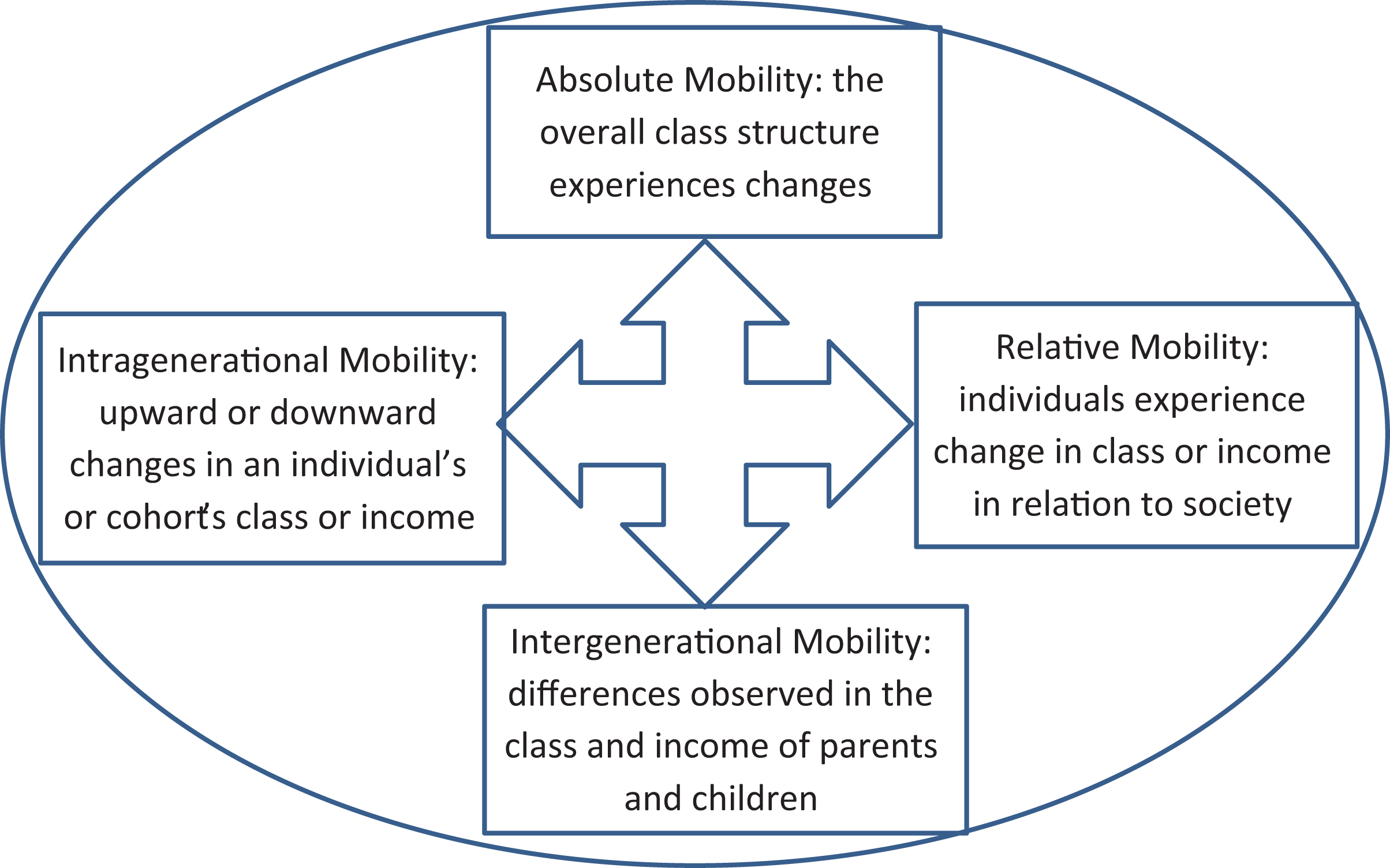
Four dimensions of social mobility (Institute for Public Policy Research, 2008, p. 4).
Devine and Li (2013) corroborate earlier studies (Aldridge, 2001; Bukodi & Goldthorpe, 2019; Goldthorpe, 2013). These studies found that absolute intergenerational class mobility and intragenerational occupation mobility rose during the 20th century, particularly in the postwar period, due to structural changes in the labor market that saw a significant expansion of professions and white-collar middle management occupations, creating more room at the top.
Barriers to Upward Mobility
The array of barriers to upward mobility are complex, are often subtle, and are likely to work in combination. A key barrier to upward mobility is the propensity for organizations to recruit and/or promote within their own image (Yen, 2017). Payne (2017, p. 164) contends that, “the world of professionals and managers is largely self-recruiting” through the phenomenon of sponsored mobility. According to Turner (1960, p. 856), sponsored mobility “involves controlled selection in which the elite or their agents choose recruits early and carefully induct them into elite status,” resembling induction into a private member’s club, whereby access is based on the candidate possessing the qualities that are shared and valued by the current members. The features of sponsored mobility suggest that the organization highly values social capital that allows individuals to gain preferential access to and advancement in elite occupations (Keeley, 2007). The mechanism of doing so can be shrouded in nebulous requirements, such as the notion of “polish,” which can be a vessel into which the interviewer can pour their sociocultural baggage and be justified as “reducing the risk” by going with what the interviewer knows and recognizes (Institute for the Study of Societal Issues, 2016). A study into the noneducational barriers to the elite professions found that the attributes sought are most readily “mapped on to middle-class status and socialisation” (Ashley et al., 2015, p. 6), including polish and confidence; accordingly, entry level tends to be dominated by those from more privileged socioeconomic backgrounds, typically those who have attended fee-paying or selective schools. In the same perspective, Bertaux and Thompson (2017) argue that there are limitations in terms of the possibilities that are realistically accessible to individuals, families, and social groups at a particular point in time. They found that such possibilities are restricted by “the lack of economic or cultural resources as well as group prejudice” (p. 2). There is strong evidence of the social construction of class and privilege, thus inequality. A recent study by Li (2018) corroborates this argument.
Opportunity hoarding can also hamper social mobility. This is where lower cognitively skilled individuals from socioeconomically advantaged backgrounds are more likely to attain entry to and achieve better career/income progression in elite professions compared to higher cognitively skilled but socioeconomically disadvantaged individuals (Goldthorpe, 2016; McKnight, 2015; Von Zugbach, 1993). Essentially, intergenerational “stickiness between generations in high level occupations represents opportunity hoarding; allowing less room for the upwardly mobile to fill these positions” (McKnight, 2015, p. 3) because those from socioeconomically advantaged families are highly likely to avoid downward mobility. In an era where absolute mobility has significantly stagnated in recent decades, the lack of downward mobility means that there is restricted room at the top for talented individuals from lower socioeconomic backgrounds to move up. The means by which opportunities are hoarded include the ability to pay for independent schooling or to invest in tuition to succeed in selective grammar entry examinations, membership or access to advantageous networks, and the financial wherewithal to undertake unpaid internships. The phenomenon of self-reinforcing inequality is sometimes referred to as the Matthew effect (Merton, 1968; Perc, 2014), which describes how social networks and preferential attachments create the conditions for the advantaged to beget further advantage in terms of wealth, prestige, or power, while the less advantaged remain the same.
Armed Forces Context—Elitism, Hegemony, and the Social Construction of Mobility
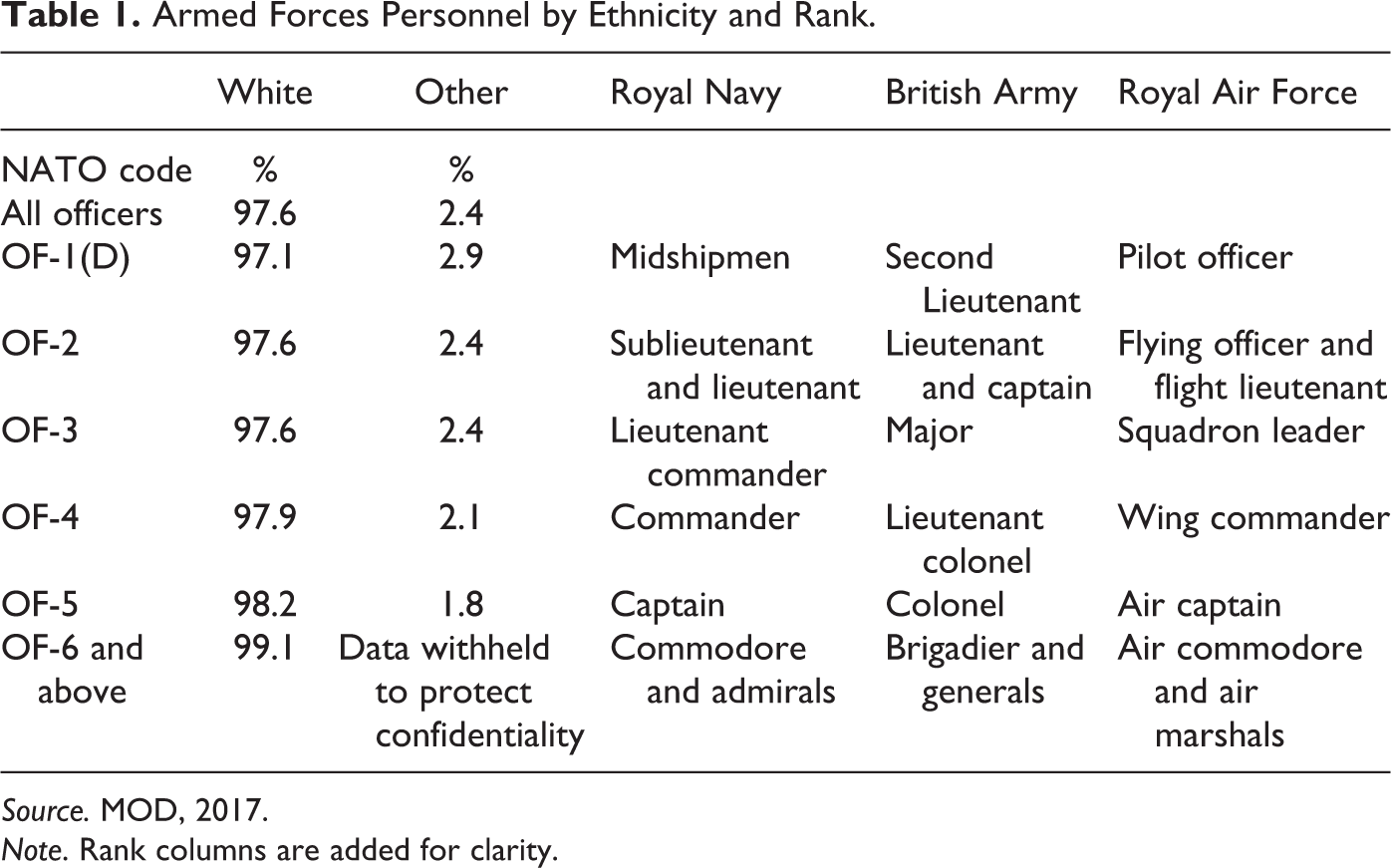
There is acknowledgment in the military literature that the Armed Forces should better reflect the society from which it is drawn (Higate, 2003). However, taking equality and diversity as an example, turning good intentions into reality has consistently proven to be easier in the word than in the deed. The UK Armed Forces Biannual Diversity Statistics published statistics relating to the gender, ethnicity, nationality, religion, and age of the Armed Forces (Ministry of Defence [MOD], 2017). In relation to ethnicity, from 2012 to 2017, the percentage of officers from non-White ethnic groups remained at around 2.4%, despite 7.6% of the forces being from minority backgrounds and 13% of UK population belonging to a Black, Asian, Mixed, or Other ethnic group (MOD, 2018). Table 1 shows that the percentage of personnel from Other (i.e., non-White) ethnic groups steadily declines the further you move up through the officer ranks. This picture is similar to the United States where in 2018 non-Whites made up 30% of the U.S. military, but only 12.5% were represented in the highest ranks, that is, General/Flag Officer—OF-7 and above (Kamarck, 2019).
Armed Forces Personnel by Ethnicity and Rank.
Source. MOD, 2017.
Note. Rank columns are added for clarity.
The above highlights how the officer corps seems largely impervious to social and demographic changes—the question is whether this is by design or simply a natural consequence of specific factors. Langman (2015) referred to hegemony theory, whereby the dominated willingly consent to ruling class domination because historical, social, and political factors “normalize” the arrangement. The theory of hegemony can be applied to the “management elite in the organisational hierarchy” (Nason, 2000, p. 43) and is consistent with elitist theorists’ contention that the existence of elites springs from an “inherent tendency of all complex organizations to delegate authority to a ruling clique of leaders—who often take on interests of their own” (Zuba, 2016, p. 22).
This appears rooted from a time when the officer class was the preserve of the aristocracy, populated by those of “high social position, holding large possessions” (Kirby, 2016). The hegemonic situation seems likely to have been perpetuated by the tendency of traditional organizations to champion the advancement of those in their own image (White, male, and independent/grammar educated). This creates an inevitability that the sociodemographic elite dominates the most senior officer ranks. It is clear from the military literature that acceptance of these norms is based on the existence of implicit power relations between social and demographic groups (Higate, 2003; Rachar, 2016). A socially constructed worldview of society served to legitimize the power and wealth of an elite whose domination became regarded as the natural order. This led Otley (1978) to believe that there is a military subculture in the British Armed Forces which sits outside mainstream equality frameworks (see also Langman, 2015; Zerubavel, 2016). This idea of social construction of the elite and possible status quo in mobility underpins our central research question: To what extent does class impact promotion of officers into Senior Ranks in the Royal Navy in the UK?
Method
Participants and Procedure
The study was conducted among 120 employees of the Logistics group in the British Royal Navy. The data were collected in summer 2017. In order to achieve sufficient responses, this study’s target population is the total available (120). Table 2 illustrates the rank distribution of the sample.
Survey Respondents’ Rank Distribution—Target Versus Actual.
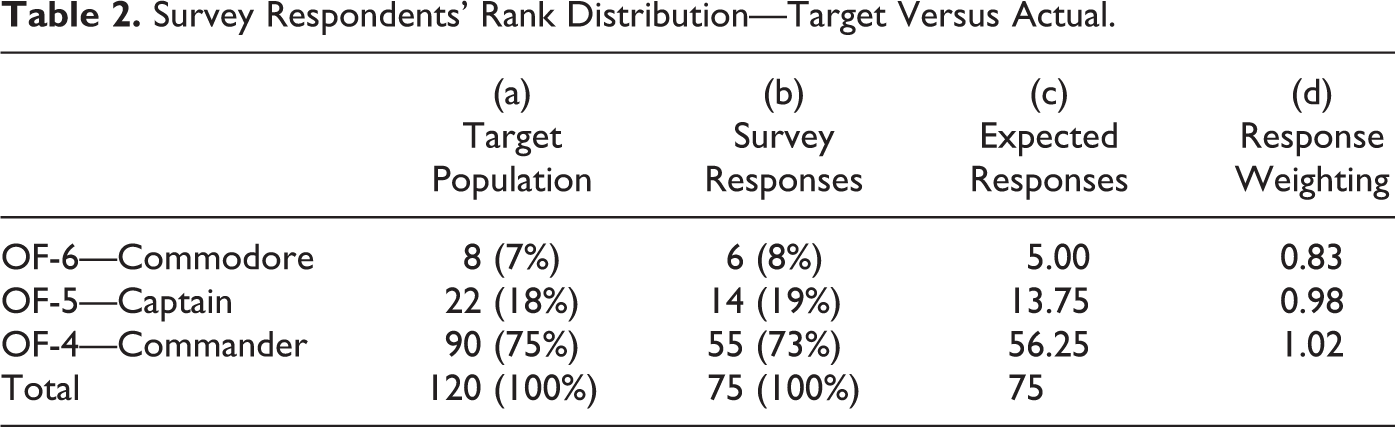
The approach of the study was to focus on a discrete population with the Royal Navy by surveying one branch (Logistics) within the officer corps, as the size of the branch made the research more manageable, while acting as a microcosm of the overall Royal Navy population, noting that the entry criteria for the officer corps is the same, except that Engineering and Medical Branches require relevant degrees. Notwithstanding this, there may be other factors that determine greater or lesser social mobility within different branches; for this reason, the research only claims to be complete for the Logistics Branch, though having learning ramifications for other sections of the Royal Navy. Further research is needed in the wider Royal Navy to ensure wider generalizability. The target population was confined to the senior rank level within the Logistics Branch, commodore (circa 8), and the two immediately subordinate ranks, captain (circa 22) and commander (circa 90). Given a total population size of 120, the report accepted a margin of error of 5% with a confidence level of 95%, as these were deemed to be acceptable levels for social research (Gill & Johnson, 2010, pp. 127–131); using these figures, the minimum recommended survey sample size is 92.
Given the geographic spread of the target population, it was considered that the most effective means of collecting data would be to collect data through a survey questionnaire. By focusing on the Senior Ranks in the branch, the data collected could be directly compared with recent surveys undertaken for the Sutton Trust (Kirby, 2016) and the Social Mobility and Child Poverty Commission (2014), which focused on the top-ranking officers of the Armed Forces, at and above rear admiral, major general, and air vice-marshal. The questionnaire also sought to gain qualitative insights in terms of respondents’ views on how their background and education had influenced their career choices, promotions to date, and future career prospects.
Following guidance from Navy Command Head of Research, a questionnaire was devised that would obviate the requirement for Ministry of Defence Research Ethics Committee approval. The research adhered to the ethical requirements of the University of Lincoln and abided by the Framework for Research Ethics set out by the Economic and Social Research Council (2015). The purpose of the research, its use, and publication were fully explained to all participants who participated voluntarily. Throughout the research process, confidentiality of information supplied by participants and their anonymity were respected; similarly, the reporting and analysis of data were presented as overall results so that no individuals could be identified.
The questionnaire was web-based in order to expedite distribution and returns, recognizing that the available target audience would have ready access to computers, email, and internet services.
Measures
The two main dependent variables were inequality perceptions and perceptions of changing inequality. Inequality perceptions (α = .69) were measured with 4 items: “Those from socio-economically disadvantaged backgrounds have equal opportunities to progress their careers in the RN” (reverse coded), “People who attended private/fee-paying schools are more likely to reach the most senior office ranks (OF-6 and above),” “Within the RN, having attended a Russell Group university (alliance of elite universities in the UK) does not significantly improve an individual’s career opportunities” (reverse coded), and “In your experience, there is a general belief in the Royal Navy that people from lower-status backgrounds are less suitable for senior officer positions.” Items were rated on a 5-point Likert-type scale (1 = strongly disagree, 5 = strongly agree). Higher scores indicate a high perception of inequality.
Perceptions of changing inequality (α = .69) were measured with 2 items, using the same rating scale as the inequality perceptions scale. The items were “Based on your perception: the number of senior officers from socio-economically disadvantaged backgrounds has increased during your time in the RN,” and “Based on your perceptions of the socioeconomic backgrounds of junior officers (OF-3 and below): The number of senior officers (OF-6 and above) from socioeconomically disadvantaged backgrounds will substantially increase during the next 15 to 20 years.” Higher scores also indicate stronger perceptions of changing inequality.
Independent Variables
School type was measured by asking what type of secondary school the respondent attended (0 = state school, 1 = private school). Occupation parent/carer measured the occupation of the principal income earner in the respondent’s household during secondary education (0 = casual, nonskilled, skilled, or clerical occupations; 1 = managerial, professional, or senior official). Education parent/carer was measured as the highest education qualification of any parent or carer during secondary education (1 = no education qualification, 6 = doctorate or master’s level). Education prior to joining was measured by asking the highest education qualification that was obtained prior to joining the Royal Navy (1 = no education qualification, 6 = doctorate or master’s level). Year officer training was measured by asking the year in which the respondent commenced officer training at Britannia Royal Navy College (BRNC). On average, respondents started their training in 1994 (range 1983–2003). Promotion from rank was measured by asking whether the respondent was promoted from the ranks (0 = no, 1 = yes). Current rank was indicated on three levels (1 = commander [OF-4], 2 = captain [OF-5], 3 = commodore [OF-6].
Analyses
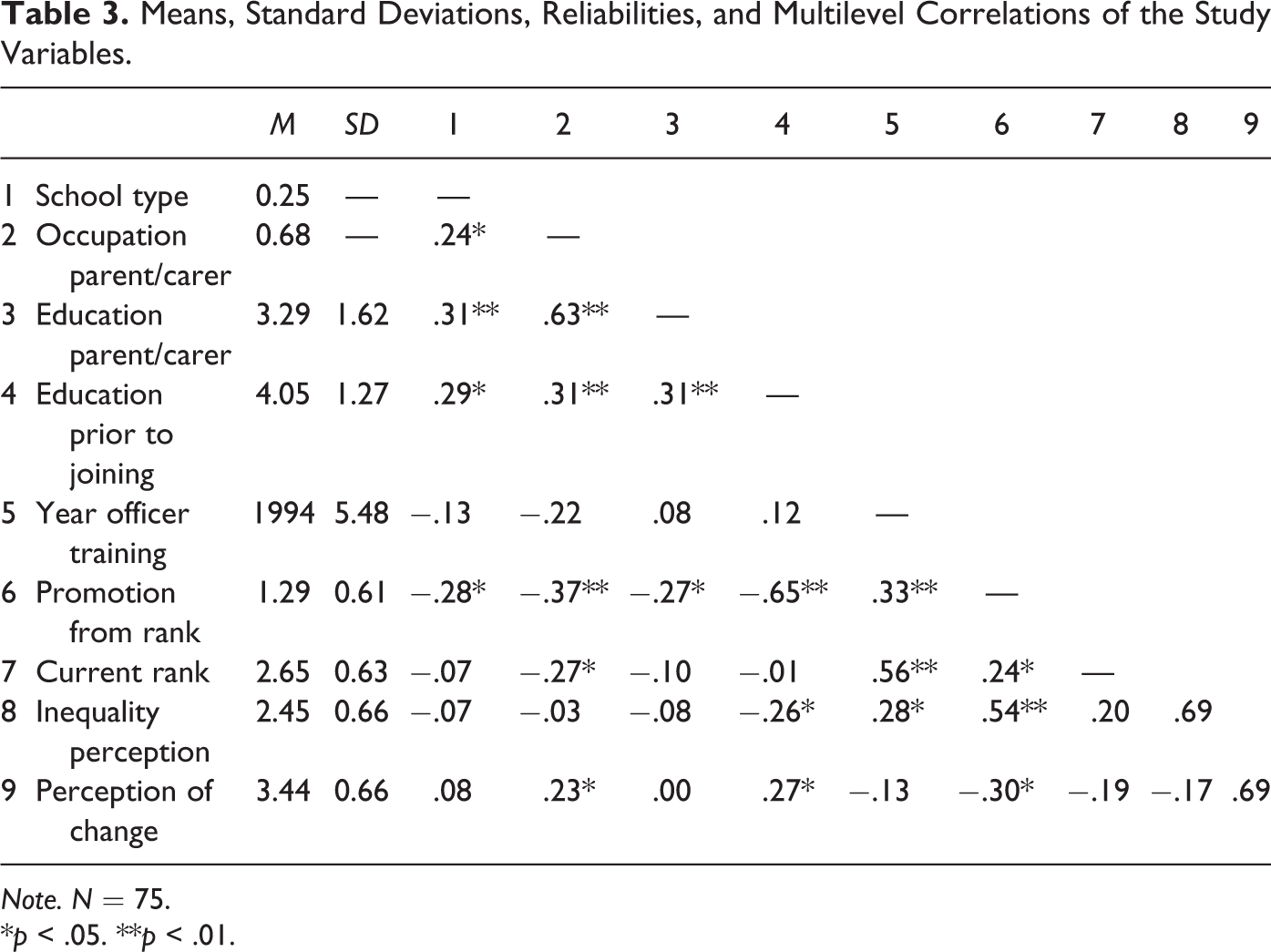
First, we created scale scores for the two attitudinal variables (inequality perceptions and perceptions of change), after which we regressed these variables upon the predictors. Thereby, we differentiated between the predictors prior to joining the Royal Navy and subsequently adding the two predictors (promotion and current rank) to test whether the initial predictors were explained by current status in the Royal Navy. Table 3 shows the mean, standard deviations, and correlations among the study variables.
Means, Standard Deviations, Reliabilities, and Multilevel Correlations of the Study Variables.
Note. N = 75.
*p < .05. **p < .01.
Results
Table 3 shows that occupation of parent/carer is positively correlated with perception of change (r = .23, p < .05). Education prior to joining was negatively related to inequality perception (r = −.26, p < .05) but positively to change perceptions (r = .27, p < .05). Year of officer training was positively related to inequality perception (r = .28, < .05), indicating that those who commenced training later were more likely to perceive inequality. Promotion from the rank was positively related to inequality perceptions (r = .54, p < .01) but negatively to perception of change (r = −.30, p < .05).
Table 4 shows the results of the regression analyses. Education prior to joining was negatively related to promotion (β = −.65, p < .001), and year of officer training was positively related to promotion (β = .33, p < .001). Hence, promotion among the ranks is more likely for those who have lower education and who commenced training more recently. Year of officer training was negatively related, however, to current rank (β = −.57, p < .001), indicating that those who commenced training longer ago were more likely to be in a higher rank.
Regression Coefficients.
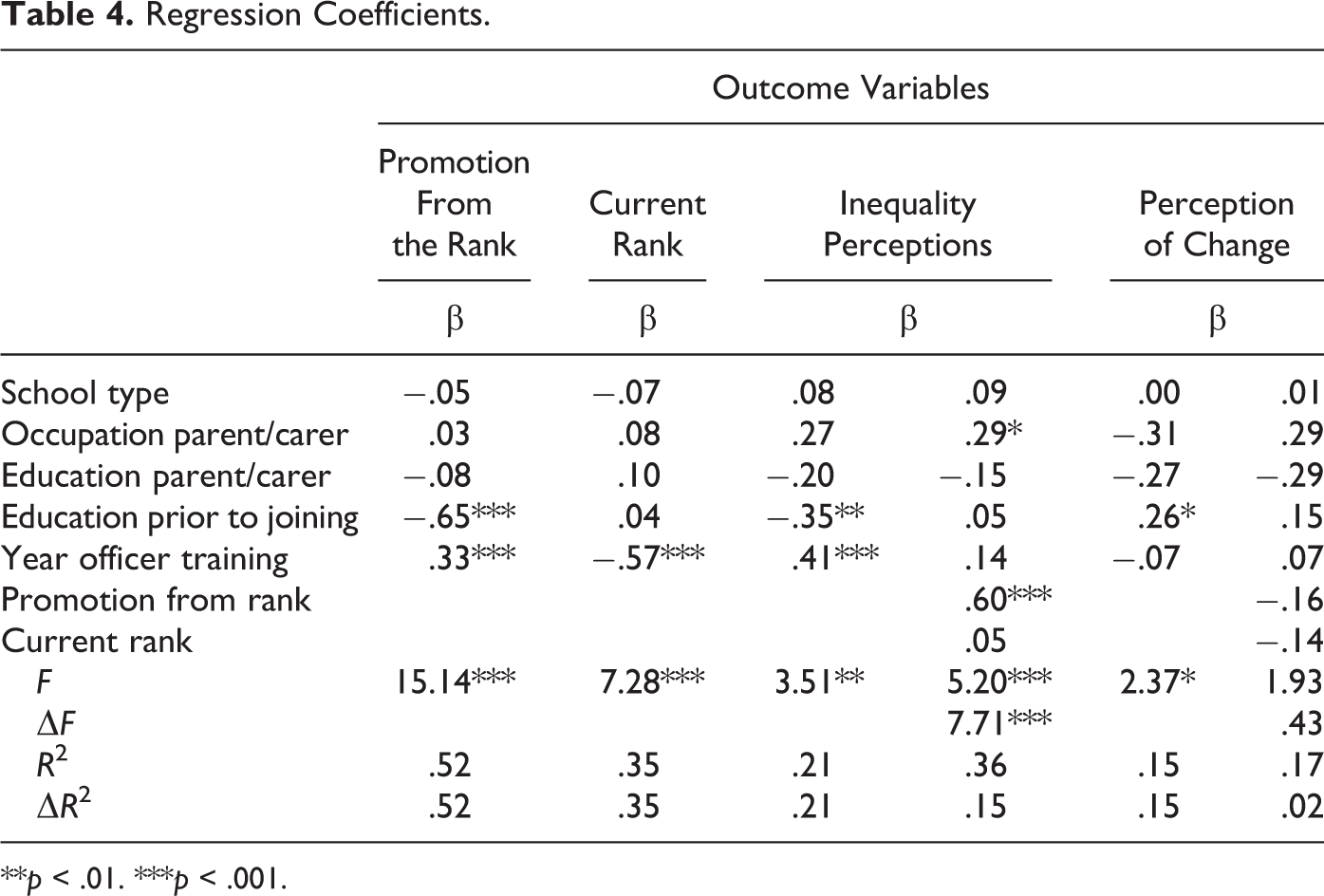
**p < .01. ***p < .001.
With regard to the perceptions, education prior to joining was negatively correlated to inequality perceptions (β = −.35, p < .01), indicating higher education to be related to lower inequality perceptions. Year of training was positively related to inequality perceptions (β = .41, p < .001), indicating that those who were more recently trained perceived more inequality. However, when promotion and current rank were added in the next step, both were explained by promotion from the rank which was strongly positively related (β = .60, p < .001) to inequality perceptions. When promotion from the rank was taken into account, occupation became significantly related to inequality perceptions (β = .29, p < .05), indicating that those with parents or carers with professional or managerial occupations perceived more inequality.
The significance of the education background was further evident using the relative statistics. The type of secondary schools attended by the officers has an influence on their promotion, with a significant representation of those who attended independent fee-paying schools in the higher ranks (see Figures 2 and 3).
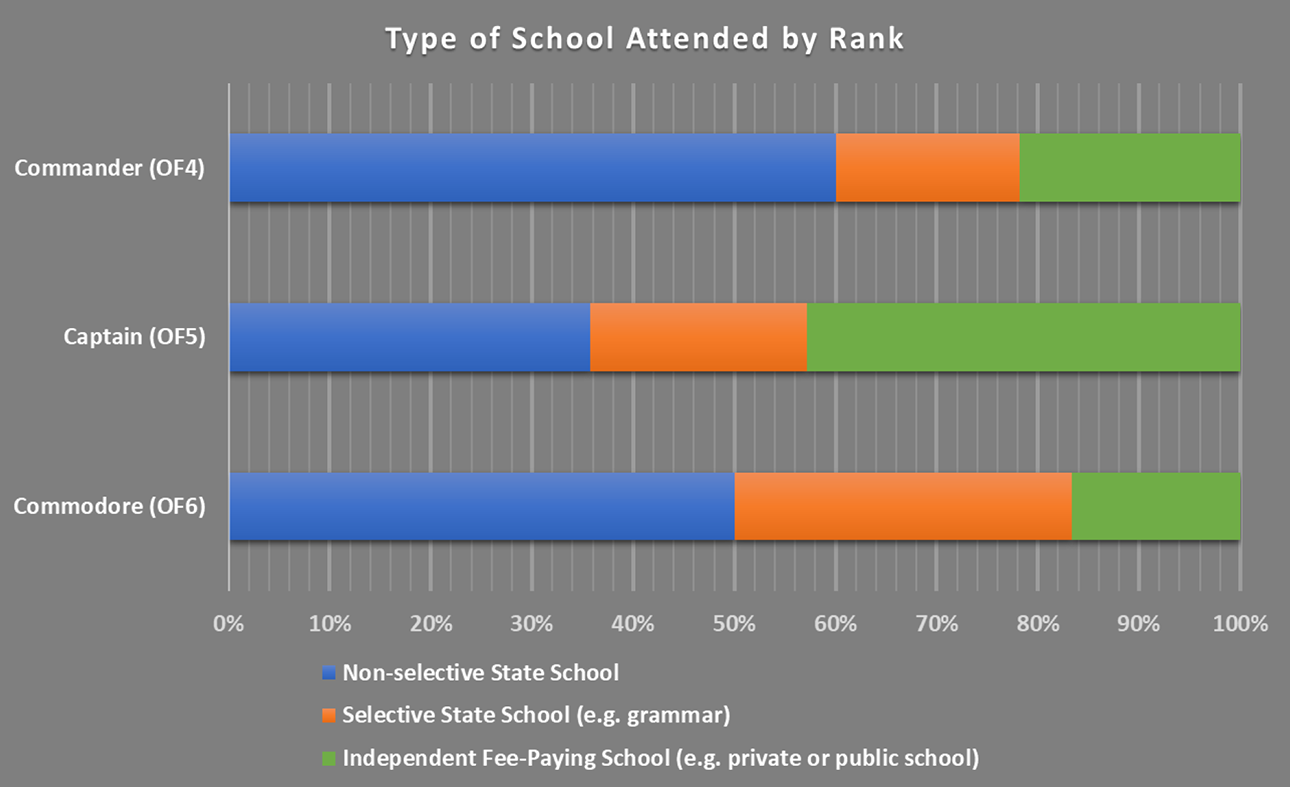
Type of school attended by rank.
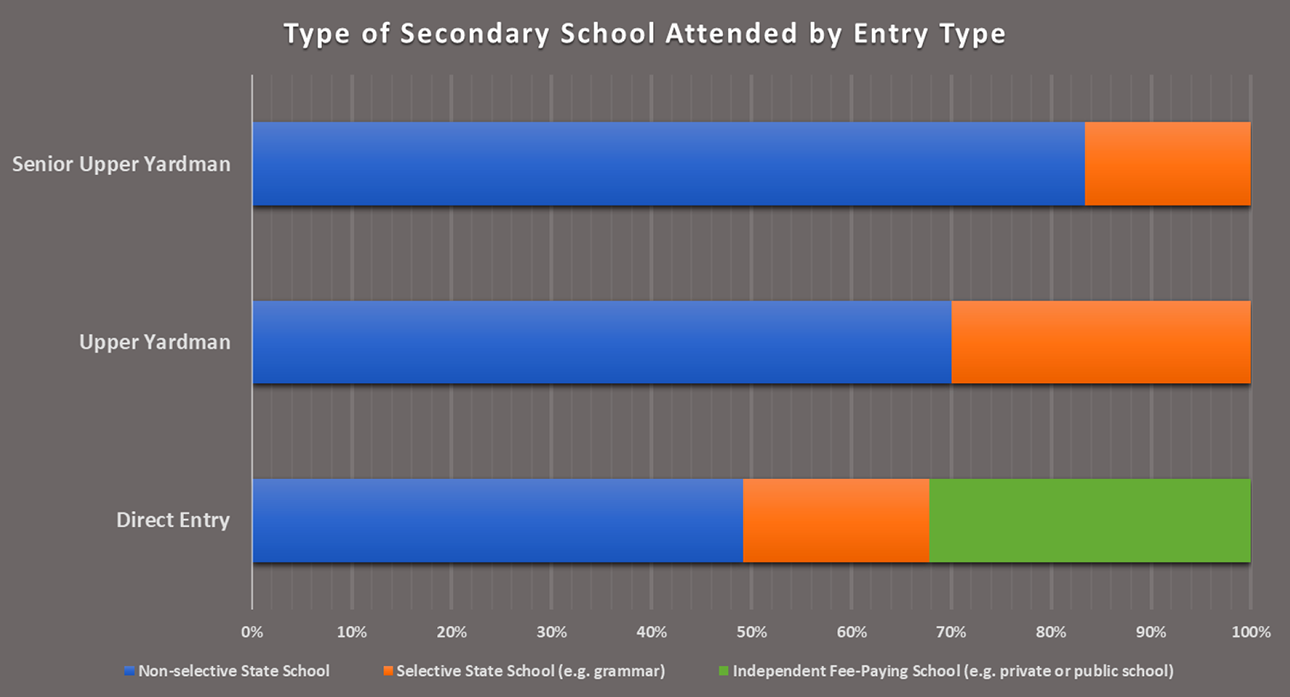
Type of school attended by entry type.
Overall, 45% of respondents attended either an independent school or selective grammar. This was 40% of commanders, 64% of captains, 50% of commodores. Among direct entry officers, 51% attended an independent school or selective grammar (split two-thirds independent fee-paying and one-third grammar), compared to 25% of those promoted from the Rating Corp (all grammar school—elite school in the British context—attendees).
Similarly, the highest qualification the officer held on entry and the university attended (if any) have an influence on their progression within the Royal Navy. These findings were evident in the relative statistics.
Overall, 56% of respondents had attained at least a degree-level qualification prior to joining the Royal Navy. Within the direct entry officer population, this rises to nearly 70%. For those promoted from the Rating Corp, the highest education attainment for the significant majority was at General Certificate of Education (GCE) of Certificate of Secondary Education (CSE) level (secondary school examinations taken at the age of 16). Figure 4 shows prejoining qualifications by rank and shows that a sizable proportion joined post A-level (end of sixth form diploma). Figure 5 shows that education attainment for those promoted from the Rating Corp was typically GCE/CSE level (100% senior upper yardmen [SUY]; 60% upper yardmen [UY])
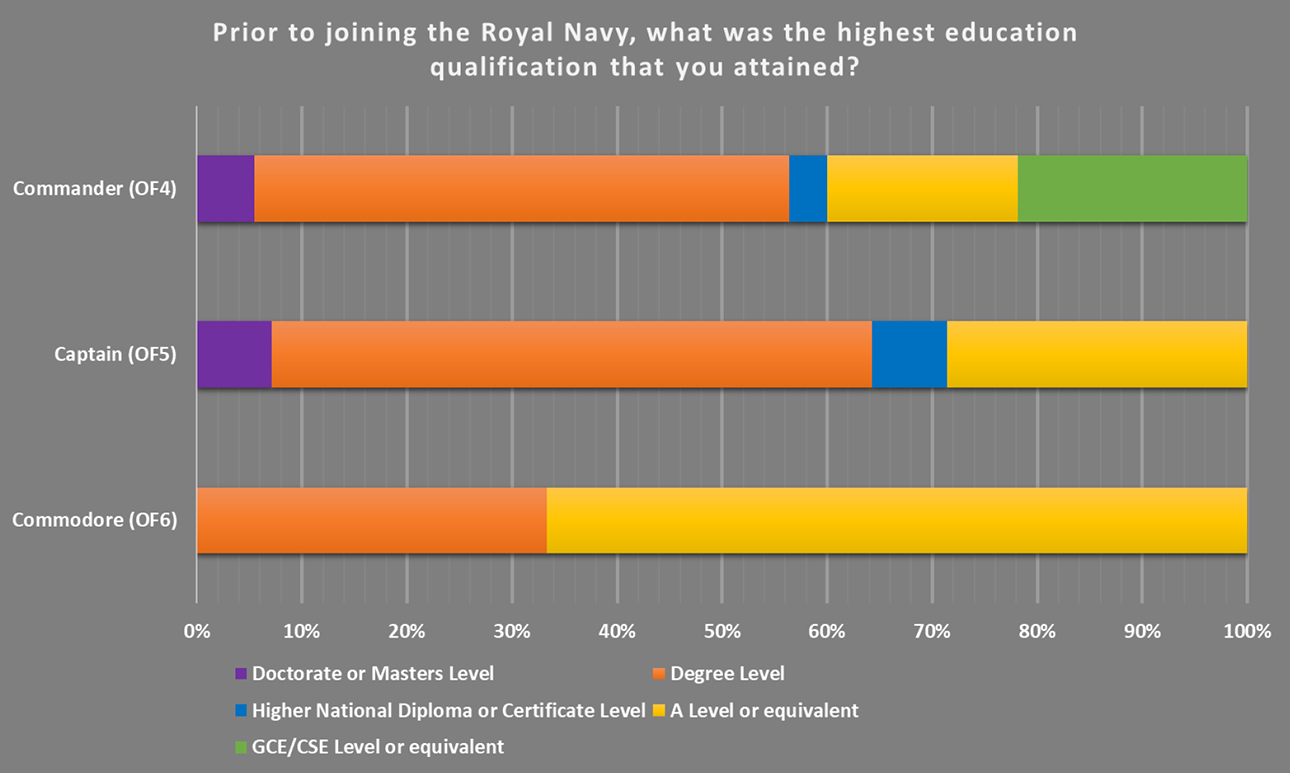
Highest education qualification prior to joining Royal Navy by rank.
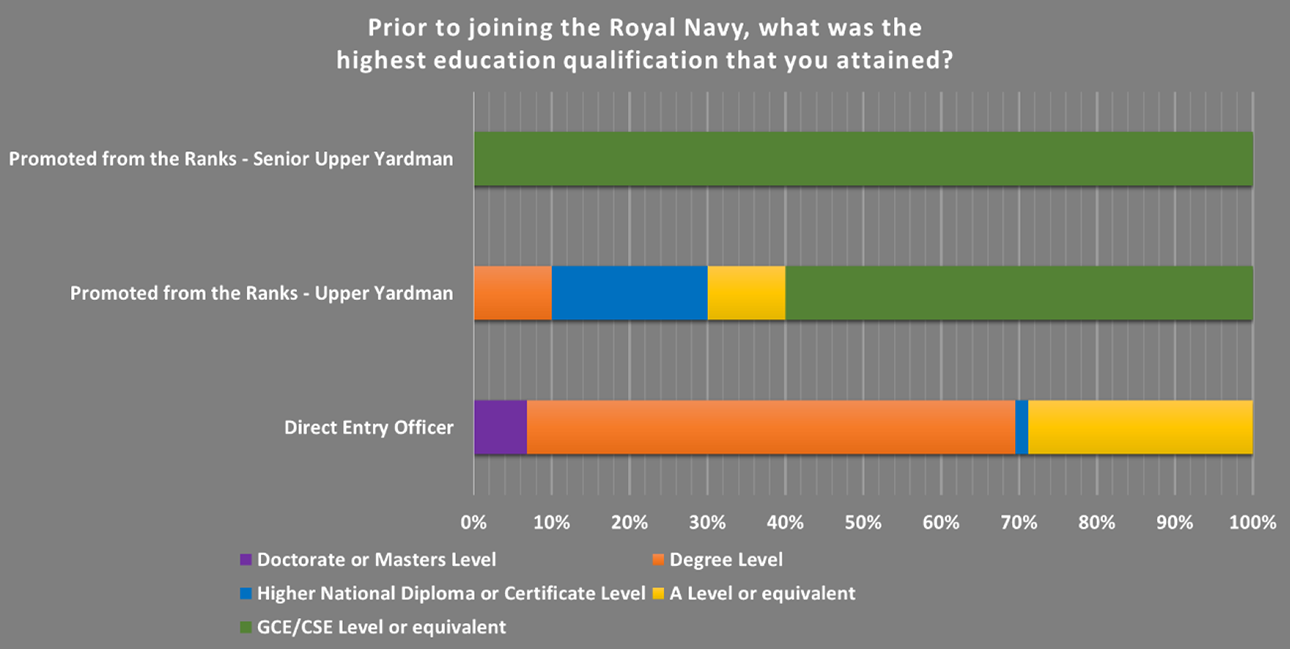
Highest education qualification prior to joining Royal Navy by entry type.
Of those who attended a university, 43% undertook their studies in a Russell Group university (alliance of elite universities in the UK), including 5% who attended Oxbridge (an acronym referring to the prestigious elite universities of Oxford and Cambridge in the UK). While proportionally high from a UK-wide perspective, when compared to other elite occupations, this proportion is low, for example, Oxbridge attendance was 74% of the top judiciary (judges who preside over the high court and court of appeals) and 40% of the top medical professionals (fellows of the Royal College of Physicians; Kirby, 2016). This suggests perhaps that university attended has less relevance in the military than in other elite occupations. As the military senior ranks have the second highest attendance of fee-paying independent schools, it appears that type of schooling has greater bearing on promotion to the highest ranks.
Education and Occupation of Parent and Carer
Regarding the occupational category of the parents or carers of the officers surveyed, based on the Office for National Statistics’ Standard Occupational Classification 2010 (column a), nearly 71% of respondents’ households were in the top two occupational classifications. However, only 1.3% derived from the lowest classification with a dependency on the welfare state for their income.
There is a particularly strong correlation between parental education level and the educational outcomes of individuals. When analyzed according to entry type, it is notable that the education attainment for parents of those from the Rating Corp was overwhelmingly at GCE/CSE level or below (70% UY; 83% SUY), compared to 29% for direct entry officers.
The survey data for OF-4–OF-6 ranks showed that 19% came through from the Rating Corp (11% UY; 8% SUY), who overwhelmingly had lower educational qualifications upon entry to the Royal Navy, compared to direct entry officers. Subsequent to joining the Royal Navy, 70% of UY and 66% of SUY had attained at least a degree-level qualification, with 50% and 33%, respectively, attaining a master’s level or higher. In comparison, of those direct entry officers whose academic attainment was below degree level prior to joining BRNC (30.5% of direct entry officers), 83% went on to achieve a master’s level or higher. Accordingly, the levels of academic attainment for those promoted from the Rating Corp would suggest their inherent cognitive abilities are comparable with direct entry officers, notwithstanding the fact that academic attainment prior to joining the Royal Navy was generally much lower (overwhelmingly at GCE/CSE level). This points to the fact that the Armed Forces invest in its people through education and training opportunities, which to an extent levels the playing field by closing the education attainment gap between direct entry officers and those promoted from the Rating Corp.
Despite evidence of cognitive comparability between direct entry officers and those promoted from the Rating Corps, career outcomes, in terms of promotion, remain much better for direct entry officers. Twenty-seven percent of commanders (OF-4) were promoted from the Rating Corps, but this reduces to 7% for those promoted to captain (OF-5) and nil for commodores (OF-6).
The fact that there are no SUY prior to 1999 BRNC entry date is indicative of the age constraint owing to their relatively late entry into the officer corps, with SUY typically being older upon BRNC entry, therefore having fewer years to attain promotion before compulsory retirement age. Thus, the highest promotion rank attained by SUY is OF-4 rank. In contrast, UY enter BRNC at a similar age to direct entry officer, which explains their presence across all three cohort periods. Despite this comparability, only one former Rating Corp respondent has been promoted beyond OF-4.
The underrepresentation of individuals from disadvantaged socioeconomic backgrounds was clearly evident from the results of our survey; the results for occupation parent/carer shows it has a significant positive relationship (β = 0.29, p < .05) with inequality perceptions. Moreover, a significant proportion of those from socioeconomically disadvantaged backgrounds were promoted from the Rating Corps, highlighting the fact that direct entry into the officer corps for those who have been promoted to OF-4 rank or higher is predominantly from more privileged backgrounds. Attitudinal responses showed that 56% of respondents considered that those who attended a fee-paying school were more likely to reach OF-6 rank or higher. This would indicate that the respondents consider that either privately educated individuals are more able or the promotion system favors those from a private education background (through either conscious preferment or unconscious bias).
Discussion
A barometer of social mobility in the officer corps is the proportion of individuals who have been commissioned from the Rating Corp. This would demonstrate intragenerational upward mobility (i.e., within the individual’s lifetime) and, in most cases, demonstrate intergenerational upward mobility (i.e., differences between socioeconomic position compared to parents). There is a higher proportion of UY and SUY from socioeconomically disadvantaged backgrounds compared to their direct entry counterparts. Socioeconomically disadvantaged category refers to those who are less likely to have attended a fee-paying school and are more likely to have lower education qualifications prior to entry into the Royal Navy (Social Mobility and Child Poverty Commission, 2013; Von Zugbach, 1993). This study evidenced a strong correlation between social class and the likelihood of attending university, particularly a Russell Group institution. The widening of participation in higher education has created opportunities (Universities UK, 2016) for both relative and absolute mobility in society generally. However, in the Armed Forces, the correlation between parental education backgrounds and progression is still more prevalent.
The occupational classifications can be correlated with the National Readership Survey’s social grades, which is a marketing measure to differentiate groups of people in terms of attitudes and behaviors as well as goods and services consumed; this correlation was modelled, validated, and subsequently applied to the 2001 and 2011 censuses (Lambert & Moy, 2013).
There remains continuing significant differentiation between lower rank and higher rank officers since Grusky’s (1975) study to examine the socioeconomic backgrounds of Royal Navy officers (Macmillan et al., 2013).
While the findings were not as stark as those found at the most senior levels in the Armed Forces (Kirby, 2016), our research indicates that there is a significant underrepresentation of individuals from socioeconomically disadvantaged backgrounds (Li, 2018), which reflects current trends in British Armed Forces and society (Alvaredo et al., 2017; Higate, 2003; O’Mahoney, 2018). The Sutton Trust survey (Ipsos, 2017) and trend data from British Social Attitudes Survey (Heath et al., 2010) indicate that fewer than 10% of respondents considered that a private education background would most help those from less advantaged backgrounds get ahead in life. Given the disproportionate dominance of those privately educated at the top of professional elite occupations (Higate, 2003; Maxwell & Aggleton, 2010), it would seem that private education is perceived as most beneficial for advancement in the Armed Forces. Moreover, 58% of respondents felt that knowing the right people is a key factor in an individual’s career progression. This proportion is high when compared to successive survey results of the British Social Attitudes, in which respondents considered that knowing the right people was essential or very important for getting ahead: 39% (1987), 35% (1992), 41% (1999), and 33% (2009; Heath et al., 2010, p. 37). Knowing the right people corresponds to sociological theories about the role of networks and contacts in gaining access to and advancement within elite occupations (Macmillan et al., 2013). This challenges the core assumptions of a meritocratic promotion system; in practice, it would give people with wider networks—and social capital (not necessarily those with intellectual capital)—an advantage in the competition for promotion (Holck, 2018), hence explaining the results that promotion from the rank was positively related to inequality perceptions (r = .54, p < .01), while negatively correlated to perception of change (r = −.30, p < .05).
These two factors would seem to be steeped in privilege and patronage, which would run counter to a truly meritocratic system. While nonmeritocratic factors may not in themselves create inequality of opportunities, they are liable to create different start points, meaning that the likelihood of socioeconomic reward through career progression is heavily weighted toward those that have certain nonmeritocratic advantages such as social, cultural, and political (networks)—as opposed to attainment (Friedman et al., 2015; Macmillan et al., 2013). The lack of access to these networks due to social background will have more limited career possibilities (OECD, 2017). This manifests itself in the homogenous sociodemographic makeup of the senior ranks of Armed Forces.
These findings are consistent with Jackson’s (2001) research, which found that nonmeritocratic criteria had a significant role in occupational attainment and are prone to be ascribed to an individual rather than demonstrably achieved. The existence of such ascribed characteristics is vulnerable to bias and can explain why inequalities in class mobility chances persist. Similarly, Kim and Choi (2017) found that nonmeritocratic elements such as social networks and family background played a significant role in access to opportunities, meaning that individuals from less privileged backgrounds have more ground to make up in order to be in a position to compete.
Conclusion
Summary
The research aimed to determine the extent to which promotion into the Senior Ranks in the Royal Navy Logistics Group is the preserve of the socioeconomically advantaged, with a view to providing recommendations on how to create the conditions for social mobility barriers to be broken down.
The first research question concerned the factors influencing upward mobility of the socioeconomically disadvantaged officers. In recent years, the rate in absolute mobility has fallen, while the rate of relative mobility (i.e., the odds of arriving at a different socioeconomic class destination) has remained stubbornly constant; this indicates that at a population level, Britain is not a particularly open or fluid society (Li, 2018). This is evidenced by the strong association between the class positions of children and their parents (Aldridge, 2001; Britton et al., 2016). In an era where absolute mobility has significantly stagnated, the lack of downward mobility means that there is restricted room at the top for talented individuals from lower socioeconomic backgrounds to move up. The means by which opportunities are hoarded by higher socioeconomic households include the ability to pay for independent schooling or to invest in tuition to succeed in selective grammar entry examinations, membership or access to advantageous networks, and the financial wherewithal to undertake unpaid internships (McKnight, 2015). The study found barriers to upward mobility, including the propensity for organizations to recruit and/or promote within their own image (Yen, 2017), perpetuating class status quo as found by Goldthorpe (2016) and Devine and Li (2013). The Armed Forces can draw upon the experiences of other professions and industries, especially where data have been collected and policies are at a greater maturity.
The results showed evidence of social mobility, with a sizable population of the officer corps promoted from the Rating Corps. Notwithstanding this positive note, the research indicates that career progression obfuscated by the socioeconomic backgrounds of the officers. Fundamentally, fewer individuals from socioeconomically disadvantaged backgrounds enter the officer corps; the few who gain entry do not experience the same achievement as their more advantaged peers. The survey results are reflective of other elite occupations; clearly, there are no simple solutions that will reverse long-standing and embedded social inequality, which in many cases passes through successive generations.
Our research points to more limited mobility as one moves toward the most senior ranks in the Armed Forces; this is most starkly evidenced by the Sutton Trust’s report which showed that nearly 90% of the most senior officers attended either fee-paying independent schools or selective grammar schools (Macmillan et al., 2013). This research was based on the next tier down of officer ranks (commander to commodore), which showed a lower proportion of 45% having attended either fee-paying independent schools or selective grammar schools; this proportion is 51% for direct entry officers. Studies have found that while formal educational qualifications are important to employers, other nonmeritocratic criteria also have a significant role (Jackson, 2001; Kim & Choi, 2017). Nonmeritocratic characteristics such as social skills and personal characteristics are prone to be ascribed to an individual rather than demonstrably achieved, and these ascribed characteristics are likely to be more readily accessible to those in more privileged groups in society. The use of nonmeritocratic, ascribed characteristics in selection processes (e.g., recruitment or promotion) is vulnerable to bias and perhaps explains why inequalities in class mobility chances persist, even after controlling for educational qualifications and measures of IQ and effort (Jackson, 2001, p. 21; Li, 2018).
Implications
Despite the government’s introduced public sector duty framework to reduce inequality (UK Legislation, 2018), equality and diversity policies remain principally focused on protected characteristics such as gender and race. Furthermore, successive governments’ approaches have largely focused on the supply-side role of education in improving social mobility, with minimal practical improvement on the economic factors, such as improved incentives or funding in research and development, upskilling, and innovation that would see a demand-side expansion in higher skilled and management roles. Political responses to social mobility do not auger well for significant improvements in the absolute rates of intergenerational class mobility; as such, increased relative rates of mobility will require a commensurate interchange between risers and fallers. Theories such as effectively maintained inequality and the Matthew effect show how the socioeconomically advantaged are much better able to hold their elevated positions against aspirant socioeconomic risers, even when meritocratic factors suggest the opposite should be the case (Lucas, 2001; Merton, 1968; Perc, 2014). The conclusion drawn from this phenomenon is that laissez-faire approaches are unlikely to result in social change. For change to happen, there needs to be active intervention, including positive action, otherwise the status quo will persist. The government is more prescriptive in terms of the implementation of the diversity agenda in the public services, including the Armed Forces. Initiatives such as the publication of equal opportunities data and action plans require regular monitoring.
Limitations and Further Research
The limitations of this study center on the small sample taken from one section of the Royal Navy. In order to increase generalizability, a larger sample covering a broader range of departments and tasks could be drawn. The study also has limitations in terms of the limited comparisons drawn with other elements of the Armed Forces. The focus on RN is relevant, but more comparative data from the military, the Royal Air Force, for instance, would help more vigorously ascertain the degree to which the issues uncovered in the RN are widespread in the Armed Forces as a whole.
Since evidence-based decision-making requires relevant data to understand the issues, to support action, and to monitor outcomes, a systematic means to capture data on socioeconomic indicators ought to be developed that can be used across the Royal Navy and that will allow the tracking of career progression over time. In order to more fully understand social mobility issues, it is essential that data are systematically collected and continue to be monitored and analyzed on a longitudinal basis through time to provide the robust evidence necessary to take meaningful action. While there are many commonalities with other occupations and professions, the Armed Forces have many unique aspects. Sustained sponsored research needs to be undertaken to explore more fully the extent and limitations of social mobility across the Armed Forces; such research will include gathering qualitative data to more fully understand the complexity surrounding social mobility issues by drawing upon the experiences of personnel.
Footnotes
Declaration of Conflicting Interests
The authors declared no potential conflicts of interest with respect to the research, authorship, and/or publication of this article.
Funding
The authors received no financial support for the research, authorship, and/or publication of this article.
