




Abstract
The article addresses the trajectory and adaptative process of Chilean peasant agriculture from the mid-1970s to 2020. Our hypothesis is that peasant agricultural production has been forced into a process of permanent reconversion, which takes place every time a new agrarian policy is defined. Based on a review of secondary data, interviews, documents and other studies on agrarian transformation, we undertake a sociohistorical analysis of the adaptative process of peasant agriculture to these changes in the irrigated valleys of Chile’s central area. We also address the role played by the state in these developments. Our analysis highlights the difficulties of adapting to the neoliberal modernization process, as well as the most recent problems involving drought and the dispute over water in the central valley.
Starting in the mid-1970s, the Chilean agricultural sector has had to face a series of modifications and adaptations to the neoliberal transformation process promoted by the dictatorship of Augusto Pinochet (1973-1990). The purpose, as defined at the time, was to promote export activity in both fruit production and forestry to thus facilitate the insertion process of the Chilean economy in international markets. While this initiative was being promoted, the agrarian reform process was, in turn, rescinded. This led to the creation of a land market that would soon be complemented by a water market. The initiatives undertaken by the economic authorities entailed new requirements for peasant agriculture if the owners of small units were to maintain their status as independent producers (Gómez and Echenique, 1988; Ortega, 1987). One of these requirements was to reconvert and adapt to an increasingly dynamic and competitive market, but without the technical advice and credit support the state had provided during the 1962-1973 period (throughout the agrarian reform process).
During the period of agrarian counter-reform, which comprises the first five years of the military dictatorship, authorities handed peasants individual plots on the land that had previously been expropriated during agrarian reform processes. At the same time, rural workers were politically demobilized as the government repressed unionization and peasant organizations, and state and water companies were privatized.
The agricultural sector has seen sustained growth in recent years given the intensification of production and the steady transition in land use (from agricultural use for crops that compete with imports to the planting of higher-value crops) accompanied by a marginal expansion of the agricultural area. However, this agriculture model has been called into question due to the serious environmental crisis it has brought about and is now being linked to the worsening of drought conditions in Chile, which have been attributed, on the one hand, to climate change (Mukherjee et al., 2018) and, on the other, to the intensive extraction of water resources validated by current legislation, alongside the expansion of the agro-export sector (Bolados et al., 2018; Panez-Pinto et al., 2018).
By way of hypothesis, we posit that peasant agricultural production has been forced to undergo a permanent reconversion since the process of trade liberalization began in 1975. This conversion has been spontaneously carried out by peasant agriculture during some phases and, in others, has taken place with the support and incentives provided by the state. Over the course of the past two decades, conversion strategies have put peasant agriculture under enormous strain due to ongoing disputes with other productive agents when it comes to water access and the water crisis.
To corroborate this hypothesis, we undertook a sociohistorical analysis of the adaptative process of peasant agriculture across the main irrigated valleys in the central and south-central areas of Chile during the 1975 to 2020 period, before the beginning of the COVID pandemic. In this territory the development of an exports-based agriculture took place—one that is dynamic and capable of competing in international markets. In that same area the agrarian reform process (1964-1973) led to substantial transformations, to the point of achieving the eradication of the old latifundia. We will only consider peasant, agricultural and livestock production located in the irrigated valleys, not in the foothills or the coastal drylands.
Neoliberal modernization and reconversion: theoretical-methodological aspects
Neoliberal modernization in agriculture was implemented in several, disparate stages whose peculiarities have been due to changes in the orientation of economic policy—by both the dictatorship and the governments that followed—as well as the state’s varying capabilities of intervention. If we consider the 1973-1989 period, we can identify two phases. The first, termed the “orthodox” phase, lasted from 1975 to 1983 (Vergara, 1985). The second phase, “pragmatic neoliberalism,” lasted from 1984 to 1989 (Echenique, 1991; Silva, 1993; 1996). From 1990 onwards, a third phase was introduced; its strategic emphases (as decreed by those responsible for defining agricultural policy) and contextual characteristics differed from those pertaining to the two previous phases (Ffrench-Davis, 2008; Maillet, 2015).
During the “orthodox” stage, which promoted the first major neoliberal changes, the focus was on trade liberalization and the liberalization of trade relations by abolishing all protectionist measures including tariff barriers (Silva, 1993; 1996; Ffrench-Davis, 2008). This resulted in a massive influx of imported agricultural products that harmed “traditional agriculture” while benefiting those linked to the agro-export sector (Kurtz, 2004: 54-58). Economic authorities argued that, with the opening of trade, agricultural producers and entrepreneurs would have to engage in competition, or else, modify the productive organization of their farms in order to enhance their competitiveness.
After the economic crisis of 1983, changes were made to agrarian policy and economic policy in general, thus initiating the stage of “pragmatic neoliberalism.” This phase introduced protectionist measures and the establishment of price bands to protect the so-called traditional agriculture oriented toward the domestic market (Echenique, 1991; Silva, 1996). Other elements of regulation were also put in place, and, in the particular case of peasant agriculture, associativity was encouraged to facilitate the promotion of marketing strategies (Portilla, 2000; Faiguenbaum, 2017).
In Chile, the neoliberal transformation implemented across the agricultural sector as well as the rest of the economic and productive branches precedes the structural adjustments and neoliberal reforms put forth by the Washington Consensus (Paramio, 2006). This temporal discrepancy in the launching of neoliberal reforms is compensated by the orientation of the proposed measures in both contexts—that is, in Chile from 1975 onwards and in the rest of the region starting in the early 1990s. At the same time, as has happened in subsequent neoliberalization contexts, the state tends to stimulate competition and counteract the limitations presented by the market, facing negative externalities with regulations, addressing the problems associated with so-called “public goods,” managing information and providing professional services to that end (Crouch, [2011] 2012: 129-134). Therefore, in Chile and since 1975, it was the state that created the conditions for the promotion of neoliberalism by emphasizing the development of fruit and forestry production to the detriment of “traditional agriculture.”
Thus, the Chilean state took advantage of the transformations in agriculture from the beginning of the agrarian reform until 1975 and adapted them to a neoliberal project. In other words, it built on previous transformations to achieve completely opposite ends and purposes (Martínez and Díaz, 1995; Portes, 2001). Furthermore, to promote agro-export development, it took advantage of the results of the implementation of the Fruit and Forestry Development Plan, which had been promoted by the previous governments through the Development Corporation (Corporación de Fomento, CORFO) from 1968 onwards (ECLAC, 1986; Gómez and Echenique, 1988: 44; Tinsman, 2016: 76ff.).
The peasant economy undertook productive reconversion under the same dynamics of liberalization that were promoted by the state. Sometimes, the peasants reconverted spontaneously; other times the state allocated resources and promoted associativity based on the premise that modern and competitive economies must be open to organizational change (Evans, 2006: 455-456). In the same vein, Kay has defined reconversion as a set of initiatives “that aim to enable and improve the capacity of peasant agriculture to adapt to Chile’s growing exposure to the global market and enter the most dynamic world market” (Kay, 1997: 12). This required a willingness on the part of farmers to improve efficiency and change traditional patterns of production and land use. Kay also distinguishes between spontaneous and state-sponsored reconversion. Spontaneous conversion notoriously favored commercial agriculture, which was the predominant form in Chile during the 1980s as a result of the decrease in state support for peasant agriculture in contrast to the resources transferred by the government during the period of agrarian reform. On the other hand, conversion aided by the state has allowed for the promotion and consolidation of peasant agriculture. In any case, conversion strategies are relevant since, in addition to the changes in the productive organization they entail, they also imply the modification of the use of resources such as land and water.
The pressure on this latter type of resource has increased in more recent times, moving from a “consensual extractivism” based on the boom in commodity prices that was predominant during the 2000s to one based on megaprojects (Svampa, 2019: 32-33). Megaprojects answer to an idea of development focused on economic growth, and this requires two fundamental pillars: exports and investments in the extraction of natural resources (Gudynas, 2012: 130). This understanding of development, Gudynas says, ends up being politically transversal insofar as it is adopted by both right-wing governments and those with “progressive” leanings. The phase of megaprojects exerts greater pressure on the control of natural resources due to the diversification and expansion of a series of mining, hydroelectric, sanitary and transgenic product investment schemes (Bebbington, 2012; Svampa 2017: 79ff.). This type of pressure has threatened peasant family farming in Chile because of the problems posed by access to water. These issues stem, in part, from drought conditions caused by climate change, but are also due to the reduction of groundwater and surface water due to a lack of regulation and the development of certain agricultural export projects. Access to water has also become a source of conflict for small farmers and other territorial organizations who need to ensure access to this vital resource.
Based on the contributions of historical sociology, this paper analyzes the transformations that have taken place during each of the aforementioned stages, starting with what occurs with peasant production and its modes of reconversion. At the same time, it addresses the tension and conflicts that have arisen in relation to water access during the past three decades. There are several reports and historical-institutional studies that reflect on the methodological approaches and strategies adopted by the representatives of this branch of sociology (Skocpol, 1984; Rueschemeyer, 2003; Paci, 2013; 2019; Piersons, 2004). Our analysis of each phase, with its chief milestones, crisis situations and relationship with the state, is based on an exhaustive review of the extant literature on agricultural transformations from 1973 onwards. In addition, we analyze secondary data provided by the Institute of Agricultural Development (Instituto de Desarrollo Agropecuario, INDAP), the Office of Agrarian Studies and Policies (Oficina de Estudios y Políticas Agrarias, PASO, which depends on the Chilean Ministry of Agriculture), the National Institute of Statistics (Instituto de Nacional de Estadísticas, INE), the General Directorate of Water (Dirección General de Aguas, DGA) and the National Irrigation Commission (Comisión Nacional de Riego, CNR).
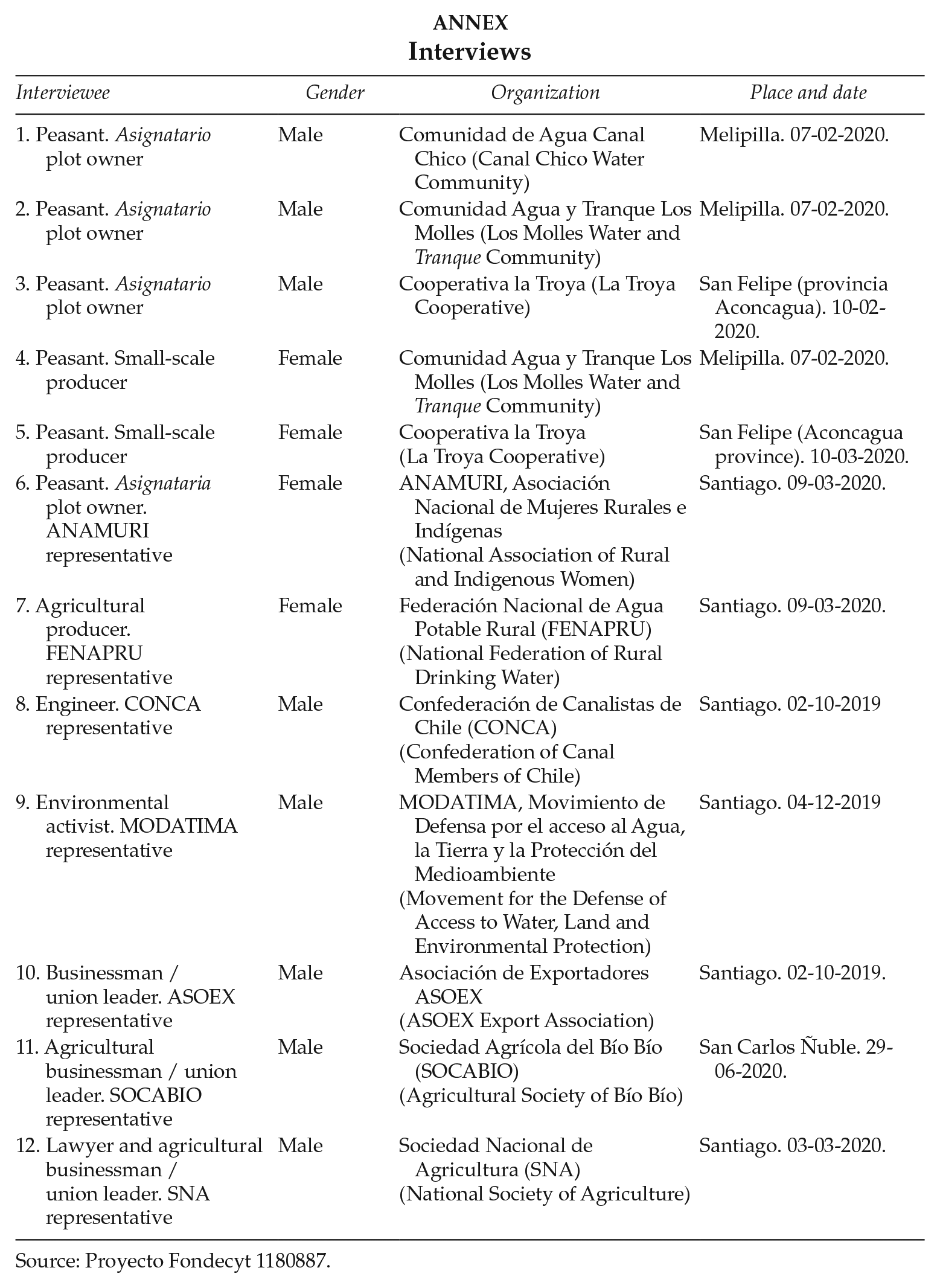
The articulation between qualitative and quantitative information obtained from these sources is supplemented by the testimonies of twelve interviewees. This allows for the information to be complemented while the instruments employed are simultaneously validated (Della Porta and Keating, 2011). The twelve interviews were conducted with peasant asignatarios (peasants who fulfill the necessary requirements to receive land from the government), small producers linked to rural drinking water networks, peasant women’s organizations, agricultural entrepreneurs and irrigation associations (see Annex). They were asked about their trajectory as agricultural producers, their status as leaders (when appropriate), their main challenges, the difficulties surrounding access to water, their understanding of water conflicts and the impact of existing institutions on them.
Agrarian modernization and spontaneous conversion in peasant agriculture
The neoliberal modernization of the agrarian sector in Chile, promoted since the mid-1970s, entailed an intensification of the changes that had been unfolding during the previous decade. These changes in both the productive and social structure of the rural sector did not imply the re-establishment of the old latifundia. A competitive agriculture was developed in their place, one linked to fruit and forestry production alongside the configuration of agri-food chains integrated into international markets, as well as the predominance of a concentration-exclusion rationale (ECLAC, 1992; Chonchol, 1994: 355; Kay, 2002: 470). Furthermore, the process of agricultural neoliberalization took place with differentiated effects. While agro-exports were favored, a segment of peasants and agricultural entrepreneurs dedicated to the production of traditional items (that is, agriculturalists engaged in largely wheat, meat and milk production and oriented towards the domestic market) suffered a significant decline. The agrarian counter-reform (Bellisario, 2009; Almonacid, 2017; Salém, 2020) modified the class structure in the Chilean countryside by facilitating the emergence of agricultural entrepreneurs who incorporated capitalist values and rationality; it also transformed independent producers from peasant agriculturalists into rural wage earners (Gómez and Echenique, 1988; Silva, 1996; Montero, 1997). To this we must add the precariousness and loss of bargaining power of peasant unions when the 1979 Labor Plan came into force.
The impetus for neoliberal modernization required the creation of land and water markets. It was to this end that the military put an end to the so-called “reformed sector” set up prior to 1973. However, only a third of the expropriated land was returned to its former owners; another third was parceled out and given to peasant families under the modality of small individual properties. About 40,000 families benefited from the allocation of plots, while a similar number had to abandon the reformed areas because they were excluded from the land allocations (Ortega, 1987; Gómez and Echenique, 1988). One-third of the remaining land became public property controlled directly by the state.
At the same time, the 1980 Constitution and the Water Code promulgated in 1981 made it possible to privatize this resource through the assignation of property rights in perpetuity, which could be transferred either in their entirety or partially. The main justification for the transaction was the idea of water as an economic good the allocation of which was managed through the market (Budds, 2004; 2020; Fernández, 2019). As far as agriculture is concerned, water legislation was based on a distribution system in which freely transferable rights of use were granted without considering any pivotal elements in water management such as ecosystems and the rights of local communities, as well as the abundance of natural resources itself. The cession of water rights in a large part of the country’s agricultural areas (Novoa et al., 2019) in an unlimited manner and in perpetuity, along with the separation of water ownership from land ownership, meant that private individuals could have access to water without the need to own land. This situation was disadvantageous for small producers, who had had access to water resources as landowners. Over time, and especially since the late 1990s, this separation has triggered a series of conflicts over access to and control of water.
With the beginning of the neoliberal transformation process in 1975, the agricultural sector was subordinated to a policy of economic openness and concomitant structural reforms. This was intended to strengthen exports and position the Chilean economy in international markets (Tinsman, 2016: 92ff.; Santana, 2006: 263; Kurtz, 2004: 51ff.). This neoliberal orthodoxy led to a reaction on the part of agricultural producers of more traditional goods who were affected by the massive influx of imported ones. Toward the end of the 1970s, they had become highly critical of the economic policy of the so-called “Chicago boys,” which also negatively affected national industry due to the facilitating of imports of manufactured goods (Montero, 1997: 142-144).
The policy of economic openness was in place for almost a decade. However, the economic recession and the crisis that affected the financial sector between 1982 and 1983 forced the government to introduce substantial changes in economic policy and especially in agrarian policy, which in turn led to the decline of traditional crops. One of the causes of this decline was linked to the waning of state intervention in the agrarian economy. This is because, to advance the policies described above, the number of public officials as well as the resources assigned to state units in charge of organizing and assisting small peasant agriculturalists were reduced. Authorities decreased the resources assigned to the Institute for Agricultural Development (Instituto de Desarrollo Agropecuario, INDAP) and the Institute for Agricultural Research (Instituto de Investigaciones Agropecuarias, INIA); they also closed down the Agrarian Reform Corporation (Corporación de la Reforma Agraria, CORA) and the Institute for Training and Research in Agrarian Reform (Instituto de Capacitación e Investigación en Reforma Agraria, ICIRA; Portilla, 2000: 15). This reduction in the budget of state agencies led to the reduction of credit provided to the peasant sector (Almonacid, 2016; 2017; Faigenbaum, 2017: 142). The elimination of subsidies for basic crops destined for domestic consumption forced producers to look for more profitable ones while optimizing their operations (Rosenblitt et al., 2001). On the other hand, crops promoted by the state replaced traditional crops in a significant way: fruits and forestry became relevant.
Fruit growing became the basis for the modernizing project of agricultural expansion. From the point of view of water consumption, the productive transition from cereals that competed with imports to higher-value fruit trees mainly took place in the irrigated valleys of the central area of the country, in the strip between Aconcagua and Curicó (Anríquez and Melo, 2018; Rosenblitt et al., 2001). Another item of importance was the forest industry, which increased forested areas at the expense of other types of land use (Almonacid, 2017). These crops tended to proliferate towards the south of the country, replacing the production of rainfed cereals that competed with imports (Anríquez and Melo, 2018). There was a strong concentration of production in the forestry sector, leaving it in the hands of a few financial conglomerates that, encouraged by generous subsidies and tax incentives, managed to gain control of extensive tracts of forest (Kay, 1996). The consolidation of this renewed forestry and agricultural sector marked the end of the agrarian reform period.
An initial effect of this closure—especially with regard to the allocation of individual plots, the dissolution of the tenancy system and the decline of sharecropping—was the increase in the number of independent peasant units by about 1980. The peasant population is made up of asignatarios, family units (which on average possessed 6.3 hectares of basic irrigation) and sub-families or smallholdings with properties of less than 2 hectares (Ortega, 1987: 155-156). Peasant family farming occupied 736,000 hectares of irrigated land, while the assigned plot owners occupied 176,000 hectares. At the same time, it was estimated that peasant production was predominantly focused on cereals and legumes. It also continued to yield a significant production of potatoes (over 70%), vegetables (68%) along with the cultivation of tobacco (90%). Additionally, peasant agriculture consisted of over 50% of the nation’s cattle, 42% of sheep, 70% of pigs, and 43% of poultry production (Gómez and Echenique, 1988: 166; Ortega, 1987: 165, 167).
As a second effect, the increase in agriculture and forestry production put many small and medium-sized landowners, agrarian reform farmers and members of peasant cooperatives in a very difficult situation. With limited support from the state, they were unable to cope with the new conditions imposed by large-scale agro-export activities. Between 1974 and 1983, an estimated 75% of the land that had been controlled by peasant units passed into the hands of the commercial sector (Cruz, 1988). The factor that most influenced the sale of small properties was the lack of resources to exploit them. The provinces that registered the highest number of assigned plot sales were those in which agro-export production had become very important. Thus, until 1990, the percentage of asignatario land sales had risen to 70% in the greatest fruit-growing areas, as was the case in the Metropolitan and O’Higgins regions, while in the regions of Bío-Bío and Ñuble, given the different agro-ecological conditions, they slightly exceeded 40% (Cf. Trivelli, 1984: 35; Echenique and Rolando, 1991: 21). This entailed a significant decrease in the amount of land held by peasant producers.
From State Support For Conversioin To Water-Related Problems
Agrarian policy beginning in 1990 sought to increase economic growth and achieve greater equality among Chileans. Two central premises prevailed. On the one hand, the government attempted to reverse the poverty and inequality that affected a large part of the rural population, especially seasonal workers and smallholder peasants impacted by the adjustment and deregulation policies of the previous decade (Santana, 2006: 275ff.; Tomic, 2000: 43ff.). At the same time, the goal was to increase agro-export production (Tinsman, 2016).
Even though the main emphasis was on the promotion of agro-export activity, there were two important features that had a direct impact on the more traditional sectors of the business community and the peasantry. One of these features was the stabilization and decrease in the prices of agricultural products, a phenomenon typical of an open economy but linked to the development strategies designed for this agricultural activity. Another feature was the increase in the cost of labor throughout the decade, which affected the profitability and income of farmers who oriented their production towards the domestic market. Since 1993, special emphasis has been placed upon the reconversion of agricultural production. This is understood as a change from “the traditional agricultural structure of cereals, pastures and livestock to one that is aimed toward more profitable and dynamic markets, such as fruit and forest exports” (Kay, 1998: 87). Peasant agriculturalists have limited possibilities of switching to these types of crops.
That is why, since the mid-1990s, policies aimed toward peasant agriculture have mainly focused on stimulating entrepreneurship and the productive transformation of small holdings. Along these lines, the discourse of state agencies as well as the reality experienced by small agricultural producers were marked by competitiveness and technological transformation. From the point of view of state agencies (INDAP, the National Irrigation Commission [Comisión Nacional de Riego, CNR], the Ministry of Agriculture and INIA), Chile’s incorporation into certain international treaties required an increased process of reorientation towards the production of intensive and exportable crops, as well as to the diversification of productive activities and services in more neglected rural areas. In the specific case of agricultural production, since the second half of the decade, financial and technical support has stimulated greater diversification of irrigation and soil improvement programs.
Agrarian policy assessments indicate that, towards the end of the 1990s, the “modern producers” in the irrigated valleys, both medium and large, had been successfully entered (Portilla, 2000: 8). However, despite the support provided by the public sector to peasant agriculture, the latter showed a loss of prominence in national forestry and agricultural production (Table 1), evidencing a decrease in its territorial participation (Echenique 2000: 66-67). According to Echenique, who compared the situation of the peasant agricultural sector between 1987 and 1997, a large part of the occupied area was sold to forest plantations, as well as to medium and large agricultural companies. At the same time, there was a reduction of annual crops in the area by about 144,000 hectares. This was due to the fall in the price of food products and the loss of competitiveness for those owning rainfed soils. On the other hand, the area taken by intensive crops made up of fruit trees, vegetables, vines and seedbeds increased by 13%.
The peasant universe between the 1997 and 2007 censuses
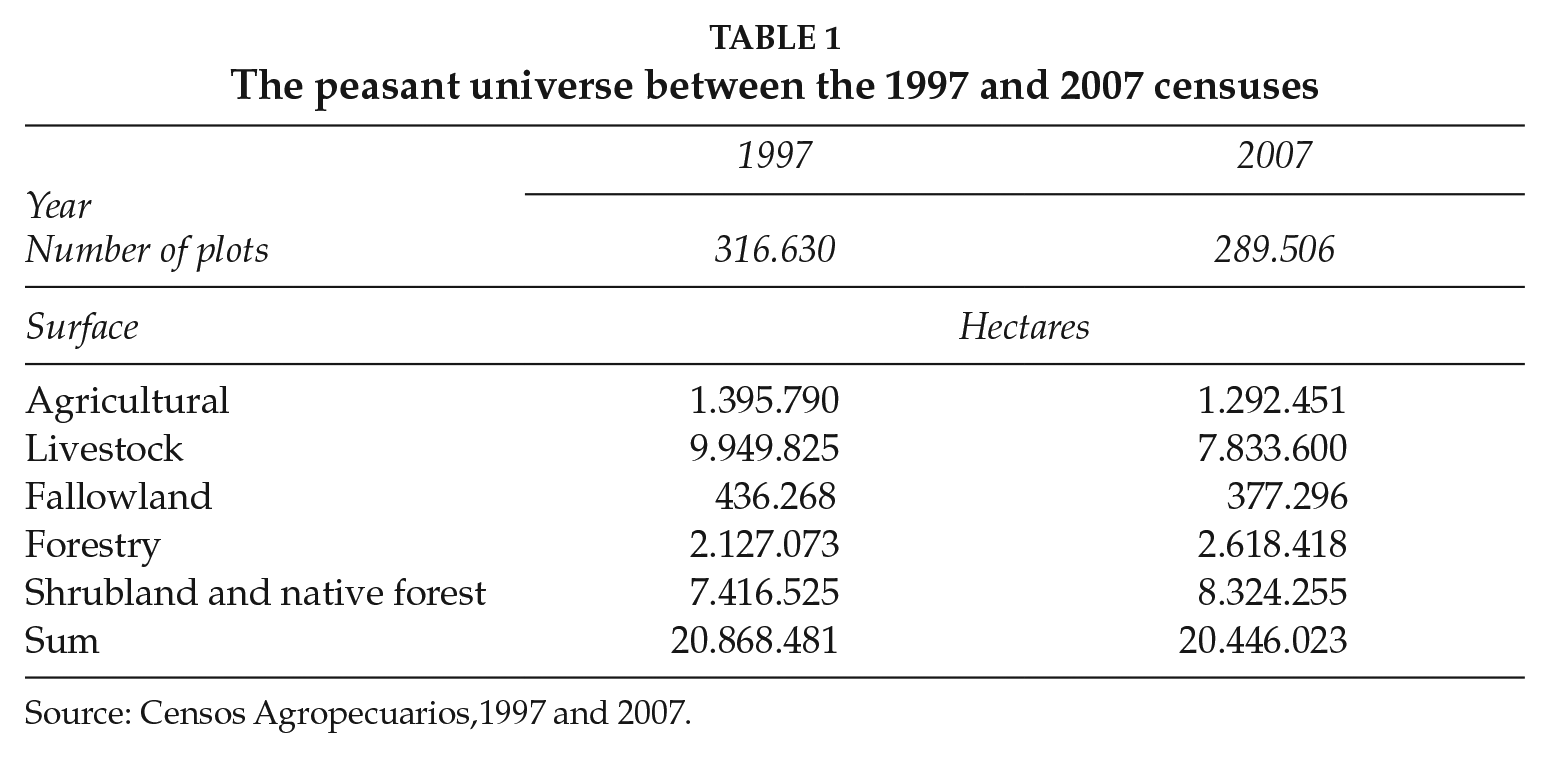
Source: Censos Agropecuarios,1997 and 2007.
Land Use And Water Access Constraints
Two major events occurred between 1973 and 1989 regarding water and irrigation in Chile. Firstly, there was a reduction of public investment in irrigation infrastructure. During this period, only two reservoirs were built, a situation that was remedied during the following decade (Table 2). Secondly, institutional changes were introduced in the legal framework involving water (Bauer, 2002). Thus, from the second half of the 1970s onwards, a before and after was established not only regarding neoliberal silvoagricultural production practices (which were implemented across the national territory to the detriment of traditional agriculture) but also involving environmental conditions. This meant that both silvoagriculture and traditional agriculture had the potential to develop at the national level.
Reservoirs built by the state between 1975 and 2000
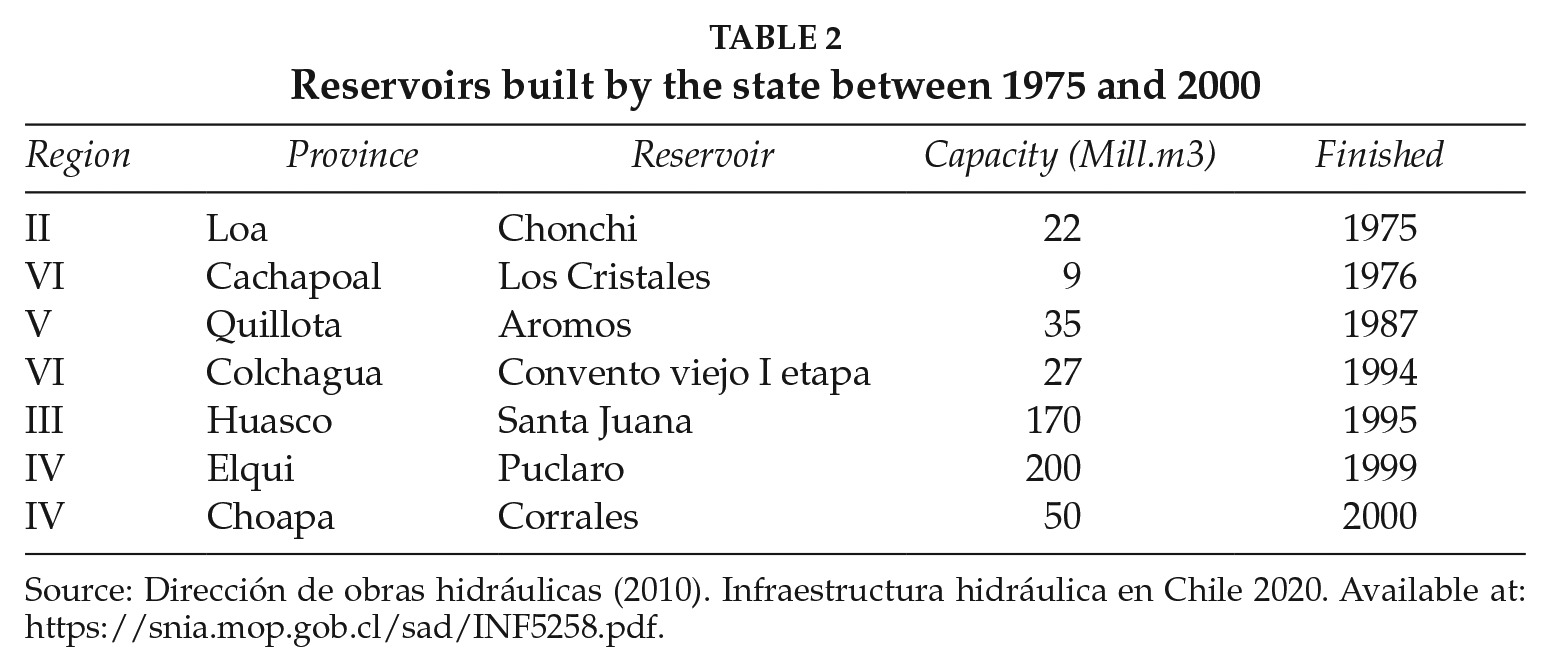
Source: Dirección de obras hidráulicas (2010). Infraestructura hidráulica en Chile 2020. Available at: https://snia.mop.gob.cl/sad/INF5258.pdf.
It was at the beginning of the 1990s that the Economic Commission for Latin America and the Caribbean (ECLAC) began to consider climate change issues at the national level as factors that could possibly impact water resources (ECLAC, 1993). During the past two decades, political ecology studies have allowed us to analyze the connection between socioenvironmental phenomena and the decline of traditional agriculture that took place in Chile during the 1990s. One of the most notorious situations was the impact of the so-called avocado boom in the Valparaíso region (Bolados et al., 2018; Budds, 2000; 2004; Madariaga et al., 2021). Currently, there is a consensus regarding the fact that Chile has been experiencing drought since 2007 (Novoa et al., 2019). According to Ponce et al (2014), the impacts of climate change on the agricultural sector in this country are widespread, with fruit producers being the most affected. On the other hand, experts are now demonstrating the relationship between the tendency towards aridity and areas where forest monoculture was implemented to replace traditional crops. The latter have also been said to foster areas of increasing vulnerability (Torres et al., 2015).
Here it should be noted that traditional peasant agriculture persists, contributing to local circuits, cultural identity and food security, but it suffers acutely from the effects of climate change. As for cattle farming, the vast majority of which is still in the hands of peasant families and is oriented towards the domestic market (PASO, n.d.), its production has decreased in recent years due to drought. The most dramatic figures have been recorded in the Valparaíso region. In 2019, drought accounted for 90% of the causes of livestock abandonment in this region (Graph 1).
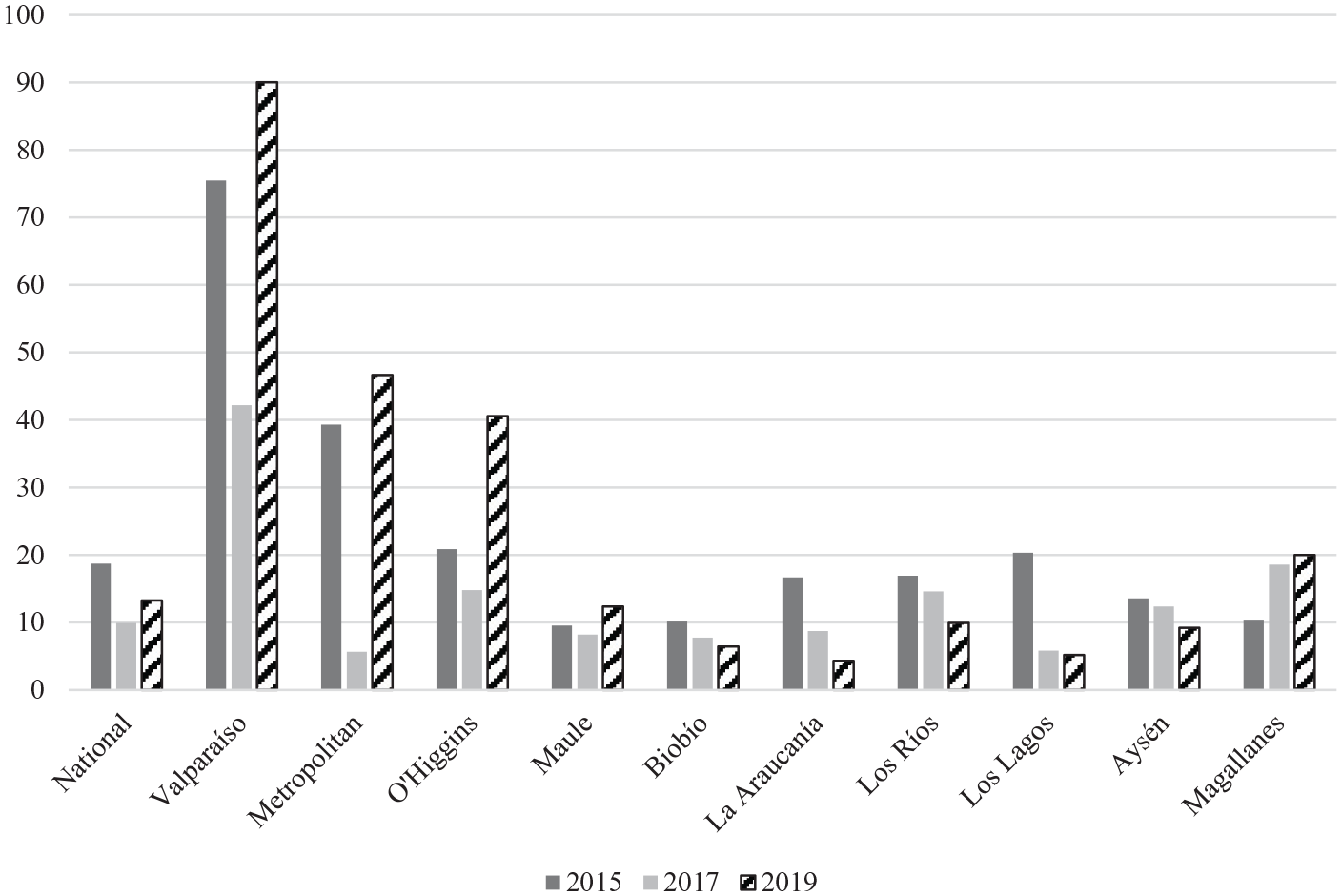
Percentage of decrease or abandonment of cattle (% of farms) due to drought in Chile.
In the face of prolonged drought, Chile’s Ministry of Agriculture had to announce the establishment and maintenance of an agricultural emergency decree in 231 of the country’s 346 communes (67%, nine of the 16 administrative regions), in order to primarily support small producers affected by the dearth of water (CNR, 2022). It is important to note the link between climate change, agricultural production and poverty. Indeed, agricultural households living in poverty are the most vulnerable to the effects of climate change and the alteration of ecosystems.
Irrigation Difficulties And Water Conlicts
Agricultural activity tends to consume the largest percentage of the water granted through consumption rights, effects that affect small peasant producers to a greater extent, specially by the way in which concessions and rights of ownership were assigned since the implementation of the Water Code of 1981. Unlike medium and large agricultural entrepreneurs, peasants tend to have a weak presence and representation within irrigation channel associations and supervisory boards, thus limiting their direct access to the waters that flow through canals and rivers. As a representative of a rural drinking water cooperative explains: “Here the peasants get harmed, because the large farmers own more shares and can sell those shares whenever they want” (Interview with asignatario plot owner 3. San Felipe. 10-03-2020).
To this we must add that peasants, usually, lack information and knowledge regarding the management of legal and technical issues. According to Bauer, during the 1980s, the authoritarian regime “did not undertake public information or educational campaigns regarding the new features of the Code, nor did it offer legal or technical advice on how to apply for new rights or regularize old rights” (Bauer, 2002: 107-108). As a result, many of the peasants were left without direct access to water resources and dependent on surplus water from other producers who did own rights.
From 1990 onwards, peasants began to receive state aid and technical advice to solve irrigation problems. That year, INDAP created the Peasant Irrigation Program and special subsidies were offered and granted by the CNR (Avendaño, 2000: 176; Portilla, 2000: 23-24; Tomic, 2000: 187). These programs were expanded to facilitate productive conversion and the shift towards a more competitive agriculture in international markets. Estimates made in the mid-1990s showed, firstly, an exponential growth in the demand for water meant for agricultural use; and secondly, though failing to notice the constraints of climate change at the time, that the following two decades would require improvements in the efficiency of irrigation using greater technification and hydrological regulation infrastructure so that irrigated areas could be expanded to approximately 2 million hectares (Santibáñez et al., 1997: 229).
In later years, and according to data from the 2007 Agricultural Census, peasant agriculture has been mostly located in areas with Mediterranean climates, where the rainy winters with low temperatures make it difficult to grow crops. On the other hand, summers tend to be devoid of rain but with high temperatures (Cf. Berdegué and Rojas, 2014: 22). Access to irrigation therefore becomes an indispensable condition beyond the possibilities of conversion towards more profitable and competitive production. With the continuation of the drought, which has become chronic since the second half of the 2000s, and the water scarcity that is beginning to affect various rural localities in the central and southern part of the country, there has been an increase in protests and other forms of territorial conflict. According to the testimony of a representative of the National Association of Rural and Indigenous Women (Asociación Nacional de Mujeres Rurales e Indígenas, ANAMURI): “We feel that it is a violation of the rights of women and their peasant families not to have water, and not to be able to access the water needed for domestic consumption and production ” (Interview with a representative of ANAMURI, Santiago. 09-03-2020). Testimonies collected in the agricultural valleys of the province of Aconcagua allude to the increase of investments in mining and the advancement of sanitation companies in rural areas (Interview with a farmer belonging to the Irrigation Cooperative. San Felipe. 10-03-2020. Interviews with a representative of the National Federation of Rural Drinking Water. Santiago. 09-03-2020). The increase in conflicts has led parliamentarians from various parties to start promoting a substantive reform of the 1981 Water Code an initiative that took shape with the submission of a draft amendment to the legislation in 2014 (Avendaño et al., 2022).
The problems associated with water in terms of access, distribution and the regulation of rights affect the development of the peasant population’s agricultural production in irrigated areas. One conflict is related to the legal status that, since the 1981 Code, affected several of the asignatarios who had benefited from the agrarian reform process and gained access to land but not water. The testimony of a plot owner from the province of Melipilla is telling. He admits he did not have the necessary information to obtain timely access to the water domain rights granted by the state during the implementation of the Code: “We found out when there was no more water left in the area that all the rights had already been exhausted. And when you start to investigate who has the rights, most of them are in the hands of speculators or large agricultural entrepreneurs.” This same interviewee acknowledged that, since there is no access to water, the plot must be managed or sold as if it were rainfed despite being located in an irrigated area.
“Our plots, as they stand, are condemned to be rainfed plots, with a land value of rainfed plots, and I believe that the way we are going, we will get to the point of legal expropriation because I am going to be forced to sell my land for the price of an egg to a man who has possession of the water” (Interview with asignatario plot holder 1. Melipilla, 07-02-2020).
Another testimony adds that one of the major problems is related to the illegal use of water by certain agro-industrial companies, which build or make use of unauthorized wells to extract this resource and thus cause a depletion in the flow of canals, rivers and groundwater: “We explained that Agrosuper, an agro-industrial company, began to dig deep wells of 100, 150, 200 meters. With that, they dried up the underground basin of Popeta, Melipilla, Codigua and even the area of San Pedro. They started digging so many deep wells and, I have no doubt, they have all these deep wells inscribed that they do not even use (. . .) San Pedro was first affected by the drying up of the norias. Our grandfather’s or great-grandfather’s noria, which was 6 meters, 8 meters, no longer provided water; one had to go 20 meters and there was no water at 20 meters either. In the end, they had to dig a deep well and we are already at 100 meters” (Interview with asignatario plot holder 2. Melipilla, 07-02-2020).
A situation similar to the one reported in this testimony and that has been well documented in recent years is the problem caused by avocado monoculture in the province of Petorca, a situation that has greatly affected small-scale peasant agriculture (Bolados et al, 2018; Madariaga et al., 2021). Profiting from a weak regulatory institutionality, illegal drains and wells have tended to deplete the groundwater, as have hills planted with avocados and overexploited basins. The resultant damage both to peasant agriculture and the inhabitants of surrounding rural localities helps explain the 2010 peasant mobilizations in the area that sought to draw the attention of authorities and sensitize public opinion to these problems (Mundaca, 2015: 77). Peasants from La Ligua, Cabildo and Petorca formed the Movement for the Defense of Access to Water, Land and Environmental Protection (Movimiento de Defensa por el acceso al Agua, la Tierra y la Protección del Medioambiente, MODATIMA). As one of its leaders recalls, after the effects of the 2009 drought: “. . . the peasants who came from a previous process of organization in an irrigation coordination ended up converging and decided to create this movement (. . .) I arrived at the first assembly of MODATIMA when the movement was formed, and the initial composition was mainly peasants. Peasants, small farmers and also some medium-sized farmers who were affected by the water issue” (Interview with MODATIMA leader. Santiago, 04-12-2019).
From these peasant beginnings, MODATIMA transformed in a short period into a movement with a much broader composition, and even acquired urban features. On three occasions in 2011, members of MODATIMA went before the Human Rights Commission of the Chamber of Deputies to denounce water usurpation by agricultural entrepreneurs, especially avocado producers. (Mundaca, 2015: 78). The Commission created an Investigative Commission on the Illegal Extraction of Water and Aggregates in the Rivers of Chile (Comisión Investigadora sobre Extracción Ilegal de Aguas y Áridos en los ríos de Chile), and they had the opportunity to present their concerns there in August of the same year. From then on, MODATIMA intensified its actions and soon became a nationally recognized movement that is now deployed in other areas of the country in defense of environmental causes.
Conclusions
Since the policy of economic openness was promoted during the military dictatorship, peasant units have faced a series of difficulties related to this scheme, whose emphasis was the development of agro-export activities. During the 1980s, these same peasant units had to evolve in a hostile context initially related to the economic crisis and then to the lack of state support, both from a technical point of view as well as in terms of productive development and access to credit. The most critical situation came when many parcel owners who had received plot allocations during the land reform were forced to partially or totally sell their properties in order to survive. From the 1990s onwards, although opportunities improved and the aid provided to peasants by state agencies such as INDAP strengthened, the development strategy aimed toward promoting competitive and export-oriented agriculture was maintained, intensifying from the mid-1990s onwards due to the international agreements and treaties signed at the time.
The onslaught faced by peasant units worsened with the water privatization scheme implemented by the 1981 Water Code. The peasants’ lack of information and knowledge in the management of legal matters, as well as the pressure exerted on them by enterprises involved in a variety of sectors (agriculture, mining, hydroelectric production, sanitation, agro-industrial production), have proved detrimental and have limited their direct access to the water needed for the development and exploitation of their land. The peasants have constantly had to face pressure for the reconversion of their farms toward a more competitive kind of agriculture, which is more related to the Chilean state’s economic strategies than to the initiatives of the peasants themselves, considering their decreased participation in irrigated areas and the difficulties they face in switching to the production of export-oriented items.
The water crisis and the constant pressure for the development of a more competitive and profitable type of agriculture have led over the course of the past two decades to peasant mobilizations in defense of land and natural environmental resources. This also implies that, on occasion, peasants participate in conflicts and disputes with other productive agents. In the process, they have demonstrated an active capacity for organization as they undertake actions in favor of natural resource conservation associated with small-scale agriculture.
Footnotes
Appendix
Interviews
| Interviewee | Gender | Organization | Place and date |
|---|---|---|---|
| 1. Peasant. Asignatario plot owner | Male | Comunidad de Agua Canal Chico (Canal Chico Water Community) | Melipilla. 07-02-2020. |
| 2. Peasant. Asignatario plot owner | Male | Comunidad Agua y Tranque Los Molles (Los Molles Water and Tranque Community) | Melipilla. 07-02-2020. |
| 3. Peasant. Asignatario plot owner | Male | Cooperativa la Troya (La Troya Cooperative) | San Felipe (provincia Aconcagua). 10-02-2020. |
| 4. Peasant. Small-scale producer | Female | Comunidad Agua y Tranque Los Molles (Los Molles Water and Tranque Community) | Melipilla. 07-02-2020. |
| 5. Peasant. Small-scale producer | Female | Cooperativa la Troya (La Troya Cooperative) |
San Felipe (Aconcagua province). 10-03-2020. |
| 6. Peasant. Asignataria plot owner. ANAMURI representative | Female | ANAMURI, Asociación Nacional de Mujeres Rurales e Indígenas (National Association of Rural and Indigenous Women) |
Santiago. 09-03-2020. |
| 7. Agricultural producer. FENAPRU representative | Female | Federación Nacional de Agua Potable Rural (FENAPRU) (National Federation of Rural Drinking Water) |
Santiago. 09-03-2020. |
| 8. Engineer. CONCA representative | Male | Confederación de Canalistas de Chile (CONCA) (Confederation of Canal Members of Chile) |
Santiago. 02-10-2019 |
| 9. Environmental activist. MODATIMA representative | Male | MODATIMA, Movimiento de Defensa por el acceso al Agua, la Tierra y la Protección del Medioambiente (Movement for the Defense of Access to Water, Land and Environmental Protection) |
Santiago. 04-12-2019 |
| 10. Businessman / union leader. ASOEX representative | Male | Asociación de Exportadores ASOEX (ASOEX Export Association) |
Santiago. 02-10-2019. |
| 11. Agricultural businessman / union leader. SOCABIO representative | Male | Sociedad Agrícola del Bío Bío (SOCABIO) (Agricultural Society of Bío Bío) |
San Carlos Ñuble. 29-06-2020. |
| 12. Lawyer and agricultural businessman / union leader. SNA representative | Male | Sociedad Nacional de Agricultura (SNA) (National Society of Agriculture) |
Santiago. 03-03-2020. |
Source: Proyecto Fondecyt 1180887.
This article has been undertaken through the Fondecyt project 1180887.