




Abstract
Repressive and economic threats drive much of the popular mobilization in Central America, but those conditions need to be articulated to publics in a manner that emphasizes the need for collective action to ameliorate worsening harms. Examination of protest songs in both periods of heightened state repression (1970–1990) and heightened economic threats (1990–present) in Costa Rica, El Salvador, Guatemala, Honduras, and Nicaragua demonstrates that musicians and cultural producers actively construct lyrics and musical styles that resonate with subaltern populations and encourage social movement participation in the face of state repression and neoliberal policy implementation.
Las amenazas represivas y económicas han inducido buena parte la movilización popular en Centroamérica, pero estas condiciones deben articularse ante los públicos de manera que enfaticen la necesidad de acción colectiva como respuesta a problemas cada vez más graves. Un análisis de las canciones de protesta pertenecientes a los períodos de mayor represión estatal (1970-1990), así como a aquellos con mayores amenazas económicas (1990 al presente) en Costa Rica, El Salvador, Guatemala, Honduras y Nicaragua demuestra que tanto músicos como productores culturales construyen activamente letras y estilos musicales que encuentren resonancia entre las poblaciones subalternas. Así fomentan la participación dentro de los movimientos sociales, aun frente a la represión estatal y la implementación de políticas neoliberales.
Musical artists and ensembles drive major political and social movements (Rojas and Michie, 2013; Friedman, 2013). Examples include the African American civil rights movement (Reagon, 2001); the labor movement; the Chicano movement (Broyles-Gonzalez, 1994); Rock Against Racism and Two Tone Ska in Britain (Rachel, 2016); national liberation struggles in Africa (Malisa and Malange, 2013); and the Mexican Revolution and the South American New Song movement (Rios, 2008; Vila, 2014). With such widespread and diverse appearances of rebellious songs across space and time, a deeper exploration of the core interpretive functions of music in mobilization contributes to the social movement literature on participation.
Songs express collective sentiments. Singing a protest song in unison connects people in powerful ways, as does listening or even singing alone (Dunbar, 2012). The songs emotionally charge the network ties between individuals who share affiliations in an organization or association such as a labor union, student group, feminist collective, religious congregation, rural worker cooperative, or soccer team. Protest music also calls on individuals to contribute to a movement or increase their level of participation. Songs are resilient and able to subsist in hostile environments. Recorded songs can be played repeatedly in private settings away from the authorities. A memorized song remains in people’s heads even if they languish in prison, sit at home under martial law, escape into exile/refugee camp, or join an underground revolutionary organization. The song may become the only artifact that has the capacity to continuously remind people what they are struggling for through a condensed and simplified narrative.
In this study, we analyze how protest music appeals to subaltern groups for movement participation and collective resistance by highlighting and interpreting repressive and economic threats in the lyrics. From a Gramscian perspective, Marroquín (1985: 1) defines música contestataria (rebellious music) or la canción contestaria as part of the subaltern culture that has the potential to unite the popular classes in an attempt to bring about fundamental structural changes in Central American societies. Others use similar terms for protest music in Latin America such as “new song” and “militant song” (Vila, 2014). This approach acknowledges that artists create music in an interactive field consisting of audiences, recording technologies, cultural legacies, and the state (Rosenthal and Flacks, 2011).
We begin with an analysis of protest songs against repressive threats between 1970 and 1990. This is the period of massive state repression reaching genocidal levels in El Salvador and Guatemala and culminating in the Central American civil wars. We go on to examine the protest songs of a second period from the 1990s to the contemporary era characterized by economic threats associated with neoliberalism, structural adjustment reforms, and debt crisis (Robinson, 2003; Almeida, 2014). We draw on emblematic songs from field research sources and archival data to show the shift from a repressive political environment to one dominated by neoliberalism. In the period of massive state repression, attention is given to El Salvador, Guatemala, and Nicaragua (countries experiencing heightened levels of governmental violence). In the neoliberal period, the focus turns to Costa Rica, El Salvador, Honduras, and Nicaragua, where rebellious music played a major role.
Threat-Driven Collective Action and the Role of Song in Interpretation
A growing revival of social movement studies in the twenty-first century shows how negative conditions or threats drive collective action (Auyero, 2002; Zepeda-Millán, 2017; Almeida, 2019). These studies offer a corrective to the emphasis on political opportunities in social movement scholarship in the late twentieth century. Indeed, the major social movements of the past few decades have been driven by racism, economic austerity, police brutality, climate change, and an erosion of women’s rights. Threats may also lead to failure to mobilize (Auyero and Swistun, 2009), the most common scenario given the costs and risks in launching and sustaining a collective action campaign, especially for subaltern populations.
The multiple pathways in responding to threats, from failure to mobilize to left- and right-wing organizing, demonstrate the critical role that cultural interpretation and emotion play in the process. Activists and leaders need to interpret and convey threats in a manner that will convince affected populations to challenge the source of the harm. This work involves both defining the problem and attributing blame and also motivating people to participate in organized resistance (Snow and Benford, 1988; Jasper, 1997). This active interpretation will likely be most effective when undertaken by trusted messengers who relate the current worsening conditions by employing culturally relevant symbols and language resonating with targeted populations. The focus on cultural articulation of threats contributes to the social movement literature by emphasizing how macro structural conditions (e.g., state repression, economic austerity, ecological crises) are mediated by cultural producers to enhance the likelihood of collective action. Oppositional music in Central America has largely centered on repressive and economic threats.
Repressive threats occur when state security forces (police, national guard, military, state militias, etc.) coerce populations under their jurisdiction and apply physical harm and retribution. This translates into the violation of basic human rights in different dimensions. Examples include mass arrests without proper cause, intimidation, torture, disappearances, and even the killing of civilians. In most times and places, repressive threats instill fear and reduce the prospects of collective resistance (Tarrow, 2022). Under special conditions, repression may lead to greater mobilization (Davenport, 2015). Most studies that find repressive threats increasing mobilization discuss the existence of contextual factors. These factors include an oppositional infrastructure of organizations already in place before the repression escalates, such as labor, student, peasant, environmental, and women’s organizations. More recently, movement studies aim to incorporate cultural traditions and artistic production as contributing to mobilization under repressive threats (McCaughan, 2020). We believe that the presence of a cultural infrastructure of oppositional musicians and contentious music also enhances the probability of the emergence and continuance of resistance to repression (Scruggs, 2006). Protest songs that interpret the repressive threats in creative ways motivate segments of the population to participate in resistance movements and/or sustain that resistance even under unfavorable odds.
Economic threats involve worsening material conditions such as mass unemployment, unequal land distribution, price inflation, and an entire family of neoliberal policies (e.g., austerity programs, subsidy cuts, privatization, and free trade). These types of policies are more likely to lead to a protest campaign, especially under relatively less repressive regimes (Silva, 2009). Nonetheless, worsening economic conditions do not translate automatically to mobilization (Simmons, 2014). Without interpretive efforts by artistic producers, it may be more difficult to encourage (and prolong) a struggle or campaign. Devoid of cultural work within a resistance movement, material hardships may be taken up by right-leaning demagogues that blame vulnerable groups for economic problems (Koopmans and Olzak, 2004). In the neoliberal period, many of the largest popular mobilizations in Latin America are driven by economic threats, including the massive uprisings between 2019 and 2022 in Costa Rica, Chile, Colombia, Ecuador, Honduras, and Panama. In Chile, Colombia, and Honduras the anti-neoliberal uprisings resulted in the election of progressive political parties to the presidency in 2021 and 2022. In Chile, martyred and exiled musical artists from the repressive period, such as Víctor Jara, Quilapayún, and Inti Illimani, were resurrected in the anti-neoliberal uprising of 2019. The protest songs interpreting economic threats accompanying the struggles were also used in the election campaigns by the anti-neoliberal parties to get out the vote.
Protest Music in Central America: From Repressive Threats to Neoliberalism
We know much less about protest music in Central America, despite the fact that music and musicians were omnipresent in all major social movements in the region and likely performed an indispensable function in maintaining mobilization in hostile political environments (Kirk, 1984; Nepstad, 1996). Between the 1970s and the 2010s, hundreds of protest musical ensembles performed throughout the Isthmus. Major modernization activities undertaken by states such as building a national infrastructure for radio transmission assisted in the spread of music. In addition, following Vatican II in 1965 and the new focus on the preferential option for the poor, the Catholic Church initiated a number of programs promoting progressive interpretations of economic injustice and denouncing human rights abuses via cooperatives, Christian base communities, and youth organizations, all accompanied by innovations in musical and religious rituals (Gordillo, 2021).
The State Repression Period, 1970–1990
The period from roughly the 1970s to 1990 was a historical high point of state repression in Central America. Governments responded to nonviolent protests with increasing force, coercion, and violence that turned nonviolent social movements into revolutionary struggles (Brockett, 2005). In the 1970s, military regimes ruled all countries in the region with the exception of Costa Rica. The magnitude of the repression unleashed by militarized governments reached genocidal levels. Between 1978 and 1996, the Guatemalan state was responsible for a reported 132,000 political deaths (Ball, Kobrak, and Spirer, 1999; Harrison, 1999), including ethnocide against the Ixiles between 1981 and 1983 (Palacios Aragón, 2017). In El Salvador between the late 1970s and 1992, an estimated 80,000–93,000 deaths were attributed to the state (Seligson and McElhinny, 1996). In the insurrection leading to the Nicaraguan Revolution in 1979, the Somoza dictatorship reportedly killed 10,000–35,000 people. The U.S.-backed Contra War in the 1980s resulted in an additional 20,000-43,000 deaths (Klerlein, 2006).
While substantial scholarship exists on the conditions leading to popular resistance against repression in Central America using both structural (Almeida, 2008) and moral-outrage frameworks (Viterna, 2013), we lack more concrete understandings about how cultural producers translated the repressive threats into collective action. In El Salvador, Guatemala, and Nicaragua, musical ensembles produced meaningful canciones contestatarias that constituted the soundtrack for encouraging mobilization and resistance in extremely hostile environments.
Although El Salvador had been under a period of four decades of military rule in the early 1970s, massive state repression escalated following the fraudulent national elections in early 1972. After a series of state-sponsored massacres in 1974 and 1975, more protest songs emerged produced by Salvadoran artists. Some protest songs appeared as early as 1970, including Carlos “Tamba” Aragón’s “Planeta de los Cerdos.” Much of the youth music of the early 1970s emulated groups from the Global North, especially Creedence Clearwater Revival, the Beatles, and the Rolling Stones. The dominant groups of the early 1970s in El Salvador were British-style rock bands such as Los Vikings, Los Apaches, Die Blitz, Los Supersónicos, Hielo Ardiente, and Los Christians. At the same time, the Ministry of Culture and its National Arts subdivision supported the revival of Salvadoran folkloric music via a specialized secondary school degree program (Walter, 2014), and a new generation of musicians was experimenting in the high schools (such as in the Jesuit-run Externado San José) and the expanding university system (Chávez, 2017). By the mid-1970s, young musicians began to turn from the Global North to South America for inspiration. The music of the Nueva Canción movement reached Central America via professional recordings (especially the group Los Guaraguao from Venezuela) and even tours of artists such as the Argentine group Quinteto Tiempo’s influential visit to El Salvador in 1975.
With the escalating repression in the mid to late 1970s, dozens of protest music ensembles and even coalitions of artists appeared on the political scene. In addition, dozens of protest-type songs emanated from the Catholic Church’s Vatican II initiatives, especially in the parishes and Christian base communities (González Márquez, 2013). Some of the leading groups and musicians of the late 1970s included Mahucutah, Duo Anastasio Aquino, Yolocamba Ita, Tepeuani, and Viejo Palencia. Similar indigenous names were used in Guatemala to mark the shift to resurrecting a larger anticolonial/anti-imperial rebellion against military regimes sponsored by neocolonial powers. The musical coalitions in El Salvador included Músicos y Cantores Populares Asociados Salvadoreños (formed in 1976) and the Movimiento de Cultura Popular (formed in 1977), both linked to larger multisectoral oppositional fronts. The protest musicians were critical in interpreting the repressive threats and motivating continued collective resistance. For example, “A Rutilio Grande (El día 12 de marzo)” was written and performed by Oviedo Aguilares on acoustic guitar with an upbeat rhythm immediately after the assassination of Padre Rutilio Grande and his lay colleagues Rutilio and Manuel Lemus in March of 1977. 1 Oviedo worked as a campesino leader in the same parish as Grande. The parish is located in Aguilares, a progressive Catholic community that organized peasants and sugarcane farm workers 19 miles north of San Salvador.
A Rutilio Grande (El día 12 de marzo) (1977)
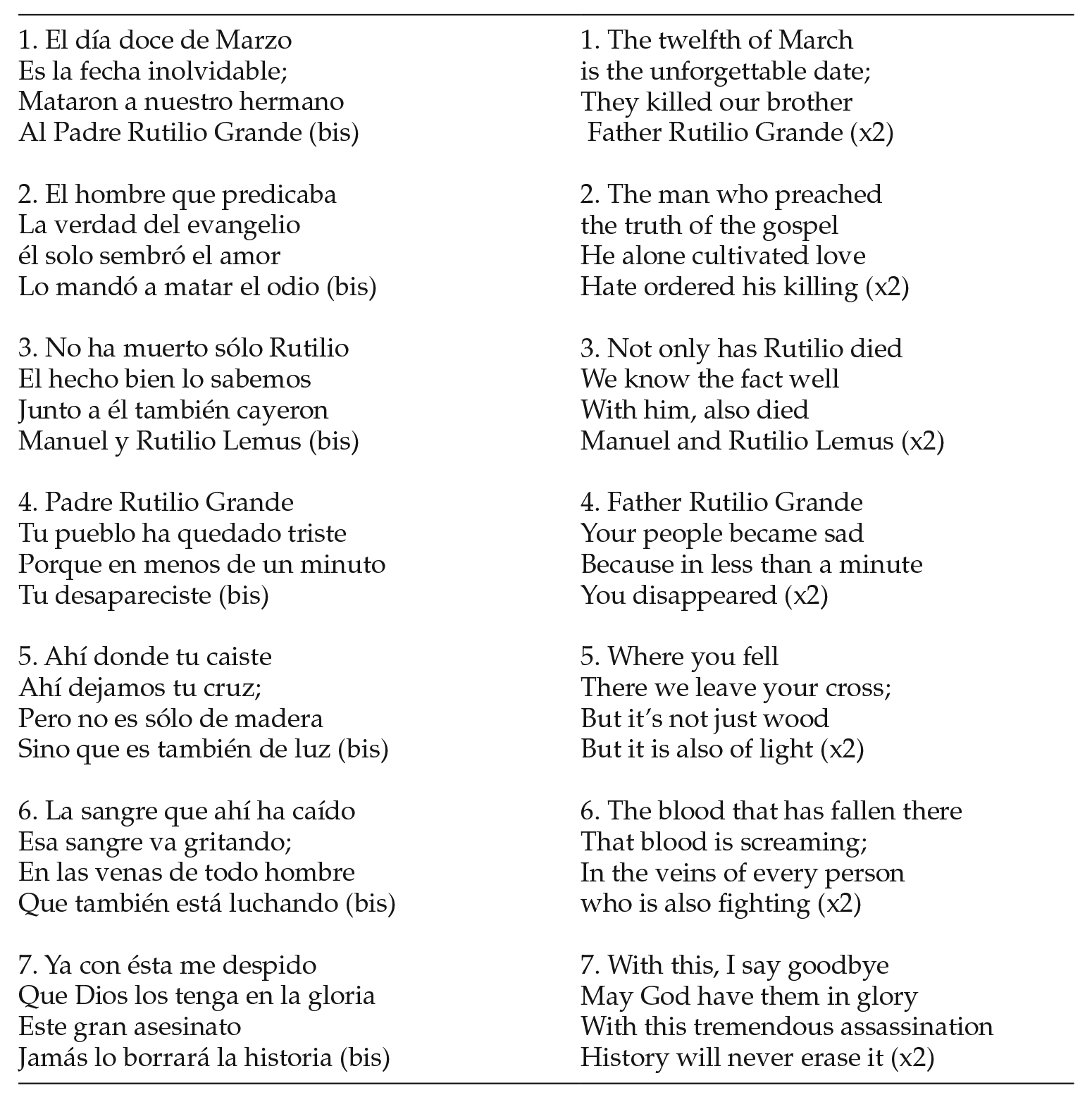
The first documented written distribution of this song is in the Catholic Church songbook of 1978 titled Canta hermano. The entire songbook is dedicated to Padre Rutilio Grande and Padre Alfonso Navarro, both murdered in 1977. The songbooks were used throughout the Archdiocese of San Salvador and beyond in Catholic parishes. Congregants sang “12 de marzo” in Christian base communities while it was being broadcast on the Catholic Church radio station YSAX. The musical homage effectively conveys what many martyr songs from the period portrayed, outlining the outrageous repression but then converting the horrific acts into a kind of moral fuel to motivate continued popular resistance (e.g., a cross made of light, the blood of the fallen screaming in the veins of everyone who continues fighting). Indeed, dozens of songs were composed about Rutilio Grande and other priests assassinated between 1977 and 1980, including the ensemble Yolocamba Ita’s ¡Basta ya! collection.
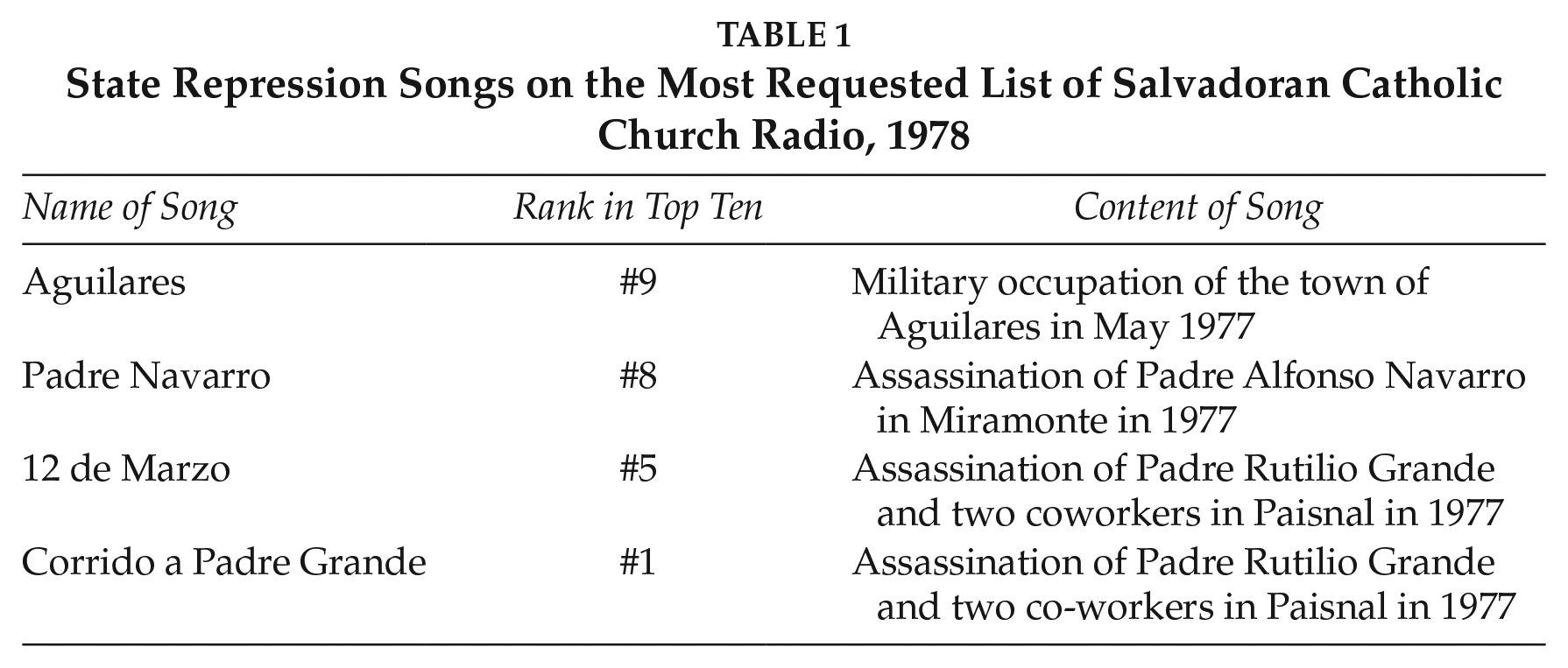
Many rebellious religious songs were also played on YSAX in the late 1970s. One program, “¿Qué pasa en el mundo?” (after the Los Guaraguao song), played music from the Christian base communities of El Salvador. During its first anniversary in late 1978, YSAX radio featured the 10 most requested songs from listeners in greater San Salvador. National artists composed all of the songs. Four of them were explicitly about the threats of state repression (Table 1). 2 A death-squad type attack blew up YSAX radio in January of 1980. These events established the context for the hundreds of martyr songs written in dedication to Monsignor Romero after his assassination in March of 1980.
State Repression Songs on the Most Requested List of Salvadoran Catholic Church Radio, 1978
These musicians and ensembles produced dozens of other protest songs in the late 1970s. The Movimiento de Cultura Popular recorded songs outside of the surveillance of the security forces at the Universidad de El Salvador until the military shut the campus down and occupied it in June 1980. One powerful song from the labor movement that the MCP produced in 1979 was “No moriremos compañeros” (We shall not die, compañeros).
No moriremos compañeros (1979)
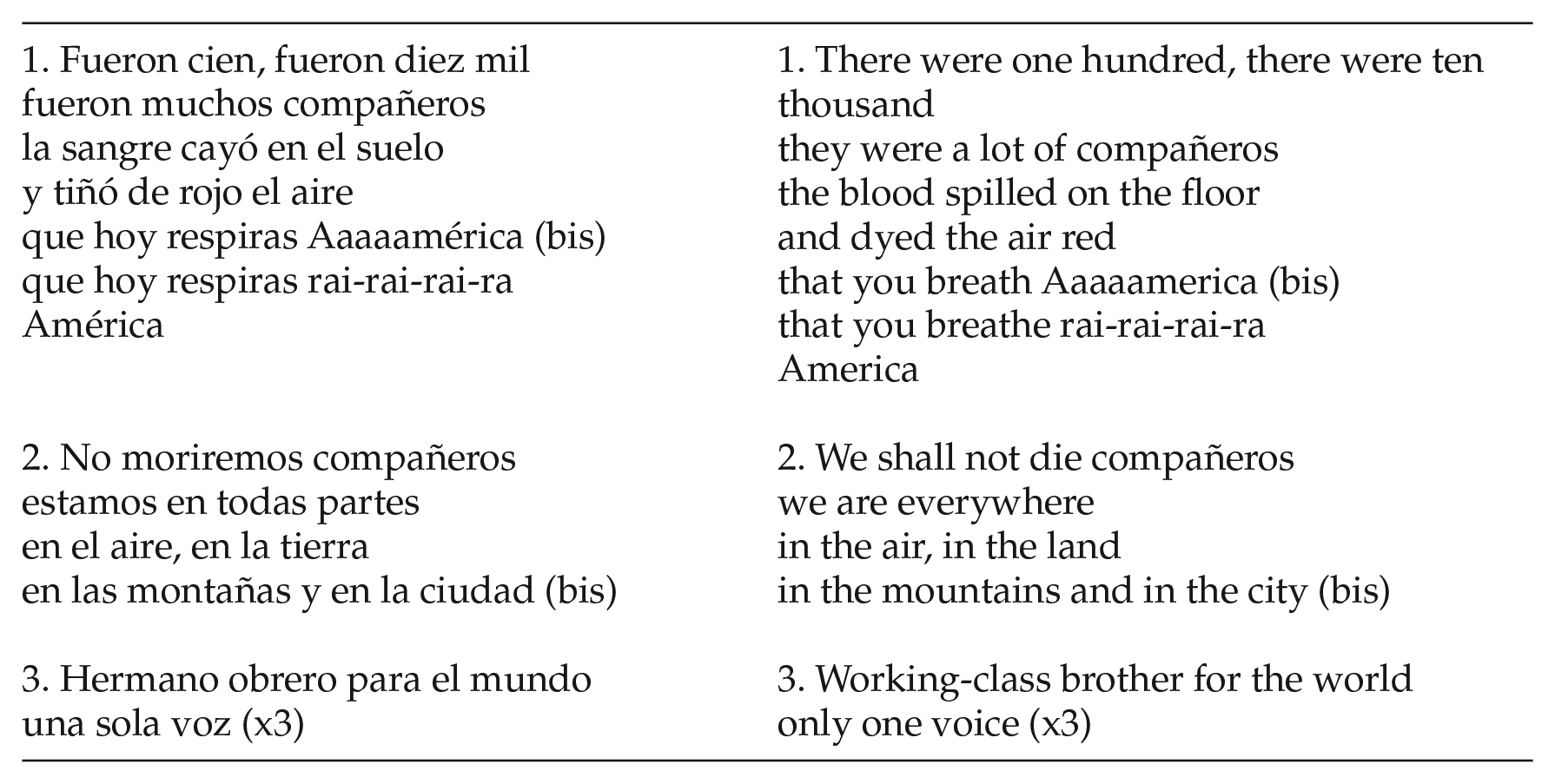
The song begins by referring to a massacre in the abstract (“hundreds,” “ten thousand,” and so much blood spilled that it stained the air). Then the chorus assertively announces “We shall not die, we are everywhere in the air, in the land, in the mountains and in the city.” Again, state brutality results in protest songs responding to threats of state repression with strong appeals for even more extensive mobilization.
Throughout the 1980s, the protest songs continued, played in clandestine settings, on the two rebel radio stations (Radio Farabundo Martí and Radio Venceremos), and in refugee camps throughout Central America and Mexico (Henriques Consalvi, 2003; Todd, 2010). In the early 1990s, many of the protest songs promoted collective memory with discussions of past massacres and the hopes and dreams of repopulated communities as the civil war ended in 1992. The words and actions of the archbishop of San Salvador, Monsignor Oscar Arnulfo Romero, assassinated on March 24, 1980, by a paramilitary while celebrating mass, became symbolic of human rights and antirepression mobilization throughout the country. Protest songs in Christian base communities and refugee camps by faith-based groups used his martyrdom and resurrection in the “people’s struggle” to motivate mobilization (Scruggs, 2006). Other musical ensembles in the 1980s and early 1990s such as Guinama, Guanacanto, Los Salvacuacos, Los Norteñitos, Sierra Madre, Grupo Mozote, Ciudad Segundo Montes, Sumpul, and Los Torogoces de Morazán also highlighted his martyrdom.
Although insurgent and social mobilization in Guatemala expanded in the 1960s after the U.S. overthrow of the progressive Guatemalan government in 1954 (Torres-Rivas, 2008; Dunkerley, 1988), the cultural infrastructure changed dramatically in the 1970s as intensified state repression radicalized the opposition. This affected the themes and orientation of songs. Also, under the influence of South American Nueva Canción, mobilizing groups and associated cultural producers emphasized the indigenous population as a key subject for social change. The marginalized and Mayan majority rural population served as a core figure in the content and forms of protest songs. Several ladino-based protest musical groups emerged in the late 1970s and early 1980s, including Mazehual, Kin Lalat, Ixim Guanima, and Grupo Quinientos Años. Because of the large indigenous populations of Guatemala, many of the songs were performed in Mayan languages: Quiché, Caqchikel, Q’eqchí, Ixil, Mam, and Chʼortiʼ, among others. This music integrated rhythms and instruments such as the marimba with indigenous, Afro-descendant, and folkloric origins (Baquiax Barreno and Perez Mateo, 1999).
In the comunidades de población en resistencia (indigenous villages that fled state repression to the northern portion of El Quiché department), rebellious songs were performed on the marimba and other instruments in styles such as the ranchera (Ramírez Ambrocio, 2014). Given the political environment of armed conflict that lasted almost 30 years, the repression targeting rural, indigenous, and marginalized communities was one of the major topics of protest songs. Thus, the threat of repression emerged as a defining feature of the experience of cultural actors in their songs and served as a mechanism for fostering the mobilization of subaltern groups. Songs were employed to remind rural indigenous populations of their common experiences (which included political persecution by state and paramilitary forces) and the demand for recognition by the state and other social actors. The songs of communities displaced from El Salvador in Honduras played a similar role, as expressed in the songs of groups such as Los Torogoces de Morazán and Ciudad Segundo Montes. In Guatemala, these songs were played by the late 1980s over the clandestine radio station Voz Popular. A ranchera from 1984 (title unknown) mentions kidnappings, massacres, and targeted assassinations, but the core message of this song discusses the experiences and struggles of the survivors.
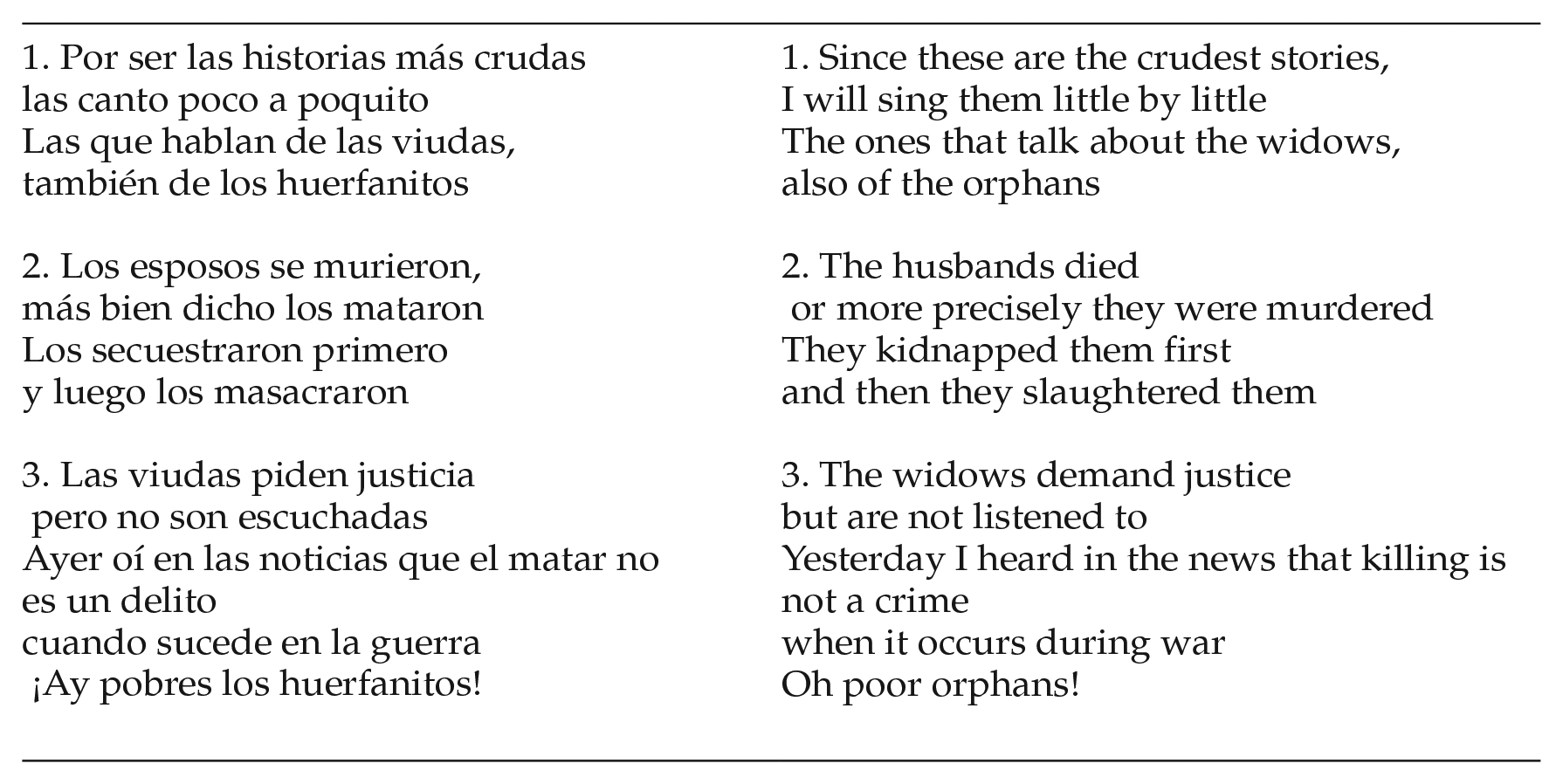
Through musical compositions like this the communities created a contentious collective identity—emotionally charged through music—of repression and the denial of justice. The threat of repression does not demobilize but encourages members of the displaced community to unite as equals as a precondition for mobilization.
In Nicaragua, the modern protest song against repression dates back to at least the early 1970s with Carlos Mejía Godoy’s “María de los Guardias,” which denounced the corruption and moral bankruptcy of the repressive National Guard (Landau, 1999). Older protest songs against repression and colonialism have been documented for the struggle of Augusto Sandino in the late 1920s and early 1930s (Arellano, 1986). Many of the Sandino rebel army songs were resurrected and sung in street demonstrations in the early 1960s in response to the repressive threat of the student massacre in July of 1959 (Avendaño, Cuadra, and Cedeño, 1979). Pancasán’s “De la libertad del pueblo” from the 1970s also refers to the 1959 student massacre.
The musical and cultural movement picked up steam in the 1970s with the Gradas group, Carlos Mejía Godoy’s “Misa campesina nicaragüense,” and the work of Luis Enrique Mejía Godoy and Pancasán (Landau, 1999). Because of the revolutionary triumph in 1979 3 and its own artistic capacity to combine traditional styles and storytelling, Nicaraguan protest music found greater international projection (particularly in Central and Latin America) than that of neighboring countries. This outcome was supported by the work of Carlos Mejía Godoy and Los de Palacagüina, who won the 1977 Festival of Iberoamerican Song award (for the song “Quincho Barrilete”). Nicaraguan protest music is characterized by rescuing traditional styles and employing vernacular terminology (Gordillo, 2021). The compositions highlight the struggles of different social sectors engaged in the mobilization against the Somoza regime: rural workers, small landholding peasants, indigenous populations, women, guerrilla combatants, students, and even children. Under a brutal autocracy, most of the songs refer to the environment of repression of mobilized groups. “Venancia,” for instance, a Nicaraguan protest song from 1975 by Luis Enrique Mejía Godoy, discusses the repression of rural mobilization and women’s activism.
Venancia (1975)
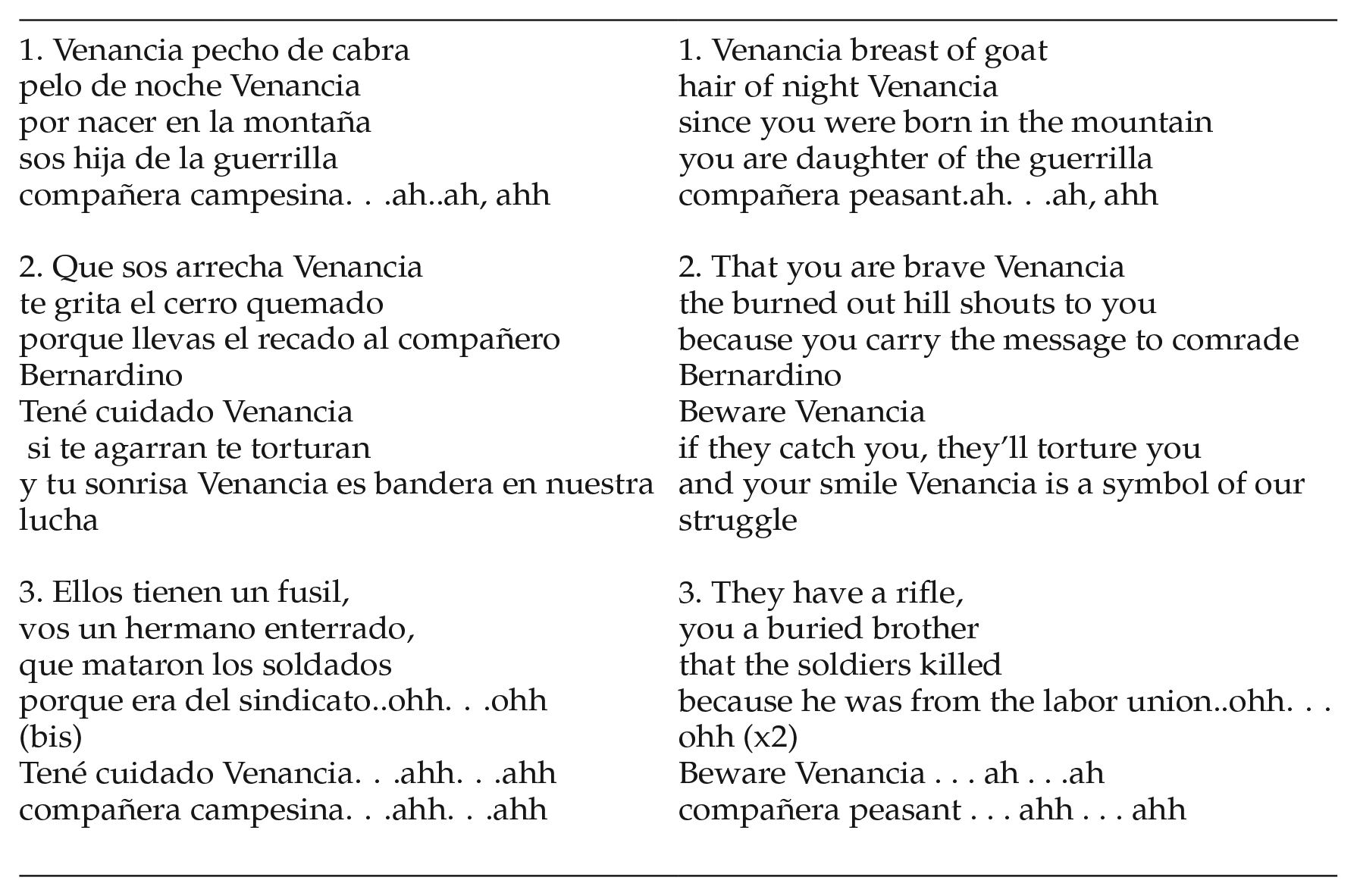
Radio Corporación played a role similar to that of YSAX. Carlos Mejía Godoy worked at the station and played protest songs. In the decades following the revolution, the songs have been remembered during vigils and annual commemorations such as the Repliegue and July 19 celebrations of the revolution.
The Neoliberal Period, 1990–Present
Even with repressive regimes dominating Central American governments (with the exception of Costa Rica) in the 1960s and 1970s, the region entered a period of state-led development with the expansion of public infrastructure and utilities, hospitals, clinics, and schools. This development model ended with the foreign debt crisis in the early 1980s. Whereas in the early 1970s all Central American countries had less than US$ 1billion in foreign debt, that amount had more than quadrupled by the early 1980s (Almeida, 2014). The International Monetary Fund, the World Bank, and their affiliated international financial institutions stepped in to manage the balance-of-payments crisis. In exchange for being allowed to reduce or postpone debt payments and receive new loans, national governments in Central America signed conditional loan agreements with these institutions. The conditions often stipulated the application of several neoliberal measures to domestic economies, including regressive sales taxes, cuts to consumer subsidies in food, transportation, education, and health care, reductions in agricultural credits for poor farmers, wage freezes, massive layoffs in the public sector, privatization, free trade, and a relaxation of protections against foreign access to natural resources and minerals.
All Central American countries over the past 40 years spent half of this period or more under some kind of structural adjustment loan (Figure 1). As the region transitioned to less authoritarian political systems with relatively competitive elections in the 1990s and 2000s, the terrain of struggle also shifted away from repressive to economic threats as drivers of collective resistance. Already by the early 1990s, massive protest campaigns broke out against austerity and structural adjustment programs throughout the Isthmus (Robinson, 2003). By the 2000s, a new generation of artists was creating protest music that largely denounced the policies of neoliberalism and motivated subaltern groups to resist the new economic threats.
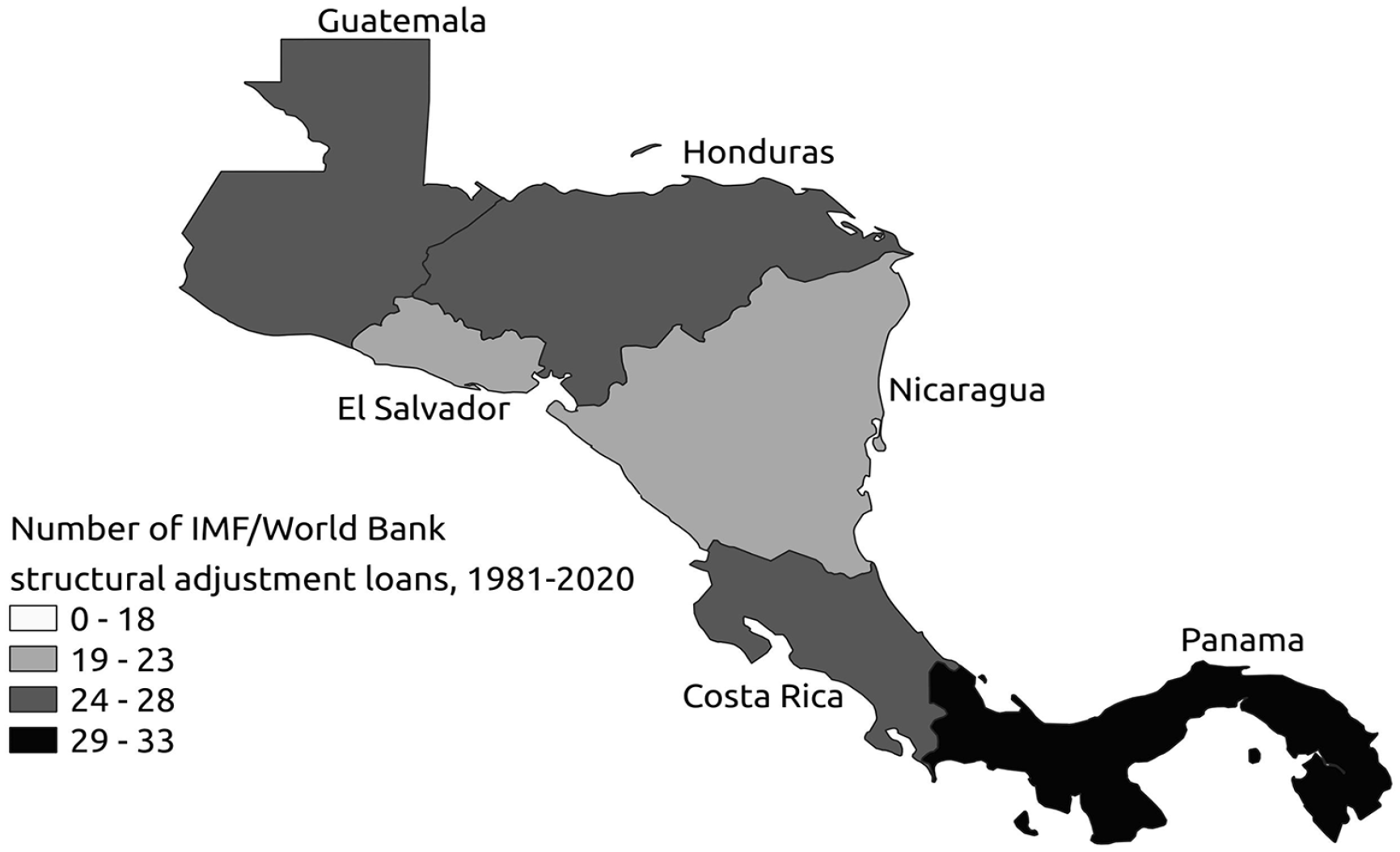
Central America, showing number of structural adjustment loans 1981–2020 (based on Abouharb and Cingranelli, 2007; Abouharab et al., 2015; World Bank Development Policy Actions Data Base, and IMF Monitoring of Fund Arrangements Database).
In El Salvador the battle against neoliberalism began in the mid-1980s with the Unidad Nacional de Trabajadores Salvadoreños and the State and Municipal Workers’ Coordination Council mobilizing marches against President José Napoléon Duarte’s currency devaluation and economic austerity packages. With the presidential victory of Alfredo Cristiani and the ARENA party in 1989, the country moved on an even more consistent neoliberal trajectory, aggressively implementing free-market reforms and privatization. Major campaigns over the privatization of banks, state institutions, and telecommunications in the 1990s marked a deepening of free-market reforms. Popular mobilizations against ongoing neoliberal threats peaked in the early to mid-2000s against the privatization of health care and the Central American Free Trade Agreement (CAFTA).
The new cultural collectives and protest music groups that had emerged in the late 1980s continued into the neoliberal period. One of the most important was the Asociación Salvadoreña de Trabajadores del Arte y Cultura (Salvadoran Association of Workers in Art and Culture—ASTAC). Influential musical groups of the 1980s associated with ASTAC included Guinama, Teosinte, and Guancanto in urban areas (often headed by women vocalists). By the late 1980s and early 1990s more rural protest ensembles appeared as part of repopulated communities (war refugees repatriating), among them Grupo Segundo Montes in Meanguera, Morazán. One critical ASTAC affiliate that surfaced in the 1990s and early 2000s was Grupo Jilguero. When the largest protest campaign of the postcivil-war period broke out against health care privatization between 1999 and 2003, Jilguero was on the streets in the marches and at striking worksites performing anti-neoliberal songs such as “La langosta” (The lobster) and “La diarrea” (Diarrhea). “La langosta,” with a danceable rumba style, denounces the neoliberal development strategy of the ARENA government, including the expansion of maquiladoras to exploit women workers. “La diarrea,” with a danceable Caribbean rhythm, focuses on the massive protest against the privatization of health care of 2002–2003.
La diarrea (2002)
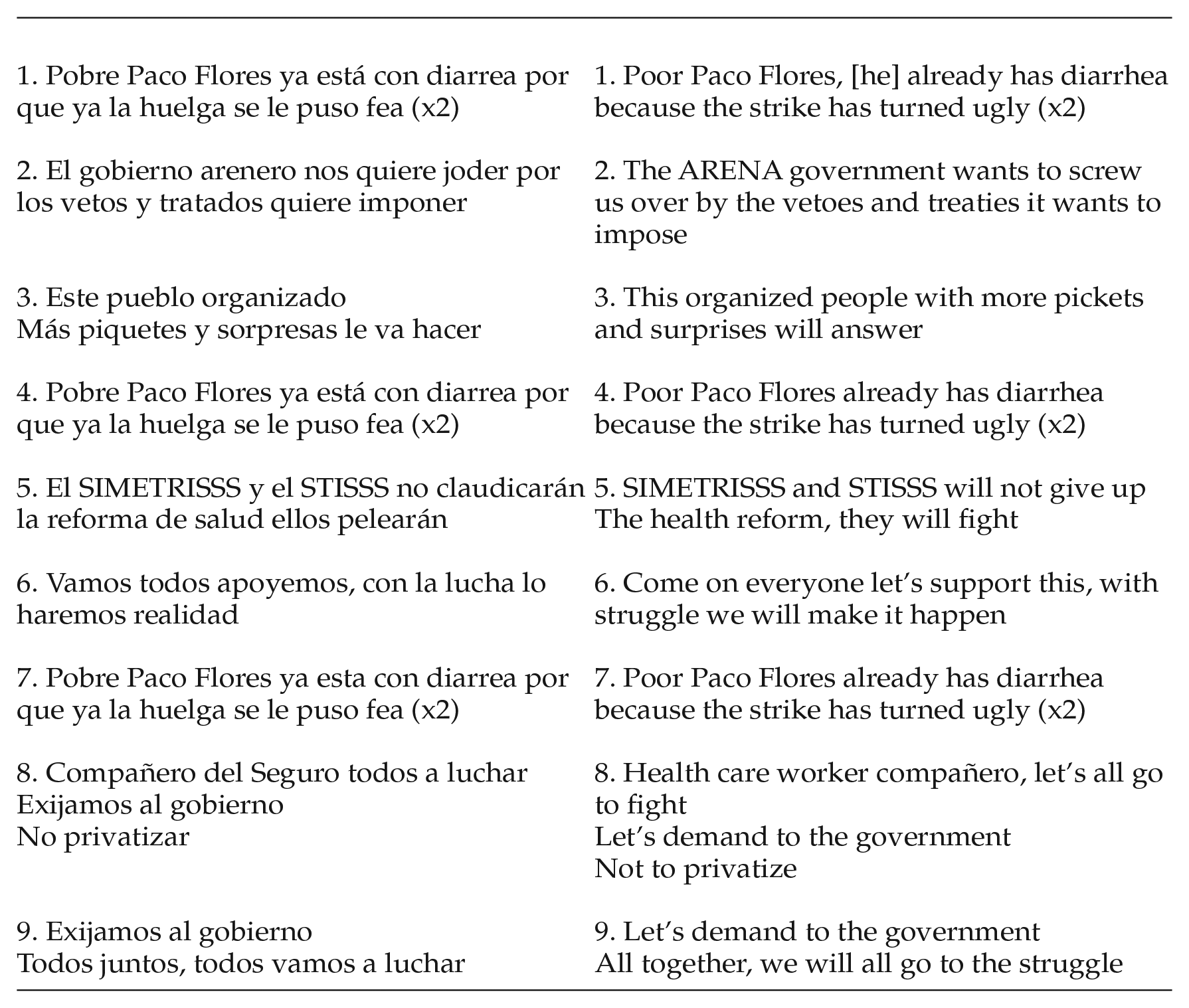
“La diarrea” satirically suggests that the massive and prolonged strike had given President Paco Flores of the right-wing ARENA Party (the political party implementing the privatization) diarrhea and urges people to continue the struggle against health care privatization being waged by the vanguard organizations in the struggle, including the union of physicians (SIMETRISSS) and the medical staff (STISSS) in the social security hospitals. These unions joined a broad coalition of civil society organizations in the Alianza Ciudadana contra la Privatización de la Salud (Citizens’ Alliance against the Privatization of Health Care—ACCPS) in 2002 and 2003. The health care unions alone were too small and concentrated in the largest cities to sustain a national-level campaign against an impending neoliberal policy. The song urges the population to join in the rainbow coalition to halt the privatization process. The coalition was successful in producing dozens of mass marches, occupations, and highway blockades that ended with the government’s abandoning its privatization plans.
In the mid-2000s, the anti-neoliberal protest movements against health care privatization, rising consumer prices, and CAFTA used their momentum for parliamentary and local election successes of the left-oriented Frente Farabundo Marti para la Liberación Nacional (Farabundo Martí National Liberation Party—FMLN), culminating in the successive presidential victories in 2009 and 2014, respectively. In the election campaigns for the FMLN, hundreds of anti-neoliberal protest songs circulated (with danceable cumbia, merengue, and ranchera rhythms) and were often sold on the streets as CDs for US$1. The cumbia “Vendrán nuevos días” detailed the economic threats of the ARENA government and predicted its defeat.
Vendrán nuevos días (2009)
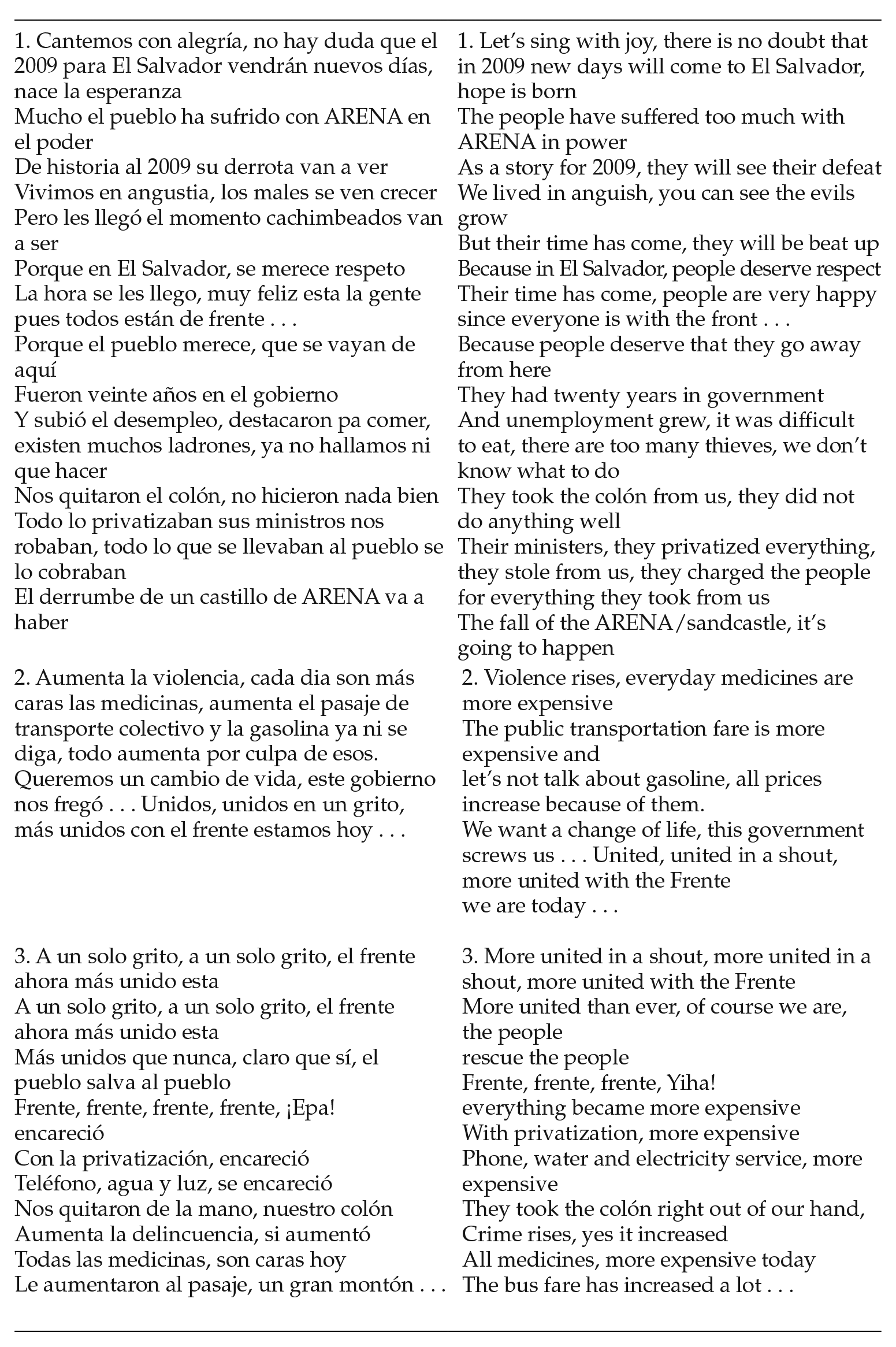
The FMLN launched its 2009 presidential campaign in November of 2007, giving the party a year and a half to mobilize the population for the March 2009 elections. The anti-neoliberal FMLN used protest music at election campaign rallies throughout the country in caravans of hope (caravanas de esperanza). The music focused on several economic threats associated with neoliberalism in the Salvadoran context—privatization, dollarization, free trade, and the rising cost of living. In March 2009, the FMLN won the presidency in a historic election, and it used similar campaign music to triumph again in 2014.
In Honduras, after three decades of deepening neoliberal policies (Sosa, 2011), musical artists mobilized against the deepening of economic deregulation following the 2009 military coup. For example, one of the representative protest musical groups of this period, Café Guancasco, occupied a prominent position at the forefront of the anticoup resistance (accompanying the Frente Nacional de Resistencia Popular) with their songs (a fusion of rhythms from rock, ska, and trova) and public performances. Songs such as “El club de los idiotas” and “Informe estadístico de fin de siglo” highlight economic threats under neoliberalism. By 2013, the regime had opened up enough to allow a newly constituted oppositional political party on the left (Libertad y Refundación [Freedom and Reestablishment]—LIBRE) to compete in municipal, parliamentary, and presidential elections. During its campaigns between 2013 and 2021, dozens of protest songs denounced neoliberalism, and, as in El Salvador, were distributed on the streets in CD format and via social media platforms, especially as audio files sent over WhatsApp. “Vamos pueblo” has been an anthem since 2013, when Xiomara Castro was LIBRE’s presidential candidate for the first time. In these songs, promises of supporting public health and public education are highlighted on the heels of epic battles against privatization in those two sectors. The song employs rhymes to enhance audience memorization in key lines. It is performed with female vocals and a techno/rave-style mixing of elements of merengue and calypso to attract younger voters, consistent with the Honduran median age of 24.
Vamos pueblo (2013)
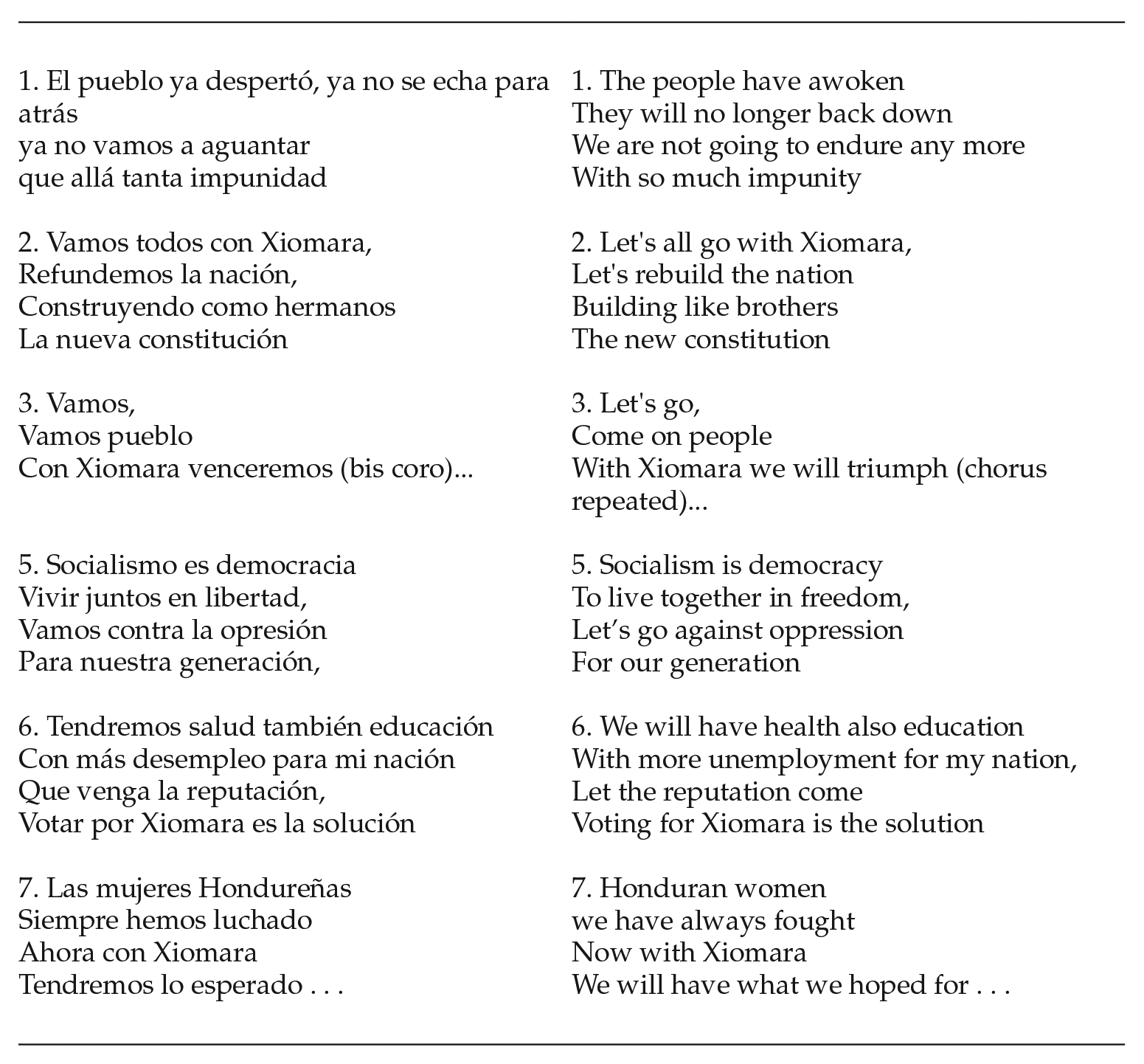
Honduran anti-neoliberal music also came in multiple rhythms of punta, reggaeton, rancheras, cumbias, techno/rave/pop, ska, and merengues. Often musicians used an extremely popular commercial song such as Daddy Yankee’s “¿Qué tengo que hacer?” or Juanes’s “La camisa negra” and switched out the lyrics for anti-neoliberal campaign communiques (again as a strategy to reach young voters). The LIBRE party was very successful following these election campaigns. In 2013, the party received the second-most votes and upended the 100-year-long two-party dominance of the National and Liberal parties (Sosa and Almeida, 2019). In late 2021, the LIBRE candidate, Xiomara Castro, won the presidency, and the campaign relied heavily on protest music over social media given the limits of public mobilization in the COVID pandemic.
Costa Rica entered the neoliberal era much earlier than its neighbors, which were embroiled in armed conflict and state repression for much of the 1980s. Major uprisings against electricity prices, subsidy cuts to farmers, and pension reductions for teachers and public employees and other struggles against economic threats occurred in Costa Rica in the 1980s and 1990s (Edelman, 1999). In 2000, a deeper phase of neoliberalism began with the government’s attempt to privatize electricity and telecommunications (Haglund, 2010), which was met with the largest popular mobilization in decades. The campaign included dozens of roadblocks across the country and halted the privatization plans. This campaign was quickly followed by a prolonged struggle between 2003 and 2007 to prevent the ratification of CAFTA. Costa Rica mobilized more citizens than any other country in the region against the free-trade agreement. These mobilizations included one-day general strikes, roadblocks, street marches, teach-ins, and the formation of neighborhood committees (comités patrióticos) (Raventós, 2018). Two of the mass marches against the CAFTA in 2007 reached over 200,000 participants.
Part of the large coalitions forming against CAFTA included the Frente Cultural, in which dozens of musicians and musical groups composed songs and performed. Some of these musicians traveled collectively in the Casadora, an old school bus painted in vibrant colors that toured the country between 2006 and 2007 presenting artistic expressions (including protest music) in dozens of towns and cities. Some of the most influential musicians included Dionisio Cabal, Marité Valenzuela, Rubén Pagura, and Nito Man. The first three performed more traditional-acoustic-type protest music along the lines of folklore. Nito Man was a rapper that appealed to the youth wing of the movement. Dionisio Cabal and Marité Valenzuela would often invoke historical leaders that fought against William Walker in the late 1850s in their songs against CAFTA such as “Ha llegado la hora de Juanito Mora” and “No al TLC.” Such songs linked the free-trade agreement to a new round of foreign intervention in the history of Costa Rica, framing the free-trade agreement as a twenty-first-century variant of neocolonialism. One of the most popular songs of the anti-CAFTA campaign, written sometime in early 2006 by the singer-songwriter Rubén Pagura, was “¡Que trabajo!”
¡Qué trabajo! (2006)
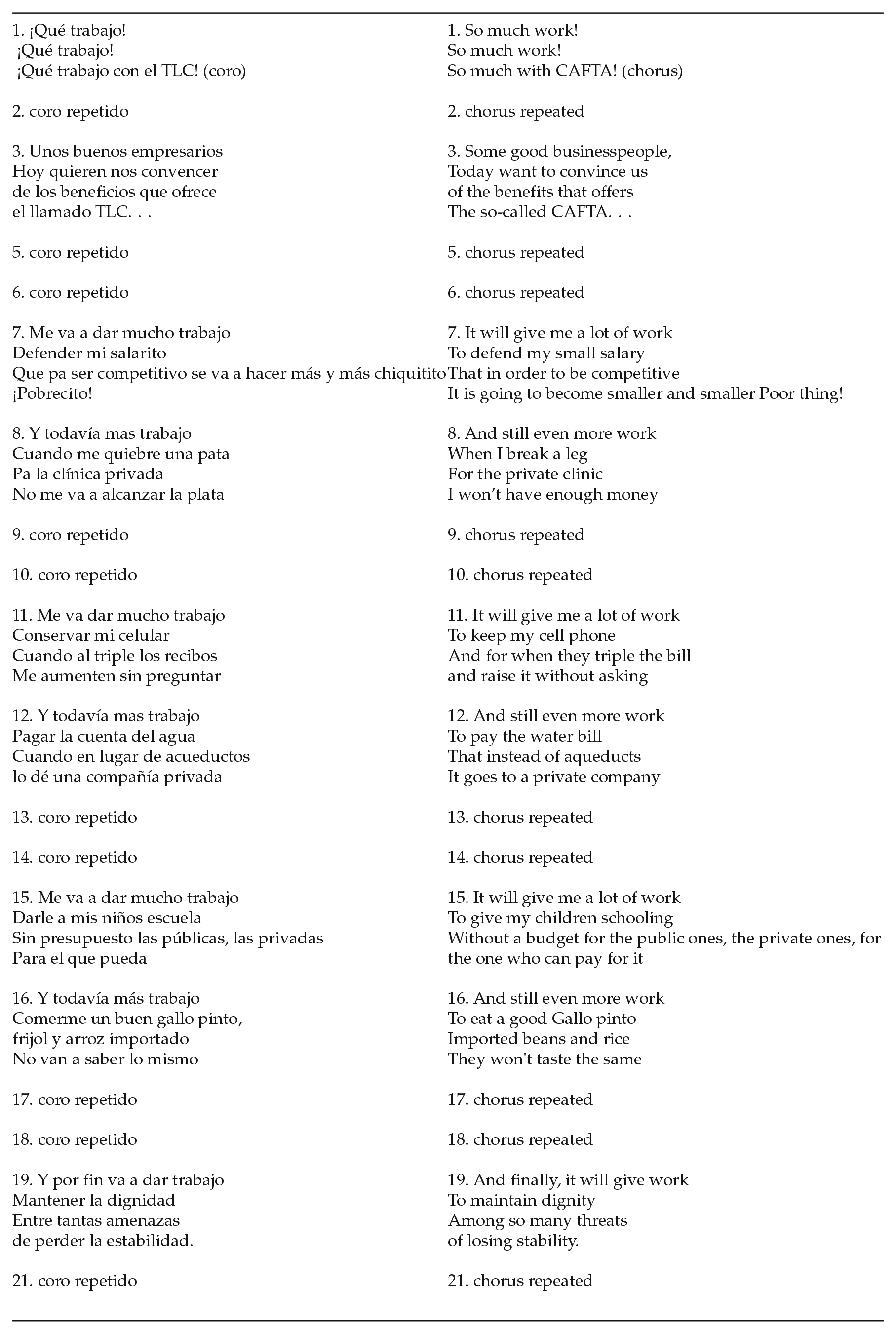
“¡Qué trabajo!” (the name of a word game) is a sarcastic and comedic play on all of the jobs promised with the legislative passage of CAFTA. Pagura inverts the meaning of “so much work” to all of the extra time that Costa Ricans will have to invest in just surviving if the free-trade agreement is passed and lists the economic threats of higher prices, mass unemployment, privatization, and loss of access to public education and health care. The multiyear campaign against CAFTA came to an end with a narrow loss in a national referendum in November of 2007. Nonetheless, it was the largest sustained mobilization in modern Costa Rica, and the protest musicians played a key role in interpreting abstract trade policy into specific economic threats that would likely weaken one of the strongest welfare states in the Global South. Since the CAFTA battle, protest music has accompanied other struggles over mining and dams and fiscal reform and rural protests against the International Monetary Fund.
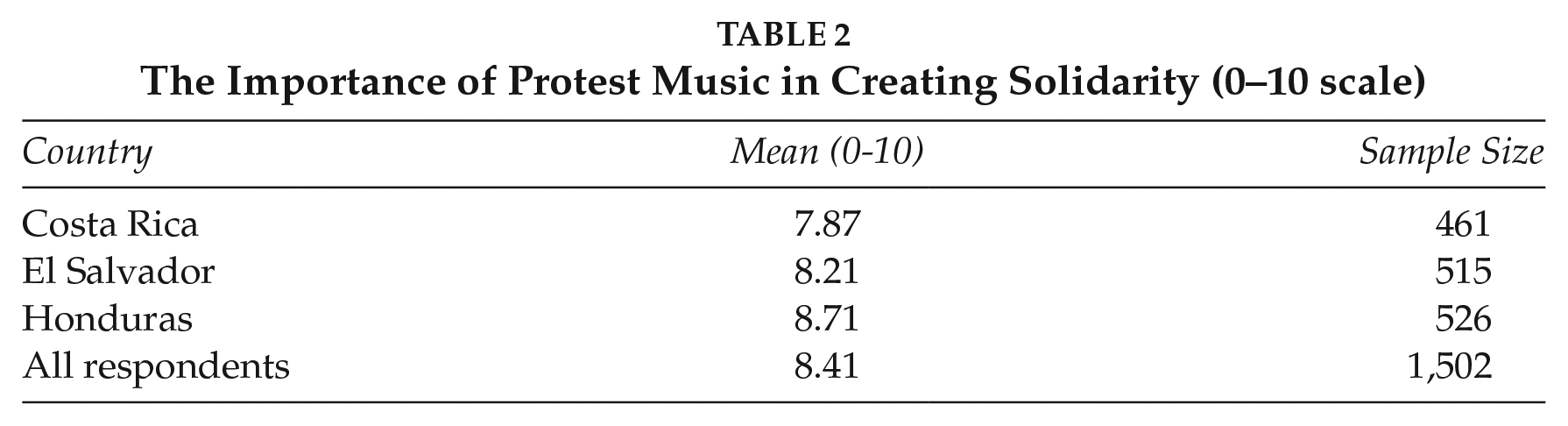
The resonance of música contestataria in El Salvador, Honduras, and Costa Rica in the neoliberal era (post-1990) can also be observed in the mobilized population. In a 2014 field survey study with a representative sample of 1,500 May Day marchers in Costa Rica, El Salvador, and Honduras (Almeida et al., 2021), the demonstrators were asked, “On a scale from 0 to 10, how important do you think protest music is for promoting solidarity among participants in demonstrations?” The responses for all three countries ranked protest music high in generating solidarity, with an overall mean of 8.4 (Table 2).
The Importance of Protest Music in Creating Solidarity (0–10 scale)
Nicaragua entered the neoliberal period in 1990 with the FSLN’s electoral defeat by Violeta Chamorro and her newly created UNO coalition. Immediately, she enacted a number of austerity and privatization measures that attempted to roll back major social gains of the Sandinista Revolution, including agrarian reforms. Massive protests, labor strikes, land occupations, and barricades against these neoliberal measures erupted for much of the first half of 1990. Since these campaigns were the first in the neoliberal era, workers sang protest songs popular during earlier times such as the Chilean “Venceremos” and the Sandinista national anthem. Other major protest campaigns against economic reforms in the rural sector surged in 1995 and 1997 after a major structural adjustment loan was signed in 1994 (Almeida, 2014). In the mid-1990s, a militant student movement formed against cuts in the university budget. In 1999 the FSLN leader Daniel Ortega made an agreement with the neoliberal President Arnoldo Alemán to keep protests in check (known as “el pacto”). By this time, new protest musicians and ensembles had appeared on the scene, such as the rock groups CPU (Contra Políticos Ultrajantes), Grupo Armado, and the singer-songwriter Perrozompopo. They all denounced the elite pact and economic inequality and declared solidarity with anti-neoliberal struggles such as the university students’ fight for an expanded educational budget.
In the 2000s protest reemerged over health care sector defunding, rising transportation prices, and water privatization. Many of these protests were led by coalitions of progressive NGOs such as the Red Nacional de Defensa de los Consumidores, the Coordinadora Civil, and the Unión Nacional de Asociaciones y Usuarios de Nicaragua. In late 2006, the FSLN won the presidential elections and then remained in power through the early 2020s. Even the formerly socialist FSLN caved in to International Monetary Fund pressures in 2018 and enacted a social security reform that cut pension benefits and raised the age of retirement. Coming on the heels of protests against mining, wildfires in tropical reserve forests, and the building of an interoceanic canal, a mass uprising ensued over the social security reforms in April of 2018 that lasted for well over a year. The initial protests of April and May of 2018 included mass marches and dozens of roadblocks across the national territory (Cabrales Dominguez, 2021). In these prolonged protests, musical groups emerged to interpret the threats, both economic and repressive. These included a series of songs released by new artists, as well as Carlos and Luis Enrique Mejia Godoy and Perrozompopo (the nephew of the former). Some of the most popular songs in April and May of 2018 included “Que se rinda tu madre” (Monkada), “Se van” (Hernando Zuñiga), “Te quiero libre” (Clara Gun), “Los jóvenes de Abril” (Carlos Mejía Godoy), “Mi patria me duele en Abril” (Luis Enrique Godoy), “Que se vayan” (Los minúsculos), and “La sangre de Abril” (Perrozompopo). The coming together of repressive and economic threats in Nicaragua in the late 2010s portended similar types of challenges in neighboring countries with the emergence of authoritarian populism (e.g., songs in homage to the indigenous environmental activist Berta Cáceres, assassinated in Honduras in 2016).
Discussion and Conclusion
The emergence of repressive and economic threats in the political environment does not adequately account for the timing or extent of collective action. These structural conditions have to be understood by the affected populations in such a way that substantial numbers of people will want to come together and collectively challenge and attempt to alter them. Protest songs are one way in which such interpretations take place in Central America. The music adds to our understanding of how collective resistance is even possible for subaltern groups, given the tremendous discrepancies in power and resources vis-à-vis the region’s political and economic elite, backed by the most powerful nation-states in the world system. Música contestataria is a people-centered resource that can be used to overcome deficits in organizational power.
In the case of repressive threats, a common thread running through most of the songs of the 1970s and 1980s resides in the moral imperative to counter state violence with mass mobilization, invoking martyrs who have sacrificed their lives for a more just society, and that the populace must follow in their example and sustain the struggle. This is not a given; in other times and places, state repression often works and silences attempts at large-scale resistance (Scott, 1985). The songs emphasizing economic threats of the neoliberal period point to the negative consequences of free-market policies without protections such as higher prices, loss of access to social services, and corruption associated with public sector privatizations. Instead of turning into revolutionary struggle, anti-neoliberal music played a key role in electoral mobilization, including several victories and near victories against regimes promoting market fundamentalism.
This study focused on two major time periods associated with repressive and economic threats—the state repression period and the neoliberal period. Since the late 2010s it has appeared that in Central America and across the globe we may be entering a phase in which neoliberalism combines with state repression and authoritarian populism, as witnessed in Nicaragua and the corresponding outpouring in the content of the protest music. Finally, the accelerating climate and environmental crises may lead to a new wave of protest songs against ecological threats, as has already begun against extractive industries in the region.
Footnotes
Notes
Paul Almeida is a professor of sociology at the University of California, Merced. He has published several books and articles about both social movements and Central America. His current research focuses on community-level climate action. Luis Rubén González Márquez is a graduate student in sociology at the University of California, Merced. He has published several articles on social movements in El Salvador. His NSF-funded dissertation work investigates conflicts over large-scale energy projects in Central America. The authors acknowledge the generous financial support of the UC Merced Academic Senate and the UC Merced Humanities Center for this research. They also benefited from the research assistance of Chelsea Olivarria Osegueda and Miriam Mosqueda.