




Abstract
This study utilizes 6 weeks of electronic daily diary self-assessments across more than 1 year of the COVID-19 pandemic to examine associations between adolescents’ phone and video social contact with friends, family, and others over time. The sample includes justice-involved juveniles adjudicated to probation or incarceration and a comparison community sample of never-arrested adolescents. Findings reveal that community youth did not demonstrate positive emotional gains from social contact via phone or video during the pandemic and at times experienced more negative emotion on days with virtual social contact; however, such contact was especially beneficial for justice-involved youth, who had better self-conceptions and stronger feelings of social connection (although more loneliness as well) on days when they engaged in phone or video contact with friends or family. Thus, social contact via phone or video may serve to close the gap in emotional well-being between justice-involved and community adolescents.
Introduction
Social connection with others is linked to numerous physical and psychological health outcomes (see review by Martino et al., 2017). Social relationships and social support protect against negative mental health consequences, including depression (Arango et al., 2018) and suicide (Kleiman & Liu, 2013). Although social connection is important across the lifespan, it may be especially meaningful for adolescents. Adolescence is a time of social development, in part due to the growth and refinement in the social brain regions during this stage (Andrews et al., 2021). Adolescence is considered a sensitive period due to the experience-dependent nature of development during this time (Meredith & Silvers, 2024); therefore, experiencing social deprivation during adolescence may have more severe consequences than if such isolation occurred at another period of life.
The COVID-19 pandemic contributed to social isolation for many, with governments implementing social-distancing protocols and stay-at-home orders, and schools moving to online delivery. Although individuals of all ages experienced social isolation during the pandemic, the effects of social isolation were likely pronounced for adolescents, as peers take on greater salience during this life stage (Brown & Laurson, 2009). Indeed, research demonstrated the importance of maintaining social connections during periods of physical distancing for protecting adolescents’ mental health, as adolescents with more social connection during lockdown reported less depression and anxiety symptoms and more life satisfaction over time, compared to their less socially connected counterparts (Magson et al., 2020).
Much pandemic research focused on community adolescents, given the difficulty of accessing more vulnerable populations (such as justice-system-involved youth; henceforth referred to as JSI youth) during this time. Less is known about how JSI youth experienced the social isolation of the pandemic. Justice-involvement often places restrictions on adolescents’ social interactions, regardless of whether youth are adjudicated to out-of-home placement or remain in the community. Given that JSI youth already faced some degree of social restriction before the pandemic, it is unclear how the added social restrictions of the pandemic affected this population. In this article, we utilize daily diary methodology to examine associations between justice-involved and community adolescents’ daily social contact with others and their daily emotional well-being across 1 year of the COVID-19 pandemic. The present study explores remote social interactions (e.g., those occurring online, via phone, etc.) as a potential protective buffer for youth well-being during times when face-to-face interaction is not possible.
Social Connection During Adolescence
Peers become increasingly important during adolescence and take on greater salience (Brown & Laurson, 2009). Reflecting this shift, time spent with the family often decreases during this period, while time spent with peers increases; however, family connection remains important (Larson et al., 1999). Social support from parents and friends is important for adolescents’ mood and general well-being, as daily diary research indicates a connection between daily support from friends or parents and feelings of increased happiness and social connection (Schacter & Margolin, 2019). Parents can serve as a buffer for adolescents’ well-being when social support from friends is low, and vice versa, with friends serving in this compensatory role for adolescents who receive little parental support (Schacter & Margolin).
Regardless of whether support comes from friends or family, research underscores the value of connecting with others. A lack of social connection is linked to a range of negative outcomes during adolescence; however, we focus here on the mental health consequences. Among Danish high school students, cross-sectional data indicate a positive association between social disconnectedness at school and mental health problems, as mediated by loneliness, with stronger relationships found for each additional type of social disconnectedness reported (Santini et al., 2021). Likewise, according to a systematic review of 80 studies, loneliness and/or social isolation were associated with greater depression and anxiety among children and adolescents, with some mental health symptoms lasting long-term (Loades et al., 2020). In sum, social belonging is an especially prominent need during adolescence, with family and friends being the key sources of social connection during this life stage. When social connection is inadequate, adolescents are likely to experience mental health consequences.
Impacts of the Pandemic on Adolescent Social Interaction
Although it is well established that social interaction is important for facilitating adolescents’ ongoing social development, environmental constraints (such as war, disease, or incarceration) may limit adolescents’ opportunities for social engagement. During the COVID-19 pandemic, many countries enacted governmental policies to strictly limit social interaction with members outside one’s household, and many schools moved to a remote, online delivery to contain the spread of COVID-19. Places that traditionally promote adolescent peer interactions (e.g., school, sports, and clubs) were suddenly eliminated or moved to a virtual platform.
Research is mixed regarding the degree to which adolescents followed social-distancing guidelines or isolated themselves from others during the initial weeks of the COVID-19 pandemic. One study using a Dutch undergraduate sample reported that older adolescents did not change their frequency of in-person social activities, despite government orders (Fried et al., 2022); however, most research found at least moderate compliance among adolescents. Research using U.S. samples suggests that 80.9% (Clough et al., 2022) to 98% (Oosterhoff et al., 2020) of adolescents engaged in at least some social distancing, while Wang and colleagues (2021) found that 71.4% of youth reported engaging in “a great deal” of social distancing. However, less research has explored the degree to which adolescents sought out or utilized other outlets (such as phone or video calls) for social interaction during the pandemic.
Associations With Mental Health
Both cross-sectional and longitudinal research works reflect an association between pandemic distancing measures and poor mental health. According to a systematic literature review, physical distancing during the pandemic was associated with a range of mental health symptoms among adolescents, including greater feelings of loneliness, anxiety, stress, as well as psychiatric disorders and emotional disturbances (Sholihah et al., 2022). Likewise, a study during the first 11 weeks of lockdown in the United Kingdom found that adolescents who experienced greater feelings of loneliness reported more symptoms of poor mental health (Cooper et al., 2021). Adolescents in Western Australia reported increased depression, internalizing and externalizing symptoms, and decreased well-being during school closures compared to pre-COVID-19 levels (Houghton et al., 2022). Finally, a study of 12 longitudinal samples of youth across three countries found that depression increased significantly from prepandemic levels to the first 6 months of the COVID-19 pandemic (Barendse et al., 2023).
Remote Social Interaction
Although evidence suggests that restricted face-to-face social interaction had consequences for adolescents’ mental health and well-being, many adolescents adopted new forms of social interaction or increased their use of other forms of remote social interaction, such as phone or video calls, text messaging, online gaming, social media use, and more. Yet, it is unclear whether these remote social interactions buffered the emotional consequences of reduced face-to-face interaction. Cooper and colleagues (2021) found that time spent talking with others via phone or video call was not associated with reduced loneliness or worse mental health symptoms. Likewise, a study conducted during a nationwide lockdown in Germany found that the frequency of use of virtual communication methods (e.g., video calls, phone calls, texting) was not associated with increased social connection (Kluck et al., 2021).
JSI Youth
JSI youth were restricted in their in-person interactions even before the pandemic, as conditions of justice-involvement often limit who one can interact with, when, and how. Incarcerated youth experience the most extreme forms of isolation, including minimal face-to-face contact with family, no contact with friends, and limited telephone contact. For youth on probation, social restrictions may involve house arrest, curfews, and restricted access to certain people (such as cooffenders). The pandemic further limited these minimal social engagements for justice-involved adolescents. Many secure residential juvenile facilities temporarily halted in-person family visitation, restricting family communication to phone calls only. Likewise, visits from care providers (e.g., therapists, teachers) were often temporarily halted until access to these services could be provided virtually. However, the secure nature of residential facilities added a layer of complexity to providing virtual services (e.g., securing funds to purchase computers, purchasing software to aid security in what inmates can access on computers, and funding additional staff to supervise inmates during virtual calls), often resulting in delays in the availability of such programs.
Given the difficulty of conducting research with justice-involved populations, especially during the pandemic, little is known about how these youth fared under these times of further-limited social connection. Considering JSI youth experienced social restrictions prior to the pandemic, it is possible that they might have been desensitized to the additional restrictions during the pandemic and therefore less affected by them than community youth, for whom such novel restrictions may have been more jarring. An alternate view, however, is that because of their prior social limitations, JSI youth may be a vulnerable population for whom the consequences of increased social restrictions during the pandemic may have been exacerbated.
The Present Study
Although prior research has explored the impact of the pandemic on adolescents’ social interaction, little research has examined how vulnerable populations like JSI youth were affected by the changes in social isolation during the pandemic. This study utilizes a sample of adolescents uniquely vulnerable to the impacts of COVID-19; specifically, those who are Latino, from low-income communities, and involved in the justice system. Members of Hispanic/Latino and low-socioeconomic status (SES) communities are particularly susceptible to contracting and dying from COVID-19 (Finch & Finch, 2020; Macias Gil et al., 2020), and few studies have assessed responses to COVID-19 from adolescents who belong to these marginalized communities. Furthermore, JSI youth faced a greater risk for health problems from COVID-19 than the public (Barnert, 2020). Therefore, it is important to examine adolescents’ experiences during the COVID-19 pandemic among a sample of low-SES, Hispanic/Latino, and JSI youth.
Furthermore, most extant research has focused on the effects of reduced in-person social contact, with less exploration of how remote social contact, defined here as virtual or phone communication, served to fill the gap. The present study examines the association between adolescents’ daily remote social contact and daily emotional well-being, controlling for prepandemic anxiety and depression levels, across 1 year of the COVID-19 pandemic. 1 We hypothesize that adolescents will experience poorer emotional well-being on days without remote forms of social contact. Furthermore, we explore whether these effects of remote social interaction vary depending on the target of one’s social contact (e.g., friends, family, or others). We hypothesize that contact with friends or family will be positively associated with emotional well-being, whereas contact with others will be less strongly associated with emotional well-being. Finally, we compare the associations between social contact and well-being across justice-involved (i.e., on probation or incarcerated at the time of the study) and community (i.e., never-arrested) youth. We hypothesize that positive associations between remote social contact and emotional well-being will be exacerbated for JSI youth.
Method
Procedures
The present study examined social contact and emotional well-being during the pandemic within a sample of at-risk (i.e., Hispanic/Latino, low-SES) community and JSI youth. The data for the present study were collected in the Adolescents’ Daily Experiences with COVID-19 Study, which was conducted as a supplemental follow-up to the Adolescent Social Development and Sleep (ASDS) Study—an ongoing longitudinal study assessing impacts of justice system involvement on youths’ social development and sleep patterns. Data for the present study include assessments of prepandemic mental health symptoms and demographic data from the ASDS baseline interview, as well as data on participants’ social contacts and emotional well-being from the daily diary assessments from the supplemental COVID-19 study. The supplemental study additionally included three waves of interview assessments across more than 1 year of the pandemic. For brevity, we have not described other measures from these studies here; however, more information about these studies can be found on our study page on the Open Science Framework website (https://osf.io/fahwu/).
Baseline interviews for the ASDS study were conducted in participants’ homes, secure residential facilities (if participants were detained at the time), or alternate community locations if necessary for safety reasons or participant preference. Interviews were conducted face to face, by trained research assistants (RAs) and were conducted in a private setting. Interviews lasted approximately 2–3 hours, and participants were compensated $10 for their time, in the form of cash, check, or electronic gift card.
Participants in the supplemental COVID-19 study additionally completed up to 6 weeks of daily diary assessments. Daily diary methodology involves using brief repeated measurements across a set period. It offers researchers a glimpse at participants’ experiences in their natural setting (rather than a lab environment) in nearly real-time, thereby offering greater ecological validity and accuracy than traditional retrospective reports (see review by Lischetzke & Könen, 2021). Daily diary assessments were collected for 1 week out of every other month, with a total possible 6 weeks of daily diary assessments completed by each participant. Participants completed brief surveys on electronic tablets (e.g., Samsung Galaxy Tab A), which the study supplied to participants for use during the study; these tablets were sent to participants by mail at the start of each week of daily diary assessments, along with preaddressed/preposted shipping boxes which participants could use to return the equipment upon completing each week of assessments. Participants were paid $25.00 per week of completed daily diary assessments (prorated amounts were paid for incomplete assessment periods) via check, electronic gift card, or peer-to-peer money transfer. Daily diaries were scheduled to be completed during the following weeks: June 1, 2020 to June 8, 2020; August 3, 2020 to August 10, 2020; October 5, 2020 to October 12, 2020; April 12, 2021 to April 19, 2021; 2 July 12, 2021 to July 19, 2021; and September 13, 2021 to September 20, 2021. Considering that the pandemic was a highly stressful event that disrupted participants’ lives, the study team was not rigid with the deadlines for data collection; therefore, daily diaries were accepted off-timeline if necessary. All study procedures for the ASDS Study and the present COVID-19 Study were approved by the Institutional Review Boards at the institutions of the study PIs.
Participants
All participants were recruited from El Paso, Texas (a large southwestern city on the U.S.–Mexico border with a large Hispanic population). To be eligible for the ASDS Study—and therefore the supplemental COVID-19 Study—participants must have met the following criteria by the initial assessment in the ASDS study: (a) be between the ages of 13 and 17 years old at the time of the baseline ASDS Study assessment, (b) be fluent in either English or Spanish, (c) not be diagnosed with a sleep disorder or any conditions that might affect their sleep, and (d) be a member of one of three groups: incarcerated in the local juvenile secure residential facility, on probation, or never arrested. Participants in the incarceration and probation groups were similar in risk level (i.e., medium to high) and the duration of their disposition (i.e., 9 months); the incarceration group completed their disposition in a secure residential facility, whereas the probation group completed their probation in the community. All three groups (incarcerated, probation, and community) were recruited from the same communities and neighborhoods to minimize group differences beyond justice-involvement. For the present analyses, participants from the incarcerated group and probation group were combined into a single group of JSI youth.
At the onset of the pandemic, participants from the ASDS Study were recruited for optional participation in the present supplemental COVID-19 study via telephone by trained RAs. Adolescents wishing to enroll in the supplemental study must have already been enrolled in the larger ASDS Study; therefore, additional assent and parent permission were not required for participation. Adolescents were assured their decision to participate in all assessments associated with the supplemental study would not impact their involvement in the ASDS Study nor their involvement with the local juvenile probation department or the university through which data were collected.
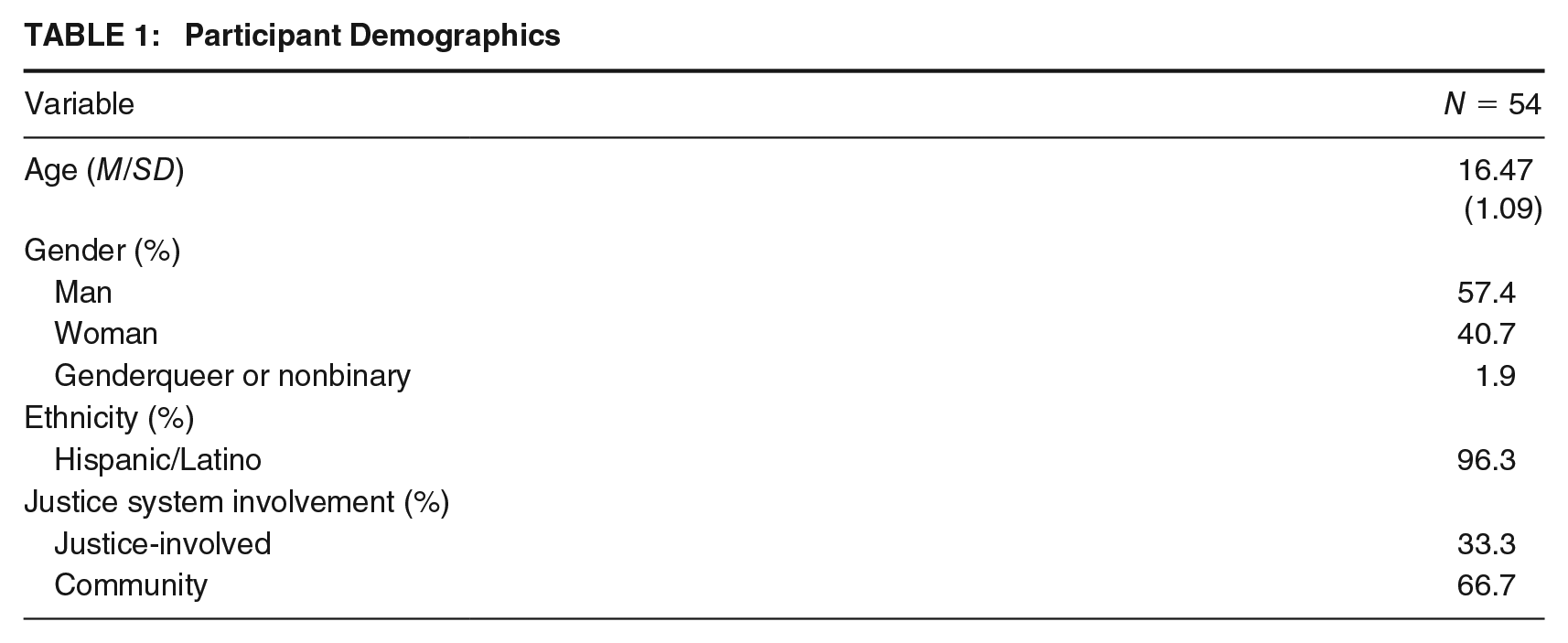
Of the 105 adolescents eligible for the first assessment of the COVID-19 Study (and, therefore, the daily diary portion of the study), 64.8% (n = 68) agreed to participate in the first assessment of the COVID-19 Study; of these, 54 participants completed daily diary assessments. On average, participants were 16.47 years old at the baseline COVID-19 Study assessment (SD = 1.9, range = 13.94, 18.64), predominantly men (57.4%), and nearly exclusively Hispanic/Latino (96.3%). Table 1 shows demographics of the final sample.
Participant Demographics
Measures
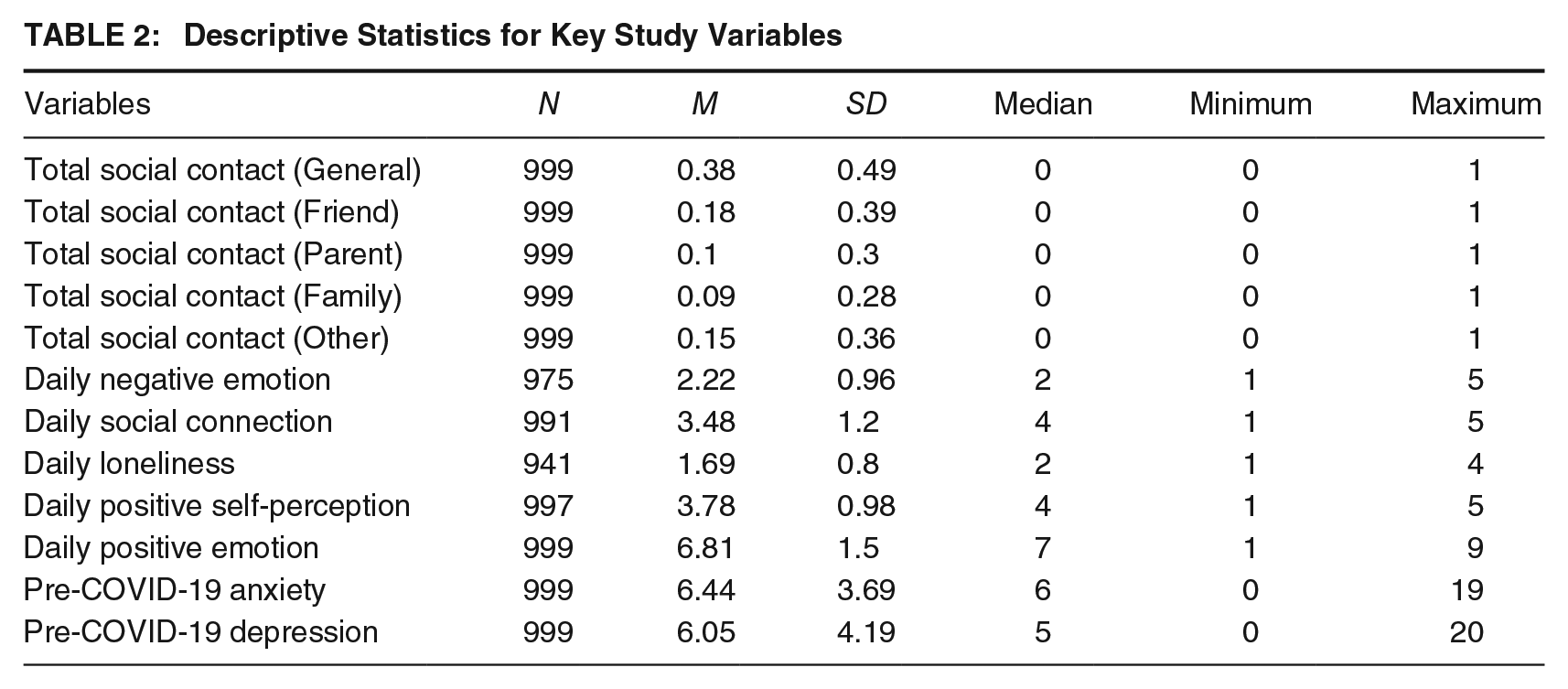
Participants’ responses to daily diary measures were assessed during all 6 weeks of data collection. All responses on all measures were collected daily over the course of 7 days. Descriptive statistics for all study variables can be found in Table 2.
Descriptive Statistics for Key Study Variables
Covariates
Because participants were recruited from a sample of youths participating in an ongoing study when the pandemic started, this study included pre-COVID-19 measures of anxiety and depression. Participants’ pre-COVID-19 anxiety and depression symptoms were assessed via the Revised Child Anxiety Depression Scale (RCADS; Chorpita et al., 2000). The RCADS is a 17-item self-report measure that assesses six dimensions of anxiety, depression, and associated disorders in children. In the Adolescent Sleep and Social Development Study, two subscales of the RCADS were used from the ASDS baseline interview: the Major Depressive Disorder (MDD) subscale and the Generalized Anxiety Disorder (GAD) subscale. For each subscale, participants rate how often they experience each situation described in the statements (10 items for MDD and 7 for GAD). Items are scored on a range of 0–3, in which response options range from “Never” (0) to “Always” (3), such that higher scores indicate more anxiety and depression symptoms. The MDD subscale is comprised of items assessing depressive symptoms such as feelings of worthlessness, anhedonia, emptiness and sleep disturbances, etc. (e.g., “Nothing is much fun anymore”). The GAD subscale is comprised of items assessing preservative worries about catastrophic events befalling loved ones, as well as general worries (e.g., “I worry about what is going to happen”). In the present data, both subscales demonstrated good internal consistency (αGAD = 0.84; αMDD = 0.85). Previous research has also shown that the RCADS is psychometrically sound, with good prior reliability for each of the subscales (αGAD = 0.84; αMDD = 0.87) and confirmatory factor analyses (CFA) confirming adequate model fit and convergent validity with other self-report measures (Revised Child Manifest Anxiety Scale and Children’s Depression Inventory; Chorpita et al., 2005).
Sample Type
The sample consists of JSI youth (consisting of those in the incarcerated and probation groups) and never-arrested youth participants from the same community. JSI youth receiving eligible dispositions were recruited through cold calls to contact information provided by the justice department; thus, justice-involvement was established through official court record. Participants in the community sample were asked an eligibility screener “Have you ever been arrested?” and only participants who answered “No” were eligible to proceed. A binary sample variable was created to indicate a participant’s justice-involvement (coded as 1) or not (0).
Daily Social Contact
In the present study, two daily social contact variables assessed (a) whether participants had experienced social contact on each given day (total contact) and (b) who they had engaged in social contact with (specific social contact) that day. These items were developed for the purpose of this study. We focused on phone and video social contact, as these were the primary forms of contact with those outside one’s household during the pandemic (due to isolation and social contact restrictions). Participants responded to two statements: “Today, I spoke on the phone with someone.” and “Today, I spoke on a video call (for example, FaceTime, Skype, Zoom, etc.) with someone.” For each endorsed item, participants were asked to check all that apply: No, Yes (a friend), Yes (a parent), Yes (a family member, not parent), and Yes (someone else).
Total contact
To evaluate whether participants experienced social contact via phone or video call on a given day (collapsed across any potential social contact targets), a binary variable was calculated for each day.
Specific social contact
To measure who participants engaged in phone or video social contact with each day, a binary variable was calculated for each category of people, including friends, family (collapsed to include parents and other family members), and others.
Daily Emotional Well-Being
Each of the following constructs was evaluated at the daily level across all six possible weeks of daily diary assessment periods. For each item, participants were asked to respond how they felt in the past 24 hours. With the exception of the Emotion score (which utilized a picture response scale), participants responded to all remaining items on a 5-point scale, ranging from Very Inaccurate (very untrue) to Very Accurate (very true).
Negative emotion
Negative emotion is evaluated through a composite of four items, representing participants’ feelings of stress (e.g., “Today, I felt stressed.”), depression (e.g., “Today, I felt depressed [very sad].”), anxiety (e.g., “Today, I felt anxious, nervous, or worried.”), and anger (e.g., “Today, I felt angry.”). The mean of the 4 scores was taken to create the composite score, with higher values indicating more negative emotion.
Social connection
Feelings of social connection were assessed through a single item, “Today, I felt connected to loved ones.” This measure was developed based on a four-item social connection scale from Wildschut and colleagues (2006).
Loneliness
Loneliness was assessed using one item “Today, I felt lonely.”
Positive self-perception
Participants’ positive self-perception was evaluated via one item, “Today, I felt good about myself.” This item was developed based on Hepper et al.’s (2012) four-item self-esteem scale.
Results
To investigate whether associations between social contact during the pandemic and emotional outcomes differ for JSI youth compared to community youths, we ran nine series of five multilevel models (MLMs; Raudenbush & Bryk, 2002) using the “lme” function within the “nlme” package in R (Pinheiro et al., 2022). In each series, a social contact variable served as the level 1 or daily predictor, and a binary sample (justice-involved vs community sample) variable served as the level 2 or between-persons predictor. The level 1 predictors were scaled and centered around each participant’s mean score across days, to distinguish within-person variance from between-person variance (Enders & Tofighi, 2007). We also estimated the intercept and slope random effects for the level 1 predictors (Barr et al., 2013) and used an autoregressive covariance structure. All models included the level 1 variable, level 2 variable, and their interaction as predictors, and participants’ scores on anxiety and depression as controls, with daily negative emotion, social connection, loneliness, positive self-perception, and positive emotion, as the criterion variables separately considered. We report the fixed effects below.
Total Contact
Negative Emotion
The first series of MLMs focused on Total Contact as the level 1 or daily predictor (see Table 3 for results). There was a significant positive association between Total Contact and negative emotion, but Sample Type was not a significant predictor. Importantly, there was a significant Total Contact by Sample Type interaction predicting negative emotion (see Figure 1, Panel A). Specifically, those in the community sample felt significantly more negative emotion on days in which they had social contact, than when they did not (b = .10, p = .013). All other slopes were nonsignificant (ps > .106).
Coefficients for Total Contact (General) Models
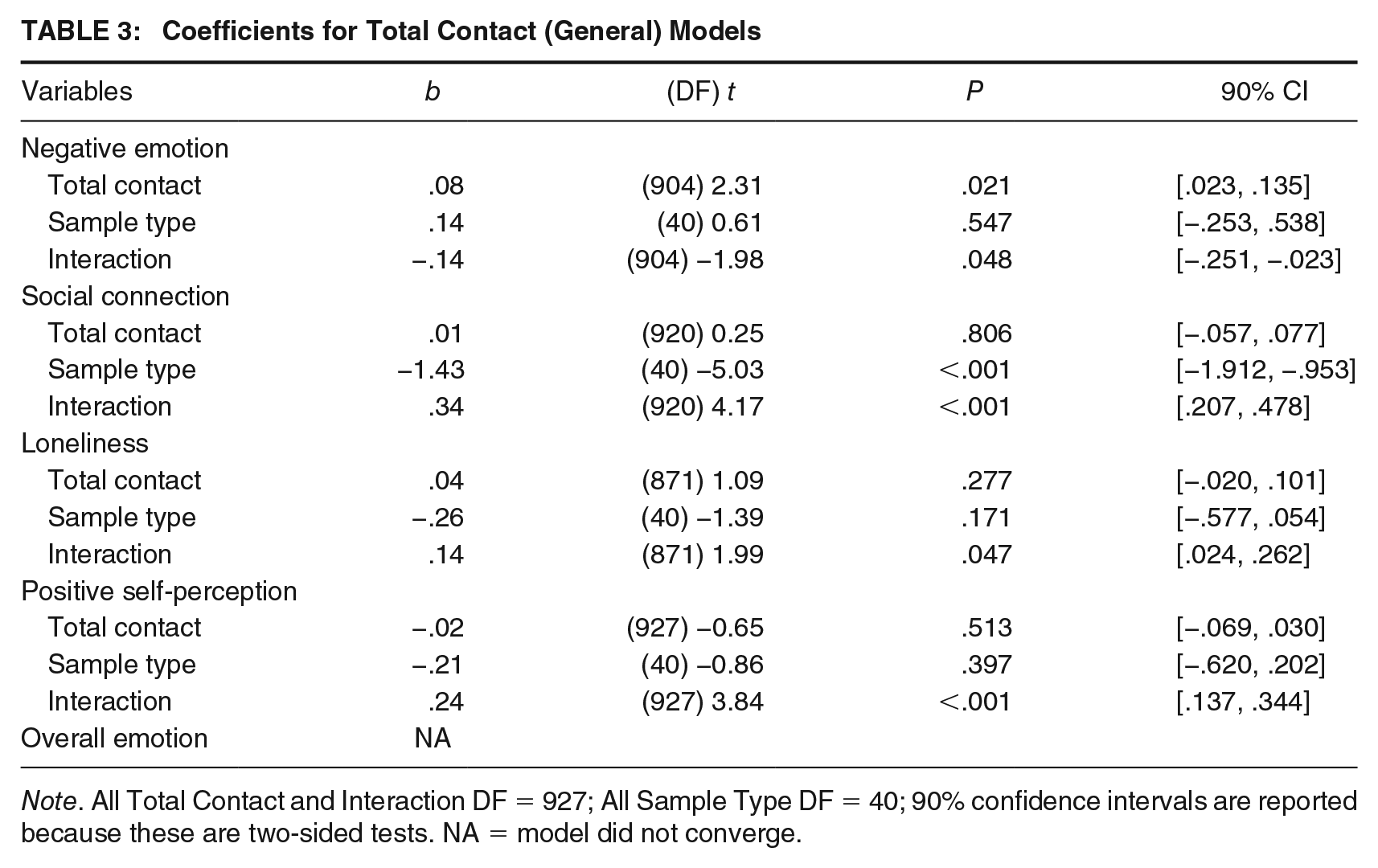
Note. All Total Contact and Interaction DF = 927; All Sample Type DF = 40; 90% confidence intervals are reported because these are two-sided tests. NA = model did not converge.
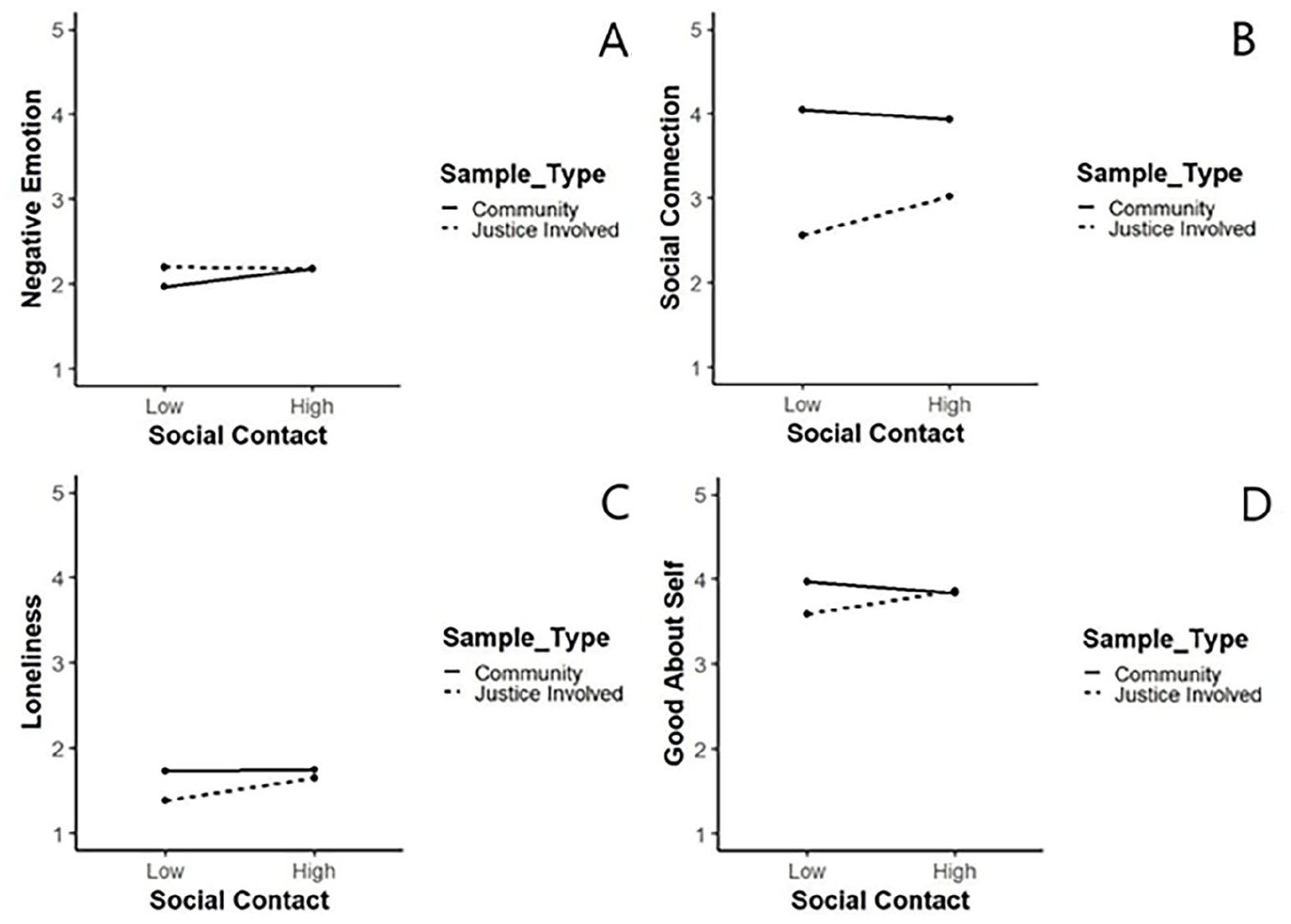
Estimated Means for Interactions of General Social Contact by Sample Type (Justice Involved and Community Adolescents)
Social Connection
In terms of social connection, there was a significant and negative association with Sample Type but not Total Contact. There was a significant Total Contact by Sample Type interaction predicting feelings of social connection (see Figure 1, Panel B). Specifically, JSI youth felt more socially connected on days with social contact than on days without social contact (b = .23, p < .001). This was not the case for the community sample (p = .269). JSI youth also felt less socially connected than the community sample on days without social contact (b = −.74, p < .001). The same was true on days with social contact, but to a lesser magnitude (b = −.46, p < .001).
Loneliness
Neither Total Contact nor Sample Type were significantly associated with loneliness. There was, however, a significant Total Contact by Sample Type interaction predicting loneliness (see Figure 1, Panel C). That is, JSI youth felt lonelier on days with social contact than on days without social contact (b = .13, p = .002). This was not the case for the community sample, as all other slopes were nonsignificant (ps > .063).
Positive Self-Perception
In terms of positive self-perception, neither Total Contact nor Sample Type were significant predictors. There was, however, a significant Total Contact by Sample Type interaction predicting positive self-perception (see Panel D of Figure 1). Specifically, JSI youth felt better about themselves on days with social contact, than on days without social contact (b = .13, p < .001). This was not the case for the community sample, as all other slopes were nonsignificant (ps > .076).
Specific Social Contacts
Contact With Friends
The next set of analyses tested specific social contacts. Specifically, the second series of MLMs focused on Contact with a Friend as the Level 1 or daily predictor. The only significant main effects of these models suggested that JSI youth tended to feel less socially connected, b = −.57, t (29) = −3.47, p = .002, 90% confidence interval [CI] = [−.845, −.289] than the community sample, and that feelings of connection were higher on days with contact with a friend, b =.13, t (708) = 2.85, p = .005, 90% CI = [.054, .203] and that loneliness was higher on contact with friend days, b =.08, t (679) = 2.14, p = .032, 90% CI = [.018, .139], than without. All other main effects were nonsignificant (ps > .133). There were also two significant Contact with a Friend by Sample Type interactions. The first involved feelings of social connection, b = .19, t (708) = 3.95, p < .001, 90% CI = [.109, .256] (see Panel A of Figure 2 for estimated means). Specifically, JSI youth felt more socially connected on days with friend contact than on days without friend contact (b = .31, p < .001). This was not the case for the community sample (p = .353). JSI youth also felt far less socially connected than the community sample on days without friend contact (b = −.75, p < .001). The same was true on days with friend contact but to a lesser extent (b = −.38, p = .020).
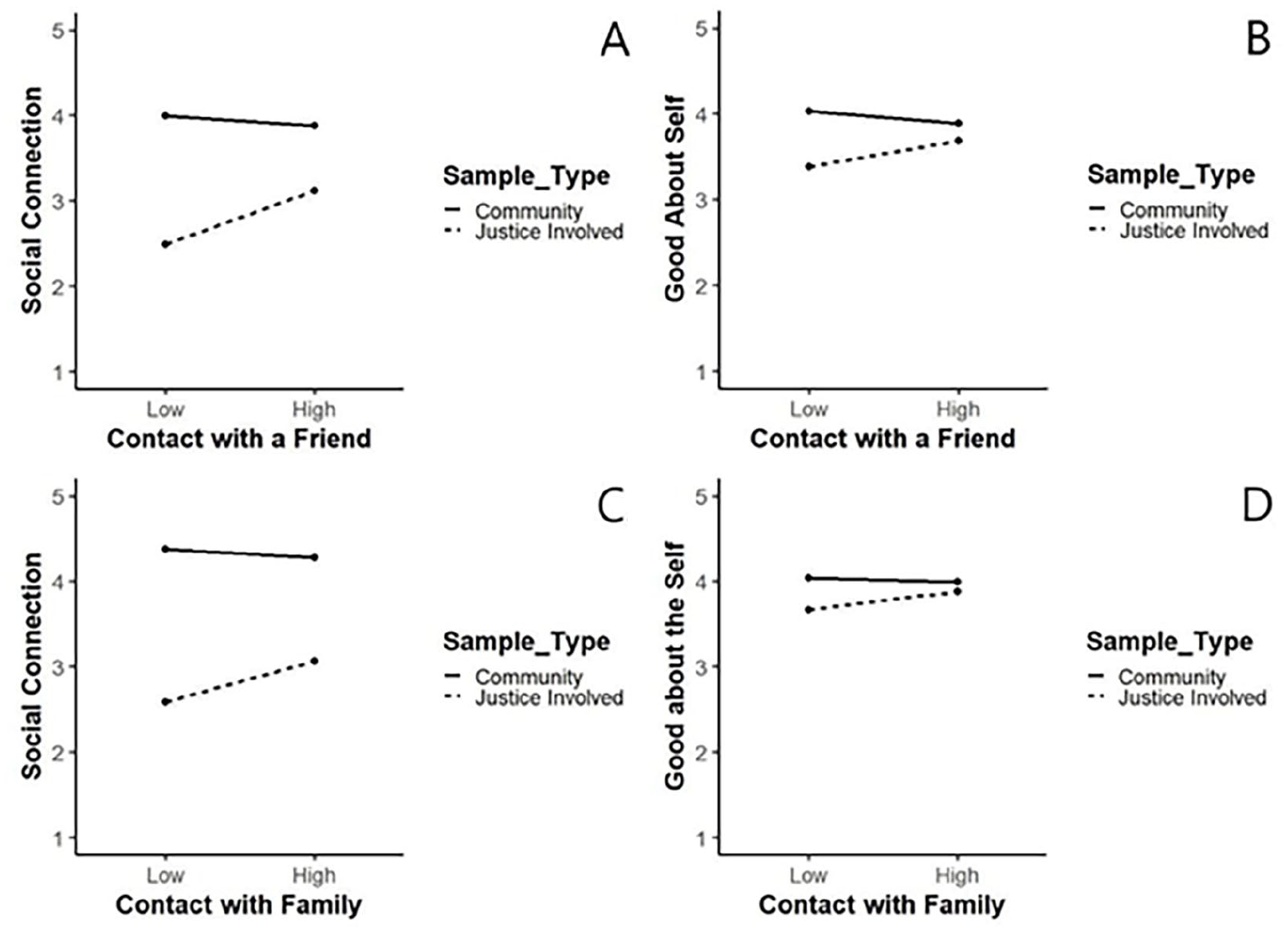
Estimated Means for Interactions of Specific Social Contacts (Friend and Family) by Sample Type (Justice Involved and Community Adolescents)
The second interaction involved positive self-perception, b = .27, t (711) = 2.98, p = .003, 90% CI = [.119, .413] (see Figure 2, Panel A for estimated means). JSI youth felt better about themselves on days with friend contact, than on days without friend contact (b = .15, p = .005). This was not the case for the community sample, as all other slopes were nonsignificant (ps > .052). The positive emotion model did not converge. All of the other interactions were nonsignificant (ps > .144), and the positive emotion model did not converge.
Contact With Family
The third series of MLMs focused on Contact with Family as the Level 1 or daily predictor. The only significant main effects of these models suggested that JSI youth tended to feel less socially connected, b = −.75, t (22) = −6.38, p < .001, 90% CI = [−.952, −.548] than the community sample, and that feelings of connection were higher on days with contact with family, b =.09, t (608) = 2.05, p = .041, 90% CI = [.018, .170], than without. All other main effects were nonsignificant (ps > .180).
There were also two significant Contact with Family by Sample Type interactions. The first involved feelings of connection, b = .14, t (608) = 3.18, p = .002, 90% CI = [.069, .413] (see Figure 2, Panel C for estimated means). JSI youth felt more socially connected on days with family contact than on days without family contact (b = .24, p < .001). This was not the case for the community sample (p = .441). JSI youth also felt far less socially connected than the community sample on days without family contact (b = −.89, p < .001). The same was true on days with family contact, but to a lesser extent (b = −.61, p < .001).
The second interaction involved positive self-perception, b = .06, t (610) = 2.00, p = .046, 90% CI = [.011, .117] (see Figure 2, Panel D). JSI youth felt better about themselves on days with family contact than days without (b = .11, p = .020). This was not true for the community sample, as all other simple slopes were nonsignificant (ps > .059). All other interactions were nonsignificant (ps >.215), and the loneliness model did not converge.
Contact With Others
The fourth series of MLMs focused on Contact with Others (nonfamily or nonfriends) as the level 1 or daily predictor. The only significant main effects of these models suggested that JSI youth tended to feel less socially connected, b = −.78, t (20) = −6.59, p < .001, 90% CI = [−.990, −.579] than the community sample. All other main effects and interactions were nonsignificant (ps > .055).
Discussion
The findings of the present study reveal nuanced interactions between social contact, justice system involvement, and various emotional outcomes. Overall, we find social contact is particularly important for the well-being of justice-involved youth, who may have been uniquely vulnerable to the effects of pandemic-induced social isolation due to their justice-involvement.
Narrowing the Gap: Social Connection and Positive Self-Perception
Total Social Contact
When considering the association between total social contact and social connection and positive self-perception, a similar pattern emerged. In both cases, community youth reported relatively high social connection and self-perception, regardless of social contact. However, JSI youth saw gains in both feelings of social connection and self-perception on days when social contact was high, effectively narrowing the well-being gap between community and justice-involved youth.
Specific Social Contacts
When examining specific sources of social contact, the same pattern that was noted for total social contact was present for contact with friends and contact with family. Community youth reported high levels of social connection and positive self-perception regardless of contact with friends and family. JSI youth reported more social connection and positive self-perception on days with high contact with family and with friends, respectively.
No significant interactions were found for contact with nonfamily, nonfriend individuals, indicating that these interactions may not significantly impact emotional outcomes for youth, regardless of justice system involvement. Prior research suggests that only digital interactions that were rated as pleasant were predictors of social and emotional well-being (Macdonald et al., 2021). In conjunction with findings from other research indicating that detained youth rated visits from nonfamily, nonfriend individuals, such as social workers, as lower quality compared to family members (Young et al., 2019), these results are perhaps unsurprising. These findings suggest that not all sources of contact are equal, even for youth relatively deprived of social connection such as those that are justice-involved.
Taken together, these findings highlight the critical role of social interactions in fostering feelings of connection and self-esteem for justice-involved youths, who may otherwise experience heightened social isolation and poor self-perception.
Negative Emotion and Loneliness
Two surprising findings related to total social contact are notable. First, while justice-involved youths expressed stable negative emotion regardless of social contact, community youths experienced significantly more negative emotions on days with social contact than on days without. These results suggest that social contact may exacerbate negative emotions for community youths, potentially due to stressors associated with these interactions. It could be that community youth were more likely to interact with family and friends in-person prior to the pandemic, and so, for these youth, the transition to limited, online interactions was a more jarring transition compared to JSI youth who may be more familiar with adapting to social restrictions and separations resulting from system involvement (e.g., leaving friends when transferred to alternative schooling). Indeed, a 2019 study of 329 Australian young adults found that youth who primarily interacted with their friends in-person prior to the pandemic reported decreased social connectedness and increased loneliness relative to youth who were more flexible in their prepandemic relationships (Scott et al., 2022).
Second, a significant interaction between total contact and sample type was found in predicting loneliness. Justice-involved youths felt lonelier on days with social contact than on days without; this association was not present for the community sample. These results suggest that social interactions might not alleviate feelings of loneliness for justice-involved youths, possibly due to the nature or quality of these interactions. The extant literature suggests that face-to-face interactions are the “gold standard” against which all other forms of communication are measured against (Burholt et al., 2020). Research suggests that while digital communication can supplement face-to-face interactions, when digital interactions supplant face-to-face interactions, youth are more likely to report higher levels of loneliness (Scott et al., 2022). Because this study did not capture the amount of cooccurring in-person contact that youth had within their homes, it is possible that JSI youth had fewer face-to-face interactions relative to their never-arrested peers. It could be that JSI youth may come from poorer families who are more likely to have more immediate family members working outside of the home during the pandemic (Finch & Finch, 2020), or it may be that JSI youth are under stricter scrutiny (Buchanan et al., 2020) and thus have fewer opportunities to break social-distancing mandates relative to their community peers.
Taken together, these findings perhaps suggest that digital interactions may leave youth feeling socially unfulfilled. Interestingly, both unexpected findings dealt with negatively valenced experiences—in contrast with the positively valenced experiences (i.e., social connection and positive self-perception), which were associated with social contact in line with our hypotheses. Although these two findings were contrary to our hypotheses, they mirror the general patterns found in the digital communication literature. Many studies find that while digital interactions can have positive effects, they are less impactful than face-to-face interactions and leave open the opportunity for rumination, loneliness, and a lack of connection (Burholt et al., 2020; Liang et al., 2024; Rains et al., 2017). This was true for both justice-involved and community youth, highlighting the importance of socialization for all adolescents.
Strengths and Limitations
While this study makes several important contributions to the literature, the conclusions that can be drawn are attenuated by several limitations. First, there are concerns about generalization considering the sample for this study is small (particularly the justice-involved sample), predominantly Hispanic, and recruited from a single site. However, the results of this study broadly align with the current literature, suggesting external validity. The small sample size additionally precluded examinations of effect heterogeneity. It may be that incarcerated youth, who experienced more severe forms of social isolation, would report greater benefits of remote social contact relative to youth on probation who, although likely experiencing some degree of social restriction as a condition of probation, have more social access and freedom than those detained. Furthermore, some research has found differential outcomes of social distancing by gender (Sholihah et al., 2022); however, this sample included too few female participants to explore this possibility here.
Despite these limitations, this study has several methodological strengths. First, the daily diary methods employed in the present study provide an advantage in ecological validity and accuracy (Lischetzke & Könen, 2021), by exploring adolescents’ social encounters and affect in nearly real-time, in their natural settings. This methodology allows examination of changes in within-person processes over time (Lischetzke & Könen, 2021), which is especially valuable for studying phenomena that fluctuate over time, like mood and social experiences. This approach does have drawbacks, however, in terms of participant fatigue and forgetting to complete assessments due to their frequent nature, which may have contributed to our small sample size. Fortunately, this approach uses observations (i.e., each diary entry), rather than participants, as the unit of analysis; thus, even in a relatively small sample, we can draw meaningful inferences given the large number of observations.
In addition to these strengths, this study contributes to the extant literature in three novel and meaningful ways. First, relatively little research has examined the effect of the pandemic on justice-involved youth, particularly incarcerated youth, who experienced some of the most stringent effects of the pandemic mandates (Buchanan et al., 2020). Second, the majority of extant research has focused on in-person social contact, with relatively less attention paid to digital communications, which have important policy implications for remote visitation. Finally, reports on the effects of COVID-19 have revealed disparate outcomes on the base of wealth and ethnicity (Finch & Finch, 2020). In examining the impact of the pandemic on a sample of low-income Hispanic youth, this study highlights the effects for those with the greatest vulnerability to harm, for whom policy and interventions may make the greatest impact.
Implications and Future Directions
The findings suggest that justice-involvement significantly moderates the relationship between social contact and emotional outcomes. For justice-involved youth, social interactions, particularly with friends and family, play a vital role in enhancing emotional well-being and self-perception. In contrast, community youths did not exhibit similar emotional dependency on social interactions, indicating different underlying mechanisms at play for this population. Future research should delve deeper into the quality and context of these social interactions to better understand their differential impacts. Interventions aimed at improving the social networks of justice-involved youths may be beneficial in mitigating negative emotional outcomes and fostering a sense of connection and self-worth.
These results underscore the complexity of social-emotional dynamics in justice-involved youth and highlight the importance of tailored approaches to support their emotional and relational health. Specifically, JSI youth benefited the most from remote social contact during the pandemic relative to their never-arrested peers. Although JSI youth reported the greatest gains, in many instances this increase in well-being only brought them in line with community peers. This highlights the relative deprivation of social connection and well-being that youth on probation or who are incarcerated typically feel compared to their nonjustice-involved peers. Thus, remote social contact has the capacity for equity building, helping to bridge the gap in social connectedness for justice-involved youth.
Conclusions and Implications
Thus, while social connection is a salient developmental need for adolescents, these findings reveal the potential power for social connection to enhance well-being for particularly vulnerable youth, specifically those who are justice-involved. These findings have important policy implications. Specifically, although some research, including this study, suggests that there are downsides to digital communication (Clark et al., 2018), in times of relative social deprivation, social contact in any form serves to boost adolescent well-being. For youth who are the most vulnerable to the deleterious effects of social distancing, such as those who are system-involved, the benefits are even greater, suggesting a need for more opportunities for justice-involved adolescents to engage in social contact, even if that contact is only possible through phone or video calls. Individuals responsible for the well-being of JSI youth should seek to ensure that these youth have regular access to social interactions, such as visitations and phone calls. This is especially true during times of stress, uncertainty, and fear such as those experienced during the pandemic when the need for social contact may be particularly acute.
Footnotes
Authors’ Note:
We would like to acknowledge the research assistants in the Adolescent Development & Delinquency Lab for their involvement in recruiting participants and conducting interviews for this research. We would like to thank the El Paso Juvenile Probation Department for their partnership in this research. We would like to acknowledge Claudia Cota for her help in preparing data for this study. We would like to thank the participants for their involvement in this study. AGT and CC conceptualized this study. AGT collected the data and oversaw the data collection efforts. AKF and NDE conducted the data analysis for this study. AGT wrote the introduction and literature review, ADZ wrote the methods, AKF wrote the results, and NC and CC wrote the discussion. AGT revised, edited, and formatted the manuscript. All authors reviewed the manuscript before submission. This research was funded by the National Science Foundation (nos 2028534/2028576, 1826585, 1953372), the American Psychological Foundation, the UTEP Center for Law and Border Studies, and The University of Texas at El Paso.
