




Abstract
This study examined the effects of bystander or victim intoxication during a crime on juror perceptions and decision-making. Mock jurors (N = 261) read testimony from a bystander or victim to an assault, who mentioned that they had consumed alcohol, cannabis, amphetamines, or no substances prior to the crime. Participants delivered a verdict, rated the defendant’s guilt, and rated the bystander/victim on their honesty, credibility, and cognitive competence. Witness intoxication and witness role did not influence defendant guilt. However, participants judged any witness intoxicated by amphetamines as less credible and cognitively competent than a sober witness. Furthermore, victims were judged to have lower credibility, cognitive competence, and honesty than bystanders. These findings suggest that jurors’ decision-making about defendant guilt might not be influenced by witness intoxication or witness type. A witness’ testimony, however, might be evaluated as less credible when delivered by a victim or an amphetamine-intoxicated witness.
During a crime, witnesses (i.e., bystanders and victims) may be intoxicated by alcohol and other drugs (AODs; McNamara et al., 2017). For instance, an Australian Institute of Health and Welfare (AIHW, 2020) report indicated that 21% of people who had consumed alcohol had been a victim of an alcohol-related incident (e.g., verbal or physical assault). Similarly, in a sample of U.S. felony cases referred by police to prosecutors, 20% contained the testimony of at least one witness who was intoxicated by alcohol during the event (Palmer et al., 2013). Surveys of police officers from multiple countries indicate that between 24% and 60% of police interact with people intoxicated by a variety of substances—such as alcohol, cannabis, and amphetamines—on a daily or almost daily basis (Monds et al., 2022a; see also Evans et al., 2009). Taken together, there is evidence to suggest that intoxication among bystanders and victims is not uncommon at the time an offense occurs.
In Australia, witnesses intoxicated by AOD at the time of an offense are permitted to give testimony in criminal proceedings, but judgments about their intoxication status may be used by decision-makers (e.g., jurors) to determine the credibility and reliability of their testimony (McNamara et al., 2017; Quilter et al., 2022). For instance, defense counsel may argue that a witness’ account of events is less credible and reliable due to AOD-related memory impairment (e.g., “DJK v Tasmania,” 2017; “R v Crafter,” 2019). Critically, when determining the effects of AOD intoxication on memory, decision-makers are not typically guided by expert evidence, but rather, they are directed to draw upon their own common knowledge or personal experience with AOD intoxication to make such assessments (Quilter & McNamara, 2018). Since jurors may be required to evaluate the testimony of a witness intoxicated by AOD and base such assessments on “common knowledge,” the purpose of the current study is to explore mock jurors’ perceptions of the accuracy and reliability of testimony delivered by a bystander/victim who was intoxicated at the time of an offense.
The Effect of Intoxication on Juror Perceptions
Several studies have used survey methodology to investigate the beliefs that laypeople hold about how different substances affect memory (e.g., Benton et al., 2006; Cormia et al., 2022; Desmarais & Read, 2011; Kassin et al., 2001). These studies reveal that alcohol intoxication is perceived as having a negative effect on memory. In addition, research by Cormia et al. revealed that while most participants believed cannabis impairs memory, a sizable minority held the belief that cannabis does not affect memory or enhances memory (18%–21%).
Other studies have used jury simulation methodology to investigate what effect witness alcohol intoxication has on juror perceptions of witness credibility and legal decision-making (e.g., Crossland et al., 2023; Evans & Schreiber Compo, 2010; Ewanation & Maeder, 2018; Martin & Monds, 2023). In Evans and Schreiber Compo’s study, undergraduate mock jurors read a description of a case of either a physical or sexual assault, where the person who testified (either the bystander or victim) was sober, moderately intoxicated, or severely intoxicated at the time of the event. Participants then delivered an individual verdict and answered questions about the cognitive impairment and credibility of the bystander or victim (depending on which one testified). Alcohol intoxication resulted in increased perceptions of impairment, which reduced credibility of both the bystander and the victim and lowered guilty verdicts. Similarly, in the study by Ewanation and Maeder (2018), undergraduate mock jurors read a trial transcript describing the testimony of a bystander witness who was either intoxicated (had consumed 10 beers prior to the crime) or sober. Participants delivered a dichotomous verdict and rated the accuracy of the witness’ identification. Intoxication reduced perceptions of witness accuracy, which in turn made participants less likely to deliver a guilty verdict. Similarly, Crossland and colleagues (2023) found that when mock jurors knew that the bystander witness was intoxicated, they rated the witness as providing poorer testimony and being less credible than when their intoxication status was withheld. Altogether, these findings suggest that alcohol intoxication negatively affects perceptions of witnesses, which in turn affects legal decision-making.
To our knowledge, the existing jury simulation research has focused exclusively on perceptions of alcohol intoxication, even though bystanders and victims to crimes may be intoxicated by substances other than alcohol, such as cannabis and amphetamines (e.g., Anderson et al., 2017; Beynon et al., 2008; McNamara et al., 2017; Palmer et al., 2013). While it is unclear how intoxication by these substances would affect bystander and victim credibility in court and the outcome of trials, some preliminary research may offer some insights. Monds et al. (2022b) surveyed undergraduate students about alcohol, cannabis, and other substances they were familiar with (e.g., amphetamines) in relation to perceptions of witness memory and credibility. Most participants believed that alcohol and amphetamines would have a negative effect on memory but were unsure about the effect of cannabis on memory. Moreover, more participants believed that intoxication by any of the three substances would make a bystander/victim less credible than a sober bystander/victim. These findings indicate that jurors’ perceptions of intoxicated witnesses may vary based on type of substance. However, since these findings are based on survey data, an important next step is to assess these perceptions in the context of a simulated legal case.
In the current study, we examined perceptions of witness intoxication by cannabis and amphetamines, in addition to alcohol, for two additional reasons. One, research suggests that people may be intoxicated by these substances during an incident of victimization (e.g., Anderson et al., 2017; McNamara et al., 2017; Palmer et al., 2013). Second, after alcohol, cannabis and amphetamines are the two most frequently consumed substances based on recent Australian survey data (AIHW, 2020). Therefore, the primary aim of the current study is to examine the effect of witness intoxication by alcohol, cannabis, and amphetamines during a criminal event on juror perceptions of witness credibility and legal decision-making. A secondary aim of the study is to explore whether personal experience with substances and stigma influences these perceptions.
The Role of Personal Experience and Stigma
Personal experience with substances is an important factor to consider because jurors may be asked to rely upon their personal experience when determining the relevance of intoxication to the case (Quilter & McNamara, 2018). In addition, there are mixed findings regarding the role of personal experience on perceptions of intoxication in legal cases (Crossland et al., 2023; Evans & Schreiber Compo, 2010; Martin & Monds, 2023). For these reasons, it is important to determine whether personal experience influences perceptions of bystander and victim credibility when these witnesses are intoxicated by substances beyond alcohol (e.g., cannabis and amphetamines), and whether these perceptions in turn influence the verdict.
Related to personal experience, it is important to also consider the role that stigma plays in perceptions of intoxicated witnesses. With the exceptions of alcohol and tobacco, other substances are illegal in many countries. Consumption of these substances may therefore be considered taboo, resulting in stigmatization of people who use these substances (Brown, 2015; Deen et al., 2021; Lancaster et al., 2017). Stigmatizing attitudes may also be significantly greater for people who have never used cannabis (Brown, 2015) or methamphetamines (Deen et al., 2021). No study, to our knowledge, has explored whether substance-related stigma would impact jurors’ perceptions of witnesses who were intoxicated at the time of a crime. However, since substance stigma may impact the way a person is viewed, it is possible that harboring greater levels of stigma would be associated with more negative perceptions of an intoxicated witness.
The Effect of Witness Type on Juror Perceptions
Perceptions of intoxicated witnesses may also vary depending on the type of witness providing testimony (bystander vs. victim; Crossland et al., 2023). For instance, victims who are intoxicated at the time of a crime may be perceived less favorably than intoxicated bystanders through a process of victim blaming due to cognitive biases (e.g., just world hypothesis, fundamental attribution error) including beliefs that the world is fair and people get what they deserve (Lerner, 1970; Summers & Feldman, 1984). In addition, jurors may think that a victim has more motive to provide fabricated testimony than a bystander given that a bystander has nothing to gain. However, Evans and Schreiber Compo (2010) manipulated whether the witness who testified was a bystander or a victim and found no influence of witness type on perceptions of the witness generally, as well as based on intoxication. Given that the research in this field is limited, an additional aim of the current study was to examine whether perceptions of intoxicated witnesses by different substances depend on the type of witness providing testimony (bystander vs. victim).
The Present Study
The primary aim of the current study was to determine the effect of bystander or victim intoxication at the time of the offense on juror perceptions and decision-making. This study is the first to consider juror perceptions of substances such as cannabis and amphetamines using a jury simulation paradigm. A secondary aim was to examine the role of personal experience with a substance and substance-related stigma on these perceptions and decision-making. Mock jurors read a vignette depicting an assault crime, where either the bystander or victim of the assault provided testimony. Moreover, upon questioning by police, the bystander or victim mentioned that they had consumed alcohol, cannabis, amphetamines, or no substances prior to the crime. Participants delivered a verdict, rated the guilt of the defendant, and rated the bystander/victim on their honesty, credibility, and cognitive competence. Finally, participants answered questions about their familiarity and personal experience with substances and stigma toward people who consume alcohol, cannabis, and amphetamines.
Compared to a sober witness (bystander/victim), we expected that mock jurors would perceive a witness (bystander/victim) intoxicated by any substance (alcohol, cannabis, or amphetamines) as less accurate and cognitively competent, which in turn would reduce guilty verdicts and ratings of defendant guilt. However, given that some studies have found that perceptions of cannabis appear to be less straightforward (e.g., Cormia et al., 2022; Monds et al., 2022b), it is possible that perceptions of intoxication by cannabis would be less negative than perceptions of other substance intoxication. We expected that participants’ personal experience with a substance may influence their perceptions of intoxicated bystanders/victims (Crossland et al., 2023); greater personal consumption (for alcohol) or previous personal consumption (for cannabis and amphetamines) was expected to improve perceptions of the intoxicated bystander/victim compared to when participants have no experience with the substance. We expected that stigmatizing attitudes may play a role in perceptions, such that greater stigma would be associated with more negative perceptions of the intoxicated bystander/victim, and therefore reduce perceptions of guilt. Finally, based on the findings of Evans and Schreiber Compo (2010), we tentatively predicted no differences in witness credibility perceptions and guilt judgments based on whether the person testifying was a bystander or victim; however, this aspect of the study was exploratory.
Method
Participants
Two-hundred and seventy-six individuals consented to participate in the research project. Of these, 123 introductory psychology students participated for course credit, and 153 members of the community were recruited via the online research platform, Prolific. Prolific participants received the equivalent of £2.50. In accordance with Australian jury eligibility criteria, all participants were required to be Australian citizens aged over 18 years and proficient in English. The data for 15 participants were excluded for (a) not completing the study in full (n = 1 student; n = 3 Prolific) and (b) not reading the case vignette properly (i.e., spending only 27 seconds or less on the page where the case vignette was presented; n = 7 students; n = 4 Prolific). The reading time rule was based on an obvious break point in the data. Our final sample was thus 261 participants: 115 introductory psychology students (43 males, 72 females; MAge = 19.98, SD = 3.75) and 146 Prolific participants (85 males, 59 females, 2 non-binary; MAge = 31.11, SD = 10.98). Both samples consisted of mostly White participants (49.6% students; 63.7% Prolific), followed by Asian participants (22.6% students; 23.3% Prolific). Both samples had a large portion of Atheist participants (42.6% students; 56.8% Prolific).
Prolific participants were significantly older than students, F(1, 259) = 108.182, p < .001,
Design
The study used a 2 × 4 between-subjects design, manipulating witness type (bystander vs. victim) and intoxication type (sober vs. alcohol vs. amphetamines vs. cannabis). Participants were randomly assigned to one of the eight conditions (see Table 1 for conditions and sample sizes). The key dependent variables were verdict, ratings of defendant guilt, and ratings of witness credibility, honesty, and cognitive competence. A power analysis revealed that 231 participants would be required to detect a medium effect size (f = .25) for a two-way between-subjects analysis of variance (ANOVA; specifying an interaction) with a power of .90 and alpha set at .05. All aspects of the study (i.e., materials, measures, procedure) were approved by the University of Sydney Human Research Ethics Committee (protocol number: 2018/911).
Descriptive Statistics and ANOVA Analysis Summary for Perceptions of Witness Credibility, Cognitive Competence, Honesty, Intoxication, and Level of Intoxication Across Type of Witness and Intoxication
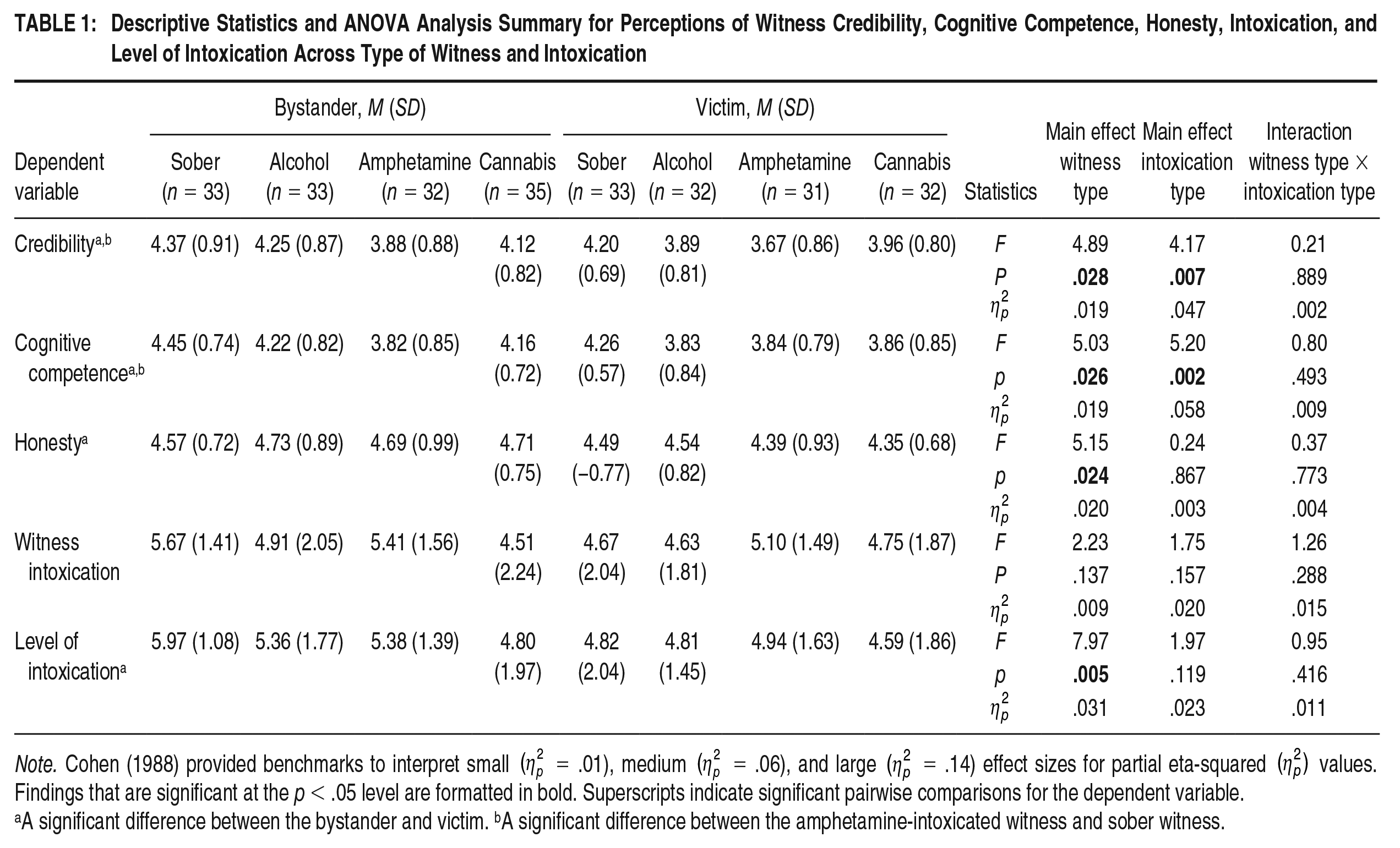
Note. Cohen (1988) provided benchmarks to interpret small
A significant difference between the bystander and victim. bA significant difference between the amphetamine-intoxicated witness and sober witness.
Materials
Case Vignette
The case vignette was adapted and shortened from a previous mock juror experiment (Cullen et al., 2023). The vignette detailed an assault crime committed against the victim one night in a park. Based on the experimental condition to which participants were assigned, either the bystander or the victim provided a witness statement to police. In the statement, the witness detailed the assault and the description of the perpetrator, who had since fled the scene. Police officers asked the witness who provided the statement what they had been doing the night prior to the assault, and they responded that they had been at a work function. The police asked a follow-up question regarding whether the witness was under the influence of any substances. Based on the experimental condition, the witness either responded that they had not consumed anything or had consumed alcohol, cannabis, or amphetamines. If intoxicated, police asked the witness how intoxicated they were, to which the witness responded that they were moderately intoxicated. Based on the description the witness provided, police later located the suspect, who matched the bystander/victim’s description.
Manipulation and Memory Checks
Participants answered questions regarding their general memory about the facts within the case vignette, including questions about the experimental manipulations. Specifically, participants were asked four multiple-choice questions regarding non-manipulated case details (e.g., the type of offense, the actions of the perpetrator) and two to five questions about the experimental manipulations. They were first asked which person provided testimony (bystander, victim, or suspect) and whether anyone was intoxicated when the crime occurred (yes/no). If they answered yes, they were asked three follow-up questions regarding who was intoxicated (bystander, victim, suspect, no one), what substance they were intoxicated by (no intoxication, alcohol, cannabis, amphetamines), and the level of intoxication (no intoxication, mild, moderate, severe). Based on the recommendations of Cullen and Monds (2020), these manipulation questions were not asked as a basis for exclusion given that jurors are likely to fail to remember or misremember case facts in real trials (Thorley et al., 2020). Instead, responses to the questions were statistically analyzed to determine whether memory for manipulated details differed depending on the experimental condition. However, when the data were reanalyzed without participants who failed the manipulation checks (total N = 226), the overall pattern of results were the same, with only minor discrepancies (likely due to reduced power; see Notes 1 and 2). The results with the full sample are reported.
Defendant Guilt
Perceptions of defendant guilt were measured in two ways. First, participants delivered a dichotomous verdict of guilty/not guilty and answered an open-ended question regarding why they delivered that verdict. Second, participants also rated the extent to which they believed the defendant was guilty on a scale from 1 (Not at all guilty) to 6 (Definitely guilty). Both measurements of guilt were included because the former reflects real-life juror decisions, while the latter is more statistically sensitive (Klettke et al., 2010; Pica et al., 2018).
Witness Perceptions
Using an adapted credibility questionnaire (Connolly et al., 2008), participants were asked nine questions about the witness who testified in the trial (bystander or victim), focusing on three different dimensions: witness credibility (believability, likeability, credibility), witness cognitive competence (intelligence, accuracy, understanding), and witness honesty (honesty, truthfulness, likelihood of fabrication). Ratings were made on a scale from 1 (Not at all) to 6 (Very). Reliability analysis using Cronbach’s alpha revealed that responses within each of the three categories had acceptable to good internal consistency when asked for the bystander (all αs > .761) and the victim (all αs > .721). Therefore, results use the aggregated scores for each category.
We also asked participants to rate the extent to which eight factors influenced their perception of the witness who testified (bystander/victim) on a scale from 1 (Not at all) to 7 (Extremely) (Paterson et al., 2013). Six factors were general and not specific to the study manipulations (e.g., witness stress). Two factors were specific to the study manipulation—witness intoxication (or lack of) and the witness’ level of intoxication (or lack of). For data analysis, we examined whether participants’ perceptions of the witness that testified was influenced by their intoxication (or lack of) or level of intoxication (or lack of).
Familiarity and Personal Experience With Substances
Participants answered questions about their familiarity and personal experience (i.e., personal and witness consumption) with all three substances explored in the study. First, we asked participants whether they were familiar with alcohol, amphetamines, or cannabis (yes or no response options). If they reported being familiar with the substance (a yes response), we asked two follow-up questions for each substance relating to how often they consume the substance (“personal consumption”) and how often they witness other people consuming the substance (“witness consumption”). Response options for these two questions were never, less than monthly, monthly, weekly, daily or almost daily, with a prefer not to answer option. However, due to low cell counts across some substances, we dichotomized the frequency of personal and witnessed consumption (i.e., “have not consumed/witnessed” or “consumed/witnessed”). Furthermore, participants who indicated that they were not familiar with the substance were categorized as “have not consumed/witnessed.” For data analysis, we computed a familiarity and personal experience (personal/witnessed consumption) variable based on the substance read about in the case vignette. For example, for participants that read about an alcohol-intoxicated witness, their familiarity and personal experience scores were based on their responses about alcohol. Data relating to all three substances are presented in the Supplemental File.
Substance Stigma
To assess participants’ stigma toward the substances explored in the study, we modified a questionnaire on adolescent stigma toward drug addiction (Adlaf et al., 2009) to create a substance use stigma scale. Participants were asked the following four (modified) questions: (a) Would you be afraid to talk to someone who consumes [substance]? (b) Would you be upset or disturbed to be in the same room as someone who consumes [substance]? (c) Would you make friends with someone who consumes [substance]? (d) Would you feel embarrassed or ashamed if your friends knew that someone in your family consumes [substance]? The response options were on a Likert-type scale ranging from 1 (Definitely not) to 5 (Definitely). Questions 1, 2, and 4 were reverse coded so that higher scores indicated more favorable attitudes and less stigma. Participants were asked these same four questions for each substance (alcohol, cannabis, and amphetamines). For each substance, there was high internal consistency among responses to the four questions (all αs > .827). For data analysis, we computed an aggregate stigma score based on the substance participants read about in the case vignette. Data relating to all three substances are presented in the Supplemental File.
Procedure
Participants first provided demographic information and then read the case vignette. We instructed participants that they would be playing the role of a juror in a criminal trial. They were told that they should pay attention to the details of the case because they would be asked questions about its content and would be delivering a verdict on the case. Participants then read one of eight case summaries, depending on the condition they were assigned to. They were given as much time as they needed to read the case vignette. Time spent reading the case vignette was used to screen participants for non-serious attempts. After reading the case, participants completed the manipulation and memory check questions, delivered their verdict and defendant guilt ratings, and rated the credibility of the person who testified. Participants then rated the extent to which different factors influenced their perceptions of the witness who testified (e.g., witness intoxication, level of intoxication). Finally, all participants answered questions about their familiarity and personal experience (personal/witnessed consumption) with substance and stigma toward all substances explored in the study—alcohol, amphetamines, and cannabis. Participants were then debriefed about the study aims. The study was conducted online using Qualtrics survey software and took approximately 20 minutes to complete. The study materials are available on the Open Science Framework: https://osf.io/qthp6/?view_only=5b36eb64c9484ba3a6815e09ca700960
Analysis Plan
The first set of analyses were conducted to examine the effect of bystander/victim intoxication at the time of the crime on juror decision-making and witness perceptions. First, a binary logistic regression and ordinal logistic regression were conducted to examine whether witness type and witness intoxication type predicted participants’ dichotomous verdict judgments and guilt ratings, respectively. Then, a series of 2 (witness type) × 4 (intoxication type) ANOVAs were analyzed to examine whether witness perceptions (i.e., credibility, cognitive competence, honesty, the witness’ intoxication, and level of intoxication) varied across condition. Pairwise correlational analyses are also reported to show the association between the three main witness perception variables (credibility, cognitive competence, and honesty).
The second set of analyses were conducted to explore the effect of participants’ familiarity, previous experience (personal and witnessed consumption), and stigma toward the substance they read about in the case vignette on the three main witness perception variables (credibility, cognitive competence, and honesty). Participants answered questions about their familiarity, personal experience, and stigma toward all three substances explored in this study. Since our main analyses focused on participants’ data based on the substance they read about in the case vignette, we present the data relating to all three substances in the Supplemental File. Overall, the analyses in the Supplemental File show that the experimental conditions were equivalent on familiarity (see Table S2 in the Supplemental File), previous experience (see Tables S3 and S4 in the Supplemental File), and stigma (see Table S5 in the Supplemental File) for all three substances. For the main analyses, we first conducted χ2 tests of independence and ANOVA analyses to determine whether participants’ familiarity, previous experience, and stigma toward the substance they read about in the case vignette differed across the intoxication type conditions. Then, three multiple linear regression analyses were conducted to analyze whether these factors predicted witness perceptions. The sober condition was not included in the second set of analyses because they did not read about any substance. We did not conduct the regression analyses for verdict judgments and guilt ratings because we found no effects of our study manipulations on these variables in the first set of analyses.
Results
Preliminary Analyses and Manipulation Checks
Preliminary analyses revealed no age or gender differences across witness and intoxication conditions (all ps > .304).
Overall, a high rate of participants answered the manipulation check questions correctly. Specifically, 97% of participants correctly identified whether the witness who testified was a bystander or victim, as well as whether that witness was intoxicated and by what substance (i.e., sober, alcohol, amphetamines, cannabis). Chi-square tests of independence revealed that across experimental conditions, the study manipulations were equally well remembered, except for participants in the victim condition who more frequently incorrectly reported the witness as a bystander,
Defendant Guilt Measures
Overall, 38% of participants rendered a guilty verdict, and most participants gave a guilt rating between 3 and 5 (78%). Figure 1 shows the relation between the defendant verdict and guilt rating. The binary logistic regression and ordinal logistic regression analyses revealed that conviction rates and guilt ratings were not influenced by witness type or bystander/victim intoxication (all ps > .127). See Table S1 in the Supplemental File for complete descriptive and regression statistics.
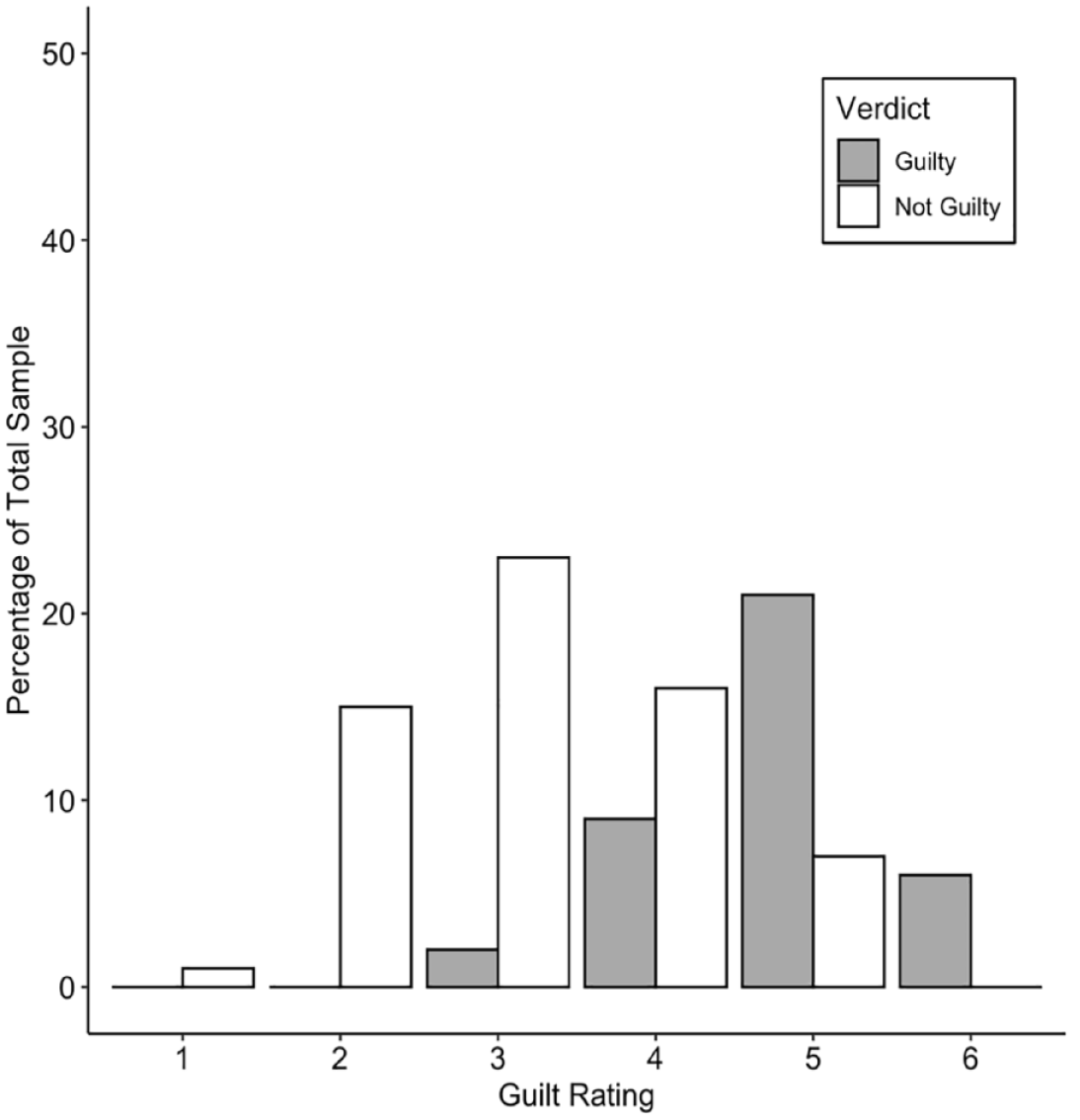
Association Between Defendant Guilty/Not Guilty Verdict and Guilt Rating
Witness Perceptions
Table 1 outlines the descriptive statistics and the results from the ANOVA analyzing the effect of type of witness and intoxication on the witness perception variables. The analyses yielded a significant main effect of witness type on perceptions of witness credibility, 1 cognitive competence, honesty, and level of intoxication. Specifically, participants rated the bystander as more credible, cognitively competent, and honest than the victim. The bystander’s level of intoxication was more likely to influence mock juror perceptions than the victim’s level of intoxication. There was a significant main effect of intoxication for witness credibility and cognitive competence. Follow-up pairwise comparisons applying a Bonferroni correction (alpha = 0.05/6 = .008) revealed that witnesses intoxicated by amphetamines were perceived as less credible and lower in cognitive competence than sober witnesses, t(127) = −3.52, p < .001, d = −.61, 95% CI [−0.81, −0.23]; t(127) = −3.85, p < .001, d = −.71, 95% CI [−0.80, −0.26], respectively. No other effects were significant.
Pairwise correlational analyses revealed significant positive associations between all three witness perception variables (all ps < .001). Witness credibility and cognitive competence were more strongly associated with one another than were witness credibility/competence and honesty (credibility/competence: 0.770; credibility/honesty: 0.595; competence/honesty: 0.495).
Predictors of Witness Perceptions
Familiarity and Personal Experience With the Substance Presented in the Case Vignette
For the following analyses, we collapsed across witness type conditions because there was no evidence of differences between the bystander and victim conditions. Overall, 72% of participants (141/195) indicated that they were familiar with the substance presented in the case vignette. A χ2 test of independence showed that familiarity with alcohol and cannabis was more frequent among participants than amphetamines (see Table 2). Forty-three percent (84/195) of participants indicated that they had previously consumed the substance in the case vignette, and 61% (119/195) reported that they had previously witnessed another person consume the substance. Descriptively, these analyses suggest that participants more frequently reported having personal experience of consuming or witnessing another consume alcohol and less frequently reported having personal experience (personal/witnessed consumption) with amphetamines and cannabis (see Table 2).
Participants’ Familiarity and Previous Experience (Personal and Witnessed Consumption) With the Substance Presented in the Case Vignette
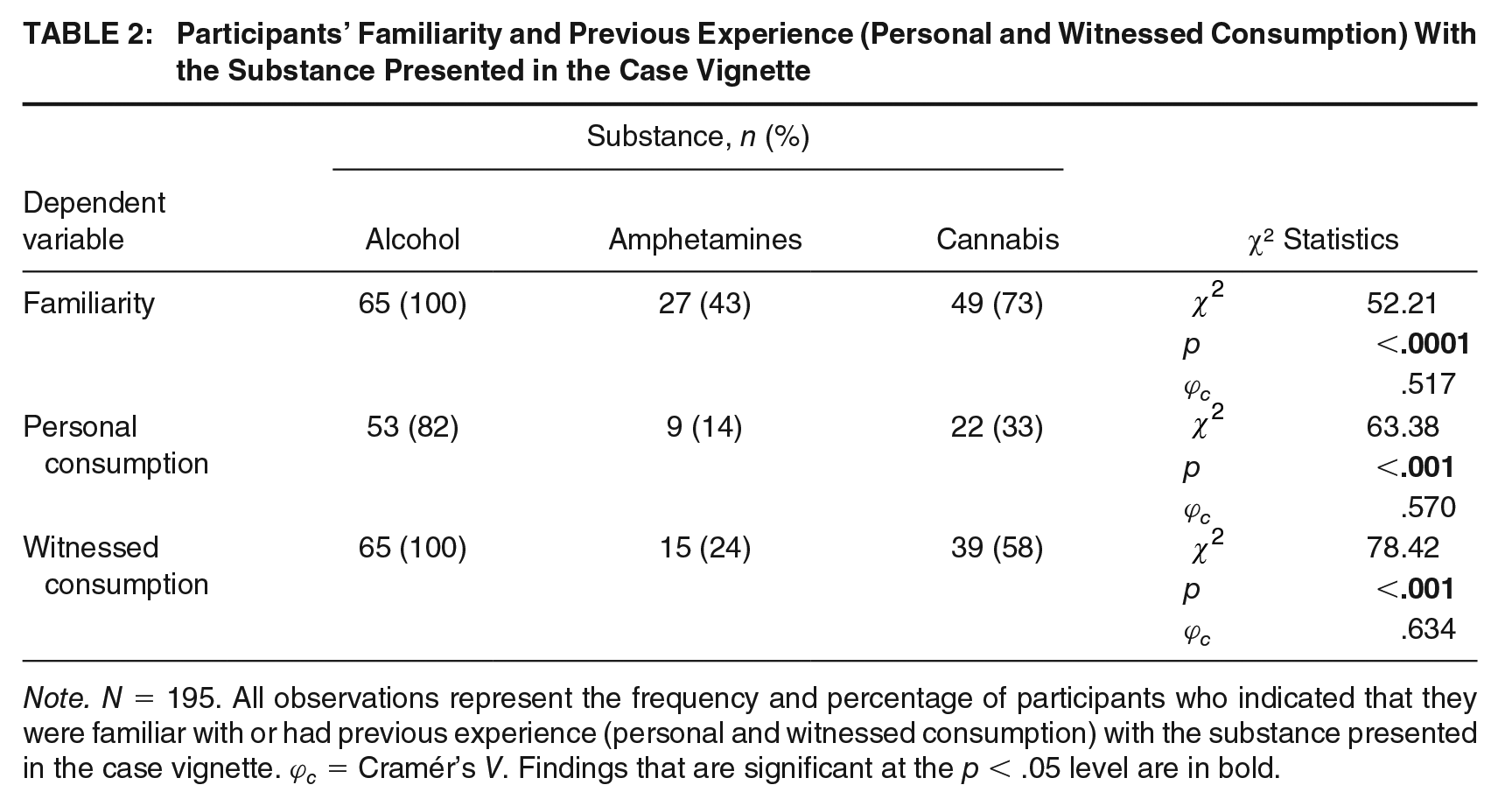
Note. N = 195. All observations represent the frequency and percentage of participants who indicated that they were familiar with or had previous experience (personal and witnessed consumption) with the substance presented in the case vignette. ϕc = Cramér’s V. Findings that are significant at the p < .05 level are in bold.
Stigma Toward the Substance Presented in the Case Vignette
The ANOVA analyzing the effect of type of witness and intoxication on participants’ stigma toward the substance they were presented with in the case vignette revealed no significant main effect of witness type, F(1,189) = .02, p = .89,
Pairwise Comparisons for Participants’ Stigma Toward the Substance Presented in the Case Vignette Across Type of Witness Intoxication
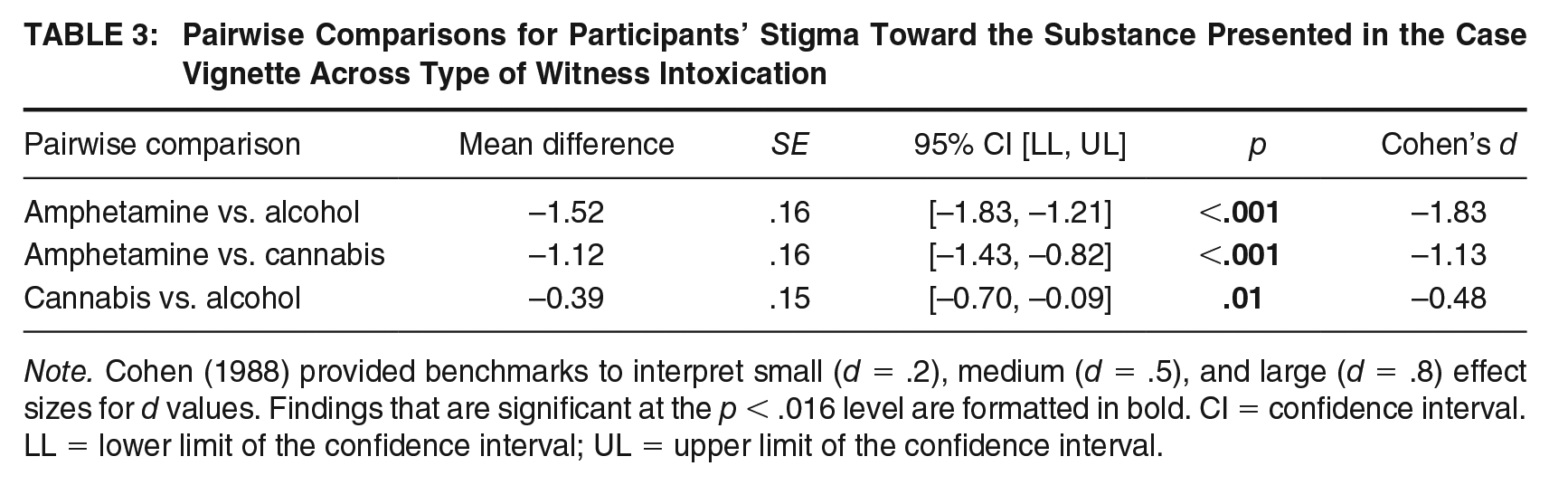
Note. Cohen (1988) provided benchmarks to interpret small (d = .2), medium (d = .5), and large (d = .8) effect sizes for d values. Findings that are significant at the p < .016 level are formatted in bold. CI = confidence interval. LL = lower limit of the confidence interval; UL = upper limit of the confidence interval.
Regression Analyses: Predictors of Witness Perceptions
Witness credibility, cognitive competence, and honesty scores were analyzed using three multiple linear regression models, with substance familiarity, personal experience with substances (personal and witnessed consumption), and substance stigma as predictors. A summary of the results from the regression analyses is presented in Table 4. For witness credibility, the overall model was significant, but none of the predictors were significant. For cognitive competence, the overall model and predictors were not significant. For witness honesty, the overall model was significant. None of the predictors were significant, except for previous personal consumption of the substance presented in the case vignette. 2 Specifically, those who had personally consumed the substance (M = 4.78, SD = 0.76, n = 84) gave higher witness honesty ratings than those who had not previously consumed the substance (M = 4.42, SD = 0.89, n = 111). Given the small cell sizes, we were not able to statistically explore whether the difference in witness honesty ratings between consumers versus non-consumers varied in relation to substance. However, Table S6 in the Supplemental File suggests that differences in ratings of honesty between consumers and non-consumers do not appear to covary with substance type.
Regression Analysis Summary for Predictors of Witness Perceptions
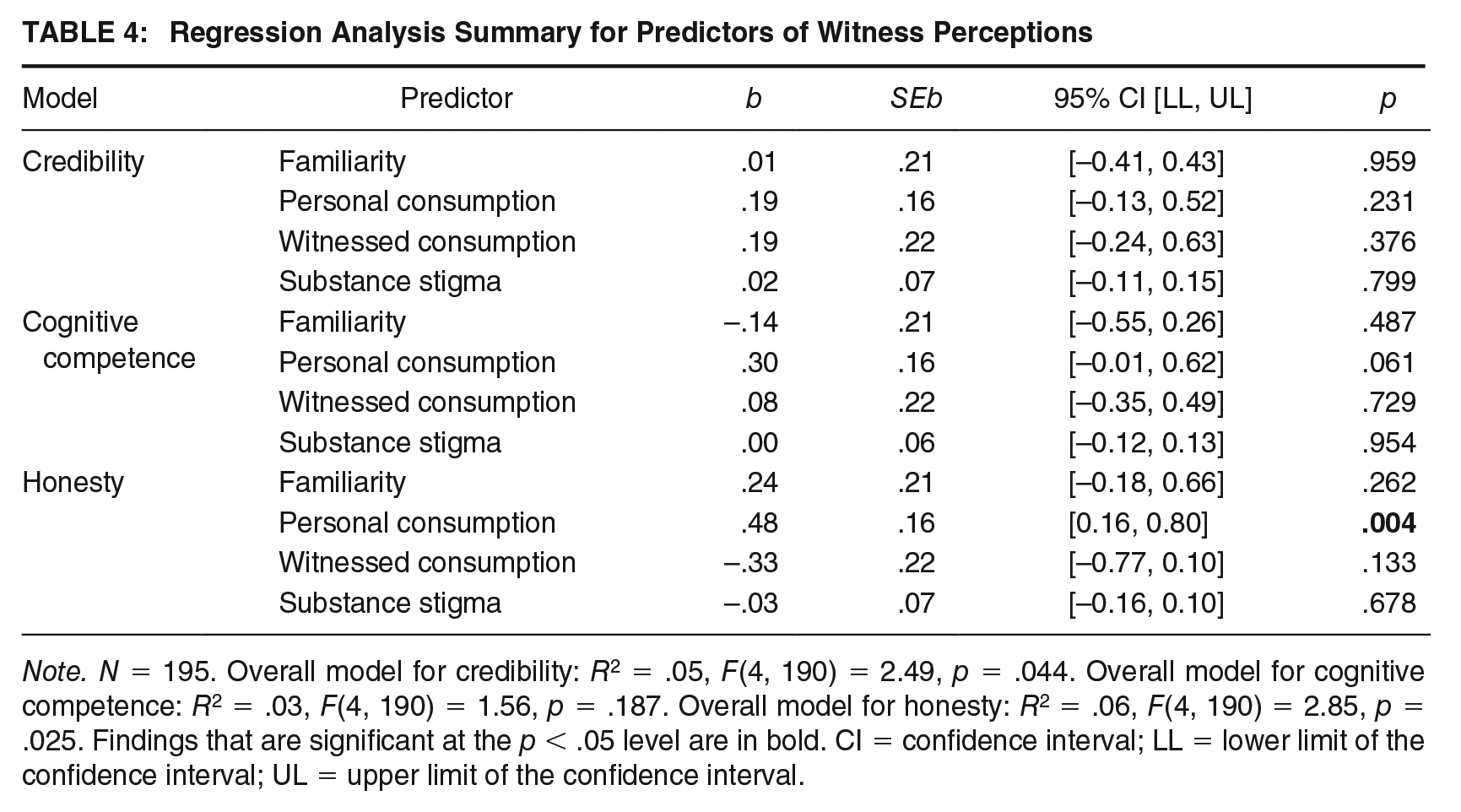
Note. N = 195. Overall model for credibility: R2 = .05, F(4, 190) = 2.49, p = .044. Overall model for cognitive competence: R2 = .03, F(4, 190) = 1.56, p = .187. Overall model for honesty: R2 = .06, F(4, 190) = 2.85, p = .025. Findings that are significant at the p < .05 level are in bold. CI = confidence interval; LL = lower limit of the confidence interval; UL = upper limit of the confidence interval.
Discussion
The primary aim of the study was to examine the effect of witness (bystander/victim) intoxication by different substances on juror perceptions and decision-making using a jury simulation design. Our findings showed that judgments about defendant guilt were not influenced by witness type (bystander/victim) nor whether the witness was intoxicated. Mock jurors, however, perceived the witness as less credible, cognitively competent, and honest when the testimony was delivered by a victim (rather than a bystander) and when delivered by a bystander/victim who was intoxicated by amphetamines during the crime (except for perceptions of honesty). A secondary aim of the study was to explore whether substance familiarity, personal experience with the substance, and substance-related stigma predicted witness perceptions. While most of these variables did not influence perceptions of the intoxicated witness (despite participants being less familiar with and holding more stigma toward amphetamines), those with previous experience of personally consuming the substance they read about in the case vignette perceived the intoxicated witness as more honest than those that had not previously consumed the substance.
We found no evidence that witnesses intoxicated by alcohol or cannabis were perceived more negatively than sober witnesses. The absence of an effect of alcohol intoxication on witness perceptions conflicts with previous research showing that alcohol-intoxicated witnesses are perceived as being more impaired, having lower memory accuracy, and having less credibility than sober witnesses (e.g., Crossland et al., 2023; Evans & Schreiber Compo, 2010; Ewanation & Maeder, 2018; Martin & Monds, 2023). One important way that our study differs from this research is how intoxication status was described. For instance, previous research has described intoxication based on blood alcohol concentration (BAC) levels (e.g., Crossland et al., 2023) or the number of drinks consumed within a certain time frame (e.g., Evans & Schreiber Compo, 2010; Ewanation & Maeder, 2018; Martin & Monds, 2023). The witness in our study was described as “moderately” intoxicated, without any contextual information around their drinking (e.g., how many drinks they had, the type of drinks they consumed). Perhaps if a witness’ intoxication level is described in general terms without any contextual details, jurors may not have enough information to evaluate how intoxicated they were at the time of the offense, and thus how their intoxication might have influenced their memory.
The lack of an effect of cannabis intoxication on witness perceptions might reflect laypeople’s uncertainty regarding the effect of cannabis on memory. For example, Monds et al. (2022b) found that while respondents believed that a cannabis-intoxicated witness would be less credible than a sober witness, these same respondents also stated that they were uncertain about how cannabis would affect eyewitness memory. Perhaps our participants were also generally uncertain about how cannabis influences memory (as per previous research), and thus were unsure about the credibility of a cannabis-intoxicated versus sober witness in the current study.
Despite these null findings, the fact that our participants did not show a bias against the alcohol- and cannabis-intoxicated witness mostly aligns with what is currently known about the effects of alcohol/cannabis intoxication on eyewitness memory accuracy (i.e., accuracy may not be impacted, while accounts may be less complete; Flowe et al., 2016; Jores et al., 2019; Vredeveldt et al., 2018; Yuille et al., 1998). However, other research suggests that cannabis intoxication negatively affects witness accuracy (Pezdek et al., 2020) and increases susceptibility to false memories (Kloft et al., 2020, 2021). Thus, since intoxication by these substances does not appear to impact the general accuracy of witness’ memory, our participants’ perceptions of the witness appear to be unbiased.
The finding that witnesses intoxicated by amphetamines were perceived more negatively (i.e., lower credibility/cognitive competence) than sober witnesses is consistent with previous survey data. For instance, respondents in the study by Monds et al. (2022b) believed that witnesses intoxicated by amphetamines would have poorer memories than sober witnesses and that amphetamine intoxication would negatively impact witness credibility. Therefore, the effect of witness amphetamine intoxication on perceptions might be driven by our participants’ beliefs about how amphetamines impair a witness’ ability to give accurate testimony, which in turn has a detrimental impact on credibility. It is not clear though if the negative perceptions held by participants about amphetamine-intoxicated witnesses are warranted given the limited research that has investigated the effect of amphetamine intoxication on eyewitness memory accuracy. A recent review, however, suggested that stimulants administered during the encoding of an event may improve accuracy on a false memory task but may promote false memories when administered during retrieval (Kloft et al., 2021). Nonetheless, more research examining the effects of amphetamines on memory is needed to determine whether the negative perceptions in the current study are warranted.
Another factor that influenced participants’ perceptions of the witness who testified was previous experience of personally consuming the substance presented in the case vignette. Previous research examining the link between personal consumption and witness perceptions has reported conflicting findings. For example, personal alcohol consumption has not influenced perceptions of an alcohol-intoxicated witness and suspect (Evans & Schreiber Compo, 2010; Mindthoff et al., 2019), has negatively influenced perceptions of a witness (Crossland et al., 2023), or has affected some aspects of decision-making (e.g., verdicts) but not others (e.g., victim credibility; Martin & Monds, 2023). We found that personal consumption was associated with higher ratings of witness honesty than no previous consumption. Perhaps the different set of questions used across studies to probe participants’ previous experience with AOD consumption accounts for these conflicting findings. For instance, Evans and Schreiber Compo (2010) asked participants about their average monthly alcohol consumption, whereas our study asked how often participants consumed the substance (e.g., “never,” “less than monthly”), similar to Martin and Monds (2023).
The mixed findings regarding personal consumption and witness perceptions have important implications for legal proceedings. When jurors are evaluating the reliability of a witness’ testimony, they are not typically guided by expert evidence to understand the effects of AOD intoxication on memory, but rather, they are frequently directed to draw upon their own common knowledge or personal experience with AOD intoxication to evaluate the evidence (Quilter & McNamara, 2018). Until the mixed findings have been resolved, jurors should not be asked to draw upon common knowledge or previous experience with AOD intoxication to make their assessments.
Given findings from previous research (e.g., Evans & Schreiber Compo, 2010; Ewanation & Maeder, 2018), we expected that witness intoxication would impact judgments of defendant guilt, but there was no evidence of this association. The most likely explanation for these null findings is that the case was perceived as weak, which biased most participants toward a not guilty verdict (see Supplemental Table S1) and masked any potential effects of witness intoxication on guilt judgments. Specifically, participants read a brief summary about the circumstances of the assault incident rather than a detailed trial transcript with multiple pieces of evidence as per previous research (e.g., Ewanation & Maeder, 2018). Perhaps our case vignette (regardless of intoxication condition) did not contain sufficient evidence to find the defendant guilty beyond a reasonable doubt. Future research could consider using a comprehensive trial transcript that produces greater variability across guilty/not guilty verdicts.
Our findings revealed that participants judged the victim more harshly than the bystander witness. These findings conflict with other research that found no evidence that witness role (bystander/victim) influenced mock jurors’ perceptions of witness impairment (Evans & Schreiber Compo, 2010). Evans and Schreiber Compo (2010) accounted for their findings by suggesting that mock juror perceptions of witness impairment were primarily driven by their alcohol intoxication, such that witness role had little influence on judgments above and beyond intoxication status. Since intoxication status had very little influence on witness perceptions in our study, perhaps the type of witness testifying was more influential to participants’ judgments. When participants assessed the victim’s credibility, they might have relied on common cognitive biases associated with victim blaming (e.g., Lerner, 1970; Summers & Feldman, 1984).
Some limitations of the study should be considered when interpreting these results. First, while intoxication at the time of the offense was manipulated, information concerning the witness’ intoxication state at retrieval was not provided. Empirical studies suggest that interviewing intoxicated individuals immediately may preserve their memory compared to waiting for them to sober up (Evans et al., 2019; Schreiber Compo et al., 2017). It would therefore be prudent for future research to consider perceptions of intoxication by different substances at encoding and retrieval independently, to see if perceptions align with the empirical findings.
Second, we chose to follow a simulation method given the reliance on survey data to assess perceptions of intoxication by different substances in previous work (e.g., Benton et al., 2006; Cormia et al., 2022; Monds et al., 2022b). While jury simulations better approximate real jury situations, some limits to external validity should be noted (Cullen & Monds, 2020). For example, our study recruited undergraduate participants (alongside a community sample). However, we did not find any differences in perceptions between student and community participants, alleviating some concerns around the use of a student sample (see also Bornstein et al., 2017). The case material used was also brief in comparison to real trials, and for practical reasons, we could not introduce a deliberation stage. Nonetheless, some research suggests that mode of trial presentation does not influence perceptions and decision-making (Pezdek et al., 2010).
The findings and limitations of the current study highlight avenues for future research. We recommend that future research use a comprehensive trial transcript (rather than a case summary) and ensure that the witness’ intoxication level is made more salient (i.e., describing how much of a certain substance was taken). Furthermore, given that jurors may be asked to rely on their common knowledge/previous experience with AOD intoxication to evaluate the reliability of an intoxicated witness’ testimony, the link between previous experience with substances and juror perceptions and decision-making is worthy of further exploration (given discrepancies in previous research). This research should focus on gathering a more complete assessment of people’s experience with AOD (e.g., whether they have consumed the substance, how frequently, what type, and how much), as well as their knowledge about the substances (e.g., what effect acute intoxication has on memory, decision-making, and so on). Once a deeper and more consistent understanding is achieved, the findings of this line of work should help to inform the use of expert witness testimony on intoxication and may assist with jury selection and voir dire procedures.
Supplemental Material
sj-docx-1-cjb-10.1177_00938548241227543 – Supplemental material for Juror Perceptions of Bystander and Victim Intoxication by Different Substances
Supplemental material, sj-docx-1-cjb-10.1177_00938548241227543 for Juror Perceptions of Bystander and Victim Intoxication by Different Substances by Natali Dilevski, Hayley J. Cullen, Celine van Golde, Heather D. Flowe, Helen M. Paterson, Melanie K. T. Takarangi and Lauren A. Monds in Criminal Justice and Behavior
Footnotes
Authors’ Note:
No funding was provided for the current project. No authors have any conflicts of interest to report.

Materials and Data Availability Statement
Supplemental Material
Notes
References
Supplementary Material
Please find the following supplemental material available below.
For Open Access articles published under a Creative Commons License, all supplemental material carries the same license as the article it is associated with.
For non-Open Access articles published, all supplemental material carries a non-exclusive license, and permission requests for re-use of supplemental material or any part of supplemental material shall be sent directly to the copyright owner as specified in the copyright notice associated with the article.
