




Abstract
Juvenile probation can be a critical inflection point. As such, researchers, policymakers, and practitioners are interested in enhancing youths’ success on probation, especially pertaining to reducing recidivism and promoting their success in education and employment. Informed by the risk–need–responsivity framework, the present study examined how theoretically derived familial/peer (e.g., social bonds, parental monitoring), societal/community (e.g., labeling theory), and individual-level (e.g., impulsivity, procedural justice) factors were associated with youths’ expectations for success on probation as well as more general life course outcomes. Within samples of youth starting probation (N = 301) and 6 months into probation (N = 253), we combined cross-sectional data from the jurisdiction’s risk/needs tool with a self-reported survey from youth. Youths’ perceptions of parental monitoring and procedural justice were consistently associated with their self-expectations for completing probation. However, for more general life course success, only perceptions of parental monitoring promoted self-expectations. Implications for theory, policy, and practice are discussed.
Juvenile probation was developed to provide an alternative to incarceration that enables supervision of youth within their community and, ideally, promotion of youth rehabilitation and growth. Outcomes of particular interest to researchers and probation officials include youth recidivism, education, and employment. Although recidivism rates among youth on probation can vary widely, educational outcomes such as high school graduation rates are markedly lower for youth on probation (13%) compared with those not on probation (over 75%) (McCurly et al., 2017). In addition, legal system involvement in general can negatively affect youths’ employment prospects (Callahan et al., 2012; Heilbrun et al., 2017). It is no surprise, then, that researchers and practitioners alike are interested in enhancing youths’ success on probation, especially reducing recidivism and promoting youths’ education and employment.
Developmental scientists view adolescence as a time of self-discovery, growth, and defining oneself (Erikson, 1959; James, 1910). It is normative for adolescents to explore a variety of roles and behaviors before settling on their identity (Markus & Nurius, 1986; Oyserman & Markus, 1990). Critically, a youth’s personal expectations for their future affects how the youth approaches the world and in what behaviors they engage (Oyserman & Markus, 1990b; Paternoster & Bushway, 2009). While researchers have demonstrated that youth with legal system involvement have varying expectations for themselves and such expectations are linked to their propensity to engage in delinquency (Carroll et al., 2011; Goodson & Morash, 2017; Iselin et al., 2012; Oyserman & Markus, 1990a), researchers have not adequately identified the factors that create or promote these expectations among youth involved in the juvenile legal system.
In the current study, we focused on youths’ expectations for their own success during and following probation. We were interested in whether such perceptions might inform the risk–need–responsivity (RNR) framework that jurisdictions use to help them predict youths’ risk for reoffending (Andrews & Bonta, 2014; Ward et al., 2007) and the extent to which the factors actually contribute to the youth’s self-expectations. In the following sections, we review the literature on identity formation during adolescence, juvenile probation practices, and theoretical perspectives on enhancing youth success.
Adolescence and Identity
Since the middle of the 20th century, developmental scientists have considered adolescence to be a unique developmental period marked by a time of self-discovery and of defining oneself (Erikson, 1959; James, 1910). It is normative for youth to engage in some risk-taking behaviors as the developmental period includes notably heightened sensation seeking (Steinberg et al., 2018). However, these behaviors are typically ephemeral; developmental science demonstrates youth customarily explore a variety of roles and behaviors, including making mistakes and engaging in minor forms of maladaptive behaviors, before settling on their identity (Steinberg et al., 2018).
Within this space, Markus and Nurius (1986) proposed the notion of possible selves, referring to the youth’s beliefs about the type of person they could become. Possible selves may be positive such as “a college graduate” or “a good father,” but they may also be negative selves such as “a high school dropout” or “a bad or absent father.” The possible selves framework suggests that people behave in ways that conform to their internalized, mental images of the person they expect to become (Hoyle & Sherrill, 2006). As the future-oriented component of the self-concept (Oyserman & Markus, 1990b), future expectations motivate one’s behaviors in the present. As Oyserman and Markus (1990a) explained, It is the sense of oneself in a desired end-state–me with an exciting job or me with a happy family–that organizes and energizes actions in the pursuit of the end-state. The sense of oneself in a feared or undesired state–me in prison or me unemployed–is also motivationally significant. (p. 113; see also Paternoster & Bushway, 2009)
To the extent that the envisioned self is expected rather than merely hoped for, it motivates youth to engage in the short-term behaviors that help them reach this expected self, just as much as it motivates them to avoid behaviors that may derail their pursuit of that expected self.
Within criminology, Paternoster and Bushway (2009) posited the related “identity theory of desistance” in which the perceived sense of a future self that is someone who does not engage in delinquent or illegal behavior motivates the youth to desist from crime and engage in behaviors supportive of them achieving that goal. Positive expected selves should reduce delinquency involvement because such behaviors may derail the youth’s progress toward achieving their self-expectations (Oyserman & Markus, 1990b; Van Gelder et al., 2013, 2022). In fact, the literature does suggest that self-expectations can meaningfully affect youths’ behaviors (Chen & Vazsonyi, 2011; Iselin et al., 2012; Jackson et al., 2022; Mahler et al., 2017). For instance, Iselin et al. (2012) found a significant relationship between higher expectations to avoid legal system contact and fewer self-reported offending behaviors. Relatedly, Mahler et al. (2017) similarly found that among youth who had a history of low-level offending behavior, youths’ expectations were significantly associated with reductions in delinquent behavior.
Integral to this discussion is understanding what contributes to a youth’s expectation for their possible self. It is believed that an adolescent’s self-expectations reflect the youth’s internalizations of their lived reality (Oyserman & Markus, 1990b). It is hypothesized that the youth’s responses should reflect both their past and current experiences (Markus & Nurius, 1986). Theoretically, developmental and contextual elements should contribute to defining the youth’s views of their possible selves, yet surprisingly little research has been devoted to identifying the key factors that contribute to youth’s possible selves, particularly among youth involved in the legal system. More than 10 years ago, Iselin and colleagues noted that these are still “open questions” (Iselin et al., 2012, p. 237), and they remain open today.
Altogether, given the links between expectations and future behavior among youth, it is critical that we explore the developmental etiology and key factors explaining positive self-expectations among youths with a history of delinquent or illegal behavior. Such information could prove critical to understanding how youth view themselves and to tailoring interventions for youth on probation. In the following sections, we provide a brief overview of the purpose and intent of the juvenile legal system before delving into the theoretically derived predictors we hypothesize will explain views of expected selves among youth on probation.
Juvenile Probation
Probation has become the most common outcome for adjudicated youth, as approximately 60% of all delinquency cases in the United States throughout the last 10 years have received juvenile probation (Hockenberry & Puzzanchera, 2020; Office of Juvenile Justice and Delinquency Prevention, 2021). Probation typically entails supervision by juvenile probation officers (JPOs) within the youth’s home and community, a set of semi-standard requirements, and regular meetings with the supervisors (Dir et al., 2021; Feld, 2017). Probation outcomes of particular importance include success on probation (e.g., lack of probation violations or new law violations) and life more broadly (e.g., educational attainment, gainful employment).
When youth are placed on probation, jurisdictions are increasingly utilizing standardized risk assessments to guide practices. These assessments are often conducted by professionals such as juvenile court intake officers, JPOs, or other trained clinicians (Vincent et al., 2012). The most widely used risk assessments typically measure individual-level factors in broad categories (e.g., offense history, leisure and recreation activities, substance abuse, individual attitudes, and personality), and some also measure macrolevel factors related to the family, school, or community setting (Hoge et al., 1996). These assessment protocols are grounded in the RNR model (see Andrews & Bonta, 2014; Ward et al., 2007). The risk principle indicates that it is critical to match a youth’s services to their risk level. The need principle stresses focusing treatment and intensity on the youth’s unique needs. Finally, the responsivity principle focuses on how the intervention or treatment is provided.
RNR tools often assess factors such as social bonds (e.g., relationships with adult authorities; delinquent peers), labeling (e.g., expulsion from school; prior adjudication), and impulsivity because evidence suggests that these factors, among others, may affect youths’ likelihood of recidivating. Simultaneously, these same factors may affect youths’ self-perceptions and expectations about the future (e.g., Cavanagh et al., 2019; Jackson et al., 2022; Mahler et al., 2017; Testa et al., 2022). Yet, there is a dearth of evidence about whether and to what extent risk factors explain why youth do or do not feel confident about their success on probation and beyond. Here, we detail several prevailing theoretical models that help explain youth delinquency, play a critical role in many RNR-informed risk assessments, and may ultimately affect youths’ self-expectations.
Theoretical Perspectives
Familial and Peer Factors
Hirschi’s (1969) social bond theory indicates that a youth’s attachment to parents and peers affects their crime involvement. Indeed, attachment is critical to healthy development, including during adolescence. Overall, relationships and experiences with one’s family and peers are important in modeling, condoning, or rejecting adolescents both before and after they engage in delinquent behavior. Based on decades of research, it is unsurprising that in the RNR model (Andrews & Bonta, 2014), adolescents with strong caregiver and peer attachments represent a lower risk/need group (Fix et al., 2022).
Both the behaviors of caregivers and their relationship with their adolescent children can substantially influence developmental trajectories during adolescence, including participation in illegal behavior (Fix et al., 2021). Caregiver expectations about youth can affect youth behavior and have the capacity to directly and indirectly shape youth outcomes on probation (Cavanagh et al., 2019). Researchers have paid particular attention to parental monitoring, which can include monitoring by caregivers or legal guardians (Sampson & Laub, 1993). Parental monitoring typically refers to how much caregivers attempt to track and be aware of their children’s friends, activities, and behaviors. It is theorized that low levels of parental monitoring constitute a risk factor for youth offending behavior, possibly because lower monitoring serves as a barrier to healthy youth-caregiver attachment (Sampson & Laub, 1993). Numerous studies indicate parental monitoring is a key contributing factor to prevention or interruption of illegal behavior among youth (Flanagan et al., 2019). Reviews and meta-analyses of research findings consistently demonstrate a significant association between youths’ participation in illegal behavior and low levels of parental monitoring (Hoeve et al., 2009). Higher monitoring can also promote higher self-efficacy and self-esteem among youth (Bacikova-Sleskova et al., 2021), which could translate to higher expectations.
Within the context of juvenile probation, youth with lower levels of parental monitoring will likely have a higher risk assessment score and therefore will be subjected to more intensive intervention and more restrictive monitoring by JPOs (Fine et al., 2017). Furthermore, rates of parental monitoring can actually decline during the course of juvenile probation (Fine et al., 2020). This may result in increased youth risk assessment scores, probation oversight, and delinquent behavior. Simultaneously, evidence clearly indicates that higher levels of parental monitoring can protect against youth delinquency, promote healthy youth-caregiver attachment, and increase self-efficacy among youth (Bacikova-Sleskova et al., 2021); thus, youth who enter probation with higher levels of parental monitoring may not experience a decline over time and suffer this fate. More specifically, parents may closely monitor their youth if they have high expectations for them, which may promote higher self-expectations among the youth. It is therefore important to examine levels of parental monitoring when assessing youths’ expectations about their future while they are on probation.
Simultaneously, the literature consistently demonstrates that affiliation with delinquent peers can promote delinquency (Jacobsen et al., 2021). Indeed, what is particularly unique about the developmental stage of adolescence is that relationships with peers become more noticeably influential on behavior, particularly as adolescents become older and begin spending more time with their peers in unsupervised settings. Within the context of the juvenile legal system, having peers who engage in delinquent behavior consistently increases engagement in illegal behavior (Widdowson et al., 2020). Indeed, RNR-informed approaches often assess youths’ relationships with delinquent peers and consider it a prime risk factor (e.g., Fine et al., 2017; Taxman & Smith, 2021). Therefore, it may also be that youths’ affiliation with delinquent peers affects youths’ self-expectations.
Societal/Community Factors
Proponents of labeling theory assert that after experiencing a sanction, an individual will be at greater risk for recidivism due to the stigma of their label, for example, as an “offender” that they have internalized and/or that society places upon them (Becker, 1963). In particular, the stigma associated with labels is fundamental to labeling theory (Bernburg & Krohn, 2003). Through mechanisms of labeling, it is hypothesized that prosocial opportunities are diminished while opportunities for illegal behavior are strengthened through three criminogenic processes. These include rejection, withdrawal, and physical separation from prosocial settings and people (Jacobsen, 2020).
Labels resulting from sanctions such as school expulsion or prior adjudication could increase risk for illegal behavior through stigma associated with those labels. Within school settings, labeling theory would assert that school punishment like suspension or expulsion might be associated with changes in self-appraisal and increased socialization with other peers who have been suspended or expelled, ultimately promoting illegal behavior. Supporting this hypothesis, Duxbury and Haynie (2020) found that youth who were recently suspended were significantly more likely to begin associating with peers with academic challenges. The team further noted that changes in youths’ peer networks influenced subsequent suspension. Similarly, Jacobsen (2020) found that students who were suspended experienced discontinuity in their peer groups and greater involvement with delinquent peers.
While school is important, the stigma associated with legal sanctions can have a comparable impact on subsequent illegal behavior. This is posited to occur through rejection from nondelinquent peers, withdrawal from nondelinquent peers, and alignment with others who have the delinquent label (Morris & Piquero, 2013). One study not only identified a pattern of escalated disposition severity over time (supporting labeling theory) but also observed stability in disposition severity, demonstrating the complexity of understanding whether and how labels may influence participation in illegal behavior over time (Leiber et al., 2020). Although these studies do not directly measure or assess youths’ perceptions of their ability to succeed, findings allude to the potential relevance of stigma due to the label of being sanctioned for one’s behavior.
Individual Factors
Impulsivity
Impulsivity refers to an individual’s ability to manage their emotions and behaviors, and a large body of literature connects both impulsivity and self-control with delinquency risk (Gottfredson & Hirschi, 1990). Conversely, impulsive behavior reflects responses that produce relatively immediate-small rewards at the expense of delayed-large ones (Evenden, 1999). Importantly, adolescents appear to be quite aware of their self-control abilities (Duckworth & Kern, 2011; Fine et al., 2016).
Although the link has not been previously tested, youths’ perceived impulse control may meaningfully influence juvenile probation outcomes and their perceived success in life. That is, a duty for JPOs is to work collaboratively with youth on probation to develop constructive and therapeutic activities as youth remain in their communities. Inherently, these activities may include practices for youth to consider the short- and long-term consequences associated with their behavior and whether the reward of a desired behavior is more personally worthwhile to the youth to pursue. As youth engage in these practices at a daily level, youth may develop routines that ultimately help them succeed across various domains in their life, including in school and in their careers. Ultimately, youth with higher levels of impulse control could have a history of more success in other areas of their lives and therefore have more positive expectations about their ability to succeed on probation and in life more broadly.
Procedural Justice
According to a procedural justice (PJ) framework (Nagin & Telep, 2020; Tyler, 2017), fair and just treatment from authority institutions can shape individuals’ confidence in their pursuit of successful outcomes. Engagement in PJ by professionals in the legal system is foundational to individuals’ sense of legitimacy toward an institution, and greater perceived legitimacy toward an institution can boost compliance with that system (Walters & Bolger, 2019). As a framework, PJ has been applied to understand individuals’ reactions to various institutional practices, including those from schools, law enforcement, and the criminal legal system (Fine et al., 2022; Mazerolle et al., 2013). Across various contexts, PJ has been positively associated with compliance and cooperative behaviors (Cardwell et al., 2021; Fine et al., 2022; McLean et al., 2019).
Comparatively less research, however, has focused on youths’ PJ beliefs during probation case planning (at the onset of probation) or during case management (during probation). Such perceptions may effectively enhance youths’ perceptions of success on probation or success in life. When youth view their JPOs as engaging in fair and just practices, they may feel more equipped to comply with their probationary conditions (Tyler & Trinkner, 2017; Vidal & Woolard, 2016). Considering the purpose of case planning is to instill youth with the skills to be successful following probation, it is pertinent to capture youths’ perceptions of PJ during such events and whether they effectively increased their capacity to envision a successful future.
Current Study
Studies have not adequately identified the factors that may promote youths’ positive expectations for themselves (Carroll et al., 2011; Iselin et al., 2012; Oyserman & Markus, 1990a). We begin with the assumption that if RNR-informed and empirically informed perspectives approach static and dynamic factors as conferring risk and promoting delinquency, it is reasonable to expect that youth would respond similarly; each individual factor should contribute to undermining youths’ expectations for themselves. For example, considering poor social bonds and low parental monitoring can meaningfully influence youths’ likelihood of recidivating; they may also affect youths’ self-expectations for success. Altogether, given the established links between expectations and future behavior among youth, we examine how theoretically and empirically derived factors are associated with development of expectations specific to both probation and general life outcomes. Such information could prove critical to risk assessment and tailoring interventions for youth on probation.
Accordingly, our study had the following research questions. First, to what extent are these empirically and theoretically derived factors predictive of youths’ self-expectations for success on probation? We hypothesized that each of the familial/peer, societal/community, and individual-level factors would be associated with youths’ self-expectations for success on probation. Second, to what extent are these empirically and theoretically derived factors predictive of youths’ self-expectations for more general life success, namely of having a good job or career, of earning a good living, or of graduating from college? We hypothesized that each of the familial/peer, societal/community, and individual-level factors would be associated with youths’ self-expectations for these more general positive life outcomes.
To answer these research questions, we collected data from two samples of youth on probation: youth who had just been placed on probation and youth who were 6 months into probation. Having two samples enables us to examine whether the processes operate similarly among youth at different points of probation. It may be the case that certain factors may matter more early during probation, whereas others may play a more important role when youth are further into their probation. For instance, labeling may affect youths’ self-expectations more strongly when the youth are initially placed on probation, as it may affect their perceived prospects as they come to terms with being placed on probation. In contrast, parental monitoring may matter consistently throughout all of probation as setting and keeping high expectations may promote youths’ expectations for general life success, just as being treated with PJ throughout the process may enhance youths’ beliefs that they can succeed on probation. However, we present these as exploratory analyses considering the literature rarely, if ever, differentiates youth who were recently placed on probation from youth who had been on probation for a substantially longer amount of time.
Method
Sample
The data come from an ongoing joint study between a county’s juvenile probation department in an urban city and the Arizona State University research team. The purpose is to examine youths’ experiences with probation over time and to provide the jurisdiction with feedback about what youth are sharing. As such, the sample consisted of youth on probation from an urban jurisdiction in the southwestern United States. Youth were eligible to participate if they had either been placed on probation within the last 30 days or were on probation and had reached the 6-month mark. Eligible cases were pulled using the jurisdiction’s data management query system. Youth were ineligible if they were detained, dually involved with the child welfare system, unable to access an electronic device due to being adjudicated for a sexual offense, or had a warrant out for their arrest.
This study used data from two different sources: a self-report survey and official record Arizona Youth Assessment System (AZYAS). Only one youth in the sample was missing AZYAS data. For the self-report data, parents and youth had to provide permission/assent for the youth’s participation, and the youth could refuse to participate or skip any questions with no implications for their probationary outcomes or experiences. Via a maximum of four contacts through text messages and phone calls, undergraduate students invited the youth to participate in the survey, and youth were given the choice to complete the study either over the phone or on their electronic device via a shared hyperlink, in which case the survey was fully audio-assisted and provided in either English or Spanish. The study protocol was approved by the Arizona State Institutional Review Board.
For the group just starting probation (i.e., within 30 days of disposition), the sample consisted of 301 youth (79.1% male) between the ages of 12 and 18 (M = 16.01, SD = 1.28) who were 52.2% Hispanic/Latinx, 26.9% White, 13.3% Black, and 7.6% other or multiracial. These demographics are consistent with the region. For the group 6 months into probation, the sample consisted of 253 youth (78.7% male) between the ages of 11 and 18 (M = 16.17, SD = 1.37) who predominantly self-identified their race/ethnicity as: 51% Hispanic/Latinx, 24.1% White, 19% Black, and 5.9% other or multiracial.
Measures
Self-Report Data
For the self-report survey, the research team met with the jurisdiction’s research and planning team four times to iteratively co-design the measures so that they fit the realities of the juvenile legal system processes, policies, and procedures within the jurisdiction. Then, the draft of the survey was shared with current probation officers and supervisors for comments and suggested revisions before the final tool was implemented. The following measures were from the self-report survey: perceived chances for success, perceptions of PJ during case planning, perceptions of PJ during probation, and perceptions of parental monitoring.
Chances of success
Derived from previous work (see Iselin et al., 2012; Menard & Elliott, 1996), youth responded to each of the following items using a 5-point Likert-type-style response scale (1 = poor to 5 = excellent). First, youth were asked about their perceived chances of success for three positive life outcomes: What are your chances of having a good job or career; What are your chances of graduating from college or vocational/training school; and What are your chances of earning a good living? Given the high internal consistency (α = .87), an overall factor score was made for perceived chances of general life success. Youth were also asked about their ability to successfully complete probation. Specifically, the item read, “What are your chances of successfully completing probation?” Youth responded using the same Likert-type-style response scale (1 = poor to 5 = excellent).
Perceptions of PJ during case planning
Among the group of youth just starting probation (i.e., within 30 days of disposition), four items assess their perceptions of PJ experiences within the case planning process (e.g., I felt like I had a voice in developing my case plan and setting goals for myself; My PO asked me about my concerns when my case plan was being developed). Youth responded to each item using a 5-point Likert-type-style response scale (1 = strongly disagree to 5 = strongly agree). An overall factor score was created such that higher scores indicated more positive PJ in case planning (α = .86).
Perceptions of PJ during probation
For the group of youth who were 6 months into probation, four items assess youths’ PJ experiences while on probation (e.g., My PO encourages me to work together with him/her; My PO treats me fairly). Youth responded to each item using a 5-point Likert-type-style response scale (1 = strongly disagree to 5 = strongly agree). Based on the high internal consistency (α = .91), an overall factor score was created such that higher scores indicated more positive PJ experiences during probation.
Perceptions of parental monitoring
Five items assess youths’ perceptions of parental monitoring, adapted from prior work (Li et al., 2000; Steinberg et al., 1992). The prompt read “How much does your parent/guardian try:” and then the youth responded on a scale from 1 (does not try at all) to 4 (tried extremely hard) to five questions: To know who you spend time with; To know how you spend your free time?; To know about where you go at night; To pay attention to your behavior at school; To pay attention to whether you attend your court-ordered services? Based on the high internal consistency (α = .84), an overall factor score was created such that higher scores indicated more parental monitoring.
Official Record Data
The official record data were drawn from the AZYAS. Developed by Ed Latessa at the University of Cincinnati (see Bilchik & Humowitz, 2021), the AZYAS is an official tool based on the Ohio Youth Assessment System (OYAS) for use in Arizona. Since 2012, it has been the main tool used in juvenile legal systems across Arizona to guide case processing and planning recommendations. Specifically, this study used the Disposition Tool, which was designed for trained JPOs to use with youth who are post-adjudication yet predisposition. The instrument is administered through a structured interview, file review, and a self-report questionnaire. The trained JPOs have discretion and make the final determination about how to score the youth in each category (e.g., social bonds). The following measures were from the AZYAS: school expulsion, prior adjudication, delinquent peers, relationship with adults, and impulsivity.
One item from the AZYAS indicated whether the youth had ever been expelled from school (dichotomous yes/no). Second, one item indicated whether the youth had any prior adjudications (dichotomous yes/no). Third, one item assessed social bonds, specifically whether the youth had positive relationships with adults at school or work (dichotomous yes/no). Fourth, three items assessed youths’ delinquent peer group: if their friends had been arrested, if their friends get into physical fights with other people, and if their friends had been suspended or expelled from school. The three dichotomous items were summed to create a measure for delinquent peers. Finally, two items were used to assess impulsivity. First, one item assessed whether the youth has had difficulty identifying high-risk situations (dichotomous yes/no). Second, one item assessed whether the youth can fully weigh the pros and cons of a range of situations, including their ability to think about short- and long-term consequences (dichotomous yes/no). Considering the items were dichotomous, the two items were sum scored to produce a metric of impulsivity, with higher scores indicating more impulsivity.
Plan of Analysis
First, we calculated bivariate correlations using Stata’s “pwcorr” command. Then, all regression models regressed youths’ perceived chances for success on their demographics as well as familial/peer, societal/community, and individual-level factors. However, based on the distributions of the dependent variables, different models were run. For the chances of success on probation models, ordered logistic regressions were fit. Such models are appropriate for ordinal outcomes. Models were then replicated using ordinary least squares (OLS) regressions that included Stata’s “vce(robust)” option. This Huber-White sandwich estimator increases the robustness of the variance–covariance matrix. The results were consistent using both analytic techniques, thus we just presented the ordered logistic regressions for parsimony (OLS models are available upon request). Odds ratios (ORs) in ordinal response models and binary models are interpreted similarly. All models accounted for the youth’s demographics, including their age, gender (0 = male, 1 = female), and race/ethnicity (1 = White, 2 = Black, 3 = Hispanic/Latinx, and 4 = other or multiracial).
Recall that the perceived chances of general life success variable was a factor variable created from three items. An OLS regression was run using the same set of covariates. Essentially, the same models were repeated as before, just using the new outcome and implementing OLS with robust standard errors based on the distribution of the dependent variable.
Results
Pairwise Correlations
The correlation matrix (Table 1) depicts the bivariate associations among the predictors and outcome variables. The values below the principal diagonal are youth starting probation, and the values above the diagonal are youth 6 months into probation. Among both groups of youth, the bivariate associations were as expected. For instance, among youth starting probation, a history of school expulsion was associated with impulsivity poor social bonds, and delinquent peers in the expected directions. While all associations are provided in Table 1 and many associations with the outcome variables were consistent with expectations, it is important to note that only two variables—youths’ perceptions of parental monitoring and PJ—were consistently associated with both outcome variables among both groups of youth.
Pairwise Correlation Matrix
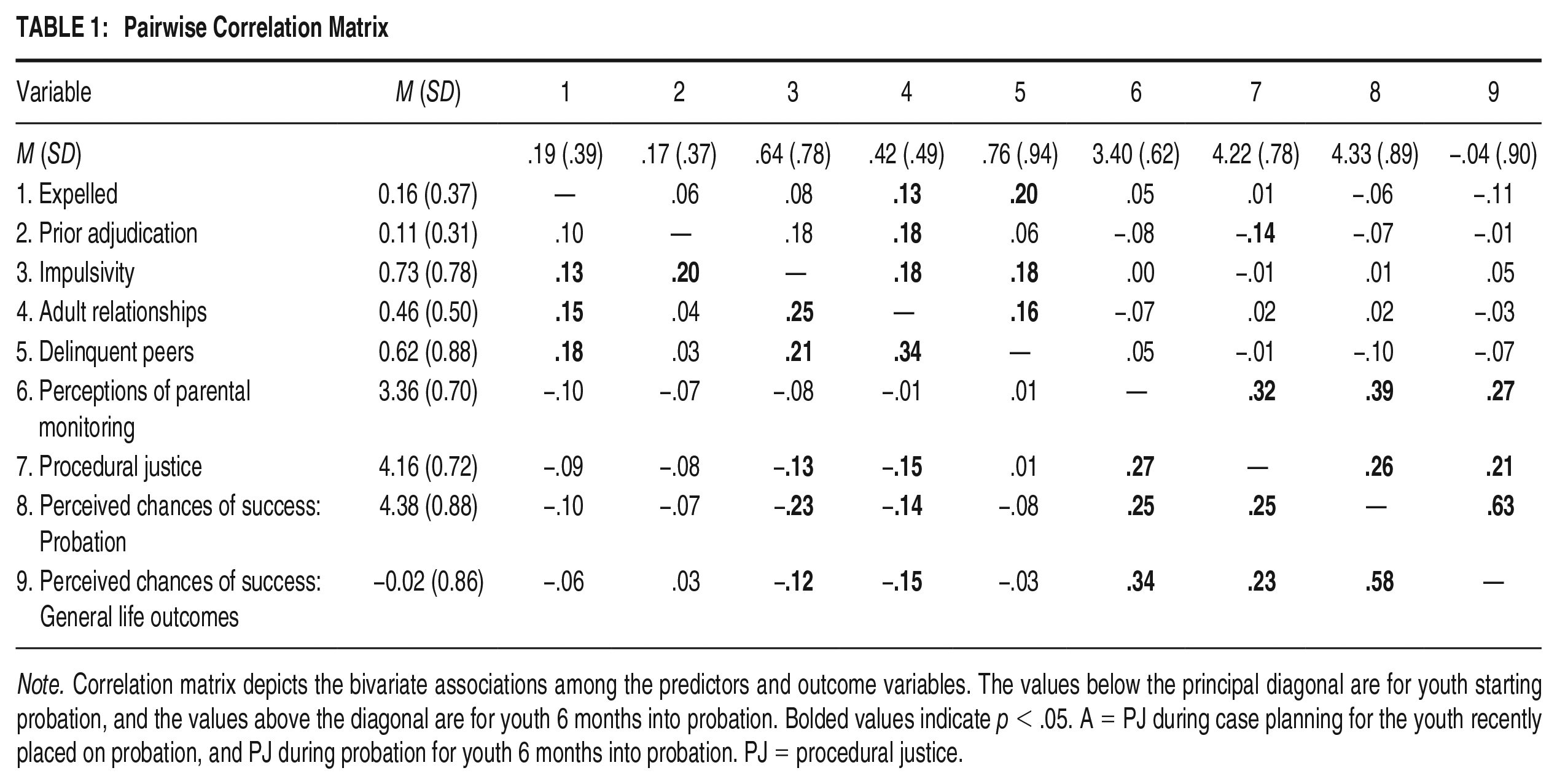
Note. Correlation matrix depicts the bivariate associations among the predictors and outcome variables. The values below the principal diagonal are for youth starting probation, and the values above the diagonal are for youth 6 months into probation. Bolded values indicate p < .05. A = PJ during case planning for the youth recently placed on probation, and PJ during probation for youth 6 months into probation. PJ = procedural justice.
Perceived Chances of Completing Probation
The first model focused on youth who had recently been placed on probation (Table 2). Specifically, it regressed youths’ perceived chances of success on probation on their demographics as well as familial/peer, societal/community, and individual-level factors.
Perceived Chances of Success on Probation
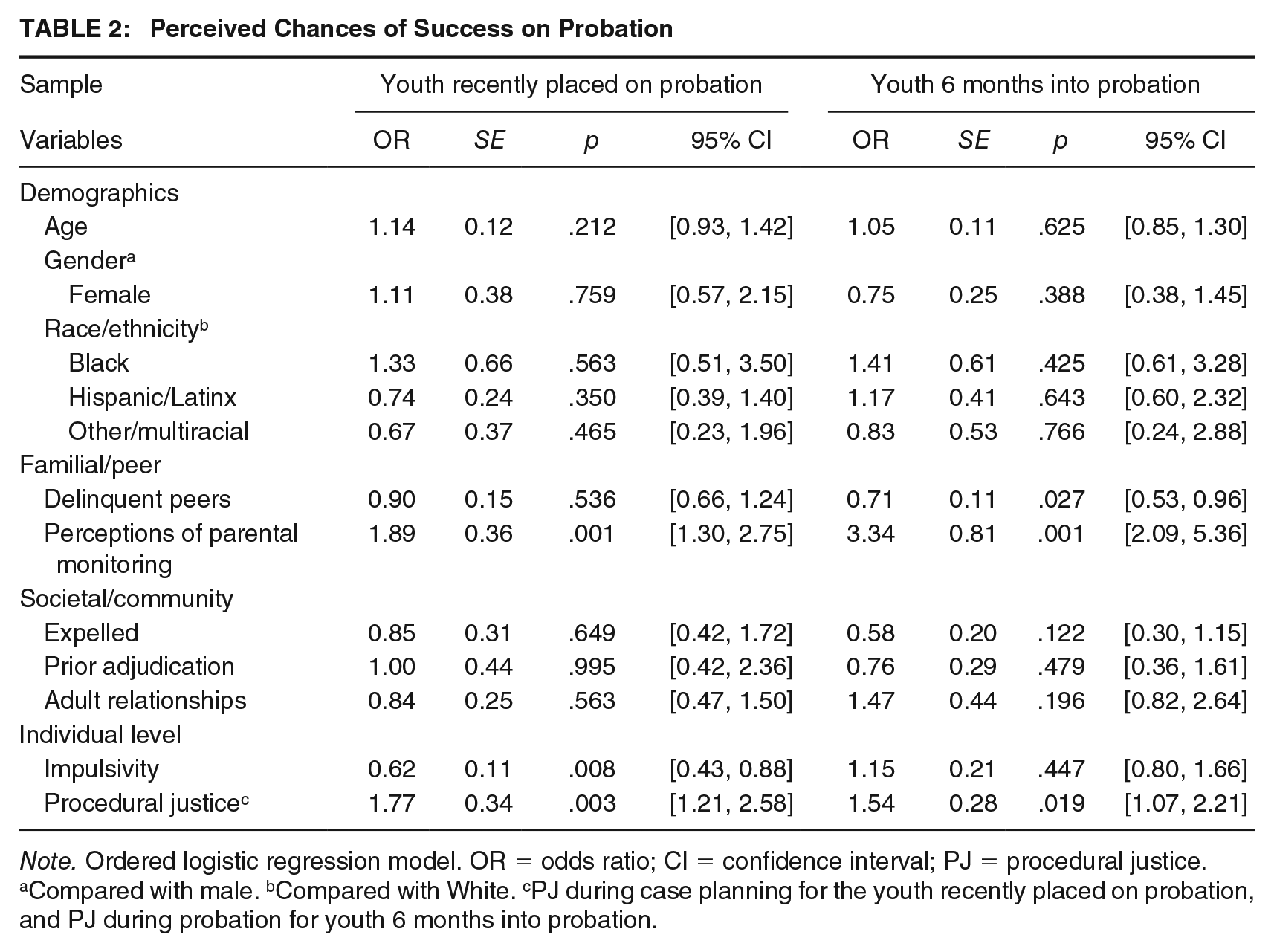
Note. Ordered logistic regression model. OR = odds ratio; CI = confidence interval; PJ = procedural justice.
Compared with male. bCompared with White. cPJ during case planning for the youth recently placed on probation, and PJ during probation for youth 6 months into probation.
None of the demographic characteristics were associated with perceived chances of success on probation, nor were societal/community-level factors such as being expelled, prior adjudication, or positive relationships with adults at school or work. However, on the familial/peer level, while having more delinquent peers was not associated with their perceived chances for success, youth who reported that their parents monitored them more closely felt they would be more successful on probation (OR = 1.89, 95% CI = [1.30, 2.75]). That is, for youth who reported their parents monitored them more closely, the odds of perceiving more chances of success on probation is 1.89 times that of youth whose parents monitored them less closely. Finally, on the individual level, youth who had higher impulsivity ratings reported significantly worse perceived chances of success on probation (OR = 0.62, 95% CI = [0.43, 0.88]). Moreover, youth who felt they had been treated with more PJ during case planning by their JPO reported more positive perceived chances of success on probation (OR = 1.77, 95% CI = [1.21, 2.58]). That is, for youth who reported feeling more PJ during case planning, the odds of perceiving more chances of success on probation is 1.77 times that of youth whose JPOs treated them with less PJ during case planning.
The second model focused on youth 6 months into probation (Table 2). Specifically, it regressed youths’ perceived chances of success on their demographics as well as familial/peer, societal/community, and individual-level factors. None of the demographic characteristics were associated with perceived chances of success on probation. Contrary to the first model, impulsivity was unrelated to perceived chances of success on probation. Consistent with the first model, youth who reported that their parents monitored them more closely expected to be more successful on probation (OR = 3.34, 95% CI = [2.09, 5.36]) as did youth who felt they were being treated with more PJ during probation (OR = 1.54, 95% CI = [1.07, 2.21]). Moreover, youth whose friend group was more delinquent perceived less of a chance of success for themselves while on probation (OR = 0.71, 95% CI = [0.53, 0.96]).
Perceived Chances of Successful Life Outcomes
The first model focused on youth who had recently been placed on probation (Table 3). Specifically, the OLS model regressed youths’ perceived chances of success on their demographics, AZYAS scores, and self-reported perceptions of parental monitoring and PJ during case planning. Older youth thought they had greater chances of success. Interestingly, the only factor that was associated with youth’s perceived chances of life success was parental monitoring; youth who felt more closely monitored by their parents reported feeling significantly more positive about their chance of success. PJ during case planning was not associated with youths’ perceptions of success in other life domains.
Perceived Chances of Success on General Life Outcomes.
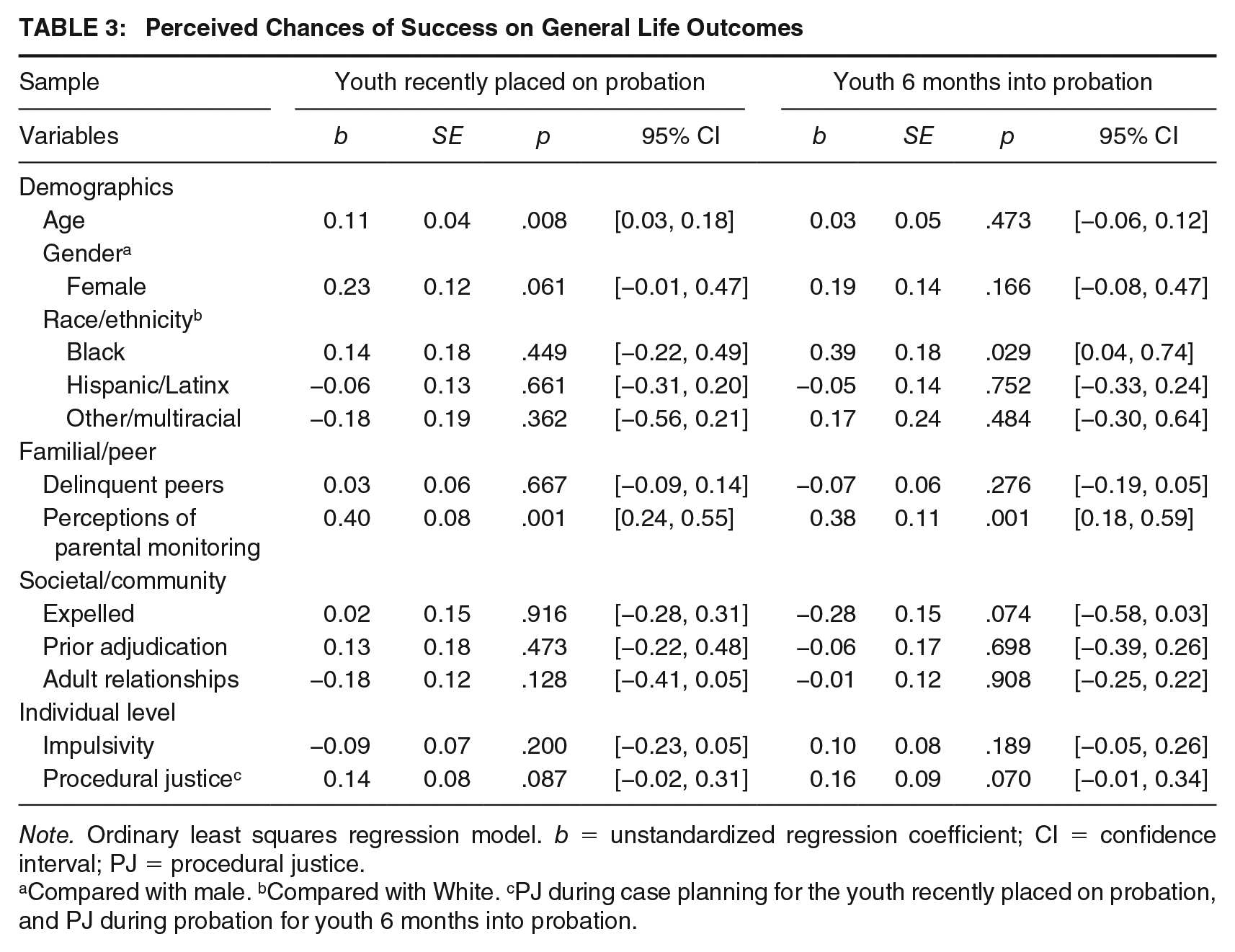
Note. Ordinary least squares regression model. b = unstandardized regression coefficient; CI = confidence interval; PJ = procedural justice.
Compared with male. bCompared with White. cPJ during case planning for the youth recently placed on probation, and PJ during probation for youth 6 months into probation.
The second OLS regression model focused on youth 6 months into probation (Table 3). Specifically, it regressed youths’ perceived chances of success on their demographics, AZYAS scores, and perceptions of parental monitoring and PJ during probation. Consistent with the prior models, youth who reported that their parents monitored them more closely felt they would be more successful. PJ during probation was not associated with youths’ perceptions of success in other life domains.
Discussion
Theoretical and empirical perspectives regularly link a constellation of factors at various levels—familial/peer, societal/community, and individual—to youth offending. Thus, it is unsurprising that many of these factors appear within RNR-informed tools (Andrews & Bonta, 2014; Ward et al., 2007) and affect how the system perceives and responds to the youth. However, a largely overlooked question is whether and how these factors also impact how the youth perceives themselves. In this study, we examined the associations between theoretically driven risk factors for delinquency on youths’ self-expectations for successfully completing probation as well as more general life success.
We begin with our findings concerning youths’ self-expectations for success on probation which are critical to informing the RNR model. Impulse control mattered only for youth recently placed on probation, whereas delinquent peers mattered only for youth 6 months into probation. While more research is necessary, these findings suggest that when youth are just starting probation, they may be self-aware that their impulsivity may derail their initial progress (Gottfredson & Hirschi, 1990). However, the youth who have been on probation for longer may be more aware of the salience of a delinquent peer group for impacting their behavior (Jacobsen et al., 2021). Indeed, youth closer to finishing their probationary term may feel as though they have overcome the challenges posed by their own impulsivity but are still potentially at risk of succumbing to delinquent peer pressure. Our findings suggest that future interventions should consider paying attention to timing. Interventions at the start of probation might consider focusing on individual-level factors, whereas nearing the end of probation might consider focusing on systems-level factors.
Yet beyond those factors, as well as the youths’ demographics, two other factors were consistently associated with youths’ self-expectations for success on probation within both samples of youth: parental monitoring and PJ. These consistent findings have clear implications for policies and practices pertaining to the RNR model. More specifically, results highlight the importance of family member engagement in probation intervention and the need for measurement of family as a risk and/or strength for a youth’s ability to succeed on probation. JPOs often perceive families as their greatest partners in enhancing youth success as youthful probationers are essentially under dual jurisdiction of their parents as well as JPOs (see Fine et al., 2020). Thus, when parents and JPOs are in agreement, youths’ chances of successfully completing probation and not recidivating increase (Vidal & Woolard, 2016). Consistent with existing literature, our results indicate that perceptions of parental monitoring may be critical for enhancing youths’ self-expectations for success on probation. To the extent that parents are able to help youth stay on track, youth may respond by feeling as though they can successfully complete probation. These findings emphasize that family-oriented approaches may make a significant difference in youths’ probation outcomes.
Moreover, the findings from the current study indicated that PJ plays a critical role in youths’ self-perceptions and expectations. What is unique here is that within each of the two samples of youth, we purposefully measured PJ slightly differently. For those who had recently been placed on probation, we measured PJ within case planning. For those who were 6 months into probation, we measured PJ during probation itself. For both groups of youth, PJ clearly mattered. Consistent with the PJ framework (Tyler, 2017) and literature (e.g., Cardwell et al., 2021; Mazerolle et al., 2013; McLean et al., 2019), perceptions of fair and just treatment may enhance youths’ willingness to cooperate with officers and their legal requirements (Walters & Bolger, 2019). To the extent that a youth feels as though their JPO encourages them to work collaboratively and treats them fairly and justly, they may feel more able to complete their probationary terms and conditions. These findings are wholly consistent with PJ theorizing and extend the application to the entire juvenile probation process, indicating that PJ in case planning and case management both appear to matter. Moreover, the findings may have implications for the RNR theoretical model considering that youth may be more responsive to support and interventions when they feel as though the process and treatment is fair, just, and appropriate. Ultimately, PJ may play a critical yet undervalued role in enhancing the impact of the RNR framework. In light of these findings, more theory integration and development, as well as applied research, is warranted.
Shifting now to youths’ self-expectations for more general successful life outcomes, we focused on expectations of having good job or career, earning a good living, or graduating from college. Our results from these models differed from the models for probationary success, namely that the only factor that was consistently related to youths’ expectations for more general life success was parental monitoring. That is, for both groups of youthful probationers, perceptions of parental monitoring was the only consistent predictor of their perceived chances of more general success in education and employment. This finding aligns with and builds upon previous research by Bacikova-Sleskova and colleagues (2021) who observed more parental monitoring promoting self-efficacy and self-esteem among youth. These implications are quite clear: parental monitoring appears to be critical for enhancing youths’ self-expectations for both successfully completing probation and for achieving more general life success. If the juvenile legal system seeks to promote positive youth outcomes (Brogan et al., 2021), it should likely focus on empowering parents to better support their youth and equipping parents with the skills necessary through therapeutic interventions.
At the same time, probation officer PJ was unrelated to youths’ expectations for more general life success. These findings suggest that while JPO PJ may matter for youths’ law-related behaviors and legal system outcomes, it may not extend to non-law-related domains. How a youth perceives their JPO may affect whether they expect to do well on probation, but not necessarily how they will do more broadly in life. Even if an officer treats the youth poorly, that may only affect the youth’s self-expectations for meeting the probationary terms and conditions, but not their expectations for achieving more general life success. However, there is a negative interpretation of this finding that is important to note; youth may not recognize that failing to successfully complete juvenile probation can affect their general life chances (Cauffman et al., 2021; Nemoyer et al., 2020; Schwalbe & Koetzle, 2020). It is possible that if a youth perceives a JPO to be procedurally unjust, their compliance with their probationary terms may decrease, and youth may not immediately recognize the ultimate impact of these events on their overall life outcomes and success. More research, particularly longitudinal work, is needed on the potential downstream consequences of PJ in juvenile probation.
As a final point of discussion, the results indicated that two factors—having been expelled and having a prior adjudication—were unrelated to either outcome within either sample. This finding was surprising considering labeling theory would suggest that the stigma of having a prior juvenile adjudication or having been expelled from school may affect youths’ outcomes, both in terms of their expectations for successfully completing probation and for achieving positive life outcomes (Becker, 1963; Jacobsen, 2020). Certainly, there is ample evidence that labeling can reduce prosocial opportunities and enhance criminogenic processes, particularly through social rejection or withdrawal as well as physical separation from prosocial settings (e.g., school, extracurriculars) and people (e.g., prosocial peers, teachers). Indeed, this body of evidence explains why RNR assessments—including the one in this jurisdiction—often measure prior adjudications and school experiences such as expulsion. However, these findings suggest that to the youth themselves, these static risk factors may not define them and their self-perceptions. Youth may still believe that they can overcome their past and legal record and hold high expectations for their futures. In addition to measuring these static risk factors, future research should consider measuring youths’ perceptions of these factors, such as the actual internalization of the label or stigma rather than just the system’s labeling of the youth based on their past behavior.
Despite its strengths, this study has several important limitations. First, the data come from one large jurisdiction in the southwest, and the data are purely observational. The results may not generalize to other parts of the country or to youth in more rural jurisdictions, and the results should not be interpreted to imply causality. While the outcomes here were distal (e.g., graduating from college), we were unable to assess steps along the way. It is possible that positive self-expectations could result from positive steps in pursuit of those outcomes. Second, while we collected two large samples of youth on probation for this study, we were unable to assess certain subgroups of youthful probationers. Specifically, we were unable to assess youth who were dually involved with the child welfare system, youth who had a warrant for their arrest, or youth who had been adjudicated for a sexual offense because they were unable to access electronic devices. As such, the findings are not generalizable to these particular subgroups of youth on probation. Third, while we used a combination of data sources, including both the jurisdiction’s risk assessment tool and a unique self-reported survey from the youth, several of the items, particularly on the risk assessment tool, were dichotomous. It would be useful to have more robust, multifaceted scales. For instance, with respect to labeling, it would be useful to assess the youth’s internalization of the labels rather than just the presence/absence of the event itself. Relatedly, while the two items used to assess impulsivity are from the jurisdiction’s actual measurement tool, they clearly cannot capture different elements of impulsivity and self-control. A more robust, validated assessment would be useful. In addition, it is important to note that many of the variables were the youth’s perceptions (e.g., perceptions of PJ or perceptions of parental monitoring). Future replication studies should consider multi-informant studies, for instance, if the JPO, lawyer, or families also reported the same information, to examine whether associations are consistent across measurement modalities.
Fourth, the data are cross-sectional. More research—particularly a longitudinal, within-person study—is necessary. In particular, it would be useful to conduct longitudinal studies following youth into young adulthood to examine for whom these expectations might become a reality. Fifth, it is possible that parents and peers may differentially influence youth based on youth gender identity. We encourage researchers to sample larger groups of youth to parse potential gender differences. Sixth, note that we collected data from two samples of youth on probation: youth who had just been placed on probation and youth who were 6 months into probation. Having two samples enabled us to examine whether the processes operated similarly among youth who were earlier in their probationary experience compared with youth who had been on probation longer. However, these are exploratory analyses. We encourage future researchers to differentiate youth who were recently placed on probation from youth who had been on probation for a substantially longer amount of time, as the experience itself and the effects on the youths’ identities may vary.
Finally, it is unknown whether youth were simply thinking about doing the time and finishing probation versus desisting from crime. It would be useful to follow up this work with studies that (a) use multidimensional assessments; (b) include in-depth qualitative studies; and (c) examine predictors of actual desistance and success in life outcomes that align with these concepts. Unfortunately, we were unable to examine links between youths’ perception of being able to be successful and making progress or being successful because the data do not exist. Certainly, if a youth is simply just trying to finish probation, that may not translate to taking ownership of one’s future and ensuring one is taking the steps to achieving “successful” outcomes. This, however, speaks to a broader issue within the juvenile legal system. Success is too often defined by the absence of a rearrest, reconviction/readjudication, or technical violation. As the National Academies of Sciences, Engineering, and Medicine (2022) recently reported, focusing exclusively on these typically dichotomized metrics of “failure” is problematic for a host of reasons. They recommended “expanding current concepts and measures to encompass positive outcomes in domains outside of the criminal legal system” (p. 3), though they recognized changes in practice, policy, and research would require significant time and financial investment. We echo these sentiments. Youth-serving institutions should prioritize promoting positive growth, and that begins with ensuring that youth receive the individualized support they need to make measurable progress. Currently, few, if any, jurisdictions collect such data along the way.
Considering completing juvenile probation successfully can affect youths’ life chances (Cauffman et al., 2021; Nemoyer et al., 2020; Schwalbe & Koetzle, 2020), researchers, policymakers, and practitioners are interested in enhancing youths’ success on probation, particularly reducing recidivism and promoting education and employment. We examined how theoretically derived familial/peer, societal/community, and individual-level factors were associated with youths’ expectations for success on probation as well as in more general life outcomes, finding that whereas PJ was particularly important for probationary success, parental monitoring appears to be critical for all outcomes. Ultimately, certain factors such as labeling did not appear to affect how youth define themselves and view their futures. As such, ensuring that youth are properly supported by both their parents and JPOs appears to be critical for enhancing their own self-expectations for success.
Footnotes
Authors’ Note:
None of the analyses in the current article appear in other publications and they have not been disseminated at any academic conferences. We have no conflicts of interest to disclose. Materials and analysis code for this study are available by emailing the corresponding author. We thank the youth and families for voluntarily participating and sharing their experiences, as well as the jurisdiction for enabling this project.
