




Abstract
Recent literature on procedural justice has consistently shown positive organizational outcomes resulting from fair and just treatment by supervisors. This study expands the current literature by assessing the beneficial effect of being treated fairly and justly by supervisors in court settings. Based on survey data from Chinese judges, this study analyzes the direct linkage between supervisor procedural justice and judges’ perceived tensions with litigants and their indirect relationship through trust in litigants and external procedural justice. The results of structural equation modeling indicate that supervisor justice is positively related to trust in litigants and external procedural justice and negatively associated with tensions with litigants. The indirect connection between supervisor justice and tensions with litigants is mainly through external procedural justice. Female and seasoned judges are more willing than their male and less-experienced counterparts to treat litigants in a procedurally just manner.
Keywords
Introduction
On January 12, Zhou Chunmei, a judge and a mother of two, was found dead from multiple stab wounds in an underground parking lot at her home in Changsha, capital of Hunan province. . . Local police arrived at the scene at around 7:30 am and detained a suspect, surnamed Xiang, who was an “old friend” of the victim, according to the police. . . Zhou, in her role as a judge, had refused to bend the law in a labor-related lawsuit that Xiang had filed in her court months ago. (Askhar, China Daily, 2021, April 14)
Judge Zhou was one of several Chinese judges who have been killed by court litigants since 2016. The murder of Judge Zhou shocked the entire country and stirred widespread concern about judicial personnel’s well-being and safety. Tensions between judges and litigants resulting primarily from violence against judges have surfaced as a serious safety concern in China (He & Feng, 2021). These attacks elucidate judges’ adversarial work environments as replete with potential conflicts with litigants (Chamberlain & Miller, 2009). Studies have revealed that safety threats and stress can shape judges’ decision-making capacities and decorum and cause psychosocial and emotional problems, further impeding the impartiality of the judicial system (Miller & Richardson, 2006; Rothmann & Rossouw, 2020).
This study investigates factors related to judges’ perceived tensions with litigants in China. Tension signals a complex psychological construct consisting of attitudes and tendencies, such as distrust, suspicion, fear, hostility, and even a desire for dominance or revenge against others (Hafeznia et al., 2013). The current study delineates a theoretical model linking the exogenous source of perceived supervisor procedural justice and the mediating mechanisms of litigant trustworthiness and perceived external procedural justice to judges’ perceptions of tensions with court litigants. This study contributes to the literature in three areas. First, it incorporates the procedural justice theory into judicial fields. Tyler’s (1990) seminal work posited that people’s perceptions of police legitimacy and willingness to cooperate with the police are chiefly linked to the fair and equitable treatment received during police–citizen encounters. Recent research has extended the procedural justice model into police agencies by arguing that being fairly and justly treated by supervisors (the so-called internal procedural justice or perceived supervisor procedural justice) can breed officers’ willingness to treat the public (e.g., external procedural justice) similarly (Van Craen, 2016). Although scholars have tested the applicability of the procedural justice theory in court settings (e.g., Connor, 2019; Grootelaar & van den Bos, 2018; He & Feng, 2021; Shook et al., 2021), the plausible linkages between internal procedural justice and judges’ attitudes toward litigants remain severely underresearched.
Second, this study expands the available literature on judges’ perceived tensions with litigants. A recent review (Rothmann & Rossouw, 2020) of the literature on judges’ well-being identified merely three studies touching on judges’ safety concerns (Chamberlain & Miller, 2009; Flores et al., 2009; Miller et al., 2010), a topic closely related to judges’ tensions with courtroom participants. These studies relied on information from a rather small sample of interview or survey respondents and measured single-item stressors of safety concerns without considering the complexity and multidimensional nature of judges’ tensions with litigants.
Finally, this study advances the internationalization of criminological literature by studying Chinese judges’ perceptions of court litigants and administrators. Although empirical studies on Chinese judicial behavior have increased in recent decades (e.g., An et al., 2011; He, 2021; Li et al., 2018; Liu & Li, 2019; Lu et al., 2013; Stern, 2010; Wei & Xiong, 2020; Xiong et al., 2018), judges’ attitudes toward litigants stay elusive in this vein of inquiry. Supervisor justice could be particularly relevant in China due to the absence of judicial independence in individual judges’ decision-making and the court administrators’ control over judges’ work assignments and performance and promotion evaluations.
Judge–Litigant Tensions as the Focal Concern
Focusing on judges’ standpoints, this study analyzes judges’ perceived tensions with litigants. Given the paucity of relevant literature on judicial personnel, we drew chiefly upon previous studies on the relationship between internal and external procedural justice within the police and correctional agencies to formulate our explanatory framework for the courts. We first discuss Chinese judges’ relationships with supervisors and litigants. We then discuss the direct and indirect connections between supervisor procedural justice and tensions with litigants.
Chinese Judges’ Relationships With Litigants and Supervisors
The Communist Party of China directly supervises the courts, which are parts of the state power organs and pliant political agents (Ling, 2019). The communist regime has gradually implemented a party-government system into its judicial branch, relying heavily on ideology, political mobilization, and official management power, to cultivate a professional group of judges with political awareness and a spirit of dedication (Zheng, 2020). Indeed, China’s judicial institutions are deeply embedded in the broader national political environment (Wang, 2020), serving political objectives, such as stability maintenance, chiefly through the dispute resolution mechanisms in courts (He & Feng, 2016). Therefore, maintaining good relationships with litigants and making them feel satisfied with the courts and regime legitimacy (He, 2017; Moustafa, 2014), are important occupational goals and functions of Chinese judges.
Chinese judges’ relationships with litigants have been influenced by the rise of “rights or legal consciousness” among Chinese citizens, which is evident by the sharp increase in the number of litigations, petitioning, and protests (F. Chen, 2004; O’Brien & Li, 2006). The judge–litigant relations have evolved from the “authoritarian-obedient” mode stressing the public’s strict obedience to legal authorities to a “counterbalancing” pattern with people exerting an impact over their interactions with judges. Studies have revealed that Chinese perceptions of courts are rather negative, especially among court users (Gallagher, 2006; He, 2017; Michelson & Read, 2011). Complaints about the courts and negative views of Chinese legal institutions are reflected in some serious violent incidents against judges (B. Chen, 2016; Tatlow, 2016).
China’s recent judicial reforms require judges to be held accountable for their cases for a lifetime (Mou, 2022). The lifelong accountability system is designed to reduce judicial misconduct, particularly wrongful convictions in death penalty cases. Although the presumptive deterrent effect of the judicial accountability system remains questionable due to institutional obstacles (Jiang, 2018), the reform makes judges highly alert to their interactions with litigants as their attitudes and behavior are constantly under the scrutiny of court users and social media. Judges are also concerned that litigants may use their negligence during trials to gain favorable litigation outcomes, potentially breeding suspicion and distrust toward litigants.
Court management in China follows a highly administrative hierarchy in which judges are civil servants or administrative staff who are supervised by presiding and vice-presiding judges, members of the adjudication committee, and division chief judges and vice chief judges (Fu, 2018; Liu, 2022; Wang, 2020). According to China’s Organic Law of People’s Courts (China Law Translate, 2018), the judicial committee consisting of the presidents, vice presidents, division chiefs, and several experienced judges such as court leaders represents the highest decision-making body in adjudication. The primary task of the adjudication committee is to review significant or complicated cases handled by a single or a bench of judges, with the authority of modifying the adjudicating judges’ opinions and decisions.
Before the recent judicial reforms, based on the so-called “bureaucratization of adjudication” (Fu, 2018) or “justice authorities’ multi-level approval” (Jiang, 2018) rules, court supervisors could control adjudication outcomes by requiring frontline judges to obtain court leaders’ approvals before their decisions could be released in court (Wang, 2020). Therefore, the traditional relationships between court supervisors and judges were highly administratively bounded and essentially dominated by the former, making judges’ supervisor support equally important as their police counterparts. The new round of judicial reforms since 2013 has been aimed to form a more professional and less politicized judiciary (Zhang, 2016), with one of the most important goals to reduce administrative management and interference in individual cases (Jiang, 2018; Mou, 2022; Wang, 2020). Two areas of reform are worth of mention. One is adopting a quota system, limiting the number of judges within each court to retain a smaller size of “elite judges” who are more qualified to adjudicate cases independently. A second change is that court supervisors are no longer authorized to review, check, or approve case decisions handled by trial judges. Nonetheless, the adjudication committees still have the authority to decide the outcome of cases that are legally complicated, politically sensitive, and socially impactful (Ng & He, 2017).
Despite this recent wave of reforms, the judiciary remains a largely bureaucratic institution and supervisor influences linger (He, 2017; Liu, 2022). Although court supervisors are no longer “case managers,” they are still “judge managers,” who can affect judges’ performance evaluations, promotions, and awards (Kinkel & Hurst, 2015). Furthermore, court supervisors can still exert influence on case management by supervising adjudication, such as evaluating judicial quality, efficiency, process, progress, and social effects (Fu, 2018; van Rhee & Fu, 2013). They can even affect judges’ judicial thinking as judicial decisions are often influenced by administrative requirements, such as following collective decision-making by the adjudication committee, reporting to supervisors or the higher level of courts, and implementing judicial interpretations as administrative orders (Long & Wu, 2022). Hence, it is meaningful and urgent to study supervisors’ influence on judges’ relationships with litigants.
Furthermore, Chinese police officers, prosecutors and judges, and correctional officers are subjected to similar hierarchical structures, personnel recruitment and management practice, and political and administrative supervision. Besides the internal supervision described above, criminal justice officials are directly led by the party unit, the Political and Legal Affairs Committee, established within all levels of the government. The committee is the paramount institution for crime and justice issues responsible for guiding, supervising, and coordinating all work conducted by criminal justice professionals, making Chinese judges less independent than their Western counterparts.
The Direct Link Between Supervisor Procedural Justice and Tensions With Litigants
It is possible that judges’ experience of proper supervision directly connects with their sense of tension when dealings with litigants. Organizational justice theorists contended that perceived organizational fairness and trustworthiness among organizational members tend to generate favorable employee attitudes and behaviors, such as organizational commitment and job satisfaction (Greenberg, 1987). Higher degrees of perceived organizational justice strengthen members’ job performances, including better handling of external clients. Centering on the fair and just practices of immediate supervisors, policing studies have yielded consistent support for the advantageous influences of supervisor justice on frontline police officers’ attitudes and behaviors, such as officers’ willingness to participate in community partnership (Wolfe et al., 2016), fair treatment of and trust in the public (Carr & Maxwell, 2018), support for procedural justice in police–citizen contacts (Tankebe, 2014), and reduced misconduct and citizen complaints (Mastrofski et al., 2016; Wolfe & Piquero, 2011). A study conducted in China also linked perceived supervisor procedural justice directly to officers’ fair treatment of citizens (Sun et al., 2019). Likewise, correctional studies revealed that organizational procedural justice is connected to higher organizational commitment and job satisfaction among correctional officers in the United States (Lambert et al., 2013) and China (Lambert et al., 2018).
Besides the organizational justice propositions, another theoretical framework that could be applied to judges’ tensions with litigants is the general strain theory (GST). Agnew (1992, p. 50) defined strain as the “relationships in which others are not treating the individual as he or she would like to be treated.” Strains can produce negative emotions, such as anger, frustration, and disappointment, and raise the likelihood of hostility toward others under certain conditions. Unwanted or unfair treatment by administrators and supervisors can be viewed as the presence of noxious stimuli likely to elevate judges’ psychological strain, causing tensions with litigants. Studies on procedural injustice experienced by police officers echo the detrimental impact of unfair treatment by showing that having disrespectful supervisors increases occupational stress among officers (Williams et al., 2022).
Looking specifically at explanations of judges’ psychological states, Miller and Richardson’s (2006) model of judicial stress is also relevant to connecting supervisor justice to tensions with litigants. Building on constructivist self-development theory (Saakvitne et al., 1998), Miller and Richardson asserted that personal (e.g., gender, time on the bench, and coping skills), job (e.g., type of trials, frequency of stressful trials, urban/rural court, and caseload size), and environmental (e.g., crime awareness or violence against other judges) characteristics are directly or indirectly related to judicial safety concerns and stress. Previous studies also found that judges’ occupational stress is commonly associated with negative emotions such as feeling disliked, being unfriendly treated, and not being appreciated for achievements (Eells & Showalter, 1994). Therefore, various factors embedded in judges’ work environment, including how supervisors treat them, are conducive to their feelings of tension with litigants. Considering the existing evidence from the criminal justice literature, it is highly likely that organizational fairness that judges receive from their supervisors exerts a significant relationship with their attitudes toward important reference groups.
The Indirect Relationships via Litigant Trustworthiness and External Procedural Justice
The transmission from supervisor procedural justice to judges’ perceived tension with litigants can also occur through three additional indirect channels: (a) the path from supervisor procedural justice to trust in litigants and to tensions with litigants; (b) the path from supervisor procedural justice to external procedural justice and to tensions with litigants; and (c) the path from supervisor procedural justice to trust in litigants, to external procedural justice, and to tensions with litigants. We review each of these paths below. A summary of these connections is also provided.
From Supervisor Procedural Justice to Trust in Litigants and Tensions With Litigants
Perceived supervisor procedural justice can be linked to tensions with litigants through judges’ trust in litigants. Trust can be defined as positive expectations about a trustee’s words, actions, and decisions (Colquitt et al., 2013), stressing people’s beliefs in the good intentions or goodwill of others (Tyler & Huo, 2002; Uslaner, 2004). Rothstein and Stolle’s (2008) institutional theory of generalized trust (ITGT) argued that people’s generalized trust is related to the fairness of order institutions, emphasizing that judges’ behaviors function as important signals to citizens about the moral standard of society. Extending the ITGT’s line of standpoint from a citizen perspective to an officer perspective, Van Craen (2016) speculated that public officials’ attitudes toward supervisor procedural justice are positively connected to their generalized trust in the citizenry (see also Sun et al., 2021). Similarly, if judges are treated fairly by their supervisors, they tend to cultivate an attitude of generalized trust, including their perceptions of litigant trustworthiness.
Furthermore, judges’ trusting attitudes toward litigants can influence judge–litigant interactions and relationships. Social exchange theory is an important pillar, underpinning the view of trust fostering supportive behavior (in judge–litigant relationships). Trust was found to make social exchange relationships more feasible (Colquitt et al., 2013; Cropanzano & Rupp, 2008; Konovsky & Pugh, 1994). One can argue that fair treatment and trust by judges encourage litigants to redefine their relationship with judges, with cooperative and friendly behaviors in the courtroom serving as an exchangeable resource. Indeed, trust can promote reciprocal behaviors as it facilitates judges’ beliefs that their appropriate behaviors would bring litigants’ favorable and rewarding reactions, potentially minimizing tensions between the two parties.
From Supervisor Procedural Justice to External Procedural Justice and Tensions With Litigants
A second channel linking perceived supervisor procedural justice and tensions with litigants involves judges’ fair and just treatment of litigants. Recent research on policing has explained that police supervisors’ fair treatment of officers directly fosters the latter’s proper treatment and fairness when interacting with the public (Sun et al., 2019, 2021; Van Craen & Skogan, 2017; Wu et al., 2017). Such a connection can be explained by the social learning theory of behavioral modeling (Akers, 1998; Bandura, 1971) that officers tend to imitate their supervisors’ behaviors toward subordinates and consider similar behaviors toward citizens as expected, endorsed, and rewarded by supervisors. Plenty of research has found that officers suffering unfair or disrespectful treatment from their supervisors are inclined to express resentful attitudes toward the public and involve in acts of misconduct or undesirable work-related behaviors (Haas et al., 2015; Myhill & Bradford, 2013; Tankebe, 2014; Wolfe & Piquero, 2011; Wu et al., 2017). Applying social learning theory to the judicial context, judges who perceive their supervisors as procedurally fair are more willing to provide procedural justice to litigants.
Moreover, how judges treat litigants can significantly relate to litigants’ attitudes or behaviors toward judges, further influencing judges’ perceptions of safety concerns or relationships with litigants. For example, studies on judicial decisions have long demonstrated that citizens were more willing to accept or comply with court decisions when they felt procedural fairness was exercised by the courts (Lind et al., 1993; Thibaut & Walker, 1975) and were satisfied with the outcome (Casper et al., 1988). In the policing literature, studies conducted in various countries have similarly found that procedural justice encouraged the public to accept officers’ authority and consequently collaborate with the police, reducing negative emotions caused by unfavorable outcomes (Donner et al., 2015; Hinds & Murphy, 2007; Jonathan-Zamir et al., 2016; Kochel et al., 2013; Reisig & Lloyd, 2009; Sunshine & Tyler, 2003; Tyler & Huo, 2002; Wolfe et al., 2016). Conversely, if police officers handled people in a procedurally unfair manner, the likelihood of public noncompliance (McCluskey et al., 1999), disrespect (Reisig et al., 2004), and other defiant behavior during encounters is likely to increase (Piquero & Bouffard, 2003), significantly raising tensions between officers and citizens.
In the court literature, scholars have stressed the importance of judges establishing a positive rapport with legal actors, maintaining a high level of formality, respect, and decorum in the courtroom; showing patience and courtesy to litigants; making the litigants feel that they were heard; and explaining reasons behind their decisions. Procedurally just judge behaviors can convey legitimate authority, encourage respect among the courtroom actors, and reduce courtroom confrontation and litigant retaliation (Chamberlain & Miller, 2009; Weller, 2014). If judges do not perform their duties fairly and impartially or even intentionally mistreat or belittle litigants, such behaviors may subject judges to public contempt, leaving litigants with the impression that the court did not take their cases seriously.
From Supervisor Procedural Justice to Trust in Litigants, External Procedural Justice, and Tensions With Litigants
The final route from perceived supervisor procedural justice to tensions with litigants goes through perceived litigant trustworthiness and fair treatment of litigants. Among the two mediating variables, we expect judges’ trust in litigants to be directly linked to their fair treatment of litigants. Consistently experiencing supervisors’ fair and just behaviors help judges cultivate the belief that most people can be trusted, building up society’s moral standards. In turn, the belief in litigant trustworthiness can improve how judges handle litigants, such as treating them respectfully, listening to their explanations, and considering their mishaps. Recent studies on the police provided preliminary evidence that trust in citizens can mediate the relationship between internal and external procedural justice among police officers (Sun et al., 2019; Van Craen & Skogan, 2017).
In sum, judges’ perceived treatments within their agencies are expected to have both a direct and an indirect connection to their perceptions of tensions with litigants. When judges receive fair treatment and fair decision-making from their supervisors, they are less likely to experience anxiety or tension and are more likely to maintain a harmonious relationship with litigants. Besides, judges’ greater senses of supervisor justice are likely to be linked to higher degrees of perceived litigant trustworthiness, which are likely to be accompanied by displaying procedurally just attitudes and behaviors toward litigants that they encounter, both of which, in turn, are associated with lower senses of tension with litigants. Finally, we expect judges’ feelings of whether litigants can be trusted to be linked to their willingness to exercise fair and just treatment toward litigants.
The Current Study
Based on survey data from 485 Chinese judges, this study addresses two research questions: (a) “What is the general pattern of Chinese judges’ perceived tensions with litigants?” and (b) “Is perceived supervisor procedural justice linked to perceived tensions with litigants directly and/or indirectly through trust in litigants and perceived external procedural justice?” Previous studies stressed the negative consequences of judicial safety concerns and litigant threats (Chamberlain & Miller, 2009; Miller & Richardson, 2006) without empirically investigating related factors of these issues or what interventions can be taken to ease judges’ tensions with litigants (Flores et al., 2009). This study expands the literature on judges’ occupational attitudes toward one of the most important groups of their work environment (i.e., court litigants), enriching our understanding of the complex relationship between judges and litigants. The findings of this study would enhance our knowledge about the judge–litigant relationship in China and factors that help reduce judge–litigant tensions, yielding useful implications for policy and future research.
Four hypotheses related to the second research question are tested in this study:
Method
Participants
Data used in the study were collected in the spring of 2022 from all three levels of courts in a northern Chinese province. The province has one high court, 16 intermediate courts, and over 100 lower or basic courts, with approximately 8,000 judges serving various judicial functions. The province was chosen as the research site as the lead author was a member of the court system who has maintained a close relationship with many fellow judges and garnered their assistance in distributing the survey. A total of 850 judges and judge assistants completed the survey. As this study focuses on judges, we excluded 258 judge assistants from our analysis. We also dropped 98 respondents who were judicial personnel outside of the sample province. Finally, we deleted nine cases that had invalid responses (e.g., straightliners), resulting in a final sample of 485 judges.
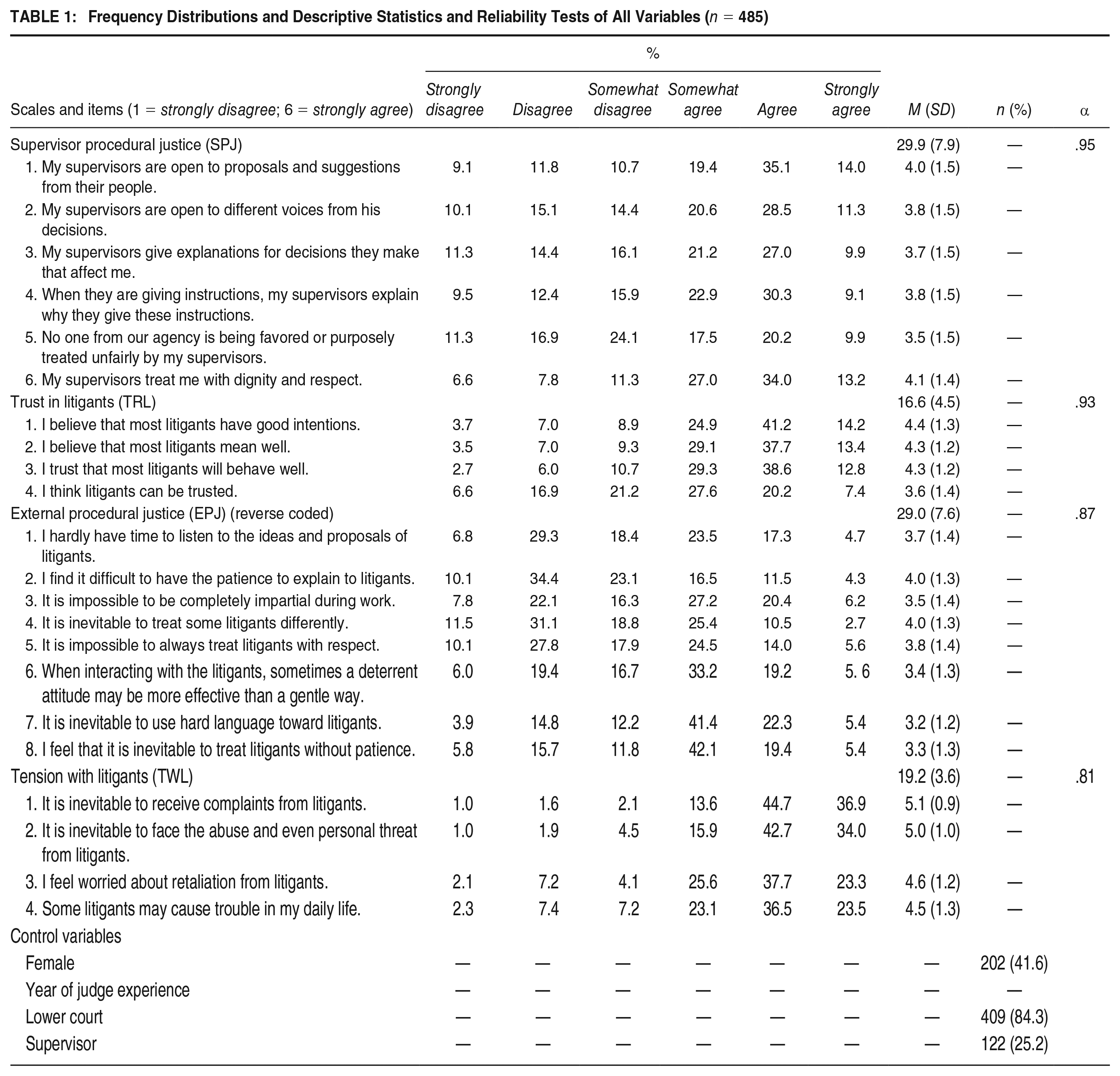
As shown in Table 1, 42% of the respondents are female. The sample judges have an average of 17 years of service. More than 80% of our respondents are judges assigned to the lower courts, and a quarter of the respondents serve as supervisors. It should be noted that supervising judges in our sample are also supervised by higher levels of judge or administrators. Most judges (94.4%) fell within five age groups (i.e., 31–35, 36–40, 41–45, 46–50, and 51–55), with 51 to 55 (23.9%), 36 to 40 (20.0%), and 41 to 45 (19.6%) as the three highest percentage groups. Only 1.9% of judges reported that they were racial/ethnic minorities. Almost all judges (98.6%) received at least a bachelor’s degree, with 36.7% having a master’s or higher degree. Married judges represented 95.5% of the sample. Besides these key background characteristics, other demographic variables such as age, race/ethnicity, educational attainment, and marital status have little variations or did not show significant connections to mediating variables in preliminary analysis and thus were not reported in Table 1.
Frequency Distributions and Descriptive Statistics and Reliability Tests of All Variables (n = 485)
Measures
The explanatory model of Chinese judges’ perceived tensions with litigants consists of an exogenous variable and three endogenous variables with two serving as sequential mediating variables, and one as the outcome variable. As illustrated in Table 1, the exogenous variable, perceived supervisor procedural justice, was constructed based on six items. The respondents were asked about their views of such key dimensions as voice, fairness, and accountability reflecting fair and just treatments by supervisors (Van Craen, 2016). Two mediating variables represent Chinese judges’ perceptions of trust in litigants and external procedural justice. The former includes four items, reflecting judges’ perceived trustworthiness of litigants. The latter is constructed by eight items, indicating the extent to which judges are accountable, impartial, and respectful to litigants during judge–litigant contacts. The outcome variable, tensions with litigants, demonstrates judges’ perceived tensions with litigants along four items. Response categories for all these items varied from strongly agree (1) to strongly disagree (6), with greater values indicating higher levels of perceived supervisor procedural justice, trustworthiness of litigants, external procedural justice, and perceived tensions with litigants. The construction of all these measures was justified through confirmatory factor analysis (CFA) discussed in detail below. In addition, Cronbach’s alpha associated with each factor ranged from .81 to .95, suggesting good internal consistency across the items on these multi-item measures. Besides the four key factors, four additional variables were controlled in the analysis. Gender, the court level, and supervisory position were dichotomized as dummy variables, with 1 representing females, lower courts, and supervisors, respectively. It should be noted that supervising judges in our sample are also supervised by higher levels of judges or administrators. Judges’ experience was measured in years.
Procedure
The research team developed a Chinese survey questionnaire, following key items in a survey instrument employed by a cross-national comparative project on internal and external procedural justice within police departments (see Haas et al., 2015; Van Craen & Skogan, 2017; Wu et al., 2017), with tailored questions reflecting the court contexts in China. The back translation process was utilized, involving one team researcher first translating the Chinese survey instrument into English and a second team member then translating the English questionnaire back to Chinese. The two Chinese surveys were compared, and minor changes were made to ensure the comparability between the Chinese and English instruments. A small group of Chinese judges participated in a pretest of the Chinese survey, and minor changes were made based on their suggestions and comments.
The survey instrument was set up on a popular online survey platform in China. Data collection started in April 2022 and lasted for a week. The survey invitation was sent to dozens of internal judicial WeChat groups at all levels of courts (i.e., lower courts, intermediate courts, and the high court). WeChat is China’s largest social media app, widely used by government employees and the public. All judges and their assistants in the WeChat groups were invited to participate. However, an accurate response rate was unknown as many judges and the assistants belonged to multiple WeChat groups and we did not have the exact number of judges in each WeChat group. The online survey instrument includes a cover page explaining the purpose of the survey and emphasizing the voluntary and anonymous nature of participation.
Analysis
This study adopted three stages of data analysis. First, we ran percentage distributions of the four items reflecting judges’ views of tensions with litigants. Second, we performed CFA to determine whether those theoretically driven indicators can load onto their respective factors. Given that our scales are seldom or have never been tested in the court context, CFA is an important process of validating the fitness of the hypothesized measurement model. Finally, to test our four hypotheses, we employed structural equation modeling (SEM) to evaluate the relationships between the four key factors. The maximum likelihood algorithm was used to estimate parameters. To determine whether our proposed measurement and path models fit the observations, criteria that have been commonly used in existent research were also used, including (a) the comparative fit index (CFI), (b) the root mean square error of approximation (RMSEA), and (c) the Tucker–Lewis index (TLI).
Results
Percentage Distributions of Perceived Tensions
Table 1 displays the percentage distributions of the evaluative items of judges’ perceived tensions with litigants. Looking at the response categories of agree and strongly agree only, more than 80% of the respondents endorsed the statement that receiving complaints from litigants is evitable. Similarly, more than 70% of the respondents supported the notion that facing abuse and personal threats from litigants is inevitable. Approximately 60% of the judges worried about retaliation or causing trouble in their daily life by litigants. Considering these results together, Chinese judges perceive a very high degree of tension with litigants related to work challenges and personal safety.
Confirmatory Factor Analysis—Validating the Measurement Model
Figure 1 reports the CFA results for the measurement model. Model fit statistics revealed an adequate fit of the model to the data (TLI = .96; CFI = .97; RMSEA = .06; χ2 = 133.10, df = 95, p = .006). This measurement model did not yield any excessively large modification indices (MIs). Factor loadings ranged from .48 to .96. All indicators were loaded onto their respective, theoretically based factors, justifying the four latent measures of perceived supervisor procedural justice, trustworthiness of litigants, external procedural justice, and perceived tensions with litigants. The correlations between the factors are low to moderate, with absolute values varying from .17 to .48.
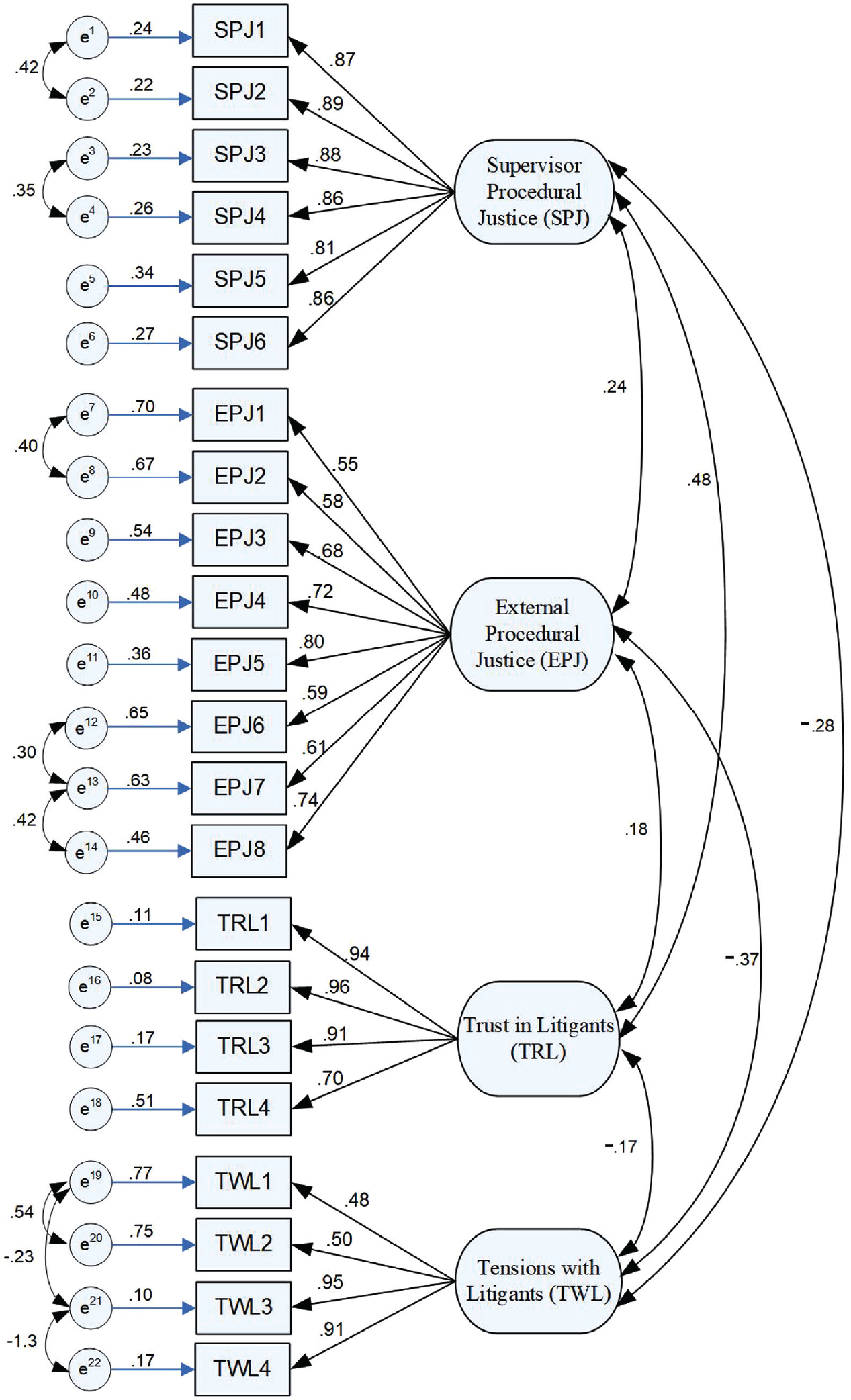
Confirmatory Factor Analysis Results (n = 485)
Structure Equation Modeling—Disentangling Direct and Indirect Relationships
Figure 2 presents the SEM results, with four solid-line paths illustrating significant relationships while two dot-line paths representing nonsignificant connections. Goodness-of-fit statistics suggest a good fit of the model to the data (TLI = .96; CFI = .97; RMSEA = .06; χ2 = 1,215.87, df = 120, p = .006). First, consistent with our first hypothesis (H1), perceived supervisor procedural justice is negatively related to tensions with litigants (β = –.18), meaning that perceived supervisor procedural justice directly reduced judges’ perceived tensions with litigants. Second, perceived supervisor procedural justice is positively linked to trust in litigants (β = .48). When judges believe that they have been treated fairly and justly by their supervisors, they are more likely to view litigants as trustworthy. Contrary to our expectation, however, trust in litigants is not significantly related to perceived tensions with litigants (β = –.02). Therefore, H2 is partially supported. Third, in line with H3, perceived supervisor procedural justice is positively associated with perceived external procedural justice (β = .20), suggesting that judges are more inclined to render procedural justice to litigants when they perceive being treated fairly and justly by their supervisors. Also as expected, external procedural justice is negatively connected to perceived tensions with litigants (β = –.32). Fourth, as mentioned above, perceived supervisor procedural justice has a positive relationship with trust in litigants, but the latter is not significantly linked to external procedural justice (β = .08) even though external procedural justice is connected to perceived tensions with litigants. H4, thus, is partially supported. Finally, among the four control variables, two exert a significant relationship with perceived external procedural justice, with female judges (β = .16) and seasoned judges (β = .15) more willing to treat litigants with procedural justice. None of the control variables demonstrate any direct relationships with perceived tensions with litigants.
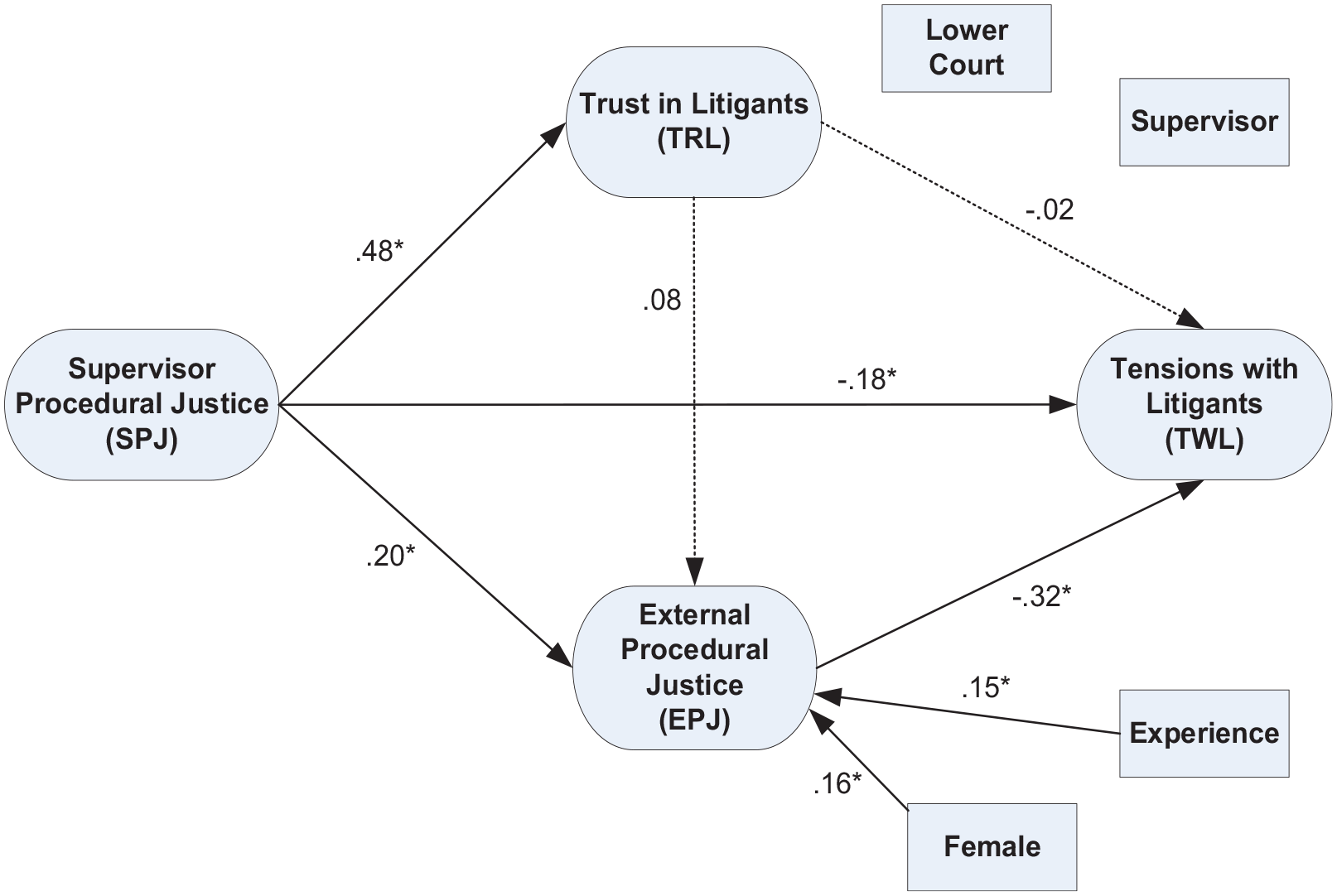
Structural Equation Modeling Results
Table 2 summarizes the direct, indirect, and total relationships between perceived supervisor procedural justice and tensions with litigants. Despite a significant total indirect relationship (β = –.09), the direct connection between perceived supervisor procedural justice and perceived tensions with litigants is mainly direct (65%). The only significant indirect path is from perceived supervisor procedural justice to perceived external procedural justice and then to perceived tensions with litigants (β = –.06). It should be noted that the indirect relationships were calculated by multiplying the path coefficient of the exogenous variable (i.e., supervisor procedural justice) by the path coefficients of the mediating variables and then by the path coefficient of the endogenous variable (tension with litigants). Together, these results suggest that judges who expressed that their supervisors treat them with procedural justice are more likely to have lower perceived tensions with litigants both directly and indirectly through perceived external procedural justice.
The Total, Total Indirect, and Specific Relationships of Supervisor Procedural Justice (n = 485)
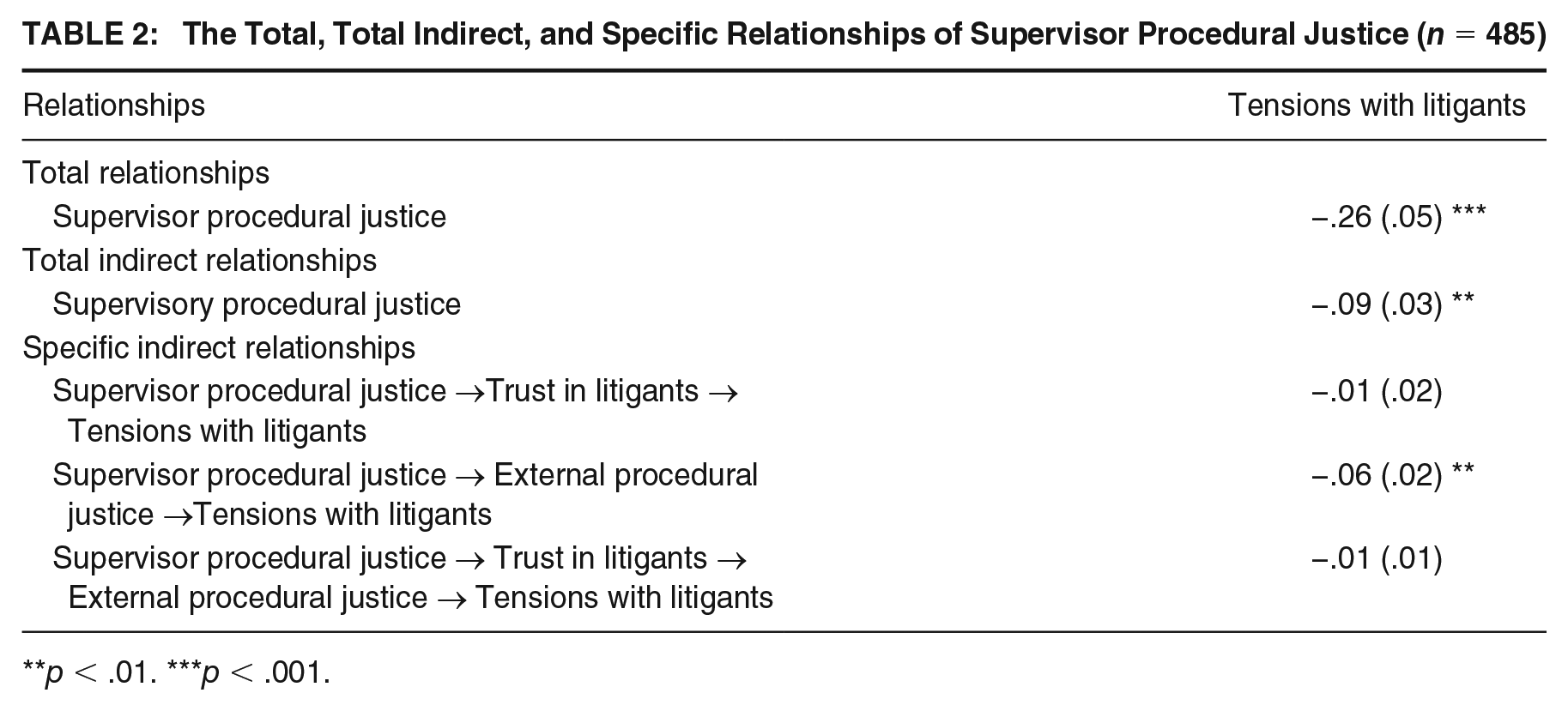
p < .01. ***p < .001.
Discussion
This study represents one of the first attempts to explore the importance of perceived supervisor procedural justice in fostering better judge–litigant relations. We hypothesize that perceived supervisor procedural justice reduces is negatively related to perceived tensions with litigants directly and indirectly through litigant trustworthiness and perceived external procedural justice. Data analysis revealed several interesting findings, which largely support our hypotheses. First, as expected, perceived supervisor procedural justice is instrumental in stimulating harmonious relationships between trial judges and litigants by fostering judges’ fair treatment of litigants that mitigates tension with litigants. Our findings suggest that the utility of perceived supervisor procedural justice commonly found among police and correctional officers can be extended to the judicial personnel, who normally have higher job autonomy, lower administrative supervision, and a safer work environment. In the case of Chinese judges, perceived tensions due to concerns about complaints, abuse, and threats from litigants are quite high (see Table 2), indicating an urgent need to alleviate such occupational stress. Our findings confirm the vital role of organizational justice in reducing judicial tensions with litigants directly and indirectly. Future research should continue investigating the connection between perceived supervisor procedural justice and judicial safety and risks by testing the explanatory model in different social and legal settings.
Second, our findings highlight the mediating role of perceived external procedural justice in the relationship between judges being treated fairly by supervisors and their feelings of tension with litigants. Meanwhile, litigant trustworthiness failed to bridge the connection between perceived supervisor procedural justice and tensions with litigants. It appears that regardless of judges’ personal belief in the trustworthiness of litigants, as long as they practice procedural justice, their tensions with litigants will be reduced. In other words, it is judges’ behaviors (e.g., how they treat litigants) rather than their attitudes (e.g., how much they trust litigants) toward litigants that matter in minimizing their tensions with litigants. It should be noted that the decreased tensions between judges and litigants could be due to both subjective and objective decreases in tension. That is, judges have lower perceived tensions when they experienced supervisor procedural justice and attempted to apply procedural justice toward litigants, whereas the actual tensions between judges and litigants declined when litigants are treated with procedural justice. More studies should be conducted to evaluate additional mediating mechanisms that may explain the linkage between perceived supervisor procedural justice on judges’ perceived tensions with litigants.
Finally, two control variables, gender and experience, are also predictive of perceived external procedural justice, with female and seasoned judges more likely to engage in procedurally fair practice toward litigants. Female judges, compared with their male counterparts, may have more ethics of care that center primarily on interpersonal relationships, endorsing values such as peace, sympathy, and caring, which further promotes their greater devotion to procedural justice (Jurik & Martin, 2007). Chinese female judges’ higher involvement in procedurally fair treatments may also stem from their greater concerns with personal safety. Previous studies have found that female judges were more likely than their male counterparts to experience stress and concerns about their safety (Chamberlain & Miller, 2009; Flores et al., 2009). Such stress and concerns may stir a stronger inclination to deliver fair and just practices to litigants. One also expects experienced judges to be more likely to engage in external procedural justice as their past experiences have possibly showcased the benefits of showing care, respect, and politeness to litigants in promoting positive work relationships. Furthermore, older individuals are in general better at regulating emotions and focusing on positive interpersonal relationships than younger individuals, contributing to their greater engagement in procedurally fair practices (Luong et al., 2011). Future research should gather more information through in-depth interviews with judges to assess these possible explanations.
Before discussing policy implications, a few limitations of this study should be acknowledged. First, we utilized a convenience sample of judges from a Chinese province to test our hypotheses. Although our sample shows a reasonable resemblance to the population, our findings may not be generalizable to other regions, such as the less-developed part of Western China. A systematic, nationwide sampling plan should be preferred in future research. Second, our study only considers one form of organizational justice, that is, how judges perceive the treatment by their supervisors. Judges’ perceptions of tensions with litigants also could be linked to their experiences with the agency and co-workers. Future studies should incorporate agency justice and peer justice into the explanatory model to fully test the influence of organizational justice. Finally, this study focuses on judges’ views of supervisor procedural justice and tensions with litigants without comparable information from other courtroom workgroup members. Given the dynamic and interactive relationships among trial judges, supervisors, and court litigants, future studies should consider drawing data from all parties to thoroughly investigate the topic.
Our findings bear some policy implications for judicial administrators. This study confirms that enhancing perceived supervisor procedural justice is a promising avenue to achieve beneficial organizational outcomes, particularly regarding establishing trustworthy, respectful, and less confrontational relationships between judges and litigants. Court supervisors’ fair and just treatments of trial judges can be instrumental in mitigating potential tensions between judges and litigants and improving the public’s unfavorable attitudes toward the courts in general. Thus, court administrators must prioritize supervisor justice by cultivating a supportive organizational climate conducive to quality leadership and supervision. Knowledge and skills about participative, transactional, and accountable leadership styles should be instilled into court supervisors through training seminars and workshops. Administrators should acknowledge supervising judges who display exemplary justice practices and reward them in performance evaluations and promotion. Administrative attention should also be given to trial judges’ commitment to external procedural justice toward litigants. Again, creating a supportive and friendly work environment that stresses the organizational culture of respect, voice, neutrality, and accountability in interactions with litigants should be actively pursued. Finally, policies and programs should be implemented to train judges in procedural justice’s basic principles and core practices. Such initiatives should be geared toward male and less experienced judges who are less likely to practice procedurally fair treatments toward litigants. Implementation of a truly just and fair court can enhance court legitimacy and improve judge–litigant relations in the long run.
Footnotes
AUTHORS’ NOTE:
This study is partially supported by two grants (China Postdoctoral Science Foundation, No. 2023M732049 and Shandong Provincial Postdoctoral Science Foundation, No. SDBX2023085) awarded to the first author. The study’s findings and discussions do not necessarily reflect the policies and positions of the funding agencies.
