




Abstract
Police-reported incidents of youth family violence have been increasing in frequency yet limited research exists about how best to risk assess this cohort. The present study examined the validity of the Victoria Police Screening Assessment for Family Violence Risk (VP-SAFvR) for Australian youth aged 10 to 24 years (n = 4,999) reported to police for using family violence. The 6-month base rate of family violence recidivism was 24.24% for same-dyad recidivism and 35.31% for any-dyad recidivism. The VP-SAFvR demonstrated moderate discriminative validity (area under the curve [AUC] = .65) for the total sample and comparable discriminative validity across age (AUCs = .64-.67), gender (AUCs = .63-.65), and relationship (i.e., child-to-parent abuse, sibling abuse, intimate partner abuse; AUCs = .62-.65). Predictive validity was adequate at a threshold score of four for 10- to 24-year olds and most subgroups. Results demonstrate the utility of a structured risk triage tool for youth family violence.
Incidents of police-reported youth family violence have increased in recent years (Phillips & McGuinness, 2020; Walker & Woerner, 2018), yet abusive behavior by young people remains significantly under-reported (Fitz-Gibbon et al., 2018; Kuay & Towl, 2021). While the negative effects of youth family violence have been well documented internationally (Ackard et al., 2007; Farrington & Ttofi, 2021; Fitz-Gibbon et al., 2018; Kuay & Towl, 2021), there is relatively little research examining how best to risk assess and manage young people who engage in abusive behavior within the family context. Broad definitions of family violence are increasingly used across various jurisdictions (Freeman, 2018; Jolliffe Simpson et al., 2021; Miles & Condry, 2016; Spivak et al., 2021) in recognition of the diverse behaviors that can be abusive and the diverse relationships in which such behavior can be enacted. Family violence includes abuse toward relatives (e.g., parents, siblings, other relatives) and abusive behavior toward dating or intimate partners, encompassing both physical (e.g., physical assault, sexual assault) and nonphysical (e.g., psychological abuse) behavior. Many jurisdictions recognize the capacity for family violence to include behavior that is not associated with criminal charges (Jolliffe Simpson et al., 2021; Miles & Condry, 2016; Spivak et al., 2021). For example, in the Australian state of Victoria, family violence is defined broadly in the Family Violence Protection Act (2008) as involving physical, sexual, or a variety of psychological forms of abuse. Only half (50.8%) of all police-recorded family violence incidents in Victoria between 2020 and 2021 involved a criminal offense for which charges were laid (Crime Statistics Agency, 2021).
Within the youth family violence literature, child-to-parent abuse, intimate partner abuse, and sibling abuse, are the most commonly studied forms of abusive behavior. Approximately, 8% to 10% of all police-reported family violence involves the use of abusive behavior by young people aged under 18 years (Phillips & McGuinness, 2020; Snyder & McCurley, 2008), with approximately 60% of incidents involving abuse toward a parent (i.e., child-to-parent abuse; Phillips & McGuinness, 2020), 8% to 16% involving abuse toward a boyfriend or girlfriend, and 16% to 24% involving sibling abuse (Boxall & Sabol, 2021; Snyder & McCurley, 2008). Similar to findings from the adult literature, research examining police-reported youth family violence disproportionately involve males engaging in abusive behavior toward females, with this gendered pattern being observed across all relational forms of youth family violence (Boxall & Sabol, 2021; Phillips & McGuinness, 2020; Simmons et al., 2018; Snyder & McCurley, 2008). In addition, the prevalence of different relational forms of abuse vary according to age, with police-reported intimate partner abuse increasing, and child-to-parent abuse decreasing, as young people progress from adolescence into young adulthood (Snyder & McCurley, 2008).
The literature examining youth family violence is growing rapidly, yet there has been relatively little application of this knowledge to the field of risk assessment. Children and young people have consistently been recognized within the family violence literature as some of the most vulnerable victims of violence and abuse (Australian Institute of Health and Welfare [AIHW], 2018; Farrington & Ttofi, 2021), yet there has been a reticence to acknowledge the propensity for young people to also engage in abusive behavior themselves. This has often meant family violence behavior by youth has been subsumed under the banner of problematic adolescent behavior, leading to an absence of appropriately validated risk assessment tools for young people.
Risk Assessment Tools for Young People Who Use Family Violence
Given the lack of robust evidence and appropriately validated risk assessment tools specific to youth family violence, young people are typically assessed using more general risk assessment protocols (Shaffer et al., 2022). While tools like the Structured Assessment for Violence Risk in Youth (SAVRY; Borum et al., 2006) and the Youth Level of Service/Case Management Inventory (YLS/CMI; Hoge & Andrews, 2006, 2011) are often employed to assess young people who engage in violent behavior, they have been shown to be poor predictors of intimate partner abuse perpetration among youth aged 12 to 18 years (Shaffer et al., 2022). It remains unclear whether such generalist youth risk assessment instruments over- or under-estimate the likelihood of family violence recidivism, as the authors did not explicitly report classification statistics (e.g., sensitivity, specificity, positive predictive value [PPV], negative predictive value [NPV]). Although the findings by Shaffer et al. (2022) were limited by small sample size (n = 156) and low base rate of intimate partner abuse (11.5%), they raise questions regarding the applicability of these general tools for use with young people who use other relational forms of family violence, including whether they assess for key risk factors for family violence recidivism.
Likewise, there have been suggestions that adult family violence tools like the Spousal Assault Risk Assessment (SARA-V3; Kropp & Hart, 2015) and the Brief Spousal Assault Form for the Evaluation of Risk (B-SAFER; Kropp et al., 2010) may be useful for young people who engage in intimate partner abuse (Bowen & Walker, 2015). Although validation of these tools for young people is limited, Shaffer et al. (2022) found that several items of the SARA-V3 were applicable for use with adolescents and proposed revisions to other items to make them more relevant for this cohort; this adaption of the SARA-V3 (i.e., Youth Intimate Partner Assessment Guide) is yet to be validated.
Several family violence risk tools used by police, including the Domestic Violence Screening Instrument (DVSI-R; Williams & Grant, 2006), the Dynamic Risk Assessment (DYRA; Bissielo & Knight, 2016, as cited in the work of Jolliffe Simpson et al., 2021), the Victoria Police Screening Assessment for Family Violence Risk (VP-SAFvR) (McEwan et al., 2019) and the Static Assessment of Family Violence Recidivism (SAFVR; Bissielo & Knight, 2016), have been validated for use with those under 18 years. However, whether these tools are valid across various youth developmental periods, relationships of abuse, and gender has not yet been explored. Validation studies of police risk assessment tools typically view young people as a homogeneous group, with limited consideration given to the ongoing developmental changes experienced by young people throughout adolescence and young adulthood, or to how risk assessment tools may perform differently depending on the young person’s sex.
The Child-to-Parent Violence Risk Assessment tool (CPVR) is an instrument that has been specifically designed for use with young people who engage in child-to-parent abuse (Loinaz et al., 2017). However, it was not created for the purpose of examining risk of recidivism and the exact nature of risk being assessed remains unclear (Loinaz & de Sousa, 2019; Loinaz et al., 2017). Loinaz and de Sousa (2019) examined the risk and protective factor profiles among clinical (n = 61) and judicial (n = 30) samples of young people who are known to have engaged in child-to-parent violence, finding the CPVR tool to effectively classify young people who engaged in different forms of child-to-parent violence (AUC = .83). However, the CPVR has only been used to retrospectively classify young people already known to have engaged in child-to-parent violence, with no studies currently available suggesting it can discriminate the risk of future family violence.
Issues With the Current State of Youth Family Violence Risk Assessment Research
The small but growing literature examining risk assessment and management of young people who use family violence remains hampered by several factors, three of which are outlined here. First, there has been a tendency to focus on one relational form of violence (i.e., child-to-parent abuse, sibling abuse, intimate partner abuse; Elliott et al., 2020; Johnson et al., 2015; Kuay & Towl, 2021), rather than broadening the scope to include the many relationships within which violence can occur. The importance of broadening the scope of risk tools to allow for assessment of multiple relational forms of family violence concurrently is indicated through research showing similar underlying risk factors across the different relational forms of abuse. These shared risk factors include substance abuse issues (Ibabe et al., 2013; Jennings et al., 2017; Leen et al., 2013; Simmons et al., 2018), violence-supportive attitudes (Leen et al., 2013), and problems with education or employment (Jennings et al., 2017; Simmons et al., 2018). Similarly, a substantial minority of youth (16%-28%; Boxall & Sabol, 2021; Sheed, et al., 2022a) are reported to police for using family violence toward multiple family members, highlighting the need for police and service providers to be aware of the young person’s broader relational risk.
Second validation studies of risk assessment tools typically view young people as a homogeneous group, with limited consideration given to the ongoing developmental changes experienced by youth across the early adolescence (10–14 years), late adolescence (15–19 years), and young adulthood (20–24 years; World Health Organisation [WHO], 2021). Increasingly, researchers, organizations, and service providers are recognizing the need for a developmentally informed approach for young people aged up to 25-year old given neuroscientific and psychological evidence of delayed brain maturation into the 20s (Cohen et al., 2016; Scott et al., 2016). Indeed, many services for youth provide support up to the age of 25 years (McGorry et al., 2022; Royal Commission into Family Violence (VIC), 2016), suggesting the need to consider both adolescents and young adults within the youth family violence literature to enhance translatability of research. To date, there are no risk assessment tools for youth family violence that have been validated according to the young person’s age group. This is of concern as best-practice guidelines regarding risk assessment and management of young people highlight the importance of understanding age-related base rates of general and specific forms of violence (Borum et al., 2006), and recognizing young people as a heterogeneous cohort requiring nuanced and developmentally informed research (Borum et al., 2006).
Third, gender-specific validation of risk assessment tools for young people is required (Shaffer et al., 2022), particularly given the presence of research suggesting risk factors for youth family violence may differ among males and females (Ibabe et al., 2013; Leen et al., 2013). Finally, youth family violence research has been primarily descriptive (Boxall & Sabol, 2021; Simmons et al., 2018), with little consideration of applying knowledge to the processes of risk assessment, management and therapeutic intervention. Although the extant literature has provided an understanding of potential risk and protective factors that may contribute to youth family violence, additional research in applied settings is needed.
The Present Study
The present study aimed to address the abovementioned gaps by exploring the discriminative and predictive validity of an existing family violence risk assessment tool for use with young people aged 10 to 24 years. The present study uses the term “discriminative validity” to discriminate recidivist from nonrecidivist individuals using the Area Under the Curve (AUC) metric. The VP-SAFvR (McEwan et al., 2019) is an actuarial instrument developed in the Australian state of Victoria and was designed to assess risk of any form of future police-reported family violence within the same family. Prior work found the tool had moderate discriminative validity (AUC = .66) in adult field trials, however, classification accuracy was reduced for young people under 18 years, resulting in the suggested application of a lower cut-off score to improve predictive capacity for this group (McEwan et al., 2019; Spivak et al., 2021).
The present study had five key objectives. First, to identify the base rate of family violence recidivism among Australian family violence-users aged 10- to 24-year old. Second, to determine whether the VP-SAFvR is valid for use with youth aged 10 to 24 years of age, both for recidivism within the same dyad and recidivism within any relational dyad. Third, to explore whether the discriminative and predictive validity of the tool differs according to the young person’s age. Fourth, to determine whether the VP-SAFvR is valid for male and female youth; and fifth, to assess the tool’s discriminative and predictive validity according to the relational dyad of abuse (i.e., child-to-parent abuse, intimate partner abuse, sibling abuse).
Method
Design
The study used a prospective follow-up design using field data from Victoria Police administrative databases, which was extracted by Victoria Police staff and provided to researchers in de-identified form. The data used in this study were scored and collected by Victoria Police for the purposes of triaging cases of family violence, thereby qualifying the research presented here as a field study (Edens & Boccaccini, 2017). Victoria Police are responsible for all policing in the Australian state of Victoria (population 6.63 million at the time of the study, 67% of whom live in the state’s capital city of Melbourne; Australian Bureau of Statistics [ABS], 2021). Family violence-users were identified at the time of their index incident (i.e., occurring between September 1, 2019, and December 31, 2019) and their data were linked to any family violence incidents in which they were involved over the subsequent 6 months.
Family Violence Definitions
The present study uses the terms “family violence-user” and “young person who uses family violence” in recognition of the need to consider young people as more than their behavior, and to encourage a person-centered approach to conceptualizing youth family violence. The term “respondent,” which is police parlance for those who engage in family violence, is not a widely recognized term outside policing agencies and so was not used here. Victoria Police respond to all reports of family violence in the Australian state of Victoria. Police record such incidents as a matter of policy when they judge that the incident has involved family violence as defined in the Victorian Family Violence Protection Act 2008. The Act defines family violence as: Behavior by a person towards a family member of that person if that behavior is physically or sexually abusive; or is emotionally or psychologically abusive; or is economically abusive; or is threatening; or coercive; or in any other way controls or dominates the family member and causes that family member to fear for the safety and wellbeing of that family member or another person. (Family Violence Protection Act, 2008, s. 5)
Under the Act, the term “family members” refers to relatives, intimate partners, and children who normally reside with the victim and/or family violence-user. It also includes “any other person whom the relevant person regards or regarded as being like a family member” (Family Violence Protection Act, 2008, s. 8), such as foster carers or the carer of a person with a disability. Some forms of family violence may involve chargeable criminal offenses (e.g., assault or threats), however, many do not (e.g., psychological abuse, coercion).
The age-based analyses in this study utilized developmental periods that were derived from the WHO (2021). The WHO (2021) defines “young people” as those aged 10 to 24 years and identifies those aged 10 to 14 years as being in a period of “early adolescence,” while those aged 15 to 19 years are in a period identified as “late adolescence” “Young adulthood” includes those aged 20 to 24 years. The inclusion of a broad age range in the present study allows for the identification of age-specific base rates and a developmentally nuanced examination of the validity of the VP-SAFvR. While research suggests that the causes of aggressive behavior used by those aged 10 to 14 years certainly differs from causes of similar behavior by young adults (Marcus, 2017), the purpose of a police risk assessment tool, such as the VP-SAFvR, is to classify by who is likely to repeat such behavior, so that, those who are more likely can be directed toward interventions (where causes can be further assessed and responded to). As has been noted by previous authors (Jolliffe Simpson et al., 2021; Spivak et al., 2021), having a single risk assessment tool that works effectively for this purpose, regardless of age or developmental stage, makes it more feasible for police to use, given resourcing constraints. Police often apply the same family violence risk assessment tool regardless of the family violence-user’s developmental stage or whether the violence is age-normative. While statistical invariance was not assessed in the current manuscript, the analyses showed the tool displayed moderate discriminative validity (as well as high sensitivity and moderate specificity) across age, gender, and relationship type, thereby supporting its use by police officers when responding to cases of youth family violence.
Data Source
All information pertaining to family violence incidents is recorded by police using family violence reports and is stored on Victoria Police’s Law Enforcement Assistance Program (LEAP) database. Victoria Police use the LEAP program to record all known police involvements and offenses (both family violence- and nonfamily violence-related) for an individual, regardless of outcome (e.g., arrested, charged, convicted). Whenever Victoria Police officers respond to an incident of family violence, they are required to complete a family violence report to record characteristics of the incident, the victim, the person using family violence, and their relationship. The 14-item VP-SAFvR is embedded within the family violence report and is scored by responding police officers based on information obtained from the victim, the person who used family violence, any third parties, and information from the LEAP database.
All available data from these family violence reports involving a unique relationship dyad during the index period were linked to any future family violence incidents in which the young person was the family violence-user in the subsequent 6-month period. Young family violence-users and victims were matched across time using numerical police identifiers that link across all appearances of the individual in the police database. These identifiers were adjusted so they were nonidentifiable to researchers.
Sample
This study involved the analysis of all police-reported incidents of family violence in Victoria during the 4-month period between September 1 and December 31, 2019 (index period) in which a young person aged 10 to 24 (inclusive) was listed as the user of family violence (N = 5,014). Incidents of family violence that occur during the index period (i.e., between September 1, 2019-December 31, 2019) are referred to as the “index incident.” Given the focus of this study is to validate the VP-SAFvR for use with youth aged 10 to 24 years, young people were removed from the sample if VP-SAFvR data were missing (15 cases, 0.03%). This resulted in a total of 4999 young family violence-users being included in the sample for the present study.
The sample was drawn from a wider population of all 24,419 family violence reports recorded by police during the same period, of which 358 (1.50%) had missing age and so were excluded from selection for this sample. The dyadic relationship between the young person and victim was categorized into mutually exclusive groups according to the initial reported incident during the index period. Specifically, young people were identified as engaging in child-to-parent abuse, intimate partner abuse, sibling abuse, or other family abuse (e.g., grandparents, cousins, aunts, uncles, and carers).
More than two thirds of the young family violence-users were male (n = 3,519, 70.42%) while more than one quarter were female (n = 1,478, 29.57%). There were two cases (.04%) in which the sex of the young family violence-user was not specified. The mean age of young people was 19.19 (SD = 3.51) years at the time of the index incident. These characteristics are broadly consistent with previous research examining youth family violence incidents among police-reported samples (Boxall & Sabol, 2021; Phillips & McGuinness, 2020). There is a slightly higher percentage of male family violence-users, which is likely reflective of the inclusion of young adults in the present sample, as research has shown there to be a higher proportion of males among older youth and adult family violence-users (Phillips & McGuinness, 2020; Simmons et al., 2018).
Measures
Victoria Police Screening Assessment for Family Violence Risk
The VP-SAFvR is an actuarial risk assessment tool developed from a sample of 24,446 family violence incidents recorded by police in the Australian state of Victoria between July 2013 and June 2014 (McEwan et al., 2019). The tool consists of 14 risk factors, which are provided in Table 2. Each risk factor is recorded as absent (scored 0) or present, with a weighted score of 1 or 2 assigned based on the strength of the relationship between the variable and its capacity to predict family violence recidivism (McEwan et al., 2019; Spivak et al., 2021). The weights are then added to produce a total VP-SAFvR score, which is used to determine a threshold for differing levels of risk. The tool typically employs a threshold score of 4 for adults, although previous research suggests a threshold score of 3 may be more appropriate for people under 18 years (McEwan et al., 2019; Spivak et al., 2021). A threshold score of 4 suggests an elevated level of risk and indicates the need for additional oversight by police officers with specialist family violence training.
While the tool does not have norm scores, the scoring of the tool is based on a development study (McEwan et al., 2019) involving data on all family violence cases in Victoria over a 12-month period (from 2013 to 2014) and has been shown to be a reliable and valid predictor of future incidents of police-reported family violence. The tool has demonstrated moderate discriminative validity (AUC = .66) in adult samples, however, both discriminative validity (AUC = .61) and classification accuracy were somewhat reduced among those aged under 18 years (McEwan et al., 2019). The inter-rater reliability of the VP-SAFvR is excellent, with item-level absolute agreement between responding police officers exceeding 80% for 12 of the 14 items (Spivak et al., 2021).
Family Violence Recidivism
The VP-SAFvR was developed and is used to assess the likelihood of a subsequent family violence incident occurring within the same dyad or involving a related child (McEwan et al., 2019), making it a situationally specific risk assessment instrument. However, the present study examined the capacity of the VP-SAFvR to assess the likelihood of a subsequent family violence incident within both the same relationship dyad and any relationship dyad. This is due to research showing that a significant minority of young people engage in abusive behavior across multiple relationships (Boxall & Sabol, 2021).
Given this, “same dyad” recidivism was defined as any additional police-reported family violence incident within the 6-month follow-up period involving (a) the same two people (irrespective of their role in the subsequent incident) and/or (b) the index family violence-user and a related child. This definition of same-dyad recidivism was selected as it is the definition of family violence used in the development and validation of the VP-SAFvR (McEwan et al., 2019; Spivak et al., 2021). Given this study aims to validate the VP-SAFvR for young family violence-users aged 10 to 24 years, the original definition of recidivism employed by the VP-SAFvR was used. This research extends upon existing studies that validate the VP-SAFvR by also examining any-dyad recidivism. “Any dyad” recidivism was defined as any new family violence report involving the index young person as a family violence user again, toward any victim, during the 6-month follow-up period. These two forms of recidivism are not mutually exclusive.
Examination of family violence recidivism was limited to a 6-month in the present study, as this represented the longest follow-up period for which data could be obtained at the time of data analysis. A follow-up period of at least 12-month duration would have been ideal for comparison purposes with the follow-up time in the original development and validation of the VP-SAFvR. While this is a limitation, previous research has shown that the majority of family violence recidivism occurs within 6 months of a report to police (Morgan et al., 2018; Stansfield & Williams, 2014). Moreover, using police data from the same jurisdiction as this study, Boxall and Morgan (2020) identified that the highest risk period for family violence recidivism by young people was approximately 30 days following a police report. Given the evidence that short term recidivism outcomes are common in family violence, and family violence by young people, this validation study represents an important addition to the literature even with a limited follow-up period. A priori decisions were made to define recidivism as any future police-reported incident of family violence rather than relying on police charges. This decision was made as charging patterns may change over time and because many forms of family violence do not have an accompanying criminal offense. This method is consistent with how the VP-SAFvR was developed (McEwan et al., 2019).
Procedure
Data were extracted from LEAP by Victoria Police staff and provided to researchers in de-identified form. All police-recorded data from the first family violence report involving a unique dyad during the index period were collected, along with demographic data relating to sex and age for each victim and family violence-user. Family violence recidivism was determined using a 6-month follow-up period.
The location (metropolitan and rural/regional) of the index incident was identified using the ABS (2018) data. This involved identifying the location of the index incident according to one of the remoteness area classifications (i.e., major cities of Australia, inner regional Australia, outer regional Australia, remote Australia, very remote Australia) using the postcode of the index family violence incident recorded by police. Those incidents occurring in a postcode classified as “major cities of Australia” were coded as metropolitan, while incidents occurring in any one of the four other classifications were identified as rural/regional.
Approvals and Ethics Clearances
The study was approved by the Swinburne University Human Research Ethics Committee (SUHREC: November 30, 2020, reference: 20204231-5617) and the Victoria Police Research Coordinating Committee (Project 968).
Data Analysis
Data were analyzed using IBM SPSS Statistics (2020), version 28. AUC and associated test statistics (sensitivity, specificity, PPV, and NPV) were used to examine the validity of the VP-SAFvR for use with young people. AUC and test statistics were further used to examine whether the validity of the VP-SAFvR differed according to sex (male or female), age (10–14, 15–19, and 20–24 years) and the relationship of abuse (i.e., child-to-parent abuse, intimate partner abuse, and sibling abuse).
These statistics were examined according to VP-SAFvR threshold scores of 3 and 4 because the tool typically employs a threshold score of 4 for adults, although previous research suggests a threshold score of 3 may be more appropriate for people under 18 years (McEwan et al., 2019; Spivak et al., 2021). Given this study is examining both adolescents and young adults, both thresholds were examined. Other family abuse (i.e., abuse toward grandparents, uncles, cousins, etc.) was not explicitly examined beyond descriptive analyses (Table 1) as this form of abuse made up less than one in ten incidents. The analyses were run separately for both same-dyad recidivism and any-dyad recidivism. Results of same-dyad recidivism were included in the results section of this article, while the tables generated for any-dyad recidivism are provided in the Supplemental Material, with the results briefly discussed in the main text. The AUC is used to represent the probability that a randomly selected recidivist would receive a higher score on the VP-SAFvR than a randomly selected nonrecidivist individual. An AUC of 0.5 indicates that the tool does not discriminate between recidivists and nonrecidivists. An AUC equal to or exceeding .71 is considered large in violence risk assessment literature (Rice & Harris, 2005).
Demographic Characteristics of Total Sample.
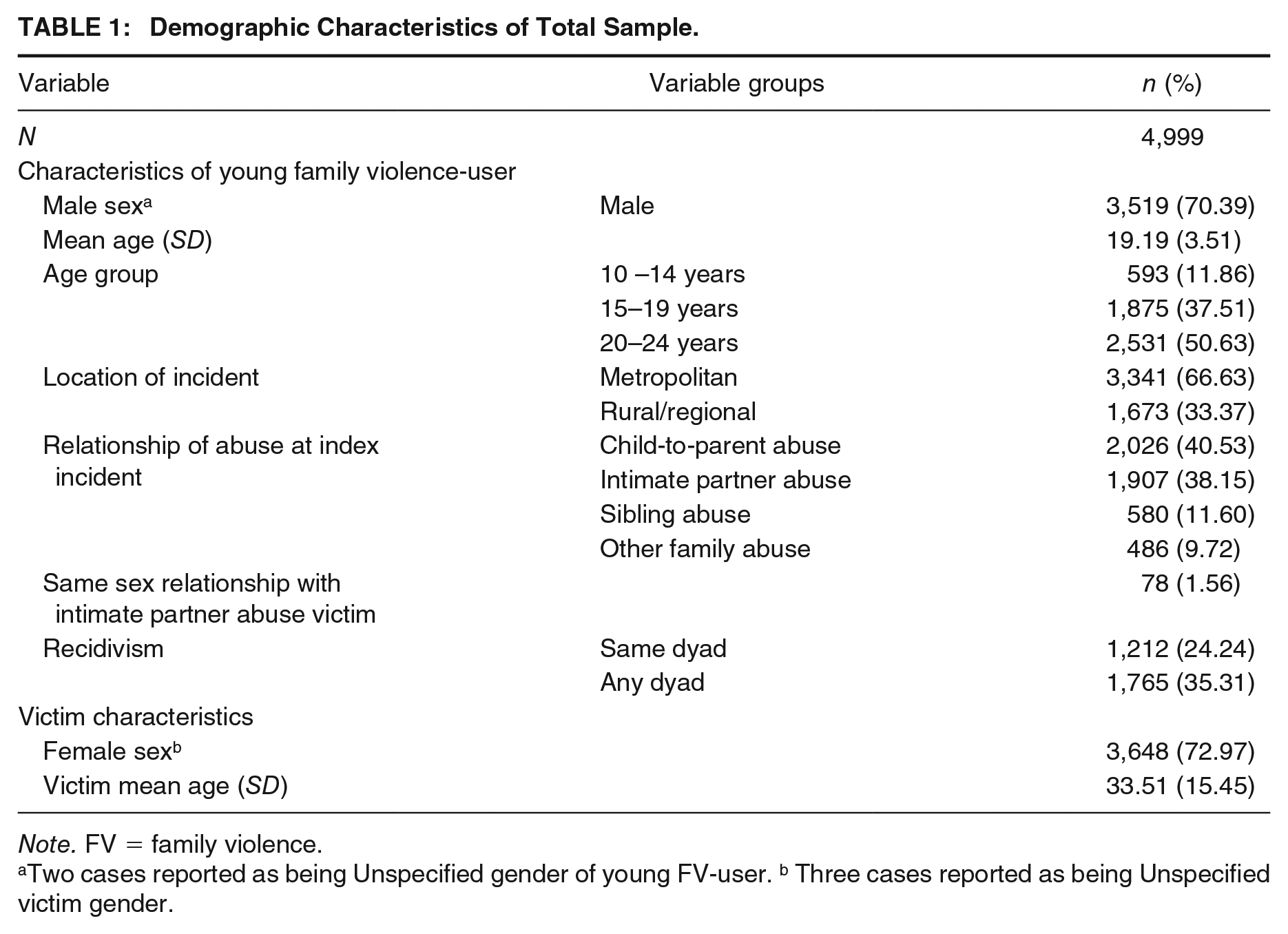
Note. FV = family violence.
Two cases reported as being Unspecified gender of young FV-user. b Three cases reported as being Unspecified victim gender.
Results
Descriptive Analyses
Table 1 shows the demographic characteristics of the total sample, including the dyadic relationship between the victim and young family violence-user at the index incident. During the 6-month follow-up period, 24.24% of young people were involved in a subsequent family violence incident within the same dyad, while 35.31% used family violence in a subsequent incident within any dyad. Most young people were male and were abusive toward a female victim at the index incident. Child-to-parent abuse was the most common form of abuse identified at the index incident, followed by intimate partner abuse and sibling abuse.
Validity of VP-SAFvR in Youth for Same-Dyad Recidivism
Table 2 provides the frequency of the VP-SAFvR items and whether they are associated with same- and any-dyad recidivism. Results suggest that all but four of the VP-SAFvR items are significantly associated with same-dyad recidivism. The presence of children at the index incident, recent or imminent separation, and alcohol or other drug use around the time of the index incident by the victim or young person were not associated with same-dyad recidivism among young people aged 10 to 24 years. Table 3 shows same-dyad recidivism aggregated according to VP-SAFvR score category. There was a strong positive correlation (tau-b = .82, p < .001) between score categories and the presence of same-dyad family violence recidivism.
Frequency of VP-SAFvR Items for 10 to 24 Years and Their Association With Recidivism.
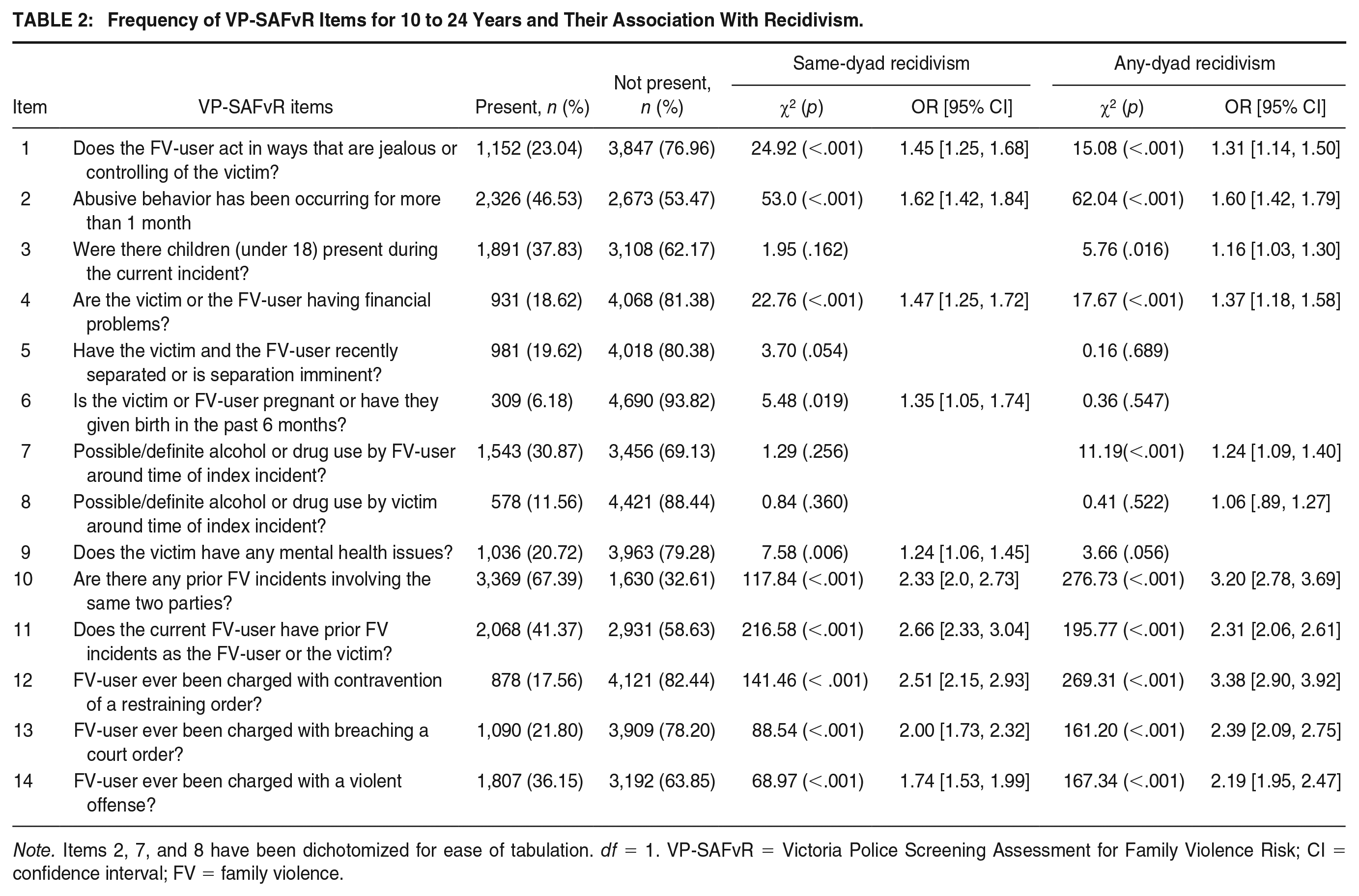
Note. Items 2, 7, and 8 have been dichotomized for ease of tabulation. df = 1. VP-SAFvR = Victoria Police Screening Assessment for Family Violence Risk; CI = confidence interval; FV = family violence.
VP-SAFvR Part A Score and Same-Dyad Family Violence Recidivism in Total Sample Aged 10 to 24 Years.
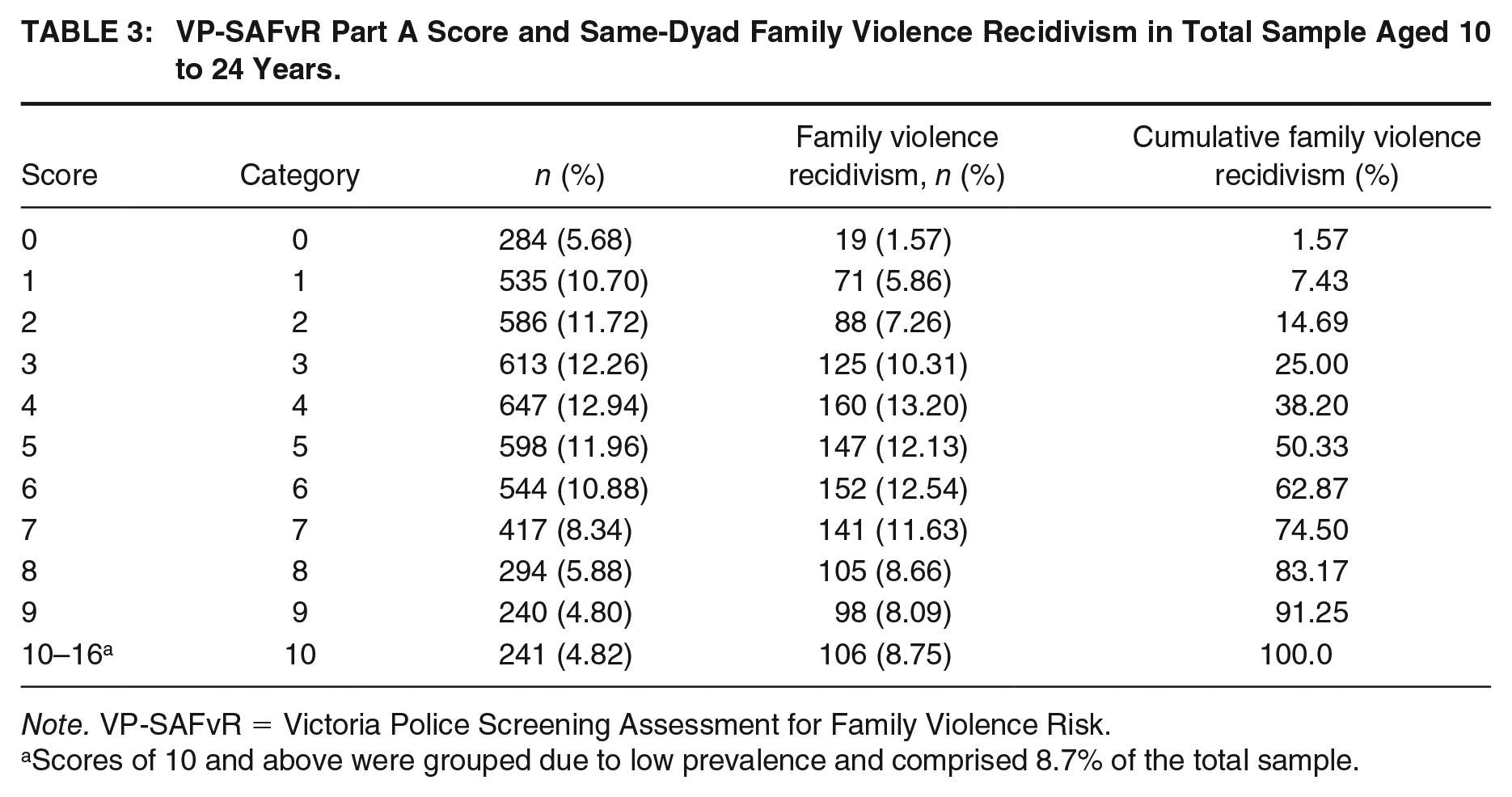
Note. VP-SAFvR = Victoria Police Screening Assessment for Family Violence Risk.
Scores of 10 and above were grouped due to low prevalence and comprised 8.7% of the total sample.
Classification accuracy of the VP-SAFvR according to same-dyad recidivism for young people aged 10 to 24 years at each threshold score of the instrument is outlined in Table 4. The optimal thresholds for classification accuracy were selected by maximizing sensitivity and specificity, with more weight placed on specificity given the tool’s focus on triage (McEwan et al., 2019). This resulted in threshold scores selected at 3 and 4. The relative risk of same-dyad recidivism increases with each successive increase in threshold score.
Classification Accuracy of the VP-SAFvR for 10 to 24 Years for Same-Dyad Recidivism.
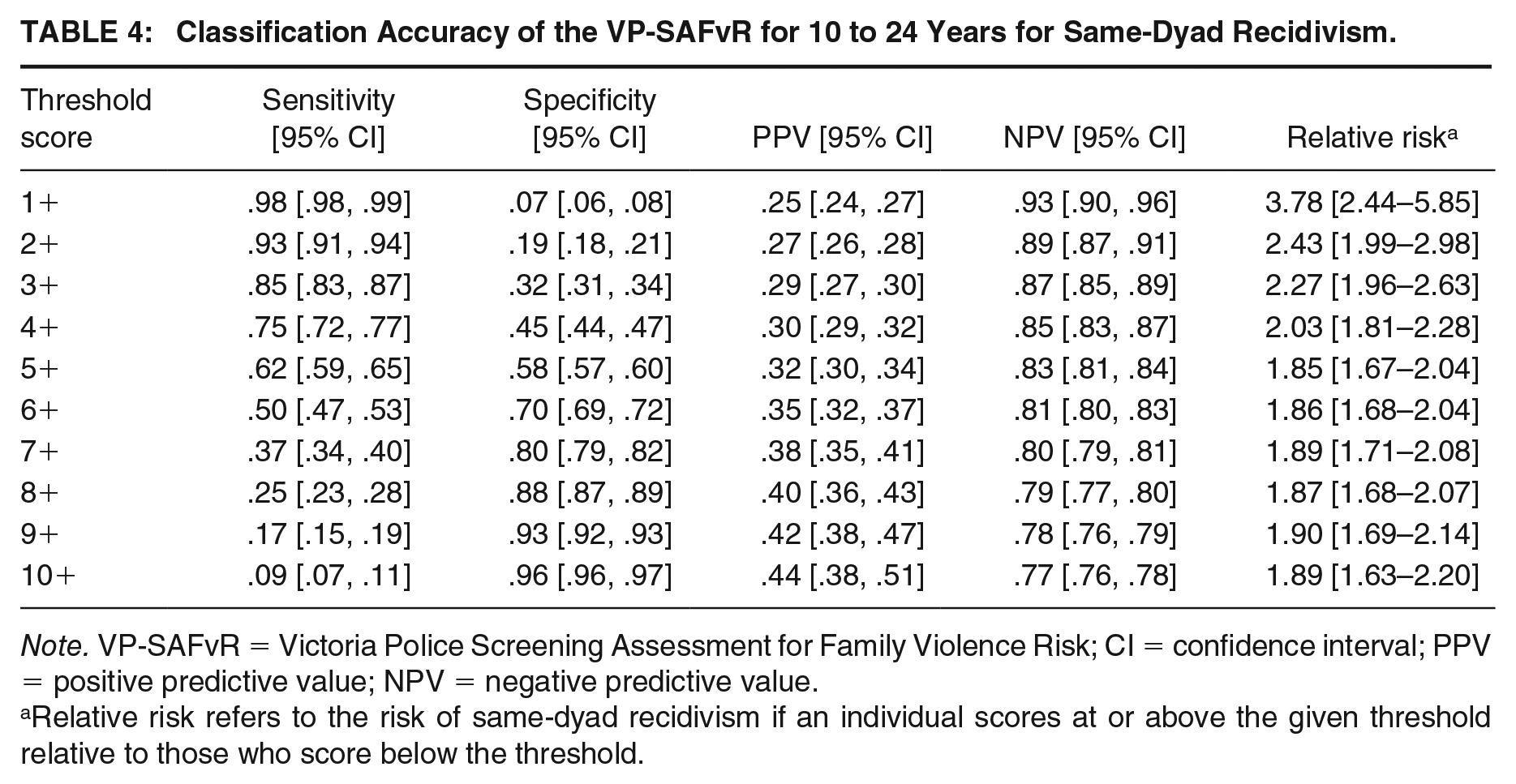
Note. VP-SAFvR = Victoria Police Screening Assessment for Family Violence Risk; CI = confidence interval; PPV = positive predictive value; NPV = negative predictive value.
Relative risk refers to the risk of same-dyad recidivism if an individual scores at or above the given threshold relative to those who score below the threshold.
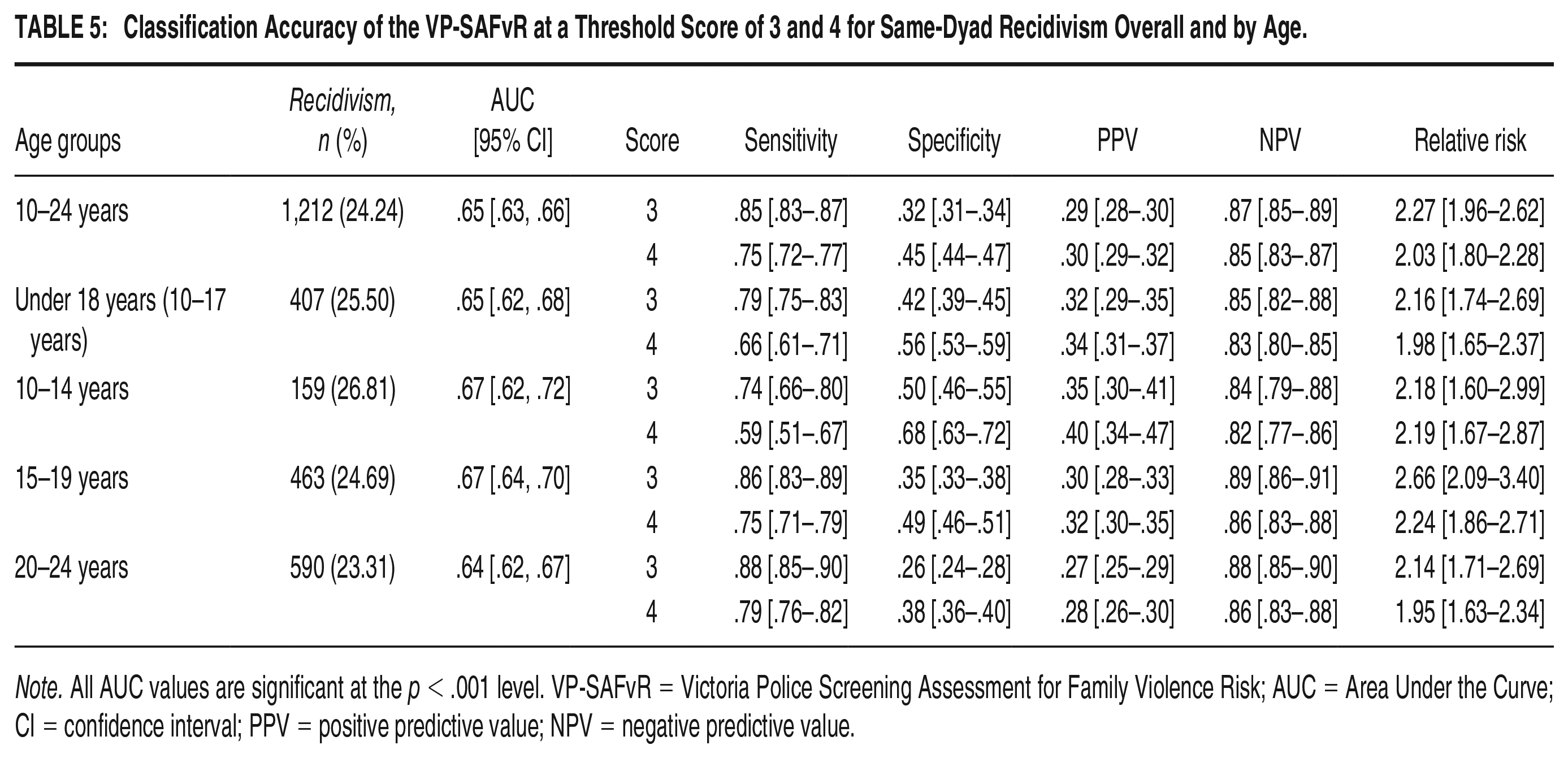
Classification accuracy at threshold scores of 3 and 4, as well as discriminative validity of the VP-SAFvR, are further explored for the total sample in Table 5. While a threshold score of 3 provided high sensitivity for the total sample (aged 10–24 years), the specificity was reduced, whereas a threshold score of 4 provided high sensitivity and moderate specificity. Here, the threshold score of 4 identified 75% of cases that reported family violence to the police during the follow-up period. Specificity for the total sample increased to .45 when a threshold of 4 was applied, indicating that 45% of those who did not reoffend were below the threshold. The PPV of .30 indicates that 30% of those above the threshold were in subsequent same-dyad police-reported family violence incidents, while the NPV of .85 indicates that 85% of those below the threshold score of 4 were not involved in same-dyad recidivism.
Classification Accuracy of the VP-SAFvR at a Threshold Score of 3 and 4 for Same-Dyad Recidivism Overall and by Age.
Note. All AUC values are significant at the p < .001 level. VP-SAFvR = Victoria Police Screening Assessment for Family Violence Risk; AUC = Area Under the Curve; CI = confidence interval; PPV = positive predictive value; NPV = negative predictive value.
The discriminative validity of the VP-SAFvR was explored for same-dyad recidivism using AUC statistics. The tool displayed a moderate level of discriminative validity (AUC = .65) for those aged 10 to 24 years (Rice & Harris, 2005). This suggests there was a 65% probability that a randomly selected recidivist from the sample would score higher than a randomly selected nonrecidivist on the VP-SAFvR.
Validity of VP-SAFvR According to Age
Table 5 provides discriminative validity and classification statistics for age-based subsamples at threshold scores of 3 and 4. A threshold score of 4 provided high sensitivity and moderate specificity for young people aged 15 to 19 and 20 to 24 years. For those aged 10 to 14 years, a threshold score of 3 provided high sensitivity and moderate specificity, whereas a score of 4 provided poor sensitivity and moderate specificity. The tool demonstrated moderate discriminative validity across all age groups (AUCs = .64-.67).
Validity of the VP-SAFvR by Sex and Dyadic Relationship
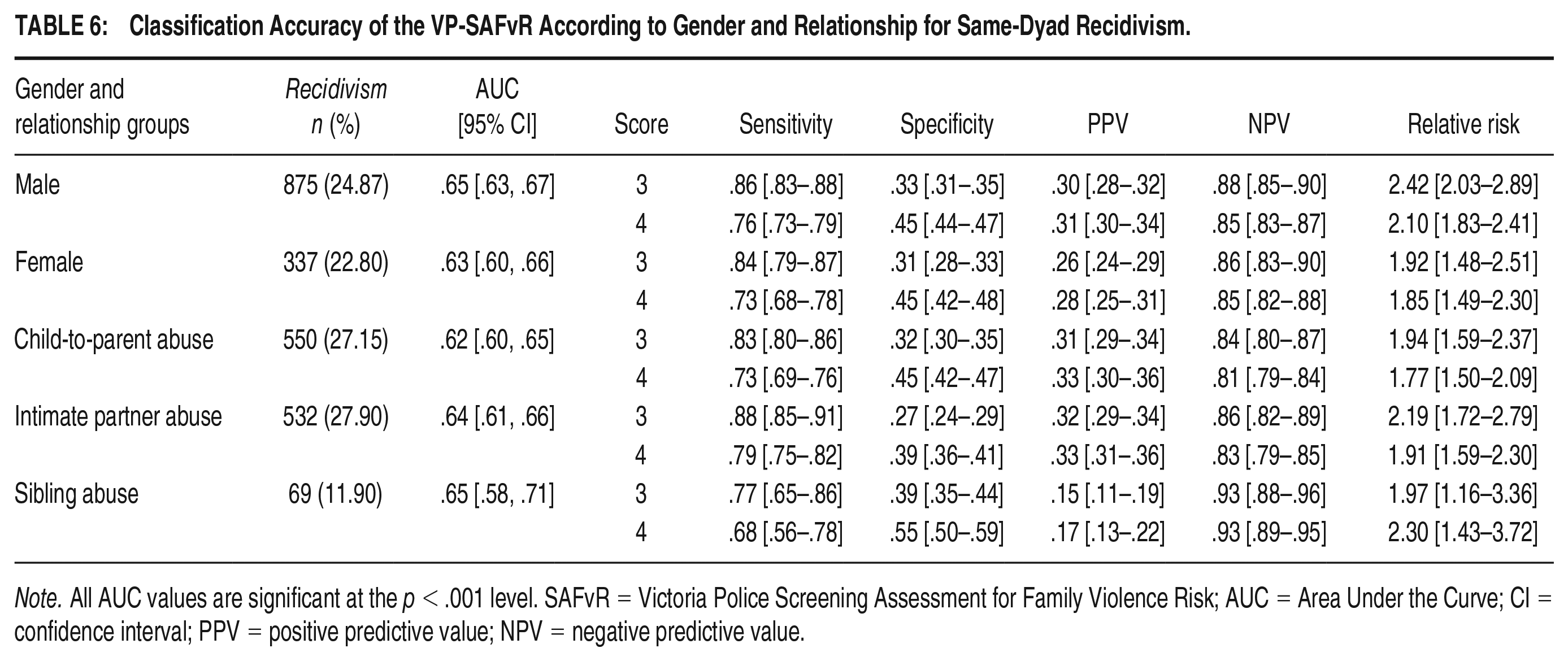
Table 6 shows the classification-based statistics (sensitivity, specificity, PPV, NPV, and relative risk ratios) for sex and the three relational forms of abuse explored here: child-to-parent abuse, intimate partner abuse, and sibling abuse. The tool demonstrated moderate discriminative validity for males (AUC = .65) and females (AUC = .63). At a threshold score of 4, the tool demonstrated high sensitivity and moderate specificity for both sexes.
Classification Accuracy of the VP-SAFvR According to Gender and Relationship for Same-Dyad Recidivism.
Note. All AUC values are significant at the p < .001 level. SAFvR = Victoria Police Screening Assessment for Family Violence Risk; AUC = Area Under the Curve; CI = confidence interval; PPV = positive predictive value; NPV = negative predictive value.
The VP-SAFvR demonstrated comparable discriminative validity (AUCs = .62–.65) across the three relational forms of abuse (Table 6). For child-to-parent abuse and intimate partner abuse, a threshold score of 4 identified 73% to 79% of families reporting subsequent family violence (with 39%–45% of those who were not involved in a subsequent incident below threshold), indicating high sensitivity and moderate specificity. For sibling abuse, a threshold score of 3 identified 77% of cases that reported subsequent family violence (39% of those who were not involved in a subsequent incident were below the threshold), indicating high sensitivity and moderate specificity. PPV and NPV remained relatively consistent across both thresholds.
Validity of the V-SAFvR for Any-Dyad Recidivism
The full results for any-dyad recidivism can be found in the Supplemental Material. There was a strong positive correlation (tau-b = .85, p < .001) between VP-SAFvR score categories and rates of any-dyad family violence recidivism within each category. The discriminative validity of the VP-SAFvR for young people aged 10 to 24 years for any-dyad recidivism displayed moderate discriminative capacity (AUC = .65). High sensitivity (.74) and moderate specificity (.49) was reached at a threshold score of 4. Discriminative validity did not vary greatly according to age (AUCs = .65–.67). High sensitivity and moderate specificity were demonstrated at a threshold score of 4 for those aged 15 to 19 and 20 to 24 years, while those aged 10 to 14 years displayed high sensitivity and moderate specificity at a threshold score of 3.
Discussion
The present study explored the base rate of family violence recidivism and the discriminative and predictive validity of the VP-SAFvR for Australian young people who use family violence. To our knowledge, this is the first published study prospectively validating a tool examining family violence recidivism among young people, with reference to key developmental periods, gender, and relationships of abuse. The VP-SAFvR demonstrated adequate discriminative and predictive validity for young people aged 10 to 24 years, as well as across age groups, gender, and relational dyads of abuse (child-to-parent abuse, intimate partner abuse, and sibling abuse). The use of a threshold score of 4 was found to be appropriate for those in the 15- to 19-year-old and 20- to 24-year-old subsamples, while lowering the threshold to 3 for those aged 10 to 14 years improved performance to a level that was analogous to those aged 15 years and over.
Family Violence Recidivism
This study used population-based data, making it possible to ascertain the base rate of recidivism for youth re-reported to police within 6 months following their index family violence incident. The proportion of young people aged 10 to 24 years who engaged in family violence recidivism in the 6 months after the index incident was 24.24% for same-dyad recidivism and 35.31% for any-dyad recidivism. The same-dyad recidivism results presented here are broadly consistent with family violence recidivism rates among Australian young people (26%-28%; Boxall & Morgan, 2020), however, results show that the prevalence of any-dyad recidivism is considerably higher (35%). This difference seems to be based on how family violence recidivism is defined, with Boxall and Morgan (2020) appearing to have separated intimate partner and broader family violence in their analysis of recidivism. Same-dyad recidivism was highest among young people aged 10 to 14 years (26.81%) compared with those aged 15 to 19 years (24.69%) and 20 to 24 years (23.31%). In contrast, any-dyad recidivism was highest among youth aged 15 to 19 years (37.17%) compared with those aged 10 to 14 years (34.23%) and 20 to 24 years (34.18%; see the Supplementary Material).
The somewhat elevated rate of same-dyad recidivism among 10- to 14-year olds may reflect their tendency to be more embedded within the family system and less likely to be in an intimate partnership, resulting in a comparatively elevated rate of same-dyad recidivism, but not necessarily any-dyad recidivism. In contrast, older adolescents and young adults display expanded peer and extrafamilial networks, including intimate partnerships (Giordano, 2003). The confluence of this relational network expansion and elevated levels of antisocial and abusive behavior during adolescence (Hirschi, 1969; Johnson et al., 2015) may partly account for the tendency of older adolescents to engage in family violence across multiple relationships, rather than the same dyad specifically.
Discriminative Validity of the VP-SAFvR
The VP-SAFvR demonstrated moderate discriminative validity for both same-dyad (AUC = .65; Rice & Harris, 2005) and any-dyad (AUC = .65) recidivism for youth aged 10 to 24 years, with a strong positive correlation observed between the VP-SAFvR score categories and rates of recidivism within each category. The tool demonstrated adequate classification accuracy at a threshold score of 4 for 10- to 24-year olds. At this threshold, the VP-SAFvR correctly captured three quarters of youth who engaged in family violence recidivism.
Previous validation studies of the VP-SAFvR for those aged under 18 years suggested the tool displayed small-to-moderate discriminative validity (AUCs = .61-.62; McEwan et al., 2019; Spivak et al., 2021), however, results of the present study indicate moderate discriminative capacity (AUC = .65) for the same age group. The slight difference in findings is likely due to several factors, including the present study’s larger sample size, use of state-wide data, and correct administration of the tool. Previous studies pertaining to the VP-SAFvR relied on data from pre-existing family violence reports to create the tool (McEwan et al., 2019), while Spivak et al. (2021) implemented and validated the tool based on a field trial limited to two metropolitan police divisions, rather than using broader population-level data. These discrepancies in methodology likely explain the slight differences in findings.
In addition to the tool’s moderate discriminative validity for the broader sample of 10- to 24-year olds, the VP-SAFvR total score performed comparably for both same- and any-dyad recidivism across age, sex, and relationship type. The results suggest the same risk tool can be used to assess family violence recidivism across different relationships and development stages. This may indicate a degree of commonality in the underlying risk factors influencing the use of family violence by young people and indicates the need to consider the different relational dyads of abuse concurrently.
Predictive Validity of the VP-SAFvR
Exploring the predictive validity of a tool requires an understanding of the inherent trade-off between sensitivity and specificity, with improvements to one often leading to reductions in the other. Given this, the optimal balance between sensitivity and specificity of an instrument must be considered in relation to the context in which it is employed, as well as the potential consequences of its use (Messing & Campbell, 2016; Sheed, et al., 2022b). The VP-SAFvR was developed to prioritize sensitivity while maintaining sufficient specificity to screen out as many nonrecidivists as possible (McEwan et al., 2019). Accordingly, the present study determined the optimal decision-making threshold by identifying the threshold score at which the maximum number of recidivist and nonrecidivist youth were correctly classified. Based on these criteria, a threshold score of 4 was found to be applicable to the broader sample of youth aged 10 to 24 years. This threshold was similarly applicable for both male and female young people, and those who engaged in child-to-parent abuse and intimate partner abuse, however, a threshold score of 3 appeared more applicable for sibling abuse.
Previous research pertaining to the VP-SAFvR have found the predictive validity of the tool for those aged under 18-year old is optimized at a threshold score of 3 (McEwan et al., 2019; Spivak et al., 2021). This is supported in the findings of the present study, with high sensitivity and moderate specificity optimized for those aged 10 to 18 years at a threshold score of 3. However, when a more developmentally nuanced lens was applied using age-based subsamples—10 to 14, 15 to 19, and 20 to 24 years—only those aged 10 to 14 years appeared to require a reduced risk threshold (i.e., score of 3).
The need for a reduced threshold among those aged 10- to 14-year old may be somewhat explained using the “age-risk factor paradox” (van der Put et al., 2011, p. 258) from the general offending literature. The paradox suggests risk factors—particularly dynamic risk factors—may be less prevalent, but most predictive of recidivism, among those aged under 14 years compared with their older counterparts. However, this paradox does not appear to have been explicitly examined among young people who use family violence and, so that only represents a hypothesis as to why a lower risk threshold on the VP-SAFvR appears to be more predictive of family violence recidivism among those aged 10 to 14 years. These results highlight the need for future research to consider the stages of youth development when validating risk assessment tools for young people, rather than examining them as a homogeneous group.
Study Limitations
The present study is limited in several respects. The study used a 6-month follow-up period to examine the capacity of the VP-SAFvR to predict family violence recidivism. While previous research has demonstrated most family violence recidivism occurs within this timeframe (Morgan et al., 2018), results should not be extrapolated beyond 6 months. The true base rates of recidivism among young people who use family violence may be understated within the current study given the involvement of police. Intervention by police and other service agencies would likely have influenced family violence recidivism, however, the effects of such involvement could not be examined and therefore represent a limitation of the analyses. While this is an important limitation, it does not significantly impact upon the significance of these results for police as the VP-SAFvR is employed as a central part of Victoria Police’s response to family violence and, as such, is designed and validated for use in situations where intervention by police and other agencies is warranted.
The VP-SAFvR was developed specifically to assess risk of family violence recidivism in the Australian state of Victoria (McEwan et al., 2019) and has only been validated for this cohort (McEwan et al., 2019; Spivak et al., 2021). Given this, the results cannot be generalized to other nations and societies at this stage. However, research with other risk assessment tools developed for police forces around the world—such as the Ontario Domestic Assault Risk Assessment (Hilton et al., 2004) developed for the Canadian province of Ontario—have been successfully validated in other jurisdictions, such as Australia (Lauria et al., 2017). It is therefore possible that the VP-SAFvR would also be successful in predicting family violence recidivism in other jurisdictions, however, jurisdiction-specific validation studies are required.
The VP-SAFvR could not be validated for Aboriginal and/or Torres Strait Islander youth or culturally and linguistically diverse communities. Unfortunately, there is no reliable way for Victoria Police to ascertain the ethnicity of individuals involved in a family violence incident (McEwan et al., 2019). The validation of risk tools for use with such communities is an important avenue for future research.
Implications for Practice and Directions for Future Research
In light of the limitations, this study has several important implications for police risk assessment and management of youth family violence, and avenues for future research. First, the results support the use of a single risk assessment tool for both adult and youth family violence-users, and for different relational forms of family violence (e.g., child-to-parent abuse, intimate partner abuse, sibling abuse). Police are typically resource- and time-poor, and are required to respond to numerous different forms of relationship abuse from individuals of all ages, resulting in a need for efficient means of assessing future risk of family violence. The field may benefit from further examination of whether risk assessment tools can be used, or modified, to assess risk of family violence across multiple relationship types. In addition, future research should endeavor to validate police risk assessments for young people in cases where such tools will be used with this cohort.
Second, while the VP-SAFvR was found to be predictive of recidivism for the combined sample of youth aged 10 to 24 years at a threshold score of 4, examination of age-based subsamples suggests those aged under 18 years (particularly those aged 10-14 years), may have a somewhat different risk profile from their older counterparts. A threshold score of 3 improves predictive validity of the tool for those aged under 18 years, indicating this cohort generally experiences fewer risk factors before reoffending. Given the same threshold scores are used to inform police triage of family violence cases across the state of Victoria, these results have important implications for responding police. The results suggest the potential utility of a lowered triage threshold (e.g., threshold score of 3) being adopted for young family violence-users aged up to 18-year old to account for their lower VP-SAFvR scores. This allows them to be screened in and identified for further assessment with similar levels of sensitivity and specificity as adults. Similarly, adopting a lowered threshold may allow police to identify those young people requiring intervention more readily, enhancing the capacity for early intervention and prevention responses, such as referral to mental health services or engagement with family violence services.
Third, the present study is one of very few which has validated a family violence screening instrument or risk assessment tool for use with young people. Given the need for an adapted risk threshold for those under 18 years (particularly for those aged 10-14 years), future research examining family violence risk assessment should consider the stages of youth development when validating risk assessment tools. Fourth, the findings presented here indicate more than one in ten young people were re-reported to police for using family violence within a different type of relationship (e.g., child-to-parent, intimate partner, sibling) than was identified at the index incident. Currently, police risk assessment and management practices within Victoria, and indeed other jurisdictions (Dayan et al., 2013), are tailored to assessing future risk of violence to the same victim, or within the same relational dyad (e.g., child-to-parent, intimate partner). Therefore, risk of violence in other relationships may represent somewhat of a blind spot for police and other services responding to youth family violence. In cases where a young person is triaged as requiring further assessment, it may be prudent for police to not only consider risk to the identified victim, but also gauge risk of violence to others in the young person’s life.
Fifth, the literature would benefit from validation of risk assessment tools for Indigenous and culturally and linguistically diverse young people. This represents a significant gap in the area of family violence risk assessment and requires prioritization. Sixth, further research examining the predictive utility of individual risk factors for specific subgroups (e.g., age, gender) is warranted. Similarly, additional research examining whether risk management strategies targeted at specific risk factors—regardless of their predictive capacity—would assist in bridging the gap between risk assessment and management.
Conclusion
The present study is one of very few that has validated a family violence screening instrument or risk assessment tool for use with young people. To the authors’ knowledge, the study is also the first to provide multiple classification statistics when examining the discriminative and predictive capacity of a risk tool for use with young people who use family violence. The results suggest the VP-SAFvR is valid for use with young family violence-users aged 10 to 24 years, and displays moderate discriminative validity across age, gender, and relationship subsamples. The results demonstrate the utility of an actuarial risk triage tool for use with young people who come to police attention for using family violence.
Supplemental Material
sj-docx-1-cjb-10.1177_00938548231170799 – Supplemental material for Assessing Risk of Family Violence by Young People: Identifying Recidivism Base Rates and the Validity of the VP-SAFvR for Youth
Supplemental material, sj-docx-1-cjb-10.1177_00938548231170799 for Assessing Risk of Family Violence by Young People: Identifying Recidivism Base Rates and the Validity of the VP-SAFvR for Youth by A. Sheed, T. Mcewan, N. Papalia, B. Spivak and M. Simmons in Criminal Justice and Behavior
Footnotes
This study involves secondary analysis of data from a larger project, as described in the “Method” section. The specific ideas and data analyses presented in this work have not previously been published or presented.
The authors have no conflicts of interest to disclose.
A.S. was supported through an Australian Postgraduate Research Award Scholarship. N.P. is supported through an Australian Research Council Early Career Researcher Award (DE220100147) grant.
These funding sources had no role in the design, collection, analysis, and interpretation of data, the writing of the manuscript, and the decision to submit the article for publication.

Supplemental Material
References
Supplementary Material
Please find the following supplemental material available below.
For Open Access articles published under a Creative Commons License, all supplemental material carries the same license as the article it is associated with.
For non-Open Access articles published, all supplemental material carries a non-exclusive license, and permission requests for re-use of supplemental material or any part of supplemental material shall be sent directly to the copyright owner as specified in the copyright notice associated with the article.
