




Abstract
Despite the significant adverse consequences of deliberate firesetting, it has been unclear what proportion of individuals repeat this problematic behavior, owing to methodological differences and large variability in reported reoffending rates. A meta-analysis of 25 samples of untreated adults and children with a history of firesetting, examining reoffending over a follow-up period, was conducted. The base rates of reoffending from this meta-analysis indicated that between 57% and 66% of untreated firesetters engage in general reoffending, between 8% and 10% engage in criminal arson, and around 20% engage in deliberate firesetting behavior. The odds of firesetting during the follow-up period were 5 times greater for known firesetters in comparison with other offenders. Clinical and criminological correlates of reoffending, including age, are examined. Implications for enabling evidence-based practice with this population, including defensible risk assessments and treatment provision, are discussed.
Deliberate firesetting, including legally recorded arson, is highly problematic. In England, nearly half of the fires responded to by fire and rescue services are classified as deliberate (Arson Prevention Forum, 2017), with the total number of deliberate fires in 2018–2019 reaching 83,236 (Home Office, 2019a). Some of these incidents had a considerable impact on public health and safety as they resulted in 1,014 injuries and 51 fatalities (Home Office, 2019b). However, this is not an issue unique to England or the United Kingdom; deliberate firesetting is now an international public health concern (Tyler, Gannon, et al., 2019).
Despite the pervasiveness and substantial adverse consequences, deliberate firesetting remains under-researched (Sambrooks & Tyler, 2019). Consequently, the probability of reoffending is poorly understood (Ducat et al., 2015). Early literature often portrayed firesetters as dangerous, with a high likelihood of reoffending (Brett, 2004; Thomson et al., 2018). However, more recent narrative reviews have demonstrated a large variation in reoffending rates. For example, Kennedy et al. (2006) considered eight studies examining repeat firesetting among children and found rates ranging from 1% to 72%. Similarly, across seven studies, Lambie and Randell (2011) found that between 26% and 50% of children set further fires. Finally, Brett (2004) examined 24 studies and reported reoffending from 4% to 60%. This substantial variability is likely due to the vast methodological differences across studies. These reviews also include retrospective frequency counts of onetime versus repeat firesetters and conflate untreated and treated reoffending rates, limiting their clinical utility. This is a significant issue because a clear base rate of firesetting reoffending is essential for making defensible risk decisions (Gannon & Pina, 2010; Watt & Ong, 2015).
Base Rates of Firesetting Reoffending: Measurement and Conceptual Issues
How firesetting reoffending is operationalized across studies differs greatly, with sources of reoffending information ranging from official convictions to informal sources. This may have a large impact on reoffending rates as the numbers of self-reported firesetting incidents often significantly exceed official figures (e.g., Gannon et al., 2013). Rice and Harris (1996) determined that a reoffense with fire occurred if there was a further criminal charge for firesetting (inclusive of arson), or if institutional records indicated behavior that would have resulted in a criminal charge. This prospective study of adult male mentally disordered firesetters, who were followed up after an average of 7.8 years, found that 16% reoffended using fire. In contrast, Ducat and colleagues (2015) used only criminal charges as their source of reoffending information. They found that, during a follow-up of between 2.5 and 11 years, 5% of adults and children, identified through court records, reoffended with fire.
In an examination of adult reoffending upon release from a medium secure unit, Hollin et al. (2013) found an arson reoffending rate of 11% over an average of 10 years, using only conviction data. Sapsford et al. (1978) found an even lower arson reconviction rate (5%) over a 1- to 5-year follow-up of adults who had been imprisoned for arson. Similarly, Edwards and Grace (2014) found a 6% rate of firesetting reoffending over 10 years when using arson conviction and detainment data in a large sample of children and adults. Notably, this sample was identified through criminal charges and did not include mental disorder disposals. Mental health might increase firesetting reoffending, given the differences in rates reported for psychiatric settings relative to nonpsychiatric settings (i.e., 11%–16% for psychiatric settings, Hollin et al., 2013; Rice & Harris, 1996; 5%–6% for criminal justice settings, Ducat et al., 2015; Edwards & Grace, 2014). However, this is difficult to conclusively determine, owing to high rates of mental illness across nonpsychiatric correctional settings (Tyler, Miles, et al., 2019).
Some studies consider reoffending to have occurred only if the individual engages in another offense involving fire (e.g., Franklin et al., 2002; Geller et al., 1992), whereas others use any criminal offense (e.g., Barnett et al., 1997; DeJong et al., 1992; Repo et al., 1997). Other research considers both or various types of reoffense (e.g., Edwards & Grace, 2014; Rice & Harris, 1996; Soothill et al., 2004). For example, in addition to examining repeat firesetting, Rice and Harris (1996) found 66% engaged in any further criminal activity (see also Soothill & Pope’s, 1973, figure of 52% general reoffending from conviction data).
To date, no review of the literature has adequately compared studies that examine adults and children (individuals below the age of 18 years), so the influence of age on repeat firesetting is unclear. This is concerning as children are responsible for a significant proportion of deliberate firesetting incidents (MacKay et al., 2006). For example, in the United Kingdom, United States, and New Zealand, children account for 45% to 60% of apprehensions for deliberate firesetting (Dolan et al., 2011; Lambie & Randell, 2011). Studies examining repeat firesetting among children tend to rely on more informal sources than adult studies. For example, Stewart and Culver’s (1982) study of children aged 4 to 13.5 years, residing in a psychiatric facility, used interviews with a parent or guardian. Over an average of 3.25 years, they found 23% engaged in further firesetting. Similarly, Kolko et al. (2001) utilized parental interviews and self-reports and found that 54% of their sample, aged between 6 and 13 years, engaged in additional firesetting over 2 years. In contrast, Strachan (1981) examined case notes of children aged between 8 and 16 years who had been referred to juvenile court for firesetting and found that almost 9% engaged in further firesetting over 1 to 5 years.
Little is known about how reoffending rates of firesetters compare with individuals who have offended in other ways. DeJong et al. (1992) compared general reoffending rates of adults with a conviction for arson with those with a conviction for manslaughter or attempted manslaughter, over an average of 3.5 years. They found that 45% of known firesetters received a further arson conviction, compared with 32% of other offenders. In contrast, Wilpert et al. (2017) found that a smaller proportion of arsonists received a conviction for any offense, during an average of 9.3 years, relative to domestic violence offenders (47% vs. 61%, respectively). However, Wilpert et al. also found that 9% of arsonists received a further conviction for arson, compared with 2% of violent offenders. Similarly, Geller et al. (1992) found higher rates of firesetting reoffending among known firesetters than individuals with no documented firesetting history (28% vs. 12%, respectively, over an average of 6.8 years). Without a clear picture of how firesetters compare with other offenders, it is difficult to determine whether they represent a particularly risky population.
Current Study and Rationale
This study builds on the existing literature in numerous ways. It synthesizes research examining children and adults with a history of firesetting. It establishes, meta-analytically, a base rate of reoffending, examining reoffending among individuals with a history of deliberate firesetting from available follow-up studies. The meta-analysis puts the results in context by comparing the reoffending rates of individuals with a history of firesetting with individuals with other offense types. Finally, it draws on samples from a variety of settings and examines the base rate of mental illness diagnoses.
Method
Study Selection
To identify studies that examined reoffending among individuals with a history of firesetting, electronic searches of PsycINFO, Web of Science™, ProQuest®, and MEDLINE were conducted using combinations of the following search terms: firesetting, fire-starting, fire-setting, fire-setter, fire starter, arson, arsonist, recidivism, re-offending, and reoffending. The reference lists from previous reviews of the firesetting reoffending literature (Brett, 2004; Kennedy et al., 2006; Lambie & Randell, 2011) were also examined and emails were sent to key researchers in this field asking them to provide unpublished data. Searches were limited to articles in English. The search process was concluded on September 30, 2020.
To be included, studies had to have an identifiable sample of individuals, with a recorded history of firesetting, who had not undergone treatment specifically targeting their firesetting. Therefore, evaluations of fire-specific treatment programs that did not report reoffending rates for an untreated control group were excluded. Studies must have clearly reported a follow-up period in which reoffending was examined; retrospective studies comparing offenders with or without prior offenses were excluded. Finally, included studies needed to report either firesetting reoffending (either any firesetting or legally recorded arson) or reoffending by any criminal offense (referred to as general reoffending hereafter). Where multiple studies described the same or overlapping samples, the study with the largest sample or most information was used.
Variables
Variables were informed by previous firesetting research and prior reoffending meta-analyses. A coding manual was developed, incorporating 30 variables as detailed below (available on the Open Science Framework; https://osf.io/bj8dv/). Initially, we attempted to collect information on a broad range of variables (e.g., percentage with previous convictions). However, we were unable to populate these variables sufficiently for analysis and so we do not describe them. The key variables collected were as follows.
Study Information
Data source (poster/presentation, peer-reviewed journal, book chapter, thesis or dissertation, and unpublished source), year (the year the study was published, completed, or issued), Country of study origin or data collection, and sample type (children, adult, both; unknown. Where possible the author’s description of the sample was used. If no such explicit description was included, and 70% or above of the sample was aged below 18 years, it was coded as “children.” If 70% or above were aged above 18 years, the sample was coded as “adult.” If the proportion of adults was similar to that of children, or if the authors clearly identified that both adults and children were included, it was coded as “both.” If it was unclear whether the majority were adults or children, it was coded as “unknown”).
Reoffending Information
Reoffending source (convictions only, arrests and/or charges, contact with the police, institutional records, unofficial reports, or self/parental report. Contact with the police includes cautions and warnings), reoffending type (firesetting [accounts of firesetting behavior that do not give a specific fire-related offense title], arson [where the authors explicitly looked at the legal offense of arson] or general [any criminal offense]), reoffending follow-up time (in years), reoffending time fixed or variable (fixed follow-up refers to all offenders being followed up after the same amount of time), and reoffending quality score (1 = low quality [poor source of data such as only self-report and an inadequate follow-up time, that is, 1 or less years of follow-up time], 2 = fairly low quality [uses either a poor source of data such as self-report or an inadequate follow-up time of 1 year or less but not both], 3 = moderate quality [uses moderate data source such as arrests or charges, or self-report combined with another source, and adequate follow-up time of >1 year], 4 = fairly high quality [uses either a moderate data source such as arrests or charges, or adequate follow-up time of >3 years], 5 = high quality [uses a high-quality data source such as conviction data and 3 or more years of follow-up]).
Fire setters
Sample size, age, race or ethnicity, context (setting from where the sample was recruited from: treatment program, pretrial assessment, psychiatric facility, prison, court records, and school), percentage of females, mental disorder diagnoses, percentage with pyromania, and percentage with a learning disability (LD; defined here as IQ <70 or on the basis of author’s description such as “mental retardation,” “intellectually disabled.” This did not include other developmental disorders, such as autism spectrum disorder or attention-deficit/hyperactivity disorder [ADHD]).
Reoffending Results
Percentage missing data and reoffending/nonreoffending sample size nonsignificant.
Comparison Group
For studies with a comparison group, we coded the following variables: difference between groups (nonfiresetters, treatment), comparison group sample size, age, race or ethnicity, context (setting where the comparison group was recruited from), percentage of females, mental disorder diagnoses, percentage with pyromania, percentage with an LD, percentage missing data, and reoffending/nonreoffending sample size nonsignificant.
Study Coding Procedure
Two authors independently coded each of the studies and generated consensus codings through discussion. When information was missing for key variables, the corresponding article author was emailed. We obtained a response rate of 57% (n = 4).
Effect Size Aggregation
The basic unit of analysis was the proportion of firesetting reoffenders (i.e., number of reoffenders divided by n, the sample size). Event rates in the form of raw proportions of reoffending were aggregated through Comprehensive Meta-Analysis 2.0 (Borenstein et al., 2005) to generate weighted estimates of reoffending frequency. The magnitude and consistency of rates of firesetting reoffending was examined through both fixed and random effects analyses. Fixed effects aggregate effect sizes weighted strictly by the sample size (hence, giving heavier weight to larger samples) and the findings and conclusions are limited to the studies included in the meta-analysis. An issue with this is that larger studies can have an extreme and undue influence on the generated effect. Random effects models, however, take into consideration both within-study and between-study variance and apply a weighting to each study that offsets the influence of studies with very large samples from having undue influence on an effect, and preventing studies with smaller samples from having little or no influence on the generated effect. As such, random effects are less impacted by differences in sample size and have the effect of providing greater weight to smaller samples, approximating the unweighted mean. When effects are stable and have little heterogeneity, the fixed effects and random effects estimates will be very similar.
Four sets of analyses were conducted. First, aggregated rates of firesetting reoffending were examined at the level of different variables of analysis to find whether rates varied as a function of firesetting definition and reoffending type, reoffending source, and developmental group. Second, we employed these aggregation procedures to examine base rates of mental health diagnosis among fire setters. Third, we examined rates of firesetting reoffending among known untreated firesetters with comparison controls without a history of firesetting through odds ratios (ORs). The OR represents the percent increase in the odds (or likelihood) of future firesetting for individuals with a history of firesetting versus those without. Finally, given that the studies frequently included information such as age and sex of participants, but did not report firesetting data stratified by (or associated with) age and sex, we conducted meta-regression analyses to formally examine to what extent age and sex contributed to observed variation in reported rates of firesetting reoffending across the studies.
Effect size heterogeneity in rates of firesetting reoffending across studies was examined through computing the Q statistic with associated p value (Cochran, 1954) and the I2 statistic (Higgins et al., 2003); the latter represents percent variability in an effect size with values of 25% presenting small or low effect size heterogeneity, 50% medium, and 75% large or high variability. Individual effects were considered to be outliers if they were extremely high or low, the Q statistic was significant, and the I2 accounted for 50% or more of the effect size variability (Hanson & Bussière, 1998). When outliers were identified, the overall effect size was aggregated and reported with and without the outlier.
Results
Search Results and Study Characteristics
As Figure 1 shows, searches initially identified 5,306 articles of which 25 samples fulfilled our inclusion criteria, totaling 12,294 participants. These originated from seven unpublished materials and 17 peer reviewed articles (one of which produced two samples).
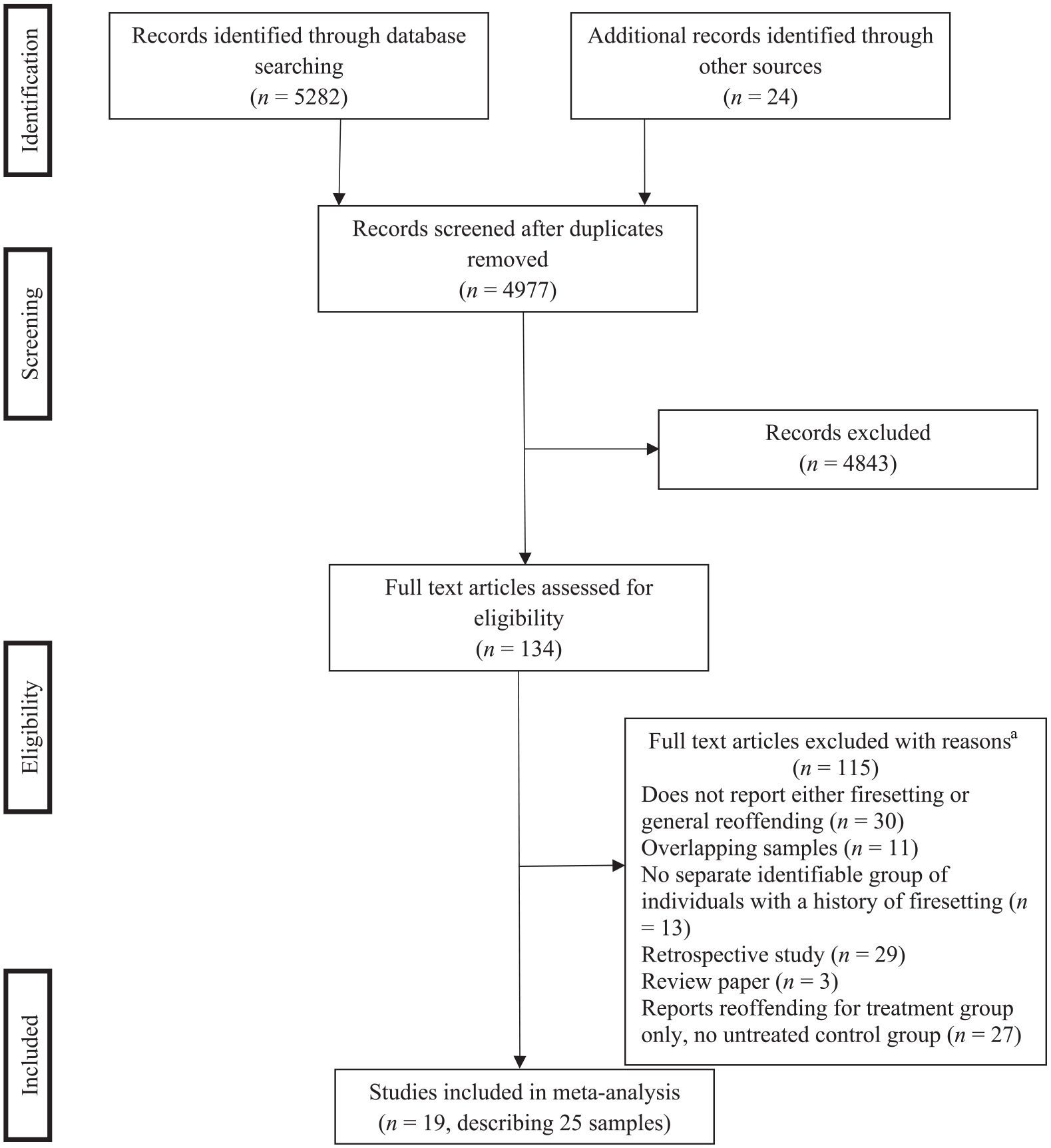
Flow Diagram of Article Selection
Key sample characteristics are shown in Table 1. Four of the samples were made up predominately of children, six predominately adults, 15 were both children and adults, and for one the range of ages was unknown. Overall, the participants were predominantly young, male, and White, with most studies undertaken in the United Kingdom. Participants were drawn from a variety of settings, both psychiatric and nonpsychiatric, with the vast majority (60%) identified through court records. Overall, studies were judged to be of reasonable quality, with 84% of the samples (k = 21) having a reoffending quality score of fairly high or high.
Study Descriptives
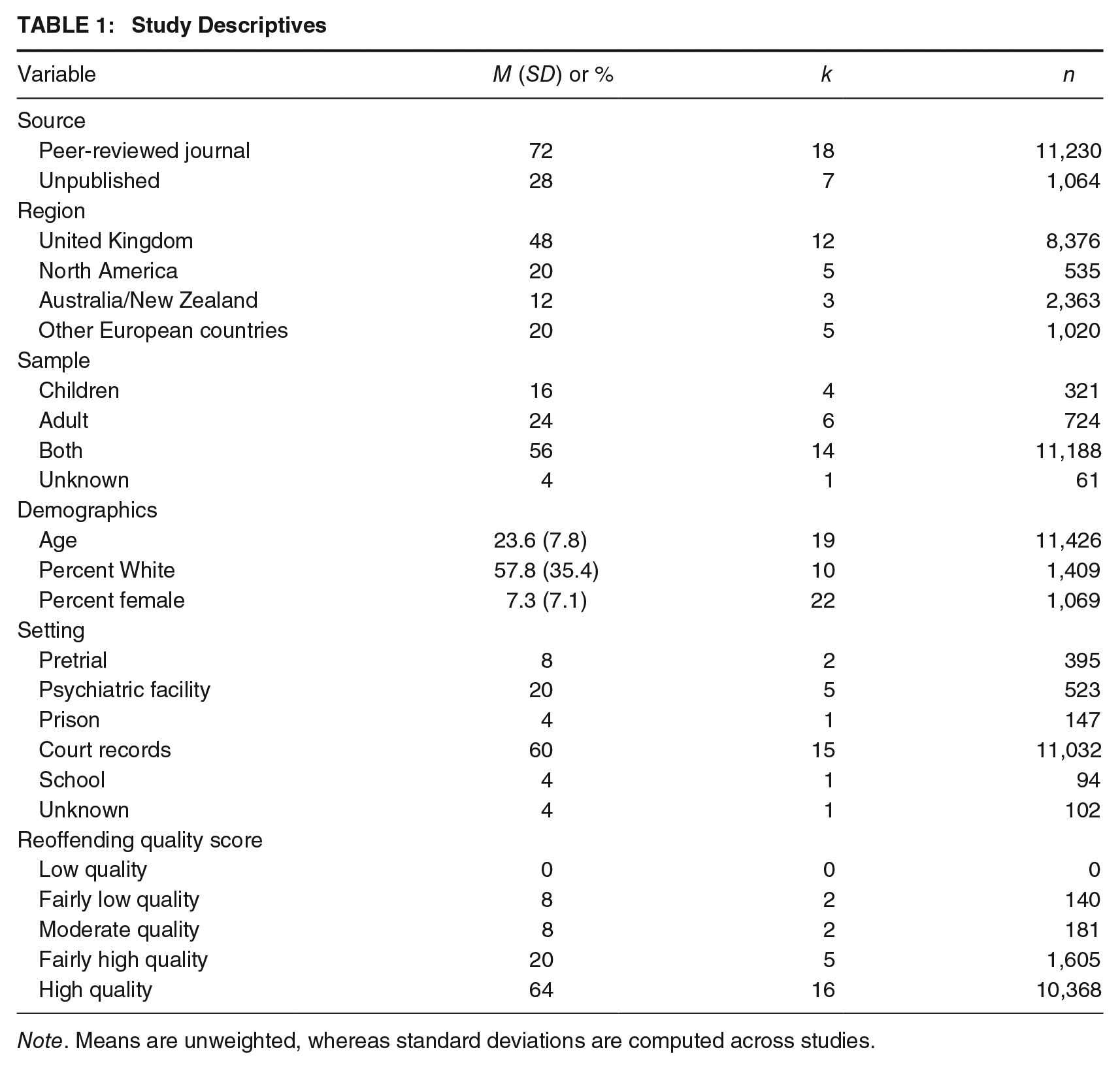
Note. Means are unweighted, whereas standard deviations are computed across studies.
Base Rates of Reoffending
Further information regarding the follow-up periods, reoffending types examined, and individual study reoffending rates can be found in Table 2. Eight studies examined reoffending by “arson” of which seven used conviction as the source of reoffending information and one used records of arrests and/or criminal charges. Five studies had “firesetting reoffending” as an outcome. The definitions of firesetting reoffending varied across studies in terms of the level of detail given and the specificity of behaviors, with particular disparity between child and adult studies. For example, whereas two studies both drew on records of criminal charges, Ducat et al. (2015) specifically looked at “arson or arson-related offenses” (p. 7) and Rice and Harris (1996) used a far broader definition, which also included “conduct warranting a criminal charge” for firesetting, arson, or mischief involving fire (p. 367). The remaining adult study examined medical records for a wide range of behaviors: “setting a fire; threatening to set a fire if this threat prompted a hospital admission; dangerous smoking . . . ; throwing lighted matches or cigarettes; setting off false fire alarms; or setting fire to self or others” (Geller et al., 1992, p. 147). Meanwhile, studies considering “firesetting reoffending” by children tended to use more informal sources; they looked at arson and/or “fireplay or firesetting behavior with no ill intent,” as determined from juvenile court and fire department records (Franklin et al., 2002, p. 261), and involvement in “burning some type of property or setting a fire as acknowledged by themselves or their parents” (Kolko et al., 2001, p. 374). “General reoffending” was examined in 19 studies. The majority of these studies used convictions as their source of reoffending information (n = 16) and the remaining two used criminal charges.
Reoffending Information for Each Sample
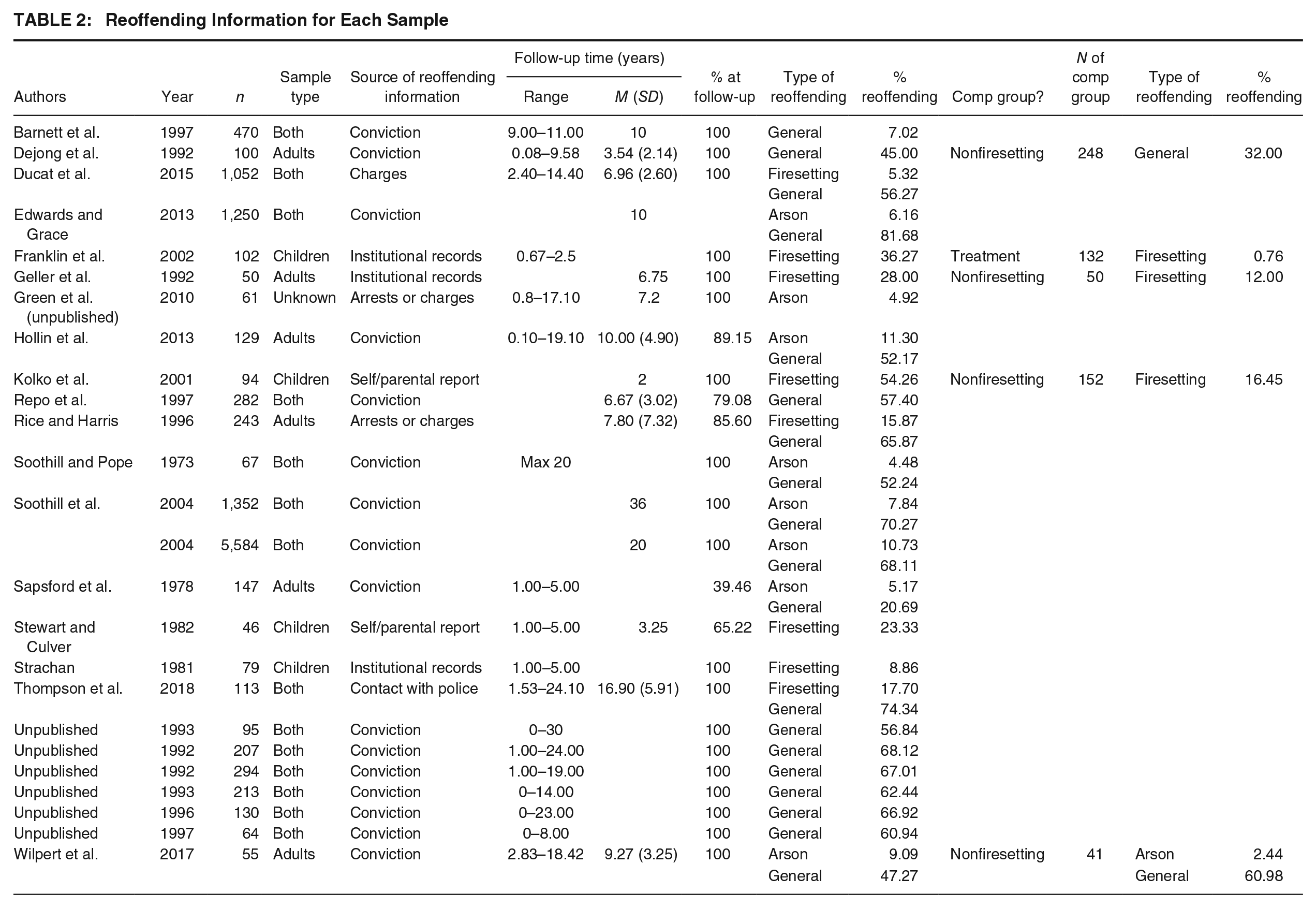
Reoffending base rates are reported in Table 3. There were significant differences in rates of arson, firesetting, and general reoffending between samples, Q(2) = 5,132.64, p < .001 fixed effect; 181.22, p < .001 random effect. Even when directly compared, reoffending rates of the more serious criminal act of arson were significantly lower than reoffending rates for firesetting, Q(1) = 55.90, p < .001 fixed effect; 5.77, p = .016 random effect. Rates of general reoffending (i.e., any reoffending) exceeded 50% and were consistent with reoffending base rates reported in nonfiresetting offender populations.
Meta-Analysis of Reoffending Base Rates for Untreated Firesetters
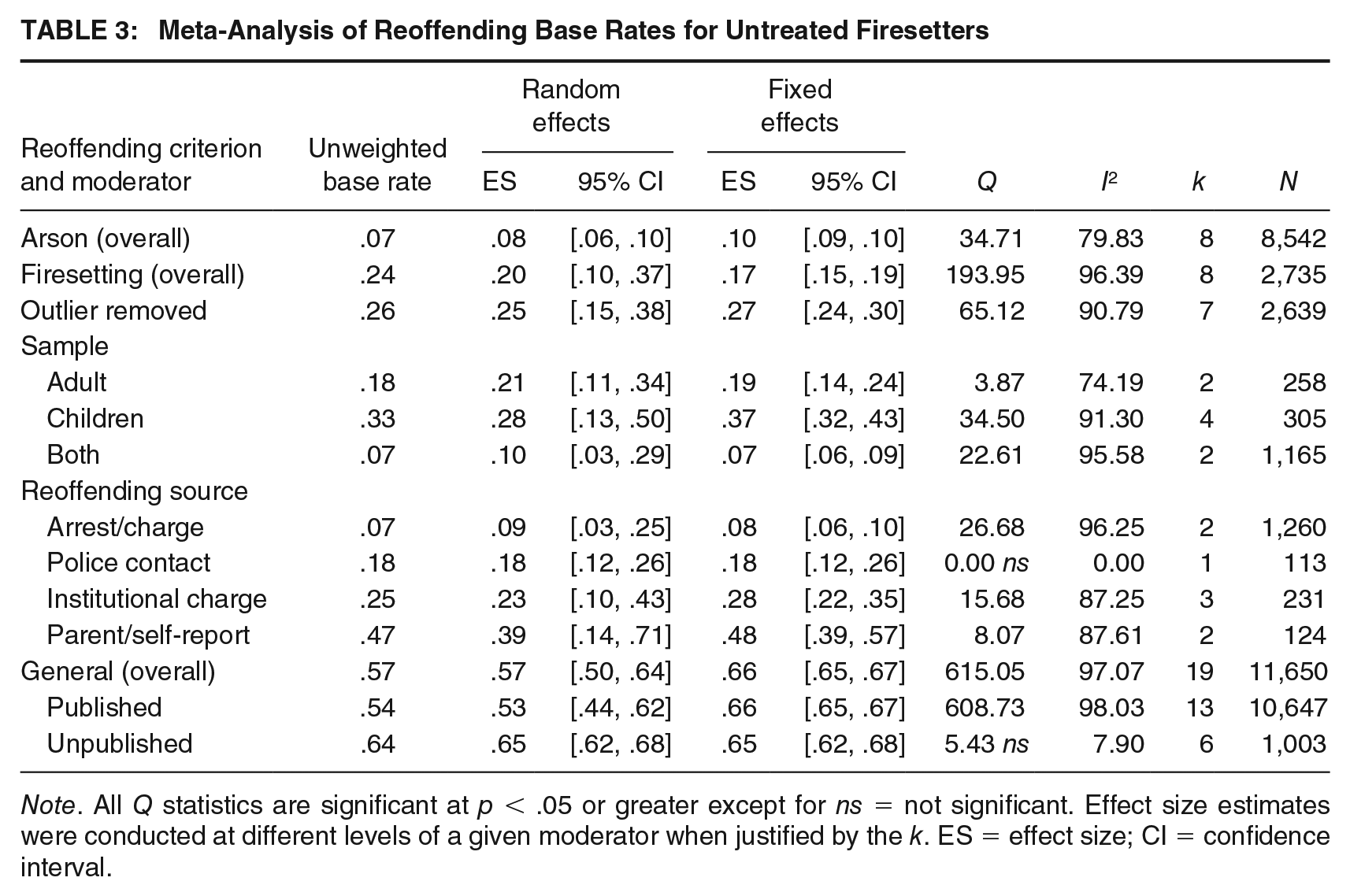
Note. All Q statistics are significant at p < .05 or greater except for ns = not significant. Effect size estimates were conducted at different levels of a given moderator when justified by the k. ES = effect size; CI = confidence interval.
There was substantial variability in rates of each reoffending criterion across studies, as demonstrated by large and significant Q and I2 values. Moderator analyses were conducted by computing reoffending effect sizes (event rate) at different levels of the moderator when the number of studies permitted examination of possible sources of heterogeneity in reoffending rates, as a function of moderator (generally minimum k = 2), and then comparing across levels. All the studies of firesetting reoffending and seven out of eight studies of arson reoffending were published, so publication status was not a substantial source of effect size variability. However, six out of the 19 studies that looked at general reoffending were unpublished studies. There was no significant difference in the point estimate for general recidivism when publication status was examined as a moderator for fixed effects (Q = 0.90, p = .344); however, it did become significant with random effects in the direction of published studies having slightly lower general reoffending estimates (Q = 5.72, p = .017).
Samples coded as children were observed to have the highest rates of firesetting reoffending, and approximately 25% to 50% higher in frequency, compared with adults. When the sample was examined as a source of ES variation, there was a significant difference between groups when evaluated according to fixed effects models (i.e., weighted by sample size, Q(2) = 133.98, p < .001, but not random effects, Q(2) = 2.47, p = .290, models. As expected, more informal sources of firesetting reoffending tended to generate higher reoffending estimates, with the differences between groups being significant overall, using fixed, Q(3) = 143.51, p < .001, but not random, Q(3) = 4.34, p = .227, effects models. Rates of formal arrest/charge for a new firesetting crime were approximately one half (police contact, institutional charge) to one quarter (parent/self-report) of rates of reoffending obtained from a less formal information source.
Firesetting Reoffending for Untreated Firesetters Versus Controls
Five studies compared firesetters with comparison groups, comprising either nonfiresetting offenders (k = 4) or treated firesetters (k = 1; see Table 4). Of the four samples that looked at nonfiresetting offenders, one examined general reoffending only (DeJong et al., 1992), two examined firesetting reoffending only (Geller et al., 1992; Kolko et al., 2001), and one looked at both arson reoffending and general reoffending (Wilpert et al., 2017). Individuals with a history of firesetting had a weighted rate of firesetting reoffending of 35.5% versus 9.7% of comparison controls. The corresponding OR (Table 4) shows that individuals with a history of firesetting had 5 times greater odds of firesetting reoffending than nonfiresetter controls. Although the effect size variability was not substantial, there was one outlier—a treated and untreated comparison study of child firesetters (Franklin et al., 2002)—with extreme disparities in outcomes that, when removed, reduced the effect size heterogeneity to nil. For the final effect (k = 3), two studies (Geller et al., 1992; Kolko et al., 2001) were of firesetting reoffending, whereas the third (Wilpert et al., 2017) was of arson reoffending. The combination of these criterion groups to generate the observed effect was justified by the homogeneity in effect size following the removal of the outlier, given that these investigations were all controlled comparison studies of firesetters and nonfiresetters.
Effect Size Comparing Rates of Firesetting Reoffending for Untreated Firesetters With Comparison Controls
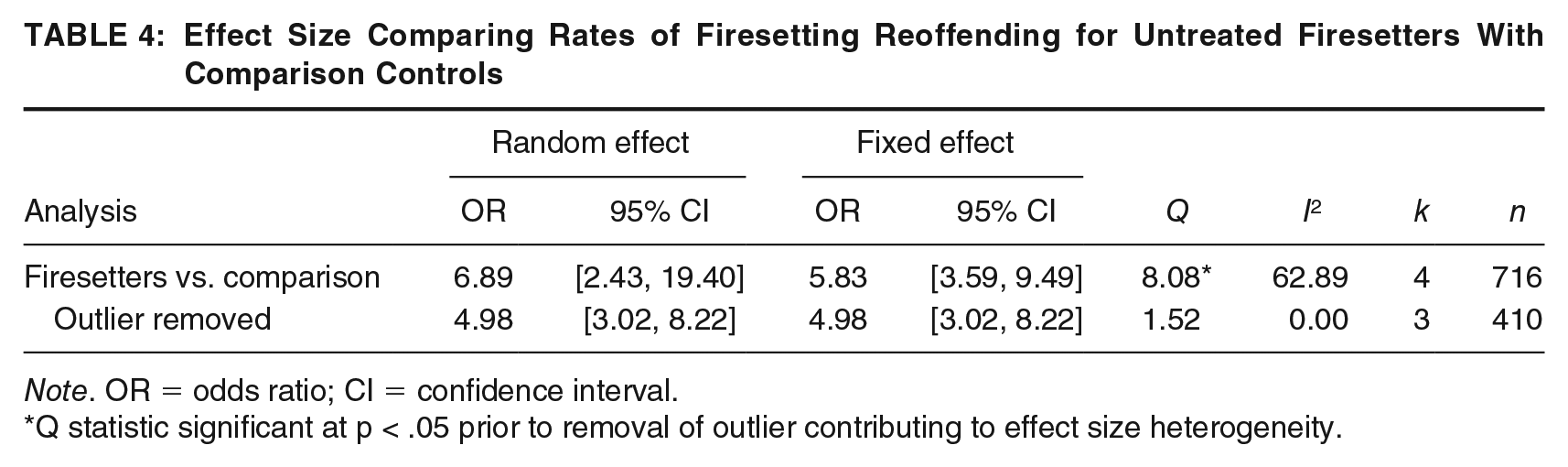
Note. OR = odds ratio; CI = confidence interval.
*Q statistic significant at p < .05 prior to removal of outlier contributing to effect size heterogeneity.
Meta-Regression
Meta-regression was used to examine continuous moderators as possible sources of effect size variation in rates of reoffending for the different outcomes where study numbers permitted. First, meta-regression examined continuous moderators of sample age and proportion of females as possible sources of variation in observed rates of general reoffending. Across k = 17 studies, the more conservative random effects model of age (z = –2.42, p = .015) and female composition (z = –1.75, p = .080) accounted for significant variation in rates of general reoffending across the study samples, Q(2) = 7.05, p = .030, R2 analogue = .32, although unexplained variability remained (I2 = 88.7%). Adding follow-up length did not significantly improve the model, Q(3) = 6.90, p = .075, R2 analogue = .22.
Second, meta-regression was used to examine continuous moderators of arson conviction history and length of follow-up, as possible sources of variation in observed rates of arson reoffending. Across k = 5 studies, the random effects model of arson conviction history (z = –2.36, p = .018) and length of follow-up (z = 4.28, p < .001) jointly accounted for significant variation in observed rates of arson reoffending across the study samples, Q(2) = 23.76, p < .001, R2 analogue = 1.00, and explained much of variability in observed rates of arson recidivism in this small collection of studies, I2 = 0.00%, Q(2) = 1.92, p = .383. Finally, the primary moderators of firesetting reoffending were examined through computing effect sizes at different levels of categorical variables (i.e., recidivism source, developmental age group). However, meta-regression could be used to examine length of follow-up as with the two other outcome variables. In this instance, length of follow-up was nonsignificantly inversely related to rates of firesetting reoffending (z = –0.72, p = .474, R2 analogue = .04), with much unexplained variability remaining (I2 = 96.3%).
Firesetting and Mental Illness
We examined base rate frequencies of mental health diagnoses for individuals with a history of firesetting (see Table 5). Results are reported for fixed and random effects models. Across the eight contributing studies, k = 5 were adult samples and k = 3 were combined adult children samples. One study detailed clinical diagnoses in a child sample (Stewart & Culver, 1982), but this only examined disorders reported in childhood (e.g., unsocialized aggressive conduct disorder), so is not included in the analysis. Therefore, the following diagnoses primarily refer to adults. About two thirds had a substance-related diagnosis, whereas about one third were diagnosed with a personality disorder. Most of these had a diagnosis of personality disorder not otherwise specified (PD-NOS), 15% had antisocial personality disorder (ASPD), and between 7% and 8% had borderline personality disorder (BPD). A diagnosis of pyromania was rare, comprising 4% to 10% of the individuals with a history of firesetting. Four studies examined the prevalence of learning disabilities or cognitive impairments and reported that the vast majority (in excess of 95%) were not intellectually impaired.
Meta-Analysis of Base Rate Frequencies of Mental Health Diagnoses for Untreated Firesetters
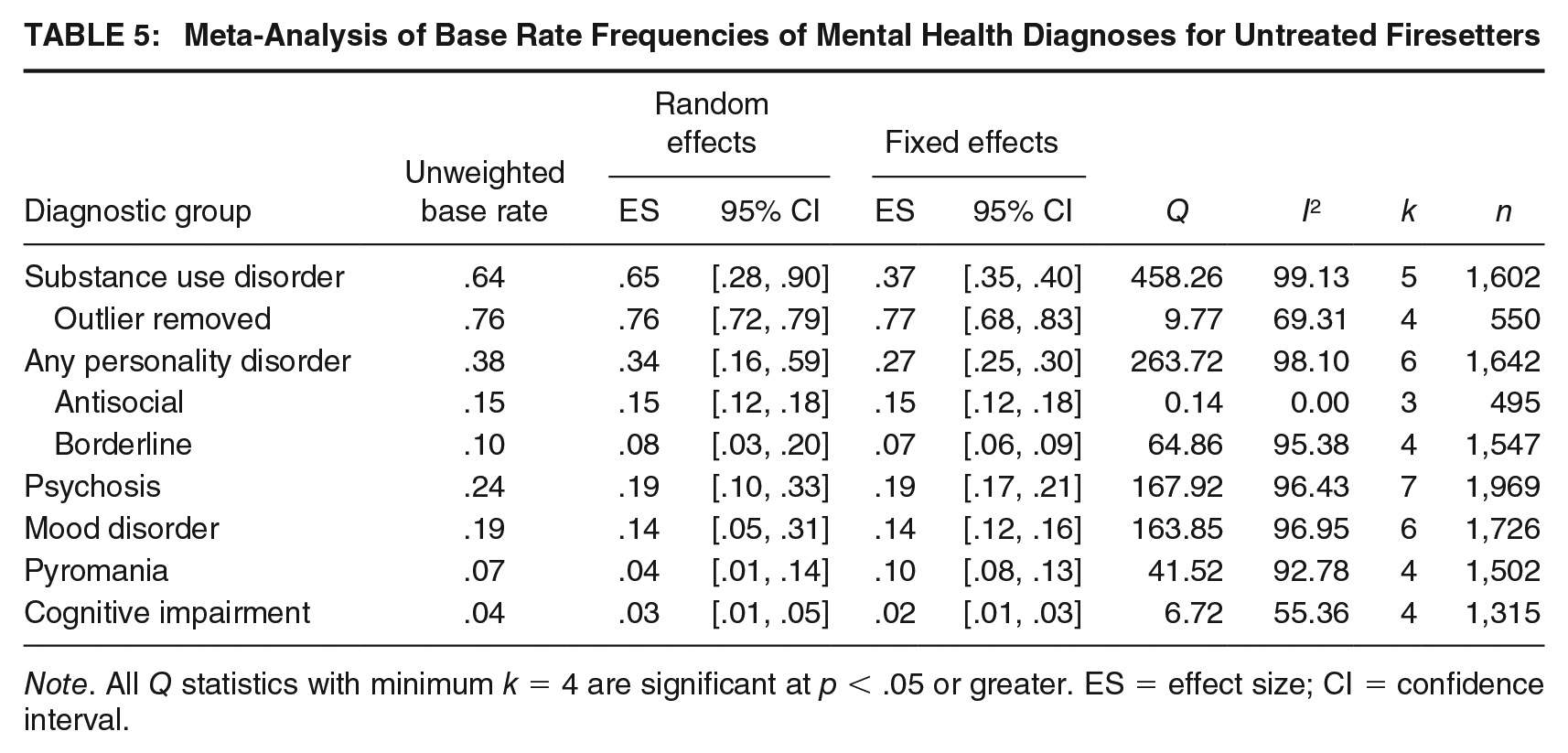
Note. All Q statistics with minimum k = 4 are significant at p < .05 or greater. ES = effect size; CI = confidence interval.
Discussion
How Common Is Firesetting Reoffending?
Arson, as a recidivistic event, appears relatively uncommon, with a base rate between 8% and 10%. This is lower than sexual reoffending, which is around 14% for untreated individuals (Gannon et al., 2019). However, when the broader concept of deliberate firesetting was recorded, reoffending increased to around 20%. This is comparable to base rates of violent reoffending in nonfiresetting populations (Gannon et al., 2019). The significant disparity between arson and firesetting reoffending may be due to the particularly low conviction rate for arson (Doley, 2003). To provide context to these base rates, we compared firesetting reoffending for known firesetters with offenders without a history of firesetting. While our finding that known firesetters were 5 times more likely to engage in firesetting reoffending was based on only three studies, it suggests that firesetters are a unique group with a risk profile different from other offenders.
How Common Is General Reoffending?
Consistent with prior research showing that firesetters tend to have diverse offending patterns (Ducat, McEwan, & Ogloff, 2013; Gannon & Pina, 2010), reoffending with crimes not involving fire was significantly more common. More than half of individuals with a history of firesetting engaged in further criminal activity of any type. Thus, it is apparent from these base rates that a significant proportion of firesetters commit additional offenses, highlighting the need for interventions to reduce risk of reoffending by this population.
Historically, many correctional services have not offered specific firesetting interventions, instead employing generic offending behavior programs (Gannon & Pina, 2010; Palmer et al., 2007). However, previous research has established that firesetters have distinct psychological differences relative to other offenders (Gannon et al., 2013) and thus a specialized approach may be needed. Therefore, it is concerning that specialist treatment programs for both adults and children are limited. Those firesetting interventions that do exist for children with a history of firesetting are often delivered in the community by fire and rescue services (see Palmer et al., 2007), whereas adult programs are frequently implemented within mental health services (e.g., Annesley et al., 2017; Swaffer et al., 2001) or correctional settings (e.g., Gannon et al., 2015). Unfortunately, many of these specialist treatment programs have not been appropriately evaluated, with small sample sizes and lack of longitudinal follow-ups prohibiting meaningful conclusions about their effectiveness.
However, the evidence base is expanding, with more sophisticated evaluations of firesetting treatment emerging. For example, Lambie et al. (2019) followed a national sample (n = 1,790) of children who had been through the New Zealand Fire Awareness and Intervention Programme (FAIP). They found that, according to police records, 62% engaged in a further offense of any kind and 5% committed arson over the 10 years following the intervention. In addition, further evaluations of psychological treatments for adults with a history of firesetting are underway (see Sambrooks & Tyler, 2019). It is hoped now we have established an untreated reoffending base rate upon which posttreatment rates could be compared, such evaluations of treatment programs will become even more abundant, enabling clinicians to engage in evidence-based practice. However, it must be noted that, although we ensured that all participants were not undertaking firesetting-specific treatment at baseline, it was not apparent whether they subsequently engaged with services or undertook treatment. Therefore, our base rates may not truly represent “untreated.”
We identified one evaluation of a treatment program for children (Franklin et al., 2002) that included both an untreated group and a treated group. They found an untreated repeat firesetting rate of 36.27% and a treated rate of 0.76%, suggesting that treatment effectively reduced firesetting risk. Notably, this study not only looked at arson and firesetting, but also fireplay behavior. Fireplay is typically distinguished from firesetting on the basis of motive and intent; fireplay is prompted by curiosity with no ill intent, whereas firesetting is characterized by intent to inflict harm or cause damage (Britt, 2011; Gaynor, 2000). Although the implications of fireplay for later criminal conduct are unclear, owing to a lack of empirical investigation, Jackson et al. (1987) suggested that pathological arson may develop as a result of strong reinforcing consequences of early fireplay. Therefore, identifying individuals engaging in fireplay may be key for targeting prevention initiatives and fire safety education.
Correlates of Firesetting
Our meta-analysis is the first to synthesize the adult and childhood firesetting literature, showing that the observed heterogeneity in effect sizes was at least partially explained by age. However, the limited available research meant that we were only able to include four studies specifically examining children. Comparisons between adults and children are further hampered by substantial methodological differences between studies. Adult studies tend to rely on formal sources of reoffending information, whereas child studies usually employ self or parental reports. This is a significant issue when interpreting rates of repeat firesetting as informal sources led to higher estimates. Consequently, reoffending rates stemming from adult studies that tend to rely solely on official reports of arson are likely to represent an underestimation. Nevertheless, our findings do suggest that individuals who have engaged in firesetting at a young age should be involved in interventions aimed at tackling repeat firesetting and reducing wider risk of criminal behavior. However, as between 19% and 21% of adults set further fires, such interventions need to extend to individuals aged above 18 years.
Prospective studies tend to have insufficient numbers to examine reoffending by gender (Ducat et al., 2017). Indeed, in this meta-analysis, only 7.3% of firesetters were female. Nevertheless, consistent with the wider literature concerning gender differences in reoffending rates (Coid et al., 2009; Maden et al., 2006), we found that samples with fewer females had higher general reoffending rates. One prospective study has suggested that these gender differences do not extend to firesetting (Ducat et al., 2017). However, retrospective studies have found that repeat firesetting is more frequent among females than males (Tyler et al., 2015; Wyatt et al., 2019). Therefore, future research should examine gender more closely.
This meta-analysis clearly demonstrated that there are a diverse range of mental disorders diagnoses associated with firesetting in adults. This highlights the need for formulations, risk assessments, and interventions to carefully consider the influence of mental health. First, in light of the frequency of substance issues, and the association with reoffending more widely (Yukhnenko et al., 2019), substance misuse is likely to represent a key treatment need. Few individuals were specifically diagnosed with ASPD or BPD, which is unexpected in light of previous research reporting high prevalence of these diagnoses among adult firesetters (e.g., Coid et al., 1999; Lindberg et al., 2005). Nevertheless, as the presence of a personality disorder is a known risk factor for repeat firesetting (Dickens et al., 2009; Ducat et al., 2015), it is a diagnosis that should not be disregarded. We also observed a high base rate of psychosis at around 20%, which may have implications for motivations for firesetting and the circumstances under which fires are set (see Ducat, Ogloff, & McEwan, 2013).
In contrast, pyromania was uncommon. This is not surprising, given the strict Diagnostic and Statistical Manual of Mental Disorders, Fifth Edition (DSM-5; American Psychiatric Association, 2013) exclusion criteria that, if present, prohibit a pyromania diagnosis. An accurate prevalence rate of pyromania has yet to be established (Allely, 2019), but it appears rare, with rates between 3% and 10% (Gannon & Pina, 2010). Due to the restrictiveness of a diagnosis, its use within clinical practice is limited (Field, 2016). However, an inappropriate interest in fire is a significant predictor of repeat firesetting for both adults and children (MacKay et al., 2006; Tyler et al., 2015) and is therefore a critical area to be considered. Similarly infrequent was LD. This was somewhat unanticipated, given that there appears to be a higher prevalence of LD among firesetters relative to the general population (Alexander et al., 2015). Although research examining firesetters with LD is limited, Bell et al. (2018) found an association between LD and repeat firesetting. Hence the relationship between LD and reoffending should be explored further.
Limitations, Future Directions, and Conclusion
Across the studies included in this meta-analysis, there was substantial heterogeneity, with large variability in samples, follow-up periods, and reoffending definitions. Nonetheless, the base rates of reoffending established by this meta-analysis make it apparent that a significant proportion of individuals with a history of firesetting reoffend. It is hoped these base rates will enable clinicians to undertake defensible evaluations of reoffending risk. In addition, they highlight to practitioners, policy makers, and academics the extent to which deliberate firesetting is a recurrent behavior and is accompanied by other criminal conduct. Therefore, they underscore the need for individuals with a history of firesetting to be the focus of ongoing research and interventions. It is hoped that, as the availability of interventions increases, so will meaningful evaluations of their effectiveness increase. To date, it has been difficult for clinicians to engage in evidence-based practice with this population. Although this meta-analysis was only able to examine a limited range of predictors, it has highlighted which individuals are at greatest risk of reoffending, and so provides direction for future research and treatment provision.
