




Abstract
This study examines the relationship between criminal history and adverse childhood experiences (ACEs) and how they collectively predict (a) recidivism and (b) positive social functioning among multi-problem young adults. Criminal records and self-report data regarding ACEs and adult education/employment and quality of life (QoL) were collected for 692 multiproblem young adults (18–27 years). Results indicated that an extensive criminal history was related to non-violent and violent recidivism and lack of involvement in education/employment in young adulthood. On the contrary, a higher number of ACEs was related to lower QoL later in life, while this was not associated with recidivism or education/employment. These findings highlight again that past criminal behavior is a strong predictor of future criminality, particularly within this group of young adults with multiple problems. Furthermore, experiencing negative events in childhood shows to have long-term negative effects on QoL even for these individuals who already experience multiple life problems. Implications are discussed.
The age of onset of delinquent behavior, as well as the severity and frequency of offending, affects the nature of future criminal pathways (Liberman et al., 2008; Loeber & Farrington, 2000; Van Hazebroek et al., 2019). A variety of developmental offending careers from adolescence to young adulthood have been described: non-offenders, one-time offenders, recidivists, and chronic offenders (Blokland & Palmen, 2015). Moffitt (2018) described the pathways of life course persistent and adolescent-limited offending behavior. Adolescent-limited offending is common and generally considered to be a normative response to the social context of an adolescent, whereas life course persistent offending is more rare and often related to experienced family adversities, inadequate parenting, neurocognitive problems, and temperament and behavior problems (Moffitt & Caspi, 2001). According to previous studies, youth who commit frequent and serious crimes in adolescence tend to be less successful later in life than non-offending youth: They are frequently engaged in multiple types of crimes during young adulthood (Piquero et al., 2012) and experience difficulty in finishing school and finding employment (Bullis & Yovanoff, 2002; Van der Geest et al., 2016). In turn, this relates negatively to quality of life (QoL) in young adulthood (Lanctôt et al., 2007). QoL is defined by the World Health Organization as “an individual’s perception of his or her position in life, in the context of the culture and value system in which he or she lives and in relation to personal goals, expectations and concerns” (The World Health Organization Quality of Life assessment [WHOQOL Group], 1995).
On the contrary, positive life events, such as a romantic relationship and parenthood, can influence desistance from offending into young adulthood and may improve social functioning, such as attending education or employment (Blokland et al., 2012; Scales et al., 2016; Van der Geest et al., 2011; Verbruggen et al., 2012). These positive life events may also increase the perceived QoL. Research on the association between criminal history and QoL in young adulthood is scarce and has shown inconclusive results; some studies found a negative relation between delinquency and QoL (Akbarizadeh & Hosseinzadeh Jolgeh, 2016), while other studies found no association (Barendregt et al., 2018). Another study found an indirect negative relation via mental health problems between QoL and offending (Van Damme et al., 2016).
In particular, much is unknown regarding how criminal history during adolescence and adverse childhood experiences (ACEs) affect the road back to positive social functioning of multi-problem young adults. These young adults dysfunction in society and suffer from multiple problems, including financial problems, a low level of education, judicial contacts, psychological problems, and substance abuse (Van Duin et al., 2017). Their wide variety of problems complicates successful development—for example, finding suitable employment—in young adulthood (Scales et al., 2016). According to previous studies among young adults, the frequency of violent and non-violent offending peaks in late adolescence and decreases again during young adulthood (Piquero et al., 2012). However, some studies show a later peak in offending during young adulthood, specifically among young adults with serious mental health problems (Davis et al., 2015). Youth who persist in offending during young adulthood are often behind in their psychosocial development, in terms of future orientation, impulse control, and suppression of aggression, in contrast to youth who desist from offending (Monahan et al., 2009). As young adults with multiple problems are more vulnerable than other young adults, this group appears to be at particular risk of continuation of their offending behavior into young adulthood. Therefore, it is expected that past violent and non-violent offending are associated positively with (non-)violent recidivism. In addition, based on previous studies, it is hypothesized that past (non-)violent offending relates negatively with participation in education or employment in young adulthood.
Besides juvenile delinquency, ACEs likely have a negative impact on social functioning in young adulthood. Following an ecobiodevelopmental framework, in the ACE study by Felitti et al. (1998), an overview was created of the most prominent ACEs, such as maltreatment (abuse, neglect) and household dysfunction. These ACEs have since shown to be related to multiple negative outcomes in childhood, adolescence, and young adulthood (Basto-Pereira et al., 2016; Fang & Corso, 2007; Gilbert et al., 2009; Hughes et al., 2017; Kessler et al., 2010; Thompson et al., 2015), such as internalizing, externalizing, and behavioral problems (Van Duin et al., 2017); delayed brain development (Berens et al., 2017); long-term health problems (Flaherty et al., 2013; Thompson et al., 2015); violent and chronic offending (Baglivio et al., 2015; Basto-Pereira et al., 2016; Fang & Corso, 2007; Fox et al., 2015; Garbarino, 2017; Lansford et al., 2007; Perez et al., 2018; Reavis et al., 2013; Wolff & Baglivio, 2017); and the intergenerational transfer of violent behavior (Duke et al., 2010; Fang & Corso, 2007; Fox et al., 2015; Widom & Maxfield, 2001). ACEs have also been linked to specific aspects of social (dys)functioning, such as unemployment or serious job problems, financial problems, absenteeism (Anda et al., 2004; Currie & Spatz Widom, 2010; Liu et al., 2013; Metzler et al., 2017; Zielinski, 2009), and a lower QoL (Abajobir et al., 2017; Mosley-Johnson et al., 2019).
Not surprisingly, both elaborate criminal history and ACEs are highly prevalent in multi-problem youth (Van Duin et al., 2017, 2019). These vulnerable youth experience more difficulties to succeed in community integration in young adulthood than other youth, regarding participating in employment, attending education, generating a stable income (Metzler et al., 2017; Scales et al., 2016; Van der Geest et al., 2016; Van Hazebroek et al., 2019), or finding independent housing (Osgood et al., 2010). Such failure complicates their development in becoming self-sufficient and well-functioning adults (Collins, 2001; Osgood et al., 2005, 2010; Scales et al., 2016), and negatively relates to their perceived QoL (Nevarez-Flores et al., 2019). In turn, this may increase their likelihood of future criminal behavior and convictions (Van Duin et al., 2017, 2019). In addition, multi-problem youth and young adults often experience psychological problems (Van Duin et al., 2017, 2019), which may have a negative effect on their experienced QoL in young adulthood and subsequently also increase the likelihood of future criminality and unemployment (Davis et al., 2015; Van Damme et al., 2016).
The present study aims to investigate to what extent criminal history characteristics and ACEs are related, separately and collectively, to recidivism and social (dys)function of multi-problem males in young adulthood. Recidivism, violent and nonviolent, is regarded as a negative outcome, while participation in education/employment and perceived positive QoL are seen as markers for positive social functioning. Based on previous studies, we hypothesize that a more extensive criminal history (frequency of past [violent] offending and earlier age of onset) is positively correlated with the presence of multiple ACEs during childhood (Hypothesis 1). Moreover, we hypothesize that the presence of a more extensive criminal history and more ACEs increases the risk of non-violent and violent recidivism in multi-problem young adults (Hypothesis 2). In addition, we expect that an extensive criminal history and multiple ACEs decrease the likelihood of positive social functioning regarding participation in education/employment (Hypothesis 3) and negatively affect QoL in young adulthood (Hypothesis 4). Finally, we anticipate that a model including both criminal history characteristics and ACEs will provide a better prediction for each of these outcomes than these individual predictors separately (Hypothesis 5).
Method
Participants and Setting
A total of 696 multi-problem young adults were recruited in Rotterdam, The Netherlands, between 2014 and 2016 (Luijks et al., 2017; Van Duin et al., 2017, 2019). Participants were all male, between 18 and 27 years old, and had sufficient knowledge of the Dutch language to understand the study procedure and the questionnaires. The participants were recruited at two sites: at a municipal agency where all young adults aged between 18 and 27 years can request social welfare (Dutch: Jongerenloket) and at multimodal day treatment program New Opportunities (Dutch: De Nieuwe Kans [DNK]) for multi-problem young adult males. At DNK, 173 participants were recruited. Participants signed up for DNK themselves or were referred by the Jongerenloket, youth care, probation services, mental health services, or other social organizations. DNK offers a multimodal intervention for multi-problem young adult males, while social welfare can be requested at the Jongerenloket.
At Jongerenloket, 523 participants were recruited. During the intake, the youth coach rated the Self-Sufficiency Matrix–Dutch version (SSM-D; Fassaert et al., 2014). The SSM-D has scores of in crisis (1), vulnerable (2), stable (3), safe (4), and thriving (5). Young adults were eligible for participation in this study when they met multi-problem criteria based on the SSM-D: (a) a score of 1 or 2 on the domains of Income and Daytime Activities; (b) a maximum score of 3 on at least one of the following domains: Addiction, Mental Health, Social Network, and Justice; and (c) a minimum score of 3 on the domain of Physical Health. A minimum score of 3 on Physical Health was required to be able to engage in interactive components of the intervention, such as offered at DNK. This multi-problem definition was based on the SSM-D profile of DNK participants who had an intake at Jongerenloket in 2012 (M. J. A. Luijks et al., 2017). Of the total study sample (N = 696), the final sample consisted of 692 participants (99.4%), who gave informed consent regarding the record and register research. Baseline measures were assessed at start of treatment at DNK or within 2 weeks after the intake at Jongerenloket. At follow-up, 12 to 14 months after baseline, the response rate was 77.7% (n = 538). The study was approved by the Medical Ethics Review Committee of VU University Medical Center. 1 Participants gave informed consent for their voluntary participation after a member of the research team provided oral and written information. Trained researchers administered the questionnaires by means of an interview.
Measures
Independent Variables
Criminal history
History of delinquency was documented as the number of previous convictions for violent and for non-violent offenses until baseline measurement, as officially registered in the Research and Policy database Judicial Documentation (Dutch: Onderzoek- en Beleidsdatabase Justitiële Documentatie [OBJD]) of the Ministry of Justice and Security in The Netherlands (Wartna et al., 2011). A total number of past violent offenses was computed by means of combining the number of committed violent offenses in the following three offense categories: violence toward others, property crime with violence, and hands-on sexual offenses. A total number of past non-violent offenses was computed by means of adding the number of committed offenses in all other offense categories, that is, property crime without violence, drug offenses, destruction/minor aggression/disturbance public order, traffic offenses, and other offenses. Age of onset was computed by means of calculating the difference between the date of birth and the date when the first officially registered offense was committed.
Adverse childhood experiences
The total ACE score was operationalized as the self-reported exposure to 11 types of adverse experiences during childhood, within three main categories: abuse (3), neglect (2), and household dysfunction (6). Abuse and neglect were assessed by means of the 24-item Dutch Childhood Trauma Questionnaire–Short Form (CTQ-SF), resulting in five ACEs: physical abuse (five items; Cronbach’s α = .91), emotional abuse (five items; Cronbach’s α = .89), sexual abuse (four items; Cronbach’s α = .95), physical neglect (five items; Cronbach’s α = .63), and emotional neglect (five items; Cronbach’s α = .91) (Thombs et al., 2009). The item response categories were Likert-type: never true (1) to very often true (5). For each of the ACEs, a total score was calculated by adding up the item scores. For sexual abuse, this total score was then prorated to arrive at a similar range for all ACEs (range = 5–25). For physical abuse and physical neglect, a score of 8 and above was categorized as the ACE was (partially) present. For sexual abuse, emotional neglect, and emotional abuse, scores upward from 6, 10, and 9, respectively, were categorized as (partially) present (Bernstein et al., 2003; Walker et al., 1999). The ratings were dichotomized, using these cutoff scores to determine whether the specific type of abuse was present or not during childhood, as applied in previous studies by Bernstein et al. (2003), Walker et al. (1999), and Van Duin et al. (2019). Household dysfunction consists of six dichotomous ACEs: alcohol abuse in the family, drug abuse in the family, police contact in the family, psychological problems in the family, domestic violence, and growing up in a single-parent family. It was assessed whether or not participants had these 11 types of abuse, neglect, and household dysfunction ACEs (Yes/No), and the total ACE score was computed for each individual by summing up the number of “Yes” answers (range = 1–11; Van Duin et al., 2019).
Outcome Measures
Recidivism
Information regarding recidivism was collected during follow-up: convictions for new (violent or non-violent) offenses committed between baseline measurement and January 2018 (mean follow-up time = 900.1 days) were retrieved from the OBJD database in The Netherlands (conviction date). Dichotomous measures of violent and non-violent recidivism were computed. In addition, time (in days) from baseline measurement to first violent recidivism and to first non-violent recidivism was calculated.
Education/employment
The first outcome measure reflecting positive social functioning was education/employment. This was measured at follow-up, 14 months after the baseline measurement, by means of self-report questions: (a) Are you currently enrolled in education? (Yes/No) and (b) Do you currently have a job? (Yes/No). Based on the answers, the dichotomous variable education/employment was computed (Yes/No).
Quality of Life
The second outcome measure reflecting positive social functioning was QoL, as measured 14 months after baseline by means of the Manchester Short Assessment of Quality of Life (MANSA). Sixteen questions were assessed, four of these investigating objective QoL and 12 concerning satisfaction on various life domains: overall life satisfaction, unemployment/job, financial situation, friendships, leisure activities, accommodation, personal safety, people in the person’s household, sexual life, family, physical and mental health. The item response categories are Likert-type (1–7): could not be worse (1) to could not be better (7). Self-reported QoL was calculated by means of the total MANSA score quality of life score. The MANSA is a brief and modified version of the Lancashire Quality of Life Profile (LQLP). Its internal consistency is satisfactory (Cronbach’s α = .74); it has adequate concurrent validity with the LQLP (Priebe et al., 1999) and is used both in clinical and nonclinical samples (Priebe et al., 2011).
Data Analysis
Multiple statistical analyses were performed using Statistical Package for the Social Sciences (SPSS), Version 22 (Field, 2009). To test Hypothesis 1, the relationship between the predictor variables was investigated, and correlations between the predictors were calculated. In addition, correlations between the outcomes were tested. Subsequently, the independent predictors were investigated for each outcome by means of multiple Receiver Operating Characteristic (ROC) analyses. This analysis results in an area under the curve (AUC) value for each predictor. AUC values present the predictive ability of the independent variables. Values between .556 and .638 are considered small, between .639 and .713 considered moderate, and values of .714 and above considered large (Rice & Harris, 2005).
Furthermore, two hierarchical Cox regression analyses were executed to further explore the predictive value of non-violent recidivism and violent recidivism over time using the predictors criminal history and ACEs (Hypothesis 2). Finally, to test Hypothesis 3, a hierarchical logistic regression analysis and to explore Hypothesis 4, a linear regression analysis were also executed to further investigate the association between the predictors criminal history and ACEs and the outcome measures education/employment and QoL in young adulthood, respectively. For each of the Cox, logistic, and linear regressions, the independent variables were entered in multiple steps to test Hypothesis 5: (a) the total number of past non-violent offenses and of past violent offenses (together criminal history) and (b) the total number of ACEs. In addition, a third step was added to the regression models to control for age. Age of onset was not included in the regression analyses as this could not be calculated for those individuals without criminal history (n = 119).
Results
Table 1 shows the descriptives of self-reported demographic characteristics, ACEs, officially registered prior offending, official recidivism, and self-reported education/employment and QoL at follow-up. The majority of the participants were from non-Dutch descent (87.5%), conform the Statistics Netherlands (Dutch: CBS) definition. A participant was classified as non-Dutch if he or one of his parents was not born in The Netherlands (Statistics Netherlands, 2016). Prior delinquency was highly prevalent; 82.8% of the sample was convicted at least once before baseline (n = 573). Property crime without violence was the most common prior offense. ACEs were also highly prevalent; a mean of 3.6 ACEs per participant was reported. The most common ACE reported was emotional neglect (69.0%).
Percentage or Mean Score of Demographic Characteristics, Criminal History Characteristics, ACEs, and Outcome Measures (N = 692)
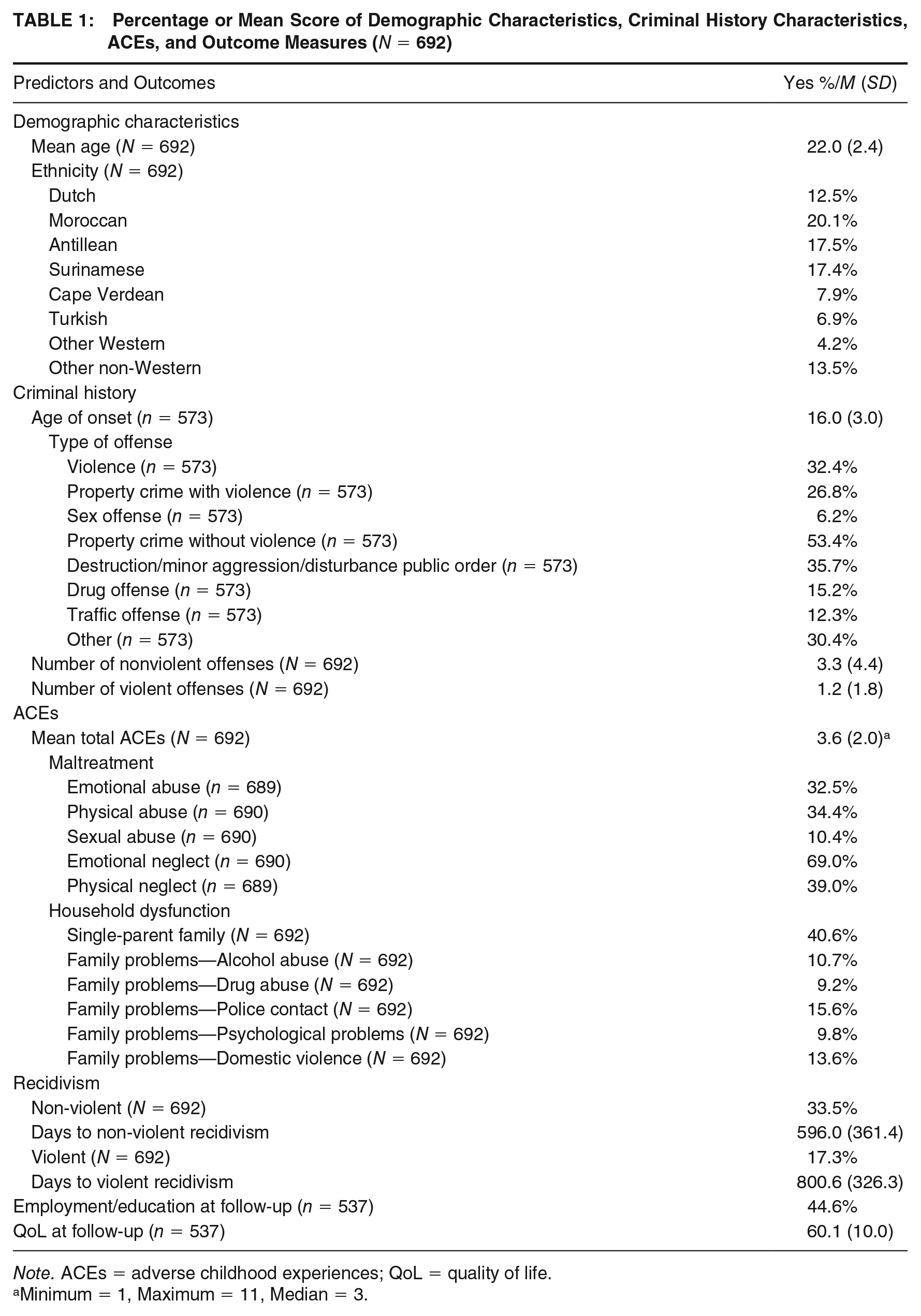
Note. ACEs = adverse childhood experiences; QoL = quality of life.
Minimum = 1, Maximum = 11, Median = 3.
Table 2 shows the correlations between characteristics of criminal history and ACEs. ACEs were not associated with criminal history characteristics. Past non-violent and past violent offenses were positively associated and both were associated with a lower age of onset of first offense. In the follow-up period of 30 months average (range = 412–1,028 days), 37.8% of the participants were convicted for any new offense—for a non-violent offense and/or for a violent offense. Almost half of the participants were involved in employment or education at the time of follow-up, and the mean self-reported total score on QoL at follow-up was 60.1 (range = 20–84). Table 2 also shows the correlations between the different outcome measures. Violent and non-violent recidivism were positively associated. Involvement in education/employment and QoL were also positively associated.
Correlations of all Predictors and Outcome Measures
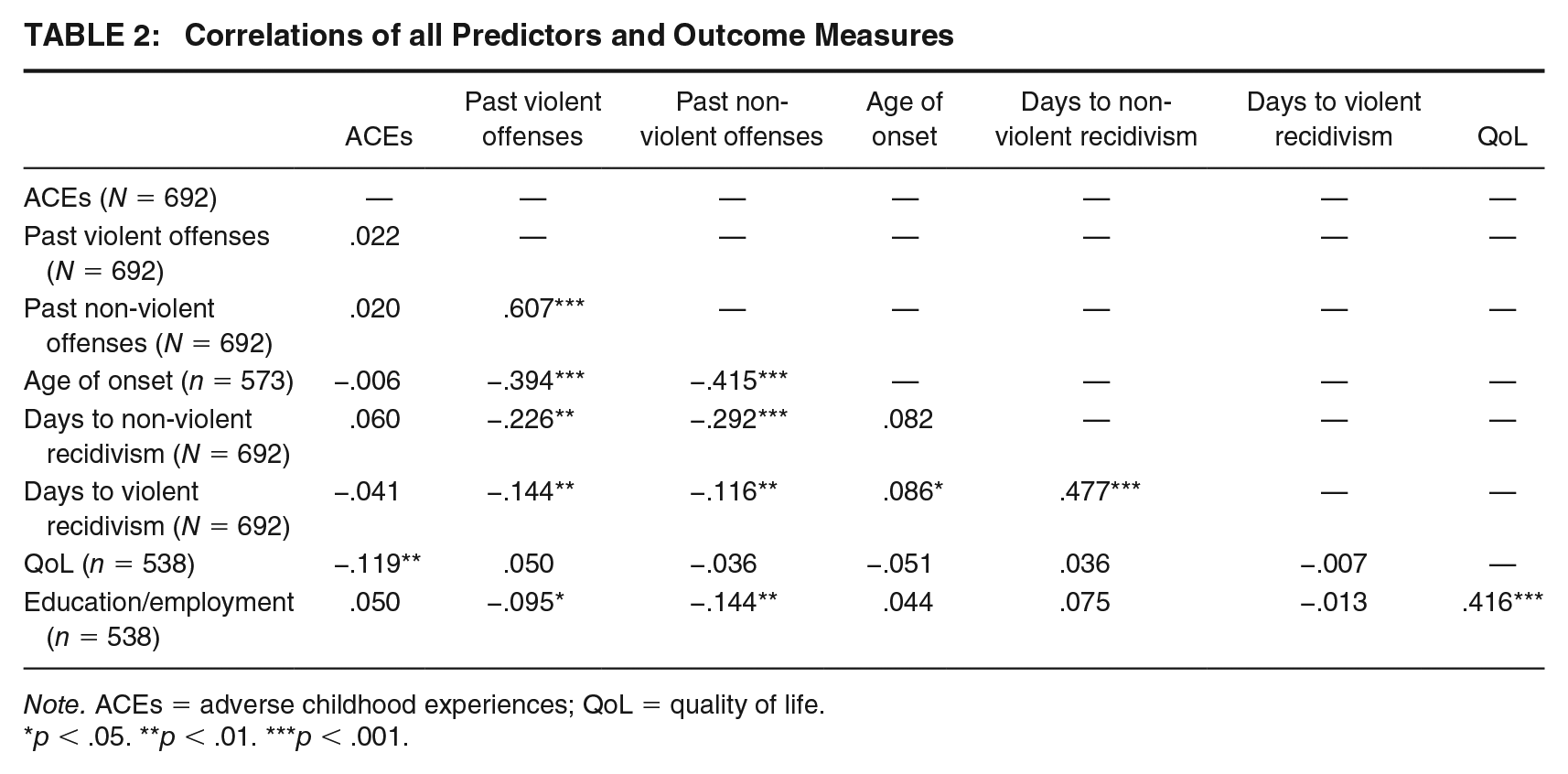
Note. ACEs = adverse childhood experiences; QoL = quality of life.
p < .05. **p < .01. ***p < .001.
Unique Associations of Criminal History and ACEs with Recidivism, Education/Employment, and QoL
The predictive ability of the four independent variables was investigated: past non-violent offenses, past violent offenses, age of onset, and ACEs. Table 3 shows the results of the AUC analyses for the four different outcome measures: non-violent recidivism, violent recidivism, QoL, and education/employment. Past non-violent offenses had a large predictive ability for non-violent recidivism, while a history of violent offenses had a moderate predictive validity for non-violent recidivism. Past non-violent offenses and past violent offenses both had a large predictive validity for violent recidivism. Overall, these results show that individuals with a more extensive criminal history were generally more prone to recidivate with non-violent as well as violent offenses. Age of onset had a low, yet significant, predictive value for non-violent recidivism and violent recidivism, indicating that a lower age at first offense slightly increased the likelihood of recidivism.
AUC Values per Outcome
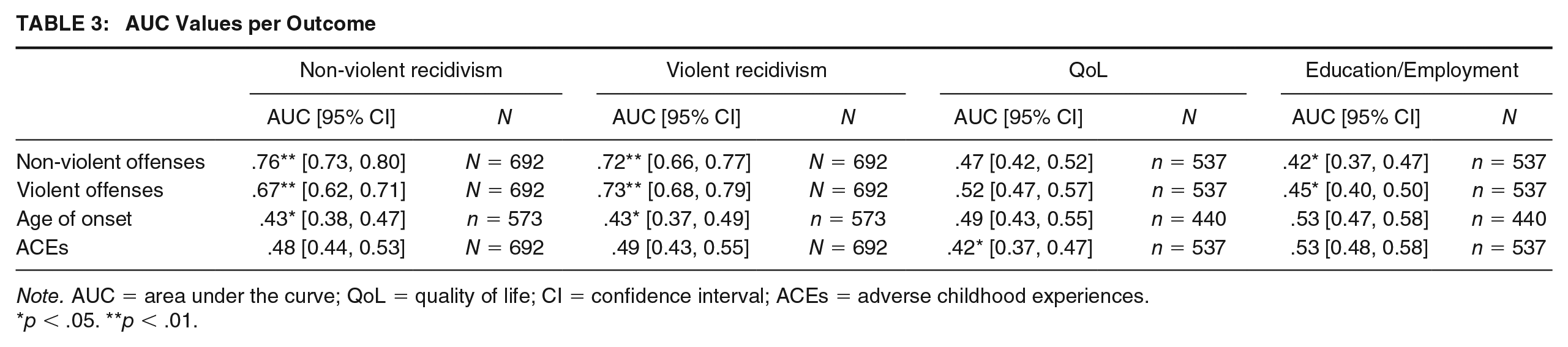
Note. AUC = area under the curve; QoL = quality of life; CI = confidence interval; ACEs = adverse childhood experiences.
p < .05. **p < .01.
The predictive validity of past non-violent offenses and past violent offenses for the positive outcome education/employment was small, but significant, indicating that people with a more extensive criminal history were slightly less likely to be involved in education or employment at follow-up. The predictive validity of ACEs for the positive outcome QoL was small but significant, indicating that individuals who experienced more ACEs reported slightly lower QoL at follow-up.
In the following, through combined prediction models, the added value of the frequency of past non-violent offending, the frequency of past violent offending, and ACE scores for the prediction of the four outcomes (non-violent recidivism, violent recidivism, education/employment, and QoL) was examined, while controlling for age.
Criminal History and ACEs in Relation to Recidivism Over Time
Hierarchical Cox regression analyses were executed to explore the prediction of non-violent recidivism and violent recidivism over time (see Table 4). In the first step of the non-violent recidivism analysis, past non-violent offenses and past violent offenses were entered, which both significantly predicted non-violent recidivism over time. In the second step, total ACEs were added to the model, which did not contribute significantly to the prediction of nonviolent recidivism over time, Change model χ2(1) = 3.63, p = .06. In the third step, age was added as a control variable, which contributed significantly to the model, Change model χ2(1) = 22.93, p < .001. A hierarchical Cox regression model was also executed to explore the prediction of violent recidivism over time (see Table 4). In the first step of the violent recidivism analysis, past non-violent offenses and past violent offenses were entered, which both significantly predicted violent recidivism over time. In the second step, total ACEs were added to the model, which also did not contribute significantly to the prediction of violent recidivism over time, Change model χ2(1) = 0.04, p = .84. In the third step, age was added as a control variable, which did not contribute significantly to the model, Change model χ2(1) = 1.72, p = .19.
Cox Regression Model: The Incremental Predictive Validity of Criminal History, ACEs, and Age to Non-violent Recidivism and Violent Recidivism over Time (N = 692)
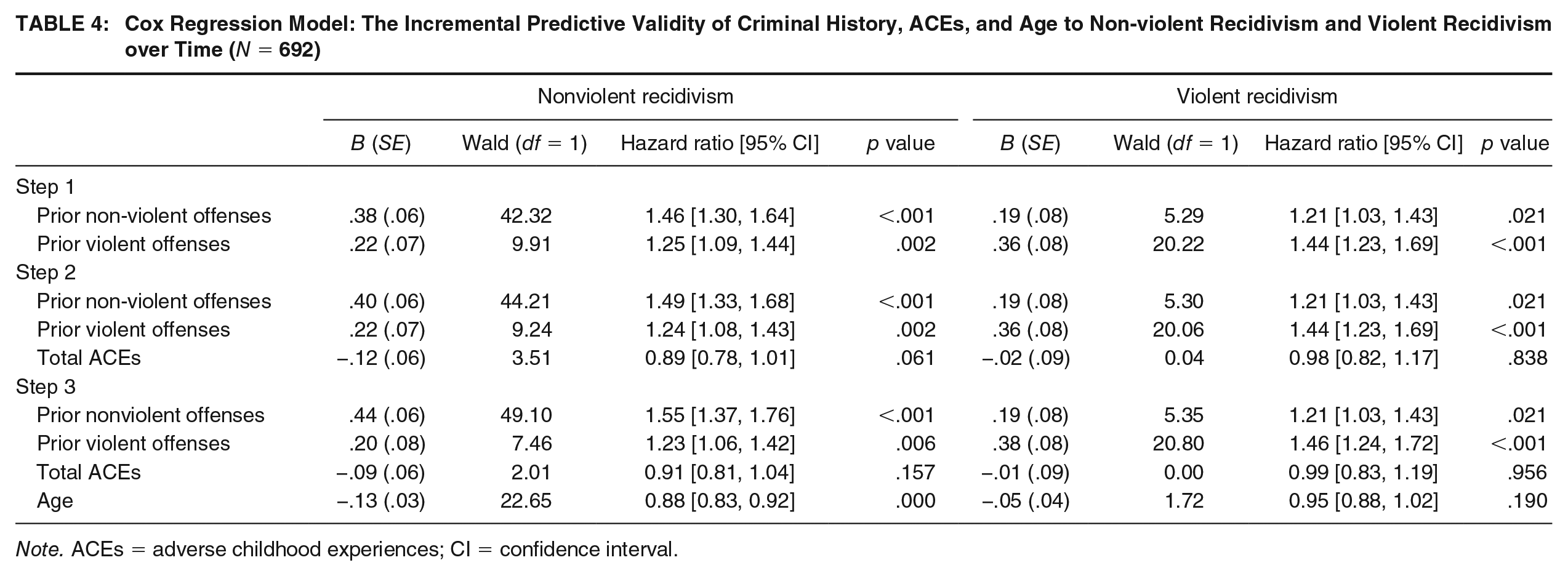
Note. ACEs = adverse childhood experiences; CI = confidence interval.
Criminal History and ACEs in Relation to Social Functioning
A hierarchical logistical regression analysis was conducted to examine the association between past non-violent offending, past violent offending, ACEs, and the outcome education/employment, controlling for age (see Table 5). In the first step of the education/employment prediction model, past non-violent offending and past violent offending were entered in the model. Non-violent offending was related negatively to education/employment. Thus, participants who were convicted less for non-violent offenses prior to baseline had an increased likelihood to be involved in education/employment at the end of the follow-up period. In the second step, total ACEs were added, which did not significantly contribute to the prediction model of education/employment, ΔR2 = .01, p = .15. In the third step, age was added as a control variable, which did not significantly contribute to the model, ΔR2 = .01, p = .46.
Logistic Regression Analysis: The Incremental Predictive Validity of Criminal History, ACEs, and Age to Education/Employment (n = 537)
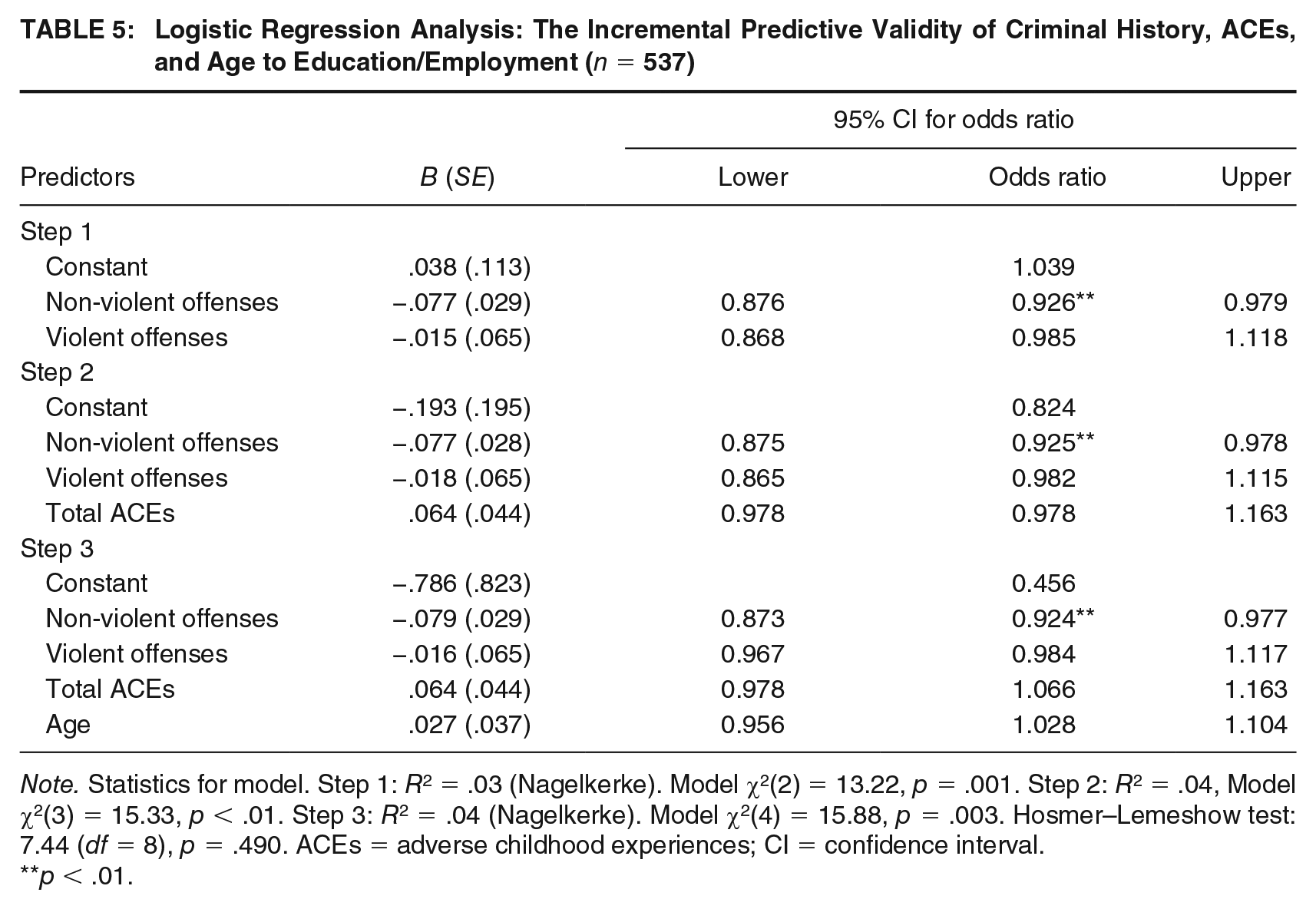
Note. Statistics for model. Step 1: R2 = .03 (Nagelkerke). Model χ2(2) = 13.22, p = .001. Step 2: R2 = .04, Model χ2(3) = 15.33, p < .01. Step 3: R2 = .04 (Nagelkerke). Model χ2(4) = 15.88, p = .003. Hosmer–Lemeshow test: 7.44 (df = 8), p = .490. ACEs = adverse childhood experiences; CI = confidence interval.
**p < .01.
A hierarchical linear regression analysis was carried out to examine whether past offending (non-violent and violent), ACEs, and age were associated with the outcome measure QoL in the follow-up period (see Table 6). In the first step, past non-violent offending (nonsignificant) and past violent offending were entered in the model. Past violent offending was positively related with QoL, surprisingly indicating that more prior violent offenses resulted in a slightly higher reported QoL. In the second step, total ACEs were added to the model. This model had the best fit, R2 = .03, ΔR2 = .01, p = .01, in which ACEs were negatively related to QoL, indicating that more ACEs resulted in a lower QoL. In the third step, age was added to the model, which did not contribute significantly, R2 = .03, ΔR2 = .01, p = .06. Concluding, more past violent offending was marginally related to a slightly increased QoL, although this was not confirmed in the AUC analysis (see Table 3). ACEs significantly improved the prediction model: The experience of more ACEs in the past was related to a lower QoL at follow-up.
Linear Regression Analysis: The Incremental Predictive Validity of Criminal History, ACEs, and Age to QoL (n = 537)
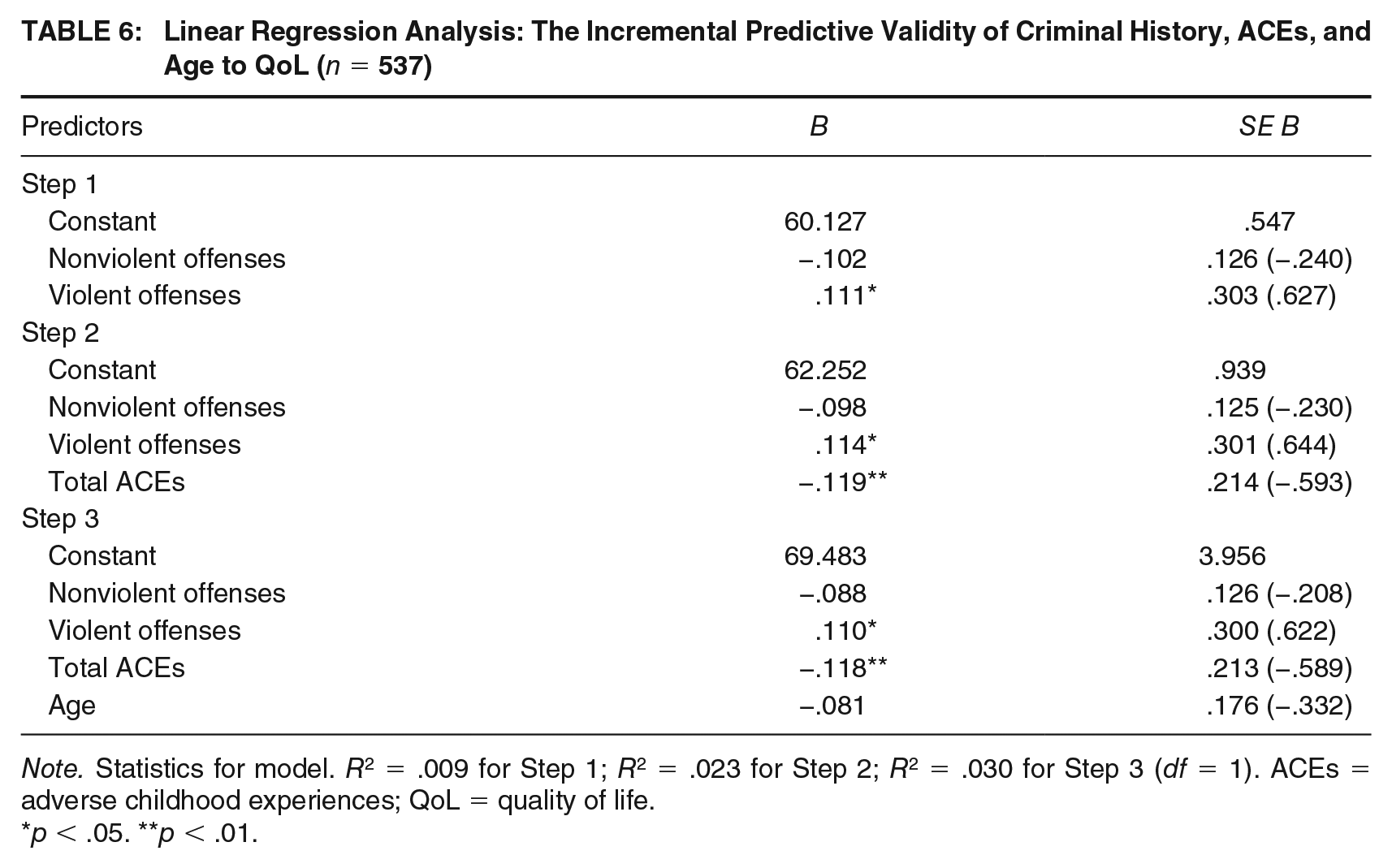
Note. Statistics for model. R2 = .009 for Step 1; R2 = .023 for Step 2; R2 = .030 for Step 3 (df = 1). ACEs = adverse childhood experiences; QoL = quality of life.
p < .05. **p < .01.
Discussion
This study aimed to increase the knowledge of the predictive value of criminal history and ACEs on the functioning of a young adult group with multiple severe problems in different life domains. The purpose of this study was twofold. The first aim was to explore to what extent criminal history and ACEs predicted non-violent and violent recidivism among multi-problem young adults. Contrary to our hypothesis, findings did not indicate a relation between extensive criminal history and the presence of multiple ACEs. As expected, the much replicated finding that criminal history (past non-violent offenses, past violent offenses, and age of onset) predicts (violent) recidivism was confirmed for this sample of multi-problem young adults. Age only demonstrated to significantly influence these findings for the outcome of non-violent recidivism. However, the current study did not find that within the multi-problem young adult group, ACEs were a sound predictor of violent or non-violent recidivism and did not demonstrate that a model including both criminal history characteristics and ACEs would provide a better prediction of recidivism over time than each of these predictors separately.
A possible explanation for the lack of predictive power for ACEs in the present study might be the high prevalence of ACEs within this sample. ACEs were more prevalent in this sample in contrast with the general population of adult men as reported in the ACE study (Chapman et al., 2007) and in comparison with other high-risk samples (Flaherty et al., 2013; Thompson et al., 2015). Other studies generally include control groups and have a wider distribution of ACE scores in their investigation (Widom & Maxfield, 2001), which might generate more effect. The dispersion of ACE scores in the current study is rather low and a large proportion of the sample had at least two or more ACEs. It is possible that ACE scores discriminate less within such a highly traumatized sample. Another explanation might be that specific ACEs differ in their association with (violent) recidivism. A study by Basto-Pereira et al. (2016) showed sexual abuse as strongest predictor of recidivism, whereas a study by Lansford et al. (2007) demonstrated physical abuse as the strongest predictor of juvenile violent offending. This was not examined in the current study, because our focus was on total ACEs to investigate the cumulative effect of the presence of multiple ACEs. Regarding recidivism, other factors such as poverty or a weak social support network might also influence whether one reoffends or not (Bright & Jonson-Reid, 2015). These factors were not taken into account in the present study.
The second aim was to investigate the prediction of positive social functioning in terms of participation in education/employment and experienced QoL among multi-problem young adults. In the follow-up period, almost half of the sample was involved in education/employment, whereas they were not participating at baseline. Criminal history showed to be a negative predictor of education/employment. A possible explanation might be that a more extensive offending history could have led to more frequent convictions in the past, including imprisonment which may have resulted in lower educational achievement. In turn, this possibly resulted in limited employment opportunities. According to previous research, the experience of imprisonment complicates graduation or finding employment (Bullis & Yovanoff, 2002; Van der Geest et al., 2016). Another explanation might be possible stigmatization during the job application process as a result of past convictions or imprisonment (Decker et al., 2015). ACEs did not improve the prediction model of education/employment. Again, this might be due to the high prevalence of ACEs in the current sample. A study by Lansford et al. (2007) demonstrated that specifically a history of physical abuse appears to complicate attaining education or employment. However, other ACEs might be less relevant for this particular outcome and thus blur the findings.
In contrast to the nonsignificant findings regarding the prediction of recidivism and education/employment, the analysis of the prediction of QoL did show that the presence of multiple ACEs early in life were a good predictor of QoL during young adulthood and that ACEs added significantly to the prediction model over criminal history: less ACEs predicted a better QoL. This confirms the expectations based on previous research (Abajobir et al., 2017; Mosley-Johnson et al., 2019), even despite the high prevalence of ACEs in this sample. Surprisingly, in the regression analysis, past violent offending was marginally related to a higher QoL. However, this was not confirmed in the AUC analysis, which showed a chance-level prediction of past violent offending for QoL.
Overall, the results from this study show that criminal history and ACEs have varied importance for social functioning of this multi-problem young adult group. While, in accordance to the literature, a more extensive criminal history demonstrated to be related to ongoing delinquent behavior even for this multi-problem group of young adults, multiple ACEs were only related to lower subjective well-being later in life. In addition, markers of criminal history were related to less educational and employment involvement.
The present study had several limitations. First, with regard to criminal history and recidivism, the baseline measurement and follow-up moments were based on the time of participation in an intervention, rather than set ages and follow-up times for all participants. Second, education/employment and QoL were self-reported measures at 14 months after baseline measurement. The stability of positive outcome variables over time—for example, regarding attending school or employment or regarding QoL—was not taken into account. Also, objective information regarding the extent of participation in education/employment was not considered. In future studies, it would be valuable to include more sound measures of different types of positive social and community outcomes, such as registered information regarding long term participation in education or employment, financial management, or the social involvement with friends, family, and intimate relationships. Furthermore, a recommendation for further research would be to investigate the contribution of each of the ACEs separately in the prediction of various outcomes, in addition to the predictive validity of the total ACE score. Finally, it is recommended that more studies include the notion of positive life events such as romantic relationships and parenthood when studying success factors for social functioning.
In conclusion, this study demonstrated that, in particular, criminal history predicts a greater likelihood of (violent) recidivism and reduced participation in education/employment in this multi-problem young adult sample. On the contrary, ACEs appear more important for the self-perceived QoL. Based on these findings, it seems advisable that treatment programs for (multi-problem) young adults carefully take into account past criminal offending and ACEs to provide the best possible care and support that stimulates community reintegration and QoL improvement. Paying careful attention to these negative early life experiences could provide another piece of the puzzle that breaks the cycle of criminality, trauma, social dysfunctioning, and unsuccessful community participation for these multi-problem young individuals.
Footnotes
Authors’ Note:
We would like to thank the participants, the social welfare agency in Rotterdam (Jongerenloket), and DNK (Dutch: De Nieuwe Kans) for their cooperation with this study. We would like to thank the De Verre Bergen Foundation for funding this study. We have no known conflict of interest to disclose. Laura van Duin (1st author) and Michiel de Vries Robbé (1st author) collaborated on the first draft of the manuscript. This research project is funded by De Verre Bergen Foundation. De Verre Bergen Foundation is a venture philanthropy organization that aims to build a better Rotterdam through substantial investments in innovative, impactful social ventures. The financer was not involved in the design of the study nor the drafting of the manuscript. Furthermore, the financer was not involved in the process of data collection, analysis, and interpretation. Direct financer inquiries to Marvin Pires, Parklaan 22, 3016 BB Rotterdam, The Netherlands; e-mail:
