




Abstract
We document our experience developing and implementing qualitative and quantitative research methods trainings for community members using a collaborative, community-connected approach. Drawing on citizen social science, this project aims to democratize social scientific knowledge and equip community members to apply analytic techniques to questions in their communities. We build on existing work by developing an open access model that can be adapted to meet diverse needs of social science research projects. We describe how our work originated from a partnership with collaborators working on an independent media project, detailing the process leading to the development of a citizen social science training for residents in Muskegon Heights, Michigan. We share collaborative decisions made regarding training structure, content, and resources; integration of feedback to improve our design process; and application of our work to community development efforts. We discuss how this experience can inform and uplift community-based research in additional communities.
Keywords
One of the barriers to data-driven decision-making in underserved communities is the lack of trust between residents and researchers from academic institutions, government agencies, and nonprofit organizations. Rooted in a history of unethical research (Scharff et al. 2010), suspicions that researchers may use data in ways that undermine community interests or advance the professional gain of researchers without solving local problems inspire high rates of nonresponse to requests to participate in research (Dorman et al. 2023). As a result, the voices and viewpoints of historically disadvantaged community members are underrepresented in data used to inform policy about their communities. In this article, we describe how we used a citizen social science (CSS) model to develop trainings for community members to implement qualitative and quantitative research methods. CSS is a model that emphasizes engagement with citizens in which citizens play an active role in directing study resources, defining agendas, and producing and disseminating the findings of their own research (Goodson and Phillimore 2010; Mintchev et al. 2022). Following this collaborative, community-engaged approach to develop the training, we hope to equip residents in underserved communities to independently gather, analyze, and communicate data about their needs and visions for change, potentially overcoming the limitations of conventional research. Through this collaboratively created training, which can be adapted to community needs, residents’ visions for community development are elevated, and the nonresponse error that hinders effectiveness of research about socially vulnerable groups may be reduced.
Citizen Social Science: Democratizing Knowledge
As an emerging research model, CSS is interconnected with existing models. Perhaps most relevant is the link to “citizen science” (CS), a term first used in a 1989 article for the MIT Technology Review (Kerson 1989) to describe a project in which a group of 225 citizens were recruited to collect and analyze data (rain samples for acidity levels) for a socially relevant problem in the community (acid rain; Haklay et al. 2021; Kerson 1989). Dimensions of this first project, including volunteer citizen involvement, large-scale data collection, and political or social relevance of the research topic, are hallmarks of CS. In the 35 years following this project, definitions of CS have varied (for an examination of 34 definitions, see Haklay et al. 2021), yet they tend to remain rooted in the positivist approaches of the natural sciences (Amirrudin, Harrigan, and Naqvi 2023). CSS extends the CS model into the social sciences, with the possibility of a more critical or constructivist understanding of research and a greater role for community researchers in defining the focus and scope of the project (Amirrudin et al. 2023). CSS also builds on Burawoy’s (2005) call for a public sociology in which community members play pivotal roles in development of research questions, data collection, and the presentation of results (Jallad et al. 2022; Purdam 2014). The intention of CSS is to shift asymmetrical power dynamics that conventionally position researchers outside of and above the study population (Amirrudin et al. 2023; Mintchev et al. 2022), instead placing research participants in a central, active decision-making role within inquiry and investigation (Goodson and Phillimore 2010).
The integration of community members into the research process also connects CSS to participatory action research (PAR). As an approach, PAR “brings together community members, activists, and scholars to co-create knowledge and social change in tandem” (Cornish et al. 2023; see also Fine et al. 2021). Central to PAR is an emancipatory emphasis (Cornish et al. 2023) and a required focus on the concerns of citizens (Hidalgo et al. 2021). In contrast, CSS, “like most mainstream conventional social science, does not have an activist motivation as its starting point and at its core” (Fischer et al. 2021). Projects using CSS are united by a common goal of democratizing social scientific knowledge by equipping community members to apply social science analytic techniques to questions in their communities (Albert et al. 2021; Raap, Knibbe, and Horstman 2024; Vohland et al. 2021). CSS emphasizes community engagement through which citizens direct study resources, define agendas, and produce/disseminate the findings of their own research (Goodson and Phillimore 2010; Mintchev et al. 2022). Scholars utilizing CSS appreciate that residents have experiential knowledge, social ties, and deep personal investment in the research site, which positions them to navigate the gulf traditionally separating researchers from study populations (Edwards and Alexander 2011). Fischer et al. (2021) point out that citizen social scientists reinvigorate the research process by contributing a perspective informed by deep knowledge of the research setting and its social dynamics. They may also have more access to research participants and be better positioned to facilitate in-depth discussion about key issues or to gain entrée with underrepresented groups.
Embeddedness in the community is an indispensable asset that citizen social scientists bring to a research team (Greenberg, London, and McKay 2020; Heiss and Matthes 2017). Citizen social scientists are also equipped to translate research findings into accessible terms and identify key information networks for making results widely available to community members (Fischer et al. 2021). Through their close involvement with every stage of the research process, citizen social scientists give communities ownership in the production of a research agenda (Jallad et al. 2022; Purdam 2014), build trust within the scientific process, and control the products of the research. Thus, CSS aims to integrate research into community life as “an expression of active citizenship that ought to be available to everyone regardless of previous academic or professional history” (Mintchev et al. 2022). A CSS approach also builds local capacity to develop data-informed solutions to community problems. Additionally, CSS allows communities to retain control over how data are applied to future problem-solving and builds sustainable research skills within the community (Amirrudin et al. 2023; Walter and Suina 2019). In this way, research methodologies like CSS might be viewed as a culturally sustaining pedagogy, or an approach that values multiple ways of knowing, and replaces typical deficit models of education by uplifting, valuing, and responding to community voices (Paris 2012).
Limits of Citizen Social Science
Despite the benefits of CSS to academic research and communities, limitations exist. As noted in prior studies, one significant barrier to CSS work is the challenge of finding community members who have the skills necessary to complete the work (Fischer et al. 2021; Goodson and Phillimore 2010; Roche et al. 2020). Indeed, community members who are recruited to work on community-based research projects bring their own set of unique skills and knowledge that makes their participation in the research instrumental. Nonetheless, studies have found that a higher level of formal education and a strong foundation in the research process can enhance the quality of data collected and equip citizen social scientists to overcome common challenges that emerge in data collection, analysis, and reporting (Fischer et al. 2021). Creating and providing training in the research process, however, involves time-intensive tasks that can become a barrier to undertaking this type of collaboration.
Some training models have emerged in recent projects that include the work of citizen social scientists (Goodson and Phillimore 2010; Jallad et al. 2022). Goodson and Phillimore (2010) describe a three-module training they used to instruct their group of citizen social scientists. These training modules covered many topics, including the basics of social science research, interviewing skills, and research ethics (Goodson and Phillimore 2010). Although this training was crucial in providing skills and competencies for the citizen social scientists working on the project, it was unclear how intensive this training was, how the training was delivered, who designed and delivered the training, and how the citizen social scientists were compensated for their work. Jallad et al. (2022) also provided training to their team of citizen social scientists first in person and then online after the emergence of COVID-19. These training sessions covered themes and skills necessary for the citizen social scientists to complete social science research, including research ethics, risk management, collecting interview data and survey data, and GIS mapping (Jallad et al. 2022). As a complement to the training, citizen social scientists were also paired with a project staff member until they gained experience in the research process (Jallad et al. 2022).
Despite these emerging examples, there is still no standard model for training citizen social scientists with the flexibility to be adapted to a variety of community settings or needs.
For example, there is a lack of consensus on the training topics necessary to complete quality social science research, optimal timeline, format, and pedagogy. Additionally, it is unclear how citizen social scientists should be compensated for the training work they complete. One way to combat the perception that CSS work takes advantage of community members is to offer fair, hourly compensation for the work, which could include social science training (Garnett et al. 2009; Jallad et al. 2022). Likewise, the training could be compensated through credentialing participants or offering other financial incentives.
In this article, we address some of the limitations of prior work by sharing our approach to developing and deploying our CSS trainings so that others interested in CSS and similar community-based research efforts may learn from our experience. We hope this model will offer guidance regarding how to standardize CSS trainings and how to adequately compensate community members for their time. It is also important to note, in contrast to much existing literature on CS, CSS, and PAR, the work described here was not focused on conducting research “about a community” or “about the needs of the community.” Rather, our work focused on collaboration with community members to create training modules in qualitative and quantitative research methods that students could use in their future work. Much as CSS aspires to generate community ownership of the research process and its products, we aimed to integrate diverse understandings of research at each project stage. Additionally, we share preassessment and postassessment data comparing student expectations at the outset to student reflections on learning achievements. Our intention is for this model to be adapted, improved, and otherwise transformed to meet the needs of diverse research projects and community groups.
As we discuss our experience, we refer to the institutional partners leading the training (including Grand Valley State University [GVSU], the Social Science Lab [SSL], Kerri VanderHoff of the Coalition for Community Development [CCD], and Marquis Childers, Jr. of the Muskegon Heights Neighborhood Association Council [MHNAC]) as “collaborators” to reflect the routine consultations between these parties that ultimately shaped the training content and implementation. We refer to the community members who enrolled in the training as “students” to reflect their roles as learners during the training process described here.
We have selected CSS as a label for our project given the overall aim of the work and training: to minimize barriers that limit access to the tools of social science research and challenge the gatekeeping that allows only some the “authority” to create knowledge. In alignment with PAR and scholars committed to social transformation, we see the critical need for all to be able to access research, particularly those who have been at the margins of social sciences (Appadurai 2006; Fine et al. 2021; Hill-Collins 1991). To meet these goals, this project focuses on training community members in the use of established research skills and tools in a way that aligns with the needs of the community. Two of the authors on this project teach research methods at the undergraduate level in alignment with fairly traditional expectations. For this citizen-orientated training, we were pushed to challenge our unquestioned beliefs about how to teach social science research methods based in our training and to be open to directions and feedback provided by our community partners. It is important to note that the skills we aimed to teach are those of traditional social science research and thus are steeped in power dynamics that define what is research and knowledge. Our work, to date, does not focus on creating new approaches to research methods that stem from the community, as is called for by scholars focused on the decolonization of methodologies (Smith 1999). Future work that does this is needed.
Citizen Social Science in Muskegon Heights, Michigan
This CSS training began in fall of 2021 when the GVSU SSL was approached by Kerri VanderHoff of the CCD and Marquis Childers, Jr. of the MHNAC, who were in the process of collecting narratives from Muskegon Heights residents about community resilience for an independent media project. MHNAC is a cornerstone of community organizing, supporting resident civic organization at the neighborhood and block levels within Muskegon Heights and serving as an information hub in the community. The CCD is a nonprofit, grassroots organization focused on fundamental aspects of healthy community life in Muskegon Heights, including literacy, social belonging, and nutrition. Through their community organizing and service, CCD and MHNAC work to uplift Muskegon Heights from the historic challenges of poverty and systematic racism the community has faced.
As their independent media project unfolded, Vanderhoff and Childers wanted to gather qualitative and quantitative data that could be used to not only craft a new narrative about their community but also inform grant writing and policymaking. Yet Vanderhoff and Childers were unsure of a systematic method that could be used to accomplish this goal. In addition to her work with the CCD, VanderHoff is a film and video production adjunct faculty member at GVSU and so identified the SSL through our shared institutional network as a potential partner that could provide technical support.
Core topics of concern driving interest in the CSS training included (1) improving broader representation of the Muskegon Heights community through capturing intergenerational narratives of resilience, vision, and hope and (2) raising independent capacity to compete for state and federal grant initiatives with community-informed proposals for economic development and improvements to education and health care services.
Muskegon Heights is a postindustrial city in Michigan on the eastern shore of Lake Michigan with a population of approximately 10,000 residents (U.S. Census Bureau 2022). As a result of historic housing discrimination (Schaub 2009), the racial composition of Muskegon Heights is nearly inverse that of the state of Michigan and the nation, with 76 percent of residents identifying as Black or African American and 16 percent non-Hispanic White (U.S. Census Bureau 2022). The citywide median income is 50 percent of the national median, and poverty rates are 3 times higher in Muskegon Heights compared to the state of Michigan and the nation (U.S. Census Bureau 2022).
To date, the majority of knowledge-gathering and research efforts directed toward Muskegon Heights have been led by organizations from outside the community rather than by those living within Muskegon Heights. The problems associated with externally driven research became apparent during an entry focus group held with students at the beginning of the training. Although we discuss use of the focus group data for assessment purposes later, here, we offer students’ thoughts on the importance of the training to situate our purpose in voices from the community.
At the outset of the training, conversations with our collaborators and our students reiterated the viewpoint that lack of trust in state officials, university researchers, and nonprofit organizations from outside the community has resulted in Muskegon Heights residents declining to participate in important federal assessments, such as the U.S. census. One student told us, “People don’t realize how valuable the Census is. . . . I think people were still under the mindset of ‘What can be taken away if I give this information?’ It’s never really been a trusted entity to collect information, and we want to help dismantle some of those myths” (entry focus group, CSS student, economic development/business organizer). Likewise, another student said, “I think people also are afraid that the data is going to be used against them. . . . People don’t want to give up information because they’re scared of the misuse of it” (entry focus group, CSS student, neighborhood organizer).
The consequence of this mistrust is a lack of representation of socially vulnerable groups in population, health, and public opinion polling data about Muskegon Heights and other socially vulnerable communities. During our entry focus group (described in the following), our students articulated a clear understanding of the consequences of this data deficit for the broader community in terms of resource allocation (i.e., underrepresentation in census data) and policymaking and politics. One student noted, I look at data. . . . I’m like, where did they get this information from? Who did they talk to? Like, that’s not my community. That’s not the people that I interact with every single day. So, I think with us becoming the experts in that space, I think I’ll start to trust data more ’cause I know it came from a reliable source. (Entry focus group, CSS student, economic development/business organizer)
Without these authentic community voices, the decisions policymakers arrive at are mismatched to local priorities. One student described regarding the decision to close Hackley Hospital, previously located in the heart of Muskegon Heights. They stated, “We hired a lot of community health workers, but it was still tied to the hospital, so again, what good did it do? People would have told you, ‘Don’t shut down Hackley Hospital during the middle of a pandemic,’ but the data told them to shut down the Hospital in the middle of a pandemic” (entry focus group, CSS student, economic development/neighborhood organizer). Because socially vulnerable residents who relied on Hackley Hospital would not talk to community health workers, those most in need of its services were underrepresented in assessment data used to determine the closure of the hospital.
As with policymaking, underrepresentation of socially vulnerable groups in public opinion data leads campaigners and politicians to issue promises and set priorities misaligned to needs of communities like Muskegon Heights. One student noted, Most marginalized groups of people aren’t going to answer the questions because they don’t trust you. . . . For political campaigns, on either side you be like “Uh, who said that? Who’s agreeing with that?” It’s because the people that are more comfortable with them are answering their questions and it’s skewed to them more, the people who should be answering the questions, they don’t want to answer. (Entry focus group, CSS student, education/youth organizer)
Finally, students recognized the power of incorporating data and systematically collected public input in grant applications, noting, “We should be the ones collecting that information so that when we go out for that grant money, we know what the people need” (entry focus group, CSS student, economic development/neighborhood organizer). These perceived deficits in population, policymaking, and political data coupled with the desire to develop autonomous capacity to develop data-driven grant applications drove the CCD and the MHNAC to collaborate with the SSL on the development of a training in social science data collection and analysis for community members.
Training Development, Structure, and Participants
We begin by explaining the collaborative process used to develop our training materials, including funding mechanisms that enabled our work. Next, we describe the students who participated in the training and the networks through which they were recruited. We then discuss how student interests fueled the culminating products generated by the training.
Content Development
Beginning in August 2021, the SSL collaborated with the CCD and MHNAC representatives, Vanderhoff and Childers, to define key objectives and translate these objectives into content areas for the training. Throughout the training development process, the SSL consulted regularly with Vanderhoff and Childers regarding which topics should be included in the training content and for review and feedback of content generated. Vanderhoff and Childers made suggestions to improve content delivery and strategies to make materials more community-centered—a key project feature.
Of central importance to Vanderhoff and Childers was that students enrolled in the training had the ability to adapt the training materials for future use. The goal was that students who completed the training were able to use the materials to train their own employees, volunteers, or collaborators as needed to gather relevant community input and generate community-owned data in the future. In other words, the training was designed to create a knowledge “snowball” effect whereby trainees became future trainers with knowledge and confidence to disseminate training materials in their organizations or places of employment.
The initial focus was on developing a qualitative methods training to support the ongoing work in community resilience narratives (as described previously). The SSL developed the qualitative training pro bono, and a grant from the Community Foundation for Muskegon County (with CCD serving as fiduciary) supported issuance of completion certificates for students by the GVSU Center for Adult and Continuing Studies and a $400 stipend for students completing the training. Funding to support the development of a companion quantitative training became available when a coalition of Muskegon County organizations serving as the Muskegon County Health Equity Council received a capacity building award from the Michigan Department of Health and Human Services Office of Equity and Minority Health in partnership with the Michigan Public Health Institute. This funding was used to provide a course release for each faculty member involved in designing and implementing the quantitative training, support a half-time undergraduate research assistant, provide stipends of $900 for students enrolled in the quantitative training, and issue completion certificates to students. Stipend amounts for both trainings were determined in context of the overall award budgets, with the hopes that this amount would help students cover costs that could be a barrier to participating (i.e., childcare, transportation, etc.) and include a modest amount of compensation for their time and contribution to creating a successful learning experience for all.
The qualitative training included modules on research ethics and building rapport, study design, writing interview questions, conducting interviews, focus group design and facilitation, qualitative data analysis, and research communication. The quantitative training reviewed research ethics and covered survey research methods, questionnaire design, descriptive and bivariate data analysis, data visualization, and research writing (Buday et al. 2024a, 2024b).
Separate Google Sites were created for each training, with similar design principles applied to both sites (see Buday et al. 2024a, 2024b). For example, each webpage was stylized in a similar format that began with a unit overview connecting content to purpose and introducing key terms, followed by subsections focused on different aspects of the topic, consistent with what would be commonly found in a research methods textbook (see e.g., Lune and Berg 2016). Module content was curated from a variety of open educational resources (OER) and Creative Commons licensed material. Content included reading assignments and videos directly embedded in the Google Site pages, self-guided Google Slide presentations, assessment activities generated in Google Forms, and links to other external materials, such as OER methods textbooks (e.g., DeCarlo 2018; Sheppard 2020). Each module concluded with a summary and reflection questions. These materials were created such that although they could stand alone, they could also be used in synchronous meetings under a guided learning model.
One of the first barriers to overcome in developing the training was identifying open-source software packages that would be affordable for nondegree-seeking adult learners who were not enrolled students at GVSU and therefore did not have access to the university learning management system or licensed software maintained by the university. We determined that Google Sites offered the most flexible platform for collaborative creation and sharing of the training content. Additional software applications that were free and open source or had free plan options were employed for data coding, analysis, and reporting. These included Otter AI (audio recording and transcription), Taguette (qualitative data analysis), PSPP (quantitative data analysis), and Canva (document design).
Another challenge encountered while working with nondegree-seeking adult learners was the premium on their time. Our students were busy professionals with family responsibilities, which limited availability for class meetings and homework activities. These factors were key considerations in developing training schedules and selecting a meeting location. The trainings were designed on a condensed timeline, with the qualitative class meeting 8 times, one evening per week, for 90 minutes from October 2022 through January 2023 and the quantitative class meeting for 11 weekly 90-minute evening sessions from February 2023 through May 2023. The qualitative training included a mix of in-person and virtual meetings to offer flexibility, but we found carving out time to meet face-to-face was important. Therefore, the subsequent quantitative training met for in-person sessions only. All in-person training sessions were held in a GVSU computer lab on the Annis Water Resources Institute campus in Muskegon. Primary considerations in selecting this location included providing “home field advantage,” described by Vanderhoff and Childers as a way to empower residents through offering the training in a familiar space with their peers present, and the availability of appropriate computing equipment and flexible hours of operation that allowed us to hold evening classes.
Students
In total, 8 students, including Vanderhoff and Childers, enrolled in the qualitative training held during the fall 2022 semester. Five of these students returned for the winter 2023 quantitative training, and 7 new students joined, bringing the total to 12 enrollees. Our total enrollment was limited by the computing capacity in the classroom used for trainings (a maximum of 12). Students in the training were recruited by Vanderhoff and Childers, who conducted outreach with fellow community organizers, advocates, and entrepreneurs. They created short video testimonials from trusted members of the local Black, Indigenous, Persons of Color (BIPOC) community, who understood the value and power of data and use it in their own careers and advocacy in securing state/federal allocations of health care funding, grant writing, and as supporting evidence for policy proposals. They also curated information from other advocacy organizations across the country who have successfully brought the agency of data collection and analysis to the grassroots level. These materials were shared as needed with potential recruits. Demand did not exceed capacity, making a competitive selection or application process unnecessary. Most students knew each other, either from their community work or shared social networks, and several served in leadership roles in their neighborhood association.
The students enrolled in the training were college-educated, civically engaged individuals who served as leaders in Muskegon Heights and the neighboring city, Muskegon, through a variety of organizational roles. For example, our training included educators, health care workers, business owners, and founders/board members of nonprofits supporting Black entrepreneurship, community development, and neighborhood organizing. Through this work, two students had prior experience conducting interviews, two had administered client/user surveys for their employers, one had conducted door-to-door surveys gathering input on community development priorities, and one had taken a graduate-level research methods class.
Although this was a collection of high-achieving individuals, there were substantial differences in their prior exposure to the social sciences, research methodology, and data analytics. We supported students with varying levels of mastery in several different ways. First, at least two instructors (and often three) were present at all meetings, enabling us to provide “high touch” class sessions. Second, students completed most activities working in pairs or groups of three, facilitating peer teaching and support by strategically pairing students with lower levels of mastery with students with higher levels of mastery. Third, Louis Cousino, an undergraduate research assistant at GVSU, provided technical support in the classroom during particularly intensive training sessions, increasing our capacity for one-on-one instruction with small groups. Finally, we found that encouraging students to share experiences from their work as we discussed course topics integrated students’ and trainers’ knowledge, leveling some of the traditional hierarchical exchange of knowledge between professors and students (Datta 2018; Thambinathan and Kinsella 2021).
Course Products
Training sessions used an active learning pedagogical style in which students developed and conducted small-scale research projects to practice their skills in real-world settings. Training sessions typically consisted of a blend of brief introductory lectures, small group activities, and discussion (Kozanitis and Nenciovici 2023; Prince 2004). Working in small groups or pairs, students collaborated to brainstorm research questions, write interview and survey questions, analyze data, and create research briefs communicating their findings. Discussions were important to ensure the learning activities remained connected to broader implications for community development, and students often introduced questions, examples, and challenges from their work in community organizations as topics for discussion or questions to explore in their research. Through this process, students drove the questions explored in their educational research projects.
For example, through discussion, we identified that intergenerational gaps in knowledge about homeownership and entrepreneurship and differing viewpoints on the direction and outlook for community development were topics of interest to students. During the qualitative training, students developed interview questions related to these interests, and each student interviewed two adults from two different generations. Students transcribed their interviews using Otter AI and then pooled their data to practice thematic coding using Taguette, an open-source qualitative software program. Central themes students explored in their analyses of responses collected for this class project included a community memory of economic self-sustainability in Muskegon Heights and a sense of loss regarding this tradition. This included observations that Black-owned businesses have dwindled in Muskegon Heights and that with the loss of locally owned businesses has come a decline in community cohesion. Another theme identified in student interviews was intergenerational differences in homeownership, with younger interviewees less likely to be homeowners than older interviewees. Again, the students observed this could translate into a loss in community cohesion in their interview participants’ viewpoints because homeowners were seen as more connected to the community and renters were perceived to be more transient and less invested. These observations were summarized in a two-page class report, which was shared with the next cohort of students enrolled in the quantitative training.
Using these themes as a launching point, a lively discussion was held on the first day of the quantitative training to determine which topics and populations should be the focus of inquiry. In this way, the quantitative training retained connection to and built on the foundation established in the qualitative training. Students decided to develop a survey about economic opportunities and mentorship in the Muskegon County BIPOC business community. The survey was translated into Qualtrics and emailed to the membership list of a local organization serving Black professionals and owners of “minority owned businesses” listed on the regional Chamber of Commerce website. Class sessions were used to workshop survey questions, learn to operate the PSPP open-source quantitative data analysis software package, examine frequency distributions and bivariate statistics, and generate data visualizations to include in a brief (two-page) report of results. Although not generalizable research, through this educational experience, students were interested to learn that their survey respondents were substantially more likely to evaluate business knowledge, trades apprenticeships, and entrepreneurial start-ups as important pathways to achieve economic sustainability for the community compared to formal educational credentials (college degrees and professional certifications). Additionally, mentorship was widely reported as a key feature of professional success, with respondents reporting face-to-face contact with mentors at least monthly.
Observations on Student and Instructor Experience
To assess the learning experience and gather feedback for improving the training, we began the program with a focus group evaluating students’ interests in and expectations about participating in the training and ended with a written evaluation form. The preassessment and postassessment questions had some similarities (Table 1) but were tailored to reflect the formative (preassessment) and summative (postassessment) nature of the reflections. The entry focus group gave us an opportunity to have an open discussion of students’ goals and the applications they envisioned for the training, affording us the advantage of checking the alignment of our learning objectives with students’. The written postassessments allowed students to submit honest feedback anonymously and candidly at the conclusion of the training. Our protocol was approved by the GVSU Institutional Review Board (Protocol 23-073-H).
Assessment Questions.
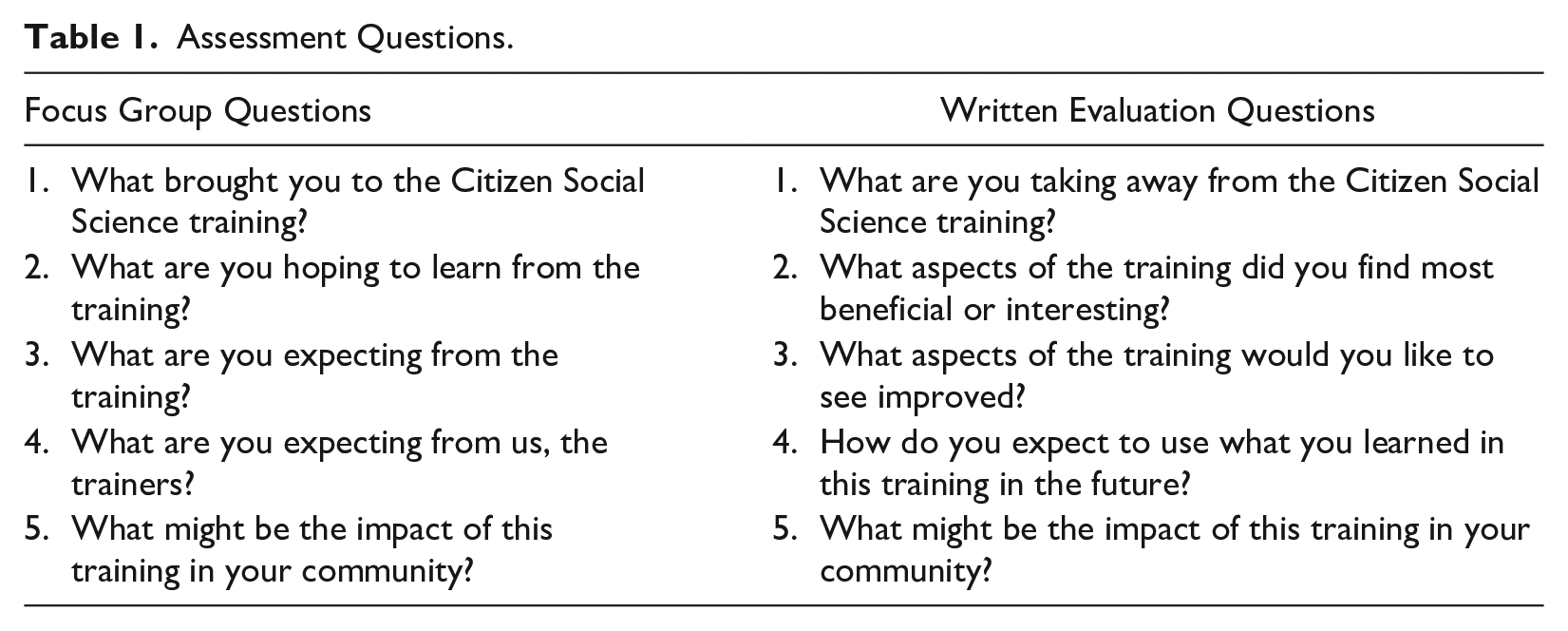
The focus group discussion revealed three key themes driving interest in and expectations for the training: integrating data in ongoing community work, improving technical skills and data literacy, and elevating community voice. In this section, we review preassessment and postassessment data from 7 students related to each theme. We note areas of alignment between incoming expectations and outgoing reflections on learning and areas for improvement we identified through our assessment.
Integrating Data in Community Work
As mentioned in the description of training participants, students approached this training with considerable experience in community organizing, and several had previous experience with data collection and analysis. As described in Table 2, deepening their understanding of how to integrate data in their own community work was a key learning goal for students entering the training.
Assessment Data: Integrating Data.
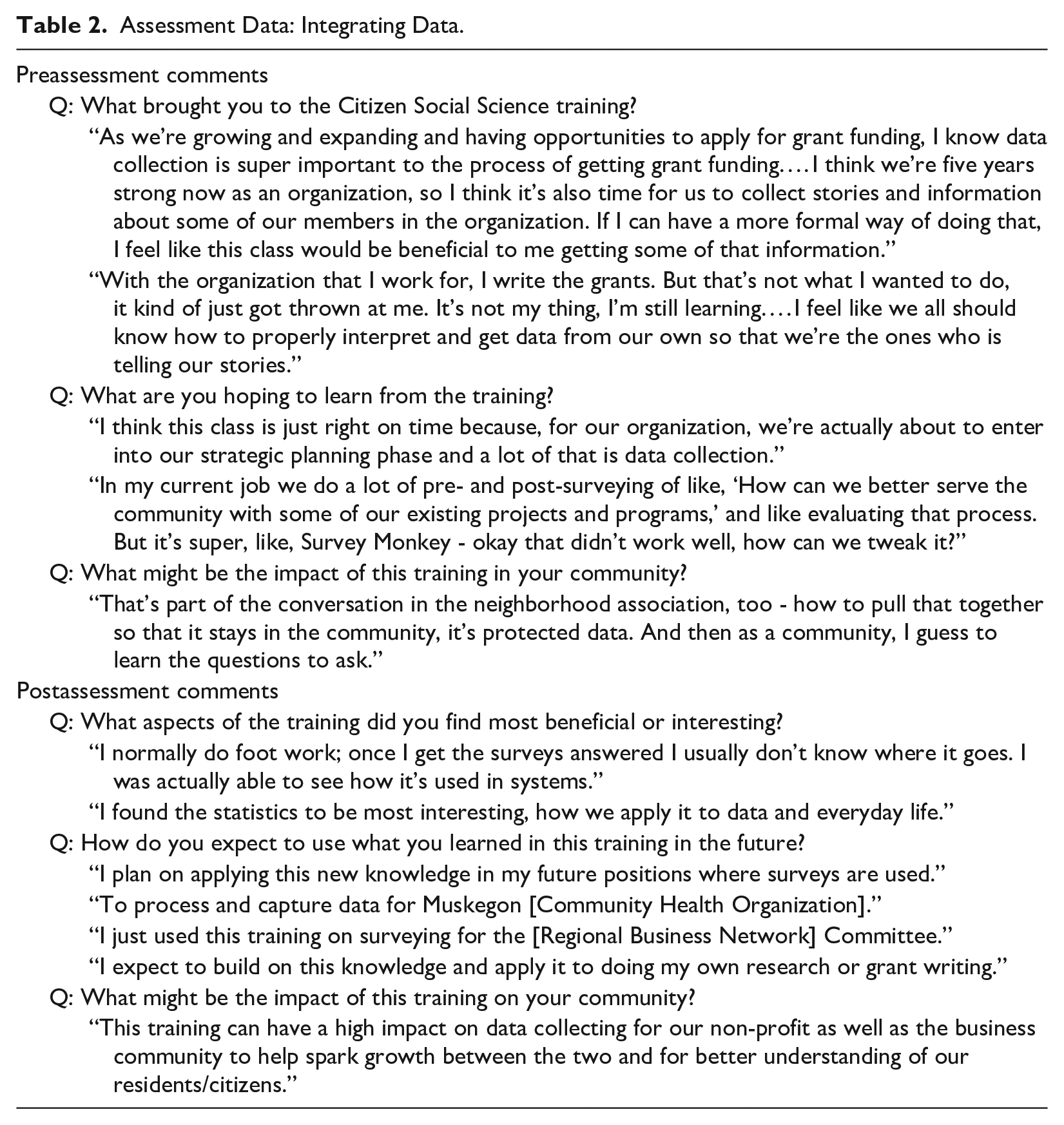
In preassessment data, students noted direct application between their goals for enrolling in the training and their ongoing community work, including describing the populations they serve, identifying stakeholder needs, and assessing organizational impact. We were pleased to see students consistently reiterate the direct application of the training to their work in postassessment comments at the end of the course. One student even provided a direct example of how they were already using training resources in their work. We view alignment between students’ stated goals at the outset and their anticipated use of learning content at the conclusion as a modest sign that the training was successfully grounded in relevance to students’ ongoing work.
Improving Data Skills
Whether students had previous experience with data management or not, developing and deepening data literacy were core learning goals expressed in our entry focus group (Table 3). Students were particularly interested in learning about how to synthesize information such that they communicate a data-informed story that has the scientific rigor to inform policymaking while maintaining clarity to reach a broad audience.
Assessment Data: Skill Development.
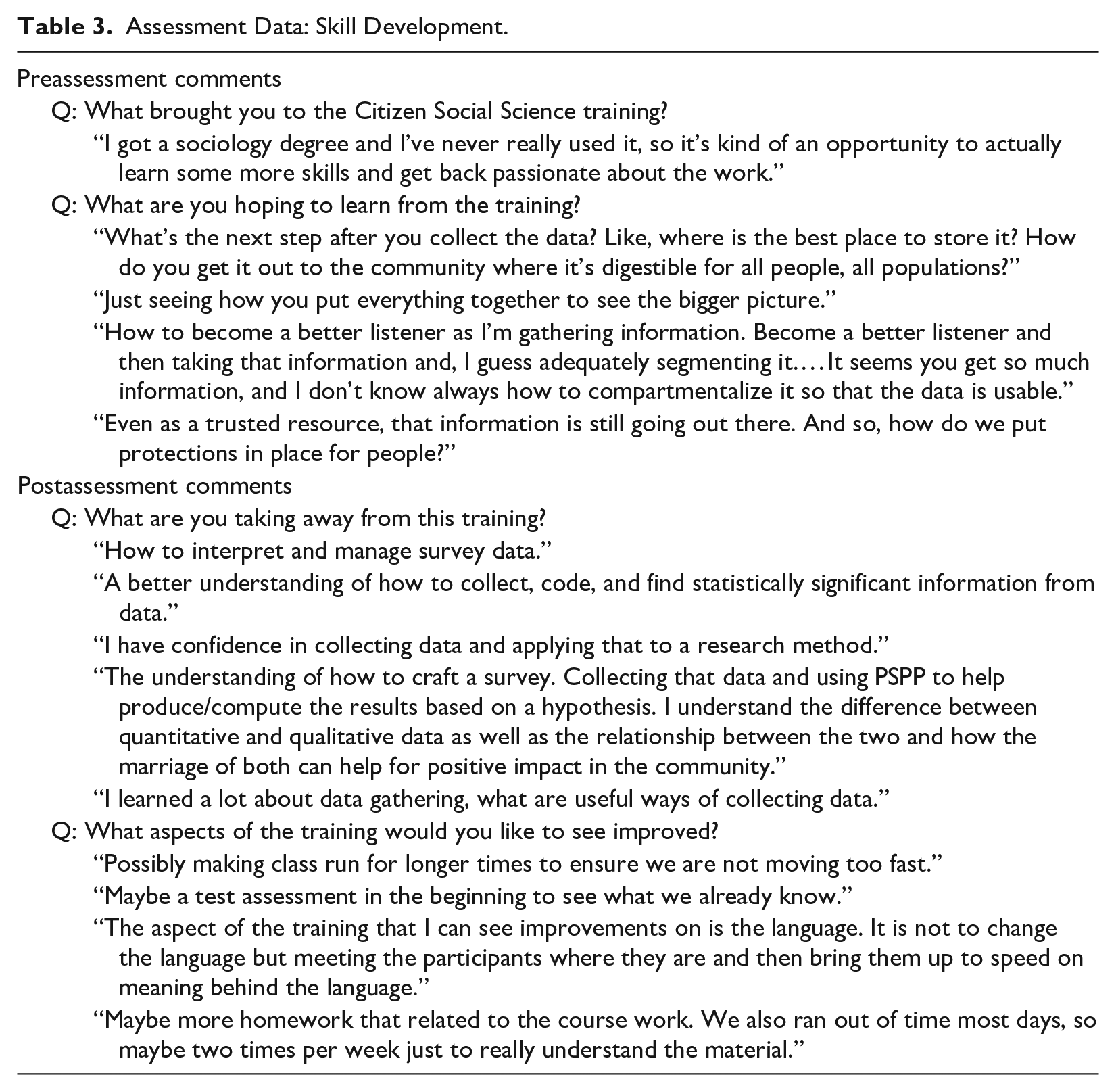
Comparing preassessment to postassessment comments, students identified valuable aspects of the course that contributed to their growth as professionals and competence with data management. Students reported that learning to use a quantitative software package (PSPP) was beneficial to their understanding of what happens to data they are often asked to collect from community members by employers (i.e., in health care, county government, economic development). Outside of training content or learning objectives, students appreciated the experience of meeting weekly with other motivated community members to continue their education in data sciences.
Students also provided feedback suggesting that they had more to learn, noting that they would have liked to have spent more time in the training and that sometimes they felt sessions were rushed or that they were not able to fully grasp terminology or concepts presented. As we discuss further in the following, this feedback is particularly helpful for the trainers as we work to strike a better balance between respecting the competing demands on adult learners’ time and providing comprehensive coverage of course topics in future iterations of the training.
Elevating Community Voice
As discussed previously, community voice and ownership of storytelling were central factors driving interest in participating in the training. Students observed that data and narratives are powerful communication tools, and they expressed an interest in improving the effectiveness with which they direct this power such that community voice generates community benefits. Students expressed concern about the consequences of lack of authentic representation of socially vulnerable community members in data sets from local to national scales and hoped that community-owned research would support greater trust, broader participation, and ultimately more authentic representation of community voices. Table 4 compares student aspirations about this topic during the opening focus group to their written reflections at the end of the training.
Assessment Data: Community Voice.
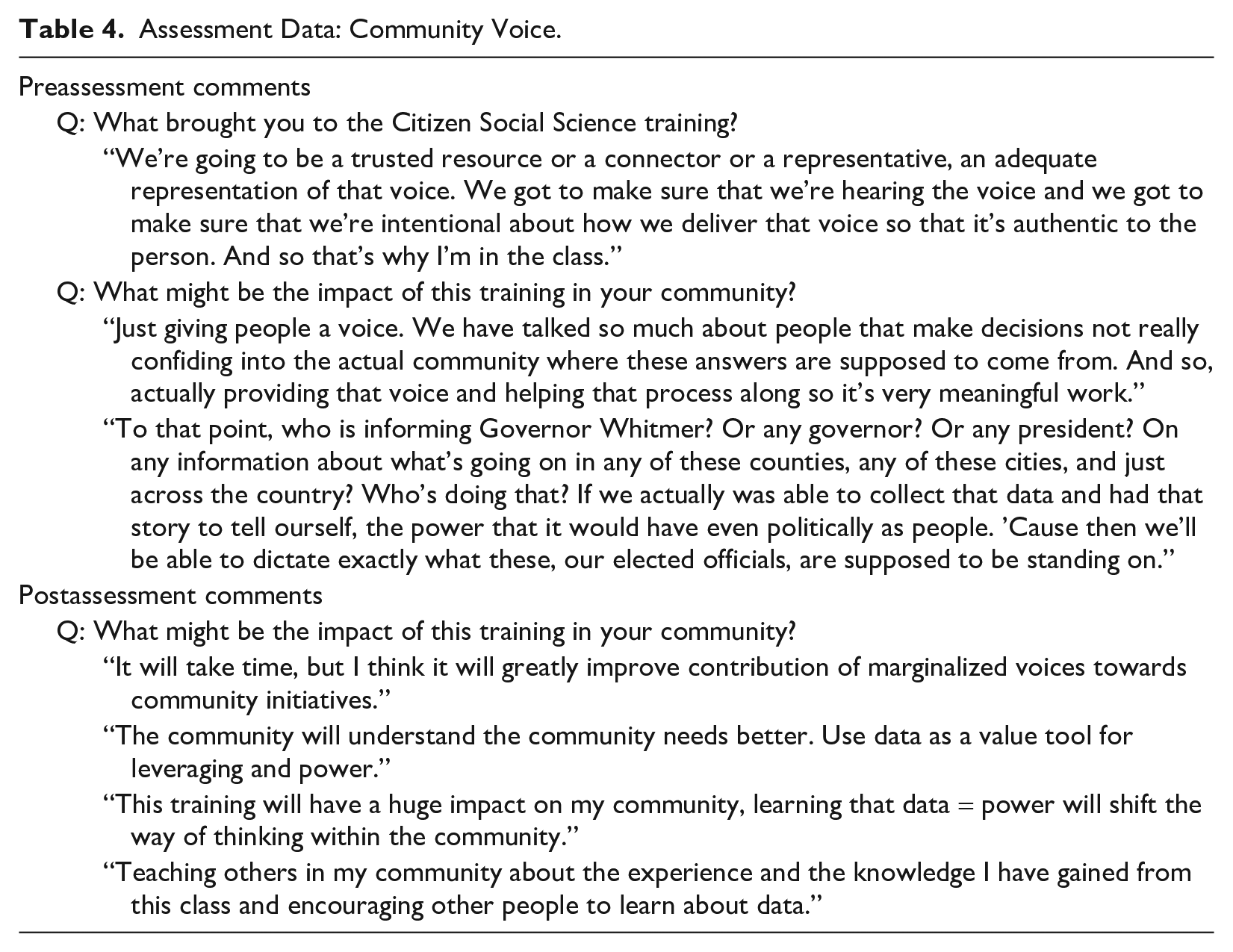
As noted by students in postassessment comments, improving representation in data and storytelling about the Muskegon Heights community is not a course output that can be immediately measured. Rather, it is a long-term outcome of applying learning goals to community efforts, building trust through sharing knowledge, and gradually increasing understanding of how everyday data points can tell an authentic story about community assets, needs, priorities, and hopes. The importance of pursuing this long-term goal received lengthy discussion during our entry focus group, as noted previously, when we discussed the motives and organizational work that originally motivated students to enroll in the training. That students continued to consistently identify how their participation in the CSS training informed this overarching motivation in written reflections at the end of the training indicates that the training’s learning objectives consistently aligned with students’ learning goals.
Conclusions and Future Directions
The central goal of this collaborative work was to develop and implement trainings that can be used in CSS research. In support of our partners’ vision of gaining greater autonomy over community data, we considered insights from the research methods decolonization framework and culturally sustaining pedagogies (Smith 1999; Thambinathan and Kinsella 2021; Walter and Suina 2019) as we sought to overcome challenges identified in previous models of CSS (Fischer et al. 2021; Goodson and Phillimore 2010; Jallad et al. 2022; Paris 2012; Roche et al. 2020). Among these challenges, our work particularly advances solutions related to transferability and reproduction (Goodson and Phillimore 2010) and recruiting skilled participants (Fischer et al. 2021).
Over two years, our team developed open-source qualitative and quantitative research methods trainings that were used to train citizen social scientists living in Muskegon Heights, Michigan. A key goal of this project was to create training content that could be adapted for use by trainees to share data knowledge in their own community and adapted for use in other community partnerships outside of western Michigan. Because of this, we built our training materials on a free platform (i.e., Google Drive) that can be easily modified to meet the needs of other CSS projects and used open access resources and software to reduce access barriers (see Buday et al. 2024a, 2024b). Through consistent documentation of the training process and open access publication of training materials, our work adds clarity and transparency to the process of implementing a social science training for citizen scientists (Goodson and Phillimore 2010).
Unlike previous CSS projects, which reported challenges recruiting skilled participants (Fischer et al. 2021; Roche et al. 2020), we were fortunate to experience success recruiting students who were already highly educated community leaders, several with relevant training or professional experience in research methodologies. Furthermore, the grant funding supporting this project enabled us to provide fair compensation for the time students devoted to the training through paying stipends. This was an important component of the project in terms of ensuring that we achieved consistent student engagement with training sessions (Jallad et al. 2022) and advancing the project’s broader social justice goals of valuing, honoring, and uplifting knowledge and skills students themselves contributed to improving the training (Shaw et al. 2023).
Throughout the development and implementation stages of the training, our collaborators (Kerri Vanderhoff and Marquis Childers, Jr.) and students provided feedback and intellectual contributions that improved content development and delivery of training materials in the classroom, ensuring that the training adhered to community vision (Thambinathan and Kinsella 2021; Walter and Suina 2019). We were able to discuss successes and challenges as the training unfolded, adjusting in real time. For example, in one of our regular meetings, Vanderhoff and Childers reported that students found active learning strategies used during the training productive but highlighted that many students struggled to complete work outside of class due to competing time demands. We therefore needed to adjust time spent in class such that more time could be devoted to completing learning activities.
Striking a balance between maintaining reasonable workload expectations for an adult learner population and ensuring they developed a comprehensive understanding of research methods that they could apply to their own work was a substantial challenge for the CSS trainers. Our assessment data (Table 3) show we have further work to do to ensure students have more opportunities to ask clarifying questions, practice new skills, and develop confidence. The trainers found we often overplanned, contributing to students’ perceptions that some sessions were rushed. As instructors who were versed in teaching traditional college students, we struggled to anticipate how much time adult learners would be able to spend on class meetings, homework, or field activities (e.g., interviewing). Although our goal was to minimize the burden of participation on students’ time, our assessment data indicated that more time, not less, would have been desirable.
Although our work advances scholarship within the field of CSS, several limitations should be addressed. One central barrier to implementing our CSS training was the availability of resources. Although we worked to include only open access or free materials in our training, this does not always mean these resources were the highest quality or had the broadest range of functionalities (i.e., Taguette and PSPP compared with MAXQDA and SPSS). As one example, Taguette serves more as a highlighting tool and is missing many of the visual and graphic abilities available in MAXQDA. Similarly, despite having much of the same coding and analytic power of SPSS, PPSP has limited functionality to produce charts, graphs, and figures.
Another limitation to our work relates to the challenge of maintaining connections to students after the training concluded and providing support as students implemented what they learned in the training into their work. We are aware that some research suggests engaging citizen social scientists does not always ensure the collection of higher quality data or guarantee that the target population will be reached (Edwards and Alexander 2011). Likewise, our program would have benefited from instituting a formal mechanism for regular check-ins after the conclusion of the training so that we could better track the long-term outcomes achieved by the training as students applied their knowledge in their ongoing community work.
One way that we envision continuing our work is to secure state and/or federal grants to increase community capacity to participate in governance related to contaminated site remediation and recreational redevelopment. There are multiple sites within and nearby Muskegon Heights that are contaminated with legacy industrial pollutants. Migration of contaminants from groundwater to surface water on at least one of these sites is not controlled, transmitting pollutants to surface waterways flowing through a popular public park in Muskegon Heights (U.S. Environmental Protection Agency n.d.). To lay the foundation for securing restoration funds to address this public health threat, we first must have (1) environmental monitoring data characterizing the nature of contamination at the park and in the waterway and (2) social science data capturing community input about desired outcomes for and features at restored sites. Our CSS graduates have a solid foundation of knowledge to lead community engagement workshops focused on desired outcomes for future environmental restoration projects. In the next chapter of CSS for Muskegon Heights, we look forward to pursuing funding programs to support graduates’ work collecting, analyzing, and presenting data representing their community’s vision for a healthy, prosperous Muskegon Heights environment and broadening our institutional partnerships to support environmental monitoring and characterization.
Overall, students left the training with optimism that their work has the potential to inform their community work by enhancing the skills with which they can give voice to their constituents, stakeholders, and neighbors. Such long-term impacts will take time to manifest and measure. The GVSU CSS training is a small start in a longer journey of supporting community-owned data endeavors in Muskegon Heights and other underserved communities. Our goal was to provide modifiable training materials that prepare community members to engage fully in the social science research process. We see the development of a greater sense of ownership and agency regarding community data among our citizen social scientists as a positive point of departure.
Footnotes
Acknowledgements
The authors acknowledge key contributions of training participants and the thoughtful comments of the reviewers, who provided invaluable feedback that substantially improved the final version of this work.
Correction (September 2025):
The roles of MHNAC and CCD were reversed in sentences 2 and 3 of the Citizen Social Science in Muskegon Heights, Michigan section and have been corrected.
Funding
The author(s) disclosed receipt of the following financial support for the research, authorship, and/or publication of this article: (1) Community Foundation for Muskegon County, the (2) Sr. Simone Courtade Fund, the (3) Michigan Department of Health and Human Services Office of Equity and Minority Health in partnership with the Michigan Public Health Institute and the Muskegon Health Equity Council.
