



Abstract
Psychedelics are being used globally in a variety of contexts, from recreational use to controlled clinical trials of therapeutic applications. Much of what is known about psychedelic user experiences comes from quantitative studies, while qualitative research is limited and has received comparatively less attention. Qualitative research, particularly personal narratives, can highlight the nuanced impact users have experienced, which quantitative research may be unable to capture. The present study is an exploratory analysis of qualitative responses from the Global Psychedelic Survey 2023, aimed at addressing the gap between quantitative and qualitative literature in naturalistic psychedelic use. Using inductive thematic analysis, three common themes in participants’ accounts of their psychedelic experiences were identified: perceived therapeutic outcomes, enhanced psychological wellbeing and personal development, and profound shifts in life perspective and meaning. Such narratives bring forth detailed accounts of the impact psychedelic users have experienced, as well as potential risks associated with and experienced by participants. Findings are discussed in the context of harm reduction, public policy, and future inquiry into psychedelic substances for health applications.
Keywords
While clinical trials and observational studies on psychedelics have expanded rapidly, large-scale qualitative research on psychedelic use outside controlled therapeutic settings remains limited. The primary objective of this exploratory study was to address this research gap by analyzing firsthand accounts of naturalistic psychedelic use collected through the Global Psychedelic Survey 2023 (GPS 2023). By characterizing perceived benefits, risks, and inter-individual variability in subjective effects, the study seeks to inform harm reduction strategies, policy development, and future research, thereby complementing and enriching data from clinical trials involving psychedelics.
Psychedelic substances are a class of psychoactive compounds that alter perception, mood, and cognition (Nichols, 2016; Schmid & Liechti, 2017). These substances commonly include classic psychedelics (e.g., lysergic acid diethylamide [LSD], mescaline, psilocybin, N,N-dimethyltriptamine [DMT]) as well as non-classic psychedelic compounds such as 3,4-methylenedioxymethamphetamine (MDMA), ketamine, or phencyclidine [PCP]). Despite being commonly classified under the umbrella term “psychedelic,” it should be noted that debate exists in the literature surrounding the classification of ketamine and MDMA. MDMA is often classified as an empathogen with distinct effects, including emotional openness, bonding with others, and an increased sense of empathy, while ketamine is often classified as a dissociative anesthetic that causes users to experience a sense of detachment from their body or depersonalization. Some of these compounds, like psilocybin, occur naturally in fungi or in animals, while others, like LSD, are synthesized in pharmaceutical settings (Kelmendi et al., 2022). Different classes of psychedelics act on distinct neurochemical systems, most notably serotonergic, glutamatergic, and monoaminergic pathways, producing characteristic changes in neural dynamics and subjective experience.
Historical Uses of Psychedelics
Psychedelics have played a significant role in spiritual, medicinal, and cultural traditions for centuries (Froese et al., 2016; Labate & Cavnar, 2014; Malcolm & Lee, 2018). 1 For instance, psilocybin has been utilized by Latin American Indigenous groups in ceremonial practices to facilitate communal bonding, emotional expression, and deep introspection (Spiers et al., 2024). Therein, individuals participated in activities that ranged from solitary meditation and reflection to group singing and dancing, later reconvening to discuss and celebrate their experiences (Spiers et al., 2024). Further, archaeological evidence suggests that psilocybin played a role in spiritual and cultural practices in Japan, China, Germany, Greece, and Southern Africa, and impacted Christian art and Asian writings, as European and African artifacts show depictions of references to psychedelic mushrooms (Froese et al., 2016; Spiers et al., 2024). In addition, peyote holds historical, cultural, and medicinal significance to many communities across the globe. During the Spanish rule of the Aztec Empire in the 16th century, communities used the small, psychoactive cactus both ceremonially and as a traditional remedy that treated burns, wounds, and fevers (Doesburg-van Kleffens et al., 2023). Similarly, ayahuasca, a psychoactive brew containing DMT, has been central to Indigenous Amazonian spiritual and healing practices for centuries (Frecska et al., 2016; Malcolm & Lee, 2018). Often used in ceremonies led by shamans, ayahuasca has been believed to facilitate visions, emotional processes, and profound spiritual experiences that aid in addressing social and psychological challenges (Labate & Cavnar, 2014).
Until the early 20th century, most psychedelic use constituted the use of naturally occurring substances. However, the synthesis of LSD in Switzerland in 1938 marked a turning point in the study of psychedelics for psychotherapy (Oram, 2016). By 1949, LSD had arrived in the United States and quickly became a major focus of clinical drug research (Hofmann et al., 2013; Rinkel, 1957). Similarly, MDMA, originally synthesized in 1912 by Merck, a large pharmaceutical company, resurfaced in the 1970s when chemist Alexander Shulgin reintroduced the substance to psychotherapists to facilitate emotional openness and improve therapeutic outcomes (Sessa et al., 2019). As LSD and MDMA gained popularity beyond clinical use, concerns over recreational use led to stricter legal regulations and moral outcry in the Western world (Sproul, 2021). The United States government classified LSD as a Schedule I substance in 1970, followed soon by MDMA in 1985 (Oram, 2016; Passie & Benzenhöfer, 2016). These restrictions severely curtailed psychedelic research, despite the extant evidence of therapeutic benefits and low harm potential (Greer & Tolbert, 1986). As such, psychedelic research ground to a halt in many jurisdictions and was not revitalized until well into the 21st century, despite many psychedelics remaining as illicitly scheduled substances.
Unlike other psychedelics that were systematically being criminalized, ketamine maintained its clinical use in medical settings in the late 20th century. Ketamine was first synthesized in 1962 and was used primarily as an anesthetic in medical settings (Domino, 2010; Dorandeu, 2013). The potential of ketamine for mental health treatment was overlooked until much later, when preliminary studies began to reveal its rapid-acting antidepressant effects (e.g., Berman et al., 2000). In 2019, the United States Food and Drug Administration (FDA) approved esketamine (Spravato), a nasal spray derived from ketamine, for treatment-resistant depression, expanding its clinical use and paving the way for broader psychiatric research with psychedelic substances (Fantasia, 2020).
The renewed public interest in psychedelics has been correlated with an increased rate of use of psychedelic substances such as psilocybin, LSD, and DMT (Killion et al., 2021; Livne et al., 2022; Yockey et al., 2020; Yockey & King, 2021; Walsh et al., 2022). However, because access to psychedelics remains illegal in many countries, many individuals pursue psychedelic tourism in countries with less restrictive drug policies to bypass restrictions in their home countries (Neitzke-Spruill et al., 2025). Motivations for engaging in psychedelic tourism mirror those reported for psychedelic use more broadly (e.g., health, wellness, and self-improvement; Plesa & Petranker, 2022; Wexler & Sisti, 2022).
Psychedelics and Mental Health
After decades of stalled research on psychedelics, these compounds are currently regaining traction in the field of mental health treatment with modern research advancing beyond early experimental studies into rigorous clinical trials (e.g., Holze et al., 2023; Pagni et al., 2025; Schmid & Liechti, 2017; Zhang et al., 2025). For example, psilocybin, ketamine, MDMA, LSD, DMT, and mescaline are all currently being examined for their potential therapeutic effects on mental health disorders (Tupper et al., 2015; Yao et al., 2024). In clinical settings, the effects of classic psychedelics (e.g., psilocybin, LSD) have been shown to ameliorate and reduce symptoms of depression, anxiety, and substance use disorders, and improve overall functioning and wellbeing (Belser et al., 2017; Gasser et al., 2015; Ross et al., 2016; Swift et al., 2017). Further, psychedelic compounds have been shown to promote neuroplasticity, thereby facilitating structural and functional changes in neural circuits associated with mood regulation and cognitive flexibility (Calder & Hasler, 2023; Ly et al., 2018).
Several psychedelic compounds have received FDA “breakthrough therapy” designation for their potential to address critical gaps in psychiatric treatment (Lamkin, 2022). For example, depression remains notoriously difficult to treat, as traditional antidepressants take weeks or months to work, are effective in only 30%–40% of patients, and often provide only partial relief, require prolonged use, and cause adverse side effects (Artin et al., 2021; Ferguson, 2001; Marazziti et al., 2019). In contrast, psychedelics have been demonstrated to produce rapid and durable antidepressant effects in studies around the globe (Carhart-Harris et al., 2016; Schimmers et al., 2022). For example, a single psilocybin dose has been associated with anxiolytic and antidepressant benefits persisting for 6.5 months in 60%–80% of participants (Artin et al., 2021; Ross et al., 2016; Vargas et al., 2021).
Post-traumatic stress disorder (PTSD) is another challenging condition to treat with traditional medication-based approaches, with only two FDA-approved medications, paroxetine and sertraline, showing limited treatment efficacy (Cipriani et al., 2018; Hoskins et al., 2021). In addition to medication, evidence-based standard psychotherapy approaches for PTSD (e.g., cognitive processing therapy, prolonged exposure therapy, and eye movement desensitization and reprocessing; Resick et al., 2017) also have significant limitations. Such limitations include high attrition rates (Imel et al., 2013), treatment-resistant symptoms in those who have completed a course of therapy (Steenkamp et al., 2015), and limited access to trained providers, which can reduce both adherence and treatment effectiveness (Goetter et al., 2015; Mott et al., 2014). Thus, the complexity of PTSD necessitates treatments that work effectively and efficiently.
Emerging evidence suggests that dissociatives (e.g., ketamine), empathogens (e.g., MDMA), and traditional psychedelics (e.g., psilocybin) have demonstrated promising results in reducing symptoms of PTSD, anxiety, and depression, highlighting their therapeutic potential for enhancing psychological treatment and emotional processing (Khan et al., 2022; Mitchell et al., 2023; Pradhan et al., 2017). Such substances may enable individuals to approach and engage with challenging aspects of their lives that are otherwise avoided, facilitating meaningful psychological change (Zaretsky et al., 2024). Building on these findings, psychedelic-assisted therapies (PATs) have gained attention as promising alternatives for trauma-related and mood disorders, with evidence indicating their capacity to enhance emotional processing, strengthen therapeutic engagement, and address common barriers to effective treatment, offering new possibilities for alleviating the suffering caused by traumatic events and chronic mood disorders (Krediet et al., 2020).
Psychedelic-Assisted Therapy
Research on PAT, with a focus on randomized study designs, is rapidly expanding and has demonstrated efficacy for a wide range of psychological disorders and emotional distress, including depressive and anxiety disorders and PTSD. LSD in conjunction with therapy has been shown to reduce symptoms of alcoholism, anxiety, depression, and existential distress in terminally ill patients, with improvements reported in multiple clinical studies across several decades (Gasser et al., 2015; Grof et al., 1973; Schimmers et al., 2022; Smith, 1958). Psilocybin-assisted therapy has demonstrated efficacy in treating treatment-resistant depression, major depressive disorder, cancer-related anxiety and depression, and substance use disorders (Bogenschutz et al., 2015; Carhart-Harris et al., 2016; Davis et al., 2020; Garcia-Romeu et al., 2019; Noorani et al., 2018; Ross et al., 2016). Emerging research also shows psilocybin's potential for the treatment of eating disorders and cluster headaches (Ledwos et al., 2022; Schindler et al., 2022; Sewell et al., 2006). Further, mescaline has been associated with reductions in symptoms of depression, anxiety, PTSD, alcohol, and other substance use disorders (Agin-Liebes et al., 2021; Uthaug et al., 2021). Similarly, MDMA-assisted psychotherapy demonstrated promise in reducing symptoms of PTSD, depression, and anxiety, and improving sleep quality and overall functioning in patients with trauma and end-of-life distress (Mitchell et al., 2023; Mithoefer et al., 2013; Wolfson et al., 2020). Finally, ketamine has been shown to rapidly reduce depression, anxiety, suicidality, chronic pain, and PTSD symptoms in both palliative care and psychiatric populations (Batievsky et al., 2023; Feder et al., 2014; Iglewicz et al., 2015; Irwin et al., 2013; Kolp et al., 2007; Pradhan et al., 2017; Schimmers et al., 2022).
However, despite clinical trials providing valuable evidence of the therapeutic potential of PAT, these studies also have notable limitations, including non-generalizability to the broader population due to specific and limited clinical sample characteristics and the highly controlled research environment, thus leaving unanswered critical questions on psychedelic use outside clinical settings. Moreover, standardized measures frequently utilized in clinical trials (e.g., the Beck Depression Inventory [BDI], Patient Health Questionnaire-9 [PHQ-9]) may fail to capture the broader personal, social, and transformative effects of psychedelic experiences. To fully understand psychedelics’ potential for mental health, real-world use must be studied alongside clinical applications. As such, large-scale qualitative studies can offer valuable insights into naturalistic psychedelic use, perceived benefits and risks, and the social and contextual factors that shape these experiences (Frinton & Robinson, 2025).
Study Objectives
Despite the growing body of clinical and naturalistic research on psychedelics, large-scale qualitative studies examining personal experiences outside controlled therapeutic settings remain rare and limited. While randomized controlled trials assess clinical efficacy, firsthand qualitative accounts provide valuable insights into broader psychedelic use, including patterns of therapeutic benefit, potential risks, and variations in individual responses. These accounts offer a more nuanced understanding of how psychedelics are experienced in real-world settings. Further, given that many psychedelic experiences are highly individualistic, unusual, and complex, quantitative measures may not prove adequate in capturing subjective experiences and effects. Understanding these lived experiences can inform harm reduction strategies, policy discussions, and future research by highlighting best practices and ethical considerations that may not be fully captured in clinical trials. As such, the primary objective of this exploratory study was to analyze open-text accounts of naturalistic psychedelic use from the GPS 2023 in order to characterize perceived benefits, risks, and inter-individual variability in subjective experiences. By examining qualitative user narratives, the study aims to identify experiential and contextual factors that may be underrepresented in clinical and therapeutic research.
Methods
The GPS 2023 (Lake & Lucas, 2024) was launched as part of a comprehensive effort to better understand patterns of psychedelic use among adults across the globe. The survey was reviewed by Advarra (protocol # Pro00071490) to help ensure the research study was carried out ethically. The present study received ethical approval from the University of Victoria Institutional Human Research Ethics Board (#23-0602) on October 28, 2024. The survey was conducted online via Quantified Citizen, a HIPAA and PIPEDA compliant online data capture tool, between May 19, 2023 and June 2, 2023, and distributed through various social media platforms and psychedelic organizations and networks, including the Multidisciplinary Association for Psychedelic Studies (MAPS and MAPS Canada), the Psychedelic Association of Canada, the OPEN Foundation, Mind Medicine Australia, and the International Center for Ethnobotanical Education, Research, and Service (ICEERS). The survey gathered anonymous, self-reported data from 6,379 English-speaking adults worldwide. Participants responded to many quantitative questions (e.g., the variety of substances consumed) to provide complementary data. The GPS2023 queried the use of 11 substances with psychedelic and psychedelic-like properties, including: LSD, psilocybin, ayahuasca, DMT, 5-MeO-DMT, mescaline/peyote, and ibogaine/iboga, as well as ketamine, MDMA/MDA, nitrous oxide, and salvia divinorum. The survey also assessed lifetime use of non-psychedelic psychoactive substances and medications. At the end of the survey, participants were asked, “Is there anything else you want to tell us about your psychedelic use?” and were invited to share any additional comments related to their psychedelic use utilizing an open-text response field. Upon completion of the survey, participants could enter a draw for one of three $500 Amazon gift cards.
Comments from the final open-text question of the GPS 2023 were imported into NVivo 14 and analyzed using Bardin's (2016) framework for qualitative content analysis. An inductive, descriptive approach was adopted to explore recurring patterns and topics emerging from participants’ naturalistic accounts of psychedelic use. The analysis was conducted by the first author and followed Bardin's three sequential phases: pre-analysis, material exploration, and interpretation of results. During the pre-analysis phase, responses were read to familiarize the first author with the data.
In the exploration phase, data were systematically coded using an inductive process. Units of analysis were defined at the sentence level, with multi-sentence units coded when consecutive statements discussed a coherent meaning or addressed a single experiential theme. Units were identified, coded, and grouped into categories based on semantic similarity. Categorization was iterative and reflexive, with codes continuously compared and refined as analysis progressed. This process continued until thematic saturation was reached and no new categories or meaningful themes emerged from the data. In the interpretation phase, categories were examined to identify broader themes and patterns. This phase involved synthesizing categories, interpreting their relationships, and situating findings within the broader context of naturalistic psychedelic use research. Demographic data (e.g., gender, relationship status) were also recorded and analyzed using IBM Statistical Package for the Social Sciences (SPSS) Version 29.
Results
Quantitative Results
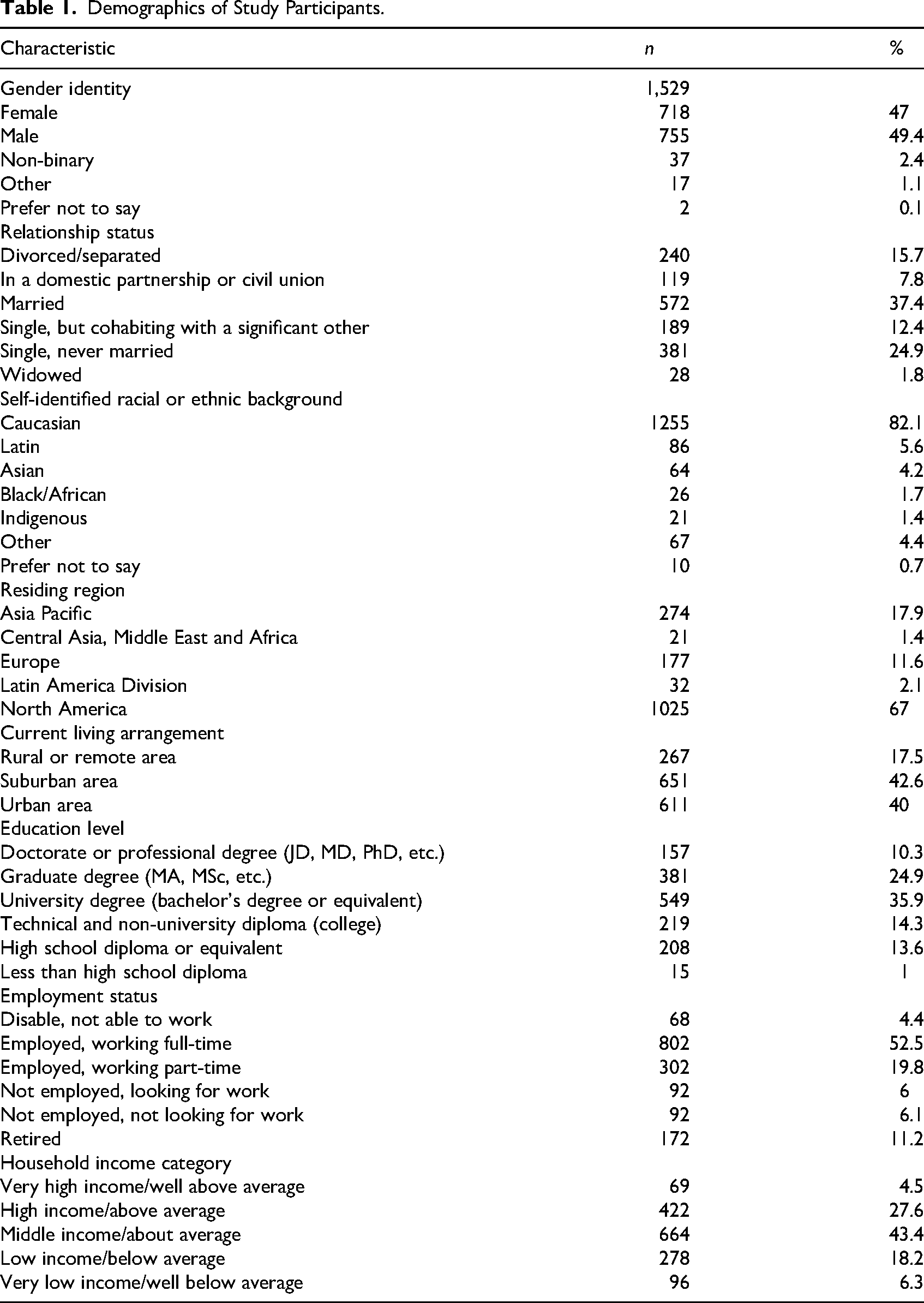
A total of 6,379 English-speaking adults aged 21 or older from around the world completed the entire GPS 2023. Of the full sample, 1,529 respondents, herein referred to as the qualitative subset, provided an open-text response to the final question. Within the qualitative subset, most participants resided in North America (n = 1,025, 67%), nearly half identified as male (n = 755, 49%), over a third were married or equivalent (n = 572, 37.4%), and the mean participant age was 45.61 years (SD = 16.63). Nearly half of the participants lived in suburban areas (n = 651, 42.6%), 35.9% held a bachelor's degree or equivalent (n = 549), 52.5% were employed and working full-time (n = 802), and 43.4% reported middle/average income (n = 664). Additional participant demographics are noted in Table 1.
Demographics of Study Participants.
Qualitative Results
As a result of the qualitative analysis, three primary themes were identified:
Perceived therapeutic outcomes: Users reported varied positive impacts on their mental and physical health (e.g., reduction in physical health disorder symptoms, beneficial outcomes related to mental health). Enhanced psychological wellbeing and personal development: Psychedelic use was linked to reported increases in personal growth and overall wellbeing. Profound shifts in life perspective and meaning: Respondents often described psychedelics as life changing or lifesaving.
Perceived Therapeutic Outcomes
Consistent with quantitative research that suggests psychedelics benefit many participants within clinical trials (e.g., Bogenschutz et al., 2015; Carhart-Harris et al., 2016; Davis et al., 2020), the most commonly endorsed theme identified in participants’ responses was that of mental and physical health benefits attributed to psychedelic experiences. Sharing details about their psychological healing after having used a psychedelic substance, Participant 93 stated, “It significantly reduces my stress for months after a single trip. It helps me see things from different perspectives and allows me to problem solve much better.” Others described significant psychological shifts in their mental health, much like Participant 160 who shared, “Psychedelics saved my mental health. Grounded me and helped me reinvent my life and attitude. The direction of my life changed 180 degrees and is now pure bliss at all times. Where once I hated being alone, now I cherish it.” Participant 59 emphasized the role of psychedelics in improving their self-perception and resilience, stating, “Psychedelics like ketamine, LSD, and psilocybin often help me rebuild my self-esteem and give me a confidence boost.”
In addition to psychological benefits, other respondents described notable relief from chronic physical conditions. Participant 3256 stated, “I used psilocybin at various doses to deal with chronic facial pain and reduce related cannabis use – found it very beneficial to break through long-term pain pattern.” Similarly, Participant 918 discussed long-sought relief from physical pain through the use of psychedelics, reporting, “I still cannot believe that after trying drug after drug for the last 18 years or so. I finally found some relief for cluster headaches.” Other respondents reported both physical and psychological benefits. Participant 3396 recalled, “Psychedelics I feel have benefited me in numerous ways. Psychedelics are what pushed me to get physically active as well as quit harmful substances. I genuinely think that if it weren’t for psychedelics, I’d have either hurt myself or ended up an addict.”
Collectively, these accounts portray psychedelics as instrumental in supporting participants’ mental and physical health. Whether through the alleviation of chronic pain or promotion of emotional regulation, these responses reflect a shared perception of psychedelics as possessing nuanced therapeutic potential for a range of health conditions that may not have been identified or explored in-depth in the extant quantitative literature. Further, these comments describe both recreational and medically supervised use, suggesting that the self-reported benefits of psychedelics are not limited to a specific setting or clinical use.
In an attempt to explain the mechanisms of action, existing literature supports participants’ reports of reduced somatic symptoms, identifying two processes underlying these improvements: positive reframing and increased somatic presence (Bornemann et al., 2021). These processes have been associated with enhanced mental wellbeing, an improved relationship with pain, and greater physical comfort (Bornemann et al., 202; Robinson et al., 2024). Additionally, complementary practices such as mindfulness, breathwork, and movement have been shown to further contribute to these therapeutic outcomes (Bornemann et al., 2021). Within clinical settings, psychedelic-assisted interventions have similarly been observed to accelerate healing, deepen insight, and restore a sense of meaning, qualities that psychedelics are particularly well suited in addressing the profound suffering frequently associated with treatment-resistant conditions described by survey participants (Feulner et al., 2023; Mikellides & Kyriazis, 2025).
Enhanced Psychological Wellbeing and Personal Development
The second prominent theme noted in the qualitative responses was that of personal growth and wellbeing associated with psychedelic use. These accounts align with existing literature indicating that, beyond the therapeutic effects observed in PAT, individuals frequently report transformative experiences that contribute to wellbeing and personal development (Lyons & Carhart-Harris, 2018). Participants who provided such answers often described substantial improvements in their lives, particularly with regard to emotional resilience, sense of meaning, and overall prosperity. For instance, Participant 253 reported, “I truly believe psilocybin and to a lesser extent LSD help and teach you to be a better person. Psilocybin especially can turn all your beliefs upside down in a positive manner and breaks down all the walls, beliefs and negative thought patterns you have built up about yourself for the better.” Improvements in wellbeing were often attributed to the shift in perspective facilitated by psychedelics, which enabled greater self-awareness and life satisfaction.
Participant 3029 reflected on the impact of their experiences, stating, “My experiences with a variety of psychedelic substances have greatly impacted my overall wellbeing in a positive manner. I’m consistently fascinated by what they have provided to me and the potential that they can provide to other people.” This sense of long-term enrichment was shared by Participant 1020 who said: “Without psychedelics, I would not be the person I am today. I am no longer suicidal, I feel a sense of purpose, and I am so much more pleasant to be around.” These narratives illustrate that some respondents perceive psychedelics to be the impetus for sustained personal development, life satisfaction, and significant improvements in wellbeing.
These transformative effects are widely regarded as a notably positive outcome of psychedelic use (Lyons & Carhart-Harris, 2018). Moreover, psychedelic use in non-clinical settings has been associated with increased altruism, prosocial behavior, feelings of connectedness, and reductions in pessimism, all of which closely resemble participant responses in the present study (Griffiths et al., 2006; Griffiths et al., 2011; Pokorny et al., 2017). Finally, increases in meaning in life commonly reported following psychedelic use have been correlated with experiences of emotional breakthroughs, further highlighted in the present study's participant responses (Roseby et al., 2025). Such insights may be overlooked in clinical trials with limited follow-up or studies where personal growth and wellbeing are not explicitly measured.
Profound Shifts in Life Perspective and Meaning
The final prominent theme that emerged from participants’ responses was the belief that psychedelics saved or changed lives. This theme extended beyond healing, personal growth, or improved wellbeing, to encompass experiences that participants described as lifesaving or profoundly transformative. Such individuals emphasized how their experience with psychedelics played a significant role in changing their lives for the better, suggesting that these substances provided them with a previously absent sense of clarity or revitalization. Participant 1232 shared, “Mushrooms saved my life. I would not be here today without the healing that I have achieved through psilocybin.” Participant 4912 also reflected this sentiment, expressing a sense of gratitude and appreciation for their psychedelic use, stating, “Psychedelics have personally changed my life for the better. I can’t imagine what my life would look like without the blessing of psychedelics.”
Similarly, Participant 2359 described how their experience transformed their perspective on life, sharing: “The use of psychedelics altered my perception of the world and allowed me to be less judgmental and more understanding. It connected me with; [sic] a deeper sense of self, a greater appreciation of nature and existence, a greater love of music, more awe of consciousness and creation, and strengthened my feelings of love. They led me down a path of personal growth and reflection. I truly believe that these substances can be used for positive changes in one's life, and can contribute to improving the overall state of humanity.”
In the clinical literature, claims that psychedelics can facilitate profound changes in belief stem partially from observed benefits of PAT for complex psychiatric conditions, including substance use disorders, obsessive-compulsive symptoms, and symptoms of depression and anxiety (Carhart-Harris et al., 2016). These therapeutic outcomes have prompted ongoing debate regarding whether psychedelics directly alter beliefs or instead create conditions under which belief change becomes possible (McGovern et al., 2022). McGovern et al. (2022) propose that the changes reported by psychedelic users do not arise from the drugs directly instilling new beliefs, but from alterations in inference and learning processes that render beliefs more flexible. Moreover, it is suggested that profound changes may be shaped by external contextual factors, notably experimental framing and experimenter suggestion (McGovern et al., 2022). While this interpretation remains plausible, reports from the present survey indicate that profound shifts in perspective and belief may also occur outside of controlled clinical settings. This suggests that changes in belief may not be solely attributable to experimenter suggestion or experimental framing. Nevertheless, alternative external factors may still play a meaningful role in shaping these reported outcomes, such as users’ motivation for consuming psychedelics (e.g., seeking insight or change). The accounts in this study underscore the potential of psychedelic experiences to serve as pivotal turning points in individuals’ lives and highlight their ability to transform one's perspective on life.
Negative Experiences
Despite the majority of participants noting their positive experiences with psychedelics, there were a small number of comments detailing harmful effects. Participant 1635 shared the unanticipated effects they experienced, stating, “My psychedelic use released trauma which was unexpected and unplanned for. It has required significant therapy, support from my partner and increased medication to function. It was very challenging and difficult.” Participant 842 disclosed the discomfort they experienced from the somatic effects of psychedelics, saying, “A deterrent to more regular use is the nausea and intestinal discomfort that I have experienced in the first 60-90 minutes following ingestion.” Participant 1502 also reflected that psychedelics and the experiences they bring may not be suitable for all, noting, “I’ve learned that no matter how challenging or tough the experience is, bad will never be the word I’d use to describe the experience. However, not everyone can mentally handle such experiences and we must research who is susceptible to mental health complications through the use of Psychedelics [sic].”
As is noted by participants, some risks psychedelics pose for users include physical distress, fear, paranoia, and anxiety. These outcomes are more common when combining psychedelics, use of psychedelics with other substances, and use in high dosages (Gashi et al., 2021; Goldy et al., 2024). Given these risks and negative outcomes, these findings strongly suggest the need for transparent, accessible, and credible harm reduction and education resources. Balancing the risks and benefits of psychedelic use must be carefully explored and requires thorough self-education on the part of both psychedelic users and healthcare providers (Gorman et al., 2021). Further, psychedelic experiences that are considered negative or overwhelming, often referred to as “bad trips,” are noted to be influenced by set and setting, referring to the individual's mental state (set) and the environment (setting) in which psychedelics are used (Gashi et al., 2021; Statharakos et al., 2025). A setting that is safe, supportive, and comfortable in tandem with a positive mindset can reduce the likelihood of having a negative experience (Statharakos et al., 2025). Despite the lens of fear and negativity that bad trips are often portrayed, some literature suggests that bad trips can function as a catalyst for psychological insight (Gashi et al., 2021; Statharakos et al., 2025). Confronting unresolved fears or difficult emotions brought on by a bad trip can serve as a pivotal moment for spiritual, existential, and therapeutic breakthroughs, with existing literature reporting a redefined sense of self and purpose in users (Johnson et al., 2008; Gashi et al., 2021; Statharakos et al., 2025). Consistent with these findings, participant reports in the present study highlight that even when psychedelic experiences are viewed as negative, when approached responsibly, they can still contribute to meaningful psychological transformation.
Discussion
This exploratory study aimed to examine common themes among psychedelic users’ anonymous responses to an open-ended question, “Is there anything else you want to tell us about your psychedelic use?” in the GPS 2023. The goal of this study was to complement existing quantitative research and add nuance to the extant literature examining psychedelic use, in hopes of developing an increased understanding of personal experiences with the use of psychedelic drugs globally. A more nuanced appreciation of experiential accounts of psychedelic use offers substantial benefits for informing harm reduction strategies at both the individual and population level. Previous research has found that participant narratives provide early and context-rich insights into the risks, adverse effects, and situational factors associated with psychedelic use, particularly in unregulated and naturalistic settings where many psychedelics are currently consumed (Cottler et al., 2020; Fielden & Marsh, 2007).
The participant-reported experiences used in this study not only provide practical insights for harm reduction but also reveal recurring patterns in how psychedelics impact users’ wellbeing and outlook on life. Considered alongside the previous body of literature, our study adds a realistic and human aspect to drug education and the settings associated with psychedelic use. Examining these narratives through inductive thematic analysis, the authors identified three primary themes: perceived therapeutic outcomes, enhanced psychological wellbeing and personal development, and profound shifts in life perspective and meaning. The physical and mental health benefits theme captured a range of improvements in persistent mental health struggles and long-term physical ailments, suggesting that the therapeutic effects of psychedelics may extend into lasting changes in quality of life.
This finding underscores the potential of psychedelics to offer a complementary approach for addressing complex and treatment-resistant mental and physical health conditions, many of which remain inadequately managed by current methods (Reiff et al., 2020). Anecdotal findings from this study align with prior research suggesting psychedelics can enhance neuroplasticity and disrupt maladaptive patterns underlying mental illness (Vargas et al., 2021). Integration of psychedelic-based treatments into a broader healthcare framework could shift the focus from symptom suppression toward holistic, integrative care that prioritizes overall quality of life alongside symptom alleviation (Kania-Richmond & Metcalfe, 2017; Shafran et al., 2017). This theme also aligns with the longstanding knowledge and practices of Indigenous communities worldwide, underscoring that lived experiences offer valuable insights for researchers, healthcare practitioners, and policymakers that should inform harm reduction strategies and intervention design (Urrutia et al., 2023).
The second prominent theme of enhanced personal growth and wellbeing encompassed the many ways in which participants perceived psychedelics to have facilitated life meaning and self-improvement. Such improvements ranged from emotional regulation and increased resilience to changes in worldview and overall attitude. Participant accounts of this theme suggest that psychedelics may nurture wellbeing by broadening individuals’ outlook on life and deepening their sense of purpose or self-understanding (Schmid & Liechti, 2017). These narratives highlight psychedelics’ potential to catalyze holistic development and enduring positive changes in one's personal life and emotional wellbeing, suggesting a shift from a deficit-based approach to living toward a strengths-based or growth-based approach (Banks et al., 2021; Gobbi et al., 2022).
The final theme of transformative life changes reflects participants’ accounts of profound shifts that redefined their life trajectories, even going as far as crediting psychedelics with saving their lives, which included reaffirmation of personal values and re-evaluations of self-purpose. Such accounts suggest that psychedelic experiences may extend beyond symptom relief or introspection and can foster reassessments in identity and belief systems, corroborating previous findings (Amada & Shane, 2022). These narratives also highlight the potential for psychedelics to serve as powerful agents for change, inspiring individuals to discover new meaning and purpose in areas of their lives where they may have been previously absent or lacking, in contrast to modern healthcare, which acts reactively rather than proactively, intervening only when symptoms become severe (AbdulRaheem, 2023; Cohen et al., 2014). Psychedelics’ potential for transformative experiences may thus foster a more preventative model of care, helping individuals build resilience before reaching a point of crisis.
Results of the current study demonstrate that people using psychedelics in naturalistic settings derive meaning and depth from their encounters. However, this qualitative, non-experimental sample does not provide explicit information on whether users were seeking those profound experiences or whether they occurred without a specific intention. Despite this caveat, participant responses and previous research suggest that the motivations driving psychedelic users often differ from those for other substance users (e.g., alcohol or cocaine; Frinton & Robinson, 2025). Whereas the latter are frequently used for stimulation (Mitchell et al., 2024), “social lubrication,” (LaBrie et al., 2007; Simons et al., 2000), or escapism (Jouhki & Oksanen, 2022), participants in this study emphasized self-exploration, emotional healing, and personal growth as primary drivers, highlighting psychedelics’ distinctive potential not only to alter perception but also to support meaningful therapeutic benefits outside controlled medical settings. Further, recognizing identity-related factors (i.e., a sense of purpose, self-concept, and worldview) as central components of wellbeing underscores the importance of considering these dimensions in relation to psychedelic experiences and their potential to improve quality of life. Although these quality-of-life dimensions are often overlooked in mainstream healthcare, participants’ narratives herein suggest that intentionally addressing them, whether through psychedelic therapy or other integrative approaches, can offer deeply therapeutic benefits and enhance quality of life (Ko et al., 2022).
Considering the current wave of psychedelic enthusiasm and extensive media promotion, it is essential to provide a balanced and evidence-informed perspective and emphasize that not all psychedelic use will result in positive or beneficial outcomes (Schlag et al., 2022). Despite many positive accounts of psychedelic use, a minority of individuals noted negative, harmful, or neutral experiences that are important to note. While the safety profile of psychedelic substances remains favorable, their use contains inherent risks and can have profound impacts on psychedelic-naive and seasoned users alike (Goldy et al., 2024).
Despite substances such as psilocybin and LSD being widely recognized as having low physiological toxicity and minimal addiction potential, experiential reports highlight that they nonetheless carry psychological and psychiatric risks, including challenging experiences characterized by intense fear, anxiety, paranoia, panic, and confusion, as well as less common but more enduring adverse effects such as mood dysregulation, anxiety, depression, existential distress, and in rare cases, hallucinogen persisting perception disorder (Johnson et al., 2008; Nichols, 2016; Schlag et al., 2022). These challenging experiences have been partly attributed to users having limited drug-related knowledge or insufficient strategies for managing adverse effects (Evans et al., 2023; Gashi et al., 2021; Simonsson et al., 2023). Gashi et al. (2021) further suggest that the concept of a “bad trip” may partly stem from fear-based narratives promoted by individuals outside of the drug subculture. Interestingly, individuals have been found to often evaluate drug experiences relative to their prior experiences, and as such, a negative experience may not necessarily deter future use (Evans et al., 2023). Rather, those with past positive or meaningful experiences may be motivated to use psychedelics again in an effort to recreate those beneficial or rewarding effects (Johnstad, 2018; Kruger et al., 2025). Nevertheless, the capacity to derive insight from challenging experiences is not universal. For some, a “bad trip” remains solely a distressing or adverse event, offering little to no perceived benefit or lasting positive interpretation (Carbonaro et al., 2016).
User accounts also draw attention to heightened vulnerability among individuals with personal or familial histories of psychotic or bipolar-spectrum disorders, risks that, while rare, can involve long-lasting psychological impacts and are critical for informed decision-making outside regulated clinical contexts (Johnson et al., 2008; Schlag et al., 2022). At the population level, experiential knowledge, like that found in this study, plays a key role in drug-related early warning systems by providing timely information on unregulated drug markets, emerging novel psychoactive substances, and adulterated supply (Di Trana et al., 2022; Killeen et al., 2024; Peacock et al., 2019). The meaningful incorporation of lived experiences into harm reduction enhances the responsiveness, credibility, and reach of safety efforts (Freestone et al., 2025).
Moreover, examining the experiences of people who use psychedelics can help to reduce stigma and counter misinformation by clarifying that many risks are linked to uncontrolled settings, while comparatively fewer adverse effects are associated with regulated environments (Schlag et al., 2022). Taken together, extant research suggests naturalistic psychedelic user narratives contribute to the body of psychedelic knowledge that is a vital resource for developing nuanced, credible, and effective harm reduction and education strategies. The naturalistic narrative accounts provided by the GPS 2023 participants further contribute to psychedelic harm reduction, with users providing valuable insights into context-specific risks, unexpected adverse effects, dosage sensitivity, psychological challenges, and guidance on positive psychedelic experiences.
Limitations and Future Directions
This study was subject to several limitations. First, the data analyzed in this exploratory paper came from the final question in a lengthy survey of psychedelic use and constitutes a secondary analysis of a broad open-ended question about experiences. Despite this, 1,529 of over 6,000 participants included a response to the open-ended optional question, highlighting the importance of this rich and frequently untapped qualitative data source. Our study was also constrained by the limited information about the type of substance discussed by participants, with some mentioning particular substances (i.e., psilocybin, LSD) and others referring to such substances more generally (i.e., psychedelics). Further, the sample in this study was limited to English speakers, which may constrain this study's reach into non-English speaking cultures. In addition, it is likely that negative experiences are underrepresented in this sample since recruitment was conducted through organizations that cater to psychedelic consumers. It may be the case that those with negative experiences do not engage with these organizations and have not been adequately represented in the sample. Finally, an important limitation of this study is its pragmatist, interpretivist epistemology and the fact that all authors identify as non-BIPOC (i.e., white or Other), non-Hispanic, highly educated individuals who reside in Canada or the United States.
Future research examining the life-changing impacts of psychedelics is warranted and should be prioritized in populations that experience treatment-resistant or chronic mental or physical health conditions. Such research should clarify which psychedelic substance is being referenced to better understand the nuance of experiences with various substances, and may benefit from providing specific question prompts to elucidate a more nuanced or granular understanding of the themes identified in this study. Future research could also benefit from exploring demographic variables of psychedelic users to ascertain whether certain populations experience greater benefits or harms when using specific psychedelics. Examining variables such as age, gender, cultural background, or prior health history may reveal meaningful differences in outcomes and offer valuable insight into who may be impacted most by psychedelic substances and the specific nature of such impact. Finally, future research into factors contributing to challenging or adverse psychedelic experiences is encouraged with the goal of reducing harm to those who may be particularly vulnerable to negative outcomes.
Conclusion
In summary, this study identified that people who use psychedelics in both clinical and non-clinical settings report positive outcomes with notable improvements in mental and physical health, personal growth and wellbeing, and transformative life changes. The qualitative examination of this direct, firsthand data derived from psychedelic users’ accounts adds much-needed nuance to the current psychedelic body of literature that has primarily drawn from positivist-oriented quantitative study design. Our findings thus shed light on crucial and specific caveats of naturalistic psychedelic use that may not be captured elsewhere and, as such, can be used to inform future research, public policy, harm reduction strategies, and personal psychedelic use.
Footnotes
Acknowledgments
The authors would like to thank each of the participants who took the time to complete this survey, the NGOs, and academics that assisted with the dissemination of the study, as well as MAPS, SABI Mind, Tiny Foundation, and Mind Medicine Australia for co-sponsoring the Global Psychedelic Survey. J.R. would like to acknowledge Philippe Lucas, Stephanie Lake, and their research teams for their significant work facilitating the GPS 2023 study and for sharing the opportunity to collaborate on the data. E.C. would like to acknowledge their mentor Dr. Alan Davis at the Center for Psychedelic Drug Research and Education at the Ohio State University's College of Social Work and Burroughs Wellcome Fund and Usona Scholarship Program for funding, which partially supported this work. The team of this study would like to thank Daniella Batievsky for her support in the earlier stages of this manuscript's preparation.

Ethical Considerations
The Global Psychedelic Survey 2023 was reviewed by Advarra (Protocol #Pro00071490) to help ensure the research study was carried out ethically. The present study received ethical approval from the University of Victoria Human Research Ethics Board (#23-0602) on October 28, 2024.
Consent to Participate
Consent to participate was gathered from participants online and data was collected anonymously.
Consent for Publication
Consent for publication was gathered from participants online.
Author Contributions
Jill Robinson: conceptualization, data curation, formal analysis, methodology, project administration, writing—original draft, writing—review & editing; Noah Wallace: writing—original draft, writing—review & editing; Esenia Cassidy: manuscript preparation, project management, writing—original draft, writing—review & editing. Stephanie Lake: initial survey conceptualization, design, and dissemination, writing—review & editing. Philippe Lucas: initial survey conceptualization, design, and dissemination, writing—review & editing.
Funding
The authors received no financial support for the research, authorship, and/or publication of this article.
Declaration of Conflicting Interests
PL was President of SABI Mind during the study, but his remuneration was not in any way related to the outcomes of this research.
Data Availability
Data is available and shared in a public repository.