




Abstract
Using autoethnography, this article considers conflict surrounding the psychedelic, mescaline cacti, San Pedro, and Peyote. We reflect on themes emergent in the lead authors’ lived experiences with growing, researching and working with mescaline cacti; Indigenous culture, psychopharmacotherapy research, psychedelic markets and ecology. These themes are considered relative to varied San Pedro and Peyote stakeholders. Among these stakeholders, powers of medicine and prohibition dominate, but are also met with resistance.
Keywords
Introduction
The meaning of psychedelics, being psychoactive compounds that operate on the 5HT2A receptor and elicit particular effects (Wallach et al., 2023), has undergone significant social change. Around the 1960s, when psychedelics became known to a global public for the first time, psychedelics represented cultural revolution and became prohibited as a result. In recent decades, interest groups have shifted representation of psychedelics from culturally challenging to a more culturally cohesive image (Elcock, 2013). Contemporary psychedelic research tends to highlight psychedelic utility in medicine (e.g., Carhart-Harris et al., 2018) as well as having more general beneficial social (e.g., Rodríguez Arce & Winkelman, 2021) and environmental (e.g., Forstmann & Sagioglou, 2017) benefits. While this shift represents some challenge to the intertwined powers of drug stigma and prohibition, psychedelics are now often framed as “better” than other drugs, maintaining power dynamics that moralize compounds and related behaviors and prevent improvement of drug policies.
Mescaline is an organic compound biosynthesized in San Pedro (Trichocereus spp.) and Peyote (Lophophora williamsii) cacti, that can also be produced synthetically (Jay, 2019). Mescaline is widely considered an illicit drug, being prohibited internationally under the 1971 Convention on Psychotropic Substances. When consumed, mescaline can produce a variety of subjective effects including euphoria, connection, stimulation, visual alterations, nausea, confusion, and anxiety (Shulgin & Shulgin, 1991). The current oldest archeological evidence of mescaline consumption are San Pedro samples found in Cueva del Guitarrero, Peru, dated to ∼8600 BC, and Peyote samples found in Shumla Cave 5, Texas, dated to ∼3200 BC (Samorini, 2019).
San Pedro are mountain cacti growing in tall columns and are endemic to the Andean Mountain Range. San Pedro are a species group, the taxonomy of which remains the subject of debate. Trichocereus species commonly considered to be part of this group include T. bridgesii, T. pachanoi, and T. peruvianus (Noll, 2016).
Peyote are desert cacti that grow in a globular shape. Peyote are endemic to the northern states of Mexico and Texas of the United States. While there are several Lophophora species, including L. diffusa, L. alberto-vojtechii, L. fricii and L. koehresii, Peyote are a single Lophophora species; L. williamsii (Šnicer et al., 2009).
There are cacti other than San Pedro and Peyote that contain mescaline, but San Pedro and Peyote are the only known cacti that contain mescaline in quantities sufficient to produce subjective mescaline effects when consumed without use of sophisticated refinement techniques, with the exception of Trichocereus terscheckii (which may or may not be considered part of the San Pedro species group). Mescaline has not been found in plants outside of the cacti (Cactacea) family. A limited number of publications asserting otherwise (e.g., Clement et al., 1998) have not been corroborated and are likely inaccurate (Trout, 2015).
Using autoethnography, this article considers conflict surrounding the mescaline cacti, San Pedro and Peyote, situated from the perspective of the lead author, LE. This reflection aims to provide insight into mescaline cacti ethnobotany and the different cultural engagements and meanings around these plants. In doing so, we seek to highlight how these different meanings conflict with and complement one another, emphasizing ethical considerations for a society cohabitating with mescaline cacti.
Method
Ethnography concerns the investigation of cultural groups and their sociopolitical relations (Hammersley, 2006), using a mixed methods approach that includes observation (Schensul & LeCompte, 2012), with autoethnography having the additional component of a researcher's participation in the culture being studied (Olson, 2004). The diversity in practice of these methods reflects the need for flexibility in how the methods are applied, with autoethnography adding a personal dimension by permitting the researcher's own experiences within the culture being studied to become data. While traditional ethnography may maintain a degree of analytic distance between researcher and subject, autoethnography invites the researcher's active participation and reflection on their own experiences (Hammersley, 2006).
We use autoethnography to draw attention to lesser-known perspectives surrounding mescaline cacti. Narcofeminism, as articulated by Judy Chang (2023), emphasies the importance of marginalized voices in drug discourse, questioning power structures that dominate discussions around psychoactive compounds. This framework informed the design of this autoethnography by encouraging a focus on lesser-known perspectives, such as the lived experiences of Indigenous plant custodians, underground therapists, and cultivators navigating legal and ethical dilemmas. These perspectives challenge dominant narratives of medicine and prohibition while opening space for a more nuanced understanding of mescaline cacti as cultural and ecological entities.
Autoethnography was utilized in this project as a means of drawing on LE's lived experience (“observation”) as a unique form of data representing mescaline cacti, experience that involves engaging with multiple diverse groups and their different reasons for valuing these plants. This work is framed not only by LE's involvement in these areas but also by what Wakeman (2021) describes as “analytic reflexivity,” in which personal experiences become a method of interrogating broader cultural meanings.
Data drawn on in this project consist of LE's engagement with mescaline cacti, which takes place primarily as communications, cultivation, research, and advocacy. This engagement includes public and private social media exchanges (e.g., DMT Nexus, Shroomery, The Corroborree and other forums and groups), in-person meetings (e.g., Cactus and Succulent Society of NSW, Entheogenesis Australis, Australian Psychedelic Society, and other psychedelic/cacti events), site (e.g., museums, herbariums, gardens, and cultural venues) and habitat visits throughout the Americas, Australia, Europe, and Asia, care of people under the influence of mescaline cacti in recreational settings, consultation with relevant subject matter experts, law enforcement, research ethics, quarantine providers, and many other stakeholders concerned with psychoactives, chemistry, plants, and/or the environment. We mark the beginning of this data with LE's purchase and cultivation of San Pedro cuttings from community members on a now defunct online forum (Australian Ethnobotany) in ∼2005, to the present. The data includes travel to and/or engagement with stakeholders utilizing mescaline cacti from many contexts around the globe. The present character of this living data takes shape as LE's current chemical and pharmacological study of mescaline cacti (NICM and WSU) and operations of an educational nursery (The Mescaline Garden). The themes used to organize the findings section were created by LE to organize and communicate contexts in which specific and distinct meanings of mescaline cacti were apparent.
LE Reflexivity Statement
To my knowledge, few people have sought to understand the constellation of cultures surrounding mescaline cacti. For me, this constellation is important for pursuing a plant-centric, somewhat posthuman understanding of the wants and needs of mescaline cacti as independent beings, without centering on the demands of humans. My fear is that desiring to understand plants in this way conceals a dominating and colonizing approach to knowledge by disguising bias as objective fence-sitting. However, my reality is that I have the responsibility of managing the lives of many, many mescaline cacti. When confronted with human assertions over plant preferences for certain conditions (plants do/don’t like to be grafted, fertilized, kept indoors, etc.), I increasingly feel that the only ethical approach is to ask the plant about its own preferences directly. To locate my own bias, my experiences with growing, researching, and working with mescaline cacti should be acknowledged. In each of the sections below, I aim to recognize how my own values have shaped the interpretation of data pertaining to the section theme.
Guided by narcofeminism, this autoethnography seeks to amplify perspectives often excluded from mainstream narratives, including those of Indigenous Peoples grappling with cultural erasure, underground practitioners confronting stigma, and cultivators balancing conservation ethics with personal and economic survival, as well as the voices of nonhuman actors. By situating my experiences within these intersections, I aim to shed light on how these perspectives complement and conflict with dominant frameworks of medicine, prohibition, and commerce.
Indigenous Culture
While San Pedro and Peyote cacti are a topic of public discussion in which Indigenous people of the Americas appear represented, LE's limited Spanish obscures this discussion as they are unable to entirely read some important literature concerning cactus culture or speak with some stakeholders without the help of a translator. Mescaline cacti cultures exist only in the Americas in areas that were largely colonized by Spain. This further complicates things, as for many Indigenous Americans, Spanish is secondary to their indigenous language. For these people, Spanish may struggle to convey cultural nuance, a struggle further magnified by LE's need to translate Spanish into English. Traditional knowledge concerning mescaline cacti is most likely to exist in Indigenous American languages which may never have been written in print and/or have been completely exterminated by colonizing forces. While LE has traveled to Mexico and informally interviewed (for LE's personal interest and podcast) Wixarika people in person at charitable organization in Guadalajara, remotely interviewed members of the Native American Church (NAC) and descendants of Indigenous Peoples of Peru, LE still feels ill equipped to understand and represent the diversity of meanings of different mescaline cacti among different Indigenous groups that have traditionally consumed these cacti. There are many more cultures, individuals, species, and cultivars than LE have the means to map or investigate. All the same, LE still wishes to understand this topic. Below LE provides a short overview of their interpretation of Indigenous mescaline cacti cultures, based on accessible literature and LE's own communications.
Cultures around both San Pedro and Peyote stretch into prehistory. This past is obscured by time and processes of colonization, and our understanding of this past is reliant on limited archeological evidence and oral tradition. Colonizers sought to prohibit and repress the traditional use of both these mescaline cacti, but mescaline cacti rituals have been maintained by Indigenous Peoples despite this opposition (Jay, 2019). Peyote rituals are still practiced by Indigenous Peoples of both Mexico and the United States. Small populations, diversity, cultural tensions, language barriers, and limited research make it difficult to understand these people and their rituals. In Mexico, traditional Peyote use is best known as an element of Wixárika (Huichol) culture, although there are a number of other, less widely known and understood Mexican cultures that utilize Peyote including Náyeri, Rarámuri, Tepehuán, and Chichimeca peoples. Annually, Wixárika people undertake a pilgrimage to Wirikuta to collect and consume Peyote (Myerhoff, 1974). In the United States, traditional Peyote use is best known as a component of participation in the NAC. NAC members consume Peyote as part of a ritual undertaken alongside important events. NAC Peyote is only harvested by licensed collectors, but may also be cultivated by NAC members (Feeney, 2017). However, there are federally unrecognized Indigenous Peoples with Peyote traditions that are not part of the NAC and thus do not have the same protections for their Peyote traditions, such as the Como Crudo people (K. Trout, personal communication, November 15, 2022), while some NAC members may not have direct Indigenous heritage. All the same, NAC Peyote practices have been argued as having offered much value to postcolonial healing (Calabrese, 2013).
San Pedro rituals are practiced by Indigenous peoples throughout the Andes Mountain Range and surrounding regions but are most well known in Peru, where San Pedro is commonly available in commercial marketplaces (Trout & Friends, 2015). The stone architecture of the Chavin de Huantar temple in the Ancash region is the best known archeological artifact of traditional San Pedro use (Brescia, 2017). In Huancambamba, San Pedro rituals have involved consumption of San Pedro by a “maestro” seeking to diagnose a client's problem and prescribe a cure. The character of traditional Indigenous San Pedro rituals before their transformation into the rituals practiced by Indigenous peoples today is unclear as contemporary rituals are heavily influenced by Roman Catholicism (Davis, 1983). There are strong parallels with psilocybin mushrooms, for which precolonial writings primarily come from Spanish chroniclers and are accompanied by a cultural bias (Spiers et al., 2024). Diversity of these rituals among Indigenous people in the present day are also unclear. In current times, there is even some intermingling of different cultural groups and rituals involving Peyote, San Pedro, and other psychedelic plants among Indigenous and other peoples inhabiting the Amazon (Engel & Dempsey, 2023).
Psychopharmacotherapy
While it is useful to separate Indigenous and psychopharmacotherapy themes, there is significant overlap. Indigenous Peoples’ traditional uses of mescaline cacti have informed aspects of modern psychopharmacotherapy, particularly in the emphasis of set, setting and the integration of mystical or spiritual approaches into healing. However, these overlaps are not without tension. Clinical focus on isolated compounds and measurable outcomes can contrast sharply with more holistic, relational approaches of Indigenous traditions.
LE's positive experiences with psychopharmacotherapy, psychoactives, and mental health are key drivers of an interest in mescaline cacti. LE values people's lived experiences of psychoactive use as a form of scientific data and believes psychoactives have an important role to play in health interventions and wellbeing. Interest in psychedelic-assisted psychotherapy creates opportunities for clinical and legal applications of mescaline cacti but also drives illicit medical applications. LE has communicated with many psychedelic-assisted psychotherapists involved in clinical trials, as well as therapists operating in grey/black markets and has personally provided direct care to psychedelic consumers in such trials, as well as alongside public health services. LE has also created resources to assist in these practices concerning topics such as therapy practice, dosage, harm reduction, etc. The remainder of this section locates mescaline cacti in the context of consumption, including clinical practice, and underground therapy. While LE primarily highlights the barriers to applying mescaline cacti in a clinical context, the accessibility of San Pedro makes it a popular choice among underground therapy practitioners and people hoping to self-medicate.
Despite the discovery of mescaline synthesis, synthetic mescaline has never been a common product, likely due to mescaline's dosage weight (∼300–500 mg) making it more exhausting to produce and distribute than other psychedelics (e.g., LSD, with common doses around ∼100 µg) (Ley et al., 2023). Outside of a research laboratory, LE has only ever knowingly encountered synthetic mescaline a small handful of times, while LE has personally encountered hundreds, if not thousands, of mescaline cacti consumers. There are currently only a handful of clinical trials involving mescaline, likely because, in addition to mescaline's relatively heavy dose weight, there are other factors that undermine mescaline's clinical uptake. Most notable of these factors are mescaline's long duration, which, if administered alongside therapy as is the case of other emerging psychedelic medicines, is a lengthy and involved commitment for therapists (mescaline has a mean duration of 11.1 h, as opposed to psilocybin's mean duration of 4.9 h [Ley et al., 2023]). Further, mescaline has strong association with side effects of nausea and vomiting (Klaiber et al., 2024). Even outside of therapeutic settings, caring for people encountering challenging experiences while under the influence of mescaline cactus can be taxing. Such assistance typically requires multiple carers in order to support the consumer for the duration of their experience.
Psilocybin mushrooms and natural psilocybin products have largely been exempt from recent clinical research, which may signpost difficulties of completing clinical work with San Pedro, Peyote, and other natural psychedelic products. The high cost of clinical trials disincentivizes the use of plants and fungi as medicines because they cannot be patented and can be grown by competitors, making it harder for investors to recoup costs. These high costs are a contributing factor to the emergence of patents asserting ownership over particular production techniques of psychedelic molecules, such as COMP360, a proprietary formulation of psilocybin (Goodwin et al., 2023). As has been the case with psilocybin and mushrooms, proprietary formulations of mescaline are more likely to appear in pharmacies than mescaline cactus extracts or other mescaline cactus-based products. This poses a challenge of how to justify, fund and/or develop LE's cactus pharmacology project beyond personal interest, as this project has far greater interest among cultivator communities than pharmaceutical manufacture.
Psychedelic Markets
As someone who operates a business centered on mescaline cacti, LE has observed firsthand the complex interplay between consumer demand, regulatory constraints, and the ethical challenges of balancing accessibility with conservation. Psychedelics are in high demand and are central to LE's business. While LE works with many psychoactive plants, mescaline cacti (Trichocereus species, specifically) is one of their business’ core commodities. In the context of NSW, Australia mescaline cacti are the most easily accessible psychedelic (legal, familiar, and resilient), and as psychedelics are the psychoactive plant type of greatest interest to LE's customers, demand among customers is greater for mescaline cacti than any other plant. LE has also contributed to a wide range of other psychedelic businesses and charities as both a volunteer and employee, producing content and educational materials, assisting in plant cultivation and distribution, conducting analytical chemistry, advocating for regulatory change, assisting in organizational management and completing other tasks. This diverse constellation of experience lends to a unique perspective on the cultural, commercial, and regulatory frameworks shaping mescaline cacti. For instance, LE's involvement in advocacy has highlighted the complexities of balancing conservation with accessibility, while LE's work in education has underscored the importance of providing accurate and nuanced information to counter stigma and misinformation. These experiences directly inform this article's analysis by grounding it in both practicalities and broader cultural and ethical considerations surrounding mescaline cacti.
The current booming psychedelic industry is firmly grounded in the psychedelic renaissance and commercial objectives to bring new, popular psychiatric medications to market. As well as medication, this subindustry of psychedelic medicine is also accompanied by attempts to commercialize the provision of psychedelic therapy, including the training and regulation of therapists. However, such therapy is likely to be limited to research settings, very expensive or entirely illegal in most contexts. While legal psychedelic-assisted psychotherapy is available in Australia, it is likely to cost many thousands of dollars. For LE's business, people wanting to self-medicate are not permitted as mescaline cacti customers. Not only does self-medication present a danger to the consumer, it could also be a criminal liability for their business. For regulatory compliance purposes, LE must distribute mescaline cacti strictly for cultivation purpose only.
Psychedelic medicine is promising but is still in a very early phase. Public demand for psychedelic medicine drastically outstrips availability. Social media is awash with people interested in purchasing and selling illicit psychedelic “medicine” while legal markets offer an increasing variety of other psychedelic-related commodities such as clothing, media and art. In the context of LE's business, there is some demand for mescaline cacti, but the greatest demand is for psychedelic plant information and education, which takes form as small classroom style workshops. For regulatory compliance purposes, while LE regularly educates on how people consume mescaline cacti this must be compartmentalized from the mescaline cacti available for sale. Mescaline cactus consumption information is strictly for educational purposes only.
Mescaline cacti medicine has experienced, and is likely to continue to experience, less attention than other psychedelic medicines, but there are popular related commodities. San Pedro retreats are commonplace, particularly in geographical areas where San Pedro is endemic, where groups of people typically consume San Pedro at private accommodation (Brohn et al., 2022). These groups and diversity among their practice is little understood, although appropriation of traditions by people administering psychedelics in underground settings is thought to be commonplace (Celidwen et al., 2023). LE is aware of various illicit psychedelic retreats around Australia, many of which provide San Pedro, and is regularly contacted by people seeking to access such retreats. Regulatory compliance purposes are not the only disincentive for connecting these parties. It is apparent that many retreats are ill equipped to manage health issues, and predatory people seem highly represented among people administering psychedelics.
Due to laws prohibiting distribution of drugs and plants, accessibility of San Pedro relative to Peyote, and the sheer logistics of posting cactus, dehydrated San Pedro “chips” or powder are likely the most commonly imported and exported mescaline cactus products around the world. However, many people who consume mescaline (35.9% of recent consumers in one study [Engel et al., 2023]), grow San Pedro themselves. Live San Pedro and Peyote plants also exist as highly valued products intended for cultivation and sale in horticultural markets rather than consumption (Engel, 2022b). The complex legal situation surrounding mescaline cacti changes between jurisdictions, discouraging some prominent businesses, such as popular payment processing services, to not permit the sale of San Pedro, Peyote, and related products. Even if sales are legal, San Pedro or Peyote related products may be viewed as high risk. Involvement with related terminology alone may result in banning certain products, even strictly botanical and horticultural books such as those with “San Pedro” in the title. LE is unable to advertise the full title of one of their own books on many online platforms as a result (Engel, 2022a) and has been banned from one of two payment providers easily integrated into their website. If the term San Pedro or Peyote is included in the copy of another item in LE's store it will likely trigger a ban by the other payment provider and necessitate and entire web rebuild on a new platform, even if the term was being used to describe a t-shirt.
Access has a clear influence on the consumption of mescaline cacti, with availability being the most commonly identified factor influencing consumers’ choice of mescaline cacti product in our previous study (Engel et al., 2023). In many jurisdictions, laws are more supportive of the cultivation of San Pedro than other psychedelic plants. Some growers are wary that increasing public awareness of the psychedelic properties of San Pedro could result in imposition of new San Pedro restrictions and engage in secrecy and deception in hopes to protect their access to these plants. LE's approach has been based on the hope that by promoting San Pedro the demand for vulnerable Peyote can be reduced (Engel, 2021), an approach LE has applied to other sources of natural sources of psychedelics, such as Acacia trees (Engel, 2022c). San Pedro grows much faster and is a much more sustainable source of mescaline than Peyote. Secrecy around mescaline, psychedelics, or indeed any psychoactive is implicated in a broader system of drug prohibition and stigma that compounds the harm of vulnerable people, plants, and environments; a system that demands positive change and reform, currently combatted through attempts at harm reduction and decriminalization (Engel et al., 2020).
Besides explanation of how to identify mescaline cactus, the information that appears to be in greatest demand among psychedelic plant workshop attendees (LE's most demanded psychedelic commodity) concerns how San Pedro is prepared for consumption. There are no clinical guidelines for such preparations and there is a lot of contradictory and complicated information available. A core theme in this demand is interest in reducing nausea, although strategies for managing nausea are unclear. For example, LE has witnessed conflicting anecdotal reports that consuming white San Pedro flesh is emetic as well as reports that consuming this same flesh is antiemetic. On a more fundamental harm reduction level, recipes are not only important for controlling ingredients, but also for controlling dosage. Products produced via extraction are exempt from Table 1 as mescaline cacti preparations are too variable in potency to estimate dosage weights, but are useful means of simply catering for this demand.
Common Mescaline Product Weights, Dosages and Intensities.
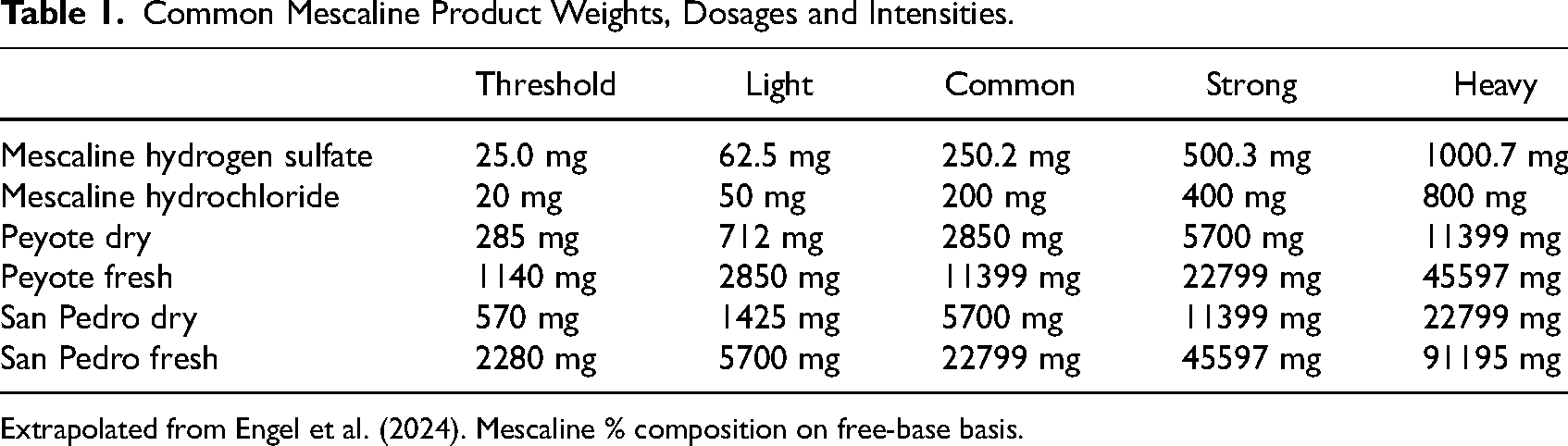
Extrapolated from Engel et al. (2024). Mescaline % composition on free-base basis.
In their observations of preparation approaches, LE has noted three common types of recipe: (1) boil chopped cactus in water with lemon (acidifying aids mescaline extraction), remove plant and drink water; (2) eat whole cactus fresh; and (3) completely dry the cactus, grind, and eat as powder. LE has observed people discussing using all three of these above recipes both with whole San Pedro as well as just with the outer green layer of San Pedro, which is thought to have a higher concentration of mescaline content. Presumably, using just the green layer results in a more potent final product, but is accompanied by some wastage. In traditional settings, LE understands variations of recipe (1) to be most common. In modern settings people may further refine the crude extract produced in recipe (1) by evaporating it to a tar, or by basifying the tea before re-extracting with another solvent, and re-evaporating.
Whatever the recipe employed, two related harm reduction techniques are commonly employed by mescaline cacti consumers. First, many prefer to homogenize a large quantity of cactus material (much more than a single dose) in order to reduce potency variations between dosages. Second, when consumers begin a new homogenized batch, many then slowly taper their dose upwards as desired over a number of experiences, with this tapering process occurring over weeks or months until the dosage of their batch is understood. Table 1 gives detail on mescaline dosing variation and how this might vary between cactus products, although it should be noted individual San Pedro and Peyote plants also vary widely in their mescaline concentrations. Further mescaline cacti quantification studies (such as LE's mescaline screening project) are needed.
In a previous study, most participants (41.5%) reported preferring San Pedro for mescaline, and of those with this preference, most preferred the San Pedro species T. bridgesii. Anecdotal reports suggest T. bridgesii is the most potent San Pedro species (Engel et al., 2023). This potency has not yet been confirmed in published phytochemical analyses, but is supported by LE's own (presently unpublished) laboratory work. Anecdotal reports also strongly support the idea of species preference. Varying entourage effects between San Pedro and Peyote species, cultivars and/or plantings is another area requiring further data. This type of information is important for meeting the common mescaline cacti consumer goal of maximizing desirable effects (e.g., euphoria), while minimizing undesirable effects (e.g., nausea), which shares parallels with the pharmaceutical goal to reduce variation and improve consistency of effects.
Ecology
No cacti are endemic to Australia. Living among the incredibly invasive and damaging cacti Opuntia stricta (“Prickly Pear”), has made the potential negative environmental impacts of foreign cacti incredibly clear. LE has also remotely followed the destruction to Peyote habitats, witnessed the extinction of certain Peyote cultivars in the United States and has engaged broadly with ecologists, botanists, and land care professionals working with mescaline cacti in their native ranges both as wild plants and as living collections. This section highlights the environmental responsibility encountered when working with mescaline cacti.
Peyote is listed as having a vulnerable and decreasing status by the International Union for Conservation of Nature Red List of Threatened Species (IUCNRL). The primary threat to wild Peyote populations (which only occur in Mexico and the United States) is land clearing for activities such as mining and agriculture, and while wild Peyote harvest for the purposes of consumption has far less of an impact on Peyote populations than land clearing, consumer demand appears to be increasing in a way that is unsustainable. Peyote conservation strategies include propagation and replanting, sustainable harvesting education, regulatory reform supporting cultivation, and wild plant protections as well as land clearing salvage operations (Ermakova et al., 2022).
In contrast, the IUCNRL categorizes San Pedro as stable and of least concern. While there is not a conservation threat to San Pedro at a species level, there are reports of particular varieties being removed extensively from certain habitats, such as T. peruvianus varieties in the Lima area and other populations in Peru (Del Río et al., 2023). While San Pedro is not fast approaching extinction, current practices of San Pedro wild harvest are not necessarily sustainable either. Conversely, outside of its habitat, spreading populations of San Pedro could become an ecological problem. In Australia and South Africa, San Pedro's close relative Trichocereus spachianus has been declared a noxious weed (Paterson et al., 2021). In these contexts, the wild harvesting of T. spachianus could be viewed an act of conservation and it is possible that a comparable situation could feasibly arise with introduced San Pedro.
Sustainability is a complex and dynamic relationship that relies on detailed environmental data. There is no means of tracking mescaline cacti populations around the world, and even if there was, a focus on mescaline cacti species alone would neglect the many other interdependent species sharing the same ecology. Even with more data, deploying levers of population control to maintain sustainability is likely to be divisive. To use Peyote as an example, many ecologists share the opinion that wild Peyote populations should be repopulated (Ermakova et al., 2022). While this might seem intuitive, some Indigenous groups and long-term Peyote custodians have expressed opposition to Peyote repopulation efforts, in particular the cultivation of Peyote in greenhouses (Iron Rope, 2021). Some Indigenous stakeholders have expressed their opposition to Peyote decriminalization, while other groups have expressed their support (Labate & Feeney, 2022). Understandings of conservation and sustainability within one group are not necessarily the same as understandings within other groups, further complicating the achievement of sustainable relationships with mescaline cacti.
Horticulturalists and gardeners are likely responsible for the spread of T. spachianus populations as weeds, but horticultural and garden propagation efforts are also important for reducing pressure on wild populations (Ermakova et al., 2022). As well as greater ease and speed of cultivation and hybridization, wider legality of San Pedro relative to Peyote likely accounts for the thriving community around Trichocereus hybrids, seemingly expanding in popularity alongside the psychedelic renaissance. As with Cannabis plants, the number of named San Pedro cultivars and independent breeding projects represent an expanding list of plants and commodities (Engel, 2023).
Discussion
The diverse perspectives surrounding mescaline cacti reveal common threads that underscore their cultural, environmental, and regulatory importance. While stakeholders may differ in their priorities, most agree that mescaline cacti are in high demand, that the decline in wild populations is a critical concern, and that environmental changes require active conservation interventions. Furthermore, there is widespread recognition of the need to enhance Indigenous Peoples’ access to mescaline cacti and acknowledge their role as custodians of traditional knowledge. Finally, legislative reforms are seen as vital for addressing the stigma and criminalization that complicate both conservation and access efforts. These themes are deeply interconnected: the increasing demand for mescaline cacti places pressure on wild populations, intensifying the need for conservation strategies that respect Indigenous sovereignty. Simultaneously, prohibitionist drug policies exacerbate these pressures by stigmatizing cultivation and consumption, further complicating efforts to balance accessibility with sustainability. This interconnection reflects the broader tensions between cultural, environmental, and political forces shaping the future of mescaline cacti, psychedelic plants, and psychoactive cultures in general.
At the core of most conflict around mescaline cacti conflict is an ongoing power struggle. Dominant values influence the terms of human engagement with mescaline cacti. The most observable influences are prohibitions around mescaline cacti consumption and production. People are criminalized for their consumption or production of mescaline from these cacti, encouraging the stigmatization of cacti consumers, producers, and related parties. Some limited validation of certain medical or cultural use of mescaline cacti is permitted, often at the expense of demonizing nonmedical or nontraditional contexts. As with drug stigma and indeed stigma more broadly, the creation of normative or ideal standards of drug use benefits certain groups by marginalizing others (Goffman, 1963). We can understand these dynamics as operating through social categories, boundaries, and hierarchies that are embedded in historical and spatial contexts (Anthias, 2013). Drug prohibition and stigma function not only to delineate acceptable versus unacceptable drug use but also to reinforce social hierarchies by privileging certain groups—such as medical researchers, cultural custodians, or other state-approved consumers—while excluding others, such as recreational consumers, producers, and/or suppliers.
Conflict over who can consume mescaline cacti differs to conflict over who can produce mescaline cacti related products. Outside of underground mescaline cacti consumption communities, many mescaline cacti grower-consumers represent themselves as gardeners and criticize honest discussion of mescaline cacti use due to their personal fears around maintaining access, avoiding law enforcement and their own stigma around drug use. Even amongst contexts relating to harm reduction – which often advocate for improvements to drug education, information and supply – discussion of mescaline cacti recipes and chemistry are typically prohibited. This parallels broader drug debates over the design of harm reduction and which provisions fall under harm reduction's purview, with some seeing harm reduction as an enabling environment in which all demanded resources should be deployed, and others seeing harm reduction as inclusive of resource restriction (Measham, 2006; Duff, 2010). Many (mostly Australian) publishers of LE's work have explicitly refused to permit inclusions of detail around how mescaline cacti and other plants are prepared for ingestion, citing fears of reputational damage and perceived liability for illicit consumption. Manufacturers of mescaline cacti products, as well as producers of other drugs, are stigmatized more strongly than consumers who purchase ready-made products. Prohibition creates stigma and conflict among all market stakeholders but is particularly alienating for producers, despite their essential role in the supply chain. Neglect of production in the mescaline cacti supply chain is placing clear pressures on both Peyote and San Pedro, as well as natural sources of other psychoactives.
There is conflict over the most therapeutic environment for a mescaline cacti consumer. Psychedelic-assisted psychotherapy involves a clinical setting with a psychologist performing treatment. Traditional administration of mescaline cacti requires participation in culturally specific ritual with certain social expectations, such as music and prayer. Recreational administration of mescaline cacti is highly individualized, and carers in this context are encouraged to be nonintrusive, or even out of sight unless necessary (Engel et al., 2022). Stakeholders differ in their views on when certain mescaline cacti consumption environments might be useful, as well as the specifics components of these environments.
Bridging Indigenous knowledge and psychopharmacotherapy requires careful attention to ethical considerations and respect for cultural sovereignty. While Indigenous practices emphasizes the interconnectedness of spiritual, communal, and environmental factors, psychopharmacotherapy often isolates the pharmacological aspects for clinical application. Exploring ways to integrate these perspectives could enhance both the efficacy and ethical grounding of mescaline-based therapies.
Amidst the diverse views surrounding mescaline cacti, it is apparent that while people claim to advocate on behalf of Peyote and San Pedro plants, there is no agreement on the views of these plants or how to communicate with them directly. Perhaps this communication is something that will be developed in future (Gagliano & Grimonprez, 2015). There is precedent for environmental personhood, as can be seen in the legal recognition of natural entities like the Whanganui River in New Zealand. Such an approach can reframe natural entities as rights-bearing subjects rather than mere objects of human exploitation (Hutchison, 2014). In the context of mescaline cacti such an approach could challenge anthropocentric assumptions and affirm their intrinsic value, supporting a shift toward more ethical and equitable relationships with these plants. This perspective could help navigate the tensions between conservation, cultural significance, and commodification. For instance, granting mescaline cacti legal personhood might enable cacti to “speak” through designated guardians who advocate for their preservation and respectful use. Such a framework could complement Indigenous knowledge systems while also addressing broader environmental and societal challenges. However, it also raises critical questions about whose voices are privileged in defining the interests of cacti, potentially perpetuating power imbalances if not approached inclusively.
Mescaline cacti cultural diversity, whether it be among Indigenous people from Mexico, Texas, and the Andes, or among other people and communities cultivating San Pedro or Peyote, is poorly understood. Negotiating the rights of people, communities and mescaline cacti is troubling, with population management giving rise to tough decisions concerning the survival of species, individuals, and cultures. While powers of medicine and prohibition dominate meanings of mescaline cacti, these powers conflict with an incredibly meaningful consumer market. All these forces demonstrate homogenizing influences on the diversity of meanings of mescaline cacti ethnobotany.
Footnotes
Declaration of Conflicting Interests
The authors declared no potential conflicts of interest with respect to the research, authorship, and/or publication of this article.
Funding
The authors received no financial support for the research, authorship, and/or publication of this article.
