




Abstract
Evidence suggests that in old age, women are lonelier than men. Gender differences in loneliness are often explained by gender differences in longevity, social status and loss, health, and mobility—well-established predictors that may influence loneliness differently in “younger” (40–59 years) and “older” (60–80 years) groups of men and women in the second part of life. This study explores loneliness in men and women ages 40 to 80 years at baseline over a 15-year period using panel data from three waves of the Norwegian Life Course, Ageing and Generation Study (N = 2,315). Our analyses show that women were more lonely than men also in adjusted analyses. Logistic regression analyses indicated that loss of a partner and poor mental health are prospectively related to loneliness among men and women, whereas other factors like becoming a partner, stable singlehood, and poor physical health were related to loneliness among women but not men.
Keywords
Loneliness is increasingly discussed in the media, public debates, and research as a threat to mental and physical public health (WHO, 2021). Reported to be rather prevalent, it has been found to have negative consequences for health, quality of life, and ability to function in everyday life. Loneliness is defined as the unpleasant feeling stemming from perceived insufficient social and/or emotional relationships and is also called perceived social isolation as opposed to objective social isolation, meaning having little contact with other persons (Luhmann & Hawkley, 2016). It occurs when a person assesses his or her personal relationships as insufficient in relation to his or her aspirations and expectations. If one's network is experienced as too small or the relationships are of insufficient quality, one feels lonely more often (Peplau & Perlman, 1982; van Tilburg, 2021).
Loneliness occurs not only as a function of a person's experiences and aspirations but also within a context of sociocultural normative values and practices (Lykes & Kemmelmeier, 2014). The past several decades have been characterized by rapid social and economic changes, affecting in essential ways family structures and relationships—and influencing individual wellbeing. Moreover, significant changes are altering gender roles and increasing the numbers of fragile marriages (Putney & Bengtson, 2005).
This paper examines how loneliness developed over a 15-year period among men and women ages 40 to 80 years at baseline and belonging to two generational cohorts who came of age during different structural and cultural conditions. Following WWII, baby boomers grew up in a period of rising affluence, radically changing gender roles, and increasing gender equality. Achieving higher educational and workforce opportunities has resulted especially in women's roles changing in Western societies. “Women's liberation”—notably resulting from women's ascending financial independence—has transformed partnerships and family life. By contrast, boomers’ parents, like generations before them, had more traditional gender roles, lower educational levels, and fewer women in the workforce.
Given variations of life courses and situations among middle-aged and older men and women, predictors of loneliness may differ accordingly. The past decades’ social and cultural changes have influenced women's roles and lives significantly and, in some ways, more markedly than men's, raising questions such as: Do partner, family, and friend relationships influence loneliness differently/less/more among women than men and differently among those who are “younger” (ages 40–59) than among those who are “older” (ages 60–80)? Do factors affecting loneliness change over a longer time, for example, do family relations, friendships, and loss of a partner affect loneliness more or less as men and women age?
Studies, both cross-sectional and longitudinal, have found that, across cohorts, women more often report loneliness (Bu et al., 2020; Luhmann & Hawkley, 2016; Nicolaisen & Thorsen, 2014a; Tornstam et al., 2010). Others have reported that men are more often lonely (Barreto et al., 2021). A meta-analysis including 638 studies in 575 reports using standardized (indirect) loneliness questionnaires concluded that men and women experience similar levels of loneliness across the life span (Maes et al., 2019). These differences in research findings have been linked to how loneliness is measured, that is, using a direct or indirect measure (Borys & Perlman, 1985; Nicolaisen & Thorsen, 2014b; von Soest et al., 2018). Furthermore, gender differences in loneliness in various age groups have been associated with gendered life courses and identities. Various events in childhood as well as in adulthood may affect loneliness among men and women differently in the second part of life (Nicolaisen & Thorsen, 2014a).
Loneliness Over Time Among Men and Women: Ageing, Cohort, and Period
The relative impact of risk factors for loneliness may vary across the life span because of changing sociocultural normative expectations concerning social relationships (Luhmann & Hawkley, 2016). In middle age, having a partner and family life typically occupies a considerable portion of life. Hence, being single should have a greater influence on loneliness in midlife, when having a partner is fairly common, than in later life. In older age, loneliness is often associated with loss of a partner, family or friends, or loss of mobility (Luhmann & Hawkley, 2016; Pinquart & Sörensen, 2003)—factors that should affect women more than men. Studies focusing on older age groups have consistently found that older women report more loneliness than men of a similar age (e.g., Beal, 2006; Cohen-Mansfield et al., 2016; Lennartsson et al., 2020; Victor & Bowling, 2012). However, some studies have reported few or no differences between genders when other factors are considered (Jylhä, 2004; Victor et al., 2006).
In public discourse, it is often asserted that loneliness has increased over recent decades and continues to rise in modern societies (e.g., Hertz, 2020). Higher numbers of people living alone and weaker family ties in so-called modern individualistic societies might imply increasing rates of social isolation and loneliness. While some studies have found that loneliness is more common in individualistic than collectivistic societies (Barreto et al., 2021), most studies indicate lower levels of loneliness in individualistic societies (Dykstra, 2009; Hansen & Slagsvold, 2016; Lykes & Kemmelmeier, 2014; Swader, 2019), where self-reliance is highly valued and ties between individuals are looser than in collectivistic societies and more dominated by chosen relationships. In collectivistic cultures, people are born and integrated into tighter social networks dominated by family and other in-group members (Barreto et al., 2021; Hofstede, 2011). A society's levels of loneliness are influenced by larger material and societal contexts that shape the quality of living conditions and create opportunities for social integration (Hansen & Slagsvold, 2016). Studies have indicated that levels of loneliness and life satisfaction may be influenced by periodic effects and optimism versus pessimism (fear of the future) in the population (Hellevik & Hellevik, 2021; Nicolaisen et al., 2022). Furthermore, longitudinal studies have found loneliness to be rather stable across the adult life span but somewhat less stable in advanced old age (Mund et al., 2020), with loneliness affecting those who are oldest more.
Although a growing number of cross-sectional studies report the prevalence of loneliness in different age groups, few longitudinal studies have provided insights into stability and change in loneliness across the life span (Mund et al., 2020), and studies of loneliness over time among men and women in different age groups are even fewer.
Change Versus Stability in Partnership and Loneliness Among Men and Women
Those with a partner have repeatedly been found to be less lonely than those without a partner (unmarried, divorced, and widowed persons). While divorce and temporary or unstable cohabitation are more prevalent in “younger middle age,” losing a partner through death in older ages is more prevalent and expected. Traditionally, women are somewhat younger than their husbands, and thus, their chances of finding a new partner in older age are lower. Furthermore, life expectancy is typically longer among women than men; hence, women become widowed more often and at younger ages, and they live without a partner for a longer period in older ages (Dahlberg et al., 2015; Nicolaisen & Thorsen, 2014a).
Being widowed may, reasonably, have different implications for men and women in the second part of life. Since elderly women live without a partner more often than their male counterparts do, typically due to bereavement, widowhood is rather age-normative among older women but less so among men. Moreover, women generally have more social contacts and close friends (Dykstra & Fokkema, 2007; Franklin et al., 2019; Victor et al., 2006), potentially protecting against loneliness.
However, studies have found that breakup and divorce predicted onset of loneliness among middle-aged women but not among men (Nicolaisen & Thorsen, 2014a). When it comes to loneliness after bereavement, a recent review found that results (cross-sectional and longitudinal) were inconclusive regarding age and gender differences (Vedder et al., 2022). In older ages, one longitudinal panel study found that being widowed at baseline (age 70) predicted loneliness at follow up among women but not among men (Dahlberg et al., 2015). Another panel study found that being widowed at baseline predicted loneliness among both older men and women 60 to 80 years old at baseline (Nicolaisen & Thorsen, 2014a). Furthermore, recent widowhood has been found to be a stronger predictor of incidence of loneliness among men than among women (Dahlberg et al., 2015; Nicolaisen & Thorsen, 2014a). Reasonably, it takes time to adapt and recover after losing a spouse, and these findings indicate that this is more the case among men than women.
As mentioned, those with a partner have consistently been found to be less lonely than those without a partner, that is, unmarried, divorced, or widowed persons (Barreto et al., 2021; Hawkley et al., 2022; Stack, 1998). However, a recent study reported that, with advancing age and over time (a 6-year period), the association between partnership status and loneliness became less pronounced and satisfaction with being single increased (Böger & Huxhold, 2020). Lacking close social ties to friends and family has also been found to increase loneliness (Nicolaisen & Thorsen, 2017). Studies have shown that friends are as important as family in predicting psychological wellbeing in adulthood and old age in Western societies (Blieszner et al., 2019). Even when an older person has regular contact with family and relatives, social interaction with friends may be more likely to prevent or alleviate loneliness and contribute to subjective wellbeing (Chopik, 2017; Hagan et al., 2020). Whether one has children or not does not seem to affect loneliness in older age, according to Norwegian panel data (Hansen et al., 2009; von Soest et al., 2018). However, a study of late-life loneliness in 11 European countries showed that loneliness was inversely related to the number of children—the more children people had, the lower were their feelings of loneliness—and this effect was stronger for women than men (Hansen & Slagsvold, 2016). We may assume that the effect of close contact with family and children might influence the experience of loneliness differently in various countries, depending on whether they are characterized as individualistic or collectivistic (Barreto et al., 2021; Lykes & Kemmelmeier, 2014).
Socioeconomic status, measured as educational level or income, has been found to be related to loneliness. People with higher status and income are less lonely (Hawkley et al., 2008; Pikhartova et al., 2016; Pinquart & Sörensen, 2003). Health and functional status are also associated with loneliness and social isolation—an association that may be bidirectional; reduced health may lead to a greater experience of loneliness (Aartsen & Jylhä, 2011; Dahlberg et al., 2015; Hawkley et al., 2022; Nicolaisen & Thorsen, 2014a; Pikhartova et al., 2016) and vice versa (Hawkley & Cacioppo, 2010; Ong et al., 2016). Furthermore, loneliness has been found to vary by age; a frequent finding is that loneliness is high in adolescence, low in middle age, and high in old age (Luhmann & Hawkley, 2016; Victor & Yang, 2012; Yang & Victor, 2011). In old age, this is often attributed to smaller networks, a higher likelihood of living alone and being widowed, and a greater prevalence of reduced physical function and health among older as opposed to younger adults (Luhmann & Hawkley, 2016).
Aims
In the present article, we examine loneliness in men and women ages 40 to 80 years at baseline in a large, longitudinal panel study (NorLAG) spanning 15 years. We ask: How does loneliness vary over time among men and women? Do men and women in the second part of life (40–80 years old) become more lonely over time? More specifically, we ask: How does change/stability in partner status influence loneliness over time in “younger” (40–59 years) and “older” (60–80 years) adults? Over a longer period, are men or women more likely to experience loneliness after losing a partner? Younger cohorts, particularly among women, are more highly educated than older cohorts. Does educational level affect loneliness more or less strongly among younger than among older groups of women?
With the trend toward more people living alone in contemporary Western societies, friendships are becoming increasingly important (Stevens & Van Tilburg, 2011) and potentially reducing loneliness. One-person households are widespread among people in the second half of life; living alone is highest among the oldest old and affects more women than men in later life. It is also more prevalent in Europe and North America than elsewhere (Esteve et al., 2020). In Norway, among those ages 67 and older, 34.4% live alone (Tømmerås, 2021). Women are socialized to develop a larger and more active social network, potentially protecting them from loneliness (Barreto et al., 2021). Since they have more “intimate” and close friends, an assumption might be that women are more “protected” against loneliness than men as they grow older and experience the loss of a spouse. Single women friends, that is, widows, are more likely to share their experiences and increase contact, supporting each other in older age. By contrast, more men who become widowed may have a greater “market” of single women for new partnerships, a tendency that is strengthened by the traditional age gap between spouses, with men being older than their women partners. We ask: Do men have a higher risk of loneliness than women resulting from a lack of contact with friends? Is a lack of contact with friends more strongly associated with loneliness among older than among younger men? Conversely, we could also assume that a lack of friends would have a greater impact on women, whose expectations for close friendships tend to be higher.
The relevance of predictors for loneliness may vary across age groups due to period and generational effects, meaning cultural, economic, and financial changes, among others, over the last several decades.
Methods
Data
We employ three waves of longitudinal panel data from the Norwegian Life Course, Ageing and Generation (NorLAG) study. The first wave (T1) was collected in 2002/2003 (hereafter 2002), the second wave (T2) in 2007/2008 (hereafter 2007), and the third wave (T3) in 2017 (Veenstra et al., 2021). Respondents were 40 to 80 years of age at T1. NorLAG combines survey data linked to data from national public registers. In all three waves, survey data include a combination of an initial computer-assisted telephone interview (CATI) and a subsequent self-administered questionnaire. Response rates for the three telephone interviews were, respectively, 67%, 61%, and 68%; of these, 75%, 77%, and 73%, respectively, completed the self-administered questionnaire (Veenstra et al., 2021). A total of 2,330 individuals participated in all three waves of data collection. The sample for the present study includes 2,315 individuals who completed the loneliness item that forms the focus of this paper. As is the case in most longitudinal studies, NorLAG faces the challenge of selective attrition: Individuals with higher education and good/excellent self-rated health were more inclined to participate in all three waves (Veenstra et al., 2021).
The analyses are performed with 20-year age groups, 40 to 59 and 60 to 80 at T1. These two broad age categories act as proxies for specific “life stages” of the second part of life, 40 to 59 years of age being considered “younger” and 60 to 80 years “older” in our sample (Nicolaisen et al., 2022; Victor & Yang, 2012). Those in the “younger” group were born in the years 1943 to 1962, and those in the “older” group were born in the years 1922 to 1942. The two age groups are typically distinguished by the historical periods when they came of age, denoted as “the baby boomer generation” and “the silent generation,” respectively (Putney & Bengtson, 2005). As previously noted, the baby boomers seemed more advantaged in some respects than the earlier cohorts (the silent generation).
Dependent and Independent Variables
The dependent variable, loneliness, is measured with a single item: “Do you feel lonely?” Response categories are 1 = often, 2 = sometimes, 3 = seldom, or 4 = never. Although such single-item measures have been contested, they are frequently used and have been reported to be robust and trustworthy measures of loneliness (Mund et al., 2022) and highly correlated with multi-item loneliness scales (Lykes & Kemmelmeier, 2014). For purposes of statistical analysis, the loneliness variable was dichotomized, with response categories “often” and “sometimes” collapsed into 1 = lonely. Response categories “seldom” and “never” were collapsed into 0 = “not lonely.” We classified “sometimes lonely” as “lonely” because it may be easier for people who are lonely to admit feeling lonely sometimes than to say they often feel lonely since being lonely carries a social stigma (Barreto et al., 2022).
Respondents’ ages ranged from 40 to 80 years at T1. Educational level was categorized as 1 = primary school, 2 = secondary school, and 3 = college/university level. Partner status was categorized as married/cohabitant, unmarried/not cohabitant, divorced/separated, and widowed. Whether the respondent had children was categorized as 0 = does not have own children and 1 = has own children. Subjective health was assessed by the Short Form-12 Test (SF-12); the SF-12 is one of the most widely used health-measurement instruments. We used the summary measures PCS-12 (physical domain of SF-12, scores ranging from 0 to 100) and MCS-12 (mental domain of SF-12, scores ranging from 0 to 100), with higher scores indicating better physical and mental health functioning (Ware et al., 1996). Frequency of contact with friends was assessed by the question: “How often do you see friends?” This item is skewed as most respondents saw their friends at least once a month. (At T1, 10.2% saw friends every day, 59.5% every week, 24.4% every month, 5.1% a few times a year, and 0.8% did not see friends during the previous year.) Therefore, responses were collapsed into three response categories: 1 = every day or every week; 2 = every month, but not every week; and 3 = a few times a year, more seldom, or never. Data on friendship were collected in self-administered postal/web questionnaires, subsequent to telephone interviews. Due to high numbers of missing (attrition) postal/web-based questionnaires in the second and third waves, this information is presented in univariate analyses but not in the main multivariate analyses. Information about loneliness and subjective health was collected in the telephone interviews. Data on age, gender, education, children, and partner status were obtained from register information.
Variables of Change and Stability in Partner Status
Based on respondents’ partner statuses at the time points, five mutually exclusive categories were created and labeled according to T1 and T2 respective to T2 and T3. For partner status, the following categories were created: not a partner at either time (stable single), became a partner (not partner–partner), breakup (separated/divorced), partner died, and partner both times (reference category).
Experiencing breakups or new partnerships is less common among the older than younger group. More women than men experienced the loss of a partner, especially in the “older” group, through the death of their spouse. Few people among the “older” group had experienced a breakup and/or gained a new partner. During the 15 years under study, eight men and three women in the older group got a new partner. The category “became a partner” is not included in the analyses of change and stability for the “older” group. Furthermore, “Breakup” and “Partner died” (those who became divorced and those who lost a partner through death) are collapsed into a single category as “Lost partner,” in which the vast majority was bereaved.
Analyses
Descriptive analyses of the measured variables at T1 (2002), T2 (2007), and T3 (2017) were performed for the total sample and for men and women separately, indicating trends over time. For tests of statistical significance, gender differences were analyzed using chi-square tests and t-tests. Regarding changes in health over time, paired samples t-tests were conducted. Thereafter, we investigated how change and stability in partner status (from T1 to T2 and from T2 to T3) and covariates influenced loneliness among men and women prospectively at T2 and T3, respectively, using logistic regressions. In the analyses, men and women in two age groups were studied: the “younger” (40–59 at T1) and the “older” (60–80 at T1) group. For all analyses, the criterion for test significance was p < .05. The data were analyzed using SPSS version 25.0.
Results
Descriptive Analysis
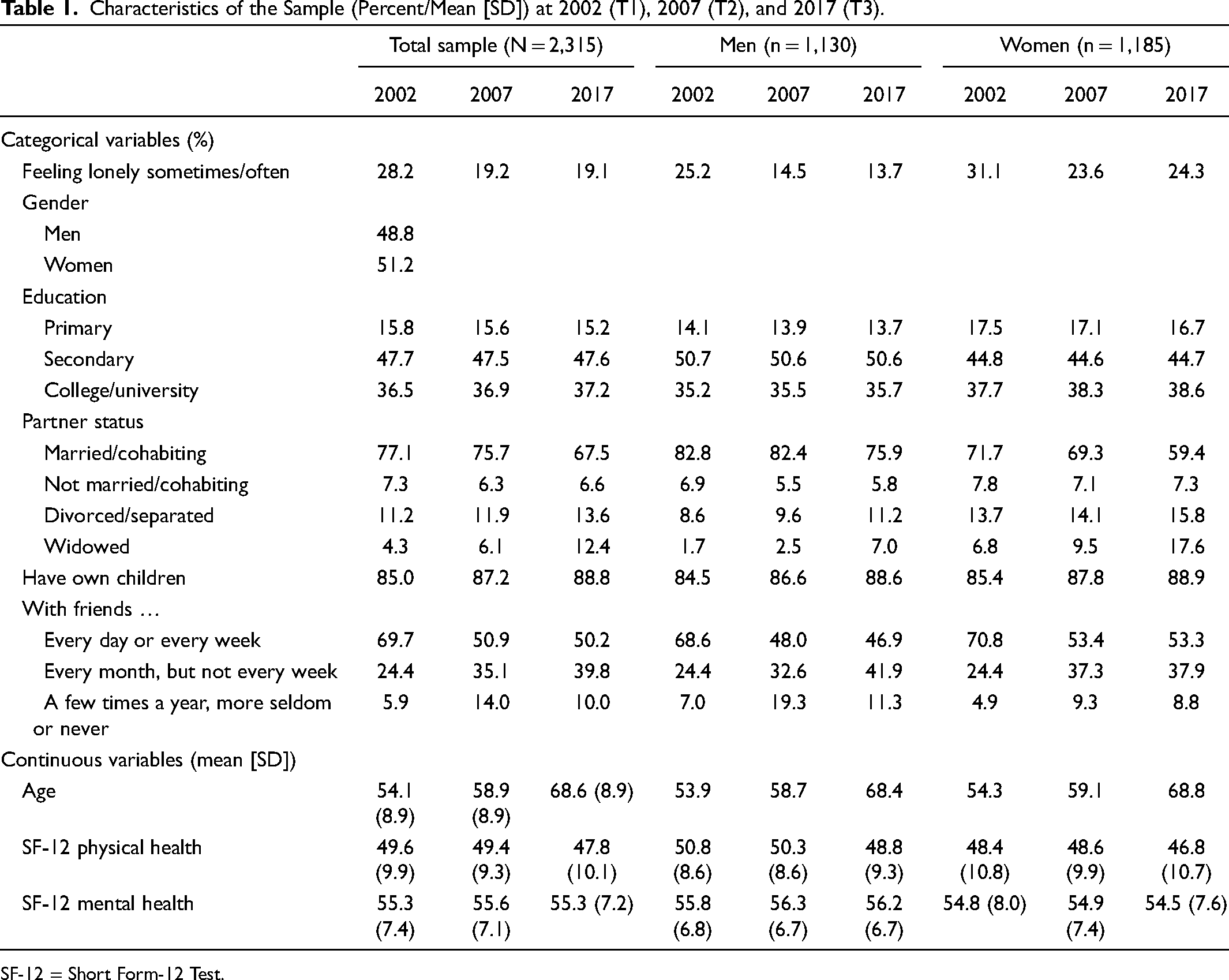
Respondent characteristics measured in 2002, 2007, and 2017 are presented in Table 1.
Characteristics of the Sample (Percent/Mean [SD]) at 2002 (T1), 2007 (T2), and 2017 (T3).
SF-12 = Short Form-12 Test.
Over time, univariate descriptive analyses showed that the percentage reporting that they are lonely decreases and then levels off somewhat among both genders. Ancillary analyses indicated that this pattern was found for the younger group among both men and women. For the older group, loneliness decreases from T1 to T2 but increases from T2 to T3, especially among women.
Concerning gender, women were (significantly) more lonely than men at all three times. Ancillary analyses showed that such a gender difference over time was found both for the younger and the older group. They further indicated that the highest loneliness levels were consistently (at all three times) found among older women, who were more lonely than older men and also more lonely than younger men and women. Somewhat less expected, older men were the least lonely group of all, both at T1 (19.5%) and T2 (14.1%). At T3, only younger men (13.1% lonely) were less lonely than older men (15.4%). At T1, 34.3% of older women were lonely sometimes or often. The corresponding number among men at T1 was 19.5%. At T2, the proportions of older women and men reporting loneliness were 29.6% and 14.1% respectively; at T3, the corresponding proportions were 32.2% and 15.4%
Among men and women, the most common level of education was secondary school, respectively 51% and 45% (Table 1). Educational attainment differed somewhat and significantly between men and women. More men had a secondary education, while slightly more women had education at both the primary and college/university level at T1 (Χ2 = 9.38, df = 2, p = .009). The results reflect that, over time, the educational level in the population has increased, especially among women. Ancillary analyses showed that among women, as expected, younger age groups are more highly educated than older age groups. While 30% of women 60 to 80 years old at T1 in our sample had a college/university level education, the corresponding number among women 40 to 59 years old was 41%, a marked increase. Interestingly, in contrast, the proportion with a college/university education among men was higher in older than in younger age groups: while 40% of men 60 to 80 years old at T1 had a college/university education, the corresponding number among those 40 to 59 years old was 34%. This decrease is likely due to the selected nature of this panel sample of older men since men with a higher education were more inclined to participate in all three waves.
Regarding partnership and family life, at all three times, men more often than women were married or cohabiting. Furthermore, the increase in the number of widowed persons over time was, as expected, consistently higher among women. To illustrate, at T1, 7% of the total sample of women was widowed; at T3, the corresponding proportion was 18%. The respective proportions among men were 2% and 7%. At T3, ancillary analysis showed that, among the oldest (70–80 years old at T1), 71% of the women and 32% of the men in our sample were widowed, a marked difference.
The proportion of men and women who had children was quite similar: 85% at T1 and 89% at T3. Regarding subjective health, men had significantly better mental and physical health at all three times. This applied to both age groups under study. Ancillary analyses further showed that both men's and women's physical health was significantly reduced from T2 to T3, both for the younger and older group. However, among the older group of women, physical health improved from T1 to T2, while physical health among the older men was stable. Regarding mental health, among the younger group, men's mental health improved in the first period, from T1 to T2, while women's mental health was rather stable. Among the older group, women's mental health worsened in the second period, from T2 to T3, while men's mental health did not change significantly (results not shown). In the following, we will use the term “first period” for the time from T1 to T2 and “second period” for the time from T2 to T3.
Time spent with friends was reduced over time. At T2 and T3—but not at T1—women reported seeing friends significantly more often than men. At T1, the majority of men and women spent time with their friends every day or every week (69% and 71%, respectively). During the first period, from T1 to T2, the proportion who spent time with their friends every day or every week was significantly reduced for both genders but somewhat more for men. However, the difference was quite small. Men had a reduction in daily/weekly contact from 69% to 48%; the corresponding reduction among women was from 71% to 53% (Table 1).
Loneliness Over Time
Unadjusted and adjusted logistic regressions were used to assess the significance of the independent variables for risk of loneliness, prospectively, at T2 and T3 among men and women separately. The independent variables included variables of change or stability in partnership in the two time periods (from T1 to T2 and from T2 to T3, respectively) and covariates (age, education, having one's own children, physical health, and mental health), prospectively predicting loneliness at the latter point in time. The analyses were performed for two separate age groups, a “younger group” and an “older group.” Ancillary analyses showed that, in both age groups and for both periods, women were significantly and independently more likely to be lonely compared to men (p < .05).
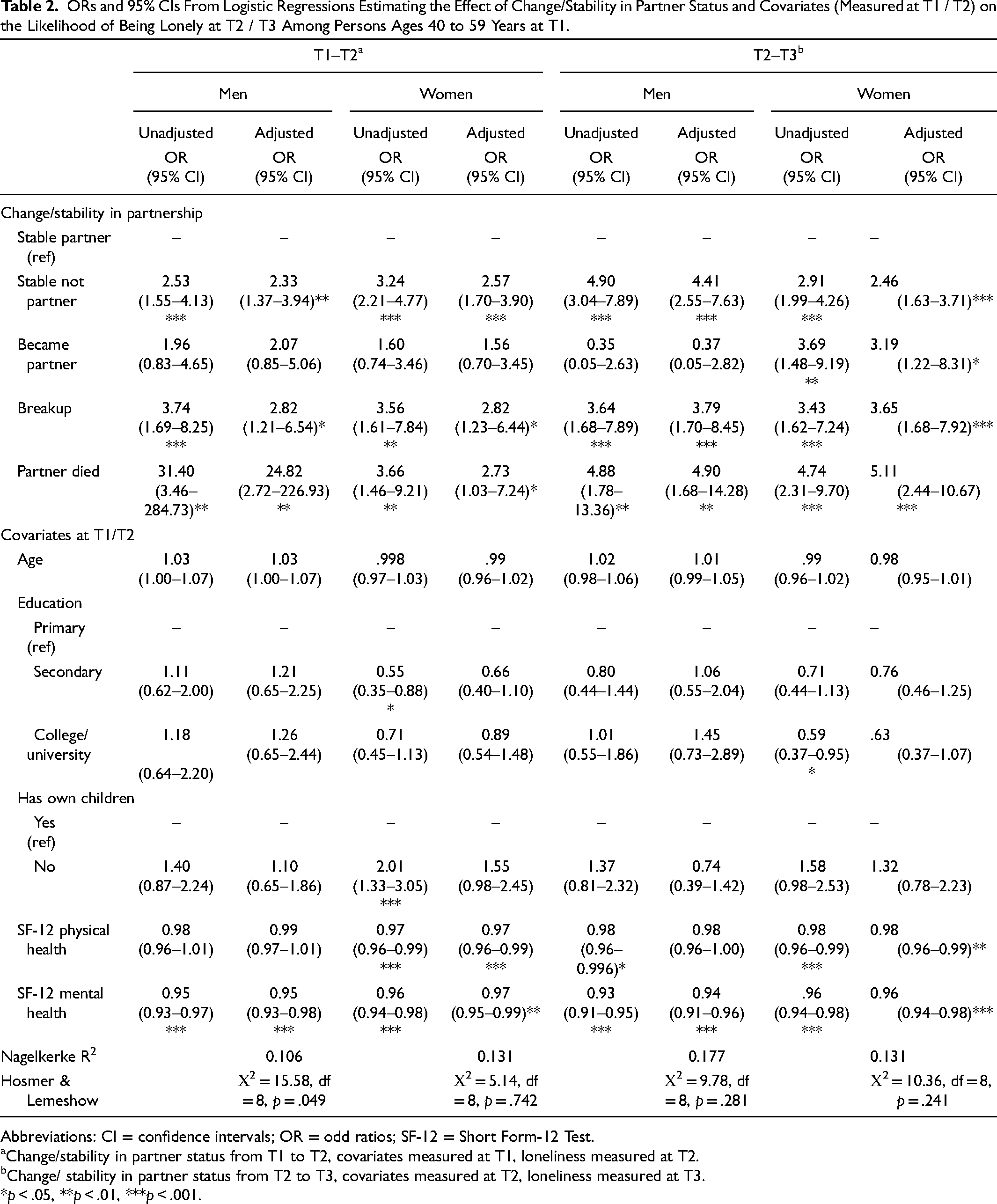
Table 2 presents the results among men and women in the “younger group” ages 40 to 59 at T1.
ORs and 95% CIs From Logistic Regressions Estimating the Effect of Change/Stability in Partner Status and Covariates (Measured at T1 / T2) on the Likelihood of Being Lonely at T2 / T3 Among Persons Ages 40 to 59 Years at T1.
Abbreviations: CI = confidence intervals; OR = odd ratios; SF-12 = Short Form-12 Test.
Change/stability in partner status from T1 to T2, covariates measured at T1, loneliness measured at T2.
Change/ stability in partner status from T2 to T3, covariates measured at T2, loneliness measured at T3.
*p < .05, **p < .01, ***p < .001.
Younger Men and Women—Ages 40 to 59 Years at T1
Concerning civil status, Table 2 shows that, among the younger group, for both time periods, those men and women who were stable single and those who had lost a partner due to a breakup or bereavement were significantly more likely to be lonely compared to those who were categorized as a stable partner.
Unexpectedly, single women—but not men—who became a partner in the second period were significantly more lonely at T3 than stable married/cohabiting women, while this was not the case for either gender in the first period.
In regard to education, unadjusted analyses showed that those younger women and men with higher educations (here, secondary education) were less likely to be lonely at T2 (OR = .55, p = .013) than those women with less education (primary education). However, when other variables (change/stability in partnership, age, children, and health) were adjusted for, educational level was no longer significantly associated with loneliness at T2. The same result occurred at T3.
Regarding having children, among younger women, not having their own children was prospectively associated with loneliness in unadjusted analyses at T2 but not at T3. However, when the situational factors age, partner status, education, and health were controlled for, younger women without children were not more likely to be lonely at either T2 or T3. Childlessness was not associated with loneliness among younger men at either T2 or T3.
Concerning physical health, in adjusted analyses, poorer physical health was prospectively and independently associated with loneliness both at T2 and at T3 among women in the younger group but not among younger men. Poorer mental health was prospectively and independently associated with loneliness at T2 and T3 among both men and women in the younger group.
In regard to contact with friends, ancillary analyses showed that, in the first period, younger men and women who very seldom (a few times a year or less /not during the last year) had contact with friends at T1 were, reasonably, more likely to be lonely at T2 than those who saw their friends every day or every week. However, when other variables were adjusted for, women (but not men) with monthly contact with friends were more likely to be lonely at T2 than those who saw their friends more often (every day or every week) (OR = 1.53, p = .041).
In the second period, those younger men who very seldom saw their friends (a few times a year or less) at T2 were more likely to be lonely at T3 than those men who saw their friends daily/weekly at T2, also when other variables were accounted for (OR = 3.09, p = .002). In contrast, in multivariate analyses, among younger women, the association between friend contact at T2 and loneliness at T3 was not significant when other variables were accounted for.
In summary, being stable without a partner or becoming without a partner and having poorer mental health independently influenced loneliness among “younger” women and men over both periods. Having become a partner and having poor physical health were independently associated with loneliness among women but not among men. Age, educational level, and whether one had children did not influence loneliness independently for either gender. Having very little contact with friends was independently linked to loneliness among women at T2 and among men at T3.
Older Men and Women—Ages 60 to 80 Years at T1
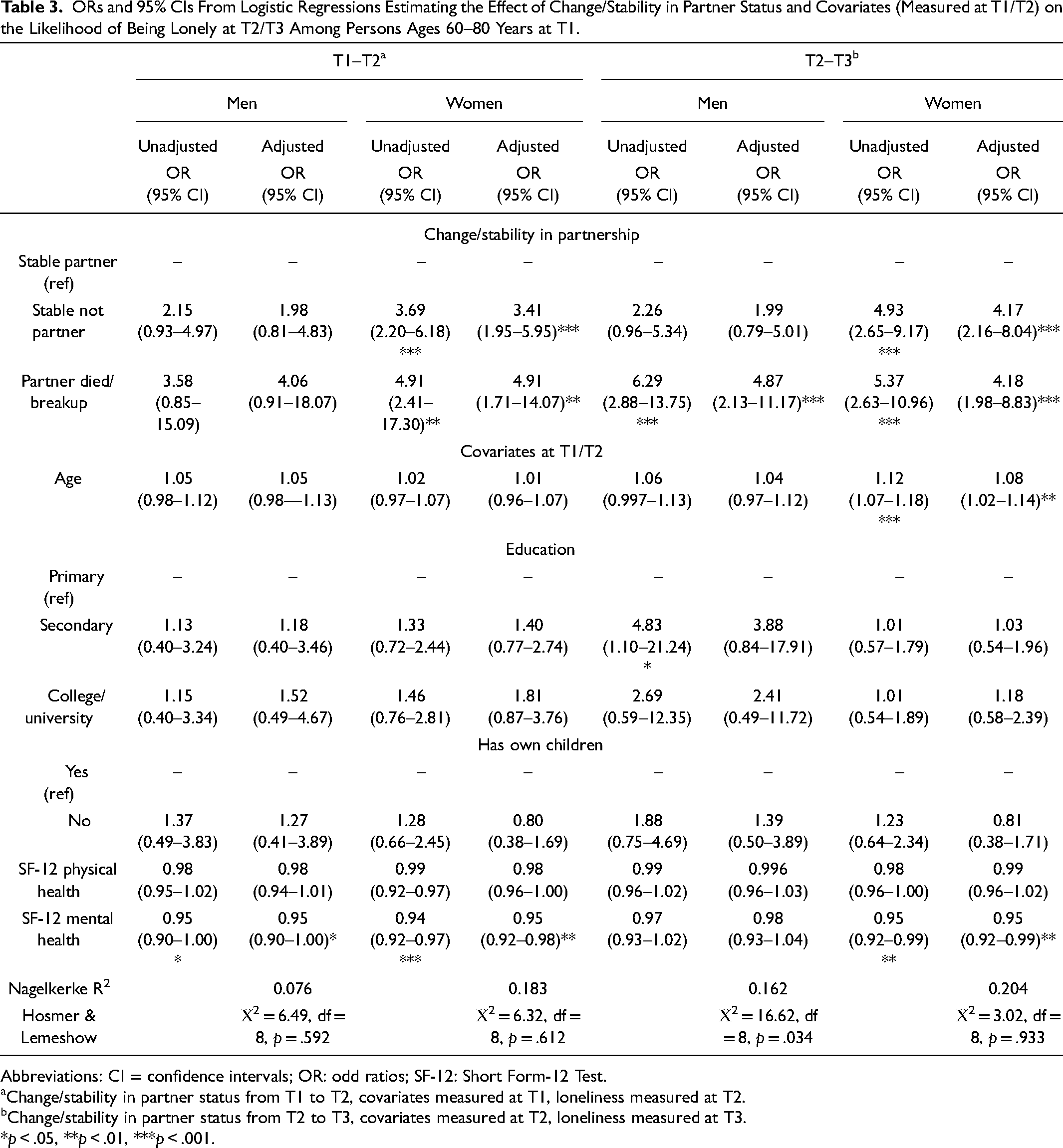
Table 3 presents corresponding results for the older group (ages 60–80 years old). Concerning civil status, among “older” women ages 60 to 80 years old, for both time periods, those who were stable single and those who had lost a partner were more likely to be lonely compared to those women who were stable married during the periods, as expected.
ORs and 95% CIs From Logistic Regressions Estimating the Effect of Change/Stability in Partner Status and Covariates (Measured at T1/T2) on the Likelihood of Being Lonely at T2/T3 Among Persons Ages 60–80 Years at T1.
Abbreviations: CI = confidence intervals; OR: odd ratios; SF-12: Short Form-12 Test.
Change/stability in partner status from T1 to T2, covariates measured at T1, loneliness measured at T2.
Change/stability in partner status from T2 to T3, covariates measured at T2, loneliness measured at T3.
*p < .05, **p < .01, ***p < .001.
However, among the older men at T2, change or stability in partnership in the first time period was not associated with loneliness. Unexpectedly, those who had lost a partner through death or divorce were not significantly more likely to be lonely than those who were stable married (OR = 3.58, p = .082). This finding may be due to the low number of men who had lost a partner through death or divorce in the first period, that is, n = 9 among men versus n = 19 among women. At T3, those men who had lost a partner in the second period, from T2 to T3, were more likely to be lonely compared to those who were stable married or had a partner. Remarkably, those men who were stable single were not more likely to be lonely than those who were stable partner either at T2 or T3.
Educational level was not associated with loneliness among women in this older age group either at T2 or T3 or in adjusted or unadjusted analyses. Among older men, in unadjusted analyses, those with a secondary-level education were more likely to be lonely at T3 than those with a primary-level education (OR = 4.83). However, after adjustment for health, age, and social variables, educational level was no longer statistically significant. Thus, educational level did not independently predict loneliness among men and women.
Having children or not having them was not associated with loneliness among men or women in the older group, either in unadjusted or adjusted analyses at T2 or T3.
Somewhat unexpectedly, (self-reported) physical health was not significantly associated with loneliness among men and women in the older group, either in unadjusted or adjusted analyses and either at T2 or T3, in contrast to our finding for the younger group. Poorer mental health was prospectively associated with loneliness at T2 and T3 among women in the older group. Among men in this age group, such an association between poorer mental health and loneliness was found at T2 but not at T3.
Concerning contact with friends, ancillary analyses showed that those older women who had monthly contact with friends at T1 were independently more likely to be lonely at T2 than those who had contact with friends more often, that is, every day or every week (OR = 1.80, p = .048). Unadjusted analyses showed that, at T3, older women who had monthly contact with friends at T2 were, in fact, less lonely than those with daily/weekly contact (OR = 0.42, p = .006), but this was not the case in adjusted analysis. Among older men, frequency of contact with friends was not significantly associated with loneliness either at T2 or T3 (either in unadjusted or adjusted analyses).
In summary, among older women, being stable without a partner or becoming without a partner in both periods was a strong independent predictor of loneliness. Among older men, loss of a partner in the second period—but not in the first period—was independently associated with loneliness. Concerning health, those women with poorer mental health were independently more likely to be lonely at both periods, while correspondingly, those men with poorer mental health were more likely to be lonely in the first period but not in the second. Educational level and having one's own children or not were not independently associated with loneliness for either gender. Having very seldom contact with friends was independently linked to loneliness among women—but not men—only at T2 (not at T3).
Discussion
Sociocultural norms play a role in influencing and defining whether or to what degree a certain life context or risk factor is associated with loneliness across the life span. According to the age-normative perspective, people are less lonely when they meet norms considered normal for their age (Maes et al., 2019). If the actual quantity and/or quality of social relationships do not meet normative expectations of social engagement, loneliness may be a result (Luhmann & Hawkley, 2016). These norms change over the life course. As life courses are gendered, sociocultural normative values and practices may influence loneliness in men and women differently. The present study investigates variations in loneliness over a longer period among men and women in the second part of life.
We asked: How does loneliness vary over a longer time period among men and women in the second part of life? Contrary to what might be expected according to popular beliefs, we found that over time, the proportion feeling lonely decreased and then leveled off among both genders in the younger group (ages 40–59 at baseline and 55–74 at T3). For the older group (ages 60–80 years at baseline and 75–95 years at T3), loneliness decreased from T1 to T2 but increased somewhat from T2 to T3. The finding of a decrease in loneliness in both groups in the first period and stable loneliness in the younger group in the second period is unexpected in light of popular assumptions and some studies (e.g., Cacioppo & Cacioppo, 2018), indicating that loneliness has become increasingly widespread over recent decades. However, in line with our finding, several previous studies, both (repeated) cross-sectional and longitudinal, have reported results of no change or a slight decrease in loneliness in older age groups and increases in loneliness only among the very old, 75 to 80+ years old (Dahlberg et al., 2018; Dykstra, 2009; Eloranta et al., 2015; Yang, 2018). A meta-analysis of longitudinal studies also found that loneliness is quite stable across the adult life span, indicating that loneliness has trait-like features, but somewhat less stable in advanced old age (Mund et al., 2020). The increase in loneliness levels among the very old are typically linked to age-related negative circumstances and social losses and to deteriorating health and functional abilities (e.g., Eloranta et al., 2015; Jylhä, 2004; Luhmann & Hawkley, 2016).
Concerning gender, at all three times, women were significantly more lonely than men, also in multivariate analyses. Our finding is in line with previous studies indicating that women tend to report higher levels of loneliness than men do (e.g., Aartsen & Jylhä, 2011; Bu et al., 2020; Cohen-Mansfield et al., 2016).
We asked: How does change/stability in partner status influence loneliness over time in “younger” (40–59 years) and “older” (60–80 years) men and women?
For the younger age group, 40 to 59 years old at T1, for both periods, those men and women who were without a partner (stable single or having lost a partner through divorce or death) were more likely to be lonely than those who had a stable partner. This finding is as expected and in accordance with previous studies (e.g., Dahlberg et al., 2022; Fokkema et al., 2012; Hawkley et al., 2019).
Also in regard to gender, we asked: Over time, are men in this age group more likely to become lonely after the loss of a partner, or is the opposite true? Unexpectedly, younger (“middle-aged”) women—but not men—who had become partners in the second period (from T2 to T3) were more lonely at T3 than stable married or cohabiting women. Becoming married/cohabiting in midlife may be a stressful event because it entails many changes. The former civil status of those who became a partner may have been unmarried, divorced/separated, or widowed, and the implications for loneliness may vary. In regard to remarriage, this finding agrees with that of another study showing that remarriage is more strongly associated with emotional loneliness among women in second marriages (de Jong Gierveld et al., 2009). The problems people encountered in their former marriage/cohabiting may not have ended after divorce but, rather, linger during remarriage (de Jong Gierveld et al., 2009; Kalmijn & Monden, 2006). Moreover, repartnering may also have negative effects on relationships with one's children (de Jong Gierveld et al., 2009), making these more contentious and, thus, influencing feelings of loneliness. Traditional gender roles for women are tied to the private sphere of domestic and familial management as women typically organize and maintain strong and stable relationships as “kin-keepers” (Franklin et al., 2019), and establishing a new partnership in the second period, from T2 (when the mean age of those women who became partners was 51.7 years) to T3 (mean age 61.4 years), may have a higher “cost” (affecting contact with children and grandchildren) for women than for men. Stable married/cohabiting women will have more stable and predictable social networks, needing less effort and involving fewer concerns about adapting compared to those with new partners.
Concerning partnership in the older group, 60–80 years at T1, for both time periods women who were without a partner were more likely to be lonely than those who were in stable partnerships, in accordance with previous research (e.g., Dahlberg et al., 2022; Hawkley et al., 2019; Nicolaisen & Thorsen, 2014a).
Among older men, we found a different pattern for the impact of partner status on loneliness. For them, lack of or loss of a partner in the first period (from T1 to T2) was not significantly associated with loneliness at T2. As previously noted, this finding may be due to a low number of men who had lost a partner in the first period. However, older men who had lost a partner from T2 to T3 were more likely to be lonely at T3 compared to stable married/cohabiting men, both in unadjusted and adjusted analyses. Unlike stable single older women, older men who were stable single were, surprisingly, not more likely to be lonely compared to men who were stable partner. They may have adapted to and accepted their life circumstance as single.
This finding of gender difference is not in accordance with an “age-normative perspective,” according to which loneliness should be less pronounced among older single women since they would be more “protected” against loneliness because of the “normality” of widowhood and would receive support from women friends in the same situation. Although women (traditionally) have more close friends and higher contact levels with friends and family (e.g., Dykstra & Fokkema, 2007; Franklin et al., 2019; Victor et al., 2006), this contact pattern does not seem to protect them from loneliness in our study. Higher expectations for social contact (Felmlee & Muraco, 2009; Hall, 2011) may make women more vulnerable to disappointment. Additionally, contact with family members may be contentious because high expectations for contact may not be fulfilled.
We note that the stable single group, that is, those without a partner at both T2 and T3, comprises not only persons who never married but also those who lost their partner through death or divorce before T2, that is, more than 10 years ago. Previous research has found that never-married older persons (men and women) were more lonely than married men and women but less lonely than divorced and widowed persons. This finding has been linked to never-married individuals having an advantage in old age compared to other marital statuses because never-married singles may socially be better prepared for and adjusted to living alone (Kislev, 2022; van Tilburg & Suanet, 2019).
We may speculate that, especially among men, those who never married are better “prepared” for old age because they have not experienced the observed male-partner role of relying on a wife/partner for closeness and a wider social life (Franklin et al., 2019). Regarding those men who lost their partner more than 10 years ago, we may assume that the immediate loneliness following the loss of a life partner may gradually diminish and be less prominent with the passage of time. Furthermore, older stable single men may be advantaged in several ways; for example, the demographic imbalance in the gender ratio makes it easier for men at advanced ages to find a new partner or female friend (de Jong-Gierveld, 2004; Sassler, 2010). For women, there are fewer available men and, thus, reduced prospects of finding a suitable partner. By contrast, the traditional age difference between spouses (men being somewhat older) may contribute to more opportunities for older, single men to meet partners than for older, single women. That is, older stable single men may, from T2 to T3, have recovered from their loneliness more than women.
Concerning education, among younger women but not younger men, those with less education were more likely to be lonely than those with more education at both T2 and T3. However, in adjusted analyses, the increased risk of loneliness in both time periods appears to be related to the lack or loss of a partner, not having children, and poor health rather than to educational level.
The lower risk of loneliness among older men with less education may be linked to the (typical) attrition in longitudinal panel studies, implying that those remaining in the study who have less education are a selected group regarding health and physical functioning (Grøtting, 2019).
Regarding the impact of having children on loneliness, the finding in unadjusted analysis that younger women without children were more likely to be lonely than those who had children at T2 disappeared in adjusted analysis. Among younger men, no differences in loneliness between those with and without children were found in either unadjusted or adjusted analyses. Childlessness was not associated with loneliness among older men and women in either unadjusted or adjusted analysis. In other words, being childless does not lead to a greater experience of loneliness, agreeing with previous studies on parenthood and psychological wellbeing (Hansen, 2021). Having children may lead to a more meaningful life, but it can also imply conflicts in family relationships and thwarted hopes for contact.
What does friendship mean for experiences of loneliness among men and women? In the first period, younger men and women who seldom saw their friends were more likely to be lonely than those who often saw their friends, a trend that disappeared in adjusted analysis. In the second period, being older and having little contact with friends was independently tied to loneliness among men but not among women. At T3, the younger group (ages 55–74 years old) was approaching retirement or had entered that new phase of life. Some men, aligning with a traditional male gender role (Franklin et al., 2019), will have invested much time in the work and public sphere and spent less time with friends and other social contacts outside work. In retirement, they may be more exposed to feelings of loneliness in response to leaving their working life, purpose in life, and contact with colleagues. In such cases, loneliness may be influenced by a loss of “the contexts in which their bonds and sense of belonging were forged—by working together with other men, making things or other contributions of public value” (Franklin et al., 2019, p. 134). This important point emphasizes that influential social arenas differ between men and women.
What is the impact of health on loneliness? Among younger women, poorer physical health was independently and prospectively associated with loneliness at both T2 and T3. Somewhat unexpectedly, this association was not found among men. A study by Victor and Yang (2012) showed that functional limitations were associated with loneliness in young and middle-aged adults but not in older adults. Declining health and functional limitations are not as anticipated in middle age as in older age, and the deviation from age-typical norms would be expected to increase the association with loneliness, particularly among younger age groups. In addition, reduced health and functionality limiting one's participation in the workforce may result in financial insecurity and a worse financial situation, influencing conditions for engaging in satisfying social relationships and triggering loneliness (Fokkema et al., 2012, p. 221; Myck et al., 2021). However, Victor and Yang did not perform analyses by gender.
We would expect that reduced physical health would strike men in regard to the traditional masculine ideal of being strong (Connell, 1995). Why women are affected but not men may be tied to women's higher risks for health problems, illness, and disability. Considerable gender differences in work absence due to illness (“sick leave”) have long been known, with women having higher rates of sick leave than men. More women than men receive disability pensions, and more women receive them at an earlier age than men do. In Norway, the proportion receiving disability pensions rises sharply from age 50 on, especially among women. In 2021, the proportion receiving disability pensions was 18% among women ages 50 to 54 and 30.5% among women 60 to 64 years old. Among men, the respective proportions were 10.9% and 20.9% (Bufdir, 2022). The higher sick-leave rate and disability risk for women have been tied to a gendered job market where women's jobs are typically burdensome “health and care jobs” involving physically and emotionally demanding work that often pays low wages and may only be part-time, combined with women's larger share of unpaid care and domestic work (Putney & Bengtson, 2005; Staland-Nyman et al., 2021). Women's health and illnesses differ from men's, and women cope differently with stress, pain, and illness than men do (Ose et al., 2014). Women in poorer physical health in middle age may have left or be in the process of leaving the workforce and physically demanding jobs. Poor physical health and stressful work may have also led to fatigue and a reduced possibility for social contact outside work than preferred. We suggest that the discrepancy between desired and actual contact may be frustrating for ageing midlife women and, hence, contribute to loneliness.
In the older age group, poor physical health was not related to loneliness among men and women. The finding that wellbeing does not decrease even if objective life conditions deteriorate has been labeled the “wellbeing paradox” (Hansen & Slagsvold, 2012). In older age, health problems and physical limitations may be anticipated and “normative.” Hence, older men and women may have reduced their standards and aspirations regarding social contact and found strategies for coping with the consequences (Victor & Yang, 2012). Even if physical health deteriorates and results in a diminished social life, adaptation to reduced health may take place so that loneliness may not be a result after some time, 5 or 10 years later.
Poor mental health was prospectively and independently associated with loneliness at both T2 and T3 among older women. Different forms of mental health problems are closely linked to higher levels of loneliness (O’Luanaigh & Lawlor, 2008). Mental health problems may lead to more loneliness (Dahlberg et al., 2018), and feelings of loneliness may lead to various mental health problems, such as depression (Courtin & Knapp, 2017; O’Luanaigh & Lawlor, 2008; Victor & Yang, 2012)—an association that may be bidirectional (Cacioppo et al., 2006; Luo et al., 2012).
Surprisingly, among older men, poorer self-assessed mental health at T2 (ages 65–85) was, in contrast to older women, not associated with loneliness 10 years later at T3. The assumption could be made that, for some men in this selected group, having reached advanced old age, previous mental health challenges would be minimized or suppressed, thus not influencing loneliness at T3. Why this would be the case among the oldest men but less so among the oldest women in our sample is not evident. However, research (consistently) has found gender differences in mental health and wellbeing, with women more afflicted than men (Nolen-Hoeksema & Rusting, 2000). Not only gendered social roles but also gender differences in stress and coping styles and more-common chronic strain and rumination in women (Matud, 2004; Nolen-Hoeksema et al., 1999) may be associated with more enduring and admitted mental health problems among older women than men. The gender differences may become more pronounced in advanced old age.
Strengths and Limitations
The present study has several limitations regarding generalization. Sample attrition is a challenge in all longitudinal studies. The selected nature of our sample has resulted in a healthier and more highly educated sample compared to the original population. The sample selection may have influenced the results in that loneliness and its association with negative life events may differ for groups that were less represented in this study, for example, people from less socially advantaged groups, very frail people, or those living in institutions. Another limitation may be that there were small numbers in some groups of interest in our study, especially among men. For example, few men had lost a partner by death or divorce in the first period.
A strength is the extended duration of the panel study, following a large sample over a 15-year period and, thereby, enabling an examination of loneliness and its correlates over a longer time among men and women from midlife to advanced old age. Taking attrition into consideration, the study contributes valuable knowledge about gender differences in loneliness over time accompanied by significant changes in circumstances of life, family structure, and gender norms and roles.
Footnotes
Declaration of Conflicting Interests
The authors declared no potential conflicts of interest with respect to the research, authorship, and/or publication of this article.
Funding
The authors received no financial support for the research, authorship, and/or publication of this article.
