



Abstract
Despite global warming and climate change remaining top environmental issues, many people do not prioritize the environment. However, religious and spiritual beliefs can influence pro-environmental behavior. Therefore, we focused on understanding how religiosity and spirituality among Christians, the non-religious, and atheists, influence ecologically conscious consumer behavior (ECCB) through environmental values (i.e. egoistic, altruistic, and biospheric) and issue involvement. Using Qualtrics, we recruited a US sample of Christians (n = 362), the non-religious (n = 132), and atheists (n = 84). Exploratory factor analysis (EFA) and confirmatory factor analysis (CFA) analyses confirmed the hypothesized model. Overall, the findings suggest that religiosity is related to the environmental values of Christians and the non-religious. This relationship increased issue involvement and positively impacted participants’ ECCB. More importantly, irrespective of religious affiliation, perceived spiritual connection with nature promoted ECCB.
Keywords
Introduction
Human-induced climate change has had a negative impact on the lives of billions of people around the globe. Despite interest in green consumption and sustainability, many gaps exist in the literature. Especially lacking are studies about the impact of religious and spiritual belief systems on environmental values (Schwartz, 1992; Stern, 2000), issue involvement (Zaichkowsky, 1994), and the pro-environmental consumer behavior of Christians, the non-religious, and atheists.
Religion is an important cultural phenomenon that shapes worldviews and determines how people think about and respond to various events. As environmental issues continue to mount, understanding how religious beliefs influence pro-environmental consumer behavior gains importance. Previous findings show that religiosity, which refers to the strength of one’s religious beliefs (Mokhlis, 2009), elicits altruistic motivations and heightens environmental concern (e.g. Chung et al., 2019; Felix & Braunsberger, 2016). However, the religious are not the only people with pro-environmental mindsets and previous findings suggest some inconsistencies (e.g. Eom et al., 2021; Lee et al., 2016). Many US residents (63%) identify as Christian (Smith, 2021), yet the Pew Research Center (2015) found that the religiously unaffiliated had stronger beliefs about the responsibility of humans for global warming than the religiously affiliated. These findings suggest that pro-environmental consumer behavior depends on a variety of factors.
For the non-believer, spirituality is a harmonious connection between oneself and both other people and nature (Garfield et al., 2014). For this study, we assumed that spirituality, similar to religiosity, would motivate pro-environmental behavior, particularly for those who do not identify as religious. In the United States, the population of non-believers is growing; 29% of adults now fit into the segment known as religious “nones,” encompassing the religiously unaffiliated, agnostics, and atheists (Smith, 2021). For this study, we defined the non-religious as people who do not identify with any particular religion, have weakly held religious beliefs, and do not strictly adhere to religious traditions or practices (Pew Research Center, 2019). Atheists, on the contrary, are people who do not believe in the existence of God (Martin, 2007). Understanding how the non-religious and atheists view environmentalism is important, but few scholars have compared these views in relation to religious individuals.
Therefore, the aim of this study was to create a theory-grounded model to explore (a) the direct effects of religiosity and spirituality on ecologically conscious consumer behavior (ECCB) and (b) the indirect effects of the same through environmental values (i.e. egoistic, altruistic, and biospheric) and issue involvement (i.e. global warming). Applying this model using a sample of Christians, the non-religious, and atheists expands theory in this area and helps in understanding the relevance of religious and spiritual beliefs to pro-environmental consumer behavior as well as more effective green messaging.
Literature review
Religiosity, spirituality, and pro-environmental consumer behavior
Religiosity is “membership and participation in the organizational structures, beliefs, rituals, and other activities related to a religious faith” (Moberg, 2008, p. 101). In other words, religiosity is the strength of one’s religious beliefs, which can influence cognition and behavior (Mokhlis, 2009). Religion provides a belief system or framework that guides social thought and behavior and helps people realize their personal values (Marty & Appleby, 1994). Belief systems (i.e. religion) are determinants of those values (Minton & Kahle, 2013), which, in turn, can influence environmental involvement (Barber et al., 2010). For example, people are more likely to become concerned about global warming when it appears to threaten their egoistic (health), altruistic (community), or biospheric (nature) values.
Previous findings show the positive impact of religiosity on pro-environmental behavior. For example, according to a survey of religious groups (Catholics, Protestants, and Buddhists) in South Korea, highly religious consumers were more willing to pay higher prices and lower their living standards for the benefit of the environment than non-religious consumers (Hwang, 2018). Altruism is an inextricable dimension of religion (Steg, 2016), and environmental stewardship is likely related to intrinsic religiosity (e.g. nature is God’s creation and deserves protection; Blogowska & Saroglou, 2011). Among Catholics in Mexico, respondents with high (vs low) religious orientation had a higher propensity to purchase green products (Felix & Braunsberger, 2016). Among US Christian fundamentalists, biospheric altruism had a positive indirect impact on pro-environmental behaviors through willingness to sacrifice for biodiversity loss (Chung et al., 2019). The authors concluded that religious fundamentalism increased pro-environmental behaviors.
Like religiosity, spirituality can act as a separate belief system and motivate pro-environmental behavior. In recent years, the emphasis on spirituality has been high due to the growing non-religious population; however, previous findings about the impact of spirituality on pro-environmental behavior are comparatively limited. Spirituality involves an explicitly distinct connection to nature: “a belief in the spiritual interconnectedness and essential oneness of all phenomena, both living and non-living; and the belief that happiness depends on living in accord with this understanding” (Garfield et al., 2014, p. 357). In one of the first empirical studies about spirituality and environmentalism, Garfield et al. (2014) found that spiritual oneness (a) was distinct from traditional religiosity, (b) was a better predictor of environmental attitudes than religiosity, and (c) predicted actual behavior (i.e. donating to an environmental group). In another study examining US young adults, spirituality increased sustainable consumer behavior and decreased non-sustainable consumer behavior (Lee et al., 2016). Furthermore, religiosity had no impact on sustainable and non-sustainable behaviors for the young adults, highlighting the distinct importance of spirituality.
Studies about the sustainable behaviors of the religious nones (i.e. the non-religious and atheists) are few, making this study all the more important. Given that religion is not their belief system of choice, the non-religious and atheists might be more inclined to pursue spirituality. Some findings indicate that non-believers care about the environment more than religious consumers (e.g. Greeley, 1993), but those findings are inconsistent. Minton et al. (2015) found that atheists and religious consumers behaved more sustainably than people with low religiosity and that the motivational differences lay in the presence of a belief system, that is, religious consumers believing in God and atheists believing in the absence of God. Atheists are believers of science and strive to protect the environment for rational reasons (Minton et al., 2015). Findings from another study on climate change conducted in Australia show that religious nones (atheists, agnostics, and no religion) were more prone to engage in environmental issues than religious groups (Morrison et al., 2015). Furthermore, they believed in climate change, considered humans the cause, and were supportive of policy changes. However, Christian literalists (i.e. people who believe the Bible is the literal word of God) had opposing viewpoints in all three areas.
One survey revealed that US followers of Western religions (i.e. Christianity, Judaism, and Islam) strongly supported the dominion view of nature, possibly explaining why some religious consumers did not engage in sustainable behaviors, whereas non-religious consumers strongly supported the stewardship view of nature (Leary et al., 2016). While some results have been mixed, the environmental worldviews of the religious and religious nones do appear to differ. Specifically, the role of spirituality as a driving motivator in pro-environmental behavior among all three groups remains unexplored.
Religiosity, spirituality, and environmental value orientations
To understand environmental psychology, scholars have explored the relationships among values, beliefs, and behavior. According to value theory, a value is “a desirable trans-situational goal varying in importance, which serves as a guiding principle in the life of a person or other social entity” (Schwartz, 1992, p. 21). In the context of the environment, a value conflict persists between self-enhancement (i.e. power and achievement) and self-transcendence (i.e. benevolence and universalism) (Poortinga et al., 2019). Previous findings indicate that self-transcendent values are stronger among people who actively engage in pro-environmental activities (e.g. Stern & Dietz, 1994). Therefore, those who are concerned about others and have high levels of pro-sociality tend to care more for the environment. According to the norm activation model of altruism (Schwartz & Howard, 1981), altruistic behavior results when threats posed to others trigger personal moral norms (i.e. awareness of adverse consequences) and the triggered individual believes that remedial actions might prevent these consequences (i.e. scription of responsibility to self).
Scholars have used this model to study environmental intentions and behavior, giving rise to the value-belief-norm theory (Stern, 2000; Stern et al., 1993). This model posits three value orientations: egoistic, altruistic, and biospheric. Egoistic values emphasize how environmental problems can influence objects valuable to the self, altruistic values emphasize how environmental problems can influence objects valuable to others, and biospheric values emphasize how environmental problems can influence objects valuable to nature. When any or all of these types of objects come under threat and individual action can remedy the situation, personal moral norms or a sense of obligation to take action can lead to pro-environmental behaviors.
Individual belief systems determine values (Minton & Kahle, 2013), and religious beliefs (i.e. reverence to God’s creation) and spiritual beliefs (i.e. oneness with nature) are likely to prioritize different values that positively influence the environment. Initially, Western religions disseminated the belief that because God created nature, God and man have dominion over the natural environment (White, 1967). This belief suggested that followers would be less environmentally conscious in their thoughts and behavior (Wolkomir et al., 1997). However, Western religions are now advocating a pro-environmental stance (Djupe & Gwiasda, 2010), and religious institutions can play an important role in disseminating sustainable values (Koehrsen, 2015; Preston & Baimel, 2021). With its strong connection to God’s creation, Christian spirituality can be instrumental in this regard (Sheldrake, 2016). Educational programs that combine teachings on Christian spirituality with outdoor recreation can help form a spiritual connection with God, nature, and oneself (Bobilya et al., 2009; Griffin, 2003; Heintzman, 2010; Livengood, 2009).
For the non-religious and atheists, a spiritual connection with nature alone can also trigger environmental values in an individual. Universalism, an important aspect of spirituality, prompts highly spiritual people to assist others despite social differences (Saroglou, 2013), enabling them to connect with their sense of self, others, and the natural environment (Piedmont, 2007). Unlike Christian spirituality, spirituality as perceived and understood by the non-religious and atheists deviates from a traditional emphasis on “God” and instead focuses on interacting with nature to develop the self and find one’s meaning and purpose (Saroglou, 2013).
A few scholars have explored how religiosity and spirituality influence environmental value orientations differently. For example, altruistic values positively influenced environmental movements, possibly due to the presence of spiritual connections with nature (Stern et al., 1999). Specifically, beliefs in the sacredness of nature (i.e. “Nature is spiritual or sacred in itself” vs “Nature is sacred because it is created by God”) had a small but significant impact on environmental consumer and environmental citizenship behaviors (Stern et al., 1999). This finding distinguishes spirituality from religiosity and shows spirituality to be a stronger predictor of pro-environmental behaviors. In another study, egoistic and altruistic values negatively correlated with eco-socially conscious consumer behavior (ESCCB), whereas biospheric values had a positive impact (De Groot & Steg, 2007; Saleem et al., 2018). These findings signify that religious and spiritual belief systems influence environmental values, and their close association might further influence pro-environmental consumer behavior. Therefore, we compared the relationship between the religiosity-spirituality continuum and environmental value orientation among Christians, the non-religious, and atheists. We assumed that religiosity and spirituality would have a stronger impact on the environmental values of Christians, while spirituality (without religiosity) would have a stronger impact on the environmental values of the non-religious and atheists. Based on the previous research and the common role of spirituality, the following hypotheses are tested.
H1a: Will be more religious than the Christians will be more religious than the non-religious and atheists.
H1b: Non-religious and atheists will be more spiritual than Christians.
H2a: Christians, religiosity will positively influence ECCB.
H2b: Christians, spirituality will positively influence ECCB.
H3a: For the non-religious and atheists, religiosity will have no impact on ECCB.
H3b: For the non-religious and atheists, spirituality will positively influence ECCB.
Mediating role of issue involvement
Involvement, in general, measures the perceived relevance or importance of an object to the needs and values of an individual (Zaichkowsky, 1994). Higher involvement marks a closer relationship between the individual and the valued object. Issue involvement is an important antecedent to motivation, knowledge, and the formation of attitudes. For example, high involvement results in greater cognitive thinking and message evaluation (Petty & Cacioppo, 1979). Under favorable circumstances, issue involvement predicts environmental behavior. Among college students, for example, involvement correlated with behavior, and this positive correlation frequently emerged among the high-involvement group (Stanley et al., 1996).
Of importance to this study, values can influence positive environmental involvement leading to pro-environmental attitudes and behavioral intention (Bowler et al., 1999). Therefore, the environmental values of Christians will depend on their religious and spiritual beliefs, and the desire to protect their valued objects (e.g. health, community, or nature) will increase their involvement with the issue, resulting in ECCB. For the non-religious and atheists, only spirituality (vs religiosity) will influence values, issue involvement, and ECCB. Environmental values will mediate the impact of religiosity and spirituality on issue involvement, and issue involvement will mediate the impact of environmental values on ECCB. We proposed the following hypotheses (see Figure 1).
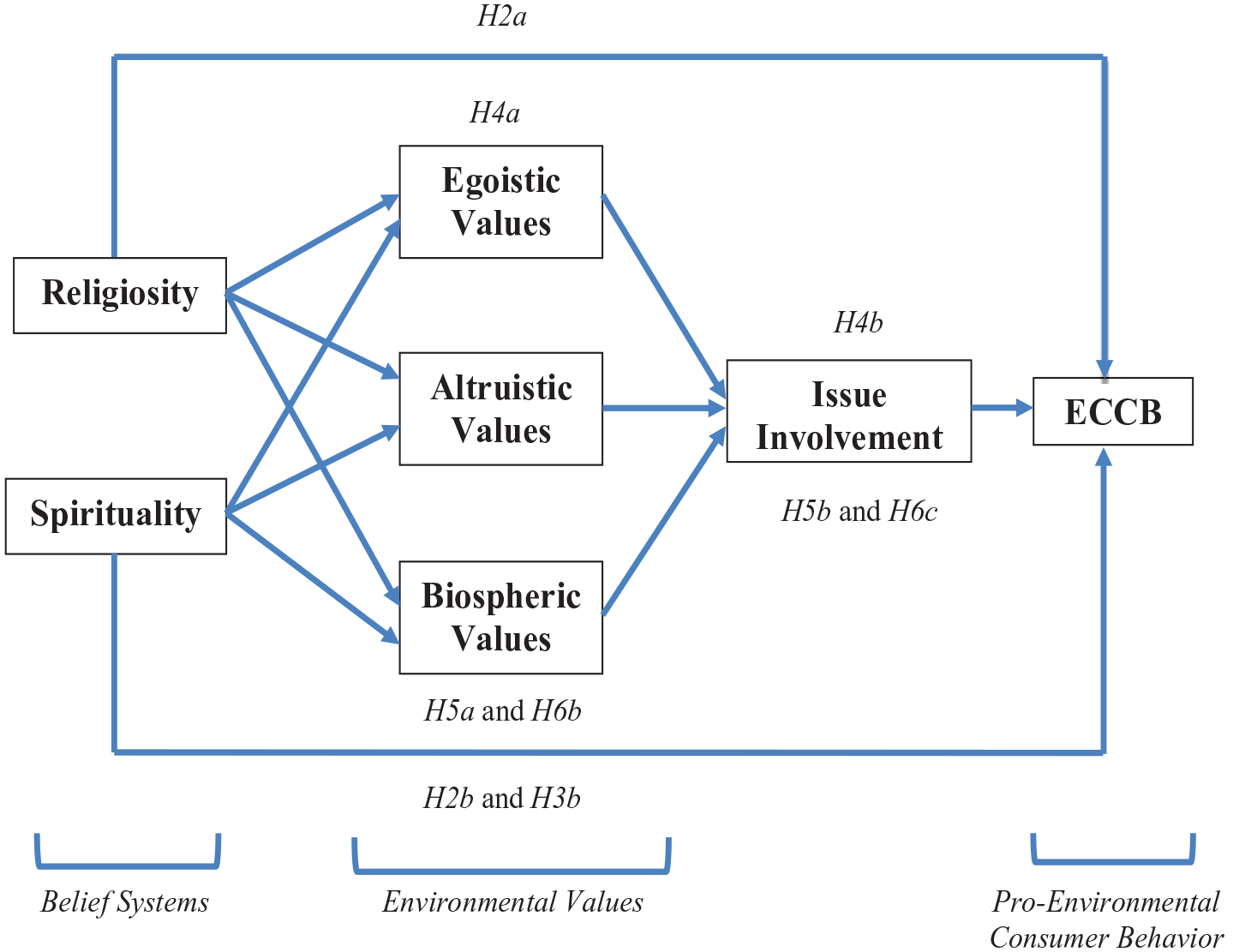
Hypothesized model.
H4a: Christians, environmental values will mediate the relationship between religiosity and issue involvement.
H4b: Christians, issue involvement will mediate the relationship between environmental values and ECCB.
H5a: Christians, environmental values will mediate the relationship between spirituality and issue involvement.
H5b: Christians, issue involvement will mediate the relationship between environmental values and ECCB.
H6a: For the non-religious and atheists, environmental values and issue involvement will not mediate the relationship between religiosity and ECCB.
H6b: For the non-religious and atheists, environmental values will mediate the relationship between spirituality and issue involvement.
H6c: For the non-religious and atheists, issue involvement will mediate the relationship between environmental values and ECCB.
Method
Sample and procedure
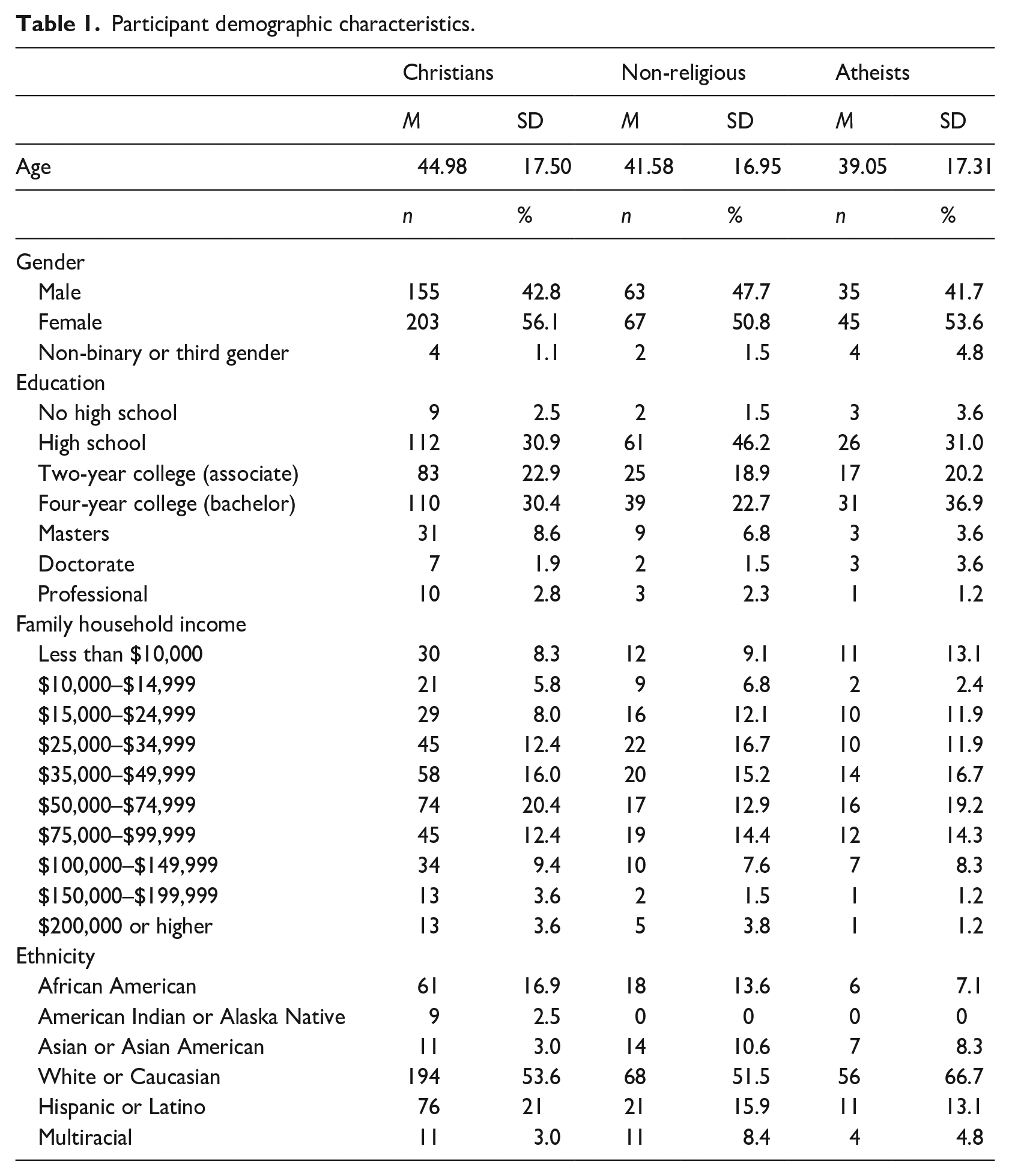
We used Qualtrics, an online panel, to recruit our US sample (N = 578). Respondents first identified their religious affiliation and based on self-identification, we acquired three groups: Christians (n = 362), the non-religious (n = 132), and atheists (n = 84). Those affiliated with a different religion or who self-identified as agnostic were not part of the study. The study was approved by the Institutional Review Board (ref #: 22-017), and after giving informed consent, respondents answered questions regarding their religiosity, spirituality, environmental values (i.e. egoistic, altruistic, and biospheric), issue involvement, and ECCB. Toward the end of the survey, we collected demographic information (see Table 1), and respondents were debriefed and rewarded for their participation.
Participant demographic characteristics.
Measures
Religiosity (Putney & Middleton, 1961), one’s spiritual connection with nature (Delaney, 2005), environmental values (McDougle et al., 2011; Schultz, 2001), and ECCB (Sudbury-Riley & Kohlbacher, 2016) were measured on a 6-point Likert-type scale (1 = “strongly disagree” to 6 = “strongly agree”). Issue involvement with global warming (Mohr et al., 1998) was measured on a 6-point bipolar scale. The scale items are listed in Table 2.
Measurement model assessment.
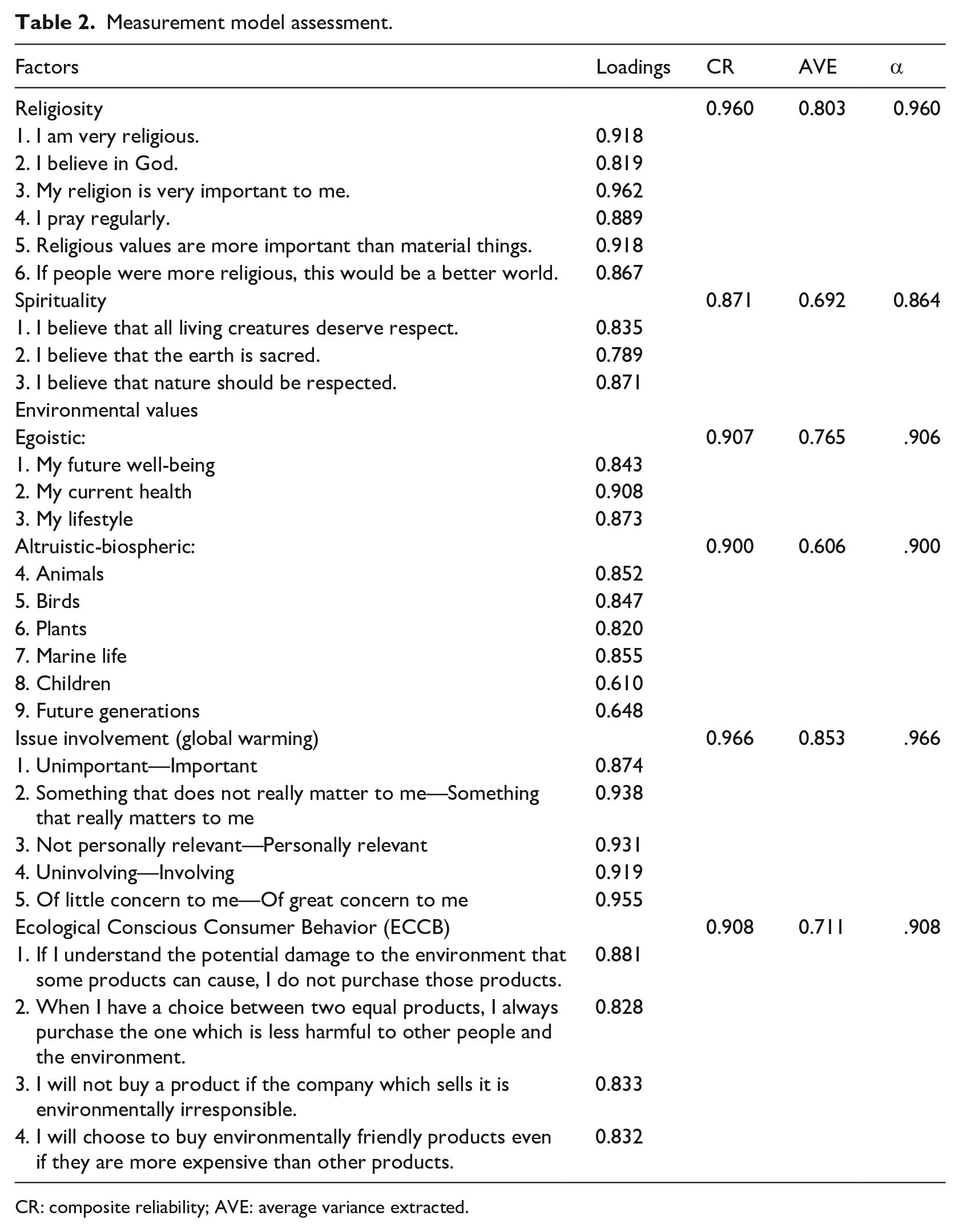
CR: composite reliability; AVE: average variance extracted.
Results
To compare religiosity and spirituality levels in the groups, we conducted a one-way analysis of variance (ANOVA). Significant differences emerged for religiosity (F(2, 575) = 351.45, p < .001). Tukey post hoc findings show that Christians (M = 4.44) were more religious than the non-religious (M = 2.06, p < .001) and atheists (M = 1.17, p < .001). The non-religious were more religious than atheists (p = .001). No differences emerged for spirituality (MChristians = 4.51, MNon-religious = 4.40, MAtheists = 4.60; p > .05).
To examine within-group differences for religiosity and spirituality, we conducted a paired samples t-test. For Christians, no differences emerged between their levels of religiosity (M = 4.44) and spirituality (M = 4.51, p > .05). The non-religious were significantly more spiritual (M = 4.40) than religious (M = 2.06, p < .001). Atheists, as well, were significantly more spiritual (M = 4.60) than religious (M = 1.17, p < .001). Thus, H1a was supported, and H1b was not supported.
Measurement model
We first conducted an exploratory factor analysis (EFA) with varimax rotation, entering all of the scale items for the total sample (N = 578) together. For the spirituality and environmental values scales, we removed some of the cross-loaded items. Altruistic and biospheric values loaded onto a single factor, and egoistic values loaded onto a different factor. Therefore, we merged altruistic and biospheric values into one factor, while egoistic values remained separate. Upon re-running the EFA, we found that the items loaded onto their respective factors.
The perception of altruistic and biospheric values as a single construct among Christians, the non-religious, and atheists, conflicts with past findings by Stern (2000). Nevertheless, similar results have emerged in previous studies (Bardi & Schwartz, 2003; De Groot & Steg, 2008; McDougle et al., 2011). Spiritual (vs religiosity) connections with nature are a common denominator between the three groups, and altruism and biospheric values fall under self-transcendence, an important dimension of spirituality, which supports people and the environment (Piedmont, 2007; Poortinga et al., 2019; Saroglou, 2013). Furthermore, as the scale items suggest, self-transcendence (or altruistic-biospheric tendencies) is not limited to children and future generations but extends to the natural biosphere that includes all forms of plants and animals. Spirituality could be the reason why altruistic and biospheric values were perceived as a single construct by Christians, the non-religious, and atheists.
For confirmatory factor analysis (CFA), we entered all of the scale items derived from the EFA together. All factor loadings were significant (p < .001), and the resulting model for the total sample had a good fit: χ2(309) = 1284, p < .001; Tucker–Lewis index (TLI) = 0.927; comparative fit index (CFI) = 0.936, standardized root mean squared residual (SRMR) = 0.054, root mean square error of approximation (RMSEA) = 0.074 (95% confidence interval (CI) of 0.0697–0.0781) (Hu & Bentler, 1995). The composite reliability (CR) and average variance extracted (AVE) for each factor met the minimum criteria of 0.70 and 0.50, respectively (see Table 2). Harman’s single-factor method was used to assess common method bias (Podsakoff et al., 2003). From the factor analysis, the first factor explained 32.83% of the total variance, suggesting that common method bias was not a problem.
To test the hypotheses, we used Model 80 of the PROCESS macro with a bootstrapping procedure of 5000 samples (Hayes, 2017). Spirituality and religiosity were entered one at a time as independent variables; egoistic values, altruistic-biospheric values, and issue involvement were entered together as mediators, and ECCB was the dependent variable.
Christians
Religiosity had a direct impact on egoistic value (B = 0.19, SE = 0.05, p < .001) and altruistic-biospheric values (B = 0.22, SE = 0.04, p < .001). Altruistic-biospheric values (B = 0.55, SE = 0.07, p < .001) had a direct impact on issue involvement. Religiosity (B = 0.10, SE = 0.04, p < .05), egoistic values (B = 0.18, SE = 0.04, p < .001), and issue involvement (B = 0.55, SE = 0.03, p < .001) had a direct impact on ECCB. Egoistic values mediated the relationship between religiosity and ECCB (B = 0.03, SE = 0.01, 95% CI = 0.0092–0.0711), and altruistic-biospheric values and issue involvement (B = 0.06, SE = 0.01, 95% CI = 0.0338–0.1119) mediated the relationship between religiosity and ECCB.
Spirituality had a direct impact on egoistic values (B = 0.34, SE = 0.06, p < .001) and altruistic-biospheric values (B = 0.50, SE = 0.05, p < .001). Spirituality (B = 0.35, SE = 0.06, p < .001) and altruistic-biospheric values (B = 0.37, SE = 0.07, p < .001) had a direct impact on issue involvement. Spirituality (B = 0.25, SE = 0.05, p < .001), egoistic values (B = 0.20, SE = 0.04, p < .01), and issue involvement (B = 0.49, SE = 0.03, p < .001) had a direct impact on ECCB. Egoistic values (B = 0.06, SE = 0.02, 95% CI = 0.0284–0.1245) and issue involvement (B = 0.17, SE = 0.04, 95% CI = 0.0838–0.2756) mediated the relationship between spirituality and ECCB. Altruistic-biospheric values and issue involvement (B = 0.09, SE = 0.02, 95% CI = 0.0482–0.1540) mediated the relationship between spirituality and ECCB.
Thus, H2a and H2b were supported, and H4a, H4b, H5a, and H5b were partially supported.
Non-religious
Religiosity had no significant impact on values or issue involvement (p > .05). Religiosity (B = 0.17, SE = 0.06, p < .05) had a direct impact on ECCB. No mediating effects emerged. Spirituality had a direct impact on egoistic values (B = 0.60, SE = 0.08, p < .001) and altruistic-biospheric values (B = 0.60, SE = 0.07, p < .001). Spirituality (B = 0.46, SE = 0.09, p < .001) and egoistic values (B = 0.23, SE = 0.08, p < .01) had a direct impact on issue involvement. Spirituality (B = 0.25, SE = 0.09, p < .01) and issue involvement (B = 0.43, SE = 0.07, p < .001) had a direct impact on ECCB. Issue involvement (B = 0.19, SE = 0.06, 95% CI = 0.0821–0.3234) mediated the impact of spirituality on ECCB. Egoistic values and issue involvement (B = 0.06, SE = 0.02, 95% CI = 0.0097–0.1167) mediated the relationship between spirituality and ECCB.
Atheists
Religiosity had no significant impact on values, issue involvement, or ECCB. No mediating effects emerged.
Spirituality had a direct impact on altruistic-biospheric values (B = 0.62, SE = 0.08, p < .001) and egoistic values (B = 0.25, SE = 0.11, p < .05). Spirituality (B = 0.42, SE = 0.12, p < .01) and altruistic-biospheric values (B = 0.27, SE = 0.13, p = .49) had a direct impact on issue involvement. Spirituality (B = 0.32, SE = 0.13, p < .05) and issue involvement (B = 0.40, SE = 0.10, p < .01) had a direct impact on ECCB. Issue involvement (B = 0.17, SE = 0.08, 95% CI = 0.0297–0.3767) mediated the relationship between spirituality and ECCB. Thus, H3a, H6b, and H6c were partially supported, while H3b and H6a were supported.
Discussion
With environmental challenges increasing, exploring the different facets of consumer psychology that motivate ECCB is worthwhile. Borrowing from value theory (Schwartz, 1992) and the value-belief-norm model (Stern et al., 1993), we proposed a model for testing the direct impact of religious and spiritual belief systems on ECCB and analyzed the mediating effects of environmental values and issue involvement among Christians, the non-religious, and atheists.
Religiosity and ECCB
For Christians, as expected, religiosity had a direct impact on ECCB and indirectly influenced ECCB through egoistic values. While religious people are often inclined to help others (altruistic values), religion also plays a crucial role in molding one’s self-concept. This heightened focus on the self can result in self-enhancement tendencies (Kwan et al., 2011). The self-concept is central to Christianity, and previous findings show that Christians actually seek to self-enhance more than the non-religious (Sedikides & Gebauer, 2021), particularly when maintaining a favorable self-view of a “good Christian” is important (Zell et al., 2020). Therefore, in this study, Christians might have perceived environmental issues (e.g. global warming) as influencing objects that are valuable to the “religious self” (e.g. lifestyle, current health, and future well-being) more than to helping others. When a discrepancy between the desired self-view and actual self-view arises, the resulting dissonance can motivate preventive action (Higgins, 1987). Preserving their self-concept by promoting egoistic values might have helped religious Christians to continue perceiving themselves and appearing to others as “good Christians.” This emphasis of preserving a favorable religious self-view might help explain the bypass of issue involvement to directly influence ECCB.
Altruistic-biospheric values and issue involvement played a mediating role between religiosity and ECCB. Scholars have found that religiosity heightens environmental concern and pro-environmental behavior (Chung et al., 2019; Hwang, 2018). We clarified conflicting findings (Eom et al., 2021; Lee et al., 2016) by showing that the relationship between religiosity and pro-environmental behavior depends on mediating variables such as environmental values and issue involvement. Altruism is also an important facet of religion, and environmental stewardship strongly relates to religiosity (Blogowska & Saroglou, 2011). Regarding the dominion versus stewardship debate (Leary et al., 2016; Preston & Baimel, 2021), the current findings indicate that Christians strongly supported the stewardship view of nature. One reason might be that religious institutions have started to play a more active role in disseminating the importance of protecting the environment during gatherings and sermons (Koehrsen, 2015). Therefore, highlighting how global warming can pose a threat to children and animals (i.e. sacred creations of God) might elicit altruistic-biospheric values among Christians, heightening issue involvement and motivating ECCB.
Among non-religious Americans, religiosity was found to have a weak impact on ECCB, while no other direct or indirect effects emerged. Being categorized as non-religious means the individual is not affiliated with any religion; however, the non-religious still sometimes follow religious beliefs and practices (Pew Research Center, 2019). On looking at our sample and responses to the religiosity scale items (e.g. I am very religious; My religion is important to me), the means for all questions on the 6-point scale were below 2.1, except on the question “I believe in God” (M = 3.06). This result might explain why religiosity influenced ECCB. We can infer that our non-religious sample might not have perceived God ontologically but might have had a moderate degree of belief in some form of higher power. Future research could test this idea by replacing “God” with another term such as “Jesus.”
Spirituality and ECCB
For Christians, spirituality had a direct impact on ECCB, while issue involvement mediated the effect of spirituality on ECCB. This finding shows that despite being distinct, religiosity and spirituality can exist within the same individual and that a spiritual connection with nature among Christians can increase involvement with environmental issues and motivate ECCB. Similar to religiosity, egoistic values mediated the relationship between spirituality and ECCB, and altruistic-biospheric values and issue involvement acted as mediators. Spirituality, like religiosity, consists of both egoistic and altruistic dimensions. From an egoistic perspective, previous findings indicate that spirituality, as the pursuit of finding the meaning and purpose of life (Antony, 2014), is a “transcendent dimension within human experience . . . discovered in moments in which the individual questions the meaning of personal existence and attempts to place the self within a broader ontological context” (Shafranske & Gorsuch, 1984, p. 231). The self holds a central position in spirituality, and the strong association between Christian spirituality and egoistic values could mean that when an environmental issue threatens the pursuit of spiritual transcendence, ECCB might result.
The impact of Christian spirituality on ECCB through altruistic-biospheric values lends support to previous findings that connecting with nature is important for the growth of Christian spirituality (e.g. Bobilya et al., 2009; Livengood, 2009). The current findings show that a positive relationship with nature can prompt pro-environmental consumer behavior. From an altruistic-biospheric perspective, universalism is an important aspect of spirituality, enabling connections among self, others, and the natural environment (Piedmont, 2007; Saroglou, 2013). Christian spirituality has a strong ontological dimension and relates to following the teachings of Jesus Christ (Sheldrake, 2016). In terms of the environment, nature is God’s creation, and God speaks to humanity through nature and vice versa (Duke, 2020; Heintzman, 2010). Therefore, preserving nature is a way for Christians to follow the teachings of Christ and spiritually realize God. This congruency might explain why spirituality is strongly related to altruistic-biospheric values, further increasing involvement and motivating ECCB. Overall, these findings show that Christian spirituality predicted ECCB.
For the non-religious, spirituality positively influenced ECCB through egoistic values and issue involvement. Previous findings also show that the non-religious were concerned for the environment and followed sustainable practices (Greeley, 1993; Leary et al., 2016; Morrison et al., 2015). The lack of any mediating effect of altruistic-biospheric values suggests two possibilities. First, not being affiliated with a religion means an absence of a religious community, and previous findings show that the religious have a larger social network than the non-religious (Ellison & George, 1994). Second, due to their lack of religious beliefs and practices, the non-religious are significantly marginalized in American society (Cragun et al., 2012). These factors might have heightened egoistic values of self-preservation, making the non-religious more likely to place importance on quality of life through maintenance of the environment. Development of the self is a core component of spirituality, and the non-religious are inclined to save the environment for reasons that stem from a strong self-focus. This finding contributes to the literature by showing that spirituality is an important belief system that motivates ECCB among the non-religious and that egoistic values and issue involvement are important mediators.
Finally, for atheists, only spirituality had a direct impact on ECCB. This finding indicates that spirituality aligns with atheistic beliefs and highlights their deep spiritual connection with nature. For example, atheists used spiritual experiences with nature to alleviate stress and anxiety (Preston & Shin, 2017). Previous findings indicate that atheists already have an existing high environmental concern (Greeley, 1993) and tend to be more environmentally conscious than people with low religiosity (Minton et al., 2015). This tendency could explain the mediating effect of issue involvement. Atheistic spirituality did have an impact on altruistic-biospheric and egoistic values, but the effects were not strong enough to carry over to ECCB. This finding suggests that environmental values do not factor into their decision-making process, and the direct impact of spirituality on ECCB could stem from their belief in science, motivating them to protect the environment for logical reasons (Minton et al., 2015; Uzarevic & Coleman, 2021). That is, their scientific outlook might gear them to focus only on the problem at hand (e.g. global warming) and the possible solutions (ECCB).
These findings also have notable implications for both environmental policymakers and effective green messaging. The findings can be used to segment messages more effectively by religious affiliation (or lack of). If focusing on Christians, policymakers or marketers can use religiosity or spirituality. When crafting messages, organizations should highlight the protection of egoistic values through ECCB; however, if the goal is to increase environmental involvement, then highlighting altruistic-biospheric values is preferable. To increase involvement for non-religious individuals, marketers should highlight spirituality (vs religiosity) and convey how egoistic values (e.g. well-being and health) align with ECCB. For atheists, highlighting their spiritual connection with nature would suffice to increase their environmental involvement and ECCB. Because atheists emphasize rational and logical thinking, the messaging should also focus on environmental solutions based on ECCB. Overall, spirituality (vs religiosity) was important to all three groups, so standardized campaigns targeting Christians, the non-religious, and atheists might also be fruitful.
Limitations and future research
Despite its major contributions, this study has limitations. First, we focused on a single country (United States) and a single religion (Christianity). In future studies, scholars could use the model to compare other countries and other world religions (e.g. Western vs Eastern). Second, the non-believers in our sample were the non-religious and atheists, so scholars should consider including agnostics as a separate group. Third, apart from self-identification, scholars could include a scale to capture beliefs associated with atheism (Bradley et al., 2018). Fourth, considering that the population of non-believers is growing around the world, scholars can replicate this study in other countries to understand the impact that spirituality has on environmental values, issue involvement, and ECCB in various locations and cultures. Fifth, following the value-belief-norm model (Stern, 2000), scholars could integrate pro-environmental personal norms (i.e. sense of moral obligation) between issue involvement and ECCB and re-run the model. It would be useful to also consider religion as influencing environmental outcomes through interactions with other sociodemographic antecedents of behavior, that is, race, age, sex, education, income, political affiliation, and environmental threats (Michaels et al., 2021). Finally, we used intrinsic religiosity in the model, so scholars should consider, as a third independent variable, extrinsic religiosity, where religious values are instrumental to achieving extrinsic benefits, such as meeting new people and boosting self-esteem (Allport & Ross, 1967).
Conclusion
Consumers can play a crucial role in mitigating mounting environmental issues such as global warming and climate change through their pro-environmental actions. We found that, depending on religious affiliation (or lack of), religiosity and spirituality can elicit relevant values that, in turn, increase involvement and motivate pro-environmental consumer behavior. Green marketers and policymakers who act for social change can use these findings to encourage and educate consumers to become more involved with environmental issues by initiating educational programs and distributing messages via media channels, leaning on the belief systems and value orientations of consumers.
Footnotes
Data Availability Statement
The data that support the findings of this study are available from the corresponding author upon reasonable request.
Funding
The author(s) disclosed receipt of the following financial support for the research, authorship, and/or publication of this article: We are grateful to have received funding from the following sources to help undertake this research: the Meadows School of the Arts and the Temerlin Advertising Institute at Southern Methodist University and the Sam Taylor Fellowship.
