




Abstract
On the occasion of 30 years of South African democracy, we reflect on the current state of Psychology research in South Africa. We conducted a situational analysis of all papers appearing in the South African Journal of Psychology (SAJP) and abstracts in PsycINFO with the keyword ‘South Africa’ over the last 5 years and compared the results with a previous review that used the same methodology. Findings show an increase in papers using ‘hard’ science approaches and a decrease in systems-oriented theories. Assessment remains a major topic. While COVID-19 and climate change featured, there remains a lack of or low focus on several key psycho-social issues experienced by South Africans. People living in poorer provinces and young and older people are under-represented in knowledge production. Collaborations or comparisons with other African or South American countries have decreased. Positively, production is being spearheaded by South African scholars or people affiliated with South African institutions. Using a decolonising lens that foregrounds epistemic justice, we conclude that substantial work remains to be done for knowledge production in South African Psychology to fulfil the decolonising imperative of distributive epistemic justice.
Keywords
Thirty years after the dawn of democracy in South Africa, which coincides with the 30th anniversary of the Psychological Society of South Africa (PsySSA), is a fitting point at which to pose the questions addressed in this paper: What kinds of knowledge are being produced in South African Psychology research? How does this knowledge address psycho-social issues within South Africa? In this paper, we replicate the methodology used by Macleod and Howell (2013) [and by Macleod (2004)]. Doing so enabled us to compare knowledge production in the 5 years 2007 to 2012 with knowledge production in the 5 years 2019 to 2023. We tracked changes over time in the topics, methodologies, locations, participants, and collaborations underpinning knowledge production in South African Psychology.
Macleod (2004) and Macleod and Howell (2013) reflected on South African Psychology knowledge production in the early 2000s and around the 2010s, respectively. At the time, they framed their analysis within the ongoing debates about the ‘relevance’ of Psychology in the South African context. The vicissitudes of the ‘relevance’ debate are captured in depth by Wahbie Long (2016). Importantly, in the context of this paper, Long argues that the persistence of questions of relevance (which started in the 1980s) derives, in part, from Psychology’s ‘reliance on a socially disinterested science to underwrite its knowledge claims, and its consequent failure to address itself to the needs of a rapidly changing world’ (p. 1). This claim is supported by Macleod’s and Howell’s (2013) finding that South African Psychology research failed, at the time, to address several important psycho-social issues, including unemployment and poverty, development programmes, land reform, water resource utilisation and management, housing and sanitation, public sector and institutional transformation, health and mental health systems, general health, ecological concerns and climate change.
Our current analysis occurs at a time when there has been significant reflection on knowledge production in higher education and elsewhere in the last decade. Since the 2013 paper, the student protests of 2015 and 2016 highlighted the urgent need to #decolonisethecurriculum (Meda, 2020; Senekal, 2020). This clarion call is reflected in a number of South African Psychology scholars editing special issues or authoring papers debating the meanings and implications of decolonisation (e.g., Barnes & Siswana, 2018; Boonzaier et al., 2019; Kessi & Boonzaier, 2018; Macleod et al., 2020; Pillay, 2017; Ratele et al., 2018; Seedat & Suffla, 2017), as well as the establishment of a Division of Decolonial Psychology within the Psychological Society of South Africa (PsySSA). Whether and how these debates dovetail with an African-centred psychology has also received attention (Canham et al., 2021; Malherbe & Ratele, 2022; Nwoye, 2017; Ratele, 2017).
These debates are nuanced and complex. For the purposes of this paper, we follow Reddy et al. (2021) in understanding decoloniality within the framework of epistemic justice. These authors draw attention to ‘inequalities and unjust practices in our field, such as the exclusion and silencing of researchers and researched from marginalised groups . . . and hegemony of Western knowledge production, ethics, and methodological standards’ (Reddy et al., 2021, p. 10). Further refining the notion of epistemic justice, we draw on Crawford et al.’s (2021) work on decolonising knowledge production in Africa and Kurtulmus and Irzik’s (2021) definition of primary distributive epistemic justice.
Crawford et al. (2021) argue that attention must be paid to both who are producing knowledge and what knowledge is being produced. In relation to the former, they highlight the importance of undermining asymmetrical power relations between scholars in the Global North and South in research activities and in leading journals. These power relations, grounded neo-colonialism, neo-liberalism, capitalism and managerialism, create what Ndlovu-Gatsheni (2020) refers to as a cognitive empire. In relation to the latter, Crawford et al. (2021) advocate for a shift to developing ‘‘ecologies of knowledge’ or ‘epistemologies of the South’ to (re)discover alternative ways of understanding the world, notably through listening to excluded and marginalised voices’ (Crawford et al., 2021, p. 41–42). Taking this further, Kurtulmus and Irzik (2021) argue that primary distributive epistemic justice ‘is concerned with the knowledge ordinary citizens need. It requires that science produce reliable research that meets knowledge needs of all groups in a society regardless of their race, ethnicity, class, religion, and gender’ (Kurtulmus & Irzik, 2021, p. 7).
These understandings are reflected in the questions we posed of our data in this paper: What kinds of knowledge are being generated in published research in South African Psychology? Who is producing knowledge? How does this knowledge production promote or hinder primary distributive epistemic justice? To answer these questions, we analysed the following: types of articles being written, topics covered, theoretical resources utilised, about whom knowledge is being generated, who is publishing and with whom they are collaborating.
Other than Macleod (2004) and Macleod and Howell (2013), there are a number of recent papers reflecting on South African psychological research. Scholtz et al. (2021) reviewed of South African Journal of Psychology (SAJP) papers from 2013 to 2017. They found that Social Psychology 1 papers dominated, and that quantitative research accounted for 47% of papers and qualitative 30% of papers. They take issue with SAJP authors not providing sufficient detail on research design and data collection, and the overuse of convenience samples, which can skew knowledge production in line with researchers’ geospatial and socio-economic location (which inevitably, as shown in our results below, results in research being conducted in resourced provinces). Haine et al. (2023) reviewed the literature on counselling psychology in South Africa from 2000 to 2021, using multiple databases to surface the papers. They argue that this literature is sparse, and subject to methodological limitations, with a small number of authors conducting multiple analyses on the same datasets. Graham (2021) examined community psychology papers appearing in SAJP and Psychology in Society (PINS) between 2000 and 2009. She found a relatively low proportion of papers were dedicated to community psychology (8.5%), as well as a decline in community psychology scholarship in PINS. Compared to psychology papers appearing in the same time period, she noted that community psychology papers: relied less on positivist epistemology; concentrated more on ‘marginalised’ groups (centred on race, gender and location, but less so on sexual orientation, disability, migration status, HIV status and age); and tended to be concentrated in the Western Cape. Kiguwa and Langa (2011) also analysed SAJP and PINS, but in relation to how papers tackle gendered subjectivity in the years 1994–2009. They conclude that gender research in psychology, as reflected in these journals in that period, is quite sparse and ‘very often far from reflective about its own theoretical and paradigmatic positioning and representation of many of the social and political aspects of individual subjectivity’ (p. 265).
Methodology
The data were collected using the same criteria for data collection as Macleod (2004) and Macleod and Howell (2013): (a) all articles published in the SAJP from a 5-year period (2019 to 2023), and (b) all abstracts appearing under the key words ‘South Africa’ in PsycINFO in the peer-reviewed journal section for the same period. SAJP (n.d.) publishes empirical, theoretical and review articles on all aspects of psychology and, as such, provides a good forum for in-depth analysis of full-length articles. PsycINFO is billed as the ‘largest resource devoted to peer-reviewed literature in behavioral science and mental health’ (EBSCO, n.d., non-paginated). The abstracts retrieved from PsycINFO provide a broader, albeit less in-depth, brushstroke of published psychological research on South Africa. Our analysis is limited by its exclusion of books, monographs, research reports, and theses. As such, this paper only reflects research featuring in articles that have undergone a peer review process.
Two hundred and sixty-five (265) articles appeared in the SAJP in the period specified, while 2301 appeared in PsycINFO. Some articles and abstracts were excluded from the analysis on the following grounds: highly irrelevant (South Africa is mentioned but not discussed); obituaries; articles or abstracts that were medical, legal, biological, or zoological in focus, or about Social Work as a profession. With these exclusions, the analysis was conducted on 177 SAJP articles and 973 PsycINFO abstracts.
Data were analysed using summative content analysis (Hsieh & Shannon, 2005). Deductive coding used the categories outlined by Macleod and Howell (2013), with inductive coding being used for topics. The second and third authors conducted the coding, with the first author doing spot checks. Where there were discrepancies, the data were re-coded until there was complete agreement. Where there were disagreements, the first author was consulted. Articles from SAJP and abstracts from PsycINFO were coded into the categories used by Macleod and Howell (2013):
Type of article:
Empirical quantitative: articles that presented data from research and that utilised quantitative methodology; Empirical qualitative: articles that presented data from research and that used qualitative methodology; Empirical mixed quantitative and qualitative: articles that presented data from research and that used both quantitative and qualitative methodologies; Theoretical: articles that did not present data but rather engaged in theoretical discussion; Review: articles that reviewed other research (full-length article book reviews; systematic reviews; reviews of literature, theory, policy and legislation, description of an intervention); Comment: articles that commented on a particular issue or debate or replied/commented to/on another article; Methodological: articles that engaged in discussion about a specific methodology.
Theoretical resources: ‘Hard’ science frameworks (positivist, psychometric, neuropsychology, psychiatric, evolutionary psychology) Individual-focused theory (e.g., attitude, identity, personality, wellness, moral development, risk/resilience) Systems-orientated theory (e.g., socio-ecological, cultural, community, health systems, organisational) Classic theories (existentialism, phenomenology, psychodynamic, hermeneutic, cognitive behavioural) ‘Postmodern’ frameworks (social constructionism, poststructuralism, postcolonialism).
Dominant topic (categorised according to the research questions and emerging from the data)
Province in which the research (with participants) was conducted.
Demographics of the participants: Location: urban only (including township and informal settlements); rural only (including commercial farms and former homeland rural areas); mixture; unclear; Class as stated by authors of article: middle-class only; working class or poor only; mixture; unclear; Age of participants: preschool children; primary school age children; teenagers; children in general (across the latter age ranges or unspecified); early adulthood; middle adulthood; late adulthood; adults in general (across the age ranges or unspecified); mixed adults and children (ages included in the various categories differed somewhat across studies – we used the language used by the researchers [e.g., young adults] to guide our categorisation); Sources of data: universities; hospitals/clinics; schools; documents (newspapers, hearings, records); organisations in the private sector; household survey; specified sampling; postal survey; government department; convenience; South African data archives; clubs; child care institutions; non-governmental organisations; adverts; referrals; multiple; not clear.
Author affiliation: traditional universities (University of Cape Town, University of the Free State, University of KwaZulu/Natal, University of Limpopo, North West University, University of Mpumalanga, University of Pretoria, Rhodes University, Sol Plaatje University, University of the Western Cape, University of the Witwatersrand); comprehensive universities (University of Johannesburg, University of Zululand, Nelson Mandela Metropolitan University, University of South Africa, Walter Sisulu University); research councils (e.g., Human Sciences Research Council); universities outside South Africa; other (e.g., hospitals, clinic);
Country of collaborators: the number of studies in which there was either collaboration with researchers in another country or where a relevant comparison was made with results from elsewhere is indicated (SAJP); and
Country of origin of author (PsycINFO)
It must be stated at the outset that the studies forming the data used for this analysis are not generated by psychologists only. Researchers from other disciplines publish on occasion in the SAJP, and PsycINFO accesses articles from a range of journals that may be of interest to Psychology researchers. Nevertheless, when used together, the two sources of data give a reasonable picture of the current status of psychological and Psychology-related research.
Results
Types, theoretical resources, and topics
Table 1 presents the types of articles appearing in SAJP and PsycINFO. Across both platforms, there has been a substantial increase in the percentage of papers reporting on empirical research (from 61.1% to 72.8% in SAJP; from 71.6% to 95.7% in PsycINFO). Correspondingly, the percentage of reflective pieces (theoretical or methodological papers, reviews, commentaries) has decreased (38.9% to 27.2% in SAJP and 28.4% to 4.3% in PsycINFO).
Types of articles.
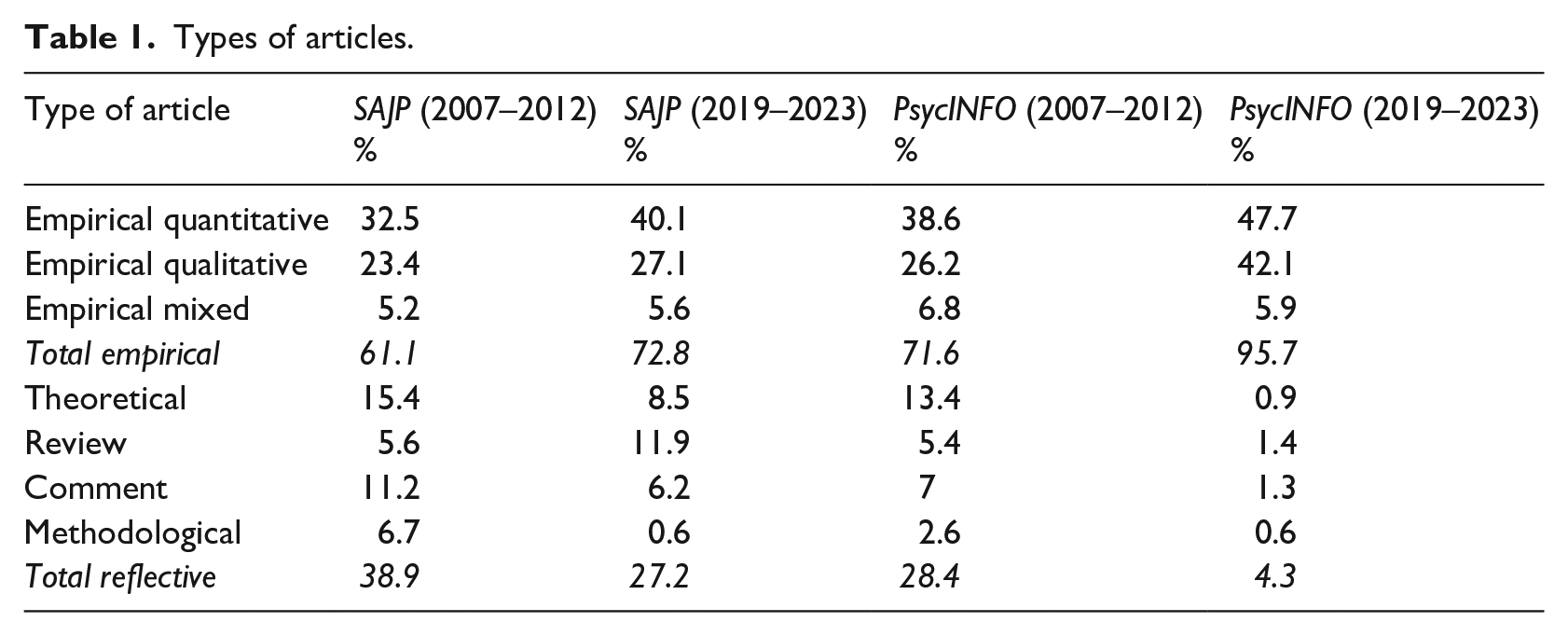
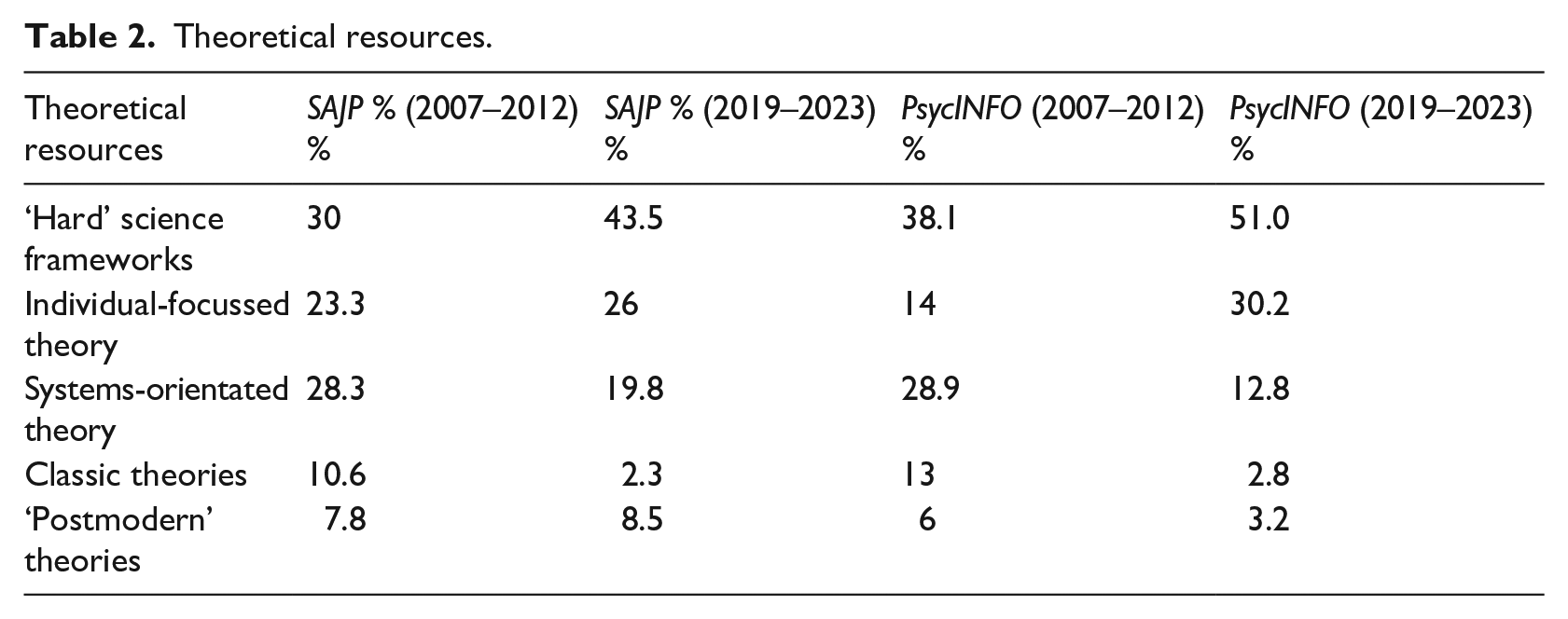
Table 2 – theoretical resources – shows that, across the two platforms, there has been an increase in the use of ‘hard’ science and individual-focussed frameworks and a decrease in systems oriented, and classic theory approaches.
Theoretical resources.
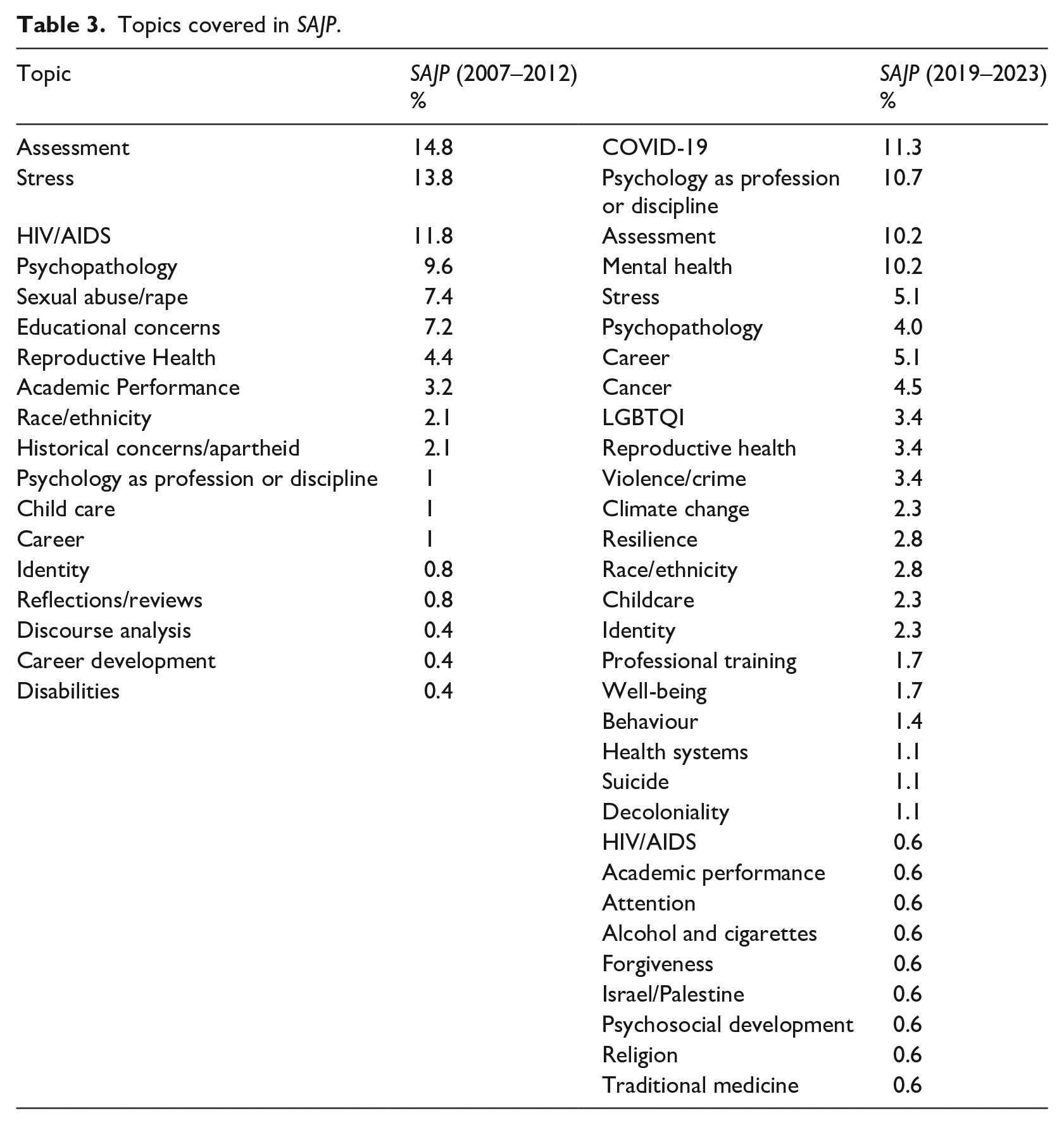
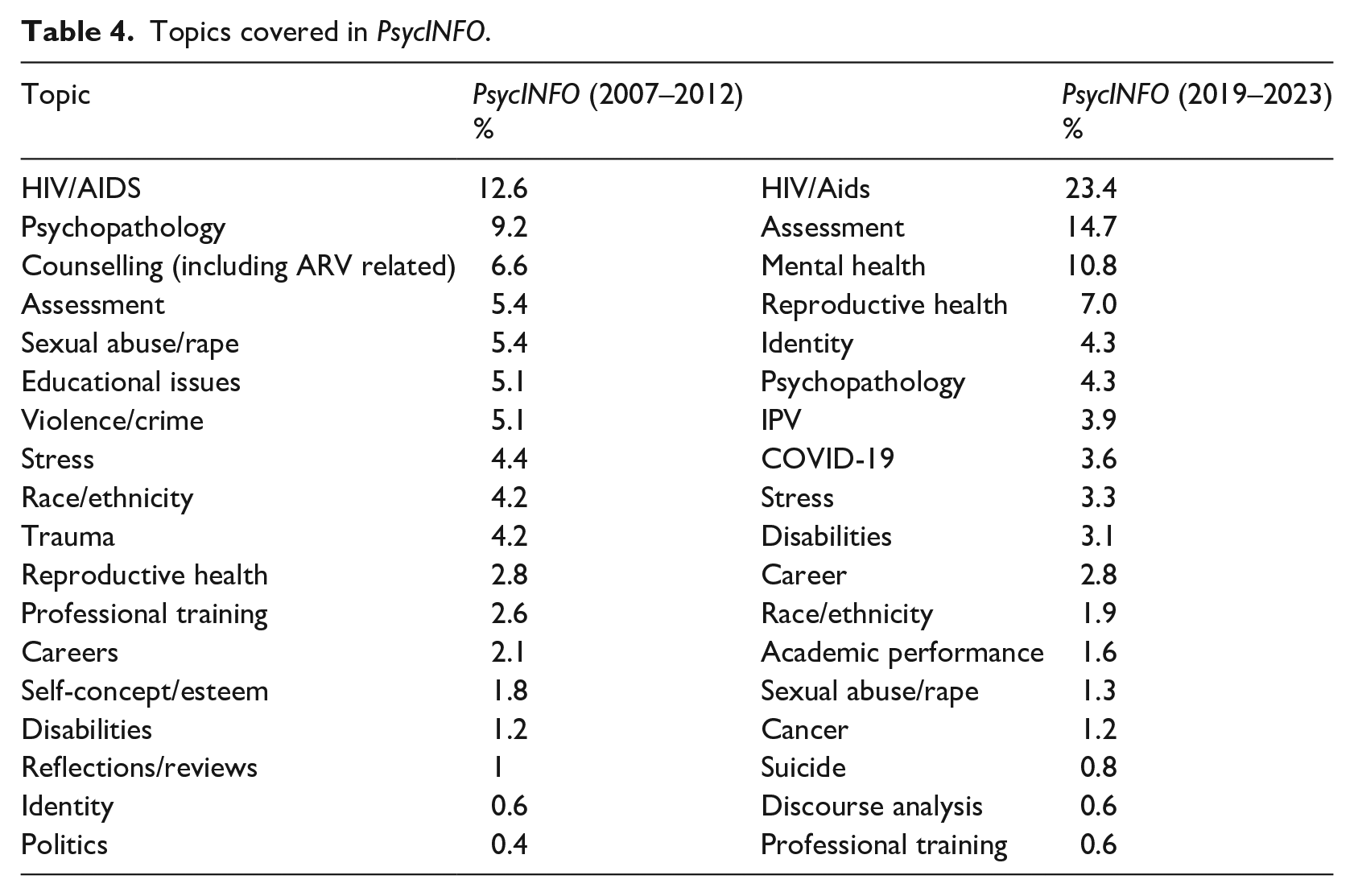
Tables 3 and 4 outline the most prominent topics in SAJP and PsycINFO, respectively. Assessment remains one of the most researched topics in SAJP (also in Macleod (2004)) and has increased from fourth most researched to second most researched in PsycINFO. While HIV/AIDS decreased from 11.8% to 0.6% of papers in SAJP, it remains the most researched topic in PsycINFO. Psychopathology has received less attention across both platforms. The new topics appearing in SAJP are of interest. COVID-19 represents a new topic and was the most researched or reported upon topic in SAJP in this round of analysis. Climate change was addressed in a special issue. Various social issues, such as the the situation caused by the Israeli occupation of Palestine, health systems, decoloniality, and forgiveness appear for the first time.
Topics covered in SAJP.
Topics covered in PsycINFO.
The ‘whom’ of knowledge production
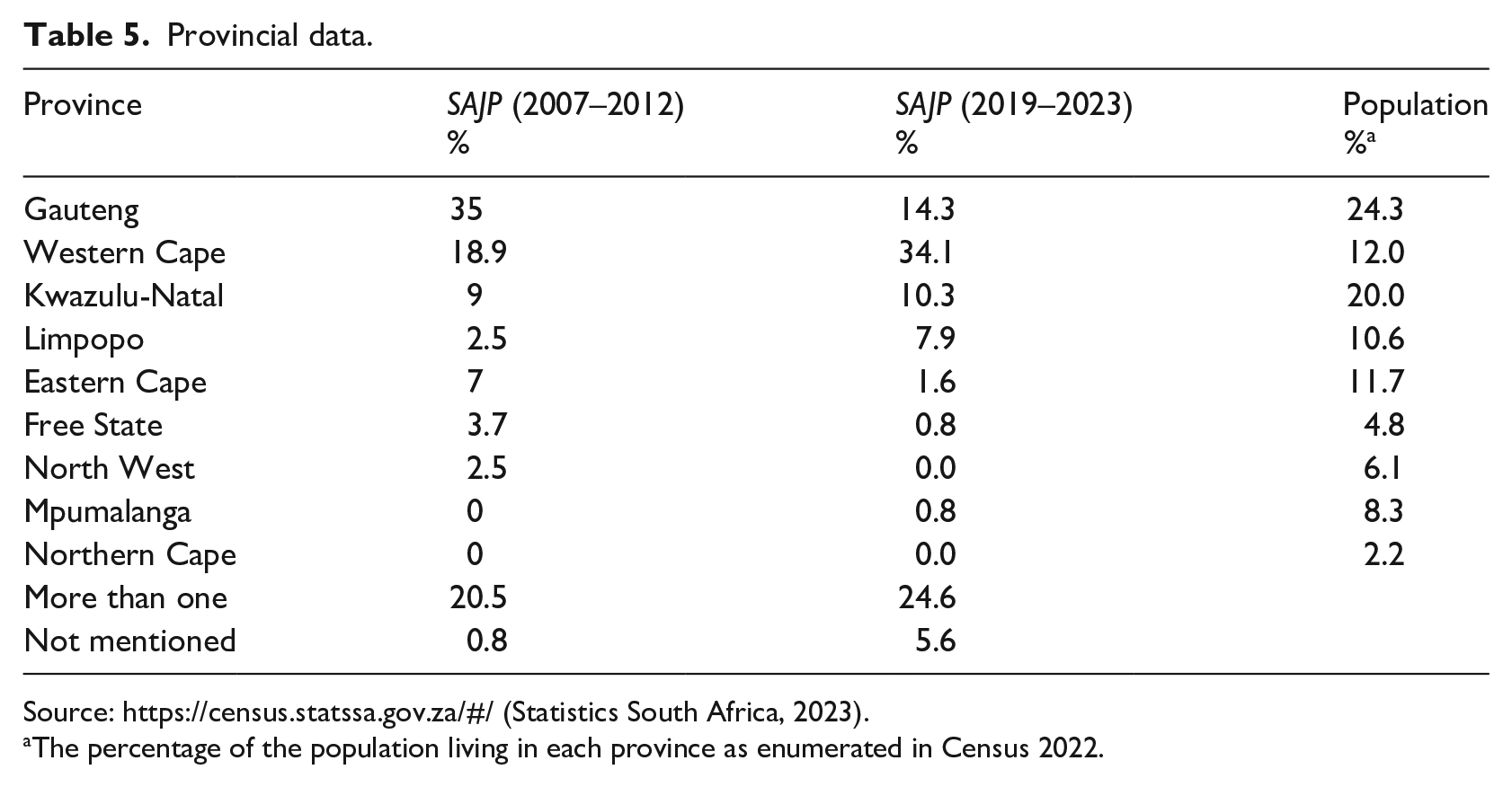
Table 5 outlines the provinces within which empirical studies in SAJP were conducted. Gauteng and the Western Cape continue to dominate as sites of knowledge production, albeit with a relative increase in studies conducted in the Western Cape and a decrease in those conducted in Gauteng. There has been an increase in the percentage of publications reporting on studies conducted in Limpopo but a decrease in those reporting on studies conducted in the Eastern Cape. Cross-provincial studies have increased, but some provinces – North-West, Northern Cape and Mpumalanga – continue to be under-represented in knowledge production featuring in the SAJP.
Provincial data.
The percentage of the population living in each province as enumerated in Census 2022.
In Macleod and Howell’s study (2013), we noted that most knowledge production featuring in SAJP emanated from urban areas and that middle-class people were over-represented. This has now changed. As indicated in Table 6, studies concentrating on urban-only populations decreased from 69% to 29.4%, and those concentrating only on middle-class populations decreased from 48.2% to 6.3%.
Pertinent demographics.
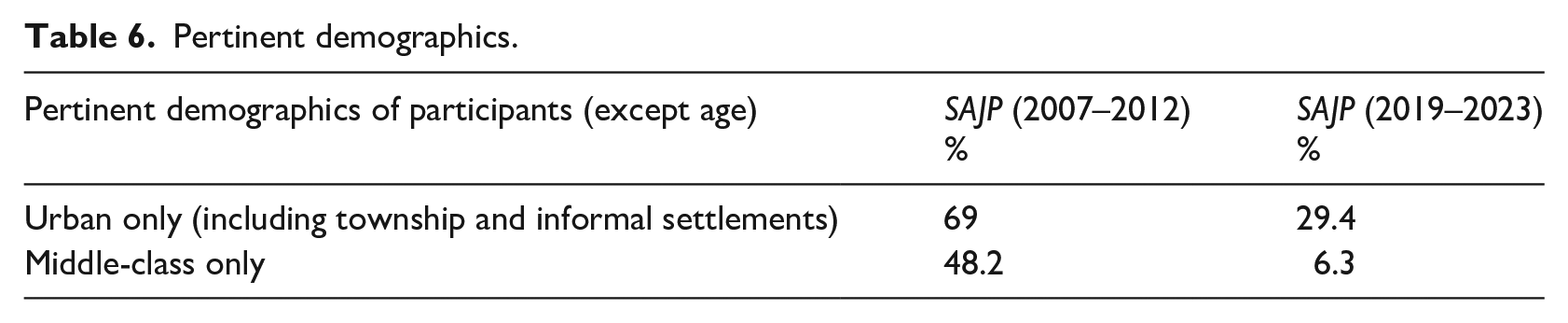
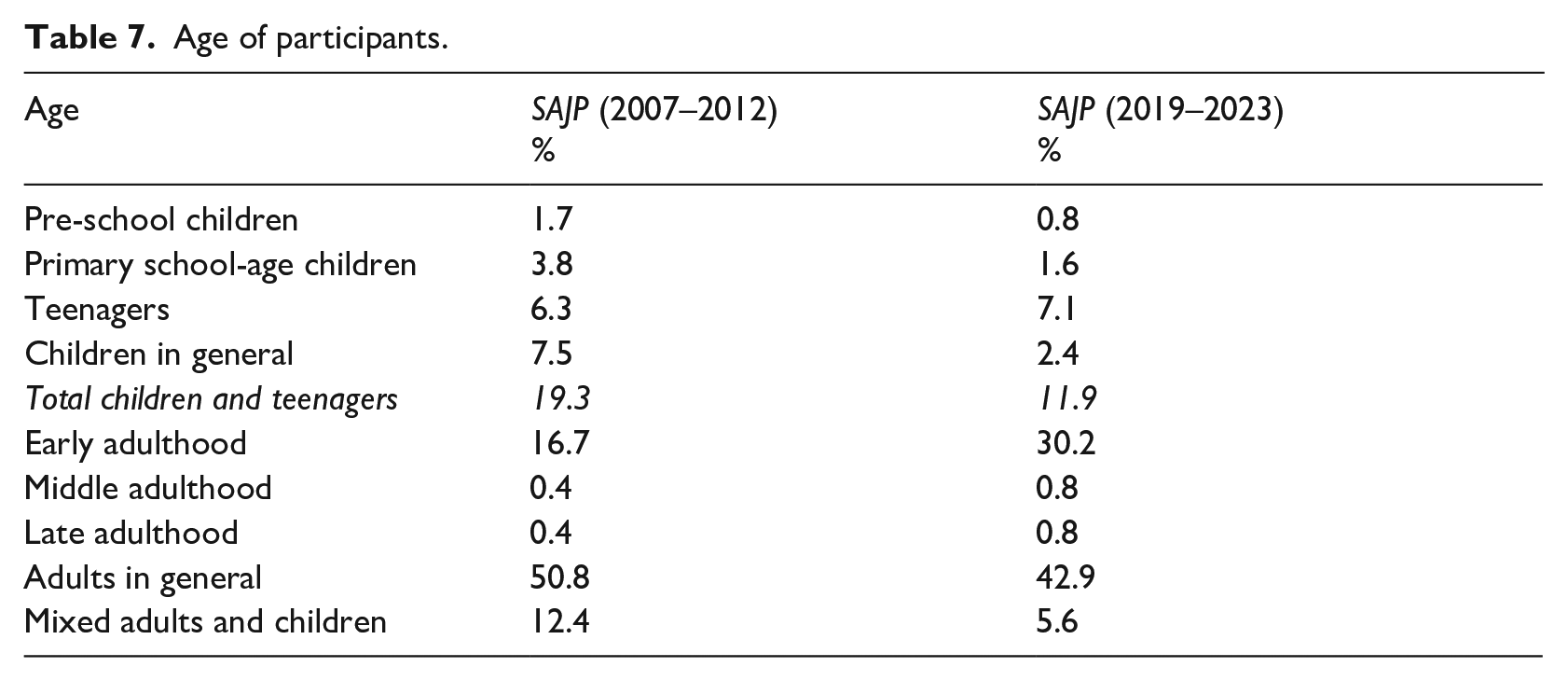
Table 7 outlines the age of participants in empirical studies featured in SAJP. Overall, there has been a decrease in studies concentrating on children and teenagers (19.3% to 11.9%) or on adults and children (12.4%–5.6%). There has been a slight increase in studies conducted on people 65+ years old (from 0.4% to 0.8%).
Age of participants.
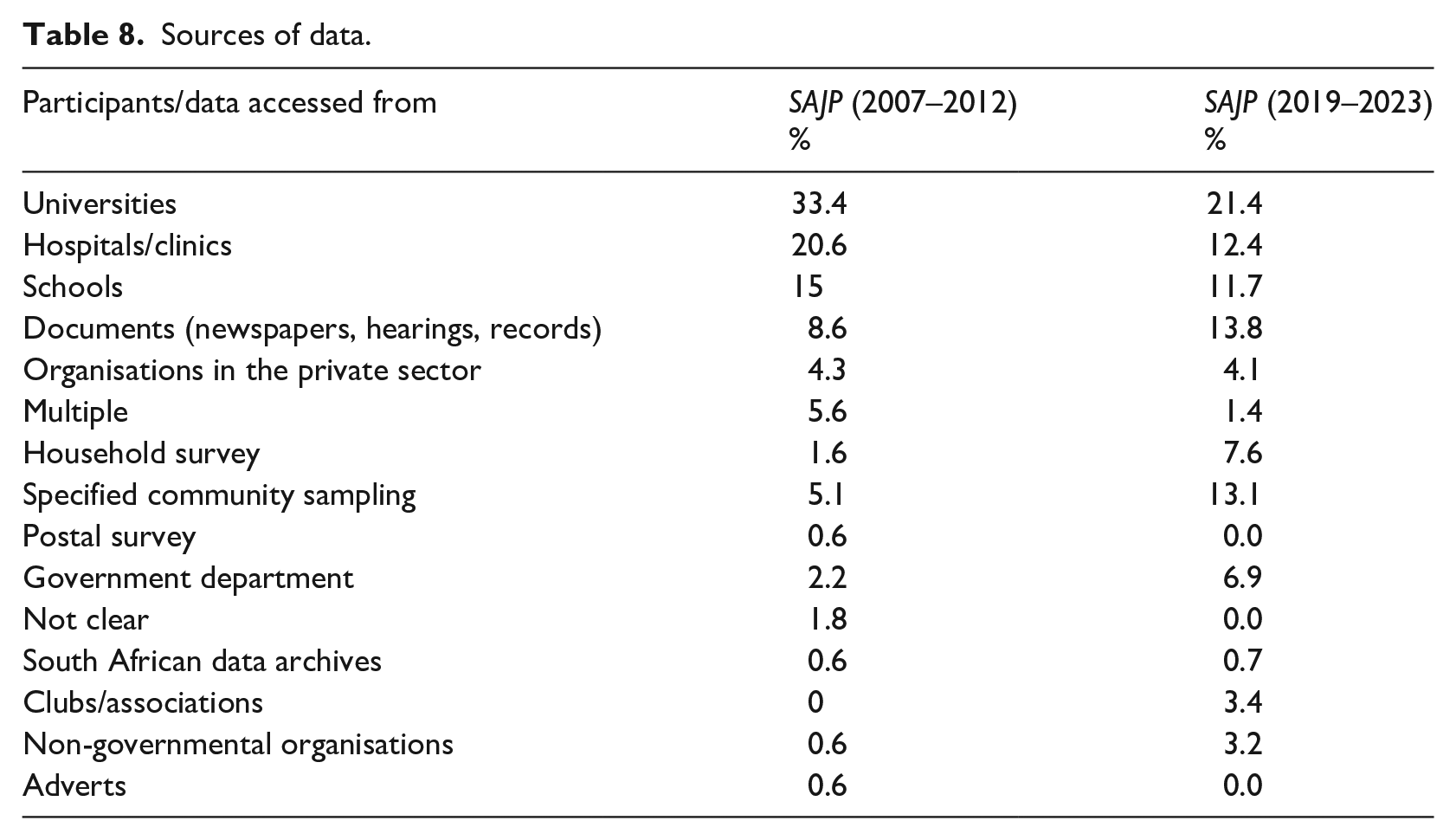
As seen in Table 8, universities, hospitals, and schools continue to be the major sources of data, although the proportion has dropped slightly. There has been an increase in data collection from communities, government departments, and clubs or associations.
Sources of data.
The ‘who’ and ‘with whom’ of knowledge production
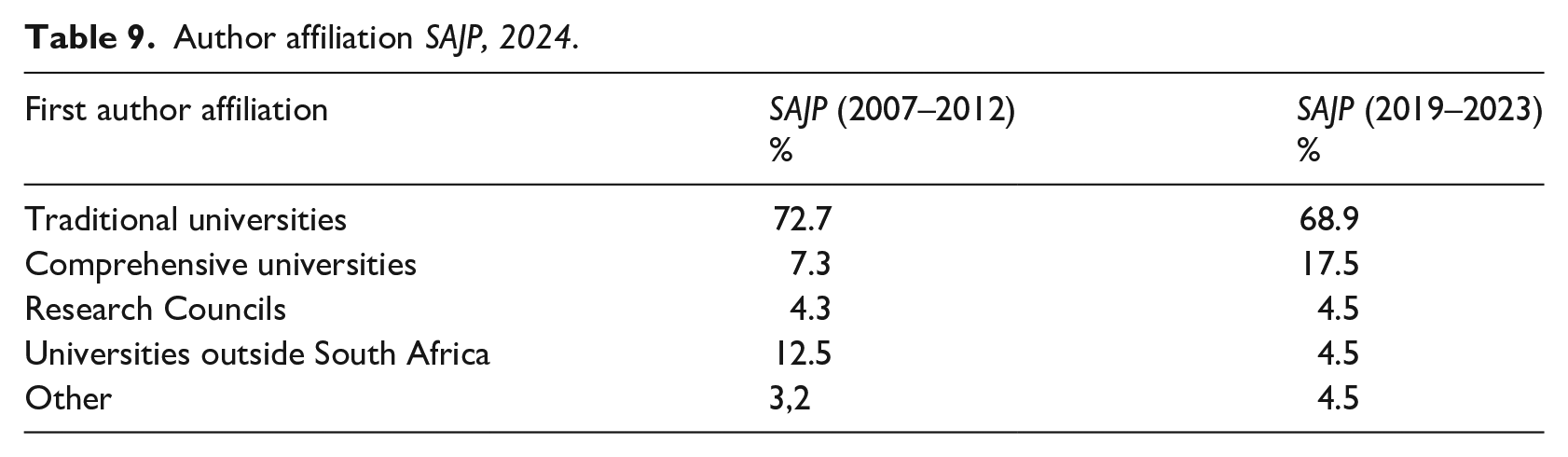
Table 9 outlines the first author affiliation of SAJP papers. There has been an increase in papers emanating from comprehensive universities (7.3%–17.5%), while the percentage of first authors located at universities outside of South Africa has decreased.
Author affiliation SAJP, 2024.
As indicated in Table 10, the total number of collaborations or comparisons with other countries featured in SAJP has decreased from 57 to 29. Worryingly, there is only one collaboration/comparison in the 2019 to 2023 period with other African countries and none with South American countries. Collaborations or comparisons with the United States or the United Kingdom/Ireland continue to dominate.
Collaboration or comparison.
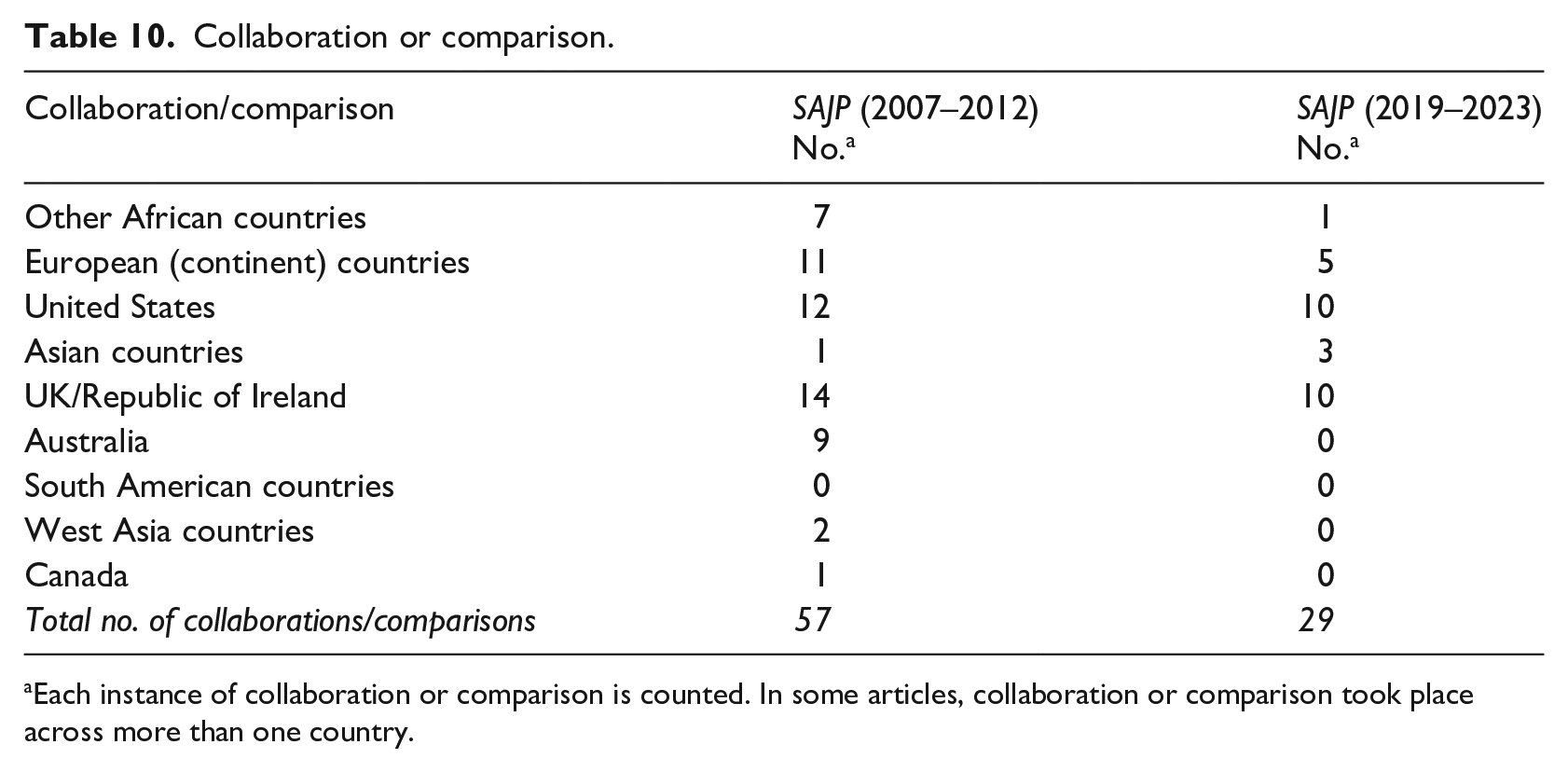
Each instance of collaboration or comparison is counted. In some articles, collaboration or comparison took place across more than one country.
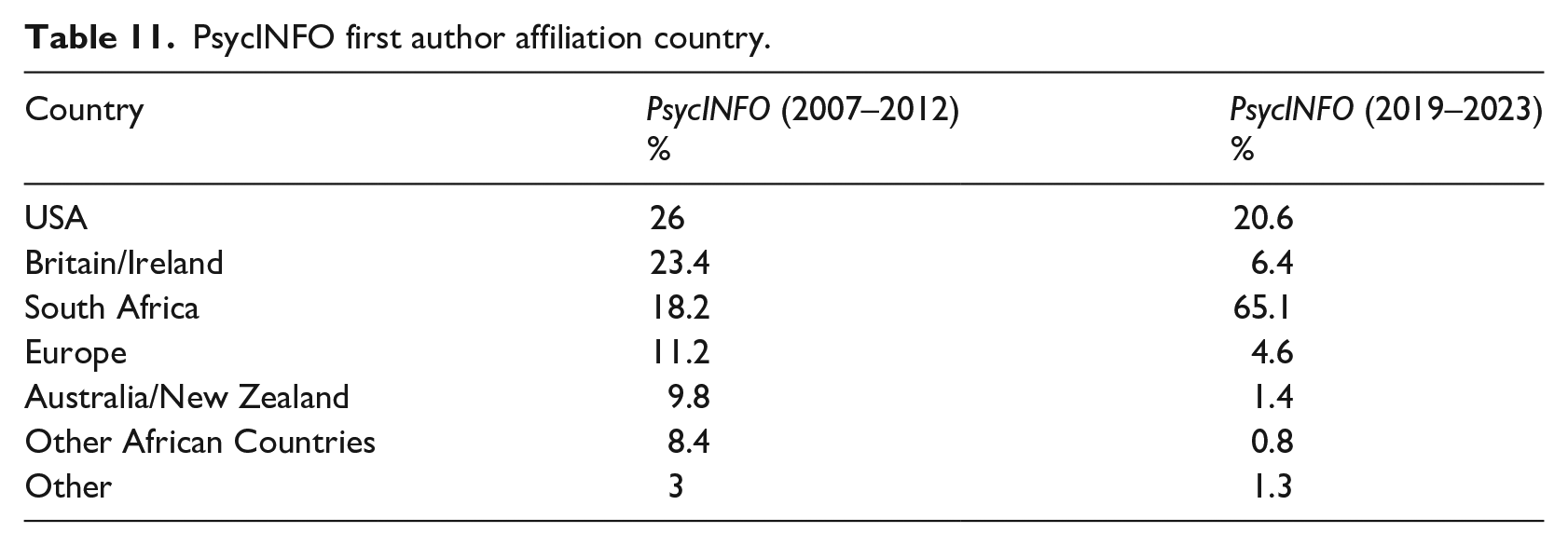
Table 11 outlines the country of the first authors in the PsycINFO dataset. Of note is the increase in South African authors – from 18.2% to 65.1%. The proportion of first authors from other countries has decreased. Of particular note is the decrease in the number of first authors from other African countries (8.4%–0.8%).
PsycINFO first author affiliation country.
Discussion
The debates in South African Psychology concerning, inter alia, ”relevance” and coloniality point to the importance of reflection. The decrease in papers engaged in reflection, as opposed to empirical research, across both SAJP and PsycINFO is, thus, concerning. Deep theoretical and methodological discussion is necessary in forging decolonised psychological understandings and practice. Without this, Suntosh Pillay’s words have eery relevance: “Is decolonization just the latest trendy buzzword and a lofty aspiration that academics claim to do in their spare time?” (p. 135).
The increase in systems-oriented research noted by Macleod and Howell (2013) is reversed in this review. If, as required by a decolonial stance, psychological knowledge production should enable an understanding of the interweaving of the personal and social as well as the operation of power relations, then this trend should be seen as retrogressive.
In terms of topics, assessment remains a major topic in SAJP and is second on the PsycINFO list. This persistence remains across all three of the reviews we conducted, despite the fact that, or perhaps because, psychological assessment has ‘featured as one of the most contentious areas in the history of the country’ (Laher & Cockcroft, 2014, p. 303). There have been three broad approaches to assessment in South Africa: ‘the use of imported instruments (an etic approach), adapted versions of imported instruments (a pseudo-etic approach) or locally developed instruments (emic instruments)’ (Laher & Cockcroft, 2013, p. 538). The first approach has been critiqued for its potential colonising effects ( J. T. Ward, 2024). The high percentage of papers concentrating on assessments in our dataset suggests a move to the second and third approaches. Of course, the persistence of assessment as a topic could be related to the fact that psychometric assessment is the one activity that differentiates Psychology as a profession from other social service professions.
COVID-19 eclipsed HIV in SAJP in this review, but HIV remains the major topic of South African Psychology knowledge production featured in PsycINFO. Hodes and Morrell (2018) discuss two possibilities concerning HIV research in South Africa. On one hand, ‘the global South continues to serve as a “field site”, a source of research participants and unprocessed data’ (Hodes & Morrell, 2018, p. 28). On the other hand, scholars ‘have used their work to challenge epistemological hierarchies that privilege knowledge produced in the global North’ (Hodes & Morrell, 2018, p. 28). The dominance of authors hailing from South Africa in the PsycINFO dataset suggests a move to the second possibility.
The appearance of COVID-19 as the most researched topic in SAJP demonstrates some shift in South African Psychology responding to social situations. Climate change has also made an appearance for the first time. The impetus for these shifts comes partially from editors putting together Special Issues devoted to these topics (see Cooper and Kramers-Olen’s (2021) special issue on COVID-19 and Barnwell et al.’s (2022) special issue on Psychology and climate emergency 2 ).
However,once again,a number of key psycho-social issues do not feature in South African Psychology knowledge production. Unemployment, land reform, housing and sanitation, access, and utilisation of power (including electricity) and water, hunger and food security do not feature as major areas of study. This is concerning, given some of the stark realities highlighted in Census 2022 (Statistics South Africa, 2023), for example, 21.9% of the population use pit toilets and 8.1% of the population live in informal housing; 17.6% of households have no access to piped water or collect water from a communal tap, while 48.4% reported water disruptions. The official unemployment rate in Quarter 4 of 2023 was 32.1% (Statistics South Africa, 2024). The relatively low percentage of papers concentrating on violence, including sexual violence, is of concern, given the high levels of violence experienced in South Africa (Mthembu et al., 2021; Statistics South Africa, 2022; C. L.Ward et al., 2018).
Large swathes of the country are under-represented in South African Psychology knowledge production, with the bulk of knowledge continuing to be produced in the two wealthiest provinces, Gauteng and the Western Cape (as found by Graham (2021) as well]. However, the decrease in papers focussing only on urban people or only on middle-class people is a positive shift.
As people under the age of 20 represent 36.7% of the population (Statistics South Africa, 2023), the decrease in studies concentrating on this age group in SAJP means that there is a gap in knowledge production. Likewise, people above 65 represent 6% of the population (Statistics South Africa, 2023), but there is little knowledge production in SAJP about people in late adulthood. Although universities, hospitals/clinics and schools are still the major sources of participants, sampling has increased from communities and government departments.
The substantial increase in papers authored by scholars located in South Africa in the PsycINFO dataset and the decrease in first-author affiliation to universities outside of South Africa in the SAJP dataset are encouraging trends. Knowledge about South Africa is being produced by South Africans or people located within South Africa. However, the decline in collaborations or comparisons in the SAJP dataset suggests a trend towards isolationism. This must, of course, be seen in the context of COVID-19 and lockdowns, which made such work difficult. Of concern in the SAJP dataset is the lack of collaboration or comparisons with other African or South American countries.
Conclusion
How, thus, does South African Psychology knowledge production promote or hinder distributive epistemic justice as required by decolonial practice? Our findings point to some positive developments and some negative ones.
On the positive side, the who of knowledge production has changed. Crawford et al. (2021), in their discussion of endogenous knowledge production in Africa, note that ‘the enduring predominance of non-African writers on African issues within leading scholarly journals remains striking’ (p. 23). In contrast to this trend, our findings show that knowledge production in South African psychology is being spearheaded by South African scholars or people affiliated with South African institutions. This is an important, albeit insufficient, step in creating the conditions of possibility for decolonised knowledge production.
Also, on the positive side, South African Psychology has contributed to knowledge production about COVID-19 and climate change and continues to contribute to the global debate on HIV. The previous concentration on urban-based and middle-class participants has been corrected, and the sources of participants/data extended beyond universities, hospitals/clinics and schools (in particular, specified sampling of communities). SAJP special issues (Barnes & Siswana, 2018; Seedat & Suffla, 2017) have been dedicated to grappling with decolonisation within psychology.
On the negative side, the decrease in papers using systems-oriented theories means that systemic issues, power relations, and structural deficiencies may be underplayed (see also Kiguwa and Langa’s (2011) critique regarding gender research in South African psychology]. The increase in ‘hard’ science frameworks suggests that Psychology’s ‘reliance on socially disinterested science to underwrite its knowledge claims’ (Long, 2016, p. 1) continues. The lack of or low focus on many key psycho-social issues experienced by South Africans (including unemployment, hunger, land, housing, etc.) means that South African Psychology knowledge production has failed to fully cohere with the primary distributive epistemic justice requirement of producing ‘knowledge that ordinary citizens need’ (Kurtulmus & Irzik, 2021, p. 7). People living in poorer provinces, children and young people and elderly people are under-represented in knowledge production.
Collaborations or comparisons with other African or South American countries have decreased. South–South dialogues and learnings are essential in producing knowledge that speaks to the coloniality of power, knowledge, and being.
This somewhat bleak picture – South African Psychology consistently failing to adequately contribute to primary distributive epistemic justice noted over our three reviews (Macleod, 2004; Macleod & Howell, 2013, current paper) – needs some explanation and action. While simple answers will not suffice, we suggest that part of the problem lies with the neo-colonial professionalisation of psychology, with the various categories (clinical, counselling, educational, organisational) vying for space in the limited market of paid (private and public) psychological services. This, together with the decrease in papers utilising systems theory (noted here) and the reduction in papers dedicated to community psychology noted by Graham (2021) means that the stark realities of South African lives may be missed or sidelined in researchers’ identification of research problems.
The publication of a Special Issue on climate justice and the establishment of a Climate, Environment and Psychology Division within the Psychological Society of South Africa (PsySSA) serve as examples for how the discipline may be shifted to produce knowledge that South African citizens need as they navigate a deeply fractured, violent, and inequitable society. More of these kinds of initiatives led by PsySSA and the editors of SAJP and PINS could help in shifting our knowledge production towards decolonised distributive epistemic justice.
This movement is, of course, not simple. As indicated by Ndlovu-Gatsheni (2020), decolonisation within the African context is fraught with complexities beyond shifting away from the universalisation of global North knowledge epistemes. It requires, in addition, undoing the androcentrism in knowledge generation, challenging the commercialisation and commodification of knowledge, democratising knowledge production, and decentering hierarchies of thought and knowledge.
Footnotes
Declaration of conflicting interests
The author(s) declared no potential conflicts of interest with respect to the research, authorship, and/or publication of this article.
Funding
The author(s) disclosed receipt of the following financial support for the research, authorship, and/or publication of this article: This work is based on research supported by the South African Research Chairs initiative of the Department of Science and Technology and National Research Foundation of South Africa (grant no. 87582).
