




Abstract
In recent years, photo-narrative methods have gained popularity as a feminist decolonial research approach. Located within the broader category of participatory action research, photovoice is committed to the democratisation of the research process. It aims to centre previously excluded knowledges and problematises what is considered ‘legitimate’ ways of knowing within the social sciences. As such, photovoice has been utilised across a wide range of studies that are aligned with a social justice agenda. Arising are questions around the burden of representation that is placed on participants; what it means for stories of marginalisation to be put ‘on display’; and the risk involved in disclosing personal experiences when there is a power differential between storyteller and audience. By highlighting complications encountered when conducting a photo-narrative project with transgender young persons in Cape Town, South Africa, this methodologically reflexive article contributes to this conversation. We explore the nuances and complexities that arose when using a methodology that relies heavily on visual data, on a community that experiences intense visual scrutiny daily. As a result, the research focused on participants’ narratives of invisibility and hypervisibility as presented in the data, thus bringing a reflexive stance and interrogation to assumptions of the approach often taken for granted.
Keywords
Photovoice is located within the broader category of participatory action research (PAR) and is being used as an innovative way of collaborating with groups who have previously been excluded from knowledge production spaces (Liamputtong, 2020). Rooted in critical pedagogy, feminist theory, community health principles, and unconventional documentary photography (Wang, 1999), photovoice is a flexible and versatile methodology that can be used within various research frameworks, and with diverse aims (Catalani & Minkler, 2010). This form of methodology rejects traditional modes of knowledge production by combining photography and storytelling and adopts mediums which in the past have exclusively been considered artistic and not necessarily fit for research contexts (McIntyre, 2008).
In photovoice projects, participants are given cameras and asked to document content pertinent to their daily experiences, which may include routines, difficulties, joys, and concerns (Wang & Burris, 1997). The process usually involves a combination of photographs and narratives that are usually displayed in some format during an exhibition. The process enables people to choose how they want their experiences to be portrayed, and in doing so, creates space for critical reflection on issues that affect their lives (Malherbe et al., 2015). In addition, the exhibition process creates an opportunity for individuals or communities to advocate for themselves and to generate public awareness around topics that are often excluded from mainstream media (Kessi, 2013; Kessi et al., 2019). Photovoice does not endeavour to give voice to marginalised groups, rather it assumes that these voices already exist and that marginalised communities hold expertise and insight into their lives, which outsiders do not (Liamputtong, 2020). The methodology, which has been considered feminist and decolonial, enables people to identify, represent, and promote their community, destabilising the traditional research hierarchy, and problematising what is considered ‘legitimate’ ways of knowing (Kessi et al., 2019). As a result, photovoice can ‘unsettle, fragment, or dislodge other’s gazes’ (Chalfen & Lutrell, 2010, p. 234), allowing for different ways of seeing and being seen.
International research has shown photovoice to be a novel and affirming way of engaging sexually and gender diverse young people in issues that affect them, such as educational experiences (Allen, 2015; Mackenzie & Talbott, 2018), substance use (Goodyear et al., 2022), and queerphobic violence (Suárez et al., 2021). In South Africa, photo-narrative research has been used to explore how identity axes such as class, race, and location intersect with young people’s experiences of their gender and sexuality (Boonzaier & Mkhize, 2018; Boonzaier & Zway, 2015; Carolissen & Kiguwa, 2018; Cornell & Kessi, 2017; Kessi, 2018; Peters et al., 2022). While this work is important, photovoice studies that focus on transgender youth specifically remain scarce in South Africa. However, there is an emerging body of work on transgender persons and gender diversity which emphasises issues around the politics of visibility, performance, and/or difference (Harvey & Kotze, 2022).
Scholars have critiqued photovoice around four main issues. First, ethical concerns within photovoice methodology have received much attention (Creighton et al., 2018; Johnston, 2016; Murray & Nash, 2017; Shankar, 2016). These critiques have highlighted how, despite what photovoice promises, communities’ involvement in the research process rarely extends beyond data collection; most publications are written for academic audiences, and policy is rarely affected by photovoice research (Golden, 2020; Johnston, 2016). In addition, ownership of photographs remains a murky area and the extent to which the methodology is ‘empowering’ has continually been questioned (Golden, 2020). Second is that of dilemmas around representation. Holtby et al. (2015), in their work with queer and trans youth, emphasise how visually based methods can place significant burdens on individuals to accurately represent their entire community – an impossible task. In addition, there is always a risk when disclosing in the context of power differentials between the audience and the exhibitors. When stories of marginalisation are put on display, there is a danger that they can be appropriated, negatively evaluated, face scrutiny, and be exposed to a problematic public gaze (Holtby et al., 2015). Third, other authors have discussed how hegemonic regimes of value place pressure on exhibitors to make their photo-narratives acceptable and comprehensible to mainstream audiences and those in power (Cooper, 2010; Shankar, 2016). Thus, it may become the audience’s decision as to how the stories are interpreted, and which ones are deemed satisfactory. Shankar (2016) has also warned against applying a positivist approach to image ‘authenticity’ in photovoice projects. There needs to be deeper engagement by researchers and the audience into the ways in which the photographs have been constructed to portray a particular narrative for a particular purpose. Finally, the photography equipment itself should also not be taken as a neutral form of technology (Prins, 2010). Rather, depending on the sociocultural setting, photography can act as a tool of surveillance and control.
Indeed, elements of the abovementioned critiques were present in the study at hand, particularly in relation to the exhibition component of the project. The exhibition was intended to be a space where participants could represent themselves, and what is important to them, on their own terms. However, given the context of how trans people are scrutinised and consumed by the cisgender gaze, it was questioned whether, in this project, the exhibition and the methodology actually allowed for participants to re-present themselves. It questioned whether methodologies that align with radical social change in theory can deliver as much in reality, when such methodologies are practised in unjust contexts. Given these concerns, it presented an opportunity to critically reflect on whether the chosen methodology achieved its intended goal and to further highlight the complexities of photovoice research. This article aims to add to critical discussions of photovoice methods to strengthen the applicability of the method for decolonial, feminist research.
Method
Participants
The research discussed in this article formed part of a larger photovoice study about young persons’ navigations of gender, sexuality, and other intersectional identities in South Africa. The study was conducted in partnership with Triangle Project – a Cape Town–based non-governmental organisation (NGO) engaging LGBTQI+ persons on issues relating to health and advocacy work. This was facilitated by the University of Cape Town’s Knowledge Co-Op, a unit that connects students with organisations that have identified various research priorities. The recruitment process took approximately 6 months and involved a variety of different purposive sampling strategies which included sharing advertisements for the study through Triangle Project, and other gender justice and queer rights organisations on their social media platforms and mailing lists. Personal connections were also used to recruit participants via word-of-mouth and snowball sampling. Any person who was between the ages of 18 and 30 and who identified as transgender was eligible to participate. The final sample consisted of five transgender young adults from the greater Cape Town area, ranging in age from 18 to 26. Participants’ gender identifications included non-binary trans masculine, gender neutral, transgender male, trans womxn, and genderqueer. In terms of racial identification, four participants identified as White, and one participant identified as Black. In this article, their chosen pronouns are used, and all names are pseudonyms.
Procedure
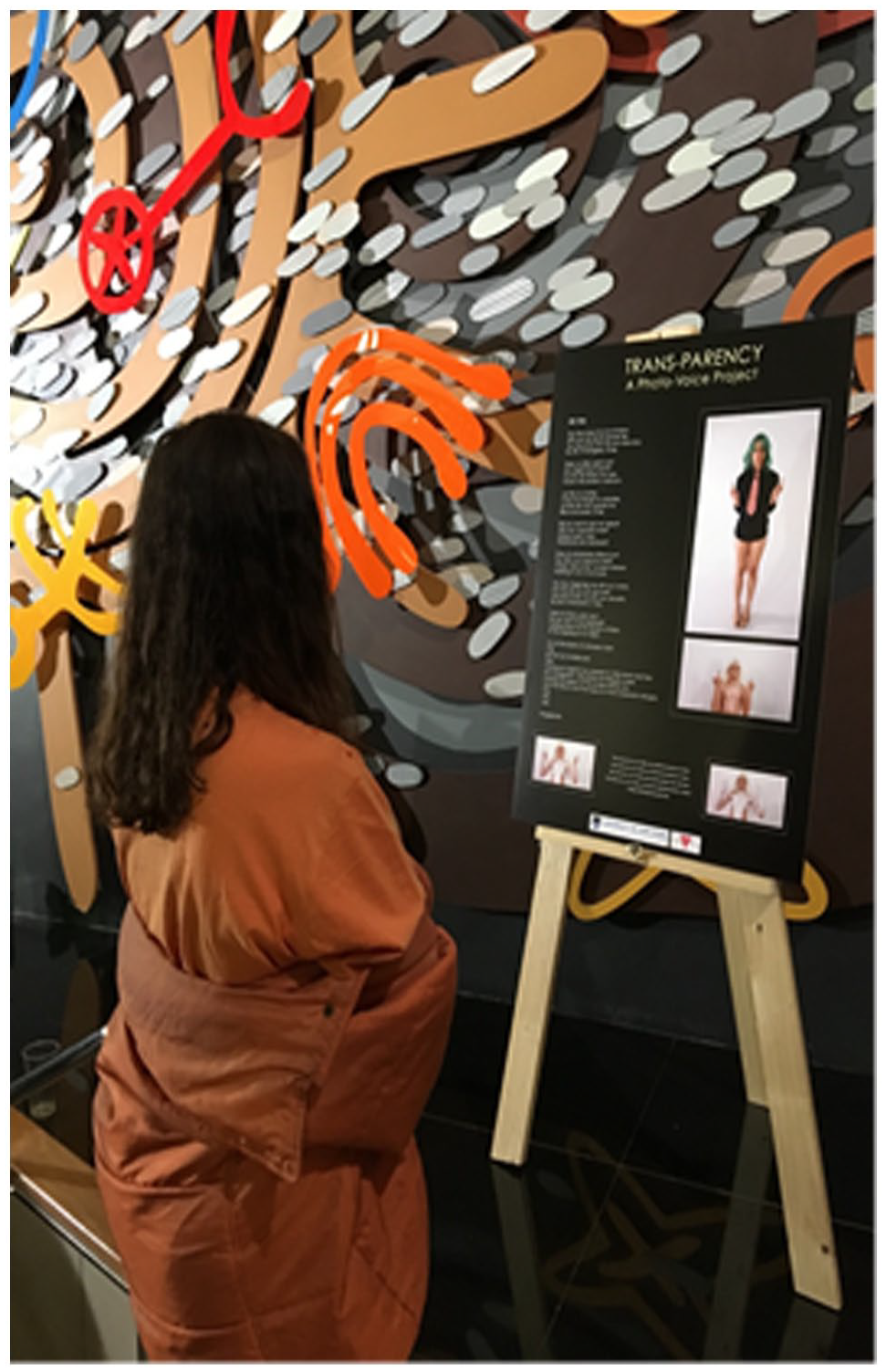
Photovoice methodology informed the data collection process, and we followed the steps proposed by Wang (2006) which are flexible guidelines (Catalani & Minkler, 2010). In-depth, semi-structured individual interviews were used to collect data allowing for specific topics to be explored while creating space for participants to autonomously narrate their experiences. Participants took part in two in-depth individual interviews conducted by the first author between December 2016 and February 2017. The first interview explored how participants experience gender and sexuality identities, on a daily basis. The initial meeting included photography training. Participants were trained about photograph composition, how to tell stories using photographs as well as issues relating to power dynamics, ethics, and safety, when taking photographs. Cameras were provided by the University of Cape Town (UCT), although some participants chose to use their own cameras. Following this, participants had approximately a month to take their photographs. In the second interview, participants brought their images, and discussions about their narratives were had. The interview gave the participants an opportunity and direction to start creating narratives around the photographs taken. Four out of the five participants decided to take part in this stage of the project. The participant who stepped out of the project did not provide a reason for stopping, although from our experience of engagement in many photovoice projects, attrition is an expected part of the process. Following the second interview, participants were asked to choose five of their favourite photographs and write an accompanying narrative about an aspect of their experience that they wanted to share with the public. These photo-stories were sent to a graphic designer who created A3 posters. These posters became part of an exhibition held in the Psychology Department, at UCT. The posters were also later exhibited at the Triangle Project offices for approximately 2 months. As part of the exhibition at UCT, exhibition attendees were asked to leave their thoughts about the project on Post-It notes on a blank wall of the department. After the exhibition, participants were asked to provide feedback about their experiences.
Data analysis
Thematic narrative analysis was used to analyse the textual and photographic data. With thematic narrative analysis the focus is primarily on what is said rather than how the story is constructed (Riessman, 2008). Data analysis was approached as an iterative process and loosely followed the steps for thematic analysis outlined by Braun and Clarke (2006), as well as the guidelines for thematic narrative analysis suggested by Riessman (2008). In keeping with these guidelines, analysis was informed by the central research questions that asked about the lived experiences of trans youth in Cape Town.
Ethical considerations
This research was granted ethical approval by the Research Ethics Committee in the Faculty of Humanities at the University of Cape Town. Consent to participate and be audio recorded was obtained from individual participants at the start of the project. Participants were informed that they have the right to withdraw from the study at any given time without any negative consequences. Participants remained anonymous through pseudonyms and by removing other identifiers. The participants chose their level of participation and personal disclosure in the exhibition. All data collected were kept confidential. This project posed minimal risk; however, some sensitive discussions could have become distressing for participants. No participants became visibly distressed during the interviews. At the start of the research process, the participants were also given a referral pamphlet for counselling and support services. During the photography training session, the researcher discussed with participants how to make safe choices about whom and what to photograph. Participants were informed that they needed to obtain verbal consent from individuals before they took their picture, and in the case of children, verbal consent from a parent/guardian.
This project had a few limitations which must be noted. Due to difficulties with recruitment, the sample size for this project was small (n = 5) and most of the participants were White. While it is not unusual for qualitative projects to work with small, specific groups of people, it does limit the generalisability of the work. A further limitation of the work is that time constraints for the research prohibited the possibility of fully engaging with participants in a more collaborative and participatory manner, as would be required from a PAR study. In addition, there was a delay in the publishing of this article while the first author pursued further studies.
Results: Invisibility and Hypervisibility
‘Invisibility/hypervisibility’ was the most prolific narrative that emerged from participants’ stories about their lives in Cape Town. All participants spoke about how they, in some instances, felt invisible and isolated, and at other times felt a sense of hypervisibility from the public gaze. In the following section, participants’ experiences of invisibility and hypervisibility are explored.
Invisibility
Participants reported experiencing a lack of trans representation and felt socially unseen within Cape Town.
Until I was about 22 or 23 I don’t think I knew about transitioning. I only knew about ‘transsexuals’, who were in comedy movies as men dressed up as women, to be laughed at. I was already starting to enjoy photography, and loved looking at photos, and found some transgender and genderqueer people who posted their photography online. It was like a little window into a new world. . . . I think for most people there is a need to belong somewhere, and for transgender and other non-binary people, there are probably fewer places where belonging is safe. (Ben) There was a very sort of toxic view of trans people as men in dresses that I noticed, and I still notice today and it’s incredibly frustrating. (Dana)
In these extracts, Ben and Dana talk about the lack of trans visibility experienced while growing up in Cape Town. They were both only exposed to certain portrayals of trans people in the media – ‘men dressed as women’. Ben describes wanting to find places of belonging, for affirmation. Both Dana and Ben talk about a sense of invisibility when they are out in Cape Town. This sense of invisibility and isolation is depicted in Ben’s photograph (Figure 1). Through double-exposure techniques, Ben created two shadow figures that are simultaneously in the picture and transparent. Making the two figures in the image transparent is reflective of how trans youth living in Cape Town do not feel part of the city and have few experiences that affirm their presence.
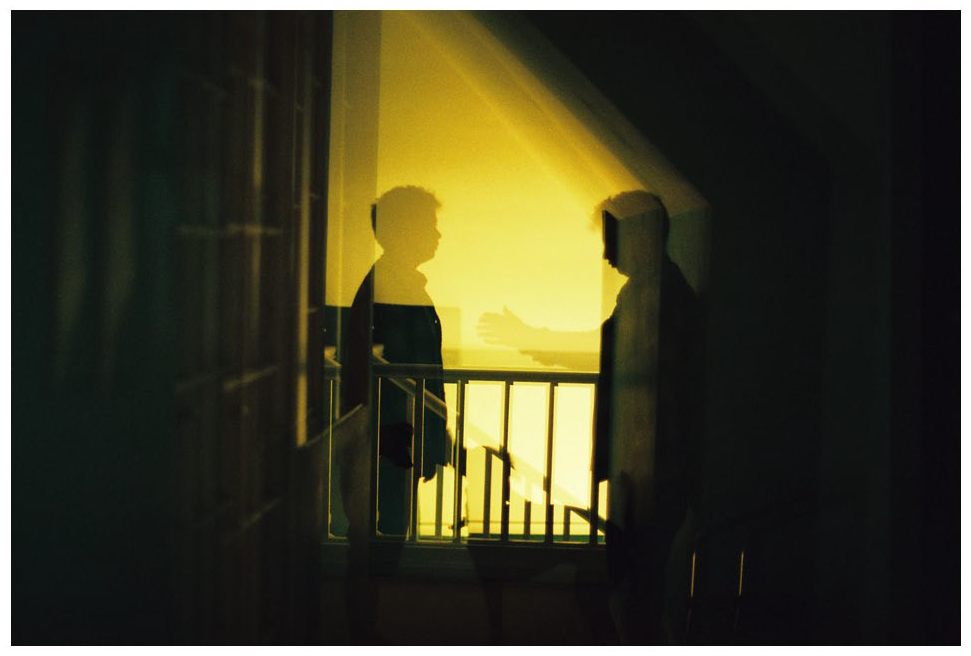
Ben – No title.
One of the figures in the photograph is seemingly reaching towards the other. This act may be said to symbolise young trans persons’ desire to connect with others in/with similar experiences. The experiences of these young people, and of the participants in this project, underscore how important representation – or ‘visibility’ – is to young trans persons. Nonetheless, trans activists have cautioned against overemphasising trans visibility at the expense of trans justice, arguing that prioritising visibility creates the impression that all trans people want to be ‘seen’ all the time, producing a constant state of surveillance or hypervisibility as discussed below (Vaid-Menon, 2017).
Hypervisibility
Feelings of invisibility and isolation were intersected with moments of hypervisibility. Trans persons have historically aimed for visibility and representation as political goals in response to erasure from the public sphere (Koch-Rein et al., 2020). However, visibility has also been reported to be invasive and threatening – hence the term ‘hyper-visibility’. While each participant’s experience is different, they all relate to how their gender expression is perceived by society. Below, Calvin explains how his photograph, ‘Spotlight’ (Figure 2), represents his experiences of being trans in Cape Town.
It’s more spotlight like the fact that you always feel watched and judged and, like you’ve always got this light on you so that everyone’s looking, you know. Everyone’s like watching for you to do something that’s maybe not in the box that they want to put you in that they can catch you out or something. It’s more like the constantly feeling judged and watched and that you must keep acting a certain way because you feel like you’re in the spotlight. . .People aren’t always watching you for the right reasons or watching you with purpose or intent or things like that. (Calvin)
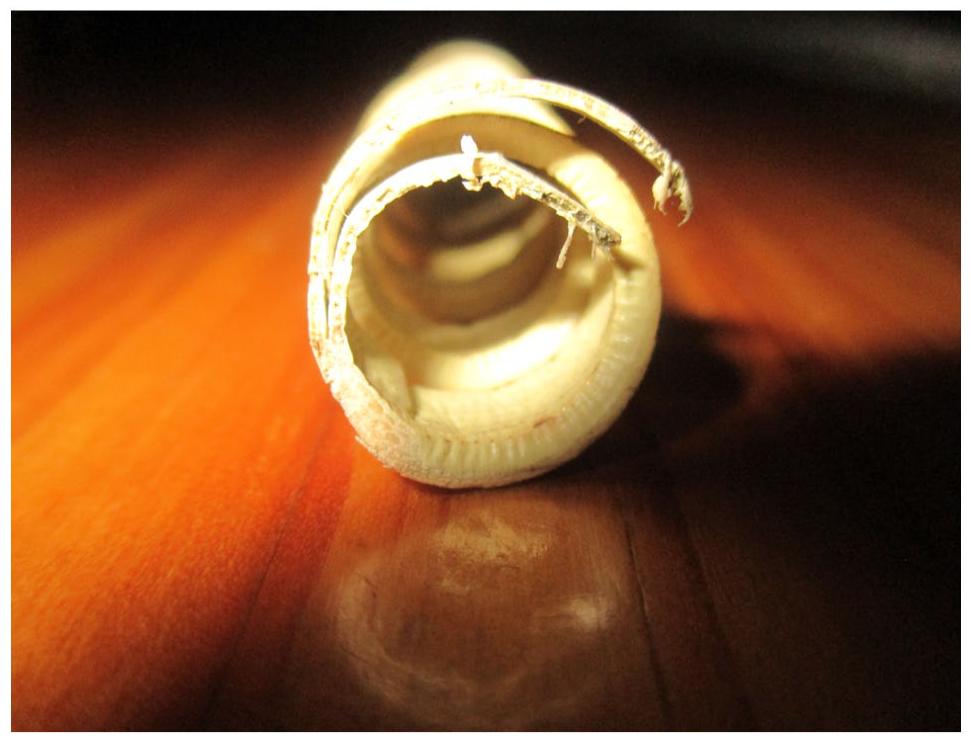
Calvin – Spotlight.
Calvin describes the visual scrutiny he experiences daily in his disruption of gender norms. In this instance, hypervisibility can be understood as an examination based on an apparent difference – a difference construed as a threat. The harsh light in the photograph can be seen to symbolise the menacing public gaze. Calvin differentiates between being seen and being watched. In the subsequent quote, Dana references the discomfort of constantly being misread by the cisgender gaze.
. . . if you dressed up like I did when I was starting [to transition], if you dressed up as a woman, people would be upset and offended and you know all those things just for expressing yourself, whereas if you dressed down and were just in t-shirt and jeans and whatever, people then had this opposite idea of no, you’re not trans enough . . .(Dana)
Dana explains how the nature of attention received is dependent on how she performs her gender. Given the public’s discrimination against those who disrupt gender norms (Herek, 1986; Kcomt, 2019), how Dana chooses to perform her gender on a given day determines how she is treated. If she performs her gender in ways considered conventionally feminine, she is judged for not conforming to gender norms. However, if she expresses herself in a more masculine manner, she is questioned about the validity of her trans identity. As an act of resistance, Max used their photo-story (Figures 3 to 5) for the exhibition to speak back to these uncomfortable and sometimes violent interpretations of trans persons’ gender expression.
Being a non-binary transgender person, to the world I am perceived by just my outer image; people see me a certain way and therefore have expectations of my character or a story about me. Now that I have a voice, I am portraying my transness the way I want to without preconceived ideas . . . The photos I have curated are close-ups of certain body parts. This is to emphasise to the outer world, in my eyes, which things I notice and feel connected to. As you might have seen the body parts and pictures themselves are gender neutral. I like the idea of not being able to tell who the people are in the pictures; they could be anyone. (Max)
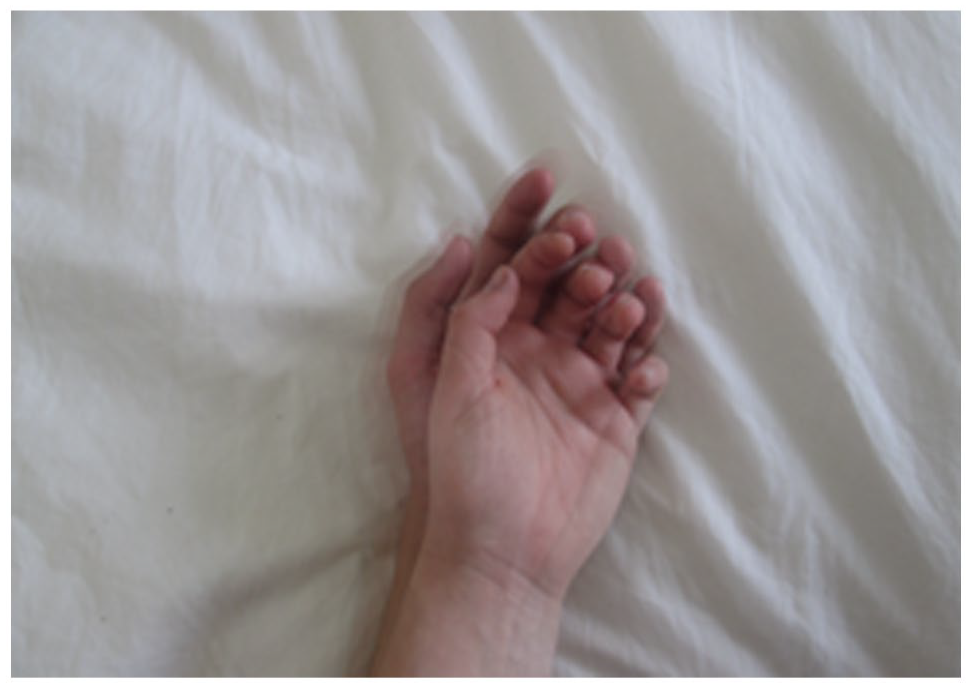
Max – No title.
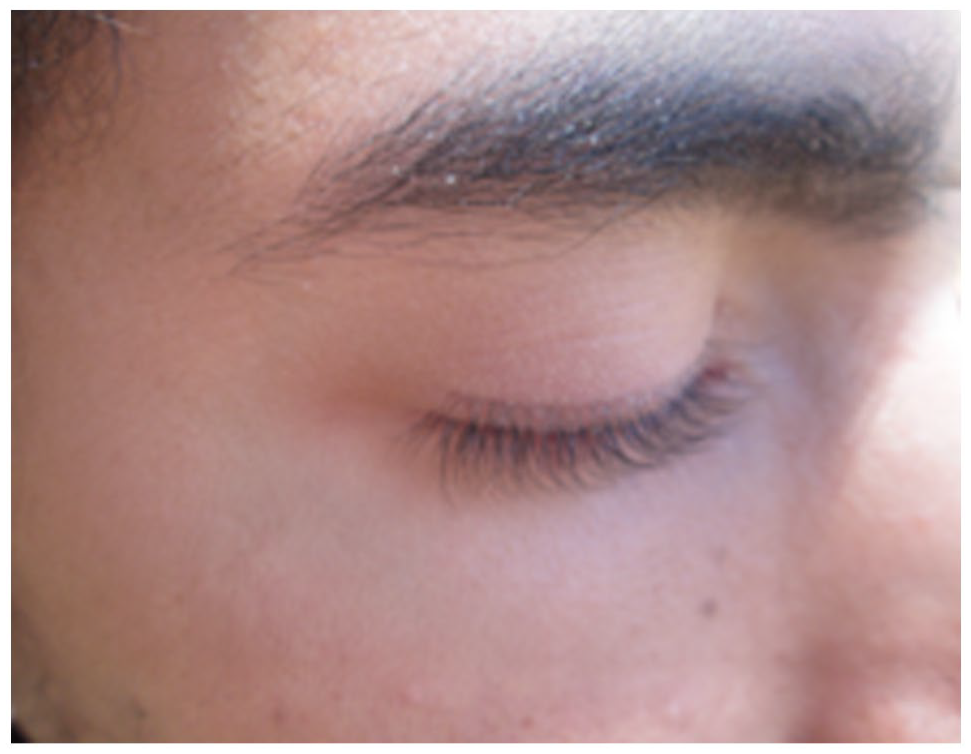
Max – No title.
Max–The cis-gaze.
Max actively resists the assumptions others make about their gender based on their visual appearance. By purposefully creating images that are gender ambiguous, Max confronts society’s need to categorise along the gender binary. Max intentionally centred non-binary persons’ experiences and, in this way, deconstructs societal ideas about gender, and focused on advancing non-binary representation.
As with Max, Eric also had uncomfortable experiences with how people interpret their gender expression: . . . especially in UCT so you will have the people who are like super like, claim to be super super progressive but so when they see you on campus and this is like mortifying for me it is like, they will see you, and when I first got braids, this is the second time I got braids . . . and these people scream, they are like, ‘Yes it is!’ from across the Jammie Plaza and I was just like, I don’t need this kind of like, you’re over . . . Like over enthusiasm not like, for no reason, like that is what I loved about, the conference because it was just so, like you would dress and the people would be like ‘Oh I like your outfit’ . . . Or, ‘like the way you look’, as opposed to being like, ‘Oh my god, it is the end of the world, your outfit is so . . ’. no, calm down, it’s a, I am wearing a dress and I’ve got hair and I am wearing, like that is it, like it is not that, I am not a model on a runway. . . (Eric)
In this excerpt, Eric narrates how students at UCT, who profess to being progressive, often objectify Eric through the ways in which they over-exaggerate compliments, affirmations, and support. Eric expressed how these exaggerated behaviours draw unwanted attention towards themself. In this scenario, Eric’s own ability to control how their gender expression is interpreted is removed. Eric contrasts this experience at UCT with a conference they went to where only trans people were in attendance, where people complimented Eric’s choice of clothing without making a spectacle of them. Participants in a qualitative study about trans young adults who were transitioning while at college made similar comments (Pusch, 2005), stressing how not all support is experienced as affirming and how constant attention is experienced as objectification, which is a common experience for trans persons (see Shabalala et al., in press).
Discussion: hyper-invisibility and reflections on photovoice
The outcome of the intersection of the two extremes of invisibility and hypervisibility has been termed as ‘hyper-invisibility’ (Johnson & Baylorn, 2015): ‘When bodies are marked absent and present simultaneously, it results in a fourth form of visibility, hyper-invisibility. Hyper-invisibility describes a space where bodies are visible, but in limited ways that tend to mark those bodies even more invisible’. (p. 22)
Although they are not writing about trans persons, the parallels between what Johnson and Baylorn (2015) describe, and the experiences of the participants in this project, are evident. Trans persons in the current project express feeling invisible due to a lack of representation and recognition. Yet, when they are visible, they are objectified and their experiences skewed, therefore leading to further erasure, or, hyper-invisibility. Based on participants’ narratives as well as feedback from the exhibition, it appears that hyper-invisibility was an unintended outcome of the exhibition and project. Max’s feedback below is representative of the critiques raised: There were a lot of cis people there. Which is fine, but it felt like they expected me to educate them and as if this project was for their learning journey. They were speaking about my photos in front of me about how they thought my narrative didn’t correlate with my photos – as a trans person this is so offensive because it’s not about their interpretation of gender identity and expression, it’s about mine. I just felt like it was voyeurism . . . (Max)
Exhibition attendees also gave written feedback. While most of the comments were supportive and positive, one comment read, ‘VOYEUR’. This response appears consistent with some of the issues expressed in participants’ narratives and corresponds to feelings of invisibility/hypervisibility. On reflection, the exhibition and act of asking for feedback from the public became about the audience’s interpretation of the photographs instead of centering participants’ portrayal of themselves. In this way, even though the exhibition was centred around trans youth, most of the attendees were cisgender, which meant that even at an exhibition that was meant to promote trans youth visibility, they were not visible. This dynamic then shifted the focus of the exhibition, from centring and representing trans youths’ life experiences, to that of educating cisgender public about what it means to be trans. These factors contributed to participants feeling being watched – rather than being seen as themselves. Thus, this article argues that the exhibition in many ways perpetuated the hyper-invisibility described by Johnson and Baylorn (2015), or as Crenshaw (1991) states, ‘tokenistic, objectifying, voyeuristic inclusion is at least as disempowering as complete exclusion’ (p. 1261). This outcome presents an opportunity to reflect on what it means to do photovoice work and exhibitions with groups that experience daily visual surveillance.
Indeed, issues around in/visibility and representation have been explored by other photovoice researchers. Holtby et al. (2015) considered some of these issues in a photovoice project with queer and trans youth in Canada where participants were asked to engage with the complexities around in/visibility and representation while creating their photo-stories. One of the main themes that emerged was that of the ‘hostile gaze’ which resulted from being seen as a representative of all trans and queer people; having their entire personhood reduced to their sexual and gender identities. It also resulted from feeling the need to fulfil certain narratives, to have their identities affirmed and feeling like their lives were on display for cisgender and heterosexual people’s judgement. Although not all these themes emerged from this project’s exhibition, there are comparisons. Other researchers have contemplated similar critiques of photovoice methodology. For example, Srivastava and Francis (2006) highlighted the risk in disclosing one’s life story when there is a power differential between the narrator and the audience, leaving the stories open to being appropriated, evaluated, and inspected. Thus, placing one’s stories of oppression on show for consumption by those with more privilege is a decision laden with risk for the narrator. The burden of representation is also taxing, as marginalised groups may feel pressure to make their stories acceptable and comprehensible to those in power (Cooper, 2010). In this instance, the audience has the power to decide on how these stories are interpreted, and which ones are deemed satisfactory. Regardless, this critique does not mean that photo-narrative methods should be discounted as tools for social justice (Razack, 1998). Rather, they should be utilised in ways that consider their potential for transformation and, possibility to also cause harm (Razack, 1998). Even though the critiques discussed are valid, there was also positive feedback from some participants.
I am very glad that I got this opportunity and that more people are doing these kinds of questionnaires and stuff these days and there is interviews and projects like this, because it is going to help with the cause of getting us out there and getting our voices heard you know. . .it’s the whole purpose of this is so that our voices can be heard and our perspectives and I think it is a brilliant thing and that is why I was so keen to do this because, ja like there just really does need to be more exposure and more openness in media and more education in general and we have to start somewhere. . . (Calvin)
The above quotes highlight that some may long for more trans visibility, and by this, we draw on Holtby et al.’s (2015) definition of visibility: a feeling of ‘being seen for who one is’ in a way that [makes one] feel recognised and valued in all of their complexity. This experience of visibility centres the importance of participants’ agency: positive experiences of visibility [are] those where participants [are] recognised in the way they [want] to be. (p. 325)
Below we provide some points to think through before beginning a photovoice project, with the aim of fostering richer experiences of visibility in photo-narrative work.
First, during the inception phase of the research, researchers should consider the unique socio-political stressors experienced by the group they are working with, and whether photo-narrative methods will exacerbate or perpetuate these. There may be other PAR/arts-based methods that are better suited. Second, include a more detailed discussion of the challenges that may come with photo-narrative work during the informed consent process. Photo-narrative work is often presented as a wholly empowering experience for participants, yet this article and multiple others have shown differently. Discussing what could be uncomfortable, taxing, or evocative in the process allows participants to make a more informed decision about their choice to participate. Third, as suggested by Holtby et al. (2015), dedicated time and space needs to be built into the research process for participants to critically reflect on visual methodologies and representation. Finally, creativity should be employed when it comes to exhibiting the work. As seen with this project, a conventional exhibition format may not be appropriate for all groups. Therefore, we encourage researchers and participants to brainstorm innovative ways of showcasing the work – ways that foreground participants’ stories and autonomy.
Conclusion
In this article, we explored the nuances and complexities around the use of a visual methodology with marginalised participants. In a critically reflexive manner, we unpacked the complexities of the use of photovoice with transgender young persons to challenge taken-for-granted assumptions about the approach and its empowerment potential. We offer this reading towards a closer interrogation of what particular methodologies such as photovoice might offer a feminist decolonial research agenda without glib references to ‘empowerment’. As Cannella and Manuelito (2008) argue, ‘Even research conceptualisations (like qualitative participatory action research) that construct false illusions of equity. . .would require astute critical examination’ (p. 55). We provided four guidelines to support research teams in thinking more deeply about using photo-narrative methodologies with groups who experience constant visual scrutiny. We hope that these suggestions will assist researchers and participants in creating research processes that are affirming and empowering, and not unintentionally perpetuating violences experienced in wider society.
Footnotes
Declaration of conflicting interests
The author(s) declared no potential conflicts of interest with respect to the research, authorship, and/or publication of this article.
Funding
The author(s) disclosed receipt of the following financial support for the research, authorship, and/or publication of this article: This study was funded by the National Research Foundation Grant Number 106042.
