




Abstract
Adolescents are noted to increasingly utilise social media for communication, and therefore, social media is where much of their psychosocial development takes place. The potential impact of social media on psychosocial development is complex and is an emerging field of research. A systematic review was conducted to investigate existing research relating to social media’s effects on psychosocial development. Good practice in systematic review reporting was followed, aligned to the Preferred Reporting Items for Systematic Reviews and Meta-Analyses statement, and a team of five reviewers were involved in each stage of the review process to enhance objectivity and methodological rigour. The review included 20 studies, published between 2008 and 2019. The findings show a complex relationship between social media and adolescent psychosocial development. Social media was found to involve potential risks, in terms of excessive and problematic use, comparison, and cyberbullying. Social support, from both peers and parents, may buffer these negative impacts. Potential benefits of social media use include supporting identity development and the maintenance of existing peer relationships. Considering the growth of social media use, it is imperative to consider the development and provision of interventions and mental health care services to address the potential risks associated with increased social media use. Psychoeducation with adolescents and parents as to the risks, benefits, and constructive parental supervision of social media is also recommended. The review highlights the need for high-quality empirical research to further clarify the long-term impact of social media use, particularly within the South African context.
Access to personal devices, the Internet, and social media platforms among adolescents is increasing, to the point of being ubiquitous in some nations (Kwan et al., 2020). Social media is a central means by which adolescents interact, and therefore, an increased proportion of adolescents’ psychosocial development takes place online (O’Keeffe & Clarke-Pearson, 2011). Areas of concern related to the negative effects of adolescent social media use include cyberbullying, exposure to inappropriate content, sleep deprivation, Internet addiction, ‘Facebook depression’, and social isolation (Barth, 2015; Kwan et al., 2020; O’Keeffe & Clarke-Pearson, 2011). Potential areas of benefit have also been noted, including self-expression, self-exploration, information, and communication technology (ICT) skill development, and international networking (Barth, 2015; Ivie et al., 2020; Sarriera et al., 2012). Existing systematic reviews on social media impacts tend to focus on a select subset of psychosocial dimensions, for example, body image and eating disorders (Holland & Tiggemann, 2016), depression (Ivie et al., 2020), or general mental health outcomes (Frost & Rickwood, 2017; Keles et al., 2020; Kwan et al., 2020). Some of the existing reviews include mixed or undifferentiated developmental groups, with Ivie et al. (2020), Keles et al. (2020), and Valkenburg and Peter (2011) focusing exclusively on adolescents. The review by Valkenburg and Peter (2011) appears to be the most recent review focusing on the impact of social media on a broader conceptualisation of psychosocial development among adolescents. There is a need to synthesise recent evidence of the broader developmental impact of social media on adolescents (Barth, 2015). The present review identifies potential developmental risks and benefits associated with social media use and protective factors. Understanding global trends, in terms of the short- and long-term impact of social media use, may anticipate the potential impact of social media on the psychosocial development of adolescents in the South African context.
Method
A systematic review was conducted, with ethics clearance obtained from Cornerstone Institute. The review question was: what are the effects of exposure to social media on the psychosocial development of adolescents? The objectives were: to identify aspects of psychosocial development that are affected by exposure to social media and to thematically summarise how these dimensions are affected.
Eligibility
The population, exposure, and outcome (PEO) were used to frame the research question and define a priori inclusion criteria (Laher & Hassem, 2020). The population was adolescents, including 10- to 19-year-olds, as defined by the World Health Organization (WHO, 2012), the exposure was social media, and the outcome was psychosocial development dimensions. Psychosocial development was broadly defined, to include self-esteem, self-image, identity, mental health/illness, and wellbeing (Louw & Louw, 2019).
Articles were included if they met all the following criteria:
The participants were adolescents, using the WHO (2012) definition;
A clear focus on social media or related dimensions (e.g., cyberbullying);
Addressed a psychosocial dimension (broadly defined, as described above);
Published between January 2008 and June 2018 (extended to December 2019), as social media platforms increased in ubiquity and use in the mid-2000s; thus, studies on social media’s effects likely occurred from late 2000s onwards;
Reported on primary data collected through quantitative study designs (cross-sectional and/or longitudinal).
Articles were excluded if they met at least one of the following criteria:
Mixed age groups (where subgroup analysis was not available);
No empirical research reported (e.g., reviews or commentaries);
Full text not accessible;
Grey literature or not peer-reviewed;
No English translation available.
Information sources
The researchers were limited to the databases they had access to through their institution. PsycARTICLES, PsycINFO, Psychology and Behavioural Sciences Collection, and SocINDEX were searched through EBSCOhost in July 2018, for the period January 2008 to June 2018. A supplementary search of the same databases and search terms was conducted in March 2020, including articles published between July 2018 and December 2019.
Search strategy
PEO was used to identify keywords that were used to develop five search strings, as shown in Table 1. Three Boolean phrases, combining Strings 1 and 2, with each of Strings 3, 4, and 5, were entered into each database in turn. Limitations were applied, including the publication year (January 2008 to December 2019), and search was limited to peer-reviewed and full-text articles.
Search strategy.
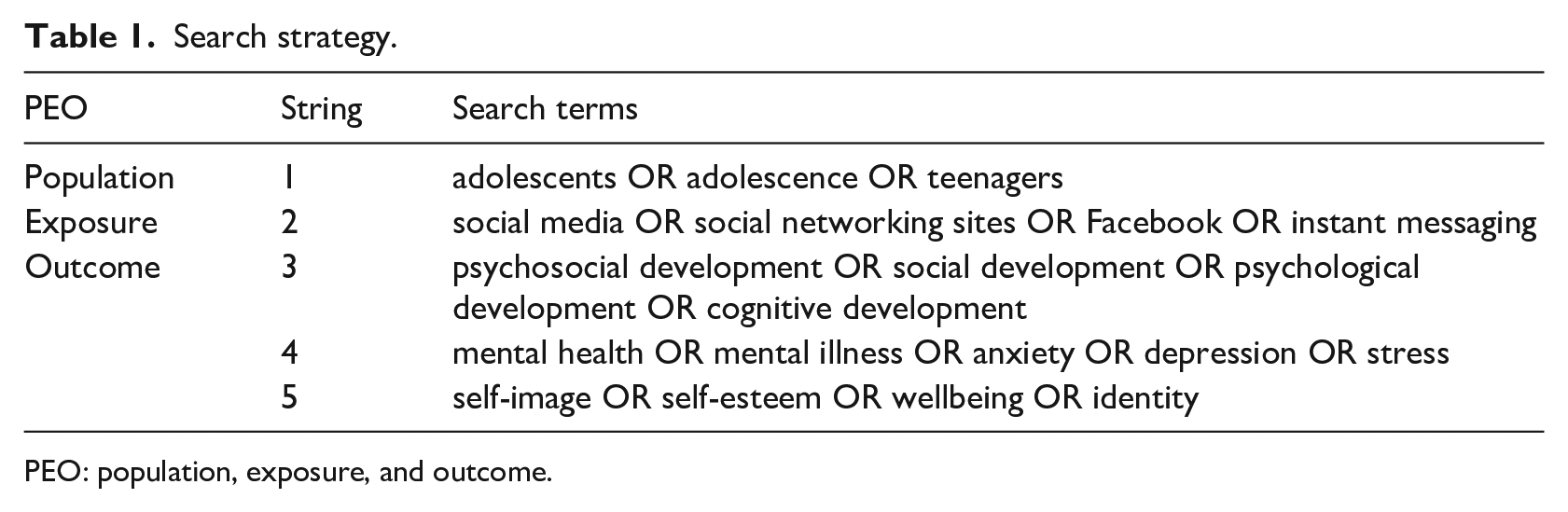
PEO: population, exposure, and outcome.
Study selection and assessment
The review followed the Preferred Reporting Items for Systematic Reviews and Meta-Analyses (PRISMA) statement to guide transparent reporting and methodological rigour (Moher et al., 2009). The review was conducted by a team of five individuals, operating in pairs. Successive screening of titles, abstracts, and full texts of articles for relevance against the inclusion criteria was conducted, using Excel spreadsheets to record decisions and motivations. Independent dual evaluation by two reviewers was conducted at each stage, to ensure methodological rigour. Disagreements were resolved through discussion with the fifth reviewer.
Quality appraisal and investigation of bias occurred before summation. Articles were assessed for methodological quality, on a 45-item, adapted version of the Smith, Franciscus and Swartbooi (SFS) scoring system version E. Smith et al. (2015) designed this critical appraisal tool for both quantitative and qualitative primary studies. A threshold score of 70% was set to include articles of strong to excellent methodological quality. Each article underwent independent dual quality appraisal, and disagreements or discrepancies that affected inclusion were resolved through discussion with the fifth reviewer.
Data extraction and synthesis
The data of the relevant articles were extracted using a self-developed data extraction table, including descriptive data (citation details and methodological information) and analytic data related to the research question, that is, regarding social media and psychosocial dimensions. The data extraction tool was piloted prior to use. Data extraction was conducted independently by all four reviewers and consolidated by the fifth reviewer to improve methodological rigour. Meta-analysis was not feasible, given the heterogeneous nature of the psychosocial domains and outcomes measures. As such, a meta-synthesis approach to data analysis was used, specifically, thematic summaries, involving the qualitative summary of findings according to themes (Thomas et al., 2017).
Results and discussion
The review findings include the procedural findings of the search process, the descriptive findings of the articles included in the review, and the analytic findings of the social media and psychosocial dimensions covered. Thereafter, the complex relationship between social media and the effects thereof on adolescent psychosocial development is discussed. Implications for practice in the South African context, recommendations for future research, and the strengths and limitations of the review are noted.
Search results
The screening process was recorded using the PRISMA flowchart (Figure 1). The initial search yielded 445 articles, and the supplementary search yielded 46 additional articles. Duplicates were removed, and the titles, abstracts, and full texts of articles were screened for eligibility. All decisions and motivations were recorded. A total of 29 articles met all the eligibility criteria.
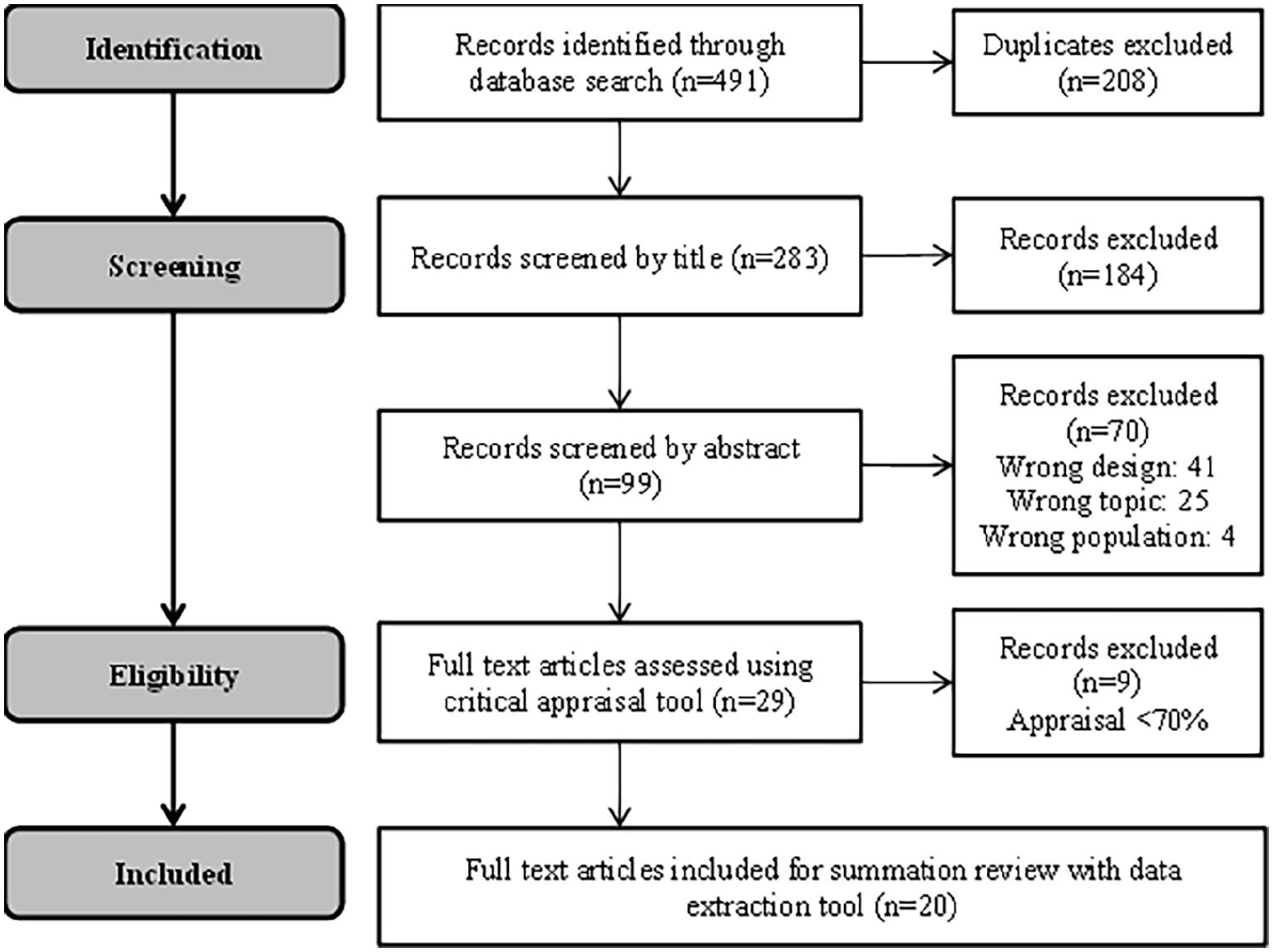
PRISMA flowchart, adapted from Moher et al., (2009).
Quality analysis
Quality analysis was conducted prior to summation. Nine articles that did not meet the threshold score of 70% were excluded, as the review integrated only highest quality evidence to mitigate potential bias (Laher & Hassem, 2020). Of the studies included, eight did not indicate the sampling method used (Table 2 below). However, as the review findings are descriptive, the goal was not generalisability.
Study characteristics.
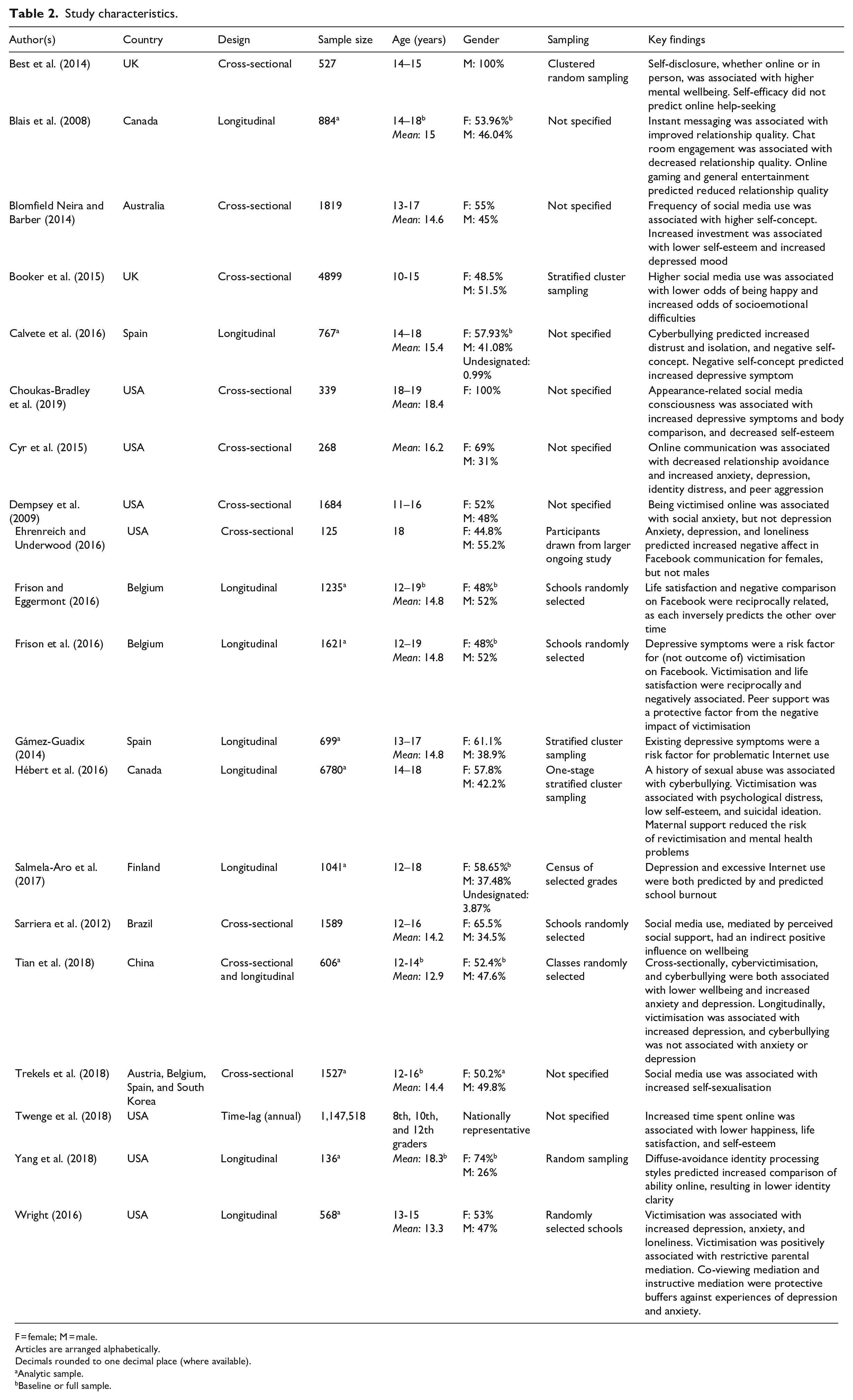
F = female; M = male.
Articles are arranged alphabetically.
Decimals rounded to one decimal place (where available).
Analytic sample.
Baseline or full sample.
Study descriptions
The articles included represented a range of geographic regions (Table 2), including: North America (n = 9), Europe (n = 7), Asia (n = 1), South America (n = 1), and Oceania (n = 1). A multinational study included participants from Austria, Belgium, Spain, and South Korea (Trekels et al., 2018). All articles included the target population of adolescents, with participant ages between 10 and 19 years, aligned with the WHO (2012) definition of adolescence. Most studies included both female and male adolescents. However, Best et al. (2014) included only males, and Choukas-Bradley et al. (2019) included only females. The reported sample sizes ranged from 125 (Ehrenreich & Underwood, 2016) to 1.1 million (Twenge et al., 2018). All articles in the review were quantitative, with equal numbers of cross-sectional (n = 9) and longitudinal (n = 9) designs noted, with Tian et al. (2018) reporting on both longitudinal and cross-sectional elements. Twenge et al. (2018) utilised a time-lag design.
Social media dimensions
Studies addressed a variety of social media dimensions. A focus on how social media is used was the focus of half the articles (n = 10). Problematic (Gámez-Guadix, 2014) or excessive (Salmela-Aro et al., 2017) Internet use, and investment (Blomfield Neira & Barber, 2014) are noted variants of social media use. Cyberbullying and victimisation via social media are common foci (n = 6). Comparison on social media (Choukas-Bradley et al., 2019; Frison & Eggermont, 2016; Yang et al., 2018), the affect expressed in Facebook communication content (Ehrenreich & Underwood, 2016), parental mediation of use (Wright, 2016), and online help-seeking (Best et al., 2014) are other noted aspects of study relating to social media.
Psychosocial dimensions
The psychosocial dimensions covered in the studies are summarised by four themes: identity development, interpersonal relationships, mental health, and wellbeing. Articles typically include multiple psychosocial dimensions.
Identity development
The theme of identity development (n = 10) includes constructs such as self-concept, identity processing styles, self-esteem, and body image. Social media use facilitates and supports the development of self-concept (Blomfield Neira & Barber, 2014) and identity development, buffering in-person interaction for those who experience identity-related anxiety (Cyr et al., 2015). While this may result in less relational avoidance, it may also exacerbate anxiety related to identity development (Cyr et al., 2015). Yang et al. (2018) found that diffuse-avoidant identity processing, which is situationally based and dependent on social approval, is associated with less identity clarity and a more fragile sense of self (Yang et al., 2018).
Lower self-esteem was predicted by increased use of social media (Twenge et al., 2018), intensity of use, and increased investment or being engrossed with social media (Blomfield Neira & Barber, 2014). Victims of cyberbullying were found to have lower self-esteem than those who were not victimised online (Hébert et al., 2016). The complex long-term effects of cyberbullying victimisation were found to enforce negative cognitive schemas, resulting in negative body image and a negative view of self, which in turn resulted in depression (Calvete et al., 2016). Notably, the link between the negative impact on body image and depression was greater for females than males, ostensibly due to gender socialisation related to the importance of physical appearance (Calvete et al., 2016). The heightened levels of awareness related to comparison facilitated by social media are associated with body image concerns and depressive symptoms (Choukas-Bradley et al., 2019). Body image thus plays a core role in adolescent identity, as a reference point for self-esteem (Calvete et al., 2016).
Interpersonal relationships
The second theme, interpersonal relationships (n = 15), includes relationship quality, social support, and parental supervision. Social media includes communication with known peers and/or strangers, and non-communication-based activities, such as gaming. Engagement with strangers in chat rooms was associated with alienation, conflict, and decreased feelings of companionship (Blais et al., 2008). Conversely, using social media to maintain existing friendships had a positive effect on the quality of those relationships (Blais et al., 2008). Gaming or entertainment had a negative effect on the quality of existing relationships (Blais et al., 2008), potentially due to the isolating nature of online ‘entertainment’ activities (Sarriera et al., 2012). Activities such as gaming and streaming were not explicitly included in the search terms and may be underrepresented in the review.
Perceived social support mediates the negative impact of social media on adolescent wellbeing (Sarriera et al., 2012). Notably, ‘high levels of perceived friend support offered protection against developing depressive symptoms or low life satisfaction after being victimized via Facebook’ (Frison et al., 2016, p.1767). Parental supervision ameliorates the negative impact of social media use on adolescent wellbeing (Booker et al., 2015), and parental support protects against the negative effects of cyberbullying (Hébert et al., 2016; Wright, 2016).
Engagement with peers online is linked with greater mental wellbeing (Best et al., 2014). Ehrenreich and Underwood (2016) found that girls with internalising symptoms were more likely to ask for and receive support from peers online. This help-seeking pattern was not observed among males, potentially due to the gender norms around self-disclosure or the lack of peer support for loneliness, depression, and/or anxiety (Ehrenreich and Underwood, 2016). However, Best et al. (2014) found that a significant portion of adolescent males preferred accessing professional help online as opposed to face-to-face, potentially also linked to dis/comfort with self-disclosure.
Mental health
The third theme, mental health impact (n = 14), focuses primarily on depression and anxiety. Experiencing cyberbullying is associated with increased psychological distress, including depression, anxiety, suicidal ideation, loneliness, low self-esteem, and lower life satisfaction (Hébert et al., 2016; Tian et al., 2018; Wright, 2016). Longitudinally, exposure to cyberbullying is associated with increased depression, but not anxiety, that may be explained by the general progression of the disorder, that is, ‘depressive reactions are preceded by prodromal periods of chronic anxiety’ (Tian et al., 2018, p. 433). Conversely, Dempsey et al. (2009) found that cyberbullying is only weakly associated with social anxiety symptoms and not depressive symptoms. Frison et al. (2016) found that depressive symptoms are not the result of, but rather a risk factor for victimisation. Furthermore, being victimised online is a risk factor for the development of mental health problems (Tian et al., 2018). The complex long-term effects of cyberbullying are explained by Calvete et al. (2016) in that victimisation reinforces negative cognitive schemas that result in negative body image and negative self-concept. It is the negative view of self that results in depression (Calvete et al., 2016). Perceived peer relationship stress was found to mediate the link between mental health and victimisation, that is, the nature of the relationship with the perpetrator (Tian et al., 2018). The perpetrator may be a close friend, explaining the association with existing depression and life dissatisfaction (Frison et al., 2016), or the perpetrator may be unknown, explaining increased levels of anxiety (Tian et al., 2018).
Heavy social media use is noted to increase the vulnerability of adolescents to harassment (Booker et al., 2015). Blomfield Neira and Barber (2014) note that it is investment in or being engrossed with social media, not the frequency of use, that predicts depressed mood and lower self-esteem. The problematic use of social media for mood regulation may encourage isolation from others and exacerbate depressive symptoms (Gámez-Guadix, 2014). Salmela-Aro et al. (2017) identify reciprocal relationships between both excessive social media use and depression with school burnout. Furthermore, the negative impact of problematic use, in terms of decreased academic performance and negative impact of social relationships, may exacerbate depressive symptoms (Gámez-Guadix, 2014).
Wellbeing
The last theme of wellbeing (n = 7) includes the constructs of happiness and life satisfaction. In a large scale, time-lag study of adolescents, Twenge et al. (2018) found that ‘adolescents who spent more time on electronic communication and screens. . . were less happy, less satisfied with their lives, and had lower self-esteem’ (p. 8). Similarly, Booker et al. (2015) note that the amount of time spent on social media was found to be associated with lower levels of happiness. Twenge et al. (2018) identify a general trend in decreased adolescent wellbeing, with indications of directionality relating to increased uptake of smartphones between 2012 and 2016. Conversely, engagement in non-screen activities, such as sport, was related to increased wellbeing and happiness (Booker et al., 2015; Twenge et al., 2018).
Social media facilitates the portrayal of ‘best selves’ and the upward comparison of others, which leads to negative self-evaluation (Frison & Eggermont, 2016) or negative peer-evaluation, for example, cyberbullying (Tian et al., 2018), both of which are associated with decreased life satisfaction and lower wellbeing. Frison et al. (2016) found that low life satisfaction may predict and be a consequence of victimisation. However, engagement with peers online, particularly sharing personal problems with friends, was linked with greater mental wellbeing (Best et al., 2014). Perceived social support mediates the negative effect of social media use on mental wellbeing (Sarriera et al., 2012) and protects against victimisation on Facebook and decreased life satisfaction (Frison et al., 2016). Parental support buffers the negative effects of social media use on wellbeing (Booker et al., 2015).
Effects of social media on adolescent psychosocial development
The risks and benefits of social media use are delineated, highlighting the complex relationship between social media and its effect on adolescent psychosocial development. The risks due to how social media is used and the interpersonal risks are counterbalanced against the interpersonal protective factors and potential developmental benefits.
Use-based risks
The general concern that increased time spent on social media is problematic is supported. More time spent using social media is associated with negative outcomes, such as lower levels of wellbeing and happiness (Trekels et al., 2018), as it results in decreased in-person interaction (Blais et al., 2008). Problematic use, including excessive Internet use (Salmela-Aro et al., 2017), engrossment (Blomfield Neira & Barber, 2014), and using social media for mood regulation (Gámez-Guadix, 2014), are risk factors for depressive symptoms, lower self-esteem, harassment, and burnout. The amount of time, and adaptive or problematic nature of social media use are differentiating factors in terms of psychosocial outcomes. The differentiation of impact based on the type of engagement was also noted in the review by Keles et al. (2020). The studies in the present review include measures of various types of social media use, which may be beneficial for future studies, to statistically delineate the impact of social media by type of use, a need noted by Ivie et al. (2020).
Interpersonal risks
Cyr et al. (2015, p. 80) highlight that the inability to resolve the identity crisis may ‘frequently [result in] distress and symptoms of anxiety and depression’. Adolescence is typically when depressive and anxiety symptoms emerge (Keles et al., 2020), and thus the impact of social media in this regard needs clarification. Comparison and feedback from others are typical ways in which adolescents evaluate and adapt their social identities (Valkenburg & Peter, 2011). Social media supports this identity exploration activity, with various mechanisms for feedback and engagement with others. However, the propensity for comparison on social media, in the form of both negative self-evaluation and cyberbullying, has negative psychosocial outcomes, in the form of depression, poor body image, decreased life satisfaction, and lower levels of wellbeing (Choukas-Bradley et al., 2019; Frison & Eggermont, 2016; Tian et al., 2018). Adolescents with diffuse-avoidant identity processing styles (Yang et al., 2018) may be more affected by the feedback received on social media, highlighting the influence of the reference points adolescents use for identity processing. Negative body image was not well documented in the present review, yet the link between comparison on social media and negative body image is aligned with the findings of previous reviews (Frost & Rickwood, 2017; Holland & Tiggemann, 2016).
Cyberbullying is one of the primary risks noted in relation to adolescent social media use (Kwan et al., 2020), with the present review indicating similar trends of negative mental health outcomes, lower self-esteem, and lower life satisfaction to those of Kwan et al. (2020). While cyberbullying was mentioned by Valkenburg and Peter (2011), the discussion of psychosocial impact was limited to mental health effects. The present review found a complex interplay of various factors explaining the mental health impact of cyberbullying. This extended previous findings to include the complex impact of cyberbullying on self-esteem and identity development, particularly in relation to body image and self-esteem, which in turn may result in depressive symptoms and decreased life satisfaction.
Previous reviews note the negative impact of social media use on various mental health outcomes, including depression, anxiety, and eating disorders. However, gaps noted include the lack of longitudinal evidence and the complexity of influencing factors. The present review adds longitudinal findings to the body of evidence, with preliminary indications that existing psychosocial difficulties may increase the vulnerability of adolescents to negative experiences and/or negative outcomes related to social media use (Frison & Eggermont, 2016; Frison et al., 2016; Gámez-Guadix, 2014; Hébert et al., 2016). However, this was not thoroughly documented in the articles under review and warrants further investigation.
Interpersonal protective factors
The review highlighted that interpersonal support protects against the negative outcomes associated with social media use, particularly related to cyberbullying. Developmentally, friends play a central role in the provision of social support during adolescence (Louw & Louw, 2019). Furthermore, the present review highlights the protective influence of parental support and supervision of social media use. In the review by Valkenburg and Peter (2011), the role of parents and schools in psychosocial development has changed, due to the unsupervised nature of self-socialisation that takes place online. The findings of the present review highlight the enduring importance of parental involvement, in buffering the potential negative effects of social media use.
Potential developmental benefits
Social media is not problematic in and of itself, but is dependent on the appropriate use thereof. Twenge et al. (2018) identify that happiness increased with minimal social media use. Social media remains a useful platform for adolescents to learn ICT skills, and it is generally agreed that ‘the internet allows the creation of diverse and dynamic social networks’ (Sarriera et al., 2012, p.559). Social media may be beneficial for maintaining and even improving on the quality of existing relationships (Blais et al., 2008), in alignment with previous reviews (Valkenburg & Peter, 2011). Valkenburg and Peter (2011) note that ‘online communication creates a safe space that facilitates online self-disclosure’ (p. 124), an important part of adolescent identity development. The present review supported this finding, but identified gendered patterns in adolescents’ comfort with sharing online. Adolescents’ comfort with self-disclosure impacts help-seeking behaviour, with the anonymity afforded online assisting those who are uncomfortable self-disclosing.
Implications for practice
Limited representation from low- to middle-income countries in the review means there are limited direct implications for the South African context. However, South Africa is a complex setting; thus, the findings may be generally applied. The emerging negative impacts of social media use require appropriate therapeutic interventions. Gámez-Guadix (2014) recommends interventions for depression, specifically cognitive behavioural therapy, for treating problematic Internet use. The presentation of problematic Internet use may indicate the need for depressive symptom screening (Gámez-Guadix, 2014). The generational shift towards online help-seeking, particularly among those who search for health-related information online (Best et al., 2014), highlights the importance of online mental health service provision. This may provide access to an at-risk group of individuals who value anonymity highly and/or are uncomfortable with self-disclosure. Evaluation of interventions applied in relation to social media remains crucial, to ensure broader learning and good practice. There is potential to teach adolescents healthy engagement and coping skills to mitigate the risks associated with social media use. Strategic integration of socio-digital practices into school activities may support the development of ICT skills and create space for healthy social media use education (Salmela-Aro et al., 2017, p.354). Educational interventions for parents on the risks and benefits of social media, and how to meaningfully engage with their children on this topic, would be beneficial.
Recommendations and limitations of the study
Social media use is no longer restricted to adolescents and young adults, and as such, research into its impact in childhood and adulthood, even into late adulthood, would also be beneficial. Longitudinal research across developmental stages could provide insights into the long-term effects of social media use. There is some evidence of longitudinal research on the topic, yet more research of this type is needed to provide more evidence of predictive and causal relationships between social media and associated outcomes. With the implementation of psychological interventions, mentioned in the previous section, research involving monitoring and evaluation of the impact thereof would be beneficial. The evidence under review was primarily from the global North. As such, there is a need for research on social media and adolescent psychosocial development from the global South, including the South African context.
Reviews are limited to the search terms and databases used; thus, other relevant literature may not have been identified. General search terms related to social media were used, and platform or function-specific dimensions may be underrepresented. The exclusion of articles published in languages other than English and grey literature means that potentially relevant research was excluded. Studies achieving below 70% were excluded to minimise the risk of bias; however, potentially relevant findings may have been excluded.
Conclusion
The review confirms the complex nature of the relationship between adolescent psychosocial development and social media. Clear developmental benefits are counterbalanced against the risk of negative social and psychological experiences. The findings extend those of previous reviews on similar topics, with the inclusion of longitudinal evidence, indicating the role of existing risk factors and protective factors. Studying the implications of social media use is imperative, particularly within the South African context, as social media use becomes more common. Future research should contribute a South African perspective, and explore and assess the impact across developmental stages. South African health professionals may learn from international evidence on the impact of social media to harness the potential benefits while preparing for the potential negative impacts thereof.
Footnotes
Declaration of conflicting interests
The author(s) declared no potential conflicts of interest with respect to the research, authorship, and/or publication of this article.
Funding
The author(s) received no financial support for the research, authorship, and/or publication of this article.
