




Abstract
The life-threatening genetic blood disorder, thalassaemia, which causes decreased haemoglobin production, is preventable. Sociocultural determinants and the level of public health awareness must be used to adopt control measures of prevention. Identifying information gaps and educating the community about screening should be a priority, especially in areas with high disease burdens. A relevant health education technique, with which the audience can identify, can effectively bring understanding necessary effectively to sensitise the community. We propose the ‘Bag and Ball’ method, which includes role-play for health education specifically concerning inherited genetic disorders.
Pedigree charts are often used for health education on inherited diseases. They are complex and challenging for people to understand. Our method is economical and simple and can readily be used in the community setting. Even though the importance haemoglobinopathies has been recognised, they remain neglected in terms of action and control measures. 1
Counselling on the heredity of affected children in prenatal clinics has been shown to have the greatest influence in terms of a preventive strategy. 1 Seminars, workshops, and classes, have been adopted as methods for disseminating health education through schools and local health care providers. 2 However, role plays are preferred as they generate enthusiasm and motivation in listeners, as well as effectively increasing the retention of knowledge for a longer period than any other technique.
The inheritance pattern is conveyed through role play, where two health educators, one male and one female, assume the roles of a healthy father and mother, respectively. They are equipped with two carrier bags, each containing green and red tennis balls, symbolising normal and affected genes, respectively (Fig. 2). In the case of Thalassaemia, the red ball would represent the β-chain as compromised.
During role-play, health educators, acting as parents, randomly pick a ball from their bags without looking. This demonstrates that when parents have children, they have no choice which genes they pass on: it happens by chance (Fig. 1(a) and (b)).
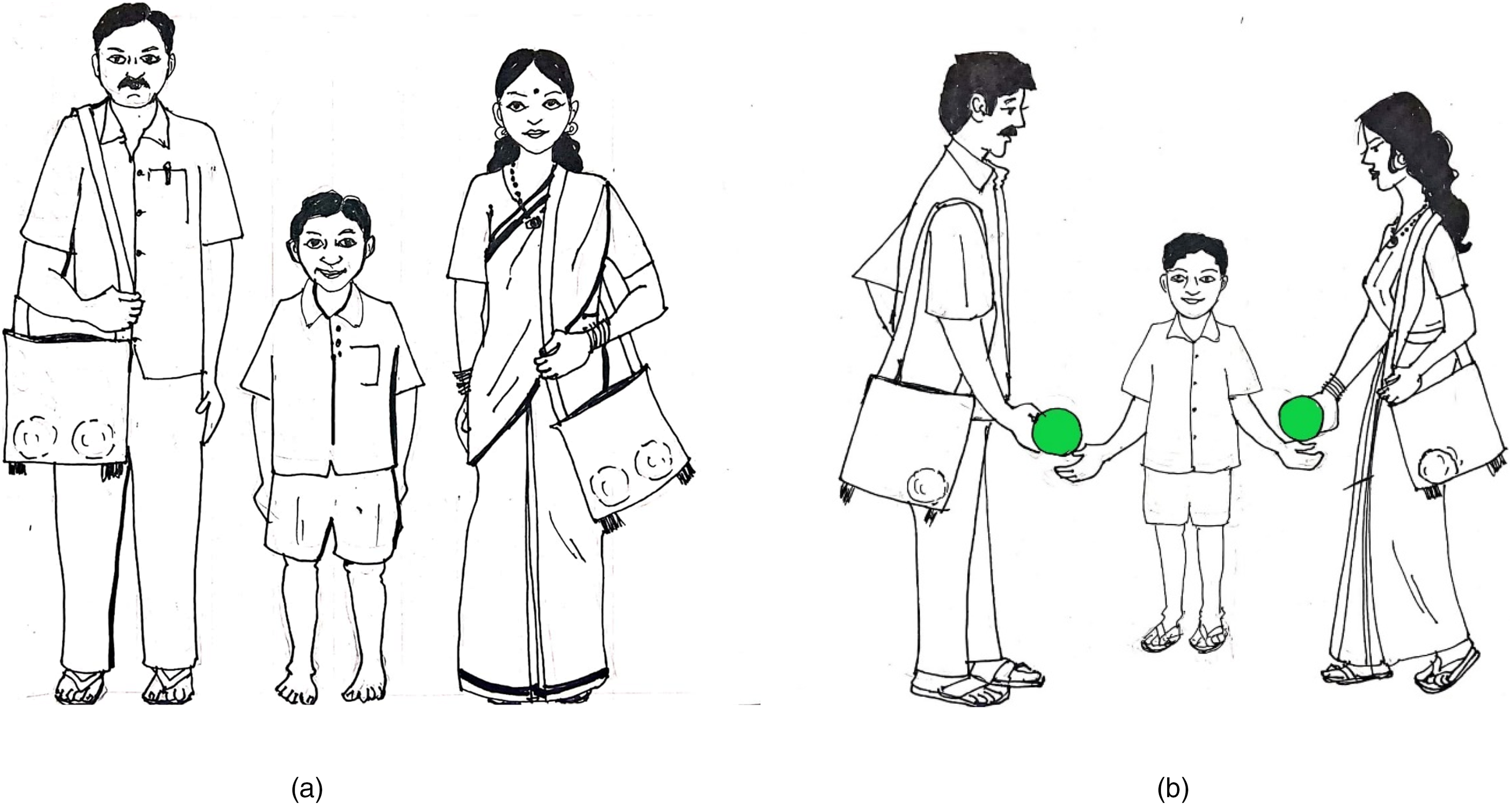
Illustration of Bag and Ball technique. (a) Father and mother with bag having two balls each represent two genes. (b) Normal parents giving normal genes to their offspring. In this scenario, child is receiving two normal genes, hence the child is normal.
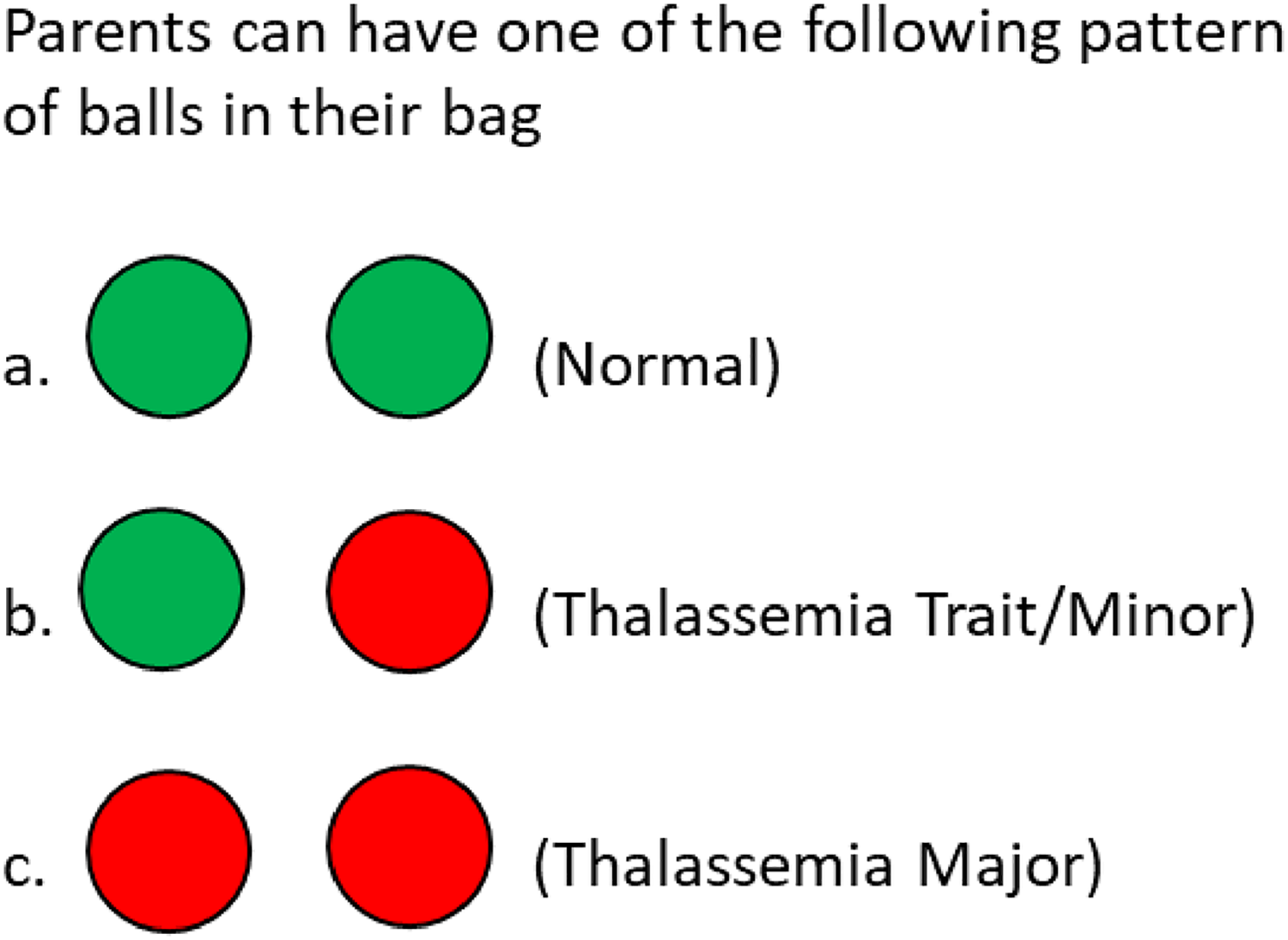
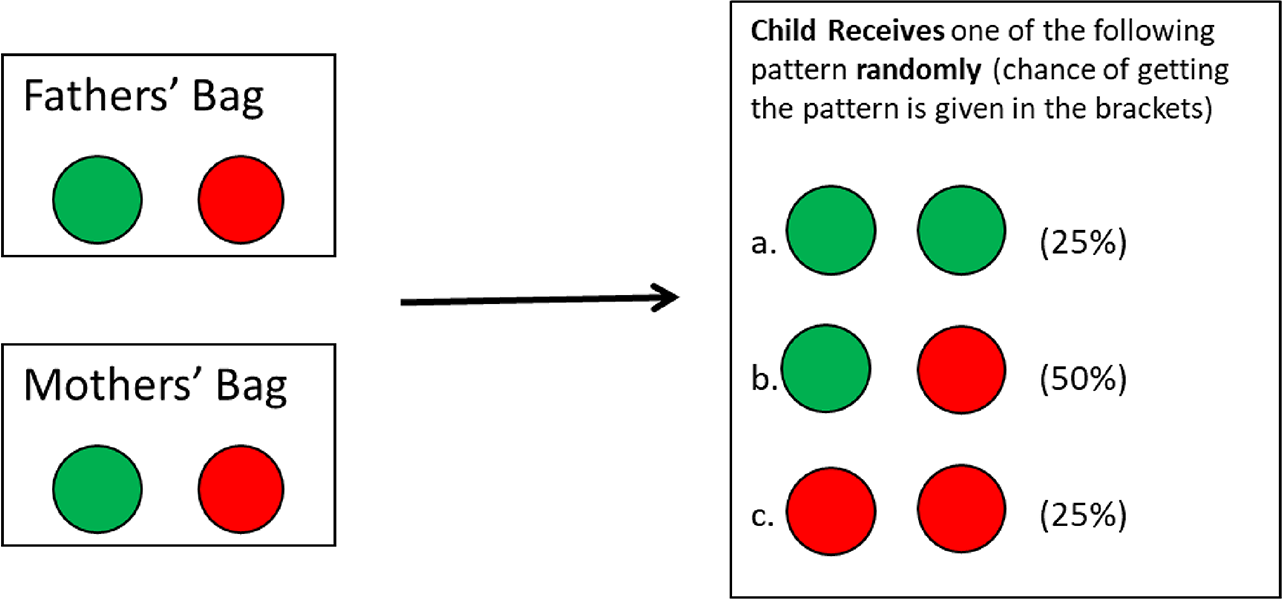
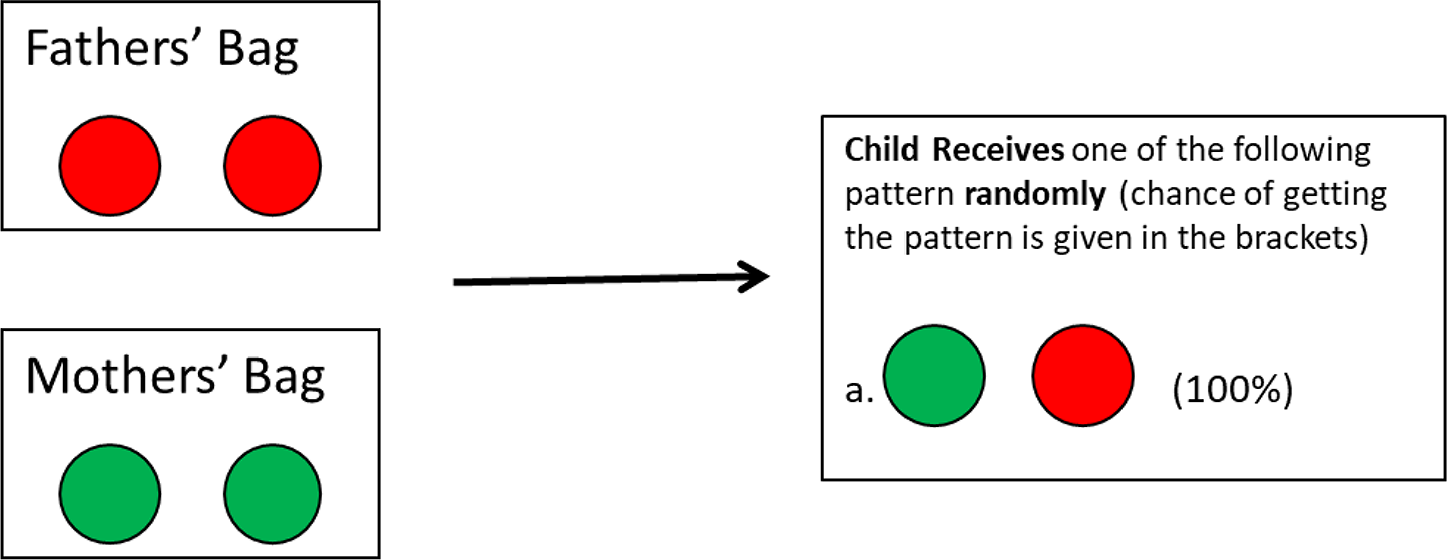
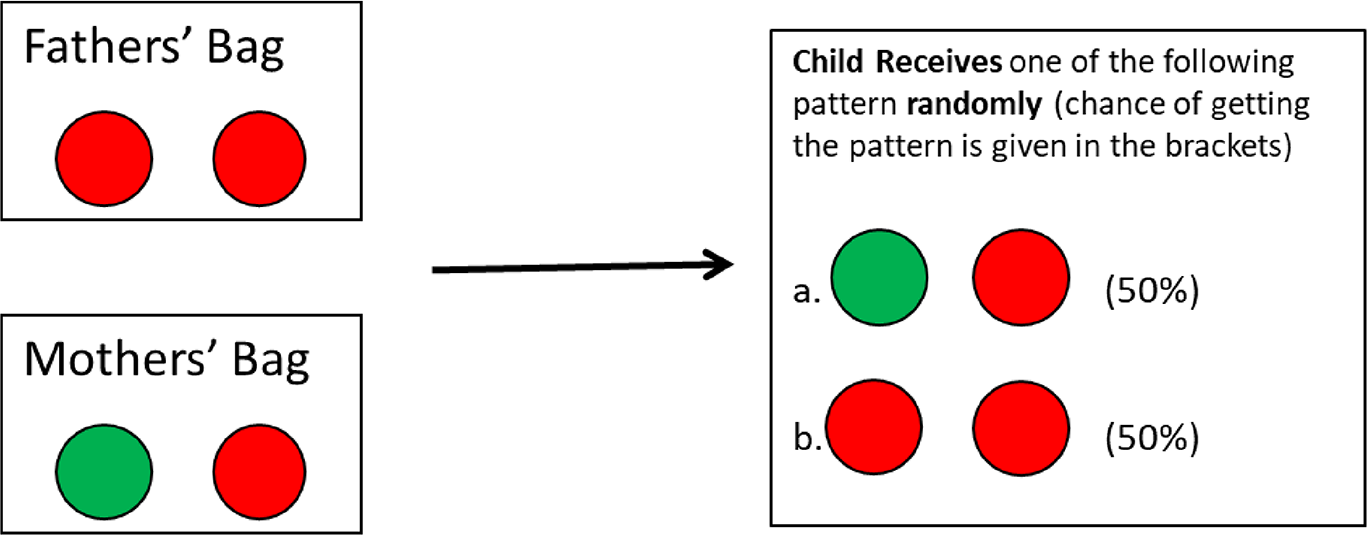
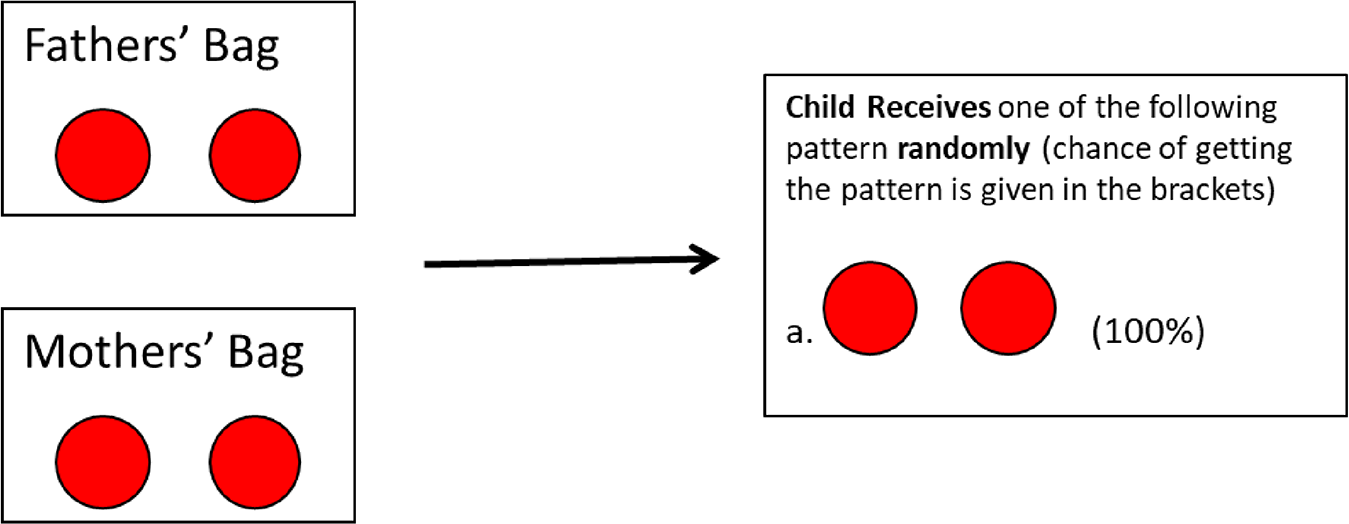
Various patterns of genes in inherited genetic disorder (eg, thalassaemia).
Evaluation and effectiveness of our proposed method can be easily conducted through focus group discussions, interviews, surveys, or observations. 3 In low-middle income countries, this is paramount. Our method is supremely easy to conduct and is powerfully effective; role play is the ideal method to communicate ideas at community level.
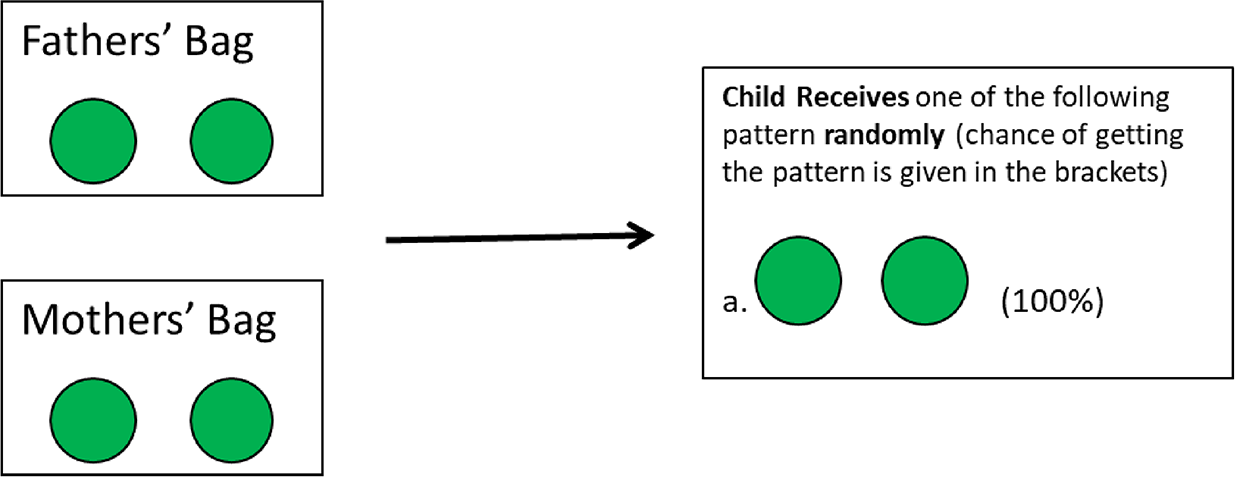
Both the parents normal:
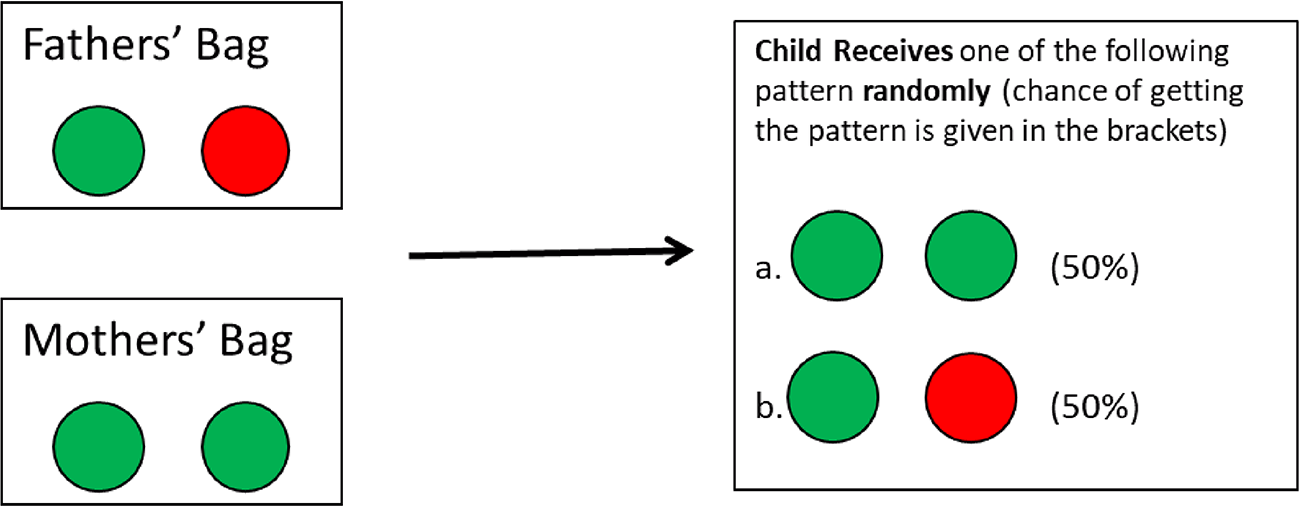
One parent carries the trait:
Both parents carry the trait:
One parent with the disease:
One parent with disease and the other with trait:
Both parents with the disease:
Footnotes
Acknowledgements
The authors would like to acknowledge Mr Stalin Gnanasigamani for helping us with the illustrations.
Authors contributions
SMD and SDM conceptualised the idea. SMD and MS drafted the manuscript. KG, SDM, MB and AR critically reviewed the manuscript for the contents and idea circulated.
Declaration of conflicting interests
The authors declared no potential conflicts of interest with respect to the research, authorship, and/or publication of this article.
Funding
The authors received no financial support for the research, authorship, and/or publication of this article.