



Abstract
Costus igneus, commonly known as the ‘Insulin plant’ has been traditionally used in India to lower blood sugar levels. Its method of action is through a protein peculiar to itself, which has hypoglycaemic action. It therefore may prove harmful if used in excess, or together with other hypoglycaemic agents.
Case reports
A 55-year-old man, known to have chronic kidney disease, who was newly diagnosed with diabetes mellitus, and started on insulin, was brought unconscious as an emergencya by his wife. He had been prescribed human Mixtard insulin 30/70 25U before breakfast and 20U before dinner for the previous two months, but his sugar levels remained poorly controlled.
He had received his evening dose of insulin, 12 h prior to presentation. On admission, his random blood sugar was 1.78 mmol/L, and his Glasgow coma scale (GCS) was 3/15. Other vital parameters were normal.
The investigations done are listed in Table 1. The ECG and urine routine were normal. An ultrasound scan of kidney, ureter and bladder showed renal parenchymal changes.
No obvious cause for recurrent hypoglycaemia was noted, but on further questioning, it was revealed that our patient had consumed raw Costus igneus leaves daily for the past week prescribed by a traditional herbal practitioner.
Similarly, a 70-year-old female, a known diabetic and hypertensive, was admitted with decreased consciousness for the past day to our emergency department.b Her GCS at presentation was 10/15 (E4V3M3) and random blood sugar was 2.0 mmol/L. No other abnormality was found. Her family members stated that she refused medication prescribed by the local doctor for diabetes. She resorted to herbal treatment by taking a paste made of Costus igneus leaves daily for the past six months with a recently increased intake prior to presentation.
Investigations are listed in Table 1. ECG showed poor R wave progression and tall T waves in anterior leads. Cardiac troponin levels were not raised. Over the next 12 h, despite dextrose infusion, she continued to have recurrent hypoglycaemic episodes and continued to be drowsy. She also had persistent high blood pressure readings and was started on glyceryl trinitrate infusion.
A plain CT brain scan revealed infarction in both thalamic, capsulo-ganglionic and paraventricular areas, suggestive of old hypertensive changes. Hypoglycaemic changes were not found in areas classically affected (hippocampus, cerebellum, and brainstem). 1 On the fifth day of admission, her sensorium gradually improved, and her blood pressure and sugar levels normalised.
Both patients were discharged in a haemodynamically and neurologically stable condition.
Laboratory investigations.
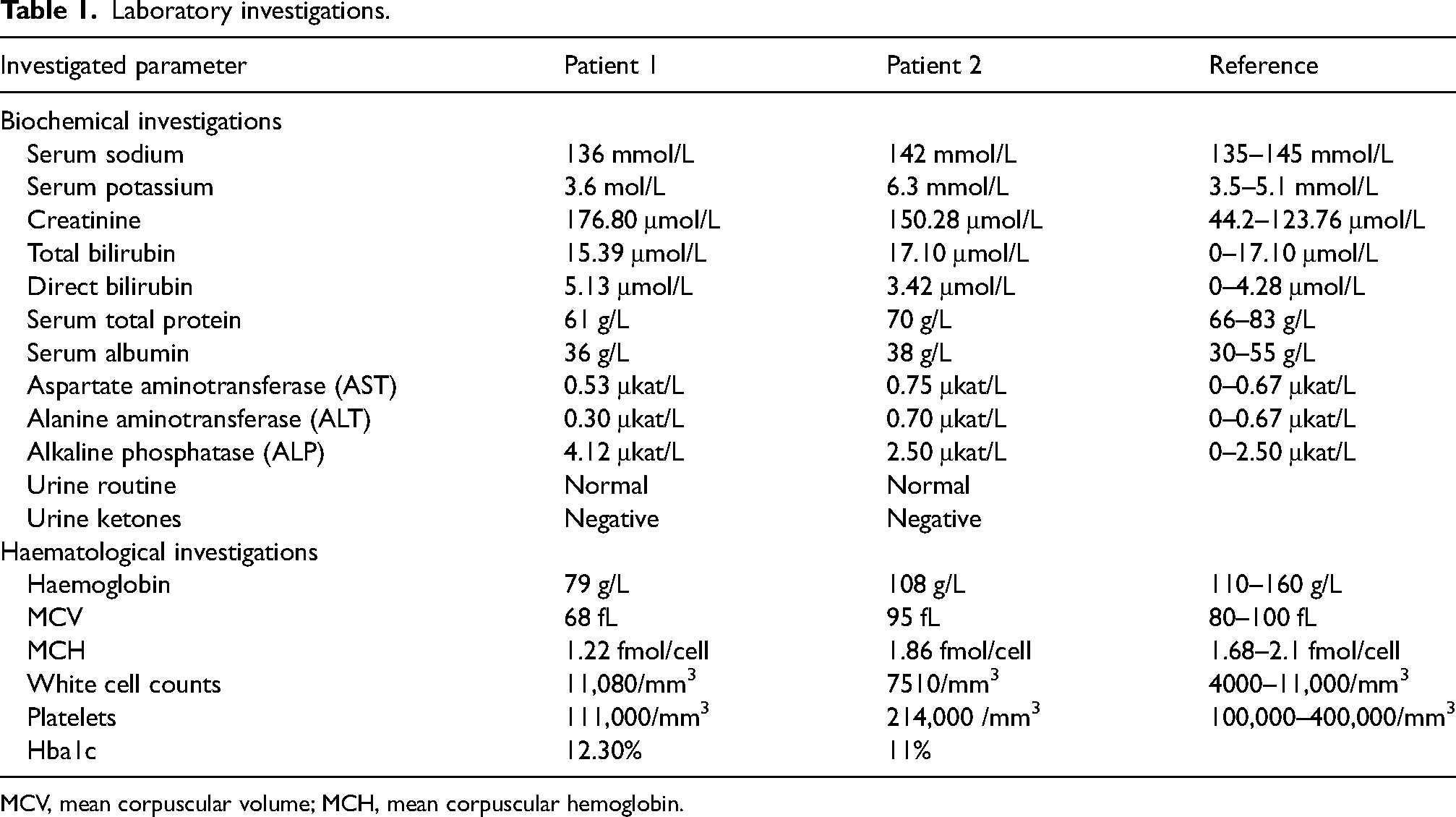
MCV, mean corpuscular volume; MCH, mean corpuscular hemoglobin.
Discussion
It is well-established that leaves of Costus igneus (Fig. 1) have been therapeutically used to lower blood sugar levels. 2 The plant is found in the wilderness but is also grown as an ornamental plant in southern India. 3 The medical benefits of the plant, 4 namely its antidiabetic effect have also been studied on animal5,6 and human subjects. 7 However, to date, no clinical trial of its dosage and efficacity exists. 8 Even though Costus igneus-induced hypoglycaemia is not very common, it should be considered as a differential after ruling out other common causes, especially where intake of herbal medicines is a possibility.
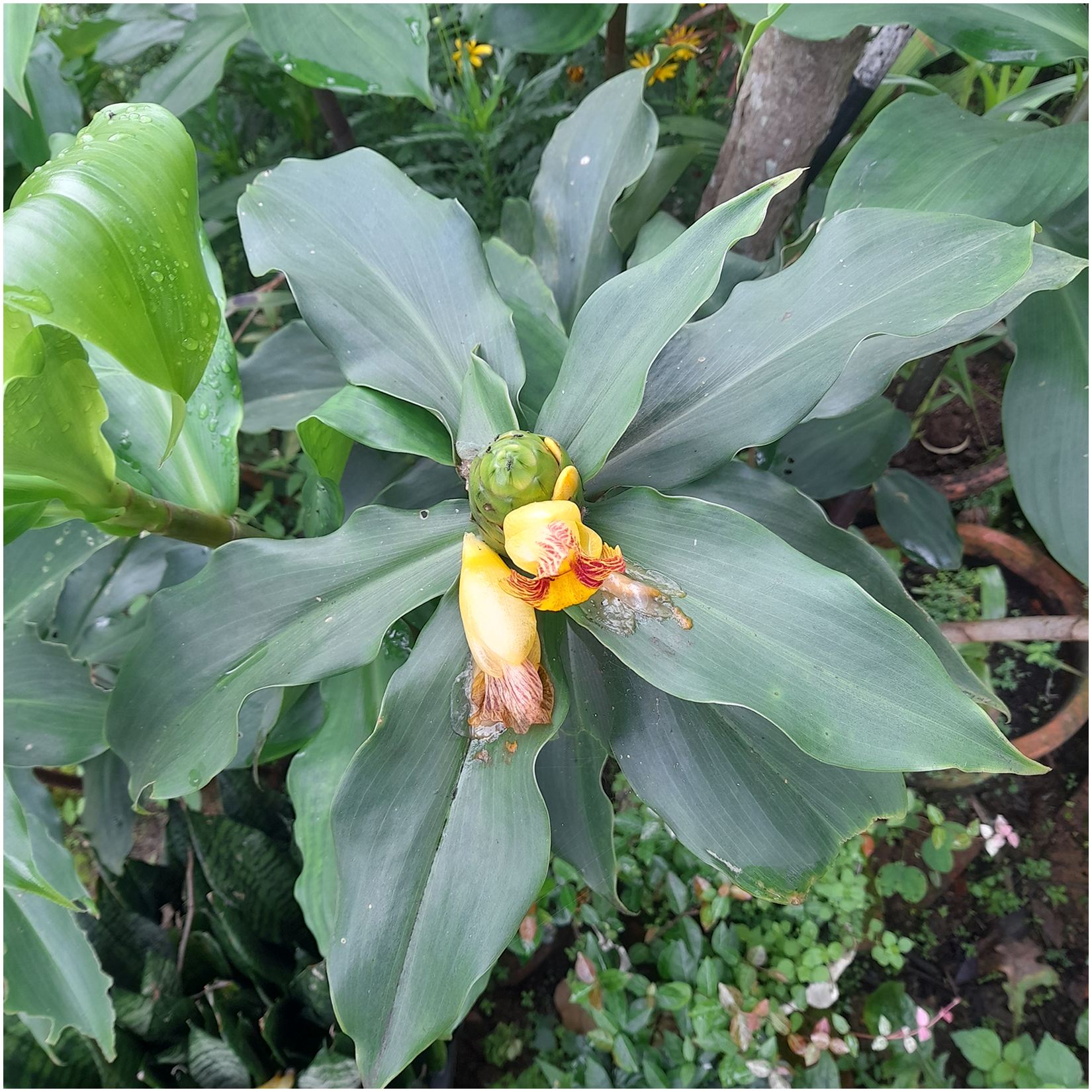
Costus igneus ‘Insulin plant’.
Footnotes
Declaration of conflicting interests
The author(s) declared no potential conflicts of interest with respect to the research, authorship, and/or publication of this article.
Funding
The author(s) received no financial support for the research, authorship, and/or publication of this article.
