




Abstract

Keywords
Introduction
Dirofilariasis is a global zoonotic infection caused by nematodes of the genus Dirofilaria. Though endemic in nature, this parasitic infection is emerging in rural areas of Eastern and Southern Europe, and Central Asia. Domestic and wild mammals such as dogs, cats, and foxes are natural hosts and the infection is inadvertently transmitted to humans by mosquito bites from Culex, Aedes, and Anopheles, mosquitoes. 1 While Dirofilaria repens can occur in subcutaneous nodules mostly in the upper part of the body, Dirofilaria immitis causes cardiac and pulmonary impairment. 2
Case report
A 66-year old male with type 2 diabetes mellitus and hypertension was referred with redness in the left eye for 15 days, associated with nodular swelling insidious in onset, gradually progressive, and painless.
A tender subconjunctival cystic swelling with congestion and chemosis was detected under the bulbar conjunctiva on the temporal side of the left eye.
Left eye mass excision under local anesthesia was done and intraoperatively, a live, white nematode was removed from the nodule (Fig. 1 and Video 1). On microbiological evaluation, the nematode was fixed in formalin and cleaned in glycerine for suitable examination of its structure. Macroscopically, the nematode was cylindrical, elongated, white in color, measuring 0.4–0.5 mm thick, and 9–10 cm in length (Fig. 2). Under the microscope, the outer surface of the nematode's cuticle was found to have fine transverse striations and prominent longitudinal ridges (Figs. 3 and 4). The anterior rounded end of the nematode was observed to be slightly wider than the posterior end. Morphologically, the nematode resembled the genus Dirofilaria and the size, typical location, and clinical presentation supported the diagnosis of D. repens. The histopathological report of the excised mass showed features suggestive of a parasitic granuloma. The postoperative course was uneventful. Our patient was started on steroid/antibiotic eyedrops (Gatifloxacin and Prednisolone) and discharged.
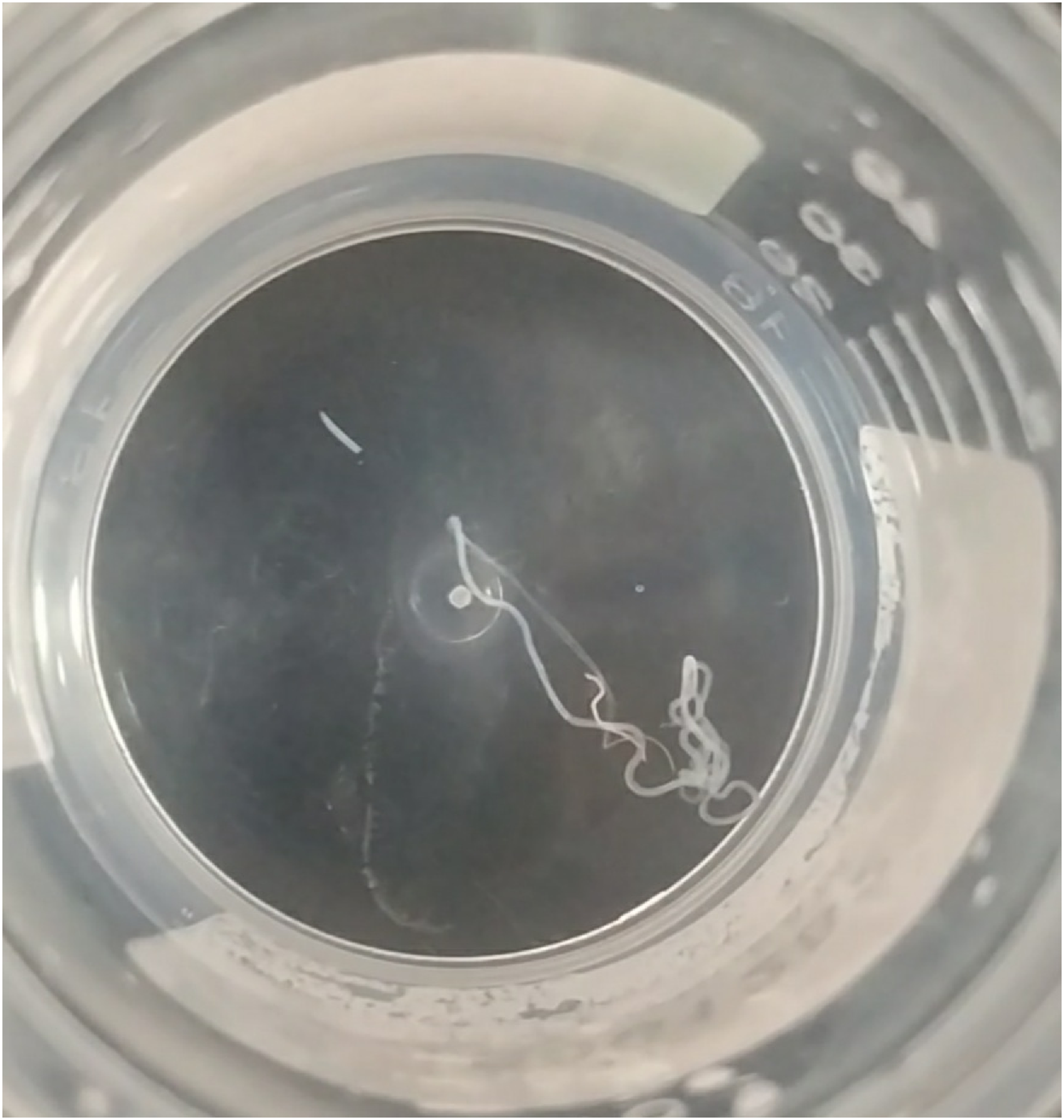
Live and white-colored nematode.
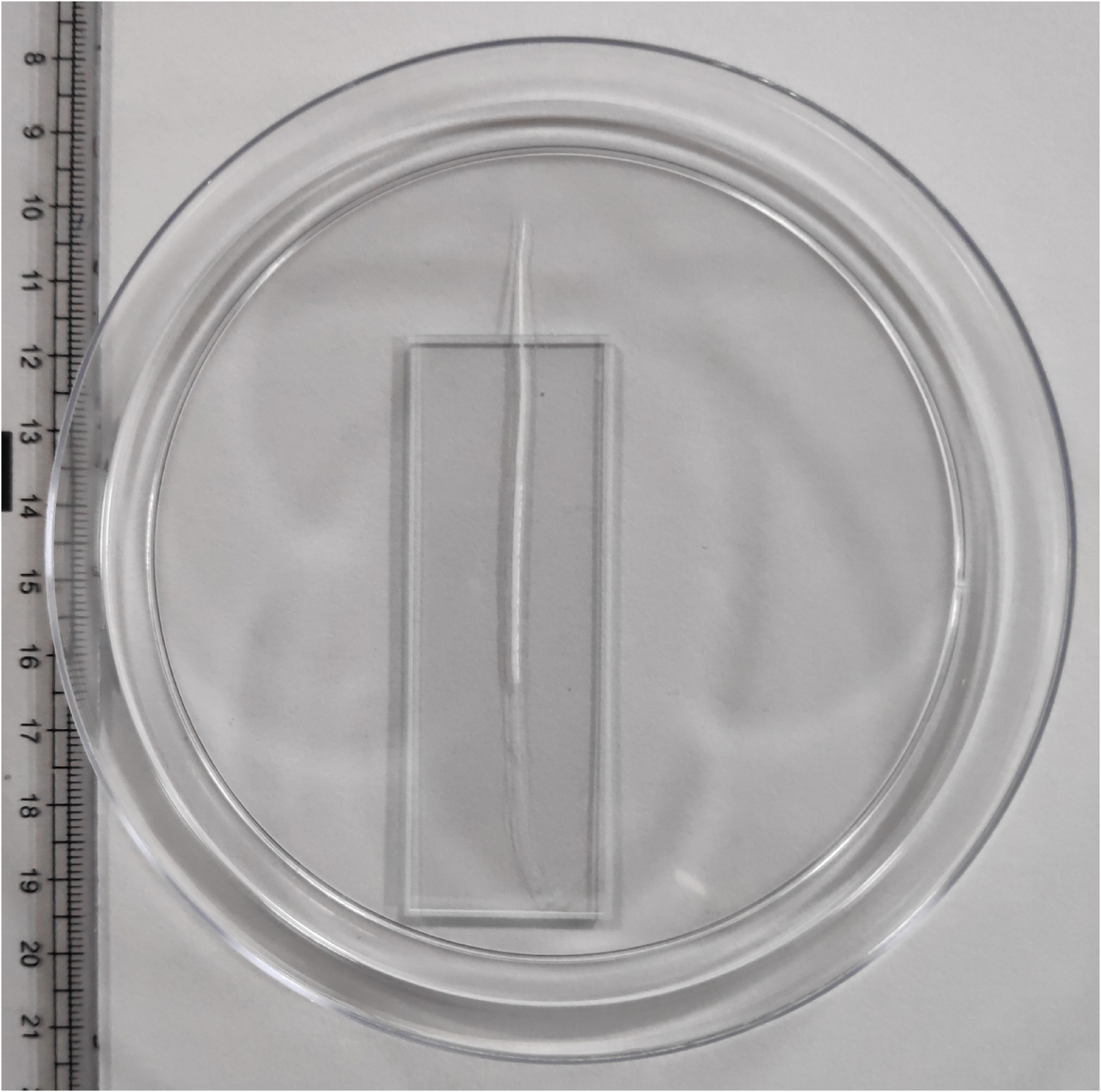
Nematode was cylindrical, elongated, white in color, measuring 0.4–0.5 mm thick, and 9–10 cm in length.
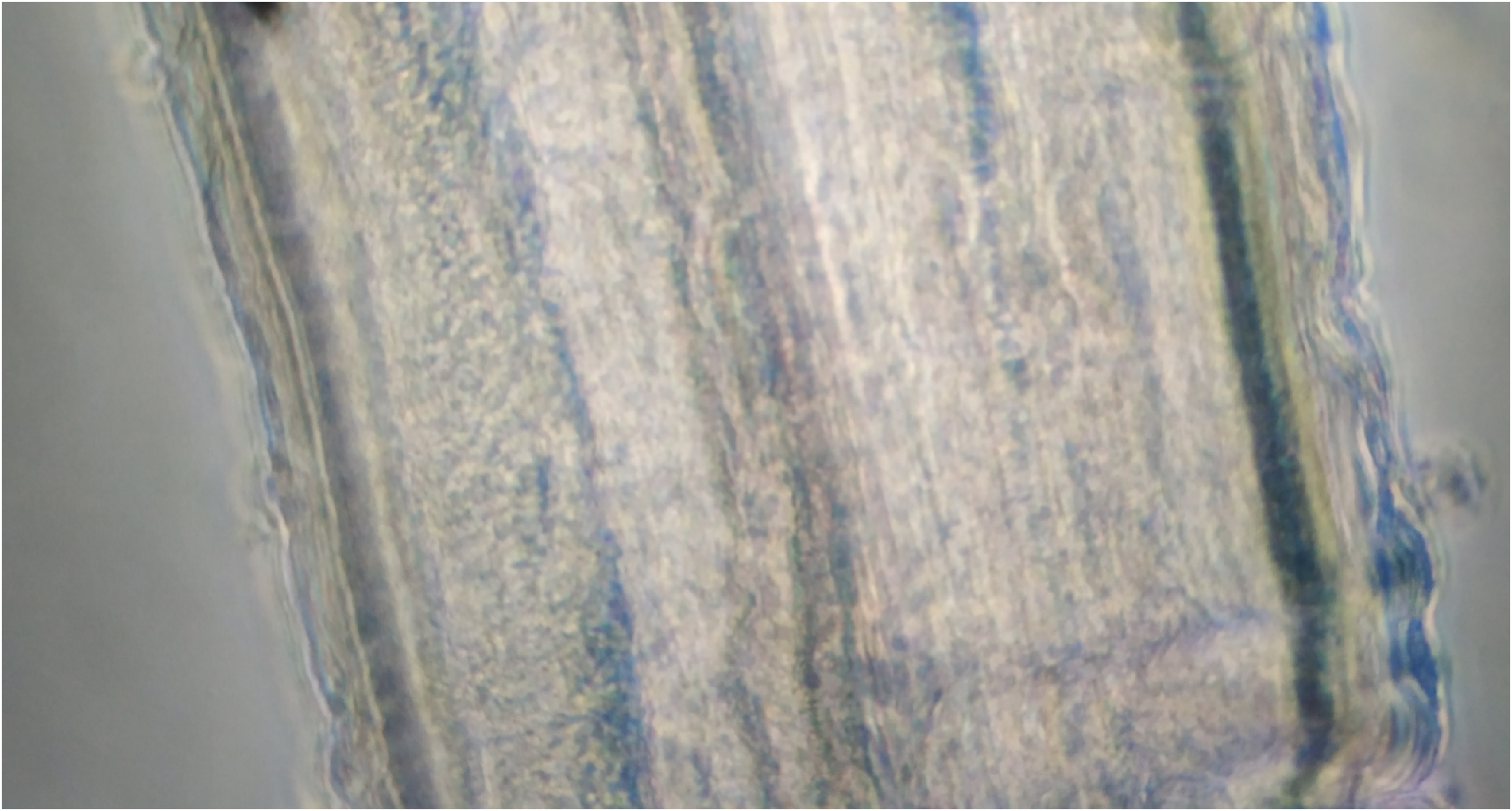
The outer surface of the nematode's cuticle was found to have prominent longitudinal ridges.
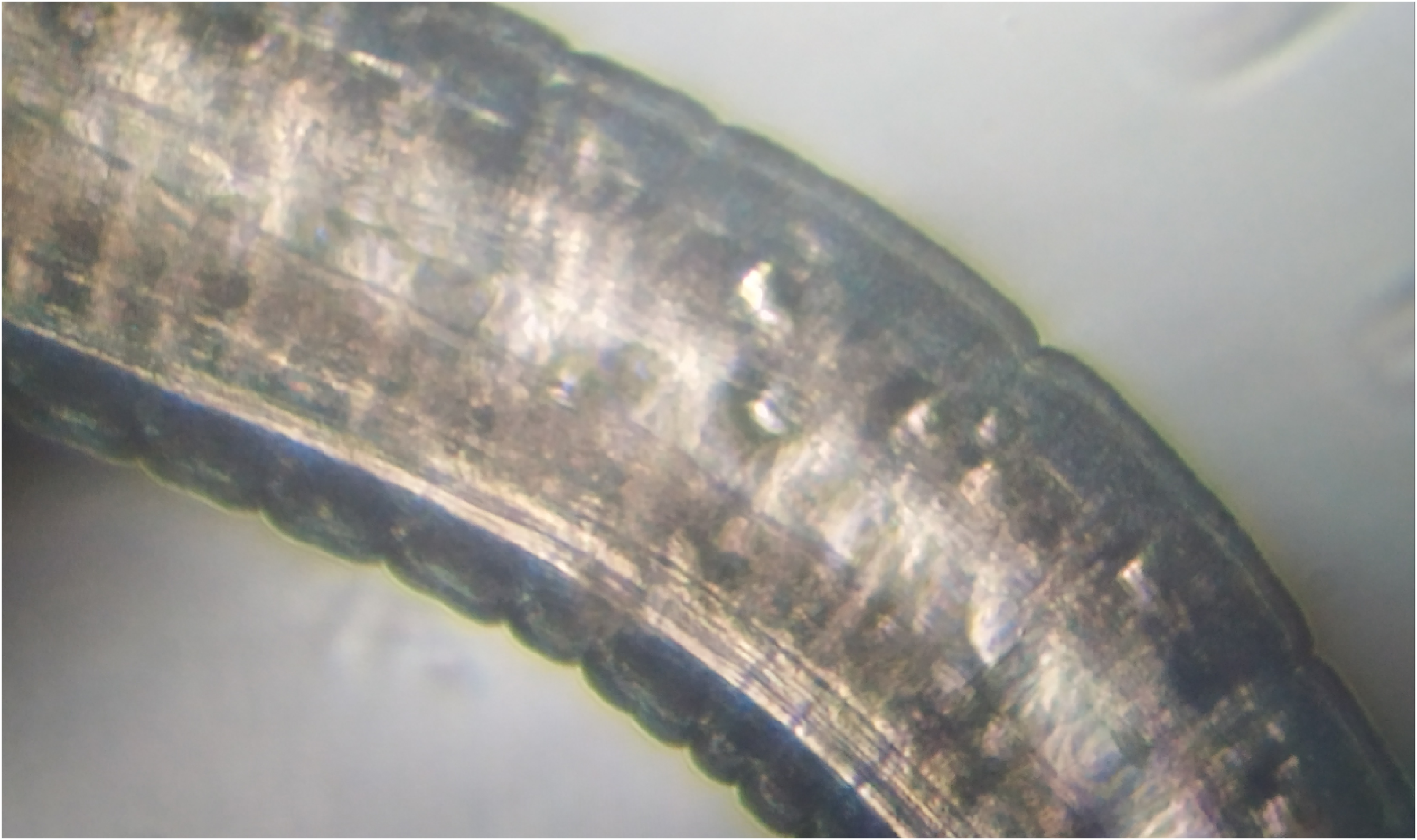
The outer surface of the nematode's cuticle was found to have fine transverse striations.
Discussion
Human dirofilariasis is important in view of the variety of different organs that can be affected and the variations in clinical presentations, which can range from tumor-like to cystic lesions. 3 The most important risk factors concerning dilofilarial infections in humans include warm climate, mosquito density, outdoors human activities, and the abundance of microfilaremic dogs. 4 Initial cases of human ocular Dirofilaria infection in India were reported from Kerala (South India) in 1976 and 1978, respectively. Though the identification of the worm is done by studying the fully matured worm, 3 the precise identification of Dirofilaria species may be achieved with DNA analysis, based on polymerase chain reaction. 4 D. immitis causes microfilaremia in humans and may hence require the use of anti-helminthic drugs, whereas, patients with D. repens infection may benefit from surgically removing the worm. 2 Our patient had no travel history to other endemic areas; therefore, it can be assumed that human dirofilariasis is not uncommon in many parts of India including Karnataka. Health practitioners should be made aware of the possibility of dilofilarial infection in cases of localized nodules in any part of the body.
Supplemental Material
Footnotes
Acknowledgment
None.
Author contribution
A.A.A; S.S.V; S.N were involved in data analyzing, interpretation, validation, literature search, and manuscript writing, review. A.A.A; V.K.K were involved in data analyzing, interpretation, validation, literature search, manuscript writing, editing, review, and final draft.
Declaration of conflicting interests
The authors declared no potential conflicts of interest with respect to the research, authorship, and/or publication of this article.
Funding
The authors received no financial support for the research, authorship, and/or publication of this article.
Ethical approval
Written consent was obtained from the patient for publication of this report.

Supplemental material
Supplemental material for this article is available online.
References
Supplementary Material
Please find the following supplemental material available below.
For Open Access articles published under a Creative Commons License, all supplemental material carries the same license as the article it is associated with.
For non-Open Access articles published, all supplemental material carries a non-exclusive license, and permission requests for re-use of supplemental material or any part of supplemental material shall be sent directly to the copyright owner as specified in the copyright notice associated with the article.
