




Abstract
Family tourism can relieve daily stress and enhance well-being. However, it can also introduce stressors, such as those tied to the needs of families with autistic children. This study reveals the process by which parental stress and coping mechanisms transform tourism from a stress-inducing task into a developmental opportunity during hotel stays with autistic children. The Interpretative Phenomenological Analysis was conducted with 18 parents who primarily serve as caregivers. Findings highlighted that the implicit appraisal and effective coping strategies helped families resolve issues, regulate emotions, and nurture relationships. These adaptational outcomes instilled in parents a sense of control and boosted their confidence about future travel. Theoretically, the study advances transactional stress theory by emphasizing a benefit-driven feedback loop. Practically, it suggests that hospitality providers should prioritize flexible service routines, sensory-responsive environments, and inclusive staff training to mitigate parental anxiety and support family resilience.
Introduction
The World Health Organization has reported an annual rise in autism prevalence, affecting 1 in 100 children globally (World Health Organization, 2023a). Autism is a neurodevelopmental condition characterized by persistent challenges in social communication, restricted interests, and repetitive behaviors (American Psychiatric Association, 2013). Parents with autistic children experience financial, physical, and psychological challenges in daily life. Financially, the ongoing costs associated with healthcare services, therapy, and special education place families under substantial economic stress (Rogge & Janssen, 2019). Physically, autistic children require continuous care; consequently, parents or other family members may suffer from sleep problems and fatigue or exhaustion as a result (Myers et al., 2009). Psychologically, parents of autistic children are highly susceptible to anxiety, depression, guilt, and blame (Lai et al., 2015). Cumulatively, these stresses can elicit negative emotions, weaken family bonds, complicate coping with children’s behavioral challenges, and lower the quality of life (Kuhlthau et al., 2014).
Family tourism has traditionally been celebrated for its role in improving parents’ well-being and children’s transferable skills (Miyakawa & Oguchi, 2022). However, for families with autistic children, travel embodies a paradoxical duality: while offering opportunities for meaningful experiences and respite, it also introduces complex challenges. These include sensory overload, stereotypical and repetitive behaviors (e.g., rocking and flapping arms, finger posturing, and more complex rhythmical repetitive patterns of movement; Joosten et al., 2009), communication challenges, social interaction difficulties, and potential medical concerns (Hamed, 2013; Jepson et al., 2024). These reactions may be magnified while on holiday, especially if autistic children are placed in contexts that disadvantage them (Jepson et al., 2024). Such associated difficulties can produce travel anxiety (Sedgley et al., 2017) and hinder family travel intention. Thus, it is important to explore the stress families experience during trips. This understanding can contribute to targeted services that support these families.
Although recent research has increasingly explored the challenges faced by families with autistic children in tourism and hospitality settings, existing research mainly relies on static lists of barriers or focuses narrowly on the functional features of accessible accommodations. For instance, Pung et al. (2026) identified several hotel attributes that may pose challenges for families with autistic children. While this research contributes meaningfully to the delivery and enhancement of quality hospitality experiences, it provides limited insight into the dynamic, lived experiences of families as they actively navigate and adapt to stressors during hotel stays. Specifically, the psychological mechanisms underlying parental stress perception, evaluation, and management when caring for autistic children in real-world hospitality contexts have rarely been systematically analyzed.
This study adopts the predicament model of autism, which captures autistic people’s experiences from individualized and variable perspectives (Anderson-Chavarria, 2022). It acknowledges that autistic individuals’ atypical functionality generates predicaments for them in a society dominated by neurotypical norms, in which they experience various restrictions; however, they can also transform these stressful experiences into constructive opportunities (Anderson-Chavarria, 2022). From this perspective, this study aims to explore the process by which parental stress and coping mechanisms transform tourism from a stress-inducing task into a developmental opportunity during hotel stays with autistic children. Specifically, it employs transactional stress theory as a theoretical lens. This theory views stress as a dynamic process involving the individual’s appraisal of environmental demands and their coping responses (Lazarus & Folkman, 1984). The study aims to achieve several research objectives: (1) identifying the unique stressors that families with autistic children face during hotel stays; (2) discerning the coping strategies that parent caregivers use under these circumstances; (3) exploring the outcomes of stress coping and their effects on parent caregivers’ and children’s well-being; and (4) yielding clearer insights and develop more targeted recommendations for both families and hospitality providers.
This paper seeks to promote positive holiday experiences for families with autistic children by considering parental stress-coping strategies and family practices. Furthermore, it extends stress-coping models by streamlining implicit stress appraisal and emphasizing a benefit-driven feedback loop during the stress coping process. The study underscores the importance of parents’ sense of control in creating pleasant travel experiences for autistic children. In doing so, it responds to recent calls for more nuanced, family-oriented, and process-driven research on the experiences of neurodiverse families in hospitality settings (Jepson et al., 2024; Pung et al., 2026). Practically, the findings raise awareness of travel-related challenges facing families with autistic children, contributing new practical insights to the fields of inclusive tourism and hospitality management.
Literature Review
Tourism and Well-being in Families with Autistic Children
Travel and hospitality experiences are rewarding for many families (Kelly, 2022); however, existing studies show that families with autistic children regularly encounter challenges associated with emotional disturbances or behavioral challenges such as irritability, tantrums, hyperactivity, or noncompliance (Bradshaw et al., 2021; Freund et al., 2019). This tension positions tourism as both a potential catalyst for empowerment and a source of heightened vulnerability, necessitating a nuanced examination of its dual impacts.
An increasing number of tourism scholars are focusing on autism and tourism, highlighting tourism’s positive impacts on the development of autistic people. For example, recreational activities can enhance autistic individuals’ cognitive self-regulation along with social skills; such benefits have been found to reduce stress and improve quality of life among autistic adults (García-Villamisar & Dattilo, 2010). Successful travel experiences enable families to transcend the “special needs” narrative, reclaiming social participation in inclusive settings (Sedgley et al., 2017). Nevertheless, these benefits are frequently undermined by concerns about unfamiliar settings and the unpredictable reactions of autistic children, which make tourism a stressful undertaking for many families.
Travel naturally takes people out of their routines; however, new places, unfamiliar settings, and changes from the everyday can cause distress and anxiety for autistic children (Neo & Flaherty, 2018). These children may also experience sensory overload: loud noise, bright lighting, and crowding can cause visual and auditory overload. Due to these types of triggers, parents may find themselves devoting more effort than usual to caring for their children while traveling (Sedgley et al., 2017). Balancing all family members’ demands can create additional tension (Kim & Lehto, 2013). The distinctive needs of families with autistic children, coupled with possible stressors, could dampen parents’ inclinations to travel.
Historically, the field of accessible tourism has focused predominantly on physical and sensory disabilities (Tao et al., 2025). Existing studies on disability travel have established that people with disabilities encounter a range of barriers, including environmental, interpersonal, and attitudinal obstacles; these barriers limit their participation and diminish their quality of experience (Gillovic et al., 2024; Rickly et al., 2022). Rather than acting as isolated constraints, these supply-side barriers are often interconnected and can trigger a domino effect that erodes traveler confidence and impairs the entire holiday experience (Garrod & Fennell, 2023). However, research specifically focused on families with autistic children remains largely exploratory, with most work adopting a static perspective that catalogs barriers or describes isolated emotional experiences (Dempsey et al., 2021; Freund et al., 2019; Sedgley et al., 2017). To fully understand the dual nature of family tourism with autistic children, it is essential to explore the tourism-related stressors parents face and how they cope with these stressors.
Parental Stress and Mental Health
Stress arises from physiological and psychological responses to perceived discrepancies between external conditions and personal resources (Lazarus & Folkman, 1984). Stressors refer to events or conditions that trigger these responses (Wheaton & Montazer, 2010). They are shaped by individual and contextual factors (Aldwin, 2009), including social environments that can have adverse mental and physical effects (Wheaton et al., 2013). The pressure and discomfort that stress evokes can influence one’s physical, mental, and social well-being (World Health Organization, 2023b). Specifically, social stress may strongly influence people who belong to stigmatized groups, which tend to be socially vulnerable (Meyer, 2003). These groups have greater exposure to stressors and fewer coping resources due to discrimination (Meyer et al., 2008). Accordingly, the stress responses of vulnerable groups are critical to consider.
Recent calls in the literature have emphasized the need for a more nuanced and dynamic understanding of the heterogeneity of disability types and support needs, particularly for families with autistic children (Gillovic et al., 2024; McKercher & Darcy, 2018). Studies have shown that, compared to families with children with physical disabilities, families with autistic children encounter multilayered and often invisible stressors, such as heightened sensory sensitivities, unpredictable behavioral responses, and social stigma (Cascio et al., 2016; Hodges et al., 2020). These challenges are compounded in hospitality settings, where the lack of staff training, inflexible service routines, and insufficient environmental adaptations can exacerbate family stress and limit participation (Zhao et al., 2023). For instance, research indicates that unfamiliar environments, such as hotels, can disrupt established daily routines and expose autistic children to sensory overload from noise, lighting, and spatial novelty (Cascio et al., 2016). Such stimuli often provoke anxiety in autistic children, demanding constant parental vigilance (Neo & Flaherty, 2018). Hospitality infrastructures often prioritize general needs, neglecting accommodations for sensory sensitivities, schedule flexibility, or privacy. These are all crucial requirements for autistic travelers (Freund et al., 2019; Zhao et al., 2023). Parents of autistic children naturally shoulder more caretaking stress during trips (Bradshaw et al., 2021), including additional financial expenses, heavier caretaking loads, and persistent anxiety. These stressors intersect to create a “stress cascade,” where logistical challenges (e.g., planning sensory-safe itineraries) intensify emotional and financial strains, often rendering tourism more exhausting than restorative (Zhao et al., 2023).
While accessible tourism research has begun to recognize the importance of universal design and inclusive service for all travelers (Darcy & Buhalis, 2011; Darcy & Dickson, 2009), existing studies have yet to delineate the systematic, process-oriented research on how families with autistic children dynamically appraise and cope with stressors during travel. Some scholars have begun to identify family management strategies parents use to deal with the challenges encountered on holiday. These include advanced planning and advocacy, cognitive reframing, and social or spousal support (Jepson et al., 2022; Kendall & Shelton, 2003). Although these strategies can mitigate the adverse effects of travel-related stress, these studies predominantly focus on general family life or broad leisure contexts rather than hotel-specific tourism experiences. As a result, the nuanced processes through which parents dynamically appraise and manage stress within hospitality environments remain underexplored.
Transactional Stress Theory
Transactional stress theory, which Lazarus and Folkman (1984) proposed, offers a dynamic lens through which to understand how individuals respond to stress. The authors argued that general stress coping is a transitional process of constant interaction between individuals and their environment: coping strategies vary with time and settings based on the nature of stressful events. Specifically, individuals’ perceptions of stress largely depend on their cognitive appraisals of whether situations pose a threat to their well-being, which is evaluated by the extent to which environmental demands tax their coping resources (Lazarus & Folkman, 1984). Accordingly, individuals actively manage or passively accept stressful situations through coping strategies, broadly categorized as problem-focused and emotion-focused coping. While problem-focused coping addresses the stressor directly, emotion-focused coping regulates the associated emotional distress. Long-term outcomes of this process typically manifest in physical health, subjective well-being, and social functioning (Lazarus & Folkman, 1984).
Since its introduction, the framework has evolved from a static, individual–centric model to a more dynamic, relational, and resilience–oriented one, where adaptations are particularly relevant to family tourism. Subsequent research has expanded the original model in three key areas pertinent to this study. First, scholars have emphasized the relational and systemic nature of coping. For instance, Bodenmann (1997) proposed the systemic–transactional model to examine dyadic coping, highlighting that stress management is an interpersonal process rather than a solitary one in shaping stress experiences and coping outcomes. Second, the role of positive emotion and resilience has been integrated, recognizing that coping is not merely about reducing distress but also about finding meaning and growth amidst adversity (Folkman, 2008; Tugade et al., 2004). Third, contemporary perspectives view coping as a flexible and evolving process that unfolds over time and throughout the lifespan (Aldwin, 2009; Skinner & Wellborn, 2019), rather than a single event. This includes the recognition of proactive and anticipatory coping (Aspinwall & Taylor, 1997; Schwarzer & Knoll, 2003), coping flexibility (Cheng et al., 2014), and meaning-focused coping strategies that help individuals find benefit and growth even in the face of chronic or uncontrollable stressors (Folkman, 2008; Park & Folkman, 1997).
In the context of tourism, this theoretical lens helps explain how travelers navigate environmental challenges. Transactional stress theory has been used to analyze adaptive responses to crowding at tourism attractions (Yin et al., 2024) and the coping behaviors of outdoor recreationists (Miller & McCool, 2003). Regarding families with disabilities, research indicates that caregivers often employ proactive strategies, such as searching for accommodations, to mitigate stress (Sedgley et al., 2017). However, existing literature has yet to fully delineate the specific coping strategies parent caregivers use or reveal the complete, dynamic stress-coping process during hotel stays with autistic children.
Guided by these contemporary interpretations of transactional stress theory, this study seeks to capture the full process of parental stress and coping during hotel stays with autistic children. The model emphasizes several key components: the identification of stressors, the appraisal process, coping strategies, and the subsequent outcome. By incorporating the dimensions of relational dynamics and resilience, this study aims to provide a nuanced understanding of how families appraise, cope with, and adapt to the unique stressors encountered in hospitality settings. To ensure a comprehensive analysis, basic demographic and contextual information is collected, and a feedback component is included to capture participants’ reflections. These aspects correspond to the core elements of the framework and structure the interview outline.
Methodology
Research Approach
This study adopts Interpretative Phenomenological Analysis, which is rooted in a constructivist-interpretivist paradigm. Ontologically, this approach assumes that reality is not a single objective entity, but is instead constituted through individuals’ subjective experiences and interpretations (Smith, 2004). Epistemologically, Interpretative Phenomenological Analysis holds that knowledge is co-created by participants and researchers through a process of interpretation and meaning-making. Rather than seeking universal truths, Interpretative Phenomenological Analysis aims to understand how people make sense of their “lived experiences” in specific contexts (Alase, 2017; Eatough & Smith, 2017). These philosophical assumptions underpin the methodological choices and shape the focus on the nuanced, context-specific experiences of parents of autistic children during hotel stays.
Interpretative Phenomenological Analysis offers a feasible way to explore complex, ambiguous, and emotionally charged topics; it allows participants to discuss personally relevant matters and give meaning to their experiences (Smith et al., 2021). This research focused on families’ stress-coping experiences at hotels when traveling with autistic children. As personal stress is somewhat elusive, this analytical framework can prompt participants to recount their experiences in detail. This style of analysis also centers on phenomena that specific people interpret in particular contexts; consequently, the findings regarding stress-coping processes are rich and individualized (Brocki & Wearden, 2006). Data were qualitatively analyzed and interpreted over the course of this study via an inductive process (Alase, 2017).
Ethical safeguards are essential in qualitative research involving neurodiverse children. A researcher with clinical experience actively oversaw the study process and ensured that participants faced no potential harm, distress, or discomfort. As a participant-oriented method, Interpretative phenomenological analysis aims to protect participants’ rights, dignity, and privacy (Alase, 2017; Smith et al., 2021). Before the study commenced, the researchers conducted background research and attended autism-related forums to gain more knowledge about this group. The research team also met with educators at specialized institutions to learn about the daily functioning of autistic children. All participating parents provided consent after being informed of the study’s purpose, procedures, and voluntary nature (e.g., participants could withdraw at any time). Communication with vulnerable groups also requires emotional protection, empathy, and the avoidance of bias. Neutral terms (e.g., “children,” “neurodiversity,” and “individuals”) were used during interviews rather than potentially offensive terms such as “patients.” Interview data from parents were anonymized and stored securely to guarantee confidentiality. Offline interviews were held in quiet, private locations to prevent interruptions and to keep others from overhearing.
Data Collection
Participants were recruited by posting recruitment notices on social media platforms such as Redbook and researchers’ WeChat Moments. The participant pool gradually expanded via snowball sampling. Participants were parents who had traveled to and stayed in commercial accommodation within the past year with their autistic children. Data were acquired through semi-structured interviews guided by the principles of Interpretative Phenomenological Analysis. Conversations revealed families’ overall experiences and coping strategies during hotel stays. The interview format allowed for researcher–participant dialog, enabling initial questions to be modified based on participants’ responses. This approach facilitated the exploration of emerging areas of interest (Smith et al., 2021). Following Smith’s (2004) recommendations, the researchers sought to avoid preconceived notions during interviews and encouraged participants to express their opinions freely. The interview guide was developed based on the transactional stress-coping theory (Lazarus & Folkman, 1984). The open-ended interview outline covered five aspects: basic information, stressors, appraisal processes, coping strategies, and outcomes and feedback. This structure reflected the sequential steps outlined in the theoretical framework and facilitated a holistic understanding of families’ experiences during hotel stays. Experts’ input on autism was solicited before the study began in order to refine the interview approach. A preliminary investigation, consisting of interviews with three mothers caring for autistic children, was conducted to further ensure the validity of the findings.
All researchers reviewed the interview protocol based on the preliminary results and made adjustments as needed. The formal investigation was performed thereafter. The researchers strove to gain a profound sense of participants’ emotions, attitudes, and viewpoints during interviews. Members of the research team also continuously confirmed their understanding with participants to make sure that the hotel experiences were interpreted accurately. Participants voluntarily provided personal artifacts (e.g., travel memos, diaries, and photographs) to clarify their hotel experiences and stress-coping strategies.
Data were collected over a 2-month period: the preliminary investigation was completed in August 2023, followed by the formal investigation in September 2023. Eighteen parents took part in interviews. Data collection proceeded until theoretical saturation was reached, which occurred once the data no longer produced new themes, codes, or significant insights. Specifically, after analyzing the last four interviews, the research team found that participants’ descriptions of stressors, appraisal processes, coping strategies, and outcomes were highly consistent with those from earlier interviews. By this point, no additional codes were generated, and the data began to show considerable repetition. The team discussed and concluded that further data collection would not contribute meaningful new information relevant to the research questions, thus confirming that theoretical saturation had been achieved. The interview format and locations were arranged to be convenient to participants, which promotes rapport building when examining lived experiences (Alase, 2017). Offline interviews (n = 8) were held in the cities of Hong Kong and Guangzhou. Ten parents were recruited for online interviews, with three being conducted as video conferences to observe participants’ facial expressions; the remaining seven were audio-only calls. Each interview lasted 85 min on average (range: 68–129 min). Table 1 summarizes participants’ demographics. Parents’ autistic children ranged between 3 and 16 years old. The focal hotel stays occurred between 2022 and 2023, and all parents had engaged in family travel before.
Participant Profile.
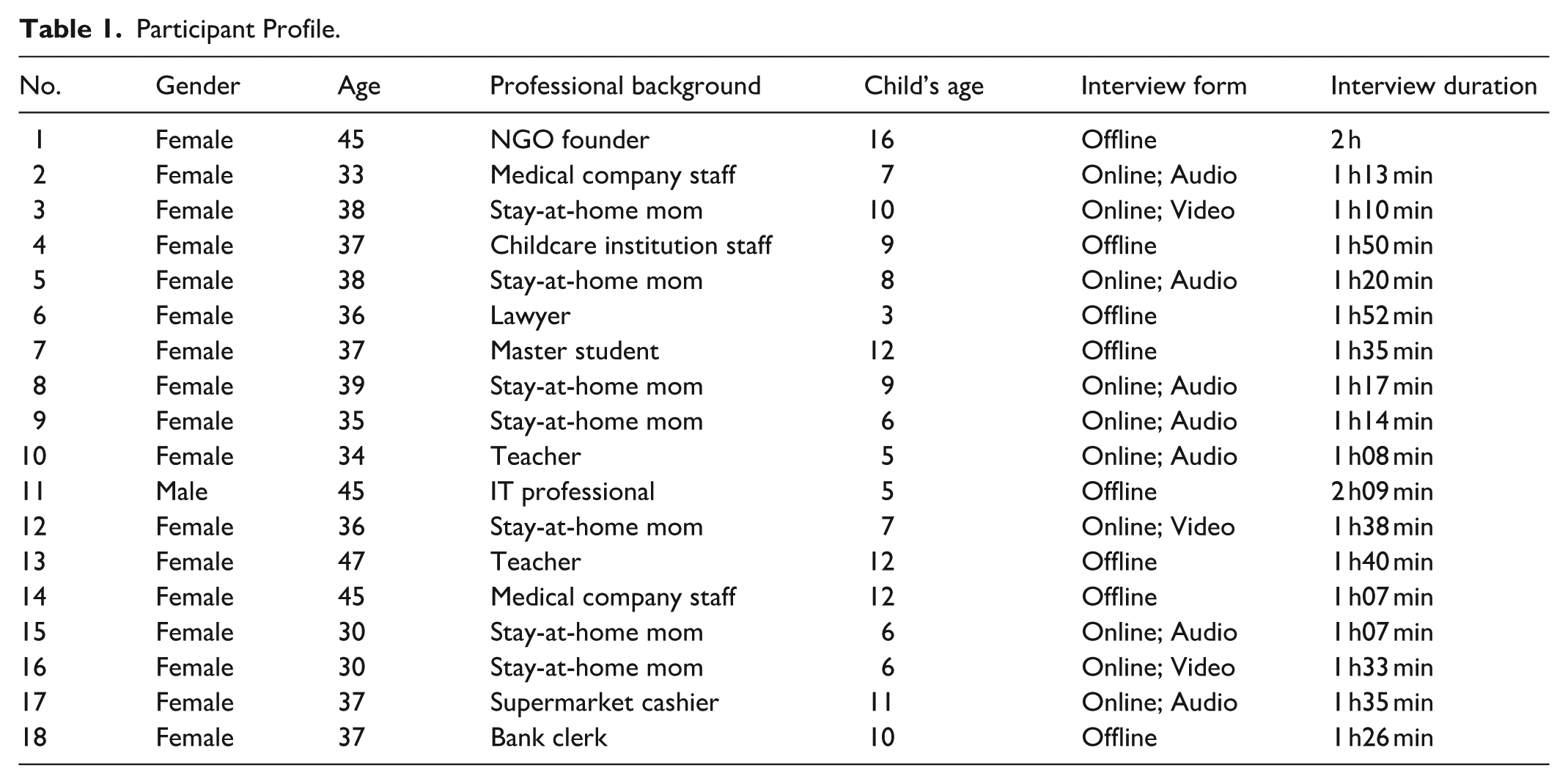
Consistent with phenomenological research traditions, the focus of this study is not only on the individual participants, but on the richness and diversity of the lived experiences they shared. In total, 84 distinct experiences of hotel-related stress and coping were collected, including episodes related to check-in/check-out, dining in hotel restaurants, managing sensory overload in public hotel spaces, and coping with unexpected events. By centering the analysis on these experiences, the study aims to capture the essence and diversity of how families with autistic children navigate and make sense of hotel environments.
All data were securely recorded anonymously for subsequent analysis. The audio recordings were later converted into text using iFLYTEK software. Interviews contained verbal content as well as recorded pauses and changes in tone. Due to the substantial length of each transcript, brief summaries were created to facilitate the review of each participant’s circumstances.
Data Analysis
The interview transcripts were qualitatively analyzed with an inductive technique (Alase, 2017). To capture participants’ expressed meanings and enter their mental and social worlds based on hotel experiences, data were processed through sustained engagement with the text and rigorous interpretation (Smith et al., 2021). This study adhered to six-step approach of Interpretative Phenomenological Analysis, adapted from Hou et al. (2019) and Smith et al. (2021): (1) multiple reviews of the data and the creation of notes; (2) initial interpretations (e.g., based on experiential statements); (3) the identification of personal experiential themes; (4) personal experiential themes reviews; (5) the definition and assembly of group experiential themes; and (6) analysis and write-up. Data were analyzed in NVivo software. Table 2 describes the first three phases, taking Participant 2 as an example.
Example of Phases 1 to 3 based on Participant 2′s transcript.
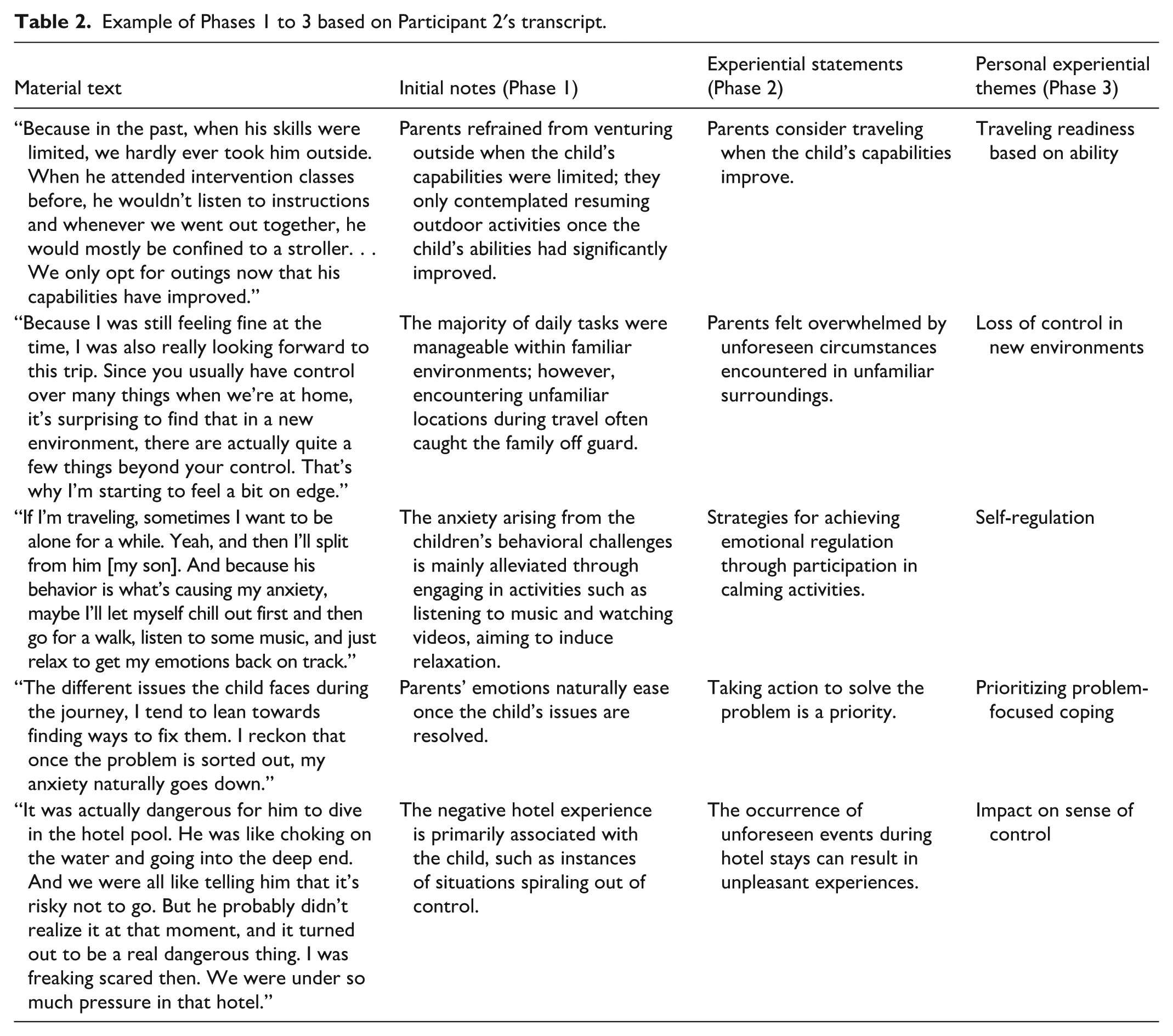
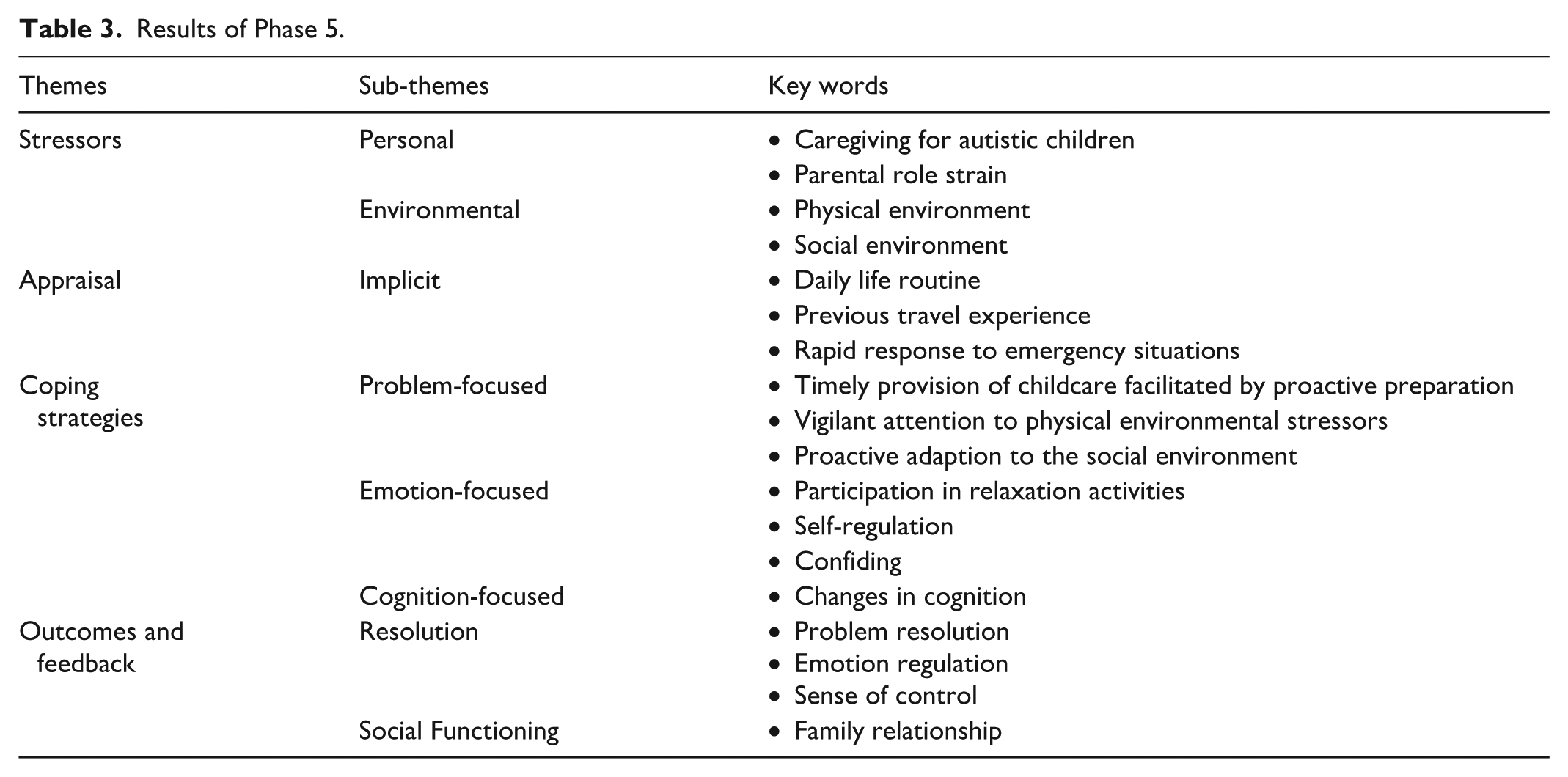
In the fourth step, personal experiential themes were adjusted to link the themes within a given case. The fifth step involved comparing multiple cases to generate group experiential themes. This process produced four themes, including six sub-themes and 15 key words (Table 3). The interview with Participant 1 yielded especially rich content; the analyzed themes helped guide subsequent analysis. Frequency was not the primary consideration in this step. Rather, repeated themes were identified, and different viewpoints (i.e., from other participants) were taken into account even if those perceptions were infrequent (Smith et al., 2021). For instance, Participant 8 mentioned feeling guilty if they did not arrange entertainment activities to divert their child’s attention. The child would then engage in stereotypical behaviors in public. This example was mentioned once but was categorized as a parental role stressor. In the final step of analysis, the themes were transformed into narratives. The findings thus became comprehensive as themes were elaborated in this fashion (Smith et al., 2021).
Results of Phase 5.
Findings
The analysis revealed four themes: (1) stressors; (2) appraisal; (3) coping strategies; and (4) outcomes and feedback. The first theme illustrated families’ stressors during hotel stays. The second revealed parents’ implicit appraisal of stressors. The third and fourth themes shed light on (a) how parents coped with stress while traveling with autistic children and (b) how these coping experiences affected the families during hotel stays.
Stressors
Stressors are tied to negative person–environment relationships (Lazarus & Folkman, 1987). While research on the everyday challenges of families with autistic children typically focuses on multidimensional stressors in the personal and social spheres (e.g., experiences of discrimination; Divan et al., 2012), the unique settings encountered during trips can evoke maladaptive responses in autistic individuals (especially children) and pose obstacles for them and their families (Freund et al., 2019; Zhao et al., 2023). A thorough analysis of the interview transcripts showed that parents in this study experienced certain stressors during their hotel stays, mainly stemming from personal and environmental aspects.
Personal Factors
Caregiving for autistic children. Caregiving challenges mostly arose from autistic children’s internal (e.g., biological or genetic) conditions that often accompany emotional and behavioral challenges (Schreibman, 2005). They exacerbated the stress experienced by both the children and their parents. According to the analysis of parents’ experiences, autistic children consistently faced two obstacles during hotel stays, each of which contributed to caregiving stress: (1) adapting to new settings and disrupted daily routines; and (2) resultant emotional fluctuations and behavioral challenges.
Many autistic children favor routines in their home environment (Louis-Delsoin et al., 2024). Consequently, transitioning from a familiar setting to a hotel could be overwhelming. For example, Participant 10 shared, When he got to the hotel, he went to the bathroom. We have a flush toilet at home, and the hotel has one too. But since the environment was different, he didn’t realize that a toilet is still a toilet no matter where you are. He really depends on familiar surroundings. . .It’s just that he doesn’t yet have the ability to adjust on his own to naturally adapt to new environments by himself.
Some children experienced sensory sensitivities (e.g., auditory, visual, and tactile issues characterized by hyper- or hypo-responsiveness; Participants 6, 10, 12, 13, 14, 17 and 18). As Participant 14 described, Like, my son is really sensitive to sounds. Even some sudden loud or noisy sounds can actually have an impact on him. . . You know, sometimes in some rooms, we’ve come across this smart operation thing. . .if things go wrong, a sudden sound might just pop up and scare him.
Participant 6 also recalled that her son struggled to fall asleep due to point light sources in hotels, My son is really, really sensitive to lights. . .If there are some lights in the hotel room that are flickering. . .or those places always go for that high-tech, modern things like mirrors or switches that light up at night. They’re touch-activated, and the panels glow. Even in the dark, those panels give off light. . .This really upsets my son. . .Even a tiny little light spot in the dark is enough to keep him awake. It’s that kind of thing that really messes with his ability to get some sleep.
Gastrointestinal issues (e.g., vomiting or diarrhea; Participants 11 and 8), sleep disturbances (e.g., insomnia or circadian rhythm disorders; Participants 8, 11, and 17), and mood challenges (e.g., mania or fear; Participant 12) were also reported. In certain cases, children were inclined to cry in noisy environments (Participant 12, 13 and 14). Others exhibited an aversion to the tactile sensation of plush hotel carpets (Participant 6 and 18). These stimuli could ignite sensory overload. Autistic children may display heightened anxiety in such instances (Jepson et al., 2024). The corresponding responses could provoke emotional fluctuations and behavioral challenges.
Parents were most worried about children’s behavioral management, namely in terms of a possible loss of control, exposure to risky situations, and the execution of repetitive actions in a novel environment. The stress associated with potential behavioral challenges persisted throughout family trips, especially when families entered unfamiliar public places such as the hotel lobby. Study participants mentioned that traits of autism could cause children to engage in repetitive behaviors that others find strange (e.g., walking on their knees, repeatedly pressing switches, or making odd noises). In addition, as autistic children have limited cognitive ability to recognize the external environment, they may display uncontrollable behaviors. Examples included touching electrical appliances due to a weak sense of danger (Participant 9), entering the swimming pool independently (Participant 2), climbing the hotel railing (Participant 8), running and jumping randomly (Participants 2, 5 and 15), or even entering other guests’ rooms (Participant 18).
The distinct nature of autistic children often requires parents to commit additional time (Tomeny et al., 2016) to managing their children’s emotions or behavior to ensure a smooth journey. Yet parents may ultimately need to change their travel plans, turning what should be a relaxed and joyful holiday into an unpleasant trip. When parents recalled past travel, unpleasant memories and stress tended to correlate with their children’s unique characteristics.
Parental role. Parenting a child with complex care needs requires sustained effort, particularly in times of uncertainty, such as while traveling. All participants in this study described parental role strain due to the conflicting demands of caring for their children and wanting to unwind on a trip. Parents are susceptible to health problems ranging from physical pains to disturbed sleep (Divan et al., 2012). Leisure travel has been considered a way to cope with stress. Even if parents anticipated relaxing somewhat during their travel journey, the experience was seldom seamless when caring for autistic children. This disconnect between expectations and reality spurred mental stress and affected parents’ overall experiences: “It’s exhausting to take my child out” (Participant 12); “My child isn’t as well-behaved as neurotypical children. I feel constantly tense and have to watch him all the time” (Participant 15).
Parenting autistic children during hotel stays is labor-intensive, as reflected in participants’ accounts. They must be prepared to provide support at all times. Therefore, the parental role itself is a significant stressor. Participant 8, the mother of a 9-year-old, shared that she was continually attentive to her child despite being tired. She mentioned coordinating as many activities as possible to prevent her child from affecting others: “If [my son] has nothing to do, he might start talking to himself. As a mom, this makes me feel so guilty and frustrated, like I haven’t given him enough stuff to keep busy with” (Participant 8). Her guilt reflects how the sense of responsibility associated with the parental role acts as a stressor, affecting one’s mental and emotional well-being.
Environmental Factors
Physical environmental stressors
Hotels’ physical environments, with the potential to influence children’s health and trigger subsequent emotional and behavioral problems, could elicit parents’ anxiety. Autistic children are usually curious about new settings but fail to fully recognize potential dangers. Unsafe actions, such as touching electrical appliances, engaging in hazardous activities near swimming pools, or seeking thrills within hotels were stressful for parents.
Social environmental stressors
The studied autobiographies of autistic people feature society’s incomprehensibility as a recurring theme (Chan, 2018). While families with autistic children interact with hotel staff and other guests during their stays, data from this research pointed to stressors such as the potential for discrimination, strange looks, effects on others, and crowded tourist seasons. Facing discrimination was the most unwelcome outcome: it led parents of autistic children to feel excluded and impeded them from enjoying relaxed settings. Participant 11, the father of a 5-year-old, recalled his experiences with a sigh: My daughter is hyperactive and tends to run around and yell loudly, which can bother other people. When people see these behaviors, they might not understand why she acts this way and could react by excluding or disapproving [of her]. For example, if a child starts shouting and screaming in public, everyone’s first reaction is that I am affected. [They] might immediately assume that either the child or the parent is mentally unstable or irresponsible.
Physical avoidance and verbal accusations directly affected parents with autistic children and their hotel experiences. Hotel staff could even reject these families, such as by refusing to accommodate them or barring the child from attending hotel-hosted activities. When asked whether they disclosed their children’s condition to seek special services, some parents reported having refrained from doing so. They were afraid that sharing their child’s condition might not result in customized service and may even lead the hotel to refuse their family outright.
Parents must constantly monitor their children’s behavior, fearing it may influence others. Stressors associated with affecting others included children’s nighttime disturbances (e.g., disrupting other guests’ rest), loud behavior in public areas, or randomly touching and potentially damaging hotel facilities. These social stressors contributed to parents’ unease when looking after autistic children and were difficult to mitigate during hotel stays.
Implicit Appraisal Process
The appraisal process determines whether and how parents with autistic children cope with stressors. According to transactional stress theory, this process entails assessing a stressor’s role as well as the resources available for managing it (Lazarus & Folkman, 1987). The appraisal process described in this study is implicit: parents did not evaluate potential stressors consciously but automatically. Data analysis showed three implicit appraisal processes:
Referring to daily life routines
Repeated exposure to similar stressors in everyday life prompts habituation. For that reason, parents were able to spontaneously recognize and appraise certain stressors during hotel stays.
Rapidly responding to emergencies
Parents must react promptly when situations call for it (e.g., in emergencies or otherwise dangerous circumstances). Rapidly responding to stressors during emergent situations requires implicit appraisal rather than deliberation.
Recalling previous travel experiences
As children develop, and as families’ travel experience grows, parents gradually adjust their appraisal of stressors automatically based on past trips.
Being able to reappraise a stressful situation positively is crucial for helping families with autistic children sustain their caregiving efforts in the long term (Costa et al., 2017; Folkman & Moskowitz, 2000). For example, Participant 18 emphasized that autistic children are dependent on familiar items during different trip stages. She would at first bring her child’s quilt when traveling. As her child became more independent, she realized that the child no longer needed this comfort item. Trips became easier as the obligation to bring additional supplies diminished: “We basically don’t need to bring a separate quilt anymore” (Participant 18). In short, the dynamic nature of appraisal allows families to have more enjoyable experiences over time.
Stress-Coping Strategies
A family’s appraisal of potential stressors affects general coping strategies. The coping framework applied here (Lazarus & Folkman, 1984, 1987) classifies such strategies as either problem-focused or emotion-focused. The present study identified these two types along with a third category: cognition-focused coping. Specifically, parents were found to take behavioral measures to address problems if stressors could be modified; if stressors instead needed to be accepted, they favored emotional or cognitive coping techniques.
Problem-Focused Coping Strategies
Problem-focused coping strategies feature processes that improve a troubled person–environment relationship by managing the problem (Zhu et al., 2020). All participants in this study mentioned using, and prioritizing, these types of strategies. Parents would generally take direct action to address issues related to their children to minimize negative impacts on the hotel experience. Implementing these actions (e.g., timely childcare, vigilant attention to physical environmental stressors, and proactive adaptation to the social environment) readily resolved difficulties, as Participant 2′s statement illustrates: “The moment we figure out the problem during the journey, I won’t feel anxious” (Participant 2). Problem-focused coping strategies demonstrate how parents navigate various potential stressors during hotel stays. Many paid particular attention to their children’s needs and strove to create an environment conducive to the family’s comfort and safety.
The timely provision of childcare
The timely provision of childcare involved targeted responses to stressors that originate from looking after autistic children. As noted, parents faced with a new hotel environment generally encouraged their children to actively experience this setting; doing so was thought to enhance children’s adaptability (Participant 13). Parents were attuned to their children’s behaviors and would blend learned strategies (e.g., from intervention institutions) with prior experience to soften these behaviors’ adverse effects on a hotel stay. If these actions affected others, then parents would intervene to prevent their children from being bothersome. Verbal prompts were common (Participants 3, 5, 15 and 16); some parents also simply put a stop to their children’s behavior. Timely emotional management and prevention were key when encountering stressors that could cause children’s emotions to shift. For instance, parents would soothe tantrums by diverting their children’s attention. Participant 11 shared his experience: “We either comfort her or give her some snacks. Additionally, we also let her watch cartoons on the phone to distract her.”
Maintain vigilant attention to physical environmental stressors
Parents of autistic children emphasized physical environmental stressors in hotels. They continuously looked after their children throughout hotel stays due to safety concerns, inspecting the facilities for potential risks. For instance, parents may move an electric kettle to an elevated spot in the hotel room (Participant 6) or seek out accommodations with balcony railings (Participant 2). This meticulous attention to environmental safety helped ensure the comfort and security of autistic children within the hotel. Preemptive measures served to alleviate risk.
Proactive adaptation to the social environment is crucial
Numerous behavioral strategies (e.g., seeking social support, preparing early, and providing rule reminders and education) eased children’s adaptation to the social environment. Early preparation was popular: parents plotted out their itineraries, chose accommodations suitable for children, and informed children of the travel plans. Parents also gave their children pre-training in adaptability and self-care skills. Participant 3 explained, “We involve our child in planning the trip and packing his bags by himself before traveling.” When financially feasible, parents would opt for more inclusive environments to minimize the possibility of discrimination or poor reception from others. Participant 14′s son was quite relaxed at hotels, having stayed in them from a young age. She preferred higher-rated and more inclusive properties to reduce potential public stigma, saying, “I usually choose five-star hotels because they minimize the chances of him being ridiculed or harmed.”
Emotion-Focused Coping Strategies
Emotion-focused coping strategies are effective for emotion regulation, such as rationalizing stressful conditions (Schuster et al., 2006). While travel conventionally connotes leisure and relaxation (Hartwell et al., 2018), parents of autistic children can experience anxiety and aggravation due to stressors. Frustrations during hotel stays may even affect their children (Participants 2, 4 and 8). Parents in this study sought to remain emotionally stable so as not to transfer negative feelings to their children. They focused on emotional well-being and used associated strategies to maintain equilibrium, thereby fulfilling childcare responsibilities while enhancing the travel experience. Emotion-focused strategies consisted of engaging in relaxing activities, practicing self-regulation, and seeking social support.
Parents with autistic children regularly participated in relaxing activities to lessen stress. For example, parents visited onsite spas or passed some time watching short videos. Participant 8 sought respite from caregiving stressors by taking advantage of the hotel’s options for relaxation: “If the hotel has a spa center, I will spend a few hours there alone, letting my child and husband know not to disturb me” (Participant 8). This approach enabled parents of autistic children to ease stress by taking time to unwind.
Self-regulation methods, such as deep breathing, being alone briefly, or listening to tranquil music also helped parents stay calm and not become agitated by their children’s behavior. Participant 4 stated, “If my child’s behavior triggered my anxiety, I would first calm myself down, perhaps by taking a walk and listening to music to regulate my emotions.” Self-regulation allowed parents to regain their composure and then deal with challenging situations more effectively.
Confiding in close friends and family members was a primary outlet for emotional expression. Difficulties with children’s behavior, such as during hotel check-in, led many mothers to share their feelings and experiences with loved ones. Participant 15 turned to her husband and family for support: “I confide in my family and friends. . . . .My husband understands the emotions he [the husband] is dealing with better; he will give me suggestions when I confide in him.” Parents could release pent-up emotions and gain empathy by expressing their concerns, which lightened mental burdens.
Cognition-Focused Coping Strategies
As autism is a lifelong condition, parents generally support their children through interventions while recognizing that challenging behaviors may persist. The stressors associated with their children are difficult to modify. Acceptance emerged as a cognition-focused coping strategy: parents could alter their views of and reactions to stressors instead of seeking to change them. Participant 3 elaborated on this cognitive shift: “During our first hotel exploration trip, my child’s abilities did not meet our expectations. His disobedient behavior caused me frustration, especially when comparing him to other children on the trip who seemed to effortlessly complete tasks. This disparity led to unhappiness during our family journey.” However, she noticed that her perspective evolved over time and helped her have a better hotel experience: “Now I worry much less. I’ve adjusted my perception of him and no longer dwell on his repetitive behaviors.”
Participant 3′s cognition-focused coping strategy reflects the understanding that parents develop when dealing with stress. Parents held initial expectations for their autistic children during trips; however, disappointment arose once their children’s behavior defied expectations. The ensuing frustration and helplessness greatly affected the travel experience. Yet parents’ points of view transformed with time and experience—parents started to embrace their children’s idiosyncrasies. They also stopped holding their children to conventional social norms.
Another mother, Participant 8, described a similar coping experience. She at first hoped her child would interact with neurotypical children during hotel activities. Upon acknowledging the obstacles inherent in this aspiration, she loosened her expectations: “The way I see it now, it’s better to just go with the flow. . . . If [my autistic son] enjoys the activity or social interaction, we’ll go along with it. But if he starts feeling agitated or anxious, I won’t push him to join in.” Notably, parents’ cognition-focused coping strategies did not convey resignation but rather proactivity. They aimed to adapt to unchangeable circumstances and to find ways to move forward.
Adaptational Outcomes and Feedback
The adaptational outcomes of parents’ coping processes in this study chiefly pertained to well-being and social functioning. The short-term outcomes of stressful encounters complemented longer-term impacts: successful problem resolution and emotion regulation positively influenced personal well-being. Meanwhile, fostering harmonious family relationships could enhance social functioning.
Problem resolution was readily apparent as an immediate outcome when parents implemented problem-focused coping strategies well. Solving problems during hotel stays produced enjoyable experiences. Participant 5 shared a surprising change in her child after several stays:
I noticed that my kid started to feel really happy once he got used to the hotel environment, and I was pleasantly surprised when he began paying attention to the people and things around them. The last time he was in the pool, he was copying and following the movements of another kid.
Autistic children are typically less interested in the people around them compared with neurotypical peers (Gunn & Delafield-Butt, 2016). Participant 5′s comment signified an accomplishment, as her child’s interest in others at hotels rose after multiple hotel stays. This change bolstered parents’ confidence and satisfaction, ultimately improving their psychological well-being.
Another immediate outcome, the acquisition of positive emotions, was closely related to parents’ use of emotion-focused coping strategies. The pleasant emotions that parents felt not only benefited their own mental health but also their children’s emotional stability. Participant 8 stressed emotional contagion between parents and their autistic child: If we check into a hotel with a less-than-ideal environment, I try to stay calm and relaxed to stay positive. When my child senses my positivity during the trip, he remains relatively stable and secure during the trip.
Fostering harmonious family relationships represented another outcome of coping. One mother, Participant 4, mentioned regularly needing to soothe both her child and her spouse during trips. In the short term, her coping strategies eased her anxiety as well as any tension between her husband and child. A harmonious family relationship could then be realized and actually enhance the family’s social functioning in the long term. As Participant 4 pointed out,
My husband can’t handle our kid’s special behaviors when we are traveling and easily loses his cool, but I use a calm and reassuring tone to soothe them both. This helps us relax and enjoy the trip without any worries once everything is resolved.
Collectively, effective problem resolution, parents’ positive emotions, and improved family relationships during and after coping contributed to a far-reaching outcome: a greater sense of control. Parents felt assured in their abilities to manage various situations in a measured manner, which imbued them with a more robust sense of agency and self-efficacy. For instance, parents saw that they played a role in their families’ travel experiences. This recognition led parents to see taking trips with their autistic children (including hotel stays) as attainable.
The outcomes of parents’ coping strategies can function as benefit-driven feedback loops that continuously shape their future reappraisal and responses to stressors, making the process dynamic and cyclical. For instance, parents’ sense of control could motivate them to re-evaluate stress and their chosen coping strategies. As parents gained more control, they sensed more benefits during the appraisal process, such as their children’s improved capabilities based on encountering new hotel settings. The following statements offer examples: “My child has mastered the process of checking into the hotel” (Participant 3); “In the new environment of the hotel, my child has become more daring to take on challenges” (Participant 5). These observations illustrate the impacts of families’ hotel stays; parents seemed happy and proud. The benefits and positive outcomes related to their experiences inspired parents to deploy proactive, targeted coping strategies in subsequent trips, such as preparing sensory-friendly items, requesting specific room accommodations, or rehearsing daily routines in advance. These approaches indirectly increased parents’ willingness to travel; they believed they could handle potential issues, and this confidence made trips smoother.
Importantly, these adaptive outcomes not only influence parents’ current well-being and family functioning but also shape their perceptions of and responses to future stressors. By anticipating potential challenges and implementing preventive measures, parents can reduce both the likelihood and intensity of stressors in future hotel stays. Thus, the stress-coping process is not linear but fully cyclical: stressors influence appraisal and coping, outcomes of these coping strategies generate benefits, and these benefits in turn shape parents’ anticipation and mitigation of future stressors via reappraisal. This dynamic interplay among stressors, appraisal, coping, and outcomes illustrates how families adapt over time, making the model both process-oriented and actionable for inclusive hospitality practice.
Discussion
The paradoxical duality of family tourism with autistic children, characterized by the coexistence of meaningful experiential opportunities and significant practical challenges, has stimulated discourse on the nature of stress and the dynamic coping processes between individuals and their environments. Addressing gaps in understanding how parents with autistic children perceive and manage stress during hotel stays, this study contributes to the literature on stress coping mechanisms in family tourism, particularly in the context of inclusive tourism.
This study reveals a dynamic, feedback-driven process by which parents of autistic children appraise and cope with stress during hotel stays. It moves beyond traditional linear conceptualizations of stress and coping to highlight the cyclical and mutually reinforcing nature of adaptation in family travel contexts. The key findings are summarized in Figure 1. Rather than following a linear progression, parental stress management unfolds through a continuous loop of stressor appraisal, coping, and adaptive outcomes. As shown, parents of autistic children encounter and evaluate personal and environmental stressors during hotel stays, subsequently selecting coping strategies that encompass problem-focused, emotion-focused, and cognition-focused approaches. These strategies are shaped not only by immediate situational demands but also by accumulated experience and tacit knowledge, enabling parents to adapt flexibly and effectively within unpredictable hotel environments. Effective coping yields tangible benefits such as problem resolution, emotion regulation, and strengthened family relationships, which contribute to enhanced overall well-being and social functioning. Importantly, these positive outcomes generate a feedback loop: as parents gain greater control over challenging situations and experience improved family dynamics, they become increasingly capable of anticipating and managing future stressors. In this way, travel is gradually transformed from a source of anxiety into an opportunity for growth and familial connection.
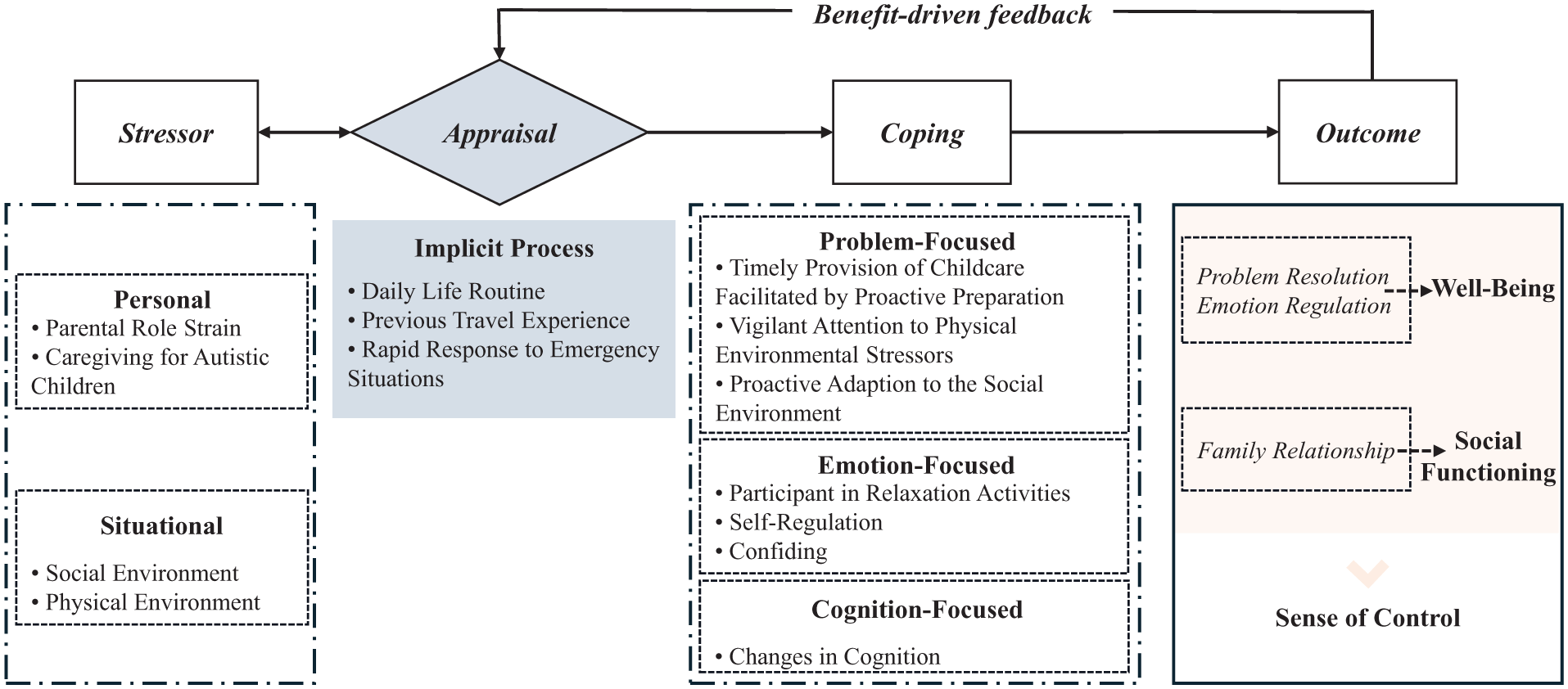
Parents’ stress-coping and adaptational process when traveling with autistic children.
By situating these findings within broader social and cultural contexts, this research extends transactional stress theory (Lazarus & Folkman, 1984) and integrates the predicament model of autism (Anderson-Chavarria, 2022) to illuminate how families navigate a world structured for neurotypical individuals. Whereas most academic work on social stress has employed general stress models and focused on workplace stress or chronic illness, this study not only encapsulates the multifaceted nature of critical accommodation-related stressors faced by families with autistic children but also highlights the transformative potential of travel experiences. Specifically, parents and children develop new skills and resilience through repeated exposure and adaptive coping. Notably, implicit social stressors (i.e., induced by the “social gaze” and judgment from others) appeared more salient than economic and environmental stressors and even eluded parents’ recognition. These findings echo previous observations about the “gaze of discipline and surveillance” that families with less visible disabilities often encounter (Sedgley et al., 2017), and they enrich the literature by systematically mapping the unique constellation of stressors in hospitality contexts (Freund et al., 2019; Zhao et al., 2023).
A distinctive contribution of this study lies in its advanced understanding of the appraisal process in the context of family travel with autistic children. Consistent with prior research (Lazarus and Folkman, 1984; Woods et al., 2023), this study has found that appraisal is a continuous, iterative process rather than a strictly linear sequence. Furthermore, this study reveals that parents’ appraisal of stressors is largely implicit, fluid, and embedded within daily moments, prior travel experiences, and rapid responses to emergencies. Notably, the process does not end with the initial coping response; rather, positive outcomes such as enhanced well-being or improved family functioning trigger a benefit-driven feedback loop, prompting parents to reappraise both their environment and their own coping resources. This cyclical, benefit-driven reappraisal enables families to adaptively refine their strategies and proactively manage future stressors, thereby transforming travel from a source of anxiety into an opportunity for growth. It challenges the static, stage-based models prevalent in the literature and underscores the importance of experiential learning in shaping parental responses.
Building on this foundation, the study identifies cognition-focused coping as a critical complement to problem-focused and emotion-focused coping, emphasizing the importance of cognitive adaptation in helping families adapt themselves when traveling with autistic children. While emotional and behavioral coping strategies have been extensively documented in the broader stress literature (e.g., Carroll, 2020; Glazzard & Overall, 2012; Lai & Oei, 2014; Lazarus & Folkman, 1984), the distinct role of cognition in the coping process has received limited attention. Consistent with prior findings, this study confirms problem-focused strategies as the most popular during travel, followed by emotion-focused strategies. However, this study further highlights the role of cognition-focused strategies in managing travel-related stress. Specifically, cognitive coping strategies, including reframing stressful situations, drawing on accumulated experience, and adjusting expectations of their children, emerge as key strategies enabling parents to regulate their own emotions and more effectively support their children. By explicitly identifying and articulating the importance of cognition-focused coping, this research extends the existing theoretical framework and demonstrates that cognitive adaptation is essential for flexible and effective stress management, especially when parents face ambiguous or uncontrollable challenges during family travel with autistic children.
Furthermore, this research creatively sheds light on parents’ sense of control based on stress-coping outcomes. Similar to Weiss et al.’s (2012) findings regarding coping strategies’ benefits for improving family dynamics, this study affirms that stress-coping strategies facilitate problem resolution, emotion regulation, and parents’ sense of control during travel. It departs from work that underscores the role one’s sense of control plays in coping strategies (O’Connor & Shimizu, 2002) and instead highlights how this sense transitions into a benefit-driven process. It actually motivates parents to reassess and manage stressors and to use more positive strategies, ultimately leading to more enjoyable travel experiences.
Conclusion
This study adopted a qualitative approach and applied transactional stress theory to explore how parents of autistic children cope with travel-related stress during hotel stays. The findings reveal that, rather than following a linear process, parental stress management unfolds as a dynamic, benefit-driven feedback loop involving the implicit (re)appraisal of stressors, coping strategies, and adaptive outcomes. Specifically, the study systematically maps the personal and environmental stressors encountered during hotel stays and identifies three implicit appraisal processes that shape parents’ perceptions of stress. Positive coping strategies, which encompassed problem-, emotion-, and cognition-focused approaches, had many advantages: these methods enabled parents to solve problems, regulate emotions, and develop a sense of control. These coping outcomes, in turn, fed back into the appraisal process and informed future coping efforts.
Theoretically, this study extends existing theoretical frameworks on stress coping mechanisms by highlighting how stress management in family travel contexts is iterative, relational, and benefit-driven. The dynamic feedback loop identified here enriches existing conceptualizations of coping mechanisms, demonstrating that family travel with autistic children can be gradually transformed from a perceived source of anxiety into an opportunity for resilience-building and strengthened familial bonds.
Managerial Implications
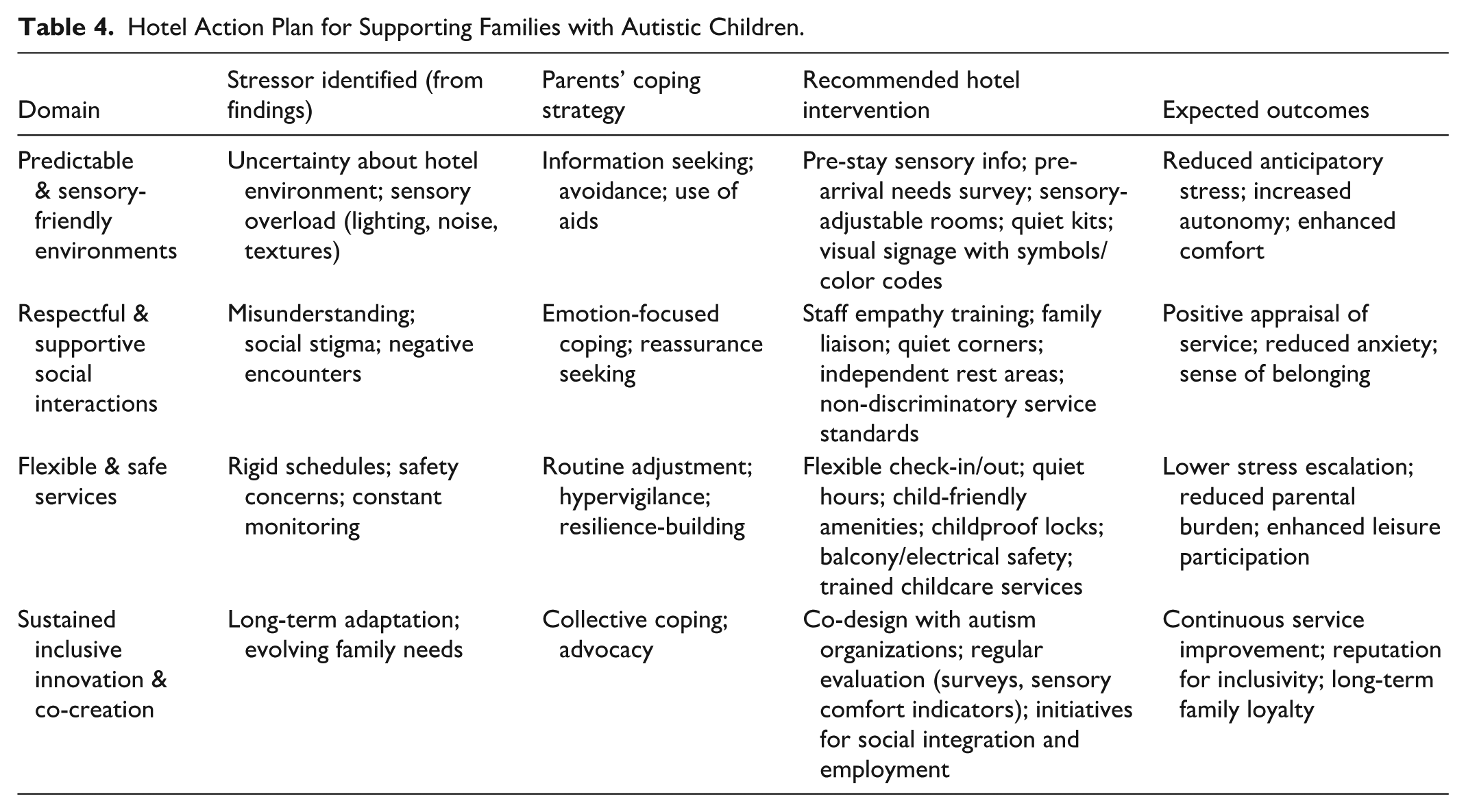
Building on these theoretical insights, the findings also illuminate how the transactional stress-coping processes observed in families can be directly translated into actionable strategies for the hospitality sector. Specifically, the stressors, appraisals, and coping mechanisms identified in this study provide a structured foundation for hotels to design practical interventions that not only reduce parental stress but also enhance inclusive service delivery. Four interconnected areas of service improvements are highlighted.
First, creating predictable and sensory-friendly environments
Families consistently emphasized that uncertainty about the hotel environment intensified their stress appraisal. Providing clear pre-stay information on room features (e.g., lighting, flooring, and noise insulation) and offering pre-arrival questionnaires to capture specific needs can reduce anticipatory stress and enhance parents’ sense of control. Once on-site, sensory adjustments such as dimmable lights, removable carpets, and “quiet kits” (e.g., ear defenders, blackout masks, white-noise devices) can reduce sensory overload. In addition, visual signage with symbols and color codes can help children navigate the hotel more confidently, reinforcing both comfort and autonomy.
Second, fostering respectful and supportive social interactions
Beyond physical adjustments, parents emphasized the need for respectful treatment and non-discriminatory service. Hotels should prioritize autism-awareness training for front-line staff, focusing on empathy and communication skills, and, where possible, assign a staff liaison to assist families throughout their stay. Dedicated quiet corners and independent rest areas can further help children regulate emotions during moments of stress. These measures reduce the likelihood of negative social encounters, thereby reshaping parental appraisals of the environment.
Third, enhancing service flexibility and safety
Families underscored that rigid schedules and safety concerns were among the most stressful aspects of hotel stays. Offering flexible check-in/out options, “quiet hours,” and crowd management strategies can help families maintain routines without conflict. Providing child-friendly amenities, such as age-appropriate games and rooms with adjustable lighting, allows children to engage in enjoyable activities while minimizing stress triggers. Safety modifications, including childproof locks, balcony protections, and secure electrical systems, are also critical. Reliable childcare services, staffed by professionals with autism training, can further alleviate parents’ constant monitoring burdens and promote genuine relaxation.
Fourth, sustaining inclusive innovation and co-creation
To ensure long-term improvement, hotels should collaborate with autism organizations and parent groups to co-design facilities, training, and service protocols. Incorporating regular evaluation mechanisms, such as parental satisfaction surveys, repeat booking rates, or sensory comfort indicators, enables continuous refinement. Beyond immediate service delivery, partnerships with autism organizations may also extend to initiatives supporting employment opportunities and independent travel for autistic individuals, thereby advancing both inclusivity and social responsibility within hospitality.
These four domains provide a structured action plan that aligns the stress-coping framework with hospitality practice, as shown in Table 4. They demonstrate how hotels can directly mitigate family stressors, support constructive coping, and contribute to the broader movement toward inclusive and accessible tourism.
Hotel Action Plan for Supporting Families with Autistic Children.
Limitations and Future Research
One limitation of this study is its focus on families from specific regions, namely Guangzhou and Hong Kong, which may limit the findings’ generalizability to people from other cultural backgrounds or geographic areas. Follow-up research could include more diverse samples to enhance the results’ representativeness. Scholars may wish to consider cultural or regional differences in stress-coping experiences among families of autistic children. Additionally, this study explored stress-coping strategies within hotels; other aspects of the industry, such as attractions and transportation facilities, were not addressed. More work is needed to address families with autistic children in diverse tourism settings.
Data collection and interpretation were also subject to constraints. One such limitation is respondent bias. Parents may recount their coping experiences in socially accepted or positive ways, potentially underreporting negative experiences or emotions. This study aimed to minimize bias by using appropriate methods: building rapport with parents, performing interviews in comfortable environments, and incorporating children’s illustrations of hotel stays into data analysis. These steps were meant to encourage authentic responses from participants. Mixed methods could be adopted in the future to further mitigate bias. For instance, longitudinal studies that track families’ complete travel experiences could provide valuable insights into the dynamic nature of stress-coping processes and the effectiveness of interventions aimed at supporting families of autistic children.
To gather richer data, the authors interviewed autistic children and encouraged them (with their parents’ assistance) to create drawings of their hotel experiences. Data acquisition and interpretation were nonetheless constrained by both the children’s limited social interaction and researchers’ lack of awareness of how to socialize with them. Consequently, families’ social coping processes during trips captured from parents’ perspectives; the viewpoints of autistic children were not fully reflected. This one-sided approach may overlook children’s feelings. The experiences of autistic children should be more closely assessed to better comprehend stress and coping within these families during trips. By applying observational methods, researchers can explore how these children perceive and manage stress while traveling and how they interact with their parents and surroundings. An inclusive design will offer a clearer picture of how families with autistic children deal with stress and yield additional insights for families and industry practitioners.
Footnotes

Author Contributions
Funding
The authors disclosed receipt of the following financial support for the research, authorship, and/or publication of this article: The work described in this paper was fully supported by a grant from the Research Grants Council of the Hong Kong Special Administrative Region, China (PolyU15602422).
Declaration of Conflicting Interests
The authors declared no potential conflicts of interest with respect to the research, authorship, and publication of this article.