




Abstract
Despite the rising popularity of solo female travel, research on how perceived travel risks impact upon female tourists’ comfort zones remains limited. This study investigates African solo female travellers’ risk perceptions and utilises a qualitative research method. It is understood that risk perceptions are shaped by cultural norms, societal expectations, and personal experience. This may result in diverse coping strategies. This study contributes to the literature by redefining the concept of comfort zone for solo female travellers and expanding the use of cognitive dissonance theory within the travel context. The findings provide valuable insights for the travel industry, emphasising the need for gender-friendly services, enhanced safety measures, and culturally sensitive practices to create more supportive and inclusive environments.
Introduction
The rise in solo female travel and female-only travel groups represents an expanding market segment that challenges traditional paradigms (Osman et al., 2020). Gender within tourism research has evolved with Wilson and Chambers (2023) having outlined the key phases of this progression. Early studies positioned women in relation to men (Smith, 1979; Zalatan, 1998) with the 1970s–80s focusing on descriptive sex-comparisons (Myers & Moncrief, 1978; Ryan et al., 1998), and feminist critiques dominated the 1990s and early 2000s that foregrounded women’s voices, agency, and power dynamics (Bolles, 1997; Small, 1999). Since the 2000s, scholarship has adopted a relational lens within a fluid and intersectional approach that interrogates binary gender categories and attends to race, sexuality, and culture in tourism research (Chambers 2022; Figueroa-Domecq et al., 2015; Pritchard et al., 2007).
Tourism involves the physical movement from familiar to unfamiliar environments, which introduces uncertainty and risk, and can affect tourists’ well-being (Yang et al., 2018a). Tourists’ risk perceptions vary widely depending on individual characteristics and experiences. Some travellers avoid destinations perceived as risky (Karl et al., 2020), while others intentionally seek out risk for the thrill and excitement it provides (Janowski et al., 2021; Lepp & Gibson, 2003). Yet risk perception is not solely based on individual preferences. For female travellers, it can be shaped by patriarchal social norms and gendered power structures (Yang et al., 2017a). Women’s fear of male violence, experiences of sexual objectification, and the male gaze are all manifestations of structural inequalities that shape their leisure and tourism experiences (Berdychevsky & Gibson, 2015). Despite this, limited research has critically examined how social structures inform women’s risk perceptions and related behaviours (Yang et al., 2017b). Given the complexities of risk perceptions, the present study is guided by the following research question: How do African solo female travellers construct and negotiate their perceptions of risk within gendered and racialised tourism spaces, and what strategies do they employ to cultivate comfort and security that shape their travel experiences?
For solo female travellers, perceived risks related to safety, harassment and cultural misunderstandings can directly affect travel decisions and actions (Wilson & Little, 2008). Solo female travellers represent a heterogeneous group, varying in age, nationality, race, socio-economic background, and personal travel motivations, which affect how they interpret and respond to risks (Yang, 2021). Existing tourist psychological needs, such as socio-psychological support (Karagöz et al., 2021), should be supplemented with consideration of the diverse characteristics of solo female travellers. Recognising that solo female travellers may have different thresholds for risks and comfort compared to other groups, it is crucial to tailor tourism offerings to meet their specific needs. The comfort zone concept addresses this gap by highlighting how individuals manage discomfort in unfamiliar or culturally challenging environments through behavioural adaptation, boundary-setting, or efforts to regain psychological safety (Brown, 2008).
Though the comfort zone concept helps explain how solo female travellers seek familiarity and psychological safety in unfamiliar environments, it offers limited insight into the conflicts that arise when travellers’ experiences challenge their self-concept, values, or expectations. The processes through which solo female travellers manage risks while balancing the boundaries of their comfort zone remain insufficiently understood. Moreover, the understanding of female travellers’ risk perceptions and the associated cognitive dissonance is still limited. Cognitive dissonance theory has been applied to explain consumers’ reconciliation of mismatches between expectations and actual experiences (McGrath, 2017) and management of regret or dissatisfaction with decisions (Gregory-Smith et al., 2013). Therefore, cognitive dissonance theory provides a theoretical foundation for comprehending the psychological discomfort that arises when individuals encounter experiences conflicting with their self-concept, values, or expectations (McNamara & Prideaux, 2010). To explore how solo female travellers engage with unfamiliar environments and manage perceived threats, this study incorporates the concept of the comfort zone and cognitive dissonance theory to understand how female travellers interpret risks, navigate public spaces, and make travel decisions (Wilson & Little, 2008).
The evolving understanding of individual risk perceptions, cultural background and coping strategies of female travellers has been shown to significantly shape their travel experiences and spatial encounters (Fan et al., 2017a). Research has discussed the influence of gender on risk perceptions (Yang et al., 2018a), but gaps remain in understanding how the intersection of physical attributes, gender, age, social and cultural norms influence female travellers’ travel experiences (Li et al., 2024). Moreover, much of the current literature on solo female travel has focused on Western travellers (Yang et al., 2018b), with limited attention given to Black female travellers and emerging markets such as African countries (Metilelu, et al., 2023). The dominance of Western, capitalist perspectives in tourism scholarship has historically marginalised non-Western and non-white experiences (Chambers, 2022). Broadening research on Black women’s travel experiences would foster a more inclusive and comprehensive understanding of global travel cultures. Though research on race and tourism has grown, the experiences of Black tourists remain largely overlooked in international tourism discussions (Mkono, 2013). The scarcity of research on Black female travellers presents a valuable opportunity to fill a knowledge gap and challenge the racial and gender biases embedded in tourism studies.
An inclusive analytical lens can help explore the complex ways in which gender, race, and other social identities intersect to shape travel experiences and perceptions of safety. An intersectional feminist approach allows an examination of travel risk perceptions among female travellers. Crenshaw (1989) emphasised how overlapping social identities, such as race, gender, age, and class interact with systems of oppression to produce distinct experiences. In tourism research, this perspective challenges dominant Eurocentric narratives that often universalise women’s travel experiences. Intersectionality recognises that perceptions of risk are shaped by intersecting power structures, historical inequalities, and sociocultural norms (Benjamin et al., 2024; Chambers, 2022; Figueroa-Domecq et al., 2015; Seow & Brown, 2018). By applying this lens, the study foregrounds the specific motivations, vulnerabilities, and resilience of Black female travellers, whose experiences are often marginalised or rendered invisible within global tourism discourses.
Drawing from broader feminist epistemologies, intersectionality adopts a constructivist stance that values situated knowledge and subjective meaning-making. This approach rejects universalist or homogenised representations of women’s travel experiences (McHugh & Cosgrove, 2004). By integrating these frameworks, the study captures the interplay between identity, perception, and culture in shaping the travel behaviours of African solo female travellers. It also challenges dominant Eurocentric tourism narratives by foregrounding the complex realities of a historically under-represented group.
A feminist methodological approach grounded in intersectionality allows the exploration of African solo female travellers' experiences in European countries. The research was guided by the following three objectives: (1) to identify the factors that shape African solo female travellers’ perceptions of risk, (2) to analyse the strategies and behaviours they adopt to cultivate a sense of comfort and security during their travel, and (3) to examine how these strategies contribute to their overall travel experience. Data were collected through in-depth, semi-structured interviews with 20 African women who had travelled alone in Europe within the past three years. By centring on the voices and lived experiences of a historically under-represented group in tourism scholarship, this study seeks to advance the understanding of female perceived safety in global travel. The study also contributes to cultural inclusivity and intersectional theorising in travel behaviour research, paving the way for more inclusive and equitable practices within tourism.
Literature Review
Challenges Faced by Solo Female Travellers from Diverse Cultures
Gender and Risk Perception in Tourism
Gender influences travel behaviour and risk perceptions. An understanding of how gender difference influences risk perception is crucial for the development of effective and efficient risk management strategies (Carballo et al., 2022). Female tourists often view international travel as risky, experience considerable anxiety, and feel unsafe, which may affect their international travel decisions (Yang et al., 2017a). Compared to male perceptions, women may feel at greater risk of violence, kidnapping, and sexual harassment when travelling (Otoo et al., 2019; Reichel et al., 2007). The perception of physical risks, notably sexual harassment or assault significantly shapes a woman’s travel experiences. Research frames female travel as both a risky and empowering practice, emphasising women’s strategies for managing sexual harassment (Brown & Osman, 2017), racism (Benjamin & Dillette, 2021), cultural restrictions and gendered expectations (Yang et al., 2018b), while also framing solo travel as a means of cultivating autonomy, self-knowledge and spatial agency. However, scholarship on gendered risk in tourism still gives limited attention to how structural and intersectional inequalities such as racism, cultures and gender inequality produce and intensify women’s experiences of risk. This gap points to the need for more theoretically integrated and globally inclusive research on gendered travel experiences.
Differing perceptions of travel risks indicate that ideological positions may influence individual worldviews and shape the way travel risks may be interpreted and constructed (Swain, 1995; Yang et al., 2018b). Ideologies shape how we interpret gender, extending beyond scientific debates into societal norms (Eger et al., 2022). The dominance of binary gender views, male superiority, and human-nature dualism reflect ingrained ideologies that influence how gender has been interpreted (Eger et al., 2022). Douglas was among the first to highlight risk as a socially constructed concept shaped by historical and cultural contexts (Douglas & Wildavsky, 1982). Social constructivist and feminist approaches argue that risk perception is deeply embedded in cultural ideologies, power relations, and gendered social structures (Foucault, 2019). Feminist, postcolonial and intersectionality frameworks now underpin much of the solo female travel literature (Efthymiadou & Farmaki, 2025). Although intersectionality has become central to feminist theory, few tourism studies explicitly consider how gendered risk perceptions intersect with race, nationality, passport privilege or global power relations in shaping solo female travel.
Solo Female Travellers’ Risk Perceptions
Research shows heterogeneity among solo female tourists. Lepp and Gibson (2003) found that independent female travellers perceive fewer risks than their counterparts in mass tourism. The literature indicates that cultural backgrounds play a crucial role in shaping female travellers' risk perceptions. Risks in one cultural context may not be perceived the same in another (Green & Singleton, 2006). Solo female travellers often face societal disapproval due to ingrained gender norms and cultural expectations that enhance male freedom of movement (Yang et al., 2018b). In many cultures, women travelling alone challenge traditional gender roles, leading to societal judgement and criticism (Brown & Osman, 2017).
The influence of gender on risk perceptions (Yang et al., 2018a) has been examined, although an understanding of multiple intersectional factors, such as race and ethnicity, must be deepened. Empirical studies remain concentrated in the West and parts of Asia, with Africa and Latin America notably under-represented (Efthymiadou & Farmaki, 2025). African voices are missing (Arthur, 2022) and Black travel research remains niche (Dillette & Benjamin, 2022). As a result, current understandings of solo females are incomplete and biased towards Western-centric samples. We lack answers to critical questions: How do African solo female travellers handle intersections of race, identity, and culture structures, construct their perception of risk and risk management? This study seeks to address this gap by foregrounding solo African female travellers and showing how their experiences of risk and risk management challenge and supplement their knowledge of intersectional feminist accounts.
Roles of African Women and Their Status
To discuss risk perceptions in solo travel amongst African women, an understanding of African culture and social expectations, which shape values and roles, is necessary. Interest in Africa within the literature has evolved around Africa as a tourist destination. Few studies have explored how Africans travel to destinations beyond the continent, particularly African female international tourists (Mkono, 2013).
In traditional African society, gender roles were complementary, with men and women contributing equally to community survival; this view remained throughout precolonial times (Afisi, 2010). Throughout this period, women’s roles remain complementary to those of men, serving primarily as supportive partners (Igboin, 2011). This is reflected in South Nigeria and Delta State, whereby women in Urhobo culture were appreciated and admired for their contributions to societal growth and were often depicted in art as procreators, goddesses, mothers, ancestors and sages (Olonade et al., 2021). Later, the advent of colonialism resulted in the increase of gender inequality throughout African societies, disrupting traditional roles (Akin-Aina, 2011). During this time, gender inequality depicted women as emotional and less rational, conveying an impression of female subordination (Odishika, 2021).
Despite various international and national efforts to promote gender equality, these entrenched cultural and traditional practices continued to propagate gender inequality in Africa (Odishika, 2021). These practices have hindered women’s social, economic and political development and have perpetuated a cycle of discrimination and subordination (Bako & Syed, 2018). However, there has been an increase in the number of African women undertaking solo travel for the purpose of personal growth, education, and professional development (Sheldon, 2017). This shift has been supported by broader socio-cultural changes across the continent, where more women are asserting independence and mobility, which challenges the inequality of gender roles (Sheldon, 2017).
Theories Explaining African Solo Female Travellers’ Experience
Although tourism typologies such as Plog’s psychocentrism-allocentrism model (2002) and Cohen’s (1972) tourist roles provide useful frameworks for understanding traveller behaviour, they often overlook gender-specific risks and sociocultural pressures. Studies have revealed that travellers seek a balance between the known and the new, driving behaviours such as variety-seeking in product choices and novelty-seeking in experiences (Chark et al., 2020; Kontogeorgopoulos, 2017). Psychological factors such as novelty-seeking, cultural values, and personal significance have been applied to general tourist populations (Uriely, 2009), yet solo female travellers are a distinct subgroup with unique risk profiles (Karagöz et al., 2021).
Despite the growing body of literature addressing risk perceptions in tourism, the voices of solo female travellers, particularly those from underrepresented cultural backgrounds, remain marginalised (Arthur, 2022; Dillette & Benjamin, 2022). Different interpretations in research show a fragmented understanding of how gender influences tourist risk behaviours (Swain, 1995; Yang et al., 2017). Solo female travellers are a heterogeneous group with distinct safety needs and perceptions (Karagöz et al., 2021). Cultural differences will impact upon the views of solo female travellers (Osman et al., 2020) making generalisations within this group difficult. The risk perceptions and cognitive dissonance experienced by solo female travellers from differing cultural backgrounds require greater investigation (Uriely, 2009).
The Concept of Comfort Zone
Studies have emphasised the importance of the need to feel protected during travel. The comfort zone concept, including variations such as the “tourist bubble”, illustrates how travellers seek familiarity and psychological safety (Cohen & Cooper, 1986; Lee & Wilkins, 2017). Tourists tend to travel within the cultural bubble of their home culture (Fan et al., 2017b). Less institutionalised tourists actively step beyond this barrier, seeking authentic cultural engagement and novelty (Zhou, 2020).
The comfort zone represents a psychological, emotional, and behavioural state where individuals experience a sense of safety, familiarity, and security, fostering an environment of calm and relaxation (Van Gelderen, 2023). This study proposes that risk perception is intrinsically linked to the comfort zone: when individuals encounter unfamiliar or challenging situations that push them beyond their psychological boundaries, discomfort arises. Staying in the comfort zone enables tourists to engage in their familiar environments, such as accommodation and food (Antón et al., 2019), improving their travel experience by mitigating the unfamiliarity with new places (Cohen, 1972). Personal growth occurs when individuals act in a discomfort zone situation that they find challenging and uncomfortable but still manageable, because successfully coping with these experiences can increase their confidence and gradually expand the boundaries of their comfort zone (Kiknadze & Leary, 2021). Thus, comfort zones are not simply go/no-go decisions but are dynamic and influenced by a willingness to engage in discomfort based on the perceived value for doing so (Kiknadze & Leary, 2021).
Cognitive Dissonance Theory
Cognitive dissonance theory (Festinger, 1957) explores the internal tensions that arise when expectations clash with lived realities. Cognitive dissonance theory is a foundational psychology theory originally proposed by Festinger (1957) which explains the psychological discomfort that individuals experience when their beliefs and behaviours conflict. When presented with dissonant behaviours, individuals use dissonance reduction strategies to regain consistency. To restore consistency, people may adjust their attitudes, rationalise actions, or reinterpret information (Huang et al., 2021; Kah & Lee, 2016). Reduction strategies have expanded into specific mechanisms, including trivialisation, self-affirmation (Steele, 1988), distraction and forgetting (Elkin & Leippe, 1986), and denial of responsibility (Gosling et al., 2006). Although cognitive dissonance theory has been critiqued for lacking specificity about the contextual triggers of dissonance and the mechanisms of resolution (McGrath, 2017), this theory is still valuable in understanding behaviour and decision-making across disciplines.
In tourism, cognitive dissonance theory has been used to explore how travellers rationalise risky or contradictory decisions. For example, tourists may rationalise their decisions or modify their behaviours to alleviate the dissonance and restore mental harmony (McNamara & Prideaux 2010). Solo female travellers often face internal conflicts between autonomy, safety, and cultural conformity (Khoo-Lattimore & Wilson, 2017). When dress, body language, or social behaviour deviates from the norm in either the hosts’ or travellers’ culture, Black female travellers may feel unsafe, objectified, and stripped of their sense of agency due to their intersecting identities as Black women (Benjamin et al., 2024).
The comfort zone concept highlights how travellers seek emotional and physical safety and how stepping beyond this zone triggers feelings of discomfort and perceived risks. Whilst the comfort zone concept explains how discomfort occurs, it does not fully elucidate how they resolve internal dissonance induced by discomfort or risks. Cognitive dissonance theory could help explain the psychological tension that arises when travellers’ behaviours or choices conflict with internalised beliefs, cultural expectations, or identity norms. Black women travelling solo may encounter multiple layers of risks, including racialised stereotyping, gendered vulnerability, and cultural judgement, which intensify this inner dissonance. Cognitive dissonance theory helps to understand how such travellers negotiate and reduce these tensions through various coping strategies, enabling them to reach their comfort zone during travel.
Intersection of Gender, Race, and Cultural Norms
The absence of gender-aware reflexivity skews the process of knowledge production, as personal biases can affect problem identification and power dynamics (Figueroa-Domecq et al., 2015). Tourism spaces have predominantly been viewed through a masculine lens, a perspective that has only begun to shift in recent decades. Early tourism studies often equated the concept of the tourist with “man”, a notion now challenged within tourism scholarship (Elsrud, 2001). Risk is viewed as a construct shaped by societal and cultural norms, along with power relations (Foucault, 2019). In patriarchal societies, men typically hold more power, leading to gender-based disparities in risk perceptions. Power structure influences social interactions, access to resources, and attitudes related to travel (Fan et al., 2023).
Feminist epistemology emphasises that women are influenced by gender and identities such as race, class and culture (Else-Quest et al., 2016). This study adopted a feminist theoretical framework, which critiques traditional notions of objective and neutral knowledge, arguing that knowledge is socially constructed (Mansfield, 2007). The study interprets that in contemporary society, tourism risk perceptions involve tourists making judgements about the uncertainty of tourism activity outcomes and processes. A person’s sense of safety is not only a subjective emotion but is also significantly influenced by their interactions with others in their external environment (Cui et al., 2016). The study will interpret the data through the lens of intersectionality, considering how factors such as social norms, cultural expectations, and societal roles intersect with gender to influence risk perceptions and behaviours (Kong & Zhu, 2021; Leong et al., 2024).
The lens of intersectionality encourages the examination of travel risk perceptions as a complex interaction of multiple social identities and power structures (Kong & Zhu, 2021), not as a single-axis issue (e.g., just gender differences). This study draws on intersectionality as a critical theoretical framework and analytical tool (Bauer et al., 2021) to examine how intersecting social positions and power structures shape risk perceptions in tourism research across combinations of gender, race, class, nationality, age, sexual orientation, ability, and cultural background, rather than treating gender as a monolithic category.
Intersectionality helps to explain why the same behaviour (e.g., solo travel) may carry different risks depending on the cultural context (Yang et al., 2019). For example, in some societies, solo female travellers may be seen as “independent” and “adventurous”, while in others, they may be perceived as “reckless” or “violating cultural norms”, increasing social risks such as harassment or restricted access to public spaces (Seow & Brown, 2018). This study builds on that understanding by examining how gender, race, and culture intersect with psychological needs for comfort and control among African solo female travellers.
Methodology
This study adopted a feminist theoretical framework, which critiques traditional notions of objective and neutral knowledge, arguing that knowledge is socially constructed (Mansfield, 2007). Feminist epistemology emphasises that women are influenced by gender but also identities such as race, class and culture (Else-Quest et al., 2016). In-depth interviews were conducted to examine the complex experiences and risk perceptions of African solo female tourists travelling in European countries. This method is widely recognised for its effectiveness in capturing subjective experiences and uncovering nuanced behaviours and perspectives in qualitative research (Deterding & Waters, 2021).
Data Collection, Sampling, and Interview
The study’s respondents were selected based on two key criteria: they had to be African female residents who had solo travel experience in European countries within the past three years. Europe remains a popular destination for this demographic, according to the 2019 World Economic Forum report (Calderwood & Soshkin, 2019). Europe is also the most competitive global region in terms of travel infrastructure and price competitiveness (Calderwood & Soshkin, 2019). African outbound tourism is an emerging and increasingly influential market. However, Black female travellers, particularly those from emerging economies such as African countries, have received limited attention in tourism research and industry strategies (Metilelu et al., 2023). The decision to focus on this demographic was driven by both theoretical and practical considerations. Europe offers a culturally contrasting context where racial and gender dynamics often intersect in complex ways, making it a rich setting to explore African women’s perceptions of travel-related risks.
To align with the research objectives, the interview protocol was structured into four distinct sections. Participants were asked to recount their recent solo travel experiences in Europe and to identify specific locations where they perceived risks or discomfort during their travel. Participants were then required to describe how they managed these situations and provide examples. These questions were designed to generate detailed insights into the travellers’ experiences and the strategies employed to handle risks. Demographic information was collected at the end of the interview. The semi-structured interviews took place between June 2023 and May 2024.
Participants were given a Participant Information Sheet at least 24 hours to one week before the interview, detailing the study’s purpose, voluntary participation, confidentiality, and the right to withdraw. Informed consent was obtained, and participants’ identities were neither recorded nor disclosed to ensure anonymity and confidentiality
The participants were selected through purposive and snowball sampling to ensure demographic diversity. Initial sample recruitment was initiated by one of the authors, who reached out to friends with travel experience in Europe. Then, these participants were instrumental in expanding the participant pool by recommending the project to their own contacts through phone calls to friends. In addition, another author posted a recruitment advertisement on social media platforms to attract interviewees. Online phone interviews were chosen due to the geographical dispersion of participants across multiple countries, which made face-to-face interviews logistically and financially impractical.
Interview conversations were audio recorded in English and each interview lasted approximately 30–45 minutes. The interviews were then transcribed after the session. One of the co-authors is an African woman with direct, lived experience as a solo traveller. Her positionality brought an insider perspective to the study. While this positionality enriched the analysis with deeper cultural insight and empathy, the research team remained attentive to the potential for identification or bias. Reflexive strategies, including journalling and team discussions, were employed to ensure that personal experiences were acknowledged but did not overshadow participants’ voices.
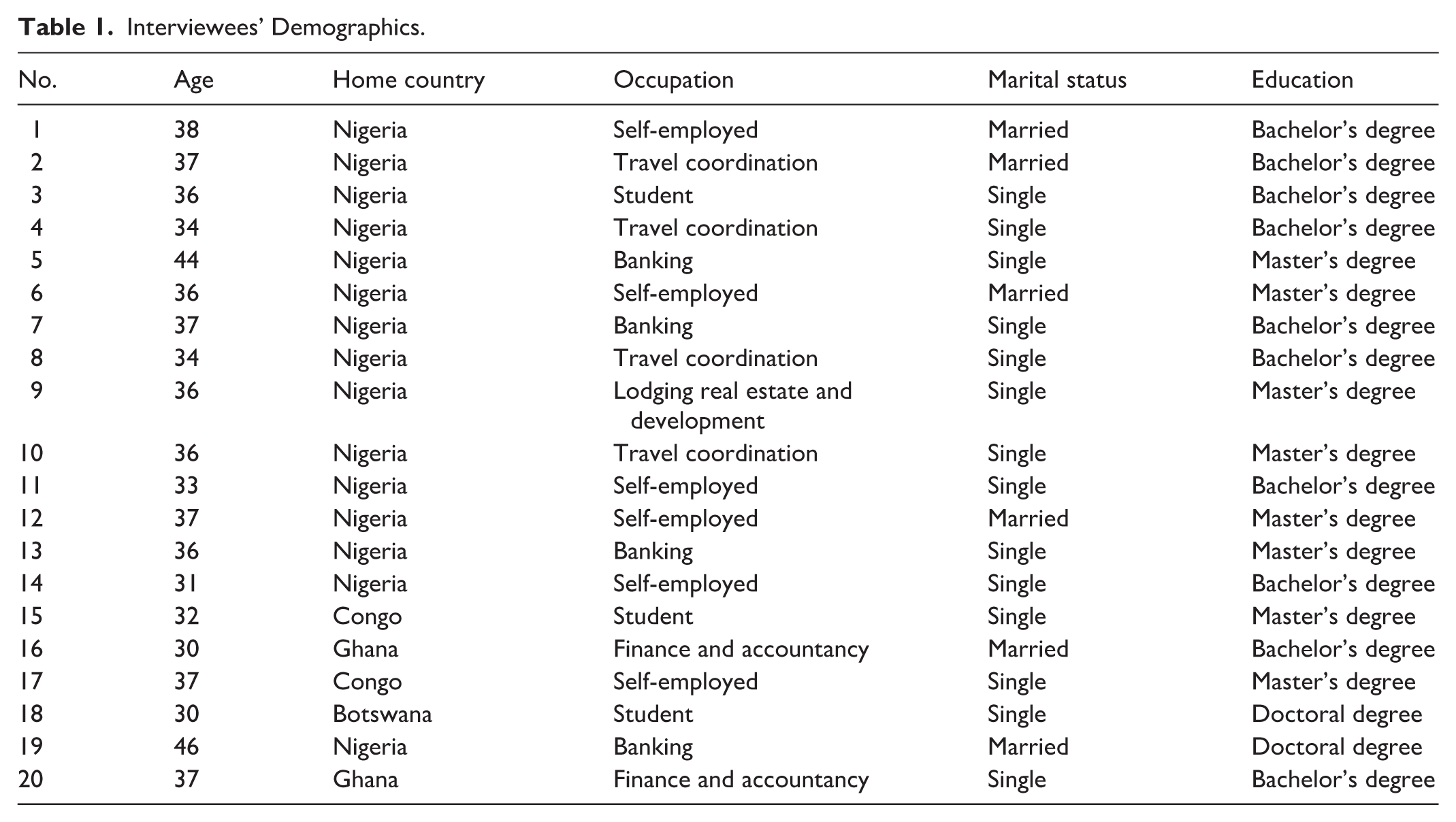
The interview questions covered the research objectives to determine the perceived risks of solo female travellers, to explore how the perceived risks affected their travel comfort, and to discover the coping strategies during their trip to European countries (Appendix 1). After 18 interviews, data saturation was achieved, and two further interviews were conducted to confirm that no new information was forthcoming (Guest, et al., 2020). Participants included 14 who were single and aged between 30 and 45 years of age. All participants were raised in African countries, where their cultural foundations were shaped by their lived experiences. However, at the time of the interviews, they were temporarily travelling in other countries. Participant information is summarised in Table 1.
Interviewees’ Demographics.
Data Analysis
The interviews were transcribed verbatim and read multiple times to ensure the researchers were familiar with the content (Braun & Clarke, 2006). Memos were used during the data analysis phase to capture emerging patterns, preliminary interpretations, and any discrepancies that arose while coding the interviews. The researchers maintained a reflexive journal throughout the data collection and analysis phases, allowing researchers to reflect on their positionality and identify emerging codes, themes, and patterns (Berger, 2015).
The researchers then developed preliminary codes and themes. The data were independently categorised using an inductive approach, first conducting open coding to identify recurring patterns in the raw statements. The codes were then grouped into broader categories, and higher-order themes were developed based on thematic similarities emerging from the data via NVivo software to group data into different categories (Braun & Clarke, 2006). During the later stages of analysis, the researchers noted that some of the themes aligned with established tourism risk categories (e.g., cultural, health, physical, and social risks) (Reisinger & Mavondo, 2006). These categories provided a useful deductive lens for organising and interpreting aspects of the data. The hybrid approach (Fereday & Muir-Cochrane, 2006) allowed for the integration of inductive emerging theme insights and deductively derived themes.
Some discrepancies emerged during the coding and memo process, where certain participant statements did not align with our initial conceptual assumptions. The researchers identified these discrepancies by carefully comparing initial thematic assumptions with the actual content of participant statements. For example, while the researchers initially understood “active participation” as engagement with people or activities, some participants described individual practices such as “self-taking pictures” as negative or self-conscious rather than active engagement. These findings prompted critical reflection and were discussed collaboratively among the research team. To address the discrepancies, the researchers revisited the transcripts, re-examined the contextual meanings of participants’ language, and refined the thematic definitions to better reflect participants’ perspectives.
Emergent themes were then compared with conceptual categories drawn from existing literature, such as risk typologies (e.g., cultural, physical, social, and health risks) and the notion of psychological comfort (Brown, 2008; Reisinger & Mavondo, 2006). The comparative analysis aimed to explore where participants’ narratives aligned with or deviated from the established frameworks. Specifically, it examined how gender, race, cultural identity, and sociopolitical context influenced the ways in which African solo female travellers perceive and cope with risks. Informed by the intersectionality theoretical framework (Collins, 2015; Crenshaw, 2013), this approach recognises that risk is not experienced uniformly but is shaped by overlapping systems of power, cultural norms, and identity dynamics.
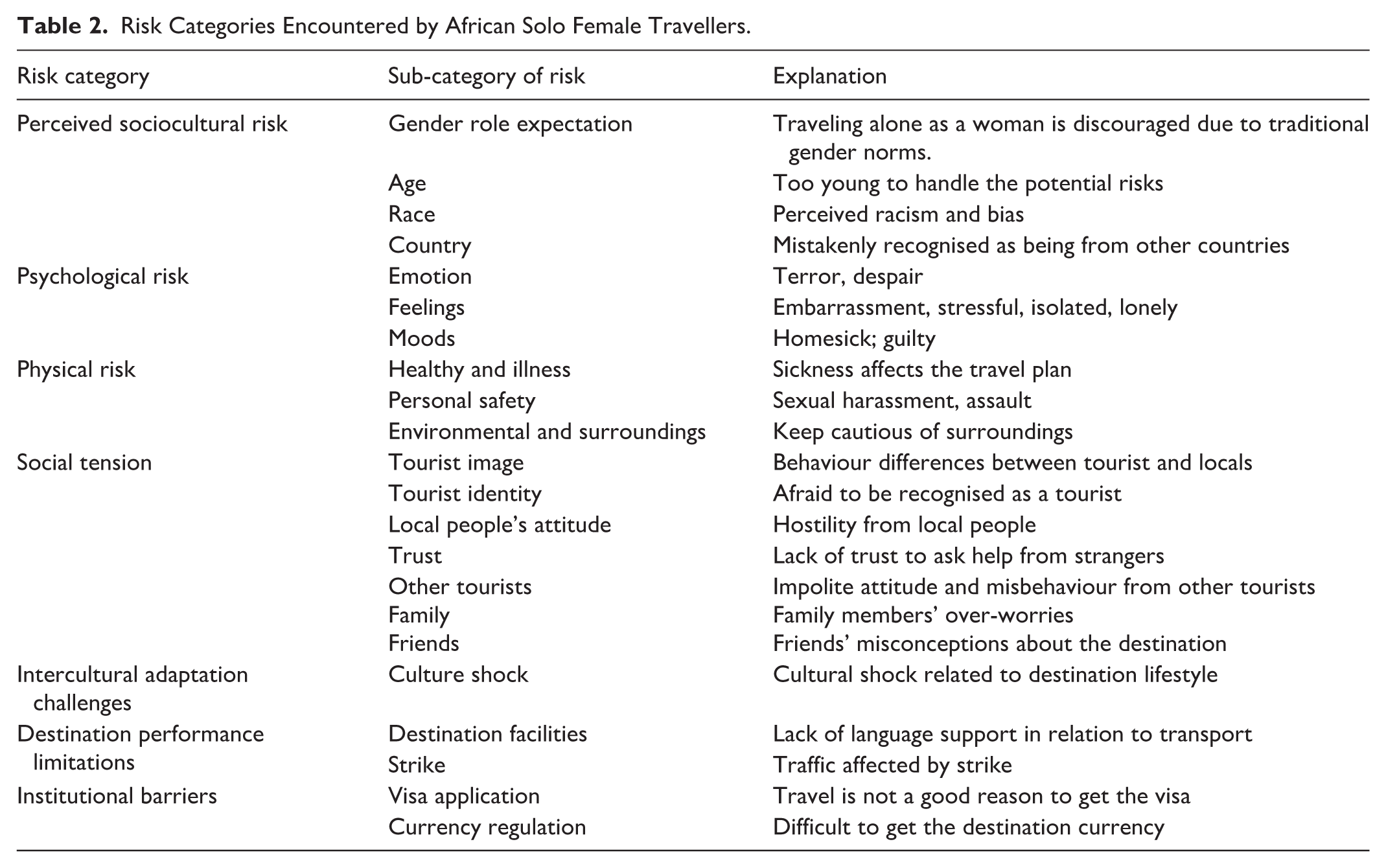
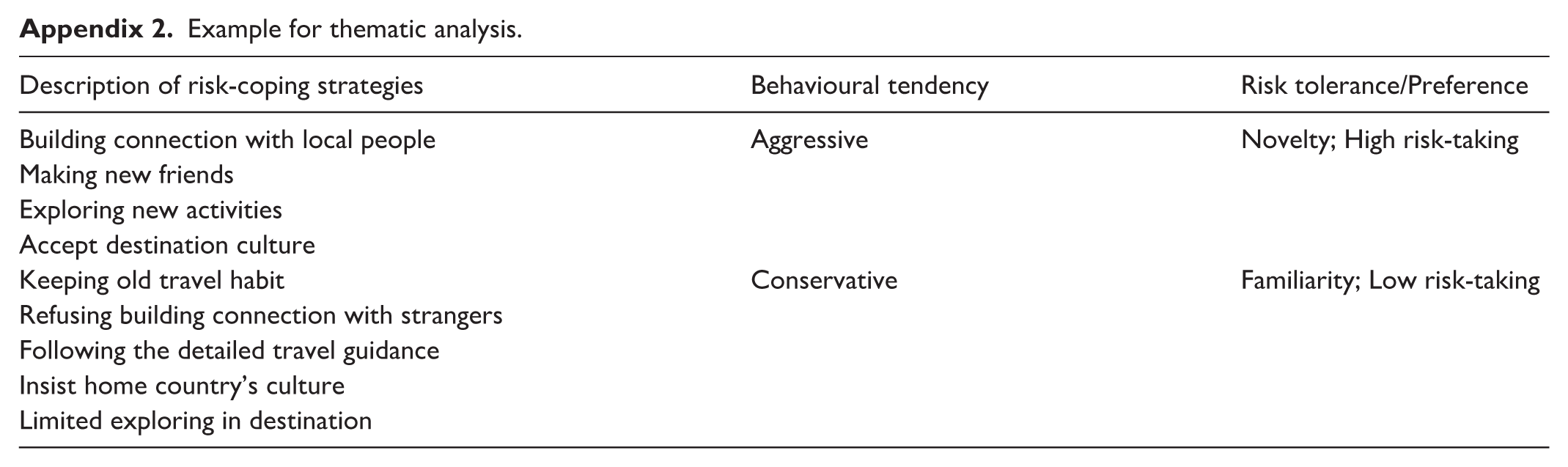
Data were analysed from various disciplinary perspectives, including psychology and sociology, with a specific focus on tourist behaviour to rigorously reflect the interdisciplinary foundation of the analysis. To capture the heterogeneity of the risk-coping process, we developed a thematic framework based on the categorisation of perceived risks, their associated influencing factors, and coping strategies (see Table 2). As shown in Table 2, the arising factors contributing to risk perception include perceived sociocultural risks and the lack of social support. Additionally, Figure 1 illustrates the process by which solo female travellers manage cognitive dissonance in response to perceived risks, and Appendix 2 provides an example of the thematic analysis.
Risk Categories Encountered by African Solo Female Travellers.
To strengthen the credibility of this study, investigator triangulation was utilised consistently throughout the research process to enhance the validity and reliability of the findings (Lincoln et al., 2011). Investigator triangulation is logically coherent with the study’s objective of conducting rigorous thematic analysis while minimising individual bias (Archibald, 2016). Although all interviews were conducted in English, some participants occasionally utilised Pidgin English words when they could not locate precise English equivalents. One bilingual researcher, who speaks English and Hausa, initially interpreted those Pidgin English terms. The bilingual researcher’s fluency enabled accurate interpretation of these instances, and an independent investigator reviewed the data to validate or challenge previous interpretations. The triangulation process involved three researchers, all of whom possessed a disciplinary background in tourism research and adopted a feminist perspective in interpreting the data. Two researchers independently analysed the data, identifying themes and codes separately to ensure a comprehensive exploration of the findings. A third researcher then reviewed and cross-checked these identified themes or codes to confirm consistency and achieve consensus, which strengthened the trustworthiness of the results. Discussions between the two researchers ensured that no meaningful information was overlooked, especially in the participants’ negative language. To support the development of theoretical insights, multiple sources of evidence including interview transcripts, field notes, and reflexive memos were integrated to assess whether new data confirmed or challenged the emerging interpretations. To ensure research transferability, all research documents were filed, including interview protocols, respondent information sheets, consent forms, sociodemographic information, coding patterns and NVivo files.
Findings and Discussion
A comprehensive synthesis of the findings and discussion is presented in three sections to reflect the journey of African solo female travellers in Europe: (1) the factors influencing their perceptions of risk; (2) the coping strategies and behaviours employed to navigate discomfort and enhance comfort; and (3) how these strategies shape their overall travel experiences. This section engaged critically with the relevant literature and theoretical frameworks, particularly intersectionality and cognitive dissonance theory, to illuminate the complexity of participant experiences.
Factors Affecting African Women’s Perceived Travel Risks
The research explored the elements that contributed to uncomfortable experiences for solo female travellers. The results emphasise seven main elements that contributed to travel discomfort: sociocultural risk, physical vulnerability, psychological strain, social tension, intercultural adaptation challenges, destination performance limitations, and institutional barriers.
Sociocultural Risks
If the solo travellers’ behaviour deviates from the home country beliefs, the negative voices from the travellers' home county increase their travel pressures. Participants shared: In my home country, women travelling is sometimes viewed negatively. There is a perception that women should stay at home, be with their kids, and take care of their family. People often question why a woman would constantly leave her country to go to other places. They might think, "What are you doing there?" There is also this idea that if you're always travelling, you're not going to settle down with someone (Participant 17).
Such statements exemplify paternalistic discrimination, where women are treated as less capable of making morally autonomous decisions about their lives and safety (Midtgaard & Pedersen, 2025). The discouragement of solo female travel under the guise of concern for family, marriageability, or safety thus reveals a deeper structural disrespect: an implicit belief that women are less suited to manage their risks and life trajectories. Participants experienced emotional impact from the implicit message that their independence was less legitimate. This aligns with broader patriarchal values, which prioritise women's social conformity over self-directed freedom. In contrast, the same participant also reported she is a frequent solo traveller and convinced her family to support her.
Participants reported experiencing biases based on gender, race, nationality, and ethnicity. Participant 3 said: Before, when I called for a taxi, the service was normal through the mobile phone. When the taxi driver came to pick me up and found that I am a solo Black traveller with a lot of luggage, he used rude words. Because I could speak their language, I understood what he meant. He even asked me what I carried and wanted to open my bags.
The challenges faced, such as discrimination described above, often stem from entrenched power dynamics within their own cultures and in those of the travel destinations. The intersection of race and gender further complicates their experiences, as they may encounter biases and stereotyping that undermine a sense of security and autonomy (Seow & Brown, 2018; Ying et al., 2017). The emotional and psychological impact of discriminatory encounters on African women travelling in European countries was evident, with examples of discrimination by locals and service industries. Therefore, understanding the effect of culture on solo female travellers and promoting an inclusive environment that supports their freedom and safety are essential.
These intersectional challenges were especially pronounced when participants were subject to layered assumptions based on their nationality, ethnicity, and perceived socioeconomic status. For example, Participant 15 noted: People assume I’m wealthy and think I’m from America, so they give me an expensive menu, while I know the local people use a different menu, which is much cheaper.
These encounters reinforced a sense of being an outsider, leading some participants to seek validation and reassurance from their social networks. Participant 15 claimed that before the journey, she consulted with her Black friends who had travelled to the same destination and knew that she would be treated differently in the destination restaurant.
In many African cultures, traditional gender roles and patriarchal values dictate that women should prioritise family responsibilities over personal pursuits such as travel. Decisions to avoid solo travel, often influenced by a lack of social support in home communities, reflect cultural norms that view travel as inappropriate for women. This social belief is rooted in patriarchal values that affect women’s solo leisure decision making.
Physical Vulnerability
Health-related issues were found to trigger a chain effect, imposing time constraints on travel and potentially disrupting planned itineraries. This highlights the complex nature of the processes that cause discomfort during travel. For instance, Participant 15 said, “Being ill in a foreign country without familial support is challenging, and sickness affects my plan; I have to stay in a hotel a few days for nothing.”
Furthermore, regarding the personal safety issues, participants reported having been stalked. Participant 7 reported: I’ve been stalked a few times. . . When I asked what he wanted, he just asked if I lived there. To lose him, I changed my route and returned to my accommodation until I confirmed he had gone.
Participant 15’s reflection on a lack of familial care during illness exemplifies the emotional toll of disrupted travel plans. This reinforces that physical vulnerability is multidimensional, extending beyond the body to include mental and emotional discomfort.
In Athens, a man pointed out something on my bags and tried to help by handling them, which made me uncomfortable. It felt like he was taking advantage. I believe solo travellers are easier targets than those in groups. . . The incident made me more cautious of my surroundings and belongings. He didn’t follow me, but kept watching as I walked to my hotel. . . I kept checking to be sure he wasn’t behind me. (Participant 1).
These narratives align with research that emotional labour and psychological stress are often part of women’s travel realities (Karagöz et al., 2021). Scholars have noted that women often navigate public spaces with an acute awareness of potential threats, such as harassment, stalking, or unwanted attention, which significantly shapes their travel behaviours and perceptions of safety (Wilson & Little, 2008). Being followed, watched, or physically approached by strangers are not isolated incidents and are embedded within broader gendered power dynamics that structure women’s mobility.
Psychological Strain
Psychological discomfort is exacerbated by conflicting viewpoints from close networks and the stress of navigating new environments alone. The participants expressed concerns about personal safety, anxiety within unfamiliar settings and the psychological effects of these safety concerns. For example, Participant 2 stated:
I have to be cautious of my surroundings in an unfamiliar environment.
In addition, Participant 11 shared similar concerns: A lady travelling alone to a foreign nation and sleeping in a hotel hundreds of miles from home was my main worry. I continuously worried about what might happen whilst sleeping.
Other psychological feelings, such as homesickness and loneliness, were frequently mentioned. Participant 19 stated: Travelling alone means that you must find a way to make it fun for yourself. Otherwise, you regret it immediately. You will regret it because you start feeling homesick.
Participant 13 talked of her homesickness and loneliness and expressed fatigue with being identified as a tourist:
If it’s a long trip, it's easy to get tired of being a stranger; family and friends back home will be missing me.
Many African cultures emphasise strong community ties, interdependence, and family-centred lifestyles (Maranz, 2016), making solo travel psychologically taxing for some individuals.
During my solo travel in a western country, I like to find my people from the internet group. . . I’m part of a running group, so I can always connect with fellow runners, even in France. . .. We have a running group, so I can contact them in France (Participant 4).
Unlike travellers from individualistic societies, who often prioritise independence, self-actualisation, and personal enrichment (Hofstede, 2001), participants from collectivist cultures can demonstrate a strong inclination toward social integration, even in foreign environments. This aligns with research suggesting that travellers from collectivistic cultures are more likely to seek group-orientated experiences and maintain in-group connections. Those from individualistic cultures exhibit a preference for autonomy and self-directed exploration (Iversen et al., 2016).
Social Tension
Participants also faced racial discrimination and cultural differences during their travel, which often influenced their need for social support. Some participants turned to family or online communities for reassurance, while others hesitated to share negative experiences for fear of reinforcing their loved ones' concerns. For example: My mom always worried that travelling alone, especially for women, is too dangerous. (Participant 16).
These warnings contributed to heightened risk perceptions and led to the adoption of extra precautionary measures or even reconsideration of travel decisions. Participants often relied on peer networks, such as social media travel groups, for emotional support and practical advice in dealing with discrimination.
Social support from family, peers, and online communities plays a crucial role in shaping African solo female travellers’ experiences. While it provides guidance, reassurance, and emotional security, it can also create conflicts, restrictions, and self-doubt, particularly when advice from close networks reinforces travel risk fears.
I have been told not to travel alone in Italy because it is dangerous and Italians dislike Black people, although that friend has never visited by herself before. (Participant 13)
After completing her trip, she realised that first-hand insights from experienced travellers were far more valuable than second-hand warnings based on assumptions.
Efforts to align with local cultural norms and to maintain a positive image as a traveller can also exacerbate psychological discomfort by narrowing the perceived gap between travellers and local residents. Solo travellers are often concerned about their social image at their destination: The truth is, everyone dresses a certain way, so when you look different, people notice. You feel like a foreigner right away (Participant 1).
Solo female travellers perceive certain cultural differences (e.g., clothing norms, interactions with locals) as potential risks and may induce unwanted attention or social judgement (Douglas & Barrett, 2020). Concerns that the trip may conflict with one’s self-image can lead to psychological discomfort and increase the likelihood of dissatisfaction with the overall experience (Wantono & McKercher, 2020). By reinforcing their cultural identity and maintaining familiar behaviours, participants create a psychological buffer that reduces uncertainty and anxiety.
Intercultural Adaptation Challenges
The findings reveal culture shock arising from significant cultural differences between the participants’ home countries and their travel destinations:
I find people in other countries more liberal. I saw many women openly smoking and drinking, which you rarely see in Nigeria. Even if people do it there, it’s kept private. . . The cultural difference was striking, it felt like something straight out of a movie (Participant 12).
Participant 12’s observation of women “openly smoking and drinking” illustrates a moment of normative dissonance. Behaviours deemed private or socially inappropriate in the Nigerian context were encountered as public and normalised abroad. For African female travellers socialised in environments with traditional expectations of femininity, such encounters can generate a heightened sense of otherness, potentially intensifying feelings of exposure or vulnerability: The food was very different from what I’m used to in Nigeria, where meals are usually rice, fufu, or stews. In the Netherlands and Belgium, fries with meatballs or sausages are seen as a full meal, which really surprised me (Participant 14).
Food, as a deeply personal and cultural anchor, plays a significant role in how travellers maintain or lose connection to home (Cai et al., 2021). When cultural symbols like cuisine become unfamiliar or inaccessible, travellers may experience discomfort that adds to broader feelings of alienation.
Destination Performance Limitations
Other factors affecting African women’s travel comfort were identified and related to destination performance, including language barriers, Wi-Fi and communication connections, and political and social circumstances.
Language was frequently mentioned as a problem by the participants. These barriers often manifest in relation to destination facilities and interactions with locals: There is no English in the train station, and it is hard to find someone who can speak English. (Participant 2)
It’s difficult to find an open pharmacy on a Sunday and hard to find someone who speaks English. Luckily, I found a policeman who showed me the way (Participant 5).
Language challenges, as reported by several participants, aligned with the tourism literature as a critical barrier for international travellers when navigating transportation systems, accessing services, and interacting with locals (Permana et al., 2024).
I often need to be in a specific area, like a hotel room, to receive messages or be connected to Wi-Fi” (Participant 11). “Once I leave the hotel, I can't use Google Maps because I lose connectivity and don't know where I'm going” (Participant 8).
Inadequate communication and poor digital infrastructure can lead to uncertainty, anxiety, and imbalanced access to information (Chan et al., 2022)
Destination strikes and protests also affect travel plans:
I have to change my departure time three hours early because the protest affects the traffic. (Participant 14)
This narrative aligned with the research on social conflicts that may result in negative outcomes within the tourism experience (Monterrubio, 2017).
Institutional Barriers
Visa and financial issues were often significant challenges for solo female travellers due to policy regulations: It can be very difficult to get a visa without the proper documents. I used the excuse of attending school to get a visa for a holiday. (Participant 19)
Difficulties with visa applications and a lack of the availability of local currencies are other issues: It is hard to get enough foreign currency. Usually, I use USD first until I arrive at the destination. Then, I change the USD into local currency when I travel in European countries. (Participant 20)
African solo female travellers must also negotiate complex structured and economic barriers that are intensified by their intersectional identities. These experiences highlight systemic inequities in global mobility and discriminatory policies rooted in postcolonial and geopolitical dynamics (Higgins-Desbiolles, 2022). Travellers from countries with strong banking services have greater financial certainty than African women, which may compound their emotional and logistical stress. Visa and financial challenges are logistical, and they intersect with race, gender, class, and citizenship status, amplifying the barriers to solo travel. For African women, these obstacles can limit travel opportunities altogether or force them into alternative, sometimes deceptive, means to acquire access (e.g., the “school” excuse mentioned). Risk perception, therefore, is a product of social positioning within intersecting hierarchies of gender, race, and nationality. A summary of the risks that cause discomfort for African solo female travellers is presented in Table 2.
Risks and Discomfort Coping Process
The findings of this study illustrate the diverse strategies employed by African solo female travellers to relieve cognitive dissonance related to perceived risks. Drawing on cognitive dissonance theory, travellers use three dissonance reduction strategies: information seeking, belief adjustment, and behavioural change to reconcile conflicting thoughts between risk and comfort. As findings revealed cognitive and behavioural adjustment functions as a dissonance reduction strategy because it helps travellers resolve the psychological discomfort of holding conflicting beliefs and behaviours.
Mechanisms of Coping with Risk-related Cognitive Dissonance
The study categorises travellers into two types: those who seek calmness, relaxation, and low risk, and those who pursue challenge, excitement, and novelty according to their responses in interviews. Both groups utilise three main cognitive strategies: information seeking, belief adjustment, and behavioural change, though the direction of these strategies differs. Low-risk travellers primarily use these strategies to reduce exposure to risk, while high-risk travellers apply them to embrace and rationalise risk-taking behaviour. The identification of cognitive dissonance induces psychological discomfort, subsequently generating motivation for rebuilding cognitive harmony. To alleviate this discomfort, individuals make cognitive modifications to their attitudes, beliefs, or actions to reconcile opposing parts and restore internal coherence (McGrath, 2017).
While both groups employ the cognitive strategies of information seeking, belief change, and behavioural change to manage cognitive dissonance, the way these strategies are applied reflects their differing psychological motivations. Low-risk seekers focus on minimising uncertainty and enhancing safety by actively gathering information related to security, adjusting their beliefs to reduce perceived threats, and modifying their behaviour to avoid risky situations. In contrast, high-risk seekers utilise these same strategies in the opposite direction, seeking information that enhances adventure, reframing risks as opportunities for personal growth, and adjusting their behaviour to engage in exploratory or thrill-seeking activities. This divergence in application underscores that while the strategies themselves remain consistent, their functional purpose varies depending on the traveller’s orientation toward risks.
Comfort from Seeking Calmness and Safety
For travellers who enjoy peace and safety, perceiving a high-risk environment can cause significant discomfort. To mitigate discomfort, they seek information through familiar agencies or retain loyalty to a familiar hotel brand: I’m a member of a holiday club that takes care of hotels and accommodations for me when I travel. I always look for hotels that offer a shuttle bus. (Participant 1)
Rather than being driven by long-term loyalty to specific brands, these travellers prioritise familiarity as a risk-mitigation strategy to navigate new environments with a greater sense of security. This strategy aligns with cognitive growth, where travellers seek more information to ensure their safety and manage potential risks effectively (Dayour et al., 2019). However, this can lead to an “information cocoon” effect where individuals seek, interpret, and engage with information that aligns with their existing beliefs. This approach avoids conflicting perspectives and may lead to a self-reinforcing cycle that limits exposure to diverse viewpoints and critical thinking (Peng, 2021).
The videos from social media affect me; the tragedies all truly happened, so I always prepare my own locker to lock the hotel room door inside in case someone breaks in. (Participant 5)
Another strategy involves the strengthening of mindset and beliefs. Solo female travellers who pursue relaxation and familiarity may strengthen their self-perception when they encounter cultural differences at a destination. Participant 19 said:
I would see people wearing just a bra or very short tops. It was strange for me since it was not something I was used to. Where I’m from, people would stare at you if you dressed like that and might judge you. I stick to my own habits and don’t change my behaviour based on how others dress.
Strengthening one’s mindset and cultural identity serves as a coping strategy to manage discomfort caused by cultural differences, preventing anxiety and enhancing self-assurance. By enhancing the home country’s culture and distinguishing it from the local culture, attitude reinforcement is a dissonance-reducing response. This process aligns with the self-affirmation framework (McGrath, 2017; Steele, 1988), whereby reaffirming core cultural values enables travellers to psychologically return to their comfort zone by reinforcing familiar beliefs and behavioural norms. This self-affirmation approach (McGrath, 2017; Steele, 1988) helps them return to their comfort zone by solidifying their cultural beliefs and habits.
Behavioural adjustments may allow travellers to alter their appearance to avoid recognition as a tourist: People knew we were foreign because of the way we were dressed. I suggest avoiding wearing flashy clothes. (Participant 10)
The findings of this study align with the previous research, which highlights that clothing choices, avoiding interactions, and relying on pre-planned resources (like maps) are proactive strategies that may mitigate perceived dangers, such as scams, harassment, or feeling lost in an unfamiliar place (Douglas & Barrett, 2020).
To avoid communication with locals at a destination, individuals may employ extensive preparation to solve challenges during travel: I download maps, and then, without the internet, I still have the map to navigate. I usually only ask for help if I’m really in need of something specific. (Participant 9)
I downloaded the local map and took transit to use when I was in France. I’m very cautious about asking people, as it can expose that you are a foreigner and can’t speak their language, and you don’t know the people you are going to ask. (Participant 6)
These actions help individuals to mitigate perceived risks and maintain a sense of safety and comfort in unfamiliar environments. By adapting their behaviour to align with their comfort zone preferences, they effectively reduce the dissonance caused by high-risk perceptions.
Behavioural adjustments, such as modifying attire, limiting interactions with locals, and using pre-downloaded maps, serve as practical methods to mitigate the risks of uncertainty. These actions allow travellers to manage perceived risks by minimising exposure to unpredictable or potentially unsafe situations.
Comfort from Seeking Challenges
Those who seek challenge and excitement acquire information that supports their adventurous pursuits. They actively seek out details about new activities, local events and unique experiences to maximise their novelty-seeking behaviour. This proactive information gathering helps them to engage with locals and learn about the destination culture, which can help reduce perceived risks. For instance: I would encourage grab some local words at your destination. It makes things easier and shows respect for their culture. (Participant 8)
To reduce the dissonance, individuals may rationalise their choices or selectively avoid sources that present opposing viewpoints (Tanford & Montgomery, 2015).
These travellers also tend to ignore the negative information if it affects their travel decisions: When the first time I went to Italy, someone warned me about potential dangers, saying I might face problems because I’m a woman. These people had never been to the country themselves, but they had their own ideas and stereotypes. (Participant 18)
Participant 18 disregarded warnings about potential dangers in Italy, recognising that these concerns were shaped by stereotypes rather than first-hand experience.
Belief change for adventure seekers involves the redefining of self-image to align with adventure goals: You shouldn’t be afraid to discover new things. When you travel to a new country, it’s important to ensure you can adapt to the local culture. (Participant 4)
Embracing uncertainty is a mental shift that allows individuals to perceive risk as an integral part of the journey, which reduces dissonance.
Behavioural change is key for these travellers as they embrace risks to enrich their experiences: Engaging with locals, listening to their stories and learning about what makes their cities unique are amazing. . . . Connecting with people and learning about different cultures have been a highlight of my travels. (Participant 16)
This acceptance of difference allowed some participants to feel free to dress like the locals:
It was an amazing experience that I can wear what I want to (Participant 14).
I can wear many beautiful colours and different styles of dresses, like the local people; they are so fashionable! I don’t need to worry about people judging me (Participant 16).
By embracing local customs and practices, these travellers enjoyed their travel experiences and achieved cognitive harmony through cultural exchange and immersion.
Travel can serve as a powerful tool for empowerment (Yang et al., 2018). Solo leisure travel can become a pathway for personal growth, enabling individuals to discover existential authenticity and attain independence (Yi et al., 2025). This study argues that travel provides African women with opportunities for personal growth, independence and broad worldviews. From the narrative we concluded that travel provides a channel to redefine African solo traveller identities and disrupt the power structures that uphold conventional societal expectations.
Travel Experience Shaped by Coping Strategies
Solo female travellers were found to employ various coping strategies to manage discomfort and perceived risk and as a method to mediate discomfort during their travel experience. This is conceptualised in Figure 1 which illustrates the behavioural modification, belief adjustment and information seeking strategies employed to move to the comfort zone.
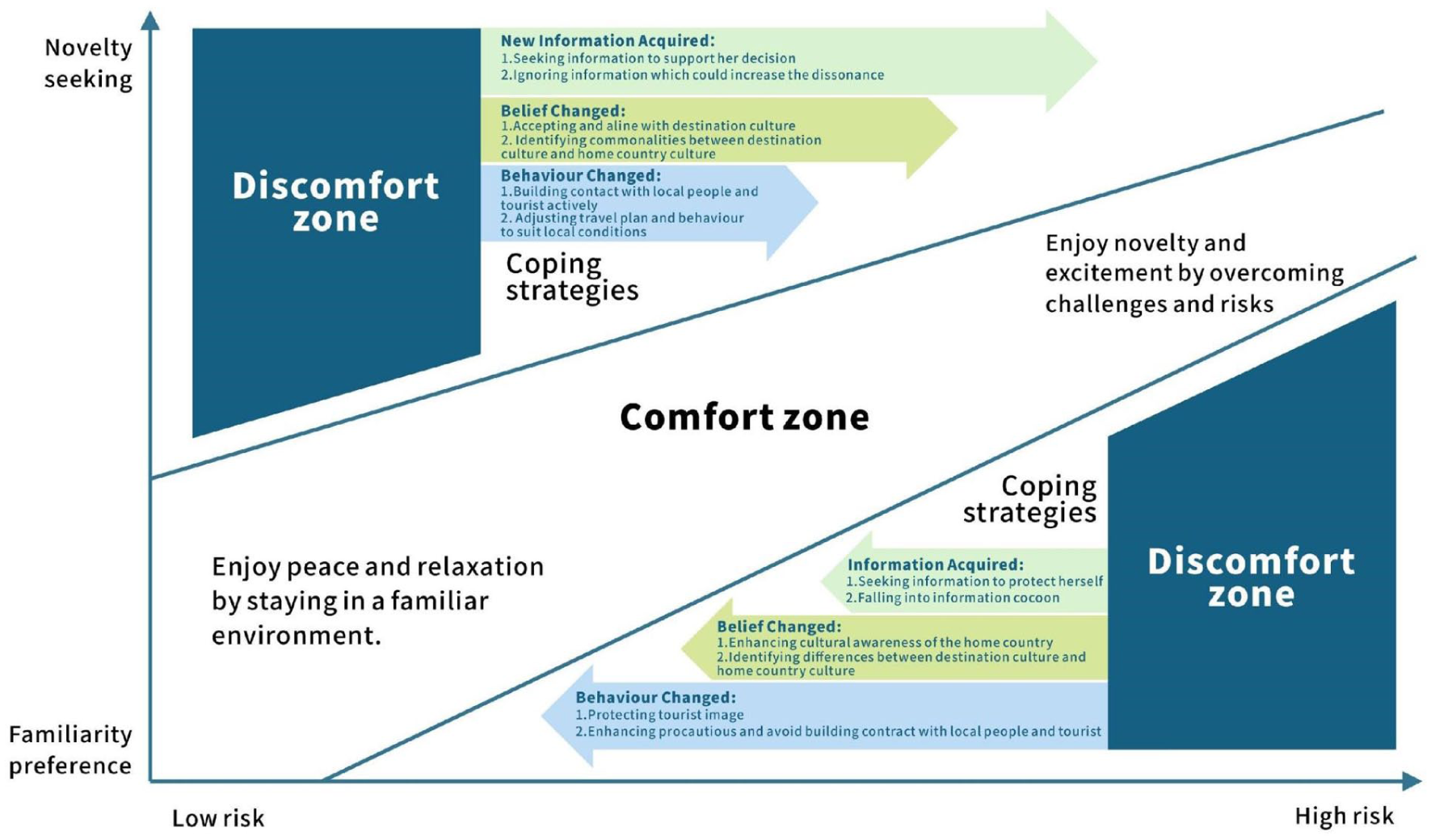
Process of relieving cognitive dissonance of risks among female solo travellers.
The vertical axis on the left of the graph indicates the degree of preference for novelty versus familiarity. An increase on this axis signifies a stronger preference for novelty amongst tourists. The horizontal axis represents risk appetite. The further away from the axis, the greater the desire to engage in high-risk tourism activities. The central region of the graph encapsulates the comfort zone. Given the diverse preferences amongst the participants, activities that aligned with their individual tastes for novelty or risk constitute their optimal comfort zone. Participants who favoured low-risk and high familiarity situations might experience discomfort during high-risk and challenging tourism activities. Under these circumstances, the individual is likely to seek their comfort zone.
Findings align with previous research, which states that tourists perceive risks differently due to variations in individuals’ characteristics such as cultural background, personality, prior travel experience, and risk tolerance (Seabra et al., 2013). A comfort zone should not be seen as a fixed state but a fluid and subjective construct. It is defined and redefined by each traveller based on their own risk perception and coping capacity. What constitutes discomfort for one traveller may represent growth for another. This divergence reveals that while the strategies may remain consistent, their functional purpose varies depending on the traveller’s risk orientation. Coping strategies as a result play a crucial role in shaping the overall travel experience. For travellers seeking adventure and cultural immersion, pushing the boundaries of their comfort zones fosters personal growth, deeper cultural understanding, and more memorable experiences.
Conclusion and Limitations
Theoretical Contributions
First, this study contributes to solo female travel research by exploring women’s risk coping strategies in travel. The utilisation of cognitive dissonance theory offered a valuable perspective, shifting the analytical focus from the external risk factors to the internal psychological processes that solo female travellers undergo. This approach allowed the study to uncover the internal negotiation processes through which travellers managed dissonance. By employing cognitive strategies such as rationalisation, justification, and selective information-seeking, they reduced discomfort and maintained travel intentions (Sawicki, et al., 2013). The study expands the female travel literature by illuminating mechanisms to cope with risk-related cognitive dissonance. This study responds to calls for greater exploration of the diverse experiences and psychological processes of the solo female traveller.
Second, the conventional notion of the comfort zone for solo female travellers has also been reinterpreted. Diverging from a traditional static perspective of the comfort zone, this investigation suggests it as a fluid construct influenced by an individual’s risk assessment, cultural background, and coping tactics. This reinterpretation enhances an understanding of the complexities inherent in solo female travel experiences. Further, the amalgamation of the comfort zone concept and cognitive dissonance theory allowed the study greater capacity to understand the solo female travel experience. Besides, this study introduces a novel conceptual framework in which the coping strategies, such as acquiring new information, adjusting beliefs, and modifying behaviours, are employed to mitigate perceived risk and to negotiate shifting boundaries between comfort and discomfort. These strategies serve either to reinforce safety for risk-averse travellers or to promote growth and exploration for more adventurous individuals. This perspective adds depth to existing understandings of female travel behaviour by highlighting how internal psychological negotiation and cultural background jointly shape travel decisions.
Last, this study is pioneering in utilising an intersectionality lens to comprehend how gender, race, culture, and social norms jointly and perpetually shape the experiences of African solo female travellers. This research reported African solo female travellers facing strong social expectations and moral judgements from their home societies, similar to those identified in studies from other non-Western contexts, such as India and Southeast Asia (Seow & Brown, 2018; Thomas & Mura, 2019). Furthermore, race introduced an additional layer of complexity. Consistent with previous research on Black travellers (Douglas & Barrett, 2020; Ying et al., 2017), participants in this study also described experiencing suspicion and discrimination in the destination. Additionally, structural and institutional barriers, such as restrictive visa processes, further intensified their perceptions of risk and limited their ability to engage in solo travel. Framed within a constructivist feminist perspective, findings indicate that risk perception is embedded in cultural ideologies, power relations, and gendered social structures (Foucault, 2019), which offer valuable insights to support future female research in tourism.
Practical Implications
This study provides valuable insights for tourism service providers and practitioners to create more gender-sensitive services that address the diverse needs of travellers from various ethnic backgrounds. As emerging countries will occupy crucial positions in the outbound tourism market in the coming decades, these insights are particularly relevant.
Tourism service providers must place a high priority on safety and security to accommodate the needs of solo female travellers. This involves implementing features such as well-lit entrances and secure internal door locks within accommodation. Clear and accessible information about safety practices and emergency contacts should also be provided. These measures allow tourism service providers to reduce travellers’ concerns and ensure safe and comfortable experiences.
Addressing bias and discrimination is also a key issue. Destination countries and service providers could implement cultural sensitivity training for staff who interact with tourists, especially those working in hotels, restaurants, and tourist attractions. By increasing awareness and sensitivity, staff are better placed to cater to the needs of travellers from diverse cultural backgrounds, making them feel more welcome and comfortable. A zero-tolerance approach to racism and discriminatory behaviour, supported by clear policies and procedures should be established to handle complaints of racism, and staff should be trained to recognise and report such incidents.
To further enrich the travel experience of African solo female travellers and those from diverse ethnic backgrounds who do not speak English, tourism service providers should offer multilingual resources. This includes providing booklets in multiple languages containing vital information about local attractions, safety measures, emergency contacts and cultural practices. Facilities such as multilingual signage, on-site translation services, and language applications are invaluable tools to bridge communication gaps. Programmes that integrate locals into guiding services, community-led workshops, or urban mobility experiences (such as bike-sharing initiatives in Copenhagen) can promote more sustainable and inclusive tourism practices (Vegas-Macias, 2025). For example, the “Macao Courtesy Campaign – Be My Guest, Feel at Home” encourages local residents to enhance hospitality awareness and create a welcoming environment for tourists, thereby strengthening cultural exchange and improving tourist experience.
Limitations and Future Research
This study offers meaningful insights into the travel experiences of African solo female travellers; however, it is important to acknowledge several limitations. First, although the study effectively employed a qualitative approach to produce novel findings, there were limitations. While online interviews address geographical limitations, they reduce the ability to observe participants’ full range of body language and nonverbal cues (Khan & MacEachen, 2022), and technical or internet connectivity issues may also affect the clear communication during interviews. Future research could explore broader recruitment strategies and benefit from a mixed-methods approach. The geographic skew in participant representation, with a predominance of Nigerian and West African respondents, may also impact upon the generalisation of the study’s results. Additionally, this study merely focuses on the experiences of African solo female travellers in European nations. Future research could investigate various destinations to provide a more comprehensive understanding of African women’s international travel experiences and collaborate with pan-African travel communities.
Footnotes
Appendix
Example for thematic analysis.
| Description of risk-coping strategies | Behavioural tendency | Risk tolerance/Preference |
|---|---|---|
| Building connection with local people | Aggressive | Novelty; High risk-taking |
| Making new friends | ||
| Exploring new activities | ||
| Accept destination culture | ||
| Keeping old travel habit | Conservative | Familiarity; Low risk-taking |
| Refusing building connection with strangers | ||
| Following the detailed travel guidance | ||
| Insist home country’s culture | ||
| Limited exploring in destination |

Ethical Considerations
The research was approved by Bournemouth University research ethics committee (Ethic ID: 48962) on 10th March 2023.
Consent to Participate
Respondents gave written consent for review and signature before starting interviews.
Author Contributions
Funding
The authors received no financial support for the research, authorship, and/or publication of this article.
Declaration of Conflicting Interests
The authors declared no potential conflicts of interest with respect to the research, authorship, and/or publication of this article.
Data Availability Statement
The anonymised interview transcripts used in this study are available upon request.