



Abstract
Much has been made concerning the role of positive emotions in tourism. The contribution of the present study, in contrast, is to provide a deeper understanding of a powerful negative emotion; namely, regret in tourists’ decision-making. This study centers on data derived from 49 in-depth, semi-structured interviews with experienced tourists and travelers, who had experienced feelings of regret that went beyond simple dissatisfaction’ regarding some aspect of their recent travel, or tourist experiences. Our primary contribution is to advance a typology of tourists’ decision-making-based regret, that distinguishes this emotion from similar concepts such as dissatisfaction or disappointment (capturing four factors based on retrospective regret [backward looking] vs. anticipated regret [forward looking], and causal regret [faulty decision-making] vs. outcome-based regret [comparative decision-making]). Our study points to the importance of understanding post-purchase regret in order to help tourists make better consumption decisions and tourism providers to create improved tourist experiences.
Emotions—both positive (e.g., satisfaction, joy, pleasure) and negative (e.g., dissatisfaction, guilt, regret)—are central to tourism experiences (Aho, 2001; Bastiaansen et al., 2019; Knobloch et al., 2017; Tussyadiah, 2014). The subject has attracted considerable attention in tourism scholarship across a variety of situations (e.g., McCabe & Branco Illodo, 2019; Volo, 2021), spanning the relatively trivial, such as visits to theme parks (Bigné et al., 2005) and shopping experiences (Yüksel & Yüksel, 2007), to the more powerfully felt, including pilgrimages (Damari & Mansfeld, 2016), and visits to sites of dark tourism (Weaver et al., 2018). Emotions are, therefore, unsurprisingly strongly linked to tourists’ experiences and influence their travel motivations and choices (Gnoth, 1997).
When making vacation and travel decisions consumers are faced with a vast array of choices that often represent “big ticket” items in discretionary household budgets, are infrequent purchases, and come with the burden of making decisions that it is hoped will lead to satisfying experiences—although this may result in cognitive overload where tourists are confused by multiple options to evaluate (Park & Jang, 2013). There is the possibility, however, that choices might be made that could result in dissatisfying experiences and lead to “post travel” regret—or “buyer’s remorse”—particularly as it is difficult to evaluate tourism services prior to experiencing them due to information asymmetries between tourism provider and customer (Chen & Schwartz, 2006; Jo et al., 2022). Further, given the perishability of tourism services (and perceptions of scarcity), this may cause consumers to make rushed purchasing decisions that they later regret (Smith et al., 2015). Post-travel regret, therefore, is important to understand particularly as it is a higher-order emotion (Saffrey et al., 2008) and can affect consumers’ decision-making and post-travel behavior in a variety of ways, including negative WOM, switching and complaining behavior (Sánchez-García & Currás-Pérez, 2011). Strongly felt emotions have also been demonstrated to have a significant impact on tourists’ repeat visit intention, (J. H. Kim et al., 2022), destination evaluation and memorability (Knobloch et al., 2017), complaining and negative WOM (Breitsohl & Garrod, 2016), future consumption behaviors (Prayag et al., 2013; X. Zhang, Zeelenberg, et al., 2021; Y. Zhang, Prayag et al., 2021), repeat visit intention (Grappi & Montanari, 2011) and recommendation intentions (Prayag et al., 2017). Finally, negative emotions such as regret in a tourism context tend to be more vividly remembered than positive ones (Baumeister et al., 2001; Kensinger et al., 2007).
Consumer decision-making in a tourism setting is assumed to rely on comprehensive decision-making and cognitive processing prior to final purchase decisions (McCabe et al., 2016). This chimes with classical theories of decision-making starting in the 1980s, where decisions are believed to be made based on expectations of maximum utility (Landman, 1987). In reality, however, given factors such as information asymmetries in tourism services, such decision-making is certainly not a scientific endeavor based on a comprehensive exploration of alternatives that is replicable and generalizable given the uniqueness of many tourism services. It is little wonder then, that consumers use a variety of tools and sources (e.g., customer reviews and testimonials) to help inform and validate their choices pre-consumption and to reduce the possibility of post-purchase disappointment and regret.
The role of negative emotions in tourism, however, has received relatively little attention (Nawijn & Biran, 2019). This would seem an oversight as negative emotions are particularly interesting, as research in neuroscience and psychology has demonstrated that we process them differently to positive emotions (Baumeister et al., 2001) and place a greater emphasis on them (Rozin & Royzman, 2001; Tierney & Baumeister, 2019). We also suffer from what celebrated psychologists Tversky and Kahneman (1991) termed “loss aversion,” where we outweigh losses in contrast to equivalent wins. In short, we are “more motivated to avoid bad outcomes than to pursue good ones” (Baumeister et al., 2001: 356). Some powerful negative emotions, such as regret, also have a significant impact on future decision-making (Landman, 1987).
As noted above, tourists’ feelings of regret are a powerful emotion as they influence a variety of consumer behaviors and intentions. Regret is also often enduring in the memory (compared to feelings of dissatisfaction and disappointment) owing to its internal attribution (i.e., a tendency to self-blame; Zeelenberg et al., 2000), that has strong cognitive and behavioral outcomes (e.g., learning from a perceived mistake, a desire to “do better” in the future). In addition, counterfactual thinking is commonplace in post-travel situations (i.e., contemplating options not taken), which is a strong predictor of travelers’ regret (Park & Jang, 2018). Further, regret is a related—but distinct—concept compared to the highly studied concepts of disappointment and dissatisfaction, which can both drive regret but cannot be driven by it (Bonifield & Cole, 2007; Sánchez-García & Currás-Pérez, 2011). Therefore, this study focuses on the negative emotion of regret as experienced by tourists; limited attention has been paid to understanding post-purchase regret in tourism experiences compared to concepts such as satisfaction and other positive emotions (Jo et al., 2022), which would seem an oversight given its importance. This study attempts to address this gap in current tourism research.
Against this background, the research problem (and intended contribution) of the present study, that is highly relevant for travel and tourism in today’s society, is as follows: Despite the scope for post-travel regret that some tourists may encounter – which in turn can have a considerable impact on future travel intentions and behaviors – we have limited disciplinary knowledge of it as an emotion related to tourism experiences. The problem this study addresses is the current lack of understanding of the sources and types of regrets that tourists might experience, and the consequences of these feelings related to tourists’ decision-making.
In order to understand this problem better, the study undertakes an in-depth exploration of tourists decision-making regret that addresses three questions: (RQ1; i.) What is/are the nature/sources of tourists’ regrets and (ii.) how do they interpret them? (RQ2) How can we categorize the types of regret experienced by tourists? and, (RQ3) What are the outcomes and consequences of regret felt by tourists?
The Role of Regret in Decision-Making and Tourism
A Brief Overview of Regret Scholarship
Regret is defined “as a negative emotion predicated on an upward, self-focused, counterfactual inference” (Roese & Summerville, 2005: 1273; see also: Gilovich & Medvec, 1995; Zeelenberg, 1999). In this regard, regret applies to situations where an individual perceives that different circumstances or alternative decisions (counterfactuals) could have resulted in more desirable and better outcomes (upward inferences; Byrne, 2016; Kahneman & Tversky, 1982a; Roese & Epstude, 2017). Regret is so keenly felt as it implies a culpability in one’s actions: A wrong decision was made that triggers feelings of blame and shame (Connolly & Zeelenberg, 2002), as the following adjectives closely related to regret emphasize—penitence, remorse, shame, contrition, and guilt. It is unsurprising then, that there are numerous cognitive consequences associated with regret, including suspicion, shame, guilt, blame, superstition, and disappointment (Connolly & Zeelenberg, 2002; Roese, 1997, 2005). The study of regret in broader social science was popularized in the early 1980s and 1990s in a variety of disciplines across the social and natural sciences, including services research (Zeelenberg, 1999), neuropsychology (Gilovich & Medvec, 1995), consumer research (Simonson, 1992), decision-making theory and behavioral economics (Kahneman & Tversky, 1982b; Loomes & Sugden, 1982; Sugden, 1985).
Feelings of regret frequently encourage individuals to take corrective action that is anticipated to bring about improvements in life where it is perceived to be feasible and effectual (Zeelenberg, 1999); such as switching suppliers after a negative service experience (Zeelenberg et al., 2001; Zeelenberg & Pieters, 1999). Hence, regret is grounded in “upward counterfactual thinking” (Roese & Summerville, 2005: 1274) and behavior modification (Morris & Moore, 2000; Nasco & Marsh, 1999; Roese, 1994). Regret persists most, however, in situations that are perceived to be alterable (Gilbert & Ebert, 2002), as “opportunity breeds regret” (Roese & Summerville, 2005: 1275; see also Markman et al., 1993). In this sense, regret endures in situations where the opportunity for corrective action was high; the negative outcome could have been avoided as the individual had agency to remedy a particular situation.
A body of related work worthy of brief mention at this point is cognitive dissonance: the condition of harboring inconsistent beliefs, thoughts, or attitudes, which arise where situations are deemed adjustable and corrective action is a viable alternative (Festinger, 1957). Sweeney et al. (2000) proposed that post-purchase cognitive dissonance occurs when consumers generate inconsistent cognitions toward the purchase between pre-purchase and post-purchase phase (Elliot & Devine, 1994). Further, regrets of inaction are thought to endure longer than regrets of action partly because the opportunity to alter events was feasible, even if the desired outcome was not achieved (Gilovich et al., 1995). In this sense, cognitive processes such as rationalization/reasoning and cognitive dissonance significantly help to moderate feelings and experiences of regret (Roese & Summerville, 2005).
In the foregoing, regret is traditionally regarded as a retrospective emotion, that is, evaluations of past experiences and their outcomes, bad decisions and poor choices made and the resultant suboptimal results. Somewhat counterintuitively, however, regret can also be anticipated (Zeelenberg, 2018), where regret might be predicted or projected into the future; regret that we plausibly believe we might experience at some impending point. For example, an individual might have the anticipated regret of smoking if they believe that it subsequently might lead to a cancer diagnosis, or eschewing getting a vaccination when an individual is aware that they may contract a particular virus (Brewer et al., 2016; see also: Lauriola et al., 2019; Ogbanufe & Pavur, 2022).
An interesting contribution to scholarship on regret developed by Connolly and Zeelenberg (2002) is Decision Justification Theory (DJT). Under DJT, there are two contrasting forms of regret: causal regret (responsibility-based) and/or comparative regret (outcome-based). Causal regret is related to perceptions of self-blame and accountability. In contrast, comparative regret is related to comparisons between the outcome arising from the decision made and the rejected options. In addition, individuals have a different tendency to feel regret (Schwartz, 2004). Past research has shown that individual regret negatively influenced post-decision attitudes (Harmon-Jones & Harmon-Jones, 2002; Inman & Zeelenberg, 2002; Tsiros & Mittal, 2000), while an individual with a higher tendency to regret was less happy, less satisfied with life and more depressed, than an individual with a lower tendency to regret (Harmon-Jones & Harmon-Jones, 2002; Schwartz, 2004; Zeelenberg et al., 2000).
Regret is closely related to the emotions of disappointment and dissatisfaction; if one experiences regret then one will also likely experience feelings of disappointment (Zeelenberg & Pieters, 2006), although in comparison to dissatisfaction, however, feelings of regret have a stronger relationship with customer switching (Zeelenberg & Pieters, 1999). The concepts of dissatisfaction/disappointment, however, differ from regret in several significant ways. these two states arise from two contrasting counterfactual thoughts: “Situation-focused counterfactuals” for disappointment and “behavior-focused counterfactuals” for regret (van Dijk et al., 2003). Disappointment is attributed to some external factor or agency (i.e., some external factor or party is responsible for the experience; Frijda et al., 1989), whereas regret is usually attributed to self-agency (i.e., the individual is accountable for the perceived suboptimal outcome; Gilovich & Medvec, 1994). The emotions of dissatisfaction and disappointment are also subservient to regret; regret is often an enduring memory and emotion, psychologically wounding, and often painful—in short, regret has the capacity to haunt and endure in the memory. Further, studies have demonstrated that the emotional impact felt from regret is far greater than the emotional impact of disappointment (Chua et al., 2009; Mellers et al., 1997). Studies in neurology have also demonstrated that we experience feelings of regret in different regions of the brain compared to feelings of disappointment using functional Magnetic Resonance Imaging (fMRI) scans, with brain activity often being stronger for regret (Coricelli et al., 2005). In a related study, Giorgetta et al. (2013) employed magnetoencephalography (MEG) to examine the neural correlates of disappointment and regret, finding that brain activity was distinct for each emotion. Thus, disappointment and regret are also neurologically—as well as conceptually—distinct.
Against the foregoing scholarly work we can make a number of assumptions regarding key issues around the conceptualization of regret: (i) Initially, regret has an action-inaction component that is influenced by opportunity and agency, (ii) regret has a temporal quality (in that it can be retrospective and/or anticipated), (iii) like any emotional experience, regret can be subject to cognitive processes such as through rationalization/reasoning and cognitive dissonance, (iv) regret is emotionally charged and can vary in the intensity in which it is felt and experienced and can result in powerful emotions (e.g., guilt, shame, blame), and (v) regret can be causal and/or comparative in nature. In the following section, we briefly examine the extant scholarship on emotion, (dis)satisfaction and regret in a tourism context.
Emotion, (Dis)Satisfaction, Regret, and Tourism
Emotion is an essential part of daily life and is inextricably linked to mental health and well-being (Fredrickson & Joiner, 2002; Gross, 2002; Nezlek & Kuppens, 2008). The present study and its focus on regret can be positioned within the broader field of emotion in tourism (see, e.g., McCabe & Branco Illodo, 2019; Volo, 2021). Emotions are central to tourism experiences (Aho, 2001; Bastiaansen et al., 2019; Knobloch et al., 2017; Tussyadiah, 2014), and have been explored across a variety of tourism settings and contexts, including: adventure tourism (Faullant et al., 2011), festivals (Lee, 2014), theme parks (Bigné et al., 2005), scenic tourist sites and attractions (Wang & Lyu, 2019), heritage sites (Prayag et al., 2013), holidays (Hosany & Prayag, 2013), shopping (Yüksel & Yüksel, 2007), pilgrimage (Collins-Kreiner, 2010; Damari & Mansfeld, 2016), and visits to sites of dark tourism (Weaver et al., 2018). Emotions can have a broad and far-reaching influence on tourists and their experiences. Emotions influence tourist motivations and destination choices prior to travel (Gnoth, 1997), they determine how tourists feel during a vacation and how this is subject to change and flux (Nawijn, 2011; Nawijn et al., 2013), are a predictor of tourist satisfaction (Faullant et al., 2011; Hosany et al., 2017), and influence attachment to destination and behavioral intentions (Prayag et al., 2013; Yuksel et al., 2010; Yüksel & Yüksel, 2007) as well as perceptions of overall destination image evaluation (Prayag et al., 2017). One aspect of tourism that has received relatively little attention, however, is negative emotions (Nawijn & Biran, 2019).
A particular emphasis in the extant literature has been placed on the influence of negative emotions and tourists’ intentions and satisfaction in anticipation of hedonic and non-hedonic value. For example, in a hedonic tourism context, tourists experiencing aggressive emotions such as anger and disgust as a response to an unethical episode have a greater likelihood of disseminating negative word-of-mouth and are less likely to return to the destination (Breitsohl & Garrod, 2016).while In the context of visitors to a World Heritage Site, the emotions of disappointment, displeasure, and regret resulted in lower levels of satisfaction, reduced recommendation intentions, and diminished positive word-of-mouth (Prayag et al., 2013). Further, Grappi and Montanari (2011) find that negative emotions such as anger and boredom decrease tourists’ perceptions of value of an experience, resulting lower levels of satisfaction. Similarly, in non-hedonic tourism settings, negative emotions can also result in adverse outcomes. For example, in sites of dark tourism, despite tourists anticipating negative emotions when faced with difficult subject matter, such emotions may lead to a reduced intention to return (J. W. Zhang & Chen, 2016). In sum, as these studies demonstrate, negative emotions in hedonic and non-hedonic tourist experiences/contexts can have a considerable impact tourists’ intentional behavior, destination evaluation, and word-of-mouth.
The present study focuses on the negative emotion of regret. Arguably, the chief emotion related to regret that has been most studied within a tourism context is (dis)satisfaction (see, e.g., Perera & Vlosky, 2013; Prakash et al., 2019), and to a lesser extent the related concept of disappointment (Michalkó et al., 2015). Although related to these studies, the examination of regret in the present study is an extension of this corpus of work, and, as demonstrated in the preceding section, regret is distinct to emotions such as dissatisfaction and disappointment and merits closer attention.
It is important to briefly examine the close relationship between dissatisfaction, disappointment, and regret to problematize regret as an area worthy of study. Initially, both dissatisfaction and disappointment are thought to potentially lead to regret, but that regret is regarded as being more powerfully/emotionally felt (Landman, 1987), owing to feelings of self-blame (Zeelenberg et al., 2000). Further, unlike dissatisfaction and disappointment, regret is a highly functional emotion (that may result in cognitive and behavioral outcomes) that may not come from dissatisfaction or disappointment alone (Zeelenberg et al., 2000; Zeelenberg & Pieters, 2004). While early views advanced the notion that it was regret that was a key driver of dissatisfaction and disappointment (e.g., Zeelenberg & Pieters, 2004); such views, however, have subsequently been criticized as they are frequently based on experimental research designs where information is manipulated to assume that customers will be aware of available alternatives (see Sánchez-García & Currás-Pérez, 2011). In contrast, subsequent research has found that customer dissatisfaction leads to regret (e.g., Bonifield & Cole, 2007), including in a tourism context (Sánchez-García & Currás-Pérez, 2011), but not the other way around. Hence, the emotional expressions of dissatisfaction and disappointment can result in the higher-order emotion of consumer regret, but not be driven by it. By focusing on regret empirically, the present study allows us to explore this assertion in a tourism setting, and to specifically examine the relationship between dissatisfaction, disappointment and regret to understand which is the most powerfully felt emotion and hence distinct emotions. Further, by understanding if regret is the most powerful emotion of this triumvirate, then it would strongly indicate that it is unlikely to be a driver of them, but rather an outcome of dissatisfaction and disappointment.
Studies of regret as the focal construct (and related work) in tourism are few in number, but nonetheless, insightful (see, e.g., Akhtar et al., 2019; Jo et al., 2022; Park & Jang, 2018; Sánchez-García & Currás-Pérez, 2011; Tanford & Montgomery, 2015; Tseng, 2017). These handful of studies have examined a variety of topics, including:
Affordance (and hidden affordance) that may result in post-purchase discomfort and regret using online travel agencies (Jo et al., 2022);
Counterfactual thinking and regret after purchasing a tourism package (Park & Jang, 2018);
Conflicts (cognitive dissonance) between personal beliefs held and the actual tourist experience of a hotel (Tanford & Montgomery, 2015);
The impact of regretful personality on a customer’s e-satisfaction and the influence of sellers’ ratings on tourist satisfaction and regret (Tseng, 2017);
Inconsistencies between information (such as an online review) and actual performance outcomes (Akhtar et al., 2019); and
Sánchez-García and Currás-Pérez (2011), who found that dissatisfaction is a trigger of regret in a tourism context.
These studies, however, are cross-sectional/survey designs (Akhtar et al., 2019; Jo et al., 2022; Park & Jang, 2018; Sánchez-García & Currás-Pérez, 2011), or else experimental designs (Tanford & Montgomery, 2015; Tseng, 2017), while in some cases regret is tangential and often not the focal construct of interest in the study (e.g., Tanford & Montgomery, 2015). Consequently, we are left with no extant study of the actual lived experiences and feelings of tourists; what tourists regret, and, crucially, why.
We maintain that understanding the nature and role of regret in tourism is valuable as it has a strong and pervasive impact on consumer purchase behavior and is a cause of dissatisfaction (Tsiros & Mittal, 2000; Zeelenberg & Pieters, 1999, 2004), switching behavior (Zeelenberg & Pieters, 1999, 2004), and influences future consumption choices (Cooke et al., 2001; Greenleaf, 2004; Lemon et al., 2002; Simonson, 1992).
The present study examines regret as a deeply held emotional and state; a strongly felt, multifaceted and enduring emotion, where we as a discipline stand to learn from more profound tourism experiences that are not hedonic, enjoyable, or gratifying, nor are they simply disappointing or dissatisfying, but potentially life-changing in scope and impact. Against this background, the purpose of the present study is to provide an in-depth exploration of consumer decision-making regret—an important but under-theorized concept in tourism—in order to understand: (RQ1) the nature/sources and interpretations of regret, (RQ2) the types or categories of regret experienced by tourists, and (RQ3) the outcomes and consequences of regret, across a broad number of tourism experiences and settings.
Research Design
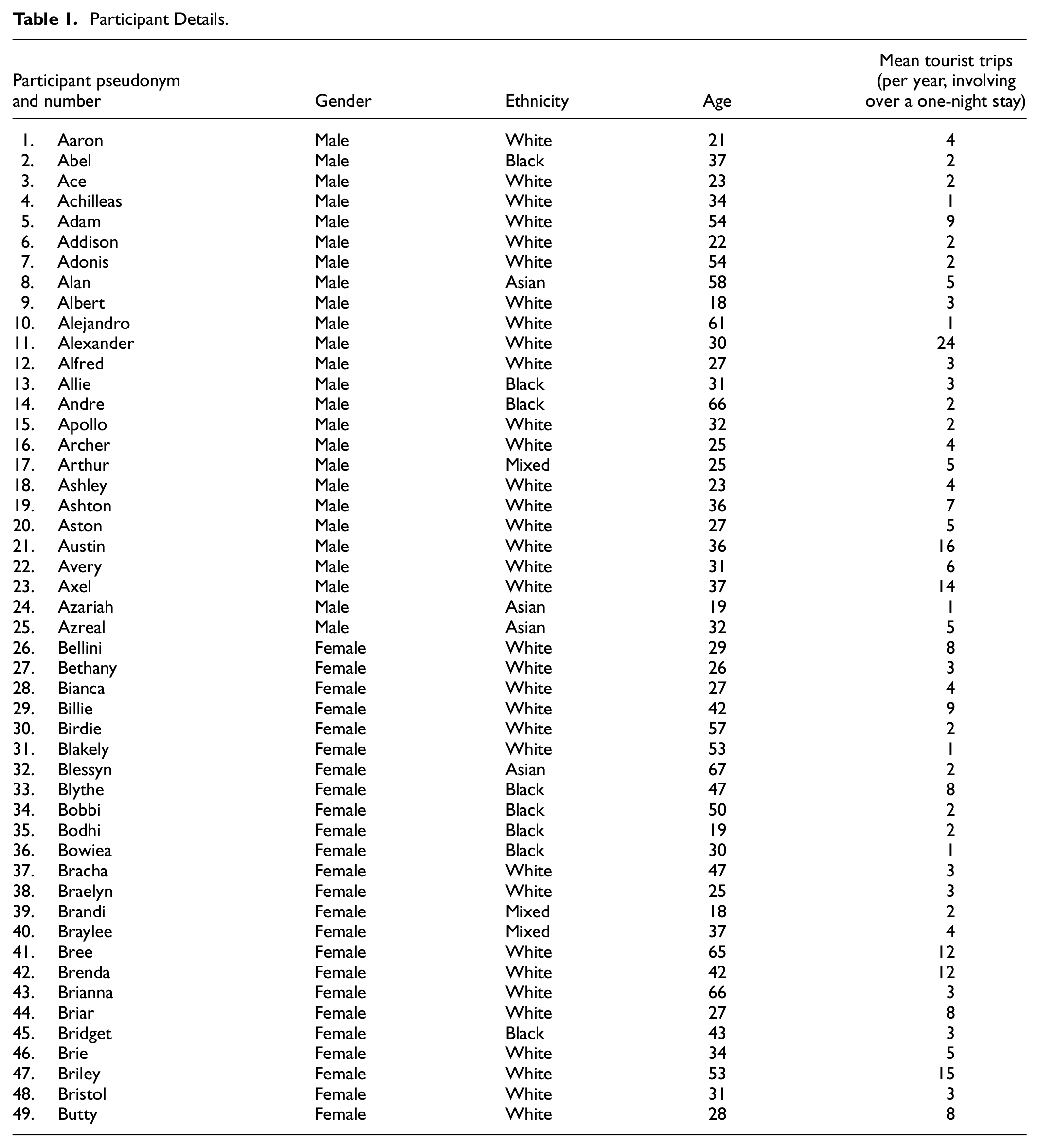
Given the nature of our key research questions, we adopted an exploratory research design. Our research approach is ontologically interpretivist in nature assuming multiple realities with a constructionist epistemological stance wherein individuals’ realities are socially constructed within a complex, idiosyncratic context (see Denzin, 1989). The main form of data collection for this study centers on data derived from 49 in-depth, face-to-face, semi-structured interviews with tourists and travelers. Participants were recruited via an English-language post/advertisement on a UK travel website. To be eligible for the study, participants were required to self-identify as experienced travelers or tourists (we specified at least three travel or tourist trips lasting at least 1 week in the last 2 years). To further gage participant eligibility, potential informants were required to self-identity that they had experienced feelings of “regret, sorrow, or unhappiness that went beyond simple dissatisfaction” regarding some aspect (or all) of their travel or tourist experiences within the last year (although interviews covered a longer timescale and often covered multiple incidents and experiences) and to provide a brief (under 50 words) description/overview of such feelings (which we then critically reviewed). Participants were English speaking and drawn from a broadly generalizable range of ethnicities and backgrounds with the majority self-identifying as male (25) with an age range of 19 to 67. Where relevant we highlight in our analysis, links between behaviors and demographic factors. Research ethics regulations require the employment of privacy, confidentiality, and anonymity clauses (accordingly details have been altered to disguise other identifying details). A summary of participant details is presented in Table 1.
Participant Details.
To enable a deep and full discussion of the topic of regret our interview protocol specified that participants should be able to commit to at least one full hour of interview, although interviews were, on average, longer than this (71 min) with interviews extending in length as the project progressed. This reflects the growing and evolving interview schedule and the range of topics/issues requiring discussion. Research ethics required that consent was needed to permit recording and that each interview be both confidential and anonymized. To aid the development of trust between the research team and participants, each participant was sent (via email) a recording consent form and an overview of the research project and details regarding data protection and confidentiality.
We adopted procedures throughout data collection and analysis in order to enhance the trustworthiness of insights gained (see Table 2). We followed best practice principles and ensured that each interview was recorded and the transcribed verbatim. To maximize insights drawn from data, we supplemented each transcription with memos taken during interviews and observations made both during and on re-watching recording (e.g., comments on voice tone, humor, and emotional displays). This process, while time-consuming, permitted such observations to be conjointly analyzed along with the interview narratives (see Merton et al., 1990). While we were aware that theories and concepts would emerge during data collection we began data collection with a broad literature-derived interview schedule to guide our process (a schedule we accepted would evolve and develop as data collection/analysis progressed). After covering data confidentiality issues, ethical clearance requirements, and demographic data collection, our focus was on asking more open-ended questions followed by a series of follow-up queries to probe interesting/emerging issues. This approach facilitated data collection that is grounded in the lived experiences of participants and uses their own terms and jargon.
Techniques to Ensure Trustworthiness*.
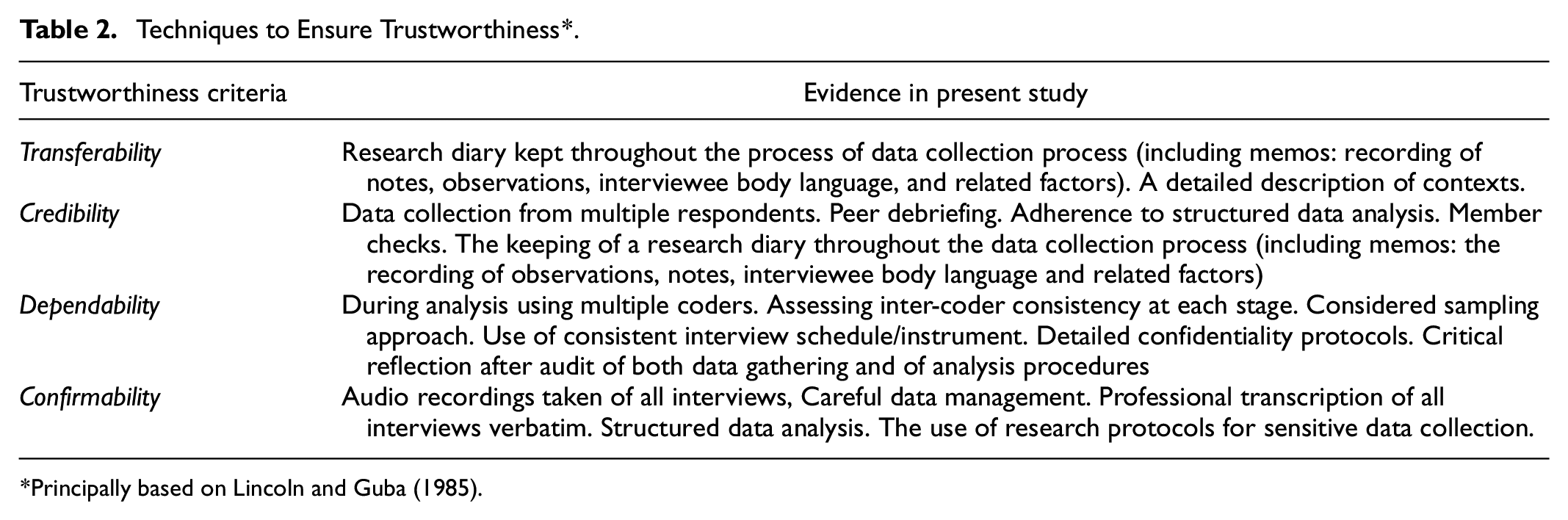
Principally based on Lincoln and Guba (1985).
Our method of analysis centered on directed content analysis wherein we drew on existing conceptions of regret to build and support our framework of tourist consumer decision-making regret and outcomes. Thus, our analysis was heavily influenced and guided by extant theory and in particular by Marcel Zeelenberg’s conceptions of regret as both anticipated and retrospectively experienced as well as Decision Justification Theory’s conception of regret as both outcome and responsibility-based (see Connolly & Zeelenberg, 2002; Zeelenberg, 2018). As such, while our study was strongly grounded in the experiences and interpretations of tourist participants, our analysis was informed and guided by established theory. Data collection was halted when the authors were all agreed that the analysis undertaken of the last three interviews had not generated any new insights or illuminated any new meaning or interpretations (see Hennink et al., 2017).
As this research is fundamentally interpretive in nature and as such is grounded in assumptions that are fundamentally different to that of positivist-based research notions of validity and reliability, our interpretation of our data also diverged from such notions. Specifically, we utilized the seminal and comprehensive approach of interpretive data evaluation recommended by Lincoln and Guba (1985). Thus, rather than explore positivistic reliability and validity, we employed the critical criteria for gaging the credibility, transferability, acceptability, dependability and confirmability (collectively the “trustworthiness”) of our data highlighted by Lincoln and Guba (1985). A summary of our efforts to maximize the trustworthiness and rigor of our research is provided in Table 2.
Findings and Discussion
Data analysis led to a number of insights into customer’s reflections and interpretations of the nature, dynamics, and impacts of regret. While a range of findings emerged, our findings focus on three main themes. First, we discuss customer’s insights into the nature of regret. Second, we highlight the emergent categorization of customer regret and finally we detail customers’ reflections regarding the outcomes of such events.
The Nature of Regret
In exploring customers’ interpretations of regret, a key issue was delineating regret from similar concepts such as dissatisfaction or disappointment. As such, discussions with participants involved detailed, in-depth reflections and interpretations regarding their motivations, justifications, perceptions, decisions, actions, post-event interpretations regarding a range of disagreeable, unhappy, annoying, or even, occasionally painful experiences. Similar to conceptions of analogous concepts such as frustration, disillusionment, dissatisfaction, or disappointment, regret was found to pertain to both decisions and non-decisions and in that sense, both actions and withheld actions. Nonetheless, a key issue that continually occurred was a consensus that regret is unambiguously distinct from dissatisfaction or mere disappointment (cf. Giorgetta et al., 2013).
The first point of distinction centers on post-event reflections and enduring cognitions. Dissatisfaction and disappointment were typically conceived as transitory thoughts that were often merely spontaneous, instant, or fleeting feelings. In contrast, regret was viewed as a deeper, longer lasting, and for many, more painful cognition (Chua et al., 2009). For example: I’m disappointed if the food is lousy and the waiter snarky. Regret is a deeper feeling. Something that snags at your soul and that makes your heart sink. It’s not a hump in the road but a wrong turn off the road that leads you to crash and burn. [Azreal, Participant 25] I think that lots of things can disappoint you – you can be dissatisfied with lots of products, lots of services. You’ll get over it fairly quickly. Disappointment and dissatisfaction are temporary – kinda fixable to some extent. That’s not the same as genuine regret – I mean, real regret – things – decisions – choices that stay with you and make you genuinely sad, remorseful. [Ace, Participant 3] I’ve had lots of dissatisfying meals - poor food, poor service, poor choice of restaurants, poor hygiene, eating dog, the list is endless. The meals that I regret I can count on one hand – two to be precise. [Blessyn, Participant 32]
In this way, regret was viewed in terms of cognitions that haunted participants, mentally transporting them to even unpleasant or painful events as opposed to episodes or dissatisfaction or disappointment that were mere memories of transitory failure to meet expectations.
In this regard, regret was commonly viewed as both more affecting and more personally internalized than other constructs. In terms of affecting, the impacts of regret were widely viewed to be more cognitively longer lasting and deeper in nature.
Lots of disappointments – lots of dissatisfying experiences – lots of choices that were bad. That’s how people learn – by mistake - and mistakes are disappointing and dissatisfying and whatever. But, out of all of those dissatisfactions, disappointments whatever, how many bring tears to the eye? None – things you regret are different – true regret can bring a tear to the eye. [Adam, Participant 5] Temporary emotional blips are common. The hotel breakfast doesn’t have strawberries – blip. The weather is too hot – blip. The loungers next to the pool are taken – blip. Regret is a longer-term feeling – it goes beyond current mood to deeper-level emotions and feelings – introspections that hurt or cause you pain – psychologically, emotionally, spiritually. [Blakely, Participant 31]
Such reflections were inextricably linked to the internalization of regret. Thus, while dissatisfaction or disappointment due to unmatched expectations were typically attributed to be the faults of others (and very rarely the unrealistic expectations of the customer themselves), regret was much more typically considered to be attributable to the decision/non-decision or actions/non-actions of the customer themselves (Gilovich & Medvec, 1994). For example: I think that regret is like a scar. It stays with you. It’s like a scar on your brain – on you as person. Decisions that you feel regretful about change you – not always huge, big, ‘my life will never be the same’ all the time but they stay with you in small ways, in small decisions. I can’t blame anybody but me – that makes it worse, but it’s true. [Austin, Participant 21]
A final issue that strongly emerged was that customer regret, while considerably less common and more infrequent than fleeting disappointments or dissatisfying experiences, did not appear to be linked to the size of a purchase but (similarly to disappointment) was more linked to the perceived importance of a decision (Towers et al., 2016). For example: I don’t think that regret is necessarily linked to size of purchase. Sure, the more expensive something is the more careful you’re going to be about getting it right but I think that regret is more something that stays with you. Ummmm – choosing to go on a wine tasting weekend with my teetotal ex-wife as a surprise for our third anniversary. Bad decision – yep! Do I regret it? Yes – it brought to the surface all the things we’d pushed deep down. [Bowiea, Participant 36] I think that you can regret big decisions and small decisions. Sure, big things might be more impressive – the world tour or climbing Mount Everest but the small things can be equally powerful. One of the biggest regrets in my life is forgetting to put sun cream on Lucy’s [his daughter] back. It ruined the holiday; it was a stupid thing to do and I feel remorse every time I think of it. [Butty, Participant 49]
Thus, while cost/price are frequently directly associated with the relatively more fleeting reaction of dissatisfaction, perceived value and decision importance were more strongly linked with the more strongly held feelings of regret. In these ways, although dissatisfying customer experiences are more common, customer regret appears considerably deeper-held, long-lasting and possibly even in that sense, more important to those regretful customers.
Categorizing Regret
Data analysis finds that participants’ conceptions of regret are varied and often idiosyncratic and highly contextual. However, concordant with earlier studies, evidence emerged which suggested that conceptions of regret varied between two key dimensions (Connolly & Zeelenberg, 2002; Zeelenberg, 2018). First, discussions of regret differed in the extent to which they focused on comparative outcomes or causal responsibility. Outcome regret involves the comparison of one selection option to another (either standard or rejected option). In contrast causal regret centers on self-blame for decision-making quality while outcomes of rejected options are unknown. Second, customers’ regret varied with regards to which the focus of such cognitions were reflexive (i.e., historic or in the past) or were projected (i.e., anticipated in the future). The application of the two dimensions of “timeframe” and “inherent evaluation” into a matrix, enables the forwarding of four regret forms reflecting the key differences in the two regret dimensions and supporting the conception that emerges of customer regret as comprising of four differing forms or categories (see Figure 1). Thus, importantly, each form of regret reflects aspects of both dimensions (“timeframe” and “inherent evaluation”) ranging from “reflexive” to “projected” timeframes and from “outcome” to “causal” inherent evaluations.
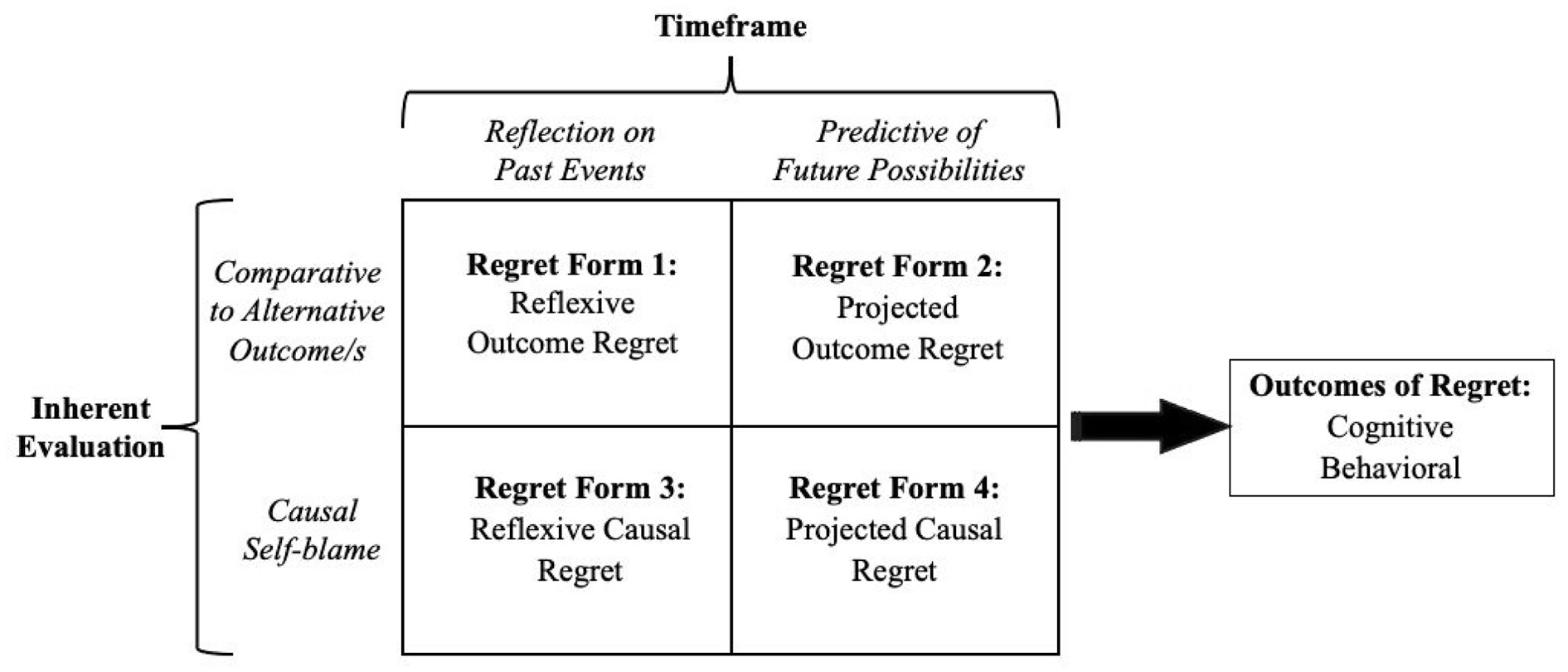
Categorizing tourist consumer decision-making regret and outcomes.
Reflexive-Outcome Regret
The first form of customer regret is labeled Reflexive-Outcome Regret and pertains to regret where customers ruminate on past outcomes and unfavorably compare such effects to those they believe (or believe that they know) to be the product of other discarded options (Roese & Epstude, 2017). In many ways, reflexive-outcome regret most closely aligns with colloquial, simplistic conceptions of regret where customers contemplate past decisions or non-decisions and compare the achieved outcome to other options that they believe to be more favorable. In this sense, a key feature of such regret is a focus on the outcome (compared to, e.g., an internalization of their own decision-making abilities).
The judging of outcomes principally centered on either comparing standard option outcome or rejected outcome options. For example, in the below a regretful tourist compares their achieved outcome to their typical, standard, or normal outcome: To say that I regret it is an understatement. A cruise or a road trip? I went with road trip and boy did that go wrong – the end result was appalling. We’d always cruised – the Med, Caribbean, the fjords – always. The road trip was hell in comparison – the kids sulked and moaned and fought and bitched. Joanna just obsessed about the prettiest route – arrrggghhh! Regret? Not a strong enough word for what I feel. [Alfred, Participant 12]
Whereas, in the next narrative an excursion at the end of a family holiday is compared to more favorable outcome options that were rejected.
If we’d not wasted that day at the world’s most boring water park, we’d have been able to do so many other things – I look back at that vacation and that one day out rankles – it’s like one sour cherry in the bag. All was great – we’d had a ball. Then along came the moldy, rotten mildewed, stinky cherry that you chomped on down on and wham [hits hand on desk]! I can’t believe that it was so bad – there were so many other things we could do and we ended our holiday with a real prize turkey! [Brenda, Participant 42]
While both variations of reflexive-outcome regret focus on comparisons with rejected or “normal” outcomes, both share the core characteristic of customers’ reflexive, unfavorable comparative assessments of selected options to untaken options. In this way, reflexive-outcome regret could be summarized as customers’ judgments that “the grass was greener elsewhere” [Aston, Participant 20].
While reflexive-outcome regret is inherently historical in that it centers on events that have occurred, the impact of such regret on customer was commonly far from forgotten. While often highly idiosyncratic in nature, reflexive-outcome regrets held by customers were typically very deeply felt with events that occurred many years ago still cause for strongly felt remorse. For example: I regret that hotel. There were three others and it was wrong – I went for a ‘bit of luxury’ [makes air quotes] rather than the closer to the beach option. A bad selection – ten minutes my foot – across roads and dual carriageways – it was hell. The kids call it ‘Dad Distance’– that means anything that I say is ‘ten mins’ they say is thirty mins and miserable – they still use that today. ‘Dad Distance’ gets to me [rubs eyes to mask tears]. [Ashton, Participant 19]
In this case, the event discussed happen 20 years ago and the term “Dad Distance” is used not only by his children but has been adapted by his grandchildren as “Grandad Distance”—terms the participant claimed were so wounding that he could never explain it to his family and so wanly smiled when it was used.
Projected-Outcome Regret
The second form of customer regret is called Projected-Outcome Regret where customers predict or anticipate future outcomes and compare such effects unfavorably to those that they believe (or believe that they know) to be the product of other discarded options (Zeelenberg, 2018). Again, the focus is on negative comparative evaluations of outcomes but this form of regret pivots on projected future outcomes of decisions/non-decisions. In this regard, projected-outcome regret may be viewed as akin to what could be term “consumption apprehension” where customers worry about the outcomes of their consumptive decisions and experience dissonance. Nonetheless, in contrast to forms of regret discussed later, the focus of projected-outcome regret is very much concentrated on the anticipated outcomes rather than the decision-making process and aptitude of the individual.
Projected, future outcomes were predominately found to be derived from comparisons to what participants believed to be known, and therefore predictable, outcomes. For example, participants highlighted illustrations of such regret where the anticipated outcomes of their choices compared unfavorably to past experiences that they gaged to be consistently stable in outcome quality and in that sense predictably “known,” such as, comparing the projected future outcomes of an important anniversary vacation to the outcomes of past vacations: I think it’ll turn out badly - I really regret picking that for our anniversary trip [a ten-year marriage anniversary]. We’ve always spent our holidays by the pool, drinking cocktails, a bit of swimming, a few drinks in the local taverna - that type of thing. I think I’ve opted for what sounds glamorous rather than what I know works - stick to what you know is the best option almost always! [Braelyn, Participant 38]
Projected-outcome regret, however, also emerged where participants compared anticipated outcomes to conceptions of standard outcomes. For example, John is anticipating outcomes for his vacation based on the “standard” past outcomes achieved: I actually worry about this summer. I’m taking the kids for my week with them to Wales [holidays being shared with his ex-wife] - going abroad isn’t easy. What I keep thinking is will they [his children] just equate me with that holiday - [in an aside] it’ll be kind of boring. I just worry that my boring option will be remembered by them - boring Dad in boring cottage in boring Wales. Their Mum is better at such tripe – she’s always taken them abroad. [Achilleas, Participant 4]
In this sense, while reflexive-outcome regret was summarized in the metaphor that “the grass was greener elsewhere,”projected-outcome regret pertains more to regret involving “grass that might be greener elsewhere.”
A core element of projected-outcomes regret lies in the unknown but nonetheless predicted or anticipated future outcomes. The potential for such regret was often attributed by customers to post-purchase or decision events that rendered potential outcomes less likely or more unfavorable. Thus, while outcomes regret is independent of reflections of decisions (being focused on outcomes), external or extraneous factors were considered to be complicating factors rendering outcomes less attractive. For example, imposed movement and travel restrictions (largely COVID-related lockdowns) post-decisions had caused Addison some concerns: I’m regretting it already - booking a holiday villa versus a hotel sounded great. But I’ve been thinking - we’ve been cooped up together for months - to be blunt we’ve had enough of each other. What we actually need is a break from each other not a break with each other. In a hotel we can disperse – go our separate ways - in a villa we’re on top of each other. All I can foresee is rows and stress. I just can’t see a good outcome - we’re going to end up killing each other. [Addison, Participant 6]
Thus, a number of participants lamented their lack of hindsight to events that rendered the likely outcomes of their choices considerably less advantageous or favorable, triggering deeply felt regret.
Reflexive-Causal Regret
The third form of regret is labeled Reflexive-Causal Regret where customers unfavorably compare the quality of their past decisions with other rejected options without necessarily knowing the outcome of the spurned choice (Gilovich & Medvec, 1994). As such, reflexive-causal regret pivots on disparaging customer ruminations regarding their decision-making abilities and self-blame for a failure to select alternative options without any objective knowledge of the outcomes of such options. In this regard, a core element of reflexive-causal regret is on the subjective internalization and attribution of blame for decisions (or non-decisions) as opposed to other outcome-focused forms of regret.
Reflexive-causal regret triggered by customers’ unfavorable subjective evaluations of the quality of their past decision-making typically focused on decisions that, with the aid of foresight, were deemed to have prompted negative events with significant personal ramifications. Such decisions were varied in nature, but many examples centered on life-partner dynamics. For example, Braylee discusses her decision to take a cruise vacation with her (then) wife which she believes actuated marital problems eventually leading to an acrimonious and painful divorce: There are lots of good reasons to go on a cruise - you need a romantic break, you want some uber luxury, you fancy a taste of the good life - cocktails with the captain - quoits on the sun deck…. Loads of good reasons. Going on a cruise to cover up that you’ve not connected meaningfully for months and you don’t really like each other and you should probably call it a day? Bad reason. Very bad reason. It would have been better if we’d gone somewhere to talk and not pretend. Maybe. Maybe not, but maybe [wistfully]. [Braylee, Participant 40]
Similarly, Archer blames himself for electing to choose a different type of short-break vacation with his fiancé that in his words: ‘…put us back for a year and bruised us really badly’: I’ve been pretty good at our escape weekends - Paris, Venice, Rome, Berlin - all pretty good. Why on earth I thought Lisbon was going to be good I’ve no idea - total disaster - two fun short flights turned into three flights just to get there exhausted, annoyed and thoroughly pissed off. I learned that not all capitals are good venues. Bored? I’ve watched paint dry with more charisma. We sniped and argued all weekend – I should’ve picked a better venue – I shouldn’t have rushed it. [Archer, Participant 16]
In both illustrations, without knowing what an alternative vacation choice might (or might not) have triggered, reflexive-causal regret is evident as the past decision (to take a cruise/short break to Lisbon) is unfavorably compared to alternatives and responsibility for such a “poor” choice is taken and internalized. Thus, in contrast to outcome-based regret forms, reflexive-causal regret may be summarized via the extended metaphor of “I chose the wrong seed to make the grass greener.”
Although reflexive-causal regret is focused on internalized reflections of past decisions and decision-making quality, the effects of such regret were often deeply held, affecting contemporary decision-making dynamics. As such, this form of regret was often cognitively codified by participants as a form of (somewhat painful) learning that guides subsequent choices. Avery discusses his regret regarding his decision to vacation with neighbors 16 years ago, leading to a break in inter-family relations that still rankles: I regret that. I really, really regret it. We’d always holidayed in a group but never with neighbors. Never again - we learnt that the really hard way. We lost good friends and good neighbors because we didn’t think it through. You look back at that and think – why – a different type of vacation would have surely been less stressful? [Avery, Participant 22]
In this regard, reflexive-causal regret not only emphasizes critical self-evaluation of decisions but also affects subsequent choices.
Projected-Causal Regret
The final form of regret is labeled Projected-Causal Regret where customers anticipate unfavorably that the quality of their decisions will lead to projected difficulties or problems when compared to other options, without knowing the outcomes of such options (or indeed their own choices; Brewer et al., 2016). In this sense, projected-causal regret focused on negative self-evaluations of decisions made in terms of projected outcomes that were predicted to be less favorable than rejected options. Data analysis revealed that while this form of regret was less common, the focus on anticipated regret prior to the occurrence of events often meant that such regret was projected far into the future becoming associated with feelings of trepidation, anxiety, and even dread.
Projected-causal regret by tourists emerged in idiosyncratic, contextually specific ways but often centered on social anxiety concerns and particularly around future events endowed by participants with personal or noteworthy importance. Allie is anticipating significant regret regarding his decision to spend his next Christmas vacation with his wife’s relatives: I made a decision too quickly – I just rejected air travel as it’s going to be too problematic - too much risk - hence my brilliant idea of driving to Ireland to see Ginny’s family. The best of a bad world, right? Wrong. I’ve just worried about it ever since – thinking about it I just think it’s a bad decision - the ‘popping over on the ferry’ takes forever - hours and hours, all struck together. Then we get there [exasperatedly]. You know Christmas - we all hate Christmas with the relations, right? Ginny can’t stand her family - that’s why she doesn’t live there in the village - that’s why she moved away! Why the hell would we want to spend two fecking weeks with them? For me - imagine two weeks of visiting somebody’s family. It’ll be terrible - I’m predicting either we’ll quit after an evening or we’ll commit suicide by the end! Why did I make such a fecking dumb move? [Allie, Participant 31]
Similarly, Billie dreading her summer vacation with her parents-in-law and deeply regretting her decision: I blame myself. Normally, I’m so very, very careful – I always think things through. I’m just dreading it. What was I thinking? I can’t stand his parents they’re boorish, boring ignorant racist, homophobic, idiots. On a good day. I shouldn’t have rushed to taken them up on the offer – I should never have just said ‘yes, we’ll come’. [Billie, Participant 42]
While Andre is projecting future issues after a self-evaluated, poor decision to elect a beautiful country cottage for his vacation without fully researching its precise location: I should have researched it more – a cottage sounded good, but I’ve regretted it ever since. It looks good but after I booked it, I looked around – the deal is good but it’s too far from anything – it’s in the middle of bloody nowhere – I always do my research on hotels, why didn’t I now? Stupid. Stupid. Stupid. [Andre, Participant 14]
These illustrations emphasize anticipated regret triggered by poor past decisions that will generate significantly concern issues in the future. Thus, while reflexive-causal regret was summarized in the metaphor that “the grass died, as I chose the wrong seed,”projected-causal regret pertains more to regret involving “I chose to sow weeds so my grass will not get greener in the future.”
The Outcomes of Regret
The third key finding that emerged during data analysis centers on customers’ interpretations of the outcomes or consequences of regret. While the product of particular events were typically idiosyncratic to the specific contingencies of the triggering episode, in broader terms, data analysis revealed that the outcomes of regret could be classified as either cognitive, or behavioral (Connolly & Zeelenberg, 2002; Roese, 1997, 2005).
Cognitive outcomes of regret encompass the emotional, psychological, and attitudinal impacts of regret on customers. Commonly, in the comparatively short-term period after a triggering event, customers noted immediate, deeply felt, and persistent feelings of sadness and unhappiness with data indicating that casual forms of regret were particularly keenly felt (reflecting the focus of such forms of regret on individuals’ internalized critiques of their decision-making quality). For example: It makes me sad - it’s depressing, and it makes me feel bad. Something that I could be looking forward to, I’m worried about, and I know it’s my fault - I should have put my foot down and just said ‘no’ - I regret not kicking off more and just standing up for what’s right and not being railroaded into a shite decision. [Aaron, Participant 1]
While such feelings commonly experienced immediately after activating events, participants emphasized the persistent nature of such emotional feelings. Specifically, data suggest that participants believed that such effects extended beyond short-term unhappiness as such feelings endured and repeatedly iterated and reiterated.
In the longer-term, participants argued that regret was distinctive in first having longer term (and, in some cases, very long term) effects and second in generating cognitive impacts that were so deeply-rooted as to be keenly felt long after a precipitating event. In this regard, a number of participants used mourning or giving metaphors to describe such enduring impacts both in terms of time and depth of feeling. For instance: I look back on the whole thing with a very heavy heart - I grieve for what has happened - it is very, very sad. [Bree, Participant 41]
In this way, the cognitive impact of regret could be considered a profound cognitive scar that repeated and persistent recall or allusion first preoccupied, discomforted and then haunted individuals. Illustratively: I genuinely look back on that decision with regret - I got it wrong and I’m genuinely remorseful. If I could change the past, I would - but I can’t. So, it haunts me - it’s stayed with me and it hurts me – it will always hurt me. [Birdie, Participant 30]
Unsurprisingly, such cognitive effects were manifested into behavioral changes. While cognitive impacts were predominately negative (feelings of sadness, guilt, remorse and even shame), behavioral changes were not exclusively negative. Thus, as discussed previously, many customers noted that they had learned from their experiences and (at least partly driven by a desire to avoid negative emotional effects again) could view regret triggering episodes as learning experiences (albeit unpleasant learning experiences; Zeelenberg, 1999). For example: I might regret it and I do but I’m not daft - I’ll never do that again - I’ll not make the same mistake twice. So, regret is bad but it’s also good if it stops you forgetting and doing the same thing twice. [Adonis, Participant 7] The memory is painful, but the lingering regret is good - it’s made me much more careful about vacation decisions. I wouldn’t say that regret makes you make better choices but it does make you better at being wary about making bad decisions - if you know what I mean? [Bobbi, Participant 34]
However, a significant minority of participants appeared so psychologically affected by their regret that, probably as a defense mechanism, they opted to avoid potential regret-causing decisions by withdrawing from such choices. For instance: I hate the stress - I’m a worrier and if I worry, I can’t sleep. I just stress out. That vacation caused me so much stress in the run up that I said never again - I’m never going to put myself in that position again - never, ever, ever. Bill’s the vacation decider from now on. [Briar, Participant 44]
Although both common behavioral outcomes may be interpreted as learned behaviors, subsequent decision-withdrawing was typically exhibited by those participants who were more deeply cognitively affect and were less risk averse.
Conclusions
“Of all the words of mice and men, the saddest are, ‘It might have been’” Cat’s Cradle: A Novel. Penguin Modern Classics.
This study responds to calls to extend our understanding of emotions—particularly negative emotions—within a tourism context (e.g., E. Cohen & Cohen, 2012; Hosany et al., 2021; Picard & Robinson, 2012; Volo, 2017, 2021). Consequently, this represents the first empirical attempt to provide an in-depth understanding of one powerful negative emotion—namely regret—in a tourism setting. In most affluent societies with rapidly growing tourism options and choices, decision-making is becoming ever more complex, which inevitably intensifies the capacity and likelihood for regrettable choices being made by consumers.
Against this background, the purpose of this study was to improve our disciplinary understanding of the sources and types of regrets that tourists might experience, and the consequences of these feelings related to tourists’ decision-making. Three research questions helped address the research problem under scrutiny and form the major contributions of the study.
Our primary aim in exploring the first research question—(i.) what is/are the nature/sources of tourists’ regrets and (ii.) how do they interpret them?—was to understand the extent to which tourists could distinguish between the emotion of regret as a phenomenon separate to related concepts, chiefly dissatisfaction and disappointment. Behavioral psychologists regard dissatisfaction and disappointment as potential drivers of regret, but that regret is a more powerful emotion than either (Landman, 1987; Zeelenberg et al., 2000), while in tourism, dissatisfaction, and disappointment are powerful predictors of regret, but not the reverse (Sánchez-García & Currás-Pérez, 2011). Further, the sources of regret tourists experienced were typically attributed to their own poor/faulty decision-making. For the second part of this question, our findings indicate that tourists interpret regret as commonplace, powerfully felt, as well as memorable, and enduring; it was universally viewed by our informants as clearly distinct in nature to emotional states such as dissatisfaction and disappointment.
Our second research question—how can we categorize the types of regret experienced by tourists?—sought to explore the extent to which tourists’ regrets could be attributed to discrete categories of decision-making. In an interplay between our data and core literature on regret from behavioral psychology, we were able to derive the first extant typology of decision-making regret. This parsimonious 2 × 2 typology captures feelings of regret as both a temporal dimension of regret (past-reflexive and future-anticipated; Zeelenberg, 2018), and personal evaluations of regret based on decisions taken (comparisons of alternatives and degree of attribution/extent of self-blame; Connolly & Zeelenberg, 2002).
The empirical evidence collected supported the four quadrants of the framework, and, consequently, it would therefore appear both robust and appropriate for future investigations of tourists’ decision-making regret. It is worth briefly reflecting on the aspects of tourism that constituted regret to our informants; perhaps unsurprisingly given the strong negative emotion that forms and shapes regret, our findings typically involved intra- and inter-family discord and conflict, young children and a pressure to make vacation memories (stories that families remember and frequently recount related to holiday “disasters”), strains on relationships with spouses and partners, and key life events (e.g., an anniversary, planning a luxury holiday, shared custody of children and holidays).
The adjectives and labels respondents used to describe regret and its associated cognitive consequences also speak to its phenomenology as a deeply held personal emotion: grief, remorse, haunting, hurt, pain, scaring, bruised, blame, dread, and sadness, among others, were used. In this sense, regret is typically associated with self-incrimination/attribution followed by deep introspection—which concords with literature in neuroscience, where regret results in full feedback whereas disappointment is often associated with only partial feedback (Giorgetta et al., 2013). We can thus conceive of regret in a tourism setting as an existential phenomenon with “…a profound desire to go back and change a past experience in which one has failed to choose consciously or has made a choice that did not follow one’s beliefs, values, or growth needs” (Lucas, 2004: 58), hence regret has been described as “a crossroads of existential anxiety and existential guilt” where we fear “betraying” ourselves (ibid: 58).
Our final research question—what are the outcomes and consequences of regret felt by tourists?—relates to how tourists experienced regret. Behavioral psychologists consider regret (unlike dissatisfaction and disappointment) as a superordinate and highly functional emotion that typically results in some form of cognitive and/or behavioral outcome (Zeelenberg et al., 2000; Zeelenberg & Pieters, 2004). Initially, in terms of its inherent nature, regret was viewed as a deeper, more affective, and enduring feeling, and for many, a more painful cognition in comparison to feelings such as dissatisfaction and disappointment that were typically conceived as transitory thoughts that were often merely spontaneous, instant, or fleeting feelings that would ultimately diminish in intensity over time. Feelings of regret were highly personal and internalized emotions frequently attributed to the decision-maker (self-blame) and their (in)decisions, particularly when this was linked to an important decision.
Turning to the consequences—or outcomes of regret—these were cognitive and behavioral in nature. Cognitive outcomes of regret related to emotional, psychological, and attitudinal impacts of regret on customers; as such, this could result in persisting feelings of sadness and unhappiness, as well as intense self-critique, and self-blame. In contrast, behavioral outcomes of regret were not exclusively negative and could have value to the individual; individuals typically learned from regrettable decisions (clearly motivated by a desire not to repeat painful past experiences) to inform future decision-making, including withdrawal as a defense mechanism against making poor choices in the future.
Practical Implications
This study offers practical implications based on its key findings as well as broader implications beyond its present empirical scope. Initially, an improved understanding of post-purchase regret would help tourists to make better consumption decisions and providers to create improved tourist offerings, particularly if we understand customers’ primary regrets rather than rely on their more trivial—or at least less powerfully felt—dissatisfactions and disappointments. Further, it would also help tourism providers (e.g., tour operators, travel agents) to reduce the emotional burden of post-consumption consumer regret, as well as mitigate its impact on post-purchase behavior such as customer switching, decreased intentions to repurchase, and brand loyalty (Bui et al., 2011; Inman et al., 1997; Zeelenberg & Pieters, 1999), as well as potentially improve tourist well-being.
Tourism providers (like most companies) tend to inordinately focus on measuring and evaluating guest/customer satisfaction as well as any complaints that might be the cause of dissatisfaction and disappointment. Understanding regret (as well as other negative emotions) in post-purchase decisions would help providers create better tourism experiences and products through a more rounded understanding of tourists’ emotional responses to tourism experiences.
Finally, given that regret was typically attributed to the poor decision-making of the tourists in the present study (and not necessarily a failure of a tourism provider), there would appear to be the scope to understand if tourism operators can help customers make more optimal travel and tourism decisions through enhanced customer information, service and support.
Limitations and Future Research
As is the case in almost all studies, the present study has several limitations. Primarily, our data were collected prior to the COVID-19 pandemic. As such, the lived experiences of tourists have been significantly disrupted, with the global tourism sector having effectively been put on hold for an extended period of time. As travel restrictions are eased, it will be valuable to observe if the outbreak had any bearing on tourists’ emotions, decision-making and regret, particularly with any latent pressures on tourists as they make choices post-pandemic. There were also a number of aspects of regret that were beyond the remit of the present study. For example, personal coping strategies for dealing with regrets, as well as making sense of regrettable decisions, and potentially learning from them (i.e., positive/functional outcomes of regret—see Saffrey et al., 2008), are potentially fruitful avenues for future research. Finally, emotions are central to all tourism experiences, and, as such, it compels us to understand them in the broadest possible sense. While scholars have made valuable contributions in researching both positive and negative emotions in tourism and their affect, there is still considerable scope to understand memorable tourism experiences.
Footnotes
Author Contributions
Declaration of Conflicting Interests
The author(s) declared no potential conflicts of interest with respect to the research, authorship, and/or publication of this article.
Funding
The author(s) received no financial support for the research, authorship, and/or publication of this article.
