



Abstract
This study examines how sustainability shapes visitors’ perceived value for tourism destinations. Using partial least squares structural equation modeling and importance-performance map analysis on survey data from 639 tourists, the study analyzes the effects of four sustainability dimensions (economic, environmental, socio-cultural, institutional) on three dimensions of perceived value (epistemic, monetary, social), as well as on overall perceived value. Findings emphasize the importance of socio-cultural sustainability, which emerged as the most influential factor in enhancing all three dimensions of perceived value and overall perceived value. Institutional and economic sustainability also play significant roles. In contrast, environmental sustainability showed a limited impact. There is room for improved performance across all four dimensions of sustainability, especially environmental sustainability. Destinations should prioritize socio-cultural, institutional, and economic sustainability, while also striving to improve environmental performance and raising awareness of genuine environmental initiatives to align tourists’ expectations with sustainable practices.
Keywords
Introduction
Sustainable travel is important to eight out of ten tourists, most of whom want to travel more sustainably, and feel it would add value to their trips (Booking.com, 2024). Consequently, destinations that are more effective at implementing sustainable practices should achieve greater perceived value among tourists. However, few studies have examined the role of sustainability in shaping visitors’ perceived value for tourism destinations.
Two exceptions are Iniesta-Bonillo et al. (2016) and Guizzardi et al. (2022). These studies found that sustainability has a significant positive effect on perceived value for tourism destinations. However, they also recognized limitations to be addressed by further studies. Firstly, in both cases, the diversity of destinations examined was limited; two municipalities in Spain and Italy (Iniesta-Bonillo et al., 2016) and nine rural areas in Italy and Croatia (Guizzardi et al., 2022). Destinations have varying commitments to sustainability (Pulido-Fernández et al., 2015; Tribe & Paddison, 2023), emphasizing the need to encompass a greater diversity of destinations to enhance the generalizability of the findings.
Secondly, the studies treated sustainability and perceived value as unidimensional constructs represented by reflective items. However, a significant body of research in tourism supports the notion that sustainability consists of multiple dimensions (Asmelash & Kumar, 2019; Blancas et al., 2010, 2016; H. C. Choi & Sirakaya, 2006; S. P. Cottrell et al., 2013; Rasoolimanesh, Chee, & Ari Ragavan, 2025a; Rasoolimanesh, Chee, & Salee, 2025b; Sánchez-Fernández et al., 2019). This is because progress on dimensions varies substantially across destinations, and they do not necessarily complement one another. For instance, a destination that excels in economic sustainability, promoting growth and development through visitation, may simultaneously face challenges related to environmental sustainability (Hall et al., 2015; Pulido-Fernández et al., 2015; Tribe & Paddison, 2023; Triyono et al., 2024).
The conceptualization of perceived value is arguably more complex. Some studies have used a single or several items to measure it (Ghorbanzadeh et al., 2021; Hasan et al., 2020; Iniesta-Bonillo et al., 2016; M. Kim & Thapa, 2018; P. Murphy et al., 2000), which, in the case of single-item measures, fails to capture the multifaceted nature of perceived value (Al-Sabbahy et al., 2004; Petrick & Backman, 2002). Other studies have employed multiple items to create dimensions that are then combined, treating perceived value as a construct consisting of multiple dimensions (Gallarza & Gil Saura, 2006; Guizzardi et al., 2022; Prebensen et al., 2013). However, most studies use different constructs as dimensions of perceived value (Al-Sabbahy et al., 2004; Gardiner et al., 2014; S. Kim et al., 2013; C.-K. Lee et al., 2007; J.-S. Lee et al., 2011; Pandža Bajs, 2015; Petrick, 2002, 2004; Sánchez et al., 2006; Sharma & Nayak, 2019; Williams & Soutar, 2009; Yi et al., 2014), recognizing that visitors share different meanings of perceived value when evaluating a destination (Petrick & Backman, 2002). Indeed, Iniesta-Bonillo et al. (2016) recognized the limitation of using a unidimensional construct measure for perceived value in their study and recommended a more comprehensive exploration of sustainability dimensions beyond the traditional economic, environmental, and social aspects.
Thirdly, the studies only examined the effect of sustainability on perceived value, in other words, the importance of sustainability for perceived value, and not how destinations are performing in terms of sustainability. However, both importance and performance need to be taken into consideration by destination managers when assessing the current situation at their destination and what actions to prioritize for the future. Indeed, performance measurement is recognized as a crucial tool for destination management (Berbekova et al., 2022; Dumitru, 2023), and a fundamental topic for tourism research (Morrison et al., 2025).
By combining dimensions of sustainability and perceived value into single constructs, previous studies may have overlooked the nuanced ways in which these dimensions interact. Additionally, these studies encompassed a narrow diversity of destinations and did not consider performance and importance. The current study addresses these gaps by examining the distinct roles of four sustainability dimensions (economic, environmental, socio-cultural, institutional) in shaping three dimensions of perceived value (monetary, social, epistemic), as well as overall perceived value, considering different perspectives on how perceived value can be treated. It does this for a variety of destinations, taking into consideration both performance and importance. In doing so, this study contributes to the literature with a deeper theoretical understanding of the relationship between sustainability and perceived value. It also provides actionable insights for destination managers aiming to optimize visitors’ perceived value through targeted sustainability efforts.
The study is based on a survey of 639 tourists visiting 265 destinations. It uses partial least squares structural equation modeling to examine the effects of sustainability dimensions on dimensions of perceived value, as well as on overall perceived value. Importance-performance map analysis then extends the analysis by considering the performance as well as importance of each sustainability dimension.
Background
Perceived Value in Tourism
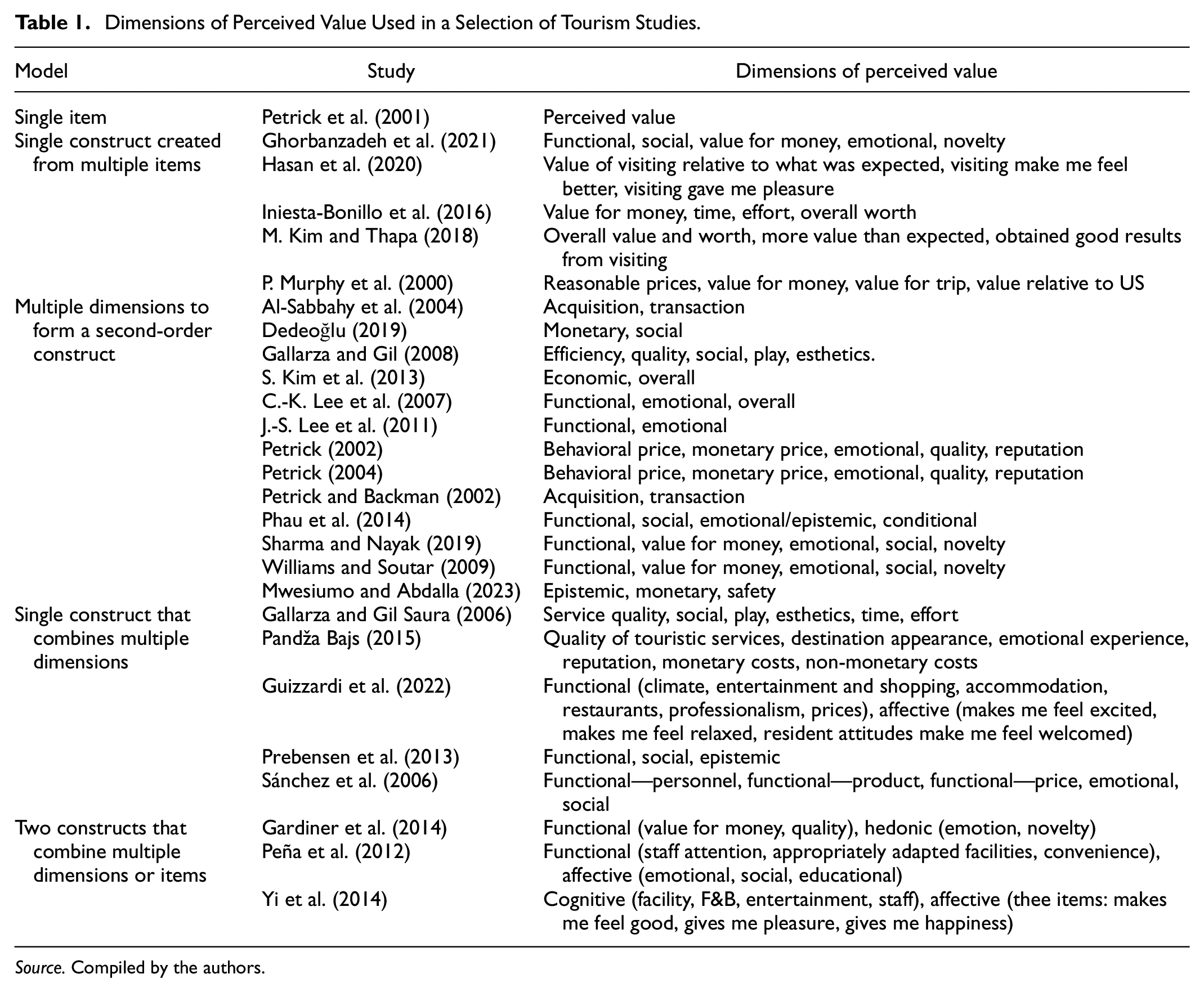
Perceived value is a multifaceted concept. It originated from consumer behavior research, for instance, Zeithaml (1988) conceptualized it as a consumer’s assessment of a product or service based on perceptions of what is given with what is received. It has since attracted much attention from scholars who have proposed a range of models with different dimensions to capture its complexity. This includes in tourism, where perceived value has been measured in several ways: (1) using a single item; (2) using a single construct created from multiple items; (3) using multiple dimensions to form a second-order construct; (4) using one construct that combines multiple dimensions; (5) using two constructs that combine multiple dimensions or items (Table 1). This study takes approach (3), recognizing that visitors are expected to share different meanings of value when evaluating a destination (Petrick & Backman, 2002).
Dimensions of Perceived Value Used in a Selection of Tourism Studies.
Source. Compiled by the authors.
As seen in Table 1 and supported by the literature (e.g., Dolnicar et al., 2015; Mahajan, 2020; Sheth et al., 1991), perceived value is a multifaceted concept that can be operationalized in a variety of ways depending on the context. While many studies have included functional and emotional value, there is considerable variation in how these dimensions are defined and measured, often with overlapping or blurred boundaries. For instance, functional value has been measured through indicators relating to quality, price, or service performance (e.g., Prebensen & Xie, 2017; Williams & Soutar, 2009), and emotional value has been described using items that also appear in constructs such as novelty or epistemic value (e.g., Prebensen et al., 2016; Williams & Soutar, 2009). These inconsistencies suggest that there is no universally accepted set of dimensions, and researchers should adapt their value models to fit the specific aims and context of their study (Dolnicar et al., 2015). To ensure conceptual clarity and model parsimony, this study focuses on epistemic, monetary, and social value—dimensions that most directly align with how sustainability is expected to shape tourist experiences. Specifically, sustainability initiatives are likely to influence tourists’ perceptions by providing opportunities for learning and novelty (epistemic), fair pricing and economic responsibility (monetary), and responsible travel identity and social approval (social). This approach is consistent with previous studies (e.g., Mwesiumo & Abdalla, 2023; Prebensen et al., 2013). While emotional value is acknowledged as important, its influence is viewed as being partially embedded within the epistemic and social dimensions in this context. Future studies may expand on this model by including functional and emotional dimensions to assess the robustness of these relationships. Finally, this study also uses a construct that consists of the dimensions of perceived value to represent overall perceived value—as in previous studies (Gallarza & Gil Saura, 2006; Guizzardi et al., 2022; Pandža Bajs, 2015; Prebensen et al., 2013; Sánchez et al., 2006).
Perceived value is important for tourism destinations because tourists have so many choices available. Destinations therefore compete by positioning themselves in the minds of tourists as having superior value to competing destinations. This is important given that tourists increasingly use perceived value to compare alternative options in tourism rather than relying on product quality (Petrick, 2004). Also, studies find that perceived value influences satisfaction with destinations (Carvache-Franco et al., 2022; Gallarza & Gil Saura, 2006; S. Kim et al., 2013; M. Kim & Thapa, 2018; Mwesiumo & Abdalla, 2023; Pandža Bajs, 2015), and behavioral intentions such as likelihood to recommend (Carvache-Franco et al., 2022; Gallarza & Gil Saura, 2006; Mwesiumo & Abdalla, 2023; Pandža Bajs, 2015), and intention to revisit (Carvache-Franco et al., 2022; Gallarza & Gil Saura, 2006; S. Kim et al., 2013; Pandža Bajs, 2015; Petrick et al., 2001).
As a result, destinations need to understand what factors drive perceived value, including dimensions of importance, how the destination currently performs regarding each dimension, and how enhancing or reducing each dimension will affect perceived value for the destination. As previous studies mentioned in the introduction show, one factor is the sustainability of the destination (Guizzardi et al., 2022; Iniesta-Bonillo et al., 2016).
Sustainable Tourism Development
The concept of sustainability has a long history. For instance, forestry in the 18th century used sustainable practices to ensure that resources were harvested at a rate that would allow for regeneration (Wiersum, 1995). However, the concept gained prominence in 1987 with the publication of the Brundtland Report, titled “Our Common Future,” by the World Commission on Environment and Development. It defined sustainability as ensuring that development “meets the needs of the present without compromising the ability of future generations to meet their own needs” (United Nations, 1987: 24) and encouraged a political agenda that combines environmental and other development issues.
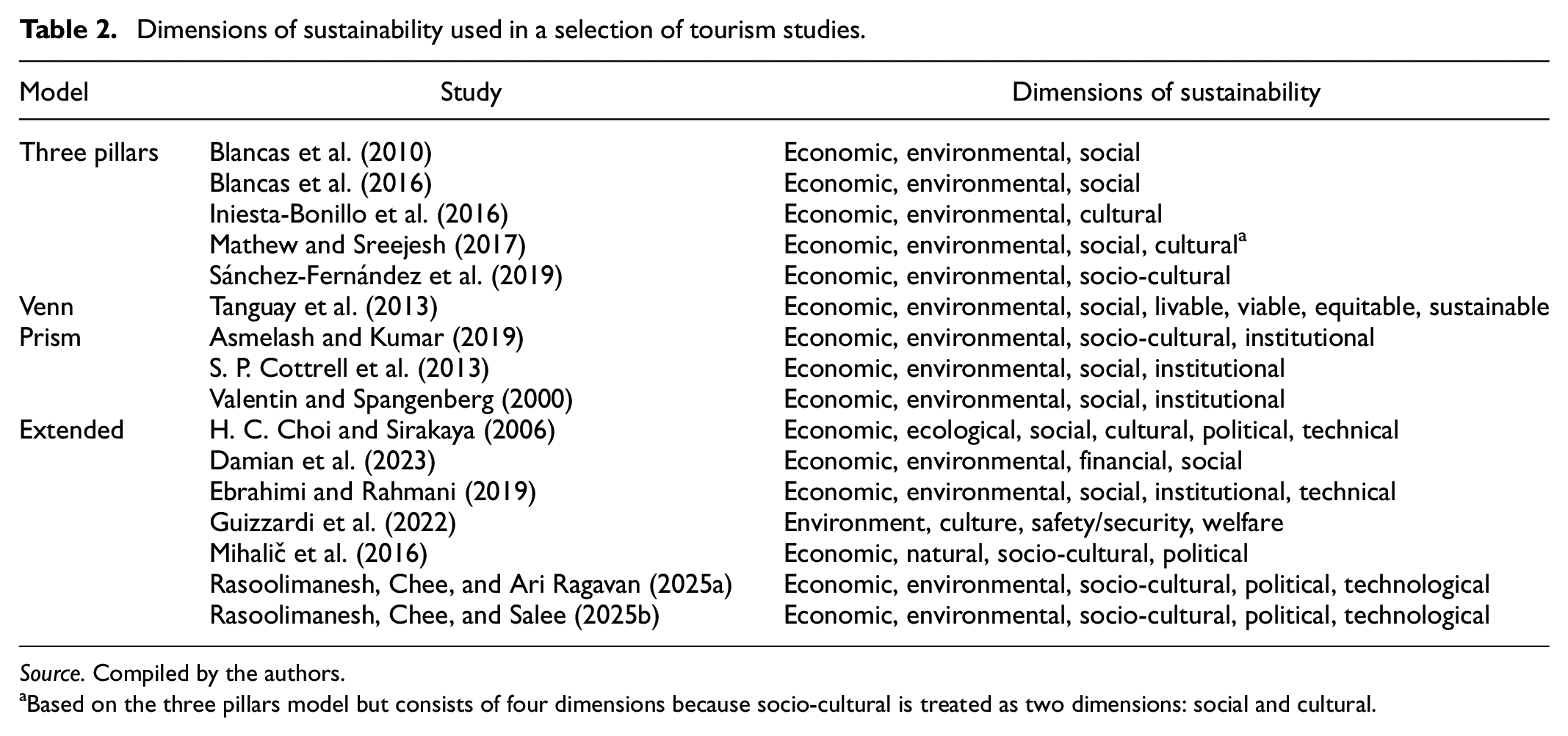
In tourism, sustainable development is defined as “tourism that takes full account of its current and future economic, social, and environmental impacts, addressing the needs of visitors, the industry, the environment, and host communities” (UN Tourism, 2024). The definition is therefore based on the three pillars model that has three dimensions: economic (about contributing to economic development and growth), environmental (about protecting the environment), and socio-cultural (about preserving and celebrating local cultures), which is widely used in tourism research (Sánchez-Fernández et al., 2019) (Table 2), although socio-cultural is sometimes treated as social and/or cultural (Blancas et al., 2010, 2016; Iniesta-Bonillo et al., 2016; Mathew & Sreejesh, 2017), while environmental might be referred to in different ways like ecological (H. C. Choi & Sirakaya, 2006) or natural (Mihalič et al., 2016). Some issues for the different dimensions are interlinked, which is why the three pillars model is sometimes presented as a Venn diagram with overlapping circles, for instance, where “viable” is at the intersection between economic and environmental, “equitable” between economic and social, “liveable” between environmental and social, and “sustainable” at the heart of all three (Tanguay et al., 2013).
Dimensions of sustainability used in a selection of tourism studies.
Source. Compiled by the authors.
Based on the three pillars model but consists of four dimensions because socio-cultural is treated as two dimensions: social and cultural.
Additional dimensions to those in the three pillars model can be considered, for instance, political (about maintaining political stability, continuity, and effectiveness over time), although Mihalič et al. (2016: 1492) define it as “political power, leadership, structures, mechanisms and strategies or policies,” which therefore overlaps with institutional; technological (about technology that considers economic, environmental, and socio-cultural factors; Rasoolimanesh, Chee, and Ari Ragavan, 2025a); safety and security (about maintaining a good level of safety and security over time; Guizzardi et al., 2022); and financial (about legal and accounting practices such as the tax burden on inhabitants; Damian et al., 2023). Indeed, an extension to the three pillars model is the prism model—sometimes called the four pillars model consisting of environmental, economic, socio-cultural, and institutional dimensions (Asmelash & Kumar, 2019; S. P. Cottrell et al., 2013; Valentin & Spangenberg, 2000).
Although the environmental, economic, and socio-cultural dimensions have been widely studied across various disciplines, S. Cottrell and Vaske (2006) argue that achieving a balance among these three traditional pillars is challenging without incorporating an institutional dimension to support and guide development. The institutional dimension of sustainability refers to the systems, structures, and processes that enable effective governance, coordination, and implementation of sustainable tourism development (S. P. Cottrell et al., 2013; Valentin & Spangenberg, 2000). Thus, it takes into consideration the organizations, mechanisms, and orientations involved in sustainable tourism development (Valentin & Spangenberg, 2000). This is relevant for this study on tourism destinations, because it says something about the institutional governance for tourism in the destinations—a key focus area for the World Tourism Organization in their UNWTO Guidelines for Institutional Strengthening of Destination Management Organizations (DMOs)—preparing DMOs for New Challenges (World Tourism Organization, 2019).
In terms of its conceptual structure, the institutional dimension encompasses a range of elements, including locally oriented control policies, political participation, local planning policies, and political support at different levels of government (Asmelash & Kumar, 2019). Policy governance relates to the development and communication of clear, transparent, and forward-looking policies that guide sustainable tourism. These policies help create a sense of order and responsibility that may be visible to tourists through, for example, sustainability certifications, signage about appropriate behavior, and tourist codes of conduct. The institutional dimension also includes regulatory mechanisms that enforce sustainability standards—such as zoning laws, licensing requirements for tourism businesses, and environmental impact assessments—contributing to visitors’ sense of legitimacy, safety, and quality assurance at the destination. Community participation, in turn, reflects the extent to which local stakeholders are involved in decision-making and destination planning processes. When tourists perceive that residents are actively shaping tourism, it may enhance social value by reinforcing perceptions of inclusivity and respect for local voices. It may also enhance epistemic value by enabling learning about community-led initiatives and governance models. By integrating these elements into the conceptualization of institutional sustainability, we provide a more nuanced understanding of how governance-related factors shape visitors’ perceived value in tourism destinations.
Most of the studies in Table 2 treat dimensions of sustainability as separate constructs, measured using multiple items for each construct. Exceptions are Guizzardi et al. (2022), who used four items regarding environment, culture, safety, and security, as well as welfare, to assess overall sustainability. In contrast, Iniesta-Bonillo et al. (2016) employed a construct that combined economic, environmental, and cultural dimensions. In line with the desire to explore the nuanced ways in which dimensions of sustainability and perceived value interact, this study treats each of the four dimensions of sustainability as separate constructs.
Conceptual Model
The conceptual model for this study is presented in Figure 1. It examines the effects of four dimensions of sustainability on three dimensions of perceived value, as well as on overall perceived value. It is argued that each of these dimensions plays a distinct role in shaping how tourists perceive the value of a destination. For example, economic sustainability—through investments in tourism infrastructure and support for local businesses—may influence monetary value by improving the perceived fairness of prices and return on spending. Environmental sustainability, through conservation efforts and low-impact tourism practices, may contribute to social value, especially for environmentally conscious travelers. Socio-cultural sustainability, which involves preserving local traditions and fostering positive host–guest relationships, may enhance epistemic value by offering authentic and educational experiences. Finally, institutional sustainability, referring to the governance structures, policies, and regulations that support sustainable tourism, can create a sense of legitimacy and order that enhances both epistemic and social value.
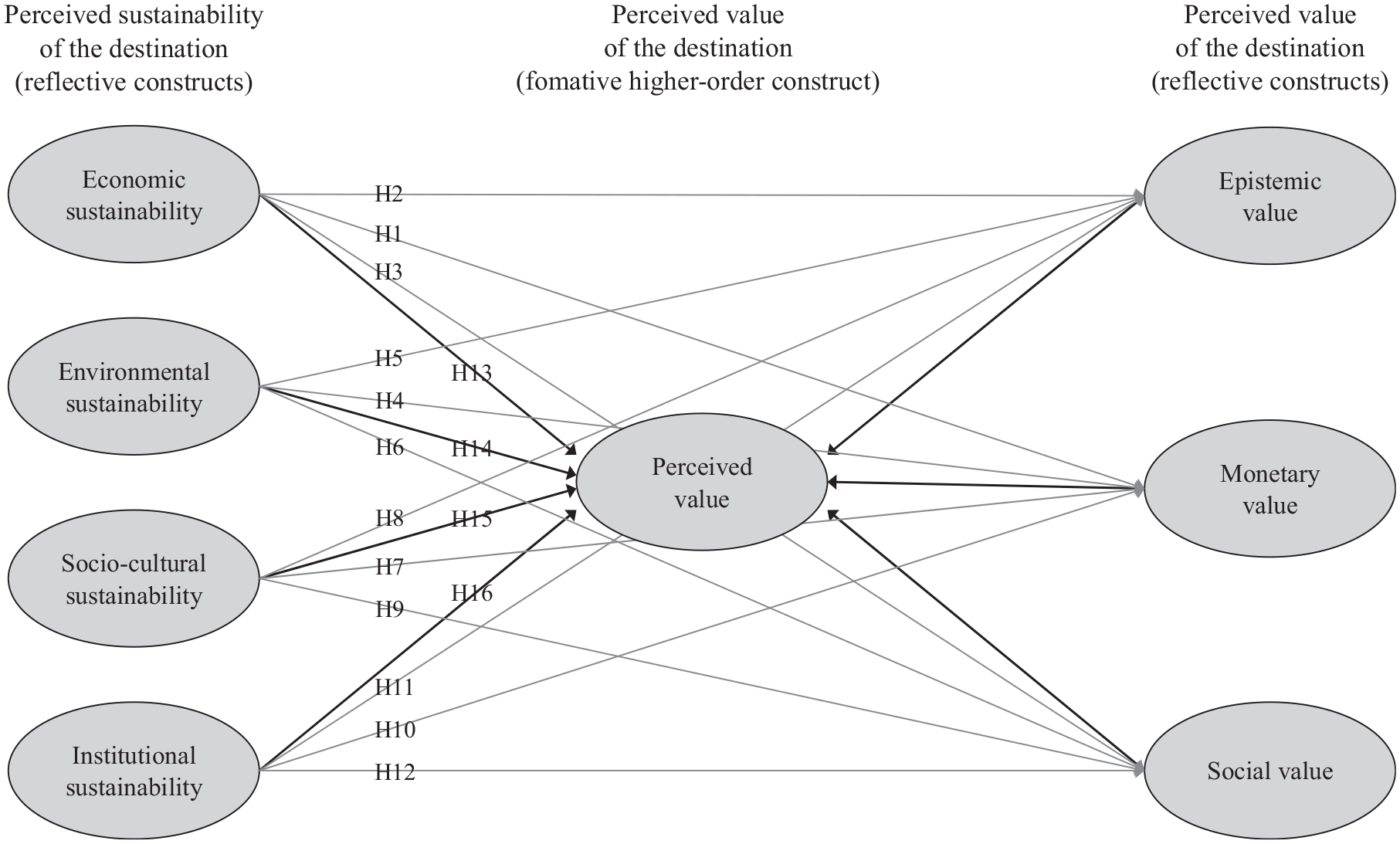
Conceptual model.
Previous studies have not investigated such effects in tourism, but they have found that, overall, sustainability has a significant positive effect on perceived value (Guizzardi et al., 2022; Iniesta-Bonillo et al., 2016), so this study assumes that each dimension of sustainability will also have a significant positive effect on each dimension of perceived value, as well as on overall perceived value. There is evidence of such effects in the broader literature, which is not specifically focused on tourism. For instance, Choi and Ng (2011) found that environmental and economic sustainability lead to more positive evaluations of companies by consumers. Steen (2019) recognizes the positive effect of environmental sustainability on monetary value. Leal Filho et al. (2022) recognize that social values are strongly connected with sustainable development, especially community-based projects relating to socio-cultural sustainability. Johnson and Wilson (1999) recognize that institutional sustainability can be a source of epistemic value.
While each sustainability dimension may influence specific types of perceived value differently, their combined contribution is expected to positively shape tourists’ overall evaluation of the destination. Therefore, 16 hypotheses are proposed using the following combinations in square brackets: [economic] [environmental] [socio-cultural] [institutional] sustainability has a positive significant effect on [monetary] [epistemic] [social] [overall] perceived value. Thus, Hypothesis 1 (H1) to Hypothesis 12 (H12) propose that each of the four sustainability dimensions (economic, environmental, socio-cultural, institutional) has a positive and significant effect on epistemic value, monetary value, and social value, while Hypothesis 13 (H13) to Hypothesis 16 (H16) propose that each of the four sustainability dimensions has a positive and significant effect on overall perceived value (see Figure 1 for an illustration, and Tables 9 and 12 for a full list, of the 16 hypotheses).
Methodology
Research Design
To test the conceptual model in Figure 1, a quantitative approach was employed, utilizing data collected through an online survey. The survey was written in English and created in the Qualtrics survey tool. A panel of residents in the United Kingdom was invited to participate, with the target respondents being adults (aged 18 years or older) who had visited at least one tourist destination within the last 12 months. The survey, therefore, started with the screening question: “Have you visited a tourist destination in the last 12 months?” Nationally representative quotas for age, gender, and place of residence were targeted, so to enable this, the next three questions asked: “How old are you?”“Which option best describes your gender?”“What is your main place of residence?”
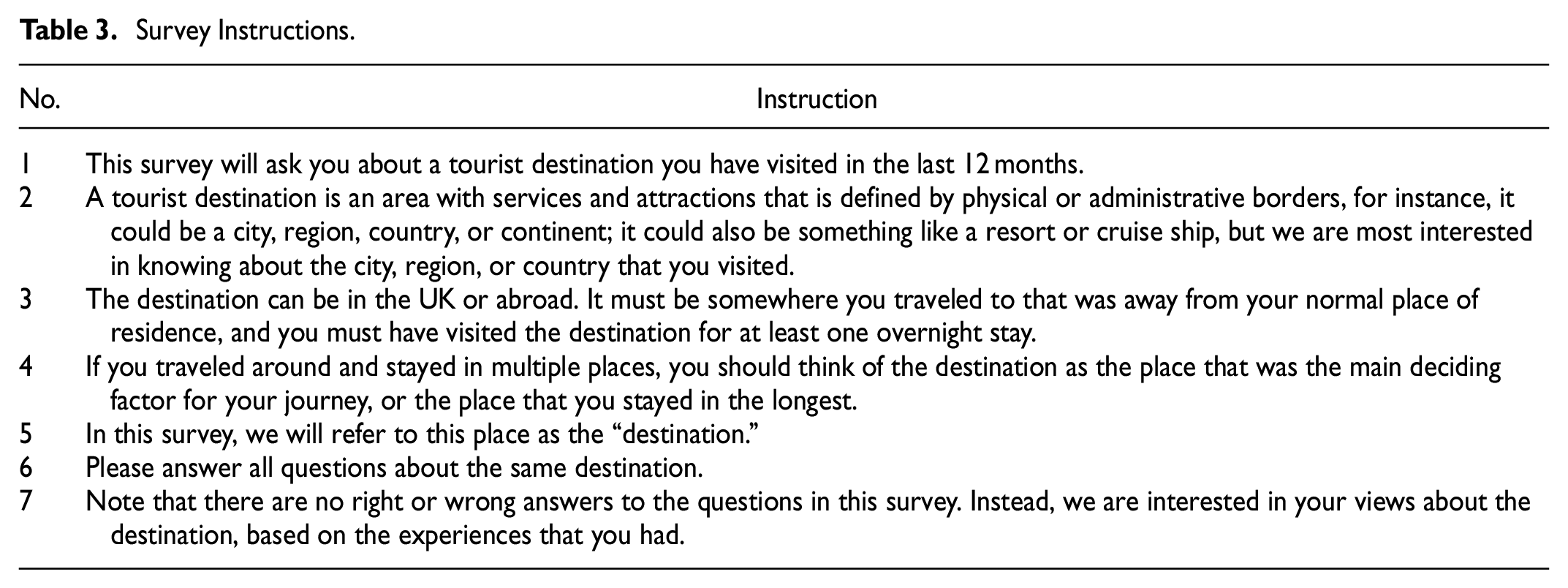
After the initial screening and quota questions, respondents were asked to read a set of survey instructions (Table 3) and confirm that they understood them, or to contact the project manager for further information, before continuing with the survey. Instruction No. 2 was included to help respondents understand what the researchers meant by a tourist destination.
Survey Instructions.
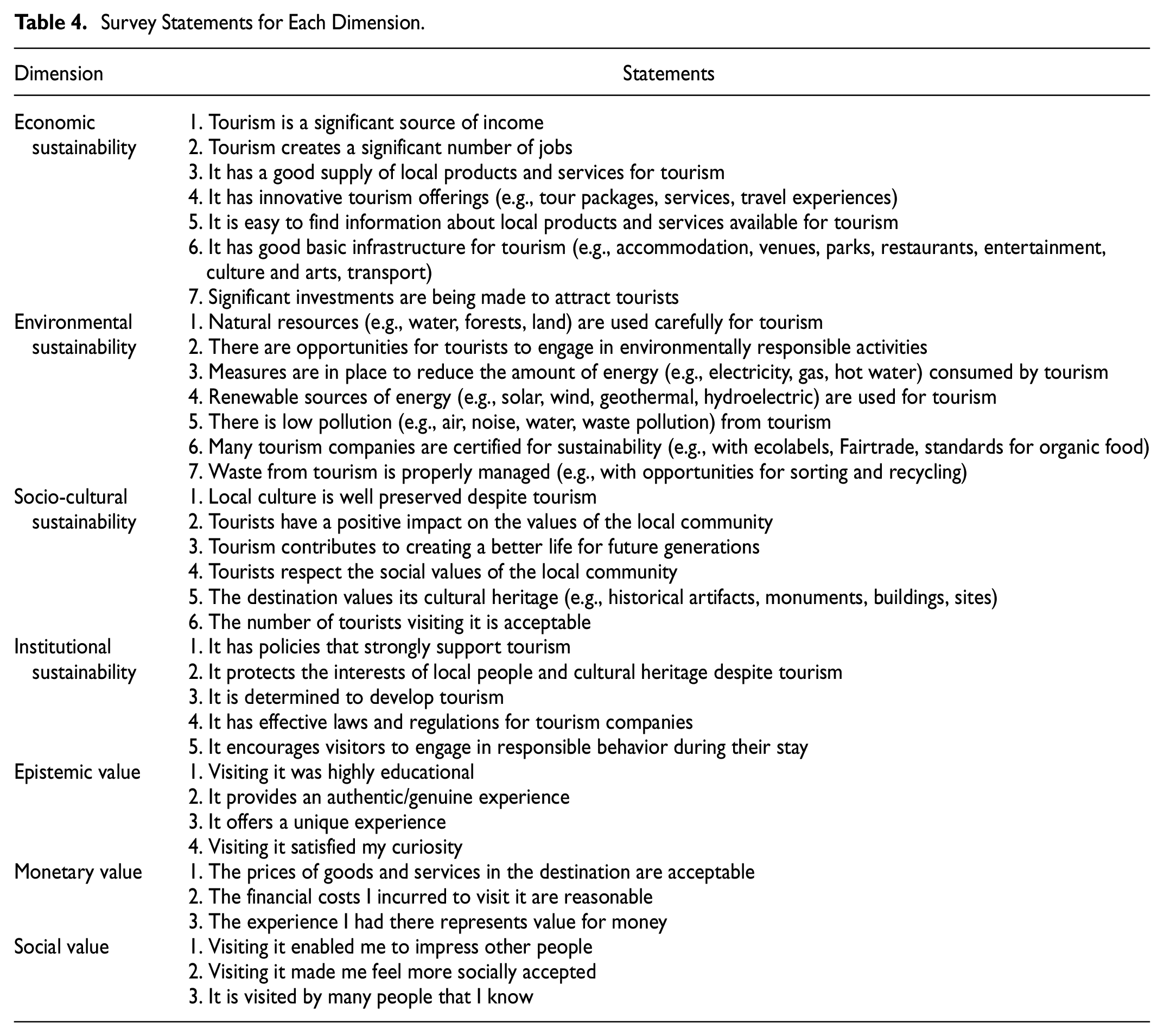
After the instructions, respondents were asked the following open question: “What is the name of the destination (city, region, or country) you have visited during the last 12 months, and selected to be used as a basis for your answers in this survey?” The purpose of this question was to ensure that respondents had a specific destination in mind when answering the survey. Respondents were then given seven groups of statements (Table 4). Each group started with the instruction: “For each statement, select an answer that best represents your views regarding the destination.” Each statement was measured using a 7-point Likert scale ranging from strongly disagree to strongly agree. The statements were used as indicators for each dimension. The survey ended by thanking respondents for participating in the study.
Survey Statements for Each Dimension.
Before distributing the survey, it was tested internally by the authors and several colleagues. With regards to research ethics, the notification form of the national data protection service in the home country of the authors was used to assess the data collection process. Given that no personal data was to be handled in the project, the service did not require submission of the form for further evaluation.
Operationalization of Constructs
The survey items used to measure the four dimensions of sustainability were not developed from scratch but adapted from validated constructs in the literature (Asmelash & Kumar, 2019; Rasoolimanesh, Chee, & Ari Ragavan, 2025a) and refined in alignment with the Global Sustainable Tourism Council Destination Criteria (Global Sustainable Tourism Council, 2019). The goal was to ensure both theoretical grounding and perceptual relevance from the tourist perspective. Thus, the process of operationalizing the indicators for each dimension of sustainability was conducted in two steps. First, we adopted and integrated indicators for the four dimensions of sustainability from established literature. These dimensions and their corresponding sources are as follows: economic, environmental, socio-cultural (Asmelash & Kumar, 2019; Rasoolimanesh, Chee, & Ari Ragavan, 2025a; Rasoolimanesh, Chee, & Salee, 2025b; Sánchez-Fernández et al., 2019), and institutional (Asmelash & Kumar, 2019; S. P. Cottrell et al., 2013; Ebrahimi & Rahmani, 2019; Valentin & Spangenberg, 2000).
Second, the adopted indicators were refined in alignment with the Global Sustainable Tourism Council Destination Criteria (Global Sustainable Tourism Council, 2019). The criteria serve as a widely recognized framework for defining sustainable tourism destinations and represent the minimum standard that tourism destinations should aim to achieve. The criteria are structured around four key themes: sustainable management, socio-economic impacts, cultural impacts, and environmental impacts. The final set of indicators used to measure the four dimensions of destination sustainability is detailed in Table 4.
Dimensions of sustainability and perceived value are treated as reflective constructs, measured using items presented in the methodology section. Overall perceived value is treated as a formative higher-order construct. Many of the studies listed in Tables 1 and 2 that use higher-order constructs use reflective approaches, including those by Guizzardi et al. (2022) and Iniesta-Bonillo et al. (2016), and there is support for such an approach (N. Lee & Cadogan, 2013; Santos, 2022). However, following the reasoning of Mikulić (2022, 2024), Mikulić and Ryan (2018), and J. Murphy et al. (2009), a reflective-formative approach is taken where perceived value is construed as a formative latent variable, meaning that each of the three dimensions contribute to the overall perceived value of a destination. The reasoning is that the first-order constructs (epistemic, monetary, and social value) are measured reflectively because the indicators are manifestations of the constructs, while perceived value, as a second-order latent variable, is conceptualized as formative because it is shaped by its dimensions. Changes in one dimension, such as monetary value may affect overall perceived value without necessarily altering other dimensions. In other words, the second-order construct (perceived value) is formative because it is an aggregation of its dimensions, and each dimension contributes uniquely and independently to the higher-order concept. The first-order constructs are reflective because their indicators are expected to covary and represent the underlying dimension.
It is important to note that while some indicators of institutional sustainability (e.g., “1. It has policies that strongly support tourism”) reflect abstract governance features, they were retained because tourists may form perceptions of these aspects through indirect cues such as infrastructure, signage, coordinated tourism offerings, or observed behavior of tourism authorities and staff. Others, such as “5. It encourages visitors to engage in responsible behavior during their stay,” are more directly observable. The balance across indicators allows us to assess both the perceived presence and perceived effectiveness of institutional frameworks, which aligns with the literature on perceptual evaluation of destination governance (e.g., Asmelash & Kumar, 2019; Johnson & Wilson, 1999).
Descriptive Statistics
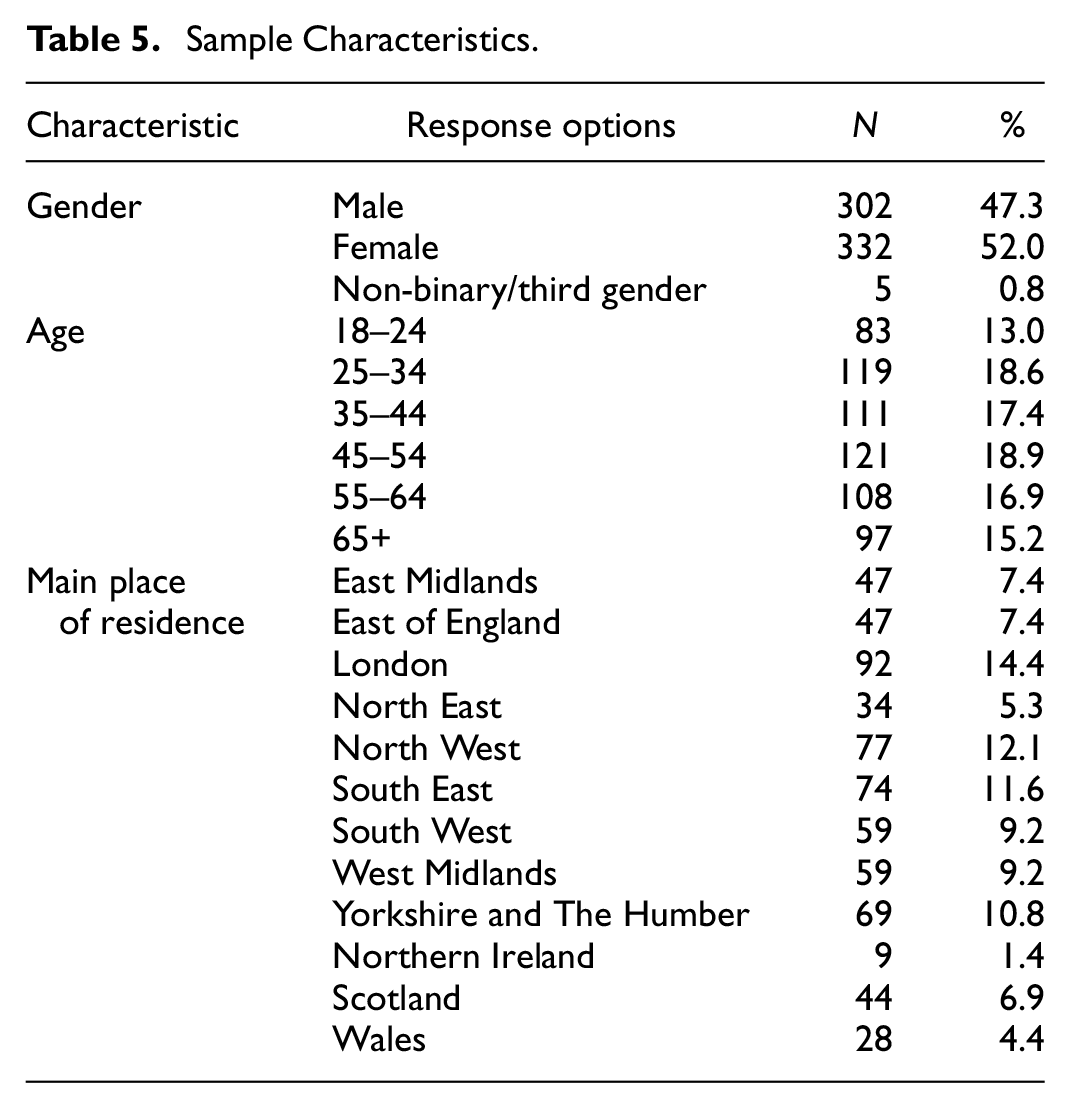
A soft launch of the survey was carried out with responses from 50 panel members to check if it worked as intended. The survey was then distributed to panel members using a stratified random sampling approach until relevant quotas based on population estimates for the United Kingdom for at least 600 responses were achieved. It would of course have been better to use tourists from the United Kingdom as reference data. However, data such as on the gender, age, and main place of residence of outbound tourists was not available. By the time the survey closed, 639 full responses had been received. Sample characteristics are provided in Table 5.
Sample Characteristics.
A total of 265 destinations were selected by the 639 respondents. The choice of destinations consisted of a mix of countries, states, regions, cities, towns, and villages, in the United Kingdom and abroad. Also, several resorts or attractions. The five most frequently selected destinations were London, Paris, Spain, France, and Greece.
Analytical Approach
Analysis of the conceptual model (Figure 1) was carried out using partial least squares structural equation modeling in SmartPLS 4 on responses to the statements in Table 4. This was selected over alternative methods such as covariance-based structural equation modeling because it is argued as being more appropriate for complex models, when prediction is a focus of the research, and when formative and higher-order constructs are included (Hair et al., 2019; Hair & Alamer, 2022)—all of which are characteristic of this study that aims to make theoretical extensions of the role of sustainability in determining visitors’ perceived value of tourism destinations.
Furthermore, as a follow-up analysis, this study uses importance-performance map analysis to determine the relative importance and performance of the four dimensions of sustainability on the three dimensions of perceived value, as well as on perceived value overall as a higher-order construct. Initial partial least squares structural equation modeling analysis reveals the relative explanatory importance of constructs in the structural model. Importance-performance map analysis can then be conducted in SmartPLS 4 and used to extend the initial results by also calculating the performance of each construct. This allows conclusions to be drawn based on both performance and importance, which can help managers prioritize actions, for instance, those that improve the performance of constructs with high explanatory importance but low performance.
Importance-performance map analysis results are plotted on an XY chart where the path coefficient for importance from the structural model is plotted on one axis, and a rescaled performance score of 0 to 100 (based on 7-point Likert scale scores from the survey) is plotted on the other axis (Ringle et al., 2024).
The analysis followed the latest guidelines for conducting partial least squares structural equation modeling (Hair et al., 2022; Hair, Sarstedt, Ringle, & Gudergan, 2024a; Hair, Sarstedt, Ringle, Sharma, & Liengaard, 2024b; Sarstedt et al., 2023) and importance-performance map analysis (Hair, Sarstedt, Ringle, & Gudergan, 2024a; Hauff et al., 2024; Ringle & Sarstedt, 2016).
Findings
Assessment of the Measurement Model
Following Hair et al. (2022), the analysis began by examining the quality of the measurement model. This involved checking the indicator loadings to determine the absolute contribution of each indicator to its assigned construct; internal consistency reliability, to check the extent to which indicators measuring the same construct are associated with each other; convergent validity, which is established when indicators converge to represent the underlying construct; and discriminant validity, to ensure there is sufficient distinction between constructs.
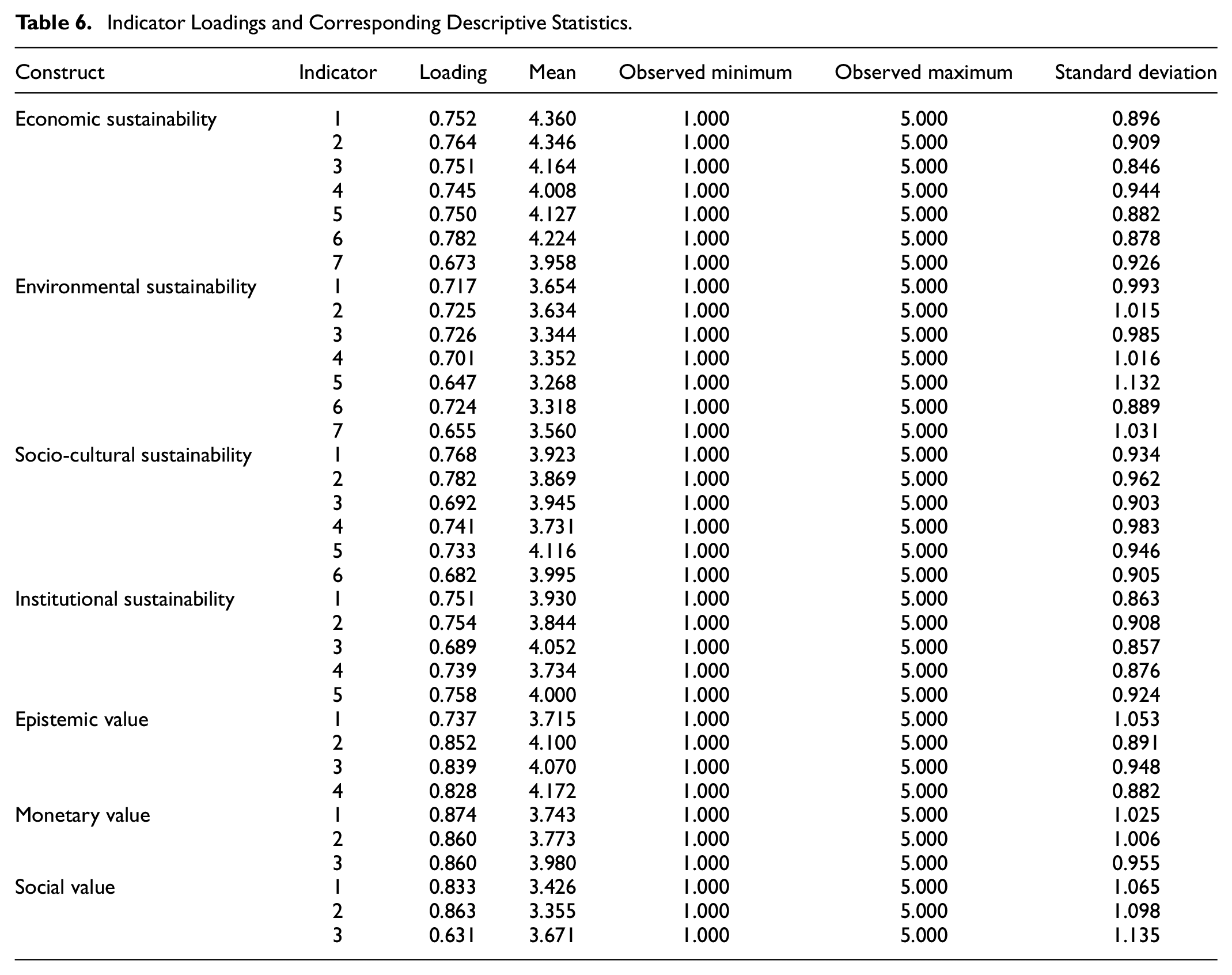
The recommended threshold for the indicator loadings is 0.7 but Hair et al. (2022) suggests retaining all indicators with loadings above 0.4 if they contribute to content validity and their retention does not affect reliability and convergent validity. As shown in Table 6, seven of the 35 indicators have loadings below 0.7. However, they are all above 0.6, making them suitable for retention given that they contribute to content validity, if their retention does not affect internal consistency reliability and convergent validity. One of the items used to measure institutional sustainability—“3. It is determined to develop tourism”—does not explicitly refer to sustainability and may be interpreted as a general statement of growth orientation. However, it was retained as a reflective indicator because it complements four other items that more directly reflect sustainability-related aspects of governance, such as regulatory enforcement, cultural protection, and responsible tourism promotion. The item met the recommended threshold for indicator loading and did not substantially affect internal consistency or convergent validity. Its inclusion reflects the assumption that tourists may perceive a strong institutional commitment to tourism as an indirect indicator of sustainable destination planning.
Indicator Loadings and Corresponding Descriptive Statistics.
Internal consistency reliability was assessed by checking the values of Cronbach alpha, rho alpha, and composite reliability. Convergent validity was assessed by checking the average variance extracted values. As shown in Table 7, six of the seven constructs meet the threshold of 0.7 for internal consistency reliability based on all three metrics. The exception is social value which has a composite reliability of 0.823, but a Cronbach alpha and rho alpha of slightly lower than 0.7. Hair et al. (2022) suggests that values above 0.6 are acceptable for exploratory studies and considering that the composite reliability score of social value is well above 0.7, the construct was suitable for further analysis.
Reliability and Convergent Validity After Excluding Environmental Sustainability Indicator Five.
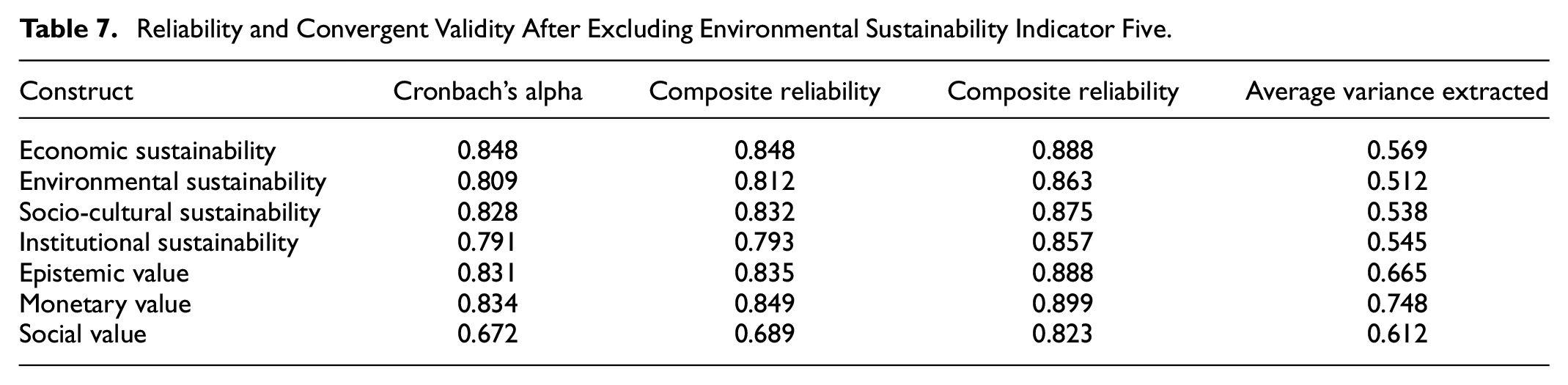
The threshold for establishing convergent validity is an average variance extracted value of above 0.5. The only construct that failed to meet this threshold was environmental sustainability, which had an average variance extracted value of 0.490. Since this construct is measured reflectively, indicators with poor loadings can be removed to check if convergent validity improves (Hair et al., 2022). Indeed, removing environmental sustainability indicator five led to an improvement in average variance extracted to 0.512 (Table 7), which is above the recommended threshold. Thus, the dataset used for further analysis excluded that indicator.
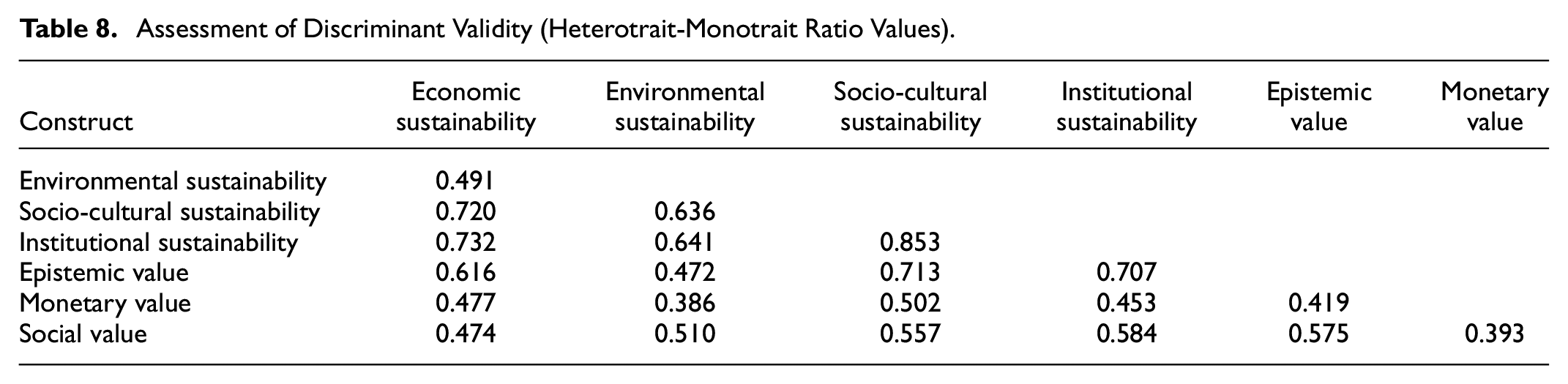
Discriminant validity was assessed by checking the Heterotrait-monotrait ratio values. As shown in Table 8, almost all values are below the recommended threshold of 0.85. The exception was the value between socio-cultural sustainability and institutional sustainability, which is 0.853. Considering that both are part of the concept of sustainability, then values below 0.9 are acceptable (Hair et al., 2022). Therefore, discriminant validity for the constructs in this study is established.
Assessment of Discriminant Validity (Heterotrait-Monotrait Ratio Values).
Estimating the Structural Model Explaining Dimensions of Perceived Value
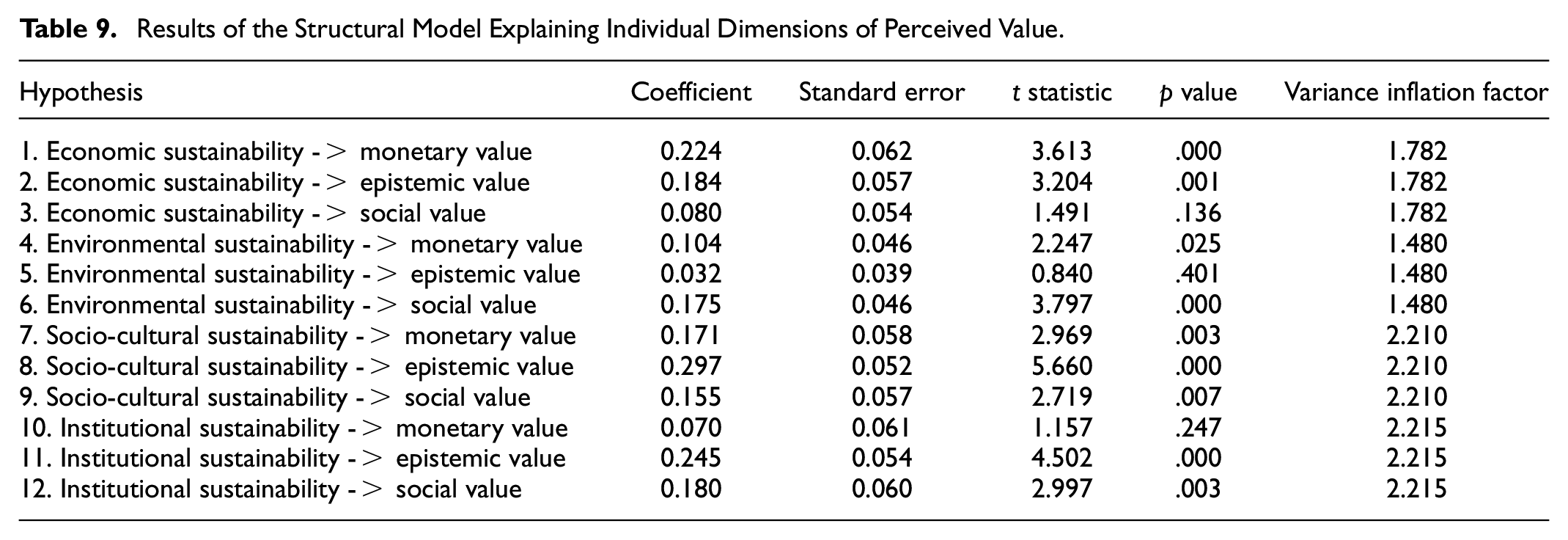
Following the assessment of the structural model, this section presents the analysis of the structural model, estimating the effect of each dimension of sustainability on each dimension of perceived value (Figure 2). As recommended by Hair et al. (2022), this model is assessed in terms of its path coefficients, multicollinearity, the extent to which the independent variables explain the dependent variables, and the model’s internal and external predictive relevance. As shown in Table 9, all path coefficients are positive, indicating that economic, environmental, socio-cultural, and institutional sustainability positively influence epistemic, monetary, and social value. There is no problem of multicollinearity as all variance inflation factor values are below three. All relationships are significant except the path from economic sustainability to social value, environmental sustainability to epistemic value, and institutional sustainability to monetary value.
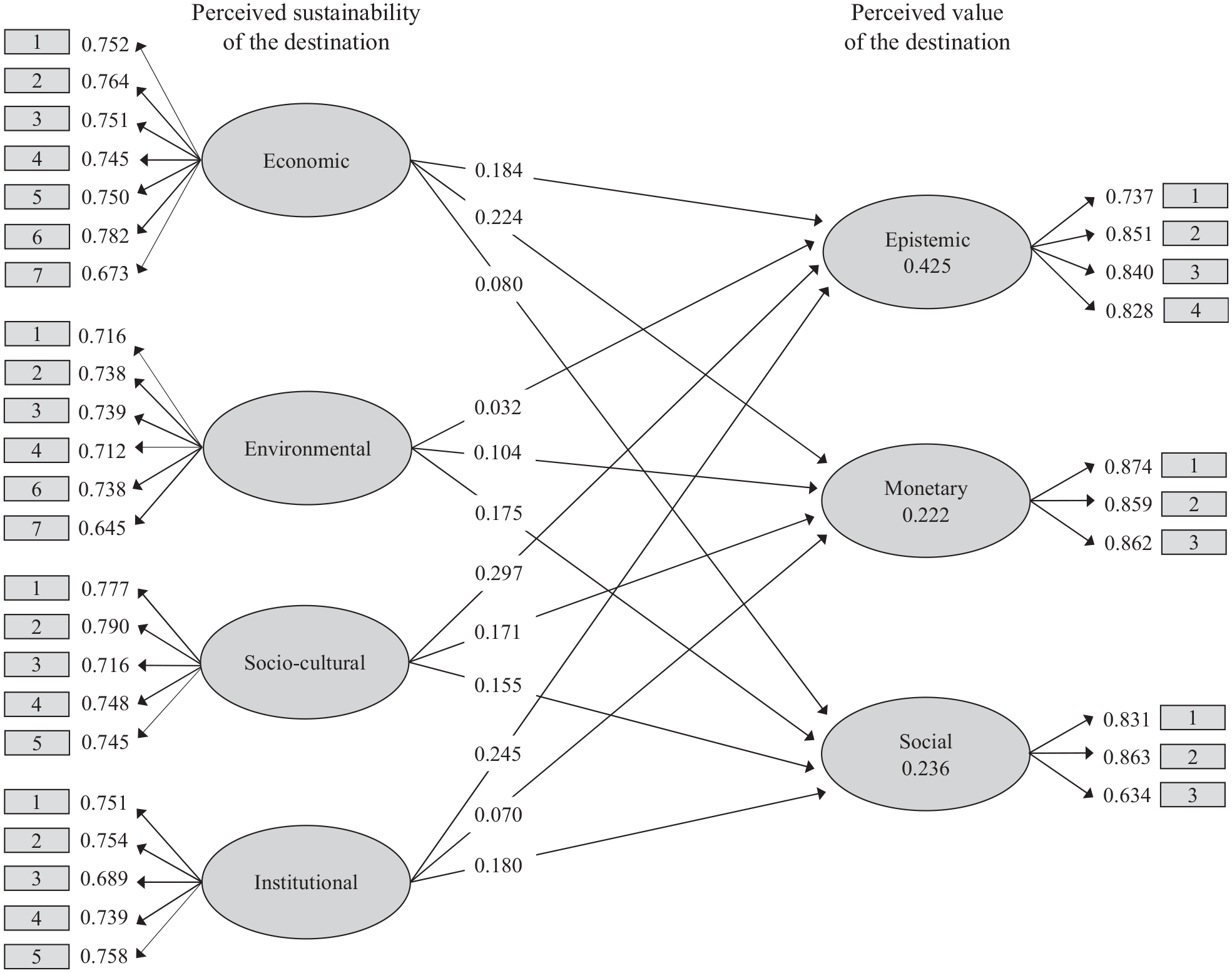
Estimated structural model explaining individual dimensions of perceived value.
Results of the Structural Model Explaining Individual Dimensions of Perceived Value.
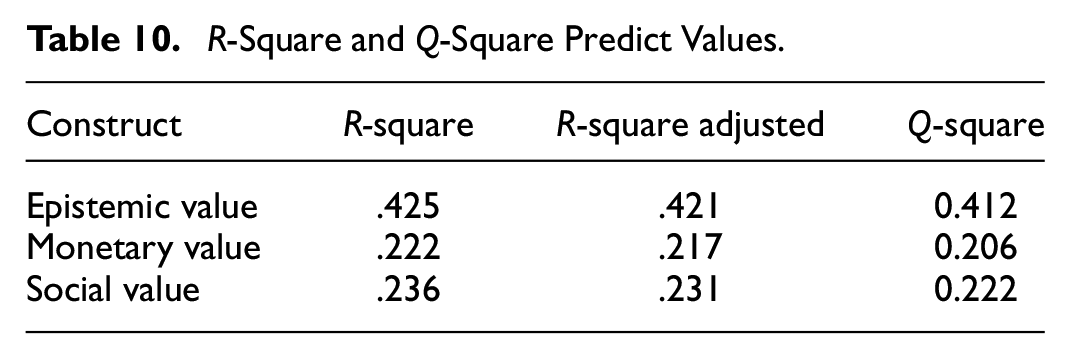
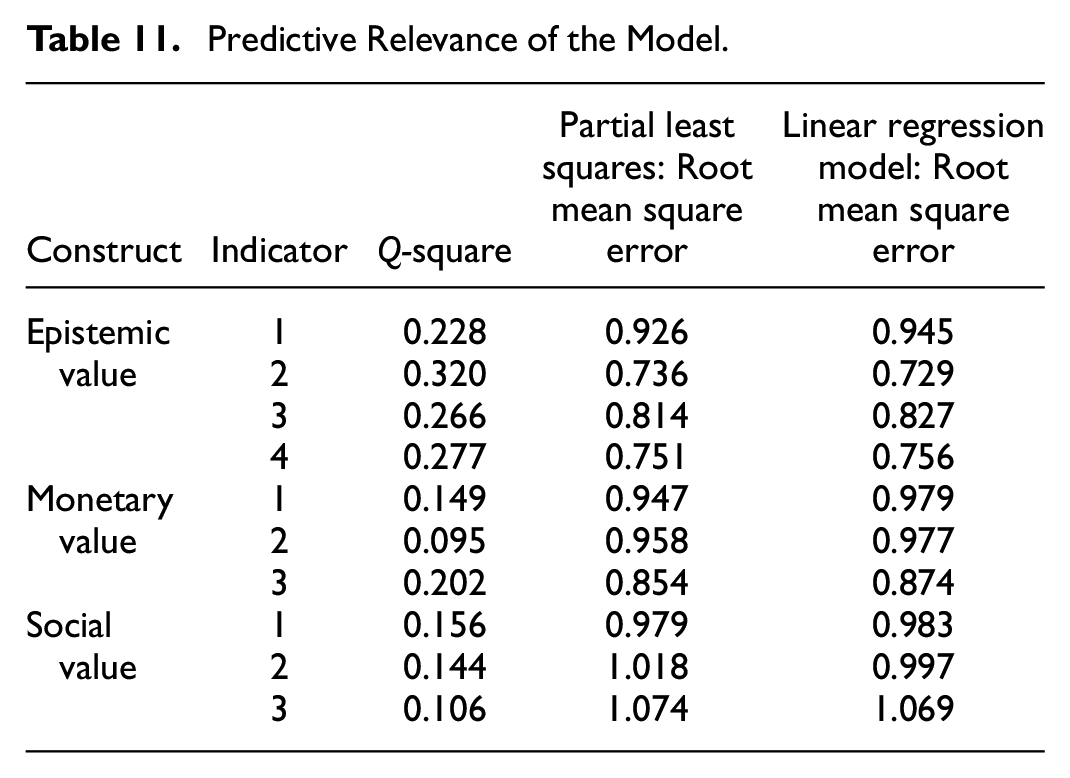
As shown in Table 10, R-square values show that the four dimensions of sustainability explain over 20% of each of the dimensions of perceived value. Interestingly, they explain 43% of epistemic value. All Q-square predict values are above zero, indicating that the internal predictive power of the model is adequate. In terms of external predictive relevance, Table 11 shows that the model has a strong predictive relevance on epistemic and monetary value, and a small predictive relevance on social value.
R-Square and Q-Square Predict Values.
Predictive Relevance of the Model.
Importance-Performance Map Analysis for Dimensions of Perceived Value
Estimation of the structural model has shown that the four dimensions of sustainability have different impacts on the three dimensions of perceived value. Following Hair, Sarstedt, Ringle, and Gudergan et al. (2024a), this section goes one step further to determine the importance and performance of each of the four dimensions of sustainability. Results are presented in Figures 3 to 5. For epistemic value (Figure 3), the most important dimension of sustainability is socio-cultural sustainability, followed by institutional sustainability and economic sustainability; the least important is environmental sustainability. For monetary value (Figure 4), the most important is economic sustainability, followed by socio-cultural sustainability and environmental sustainability; the least important is institutional sustainability. For social value (Figure 5), the most important is institutional sustainability, followed by environmental and socio-cultural sustainability; the least important is economic sustainability. All four dimensions of sustainability have room for improved performance as each of them exhibits a performance of less than 80%.
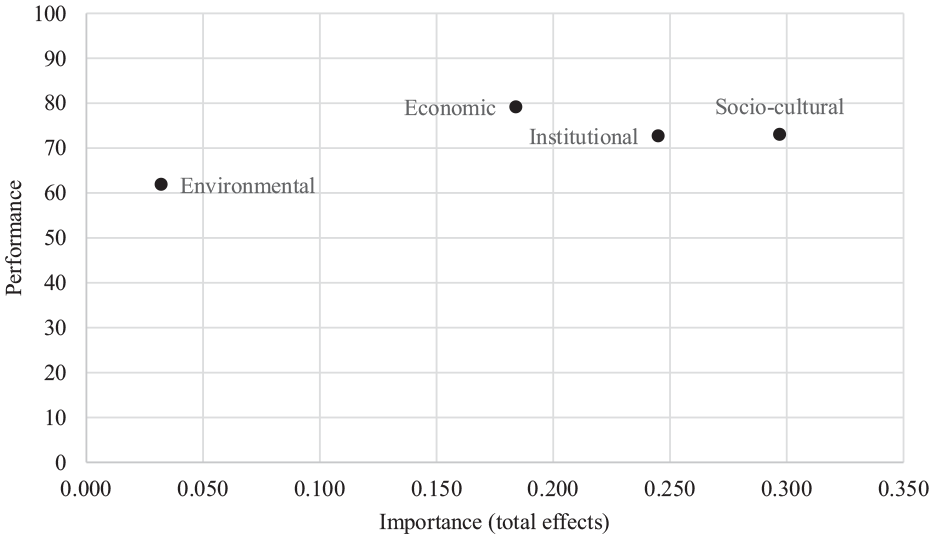
Importance-performance map analysis for perceived epistemic value.
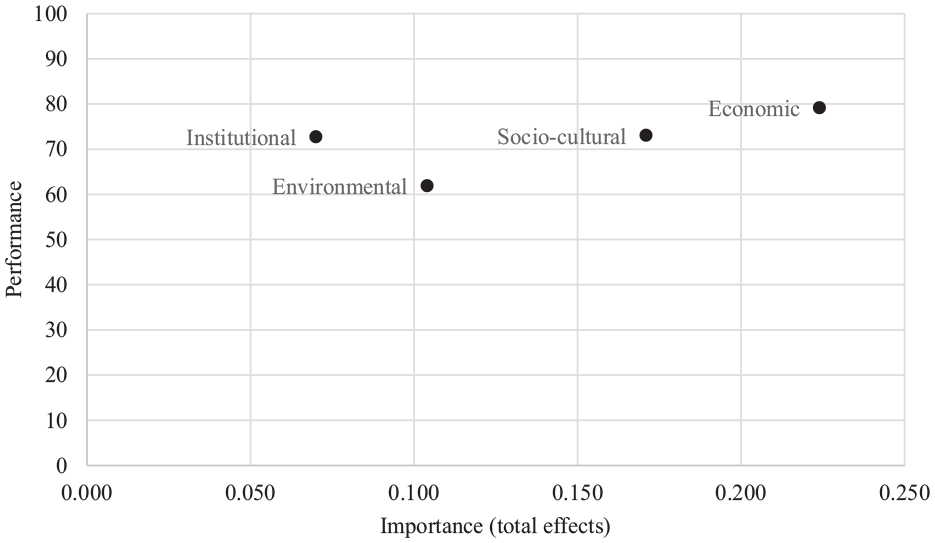
Importance-performance map analysis for perceived monetary value.
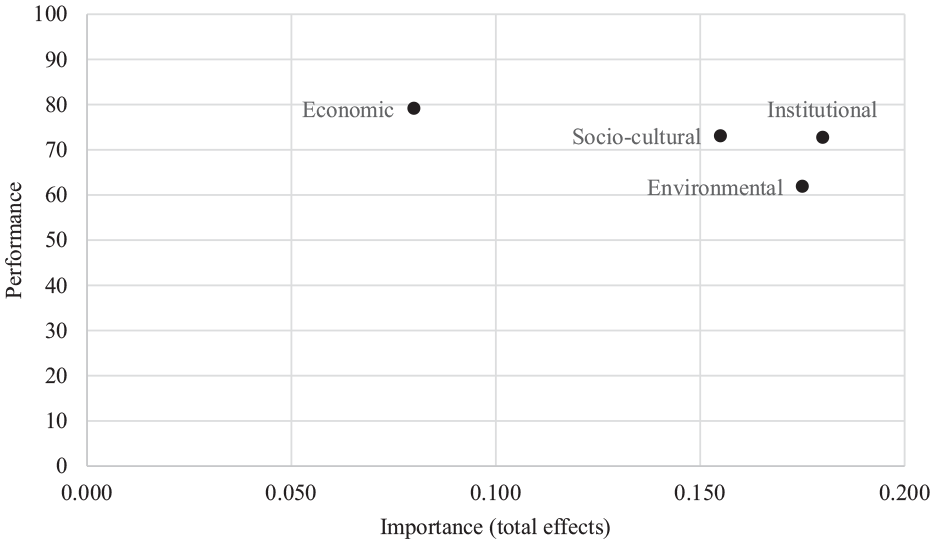
Importance-performance map analysis for perceived social value.
Effect of the Dimensions of Sustainability on Overall Perceived Value
To conclude the analysis, this section explores the effect of the four dimensions of sustainability on overall perceived value. This is done by modeling perceived value as a higher-order construct consisting of three lower-order constructs, namely perceived epistemic, monetary, and social value. As mentioned, when presenting the conceptual model in the background section, perceived value is construed as a formative latent variable (Mikulić, 2022, 2024; Mikulić & Ryan, 2018; Murphy et al., 2009). Following Becker et al. (2012), partial least squares analysis of a structural model that involves reflective-formative constructs should be conducted in two steps. The first step involves assessing the quality of the measurement model and generating latent scores of all lower-order constructs. This step was completed by running the partial least squares algorithm on the conceptual model comprising the three dimensions of perceived value. This analysis was reported in the preceding sections. The second step involves running the algorithm using latent scores generated in the first step. The resulting structural model is shown in Figure 6. As shown in Table 12, the four dimensions of sustainability together explain 49% of the variation in overall perceived value. All paths are positive and significant. However, further analysis (Figure 7) shows that socio-cultural sustainability is the most important dimension for determining overall perceived value for a destination.
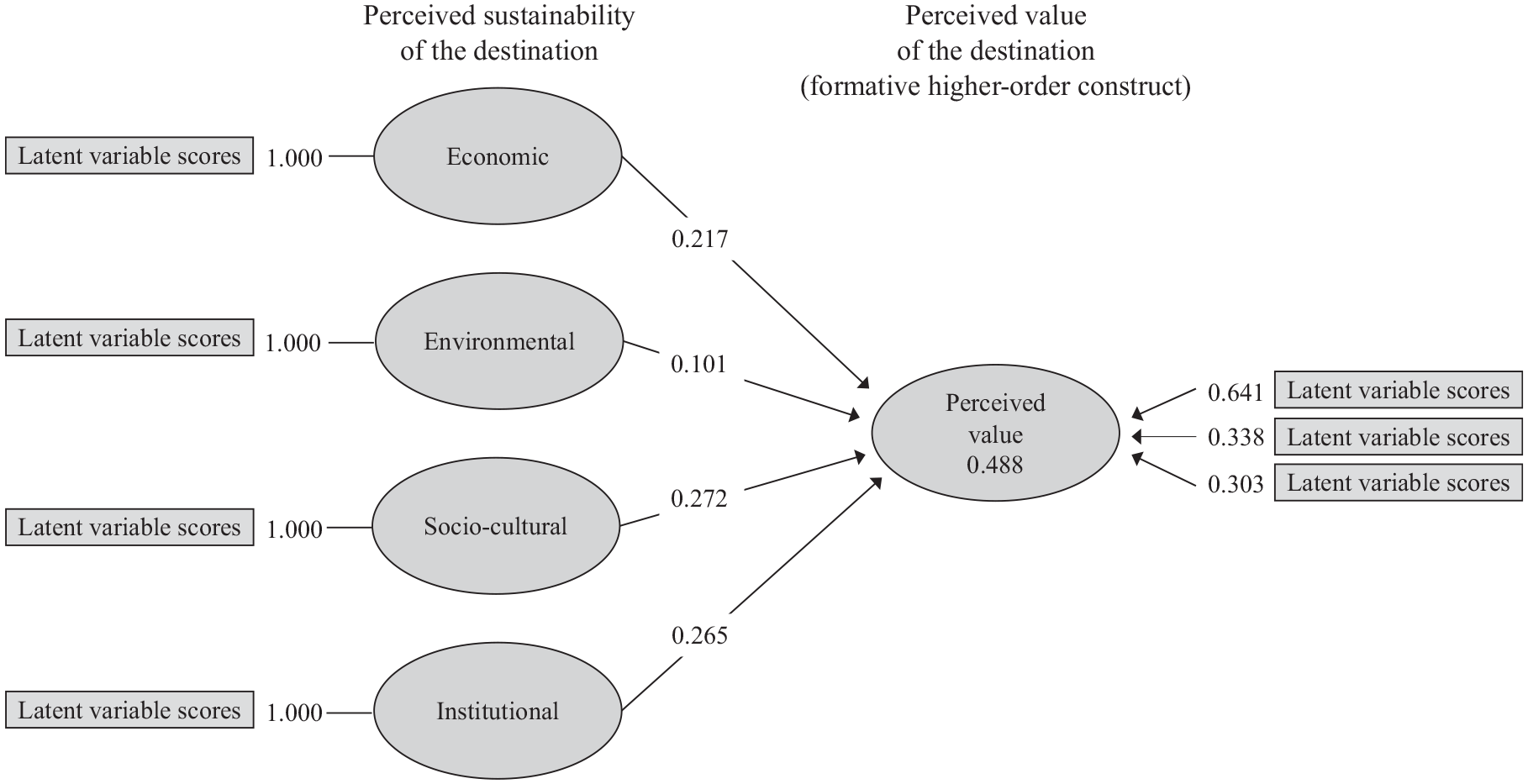
Estimated structural model—perceived value as a higher-order construct.
Structural Model Estimates With Perceived Value as Higher-Order Construct.
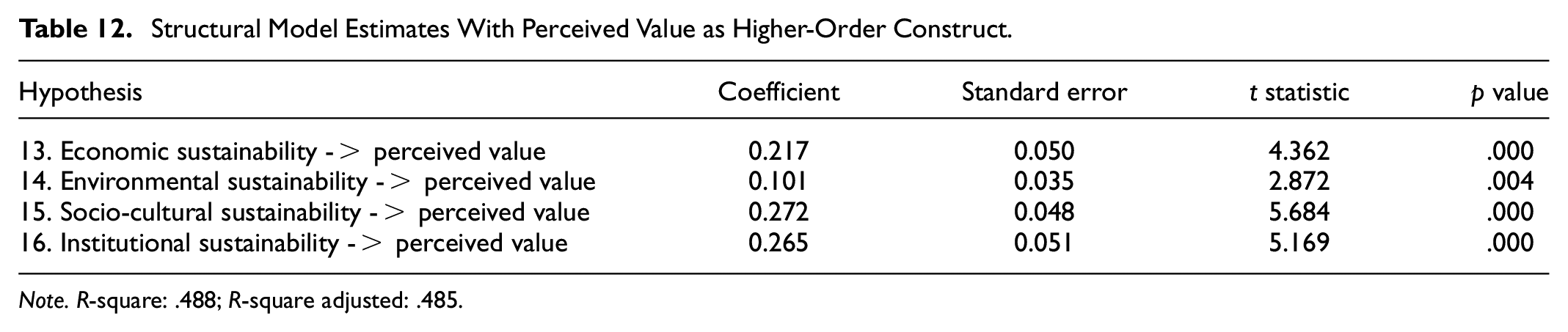
Note. R-square: .488; R-square adjusted: .485.
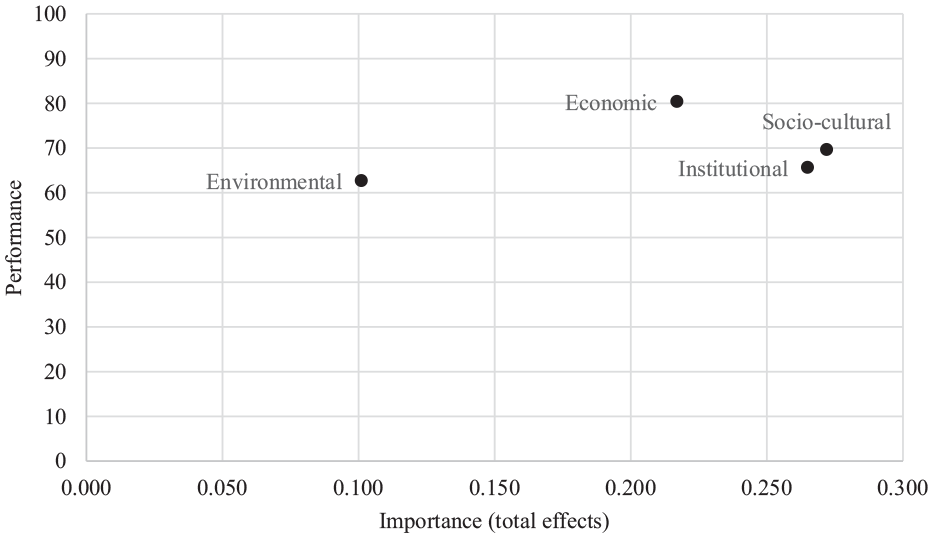
Importance-performance map analysis for overall perceived value.
Discussion
This study aimed to investigate the specific roles of various sustainability dimensions in shaping different aspects of perceived value for tourism destinations. This approach addresses limitations noted in previous research (Guizzardi et al., 2022; Iniesta-Bonillo et al., 2016) that used single constructs for sustainability and perceived value. These studies therefore overlooked the nuanced interactions between distinct dimensions. Further, Iniesta-Bonillo et al. (2016) highlighted the limitation of using a single construct measure for perceived value and recommended a more comprehensive exploration of sustainability dimensions beyond the traditional economic, environmental, and social-cultural aspects, and across a broader range of destinations that was only marginally addressed by Guizzardi et al. (2022).
To broaden the range of destinations, this study asked survey respondents to select any destination they had visited in the last 12 months, resulting in data from 265 destinations. With regards to broadening the sustainability dimensions, this study employed the prism model of sustainability, incorporating a fourth dimension—institutional sustainability to those of the traditional three pillars model of economic, environmental, and social-cultural sustainability (Asmelash & Kumar, 2019; Cottrell et al., 2013; Valentin & Spangenberg, 2000). Additionally, three dimensions of perceived value—epistemic, monetary, and social—were examined to reveal the effect of each sustainability dimension on each dimension of perceived value, as well as on overall perceived value.
Main Findings
Previous studies found a positive relationship between sustainability and perceived value (Guizzardi et al., 2022; Iniesta-Bonillo et al., 2016). However, findings from this study reveal that not all sustainability dimensions affect perceived value equally. The results highlight distinct impacts on specific aspects of perceived value, thereby questioning the appropriateness of using single constructs for sustainability and perceived value, as have been used in so many of the studies listed in Tables 1 and 2, because the effects of sustainability on perceived value are multidimensional and context specific.
Socio-cultural sustainability emerged as a significant enhancer of all three value dimensions, emphasizing its role in shaping tourists’ perceptions. It means that a destination’s commitment to preserving local culture and traditions enhances epistemic value by offering immersive opportunities for cultural awareness and understanding, increases monetary value by creating an authentic experience that tourists are willing to invest in, and enhances social value by allowing tourists to express culturally respectful behaviors, reinforcing their identity as responsible and culturally aware travelers. The finding regarding social value supports Leal Filho et al. (2022) who recognized that social values are strongly connected with socio-cultural sustainability.
Economic sustainability was found to positively influence epistemic and monetary value. Destinations perceived as being economically sustainable satisfy tourists’ intellectual curiosity, providing insights into local economic practices and enhancing epistemic value. They also actively support local development and encourage tourists to spend more, with the understanding that their spending contributes to local welfare. However, there was no significant impact on social value, meaning that economically sustainable destinations do not appear to alter tourists’ social image or prestige.
Institutional sustainability was found to positively influence epistemic and social value. Destinations with robust governance and supportive tourism policies tend to enhance visitors’ social standing by aligning with responsible management practices. They also provide structured learning experiences that help tourists understand sustainable governance, contributing to epistemic value, which is in support of Johnson and Wilson (1999). However, there is no indication that institutional sustainability influences monetary value as tourists are not necessarily motivated to spend more based-on governance alone.
Environmental sustainability was found to positively influence social value and, to a lesser degree, monetary value (partially supporting Steen, 2019). Destinations committed to environmental protection allow visitors to express values of environmental responsibility, enhancing social value. Tourists are only slightly more willing to pay higher costs in environmentally sustainable destinations, knowing their investment supports conservation efforts. However, environmental responsibility does not appear to significantly foster epistemic value, as tourists do not necessarily seek deeper environmental knowledge.
This study found economic sustainability to be most crucial for monetary value, socio-cultural sustainability for epistemic value, and institutional sustainability for social value. Together, the four sustainability dimensions explained 49% of the variation in overall perceived value, which means that other factors explain perceived value too. Notably, socio-cultural sustainability has the most significant influence, followed by institutional and economic sustainability, while environmental sustainability has the least influence on overall perceived value.
Contributions to Theory and Practice
In terms of theory, this study contributes in two ways. First, although not really the aim of the research, it identifies and validates destination sustainability as a four-dimensional construct, including economic, environmental, socio-cultural, and institutional sustainability. This multidimensional approach provides a holistic understanding of sustainability, emphasizing the interconnectedness of its components. By capturing these dimensions, the study acknowledges that sustainable tourism is not merely about environmental conservation but also encompasses economic resilience, socio-cultural equity, and institutional frameworks, which is consistent with the prism model of sustainability (Asmelash & Kumar, 2019; Cottrell et al., 2013; Valentin & Spangenberg, 2000). The inclusion of institutional sustainability emphasizes the importance of governance, policy, and stakeholder collaboration in achieving sustainable outcomes. This comprehensive framework sets a foundation for future research to explore the dynamic relationships among these dimensions and their collective impact on sustainable destination management.
Second, the approach taken in this study has provided a broader and more detailed understanding of how sustainability shapes perceived value across varied destinations—extending the work of Iniesta-Bonillo et al. (2016) and Guizzardi et al. (2022). Through importance-performance map analysis, the study identifies the relative importance of each sustainability dimension in influencing perceived value while simultaneously evaluating destination performance on these dimensions. This dual perspective not only highlights the areas where destinations excel but also pinpoints critical gaps where improvements can significantly enhance perceived value. By integrating sustainability dimensions into perceived value assessments, the study offers actionable insights for destination managers to prioritize investments and strategies effectively. Furthermore, the use of importance-performance map analysis emphasizes the practical relevance of sustainability, linking it directly to tourists’ evaluations and decision-making processes. Ultimately, this methodological contribution bridges theoretical advancements with practical applications, making it a valuable tool for both researchers and practitioners in the field of sustainable tourism. It also supports previous studies that have advocated the value of performance measurement for destination management (Berbekova et al., 2022; Dumitru, 2023; Morrison et al., 2025).
The results suggest that tourists’ value perceptions align more closely with socio-cultural, institutional, and economic factors than environmental factors, possibly due to the more visible nature of social, institutional, and economic impacts compared to environmental ones because when visiting a destination, tourists are more exposed to how tourist activity impacts on local culture; is affected by the organizations, mechanisms and orientations involved in sustainable tourism development; and contributes to economic development and growth. They are less exposed, at least in the short-term, to impacts on the environment – as they are measured in this study. In support of this, it is interesting to note that one item was removed from the environmentally sustainable scale for being a weak indicator—“5. There is low pollution (e.g., air, noise, water, waste pollution) from tourism”—so that might be an exception that is more visible to tourists and something they are more exposed to and therefore aware of during their visit.
Despite environmental sustainability’s lower impact, it should not be overlooked. Instead, the findings emphasize the need for destinations to improve environmental performance to strengthen its impact on perceived value. Enhanced awareness of genuine environmental initiatives, as opposed to superficial greenwashing, could potentially elevate tourists’ perceptions of environmental value. However, one may argue that tourists are not willing to bear additional costs for environmental sustainability of the destination, perceiving it as a fundamental responsibility of destinations and other stakeholders. This suggests the need for collaborative efforts among governments, businesses, and local communities to embed environmental sustainability into their operations without transferring the financial burden to visitors. Such an approach could help align tourists’ expectations with sustainable practices, fostering long-term loyalty and trust in the destination.
Given that each of the four sustainability dimensions has a significant positive effect on overall perceived value, specific recommendations can be made for destination managers on how to enhance perceived value through sustainability initiatives, and how to raise awareness among tourists for them, based on the statements used to create each dimension in Table 4.
Economic initiatives should diversify revenue streams, promote off-peak tourism, invest in training and job creation, support local products and services, develop unique and innovative tourism offerings, ensure easy access to information, improve basic infrastructure, and attract significant investments in tourism.
Environmental initiatives should encourage responsible use of natural resources, provide opportunities for tourists to engage in environmentally responsible activities, implement measures to reduce energy consumption, utilize renewable energy sources, achieve certification for sustainability (at a destination level as well as among tourism businesses), and properly manage waste with sorting and recycling opportunities.
Socio-cultural initiatives should preserve local culture, ensure tourists have a positive impact on community values, contribute to a better life for future generations, promote respect for social values, value cultural heritage, and maintain an acceptable number of tourists.
Institutional initiatives should implement strong policies that support tourism, protect the interests of local people and culture heritage, demonstrate a commitment to tourism development, enforce effective laws and regulations for tourism companies, and encourage visitors to engage in responsible behavior during their stay.
Study Limitations and Recommendations for Further Research
Self-reported survey data and cross-sectional studies are common in research, but readers should be aware of several potential biases and limitations with these approaches, and steps that were taken in this study to mitigate some of them. For instance, the self-reported survey data collected for this study was susceptible to social desirability bias (also called conformity bias) which involves over or underreporting socially acceptable responses regarding sustainability rather than being truthful; recall bias that is associated with respondents not accurately remembering their last trip and associated perceptions of sustainability and perceived value; response bias by tending to agree with statements and avoiding extreme responses; questionnaire design bias from poorly designed questions and subsequently misinterpreted and inaccurate responses; self-selection bias from respondents being systematically different from those who did not respond; and sampling bias where the sample is not representative of the population and results are therefore not generalizable.
Anonymity and confidentiality were assured in this study to reduce social desirability bias; respondents were asked to answer questions about a trip taken in the last 12 months to reduce the potential for recall bias; the survey was pre-tested and piloted to identify and correct potential issues regarding response and questionnaire design bias; and a panel was used with quotas based on the United Kingdom population to reduce self-selection and sampling bias. However, further steps could have been taken, such as using validated and reliable survey indicators from previous studies instead of creating our own based on Global Sustainable Tourism Council Destination Criteria (Global Sustainable Tourism Council, 2019) and using multiple methods of data collection (triangulation) to validate the self-reported survey data.
Regarding cross-sectional study biases, there could be temporal ambiguity resulting from data being captured at a single point in time—making it difficult to establish causal effects; failure to adequately control for confounding variables that can distort apparent relationships; selection bias (as already mentioned—therefore affecting the extent to which findings are generalizable); and measurement bias because of errors in how data was collected or measured (i.e., because of issues with validity and reliability of indicators used).
Random sampling was used to ensure a representative sample, and constructs were clearly defined and measured to reduce measurement bias. However, future studies could consider longitudinal study designs to better predict causal effects, while in line with recommendations from S. Choi and Ng (2011), potentially confounding variables such as traveler characteristics (e.g., demographics, travel experience, and attitudes regarding different dimensions of sustainability) could be used to control for apparent relationships between dimensions of sustainability and perceived value.
While an adequate sample size and representation help to ensure the findings are generalizable within the United Kingdom, various factors might affect the extent to which they can be generalized to other countries, especially where there might be cultural differences regarding sustainability and perceived value of tourism destinations. The study tried to control for this by using indicators based on global standards. However, it would be beneficial to conduct comparative studies in multiple countries in the future to determine if the findings from the United Kingdom are applicable in other cultural contexts.
Although this study included multiple dimensions of both sustainability and perceived value, it was limited to four sustainability dimensions and three perceived value dimensions. Additional dimensions, such as technology, politics, and safety and security for sustainability, or functional and emotional aspects for perceived value, could provide further insights. Further research could employ qualitative methods to deepen our understanding of the interplay between sustainability and perceived value across a wider range of dimensions. Besides, some items, particularly within the social value dimension, may overlap conceptually with constructs such as sign value or social norms. While these were included to capture socially derived value perceptions related to travel, future research could benefit from refining and validating these items further to improve discriminant validity across value constructs.
Furthermore, certain indicators of institutional sustainability reflect abstract governance features that may not be directly observable by tourists. While these were included based on the assumption that visitors can form perceptions through indirect cues (e.g., infrastructure, signage, or staff behavior), this approach can introduce variability in how such governance elements are interpreted. The reliance on perceptual evaluation, although supported by the literature, may affect the consistency with which respondents assess these institutional dimensions. Thus, it is acknowledged as a potential limitation, and it is suggested that future studies explore revised or more specific wording to better capture institutional sustainability. Additionally, future studies could complement perceptual measures with objective assessments or expert evaluations of governance structures to validate and triangulate findings on institutional sustainability.
Additionally, this study focused on how tourists perceive a destination’s sustainability rather than its objective sustainability metrics. It would be intriguing to measure actual sustainability at destinations and investigate the extent to which these perceptions align with the objective reality. Such an approach could provide valuable insights into whether tourists accurately assess sustainability efforts or if there are significant discrepancies influenced by factors like marketing, personal biases, or lack of transparency. Exploring this gap between perceived and actual sustainability could also shed light on the effectiveness of destination communication strategies in conveying their genuine sustainability practices. Moreover, incorporating objective sustainability data could enable a more robust evaluation of the relationship between sustainability and its impact on perceived value and tourist behavior. By bridging the gap between perception and reality, future research could contribute to creating more informed and balanced strategies for promoting sustainable tourism development.
Conclusion
This study provides a nuanced examination of the relationship between sustainability and perceived value in tourism destinations. By employing a multidimensional approach to sustainability and perceived value across a diversity of destinations, this study addresses significant gaps in previous studies that relied only on single construct measures for a limited selection of destinations. In addition, previous studies have only considered the importance of sustainability for perceived value. This study extends this to also take performance regarding sustainability into consideration.
Findings emphasize the importance of socio-cultural sustainability, which emerged as the most influential factor in enhancing all three dimensions of perceived value, as well as overall perceived value by contributing to authentic, culturally respectful experiences. Institutional and economic sustainability also play significant roles. In contrast, environmental sustainability showed a limited impact. Also, there is room for improved performance across all four dimensions of sustainability, especially environmental sustainability.
Despite the limited impact of environmental sustainability, the finding suggests that destinations should not overlook this dimension. Instead, they should strive to improve environmental performance and raise awareness of genuine environmental initiatives to align tourists’ expectations with sustainable practices.
Study limitations, including potential biases in self-reported survey data and the cross-sectional study design are acknowledged, and steps were taken to mitigate some of these issues. Future research could benefit from longitudinal study designs and comparative studies in multiple countries, as well as the inclusion of traveler characteristics to control for apparent effects of sustainability on perceived value.
In conclusion, this study has advanced our understanding of the complex interplay between dimensions of sustainability and perceived value in tourism destinations. By highlighting the distinct impacts of each sustainability dimension on each perceived value dimension, as well as on overall perceived value, the research offers valuable guidance for destination managers to enhance perceived value through targeted sustainability initiatives. This multi-dimensional approach provides a robust foundation for future research and practical applications in the field of sustainable tourism.
Footnotes
Author Contributions
Nigel Halpern: Conceptualization; Data curation; Formal analysis; Methodology; Project administration; Resources; Software; Validation; Visualization; Writing—original draft; Writing—review & editing. Deodat Mwesiumo: Conceptualization; Data curation; Formal analysis; Methodology; Project administration; Resources; Software; Validation; Visualization; Writing—original draft; Writing—review & editing.
Declaration of Conflicting Interests
The author(s) declared no potential conflicts of interest with respect to the research, authorship, and/or publication of this article.
Funding
The author(s) received no financial support for the research, authorship, and/or publication of this article.
