




Abstract
Digital human avatars have been used extensively to endorse destinations. However, there is limited research on how the alignment between digital human avatars and destinations affects travel behavior. Drawing on cue consistency and cohort theories, this research employs a sequential explanatory mixed-methods design. Study 1, based on a survey of 423 Generation Y and Generation Z individuals, examines the antecedents (external and internal cues) and consequences (trust, engagement, and travel intentions) of aligning digital human avatars with destinations, including the sequential mediating roles of destination trust and engagement, as well as the moderating effect of generation. Study 2 follows with qualitative interviews of 28 participants to provide deeper insights. Findings further provide a qualitative explanation of generational differences by uncovering six boundary conditions. These findings offer practical insights for creating strategies that effectively align digital human avatars with endorsed destinations, thereby strengthening trust and engagement, and by extension, travel intentions.
Introduction
Travel to cultural heritage destinations has significant growth potential within the tourism industry. In 2023, global cultural heritage tourism was valued at US$587.1 billion, with projections suggesting an increase to US$813.5 billion by 2032 (IMARC Group, 2024). In China, where younger generations increasingly seek cultural heritage, museums, and entertainment outlets are integrating digital technologies like artificial intelligence (AI) and augmented reality to create immersive experiences (The Star, 2023). As cultural heritage tourism continues to grow, the demand for innovative promotional strategies becomes more pressing. AI-powered influencer marketing, now a critical strategy for 63% of travel companies planning AI integrations into their campaigns, represents a pivotal shift in how destinations are marketed (Statista, 2025a). Digital human avatars (DHAs), such as the computer-generated influencer Lil Miquela, are becoming increasingly prominent. Supported by cutting-edge technologies and virtual platforms (Atzeni et al., 2022; Xie-Carson, Benckendorff et al., 2023), DHAs not only achieve higher engagement rates (3.5 times that of traditional influencers; Medium, 2022) but also offer cost-effective solutions (Peltier, 2017) for promoting cultural heritage tourism.
Despite the significant advantages of using DHAs for destination promotion, researchers continue to express concerns about audience trust and engagement due to an inherent bias against their artificial nature (Franke et al., 2023; H. Li et al., 2023). A key challenge lies in the discrepancy between the perceived artificiality of DHAs and the authenticity of real-world destinations. This mismatch can create cognitive dissonance (Zhang et al., 2020), as audiences may struggle to reconcile a digital entity with the expectation of an immersive, genuine travel experience. Moreover, audiences may view DHAs as scripted or commercially driven, leading to skepticism about the reliability of their recommendations (Moustakas et al., 2020). Unlike real travelers or human influencers, DHAs lack firsthand experiences, which can diminish perceived authenticity. Given that authenticity is the core value of destination branding (Atzeni et al., 2022), this inconsistency could undermine DHAs’ effectiveness as endorsers in fostering genuine travel intentions (J. Li et al., 2023; Miao et al., 2022). However, studies on DHAs in tourism remain limited (Table 1). Existing studies have primarily investigated the influence of DHAs’ personal attributes (Akhtar et al., 2024; Park et al., 2024), content characteristics (M. Choi et al., 2024; Xie-Carson et al., 2024), and consumer traits such as motivations (H. Kim & Park, 2024; Xie-Carson, Magor et al., 2023) and subjective knowledge (Ameen et al., 2024) on travel behavior. Yet, given DHAs’ role as endorsers, the critical aspect of the alignment between the endorser (DHA) and the brand (destination) warrants closer examination. The literature on celebrity endorsements and influencer marketing has long recognized the importance of such alignment, noting its significant effect on positive attitudinal and behavioral responses (Ameen et al., 2024; Bastrygina et al., 2024; Roy et al., 2021). This gap highlights the need for a thorough exploration of how DHA-destination fit is derived and how it influences travel decisions, particularly in promoting cultural heritage tourism.
DHA Research in Tourism.
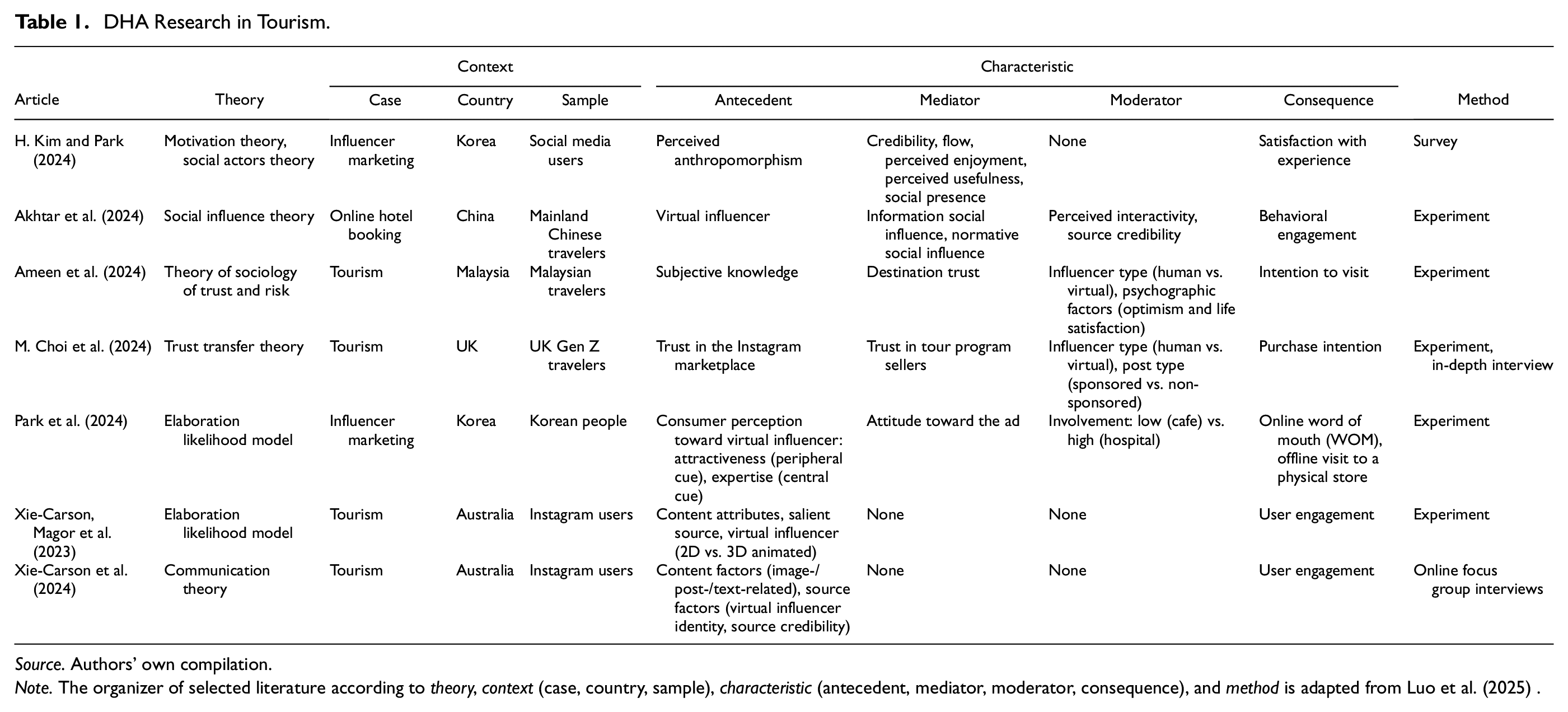
Source. Authors’ own compilation.
Note. The organizer of selected literature according to theory, context (case, country, sample), characteristic (antecedent, mediator, moderator, consequence), and method is adapted from Luo et al. (2025) .
Given the context, this research addresses three noteworthy gaps. First, the mechanisms underlying DHA-destination fit require further exploration. Building on cue consistency theory (Anderson, 1981), which explains how external and internal cues from the endorser affect individuals’ attitudes toward the endorsed brand (J. Li et al., 2023), this research examines how a DHA’s external image (form-behavioral realism and vicarious expression) and internal credibility (perceived expertise and trustworthiness) function as consistency cues, thereby shaping travelers’ perceptions of the endorsed cultural heritage destination. Second, the impact of DHAs’ endorsements on cultural heritage destinations has not been fully understood, particularly regarding destination trust. While previous studies have investigated the roles of attitudes and destination images as mediators in the effectiveness of endorser-destination fit on travel decisions (Roy et al., 2021; Xu (Rinka) & Pratt, 2018), the specific role of destination trust, especially with virtual influencers, remains underexplored (Alboqami, 2023; Ameen et al., 2024). Recognizing that travel decision-making involves both rational evaluations and emotional reactions toward the destination (Rather et al., 2019), this research investigates how destination trust and engagement sequentially mediate the relationship between DHA-destination fit and travel intentions. Third, while prior research has examined boundary conditions such as psychographic factors (Ameen et al., 2024) and involvement level (Park et al., 2024), the role of intergenerational differences in DHA-destination fit and endorsement effectiveness remains underexplored. Given that generational cohorts differ in technology adoption, trust in digital agents, and perceptions of authenticity (Casalegno et al., 2022; Gardiner et al., 2013; X. Li et al., 2013), generation may moderate DHAs’ impact on destination trust, engagement, and travel intentions. Integrating generation as a moderating variable allows this study to refine the conceptual model and provide a better understanding of DHA effectiveness in cultural heritage tourism. Addressing these gaps, the present research explores key factors influencing DHA-destination fit and its impact on tourism outcomes, with generational differences as a moderating factor.
Literature Review and Hypothesis Development
Conceptual Foundation: Digital Human Avatar
DHAs are computer-generated characters that function as brand ambassadors or influencers (Jiménez-Castillo & Sánchez-Fernández, 2019), often orchestrated by humans and/or AI algorithms (Xie-Carson, Magor et al., 2023). These avatars are portrayed from a first-person viewpoint to emulate a realistic personality and interaction style (Xie-Carson, Magor et al., 2023). Noteworthily, DHAs are designed with high realism in both form and behavior, making them visually indistinguishable from humans on social media platforms (Miao et al., 2022). This high level of realism is critical as it enhances the authenticity of the interactions with viewers. Moreover, in terms of cost-effectiveness and risk management, DHAs present a more controlled and economical alternative compared to traditional celebrity endorsers. They offer a wider demographic reach and incur lower costs due to the absence of real-life limitations and contractual obligations (Peltier, 2017).
Within the tourism industry, DHAs have been effectively utilized in social media posts and short videos to create engaging and immersive narratives that showcase the unique features of destinations. They can virtually “visit” cultural and historical sites, share compelling stories, and interact with viewers in ways that enhance the overall storytelling experience (Ameen et al., 2024; Cheng et al., 2020). An exemplary case is that of Su Xiaomei in China, a DHA based on the imagined sister of the renowned poet Su Shi from the Song Dynasty. Su Xiaomei’s endorsements have effectively highlighted the cultural heritage of Meishan City (Jingpt, 2022), sparking significant engagement and discussions on platforms like TikTok and Xiaohongshu (Little Red Book; SCOL, 2022). This innovative approach not only boosts exposure and engagement but also serves as a unique method to promote cultural heritage tourism. Impressively, data shows that DHAs can drive social media traffic at rates 3.5 times higher than traditional influencers, highlighting their powerful impact in digital marketing (Medium, 2022).
Theoretical Foundation: Cue Consistency Theory
Cue consistency theory provides a theoretical framework for understanding how individuals process and integrate various information cues to form attitudes toward brands and products (Anderson, 1981). This theory posits that customers assess the alignment and consistency between different cues to shape their evaluations, thereby influencing their perceptions and decision-making processes (X. Chen et al., 2022; De Roeck et al., 2016; Ma et al., 2023). Empirical studies have demonstrated the applicability of cue consistency theory across various domains. In hospitality, guests assess the alignment between service quality and attribute performance when making booking decisions (X. Chen et al., 2022). Likewise, in multi-channel retailing, consumers evaluate the consistency between online and offline promotional information, which shapes their perceptions and online loyalty (Ma et al., 2023). Furthermore, Ma et al. (2023) highlight that retailer credibility serves as a significant cue, where high (low) credibility combined with high (low) promotional consistency reinforces perceived coherence, whereas mismatched credibility and promotional consistency create cognitive dissonance. Extending this framework to brand endorsements, J. Li et al. (2023) underscore that endorser-brand fit is significantly influenced by the attributes of DHAs. Applying cue consistency theory to destination endorsements by DHAs, this study advances the theoretical understanding of how individuals assess DHA-destination fit. Specifically, we identify and categorize key predictors of DHA-destination fit by examining external cues and internal cues. External cues are directly observable in the DHA’s appearance, behavior, and storytelling, whereas internal cues relate to the perceived expertise and trustworthiness of the DHA (J. Li et al., 2023).
External cues are manifested through an endorser’s words, actions, and visual presentations of the endorsed product (destination; Dean, 1999). In the context of short-video narratives featuring DHAs, external cues emerge from form-behavioral realism, which captures the authenticity of the DHA’s appearance and behavior, and vicarious expression, which enables individuals to virtually experience destinations through visual demonstrations and narratives shared on social media platforms. Such accurate portrayals of travel destinations, combined with compelling narratives, reinforce external consistency cues. Consequently, consumers are more likely to respond positively when the appearance and behavior of DHAs align with their expectations of the destination.
Internal cues, on the other hand, establish deeper cognitive associations between an endorser and the endorsed product (destination), shaping consumer perceptions beyond surface-level attributes (Bakamitsos, 2006). In the case of DHAs, perceived expertise, which refers to the DHA’s knowledge about the endorsed destination, and perceived trustworthiness, which reflects the DHA’s honesty and reliability, serve as essential internal cues that signal the credibility and reliability of the endorsement. These attributes ensure that the DHA’s portrayal of the destination aligns with consumer expectations, reinforcing a sense of authenticity and coherence. Ma et al. (2023) emphasize that source credibility is fundamental in shaping consistency perceptions, as a credible source strengthens the believability of the information presented. When viewers perceive DHAs as knowledgeable and trustworthy, they experience stronger internal consistency cues, leading to greater confidence in the destination’s appeal (Najar et al., 2024). This has been demonstrated to enhance perceptions among consumers, thereby fostering positive attitudes and stronger travel intentions (Zhang & Xu, 2024), which, in turn, increases the effectiveness of DHA-based endorsements.
The effectiveness of DHA-based endorsements hinges on the alignment between external and internal cues. Successful cue-matching occurs when DHAs not only present visually and behaviorally realistic representations of a destination but also convey credible and trustworthy information about it. When both types of cues are well-matched, customers experience greater cognitive fluency, enhancing their engagement and reinforcing positive behavioral intentions toward travel (J. Li et al., 2023; F. Liu & Lee, 2024). Therefore, cue consistency theory serves as a powerful explanatory framework for understanding how the congruence between DHA cues and destination attributes strengthens endorsement effectiveness and consumer response. Extending cue consistency theory into the domain of digital destination endorsements, this study provides a novel theoretical perspective on how DHAs can enhance consumer engagement through effective cue alignment. This contribution deepens the understanding of endorsement effectiveness in the digital era, particularly within AI-driven promotional strategies.
Antecedents of Digital Human Avatars-Destination Fit
The effectiveness of a destination endorsement is largely determined by the fit between the endorser’s characteristics and the destination’s attributes. This fit results from the alignment and consistency between the endorser and destination attributes, as highlighted by cue consistency theory (Misra & Beatty, 1990). For DHA endorsers, both external cues (form-behavioral realism and vicarious expression) and internal cues (perceived expertise and trustworthiness) that are coherent with the destination can create a high level of fitness (De Roeck et al., 2016; J. Li et al., 2023).
Form realism refers to the extent to which a DHA’s appearance is lifelike, incorporating human-like characteristics such as age, gender, and name, whereas behavioral realism assesses how closely a DHA’s actions mirror human behaviors, including communication and expression (Miao et al., 2022), thereby reflecting a highly detailed representation of anthropomorphism (Xie-Carson, Benckendorff, et al., 2023). Notably, high levels of form and behavioral realism enhance the perception of a DHA as authentic and relatable, improving the fit between DHAs and the endorsed destinations, as viewers are more likely to perceive the DHA as a realistic representation of someone experiencing the destination (Dong et al., 2023; M. Kim & Baek, 2024). In this regard, form and behavioral realism serve as external consistency cues. Specifically, when a DHA is visually and behaviorally consistent with human characteristics, it strengthens viewers’ perceptions that the DHA and the endorsed destination are a credible match (J. Li et al., 2023). Accordingly, we hypothesize:
Vicarious expression acts as a conduit through which individuals can virtually experience products, especially when facilitated by visual demonstrations and narratives shared by influencers on social media platforms like Instagram, TikTok, and YouTube (Y. Chen et al., 2019; Nadroo et al., 2024). Travel influencers, in particular, significantly impact viewer perceptions by providing in-depth sharing of travel experiences (Bastrygina et al., 2024). For DHAs, this concept takes on a vital role within short-video narratives, where DHAs communicate the allure and essence of travel destinations through their behaviors, words, and interactions (Sung et al., 2023). According to cue consistency theory, DHAs’ vicarious expression in these narratives serves as a powerful external cue, offering viewers consistent and coherent information about the destination (Xu et al., 2021). When DHAs vividly describe a destination’s unique features, cultural elements, and attractions, they enable viewers to vicariously experience these places through the DHA’s perspective (Marder et al., 2019). This immersive experience not only mitigates the uncanny valley effects—the discomfort caused by artificial, human-like entities—but also enhances the realism and effectiveness of the endorsement (Lou et al., 2023). Moreover, research has shown that vicarious expression can evoke emotions and feelings associated with a destination, reinforcing the positive attitudes and destination image formed through the cues presented by the endorser (Cho & Jang, 2008; H. Kim & Richardson, 2003). For instance, a DHA who authentically explores the Three Sus Temple in a narrative, admiring its ancient architecture and sharing historical facts, provides a consistent and rich portrayal of the destination. Such detailed and engaging narratives play a crucial role in enhancing the fit between the DHA and the destination by aligning viewers’ expectations with the actual experiences being promoted. As such, we posit:
Perceived expertise refers to the degree to which endorsers, such as DHAs, are viewed as knowledgeable sources of information about the destinations they promote. This attribute significantly influences viewers’ perceptions, as DHAs who demonstrate in-depth knowledge of attractions, historical contexts, and unique features of a destination can enhance associative learning and foster positive attitudes toward that destination (J. Li et al., 2023; Till & Busler, 2000). Drawing parallels from other domains, such as sports marketing, athlete endorsers are often perceived as more credible than non-athlete endorsers due to their expertise in relevant sports knowledge (Y. Lee & Koo, 2015; P. Wang et al., 2021). Consistent with cue consistency theory, when DHAs convey detailed information about travel destinations, they are seen as more credible, which, in turn, influences the viewer’s perceptions of the destination’s appeal, as the effectiveness of endorsements relies on the value of the information provided. Therefore, when DHAs consistently offer insightful information in their narratives, it significantly strengthens the perceived fit between the DHA and the destination (Aw et al., 2023). This perceived fit is crucial for influencing travel intention, as viewers are more likely to trust and act on recommendations from the sources they deem to possess expert knowledge. Consequently, we propose:
Perceived trustworthiness of a DHA is crucial in establishing the DHA as a reliable source of information about travel destinations. This attribute of credibility builds trust in the DHA’s knowledge and experiences, based on the viewer’s belief that the avatar’s descriptions, insights, and recommendations are accurate and dependable (H. Kim & Park, 2024; Ohanian, 1990). Trust is further solidified when viewers feel confident about the DHA’s portrayals and the genuineness of the experiences shared (X. Chen et al., 2022). Noteworthily, when endorsers are viewed as trustworthy, viewers are more likely to form positive perceptions and accept the endorsements (H. Kim & Park, 2024; Y. Lee & Koo, 2015). Such trustworthiness not only instills confidence in viewers about the authenticity of the destination but also enhances the value of the recommendations provided (Alboqami, 2023). Thus, perceived trustworthiness is a pivotal factor in strengthening the DHA-destination fit, enhancing the overall effectiveness of the endorsement. Hence, we hypothesize:
Consequences of Digital Human Avatars-Destination Fit
DHA-destination fit encompasses the degree of congruency, consistency, and relevance between DHAs and the destinations they endorse, ensuring that DHAs accurately align with the attractions, unique features, and overall spirit of the destination (Ozuem et al., 2024; Xu (Rinka) & Pratt, 2018). Similar to celebrity endorsements, a high level of match between the celebrity’s message and the product being endorsed leads to higher endorsement effectiveness (McCormick, 2016). Cue consistency theory further supports this notion, suggesting that a strong fit between the cues represented by DHAs and those associated with the destination results in more positive attitudes and behaviors toward the endorsement (Ozuem et al., 2024; Roy et al., 2021).
Previous research indicates that high endorser–destination congruence leads to positive evaluations by travelers, including increased trust and improved attitudes toward the destination (Knoll & Matthes, 2017). This congruence facilitates the integration of the endorser and destination into travelers’ existing cognitive schemas, resulting in more favorable perceptions of the destination (Zhang et al., 2020). In addition, a strong match makes the information appear more authentic and credible, enhancing trust and reducing the perceived risk of visiting the destination (Leung et al., 2023; Zhang & Xu, 2024). This consistent association allows for smoother integration into travelers’ mental categories, increasing trust in the destination due to the reliability of the endorser’s portrayal (Chaudhuri & Holbrook, 2001; X. Chen et al., 2022).
Within digital media and influencer-driven content, a strong DHA-destination fit is also likely to enhance destination engagement by resonating with travelers (Rather et al., 2019; Xie-Carson, Magor et al., 2023). This engagement involves conscious attention to the destination, enthusiastic participation in related activities, and a strong social connection with the destination as presented by DHA influencers or portrayed through digital platforms. Such engagement includes actively seeking information, feeling excited about exploration, and experiencing a connection with the destination (Rather et al., 2019). When viewers perceive a strong fit between a DHA and a destination, their engagement with the content increases, leading to stronger positive associations with the destination (Akhtar et al., 2024). In this regard, the DHA-destination fit predicts destination engagement by shaping how viewers perceive the DHA and its content related to the destination (Xie-Carson, Benckendorff, et al., 2023). When the DHA-destination fit is high, travelers are more inclined to engage with the destination both cognitively and emotionally, resulting in enriched tourism experiences and enhanced memories of the destination (B. Liu et al., 2023a; Su et al., 2020).
Moreover, a high influencer-destination fit is crucial for creating the right atmosphere in promotional videos, enhancing the destination’s appeal (D. Y. Kim & Kim, 2021). When the endorser and destination are well-matched, it strengthens the destination’s appeal by aligning the promotional message with travelers’ expectations, thereby increasing their desire to visit (Tsai & Hsin, 2023). For instance, when viewers perceive a DHA’s demonstration of a historical site as similar to a real person visiting the destination, this immersive experience significantly enhances their perceptions of the destination and increases their inclination to visit (Xie-Carson, Benckendorff, et al., 2023). Therefore, we propose that DHA-destination fit enhances viewers’ trust, engagement, and travel intention:
Furthering the conversation, existing research has consistently underscored the importance of destination trust in influencing traveler behavior (Ameen et al., 2024; Su et al., 2020). When viewers trust a destination, they are more likely to pay conscious attention to the destination (R. Chen et al., 2020) promoted by DHAs. Trust in a destination’s appeal, authenticity, and safety not only enhances brand impression but also fosters brand love (Manthiou et al., 2018). Moreover, destination trust fuels enthusiasm and active participation, prompting travelers to engage more deeply with travel destinations (Bryce et al., 2015). Consequently, when viewers trust that the destinations are worth exploring, their enthusiasm and engagement with these destinations intensify.
Destination trust also plays a pivotal role in shaping travel intention (Ameen et al., 2024). When travelers trust a destination, they are more likely to exhibit positive behavioral intentions toward it, believing it will provide a positive and fulfilling experience (Najar et al., 2024). For example, Loureiro and González (2008) empirically demonstrated that trust in rural lodging significantly influences guests’ intention to stay. Similarly, Rather et al. (2019) found that brand trust significantly affects purchase intentions in the hospitality sector. Applying these insights to DHAs’ short-video narratives, when travelers trust the destination being portrayed, their intention to visit that destination is likely to increase (Leung et al., 2023). Therefore, destination trust cultivated by DHAs’, most prominently through their short-video narratives, can strongly influence viewers’ engagement and their likelihood of visiting the endorsed destination.
Higher engagement with promotional content often leads to a deeper connection with the destination, and subsequently, an increased intention to visit (Cheng et al., 2020). Travel intention is typically seen as an individual’s commitment to travel, which involves a rational assessment of the benefits and costs among alternatives (Ameen et al., 2024). This intention is not only about the desire to travel but also encompasses the practical considerations and readiness to make such travel plans. Notably, extensive research has explored the positive relationship between engagement and behavioral intention. For instance, S. Lee et al. (2008) found that engagement with a celebrity endorser could enhance a person’s inclination to visit destinations associated with that celebrity, with similar observations revealed with social media influencers (Bastrygina et al., 2024). Similarly, Cheng et al. (2020) noted that engagement with short videos featuring destinations significantly increases the likelihood of visiting those destinations. This suggests that engagement, particularly in the form of energy and time invested in absorbing content like DHAs’ travel short videos, directly influences a viewer’s likelihood to actually visit the travel destinations showcased. Recent research has also shown that virtual experiences can translate into actual physical visits (Lim et al., 2024; I. Sharma et al., 2024). Building on these insights, we posit that increased engagement with DHAs’ content enhances the viewer’s travel intention toward the featured destinations.
Sequential Mediating Effects
Travel decisions, according to the literature on cue consistency theory in tourism, are inherently complex due to the logical connectors that link perceptions, emotions, and decisions to travel to a new destination (Ameen et al., 2024). Within the emerging landscape of DHA-endorsed destinations, the alignment between DHAs and the destination can immediately impact viewers’ trust in the destination (Zhang & Xu, 2024). Trust in the destination information driven by DHAs—such as comments, reviews, and videos—fosters engagement (El Hedhli et al., 2023; H. Kim & Park, 2024; H. Li et al., 2023). This trust is significant as it plays a pivotal role in shaping subsequent behavioral intentions (X. Chen et al., 2022; Zhang & Xu, 2024). More importantly, trust is widely recognized as a prerequisite for driving behavioral intentions, as it enhances openness to destination narratives and increases willingness to visit (Atzeni et al., 2022; Xu (Rinka) & Pratt, 2018).
However, trust alone does not fully explain the influence of DHA-destination fit on travel intention. Prior studies underscore the importance of examining mediating mechanisms that clarify how endorser-destination fit influences travel intention. Specifically, Xu (Rinka) and Pratt (2018) found that attitudes toward the destination mediate this relationship while Sung et al. (2023) observed that immersive experiences created by DHAs trigger behavioral responses. Extending these findings, we argue that destination trust and engagement function as serial mediators and, thus, offer a more comprehensive understanding of the psychological pathway from DHA-destination fit to travel intention. To elaborate, within the context of DHAs’ short-video narratives, destination trust enhances travelers’ positive perceptions regarding the destination’s appeal, and reliability (Y. Choi et al., 2018) while destination engagement promotes an emotional connection and encourages immersive interest in experiencing the destination (Hollebeek & Macky, 2019; Rather et al., 2022; Yu et al., 2024). This progressively intensified engagement, in turn, strengthens the persuasive power of DHA-driven short-video narratives, thereby increasing viewers’ likelihood of translating initial interest into concrete travel intentions (Rather et al., 2019). Moreover, greater trust fosters stronger engagement (Hussein et al., 2023), thereby amplifying the effectiveness of DHA endorsements.
Consequently, we argue that destination trust and engagement serve as serial mediators in the relationship between DHA-destination fit and travel intention. Examining this sequential mediation is essential because it directly builds upon the hypothesized main relationships, clarifying how initial perceptions of DHA-destination fit translate into travel intention through intermediary psychological processes. Notably, investigating sequential mediation does not diminish the importance of exploring direct relationships, which remain foundational to establish the direction and significance of main effects that subsequently inform the exploration and interpretation of mediation analysis. For example, even a negative or nonsignificant direct relationship could produce valuable insights if offset or strengthened by a positive and significant serial mediation effect. As demonstrated later in this study through the case of Gen Z, such findings can clarify the distinct roles of trust and engagement, offering practical guidance by identifying specific psychological factors that enhance travel intention, even when initial direct effects appear minimal. Furthermore, explicitly investigating direct relationships between each mediator and travel intention (e.g., trust to travel intention, engagement to travel intention) is critical, as it provides necessary empirical support for the hypothesized serial mediation effects. Hence, rather than testing multiple parallel mediators, which often yield redundant results, the present study leverages the hypothesized direct relationships to propose a theoretically grounded serial mediation pathway. This sequential approach, in turn, illustrates the stepwise psychological process linking DHA-destination fit to travel intention, thereby enhancing theoretical clarity and rigor without sacrificing model parsimony. Without adopting this sequential mediation approach, the intermediate psychological mechanisms that unfold between initial perceptions of DHA-destination fit and eventual travel intentions may remain opaque, limiting theoretical depth and practical insight. Therefore:
Intergenerational Differences
Prior literature has provided evidence that intergenerational differences exist in attitudes and travel behaviors (Casalegno et al., 2022; Gardiner et al., 2013; X. Li et al., 2013). Gen Y, the dominant travelers today, and Gen Z, the emerging travelers of the future, differ in their approaches to tourism and the use of technology while traveling (Llopis-Amorós et al., 2019). Cohort theory (Ryder, 1985) is employed to examine potential differences between these two generations in their perceptions of DHA-destination fit and their travel intentions to cultural heritage destinations.
In terms of perceptions of DHA-destination fit, Gen Y and Gen Z exhibit distinctive characteristics that influence how they evaluate DHA attributes. Research indicates that Gen Z, having grown up in a highly digitalized environment (Lin et al., 2024; J. Liu et al., 2023b), develops strong empathy with avatars, perceiving them as human-like (Steele, 2022). This generation is captivated by the appearance, behavior, and interactions of DHAs like Lil Miquela, enhancing the effectiveness of social media marketing campaigns featuring such influencers (M. Choi et al., 2024; Llopis-Amorós et al., 2019). These avatars are visually appealing and convey cultural and emotional narratives that resonate more deeply with Gen Z (Jhawar et al., 2023), strengthening their connection with destinations (Francis & Hoefel, 2018).
Conversely, Gen Y, though also tech-savvy, tends to be more skeptical of virtual influencers due to their artificial nature, which can provoke a “creepiness” factor known as the uncanny valley effect (Penttinen et al., 2023). Their perception of authenticity depends on the credibility of the message and its alignment with human-like characteristics (Cabeza-Ramírez et al., 2022; Chaihanchanchai et al., 2024). Moreover, Gen Y is pragmatic in evaluating comments and discerning product choices, questioning the trustworthiness of an influencer if the connection to the brand or product appears overly commercial or insincere (Rodrigues et al., 2024). They value authentic and professional content presentation, which builds trust in both the influencer and the associated brand (Chaihanchanchai et al., 2024). Therefore, Gen Z differs significantly from Gen Y in evaluating the fit between a DHA and a destination.
Regarding the endorsement effects of DHA-endorsed cultural heritage destinations, Gen Y and Gen Z display distinct characteristics that influence their travel decisions. Previous research has identified intergenerational differences in the travel decision-making process, including customer engagement (Bravo et al., 2020), value perception (Fan et al., 2023), and willingness to pay a premium (J. Liu et al., 2023b). Noteworthily, influencer endorsements impact different age groups, with a more pronounced effect observed in the younger generation (Bravo et al., 2020; McCormick, 2016).
Gen Z, characterized by deep immersion in digital experiences, is highly responsive to emotional and interactive elements when choosing travel destinations (Bravo et al., 2020; Chiu & Ho, 2023). Their connection to digital platforms drives their preference for destinations offering tech-enhanced, immersive experiences, such as augmented reality (Mavragani & Dionysios, 2022), interactive social media content (Llopis-Amorós et al., 2019), and virtual tours (Komarac & Ozretic Došen, 2024). As digital natives, Gen Z engages more in social interaction and co-creating experiences in virtual spaces than previous generations (Skinner et al., 2018). Their reliance on technology makes them an “efficient but impatient” generation, expecting quick access to information and instant gratification (Ameen et al., 2024). This leads Gen Z to make swift travel decisions, heavily influenced by real-time content such as influencer recommendations and instant reviews.
In contrast, Gen Y places a high value on credibility and trust in influencer endorsements, especially when engaging with digital content (Bravo et al., 2020). This generation is well-informed, investigative, and loyal (X. Li et al., 2013; Llopis-Amorós et al., 2019), often influenced by peers (Nusair et al., 2013). They prioritize satisfaction in information searches and hotel bookings more than other generations (Bravo et al., 2020), making informed decisions through thorough research. Gen Y critically evaluates the accuracy of information from digital sources, affecting their trust in a destination (Bravo et al., 2020; McCormick, 2016). Notably, a well-fitted DHA can enhance their confidence in the destination’s portrayal, which is vital for building destination trust (Xu (Rinka) & Pratt, 2018). Therefore, their deliberate decision-making process, based on credible and reliable information, explains the stronger relationship between destination trust and travel intention in this cohort. As such, we propose:
Controls
To ensure the robustness of our results and to account for potential confounding influences, we have identified several control variables (Figure 1). In particular, demographics like gender and education level are included as controls due to their potential influence on travel behavior, wherein different demographic groups may have varying preferences and responses to marketing communications, which could significantly impact the study’s outcomes (Božic & Jovanovic, 2017). In addition, given the pivotal role of social media in shaping modern travel decisions, daily social media usage is included to control for the influence of social media exposure, which helps to assess how the duration of social media usage could affect individuals’ perceptions and interactions with DHAs and travel content (Latif et al., 2020). Moreover, travel information search and share are assessed to reflect individuals’ active engagement with travel-related content. These behaviors indicate the level of interest and enthusiasm an individual has in researching and sharing travel experiences, which could influence their response to DHA endorsements (MacSween & Canziani, 2021). Therefore, by controlling for these variables, we seek to isolate the effects of DHA-destination fit on travel intention, ensuring that the relationships observed are as accurate as possible.
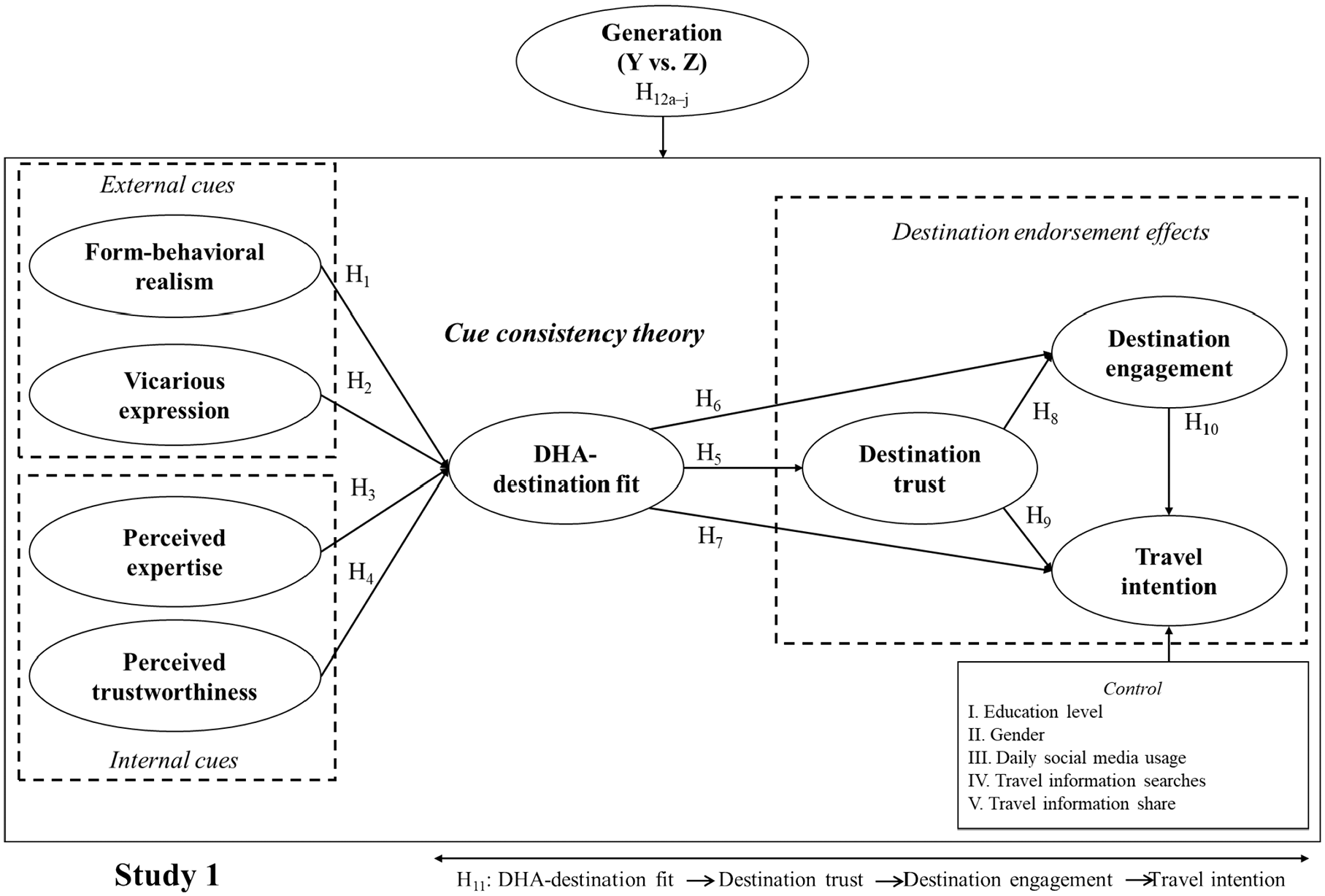
Antecedents and consequences of DHA-destination fit.
Method
To explore intergenerational differences (Gen Y and Gen Z) in perception and behavior toward DHA-endorsed cultural heritage destinations, this research adopts a sequential explanatory mixed-methods design—a research method that involves collecting and analyzing quantitative data, followed by qualitative data, to help explain, or elaborate on the quantitative results (Creswell et al., 2006) in line with the post-positivism paradigm (Lim, 2023). Studies 1 and 2 represent our quantitative and qualitative studies, respectively. Study 1 employs partial least squares path modeling (PLSPM) to analyze the relationships between DHA’s external and internal cues, DHA-destination fit, destination trust, destination engagement, and travel intention, with multi-group analysis (MGA) examining intergenerational differences. Study 2 engages in follow-up interviews with participants from Study 1 to explore the reasons behind these differences. This qualitative phase enhances the understanding of DHA’s fit with the destination and its endorsement effects (Supplemental Figure A1 Panel A and B). The sequential mixed-methods design of this research is visually presented in Figure 2.
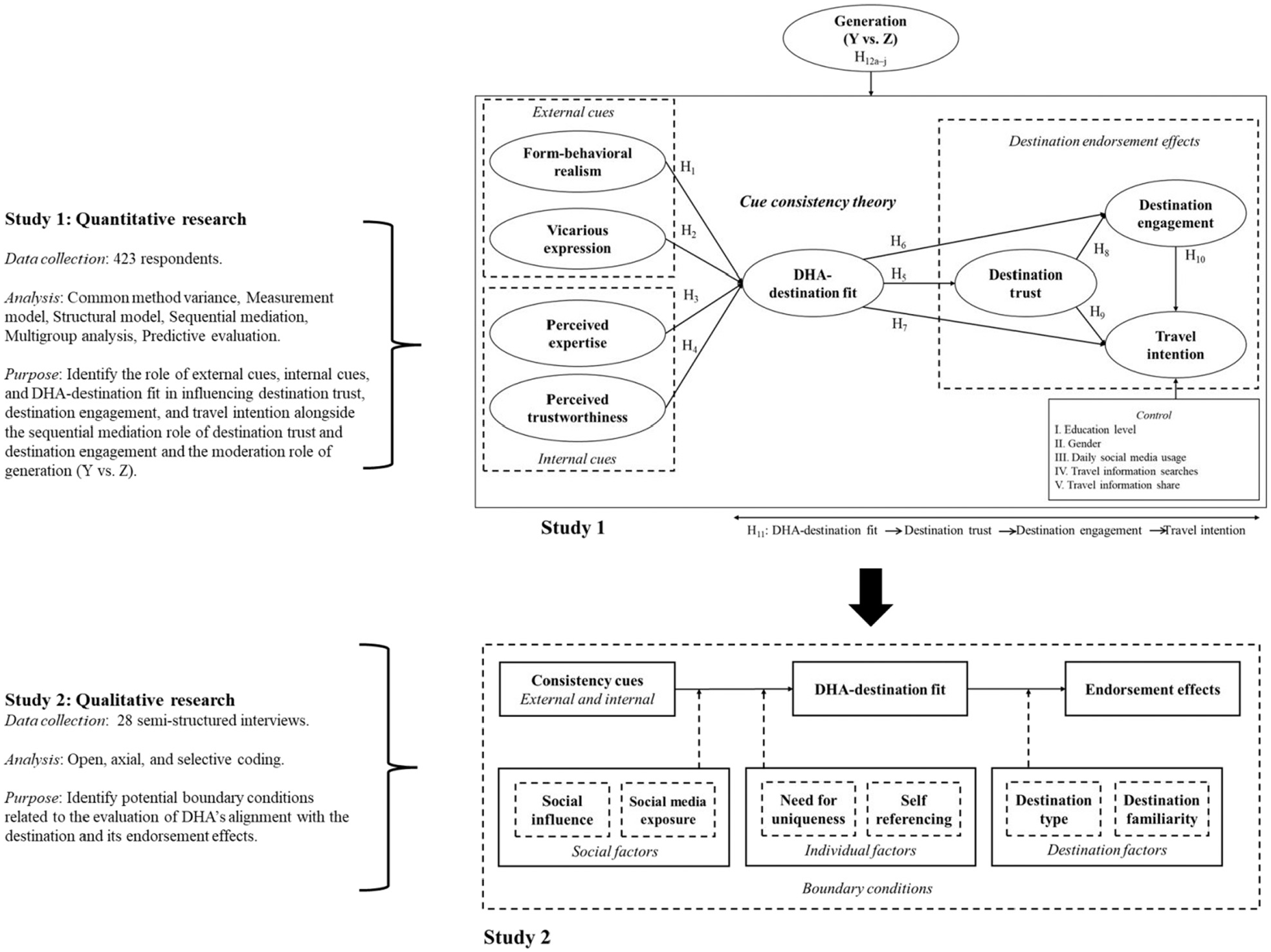
Research model with explanatory sequential mixed-methods design.
Study 1. Quantitative study
Instrumentation
A questionnaire was developed to gather data on demographic factors and other key research variables, utilizing a 7-point Likert scale for responses, where higher values indicate stronger agreement (Supplemental Table A1). The instrumentation for form-behavioral realism was adapted from Miao et al. (2022) and vicarious expression from Y. Chen et al. (2019). DHA-destination fit used adaptations from Xu (Rinka) and Pratt (2018) while perceived expertise and trustworthiness were measured using items adapted from Ohanian (1990). Destination trust was assessed through items adapted from X. Chen et al. (2022) while destination engagement and travel intention were measured using scales adapted from Rather et al. (2019), respectively.
Pretest and Pilot Study
The questionnaire underwent a pretest conducted by a panel of experts to establish content validity (Lim, 2024). Given the survey’s target audience in China, translation accuracy was ensured through the back-translation method, employing Chinese-English bilingual assistants (Brislin, 1970). Subsequently, a pilot study was conducted with 50 respondents from Gen Y and Gen Z who have prior experience watching DHA’s short travel videos to establish face validity (Lim, 2024). Feedback from the pre-test led to refinements in some items to enhance clarity. This process was repeated after the pilot study, ensuring all survey items were clearly understood before moving forward to the main study (Hulland et al., 2018).
Main Study
To examine the proposed hypotheses, our main study targeted participants from China, leveraging the significant trend where a vast portion of the population acquires travel information from short videos. In recent years, short videos on social media platforms have become a crucial source of travel inspiration within China. The popularity of these platforms is evident, with the user base exceeding 1 billion as of December 2024, accounting for 93.8% of all Chinese internet users (Statista, 2025b). This extensive reach makes China an ideal context for studying the impact of DHAs on travel behavior.
Our study focused on Gen Y (born between 1982 and 1994) and Gen Z (born between 1995 and 2010) as they represent demographics with unique digital behaviors and preferences (Ameen et al., 2024). Gen Y, often regarded as digital natives, grew up with the internet, and are highly adept in using technology, frequently engaging in e-commerce and valuing experiences over material goods (Manzoor et al., 2023). Gen Z, even more proficient in information technology (IT) and online activities, shows a strong inclination to form parasocial relationships with virtual influencers (M. Choi et al., 2024; Sands et al., 2022). Both generations’ increasing interest in cultural heritage destinations, combined with the integration of advanced digital technologies like AI and augmented reality in tourism, presents a rich ground for investigating how DHAs can effectively promote these destinations to a digitally engaged audience (The Star, 2023).
Given the identified demographic and technological trends, we employed purposive sampling to select participants for an online survey distributed through popular Chinese social media platforms such as TikTok, WeChat, and Xiaohongshu (Little Red Book). Our selection criteria required participants to be either Gen Y or Gen Z individuals who had watched DHA’s short travel videos within the last 3 months. To ensure eligibility, two screening questions were presented at the survey’s outset to confirm the participant’s generational category and their recent viewership of DHA content. Participants were then required to watch specific DHA travel short videos (e.g., Su Xiaomei’s videos) provided at the beginning of the survey (Supplemental Figure A2 for both Panels A and B). Those who did not meet these criteria or did not complete the video viewing were excluded from further participation.
To mitigate common method bias (CMB), we implemented several procedural safeguards: the survey included detailed contextual descriptions on the cover page, offered clear instructions to clarify any ambiguous terms, and assured respondents of their anonymity to reduce potential discomfort or apprehension (MacKenzie & Podsakoff, 2012). This focus on respondents with prior exposure to travel-related DHA videos was intended to enhance the validity of their responses.
The data collection period spanned from January to April 2024. Initially, 590 individuals met the criteria and agreed to participate. They were made aware of the anonymous and voluntary nature of the survey and informed that they could withdraw at any time without consequences. After removing incomplete and straight-line responses, we retained a total of 423 valid responses for analysis. The demographic breakdown revealed that a majority of the respondents were female (62.65%), from Gen Y (60.05%), held a bachelor’s degree (75.65%), spent 1 to 3 hr daily on social media (53.66%), occasionally searched for travel information on social media (42.32%), and occasionally shared travel information (35.70%; Supplemental Table A2).
Analysis
The initial analysis was conducted using SPSS, which facilitated data cleaning, profile evaluation, and testing of CMB. Subsequently, we employed PLSPM using SmartPLS v.4 to examine the proposed relationships (Becker et al., 2023). PLSPM is favored due to its non-parametric nature, allowing for the analysis of complex relationships between latent variables without the restrictions of normal distribution requirements (Hair et al., 2022). This method is also apt for handling higher-order constructs, mediation, and moderation (Becker et al., 2023), making it suitable for this study’s needs. In addition, PLSPM is chosen for its causal-predictive capabilities, which enable the explanation of causal relationships and enhance the predictive accuracy of the model. This approach not only supports the theoretical underpinnings of our hypotheses but also yields insights with significant predictive value and practical relevance for industry practitioners (P. N. Sharma et al., 2024; Shmueli et al., 2019).
Results
Common Method Bias
To assess common method bias (CMB), we employed two statistical methods to examine the validity of our results. Firstly, Harman’s single-factor test was conducted, which revealed that the variance explained by the first factor accounted for only 23.678%, significantly below the 50% threshold recommended by MacKenzie and Podsakoff (2012). Secondly, a full collinearity test was performed (Supplemental Table A3), where variance inflation factor (VIF) values ranged from 1.173 to 1.815, all well below the threshold of 3.33 suggested by Kock (2015). These findings collectively confirm that CMB is not a concern, reinforcing the robustness of the study.
Measurement Model
In evaluating the measurement model, the study’s constructs were assessed for convergent and discriminant validity, as well as reliability, across all three dataset scenarios (i.e., full dataset, Gen Y dataset, and Gen Z dataset). Based on Supplemental Table A3, all item loadings surpassed the benchmark of 0.708 and average variance extracted (AVE) values exceeded the threshold of 0.50 (Hair et al., 2022), indicating convergent validity across the datasets. The heterotrait-monotrait (HTMT) ratio of correlations was below the critical value of 0.85 (Hair et al., 2022), establishing discriminant validity across the datasets (Supplemental Table A4). Cronbach’s alpha (α) and composite reliability (rho_c) values were above 0.70 (Hair et al., 2022), reflecting good reliability across the datasets (Supplemental Table A3).
A disjoint two-stage approach evaluated two higher-order constructs (HOCs): form-behavioral realism and destination engagement (Becker et al., 2023). Redundancy analysis showed that the global single-item measures of form-behavioral realism and destination engagement had path coefficients above 0.70 across the datasets, suggesting that the lower-order constructs (LOCs) explained over 50% of the variance in each higher-order criterion construct (Supplemental Table A5). The VIF values for all LOCs remained below the threshold of 3.33, indicating that collinearity was not a concern across the datasets (Hair et al., 2022). The statistical significance of all LOCs was confirmed, with weight values ranging from 2.457 to 10.909, validating that each HOC construct was accurately represented by its LOCs across the datasets.
Measurement Invariance
Before performing a multigroup analysis, an invariant test using the measurement invariance of composite models (MICOM) assessment method was conducted to determine whether the two generational groups (Gen Y and Gen Z) interpreted the measurements consistently (Henseler et al., 2016). Configural invariance was established (Supplemental Tables A3–A5) since the research models’ setups and model estimations (PLS algorithm) were similar across both generations. Next, a compositional invariance test was performed using a permutation test. The results showed that the original correlations (c) were equal to or greater than the 5% quantile in all six constructs, thereby confirming compositional invariance (Supplemental Table A6). Subsequently, full measurement invariance was examined by assessing the difference in composite mean values and the logarithm of variance ratios. The majority of the equality of mean values and variances across the datasets did not show a significant difference (Supplemental Table A6), preventing the establishment of full measurement invariance. Consequently, partial measurement invariance was achieved, allowing for the analysis and comparison of intergenerational differences (Gen Y and Gen Z) that moderate the proposed research model.
Structural Model
The assessment of the structural model commenced with an examination of the collinearity among predictors to ensure that multicollinearity would not bias the results. The VIF values for all paths ranged from 1.000 to 2.245 (Table 2), which fall well below the commonly accepted threshold of 3.33 (Hair et al., 2022), confirming that collinearity does not pose a concern across the dataset.
Assessment of the Structural Model.
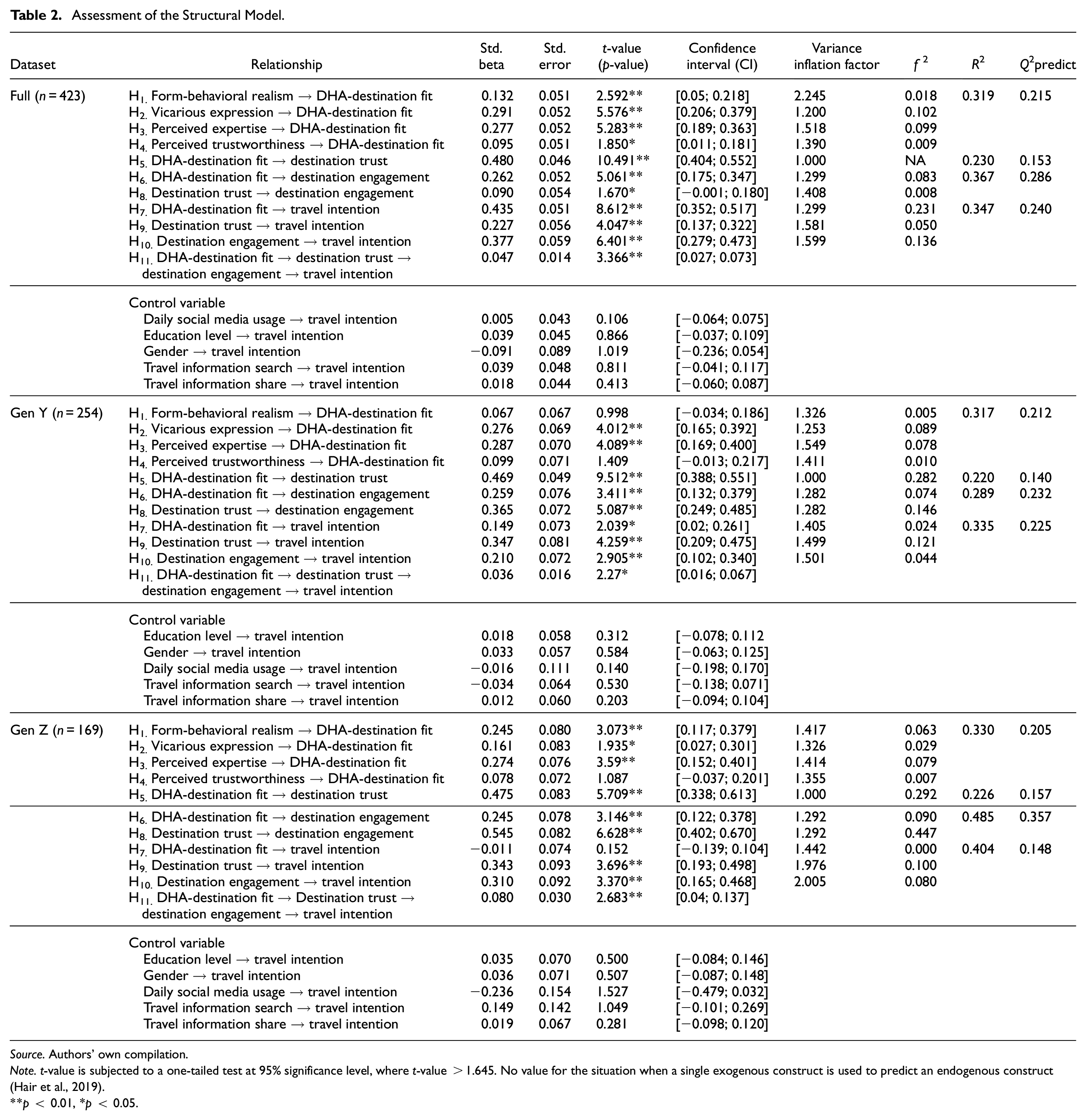
Source. Authors’ own compilation.
Note. t-value is subjected to a one-tailed test at 95% significance level, where t-value >1.645. No value for the situation when a single exogenous construct is used to predict an endogenous construct (Hair et al., 2019).
p < 0.01, *p < 0.05.
The significance of the relationships between the constructs was evaluated using a bootstrapping technique (Becker et al., 2023; Table 2). For the full dataset, two external cues, namely form-behavioral realism (β = 0.132, p < 0.01) and vicarious expression (β = 0.291, p < 0.01), significantly influenced DHA-destination fit, thus supporting H1 and H2. Two internal cues, perceived expertise (β = 0.277, p < 0.01) and perceived trustworthiness (β = 0.095, p < 0.05), also showed positive relationships with DHA-destination fit, thereby supporting H3, and H4. In the Gen Y dataset, H2 and H3 were supported, except for the insignificant effects of both form-behavioral realism (H1: β = 0.067, p > 0.05), and perceived trustworthiness (H4: β = 0.099, p > 0.05) on DHA-destination fit. In contrast, the Gen Z dataset supported hypotheses for H1, H2, and H3, with only the relationship between perceived trustworthiness and DHA-destination fit (H4: β = 0.078, p > 0.05) being insignificant.
DHA-destination fit was positively linked with destination trust (β = 0.480, p < 0.01), destination engagement (β = 0.262, p < 0.01), and travel intention (β = 0.090, p < 0.05) for the full dataset, thus supporting H5, H6, and H7. The Gen Y dataset similarly supported these hypotheses, whereas the Gen Z dataset did not support H7, as the relationship between DHA-destination fit, and travel intention was insignificant (β = − 0.01, p > 0.05).
Destination trust had a positive influence on destination engagement and travel intention across the dataset (p < 0.05), thus supporting H8 and H9. Similarly, destination engagement was positively related to travel intention across the dataset (p < 0.01), thus supporting H10. Whereas, destination trust and engagement sequentially mediated the relationship between DHA-destination fit and travel intention (Full dataset: β = 0.047, p < 0.01; Gen Y dataset: β = 0.036, p < 0.05; Gen Z: β = 0.080, p <0 .01), thus supporting H11 across the dataset. These relationships remained robust after controlling for age, education level, gender, daily social media usage, and travel information search and share, which were found to be not significant across the dataset, thus further supporting the findings (Table 2).
The R2 results were similar across the datasets, with DHA-destination fit ranging from 31.7% to 33% (H1–H4), destination trust ranging from 22% to 23% (H5), destination engagement ranging from 28.9% to 48.5% (H6 and H8), and travel intention ranged from 33.5% to 40.4% (H7 and H9) across the dataset. The effect size (f2) indicated that only H8 for the Gen Z dataset had a large effect size (f2≥0.35). The full dataset’s H7 and both the Gen Y and Gen Z datasets’ H5 exhibited a medium effect size (f2≥0.15) while the others had a small (f2≥0.02) but meaningful effect across the dataset (Hair et al., 2022).
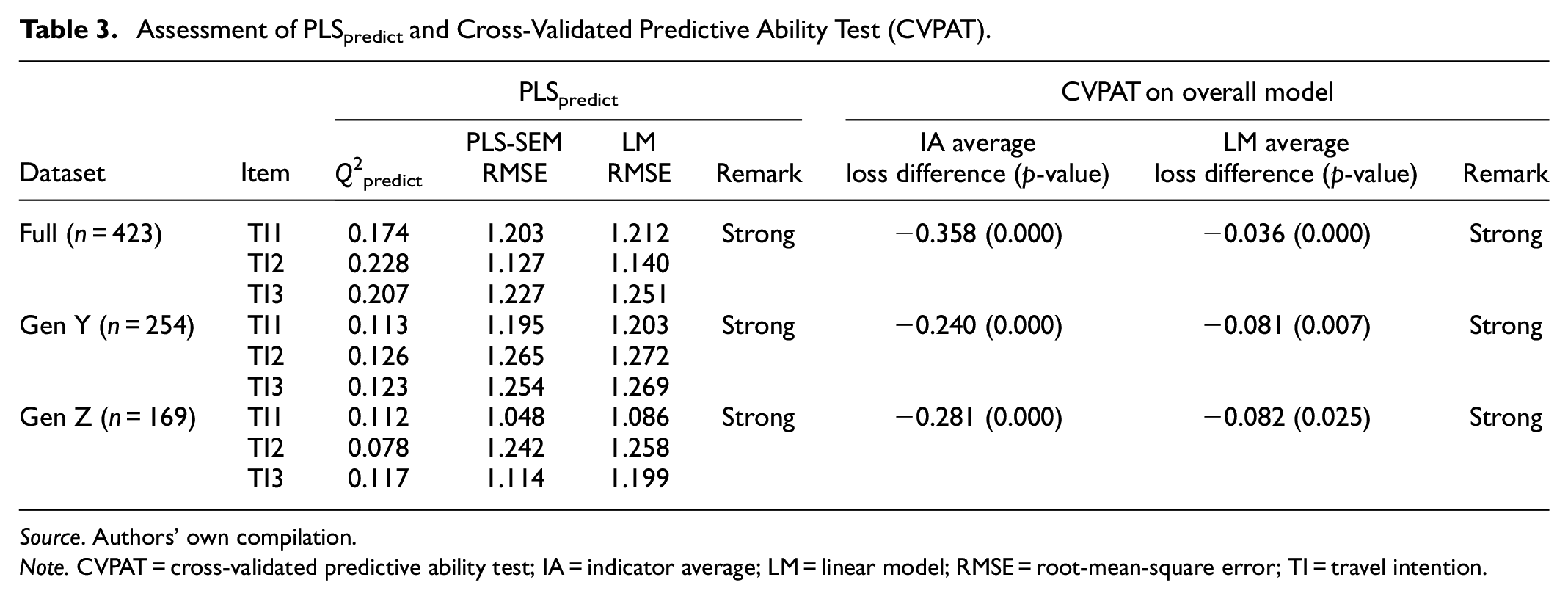
Predictive relevance was initially evaluated using the blindfolding procedure, which confirmed its efficacy (Shmueli et al., 2019). The Q2predict values for all endogenous constructs were greater than 0 across the dataset (Table 2), demonstrating the model’s ability to predict the data it was designed to assess. To further substantiate the model’s predictive capabilities, we utilized PLSpredict (Shmueli et al., 2019), a technique that extends beyond traditional evaluation methods by specifically focusing on the model’s prediction accuracy. In addition, we implemented the cross-validated predictive ability test (CVPAT), which offers a rigorous inferential test assessing the predictive performance of all endogenous items and constructs concurrently (P. N. Sharma et al., 2023). The results from PLSpredict (Q2predict) values across the dataset indicated strong predictive relevance (Table 3). Moreover, the model demonstrated significantly superior performance (lower average loss) compared to the indicator average (IA) prediction benchmark and the linear model (LM) prediction benchmark for the overall model, with these differences being statistically significant at the 0.05 level. These comprehensive evaluations affirm that the proposed model not only effectively predicts travel intentions to the endorsed destination but also excels in its predictive accuracy across the datasets, thereby confirming its strong predictive validity.
Assessment of PLSpredict and Cross-Validated Predictive Ability Test (CVPAT).
Source. Authors’ own compilation.
Note. CVPAT = cross-validated predictive ability test; IA = indicator average; LM = linear model; RMSE = root-mean-square error; TI = travel intention.
Multigroup Analysis
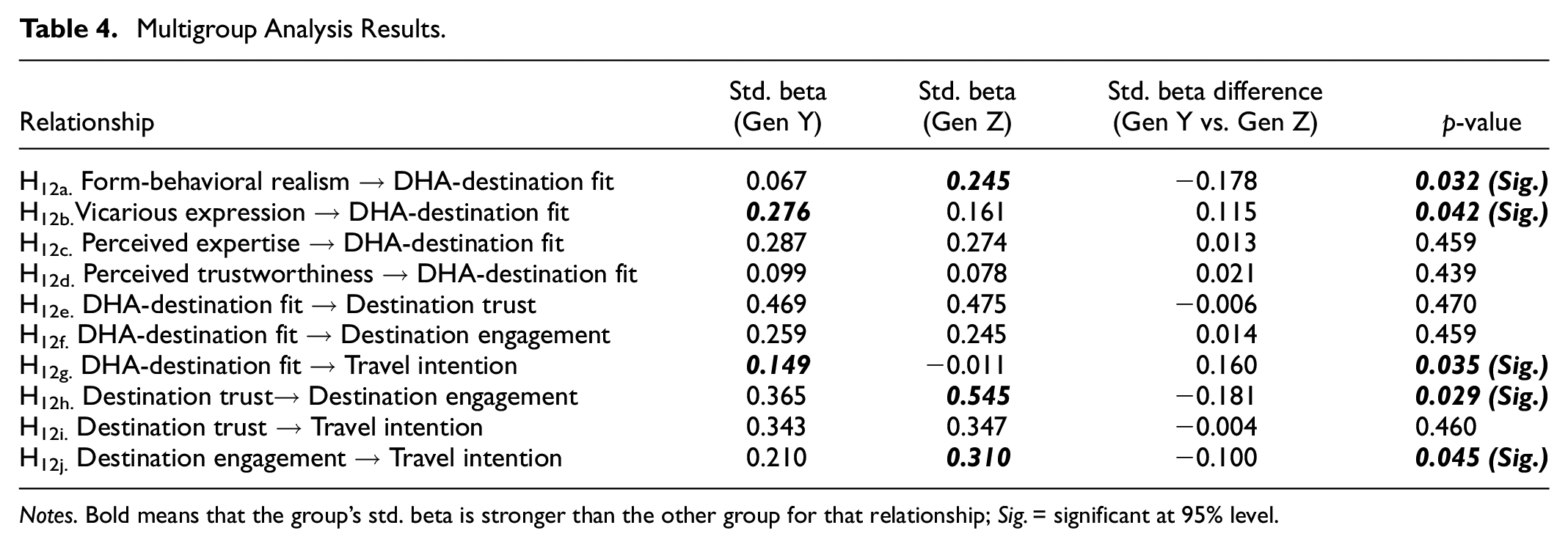
The MGA findings from the permutation test (Henseler et al., 2016) are presented in Table 4. The permutation test results indicate significant intergenerational differences between Gen Y and Gen Z (p < 0.05) in the following relationships: form-behavioral realism and DHA-destination fit (H12a), vicarious expression and DHA-destination fit (H12b), DHA-destination fit and travel intention (H12g), destination trust and destination engagement (H12h), and destination engagement and travel intention (H12j). Specifically, Gen Z (β = 0.245, p < 0.05) is more influenced by form-behavioral realism compared to Gen Y (β = 0.067, p > 0.05). Conversely, Gen Y (β = 0.276, p < 0.01) connects more with vicarious experiences than Gen Z (β = 0.161, p < 0.05). Both generations exhibit similar influences from perceived expertise and trustworthiness on DHA-destination fit, with no significant differences (p > 0.05). Regarding travel intention, DHA-destination fit positively influences Gen Y (β = 0.149, p < 0.05) but shows no significant effect for Gen Z (β = −0.011, p > 0.05). Trust plays a more crucial role for Gen Z (β = 0.545, p < 0.01) in driving destination engagement compared to Gen Y (β = 0.365, p < 0.01). Destination engagement significantly influences Gen Z’s travel intentions (β = 0.310, p < 0.01) more than Gen Y’s (β = 0.210, p < 0.01). Overall, Gen Z values DHAs’ form-behavioral realism and destination engagement while Gen Y is driven by vicarious expression and the fit between DHAs and destinations in their travel decisions.
Multigroup Analysis Results.
Notes. Bold means that the group’s std. beta is stronger than the other group for that relationship; Sig. = significant at 95% level
Study 2. Qualitative Study
Study 1 identified significant differences between Gen Y and Gen Z in their perceptions of DHA-destination fit and DHA’s endorsement effects. However, the statistical results alone may not fully capture the underlying reasons behind these differences. Study 2 endeavors to uncover potential hidden factors that drive these distinct behaviors. Although both Gen Y and Gen Z are digital natives, they may respond differently to DHAs due to varying levels of exposure to technology, cultural contexts, or life stages (Casalegno et al., 2022; J. Liu et al., 2023b; Llopis-Amorós et al., 2019). Therefore, this study provides insights into how each generation uniquely interacts with DHA-endorsed destinations.
Methods
The sample for Study 2 was selected using purposive sampling, following similar criteria to those used in Study 1. To reduce memory bias, participants were first asked if they recalled the previous survey and all responded “Yes” (pre-question). After obtaining informed consent, online in-depth interviews were conducted, reaching data saturation—that is, no new information—by the 28th interview. Supplemental Table A7 presents the respondent profile. All respondents were assured of their anonymity.
Each interview lasted between 30 and 45 min, was transcribed, and checked for accuracy. An interview guide with broad, open-ended questions on social media usage, opinions on DHA-destination fit, and responses to DHA-endorsed destinations was used. These questions were derived from the theoretical framework and literature review, serving as a qualitative codebook for this study (Supplemental Table A8). This approach seeks to uncover deeper meanings within the model in Figure 1. The qualitative component adds an exploratory dimension, expanding the initial findings from the explanatory sequential mixed-method design (Creswell & Sinley, 2017).
The study followed a thematic approach to record, transcribe, and analyze the interview data verbatim (McCrudden & McTigue, 2019; D. Wang et al., 2023). The interview transcripts were read and labels were assigned to Gen Y and Gen Z quotes in each transcript (open coding). These codes were then arranged into codes (e.g., body language), exemplifying axial coding and subsequently organized into categories (e.g., form-behavioral realism), reflecting selective coding. The researchers collaboratively identified and refined the themes, cross-referencing them with existing literature ( D.Wang et al., 2023). Trained researchers rechecked the data to confirm the findings.
Findings
Among the 28 participants, there were 14 Gen Y and 14 Gen Z individuals, with a majority of female participants (n = 18). They used various social media platforms, including Bilibili, Little Red Book, TikTok, WeChat, and Weibo, with most respondents (12/28) preferring Little Red Book. A total of 67 codes were defined across 13 categories. Interviews complemented and confirmed the results from Study 1. Study 2 provided explanatory insights related to the relationship between (i) consistency cues and DHA-destination fit, and (ii) DHA-destination fit and endorsement effects (Figure 2).
Consistency Cues and DHA-Destination Fit
The interview transcripts consistently highlighted that the consistency cues, both external and internal, of DHAs are predictive of DHA-destination fit. Key elements such as form-behavioral realism, vicarious expression, perceived expertise, and perceived trustworthiness emerged from participants’ statements, yielding 26 distinct codes across these categories (Supplemental Table A9).
Regarding internal cues, both generations generally value the same aspects, though subtle differences emerge upon closer inspection. In terms of perceived expertise, Gen Y and Gen Z produced identical label counts for convincingness (3) and knowledgeability (5). However, Gen Z demonstrated a slightly higher emphasis on credibility (7 vs. 6), whereas Gen Y registered a higher negative emphasis on scripted behavior (5 vs. 2), suggesting that Gen Y may be more critical of scripted delivery in DHAs. In terms of perceived trustworthiness, Gen Z appears to assign greater importance to believability (5 vs. 3) and honesty (6 vs. 5) while both groups reported the same label counts for reliability and trustworthiness (four each). In addition, Gen Y noted a negative aspect, gimmick (4), which was not evident among Gen Z. These findings indicate that although both generations concur on the importance of internal cues, Gen Z tends to emphasize positive attributes such as believability, credibility, and honesty, whereas Gen Y is somewhat more sensitive to elements that might detract from authenticity, such as gimmicky or scripted behavior.
Regarding external cues, several differences emerged between Gen Y and Gen Z. In terms of form-behavioral realism, Gen Z’s label counts for facial expressions (6 vs. 5), humanlike features (8 vs. 7), and lifelike features (4 vs. 3) are higher. Notably, the attribute natural was exclusively identified by Gen Z (3 vs. 0), suggesting that Gen Z values interactions that feel more organic and less manufactured. Moreover, Gen Z also identified cues related to body language (2), which were absent among Gen Y. In contrast, Gen Y appears more attuned to potential negative cues, as they noted indicators of awkward movement (1) and creepiness (1), which were absent in Gen Z. In terms of vicarious expression, further differences are evident. Gen Z provided higher label counts for emotional connection (6 vs. 5) and visualization of experiences (6 vs. 5) compared to Gen Y, indicating that Gen Z places greater emphasis on the affective and sensory dimensions of the interaction. In addition, Gen Z’s label counts for relatability was slightly higher (3 vs. 2) and they uniquely identified the immersive aspect (2), whereas Gen Y did not indicate any labels for immersive experience. Conversely, storytelling received a marginally higher label count from Gen Y (8 vs. 7) and both groups agreed on the importance of understanding the message (three each). These observations suggest that Gen Z overall values more detailed and realistic interactions—both in terms of visual authenticity and experiential conveyance—while Gen Y tends to be more sensitive to negative external cues that might detract from authenticity.
In reconciling the findings between internal and external cues, it is evident that while both generations recognize similar internal factors, with Gen Z leaning slightly toward positive evaluations and Gen Y being more critical of contrived presentations, their perceptions of external cues diverge more notably. Noteworthily, Gen Z appears to favor a richer, more detailed external presentation—highlighting aspects such as body language, naturalness, and immersive experience—thus emphasizing visual and expressive authenticity. Meanwhile, Gen Y, although valuing many of the same external attributes, shows a heightened sensitivity to potentially off-putting characteristics like awkwardness or creepiness. This complementary pattern indicates that the two generational groups may arrive at DHA-destination fit through different perceptual routes: Gen Z by prioritizing refined external expressiveness and positive internal signals while Gen Y by weighing both positive cues and the avoidance of negative signals.
To further explore generational differences in consistency cues, 22 codes were identified across two social (social influence and social media exposure) and two individual (need for uniqueness and self-referencing) factors. These factors serve as potential boundary conditions that may strengthen or weaken the relationships between consistency cues and DHA-destination fit.
Social influence refers to how individuals adjust their thoughts, attitudes, and behaviors based on interactions with others (Akhtar et al., 2024). In our interviews, social influence positively moderated travelers’ perceptions of DHA-destination fit. For instance, R8 noted, “When I saw Su Xiaomei (DHA) in Song dynasty garments that matched Meishan, it felt authentic. The excitement in the reviews and comments made me more inclined to visit.” Peer opinions sometimes led respondents to question their initial perceptions (R6, R23). As R6 explained, “If my friends criticize the avatar as unrealistic, it makes me doubt it…”
Respondents exhibit distinct patterns in how social media exposure moderates their perceptions of DHAs and their associated destination fit. Some respondents who are highly engaged with platforms like Bilibili, Little Red Book, and QQ are significantly influenced by digital communities and online influencers (R3, R5, R8). For instance, one interviewee (R5) remarked, “I saw a digital human visit Shanghai, and it left a lasting impression. I want to take a photo at the same spot to share on my WeChat friend circle.” This demonstrates their strong trust in influencer recommendations, making them more receptive to online trends and enhancing the perceived fit between DHAs and the destinations they endorse. In contrast, respondents with lower engagement on online platforms placed greater importance on direct recommendations from friends, family, and colleagues. Interviewee R3 noted, “Although her (DHA) video is quite interesting, I still prefer to seek recommendations from friends who have visited the place before planning my trip.” They prioritize authenticity and tend to rely on trusted sources, suggesting that reduced social media exposure influences how they perceive DHAs’ external and internal cues. Consequently, higher social media exposure may amplify DHAs’ impact on destination fit while lower exposure leads individuals to depend more on personal networks, highlighting the role of peer validation in their decision-making process.
Need for uniqueness plays a key role in how individuals connect with DHA-destination fit, reflecting the desire to stand out (Meng et al., 2025). In our interviews, respondents expressed a stronger connection to destinations when DHAs highlighted unique aspects. As R1 shared, “I prefer destinations that introduce something unique. When the DHA focused on niche elements of the culture, it resonated with me and made the experience feel more special and personal.” Some respondents felt DHAs are too generalized to align with their individual preferences. As R11 noted, “Even if the avatar looks real, it doesn’t meet my unique needs as a traveler.” Similarly, R13 added, “When the recommendations feel generic, I disconnect … it just seems like an automated ad.”
Self-referencing, the process of relating information to one’s own needs and experiences, enhances how individuals interpret, and connect with content (Debevec & Romeo, 1992). This personal lens allows participants to evaluate a destination by aligning the DHA’s description with their values, strengthening the perception of fit (R3, R4, R5). As R3 explained, “I don’t care what others think. When the DHA showed me the history of Sansu Temple, I focused on how it resonated with my memory. The references to values that matched mine made the destination feel personally relevant to me.”
DHA-Destination Fit and Endorsement Effects
The interview transcripts confirmed the destination endorsement effects of DHA-destination fit—namely, destination trust, destination engagement, and travel intention—with a total of 12 distinct codes identified across these categories (Supplemental Table A9). In terms of destination trust, Gen Z provided four distinct codes, whereas Gen Y provided only two. Specifically, Gen Y did not report any codes for body language or gestures but assigned 5 for facial expression and 7 for human-like attributes while Gen Z reported 2 for body language, 6 for facial expression, 1 for gestures, and 8 for human-like attributes. In terms of destination engagement, both Gen Y and Gen Z were assigned the same 4 codes, with comparable label counts for each (e.g., emotional connection: 5 vs. 6; storytelling: 8 vs. 7; understanding of message: 3 vs. 3; visualization of experiences: 5 vs. 6). In terms of travel intention, Gen Y provided 4 labels for conditional intention, whereas Gen Z did not report any conditional intention. Instead, Gen Z contributed 3 labels for curiosity-driven intention and 5 for novelty-seeking intention, with both groups assigning similar label counts for visit intention (9 vs. 8). Overall, while both generations converge on the importance of destination engagement, they diverge on other endorsement effects. Gen Z appears to value destination trust and positive travel intention cues (curiosity and novelty) more than Gen Y, who seem more cautious—evidenced by their fewer codes for trust and the presence of conditional travel intentions.
Two destination-related potential boundary conditions—destination type and destination familiarity—were identified as influencing the relationship between DHA-destination fit and endorsement effects. These factors elicited strong participant reactions and played a significant role in shaping this relationship.
Respondents highlighted that the types of destinations being endorsed significantly impact their decision-making process (R16, R18). DHAs have a stronger influence when promoting destinations that offer adventurous, cultural, or unique experiences. In contrast, for more commercial or generic tourist spots, the impact of the DHA is weaker. Consistent with Meng et al. (2025), destinations with cultural richness enhance the perceived fit between the DHA and the destination, increasing respondents’ travel intentions. Conversely, generic destinations tend to diminish this effect. As R16 explained, “DHAs are more effective when they promote places with cultural depth or unique stories. If it’s just a beach resort, it feels like every place is the same, and the DHA doesn’t add much. But for a historical city or cultural site, where the DHA shows real knowledge, I’m more inclined to consider visiting.”
Destination familiarity, based on travelers’ prior knowledge, influences their reliance on DHAs for travel decisions. When unfamiliar with a destination, travelers depend more on DHA portrayals to shape their perceptions. A strong DHA-destination fit, showcasing unique aspects, enhances attraction. As R19 explained, “For places I’m unfamiliar with, I rely more on what the DHA says. But in places I know, like Meishan, I was born here, so my own experience overrides its influence.” Conversely, high familiarity leads to pre-formed opinions and critical evaluation of DHAs, weakening their impact. Both destination type (popular vs. niche) and familiarity moderate DHA influence, with lesser-known destinations benefiting more. R20 stated, “If I’ve visited before, I can tell if the DHA is accurate. For new places, I’m more open to its suggestions.” R3 added, “For off-the-beaten-path spots, I trust the DHA more. For popular sites like Beijing’s Palace Museum, it doesn’t add much.” This highlights DHAs’ greater effectiveness in promoting unfamiliar, unique destinations.
Discussion
Applying cue consistency theory as the theoretical framework, this research examines DHA’s external and internal cues that align with the destination and its impacts on destination trust, destination engagement, and travel intention. The results validated 16 (H1–H11, H12a,b,g,h,j) of our 21 proposed hypotheses and revealed six potential boundary conditions (social influence, social media exposure, need for uniqueness, self-referencing, destination type, and destination familiarity) that influence DHA-destination fit and destination endorsement effects, which, in turn, provide important implications for DHA destination endorsement.
On Factors Influencing DHA-Destination Fit
The exploration of external and internal consistency cues of DHA-destination fit revealed that both types of cues are crucial in influencing viewer perceptions. Specifically, external cues like form-behavioral realism and vicarious expression, as well as internal cues such as perceived expertise and trustworthiness, emerged as significant predictors of DHA-destination fit, supporting H1 to H4. Among these, vicarious expression exerted the strongest effect on DHA-destination fit, reinforcing findings from prior research that DHAs’ vivid narratives of destinations in short videos provide viewers with engaging vicarious experiences, thereby enhancing the realism and attractiveness of the endorsements (Marder et al., 2019). Additionally, high form-behavioral realism was also found to significantly influence DHA-destination fit, aligning with research suggesting that high levels of form and behavioral realism enhance perceptions of authenticity and relatability, thus strengthening the connection between DHAs and the endorsed destinations (Dong et al., 2023; M. Kim & Baek, 2024; J. Li et al., 2023). Furthermore, DHAs’ perceived expertise and trustworthiness were important in fostering viewer confidence in the authenticity of the destination and the validity of the recommendations provided (Alboqami, 2023; Aw et al., 2023; Y. Lee & Koo, 2015). Consequently, viewers who see DHAs as trustworthy experts are more likely to engage deeply and perceive a strong fit with the destination.
On Endorsement Effects of DHA-Destination Fit
The investigation into the endorsement effects of DHAs revealed that DHA-destination fit significantly impacts destination trust, destination engagement, and travel intention, supporting H5, H6, and H7. These findings align with previous research, which suggests that high congruence between an endorser and a destination fosters positive evaluations from travelers, leading to increased trust and favorable perceptions of the destination (Knoll & Matthes, 2017; Zhang et al., 2020). In addition, the fit between DHAs and destinations enhances destination engagement by boosting emotional arousal and enriching the cognitive processing of the information provided by DHAs (Xie-Carson, Benckendorff, et al., 2023). This enhancement of emotional and cognitive engagement is critical in creating a compelling narrative within short video narratives, which, in turn, can significantly influence viewers’ intentions to visit the destination (D. Y. Kim & Kim, 2021). This cascade of effects underscores the potent role of DHAs in shaping travel behavior and highlights the importance of strategic alignment in digital marketing efforts within tourism.
Next, the findings that destination trust positively influences both destination engagement and travel intention (supporting H8 and H9) resonate with existing literature that underscores the importance of trust in enhancing destination impression and brand love (Manthiou et al., 2018). Such trust fosters enthusiasm and active engagement with tourism destinations, further emphasizing its pivotal role in driving travel behavior (Bryce et al., 2015). In addition, destination trust significantly influences travel intention, as individuals are more inclined to visit a destination when they believe it will provide a fulfilling experience (Najar et al., 2024). This illustrates the critical role of trust in shaping travel decision, confirming it as a key determinant in tourism. Moreover, we observe that destination engagement positively affects travel intention (H10), corroborating studies like those by Cheng et al. (2020), who suggest that engagement, particularly through watching vlogs featuring destinations, significantly increases the likelihood of visiting those places. This finding underscores the value of engaging content in motivating visitors, reinforcing the importance of immersive digital marketing strategies.
This research also ventured into the sequential mediation effects of destination trust and engagement on the relationship between DHA-destination fit and travel intention (H11). This aspect of the present research aligns with prior studies that underscore the critical roles of both destination trust (Ameen et al., 2024) and engagement (Hollebeek & Macky, 2019; Rather et al., 2019), albeit individually, in influencing travel decision. Noteworthily, our findings reveal a cascading effect: DHA-destination fit builds trust in cultural heritage destinations, which increases engagement and, in turn, drives travel intentions. This sequential mediation pathway highlights the interplay between trust and engagement in enhancing DHA endorsements, offering novel insights into optimizing digital strategies for promoting cultural heritage tourism.
On Intergenerational Differences
This research utilized MGA to explore intergenerational differences between Gen Y and Gen Z (H12a–H12j). The findings indicate notable differences in how Gen Y and Gen Z perceive DHA-endorsed cultural heritage destinations, contributing to the existing literature on tourism behavior in destination endorsement. Noteworthily, Gen Z’s heightened preference for form-behavioral realism aligns with studies emphasizing the significance of lifelike digital representations in attracting younger audiences (Miao et al., 2022). This generation’s preference for immersive and relatable experiences suggests a shift in engagement strategies, corroborating findings by B. Liu et al. (2023a) that link DHA’s realism to viewer engagement and emotional involvement. In contrast, Gen Y’s stronger connection to vicarious expression reflects their reliance on narratives and emotional connections, consistent with Y. Chen et al. (2019), who found that storytelling significantly influences travel decisions. Both generations exhibit similar views on perceived expertise and trustworthiness, suggesting that these attributes may not differ greatly in their influence on DHA-destination fit, contrary to Chaihanchanchai et al.’s (2024) assertion that these factors are critical in shaping individual perceptions. The significant impact of destination trust on engagement for Gen Z emphasizes the importance of community and influencer credibility, aligning with Akhtar et al. (2024), who noted that younger audiences increasingly seek validation from digital communities. This divergence highlights the need for tailored strategies to address each generation’s preferences in promoting cultural heritage tourism through DHAs.
On Social, Individual, and Destination Differences
To further explain intergenerational differences, we identified six boundary conditions from the in-depth interviews with participants: two social (social influence and social media exposure), two individual (need for uniqueness and self-referencing), and two destination-related (destination type and destination familiarity). These factors shed light on how DHA-destination fit is evaluated across different audiences, offering a more granular perspective than prior research has suggested.
Social factors such as social influence and social media exposure proved pivotal, corroborating Akhtar et al. (2024) and Fan et al. (2023). Gen Z with extensive engagement on social media platforms like Bilibili or Little Red Book tended to trust DHAs more, often emulating the digital experiences they encountered. High social media involvement reinforces both external and internal cues, such as form-behavioral realism and perceived trustworthiness, and can thus strengthen DHA-destination fit among these individuals. In contrast, many Gen Y participants indicated a preference for direct recommendations from personal networks, aligning with Chaihanchanchai et al. (2024) and Penttinen et al. (2023). This offline validation process suggests that if a DHA’s portrayal does not align with trusted social circles, perceived consistency between the DHA and the destination may erode. Consequently, Gen Z’s reliance on digital influencers and virtual communities tends to amplify the perceived fit between DHAs and destinations, whereas Gen Y’s skepticism, tempered by offline social circles, can diminish the consistency needed to reinforce DHA-destination fit.
Individual factors also shape how each generation interprets the cues that constitute DHA-destination fit. Echoing Meng et al. (2025), participants avoided generic or scripted portrayals that might undermine perceived authenticity and instead gravitated toward promotions featuring unique cultural dimensions, thus strengthening the alignment between internal (e.g., perceived expertise, trustworthiness) and external (e.g., form-behavioral realism, vicarious expression) consistency cues. Notably, Gen Y stressed that DHA content must connect with their previous real-world experiences, a stance underscoring the importance of self-referencing (Debevec & Romeo, 1992) in maintaining consistency between personal knowledge and DHA endorsements. Whereas, Gen Z participants placed a premium on distinctiveness, linking DHA narratives to their evolving digital personas and memory-based recognition of cultural heritage. This suggests that consistency cues for Gen Z hinge on immersive, visually engaging content that resonates with modern digital identities, whereas Gen Y expects DHA portrayals to be grounded in established knowledge, and personal relevance. Consequently, each generation’s emphasis on different consistency cues reveals distinct pathways for achieving a strong DHA-destination fit.
Destination factors further clarify how DHA-destination fit translates into endorsement effects, such as destination trust and engagement as well as travel intention. First, destination type moderates DHA influence, wherein culturally rich locations benefit from more detailed and authentic narratives (Meng et al., 2025). Findings indicate that when DHAs highlight the unique cultural or historical dimensions of such destinations, travelers are more inclined to trust the presented information and engage with the content—factors that, in turn, strengthen their travel intentions. Conversely, endorsing generic locations (e.g., standard beach resorts) diminishes the added value a DHA can bring, lowering trust and engagement and, by extension, reducing persuasive impact on travel intention. Second, destination familiarity shapes reliance on DHA portrayals. Individuals unfamiliar with a place heavily depend on DHA-driven cues, which amplify the perceived fit and can bolster both destination trust and engagement. However, travelers with prior knowledge critically scrutinize DHA content and may discount it if it conflicts with their pre-established views, undermining trust and thereby weakening subsequent engagement and travel intention. Notably, Gen Y’s preference for knowledge-based experiences and Gen Z’s enthusiasm for novel cultural impact and niche appeal both came to the fore, underscoring distinct generational routes to travel intention formation. These findings imply that to enhance endorsement effects, DHAs must carefully tailor their portrayals, acknowledging how destination type and familiarity critically moderate the path from perceived DHA-destination fit to trust, engagement, and eventually, travel intention.
Theoretical Implications
This research significantly contributes to the body of knowledge on DHAs’ destination endorsement, particularly in the context of cultural heritage destinations, by expanding, and leveraging the utility of cue consistency theory and cohort theory.
First and foremost, this research enriches cue consistency theory by investigating consistency cues within the mechanism of DHA-destination fit. We successfully validated both external cues, like form-behavioral realism and vicarious expression, and internal cues, such as perceived expertise and trustworthiness, as critical predictors for DHA-destination fit. While previous studies have highlighted the general importance of endorser-destination fit on endorsement effectiveness (X. Chen et al., 2022; Roy et al., 2021), this research provides a more in-depth understanding by identifying specific predictors that influence the fit between DHAs and the destinations they endorse. This exploration not only broadens the scope of cue consistency theory (De Roeck et al., 2016; Hsieh, 2023) but also tailors it to a digital and increasingly virtual context where DHAs play a pivotal role. In doing so, we provide a framework that allows for a more refined analysis of the dynamics at play in the endorsement of destinations by DHAs, thereby offering a richer theoretical grounding for understanding how digital endorsers influence travel behavior in the digital age.
Next, this research extends our understanding of DHA’s destination endorsement effects by validating destination trust and engagement as sequential mediators between DHA-destination fit and travel intention. While prior research has often centered on direct attitudes or engagement toward endorsers or destinations (Akhtar et al., 2024; Xu (Rinka) & Pratt, 2018), this research provides a more in-depth exploration into the cascading effects through which DHA-destination fit influences travel intention. Consequently, this study argues for the critical role of destination trust and engagement as serial mediators, emphasizing how initial perceptions of DHA-destination fit translate into travel intention via underlying psychological mechanisms. This sequential mediation perspective is essential, as even negative or nonsignificant direct relationships, as observed with Gen Z, can yield valuable insights when clarified by positive and significant indirect effects, highlighting distinct psychological pathways, such as trust and engagement, which effectively foster travel intention. This aspect is particularly significant for tourism marketers as it elucidates the practical effectiveness of DHAs not only in captivating viewers but also in compelling them, through intermediary psychological processes, to take actionable steps, such as planning visits to cultural heritage sites. This finer-grained approach extends beyond the conventional metrics of endorsement effectiveness, shedding light on the multilayered processes that underpin travel decision-making. Through the incorporation of destination trust and engagement as intermediary variables, this research presents a comprehensive framework that traces the journey from initial perceptions of fit to the visit intention of the destination. This perspective enriches the understanding of the dynamic roles DHAs play in tourism marketing, offering valuable insights into the mechanisms through which digital endorsements can effectively facilitate travel intention. Through the incorporation of cue consistency theory into the context of DHAs, this research further broadens the application of this well-established theory. Traditionally utilized to analyze human behaviors in communication contexts (De Roeck et al., 2016; Hsieh, 2023), cue consistency theory is adeptly adapted here to scrutinize how viewers perceive and interact with DHAs as endorsers of cultural heritage sites. This novel application enriches the body of knowledge by offering deeper insights into the unique dynamics between DHA-destination fit and its subsequent impact on viewers’ intentions to visit the endorsed destinations. This theoretical expansion not only bridges the gap between digital influence and real-world actions but also sets a precedent for future research in digital and destination marketing, especially in how virtual representations can effectively influence traveler behavior.
Last but not least, this study makes a distinctive contribution by applying cohort theory (Ryder, 1985) to DHA destination endorsements, revealing how generational boundary conditions shape travelers’ evaluative criteria and behavior. Although younger travelers are widely recognized as pivotal influencers in tourism decision-making (The Star, 2023), prior research has largely overlooked the subtle yet distinct ways in which Gen Y and Gen Z process digital endorsement cues. Our findings indicate that while DHA-destination fit positively influences Gen Y’s travel intentions, its effect is weaker, and even negative, albeit insignificantly, for Gen Z. For example, Gen Z’s strong emphasis on a lifelike, immersive avatar appearance underscores a growing expectation for high-fidelity virtual experiences (M. Choi et al., 2024; Fan et al., 2023). This suggests that any discrepancy between the perceived and actual realism of a DHA can undermine its persuasive power among digital natives. In contrast, Gen Y places greater weight on aspirational and emotional elements, consistent with Bravo et al. (2020), indicating that technology-driven authenticity alone does not guarantee success if the aspirational narrative is lacking. These generational differences challenge the assumption that advanced digital technologies uniformly resonate with all younger cohorts and advance cohort theory by demonstrating that age-group distinctions extend beyond general digital literacy to involve distinct perceptual frames that moderate the influence of emerging technologies on behavior. Consequently, our findings not only underscore the need for tailored marketing strategies that address these generational differences but also invite a reexamination of how cohort-specific beliefs can trigger unexpected endorsement outcomes, thereby highlighting the evolving interplay and potential friction between lifelike digital experiences and the diverse tastes of younger travelers.
Practical Implications
This research offers actionable insights and practical guidance for practitioners within the tourism industry, emphasizing strategic enhancements in DHA deployments to maximize their impact on travel behavior.
To optimize DHA-destination fit, it is crucial for practitioners to focus on enhancing the vicarious expression within videos (Nadroo et al., 2024; Su et al., 2020). This can be achieved by developing DHAs that are more relatable and resonant with the audience, particularly in their expressions, emotions, and interactions with the destinations they promote. For instance, incorporating storytelling elements that reflect local culture, programing DHAs to exhibit human-like imperfections (e.g., personal opinions or adaptive emotional responses), and integrating user-generated content can collectively establish more genuine narratives (Sung et al., 2023). These improvements can strengthen viewers’ emotional and cognitive connections with both the DHAs and the associated destinations, thereby increasing their intention to travel.
Additionally, maintaining and highlighting the expertise and trustworthiness of DHAs is essential (Y. Lee & Koo, 2015; Ozuem et al., 2024). Practitioners should consider providing detailed background information about the DHAs, such as their knowledge of the destinations, experiences, or any relevant qualifications that affirm their credibility as sources of travel information (Aw et al., 2023; P. Wang et al., 2021). For instance, the DHA Su Xiaomei, who is modeled after a historical figure from the endorsed destination, can be presented with rich contextual details that underscore her authenticity and relevance.
Besides that, integrating DHAs with real-world travel experts or influencers in videos can bridge the virtual and actual travel experience, as seen in the DHA Su Xiaomei’s videos (Supplemental Figure A2). This collaboration not only enhances the content’s credibility but also leverages the strengths of both virtual and human endorsers. In doing so, the videos not only appeal more to potential travelers but also enhance the perceived expertise and trustworthiness of the information presented. These strategies are particularly effective in a digital age where travelers increasingly seek authentic and expertly curated travel experiences (Bastrygina et al., 2024).
Furthermore, it is critical for practitioners to recognize the substantial impact of DHA-destination fit on the effectiveness of endorsements. To optimize this fit, practitioners should craft a DHA persona that resonates with the perceived image of the destination among the target audience (Xu (Rinka) & Pratt, 2018). For instance, a luxury resort might benefit from partnering with a sophisticated and well-dressed DHA, which aligns better with its upscale image than a casual, adventurous persona. It is essential that the DHA’s personality, behavior, and communication style consistently reflect the destination’s overarching brand and image to enhance credibility and appeal.
In addition, the findings underscore the importance of integrating destination-specific information into the DHAs’ narratives to build trust, especially for first-time travelers who depend on digital content (Hollebeek & Macky, 2019; Rather et al., 2022). In this regard, practitioners can significantly enhance the persuasive power of their marketing efforts by ensuring that DHAs provide accurate, detailed, and relevant information about the destinations they promote. This strategy not only improves engagement and resonance with potential travelers but also effectively promotes the destinations, leading to increased travel intention.
Moreover, establishing a strong fit between the DHA and the destination is crucial, although its primary effect on travel intention operates indirectly—first by building trust in the destination and subsequently by enhancing viewer engagement (Xie-Carson et al., 2024; Yu et al., 2024). To effectively foster these emotional connections, video creators should craft narratives closely aligned with viewers’ aspirations, values, and travel motivations (Bastrygina et al., 2024). Practitioners should also monitor engagement metrics such as watch time, completion rates, comments, and shares to better understand viewer behaviors and preferences (Xiang et al., 2015). This approach enables iterative refinements to narrative style and content themes, ensuring the DHA resonates deeply with target audiences and motivates intended behaviors. Leveraging marketing analytics in this manner also allows practitioners to maximize the promotional impact of DHAs in tourism contexts (Bastrygina et al., 2024).
Lastly, the findings from the in-depth interviews offer actionable insights for industry providers seeking to leverage DHAs more effectively. To successfully engage Gen Y and Gen Z, tourism providers must align their DHA strategies with each generation’s specific preferences, accounting for distinct social and individual characteristics. Our findings indicate that Gen Y, who prioritize credibility and practical, real-world information, respond positively when the DHA’s expertise and reliability are clearly demonstrated, social proof from personal networks is leveraged, and responsive customer support is available to alleviate skepticism. In contrast, Gen Z favors immersive, visually compelling, and culturally authentic experiences that align with their digital-centric lifestyles, reflected in their preference for lifelike, natural, and emotionally engaging cues. Furthermore, the type of destination and viewers’ familiarity significantly influence endorsement effectiveness. Culturally rich destinations presented with authentic narratives strengthen DHA-destination fit by building trust and engagement, effectively driving travel intentions. Conversely, generic destinations, such as standard beach resorts, offer limited differentiation through DHAs, reducing their persuasive effectiveness. Moreover, unfamiliar viewers tend to rely more heavily on DHA portrayals, whereas those with prior destination knowledge critically evaluate the presented content. Therefore, strategically tailoring DHA messaging—highlighting credible, informative content for Gen Y, and emphasizing culturally enriched, digitally immersive experiences for Gen Z—ensures consistency between digital portrayals and real-world destination attributes. Such tailored strategies not only build trust and foster deeper viewer engagement but also effectively enhance travel intentions. This approach moves beyond generic marketing tactics by providing a targeted framework to deliver impactful digital endorsements.
Conclusion
This research advances the understanding of DHAs as endorsers of cultural heritage destinations. Drawing on cue consistency theory and cohort theory, this research identifies the critical role of DHA-destination fit by demonstrating how trust and engagement sequentially mediate its relationship with travel intention. The findings underscore that DHA-destination fit—shaped by external cues, such as form-behavioral realism and vicarious expression, as well as internal cues, such as perceived expertise and trustworthiness—significantly strengthens viewer trust, engagement, and subsequently, travel intention. For marketers, enhancing DHA credibility and aligning DHAs authentically with destination attributes are pivotal strategies for boosting viewer trust and deepening engagement. Overall, this research offers a structured framework for optimizing DHAs in destination marketing, emphasizing their influential role in shaping travel behavior within an evolving digital environment.
This research, while comprehensive, is not without its limitations. Firstly, this research’s data collection was confined to tourism in China. Travel behavior as well as the influence of DHAs may differ significantly across various cultural and socioeconomic contexts. Expanding future research to include participants from diverse backgrounds will enhance the generalizability of these findings (Chaulagain et al., 2019). Secondly, while this research utilized a mixed-methods approach combining an online survey and in-depth interviews, future studies could incorporate experimental designs or longitudinal methods (Ameen et al., 2024). For example, researchers could run randomized experiments exposing participants to different DHA messages—encouraging versus discouraging appeals (Kronrod et al., 2023) or abstract versus concrete framing (König & Maier, 2024)—and then track objective outcomes (e.g., booking confirmations or travel check-ins) over time to quantify and narrow the intention–behavior gap. Pairing these manipulations with implementation-intention prompts (e.g., “if-then” action plans) should also allow direct testing of strategies designed to translate expressed travel intentions into actual behavior (Wieber et al., 2015). These approaches would provide deeper insights into causal relationships and offer a clearer understanding of how perceptions and behaviors change over time. Thirdly, this research is limited to cultural heritage destinations and the younger generation. Future research could examine different types of destinations, education levels, and other age groups to reveal further complexities and provide a deeper understanding of how DHAs influence travel intentions (Gao et al., 2024). Lastly, this research provides a valuable framework highlighting key factors influencing travel intentions. However, recognizing that travel intentions may not always lead directly to actual travel behavior, this study does not fully capture the complexity of real-world decision-making. Future research could leverage the theory of behavioral control (Lim & Weissmann, 2023) as a theoretical lens to explore factors that bridge the gap between intention and actual travel actions. Such an approach would deepen our understanding of how digital endorsements influence travelers’ real-world behaviors.
Supplemental Material
sj-docx-1-jtr-10.1177_00472875251349232 – Supplemental material for Antecedents and Consequences of Digital Human Avatar-Destination Fit: The Case of Cultural Heritage Tourism
Supplemental material, sj-docx-1-jtr-10.1177_00472875251349232 for Antecedents and Consequences of Digital Human Avatar-Destination Fit: The Case of Cultural Heritage Tourism by Xi Luo, Jennifer Yee-Shan Chang, Jun-Hwa Cheah, Weng Marc Lim and Xin-Jean Lim in Journal of Travel Research
Footnotes
Author Contributions
Xi Luo: Conceptualization; Investigation; Methodology; Resources; Writing—original draft; Writing—review and editing. Yee-Shan Chang: Conceptualization; Investigation; Validation; Visualization; Writing—original draft; Writing—review and editing. Jun-Hwa Cheah: Conceptualization; Data curation; Formal analysis; Investigation; Methodology; Project administration; Software; Supervision; Validation; Visualization; Writing—original draft; Writing—review & editing. Weng Lim: Conceptualization; Investigation; Validation; Visualization; Writing—original draft; Writing—review & editing. Xin-Jean Lim: Validation; Visualization; Writing—original draft; Writing—review & editing.
Declaration of Conflicting Interests
The author(s) declared no potential conflicts of interest with respect to the research, authorship, and/or publication of this article.
Funding
The author(s) received no financial support for the research, authorship, and/or publication of this article.
Supplemental Material
Supplemental material for this article is available online.
Author Biographies
 .
.
References
Supplementary Material
Please find the following supplemental material available below.
For Open Access articles published under a Creative Commons License, all supplemental material carries the same license as the article it is associated with.
For non-Open Access articles published, all supplemental material carries a non-exclusive license, and permission requests for re-use of supplemental material or any part of supplemental material shall be sent directly to the copyright owner as specified in the copyright notice associated with the article.
