




Abstract
Travel vlogs are inherently storytelling-centric videos. However, the ways in which travel vloggers can craft engaging stories and whether their storytelling effectively influences audiences’ travel decision-making have not been fully explored. To address this gap, this research developed a scale for measuring storytelling in travel vlogs using a three-phase exploratory sequential design. In Study 1, key storytelling elements in travel vlogs were identified through semi-structured, in-depth interviews with 38 vloggers and audience members. In Studies 2 and 3, these elements were examined through exploratory factor analysis (n = 314) and confirmatory composite analysis (n = 544), resulting in the establishment of a 29-item scale across eight factors. Grounded in the Stimulus-Response theory, this scale effectively predicts audiences’ perceived destination image and destination visit intention. Practically, this research offers a comprehensive toolkit for travel vloggers on effective storytelling and provides destination marketers with actionable recommendations on leveraging travel vlog storytelling in destination promotion.
Introduction
“Travelling—it leaves you speechless, then turns you into a storyteller.”−Ibn Battuta (one of the greatest travelers in history; van Laer et al., 2018, p. 485).
Nowadays, the accessibility of user-friendly video recording and editing technology has led to a growing enthusiasm among tourists for sharing their travel experiences through video blogs (vlogs) instead of traditional text-based blogs (Badilla & Castro, 2023). Consequently, the popularity of travel vlogs has surged exponentially on social media platforms (Cheng et al., 2024). For instance, TikTok, a prominent platform for vlog sharing, has witnessed a staggering 410% increase in travel content viewership since 2021 (TikTok, 2023). Similarly, YouTube has seen an upward trend in the viewership of travel vlogs over the past 5 years (Hutchinson et al., 2024). This growing trend is expected to continue even after the COVID-19 pandemic (Dewantara et al., 2023). The rise in popularity of travel vlogs underscores the imperative to delve into this phenomenon (He et al., 2022; Xu et al., 2021).
Unlike traditional travel videos that focus on showcasing destinations’ breathtaking landscapes, travel vlogs emphasize self-expression (Cao et al., 2021; He et al., 2022). They typically feature vloggers narrating their trips directly to the camera in a conversational manner, sharing what they are engaging in, eating, feeling, or hearing at the destinations (Peralta, 2022; Figure 1). Consequently, storytelling lies at the core of travel vlogs (P. Zhou et al., 2024; Y. Zhou et al., 2024). The ability to tell engaging stories is therefore crucial for travel vloggers to captivate their audiences and achieve career success. For instance, through his exceptional storytelling skills, Luisito Comunica has gained fame on YouTube, amassing more than 43 million subscribers and over 10 billion total video views, ranking first among global travel vloggers (vidIQ, 2024; YouTubers.me, 2024).

An example of travel vlog.
According to Savy Work (2023), there are over 50 million active travel vloggers worldwide. For new travel vloggers aiming for success, mastering storytelling skills is essential to stand out in such a highly competitive landscape. Despite recent studies on travel vlogs beginning to analyze travel vloggers’ practices to help them achieve career success, the role of storytelling has been relatively neglected. For instance, He et al. (2022) proposed a four-stage process of travel vlogging encompassing designing, filming, editing, and posting, and Gholamhosseinzadeh (2023) formulated the “Vloggers’ Approaches and Practices” theory, highlighting the main approaches and steps in travel vlog production. While these works provide invaluable guidance on the fundamental steps of travel vlogging, they do not delve into the key storytelling tactics that travel vloggers ardently desire. This leaves a gap in guiding travel vloggers in crafting engaging stories in their vlogs.
Travel vloggers’ storytelling could also benefit destination marketing. Today, travel vlogs have become an increasingly vital information source for prospective tourists (Gholamhosseinzadeh 2023). For instance, TikTok reported that an overwhelming majority of users in the UK (82%) and the EU (78%) find TikTok videos influential in inspiring their travel planning (TikTok, 2023). Additionally, Y. Zhou et al. (2024) observe that searches for “travel vlog” on YouTube have reached a comparable level to those for major news outlets in Canada. As tourism continues to recover from the COVID-19 pandemic, competition among destinations for the tourist market is expected to intensify (Tufft et al., 2024). In this context, travel vlogs, as a trending source of travel information, could become a crucial promotional tool for destinations to rise above the competition (Dewantara et al., 2023; Ghosh & Ravichandran, 2022).
It appears that some destinations have recognized the benefits of storytelling in travel vlogs for destination marketing and have recently launched targeted campaigns. For example, in 2023, Hong Kong’s destination marketing organization (DMO) invited approximately 2,000 influencers to visit the city and encouraged them to share good stories of the city through their first-hand experiences (Wong, 2024). This campaign resulted in the creation of over 330 vlogs, attracting more than 200 million viewers (ibid.). However, despite advancements in the industry, research on the impact of storytelling in travel vlogs on destination marketing remains limited (Dewantara et al., 2023; P. Zhang et al., 2024). In particular, whether storytelling in travel vlogs effectively triggers audiences’ interest in visiting the showcased destinations remains unexplored. Addressing this gap would not only provide insights into the influencing mechanisms of travel vlogs on audiences’ travel decision-making but also offer empirical evidence supporting the effectiveness of travel vlogging campaigns.
Given the aforementioned gaps, this research aims to explore two key research questions: (1) How can travel vloggers craft an engaging story in their vlogs? (2) Does storytelling in travel vlogs impact audiences’ travel decision-making? To address these questions, this research will deconstruct travel vloggers’ storytelling practices and develop a scale to effectively measure a travel vlog’s storytelling and assess its impact on viewers’ perceptions of destination image and their intentions to visit the destination. The developed scale can serve as a foundational tool for future studies exploring the impact of storytelling in travel vlogs or other video-based storytelling mediums, such as travel live streaming. Practically, this research provides travel vloggers with a comprehensive guideline to refine their storytelling skills and underscores to destination marketers the significant impact of travel vlog storytelling for destination promotion.
Literature Review
Storytelling in Tourism Marketing
Storytelling generally refers to “the sharing of knowledge, experience, or tradition in a narrative format that is more understandable, meaningful, and memorable” (S. H. Kim et al., 2020, p. 681). It has attracted significant attention from researchers across diverse disciplines, including anthropology, sociology, psychology, and, notably, marketing (Moscardo, 2021; Sung et al., 2022). Marketing researchers have found storytelling to be more effective than factual arguments and statistics in brand communication. This is because storytelling facilitates memory storage and information recall by providing context and meaning to information, making it more accessible to the human brain (Dhote & Kumar, 2019; Moin et al., 2020). Moreover, storytelling has been proven effective in promoting brand identification, enhancing customer engagement, creating emotional value, shaping perceptions of products or brands, and influencing consumers’ purchasing behavior (Crespo et al., 2023; Dessart & Pitardi, 2019; Júnior et al., 2023). As a result, contemporary marketing strategies increasingly focus on crafting engaging stories to attract and retain customers (Hay et al., 2022).
The role of storytelling in tourism has gained a growing interest in recent years, with experts referring to this trend as a “story turn” (Campos et al., 2023; Ghaderi et al., 2024; Moscardo, 2020, 2021). Current literature predominantly focuses on storytelling in tourism marketing (Cao et al., 2021; S. H. Kim et al., 2020; Zhu et al., 2023), examining its influence on tourist behavior at different stages of travel. For the pre-visit stage, studies have explored how various storytelling materials shape prospective tourists’ positive perceptions and behavioral intentions toward destinations (e.g., reviews, posts, and blogs; Ghaderi et al., 2024; Pachucki et al., 2022; W. Zhang et al., 2019). For the on-site stage, research has delved into tourists’ experiences at story-centric attractions like museums and theme parks (e.g., Campos et al., 2023; Fu et al., 2023) and storytelling’s role in improving sales and brand development for service providers (e.g., Jo et al., 2022; S. H. Kim et al., 2020; Luo et al., 2023). In the post-visit stage, storytelling is seen as an avenue for WOM marketing, prompting researchers to investigate how tourists can be encouraged to share their stories after their trips (e.g., Su et al., 2020, 2023).
Exploring the impact of storytelling on prospective tourists’ travel decision-making in the pre-visit stage holds significant value for destination marketing. Due to the intangible nature of tourism offerings, prospective tourists often face uncertainty and hesitation when selecting a destination, posing a substantial challenge for destination marketers (Holloway & Humphreys, 2022). According to Pachucki et al. (2022), storytelling can lower perceived risks in the purchasing process of experience-based products while simultaneously boosting trust, purchase intentions, and positive consumer-brand attitudes. Therefore, investigating how storytelling materials shape prospective tourists’ destination perceptions and stimulate their travel intentions would help destination marketers develop effective promotional tools (Pearce & Moscardo, 2020; Tercia et al., 2020). With the increased use of digital media, storytelling in digital media has become an emerging topic (Ferrari, 2022; Moscardo, 2021). However, tourism scholars have made limited advancements on this topic (Casado & Ruiz, 2022; Pearce & Moscardo, 2020; X. Zhang & Ramayah, 2024).
Video is becoming one of the most popular forms of digital media (Sandvine, 2023). However, it has received limited attention in tourism storytelling research. Only a few studies have investigated the impact of storytelling within video contexts, such as micro-movies (C.-H. Li & Liu, 2020), short videos (Cao et al., 2021; Tang et al., 2024), and virtual reality (VR) videos (W. Zhang & Wang, 2023). These studies noted that storytelling can shape prospective tourists’ destination perceptions and boost their future visit intentions. According to Weissenfeld et al. (2017), each media form has its unique way of telling stories. Therefore, it is also valuable to investigate the effect of storytelling in travel vlogs.
Audiences’ Responses to Storytelling in Travel Vlogs
To explore the impact of storytelling in travel vlogs on audiences’ travel decision-making, the Stimulus-Response (SR) theory offers a valuable theoretical lens. Popularized by John B. Watson in the early 20th century, the SR theory posits that a stimulus tends to produce a corresponding response (Y. Liu et al., 2024; Toates, 1997). In the field of communication, it serves as a foundational theory to explain media effects, suggesting that media content has a direct, immediate, and powerful influence on audiences’ thoughts and behaviors (Esser, 2008). Interestingly, researchers often refer to it as “the magic bullet” or “the hypodermic needle theory,” metaphorically describing media messages as bullets striking the audience’s eyes and ears, or as a needle injecting a message into their brains (Bhanye & Bhanye, 2021; Esser, 2008; Kenyon, 2020). Despite being a classic theory, the SR theory remains popular in media effect research. For example, Barua et al. (2020) and F. Guo et al. (2022) applied it to examine the impact of misinformation and rumor-sharing about COVID-19 on individuals. Yang et al. (2024) used it to assess the effect of trending articles on viewers’ responses.
According to systematic reviews of research on travel video materials, destination image and destination visit intention are commonly examined audience responses to travel video content (Nguyen et al., 2024; Polat et al., 2023). Both play important roles in travel decision-making and serve as valuable indicators for destination marketing campaigns. Destination image refers to “a holistic mental picture, a sum of beliefs, ideas, and impressions that a person has about a destination” (Tomaž & Walanchalee, 2020, p. 2). Research indicates that tourists are more likely to choose destinations with the most favorable image for their next trip (Hahm & Severt, 2018). Consequently, DMOs have increasingly focused on building and promoting a strong destination image to attract tourists (Birdir et al., 2018). Destination visit intention is defined as “the likelihood that a tourist will visit a destination” (Wu et al., 2024, p. 1169). Scholars argue that it can predict actual travel behavior and reflect a tourist’s likelihood to prioritize the destination in their decision-making process over other options (Cheung et al., 2021; McCabe et al., 2016). Therefore, to understand the impact of storytelling in travel vlogs on audiences’ travel decision-making, it is crucial to assess its influence on perceived destination image and intention to visit.
Measuring Storytelling in Travel Vlogs
A specific measurement scale is needed to assess the impact of storytelling in travel vlogs on audiences’ decision-making. Currently, research on the operationalization of storytelling remains fragmented and inconclusive (Júnior et al., 2023; J. Li et al., 2019; Mitchell & Clark, 2021; X. Zhang & Ramayah, 2024). Escalas’s (2004) narrative structure coding scale has been found to be the most widely applied measurement instrument for storytelling (Rahmanian, 2021). This scale evaluates the structured framework outlining the sequence and manner of presentation of a story and has been employed in all the travel video storytelling studies mentioned previously. However, it may not adequately measure storytelling in travel vlogs. For instance, it falls short in covering crucial aspects such as vloggers’ performance and audio-visual elements, which recent studies argue are essential for delivering captivating content in travel vlogs (He et al., 2022; Lu & Wang, 2024).
In addition to Escalas (2004), recent literature has begun developing scales for measuring storytelling in various contexts by following rigorous scale development procedures, including classroom teaching (Bolkan et al., 2020), tourist attractions (Choi, 2016), virtual reality companions (Faddoul & Chatterjee, 2020), digital games (Khan & Webster, 2017), tourism destination branding (Mandagi & Sondakh, 2022), cultural communities (W. S. Kim et al., 2017), and agricultural marketing (Yueh et al., 2020; Table 1). Surprisingly, a scale specially designed for storytelling in video contexts is currently absent from the existing literature. Despite their referencing value, each of these scales is rooted in a specific context and thus has a unique focus, making them unsuitable for direct application to travel vlogs. Therefore, it is essential to develop a tailored scale for measuring storytelling in travel vlogs to capture their unique features.
Studies on Scale Development for Measuring Storytelling in Various Contexts.
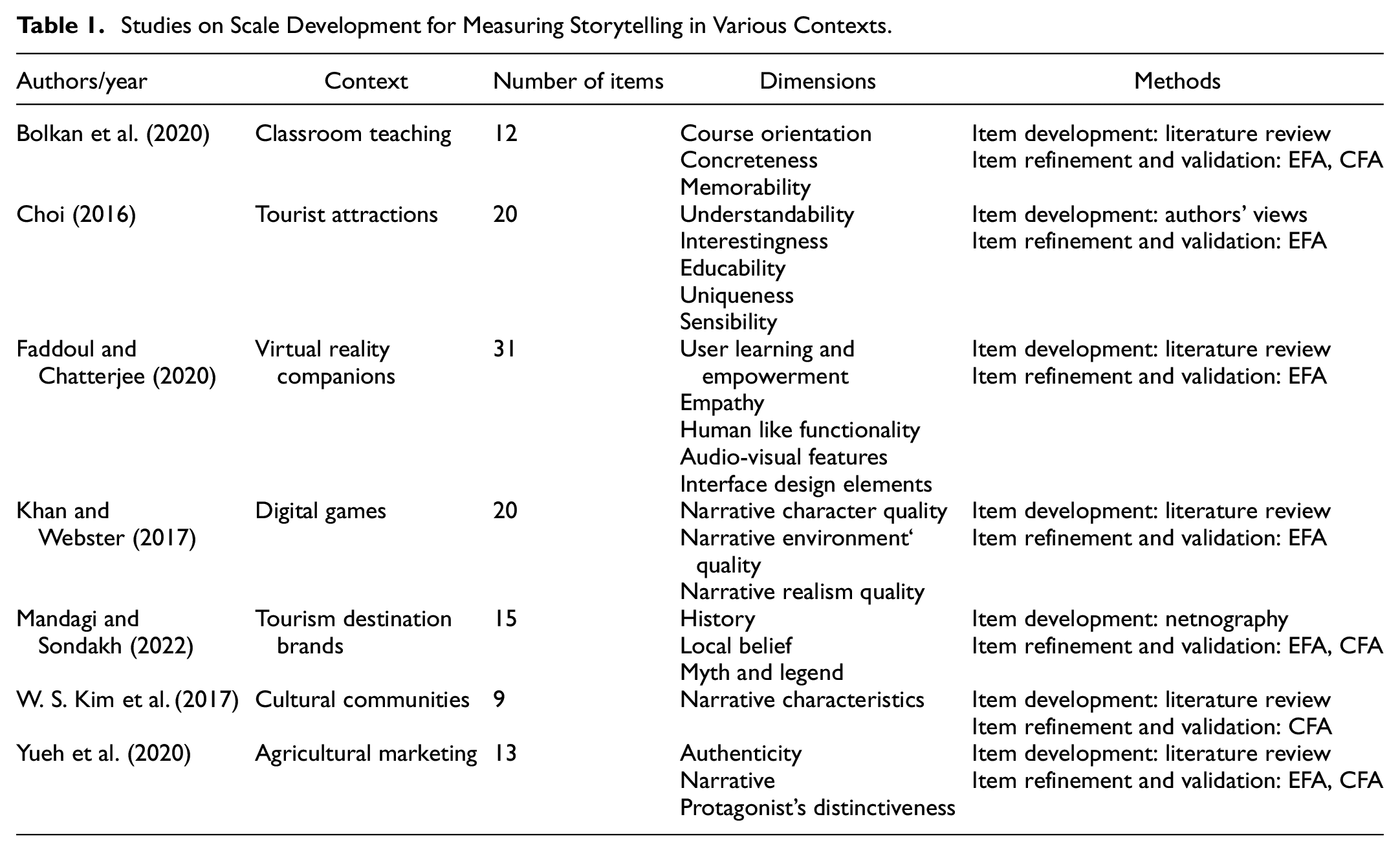
To develop an effective scale, this research adopts the perspective of Gestalt psychology. This theory posits that “the human brain does not interpret things as individual items but as a combination of all its components that perform a function as a system” (Mandagi et al., 2021, p. 3). It is exemplified in scenarios such as evaluating a hotel’s service environment, where guests form impressions based on a composite of various cues, collectively known as the servicescape, rather than on isolated elements (Lin & Worthley, 2012). For example, an individual’s perception of a hotel lobby is based on a holistic evaluation of multiple aspects, such as the front desk, staff and customers, lighting, floors, furniture, artwork, and wall colors (Lin, 2004). Similarly, storytelling in travel vlogs can be seen as holistic content strategies that captivatingly convey the travel experiences of vloggers. It is essential to comprehensively deconstruct the practices of storytelling in travel vlogs and identify its key tactics. Based on these elements, a scale can then be developed.
According to S. H. Kim et al. (2020), existing literature has highlighted the importance of storytelling in tourism. However, more efforts are needed to discover the attributes that contribute to effective storytelling, as these have direct implications for practitioners. Therefore, developing a measurement scale for storytelling in travel vlogs can serve multiple purposes. It not only helps assess the impact of storytelling on prospective tourists’ decision-making but also provides travel vloggers with a guide on how to craft engaging stories in their vlogs. In an era where “content is king,” mastering the art of storytelling is essential to help content creators thrive in their careers (J. Li et al., 2019; Vorhaus, 2022). According to Lund et al. (2020), storytelling can help social media content go viral, thereby increasing its reach and enhancing recognition for the creators. Finkler and Leon (2019) reported that nearly 70% of viewers are more likely to share videos featuring storytelling. As viewership increases, vloggers can also gain substantial financial incentives (Cheng et al., 2024).
Methodology
Research Design
This research followed the rigorous scale development procedures suggested by Boateng et al. (2018) and adopted a sequential exploratory mixed-methods design comprising three phases: item development, scale development, and scale evaluation (Figure 2). The first study was a qualitative investigation that aimed to identify key storytelling elements in travel vlogs through semi-structured, in-depth interviews. These elements were articulated through item statements and quantitatively assessed in the second and third studies for refinement and validation. The final study also assessed the nomological and predictive validity of the developed scale, confirming its effectiveness in predicting audiences’ perceived destination image and intention to visit, using the SR theory as the underlying framework.
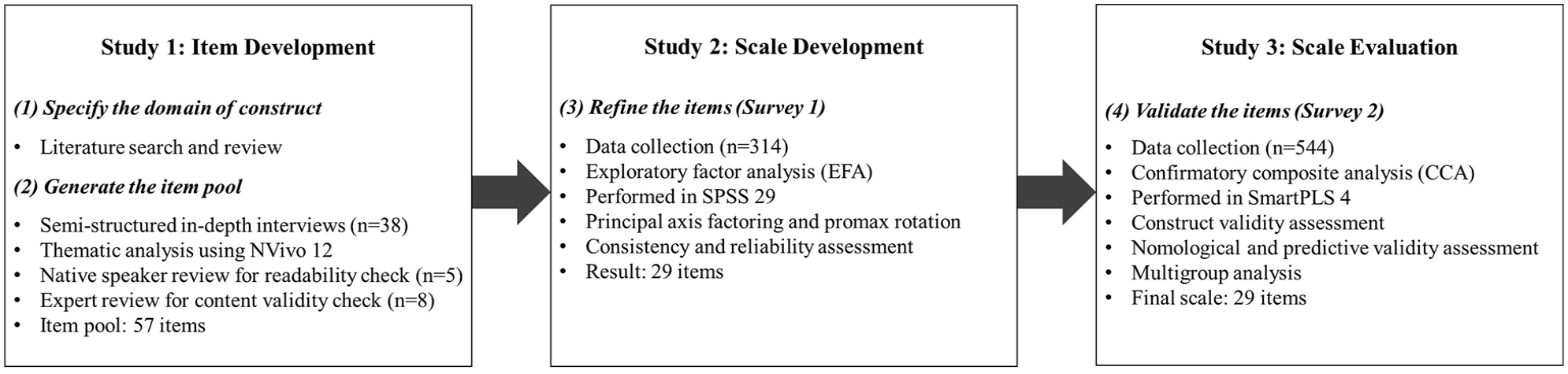
Scale development process.
Research Context
In a travel vlog, the vlogger can tell a variety of stories, such as those focused on a destination’s food, hotel experience, sightseeing, shopping, and adventure. Among these topics, food travel vlogs, which recount vloggers’ encounters with local food, have likely emerged as the most popular and well-established topic. Cheng et al. (2024) found that up to 83.33% of male and 89.8% of female participants in their study preferred watching food travel content more than any other travel vlog topics. Furthermore, Peralta (2022) listed seven of the top YouTube travel vlog channels worldwide, three of which focus exclusively on food travel (i.e., Mark Wiens, Samuel and Audrey, The Food Ranger), while food travel remains a key focus for the other four vloggers (i.e., Fun for Louis, Drew Binsky, Lost LeBlanc, Nas daily).
The growing popularity of food travel vlogs has garnered scholarly attention. Recent evidence suggests that food travel vlogs are excellent examples of engaging storytelling. Ma et al. (2024) argued that food travel vlogs are rich with captivating stories about food production, tasting, culture, and interactions with locals. Similarly, Hutchinson et al. (2024) and W. Guo and Qiu (2024) highlighted that food travel vlogs reflect vloggers’ outstanding narrative agency and expression skills. Hence, this research selected food travel vlogs as its focus to study storytelling in travel vlogs more effectively.
This focus offers several advantages. First, to effectively capture key insights from interviewees, the research team needed to watch a substantial number of travel vlogs prior to the interviews to become familiar with their storytelling practices. However, due to time and resource constraints, it was not feasible to analyze vlogs across all travel topics. By narrowing the focus to food travel vlogs, the team gained a deeper understanding of their storytelling strategies, facilitating more in-depth and productive conversations with interviewees. Second, concentrating on a specific topic encouraged interviewees to reflect more deeply on their experiences, resulting in rich, detailed responses that contributed to the generation of meaningful themes.
Study 1: Item Development
Participant Recruitment
Guided by stakeholder theory (H. Zhou et al., 2024), Study 1 aimed to gain a comprehensive understanding of the elements of storytelling in travel vlogs by interviewing two key stakeholder groups: vloggers and audience members. A purposive sampling approach was used to select participants with careers in food travel vlogging and those who frequently engage with food travel vlogs. From May to August 2022, a total of 38 semi-structured, in-depth interviews were conducted, including 17 with globally renowned food travel vloggers (one was with the vlogger’s team member) and 21 with individuals who regularly engage with food travel vlogs. The gender distribution within each participant group was nearly balanced.
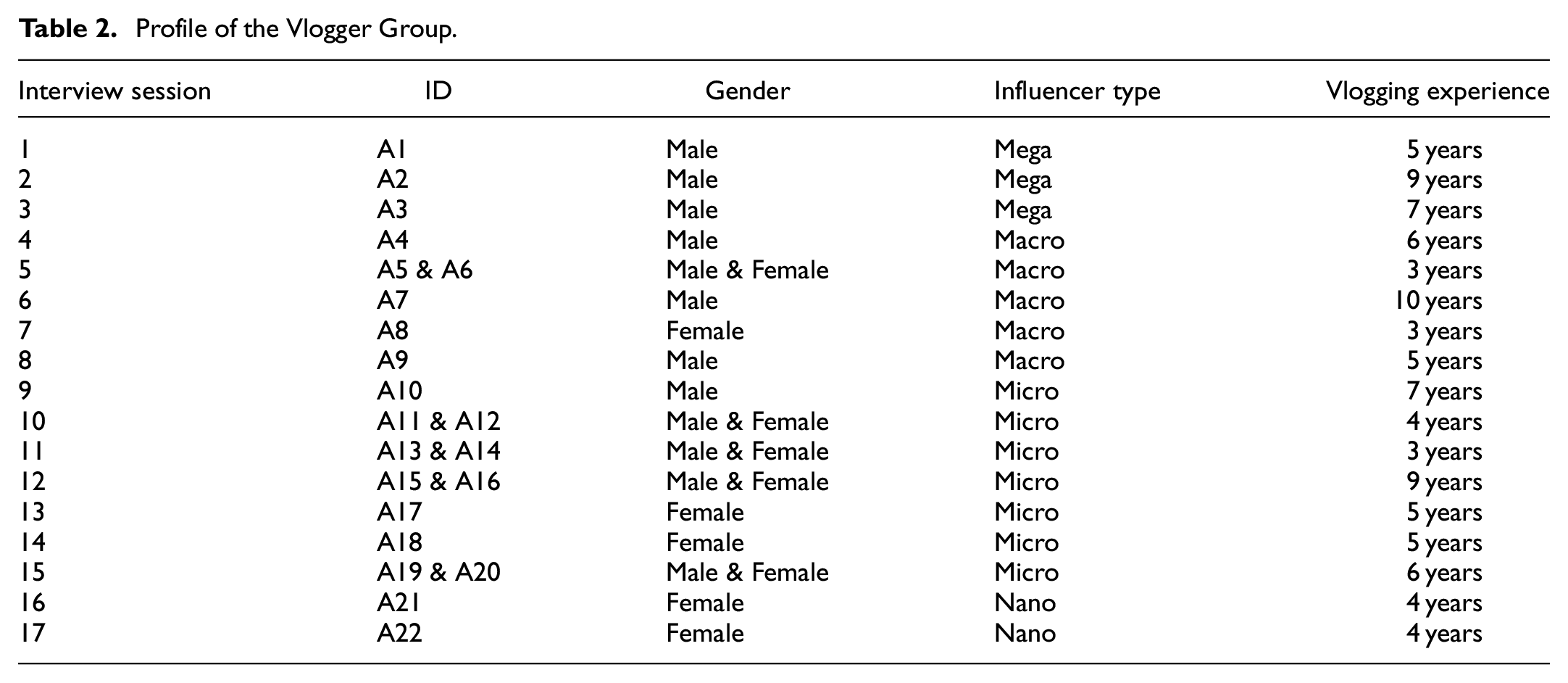
The researchers contacted over 100 popular food travel vloggers on YouTube and Bilibili, platforms well-known for sharing food travel vlogs (Ghosh & Ravichandran, 2022; Ma et al., 2024). In the end, 22 vloggers responded to the recruitment, and 17 interviews were carried out. This is because 10 of the 22 vlogger interviewees were couples, resulting in five joint interviews. These vloggers were based across various regions, including Canada, the US, Spain, Thailand, Malaysia, Macao, and Mainland China. Park et al. (2021) categorized social media influencers into four levels based on follower counts: (1) Mega-influencers (over 1 million), (2) Macro-influencers (100,000–1 million), (3) Micro-influencers (10,000–100,000), and (4) Nano-influencers (under 10,000). Of the 17 vlogger interviews, three were with mega-influencers, five with macro-influencers, seven with micro-influencers, and two with nano-influencers (Table 2).
Profile of the Vlogger Group.
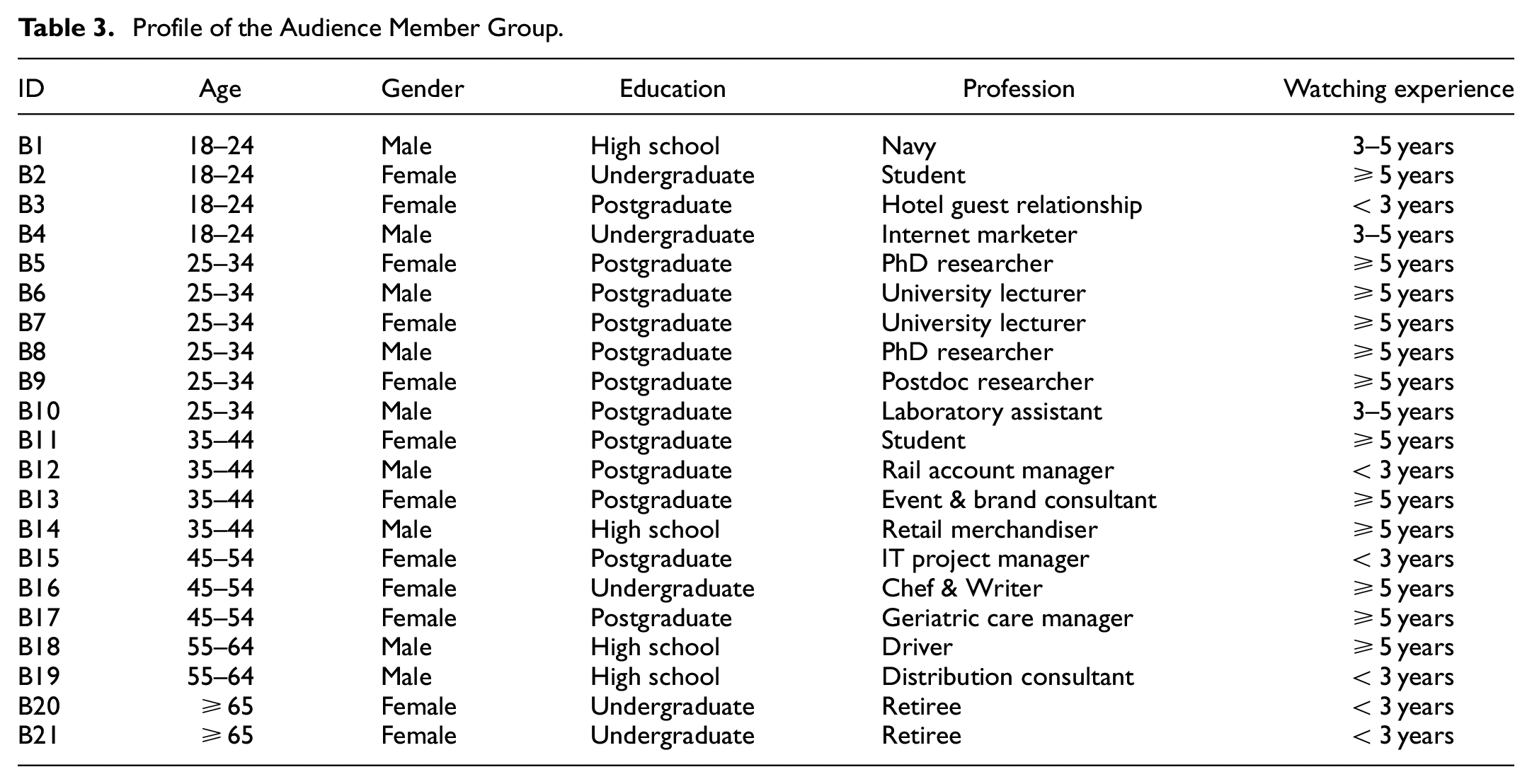
The audience member group comprised participants of diverse ethnicities, educational backgrounds, and professions, as detailed in Table 3. More than half had over 5 years of experience watching food travel vlogs. Kemp (2023) noted that video-watching is not exclusively a behavior of the younger generation, as YouTube users cover all age ranges. In line with this finding, the audience members interviewed also come from various age groups. Overall, the diversified background of participants enables us to gain a rich trove of information (Manthiou et al., 2024).
Profile of the Audience Member Group.
Interview Procedure
Before conducting the interviews, a careful literature review identified seven aspects most relevant to storytelling in travel vlogs, as detailed in Appendix 1: (1) Story hook, elements that capture the audience’s attention from the outset; (2) Plot design, the way the story unfolds; (3) Key takeaway, the main messages embedded in the story; (4) Character, the development and portrayal of the vlogger’s persona; (5) Storyteller’s presentation, the self-expression tactics and styles used by the vlogger to convey the story; (6) Audio elements, the use of sound and music to enhance storytelling; and (7) Visual elements, visual aspects that enhance storytelling. These domains guided the design of interview questions. Additionally, the research team watched the recruited vloggers’ videos to understand their vlogging styles, aiding in the preparation for in-depth discussions.
The interviews were conducted from May to August 2022. Due to the impact of the COVID-19 pandemic, only five of the 21 audience member interviews were conducted face-to-face by the research team in the UK. All 17 vlogger interviews and the remaining 15 audience member interviews were conducted online (e.g., Zoom). Each interview, averaging around 60 min, began with a warm-up conversation to outline the research process and clarify key concepts for the participants. They were then invited to share views on opening open-ended questions, such as “How do you tell good stories in your vlogs?” and “What makes you feel a food travel vlog tells you a good story?” based on their experiences. To foster a deeper exploration of storytelling elements, additional questions related to the seven domains were posed as needed, like “What do you think about the role audio elements play in your storytelling?” and “In food travel vlogs you consider good at storytelling, are there any specific audio elements that stand out?.” All interviews were carried out until data saturation was achieved. Participants’ answers covered all seven identified domains, and no new domains emerged throughout the interviews.
Interview Findings
A qualitative thematic analysis was conducted on the interview transcripts using NVivo 12. Through open coding, key sentences and paragraphs were distilled, resulting in an initial pool of 57 item statements across seven domains. The coding process is exemplified in Figure 3. The item pool was initially reviewed by a panel of five native English speakers to ensure the item statements were both clear and explicit. Following the improvement in readability, eight experts in digital media and consumer behavior research were invited to assess the items’ content validity. They were tasked with evaluating whether the items were appropriate and important for measuring storytelling in travel vlogs and whether they aligned with each domain. The experts provided feedback on the wording of some items but did not suggest adding new items or deleting existing ones. Thus, the validity of the items was warranted. The final item pool developed in Study 1 is shown in Appendix 1.
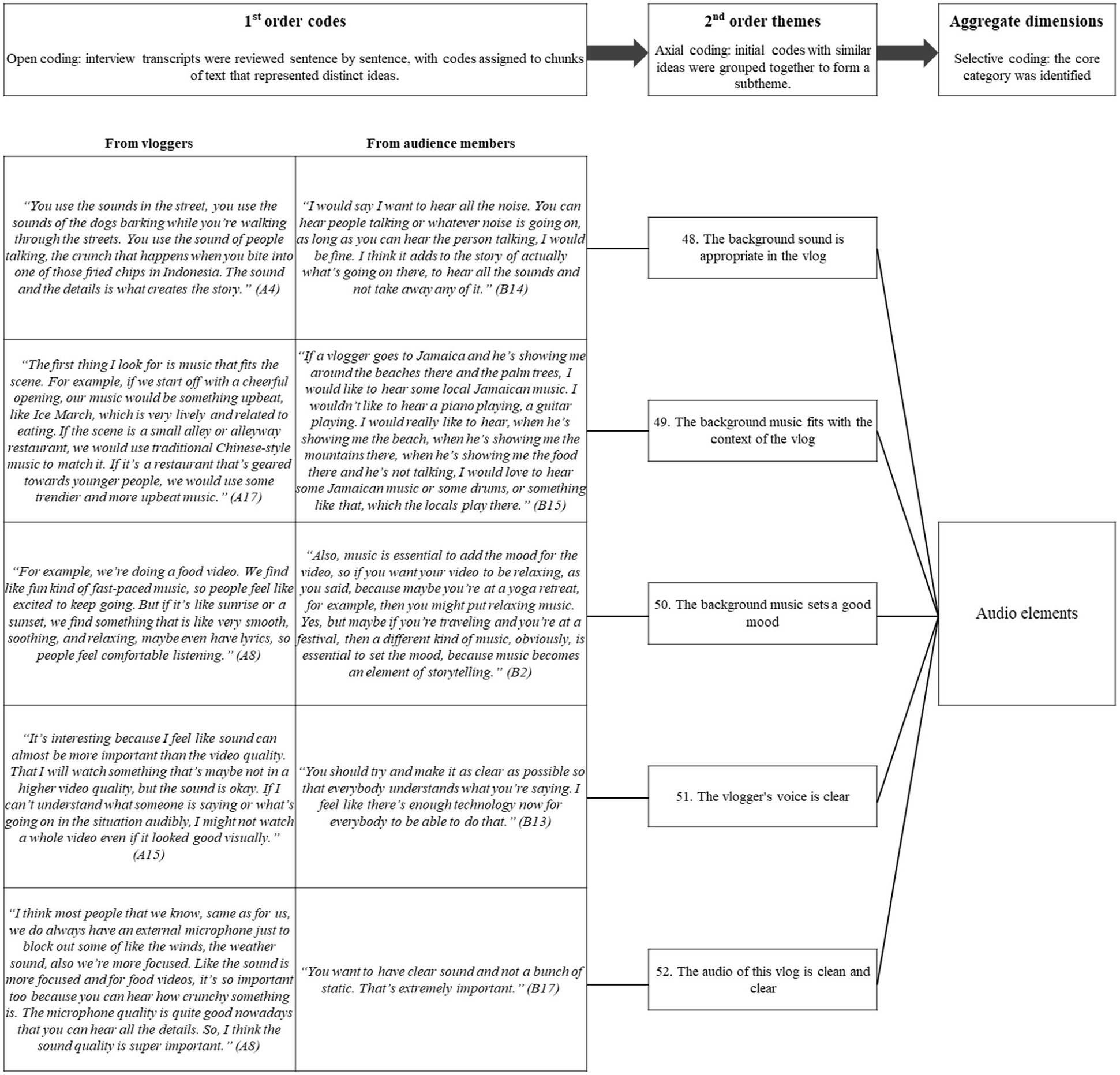
Demonstration of the coding process.
Study 2: Scale Development
Data Collection
Study 2 aimed to conduct exploratory factor analysis (EFA) to refine the items from Study 1 and test their factor structure (Papadas, 2019). To achieve this, an online questionnaire consisting of three parts was developed using Qualtrics. In Part 2, participants were asked to indicate their level of agreement with the 57-item statements using a 5-point Likert-type scale. Before that, participants were required to watch an embedded food travel vlog in Part 1. This ensured that participants based their answers on immediate watching experience, which is more reliable than relying on recalling past experiences (Nguyen et al., 2025). Part 3 collected participants’ demographic characteristics and travel habits.
The embedded food travel vlog in Part 1 is titled “Indian Street Food Tour in Mumbai, India | Street Food in India BEST Curry” (https://youtu.be/ltUDZD1vgxQ). This vlog was created by Trevor James, a mega-influencer with over 5.8 million YouTube followers. It lasts 11 min and 38 s and has amassed 20.73 million views as of March 2024. According to Ma et al. (2023), the average duration of a food travel vlog is 11 min. This vlog was found to be the most popular among those of similar duration in the food travel vlog category on YouTube. To ensure participants had actually watched the vlog, two screening measures were implemented. First, a timer was inserted into the page to calculate the time participants spent watching the vlog. Participants whose viewing time was shorter than the video’s duration were removed from the final responses. Second, attention-check questions related to the vlog’s content were applied (e.g., which of the following foods did not appear in the vlog?). Participants who failed these questions were also excluded from the final responses.
In February 2023, Study 2's questionnaires were distributed via Prolific, a leading crowdsourced research platform known for its effective participant engagement and honesty mechanisms (Peer et al., 2022). To enhance the generalizability of the research findings, survey participants were recruited from Prolific’s representative sample of the UK national population. Each participant received a compensation of 2 British pounds. Data collection was completed on 8 February 2023. After the screening, 314 valid responses remained for EFA, accounting for 73.8% of total responses (Table 4).
Profile of Survey Participants.
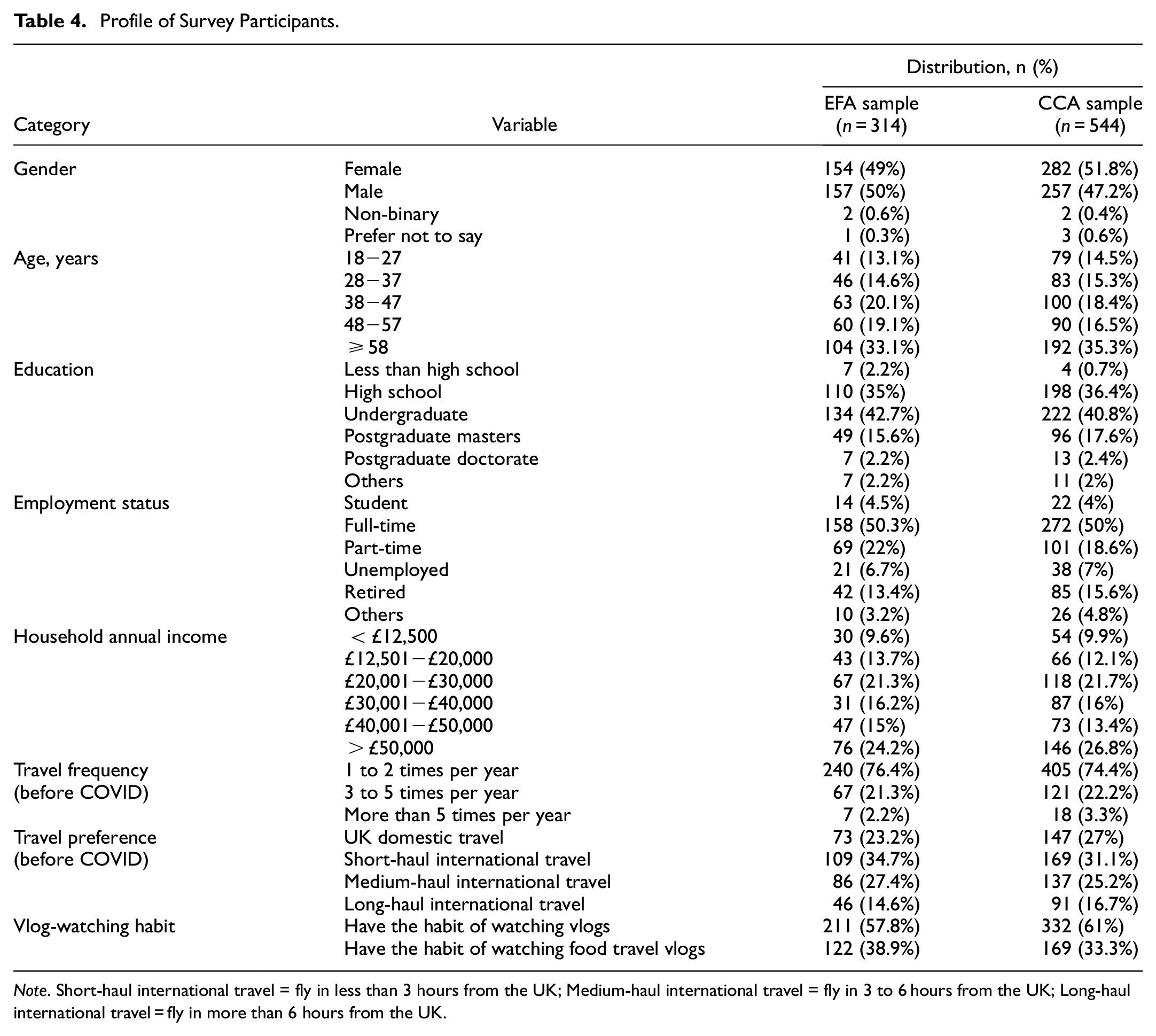
Note. Short-haul international travel = fly in less than 3 hours from the UK; Medium-haul international travel = fly in 3 to 6 hours from the UK; Long-haul international travel = fly in more than 6 hours from the UK.
EFA Findings
Before proceeding with EFA, the quality of the data was examined. Both skewness (ranging from −1.795 to 0.604) and kurtosis values (ranging from −1.227 to 3.879) were within the acceptable ranges, with absolute values less than 2 and 7, respectively. This suggests that the data can be considered normally distributed (X. Li & Yang, 2022). Harman’s single-factor test indicated that the maximum variance explained by a single factor (29.512%) was below the 50% threshold, indicating that common method bias was not significant (ibid.).
Next, the data’s suitability for EFA was confirmed as the Kaiser-Meyer-Olkin (KMO) measure of sampling adequacy (0.919) exceeded the recommended value of 0.6, and Bartlett’s test of sphericity was significant (p < .001; Teeluckdharry et al., 2021). EFA was then performed in SPSS 29 with principal axis factoring extraction and promax rotation, methods recommended for getting more accurate and robust results (Howard, 2023; Teeluckdharry et al., 2021). Following the recommended procedure involves retaining factors with eigenvalues greater than 1 and removing items with factor loadings and commonalities below 0.4 and cross-loadings above 0.4 (Boateng et al., 2018; Teeluckdharry et al., 2021), 29 items were left across eight factors. These factors explained 62.257% of the total variance, meeting the criteria of more than 60% (Hair et al., 2018). Cronbach’s α values for each factor surpassed 0.7, showing good internal consistency reliability (Y. Kim et al., 2022).
The eight extracted factors are labeled in Table 5. There were several changes from the original seven domains. Firstly, “plot design” was split into “story coherence” and “story interestingness”; “audio elements” were detailed into “soundscape” and “communication fluency”; and “character” was specified as “character attractiveness” and “character sincerity.” Secondly, “key takeaway” and “visual elements” were renamed “information richness” and “visual fluency” to better reflect their current item statements. Thirdly, two items originally from “storyteller’s presentation” (items 3–3 and 7–1) were loaded onto “character sincerity” and “communication fluency,” respectively. This is understandable as their meanings are more relevant to these factors. Lastly, the remaining items of “storyteller’s presentation” and all items of “story hook” were removed as they were not considered salient components according to EFA. Overall, storytelling in travel vlogs is a composite construct, with each factor representing a distinct component (Y. Liu et al., 2022).
EFA Results.
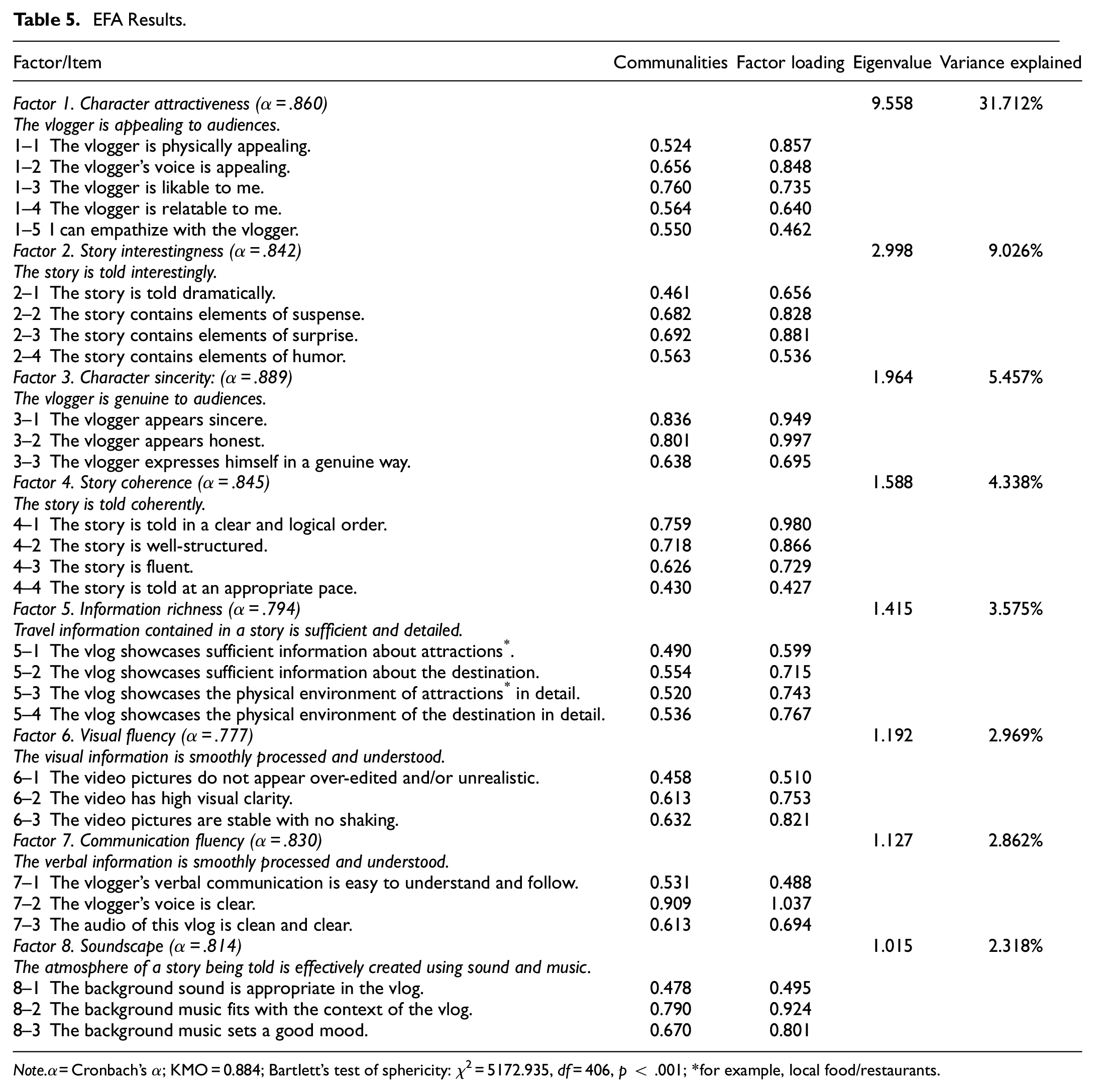
Note.α = Cronbach’s α; KMO = 0.884; Bartlett’s test of sphericity: χ2 = 5172.935, df = 406, p < .001; *for example, local food/restaurants.
Study 3: Scale Evaluation
Data Collection
Study 3 aimed to test the reliability and validity of the eight-factor construct identified in Study 2 using confirmatory composite analysis (CCA). According to Rasoolimanesh et al. (2023), CCA is increasingly considered the preferred analytical tool over confirmatory factor analysis (CFA) for evaluating composite constructs. This preference is mainly because (1) it performs better in content coverage and construct validity (Fong et al., 2023), and (2) it can evaluate both reflective and formative constructs, whereas CFA can only assess reflective constructs (Crittenden et al., 2020). Given the exploratory nature of this research and the formative relationship between the eight factors and travel vlog storytelling, CCA was deemed appropriate for this study.
To conduct CCA, a second survey was administered in March 2023, following the same design as Study 2. However, the scale item questions were reduced, and additional questions were included to support convergent validity, nomological and predictive validation assessments. Each survey participant received a compensation of 2 British pounds. Data collection was completed between 17 and 19 March 2023. After screening, 544 valid responses (75.5% of total responses) from Prolific’s representative sample of the UK national population were used for CCA (Table 4). There was no overlap of participants between the samples of the EFA survey and the CCA survey.
CCA Findings
Before proceeding with CCA, the quality of the data was examined. The data were found to be normally distributed, as the absolute values of both skewness (ranging from −1.111 to 0.354) and kurtosis (ranging from −1.012 to 4.173) were within reasonable ranges. Harman’s single-factor test indicated that the maximum variance explained by a single factor was 31.003%, suggesting that common method bias was not an issue.
Guided by Hair et al. (2020), CCA was carried out in two steps using partial least squares structural equation modeling (PLS-SEM). The first step involved evaluating the measurement model of storytelling in travel vlogs. The construct of storytelling in travel vlogs was conceptualized as a Type-II reflective-formative type higher-order measurement model (Henseler, 2021; Figure 4). In this model, the eight factors are first-order components manifested by their respective underlying item measures. Together, they form the second-order component (i.e., storytelling in travel vlogs). To evaluate this model, an embedded two-stage approach was employed (Becker et al., 2023). First, the reliability and validity of the first-order construct were assessed, followed by the computation of their construct scores, which then served as indicators of the second-order construct. Finally, the reliability and validity of the second-order construct were examined.
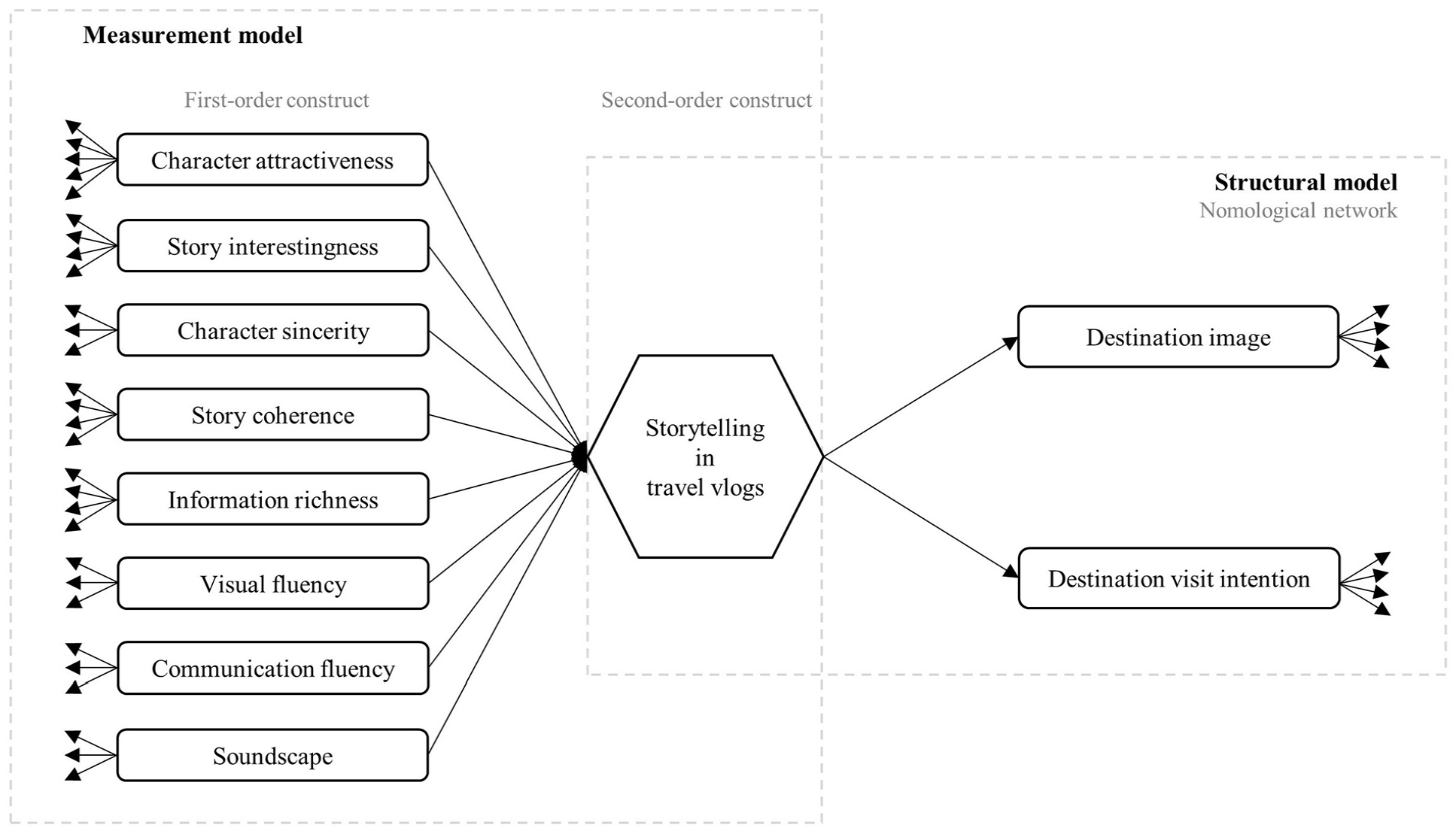
Conceptual framework.
In this study, the construct of travel vlog storytelling was embedded within a nomological network (Figure 4). Consequently, the second step of the CCA involved evaluating the structural model by assessing the relationships between travel vlog storytelling and other constructs within this network. The nomological network was built upon the SR theory, where storytelling in travel vlogs was considered the stimulus, and destination image and visit intention were regarded as the responses.
The CCA was performed using SmartPLS 4. The path weighting scheme was set to default, which is recommended by Becker et al. (2023) for high-order construct assessments. The number of samples drawn in the bootstrapping procedure was set to 10,000 to ensure the stability of the results (Hair et al., 2021).
Evaluation of the Measurement Model
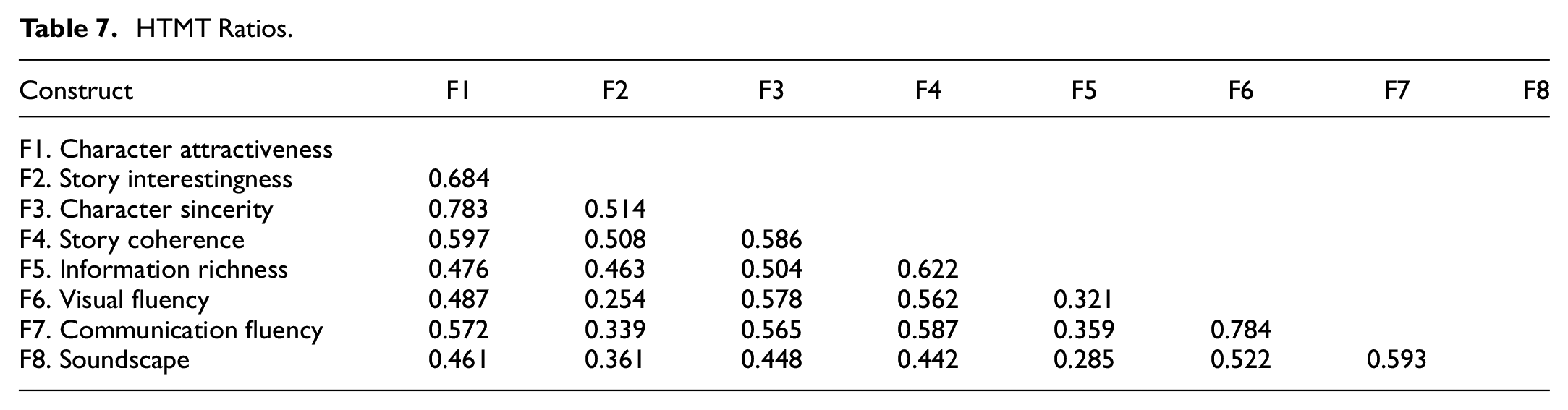
As Table 6 shows, the reliability and validity of the first-order reflective construct were confirmed, meeting all assessment criteria proposed by Hair et al. (2020): (1) All factor loadings exceeded 0.708 and were statistically significant (p < .001), thus passing the outer loading relevance test; (2) All Cronbach’s α values composite reliability (CR) values were within the recommended range of 0.7 to 0.95, confirming the construct’s internal consistency reliability; (3) All average variance extracted (AVE) values were over 0.5, demonstrating convergent validity; and (4) None of the Heterotrait-Monotrait (HTMT) ratios exceeded 0.85 (Table 7), supporting discriminant validity.
Assessment of the Measurement Model.
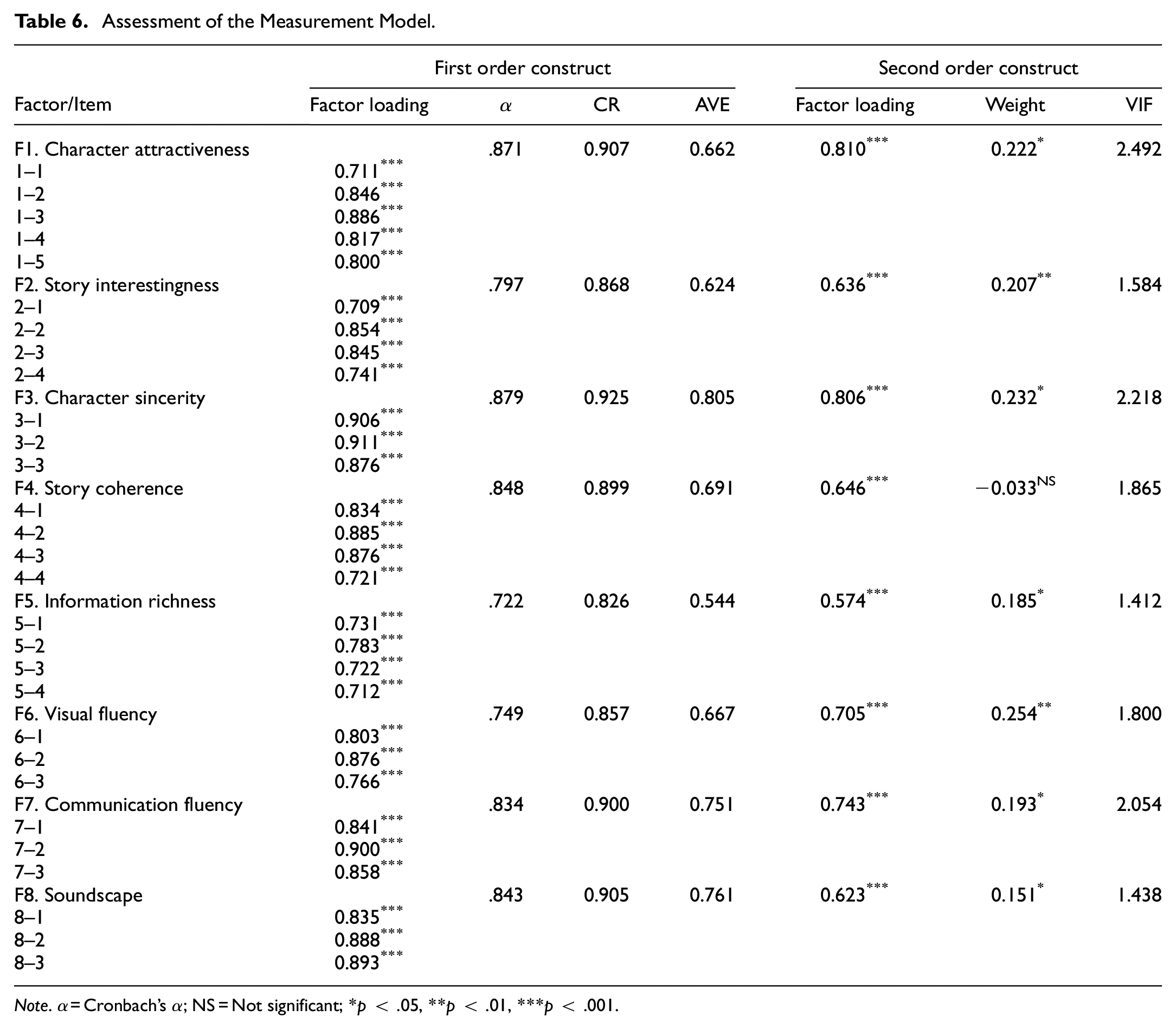
Note. α = Cronbach’s α; NS = Not significant; *p < .05, **p < .01, ***p < .001.
HTMT Ratios.
Before evaluating the second-order construct, a confirmatory tetrad analysis in PLS-SEM (CTA-PLS) was conducted to validate the formative relationship between the eight factors and travel vlog storytelling. The results showed that at least one tetrad interval did not contain zero, confirming the appropriateness of the second-order formative construct (Appendix 2; Rasoolimanesh et al., 2023).
Next, the reliability and validity of the second-order formative construct were evaluated (Table 6), following the guidelines of Hair et al. (2020). The first step was to assess convergent validity via redundancy analysis. This analysis calculated the path coefficient (β) between the second-order construct and a global single item representing the overall assessment of storytelling in travel vlogs (i.e., “Overall, this vlog tells a good story”). The result (β = .743, p < .001) was above the critical value of 0.7, thus confirming the convergent validity. Additionally, low VIFs (<3) indicated that multicollinearity was not a concern.
Lastly, the outer loadings and weights of the indicators were examined. The loadings of all eight indicators exceeded the threshold of 0.5 and were statistically significant (p < .001). Except for “story coherence,” the outer weights of the other seven indicators were statistically significant (p < .05). Despite this, “story coherence” was retained due to its absolute importance in contributing to the formative construct (loadings > 0.5 and statistical significance), as suggested by Hair et al. (2020).
Evaluation of the Structural Model
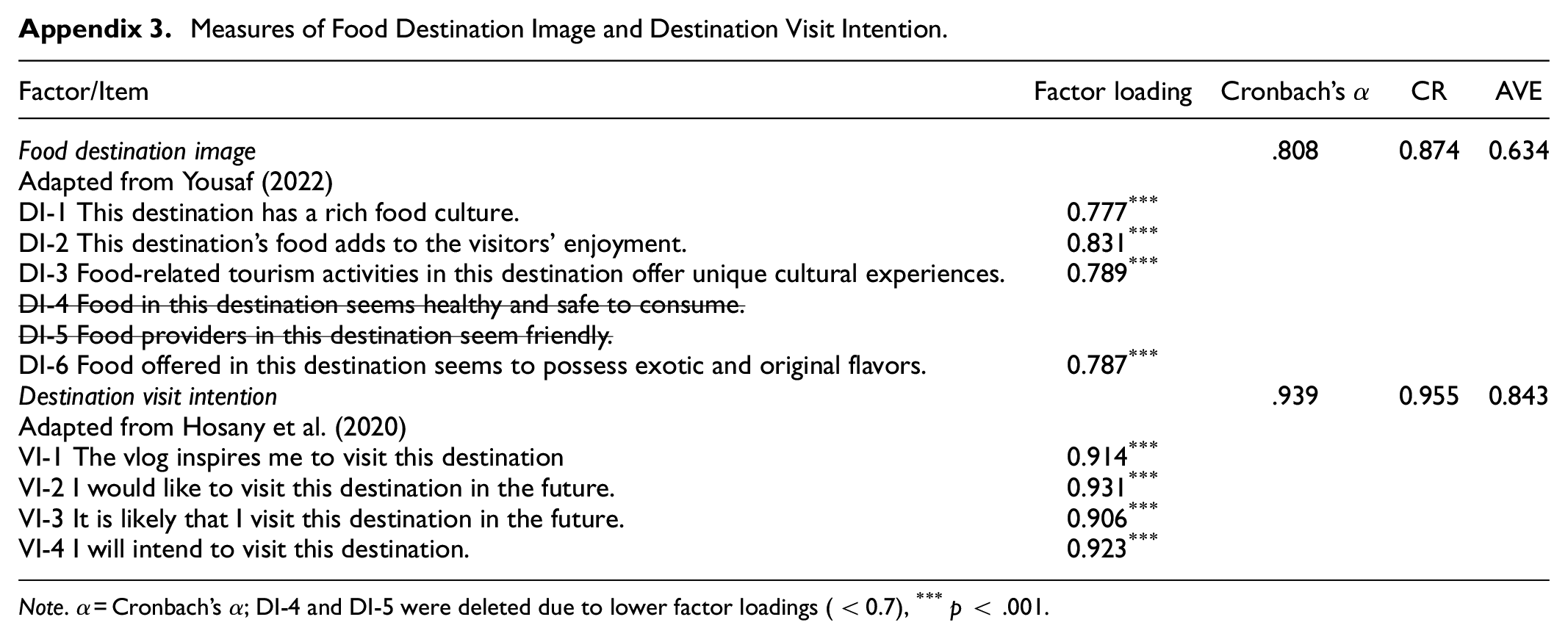
After confirming that the measurement model guidelines for CCA were met, the structural model was evaluated to assess nomological and predictive validity. This involved testing the theoretical relationships between storytelling in travel vlogs, destination image, and destination visit intention. Given that the content of the tested vlog was food travel, this study utilized Yousaf’s (2022) items to measure audiences’ perceived image of a food destination. Additionally, items from Hosany et al. (2020) were adapted to measure audiences’ destination visit intention. After deleting two items with low factor loadings (<0.7), the constructs of these two variables were validated as reliable, with their item loadings, Cronbach’s α values, CR values, AVE results, and HTMT ratios meeting the required criteria (Appendix 3). To ensure more accurate results, the CCA survey excluded people who (1) had previously watched the selected vlog and (2) had visited or planned to visit the destination featured in the selected vlog before participating in the survey.
Guided by Hair et al. (2020), the structural model was assessed and the results indicated the following (Table 8): (1) Lower inner VIFs (<3) determined that multicollinearity was not a concern; (2) The significance and relevance of the structural model’s relationships were supported by the size and significance of βs; and (3) The predictive ability of the structural model was evidenced by the results of R2, f2, and Q2. The coefficient of determination (R2) and effect size (f2) are in-sample predictive metrics. In social science research, the benchmark for R2 is considered to be .1 (Ozili & Saliya, 2023), and the results met this criterion. The f2 values exceeded the cut-off values of medium (0.15) and large effect sizes (0.35), respectively. The Stone-Geisser’s Q2 values, which measure out-of-sample predictive ability, were above 0, showing that the model has predictive relevance. Overall, the assessment confirmed the nomological and predictive validity of the newly developed measurement model. Moreover, the results address research question 2 by confirming that storytelling in travel vlogs effectively influences audiences’ travel decision-making, significantly impacting their perceived destination image and intention to visit.
Assessment of the Structural Model.

To confirm the robustness of the structural model, a multigroup analysis in PLS-SEM (PLS-MGA) was performed to check for unobserved heterogeneity (Sarstedt et al., 2020). The segmentation of the groups was based on five demographic and travel characteristics (i.e., gender, age, education, household income, and traveler type) and one food-related personality trait called food neophilia.
Food neophilia is a psychological tendency to try novel food (Hussain et al., 2023). People with food neophilia tend to perceive a favorable food destination image and are more likely to be attracted to food destinations (Badu-Baiden et al., 2022). Therefore, it warrants investigation as a moderator. In the CCA survey, four items from Hussain et al. (2023) were adapted to measure food neophilia. Following the methodology used by Lai et al. (2020), food neophobia was transformed from a continuous to a categorical variable. First, the total scores of each response were calculated, and the responses were sorted by score size (4–20). Subsequently, with the quartile split method and extreme group approach, a low-neophilia (n = 146, 26.8% of the total sample, score range < 14) and a high-neophilia group (n = 158, 29% of the total sample, score range > 18) were generated for analysis. As shown in Table 9, no significant differences in path coefficients were found across segments (p > .05), indicating that the developed measurement model is valid and stable across different segments. Finally, all 29 items under eight factors detected in EFA were determined to be effective measures.
PLS-MGA Results.
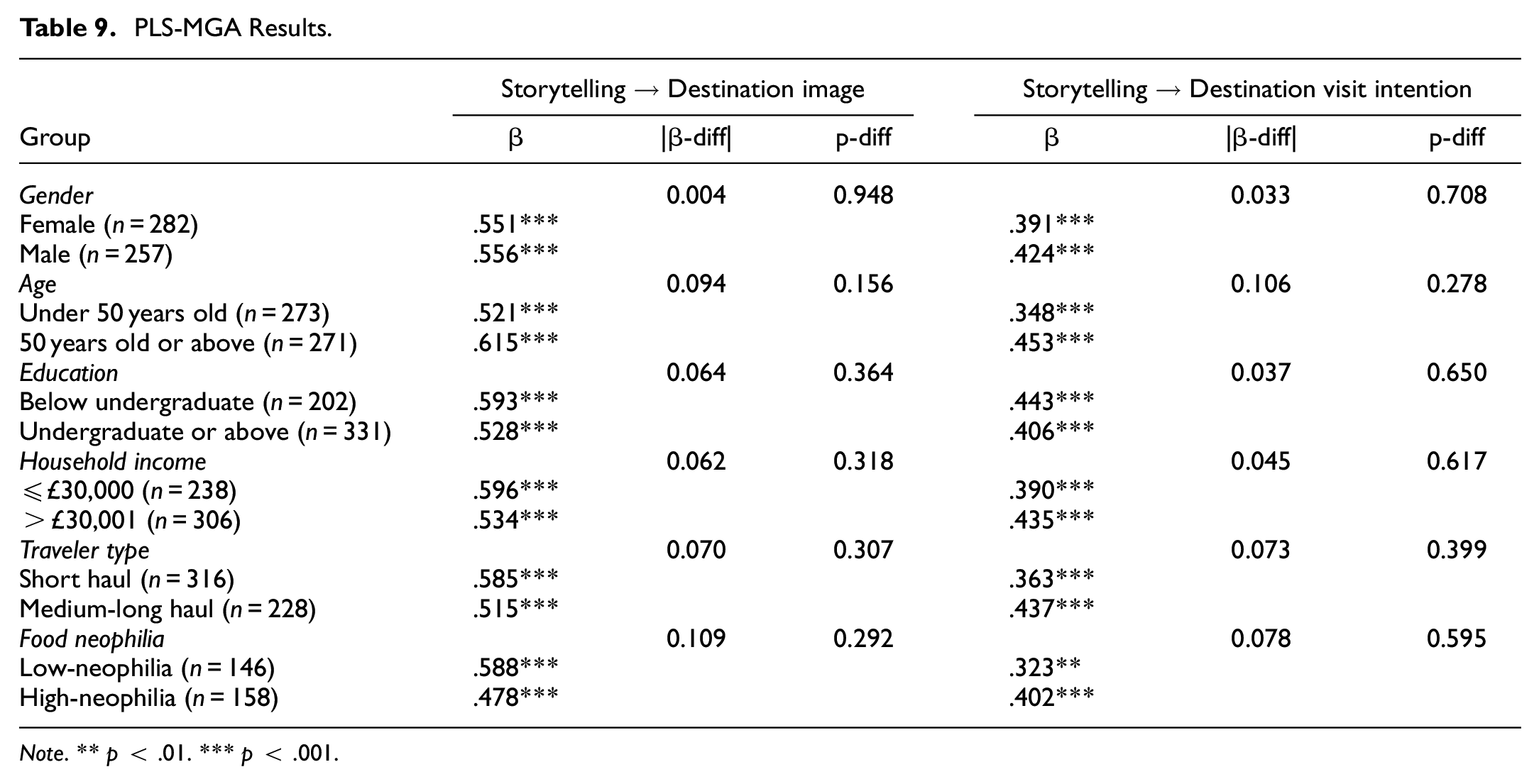
Note. ** p < .01. *** p < .001.
Toolkit for Storytelling in Travel Vlogs
After a series of rigorous evaluations, an eight-factor, 29-item scale for measuring storytelling in travel vlogs was established. This instrument addresses research question 1, illustrating the key aspects of how travel vloggers craft engaging stories in their vlogs. As described by travel vlogger A8, storytelling remains “a really hard skill to master” in their practices. Therefore, the newly developed scale can serve as a valuable toolkit (Figure 5) to enhance travel vloggers’ storytelling capabilities. Combining insights from the interviewees, this section elaborates on the eight aspects highlighted by the toolkit.
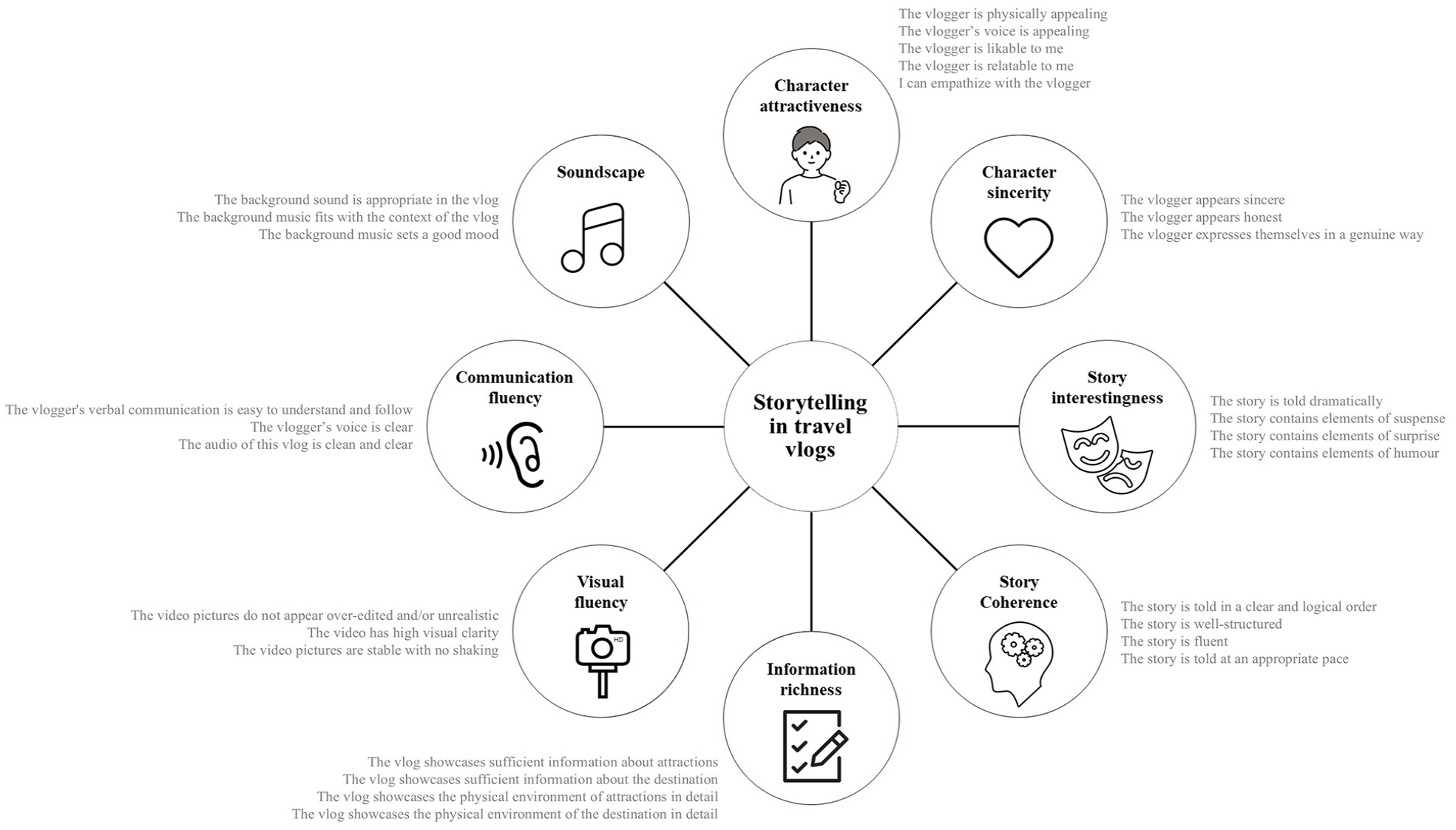
Toolkit for storytelling in travel vlogs.
First, characters (vloggers) are the drivers of their stories (Glaser et al., 2024). Therefore, an engaging story should feature a character the audience cares about (Mitchell & Clark, 2021). To achieve this, it is essential for travel vloggers to build an attractive and sincere persona to hook the audience with their stories. Today, it is not unusual for travel vloggers to use AI voice-overs or captions rather than appearing on camera to narrate their stories, potentially missing an opportunity to showcase their persona. It would be more advantageous for them to appear on camera and share their intimate feelings, as media influencers’ personas are largely shaped by their behaviors and narratives (Chen & Ren, 2022).
In line with previous studies, this research finds that physical attractiveness, vocal attractiveness, and social attractiveness are key to enhancing a vlogger’s appeal (Fang et al., 2023; Le & Hancer, 2021). To improve these aspects, our interviewees suggested that travel vloggers pay attention to their outfits and facial makeup, add more emotion to the way they speak, be natural and down to earth, and demonstrate affinity to connect better with their audience. This research also underscores that audiences prefer travel vloggers who are sincere, honest, and genuine. To achieve this effectively, travel vloggers should express themselves authentically and avoid staged performances, creating a sense of being a trustworthy friend.
Second, three aspects are essential to be considered when crafting the story content. “Story interestingness” reminds travel vloggers to incorporate elements of drama, suspense, surprise, and humor to make their stories not flat. According to many interviewed travel vloggers, these elements are not always scripted but occur naturally during travels, such as unexpected weather changes, disagreements with travel companions, funny reactions to unfamiliar food, and humorous interactions with local people. Therefore, travel vloggers could record every detail during their journey in case they miss such interesting moments. As travel vlogger A13 said:
“We don’t really script it, but these things happen in anyone’s travels, anyone’s days, and all we are trying to do is get better at capturing on camera and like trying to convey the emotion that’s happening and that we’re feeling in that moment.”
In addition, certain editing techniques, such as montages and visual and sound effects, could also increase a story’s interestingness, as travel vloggers A12 and A17 stressed.
“Information richness” emphasizes that a good travel story should be full of meaning or substance. Using food travel vlogs as an example, our audience members expressed interest in detailed information about the attractions (food and restaurants), such as price, menu, cooking method, taste of food, and food culture. They also showed interest in detailed information about the food destinations, including travel tips, local culture, and the local people. To address this, travel vloggers may thoroughly research the attractions and destinations to gather helpful information before vlogging. Beyond dining scenes, audiences also like footage showcasing the environment of attractions and destinations. Thus, travel vloggers may consider including more scenes displaying the restaurant’s layout and surroundings, as well as the destination’s streets, city centers, landscapes, and so on. These visual representations also serve as mediums to communicate crucial information about travel experiences to audiences.
“Story coherence” encompasses four fundamental points that aid in structuring the story content. Firstly, a story should be conveyed clearly and logically. Like the examples given by audience member B5, when sharing a day trip, it is effective to follow a clear time sequence, such as morning, afternoon, and night. Similarly, when introducing food, it is best to follow a logical order such as appetizer, main course, and dessert. Secondly, a story should be well-structured. A typical story follows a beginning, middle, and end structure (Shaw, 2019). However, abrupt endings are a frequent issue, as criticized by audience members B5, B9, and B15. They expected travel vloggers to conclude their travel experiences at the end of the vlog to create a sense of closure. Thirdly, a story should be told fluently; this is very correlated with editing. Smooth transitions from one scene to the next are important for the audience’s experience. Lastly, travel vloggers need to find the right pace for their stories. A useful tip from travel vlogger A3 is to avoid making the pacing too slow because “if something’s too slow, you’re really going to lose the viewer’s interest quickly.”
Third, the remaining three aspects underscore the importance of visual and audio elements in storytelling for travel vlogging. “Visual fluency” and “communication fluency” emphasize the need for appropriate vlogging equipment. Professional equipment such as high-definition (HD) cameras, gimbals & stabilizers, microphones, and audio enhancement tools would be worth considering. Over half of travel vlogger interviewees emphasized the necessity of investing in microphones. The reason is:
“I think the only cheap pieces that are important to storytelling in terms of the equipment or filmography point of view, we found that having very good audio sets you apart…you see, most times you’re outside in like a non-studio setting, so having good audio quality is huge.” (A13)
In addition to good audio quality, clear and accessible verbal expression is essential for improving communication fluency. M. Li et al.’s (2023) study on live streamers’ linguistic styles would be a valuable reference for travel vloggers looking to enhance their verbal expressions.
“Soundscape” highlights the importance of background music and ambient sound in setting the atmosphere and conveying emotions in the story. To enhance the audience’s experience, travel vloggers should use music well-suited to the story’s specific setting and mood. As recommended by audience members B8, B9, and B15, if the story is set in an exotic destination, it is recommended to use local music. Additionally, they recommended using music that has a soothing and positive effect on the viewers to create a relaxed and enjoyable atmosphere. Regarding ambient sounds, some travel vloggers may choose to remove them from their vlogs, but it is better to retain them appropriately to help viewers become immersed in the stories. To enhance the ambiance, travel vlogger A4 mentioned that he would even download ambient sounds from the internet to include in his vlogs.
Conclusion and Implications
Summary of Findings
Travel vlogs are inherently storytelling-centric videos. However, how travel vloggers craft engaging stories and whether their storytelling influences audiences’ travel decision-making remains largely unexplored. This research represents an early effort to contribute to this gap. Using a mixed-methods approach, it first clarified the unique storytelling elements of travel vlogs and then established an eight-factor, 29-item scale of storytelling in travel vlogs based on these elements. The scale is parsimonious and robust and is effective in predicting travel vlog audiences’ perceived destination image and destination visit intention, demonstrating the usefulness of storytelling in travel vlogs for destination marketing. More importantly, the scale can serve as a toolkit to guide travel vloggers’ storytelling practices.
Theoretical Implications
This research generates several important theoretical implications. Firstly, it enriches the knowledge of travel vloggers’ storytelling practices. Gholamhosseinzadeh (2023) and He et al. (2022) are representative works to theorize travel vloggers’ practices. While they acknowledged the central role of storytelling in travel vlogging, they did not delve into specific storytelling tactics. This research fills that gap by conducting a detailed exploration of these storytelling tactics. Some qualitative efforts, such as Ding et al. (2024) and W. Guo and Qiu (2024), have examined the narrative strategies of travel vlogs, but their focus has been on interpreting vloggers’ narrative content without conducting a holistic analysis of their storytelling tactics. Grounded in Gestalt psychology, this research provides a more comprehensive analysis by exploring multiple aspects of travel vloggers’ storytelling tactics and making them measurable.
Secondly, it introduces a fresh perspective for future studies examining the impact of travel vlogs on prospective tourists. According to Thompson and Weldon (2022) and P. Zhang et al. (2024), previous studies have primarily regarded travel vlogs as a form of electronic word-of-mouth produced by travel experts or as personal videos shared by social media celebrities. These traditional lenses have led to an oversight of the role of travel vlogs as meticulously crafted storytelling videos. By addressing this gap, this research empirically examined and confirmed the impact of storytelling in travel vlogs on audiences’ travel decision-making through the use of SR theory. The findings demonstrate that storytelling is a key driver in shaping audiences’ behaviors, therefore providing new insights into the influential mechanics of travel vlogs. Future research on travel vlogs can use the developed scale to explore the relationships between storytelling and more audiences’ responses (e.g., engagement and memorability).
Thirdly, although primarily designed for travel vlogs, after modification, the applicability of the developed scale could extend to other vlog genres (e.g., fashion, daily life) or other video storytelling mediums, such as live-stream videos. To the best of our knowledge, this is the first scale specially designed to measure video-based storytelling. It provides a structured and reliable instrument for evaluating the quality and effectiveness of storytelling in video contexts, which has been lacking in the literature.
Lastly, this research not only aligns with and extends the findings of existing studies on travel videos but also provides new interpretations and deeper insights into these findings. Recent research has explored various factors that influence the induction of travel desire among travel video viewers. For example, vloggers’ attractiveness (Le & Hancer, 2021), vloggers’ sincerity (Nguyen et al., 2025), narrative structure (Cao et al., 2021), information comprehensiveness (Zhou et al., 2023), visual effect (X. Bai et al., 2023), musical effect (Bai et al., 2023), and background music congruence (Y. Zhou & Jiao, 2024). This research not only echoes these findings but also integrates them into a cohesive framework, suggesting that these elements are integral components of effective storytelling.
Practical Implications
This research generates a comprehensive toolkit for engaging storytelling, offering valuable insights for travel vloggers, DMOs’ social media teams, and developers of AI-generated video models. Storytelling holds the potential to make social media content go viral, greatly expanding its reach and boosting creators’ recognition (Lund et al., 2020). By mastering the art of storytelling with the help of this toolkit, travel vloggers can more effectively engage their audiences, ultimately driving career success.
DMO-generated videos have often been perceived as mere collages of beautiful visuals, lacking depth in storytelling (Alegro & Turnšek, 2021; Cao et al., 2021; Moin et al., 2020). This has led to increasing visual fatigue among audiences and limited promotional effects (Cao et al., 2021; J. Wang et al., 2024). Recognizing this issue, DMOs’ social media teams have started to address their storytelling shortcomings, but many lack the expertise to create compelling storytelling videos (Pachucki et al., 2022). In this context, the toolkit would serve as a timely resource, helping them enhance their storytelling skills and produce engaging and impactful videos.
In recent years, AI-generated video models have seen significant advancements. For instance, Sora can transform textual descriptions into high-quality, dynamic video content (X. Zhang & Ramayah, 2024). One of the developing functions in this field is story generation (Y. Wang et al., 2023). The toolkit could serve as a useful reference for developers, helping them enhance the algorithms that generate storytelling-driven travel videos.
This research also confirms the effectiveness of travel vlog storytelling on destination promotion, thus supporting the efficacy of strategic collaborations between DMOs and travel vloggers who are adept at storytelling. Such collaborations could help destinations revitalize tourism after the COVID-19 pandemic. Traditionally, DMOs have focused on collaborating with celebrities, leveraging their fame and large fan bases to promote destinations (B. Liu et al., 2023). However, compared to costly celebrity endorsements, collaborating with travel vloggers offers a more economical, yet practical, approach to destination promotion (Dineva, 2023).
During the interviews with travel vloggers, over half mentioned that they currently had no collaborations with DMOs. This may reflect that many DMOs have not yet fully capitalized on the trend of travel vlogging. As travel vlogger A7 pointed out, “I think one of the things that I see is that a lot of tourism boards don’t realize the power of vlogs.” The interviewed travel vloggers expressed high interest in establishing collaborations with DMOs. There are two important reasons for this. First, they hope to receive financial support from DMOs. Traveling is costly, and travel vlogging as a creative endeavor requires extensive filming and editing, which is time-consuming. Therefore, financial compensation is crucial for them to sustain their careers. As travel vlogger A8 disclosed, although many vloggers initially have a passion for creating travel vlogs, without sufficient financial support, they can easily give up their careers. Since it is difficult to earn revenue from video platforms at the moment, they consider DMOs ideal sponsors. Second, vloggers regard DMOs as powerful coordinators who can facilitate filming during their stays at destinations, providing access and permissions that might otherwise be difficult to obtain.
Thus, the collaboration between DMOs and travel vloggers would be a mutually beneficial strategy. Based on feedback from interviewed travel vloggers, the following fundamental strategies may be useful for DMOs seeking to initiate collaborations with travel vloggers: (1) To attract travel vloggers to come to create travel vlogs, DMOs could offer competitive incentives and sponsorship packages that cover various aspects including transportation, accommodation, and more; (2) To assist travel vloggers in enhancing the “information richness” aspect of their storytelling, DMOs could connect them with knowledgeable local guides, coordinate with local attractions, and assist in obtaining shooting permits for places where photography is typically restricted; (3) For travel vlogs that demonstrate good storytelling, DMOs could share them on their own channels for joint promotion, thereby increasing the reach and impact of the vlogs while also boosting the travel vloggers’ visibility.
In addition, this research highlights the effectiveness of using food travel vlogs to promote tourism. The study by Ghosh and Ravichandran (2022) was a pioneer in suggesting that DMOs consider food travel vlogs as a promotional tool to attract tourists. This research demonstrates the feasibility and potential success of their proposal. To encourage the creation of food travel vlogs, DMOs may consider the following strategies: (1) Investing in infrastructure such as the development of culinary trails, food markets, and food festivals, making the destination more appealing to travel vloggers; (2) Offering travel vloggers access to exclusive food experiences, such as behind-the-scenes tours of food festivals, farm-to-table experiences, or cooking classes with local chefs; (3) Organizing food travel vlogging contests or challenges with attractive rewards to motivate travel vloggers to participate. For travel vloggers, this research demonstrates that food travel is a highly effective topic for destination promotion, indicating that it could serve as an ideal starting point for collaborations with DMOs.
Limitations and Future Research
The research has made valuable contributions to both theory and practice, but there are some limitations that need to be acknowledged. Firstly, due to time and resource constraints, the scale development and validation were rooted in the context of food travel vlogs; future research may further test the scale in other topics of travel vlogs. Secondly, the data for EFA and CCA were collected in the UK; future research may validate the scale in different cultural contexts, such as the Eastern context. Thirdly, the data was collected before the end of the COVID-19 global health emergency (Wise, 2023). Therefore, the impact of the COVID-19 pandemic could be the reason for the lower predictive power of travel vlog storytelling in predicting destination visit intention. Future research may further test this relationship. Lastly, this research only tested the links between travel vlog storytelling and destination image and visit intention. Future research may examine more consequences of travel vlog storytelling, such as audiences’ intentions to like, share, and comment on the travel vlog. As a final point, this research represents the start of an in-depth exploration into the practice and impact of storytelling in travel vlogs. This field deserves more scholarly attention and effort.
Footnotes
Appendix
Measures of Food Destination Image and Destination Visit Intention.
| Factor/Item | Factor loading | Cronbach’s α | CR | AVE |
|---|---|---|---|---|
| Food destination image
Adapted from Yousaf (2022) |
.808 | 0.874 | 0.634 | |
| DI-1 This destination has a rich food culture. | 0.777 *** | |||
| DI-2 This destination’s food adds to the visitors’ enjoyment. | 0.831 *** | |||
| DI-3 Food-related tourism activities in this destination offer unique cultural experiences. | 0.789 *** | |||
|
|
||||
|
|
||||
| DI-6 Food offered in this destination seems to possess exotic and original flavors. | 0.787 *** | |||
| Destination visit intention
|
.939 | 0.955 | 0.843 | |
| VI-1 The vlog inspires me to visit this destination | 0.914 *** | |||
| VI-2 I would like to visit this destination in the future. | 0.931 *** | |||
| VI-3 It is likely that I visit this destination in the future. | 0.906 *** | |||
| VI-4 I will intend to visit this destination. | 0.923 *** |
Note. α = Cronbach’s α; DI-4 and DI-5 were deleted due to lower factor loadings (<0.7), *** p < .001.
Declaration of Conflicting Interests
The author(s) declared no potential conflicts of interest with respect to the research, authorship, and/or publication of this article.
Funding
The author(s) received no financial support for the research, authorship, and/or publication of this article.
