




Abstract
There is a high degree of interdependence between tourism small- and medium-sized enterprises (SMEs) and natural resources and between tourism SMEs themselves, necessitating a symbiotic rationality to guide them toward more sustainable practices. Current rational perspectives—instrumental rationality and value rationality—due to their inherently conflicting nature, are inadequate to fundamentally address these inherent symbiotic relationships. This study thus proposes a holistic rationality—termed symbiotic rationality—that integrates both instrumental and value rationality to guide sustainable practices, with the aim of conceptualizing this new rational perspective and developing a validated scale for measuring it. Using a four-stage study with a mixed-methods design, this study’s findings point to a four-dimensional scale consisting of systematic thinking, long-term orientation, reconciliation, and sustainability. This study also finds that symbiotic rationality has a significant positive impact on SMEs’ ecological innovation tendency. By addressing the limitations of singular rational perspectives, this research contributes to the theoretical foundation and practical application of symbiotic rationality. It has the potential to advance future research in rationality and the sustainable development of SMEs while also providing a valuable tool for guiding tourism SMEs in implementing sustainable practices.
Keywords
Introduction
As a resource-dependent industry, tourism is highly reliant upon both natural and cultural resources (Hall, 2013). At the same time, tourism is one of the most important economic drivers in many destinations and regions around the world and has been deemed a development tool for many local communities (Scheyvens et al., 2021). However, the tension between economic growth and environmental conservation remains a complex issue globally (Sun & Drakeman, 2022), and this complexity becomes even more pronounced when one considers the escalating challenges posed by climate change. Whereas there have been numerous attempts to find more sustainable modes of tourism development (Panzer-Krause, 2019), including the “green growth” approach (Hall, 2013, 2022). Tourism enterprises’ low engagement in environmental concerns remains a significant problem in practice.
Small- and medium-sized enterprises (SMEs), especially in the case of tourism, are frequently seen as the dominant industry participants. As core stakeholders, tourism SMEs have direct impacts on the viability and sustainability of particular tourism locations through their decisions and activities (Maziliauske, 2024). Emerging research has asserted that tourism SMEs have various options for pursuing both sustainable and financial success, even though they may have little control over the external environment (Kornilaki et al., 2019). In addition, the leaders of SMEs play a crucial role in generating value through their interactions with value networks that offer their organizations important resources and opportunities (Gallego-Roquelaure, 2020). In that light, it is critical to understand why some tourism SMEs implement sustainable practices while others do not. Different rational perspectives might guide SME operators in varying ways. However, this problem has not received adequate attention from the perspective of rationality.
According to the theory of symbiosis (Douglas, 1994), symbiotic units, such as tourism SMEs, rely on one another for reciprocal benefits, forming interwoven interactions that contribute to the success and sustainability of their symbiotic systems. Among different symbiotic relationships, symmetric reciprocal symbiosis is the most effective and stable. It is achieved through the repositioning and cooperation of functions between symbiotic units, leading to long-term “win-win” outcomes (Xu & Tang, 2022). Despite numerous studies recognizing the symbiotic relationships between tourism SMEs (Weaver et al., 2020; Wong et al., 2015), there is still considerable room for research into the symbiotic relationships between tourism SMEs and the environment, as well as between tourism SMEs themselves.
Weber (1978) made a distinction between instrumental rationality and value rationality, stating that the instrumental rationality perspective (according to which actions are grounded in instrumental rationality) is “determined by expectations regarding the behavior of objects in the environment and other human beings; these expectations are used as ‘conditions’ or ‘means’ for achieving the actor’s rationally pursued and calculated ends,” while the value rationality perspective (according to which actions are grounded in value rationality) is defined as being “determined by a conscious belief in the value for its own sake of some ethical, aesthetic, religious, or other form of behavior, independently of its prospects of success” (Weber, 1978). Earlier studies have explored how instrumental rationality and value rationality may coexist and sometimes conflict with each other in diverse contexts (Blau, 2021; Rindova & Martins, 2018). For example, in the tourism discourse, previous research has looked at how tourists reconcile moral values with the pursuit of their self-interests in terms of sustainable behaviors (Liu et al., 2019; Trauger & Passidomo, 2012).
Although academics have attempted to reconcile instrumental rationality and value rationality, a reliable, universal scale to guide sustainable practices for tourism SMEs—particularly from a symbiosis theory perspective—is still missing. Given the inherent symbiotic relationships between SMEs and their environment, as well as between SMEs themselves, a holistic rationality scale integrating both instrumental and value rationality is essential. Some scholars argue that instrumental reasoning is spiritually led by value rationality (Canto Sáenz, 2017; Habermas & McCarthy, 1984)—meaning that efficiency must respect value-based constraints. Addressing the misalignment between instrumental and value rationalities, this study proposes a new concept: symbiotic rationality.
Based on the inherent symbiotic relationships between SMEs and the environment, as well as between SMEs themselves, symbiotic rationality refers to a new rational perspective that systematically considers symbiotic relationships, reconciles such relationships, and promotes the long-term and sustainable development of these relationships. For instance, a local small hotel in a rural area might establish a partnership with local organic farms to supply fresh produce for its restaurant. This relationship not only enhances the hotel’s offerings by providing guests with fresh, locally sourced food but also supports the local farmers by providing a steady stream of revenue. Such symbiotic relationships exemplify symbiotic rationality; the hotel does not pursue efficiency at the expense of its values, nor does it uphold values without considering the practical needs of its business. Instead, it systematically considers the symbiotic relationships with the environment and other SMEs, reconciles the need for both efficiency and sustainable practice, and promotes the long-term sustainability of these relationships. As such, symbiotic rationality as a new rational perspective addresses the shortcomings of single rational perspectives by integrating both forms of rationality. However, a measurement scale for it has yet to be developed and validated.
This study endeavored to address pertinent practical challenges and theoretical voids by employing a mixed-methods approach. The primary objective was to introduce a novel conceptual framework termed “symbiotic rationality” that represents a significant departure from the conventional understanding of rational thought in tourism discourse. In contrast with previous studies, the contributions of this research are multifaceted. First, our exploration of symbiotic rationality significantly enriches the comprehension of both rationality itself and the broader paradigm of symbiosis theory. By delving into this novel conceptual territory, the study not only expands the existing knowledge base but also offers fresh insights into the intricate interplay between rational decision-making and symbiotic relationships. Second, symbiotic rationality surpasses previous rational perspectives by combining the strengths of both instrumental and value rationality. Our research resolves paradoxes while maintaining the distinctive contributions of these rationalities, unlike previous studies that frequently see them as opposed to each other.
Furthermore, following a mixed-method approach, this research develops and verifies a measurement scale for symbiotic rationality, offering concrete instruments for evaluating and quantifying symbiotic rationality in real-world settings. Crucially, the study’s findings have far-reaching implications beyond academia. They contribute significantly to a more nuanced understanding of rational decision-making processes among tourism SMEs by illuminating the reconciliation of instrumental and value rationality. This understanding opens the door to more sustainable business practices in tourism and holds the potential to catalyze positive changes within the practical realm of tourism enterprise management.
Literature Review
Symbiosis Theory and Symbiotic Behavior in Tourism
Symbiosis, with its roots in biology, describes the intimate, frequently long-lasting relationships that exist between individuals of two different species (De Bary, 1879). Symbiotic interactions have been categorized by research into a number of different types, such as non-contact, biased, cohabitational, competitive, parasitic, and reciprocal partnerships (Liang et al., 2021; Silvertown & Charlesworth, 2009; van Rhijn & Vanderleyden, 1995). A mutually advantageous connection is characterized by mutualistic symbiosis, in which both parties benefit. Symbiosis theory posits that such interactions confer benefits to one or both species and are categorized as being either obligate, in which mutual reliance is crucial for survival, or facultative, in which the association is optional (Francis, 2009). In tourism studies, scholars use symbiosis theory to explore relationships between attractions and their symbiotic units, encompassing interactions between attractions, communities, and spatial regions (Hou et al., 2021; Xu & Tang, 2022; D. Yang, 2016; C. Yang et al., 2018). However, an analysis of symbiotic dynamics among tourism firms is noticeably lacking, thus obstructing a thorough understanding of symbiotic connections that are essential for the sustainable development of the tourism industry (Thompson et al., 2018).
Symbiosis theory offers a comprehensive framework for understanding the complex interconnections within and between tourism enterprises and their environmental contexts, as well as among interfirm relationships within the tourism sector, by considering the intricate interdependencies that exist both vertically along the value chain among upstream and downstream entities and horizontally between businesses and the ecological milieu. Symbiotic units demonstrate an inherent compatibility and temporal alignment, fostering symbiotic interactions among tourism enterprises that are situated in close geographic proximity (Xiong & Qi, 2020). These interactions also require that symbiotic units, such as tourism SMEs exchange materials, energy, water, and resources in a reciprocal manner with their natural environment. According to Graversgaard et al. (2017) and Uusikartano et al. (2020), these exchanges increase efficiency and competitiveness while lowering operational expenses and environmental pollution.
Therefore, we propose that the interdependence between tourism enterprises and their value-chain counterparts, as well as the relationship between enterprises and the ecological environment, form the foundation for symbiotic relationships and manifest as symbiotic behaviors. The symbiotic behaviors of tourism SMEs include not only the collaboration with upstream and downstream businesses in related activities, but also their reliance on and contributions back to the surrounding ecological environment, thereby enhancing the environment’s overall quality. However, the existing research has not explored the corporate rational thinking that guides the symbiotic relationships and behaviors of tourism SMEs.
Rationality
Weber and Shils (1954) delineated rationality into two distinct categories: value rationality and instrumental rationality. Instrumental rationality pertains to the selection of efficient means, methods, and mechanisms for attaining organizational objectives, and is epitomized by the precise computations that are characteristic of scientific inquiry (Brunero, 2020). In contrast, value rationality encompasses the affective and motivational dimensions that intertwine with rational decision-making (Jamal & Everett, 2004). Value rationality is oriented toward the pursuit of ethical virtue and aesthetic ideals as ends in themselves, rather than mere means to an ultimate objective.
However, a critical analysis of the existing literature on instrumental rationality and value rationality reveals a shortfall in providing practical guidance for guiding the symbiotic behaviors of tourism enterprises (Brunero, 2020). In the context of organizations, instrumental rationality is predominantly associated with optimizing efficiency and maximizing revenue, with economic gain often considered to be the primary objective. Value rationality extends beyond mere motivation-oriented rationality by encompassing a wider array of rational orientations that go beyond the traditional confines of “input, cost, and efficiency.” Scholars have identified moral and duty-based responsibilities as integral components of corporate value rationality, which therefore includes the principles of fairness, justice, and harm avoidance, as well as contributions to and enhancement of the quality of community life (Rindova & Martins, 2018).
Whereas seminal texts have established the theoretical foundation for examining customer co-creation of value, the sustainable progression of tourism enterprises demands the integration of both instrumental rationality and value rationality (see Figure 1). Instrumental rationality for tourism enterprises should encompass a threefold focus on minimizing costs, maximizing revenue, and optimizing efficiency. This involves strategic decision-making aimed at enhancing profitability while ensuring operational effectiveness and competitiveness within the tourism industry. However, the pursuit of instrumental rationality alone may overlook the broader socio-environmental implications of tourism activities and thus potentially lead to negative impacts on local communities and ecosystems.
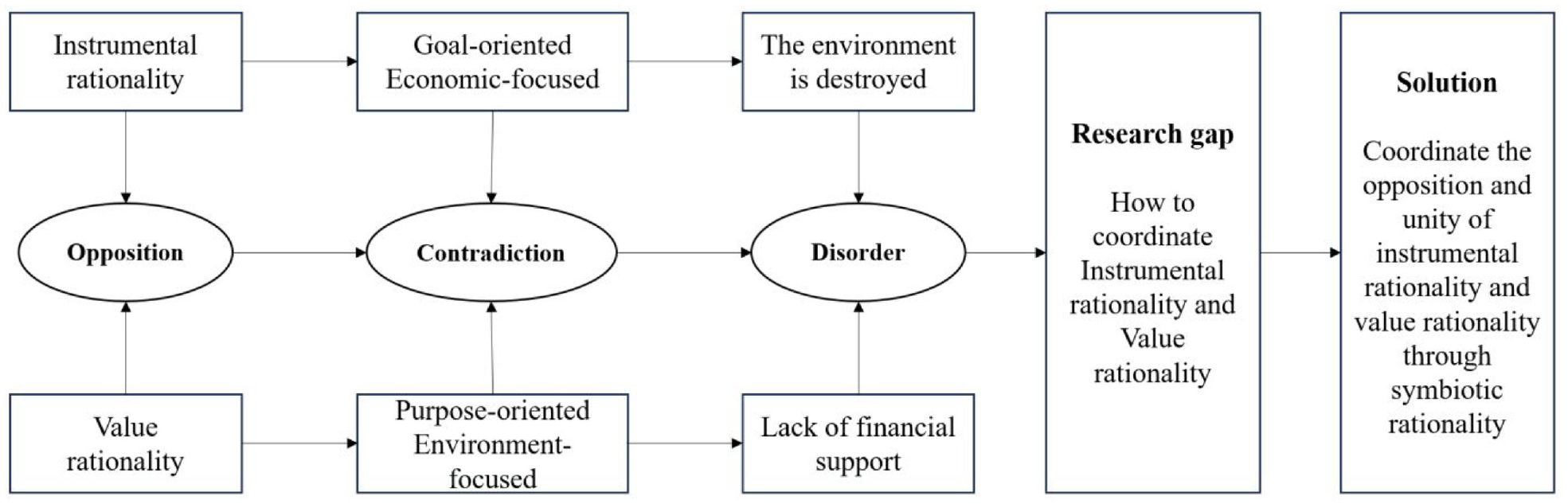
Review of the literature on instrumental rationality versus value rationality in tourism.
Conversely, the value rationality of tourism enterprises ought to encompass a commitment to minimizing ecological impact while maximizing the generation of social welfare. For tourism enterprises in a symbiotic state with the ecological environment and the surrounding communities of tourism destinations, the embodiment and necessity of this value rationality is more prominent. These enterprises operate within delicate ecosystems and cultural landscapes, wherein the well-being of both natural environments and communities is paramount. In that light, a holistic approach that integrates both instrumental rationality and value rationality is essential for guiding the symbiotic practices of tourism enterprises and achieving sustainable tourism development. However, the existing rational approaches, with their singular perspectives, struggle to effectively guide the symbiotic practices of tourism enterprises. Although instrumental rationality emphasizes economic efficiency and operational effectiveness, it may prioritize short-term gains over long-term sustainability. On the other hand, value rationality may lack clear frameworks for implementation and measurement, making it challenging for tourism enterprises to operationalize ethical and environmental principles in their day-to-day operations.
In response to the limitations of singular approaches to rationality, scholars have endeavored to introduce new rationality paradigms that reconcile the tensions between instrumental rationality and value rationality, but the definition and measurement of such a new rationality are still in the exploration stage. Habermas and McCarthy (1984) proposed communicative rationality as a solution to the conflict between instrumental and value rationality, asserting that genuine practical activity lies in human communicative behavior, which emphasizes dialog, collaboration, and participatory decision-making processes that involve various stakeholders. Some scholars have also put forward economic rationality and ecological rationality as alternative approaches for harmonizing instrumental rationality and value rationality in sustainable tourism (Bramwell & Lane, 2011; Sharpley, 2020), but these are still essentially instrumental rationality and value rationality, respectively, and remain part of the qualitative description of the whole, lacking substantial empirical support for the real situation. Therefore, further research developing a measurement scale for symbiotic rationality is clearly needed to better understand and reconcile the inherent tensions between instrumental rationality and value rationality in the context of sustainable tourism.
The Proposed Concept and Connotative Definition of Symbiotic Rationality
The proposed concept of “symbiotic rationality” and the development of a measurement scale to quantify it would extend the knowledge base of value-belief-norm theory (Stern, 2000) by addressing the shortcomings of traditional rationality paradigms. As stated above, a single form of rationality cannot effectively guide practice, and there has not yet been a focus on a form of rational thinking that can effectively guide the symbiotic behavior of tourism enterprises. According to value-belief-norm theory (Stern, 2000), egoistic, altruistic, and biospheric value orientations are the three main sets of values that are involved in the interaction between people’s values, beliefs, and norms in forming sustainable actions. However, the theory frequently ignores the integration of instrumental rationality, which is essential for directing real-world decision-making processes. Whereas value rationality is important in determining pro-environmental behavior, value-belief-norm theory does not provide a comprehensive framework that reconciles the inherent tensions between value rationality and instrumental rationality.
Basing our reasoning on the symbiotic relationships between tourism enterprises and other businesses and those between enterprises and the environment, this study proposes the concept of “symbiotic rationality” to guide symbiotic behavior in tourism SME, aiming to bridge the current theoretical gap by proposing a holistic approach that integrates both instrumental rationality and value rationality. Symbiotic rationality is a new way of thinking that is based on the objective symbiotic relationships between tourism enterprises and the environment as well as between the enterprises themselves. It systematically examines, reconciles, and promotes the long-term sustainable development of symbiotic relationships. First, the premise of symbiotic rationality lies in objective symbiotic relationships, which in our study were between tourism enterprises and different types of resources, including the coexistence of tourism enterprises with environmental and social resources, as well as the symbiotic states between tourism enterprises and other businesses. Second, symbiotic rationality plays a crucial guiding role in symbiotic behavior, with the ultimate goal of achieving symmetrical and mutually beneficial development in the social, economic, and environmental dimensions—again, for this study, those of the tourism industry. The symmetrical and mutually beneficial (mutualistic symbiosis) model of symbiosis is the most favorable state in a symbiotic situation (Duhamel & Vandenkoornhuyse, 2013; Margulis, 2008), and symbiotic rationality steers the symbiotic model toward this symmetric and mutualistic pattern in order to realize the harmony and sustainable development of the symbiotic system.
Scale Development
Overview of Scale Development Strategy
Following the best-practices guidelines for scale development suggested in the literature (DeVellis & Thorpe, 2021; Worthington & Whittaker, 2006), this research employed a multi-study method to develop and validate a scale for measuring symbiotic rationality. Specifically, our developmental process used a four-stage study comprising four smaller component studies. In Study 1, initial scale items were generated through an extensive literature review and in-depth interviews. In Study 2, those initial items were converted into a survey questionnaire, and data from 319 respondents were collected and underwent exploratory factor analysis. Study 3 involved collecting another set of data from 313 respondents, on which we performed confirmatory factor analysis and further purification of the items included. In Study 4, to assess the nominal validity of the measurement scale, we proposed and tested a model of the relationship between symbiotic rationality and its outcome variable (firms’ ecological innovations; n = 260).
According to upper echelons theory, an organization reflects its top managers, with the subjective attitudes, personal perceptions, and values of the executives and senior management team forming the basis of the enterprise’s strategic decision-making (Hambrick, 2007). In this study, we defined our interviewees as a diverse range of senior managers and decision-making line supervisors directly responsible for or closely connected to the organization’s sustainability practices. Specifically, our sample included roles such as Vice Presidents, Operations Directors, Executive General Managers, as well as Purchasing Managers, Marketing Managers, Financial Investment Managers, and Sustainability Team Leaders. By incorporating perspectives from diverse organizational functions, we aimed to ensure a comprehensive understanding of how symbiotic rationality is conceptualized and operationalized across different areas of the business. This approach not only captures the strategic insights and decision-making processes at the highest organizational levels but also provides a more nuanced view of sustainability practices throughout the organization. Our focus aligns with the study’s theoretical foundation and enhances the relevance, validity, and applicability of our findings to the study’s objectives.
Study 1: Generation of the Initial Item Pool
Determination of the study area
Tourism in the Guangdong–Hong Kong–Macao Greater Bay Area was chosen as the main research area for the following reasons. On the one hand, tourism activities within the Greater Bay Area are frequent, and prominent cross-industry enterprises such as China Travel HK, Guangdong Changlong Group, and Shenzhen Overseas Chinese Town are actively exploring the value of the industrial chain. This region also sees a significant aggregation of vital small and medium-sized tourism enterprises (Wong et al., 2015). Concurrently, the economic expansion of the Greater Bay Area has led to significant pollution and degradation of ecosystems. These issues have disrupted the ecological balance of the region and pose serious threats to its socioeconomic and ecological development (M. Yang et al., 2024). With rapid economic development, regional environmental issues have surfaced, including the degradation of water quality, loss of ecological space, and low resource efficiency. These problems have become significant constraints on development, exacerbated by tourism businesses that excessively exploit local resources and contribute to environmental degradation (Huang et al., 2020).
Considering the development of urban tourism in the Greater Bay Area and the distribution of tourism formats, this study selected nine enterprises located in seven cities in the Greater Bay Area. These enterprises’ specific industry areas included the tourism industry, tourism transportation industry, tourism accommodation industry, tourism entertainment industry, tourism comprehensive services industry, and other business formats. We interviewed 19 interviewees from 9 companies, for a total interview time of 1360 minutes, and the textual content from the interviews’ recorded contents was approximately 190,000 words (see Supplemental Appendix 1).
Data collection
The interviews were conducted primarily from March to October 2021. We adopted a combination of theoretical sampling and purposeful sampling methods. This approach involved collecting and analyzing data to determine the next interview subject iteratively until theoretical saturation was achieved. To ensure comprehensive representation, we selected interviewees based on geographic area and tourism format distribution within the Greater Bay Area and conducted two rounds of interviews using a dynamic evolution approach.
The first round of interviews was conducted mainly with senior managers of tourism enterprises located in Guangzhou, the core city of the Greater Bay Area, and its surrounding cities. A total of 4 tourism enterprises were visited and 11 interviewees were interviewed. The first round of interviews focused primarily on several economic and environmental behaviors of the interviewees’ enterprises in their daily operations and sought to delve into the causes of those behaviors at the behavioral level and produce new concept texts. Specifically, the first-round interview questions mainly addressed four topics: basic interviewee information, background information on the interviewee’s enterprise, the economic benefits of enterprise development, and the natural environment and enterprise development (see Supplemental Appendix 2). For example, we posed questions related to economic benefits like: In your enterprise’s operations and development, what cooperation strategies (such as cooperation at the corporate culture level, policy-making level, resource allocation level, and operational method level) are adopted between departments or between stores to enhance the overall economic benefits of the enterprise?
And regarding the natural environment we asked questions like: In your enterprise’s operations and development, what impact have the unique environmental policies of the Greater Bay Area (such as green tax policies) had on the enterprise? What cooperation does the enterprise have with relevant government agencies in terms of environmental protection?
The purpose of the second round of interviews was to determine whether new concepts had indeed emerged and to confirm whether the concepts generated from the first round of interviews were applicable to the second round of interviewees. On that basis, in the second round of interviews we added more questions about how tourism enterprises dealt with their relationships with other enterprises and the environment, and we focused on raising those questions from a rational perspective, until the interview no longer generated new concepts—that is, until theoretical saturation was reached. Compared to the first round of interviews, the second round of interviews in this study included additional questions about the relationships between enterprises, between enterprises and the environment, as well as within enterprises or between enterprises and the public (see Supplemental Appendix 2). For example: Does your company actively communicate or share its green development concepts with other companies during collaborations and exchanges? If so, what specific actions or measures are taken? How have external environmental factors such as the culture, location, and policies of the Guangdong-Hong Kong-Macao Greater Bay Area influenced your company’s efforts to communicate and share green development concepts with other companies? What are the facilitating factors and obstacles?
In the two rounds of interviews, the average interview lasted between 60 and 90 minutes and a total of 19 relevant people were interviewed (see Supplemental Appendix 1).
Although this study’s qualitative data was collected during the COVID-19 pandemic, Dodds and Hess (2020) discussed how research methodologies were adapted during the COVID-19 pandemic to ensure that the quality and validity of data collection were maintained. They indicated that with appropriate measures, such as using remote data collection tools, increasing sample diversity, and conducting additional validity and reliability checks, the pandemic’s impact on data collection could be limited. Firstly, interviews were conducted remotely using video conferencing tools when necessary. This ensured the safety of both interviewers and interviewees without compromising the depth and quality of the discussions. Secondly, the interview protocols were carefully designed and consistently applied across all interviews, whether conducted in person or remotely. This ensured that the data collected was comparable and reliable. Finally, research has shown that crises, such as the COVID-19 pandemic, can amplify the interdependencies between organizations and their environments. For instance, Ratten (2020) discussed how the pandemic increased the visibility and importance of symbiotic relationships in various industries, as organizations were forced to adapt to rapidly changing conditions. Similarly, Sheth (2020) highlighted that the pandemic led to a greater emphasis on collaboration and mutual support among businesses, which are key components of symbiotic relationships. Thus, the impact of COVID-19 on this study was minimal.
Data analyses
Item generation based on content analysis and in-depth interview
First, the research team was divided into two groups of two members each, working independently using back-to-back coding. The 190,000 words of interview materials were coded one by one, and the initial concepts contained therein emerged naturally according to the characteristics of the materials themselves, ensuring that each coding item had the same meaning. In addition, two auxiliary strategies were adopted in this study. First, in the process of open coding, spindle coding, and selective coding based on grounded theory, in addition to two researchers conducting back-to-back coding, another researcher acted as an advocate to improve the accuracy and uniformity of the coding by repeatedly asking questions and introducing alternative interpretations of data during the coding process. Second, to promote the conceptualization process, in multiple rounds of coding between the two main coders, the coders adopted a coding strategy for comparing each other’s coding and distinguishing the boundaries between each code and the genera formed based on the code. Finally, we extracted a total of 16 initial concepts from all the data.
From the interview data and existing literature, the concepts obtained from the open coding were screened, analyzed, merged, and classified, and the inductive results were discussed. After repeated deliberations, a consensus was reached, and four dimensions were extracted and defined (Table 1).
Scale Item Contents and Sources Based on Literature and Coding.
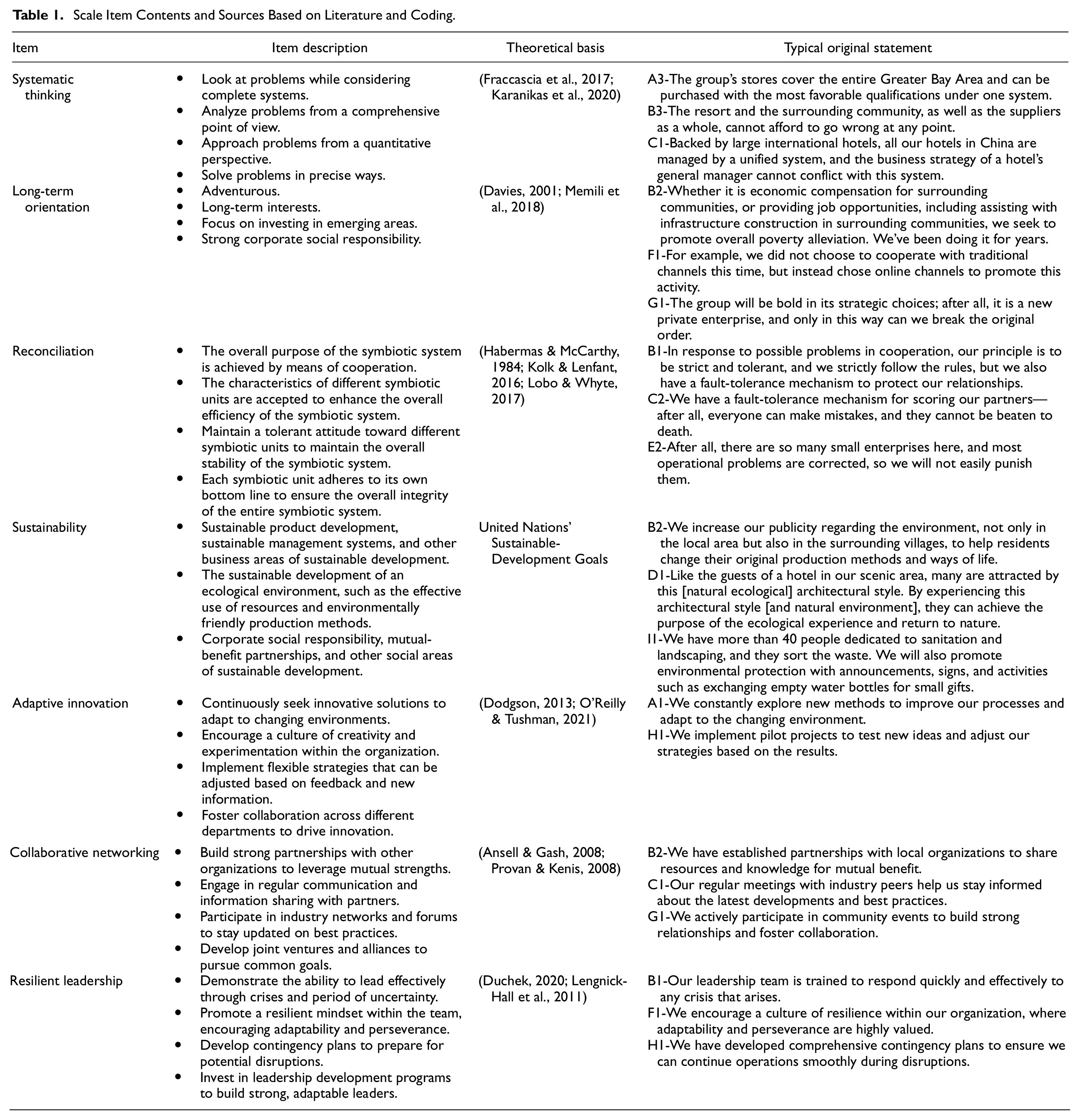
After thorough analysis by academic experts and industry professionals, we confirmed four key dimensions: “Systematic Thinking,”“Long-term Orientation,”“Reconciliation,” and “Sustainability.” We will elaborate on these dimensions in detail later. Meanwhile, the dimensions of “Adaptive Innovation,”“Collaborative Networking,” and “Resilient Leadership” were removed. This decision highlights the differing perspectives of academia and industry regarding the concept of “symbiotic rationality.” Academic experts pointed out that “Adaptive Innovation” focuses primarily on internal innovation and adaptability, which does not fully capture the holistic coordination and cooperation necessary within a symbiotic system. Similarly, “Collaborative Networking” was deemed more relevant to network and relationship management rather than the comprehensive, long-term strategic considerations essential for symbiotic rationality. Industry professionals emphasized that “Resilient Leadership,” while important for crisis management and individual leader traits, does not adequately reflect the collective strategies and behaviors of an enterprise within a symbiotic system. They noted that symbiotic rationality requires a broader focus on systematic thinking, long-term orientation, reconciliation, and sustainability. Thus, based on these analyses, it was concluded that these three dimensions do not sufficiently represent the core elements of symbiotic rationality, and they were therefore excluded from the final measurement framework.
Dimension confirmation and initial item modification
The research theme of this study was to explore the symbiotic rationality that guides the symbiotic behavior of tourism enterprises, so “symbiotic rationality” was the core category. Combining our data with the relevant literature, four main categories were further extracted when we sorted out the relationships between the subcategories and core categories: systematic, customary, appropriate, and sustainable thinking. At the same time, the four core categories of “symbiotic rationality” were further coded, and the typical logical relationship between the above core categories and symbiotic rationality was found (see Supplemental Appendix 3).
In addition, Jackson (2020) proposed that the use of quantitative and precise means to solve problems is an obvious feature of systematic thinking. A holistic perspective involves approaching problems while considering the complete system; comprehensiveness entails understanding the interconnectedness of various subsystems within the tourism system; quantification involves employing quantitative methodologies to analyze data and derive insights; and precision emphasizes the importance of accuracy and rigor in problem-solving approaches. By embracing systematic thinking across these dimensions, tourism practitioners can navigate the complexities of the tourism system more effectively, which in turn will lead to more informed decision-making and sustainable outcomes.
Preparation of the initial measurement scale
In Study 1, we invited three graduate students, and three academic experts in the field of sustainable tourism research to review the basic contents and expressions of the original items one by one. Besides, we invited four additional experts to judge whether the items were appropriate and to put forward corresponding suggestions for modification. In addition, in cooperation with a business data company, we conducted a pilot test on 90 tourism enterprises in the Greater Bay Area to check whether the text expressions of the items were easy to understand and whether the items were reasonable. The modified items were again submitted to the experts for review, and ultimately many obtained unanimous approval. Therefore, the purified symbiotic rationality scale contained a total of 20 original items (see Supplemental Appendix 4), and we carried out our subsequent quantitative analyses and item screening on that basis.
Study 2: Exploratory Factor Analysis
Exploratory factor analysis
Sampling and measurement
In Study 2, data collection was conducted in collaboration with Shanghai Hongque Information Technology Co., Ltd., a company founded in 2014 that specializes in development, training, services, and consulting regarding hotel revenue management software. This partnership allowed us to ensure the validity of our questionnaires by imposing specific restrictions on the respondents. The criteria included limiting the respondents to the Greater Bay Area, ensuring they held senior management positions, and confirming that they were part of tourism-related enterprises.
In this second study, we conducted an online survey of 398 tourism enterprises in the Greater Bay Area. The average questionnaire completion time was 472 seconds. Using that standard, we excluded from this study questionnaires with response times lower than 250 seconds and those with response times higher than 750 seconds, as well as incomplete questionnaires and those with either 1s only or 7s only in all of the checked boxes. Finally, a valid sample of 319 questionnaires remained. Descriptive statistical information regarding the samples is shown in Supplemental Appendix 5.
It should be noted that each sample represented an independent tourism enterprise, and the interviewees were all senior managers of those enterprises. Specifically, each respondent represented an SME in the tourism sector. According to the classification standards for SMEs in China, tourism enterprises are categorized based on their annual revenue and number of employees. For instance, small enterprises in the tourism sector typically have annual revenues of less than 20 million RMB and fewer than 300 employees, while medium-sized enterprises have annual revenues of between 20 million RMB and 400 million RMB and employ between 300 and 1000 employees (Ministry of Industry and Information Technology of the People’s Republic of China, 2011). By focusing on senior managers from these SMEs, we ensured that our study captured relevant strategic insights from key decision-makers within the tourism industry.
Results of analyses
The decision of whether to keep an item could be made based on its significance or its absolute value. Table 1 presents the project analysis results for symbiotic rationality, showing that all 20 symbiotic rationality items met the requirements and were retained.
First, it was necessary to consider whether the data themselves were suitable for exploratory factor analysis. The larger the Kaiser-Meyer-Olkin (KMO) measure of sampling adequacy is, when used to test for bias correlation between variables, the more common factors there are that are indicated between the variables, and if the KMO is less than 0.5, the data are not suitable for exploratory factor analysis. On the other hand, a significant chi-square value of Bartlett’s test of sphericity also justifies the use of exploratory factor analysis. In general, a KMO score greater than 0.6 and a significant Bartlett’s ball test result indicate that factor analysis is appropriate. The KMO value of the data collected in this study was 0.869, which indicated that the data were appropriately sampled. Meanwhile, we used Bartlett’s ball test to test the moderateness of the correlation matrix between variables (χ2 = 5,404.372, p < .001), and it indicated the existence of common factors between variables, so again the data were suitable for factor analysis.
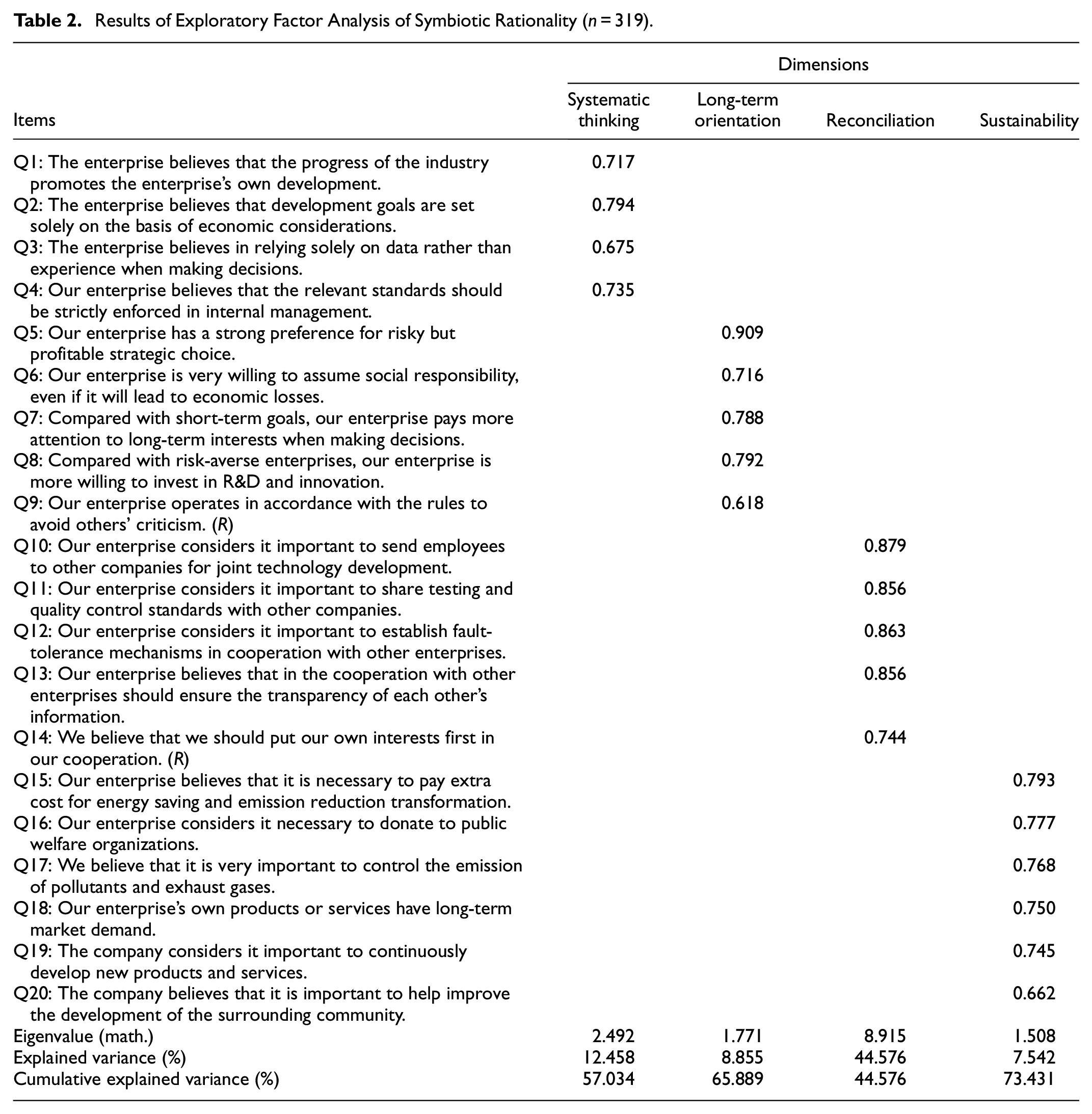
The analyses were conducted by principal component analysis, selecting the factor loadings and cross-loading criteria of 0.5, and then extracting the public factors by selecting the rotation based on the eigenvalue greater than 1 with the maximum variance method. A total of four factors were extracted, and the total-variance-explained rate was 73.431% (see Table 2). Factor 1 mainly reflected the content of systematic thinking, Factor 2 mainly reflected the content of a long-term orientation, Factor 3 mainly reflected the content of reconciliation, and Factor 4 mainly reflected the content of sustainability. The corresponding extracted loadings and coefficients of each factor were above 0.5, and the loadings of the cross-factors were all lower than 0.4, which meant that the structural validity of the 20 question items met the requirements, so they were retained.
Results of Exploratory Factor Analysis of Symbiotic Rationality (n = 319).
Study 3: Confirmatory Factor Analysis
Sampling and measurement
Study 3 sought to verify the 20-item; four-dimensional structure obtained in Study 2 through confirmatory factor analysis. Researchers collected a total of 313 samples from senior executives of tourism enterprises through various means, such as social circles and pertinent tourism business WeChat groups. These groups comprised associations of hotel owners, restaurant owners, tourism operators, and A-level scenic spot managers across various cities in the Greater Bay Area. To ensure that respondents from Study 2 did not participate in Study 3, we implemented IP address restrictions. This approach allowed us to maintain the integrity of our exploratory and confirmatory analyses by preventing overlap in the target populations.
Results of analyses
We performed CFA using AMOS 21.0 software and applied several fitting indices to determine the measurement model (Zhang et al., 2024). Hair (2009) pointed out that GFI, TLI, and CFI values greater than 0.9 are ideal and greater than 0.8 are acceptable; Han and Yano (2015) believed that a value of RMSEA less than 0.1 can indicate that the model is acceptable; Guo et al. (2008) believed that at a sample size that is less than 500, 0.05 < SRMR < 0.08 is the basic requirement and other data should also be referenced. In this study, the factors of systematic thinking, long-term orientation, reconciliation, and sustainability were used to create a first-order four-factor model and a second-order four-factor model, and the fit for each is given in Table 3 below. According to the criteria stated, it can be learned from Table 3 that the first-order validated factor analysis and the second-order validated factor analysis of the variables had a good fit, and the evaluation indicators met the requirements.
Results of CFA.

Reliability test
In Study 3, the coefficient for internal consistency (Cronbach’s α) was used to test the reliability of the measured items. In general, the larger the Cronbach’s α coefficient, the higher the reliability of the scale. Specific judgment criteria included: the Cronbach’s α coefficient of the measurement item indicates acceptable scale reliability if it is above .6, high reliability if it is above .7, and very good reliability if it is above .8. The corrected total correlation coefficient was selected to reflect the data’s reliability. It is generally believed that a corrected-total-correlation-coefficient value greater than 0.35 is required for the reliability of the sample data to pass the test.
The measurement items of the four variables for symbiotic rationality were analyzed. As shown in Supplemental Appendix 6, the corrected item-total correlation values for all items were greater than .35. However, after the deletion of the following two contrasting items—“Q9: our enterprise operates in accordance with the rules to avoid others’ criticism” and “Q14: We believe that we should put our own interests first in our cooperation”—the Cronbach’s α coefficients of the measurement items increased, so those two items were deleted.
Validity test
In accordance with the requirements set out by DeVellis and Thorpe (2021) regarding scale development validity testing, we tested the convergent validity and discriminant validity of the symbiotic rationality scale. The results showed that the standardized factor load coefficients of all the observed variables were greater than 0.5, the four combined reliability values were greater than .7, and the four average variance extracted values were greater than 0.5, indicating that the convergent validity of symbiotic rationality was good (Supplemental Appendix 7). The discriminant validity test results for symbiotic rationality are shown in Supplemental Appendix 8. The correlation coefficient between two variables was less than the average variance extracted square root of each, and the internal correlation of the variables shown was greater than the external correlation was, indicating that the discriminant validity of the symbiotic rationality scale was good.
Study 4: Nomological Validity
According to a suggestion by Hinkin (2005), researchers need to examine the relationship between a newly developed scale and the hypothesized relevant variables through existing theories when testing nomological validity. Scholars have argued that both value rationality and instrumental rationality can change the commitments and influence the behaviors of different stakeholders (Van Mumford & Zettinig, 2022). Meanwhile, recent research has acknowledged that rationality is a critical factor in making decisions about sustainable development (Bolis et al., 2017). In ecotourism contexts, scholars have confirmed that formal rationality and substantive rationality as ideological goals guide different ecotourism projects (Olson, 2012). Corporate ecological innovation is a manifestation of sustainable development. Therefore, we proposed that symbiotic rationality has a positive impact on enterprises’ tendency toward ecological innovation.
Based on three questions posed by Fussler and James (1996), we measured each enterprise’s tendency toward ecological innovation using the following statements: “The company is willing to implement a new management system to achieve ecological innovation,”“The company often updates equipment to reduce the use of raw materials,” and “The company tries to reduce energy consumption as much as possible in the development or design of the product or service.” We collected 190 valid survey sample through tourism business WeChat groups, which contains tourism SMEs managers across various cities in the Greater Bay Area. Taking symbiotic rationality as the independent variable and enterprise ecological innovation tendency as the dependent variable, we conducted a regression analysis and found that β = .773, p = .001 < .01, which means that symbiotic rationality had a significant positive impact on firms’ ecological innovation tendencies. In summary, the symbiotic rationality scale developed in Study 4 had good criterion association validity.
Discussion and Conclusions
Findings and Discussion
This study put forward the inherent logic of “harmony between nature and man” in the relationship between tourism management and symbiotic rationality. Taking tourism enterprises in the Guangdong–Hong Kong–Macao Greater Bay Area as an example and basing our thinking on qualitative interviews and a literature review, we first conceptualized symbiotic rationality, a thinking method derived from symbiotic relationships, which operates to realize symbiotic patterns in society, the economy, and the environment. Second, we verified a symbiotic rationality scale that had good reliability and validity, and which consisted of 18 items in 4 dimensions: systematic thinking, long-term orientation, reconciliation, and sustainability. Finally, the study verified the positive influence that symbiotic rationality exerts upon enterprises’ tendency toward engaging in ecological innovation. The proposed notion of symbiotic rationality conforms to a general trend of harmonious symbiosis between humans and nature in green development, extends the development of and acts as a supplement to the rational thinking of enterprises that unilaterally use a single rationality, and explores and attempts to reconcile the paradox of instrumental rationality and value rationality.
Further analyzing the four dimensions of the scale, the systematic thinking dimension reflects a holistic and comprehensive perspective. In prior literature on sustainable tourism, some scholars have proposed that destination managers can build low-carbon tourism destination systems by lowering carbon emissions, adding value per tourist arrival, and reducing economic leakage, further verifying the systematic thinking dimension (Gössling & Higham, 2021). Furthermore, this dimension is similar to the concept of systems thinking because both emphasize a holistic view of the complex causal relationships in a system (Lengieza et al., 2020; Lezak & Thibodeau, 2016).
The long-term orientation dimension is consistent with the concept of temporal thinking in tourism research, because both reflect a state in which tourism enterprises need to be aware of the importance of projecting causal relationships into the future (Lengieza et al., 2020). Therefore, long-term orientation is also an indispensable dimension of symbiotic rationality. For example, an enterprise may choose to maintain the status quo in the short term without adopting sustainable practices, but this may cause irreversible negative effects on the environment in the long term (Memili et al., 2018).
The sustainability dimension exhibits coherent alignment with value-belief-norm theory. Similar concepts, such as corporate social responsibility, have been mentioned in tourism enterprise literature. For example, when making investment decisions, tour operators generally tend to balance the interests of the local community, employees, and businesses, and to consider the effects of their investments on the local economy and the environment (Masiero et al., 2023).
The reconciliation dimension is particularly novel, having been developed specifically for symbiotic rationality. Its uniqueness and originality are demonstrated in its merging of instrumental rationality and value rationality. In contrast to Zhou and Pu’s (2023) finding that an online travel agency and a small tourist attraction collaborated because of reciprocity motivation, reconciliation contributes new insights regarding collaboration between tourism companies, highlighting that companies can better use cooperation, acceptance, tolerance, and restraint to reach consensus. For instance, to better protect the environment of ecotourism destinations, tourism companies may achieve better supply chain cooperation by compromising and adopting consistent pollution discharge standards.
In addition, this research established the positive effect of symbiotic rationality on organization ecological innovation and confirmed our developed scale with robust theoretical validity. Our work demonstrates that the developed scale contains sufficient theoretical validity to predict enterprise intention.
Theoretical Implications
The theoretical contributions of this mixed-method study are substantial, advancing our understanding of rationality in the context of sustainable practices among tourism SMEs. By conceptualizing symbiotic rationality, this research builds on the existing literature on symbiosis theory (Francis, 2009), value-belief-norm theory (Stern, 2000), instrumental rationality, and value rationality (Weber & Shils, 1954). This conceptualization provides strong theoretical support for bridging the tension between instrumental and value rationality, addressing a significant gap in the literature.
Herfeld (2020) and Gigerenzer (2021) noted that different rationalities prompt people to form different value orientations, leading to varied engagement in sustainable practices. Our study leveraged this insight to develop the concept and scale of symbiotic rationality. By establishing it as a distinct way of thinking that arises from symbiotic relationships, we contribute a new rational perspective that systematically considers symbiotic relationships, reconciles such relationships, and promotes the long-term and sustainable development of these relationships.
Moreover, symbiotic rationality advances beyond previous rational perspectives by integrating the strengths of both instrumental and value rationality. Unlike existing studies, which have often treated these rationalities as conflicting, the symbiotic rationality that we put forward here resolves those paradoxes while maintaining the distinctive contributions of both instrumental and value rationality. Our research harmonized both rationalities within the context of symbiotic connections, offering a context-specific solution that enhances theoretical clarity and practical relevance.
Previous studies on rationality have largely stopped at the concept discussion stage, lacking effective and quantifiable empirical measurement tools. Our study addresses this by developing and validating a reliable symbiotic rationality measurement scale for tourism SMEs, comprising four dimensions: systematic thinking, long-term orientation, reconciliation, and sustainability. This research highlighted the structural dimension of the symbiotic rationality scale and presented a new measurement tool, thereby making a methodological contribution to the field of tourism sustainability that provides a reference premise for rationality research and facilitates more precise and comprehensive quantitative research on symbiotic rationality in tourism SMEs.
Furthermore, the four-dimensional scale contributes to a comprehensive understanding of the connotations of symbiotic rationality and extends the research on tourism SMEs, networks, and sustainable behaviors. While previous studies (Lithgow et al., 2019; C. Yang et al., 2018) have identified symbiotic statuses, they have not sufficiently examined how tourism SMEs perceive these statuses and the rational perspectives behind their management decisions. Our research fills this gap, demonstrating how symbiotic rationality can help tourism businesses navigate conflicts between instrumental and value rationality. The reconciliation dimension, a novel contribution to symbiotic rationality, stands out for its innovative fusion of instrumental and value rationality, reconciling symbiotic relationships and supporting long-term and sustainable development for tourism SMEs.
Practical Implications
The symbiotic rationality scale has significant practical implications for policymakers and SMEs, particularly regarding the development of a code of practice to guide sustainable practices for SMEs in the tourism sector. Such a code of practice, grounded in the principles of symbiotic rationality, can provide a comprehensive framework for SMEs to integrate sustainable and collaborative approaches into their operations.
By leveraging the four dimensions of the scale—systematic thinking, long-term orientation, reconciliation, and sustainability—a code can encourage SMEs to conduct regular ecosystem mapping, implement decision-making processes that consider impacts on the entire tourism ecosystem, and establish cross-sector partnerships. The systematic thinking dimension of the symbiotic rationality scale encapsulates the interconnected reality of enterprises within symbiotic ecosystems and highlights the necessity for tourism enterprise managers to adopt system-oriented thinking in consideration of the intricate web of relationships and dependencies within the system. For instance, consider a tour operator in a coastal region collaborating with local accommodation providers and environmental conservation organizations, a systematic thinking approach prompts managers to consider not only their immediate operational concerns but also the broader implications of the effects of their actions on the entire tourism ecosystem.
A code of practice incorporating symbiotic rationality can also guide SMEs in developing long-term strategic plans that balance traditional management approaches with innovation, allocate resources for sustainable research and development, and implement mentorship programs for knowledge transfer. For example, for a hotel chain to reduce its long-term environmental effects and still maintain its competitiveness in the market, it could choose to invest in renewable energy projects or other eco-friendly practices.
Reconciliation, as another dimension, methodologically reflects the symbiotic rationality within the ecosystem—advocating for tourism SMEs to prioritize the maximization of collective benefits within the symbiotic system and to strive for mutualistic outcomes across different symbiotic entities. A code of practice following symbiotic rationality can further promote the establishment of formal channels for information sharing and collaboration among ecosystem partners, develop conflict-resolution mechanisms that prioritize collective benefits, and create joint initiatives for mutual growth.
In terms of sustainability, a code of practice with symbiotic rationality can advocate for regular sustainability audits, resource efficiency programs, and engagement in community development projects aligned with global sustainability goals. Moreover, it can suggest the implementation of key performance indicators to measure symbiotic rationality, annual sustainability reporting, and participation in industry benchmarking initiatives. By encouraging continuous improvement through regular code revisions and facilitating peer-learning networks, policymakers and SMEs can foster a more collaborative and resilient tourism industry.
This approach, based on the symbiotic rationality scale, can significantly aid SMEs in navigating the complex challenges of sustainable development while contributing to the broader ecological and social systems in which they operate.
Study Limitations and Suggestions for Future Research
First, this study focused on the theoretical conception of symbiotic rationality in the development of tourism enterprises in the Guangdong–Hong Kong–Macao Greater Bay Area. Whether the conception has universal value in other scenarios or regions remains to be tested. Future studies can extend the theoretical abstraction we developed in this study to a wider range of enterprises and research areas. Future studies can collect additional, different types of enterprise interviews and business data to further explore the differences in the predictive validity of the symbiotic rationality scale in different types of enterprises. Second, this study focused on the development of a scale to measure symbiotic rationality. Studying factors that do not affect symbiotic rationality and the impact of symbiotic rationality on internal and external stakeholders of organizations will require more comprehensive and systematic research and empirical testing in the future. Third, the concept of symbiotic rationality proposed in this research was aimed at the enterprise level, but symbiotic rationality also exists in individuals, and future studies can explore the applicability of symbiotic rationality at the individual level. Finally, although the research object of this study was tourism enterprises in the Guangdong–Hong Kong–Macao Greater Bay Area, the scope of the applicability of symbiotic rationality is not limited to the tourism enterprises in that region, and the extent of the theory’s reach is also an important question for future research.
Supplemental Material
sj-docx-1-jtr-10.1177_00472875241307567 – Supplemental material for Demystifying Symbiotic Rationality in Tourism SMEs: Conceptualization and Scale Development
Supplemental material, sj-docx-1-jtr-10.1177_00472875241307567 for Demystifying Symbiotic Rationality in Tourism SMEs: Conceptualization and Scale Development by Jingyan Liu, Kang Nie, Jiaman Liu and Jialin (Snow) Wu in Journal of Travel Research
Footnotes
Declaration of Conflicting Interests
The author(s) declared no potential conflicts of interest with respect to the research, authorship, and/or publication of this article.
Funding
The author(s) disclosed receipt of the following financial support for the research, authorship, and/or publication of this article: This work was supported by the National Natural Science Foundation of China [grant numbers 72074233].

Supplemental Material
Supplemental material for this article is available online.
Author Biographies
References
Supplementary Material
Please find the following supplemental material available below.
For Open Access articles published under a Creative Commons License, all supplemental material carries the same license as the article it is associated with.
For non-Open Access articles published, all supplemental material carries a non-exclusive license, and permission requests for re-use of supplemental material or any part of supplemental material shall be sent directly to the copyright owner as specified in the copyright notice associated with the article.
