




Abstract
Socio-cognitive factors play a significant role in multi-stakeholder collaborations but are often overlooked in Indigenous tourism research. This research examines the underlying attitudes, beliefs and values that shape structural and functional interactions in collaboration for Indigenous tourism development. Using ethnographic research approaches, this study explores the traditional ontologies and knowledge of the Indigenous Newari community in Nepal to identify the socio-cognitive factors underpinning traditional collaborative engagement in tourism. The bottom-up collaborative approach identified in this study facilitates emancipation through Indigenous tourism and offers an Indigenous-informed theoretical framework to enable the understanding and execution of Indigenous tourism initiatives. This approach emphasizes the need for genuine participative mechanisms that respect Indigenous perspectives and provide emancipatory agency. A paradigm shift in Indigenous tourism development that highlights the conscious integration of Indigenous perspectives from the inception of initiatives is needed to contest the lingering power dynamics affecting the success and sustainability of collaborative endeavors.
Keywords
Introduction
Since Cohen’s (1989) seminal work on the covert application of staged authenticity in the creation of alternative forms of tourism, scholars have engaged in a seemingly endless discourse on the potential benefits and drawbacks of tourism for tribal or Indigenous communities. By definition, Indigenous peoples are intrinsically tied to their sacred traditions and shared history; they are seen as inseparable from their lands (Béteille, 1998), holding invaluable knowledge about the practices required for the sustainable management of natural resources. However, Indigenous tourism, which occurs in a community’s traditional country, is situated within the broader power structures that have historically undermined the developmental aspirations of Indigenous people (Scheyvens et al., 2021). Perhaps unsurprisingly, some researchers view tourism as a liberating force (Curtin & Bird, 2022; Pereiro, 2016), while others consider it detrimental to the emancipation, autonomy, and well-being of Indigenous communities (Stumpf & Cheshire, 2019; Walle, 1993).
Several scholars (Carlisle et al., 2013; Larson et al., 2022) argue that government and non-Indigenous stakeholders play a significant role in enabling an emancipatory approach to tourism development and have therefore advocated for multi-stakeholder collaboration. Nonetheless, cultural authenticity, enduring patriarchy, and inexorable elitism (see R. K. Shrestha et al., 2024) remain prevalent concerns, particularly in developing countries, where they pose significant challenges to Indigenous communities. These concerns persist despite concerted efforts by government stakeholders to provide Indigenous peoples with more agency and control, which theoretically should facilitate self-determined development in their traditional country (Castillo, 2022). However, Larson et al. (2022, p. 17) believe that consultations and a “place at the table” are not sufficient to achieve positive outcomes and that greater attention should be paid to how marginalized Indigenous communities perceive and approach the multi-stakeholder relationships in which they are obliged to participate, but that are often unilateral and characterized by unequal power relationships.
Indeed, a bottom-up, justice-centric approach is considered to be critical for the self-empowerment of Indigenous communities (Carlisle et al., 2013; Gunter & Ceddia, 2021; Stumpf & Cheshire, 2019) and for promoting a restorative view of sustainability in Indigenous tourism (Mendoza-Ramos & Prideaux, 2018; Scherrer & Doohan, 2014). In reimagining multi-stakeholder collaboration from a bottom-up, justice-centric perspective on Indigenous tourism, studies (see R. K. Shrestha & L’Espoir Decosta, 2023a) tend to focus on the functional (e.g., capacity building, as discussed in Bittar Rodrigues & Prideaux, 2018; Wilson et al., 2001), relational (e.g., dialog, as discussed in Czakon & Czernek-Marszałek, 2021; Melis et al., 2023) and structural (e.g., participation and decision making, as discussed in Wang, 2008; Zielinski et al., 2021) dimensions of fostering effective collaboration. However, these dimensions alone cannot circumscribe the complexities surrounding multi-stakeholder collaboration (Dolezal & Novelli, 2022; Wang & Xiang, 2007).
A clear understanding of what comprises the “black box” of collaboration is required, that is, the unique characteristics, known as socio-cognitive processes, that humans share during collaboration (Micari & Pazos, 2021). According to Ringberg and Reihlen (2008), socio-cognitive processes include private and cultural models such as individuals’ attitudes, beliefs and values, which are potentially linked to the effectiveness of the functional and structural dimensions (e.g., acumen, memory, volition, creativity) of Indigenous approaches to collaboration. To explore the Indigenous approach to multi-stakeholder collaboration in the context of Indigenous tourism development, this study interweaves Indigenous knowledge, socio-cultural values, and ontologies (Wilson, 2008) to ask: “How do Indigenous socio-cognitive factors enable collaboration with multiple stakeholders to develop Indigenous tourism?” Accordingly, a natural supporting objective of the study is to identify the socio-cognitive factors that enable such multi-stakeholder collaboration.
This research is underpinned by an Indigenous methodology that not only allows Nepal’s Indigenous Newar to spearhead it but also moves them from the periphery to its center, enabling their voices to be heard. An ethnographic investigation of the Guthi, the traditional cultural crucible of the Newars, helps to generate respect for traditional and enduring Indigenous collaborative practices and informs a novel perspective on multi-stakeholder collaboration in Indigenous tourism. This study thus makes a substantial contribution to research on culturally sensitive Indigenous tourism practices by producing culturally based theoretical insights that inform and shape the development and implementation of Indigenous tourism practices linked to the social, structural and cultural contexts of Indigenous communities.
Literature Review
Indigenous Tourism
Evidence from various countries, including Australia, Canada, New Zealand, and the United States, demonstrates that Indigenous tourism can provide Indigenous communities with a vehicle for self-determined development (Scheyvens et al., 2021; Whitford & Ruhanen, 2016). As a result of such tourism, Indigenous destinations within several countries have experienced surges in visitor arrivals (Whitford & Ruhanen, 2016). These surges have been accompanied by the proliferation of Indigenous tourism products and service innovation (McDonagh, 2021; Young, 2021), aimed at providing tourists with diverse and rich cultural experiences (Schechter, 2021). Studies (Lonardi et al., 2020; Mika & Scheyvens, 2022) demonstrate that when Indigenous peoples are passionate about and internally driven to seek socio-economic and cultural transformation within their communities, they find solutions at the intersection of Western approaches with traditional epistemologies and methodologies. This approach not only celebrates Indigenous worldviews but often also encourages the revisitation and reimagining of dominant Western ideals and practices in tourism (see K. H. F. Fan et al., 2020; Harbor & Hunt, 2021).
Recent studies (Becken & Kaur, 2022; Mika & Scheyvens, 2022; Ransfield & Reichenberger, 2021; Scheyvens et al., 2021) on sustainable Indigenous tourism acknowledge the intricate connections between Indigenous communities and their natural and spiritual environments, supporting Narvaez et al.’s (2019) view that many First Nations peoples believe that they are mere guests on earth, rather than its owners. This fundamental belief in guardianship of the land intricately shapes the worldview of such communities, forming the basis of the ontologies and epistemologies that underpin their social beliefs and values. According to Scheyvens et al. (2021), initiatives that acknowledge and empower Indigenous values and voices can form the basis of sustainable tourism development within a community by celebrating Indigenous peoples’ stories and their symbolism, the emotions they evoke, and how they make others feel (Curtin & Bird, 2022; Richards, 2017), ultimately contributing to a deeper understanding of Indigenous identity and history. Thus, by playing an emancipative and active role in shaping tourism offerings and decision-making processes, Indigenous communities can ensure that tourism remains respectful of their customs, environment, and spiritual beliefs (Harbor & Hunt, 2021), thus centering the communities’ relationships and interests (Brayboy et al., 2012).
According to Whitford and Ruhanen (2016), the academic movement advocating for the self-determination of Indigenous tourism, which emerged in the late 20th century, focused on empowering Indigenous communities to manage and represent tourism initiatives within their traditional country. This movement remains relevant, as recent studies conducted in developing and emerging countries (Phillips et al., 2021; R. K. Shrestha et al., 2024) still caution against tokenism and misrepresentation. These contemporary studies go beyond reiterating long-standing academic debates on the unequal power relationships that have resulted in social inequalities and the construction of false narratives and, consequently, a disconnect between tourists’ expectations and experiences (Abascal, 2019; Ruhanen et al., 2015). Instead, recent studies highlight the enduring negative consequences of these colonial and hegemonic tendencies in terms of the well-being of Indigenous communities, such as cultural misrepresentation, economic exploitation, and the loss of sacred sites (R. K. Shrestha & L’Espoir Decosta, 2023b).
Subsequently, scholars (Ruhanen & Whitford, 2018, 2019; Stumpf & Cheshire, 2019) call for a shift toward ethno-development that emphasizes cultural sensitivity and considers Indigenous peoples’ distinct cultural identities, views, and values. They also state the need to ensure the well-being of Indigenous peoples through efforts driven by purposeful dreams, rather than prescriptivism (Hernandez & Valenzuela Gómez, 2024), to achieve effective resource control, fair accrual of benefits, inclusive decision-making, and emancipation (Dredge & Jenkins, 2007; Murphy, 1985, 1988). In other words, collaboration among multiple stakeholders in an Indigenous initiative is inevitable.
Multi-Stakeholder Collaboration
The literature exploring the dynamics of multi-stakeholder relationships in Indigenous tourism reports diverse and conflicting results (Mach & Vahradian, 2021; Whitney-Squire, 2016). These inconsistencies can be traced back to the inherent ontological and epistemological tensions between multiple stakeholders, as well as methodological and axiological differences in opinions about how things should be done (Buckley, 2018; Mistilis et al., 2014). Consequently, various Indigenous communities harbor skepticism toward external stakeholders, including government bodies and tourism service providers (Lai et al., 2016; Mach & Vahradian, 2021; R. K. Shrestha & L’Espoir Decosta, 2023a). These disparities are further exacerbated by the fact that despite decades of political and social movements, hegemonic practices persist through, for example, the confiscation of traditional lands (Greenfield, 2021; Khadka, 2020). Therefore, there is a demand for not only a seat at the table but also the consideration and respect of Indigenous voices. Achieving these goals necessitates a deliberate focus on the development of a supportive framework for grassroots initiatives in policy and program co-design (Fletcher et al., 2016; Stumpf & Cheshire, 2019; Whitford & Ruhanen, 2016).
The case of the Guna people in Panama is a remarkable example of an outcome of supportive institutional provisions for Indigenous self-determination in the development of a tourism portfolio that aligns with both the community’s needs and market demand (see Gill & Williams, 2011). The grassroots approach in this case illustrates an effective approach to managing the wicked problems affecting the sustainability of Indigenous culture, a problem that worries Scherrer and Doohan (2014). In contrast, Mach and Vahradian (2021) caution that the fate of Indigenous tourism in countries where Indigenous communities lack agency, voices, and institutional support largely depends on the leadership of the country’s government. This situation reflects the complex socio-political histories and assimilationist government practices (Whitney-Squire, 2016) that Indigenous communities around the world have endured, which have resulted in ongoing socio-economic disadvantages (Canavan, 2016; Whitney-Squire, 2016) and stereotyping (Leu et al., 2018). Attention is also paid to stakeholders’ lack of knowledge about Indigenous communities’ standpoint on cultural and territorial justice (Okazaki, 2008). In consideration of this standpoint, government bodies and other related stakeholders should ensure Indigenous peoples’ active and total involvement in the development and management of tourism in their communities (Buultjens & Gale, 2013; Malogdos & Yujuico, 2015).
In this regard, development initiatives should focus on learning from earlier experiences and adopting economic approaches geared toward Indigenous peoples’ well-being (Hillmer-Pegram, 2016). However, to achieve the “true” engagement (Fletcher et al., 2016) and empowerment (Stumpf & Cheshire, 2019) of Indigenous peoples, development initiatives should transcend symbolism. This will require sustained co-design and collaboration efforts with stakeholders that involve respectful consideration of Indigenous peoples’ beliefs and social locations (Espeso-Molinero et al., 2016). However, the historical assumption that Indigenous communities need external help and the persistent belief that others or mainstream society know what is best for these communities (R. K. Shrestha & L’Espoir Decosta, 2023a) have often hindered co-creative processes and collaborative efforts. Such assumptions can lead to issues like the insensitive commodification of cultural resources and the overexploitation of natural resources on Indigenous lands (Movono et al., 2018; Phillips et al., 2021; Sakata & Prideaux, 2013). Consequently, elite groups within (Jamal & Camargo, 2014) and outside Indigenous communities continue to benefit inexorably from these assumptions, raising concerns about power differences among participating stakeholders (Chan et al., 2016).
Recent studies (Nguyen et al., 2020; Warnholtz et al., 2022; Y.-Y. Wu, 2021) emphasize the importance of commitments made by non-Indigenous stakeholders to building trust by upholding the norms of respect and reciprocity. These studies call for stakeholders’ active engagement in gaining a deeper and better understanding of Indigenous standpoints and value systems (Ransfield & Reichenberger, 2021; Vega, 2022). This approach departs from traditional collaboration theories, which are rooted in the functional and structural perspective, as it implies recognition of the roles of socio-cognitive factors in Indigenous standpoints and value systems and, subsequently, their profound influence on Indigenous peoples’ perceptions, decision-making, and sensemaking, as proposed by Ringberg and Reihlen (2008). Indeed, the socio-cognitive approach acknowledges that stakeholders may interpret information and experiences differently due to differences in their cognitive frameworks and cultural backgrounds. Consequently, navigating these cognitive and cultural nuances to achieve more meaningful and effective collaboration with the Indigenous communities on whose land tourism is organized (R. K. Shrestha & L’Espoir Decosta, 2023b) is crucial. In fact, such an approach offers a more holistic and yet nuanced perspective on multi-stakeholder relationships than previous efforts, recognizing diverse worldviews, knowledge systems, and cultural contexts while ensuring deeper empathy and respect for Indigenous standpoints, values, and beliefs.
Methodology and Methods
Steps of Grounded Theory
The exploratory nature and context of this research encourage the adoption of an Indigenous research paradigm, underpinned by the steps of grounded theory, to uncover aspects of a social phenomenon through the lens of the study participants. Hence, Indigenous knowledge is not passively discovered but rather actively co-constructed and approved by the study participants, thus ensuring the incorporation of the four key concepts of relationship, respect, responsibility and reciprocity. These concepts are pivotal to a decolonial methodology (Brayboy et al., 2012) that seeks to promulgate Indigenous values and standpoints through Indigenous methods.
According to Cordero (1995), the knowledge held by Indigenous peoples is driven by relationships and understood through senses and intuition. In the current study, relationships are fostered prior to the commencement of fieldwork, through the co-creation of a research plan that involves continuous engagement. However, decolonial research does not seek to nullify the impact of colonialism but instead recognizes that the social, political, and cultural frameworks and structures shaped by coloniality (Walsh, 2020) can provide opportunities for relationships that can disrupt colonial models (Denzin, 2008). Indigenous methods therefore involve a critical examination of existing knowledge systems and theories while focusing on Indigenous perspectives and traditional practices. In this sense, we ensure that Indigenous voices are centered in this research conversation. The decolonial approach allows for a more inclusive and comprehensive understanding of the complex issues at hand. Thus, this study uses the decolonized method of Khā Lā Bā Lā (see Appendix 1 for more details), which encourages emancipation and contestation of the existing hegemony to promote Indigenous autonomy and well-being. Indigenous participants thus own the research process and methods, helping them to speak the truth about their reality and search for justice (Collins, 1998) when making decisions.
Relationship building fosters trust and respect among the participants. During research, ongoing consultations with community Elders require the field researcher to exercise skills in critical reflexivity by embracing Indigenous peoples’ traditional ontologies and epistemologies (L. Smith, 1999; Thambinathan & Kinsella, 2021). Novel insights are frequently exchanged and discussed with the Elders, and these discussions segue into theoretical discourses on multi-stakeholder collaboration. Through this process, the field researcher demonstrates respect for and recognition of Indigenous worldviews and is provided with an opportunity to bridge the gap between traditional and contemporary knowledge systems. Reciprocity is ensured by aligning the research objectives with the community’s interests. For example, the overarching insights from the current research present development opportunities for Indigenous economic co-operative initiatives.
The study uses the steps of grounded theory to support the decolonization of Indigenous knowledge. These steps involve core principles such as theoretical sensitivity, constant comparison, and memoing, and allow for the decolonization of knowledge to facilitate the emergence of new substantive theories (Maldonado-Torres, 2007).
Ethnographic Method
The Indigenous method used in this study is deployed through ethnographic research in the traditional Yala (i.e., Patan) country of the Indigenous Newari community in Nepal. The goal of this research is to unveil the intricate dynamics of socio-cognitive factors within the Newars’ historical cultural crucible, the Guthi, with a particular focus on how these factors enable multi-stakeholder collaboration in the context of various cultural, economic, and social functions, particularly tourism. An ethnographic approach allows for a cultural study of the Newars within their communities (Hammersley & Atkinson, 2007), thus revealing the patterns and types of social and cultural relationships and capital (Matera & Biscaldi, 2021) within deep-rooted social-cultural institutions, such as the Guthi. To gain an emic or “native” viewpoint, the first author—an Indigenous Newar—ensures “entrée” through his parental networks and then immerses himself for 5 months in the Indigenous Newari community of Patan, paying due respect to their culture, language, lived experiences, social values, and traditional knowledge (Chilisa, 2012). The researcher seeks to uncover how the traditional perspectives of Newars translate into unique social practices, enabling the development of community-based or collective tourism initiatives within their communities.
Study Setting: Patan
Patan, the city of artisans, lies at the heart of the Lalitpur district of Nepal. This historical Newari town lies 5 km southeast of Kathmandu, the capital of Nepal. The city boasts several iconic, historical, and culturally significant buildings (Gellner, 1986) and is lively with community festivals such as Gai Jatra and Kartik Nach (Löwdin, 1998). Despite Patan’s unique culture and plethora of tangible and intangible heritage, this historic city has not successfully attracted significant international tourism due to, inter alia, its limited and penurious tourism infrastructure. While locals continue to showcase their traditional skills and craftsmanship to tourists, direct engagement with tourists remains limited, and the proportion of local Indigenous people who accrue benefits decreases.
Study Context: Guthi
The Guthi is the cultural crucible of the Newars; it can be defined as a social cooperative that is deeply embedded in the everyday lives of Newari communities within Kathmandu, Lalitpur, and Bhaktapur (see Gellner, 1986; Löwdin, 1998). Despite its significance, many Guthis are on the verge of disappearing due to the unethical confiscation of Guthi properties by the state and members of elite society over several centuries (Tandon, 2018). At the beginning of the 21st century, the weakening of Guthi systems also changed the socio-cultural dynamics within many Newari communities, leading to departures from traditional practices and a subsequent weakening of community synergy (B. G. Shrestha, 1999). Nonetheless, the Guthi remains a crucial cultural tool of Indigenous Newars in terms of organizing cultural and social events and festivals. Cultural activities such as Machhindranath Jatra (a procession organized for over 1700 years) and Kartik Nach (a dance organized for over 700 years) attract many tourists (A. Shrestha, 2016). Maharjan et al. (2022) argue that various Indigenous Newari cultural aspects organized by Guthis, such as music and culinary courses, can be developed as co-creative tourism activities. Such tourism initiatives will eventually provide several Guthis with the financial resources needed for sustainability, allowing for cultural continuity and job creation.
Data collection method
The ethnographic approach used in this study included methods of data collection, such as archival research, go-along conversations, interviews, participant observation, and the Khā Lā Bā Lā, a unique Newari approach to interactions and decision-making among community members (See Appendix 2). This Indigenous method of data collection, which takes a community-up approach (L. T. Smith, 2005), was applied to ensure that the theory, methods, and epistemological basis of the study would be aligned with the Indigenous worldviews and moral codes that are taken for granted in Newar communities and expressed in their language. In the current study, trustworthiness was achieved by ensuring credibility, transferability, and confirmability (Lincoln & Guba, 1985). Credibility was achieved through data triangulation (Creswell & Miller, 2000) and member checks through Khā Lā Bā Lā, where the key insights generated during ethnographic research were shared and discussed with community members. Transferability was ensured through thick description, which provided detailed information about the study context and its participants (Geertz, 2008). Confirmability was achieved through reflexive journaling, involving the documentation of personal reflections and decisions made during research (Nowell et al., 2017). These accounts were reviewed with community Elders to ensure that the research insights were grounded in the community’s lived experiences and not the researcher’s subjective experiences.
In total, the field researcher interviewed 42 Newars from Patan and 17 non-Indigenous tourism stakeholders (see the interview guide in Appendix 3). Multiple go-along conversations were organized with two Indigenous stakeholders, while Khā Lā Bā Lā involved 12 Newars. The archival research comprised a comprehensive review of 42 periodicals and examination of 251 local Nepali (and/or Newari) peer-reviewed journal articles. Furthermore, an analysis of five ancient inscriptions—three of which contained all of the ancient stone scripts from Patan—was undertaken with the assistance of a community leader and a language book to facilitate interpretation. Finally, participant observation, which commenced with gaining entrée into the field, involved documenting the social interactions and behaviors observed during events and festivals organized by Guthis. A notable example is the researcher’s attendance at an annual review meeting in September 2022 upon invitation by the community Elder. A total of 75 hours of participant observation were recorded during meetings, events, and festivals organized by Guthis.
A go-along conversation is a tour-like activity organized by Indigenous informants at their convenience (Kusenbach, 2003). During the activity, the researcher collects information by conversing, asking questions, listening, observing, and noting while moving through and interacting with the natural and social environments (Reed & Ellis, 2019). Similarly, interviews provide rich data and comprehensive insights into the research problem through face-to-face verbal exchanges (Dunn, 2021). Participant observation lies at the core of ethnographic research: the researcher acts as a participant and observer from the very early stage of a study, and this method is generally employed to study a group of people in their social settings (Getz et al., 2001). Finally, in the current study, Khā Lā Bā Lā (“Khā Lā,” group; “Bā Lā,” discussion) was employed to confirm the research findings, validate codes developed by the researcher during data analysis, and authenticate insights produced during the study in light of the research questions. Table 1 provides information about the respondents who participated in the go-along conversations, interviews, and Khā Lā Bā Lā.
Profile of the Respondents.
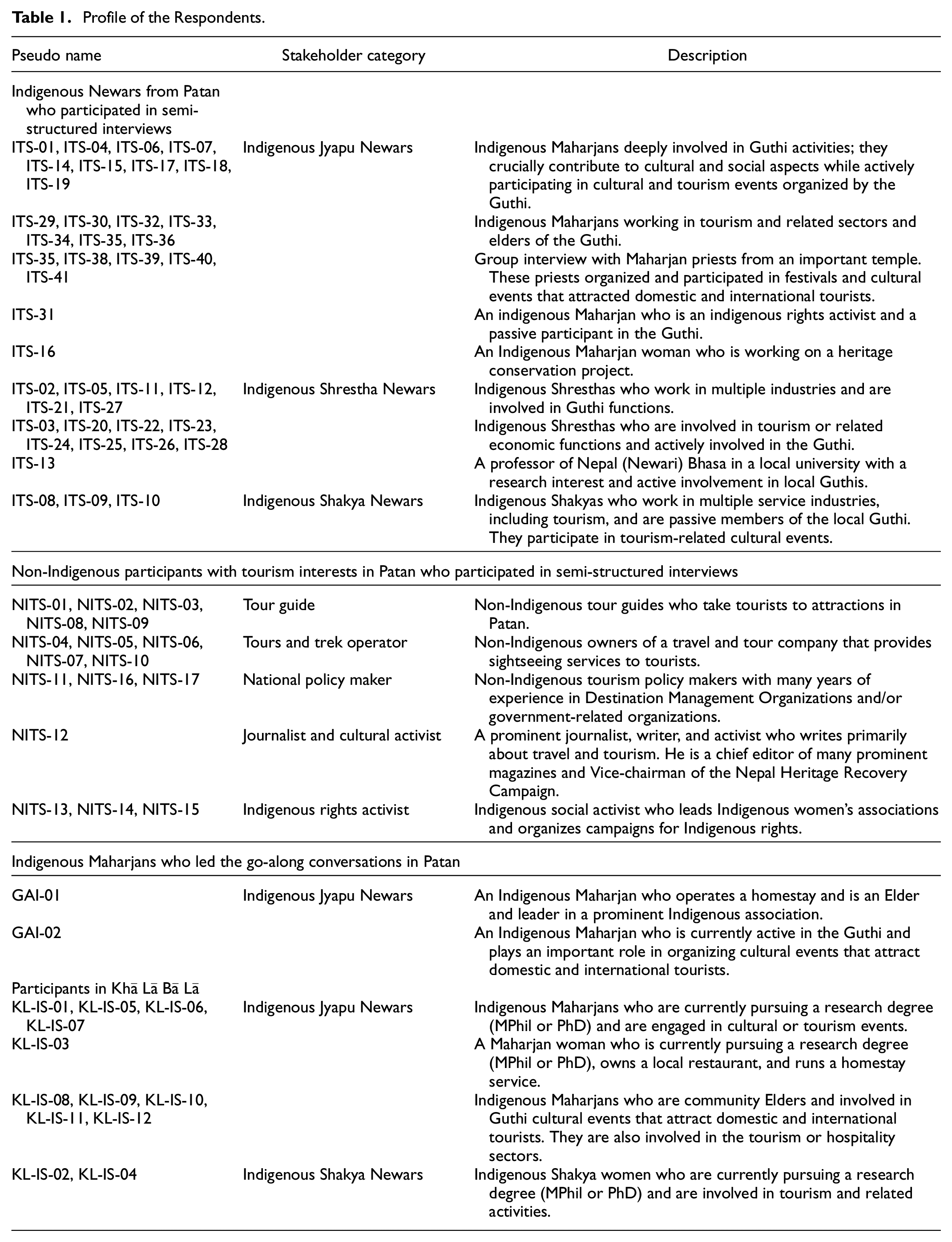
Positionality and Reflexivity
For researchers, a key ethical consideration involves achieving an appropriate balance between freedom and integrity with the participants in situ by clearly stating the purpose of the research and striving for negotiated acceptance. This balance was achieved at two levels. The first author and field researcher, an Indigenous Newar, was aware of his dual positions as a cultural insider (ascribed race, indigeneity, nationality; Chiseri-Strater, 1996) and explained these positions clearly to the Elder, who facilitated his entry process, and subsequently to all of the study participants. Although the field researcher was born and raised in Nepal, his research knowledge and expertise are Eurocentric, supplemented by training in ethnographic methods and Indigenous methodologies.
Throughout the ethnographic research, the field researcher was constantly reminded by the second author to avoid making assumptions about the community members’ perspectives while concurrently acknowledging and reflecting on his own research values, perspective, approach, and potential influence on the research. In other words, reflexivity, in terms of preconceptions, beliefs, and assumptions brought into the field, and sensitivity to the context (Bryman, 2016) were necessary to inform the researcher’s positionality. In practice, this involved constant consultations with community Elders throughout the various research stages, fostering relationships with community members with the help of the Elders, and care and respect for the social and cultural settings within which the rituals of relationships occurred.
Another ethical consideration involved the second author, a non-Indigenous academic researcher in the field of postcolonial tourism (subjective and fluid in position, with a contextual life-history and experiences); this researcher did not physically immerse himself in the Indigenous Newari community and remained off-site at the home university while educating himself on the nuances of Newar culture. Close collaboration between these two authors throughout data collection and analysis served to minimize the impact of potential biases. This collaborative approach ensured that the authors’ interpretations were grounded in the community’s perspectives while also regulating their personal subjectivities.
In situ, methods such as go-along conversations were crucial to mitigating biases. Through visits to places of significance with community Elders, the researcher gained a deeper understanding of the cultural meanings of the places. Insights from go-along conversations were translated into a reflexive journal and discussed with the community Elders and leaders in recognition of the emic nature of the research, while simultaneously acknowledging those insights belonged to them.
Data Analysis
This study adopted Charmaz’s (2014) constructivist grounded theory, an inductive, comparative, emergent, and open-ended approach to simultaneous data collection and analysis. Although Charmaz’s approach allows for flexibility in the coding process, the analysis in this study involved systematic steps. Consistent with Charmaz’s (2014) guidance, the data collected from archival research, interviews, and go-along conversations were coded line-by-line (i.e., examined sentence-by-sentence to allow deep exploration), while the data collected from participant observation were coded incident-by-incident (i.e., discrete incidents or observations within the data were compared through the identification of specific events, interactions, or occurrences). The initial codes were reviewed together and refined through constant comparison with other related codes that emerged from the transcripts to generate more focused, higher-level codes. Further longitudinal and lateral comparisons of the focused codes with anchors in the related initial codes helped the researchers to develop theoretical codes and thus generate higher abstraction level categories or themes of explanation. Reflective memos were written throughout the data collection and analysis. Accordingly, coding was a live and convenient process of exploration.
When refining theoretical codes, it is essential to revisit the literature to confirm or contradict extant knowledge (Charmaz, 2014). This approach also enables the development of the best possible theoretical explanation, given the patterns and relationships observed in the data (abduction), as part of the potential theory that might emerge from such an explanation. The field researcher remained in constant communication and discussion with the second author throughout the field research and analysis via a shared online platform, thus ensuring the inter-rater reliability of the data. Three themes of explanation that would collectively answer the research questions were generated. Khā Lā Bā Lā was conducted with the community Elders to confirm the codes and to discuss the themes and related emergent framework. Table 2 shows the coding example for the theme “Fostering community synergy through the Guthi.”
Example of Coding of a Theme: Fostering Community Synergy Through the Guthi.
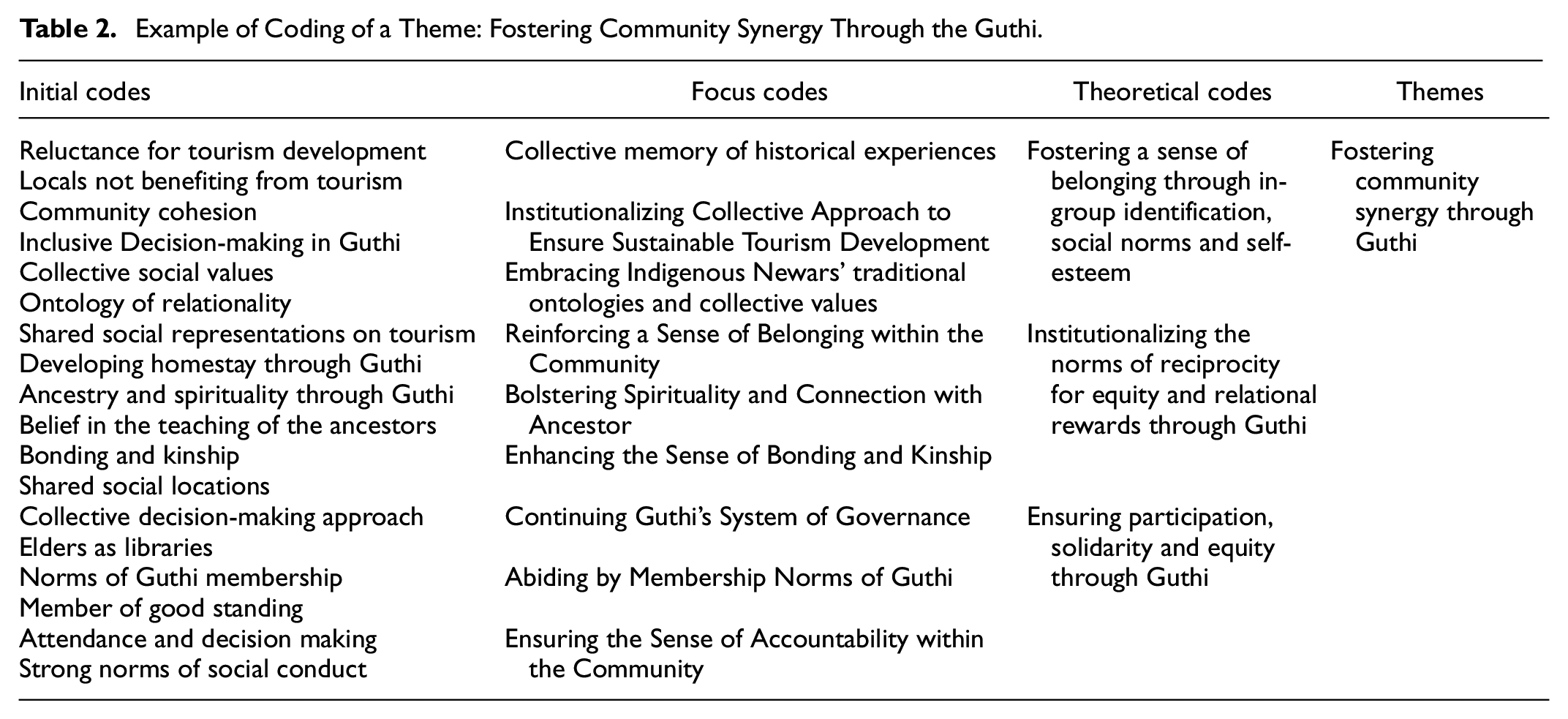
Findings and Discussion
Three themes emerged from the ethnographic data analysis: (i) fostering community synergy through the Guthi, (ii) sustaining community synergy through the Guthi, and (iii) building social capital for tourism development. These sequential mechanisms are integral to answering the main research question.
Fostering Community Synergy Through the Guthi
The data suggest that as a social institution, the Guthi has been pivotal in instigating the norms of reciprocity within Newari communities. These norms are foundational to community synergy and cohesion at the grassroots level. Gouldner (1960) views reciprocity as an essential component of exchange relationships, but for Newars, reciprocity goes beyond social exchange to represent the interconnectedness of all things in the natural world. To GAI-02, “the Guthi symbolizes our co-existence and mutual dependence. Our connection with ancestors, community members, and our future […] helps us make sense of our social practices and communal beliefs and transfer them from generation to generation.”
Characteristically, the Guthi symbolizes a highly synergistic community where self-interest and altruism co-exist (Maslow, 1964). ITS-09 stated, “In our Guthi, if someone faces a problem, we try to help them. It is not just a social norm but a moral obligation and our duty. It is our ancestral tradition or value. We did not invent this; this is part of who I am and who we always were.”
The data show that community synergy within the Guthi is fostered by collective memory, social representations, social locations, and shared values. These socio-cognitive factors, which embody personal-individual and external elements, are key to building capital (Schade & Schuhmacher, 2022) and fostering synergy to enable collective learning through effective information processing, assimilation, and accommodation (Sengul & Yu, 2024).
Collective memory of ongoing cultural and tourism experiences
Collective memory, in the context of Indigenous tourism, pertains to the totality of individuals’ impressions of past events, which are collectively remembered as values or traditional skills that impact the individuals (Gedi & Elam, 1996). Indigenous peoples’ collective memory of experiences with tourism, as an economic sector, has considerably influenced how they engage with various stakeholders, both within and outside the communities, in the context of tourism development within their communities. ITS-09 believed that festivals like the Jatra (procession) organized by Guthis enhance the Newars’ individual and collective sense of excitement and pride, which tourists can observe. GAI-01 remarked that “in Patan, there are many Guthis, which have organized cultural events for several thousand years. In recent years, activities and events have been organized with the support of Jyapu Samaj (an umbrella organization of the Jyapu Newars of Patan). When we were having problems in our community, Jyapu Samaj stepped up… Our culture was losing its value, and we were always fighting, never reaching consensus.”
Several studies highlight the capacity of tourism to improve the economic conditions of many Indigenous (or host) peoples (Movono & Becken, 2018; L. Su et al., 2023) and to bring significant cultural (Williams & Gonzalez, 2017), economic, environmental (Movono et al., 2018), and social impacts. Newari Elders cautioned against the “short-sighted money orientation” (GA-IS-1) of contemporary tourism approaches, which they rejected outright. ITS-33 observed that, despite an overwhelming increase in tourist arrivals, locals did not truly benefit as “tourists come, see, and go.” As a result, some Indigenous communities rely on their collective memory of their historical experiences with tourism (Movono & Dahles, 2017; Scherrer & Doohan, 2014) to reassess their strategies for sustainable tourism development within their communities, with clear intentions to protect the core and sacredness of their culture from tourist vandals (ITS-18).
Despite the contemporary problems caused by tourism, locals such as ITS-06 insisted that tourists appreciate their culture, suggesting that this explains “…why, as you can see, most of our events are free for all, even though we are financially struggling to sustain these practices.” In essence, collective memory enables co-creative engagements with stakeholders that allow Indigenous peoples to harness tourism development and related activities within their communities (Sakata & Prideaux, 2013). ITS-17 believed that “we can preserve, paint, and decorate our toles [ward] to restore a traditional look and promote local heritage sites […] we can perform our traditional stories and ballots, demonstrate the process of fermenting ale and wine […] and demonstrate our dishes and share the stories behind them.”
When reflecting on the need for their traditional practices and epistemes, Indigenous peoples effectively find creative solutions to navigate the complex problems generated by their relationships and collaborations with broader society. These solutions provide “opportunities to co-create innovative solutions that will in turn benefit” them (Huneault & Otomo, 2022, p. 11).
Collective Social Representations in Indigenous Tourism Development
In this study, the participating Newars exhibited a keen awareness of the potential negative impacts of tourism. For example, KL-IS-01 strongly challenged the benefit of current approaches to tourism, expressing a belief that they would negatively affect Indigenous values: “Perhaps our youth will stop migrating, but how about our culture or ancestral practice? Will tourism make our ancestors happy?”
Implied in this quote is the significance of Newars’ awareness of collective social representations, which are broadly defined in this study as pertaining to the set of beliefs, attitudes, and understanding regarding the social reality of the collective (Atzori et al., 2019). Within an Indigenous context, such representations include perceptions of the benefits and impacts of tourism on Indigenous peoples and their communities. Consistent with the literature (Bunten, 2008; Movono & Becken, 2018; J. Su & Sun, 2020), however, the social representations of Indigenous Newars with respect to tourism development are diverse and mixed. Unlike KL-IS-01, ITS-01 stated, “I think tourism will be a boon for us. I have seen the socio-economic transformations in the Annapurna and Everest regions due to tourism. In terms of culture and history, we have a richer history, and these days we are very proud of them. I believe that tourism can play a big role in promoting and preserving our cultural legacy.”
In such instances, our data show that, beyond the simplistic view of tourism as a developmental tool, when diverse social representations emerge, influential Indigenous and non-Indigenous elites tend to prevail and economically benefit (Bunten, 2008; J. Su & Sun, 2020). Interestingly, however, a cultural crucible such as the Newars’ Guthi, which espouses unilateral acts of reciprocity, can ensure that “every member of the community takes part in community events” (ITS-10) while expecting nothing in return. This reflects the core values of the community at work. As the first author reflexively noted in a memo: “Today, I met with the community Elder from Patan, and we discussed the significance and sustenance of the Guthi in his community for over 1000 years. All indications seem to suggest that the homogeneity of this community contributes towards the sustenance of the Guthi. However, it was not the homogeneity in their social location, but [rather] their traditional practices and deeply held social beliefs that are uniquely shaped by their ancestry. There have been many changes in structure and the approach to governance, but the core values inherent in the Guthi seem strong. Ancestral beliefs and their traditions are very important for them….”
In line with Hillmer-Pegram (2016) and Pubill Ambros and Buzinde (2022), NITS-12 believed that when Indigenous self-determination and grassroots-led tourism are encouraged, Newars create representations that deeply explore their traditional identity and values, not only to show their “timeless culture” but also to demonstrate how their values are sustained and promulgated through ever-changing social, political, and economic landscapes: “…we need to engage with locals, understand what they want and what we can offer. What happens here is that government bodies and other tourism stakeholders do not plan to facilitate locals [and] won’t try to create synergy but always tend to blame them. They often try to impose their plans on locals, and things do not usually go well.”
The recognition of cognitive operation specific to individuals’ consciousness is significant. Only individuals know and remember (Halbwachs, 1947). Additionally, tourism provides many Indigenous peoples with the agency to make their voices heard through the stories they share with tourists and other stakeholders. In doing so, these communities challenge and reshape stakeholders’ prior assumptions and representations (Buultjens et al., 2010). Curtin and Bird (2022) assert that by sharing their cultures, traditions, and performances with visitors, Indigenous peoples engage in the social role of cultural transmission and ensure the continuity of their representations across generations. This inclination to reshape and sustain collective representations not only shapes a community’s identities (Mead, 2006) but also can motivate collective efforts toward Indigenous tourism initiatives, thus fostering collaboration among various stakeholders.
Indigenous Peoples’ Social Locations
According to the study data, the Newars’ culture and values cannot be represented within a silo that transcends their social location. In other words, the social location, which reflects the members’ positions within social hierarchies and power structures (Kanchanachitra & Chuenglertsiri, 2020) but also encompasses aspects such as ethnicity, education, gender, socioeconomic status, and age, is a significant factor in representation. In fact, the community’s social location encompasses not only individual attributes but also collective histories of colonization, resilience, and ongoing struggles to preserve rights and cultures (Stumpf & Cheshire, 2019; Whitford & Ruhanen, 2016). ITS-07 believed that “we cannot do this by ourselves. We need money and resources, for which we will need the support of donor agencies and government authorities.” However, ITS-06 thought that “youths are different. They are actively working to promote our language and culture through tourism.” While ITS-07 expressed borderline co-dependency and inexorable collective historical trauma, ITS-06 celebrated a way to reconcile tradition with modernity. The Elders insisted that their engagement in tourism extends beyond economic objectives, as natural resources hold deep cultural significance (see also Movono et al., 2018). This belief, according to ITS-08, is promulgated and sustained through the Guthi: “Guthi symbolizes our harmonious relationship with nature and other people in our community. Through the Guthi, we promulgate our collective norms and social values and learn about our culture through the Elders. Through continuous engagement, we develop our self-concept and collective identity.”
According to Mendoza-Ramos and Prideaux (2018) and Stumpf and Cheshire (2019), the significant differences between Indigenous peoples’ historical and contemporary experiences and those of other (tourism) stakeholders can lead to concerns regarding trust and social conflicts. During participant observations, the researcher noted an interaction between a guide and a community leader who owns a handicraft business. The tour guide questioned the business sense of the local people and suggested that the local people should be responsive to the needs and expectations of international tourists. In a subsequent interview, NITS-01, a well-educated Newari tour guide from Kathmandu (a city adjacent to Patan), remarked, “Many Newars have never left their home and haven’t seen the world at all, so they try to do it in a completely traditional way. Their approach is irrelevant today, as we must consider adapting to modern ways rather than thinking like we are in the thirteenth century.”
ITS-06 shared their concern about the conflicting worldviews experienced by some Newars as a result of their evolving social locations: “[…] educated people do not want to practice the culture like before. They want shortcuts and often seek to disengage with the festivals.”
Such an internal conflict does not always produce adverse social effects. During a go-along visit to the corridors of the Bagmati River, GAI-01 explained, “The Bagmati River has a strong significance in our culture. My ancestors, including several people from my generation, refuse to spit in this holy river, and our beliefs and practices are intricately tied to the Bagmati.”
Some behaviors may have changed over the years, but not out of spite for traditional beliefs and practices. As ITS-34 emphasized, “We have lived in this place since time immemorial. Only after these modern houses were constructed, our river turned grey. We used to swim here, but now we cannot. The river is polluted, and the water level is now depleted.”
In the context of Indigenous tourism, conflicts extend beyond resource disputes to include issues concerning the misrepresentation of Indigenous peoples, specifically their lack of autonomy for self-determination (Abascal, 2019; Gan, 2020; Scherrer & Doohan, 2014).
Considering these challenges, the recognition of Indigenous peoples’ social locations and their unique connection to their traditional lands becomes a crucial aspect of collaborative endeavors. Positive experiences with tourism can foster Indigenous peoples’ collective interest in participating in tourism and willingness to engage in tourism development initiatives (Leu et al., 2018; Movono & Becken, 2018). Understanding and respecting the intricacies of Indigenous communities’ social locations, deep ties to the land, and distinct historical and cultural contexts are essential for promoting inclusive and sustainable collaborations within Indigenous communities.
Indigenous Peoples’ Shared Values
Our study data confirm that for Newars, social values, which emphasize a deep connection with their natural environment, strong social relationships, and the importance of their extended family networks (Warnholtz et al., 2022), are of utmost significance. Social values are a set of beliefs and moral principles that govern the dynamics, institutions, and traditions of people within a society. Value-driven tourism initiatives can positively impact Indigenous peoples’ social structures through the socio-economic development and cultural preservation of their communities (Movono & Becken, 2018; Santafe-Troncoso & Loring, 2021). In this respect, ITS-35 claimed that “my father told me that our ancestors were skilled farmers. We knew our land really well and we were deeply grateful to our land. They grew crops that suited the land and did not cut down trees carelessly. They checked the roots and bark of the trees before they decided to cut them down. However, in the name of development, we are doing whatever we want […] What I mean to say is, whatever we do [referencing tourism], we must stay true to our roots.”
Acknowledgment of and alignment with Indigenous peoples’ traditional values are essential for fostering collaborative engagement (Taylor, 1995) between Indigenous and non-Indigenous tourism stakeholders. Several participants argued that their relationships within the Guthi were fostered through collective memory, which helps to create meaningful exchanges and relationships within the community.
“We also have a tradition in one of the Guthis, where the Guthiyars stay at night and drink up to three or four types of Chyang and Chattamari [an Indigenous Newari food]. Elders tell stories about our values and why we spend the night on this day.” (ITS-10)
When collaborating with Indigenous communities in traditional Indigenous countries, non-Indigenous tourism stakeholders should not simply acknowledge the deeply held values of Indigenous peoples but also support their emancipation and autonomy through respect and recognition by presenting value-driven tourism initiatives that embrace Indigenous cultures, traditions, and rights (Santafe-Troncoso & Loring, 2021). However, as in many other contexts (Hillmer-Pegram, 2016; Mu et al., 2019), the current state of tourism development in this part of Nepal has raised concerns about a potential departure from traditional Indigenous values. NITS-17 stated, “To become sustainable, responsible tourism should be imperative. Whenever tourists visit a place, that place and local people should get the benefits. But here, the benefits are taken by others. If we can develop tourism through the Guthi, we can ensure responsible tourism in Patan, an approach that ensures the true engagement of locals …”
A continued insistence on Western knowledge and practices over Indigenous values and knowledge systems (Scherrer & Doohan, 2014) can indicate a lack of experience or an exaggerated, romanticized view of the tourism sector (Karst, 2017). Movono et al. (2018) warn of the severe consequences of such an approach for Indigenous peoples, such as negative impacts on their cultural and natural resources, and suggest that this may cause wicked problems, especially in developing countries such as Nepal (R. K. Shrestha & L’Espoir Decosta, 2023a). To address these challenges, Fletcher et al. (2016) advocate the total engagement of Indigenous peoples in grassroots-led sustainable tourism development and place-making (Mendoza-Ramos & Prideaux, 2018) through meaningful participation from the initial stage. Total engagement does not refer solely to the direct participation of the Indigenous peoples but also requires the incorporation of their traditional norms and values (Ransfield & Reichenberger, 2021). NITS-11 insisted, “The local and federal government, commercial entities, […] and partners who support sustainable tourism development should all come together and develop a collective vision of what Patan means to them.”
Only through these efforts can Indigenous peoples’ shared values become a crucial socio-cognitive factor that enables multi-stakeholder collaboration in the tourism industry (M. Fan et al., 2015).
Sustaining Community Synergy Through the Guthi
The results of this study also demonstrate that community synergy is maintained and sustained by Newars who conform to the informal social norms of the Guthi. The Guthi’s leadership and inherent role hierarchies, along with the community’s perception of social psychological safety, help to develop and strengthen these informal social norms. The internal processes within a Guthi, which are reflected in the structure and hierarchies, reflect the ontology of relationality; hence, these processes are integral to Indigenous Newars’ social norms (see Figure 1).
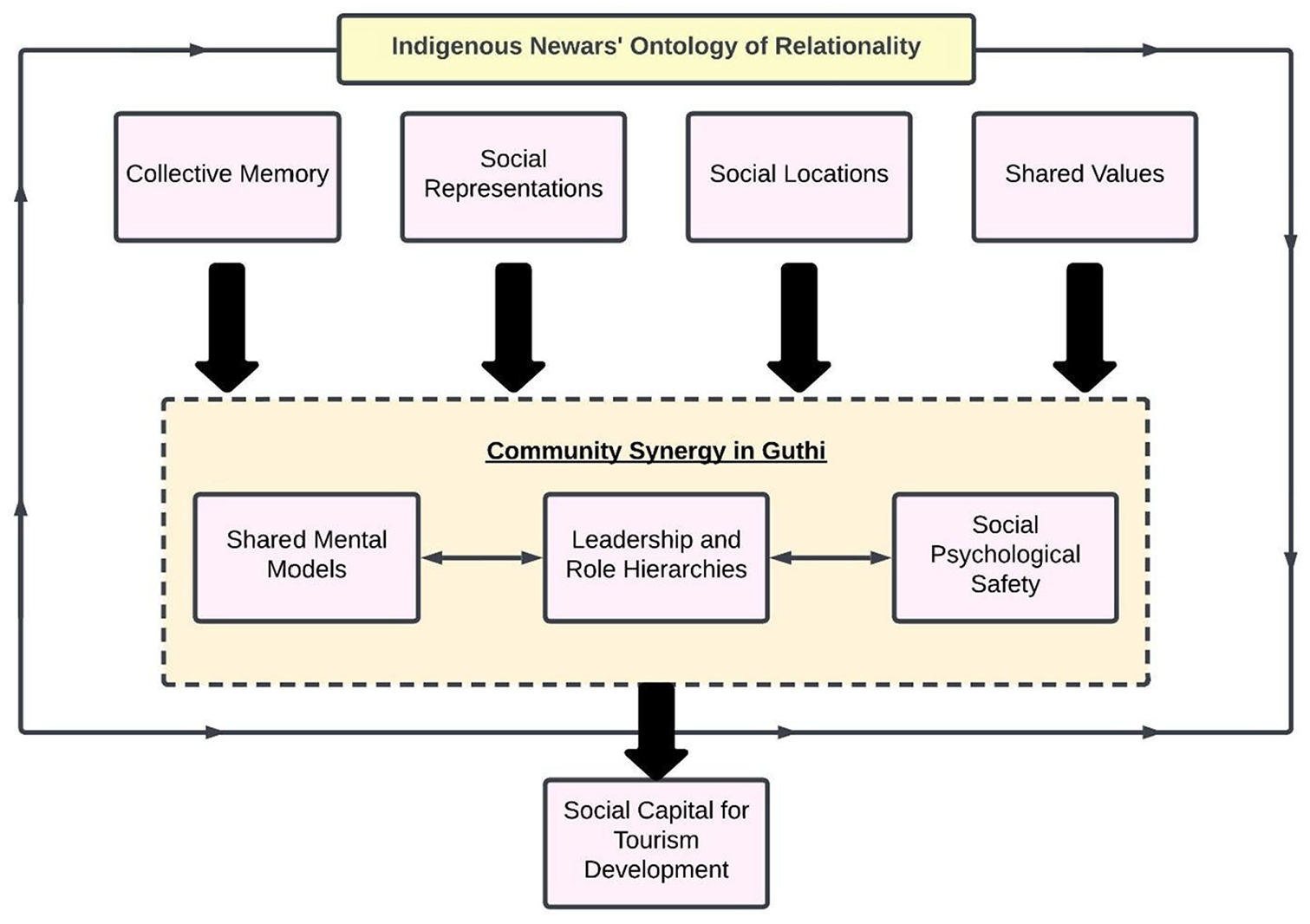
Collaborative approach to tourism development through Indigenous Newars’ Guthi.
Indigenous Newars’ Ontology of Relationality
The data obtained through a three-stage inquiry with community Elders demonstrate that Newars’ ontology of relationality, which is often promulgated through Guthis, provides them with governing epistemic and ontological frameworks. Central to Indigenous peoples’ relational ontology is the idea that Indigenous peoples are deeply anchored in their relationships (White, 2009). A major assumption underlying Newars’ ontology of relationality is that the intimate connections they maintain with their natural world and social entities promote a sense of inter-relatedness and shared responsibility that deepens their sense of unity and collective purpose (C. Thomas, 2015; R. K. Shrestha & L’Espoir Decosta, 2023b). This sense of unity embodies the core value structures that are intricately related to the community’s socio-economic life. Subsequently, Indigenous approaches to reality (in its broadest sense) fully rely on ancestral traditional and ecological knowledge to further enhance the members’ sense of connection within the community (Fuller, 2021) and their worldviews. According to ITS-10, “Our belief in the teachings of ancestors and cultural practices shapes our way of life […] If we try to live spiritually, our life will be simple and meaningful.”
To Newars, the Guthi is the crucible that contains and exemplifies all of these beliefs. According to Tandon (2018), for over 1500 years, Guthi practices have nurtured the deep interconnectedness and co-dependence of Newars with their ancestors, future generations, and cultural, natural, and social settings. ITS-39 expressed a belief that, through Guthi, “we learnt through tales, stories, and observation. During Guthi meetings, our Elders shared various stories about our ancestors and their resilience. Through these stories, they shared the significance of the festivals we celebrate. Today, these festivals have been become our identities, and we seek to conform to them.”
In other words, Newars’ ontology of relationality is sustained and transmitted through cultural myths, stories, and folklore (See also Fernández-Llamazares & Cabeza, 2018), which are therefore inseparable from their reality. To ITS-40, “The Guthi symbolizes our co-existence and mutual dependence. Our connection with ancestors, community members, and our future. Our structure enables this. There are 46 members. Kipa Muga is a title given to the eldest member of the community. He is hailed as the king of the village, and we have Thakalis [Elders] and other members. Through this institution, we make sense of our social practices and communal beliefs. We transfer these values from generation to generation.”
This seemingly continuous connection led ITS-04 to believe that the connection promoted by the Guthi extends beyond distance and encourages community members, at the grassroots level, to surpass their self-interest and focus on the collective community’s interests. They stated, “In the Guthi, our culture is transferred to us as it is. Despite being scattered around the country, we come together yearly to celebrate our proud traditions, which can only be attributed to the Guthi.”
The Guthi is thus the source of and the glue reinforcing community cohesion and synergy, which are essential in fostering good governance of the Newars’ cultural heritage in everyday life, eventually leading to socio-cultural and economic outcomes of significance (J. Wu et al., 2024). NITS-17 stated, “In Patan, you can see that people sustained their ancestral practices, and it is like a living museum. Aspects of their culture manifested in their daily lifestyle. Patan is very well-managed because of communities like the Guthi. I think the Guthi plays a significant role in the preservation of culture,”
ITS-09 insisted on the collaborative aspect of mutual help: “You see, in our Guthi, if someone faces a problem, we try to help them. It is not just a social norm but a moral obligation and our duty. It is our ancestral tradition or value. We did not invent this; this is part of who I am and who we always were.”
Shared Mental Models
To Newars, the Guthi provides the community with mental models that members share throughout their lives when dealing with problems and making decisions. A shared model is a psychological construct that explains how individuals can cope with challenging situations. Shared models help a community to predict the group’s behavior and identify the resources needed to support and sustain the community. Here, we identify shared mental models as a socio-cognitive factor because they encompass the underlying knowledge contexts, including the Newars’ roles and interdependencies in the Guthi, their information patterns and sources, and their information channels and flows. The shared mental models of this community facilitate exchange relationships among its individual members. According to ITS-10, “role is predefined in the Guthi. Rituals are performed by Ajus (the ten oldest members of the community). Certain things are written in the manuscript. Some modifications may have occurred, but most of the tasks are consistent. There are also concerns that Elders may forget things or “go to stay with our ancestors”. So, another five members (called Sanya) are trained and replace the Elders if needed. They are like trainees and perform the “check and balance” role.”
The structures and hierarchies of the Guthi are defined and integral to the members’ shared mental models. ITS-07 believed that because groups are formed in a way that allows young members to learn from community Elders, people develop shared narratives about their roles and tasks through and within the Guthi. ITS-07 explained, “In our tole, there are five teams with 30 members of the Guthis. So, if there is an event, one of the teams is assigned to organize that event. This group is managed by a democratically nominated leader in the Guthi itself. If, for example, there is a cooking task, Elders assume the role of head chef, and young members become their helpers. By observing the Elders, [the young members] learn about different delicacies they can cook themselves after some years.”
Consistent with the knowledge-sharing approaches used in the Guthi, Smith-Jentsch et al. (2005) argue that implicit coordination among community members results from diverse skill-based combinations. Team orientation and reciprocity, which are evident in the Guthi, can be attributed to Newars’ shared mental models (Kilcullen et al., 2023).
“In simple terms, the Guthi pertains to a group of people working together with a shared purpose and mental models. Our ancestors faced many challenges together, as do we. To promote community development and social welfare, manage temples, and provide financial support, our forefathers established Guthis. Although modernization has impacted the Guthi, the practices within Patan […] have managed to retain their core essence.” (ITS-03)
Social Psychological Safety
Indubitably, Newars’ individual self-expressions and collective perceptions reflect the community’s historical experiences with colonialism, subordination, and social marginalization; however, they also provide a glimpse of the communal psychological safety that prevails in the community’s relationships with stakeholders. A person’s perception of psychological safety impacts their expressions and degree of personal engagement resulting from mutual respect and acceptance (Schulte et al., 2012). ITS-14 worried that, as the “government took away most of our community-owned lands,” their connection with the land and natural environment had faced perpetual threats and contestations in recent centuries. These past challenges have led some Indigenous peoples to find solace in turning inwards, a decision driven by skepticism about the intentions of non-Indigenous tourism stakeholders (Holmes et al., 2016). Thus, Patan’s Jyapu Newars tend to focus inwardly as a protective measure, allowing them to preserve the integrity of their culture and ultimately ensure their self-determination (Holmes et al., 2016; Kibria et al., 2021). However, this approach is possible only through the Jyapu Samaj (a community association of farming-class Newars), which “involves Indigenous Jyapus from forty communities within Patan. They have the trust of community members…” (ITS-01). The data indicates that some form of specialization has emerged from this withdrawn and self-contained approach. In the words of ITS-04, “organizing tourism through the Guthi has many benefits. Even in the cases of Lalitpur, Bhaktapur, and Patan, there are very different groups of the Newari community who have their own specialties. So, I feel that every community will benefit if we organize selected events through the Guthi in commercial ways.”
In Newari communities, Guthis can provide spaces for ensuring psychological safety by not only providing people with a voice and agency but also encouraging practices that are respectful of their social norms and values. ITS-06 believed that “without the Guthi, it is impossible to unify our society. If I say something to someone, it may not be of much value, but if we say something as a member of the Guthi, it has more value.”
Psychological safety thus enhances value when members are required to collaborate. Within the Guthi, the community members often engage in collective self-reflection. This process characterizes a continuous learning approach that seeks to mitigate socio-cognitive conflict through cognitive restructuring, allowing individuals to reach new levels of cognition at both the individual and collective levels (Chang et al., 2021). This approach strengthens community members’ capacity to (self-)negotiate their needs and concerns regarding tourism development in their communities (Mendoza-Ramos & Prideaux, 2018). To illustrate this concept, NITS-09 considered a restaurant run by the Guthi: “Guthis are in tourism for themselves and not for tourism per se. They have assessed their needs and organized things at their own speed. Like… the restaurant in Kirtipur. It is very successful and operated by a Guthi. This restaurant shows their traditional approach to collaboration and is still informed by modern business practices.”
Building Social Capital for Tourism Development
The Elders who participated in this study identified several social structures and categorized them based on their socio-cultural significance and community embeddedness. The potential and actual resources within the network of relationships evoked by these social structures are effectively a form of social capital (Zhang et al., 2021). In Patan, the social structures in the Guthi are socio-culturally significant, demonstrating a high degree of community embeddedness. As an institution, the Guthi is not only a cornerstone of the community’s solidarity but also a significant cultural tourism attraction. Elders within the community laude the Guthi’s cultural richness, observing that “the traditional social structure of the Guthi is important to conduct our traditions and culture. It reminds us of the grandness of our ancestral culture…” (ITS-32). The Guthi not only cements ties within the social community but also offers tourists an authentic glimpse into the Indigenous Newari lifestyle.
The Guthi’s role extends beyond tradition, providing an interactive exposition of Newari culture. This role is instrumental in attracting tourists who are interested in immersive cultural experiences. As ITS-28 noted, “every community activity (practiced within and through the Guthi) has continued from historical times… it is significant because it supports community events like Jatras (which are pivotal to drawing tourists).” Several Newars, such as ITS-01, believed that “active participation in Guthis provides a unique narrative for cultural tourism, as visitors seek to engage with living traditions rather than observing from a distance.” ITS-08 stated, “By involving them (tourists), I think they will understand that our culture differs. We have unique values and practices that make us who we are today. I am unsure how to increase the involvement, but it should guarantee our values and identities are unaffected.”
However, ITS-18 cautioned that tourists “cannot be involved in the Guthi. Some things are sacred to us. We even had instances where a historical statue was stolen from us. But, we can involve them in some activities.”
Bourdieu (1983) suggests that within a social network, cultural (symbolic elements like skills and knowledge) and social capital (networks of relationships) are unevenly distributed and thus potentially reinforce existing community hierarchies. However, these structures also present a tapestry of experiences for tourists, with Shakyas (traditionally artists and Buddhist priests), Shresthas (traditionally traders and administrators), and Jyapus (traditionally farmers and laborers) offering diverse insights into their crafts and daily lives (B. G. Shrestha, 1999). Interestingly, while the historical and contemporary social hierarchies are distinctly evident, ITS-12 believed that some Guthis, with specific mandates, may play a vital role in reducing the adverse effects of differentiated social hierarchies.
“I have been associated with Newa Ja Guthi since 2040 BS, which means we have continued this Guthi for the last 37 years. Definitely, this Guthi of ours is different from other Guthis and is very unique. We started this Guthi to solve prevailing social issues through mutual support by embracing contemporary subjects. This Guthi of ours follows many practices that differ from our traditional Guthis. This is mainly because this Guthi has different functions.”
In the traditional country of Patan, the Guthi thus emerges as an enabler of community-based cultural tourism (see Figure 2). The collective ethos of the Newars, which is intricately woven in the Guthi, demonstrates a high degree of community synergy, ensuring that “the past is not merely preserved but vibrantly enacted in the present, providing a window into the soul of the community” (NITS-11). The Guthi’s collaborative ethos extends beyond the Newari community to include tourists and other stakeholders. While acting as interactive fronts for stakeholders, Guthi associations such as Jyapu Samaj also act as intermediaries between Guthis and tourism stakeholders. These associations actively seek to maintain, preserve, and promote their culture (see Figure 2). In doing so, Guthis have shown how the social structures of Indigenous Newars contribute to and flourish through tourism narratives, without losing their essence.
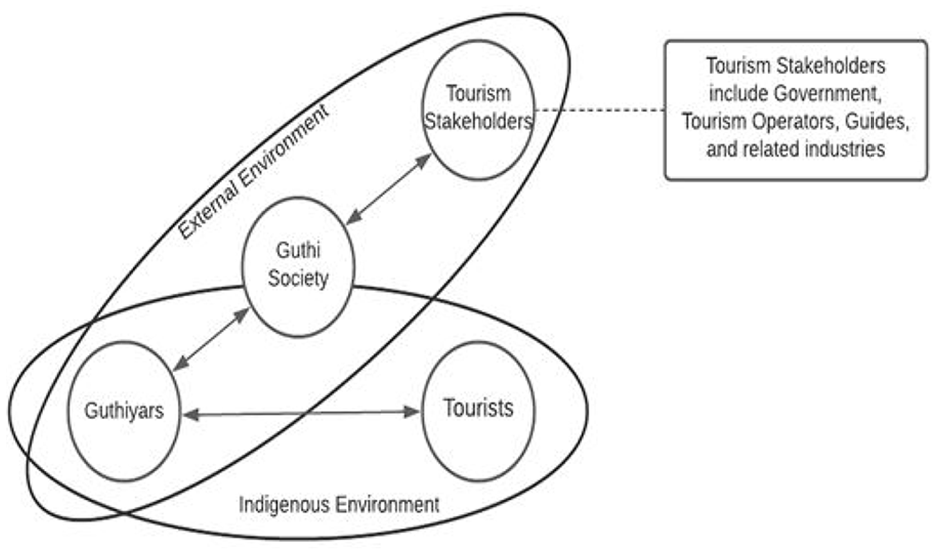
Collaborative engagement with multiple stakeholders enabled by Guthi.
“If not for them [i.e. the Guthi and Jyapu Samaj], Newars” culture, tradition and heritage would not have come this far. I think it would have collapsed 100–200 years ago. […] Learning from an institution as resilient as the Guthi, tourism in Newari communities will have an entirely different outlook’.
Conclusion
This ethnographic study identifies several socio-cognitive factors deemed crucial for multi-stakeholder collaboration in sustainable Indigenous tourism development. Central to these factors is the role of the Guthi, a traditional Newari social institution that fosters community synergy, collective social representations, shared values, and a collective memory. Together, these aspects cultivate a deep sense of interconnectedness and mutual dependence within Newari communities. Collective memory, social representations, social location, and shared values are identified as the socio-cognitive factors that, alongside shared mental models and a sense of social psychological safety, form the basis for Indigenous peoples’ engagement with various tourism stakeholders, allowing for co-creative solutions that respect and integrate Indigenous knowledge systems and values in tourism development. The study underscores the importance of respecting social cognitive factors that encompassing Indigenous peoples’ social locations and traditions to ensure the success of collaborative efforts toward sustainable and culturally sensitive tourism.
Theoretical Implications
By examining the collaboration structures and processes within Newars’ Guthis, this study provides novel insights into the socio-cognitive approach to multi-stakeholder collaboration for tourism development. The study builds on Chang et al.’s (2021) argument that cognitive diversity in social relationships can enhance organizational learning at both the individual and collective levels. The current study also reveals how socio-cognitive factors, such as collective memory, collective social representations, shared values and social locations, boost collective learning experiences when intertwined with tourism and community experiences. In this collaborative space (i.e., the Guthi), socio-cognitive factors, such as shared mental models and social psychological safety, interact with functional and structural characteristics of the Guthi, namely roles and hierarchies, to form social capital with internal and external stakeholders. These interactions, which are shaped by social categorization, guide how organizations form networks to achieve collaborative success (Sengul & Yu, 2024). This research contributes to the literature on Indigenous tourism by demonstrating how the socio-cognitive factors deeply rooted in Newars’ Guthis shape collaborations regarding tourism development. The study also highlights how Indigenous knowledge systems and cultural practices are important in fostering autonomy through tourism development. Furthermore, the illustration of the complex interplay between individual and collective learning in this study provides novel theoretical insights into multi-stakeholder collaborations.
Methodological Implications
An original contribution of this research involves the use of Khā Lā Bā Lā, a traditional Newari cultural practice wherein community members gather to make decisions and to organize rituals and feasts. As such, Khā Lā Bā Lā is a culturally and socially significant platform for cultural exchange, unity, and celebration within the community. Khā Lā Bā Lā was employed to organize discussions with the community’s Elders during the final stage of research, which involved validating the qualitatively focused and theoretical codes, as well as the theoretical insights garnered from the study. Although the field researcher facilitated the discussion during this session, the community Elder introduced the agenda of the meeting and was responsible for starting and ending the Khā Lā Bā Lā along with the other community Elders. This process ensured that the Indigenous community remained in control and were actively involved in a process that was respectful to the Indigenous approach to research. Similarly, this study integrated elements of grounded theory with Indigenous methodology by involving community members throughout the research process, beginning with the planning stage. This participatory approach is aligned with the Indigenous community’s research principles, ensures data authenticity, and fosters both community ownership of the research process and the emancipation of Indigenous voices and culture.
Practical Implications
For tourism bodies, the main implication of this study is the recognition of how Indigenous peoples’ traditional knowledge can provide fresh insights into multi-stakeholder collaborations for Indigenous tourism development. Non-Indigenous stakeholders will benefit from understanding that such processes involve collaborations between Indigenous peoples through individual and collective learning, which are facilitated by socio-cognitive factors that promote collaborative engagement. This observation is significant because it suggests a bottom-up restorative approach to grassroots collaboration that is entrenched in Indigenous knowledge and ways of being. The restorative model is shaped by the socio-cognitive approach, because it is grounded in the relational ontologies of Newars, in whose community humans are connected with the spiritual and natural world and strive for harmonious coexistence. Understanding this knowledge structure can provide non-Indigenous stakeholders with opportunities to culturally support an approach to Indigenous tourism development that is both emancipated and sustainable.
Limitations and Future Recommendations
This study has some limitations. These are mainly attributable to limited field engagement as a consequence of the COVID-19 pandemic and resource limitations. Future research could consider a longer period of immersive fieldwork to generate a more nuanced understanding of the entirety of Indigenous practices and approaches to tourism.
Footnotes
Appendix 1: Khā Lā Bā Lā as an Approach to Focus Group Discussion
Khā Lā Bā Lā is a method that was introduced by the researcher to organize focus group discussion with Newars of Nepal. This method is respectful of Newars’ traditional approach to decision making and provides control to them in how discussions are organized and carried forward.
In Newari lexicon, “Khā Lā” means group and “Bā Lā” means discussion. During these discussions, the eldest member of the group sat at the initial point of the seating arrangement and the youngest member at the end point. The community Elder was the facilitator of the discussion and sat at the center of the discussion group. The researcher was seated next to the facilitator. The discussions always started with insights from the Elder, which subsequently created conversations on the topic. Everyone took their turn to speak and at the end, the Elder and the Naike (community leader) summarized the discussion before a consensus on a decision was reached. In this study, Khā Lā Bā Lā was employed to confirm research findings, validate codes that the researcher developed during the analysis of the data and authenticate insights produced from the study given the research questions.
The researcher organized Khā Lā Bā Lā after the initial levels of coding of the data collected from interviews, participant observation, archival data and the co-created workshops. Study participants from the Newar community were recruited in consultation with community Elders and leaders. Khā Lā Bā Lā lasted for 4 hours in total, and discussions were closed once consensus was achieved. Discussions continued until the Elders agreed or disagreed on the codes, terminologies and key theoretical frameworks.
Appendix 2: Methodological Approach of the Study
To show the salience of the consultative approach through this research, Appendix Figure 1 sketches the research flow through time points in the lap of sacred Bagmati river that flows through the Kathmandu Valley. To highlight the significance of this river, the words of the Elder KL-IS-01 are on point: ‘Bagmati river has a strong significance in our culture. . .[T]he Bagmati river serves as a symbol of community identity, wisdom and continuity and is believed to be a living link to their ancestral past because its continuous flow represents the community’s sense of continuity and tradition that anchors them to their historical roots. Therefore, Elder consultation was essential throughout the study, starting at the pre-visitation stage. This consultation continued until Khā Lā Bā Lā was organized several months after t10, a period that included a 150-day stay at the field site from July to November 2022.
Each symbol in the figure is derived from the traditional Lichhavi lexicon corresponding to the stage of research except for pre-visitation and post-visitation stages which are marked as “0” which marks the stage where the research was not in the fieldwork, but still significant knowledge creation occurred through consultation with community Elders. At the pre-visitation stage, the research question was discussed and revised in consultation with the community Elders. Elders asked for the modification of the research question because the initial framing of the main question read as too prescriptive and not open to encompassing the broader knowledge base that their Guthi can provide. There were no substantive changes to the research problem.
After confirming the research problem, the researcher spent the first 15 days (t1) of the fieldwork building social relationships with local people by casually hanging out with them and visiting the sites of significance. The initial contact was made based on family network and Elder recommendations. Participant observation was important in t1. At t2, the researcher began fieldwork by traveling around the towns with community leaders. The researcher also conducted several semi-structured formal interviews from t2 to t5 because the researcher was not entirely familiar with the study context. From t6 onwards, the researcher mainly conducted informal conversations and ethnographic interviews with community members, very often in the presence of Elders. The ethnographic interviews occurred after the archival analysis and participant observation. Data collection for archival research commenced at t4 and continued until t9. Go-along and participant observation at t10 pertained to local cultural events organized by Guthi.
Appendix 3: Interview Guides
Acknowledgements
The authors express their gratitude to the anonymous reviewers for their valuable feedback and constructive comments. We also acknowledge the professional English language editing support provided by AsiaEdit (asiaedit.com).
Declaration of Conflicting Interests
The author(s) declared no potential conflicts of interest with respect to the research, authorship, and/or publication of this article.
Funding
The author(s) received no financial support for the research, authorship, and/or publication of this article.
