




Abstract
Collaboration between tourism and emergency management organizations is critical for the safety of tourists and the communities they visit. Using a mixed methods social network approach, this study explores the practices and structural characteristics of tourism disaster management collaboration in Piopiotahi/Milford Sound and Tāhuna/Queenstown, in Aotearoa/New Zealand. Our analysis reveals five types of collaborative relationships: acquaintance, communication, resource sharing, business relations, and formal agreements. This insight can assist tourism and emergency management practitioners in developing strategies for network and resource allocation, considering the costs and formality of each relationship type. Our findings also indicate that the networks in Milford Sound and Queenstown have a dense core-periphery structure, with Emergency Management Organizations and Regional Tourism Organizations serving as central and brokering actors. Their central coordinating role suggests a need for increased resources and capacity to effectively perform their critical bridging functions.
Keywords
Introduction
The tourism sector is vulnerable to disasters that can affect tourist safety, damage infrastructure, and cause reputational risk (Brown et al., 2017; Filimonau & De Coteau, 2020). Nature-based destinations and rural areas are particularly vulnerable due to their geographic isolation and reliance on the natural landscape as a tourist attraction (Espiner & Becken, 2014). In destinations like Aotearoa/New Zealand (hereafter New Zealand), which are sought after for their spectacular natural settings, the proximity to active faults, volcanoes, and other geological features heightens disaster risk (Fountain & Cradock-Henry, 2020; Orchiston, 2013). Limited infrastructure, transport vulnerabilities, and reliance on volunteer responders exacerbate challenges in disaster response and recovery, often necessitating external support (Orchiston, 2012). Damage to critical infrastructure, such as roads and electricity networks, can prolong isolation for rural communities which are often reliant on tourism (Orchiston, 2010).
The United Nations Office for Disaster Risk Reduction (UNDRR) defines a disaster as a “serious disruption of the functioning of a community or a society at any scale due to hazardous events (…), leading to one or more of the following: human, material, economic and environmental losses and impacts.” Disasters are exogenous events over which the organization has little or no control (Faulkner, 2001). The causes may be natural or biological hazards that disrupt the functioning of tourism businesses and destinations due to their scale and impact. In the face of uncertainty, proactive planning is key for reducing disaster risks and improving business continuity, which is crucial to the sustainability of tourist destinations (Becken & Hughey, 2013).
It is widely accepted that collaboration between tourism and emergency management agencies is critical for destinations to prepare for, respond to and recover from crises and disasters (Jiang & Ritchie, 2017; Morakabati et al., 2017). High numbers of tourists may strain limited emergency response resources and management services and, during disasters, add to the response burden on local volunteers, even more so given that tourists are generally unfamiliar with the local environment and emergency management arrangements (Cahyanto et al., 2021; Orchiston, 2012). Tourism destination managers and operators have skills, knowledge, and resources that can support emergency management agencies. Destination Management Organizations (DMOs) hold vital local knowledge and network connections and are well-placed to support crisis communication and liaison with emergency services and the public (Blackman et al., 2011). Other sectors of the tourism industry, such as accommodation and food and beverage, supply essential assistance to first responders, evacuees, as well as neighboring businesses and community groups during disasters (Cahyanto et al., 2021, Muskat et al., 2015). On the other hand, emergency management agencies can provide training and resources to tourism businesses to help them prepare for and respond to emergencies (Cahyanto et al., 2021). Establishing partnerships with the tourism sector and including them in disaster planning is key for ensuring community resilience to support effective emergency response (Becken & Hughey, 2013; Filimonau & De Coteau, 2020).
Despite the importance of collaboration between tourism and emergency management organizations (Cahyanto et al., 2021; Jiang & Ritchie, 2017), there is currently limited understanding of the nature of relations and the operation of collaboration in practice. Past research has focused on understanding motivations, facilitating or impeding factors and strategies for effective collaboration (Filimonau & De Coteau, 2020; Jiang & Ritchie, 2017; Nguyen et al., 2017). These studies have identified gaps and opportunities in tourism disaster management and proposed collaboration frameworks. Yet, it remains unclear how tourism businesses and organizations work together with emergency management agencies (Nguyen et al., 2017). There is a lack of knowledge regarding how scholars have identified and coded collaborative relations in emergency management, with no clear typology explicating the variety of organizational interactions (Hu et al., 2022). Understanding how tourism and emergency organizations work together to mitigate risk and respond to a disaster is critically important for destinations to be prepared for future disaster events. Only by examining the relations within the tourism system, is it possible to fully understand its dynamic behavior and how destinations function in conditions of uncertainty (Baggio, 2020). This study applies the concepts of inter-organizational networks and network analysis to investigate the practices and structural characteristics of two collaborative networks from nature-based destinations in New Zealand.
Collaboration in Tourism Disaster Management
Cross-sector and inter-organizational collaboration play a key role in emergency management due to the need for sharing resources and coordinating efforts (Kapucu & Hu, 2016). Disasters are inherently unpredictable and present complex challenges that cannot be solved or managed by a single agency or actor (Bodin & Nohrstedt, 2016; Kapucu & Demiroz, 2017). They require the involvement of different organizations and individuals that collaborate and contribute specific skills, knowledge, and resources. Collaboration is necessary during all stages of the disaster management cycle, from reduction and readiness to response and recovery (Cahyanto et al., 2021). The reduction phase requires organizations to collaborate for extended periods to develop and implement reduction strategies (Kapucu & Demiroz, 2017). During the response, collaboration is more ad hoc and relies on “instant and simultaneous interactions, decision support systems, and constant flow of information” for a relatively brief period (Kapucu & Demiroz, 2017, p.27).
The public sector traditionally oversees emergency management, ensuring the safety, well-being, and recovery of affected individuals and communities (Cahyanto et al., 2021). This involves governmental bodies such as the National Emergency Management Agency (NEMA) in New Zealand, along with emergency services like police, firefighters, and health and disability service providers. While governmental departments regulate, lead, or support preparedness, response, and recovery efforts, emergency services offer immediate assistance during disasters. Laws and regulations delineate the roles, responsibilities, and authority of various agencies and individuals involved in emergency management. For instance, the Civil Defence Emergency Management Act (2002) in New Zealand establishes a legal framework and guidelines for preparing for, responding to, and managing emergencies.
Nevertheless, both academic research and global agreements emphasize the importance of integrating civil society and industry into existing disaster risk reduction frameworks (Becken & Hughey, 2013; Sendai Framework for Disaster Risk Reduction 2015–2030). Tourism stakeholders play a crucial role throughout the emergency management cycle due to their familiarity with the local environment, communication networks, capabilities in evacuation and shelter provision, and contributions to economic recovery (Cahyanto et al., 2021). These skills and resources position them well for various key roles in Tourism Disaster Management (TDM), including information and communication liaison, logistical and life support partnerships, equipment and supplies provision, and facilitation of philanthropic efforts (Chan et al., 2020). Involving tourism businesses and organizations in disaster planning and establishing public-private partnerships has been increasingly recognized as a fundamental approach to managing disasters and building long-term community resilience (Becken & Hughey, 2013; Cahyanto et al., 2021; Orchiston, 2012). In New Zealand, Regional Tourism Organizations (RTOs) and local government authorities include visitor safety and welfare in their respective emergency management plans (Emergency Management Otago, 2018; Queenstown Lakes Destination Management Steering Group, 2022; Southland CDEM Group, 2017).
Despite the acknowledged importance of collaboration between tourism and emergency management organizations (Filimonau & De Coteau, 2020; Jiang & Ritchie, 2017), researchers have been slow in adopting the concept of inter-organizational collaboration. The tourism disaster management literature has focused on (i) defining crises and disasters (Faulkner, 2001; Scott & Laws, 2005), (ii) studying the impacts of disaster management strategies (Orchiston & Higham, 2016), and (iii) developing management approaches and frameworks (Faulkner, 2001; Hystad & Keller, 2008; Ritchie, 2004). Only recently has there been more interest in studying collaborative disaster management. Several authors have developed frameworks to facilitate collaboration between tourism and emergency management stakeholders (Filimonau & De Coteau, 2020; Hystad & Keller, 2008; Morakabati et al., 2017) or link tourism to emergency management structures (Becken & Hughey, 2013). These studies outline a structure for stakeholders to operate, suggest roles and responsibilities, and provide guidelines to develop and implement tourism disaster management initiatives. More recently, attention has focused on studying tourism stakeholders’ attitudes and motivations toward collaboration (Nguyen et al., 2018), as well as identifying facilitating or impeding factors and strategies for effective collaboration (Filimonau & De Coteau, 2020; Jiang & Ritchie, 2017; Nguyen et al., 2017).
These studies provide valuable insights into the role of tourism businesses in disaster management and highlight the importance of cross-sector stakeholder collaboration. However, they predominantly focus on the tourism industry’s perspective without examining the wider interface between tourism and emergency management (Hystad & Keller, 2008; Jiang & Ritchie, 2017; Muskat et al., 2015), highlighting the need for research involving a wider range of participants. Most importantly, previous studies do not address the specific nature of the relations or how organizations in TDM work together. Collaboration is often described as “stakeholder collaboration,” that is, “a process of joint decision-making amongst key stakeholders of a problem domain (Gray, 1989)” (Jiang & Ritchie, 2017, p. 71), but it has also been studied as “collaborative planning” (Nguyen et al., 2017), “public-private partnership” (Cahyanto et al., 2021), and “inter-relationships” (Becken et al., 2014). Collaborative planning is defined as “a collective process for participants to resolve conflicts and advancing shared visions involving a diverse set of stakeholders” (Nguyen et al., 2017, p. 130). A public-private partnership refers to “the collaboration between public and private sectors in working towards shared objectives” (Cahyanto et al., 2021, p. 4). These definitions are broad and do not consider the compound nature of inter-organizational collaboration. Little is known about the actual operation of stakeholder collaboration in tourism disaster management (Jiang & Ritchie, 2017; Nguyen et al., 2017). It remains unclear what collaboration actually means in TDM, with no distinct classification system that explains the various types of interactions between organizations involved in TDM. Understanding the true nature of these relationships is necessary to explore what drives collaboration and what makes it efficient. Depending on the purpose of collaboration, influencing factors can vary. For example, developing communication relations is less costly than maintaining action-oriented coordination ties, which are more resource-intensive and often require higher levels of trust and prior interactions (Hu et al., 2022). This understanding can help tourism and emergency management practitioners develop network and resource allocation strategies that consider the associated costs and formality of the different types of relations.
Social Network Analysis to Study Collaboration
To investigate collaboration in a destination, it is crucial to understand the patterns of linkages between network components (Baggio, 2011). Network theory provides powerful methods to quantify, map, and evaluate these patterns (Baggio, 2020). It uses the language of graph theory (Bollobás, 1998) to represent entities as nodes and relations as edges. The structural characteristics of a network can be analyzed using group and individual measurements such as network density, centrality, and structural hole (Baggio, 2020). Quantitative sociologists have employed these concepts to study how individuals or organizations interact within a social context. For instance, Granovetter (1973) demonstrated how weak ties between individuals often play crucial roles in information diffusion and job opportunities within social networks. Burt (1992) illustrated how Social Network Analysis (SNA) can reveal structural advantages and disadvantages within organizational networks, shaping competitive outcomes. Moreno (1934) pioneered the use of sociograms (diagrams of points and lines used to represent relations) to analyze relationship structures and their impact on beliefs and behaviors. From their perspective, SNA provides a better explanation of social behavior because it allows for a holistic understanding of how individuals and groups interact, emphasizing the importance of structural patterns and connections in shaping behaviours.
Network theory concepts have been widely applied in tourism research (Casanueva et al., 2016), since relations across stakeholders are a core determinant of successful destination development and management (Baggio, 2020). In tourism disaster management, SNA has been used to conceptualize the effects of crises and disasters on destinations (Scott & Laws, 2005; Scott et al., 2008), study the 2011 Christchurch Earthquake response and recovery networks (Becken et al., 2014), analyze the structural changes of a local tourism network before and after COVID-19 (Jeon & Yang, 2021), examine the role of social networks in building organizational resilience to crises and disasters (Pham et al., 2021), and investigate the changes of intergovernmental collaboration dynamic in post-disaster destination management (Wu et al., 2021). However, only two of these studies have discussed inter-organizational collaboration, focusing on pre- and post-disaster changes in tourism business networks (Becken et al., 2014) and intergovernmental collaboration (Wu et al., 2021). Empirical research that thoroughly examines the actual network structure of tourism disaster management collaboration is lacking (Jiang & Ritchie, 2017). To address these research gaps, this study uses a mixed-method network approach to answer the following research questions:
RQ1: How are collaborative relations in tourism disaster management enacted in practice?
RQ2: What are the structural characteristics and patterns of collaborative networks in tourism disaster management?
A focus on the patterns of relations is critical to understanding and assessing the structure and process of inter-organizational collaboration (Hu et al., 2022). Disaster and emergency scholars have widely applied network analysis to identify central actors, measure the strength and quality of inter-organizations relations, describe their structures and patterns, and evaluate their impact (Hu et al., 2022). Similar contributions are needed in the tourism disaster management space. Network theory can help understand how stakeholders are connected and how their interactions influence disaster preparedness, response, and recovery. SNA enables the identification of key actors, highlighting the potential for tapping into them for better disaster management (Becken et al., 2014). By understanding the structure of the networks, emergency management and tourism managers can understand how information flows within the network, how decisions are made, and how situational awareness is developed. This understanding allows for the development of more robust information-sharing mechanisms, ensuring that decision-makers have access to timely and accurate information during emergencies. By understanding the flow of resources, practitioners can identify critical nodes and pathways to optimize resource allocation, as well as potential gaps or redundancies. Also, using network analysis can help simplify and visualize complex relations, promoting effective collaboration and integration among stakeholders (Scott & Laws, 2005). Increasing awareness of stakeholders’ position within the network can motivate isolated actors to become more integrated, while prompting central ones to act on their roles as brokers or gatekeepers. Finally, improving the understanding of information sharing and knowledge building between tourism and emergency management organizations may encourage more active involvement in crisis and disaster planning (Jiang & Ritchie, 2017). Thus, SNA offers an effective lens for exploring TDM collaboration practices in tourism disaster management.
Methodology and Data
Research Design
Aligned with the pragmatism paradigm (Morgan, 2014), we adopted a sequential exploratory mixed methods SNA approach to explore inter-organizational collaborative networks in TDM due to its suitability for our research question. Tourism scholars studying networks increasingly favor a pragmatic approach, focusing on the research problem and employing diverse methods and data to fully comprehend it (Mariani & Baggio, 2020). To address research questions involving subjective meanings of collaboration and quantifiable network properties, a mixed-method approach with open and standardized data collection procedures is essential. Combined, the two methodological perspectives compensate for each other’s weaknesses (Jennings, 2001) and provide a more holistic understanding of the issue (Creswell & Plano-Clark, 2017). This approach is essential to comprehensively understand complex systems like tourism (Baggio, 2017). Qualitative and quantitative methods were used consecutively, with interviews providing insights that informed the development of the survey instrument (Hollstein, 2014). The qualitative phase explored the nature of the relations, revealing rich, subjective meanings and practices of collaboration. The focus was on specifying the content of TDM collaboration and exploring network practices, as defined by Hollstein (2011): “The concrete acts, practices, interactions, and communication patterns in light of the respective contexts in which they occur—thus what actors actually do and how they network.” Respondents’ answers to “Which types of collaboration can you identify in practice?” resulted in the identification of five different types of collaborative ties which were then used in the survey. Subsequently, the quantitative data investigated the structural characteristics and patterns of collaborative networks in tourism disaster management. We then interpreted and integrated the two sets of results (Creswell & Plano-Clark, 2017), using the interview data to understand and clarify quantitative findings. A sequential exploratory design is well suited for this study because collaborative networks in tourism disaster management are still largely unexplored.
We use a case study approach examining collaborative networks in two tourism regions in New Zealand. Case studies are frequently employed in tourism disaster research (Mair et al., 2016). They allow for an in-depth understanding of a current issue in its specific context and from different perspectives (De Urioste-Stone et al., 2018). Using multiple sources of evidence adds credibility and enhances the quality of the study (De Urioste-Stone et al., 2018). Here, this approach served to identify patterns across two connected tourist destinations (Queenstown and Milford Sound) located in separate regions (Otago and Southland, respectively), and transfer insights to other cases with similar characteristics. The aim was not to draw comparisons across the two destinations, but to examine multiple study sites to provide comprehensive insights into the structures and practices of TDM collaborative networks. Qualitative data from respondents belonging to the two destinations was analyzed together, while quantitative data was used to build two network graphs that have been analyzed separately.
Empirical Setting
The case study tourism destinations chosen for this research were Tāhuna/Queenstown (hereafter Queenstown) and Piopiotahi/Milford Sound (hereafter Milford Sound), in the Otago Southland regions of the South Island in New Zealand. With a permanent population of approximately 29,700 residents in total, this region attracted 1,688,125 international tourists in 2019, that is, approximately 43% of the country’s international travelers (Statistics New Zealand, n.d.), and is now continuing to receive high visitation numbers after Covid (MBIE—Ministry of Business Innovation and Employment & DOC—Department of Conservation, n.d.). Tourists are primarily attracted to the region’s most spectacular natural settings, as well as the possibility to experience outdoor adventure and recreational activities such as bungy jumping, boat cruises, scenic flights, skiing, kayaking, and hiking. At the same time, Milford Sound and Queenstown are also very exposed to disaster risk (Orchiston, 2012), mainly due to their close proximity to the Alpine Fault, which marks the interface between the Australian and the Pacific tectonic plates that has a 75% probability of producing a MW 8 earthquake in the next 50 years (Howarth et al., 2021). Such an event is expected to result in numerous casualties, extensive infrastructure damage, and isolation for Milford Sound and Queenstown (Orchiston et al., 2018), with a significant number of tourists who will be unaware of the local risks and emergency management arrangements (Southland CDEM Group, 2017). Responsibility for immediate response and tourist care would fall on the affected communities, including the tourism sector (Southland CDEM Group, 2017).
To collectively address the challenge of managing a disaster response, the Civil Defence and Emergency Management (CDEM) Groups in the two study regions established the Fiordland Hazard Working Group (FHWG) and the Tourism Operator Responders of Queenstown (TORQUE) Group. These groups bring together various organizations, including emergency management agencies, lifeline utilities, and tourism businesses and associations, to plan and prepare for disaster events. Management is provided by Environment Southland, via Emergency Management Southland for FHWG, and Destination Queenstown, with the support of Emergency Management Otago, for TORQUE. They act as hosts and secretariat, arranging meetings, and taking and distributing the minutes. There are 41 organizations in total currently affiliated with FHWG (n = 22) and TORQUE (n = 19). Membership is not exclusive and representatives from other organizations may be invited to attend. Both groups have the objective of promoting an understanding of the risks and building response capability within the tourism sector, which is one of the sector groups identified by the CDEM Groups to help improve readiness, develop relations, and strengthen interoperability (Emergency Management Otago, 2018). The size of the organizations included in the groups ranges from large organizations to owner-operator enterprises with few employees. However, even the larger organizations do not have more than 100 employees.
According to Veal’s (2011) criteria of “illustration, typicality and pragmatism,” Milford Sound and Queenstown constitute a suitable case study for three reasons. First, they illustrate the criticality of establishing partnerships across the emergency management and tourism sectors for destinations to be better prepared for emergencies. Second, the selected cases represent nature-based tourist destinations with high exposure to disaster risk because of their proximity to the Alpine Fault and associated earthquake hazard sources (Orchiston, 2012). Finally, they are highly interconnected, with Queenstown providing the gateway to Milford Sound and accessed from both Otago and Southland. It is widely recognized that cooperation between the two regions would be fundamental in the event of a disaster. Although the CDEM Groups of both areas connect for emergency management, especially in preparing for an Alpine Fault earthquake, they carry out their preparedness activities separately with their respective local groups, holding separate meetings chaired by different organizations.
Data Collection and Analysis
Interviews
An interview program was designed to understand the meaning of collaboration by tourism and emergency management actors, and how these relations are enacted in practice. The meaning of collaboration varies from person to person, and asking participants to identify with whom they collaborate, without first asking how they understand collaboration, may lead to inaccurate results (Scott, 2017). Exploring subjective perceptions of social relations is a strategy used to define the relation to be reported (Scott, 2017). This helps make a theoretically informed decision about what is significant in a collaborative context, allowing us to determine the boundaries of collaboration without imposing our definition on participants. This step set the context for the quantitative phase of the study (Hollstein, 2011).
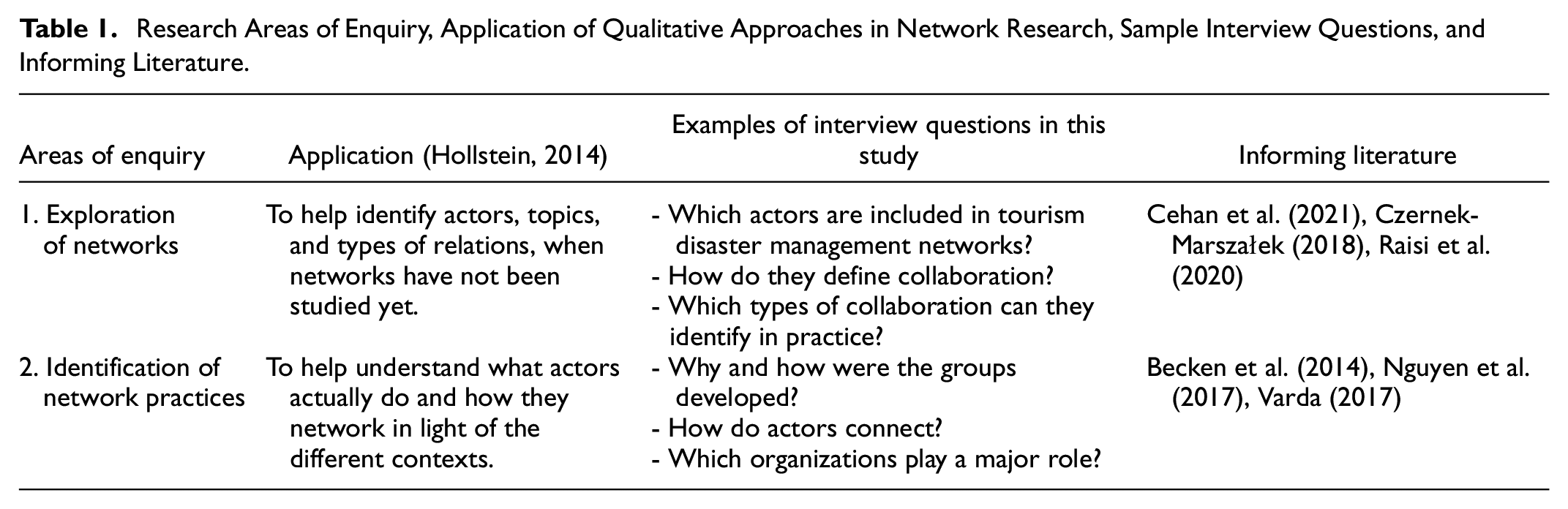
To inform the study design, two preliminary scoping conversations were undertaken with the leaders of FHWG and TORQUE in March 2021 and June 2021. The discussion topics included the formation and evolution of the groups, responses to past disaster events, the groups’ objectives, and membership status. These conversations provided background information, helped refine the research questions, and informed the design of the interview protocol (Appendix 1). The areas of enquiry, as well as the application of qualitative approaches in network research (Hollstein, 2014), sample interview questions from this study, and informing literature are summarized in Table 1. A mixture of positional and relational strategies was used to identify interview participants (Knoke & Yang, 2020). Respondents were identified via meeting minutes and institutional agreements and nominated by participants on a relational basis. This procedure identified 45 representatives from 36 organizations (FHWG n = 22; TORQUE n = 14), all of whom were contacted for interviews. The impacts of the pandemic on the tourism sector in New Zealand (Yeoman et al., 2022) meant that the composition of the groups changed during the study, with some organizations joining the groups and others dropping out after interviews were conducted, which explains the different numbers of research participants in the two methods. Close communication ensured that the list of members was kept updated, and the appropriate representatives were identified.
Research Areas of Enquiry, Application of Qualitative Approaches in Network Research, Sample Interview Questions, and Informing Literature.
Semi-structured interviews were conducted from October 2021 to March 2022 with members of the FHWG and TORQUE groups, including emergency management officers, tourism managers, local government, other emergency management agencies and lifeline utility representatives. Out of the 45 representatives of organizations invited to the interviews, and following two reminders, 31 people replied to the email and agreed to be interviewed. However, one interview was lost because the audio recording could not be accessed, and another participant withdrew from the study after the interview was conducted. This resulted in 29 interviews (FHWG n = 16; TORQUE n = 13) that could be used for analysis.
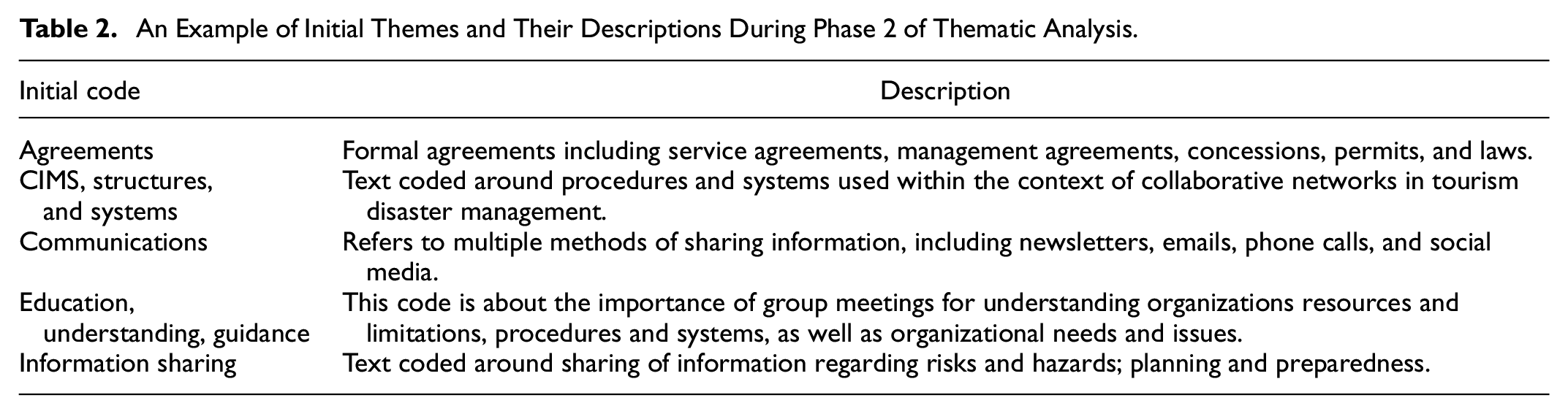
Analysis of the interview data was guided by the research questions and coded collaboration definitions, types, and practices, using Reflexive Thematic Analysis (Braun & Clarke, 2006, 2021). This approach emphasizes theme development through iterative coding without pre-existing frameworks, with themes seen as patterns of shared meaning derived through systematic engagement with the dataset (Braun & Clarke, 2021). The coding process followed the six phases of Thematic Analysis (Braun & Clarke, 2006, 2021) (see Figure 1), beginning with data familiarization and active reading of transcripts to identify emerging codes. This was followed by systematic coding, where text passages were categorized in non-hierarchical codes, utilizing descriptors to facilitate the process (see example in Table 2). During phase three, data were collated into initial themes reflecting patterns relevant to the research questions, and further developed into parent and child codes. Subsequently, the consistency of references for each theme was checked, and irrelevant themes were eliminated. Following data reduction, phase five involved refining, defining, and naming themes, supported by quotes. The coding process resulted in the identification of five different types of collaboration, which were then used in the quantitative phase. NVivo Plus software facilitated the coding process, enabling flexibility and systematic engagement with the dataset.

Thematic analysis: A six-phase process.
An Example of Initial Themes and Their Descriptions During Phase 2 of Thematic Analysis.
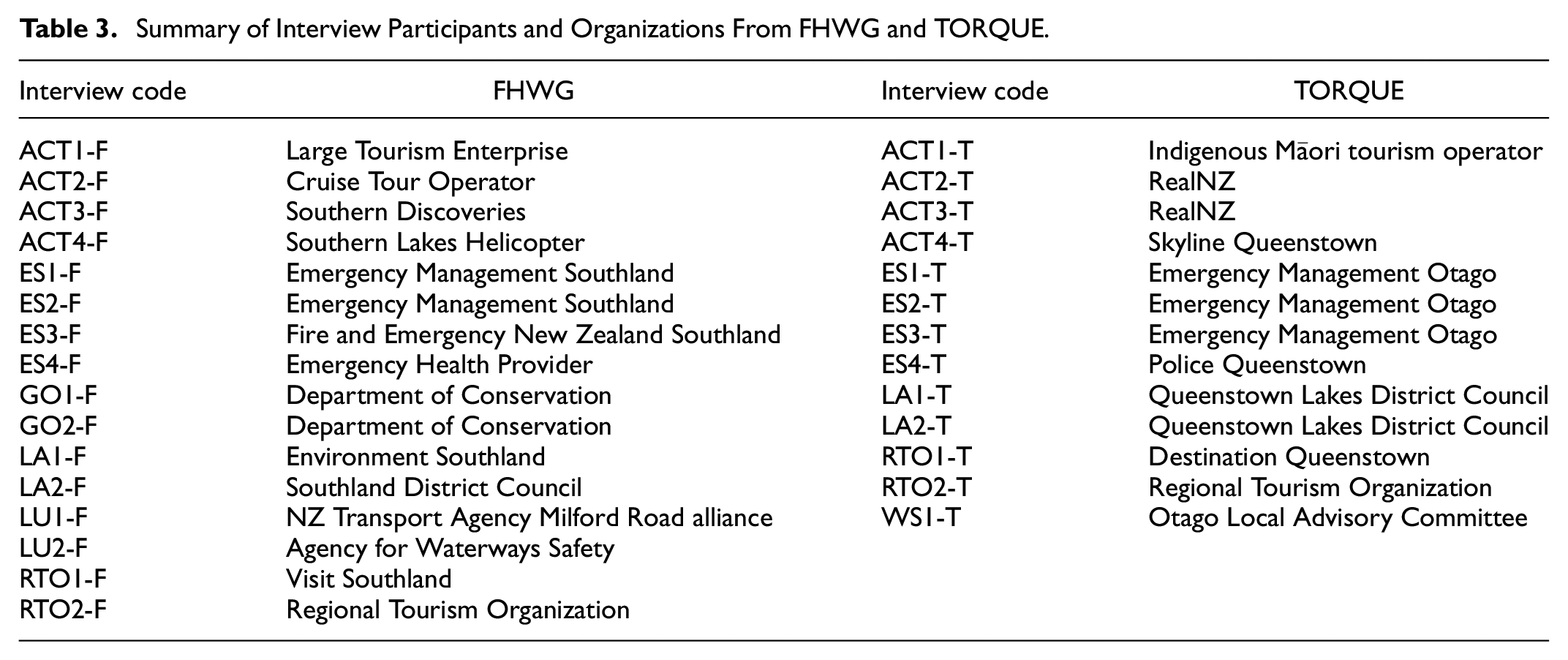
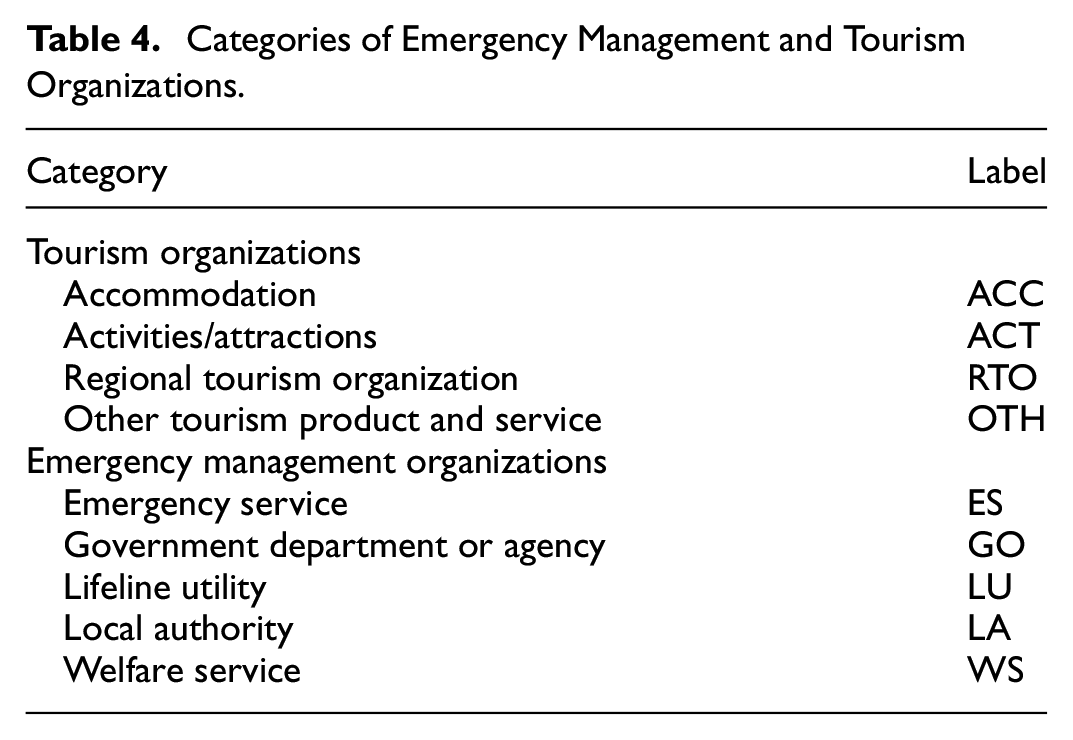
To enhance the trustworthiness of the qualitative component of the research, several strategies were employed. First, interview protocols were developed to direct conversations toward key areas of interest, following Jenning’s (2005) guidelines for qualitative interviewing to maximize information flow from respondents. This included active listening and the provision of an information sheet and consent form to participants. Second, “respondent validation” (Beeton, 2005) was employed to enhance the credibility of our analyses and interpretations (Decrop, 2004). Participants reviewed their interview transcripts and provided feedback which was incorporated into the analytical process. Third, the use of NVivo software aided the management, organization, and analysis of the data, enhancing the research’s dependability and confirmability (De Urioste et al., 2018). Finally, direct quotes from the interviews were used to describe the data extensively (Decrop, 2004). The anonymity of participant identities was protected using codes, identifying them as either emergency management or tourism business categories, followed by numbers assigned according to the interview order, and the letters “F”—FHWG or “T”—TORQUE (Table 3). The categories were defined according to the Civil Defence Emergency Management Act 2002, The Guide to the National CDEM Plan 2015, and New Zealand’s Ministry of Business, Innovation and Employment’s (MBIE–Ministry of Business Innovation and Employment & DOC-Department of Conservation, n.d.) classification of tourism businesses (Table 4).
Summary of Interview Participants and Organizations From FHWG and TORQUE.
Categories of Emergency Management and Tourism Organizations.
Surveys
An in-person questionnaire was used to collect quantitative data on network structures from May 2022 to September 2022. The draft survey had been previously tested during a pilot phase involving two tourism and emergency management experts and three academic experts. The suggested modifications were incorporated into the final survey. A summary table of the survey questions and references is presented in Table 5. Updated group member lists were provided by the leaders of each network. All 41 organizations that were currently members of FHWG and TORQUE were invited to take part in the survey, with two reminders sent every other 2 weeks for a month, and an extra reminder sent to organizations deemed as important during the interviews. Two participants replied to the email saying they could not take part in the survey because they were occupied with work. In total 24 responses were collected (FHWG n = 16; TORQUE n = 8), equating to a total response rate of 58%. Only one informant per organization took the network survey. Respondents included emergency management officers, emergency services representatives, health and safety managers, tourism managers and directors, and policy advisors.
Summary of Survey Questions and Informing Literature.
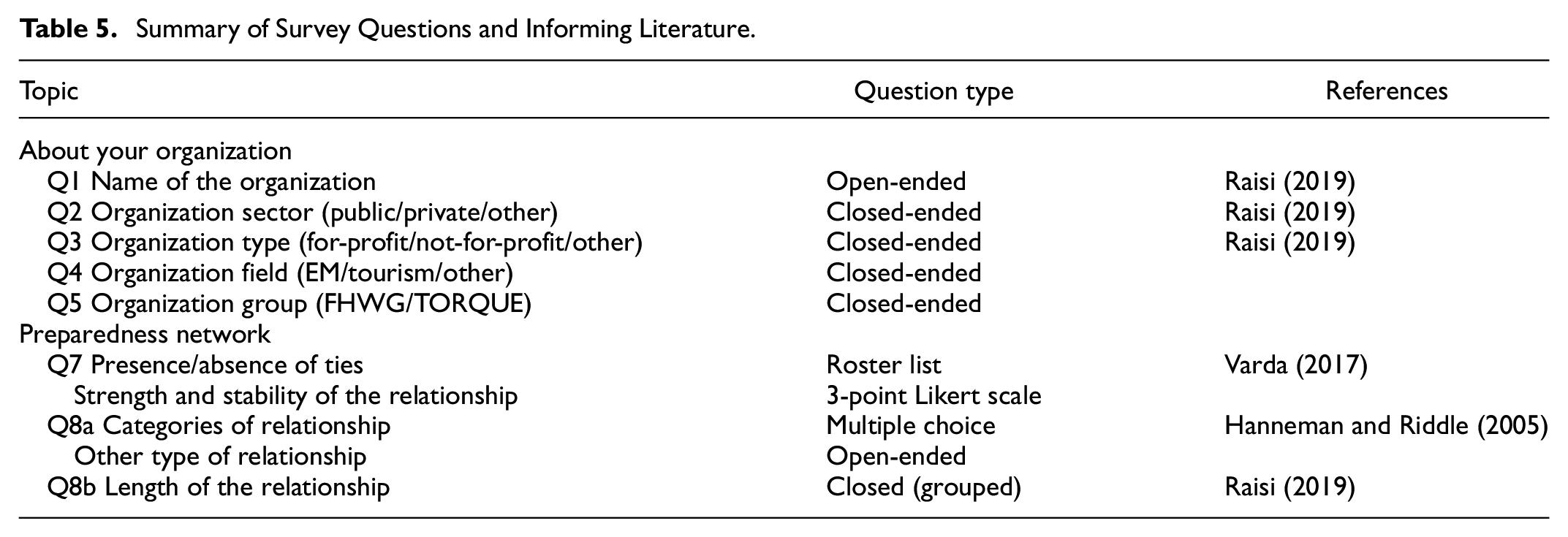
Surveys are commonly used in social research to collect network data, providing numerical information about connections (Scott, 2017; Wasserman & Faust, 1994). Unlike typical surveys that aim to generalize findings to a broader population, this research focuses on smaller whole networks constituting the case study groups. The aim is to identify recurring patterns and lessons that can be learned and applied to other cases. To encourage the respondents to participate in the survey, the lead researcher participated in two meetings of the FHWG on 11 May 2022 and 14 July 2022, and a meeting of the TORQUE group on 13 July 2022. During these meetings, the research objectives, methods, and significance were explained, and two surveys were conducted.
In the survey, we used the following definition of collaboration:
Collaboration refers to “working with” relations i.e., any formal or informal social interactions aimed at managing issues related to tourism disaster management. This includes sharing information, exchanging resources, planning and preparing, coordinating response, and it can be defined by a formal agreement or not.
The survey (Appendix 2) asked participants to identify the members they collaborate with from a roster list, which is a complete list of the network actors (Scott, 2017). A separate “Not applicable/Don’t know” option was also provided to minimize the potential bias of uninformed responses (Granville et al., 2016). In addition, respondents were asked to indicate how strong the relation was on a scale from 1 (weak) to 3 (strong), where the intermediate value was “somewhat strong” (Bodin & Nohrstedt, 2016). Strength was defined as “the organizations support each other; they know they can count on each other when needed.”
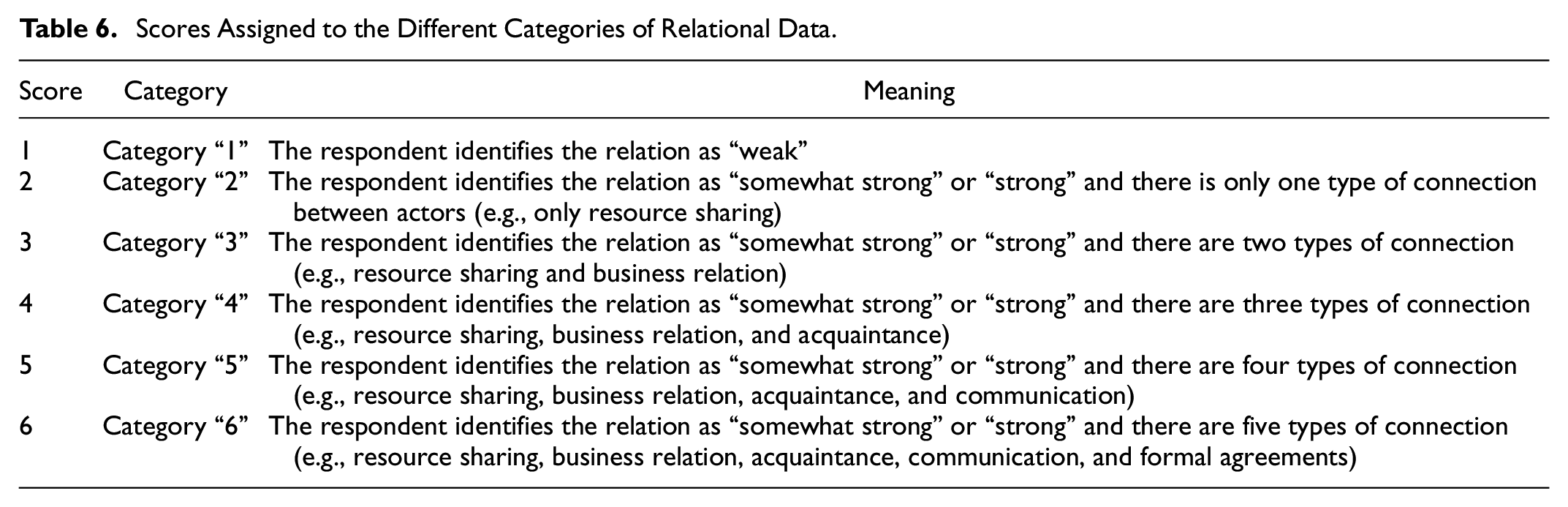
For the relations identified as “somewhat strong” or “strong,” additional questions regarding the type and the length of the relation were asked: “Please indicate what categories best describe your organization’s relation with each organization (select all that apply) and how long your organization has been working with them.” The categories were: (1) we know each other, (2) we provide information to this organization, (3) we receive information from this organization, (4) we provide resources to this organization, (5) we receive resources from this organization, (6) we have a business relation, and (7) there is a formal agreement. Examples of resources and formal agreements, taken from the interviews, were provided to add clarity. Although respondents could add any type of relation missing from the multichoice answer, no further type of collaboration was identified, indicating that the provided list of categories was comprehensive. Once collected, the relational data were scored as being of six different categories (Table 6). Because having different types of relations is associated with stronger ties (Kapucu & Hu, 2016; Provan & Lemaire, 2012), we then scaled these categories into a single grouped ordinal measure of tie strength (Hanneman & Riddle, 2005), ranging from 1 (indicating weak collaboration) to 6 (indicating strong collaboration). Despite its artificial nature, this scaling reflects the different degrees of collaboration better than the level of stated strength going from 1 to 3. It also includes the survey participants’ self-reported strength of the relations, as evident from Table 6. Because it provides a more nuanced representation of collaboration compared to tie strengths 1–3, the scale 1–6 was selected for analysis. Attribute data were also collected, namely the organization sector (public, private, other), the organization type (for-profit, not-for-profit, other) and the group identification (emergency management, tourism, other).
Scores Assigned to the Different Categories of Relational Data.
Upon completion of the data collection, social network data were organized into node lists and edge lists, which are lists of all the actors and all the connections between them. In the edge list, each row has two columns indicating the pair of nodes that have the tie (Borgatti et al., 2013). A third and fourth columns indicated the direction and strength of the tie. To facilitate the analysis, links about the provision and reception of information were merged into a “communication” edge list, while those on the provision and reception of resources were merged into a “resource sharing” edge list. We then constructed a collaboration network for each case study group, using the software packages Gephi (Bastian et al., 2009) and Networkx (Schult & Swart, 2008) to analyze and visualize the networks.
Results and Discussion
The results and discussion are presented based on qualitative and quantitative empirical data. The section begins with a critical discussion of the interviewees’ understanding of collaboration and the various types of collaboration identified through the thematic analysis. This is followed by an illustration of the topological characteristics of the networks examined from different levels of analysis.
Understanding Collaboration and Collaboration Practices
The interview data explored stakeholders’ understanding of collaboration, and how it is demonstrated in practice. Results from the interviews confirmed that collaboration means different things to different people. Some interviewees described collaboration as mostly informal and based on personal connection. From their perspective, collaboration happens when people meet in an informal environment and discuss issues that concern them. This allows them to build relations and understand each other’s values, resources, abilities, and limitations. For example: “To me, collaboration is the informal side of the formal stuff” (GO2-F) and “the majority of it that I saw or that I was involved in, was done over a coffee or a beer” (WS1-T). In contrast, other participants highlight the formal side of collaboration, including meetings and forums; agreements and laws; and shared plans, systems, and procedures. From their perspective, plans and agreements are fundamental as they provide a clear structure, give the partners a common goal, define roles and responsibilities, hold people accountable, and facilitate the response when disaster happens. This quote illustrates some of these concepts: “Pre-thought plans, agreed actions, you know, and under that civil defence umbrella that those organisations form, the right hierarchy, which ensures that somebody is actually thinking about things and communicating properly” (LA2-T).
Collaboration entails many practices, as one participant described: “it’s a whole lot of things. I don’t think there’s a real good definition for it” (ACT4-F). Many interviewees described it as organizations working together with a common purpose or toward a shared vision. This aligns with theories suggesting that collaboration is a process of joint effort, resources, and decision-making among stakeholders interested in a common problem or issue (Gray, 1989; Jamal & Stronza, 2009; Popp et al., 2014). In tourism disaster management, stakeholders are motivated by “…a genuine care and interest for people” (ES2-F) and aim for “…the same outcome of saving lives and protecting property” (ACT4-F). Participants agree that the attitude people have toward collaboration is important. They highlight elements of openness and trust: “I think collaboration is about coming around the table with no hidden agendas, no egos…” (ES2-F), as well as being willing to share information and support each other. Also, they identify necessary conditions to be able to work together as a team, including communication, training, understanding roles and leadership, and having a good sense of the Coordinated Incident Management System (CIMS), which is New Zealand’s emergency response framework for incident management.
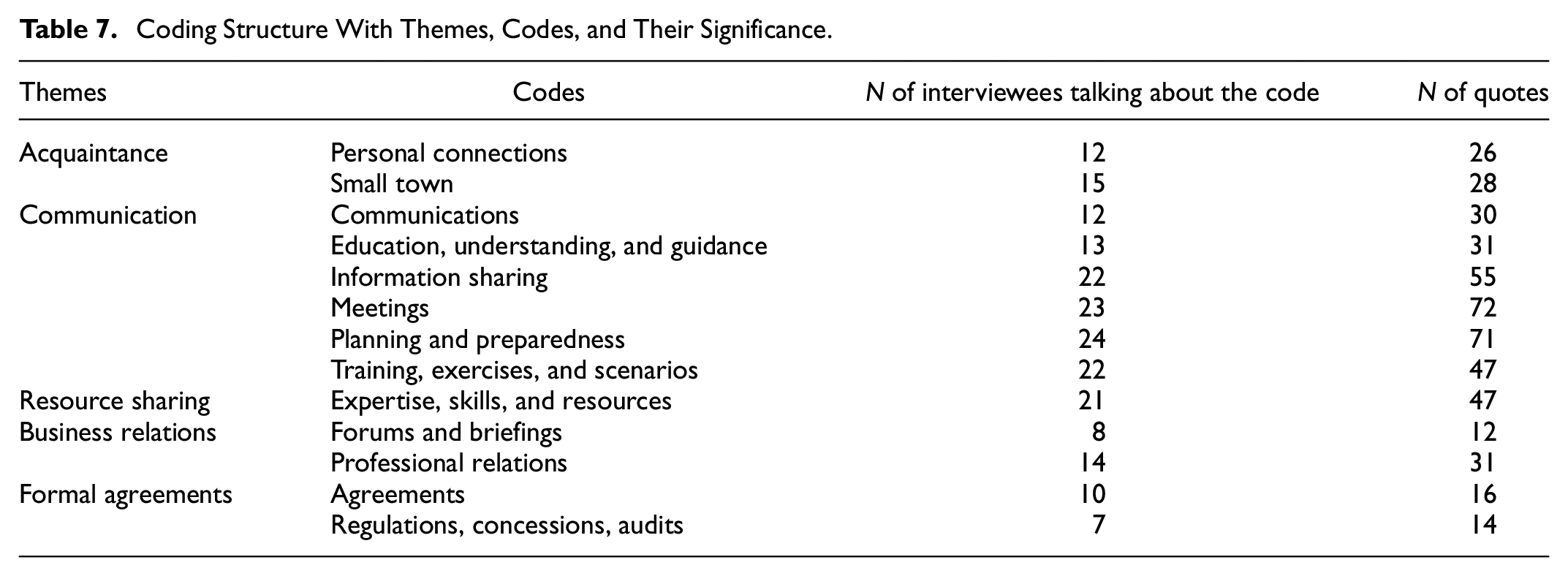
Going further in the understanding of collaboration, we explored the data for the range of interactions among tourism and emergency management organizations. In social network analysis, identifying the various types of relations is the root of understanding the connections between nodes (Varda, 2017). This paper identifies five main collaboration types that characterize tourism and emergency management networks: (i) acquaintance, (ii) communication, (iii) resource sharing, (vi) business relations, and (v) formal agreements. These are summarized in Table 7 and discussed in the following sections. Distinguishing collaboration types is challenging as collaboration inherently involves a spectrum of collaborative efforts that overlap within complex organizational and interpersonal relationships. For example, all types of collaboration incorporate elements of communication, whether in informal or formal contexts, through oral or written means. The five collaboration types discussed are practice-based rather than theory-informed, emerging from participants’ responses to the question: “Which types of collaboration can you identify in practice?” Thus, these collaboration types directly represent observed behaviours and actions identified by interviewees in their reflections on tourism disaster management collaboration. Although what we present is not a network typology of collaboration, it is a starting point in understanding what actors do and how they network in tourism disaster management (Hollstein, 2011).
Coding Structure With Themes, Codes, and Their Significance.
Acquaintance
Data analysis revealed that tourism stakeholders and emergency management officers often know each other because they reside in small communities. These are personal connections in the form of friendships, previous working relations, or contacts through other sectors, given that in these small communities, people work multiple jobs. As one participant noted, “It’s a small environment, you know, and we all live and work in the same small place, really. So, we all know each other” (LU1-F). Knowing whom to talk to if something happens is recognized as the basis for collaboration. This is because “You don’t want to be meeting the, you know, the head of Fire and Emergency New Zealand or the Civil Defence officers when the earthquake’s on so, just by sharing coffee with them, talking about what you’re up to, you know, at least two or three times a year I think is absolutely critical” (ACT4-T).
Communication
Communication is another type of inter-organizational collaboration, as it results in shared situational awareness and ensures key actors are aware of response objectives (Hu et al., 2022; Jiang & Ritchie, 2017). In the case of TORQUE and FHWG, Emergency Management Southland and Otago, respectively, share planning information to build response capability and capacity for the community, and assist the tourism sector to develop emergency planning and preparedness. As one interviewee put it: “We share information with the tourism operators around what we’re doing to build the response capability and capacity for the district, and try to support them too with developing their own kind of business continuity plans, or their capability to look after and support people who may be with them during an emergency, but also how they could feed into the broader coordinated response with perhaps some of their assets or capability” (LA1-T). Tourism businesses share information regarding the visitor market (e.g., the number of tourists currently present in the destination), assets, and human resources to support emergency response efforts. For instance, one interviewee said: “They have access to some really good predictive statistical modelling about accommodation; how many people are going to be coming to town; about peaks and troughs and visitors. So, when we’re planning certain things, when we’re looking at how much resource we need to allocate to something, some of that information is really, really useful” (ES4-T). The aim is to gain a better understanding of how emergency management agencies work during an event, and how the tourism sector would fit in, so that “…when disaster strikes or something happens, we’ve got those pieces of the puzzle we can click into place” (ES3-T).
Within the FHWG and TORQUE groups, meetings represent the main platforms for sharing information about planning and preparedness. During the quarterly meetings, group members receive updates from emergency managers, listen to guest speakers, talk about business continuity planning, and discuss potential responses to hazardous events or lessons from past emergencies. This is illustrated by these quotes: “it’s discussing recent events and lessons learned and how we can improve our processes. So, just generally it’s a round table sort of update; introductions and update of what’s happening in your space” (LA1-F). “And we get reports from the earthquake’s scientists, predictions, weather patterns, all that sort of knowledge stuff that you need to know to be prepared. So if you need more equipment, if you need more whatever it is, it’s talked about at those Hazard meetings” (ACT4-F). Another interviewee commented: “We try and organise guest speakers that would be interesting and relevant to that group. And often, they come from within the group, talking about projects they’re working on, or we would talk about our experiences and other disasters from around the country or learnings from other people in similar situations” (ES1-T). Apart from planning and preparedness, participants find value in the meetings, because they help connect each other, develop trust, and build relations, as these statements reflect: “I think collaboration in tourism disaster management is really these sector groups, and communication, and it’s working together. So, if we weren’t in this room, then we wouldn’t be sharing our continuity plans; we wouldn’t be able to share ideas; ….” (RTO1-T).
Exercises, scenarios, and formal training were described as other important tools for information sharing, planning, and preparedness. Participants had a shared view on the importance of tabletop exercises and scenarios in putting plans into action and developing an understanding of issues that may emerge during an emergency. They agreed that this type of training enables them to think about real challenges they could face, and have a clearer understanding of how they would respond. Formal CIMS training was described as setting a common ground for collaboration, providing members with shared language, systems, and procedures. As one participant reported: “So they all talk the same language, they all follow the same structure, they all follow the same approach, Police, Fire, Civil Defence, Search and rescue, not nationally, but internationally. So as an organisation, understanding that system, that process, how they talk, when we connect and link up with them, we understand each other. Yeah, we’re talking the same terms. We know who’s who in the zoo, we know who’s leading the operation. We know if we need equipment then we see this particular person. So if that’s the blueprint to how to manage an emergency event, the emergency services are doing that, using their blueprint, then why wouldn’t we do it? You know, it’s pretty much best practice for a system or a process” (ACT4-T). Another commented: “The more people we have trained in CIMS, the more common language we can use to get those things done” (WS1-T).
Resource sharing
Resource sharing is also critical for collaboration (Fyall et al., 2012; Jiang & Ritchie, 2017). Tourism businesses have various resources, mainly in the form of (i) human resources, skills, and know-how—such as tourist guides, drivers, medical skills, advanced first aid, rope skills, connections in the community, know-how from management experience and (ii) tangible resources—for example, buses, helicopters, boats, accommodation facilities, and alternative communications, power options and generators. For example, one interviewee said: “they’re in the business of moving people and the logistics, and feeding people, and housing people. They’ve got the skills, the resources, and the know-how. So, why we wouldn’t tap into that” (ES3-T). Another reported: “Generally that’s the deployment of a resource with a capable operating, a technical skill in the operator, and the resource: boats, helicopters. Examples are the mountain guiding thing: a lot of them are involved with us, and they bring specific, very specific skills” (ES4-T).
Understanding what resources and capabilities are available and involving tourism businesses in emergency management well before a disaster is critical. This is because building relations and trust before an event leads to more rapid activation of resources, as one participant noted: “we can actually understand that these resources are potentially available, and we may even be able to reach out to them and, you know, ask for their support straightaway. Especially if they understand that we currently have that risk, we’ve already built that relationship earlier” (ACT4-T). Communication is portrayed as the means through which information and plans are shared, contributing to shared situational awareness and collaboration. On the other hand, resource sharing goes beyond information exchange and involves the practical pooling and utilization of diverse resources within the tourism sector, including staff’s knowledge and skills.
Business Relations
Business relations are understood to be professional connections that exist during business-as-usual: “We’re lucky in that we collaborate with them to some degree through business as usual, through industry bodies, whether it be hospitality industry or the other operators” (ES4-T). These are more regular connections that take place in various forms, including management, administrative or transactional work, funding, training, and health and safety, that create an “…immediate link to any issue that could arise from an incident that would involve either a tourist or staff in particularly remote places like the Milford Track” (ACT4-F). For example, one interviewee said: “And then, of course, there’s the big mass tourism people, like Juicy and Real Journeys and Southern Discoveries and all those types, and the smaller ones. I guess, again, we don’t actively have planning sessions with them but that’s more transactional, some of that sort of stuff” (GO1-F). These links are maintained through regular visits and informal “catch ups,” meetings, forums, and briefings: “So it’s just like any business relationship and networking, outside of the TORQUE group you just continue to send emails and information and keep those links” (ACT4-T). As one interviewee put it: “And catch up with the Harbour Controller as well while I’m there, just to see any issues with the local operators that I can maybe assess with” (LA1-F). As a result, stakeholders feel they are building trust and consolidating the relations, which is evident from: “We work quite closely with Air Milford and Air Glenorchy. So, we put a lot of passengers on them every year. So, in the disaster, they help us out. They’ll charge us a plane for next to nothing to help us out. And we always know that that resource is there” (ACT3-F).
Formal Agreements
Lastly, group members collaborate through formal agreements such as service agreements, management agreements, concessions, permits, laws, Memorandums of Understanding, and shareholder contracts. Three key issues around formal agreements are identified from the interviews and the open questions in the surveys. First, it is noted that emergency services are mandated to collaborate with CDEM groups by law, while tourism businesses collaborate on a voluntary basis. Tourism businesses are responsible for their customers, as well as their staff, under the Health and Safety at Work Act (2015). Second, participants agree that formal agreements are important because they set roles and responsibilities, objectives, and priorities: “I think we have to have formal structures. And formal structures do need some form of accountability; there has to be something that they’re agreeing to achieve” (ES4-T). However, some participants consider the focus should be on developing relations and an overall understanding of the situation, rather than having a formal document.
Collaboration Network Structure
Quantitative results are presented following three different levels of analysis to provide in-depth insights into the characteristics of the network, as explained by Baggio (2017). First, the whole network level properties are examined, followed by the identification of communities in the network (i.e., modularity analysis). Individual properties are discussed, and key actors are identified. Different sets of metrics are used, which are explained in the following sections. A total of 32 organizations from the Fiordland Hazard Working Group (FHWG) and 29 from Tourism Operators Responders of Queenstown (TORQUE) were included in the network study (Appendix 3).
Overall network structure characteristics
The collaborative networks of FHWG and TORQUE can be visualized as undirected and weighted graphs (Figures 2 and 3). The nodes’ size depends on betweenness centrality, which measures the extent to which a node connects pairs of other nodes (Scott, 2017). Nodes represent individual organizations, coded by their emergency management or tourism business category (see Table 3). Links between the nodes represent collaborative relations drawn from the interview findings. These are acquaintance (here assessed as organizational knowledge of another organization, and not as interpersonal relationships), communication, resource sharing, business relation, and formal agreements. The thickness of the lines in Figures 2 and 3 represents the strength of the links, going from 1 (indicating weak collaboration) to 6 (indicating strong collaboration).
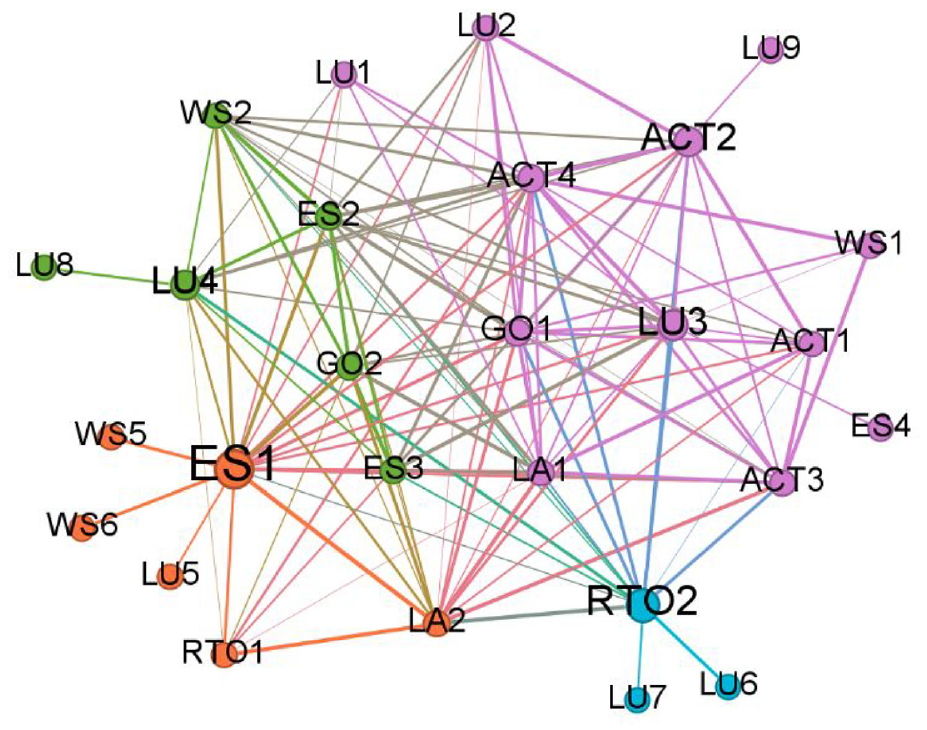
Fiordland hazard working group collaborative network.
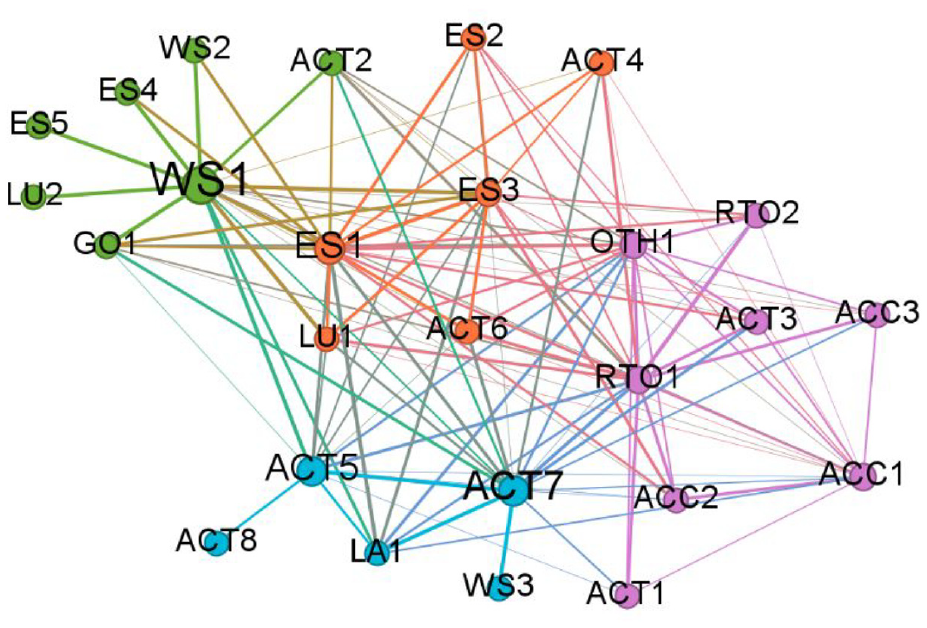
Tourism operator responders Queenstown collaborative network.
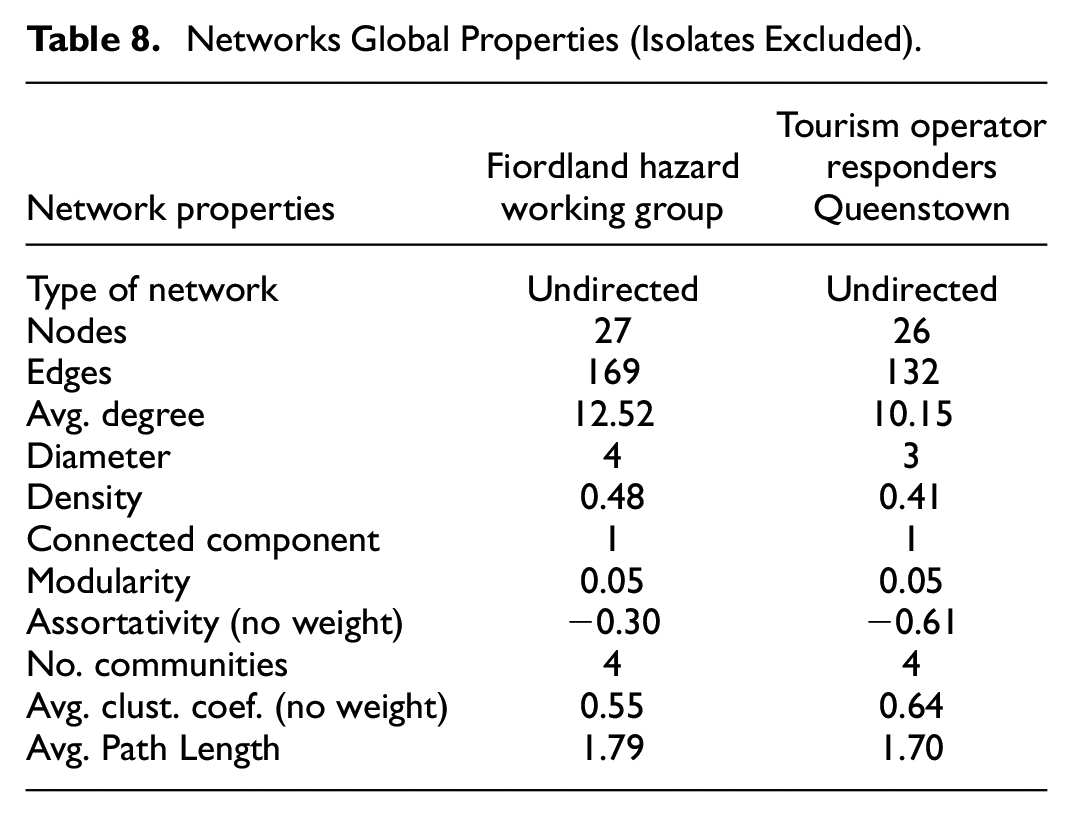
Table 8 contains a summary of the networks’ properties. Both networks are relatively small yet dense, with 169 (FHWG) and 132 (TORQUE) collaborative links, while the network density is 0.48 for FHWG and 0.41 for TORQUE, indicating that 48% and 41% of all possible links are present, respectively. Another density indicator is the average clustering coefficient, which measures the density of links between each node’s immediate neighbors and indicates the extent to which organizations form collaborative groups (Baggio, 2020). Results for FHWG and TORQUE are respectively 0.55, and 0.64, meaning that on average, 55% and 64% of all the links within the neighborhood of an organization in FHWG and TORQUE networks are present. Overall, these high values indicate that stakeholders are well-connected and willing to collaborate, a result corroborated by the qualitative interview data. For example, one participant commented: “While they may be competitive organisations from a marketing point of view, at an operational level, they’ll help one another straightaway” (LA1-T). Another noted: “we are very collaborative, which is a good space to be” (ACT3-T).
Networks Global Properties (Isolates Excluded).
This collaboration is driven by the tourism-dependent economies of Otago and Fiordland, where Queenstown and Milford Sound are located. Here, emergency management relies on tourism operators for disaster response, which fosters cooperation. As an interviewee explained: “you’ve got this huge tourist presence on any given day, there’s a huge reliance by those organisations on the operators themselves. So far more collaboration, probably, than you would often see in other places” (LA2-F). Additionally, members are passionate about community safety, motivating them to invest time and effort into networking, as highlighted by this quote: “So, it’s basically driven by me and (…). I just feel it’s necessary; we’re quite passionate about it” (RTO1-T). These circumstances could explain the difference between the high density of FHWG and TORQUE networks and the low values observed in tourism networks in other contexts. For example, the Gotthard tourism supply chain network has a network density of 7.2% (Luthe et al., 2012). Similarly, tourism activity networks in Romania, including marketing, promotion, and product creation, have an even lower density of around 1%, suggesting a reduced predisposition towards collaboration (Cehan et al., 2021).
There is no recommended optimal level of network density (Raisi et al., 2020), with both advantages and disadvantages associated with high levels of this metric. On one hand, denser networks facilitate collaboration through tighter links and increased possibilities for communication (Kapucu & Hu, 2016), and favor trust and reciprocity between network members (Schaffer & Lawley, 2012). This is also evident from the interviews, where stakeholders describe how the “small community” increases their confidence in helping one another and working together in the event of a major disruption. This is exemplified by: “it’s still a small community, and there is a great relationship that exists across the sector. (…) in a time of need, those companies will work very collaboratively together, and if one needs help, then the other one will be there” (LA1-T). On the other hand, too much density may limit innovative capacity, because groups are insulated from new information and ideas (Raisi et al., 2020).
While the clustering coefficient is a static measure of local density, assortativity shows the tendency of nodes to connect to nodes with a similar degree, that is, the number of direct connections (Baggio, 2020). The data values for FHWG and TORQUE are negative (FHWG = −0.30; TORQUE = −0.61), indicating there is no such tendency here. Other important network global measures are average path length (i.e., the average distance between any two nodes) and diameter (i.e., the longest distance between any two nodes) (Baggio, 2020), which have been used as measures of cohesion in emergency management networks (Hu et al., 2022). For example, actors in networks with low average path lengths and small diameters can communicate more efficiently across the network (Hanneman & Riddle, 2005). In FHWG and TORQUE networks, the values of average path length (FHWG = 1.79; TORQUE = 1.70) and diameter (FHWG = 4; TORQUE = 3) are lower than those reported in the literature (Baggio, 2020; Scott et al., 2008), signaling good general compactness. This may be due to the small size of the groups and the communities they are part of, where everyone knows each other and can connect easily, either directly or through a few intermediaries. This is illustrated by the following quotes: “In Queenstown, we’re a small town, and we run into each other all the time” (ES1-T); “I just pick up the phone and ring them. And it happens regularly. It’s just a Yep. That’s about anything really” (ACT4-F); “It’s a whole network and fabric of relationships. That’s how small towns work. (…) Everything’s connected to everything else” (GO1-F).
In terms of structure, the networks are rather diffusely distributed: the structures are built around a core of nodes well connected to each other, while in the periphery are those with fewer links. Although CDEMs and RTOs assume the role of leaders and coordinators in the groups, several central organizations hold numerous connections, while others are only connected to the core. For example, notable central organizations in FHWG (see Figure 2) include the Department of Conservation (GO1), Southland Fire and Emergency New Zealand (ES2), and Southern Lakes Helicopter (ACT4). The following comments highlight their centrality: “We talk to DOC [Department of Conservation] all the time; DOC is really important” (RTO1-F); “We liaise on a regular basis (..) with emergency management from FENZ, which is the fire emergency management, DOC Department of Conservation, which has all the huts in the park” (ACT4-F); “Quite often I have interaction with Southern Lakes Helicopter” (LA1-F).
The general structure of FHWG and TORQUE networks seems to reflect the core–periphery model (Borgatti et al., 2013). Compared to a highly centralized or fully horizontal network, the core-periphery structure accounts for both the strength of centralized coordination among various responders and the flexibility to adjust to the quickly changing environment (Nowell et al., 2018). Emergency management literature suggests that while the core would act as the primary coordinator, peripheral members may contribute to the network resilience by providing alternative pathways for information flow (Nowell et al., 2018). This is the case for TORQUE and FHWG, with CDEM groups and RTOs coordinating the groups, and peripheral organizations bringing a different perspective, as these quotes demonstrate: “But then also, council and civil defence, as well as all these other tourism operators, bringing maybe different perspectives, different risks to these discussions” (ACT4-T); “And it’s a small company, and you go, ‘Oh, what could they possibly do?’ But what (…) brings is really fresh eyes and fresh ideas” (ES1-T).
Concerning the strength and quality of links, most links are of strength 5 or 6 in both networks (42% of total links in FHWG, 48% in TORQUE). Members are mainly connected by four or five different types of relations, which indicates their tendency to develop multiple types of connections within the groups. This is also confirmed by the qualitative findings, which reveal the complexity and variety of connections, as exemplified in the following quote: “The email exists for the major companies to be involved there. (…) And how the relationship evolves is that we talk about current trends and practices, (…) we try and organise guest speakers that would be interesting and relevant to that group (…) we use D4H as an incident management tool in Emergency Management Otago. (…) at the CIMS 4 course, we’ll engage with them there (…) we’ll talk formally and informally about their role here, and emergency management and disaster response” (ES1-T). Additionally, the survey participants’ self-reported strength of the relations shows that only a small percentage of the respondents said they had “weak” connections with some members of the respective networks, with most links being rated as “somewhat strong” or “strong” (93% in FHWG, and 76% in TORQUE).
This multiplexity has several implications. First, it increases the strength of the connection, by facilitating information exchange and coordination among organizations, positively impacting network development (Kapucu & Hu, 2016). Second, diversity generally benefits system resilience by allowing it to survive and maintain its functions even if one area collapses (Luthe et al., 2012), and the presence of multiple ties can have similar supporting functions. Third, diversity also contributes to the sustainability—understood as long-term maintenance—of the connections (Ruiz-Ballesteros, 2011) and the success of the tourism network (Scott et al., 2008).
Modular Structure
We performed modularity analysis to identify communities within the collaborative networks. Communities (also called modules or clusters) are formed by nodes that are more densely connected between themselves compared to the rest of the network (Baggio, 2017). The modularity index assesses how well a network can be divided into communities. Its value ranges from 0 to 1, where 1 indicates that the network is made of completely separated communities (Raisi et al., 2020). Among several community detection algorithms proposed by the literature (Souravlas et al., 2021), we used the Leiden algorithm (Traag et al., 2019), which is said to be faster and more efficient, yielding better-connected communities (Hairol Anuar et al., 2021). The result of the modularity analysis was 0.05, indicating that the networks are loosely divided into communities. This is consistent with the network closure theory (Coleman, 1988) and empirical studies that indicate that networks with high structural cohesion lack clearly distinguishable subgroups (Bodin & Crona, 2009; Luthe et al., 2012). Four communities in each network were detected and are represented in Figures 2 and 3 by different colors.
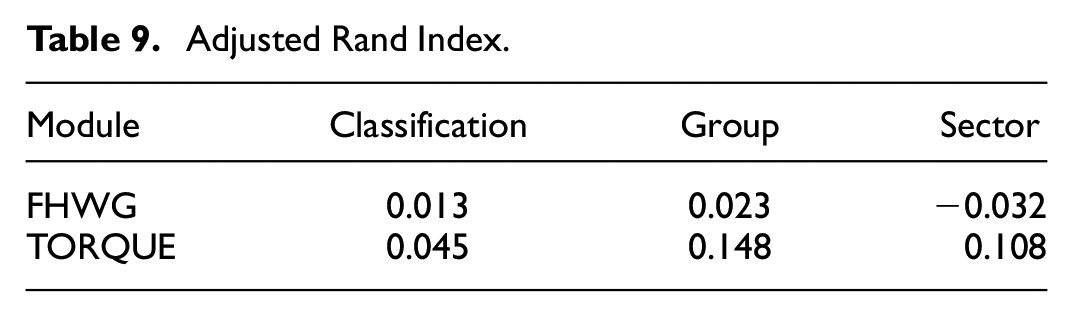
To understand the reasons for these partitions, we used the Adjusted Rand Index (ARI) (Hubert & Arabie, 1985), a corrected version of the Rand index (Rand, 1971), which measures the degree of similarity between two clusters. While the Rand index assumes values between 0 and 1, where 1 means the two clustering results are the same, the ARI can have negative values if the similarity is less than expected (Hubert & Arabie, 1985). We compared the modules with the clustering according to (i) category (see Table 4), (ii) group (emergency management, tourism, other), and (iii) sector (public, private, other). As Table 9 illustrates, there are no significant results for attributing the partitions to any clusterings. As past research found, collaborative networks in tourism seem to exhibit some self-organizing capabilities that transcend predetermined differentiations of the organizations, based on traditional characteristics such as business typology (Baggio, 2020). In Queenstown and Milford Sound, organizations tend to build and maintain relations with others with whom they have previously interacted and developed trust, which aligns with the literature (Kapucu & Garayev, 2012). For example, one interviewee noted: “there is a high level of interaction and there’s probably a real trust in there as well. Let’s say it was police or fire that were leading the response: they’re ringing up; they’re asking for information; they know the people involved, so it’s easy to believe what they’re being told, rather than sort of questioning it” (LA2-F).
Adjusted Rand Index.
Key Actors in the Networks
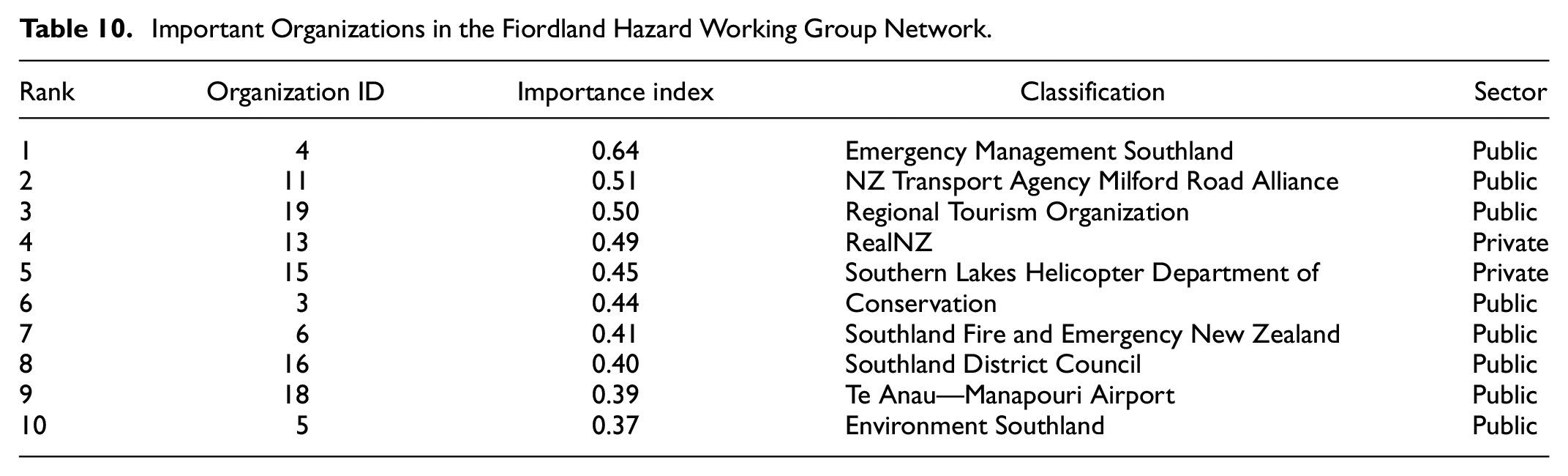
Different measures of centrality can be used to identify the important actors in a network (Casanueva et al., 2016). These include degree centrality (the number of direct connections of a node), closeness centrality (how close a node is to others), betweenness centrality (the number of times a node connects others), eigenvector centrality (how connected an actor is to high-scoring nodes), and clustering coefficient (the tendency of nodes to cluster together) (Scott, 2017). Overall, higher values of these metrics indicate more central actors, and express their power, intermediary function, or greater access to information and resources (Hu et al., 2022; Varda, 2017). In this paper, we calculated an importance index as the geometric mean of the normalized set of these five centrality measures (Mariani & Baggio, 2020). The 10 most important organizations in the networks are displayed in Tables 10 and 11.
Important Organizations in the Fiordland Hazard Working Group Network.
Important Organizations in the Tourism Operator Responders Queenstown Network.
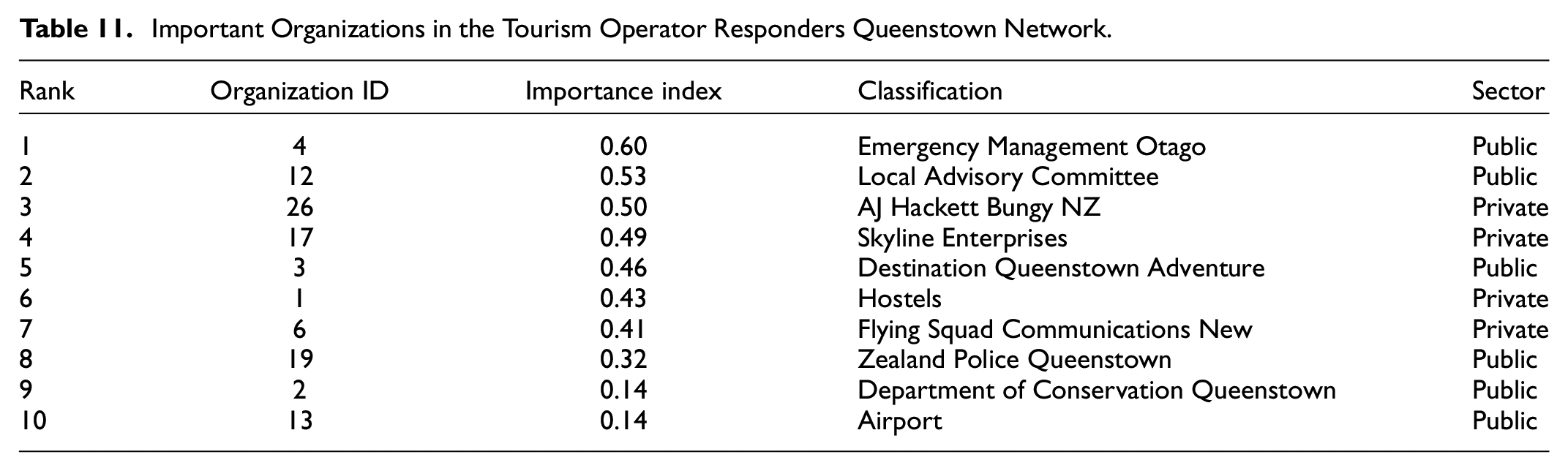
As expected, the most important organizations are the CDEM groups for the two regions because they are mandated to work together with other organizations to provide coordinated planning for reduction, readiness, response, and recovery (CDEM, 2015). These comments illustrate this: “Emergency management guys are definitely the most important because they are the ones that manage it for us” (ACT4-F); “I see Emergency Management Southland—the group—being quite important, and civil defence being quite important in making sure that they keep all those parties talking and collaborating and sharing and so on. They’re the jam between the sandwich” (ES2-F). The second most important organizations are a lifeline utility (for FHWG) and a welfare service (for TORQUE) that work in close contact with both the tourism and the emergency management sectors. Other central actors are the RTOs for Fiordland and Queenstown, which facilitate collaboration within the tourism industry, as a participant highlighted: “Destination Queenstown chairs that [TORQUE]. So they have the reach into other [tourism] organisations (…) And they’re a great assistance in terms of getting our message out to everyone that we need to” (ES3-T). These findings confirm previous research arguing that the role of DMOs now extends from the traditional destination marketing and branding role to embrace more of a strategic leadership role in the pre-disaster stage, with a focus on facilitating connections and promoting tourism disaster preparedness (Blackman et al., 2011; Hystad & Keller, 2008).
We used betweenness centrality measures to identify boundary spanners in the networks (Saban, 2015; Shi et al., 2017). Boundary spanners act as bridges between groups, encouraging innovation and facilitating knowledge and resource sharing in emergency management networks (Faas et al., 2017). ES1 and RTO2 are the major brokering organizations in FHWG network, as they used 20% of all 169 links, to connect emergency management organizations with the tourism industry. In TORQUE, the first two boundary spanners are welfare (WS1) and tourism attractions (ACT7), bridging the gaps between sectors with 29% of all 132 links, followed by ES1, ACT5, and RTO1. Other boundary spanners in both networks include lifeline utilities, tourism businesses, government departments, and emergency services.
Conclusion
Collaboration between emergency management and tourism is critical for effectively helping destinations to prepare for, respond to, and recover from disasters (Morakabati et al., 2017). Adopting a mixed-method social network approach, we investigated the collaboration practices and the structural characteristics of networks in tourism and emergency management in Queenstown and Milford Sound. Theoretically, this study contributes to the understanding of collaboration in tourism disaster management, its multiplexity, and the key actors and structures of collaborative networks. Previous studies in TDM lacked specificity in defining and measuring inter-organizational collaboration, using terms like “stakeholder collaboration” (Jiang & Ritchie, 2017), “public-private partnership” (Cahyanto et al., 2021), and “inter-relationships” (Becken et al., 2014) without clear classification systems to elucidate the complexity of inter-organizational interactions. This study covers this gap by providing a detailed analysis, supported by original quotes, of the nature of collaboration in tourism disaster management, and how collaborative relations are enacted in practice. Compared to previous research, it expands participant diversity by comprehensively incorporating the emergency management perspective, emphasizing practical insights from real cases of TDM collaboration.
In defining TDM collaboration, this study goes beyond previous research by not only identifying a “common interest” (Jiang & Ritchie, 2017) or “shared objective” (Cahyanto et al., 2021) among stakeholders but also by detailing its specifics. It emphasizes the dual nature of collaboration, formal and informal, which has implications for the strategies to adopt in establishing and fostering TDM collaborative groups. For example, for policy-focused groups, emphasis on formal agreements and involvement of policy role representatives is recommended, while for settings where informal collaboration is paramount, including operational personnel and forgoing formal agreements may be more appropriate. Furthermore, we identified five different types of collaborative relations including (i) acquaintance, (ii) communication, (iii) resource sharing, (vi) business relations, and (v) formal agreements. This categorization extends our use and understanding of the term collaboration, pointing to the need to consider the multiplexity of collaborative relations (Hu et al., 2022). Identifying the different types of relations is the first step in understanding which collaboration types and activities managers should prioritize to enhance network effectiveness during disaster response. Insights from this research can assist tourism and emergency management professionals in creating strategies for network development and resource allocation which take into consideration the costs and formality associated with various types of relations. Rather than viewing collaboration challenges as a singular issue, our research advocates for a detailed examination of each collaboration type, highlighting the need for tailored approaches to collaboration management. For instance, while communication channels between organizations may be well-established, there might be inefficiencies in resource sharing mechanisms. By identifying and prioritizing areas for improvement in each type of collaboration, managers can enhance the overall effectiveness of disaster response networks.
In this study, we built a collaboration network for each case study group and analyzed the networks’ basic characteristics, density, centrality, connectedness, and closure. We found that while there is no ideal level of collaboration between tourism and emergency management actors, FHWG and TORQUE networks show some features of well-connected and resilient systems, including high density, a core-periphery structure, and multiplexity. This is an important finding given that highly cohesive networks are better adapted to cope with uncertainty and change (Bodin & Crona, 2009). Members of the FHWG and TORQUE groups demonstrate tight and diverse connections which are likely to ensure efficient information exchange and coordination of resources, and a capacity to engage with emergent actors through boundary spanners (Hu et al., 2022). To replicate these systems, other destinations interested in establishing TDM collaborative groups should encourage a culture that facilitates strong and diverse relations with partners. Fostering diversity within the network by involving actors from various sectors plays a critical role in supplying a diverse array of skills and resources which is key to responding successfully to emergencies. Identifying and cultivating boundary spanners, that is, individuals who bridge different groups or sectors, is crucial for facilitating communication and collaboration among diverse stakeholders.
Methodologically, this study makes a unique contribution by applying a mixed-method social network approach, which has rarely been applied in tourism (Mariani & Baggio, 2020) or emergency management network studies to date (Hu et al., 2022). Purely quantitative or qualitative methods are not enough to study complex systems such as tourism (Baggio, 2017). The use of an exploratory sequential design allowed us to study the structural characteristics and patterns of collaborative networks in tourism disaster management for the first time, while also providing insights into stakeholders’ understanding of collaboration. Our research integrates tourism and emergency management literature and methods using network science, challenging the conventional tourism-centric perspective in disaster and crisis studies. Overall, it fills an important gap in the literature by providing a detailed analysis of how tourism disaster management networks are designed and function. Employing various network metrics at different levels, we have explored network connectivity and structure at the whole level, assessed tie strength and quality with multiplexity, identified communities through modularity analysis at the intermediate level, and highlighted key actors using centrality measures at the local level. This study provides evidence of the usefulness of network analysis in examining tourism disaster management collaboration.
Social Network Analysis (SNA) has proved to be an effective tool to inform tourism disaster management practices in the destinations under study and others. Centrality measures can help members understand their position and take on appropriate roles, as either leaders or bridging actors. It can also support allocating resources and developing policies to empower those actors responsible for coordination and disaster planning. For example, this study has identified CDEM groups and DMOs as coordinators and facilitators between tourism and emergency services. Their central coordinating role suggests they may need more resources and capacity to perform their critical bridging functions. Additionally, identifying network communities or clusters through modularity or cluster analysis can highlight variations in connectivity, suggesting the development of strategies to enhance collaboration between less-connected subgroups and fill structural holes in the network. Finally, employing network visualizations and metrics can provide valuable input for simulation models aimed at stress-testing resilience and identifying vulnerabilities. This could involve altering the structure of the network by adding or removing connections or organizations, to see how the overall resilience of the network changes in response to disruptions. Further collaboration between academia and industry could help answer some of these questions.
Although this research has provided valuable insights, it is important to acknowledge its limitations, which can guide future investigations. This study was limited by the incomplete participation of all group members in the survey, due to Covid disruptions and heavy work commitments. Additionally, it focused on two small networks within nature-based tourist destinations in New Zealand. To validate the findings, it is recommended to conduct similar studies across larger and more diverse networks, including urban destinations. Furthermore, although data on relationship duration, confidence in tourism disaster management systems, and organizational functions were collected, they were not included in this paper, potentially leading to gaps in understanding collaboration efficiency. Analyzing this data could provide further insights into network performance.
While previous studies argued that stakeholder collaboration in tourism disaster management is limited (Becken & Hughey, 2013; Filimonau & De Coteau, 2020; Nguyen et al., 2017), this research revealed that TORQUE and FHWG members engage proactively in collaborative practices because of their interest, passion, and drive. Depending on the type of relation, the factors affecting network formation and development can vary (Hu et al., 2022), therefore future research should explore multiplexity to understand how networks are formed and evolve. While our results have identified important elements for genuine collaboration, more research is needed on the conditions required to make collaborative networks effective and strategies that can be used to maintain connections. With the continued growth of the tourism industry, and the increasing frequency and intensity of disasters, defining, visualizing, and contextualizing collaborative ties is a fundamental step in the process to help destinations achieve better disaster management outcomes.
Footnotes
Appendix 1. Interview Protocol
Appendix 2. Survey Structure
Appendix 3. List of Organizations Included in the Network Study
Tourism Operator Responders of Queenstown (TORQUE).
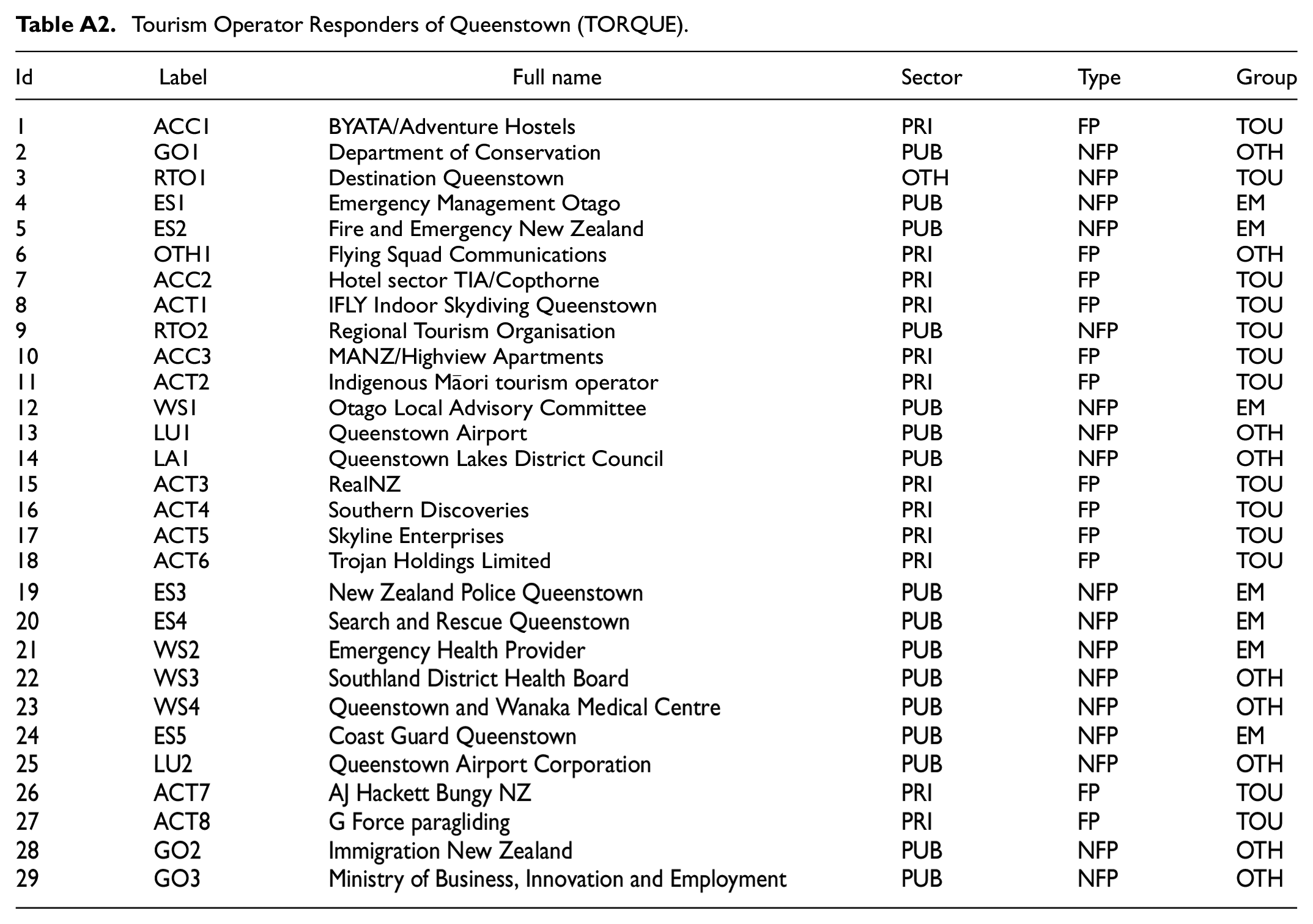
| Id | Label | Full name | Sector | Type | Group |
|---|---|---|---|---|---|
| 1 | ACC1 | BYATA/Adventure Hostels | PRI | FP | TOU |
| 2 | GO1 | Department of Conservation | PUB | NFP | OTH |
| 3 | RTO1 | Destination Queenstown | OTH | NFP | TOU |
| 4 | ES1 | Emergency Management Otago | PUB | NFP | EM |
| 5 | ES2 | Fire and Emergency New Zealand | PUB | NFP | EM |
| 6 | OTH1 | Flying Squad Communications | PRI | FP | OTH |
| 7 | ACC2 | Hotel sector TIA/Copthorne | PRI | FP | TOU |
| 8 | ACT1 | IFLY Indoor Skydiving Queenstown | PRI | FP | TOU |
| 9 | RTO2 | Regional Tourism Organisation | PUB | NFP | TOU |
| 10 | ACC3 | MANZ/Highview Apartments | PRI | FP | TOU |
| 11 | ACT2 | Indigenous Māori tourism operator | PRI | FP | TOU |
| 12 | WS1 | Otago Local Advisory Committee | PUB | NFP | EM |
| 13 | LU1 | Queenstown Airport | PUB | NFP | OTH |
| 14 | LA1 | Queenstown Lakes District Council | PUB | NFP | OTH |
| 15 | ACT3 | RealNZ | PRI | FP | TOU |
| 16 | ACT4 | Southern Discoveries | PRI | FP | TOU |
| 17 | ACT5 | Skyline Enterprises | PRI | FP | TOU |
| 18 | ACT6 | Trojan Holdings Limited | PRI | FP | TOU |
| 19 | ES3 | New Zealand Police Queenstown | PUB | NFP | EM |
| 20 | ES4 | Search and Rescue Queenstown | PUB | NFP | EM |
| 21 | WS2 | Emergency Health Provider | PUB | NFP | EM |
| 22 | WS3 | Southland District Health Board | PUB | NFP | OTH |
| 23 | WS4 | Queenstown and Wanaka Medical Centre | PUB | NFP | OTH |
| 24 | ES5 | Coast Guard Queenstown | PUB | NFP | EM |
| 25 | LU2 | Queenstown Airport Corporation | PUB | NFP | OTH |
| 26 | ACT7 | AJ Hackett Bungy NZ | PRI | FP | TOU |
| 27 | ACT8 | G Force paragliding | PRI | FP | TOU |
| 28 | GO2 | Immigration New Zealand | PUB | NFP | OTH |
| 29 | GO3 | Ministry of Business, Innovation and Employment | PUB | NFP | OTH |
Acknowledgements
The authors would like to thank the interview and survey participants for sharing their time and experiences, as well as the anonymous reviewers whose comments helped improve the draft of this paper.
Declaration of Conflicting Interests
The author(s) declared no potential conflicts of interest with respect to the research, authorship, and/or publication of this article.
Funding
The author(s) disclosed receipt of the following financial support for the research, authorship, and/or publication of this article: This research was funded by Resilience to Nature’s Challenges—Kia manawaroa—Ngā Ākina o Te Ao Tūroa (RNC) and partially supported by Te Hiranga Rū QuakeCoRE (NZ Centre for Earthquake Resilience), a New Zealand Tertiary Education Commission-funded Centre of Research Excellence (publication number 0860).
