




Abstract
To establish whether interventions ultimately change behavior, they are best tested in the field. However, there is no clear consensus on how to pre-select such interventions. To address this, we propose an extended pre-testing protocol in the lead-up to field studies. This extended protocol combines different approaches by (1) distinguishing between (a) an intervention triggering the corresponding theoretical construct, (b) the construct being linked to behavioral intentions, (c) the intervention affecting behavioral intentions; and (2) accounting for emotional reactions to intervention materials. We illustrate the protocol in an online experiment (N = 636) focusing on the example behavior of opting out of daily hotel room cleans—a behavior which can help reduce the environmental footprint of tourism. The results illustrate the value of the extended pre-testing protocol in tourism and hospitality research and beyond. It increases understanding of underlying intervention mechanisms and ensures interventions are suitable for the field.
Keywords
Introduction
The goal of interventions targeting consumer behavior is to change real behavior. The effectiveness of such interventions is therefore—in most cases—best proven in the field. However, there is no clear consensus on how to select promising interventions which are included in field studies. Selecting the best-suited interventions for field studies is a crucial step as field research is often time and cost-intensive (Viglia & Dolnicar, 2020).
One proposed approach to increase the impact of interventions is to run mega studies: large-scale field experiments that compare many different interventions all in the same context (Milkman et al., 2021). This means that a large number of interventions can be tested directly in the field and is unarguably a powerful approach to assessing whether interventions change real behavior. This approach does, however, not answer the question of why specific interventions (don’t) work as it does not account for underlying theoretical mechanisms. If it is not clear through which theoretical construct an intervention works, the adaptability to other behaviors and contexts can be severely limited. For instance, only if it is known that an intervention works by eliciting specific social norms can this intervention be adapted taking changes in the social context into account. Further, even in the case of mega studies, it would be a waste of resources and not viable to test an unlimited number of interventions and thus some pre-selection of intervention needs to occur.
One key criterion for interventions to be selected as suitable for the field is that they pass the manipulation check. The importance of manipulation checks in experimental research is widely acknowledged: “The manipulation check is the experimental researcher’s life insurance: it proves that the intervention does what it was developed to do before it is used in the actual experiment” (Viglia & Dolnicar, 2020, p. 4). If used properly, manipulation checks can help to establish whether a specific intervention works by manipulating the intended construct (Ejelöv & Luke, 2020). For instance, one could test whether a newly developed message aiming to leverage social norms does actually make those norms salient.
In line with this, the need to understand and test for the underlying determinant targeted by an intervention has recently been emphasized in the context of pro-environmental behavior change interventions (van Valkengoed et al., 2022): clear distinctions between different determinants underlying interventions allow researchers to better understand in which contexts and for which behaviors an intervention is effective. The authors call for future research to “not only measure changes in the target behavior but also include measures that assess (changes in) the relevant determinant(s) of the target behavior” (van Valkengoed et al., 2022, p. 1487). However, to fully capture the theoretical processes underpinning this, it is not sufficient to run the traditional manipulation check (testing whether an intervention has the intended effect on a theoretical construct). One needs to also account for the link between determinants and behavior of interest in the specific context.
Further, when deciding on an intervention to test and implement in the field, it does not only matter whether it is promising in changing behavior but also whether it does so without causing unwanted negative reactions. In the context of interventions aiming to change consumer behaviors, businesses and service providers can likely not compromise on consumer satisfaction and would be unlikely to adopt interventions that inflict negative reactions. While negative affect is considered as a determinant of behavior by van Valkengoed et al. (2022) it is not considered as an unwanted side effect. Our study builds on conventional manipulation checks and the call by van Valkengoed et al. (2022) and proposes an extended pre-testing protocol prior to field experiments to contribute to theoretical knowledge creation. It further extends upon this by also accounting for emotional reactions to intervention materials.
Extended Pre-testing Protocol
The proposed pre-testing protocol (see Figure 1) focuses on supporting knowledge creation by clearly disentangling underlying theoretical mechanisms (in line with van Valkengoed et al., 2022) as well as ensuring the feasibility and industry applicability by confirming that interventions do not result in unwanted negative reactions from participants. The proposed protocol is not intervention or context specific.
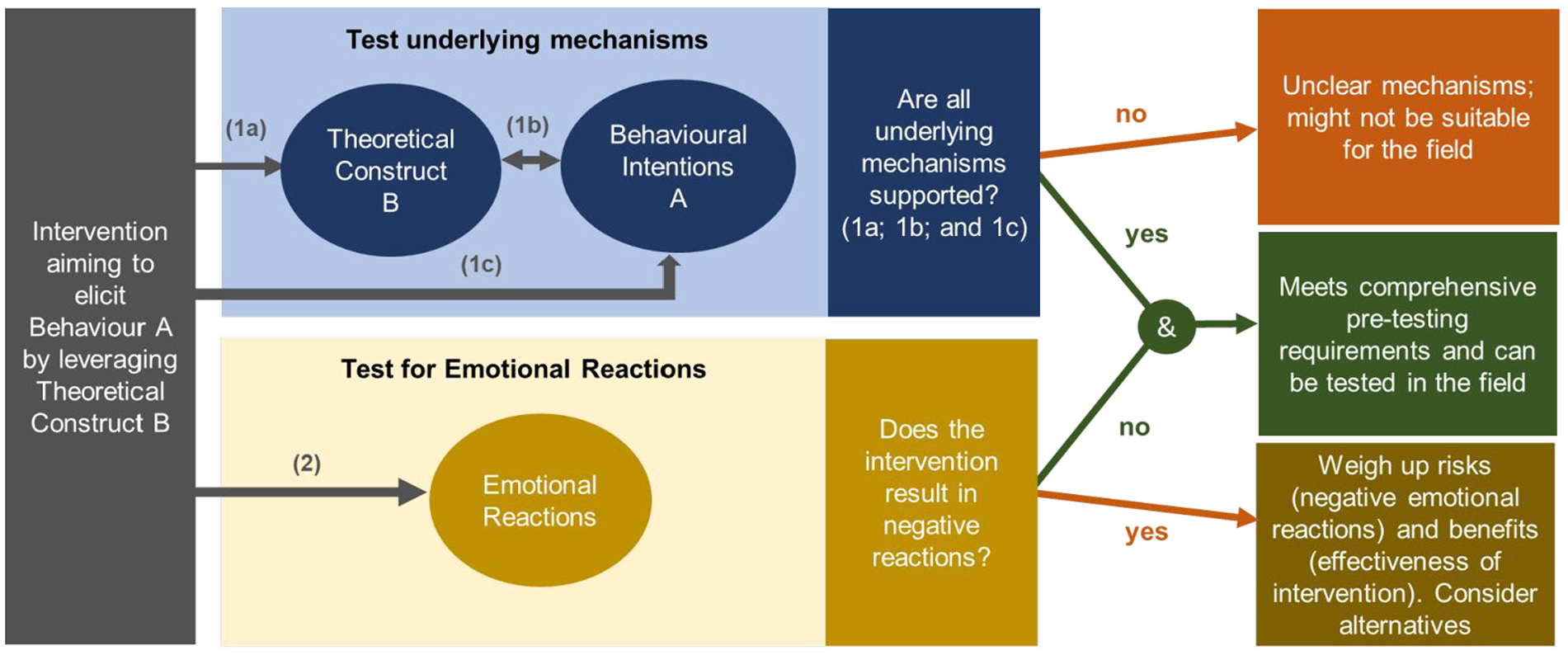
Proposed pre-testing protocol in the lead-up to field experimentation.
The extended protocol builds on frequently used manipulation checks but distinguishes between (a) the effect of the intervention on the construct (typical manipulation check), (b) the predictive ability of the theoretical construct on behavioral intentions (is this construct a determinant?), and (c) the effect of the intervention on behavioral intentions. A detailed experimental pre-test further offers an opportunity to assess fine-grained emotional reactions. Therefore, the proposed protocol (2) includes an assessment of emotional reactions caused by intervention materials to ensure that researchers and industry partners can reach an informed decision on whether the intervention is suitable for the field. We illustrate this protocol with the example of an intervention focused on the consumer behaviors of waiving and requesting hotel room cleans.
Literature Review
Decreasing the Number of Hotel Room Cleans
In this study, we focused on the consumer behaviors of waiving and requesting hotel room cleans. Tourism is responsible for 8% of global greenhouse gas emissions (Lenzen et al., 2018) and reducing room cleans can help to substantially lower emissions in the sector. For example, in an average four-star hotel, each room clean uses approximately “1.5 kWh of electricity and 100 ml of chemicals” (Dolnicar et al., 2019, p. 242). In a five-star hotel in Australia each room clean costs the hotel about AU$20 and produces 0.17 kg of scope three emissions (Demeter et al., 2021).
The notion of reducing hotel room cleans is not new but the comparative effectiveness of different approaches is not well understood. Only five out of 146 interventions targeting environmentally significant tourist behaviors studied room cleaning interventions (Demeter et al., 2023). Hotels could introduce hard interventions, such as adding fees for room cleaning, or soft interventions which include nudges and messaging campaigns (e.g., Osman & Nelson, 2019). One example of a soft intervention is to reward guests who opt out. Marriot and Hilton, for instance, reward guests with vouchers or loyalty points (Sampson, 2020). Although hotels are increasingly adopting different measures, it often remains unclear how effective these approaches are and why they are effective or ineffective.
Underlying Theoretical Constructs and Theories
Many different theoretical constructs can inform behavioral interventions such as the example intervention to increase room cleaning opt-out. The first aspect of the proposed pre-testing protocol, therefore, focuses on assessing the underlying mechanisms (in line with van Valkengoed et al., 2022) of such interventions by testing whether (a) an intervention does indeed trigger a specific theoretical construct; (b) whether the construct is associated with the specific behavior of interest; and (c) whether the intervention affects behavioral intentions. Dolnicar et al. (2020) put forward four different overarching approaches to increase pro-environmental tourist behavior: interventions based on beliefs; ones that build on social norms; ones that aim to increase pleasure; and ones that change choice architecture. We directly build on this categorization and test theoretical constructs from four main perspectives: the beliefs perspective; the identity perspective (including social norms); the hedonic perspective; and the path of least resistance (including choice architecture).
Beliefs Perspective
We test three interventions from the beliefs perspective which corresponds with the approach of changing beliefs (Dolnicar, 2020) and the determinant of “knowledge” put forward by van Valkengoed et al. (2022). In line with value-belief-norm theory (Stern et al., 1999), providing information can increase the awareness of consequences and/or the ascription of responsibility and thus lead to pro-environmental action (Stern, 2000). In the context of hotel room cleaning, a belief-based message could outline negative environmental consequences of daily cleans (awareness of consequences) or highlight the ability of guests to reduce negative environmental consequences by requesting fewer cleans (ascription of responsibility). In practice, such messages are often combined to address the overarching construct of beliefs as described by value-belief-norm theory (Stern et al., 1999): they raise awareness of negative environmental consequences while also pointing out people’s ability to mitigate this. However, if one is interested in the specific underlying mechanism, awareness of consequences and ascription of responsibility should also be manipulated separately. Interventions that leverage beliefs are a common approach but show inconsistent effects (Greene et al., 2023). For instance, changing the default cleaning procedure from automatic daily cleans to free cleaning upon request reduced room cleaning by 32% but adding beliefs-based messaging did not achieve an additional reduction (Kneževič Cvelbar et al., 2021).
Identity Perspective
Dolnicar (2020) puts forward interventions leveraging social norms as a further category. We include this under the identity perspective which covers social norms, including also an activation of someone’s environmental self-identity. This is in line with van Valkengoed et al. (2022) who mention both environmental self-identity and descriptive norms as possible determinants of pro-environmental behavior. Norms are “cultural phenomena that prescript and proscribe behavior in specific circumstances” (Hechter & Opp, 2001, p. 11). While norms are also accounted for in other theories, different group memberships can determine whether people adhere to specific norms (social identity theory; Tajfel & Turner, 1979). We therefore test social norms under the identity perspective. In the context of towel reuse at hotels, social norm messages outperformed beliefs messages and were most effective when a situationally close social reference group was chosen (in this case, descriptive norms that referred to guests staying in the same hotel room; Goldstein et al., 2008). This underlines that how norms are communicated and how they relate to people’s social identities can drive the effectiveness of interventions. In line with this, we tested one intervention leveraging descriptive social norms (in line with Goldstein et al., 2008).
Identity theory (e.g., Stryker, 1968) holds key similarities with social identity theory but focuses on different roles of the self rather than the self-categorization into group memberships (Stets & Burke, 2000). Environmental self-identities and—to a weaker extent—pro-environmental social identities are linked to pro-environmental behavioral intentions (Vesely et al., 2021) and activating an environmental self-identity by reminding people of their past pro-environmental behavior increases pro-environmental intentions (Van der Werff et al., 2014). Therefore, we further test a message aiming to activate an environmental self-identity (based on identity theory). Interventions reminding people of their past pro-environmental behavior (Van der Werff et al., 2014), commitment interventions, and interventions building on historic or social comparison feedback (van Valkengoed et al., 2022) have been put forward to leverage pro-environmental self-identity. However, we focus on a new short message-based intervention based on items typically used to assess the strength of identification with the pro-environmental self-identity (Fielding et al., 2008).
Hedonic Perspective
The third type of interventions outlined by Dolnicar (2020) focuses on increasing pleasure. Hedonic psychology postulates that decision-making is influenced by the aim to increase happiness and enjoyment and avoid displeasure (Cabanac, 1992; Cabanac & Bonniot-Cabanac, 2007; Kahneman et al., 1999). Interventions based on enjoyment might maintain or even increase positive affect and satisfaction, making them well-suited for the vacation and tourism contexts. However, such interventions are vastly understudied in comparison to, for instance, beliefs-based interventions (Demeter et al., 2023). Interventions based on enjoyment show promising results. For instance, a stamp collection booklet helped reduce plate waste at a family hotel buffet by 34% (Dolnicar et al., 2020). In another effective example, hotels shared the savings from waived room cleans with guests by offering a drink voucher (Dolnicar et al., 2019). We tested whether interventions based on the hedonic perspective can increase intentions to opt-out of daily room cleans. We test a message alone and a message with a concrete incentive.
Path of Least Resistance
The fourth perspective covered as part of the interventions in this paper is the path of least resistance (see e.g., Kneževič Cvelbar et al., 2021). While this perspective can include alterations to choice architecture as defined as the fourth category by Dolnicar (2020), we extend it to include messaging approaches that leverage relatively automatic processes based on habits and effort. Generally, the path of least resistance builds on behaviors not always being highly controlled. While different dual process models exist, they generally distinguish between two types of processing in human decision-making and behavior: behavior that is controlled, relies on cognitive processing, and thus creates a higher demand on working memory resources; and behavior that does not rely on controlled attention and includes non-conscious and automated behaviors and decisions (Evans & Stanovich, 2013). The constructs of effort and habit reflect these less controlled, automatic behaviors. We argue that such determinants should still follow the same pre-testing protocol even if—initially—participants might not be consciously aware of the underlying mechanisms.
Habits are a neglected driver of pro-environmental behaviors (e.g., Linder et al., 2022; MacInnes et al., 2022). They are highly automated and can drive behavior while posing a minimal demand on working memory resources; they become a “ready default unless people are motivated and able to intervene and engage in more deliberate goal pursuit” (Wood & Rünger, 2016, p. 294). This means that habits can override other factors such as beliefs and knowledge (Linder et al., 2022). First evidence on habits as a driver of pro-environmental behavior on vacation shows that habits explain 72% of the variance in self-reported vacation behavior (MacInnes et al., 2022). Similarly, effort can be a key driver of behavior in situations in which a person experiences high demands on working memory resources (Evans & Stanovich, 2013). People engaging more readily in low-effort behaviors partially explains the effectiveness of default change interventions (Smith et al., 2013). In such situations, people are likely to engage in behaviors that minimize effort—to follow the path of least resistance (Kneževič Cvelbar et al., 2021). Leveraging habits and effort might, therefore, prove efficient in driving pro-environmental behavior.
Emotional Reactance to Intervention Approaches
The second aspect of our proposed protocol refers to testing for emotional reactions.
The protocol does not recommend automatically dropping interventions that elicit negative emotional reactions. Indeed, negative affect can be a determinant of behavior (van Valkengoed et al., 2022). One example are campaigns aiming to reduce smoking by displaying negative images on cigarette packets. However, accounting for emotional reactions to interventions ensures that unintended emotional reactions can be detected.
According to reactance theory (Brehm, 1966), people who perceive their freedom to be limited, can experience emotional reactance—a state characterized by psychological distress, resistance, anxiety, heightened negative emotion, and a desire to restore freedom. This can lead to defiance (Clee & Wicklund, 1980) and even backlash in the form of undesirable behavior or avoiding or delaying sustainable choices (Acuti et al., 2022). In contrast, choice-enhancing language can decrease reactance and perceived threat to freedom (e.g., Reynolds-Tylus, 2019; Shen, 2015). Further, previous research supports that the extent to which people feel empowered in a situation can determine whether a pro-environmental disposition results in actual pro-environmental behavior (Dong et al., 2021).
Emotional reactance can be mitigated by selecting specific interventions. In this study, we focus on soft interventions that are less likely to elicit negative emotional reactions. However, even soft interventions can potentially trigger reactance. In our protocol, we account for this by recommending that pre-tests should routinely test for emotional reactance and potentially exclude interventions that unwantedly elicit negative emotions.
Research Question and Hypotheses
The main aim of the current study is to illustrate the proposed pre-testing protocol which tests the detailed underlying mechanisms of interventions and accounts for emotional reactions. We focus on the example behavior of opting-out of daily hotel room cleans. Specifically, we compare different theory-based messaging approaches to support a soft intervention which builds on increasing rather than limiting choices. Participants could freely choose between; daily room cleaning; cleaning every 3 days; free cleaning upon request (at reception); and no room cleaning during the entire stay. Three of these options (complete opt-out; cleaning every 3 days; cleaning upon request only) present intentions of opting out of daily room cleans and would therefore result in a positive change compared to the daily room cleaning option. To test the underlying mechanisms, Hypotheses 1 to 3 (see Figure 2) focused on the frequency of daily room cleans being selected in comparison to one of the opt-out conditions being selected. While we report descriptive statistics for the different opt-out conditions, the main hypotheses focused on whether a general opt-out intention was achieved and hence treated the selection as a binary outcome (daily clean vs. opt-out).
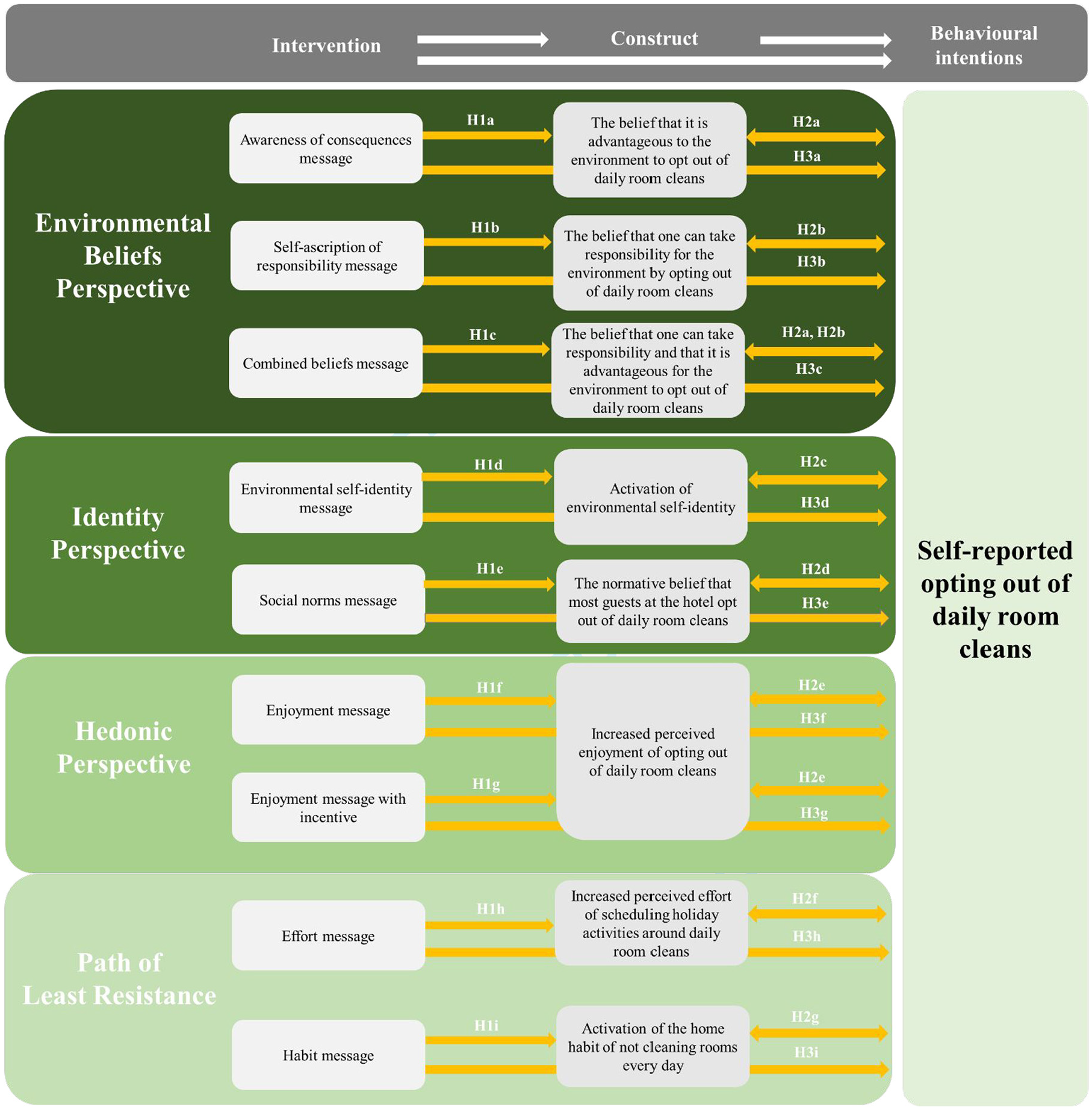
Hypotheses 1 to 3.
We tested: (a) whether each of the nine messaging interventions activated the corresponding theoretical constructs (Hypothesis H1a–i) (b) whether each of the theoretical constructs was associated with higher self-reported opt-out rates (Hypothesis H2a–g), (c) whether each theory-driven messages lead to higher self-reported opt-out rates than the control condition (Hypothesis H3a–i). We then tested the emotional reactions to the different messages (H4). Participants may be annoyed or react negatively to environmental messaging (e.g., Dolnicar et al., 2017; Sparks et al., 2010), while possibly experiencing positive reactions to incentives or enjoyment-focused messages. While we also assessed emotional reactions caused by the remaining messages, we did not have specific directed hypotheses for these.
H4a: Participants who are exposed to messages from an environmental belief perspective will have a significantly stronger negative reaction than the control group.
H4b: Participants who are exposed to messages from hedonic perspective will have a significantly stronger positive reaction than the control group.
Methods
Participants
We recruited participants through the online recruitment platform Prolific Academic, which has been found to provide high-quality data (Peer et al., 2021). We included participants who are Australian and UK residents (we selected two English-speaking countries to avoid bias resulting from questionnaire translation), aged 18 or above, and fluent in English. They were randomly allocated to one of ten conditions with approximately equal number of participants per condition (62–65). Our final sample size (N = 636) is in line with calculations which recommend 64 participants per condition to detect a medium effect (d = .50) at 80% power (Kish, 1965; Singh & Masuku, 2014). Most participants resided in the UK (91%). Participants were 37 years old on average (SD = 13.27); 53% identified as female, 46% as male (1% selected “other”).
Design and Procedure
The study followed a between-subject design with ten conditions (nine messaging conditions and one control condition with no message). The nine main messages aimed to manipulate the following constructs: beliefs in the form of awareness of consequences, ascription of responsibility, and a combination of both (to acknowledge that these constructs are typically combined as constructs related to beliefs in line with value-belief-norm theory); social norms related to room cleaning; environmental self-identity; habit; effort; enjoyment (message only); enjoyment (message with incentive; see Table 1). The main dependent variables were the selected room cleaning option in a fictional scenario and the emotional reactions to the message. Participants completed the study online on Qualtrics. The study was approved by The University of Queensland’s human ethics committee (approval number 2022/HE002310).
Theory-driven Messaging Interventions.
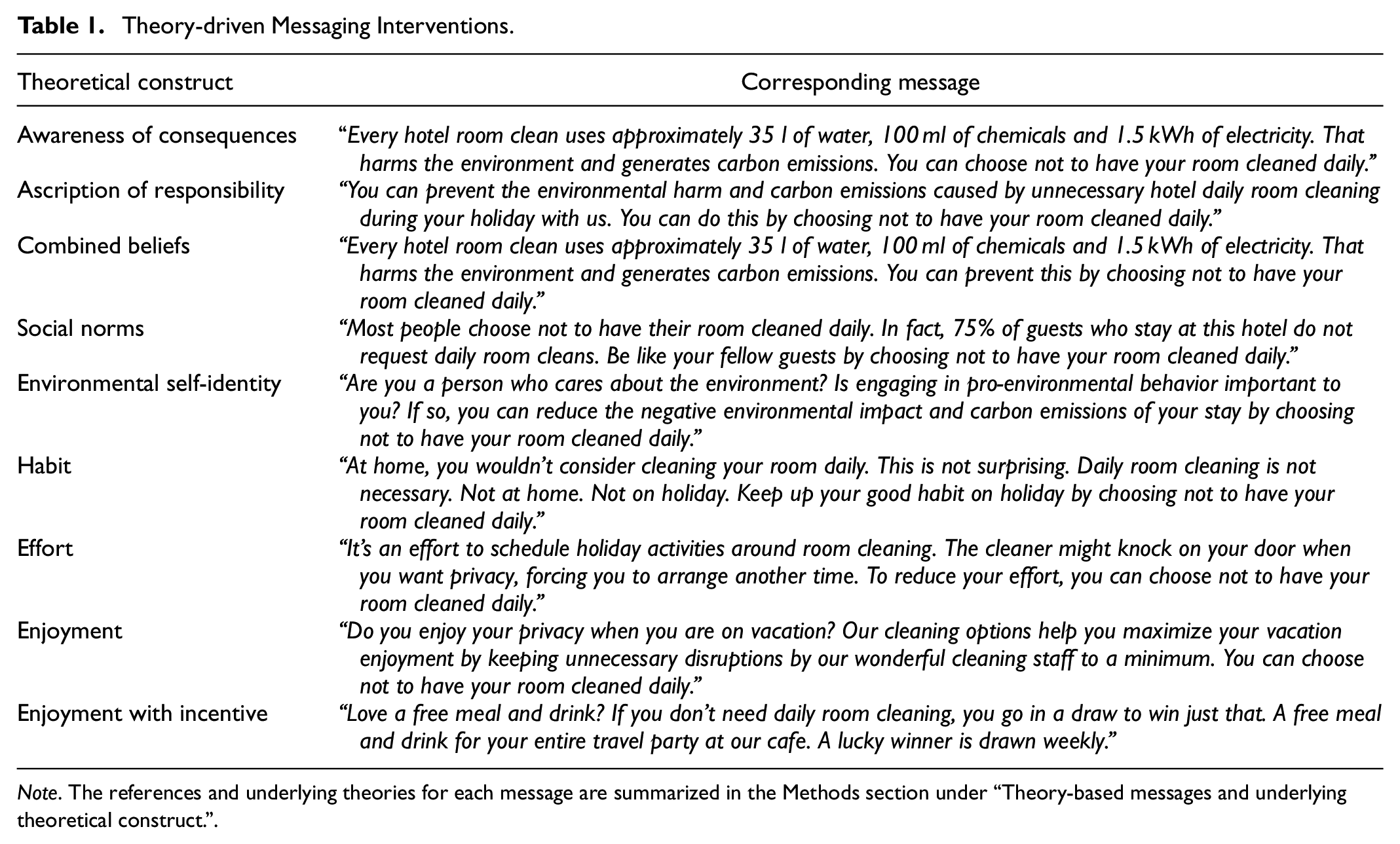
Note. The references and underlying theories for each message are summarized in the Methods section under “Theory-based messages and underlying theoretical construct.”
After providing informed consent to take part in the study, participants indicated their age and gender (additional demographic information was obtained from Prolific records) and then read the following holiday scenario (based on Demeter et al., 2022): “Imagine you are on holiday at a hotel for 5 days in a beautiful location. Please imagine yourself in this situation. What would it feel like, look like, and smell like to be in this hotel? Immerse yourself in the sights, sounds, and smells. Answer the following questions as if you were there in that moment.” and “at check-in, the receptionist hands you your room key and a piece of paper regarding room cleaning options.” Participants in the nine experimental groups saw either one of the theory-based messages (see Table 1 and Figure 3) or no message (control condition). We then asked participants to select one of the following room cleaning options: “I do not need to have my room cleaned during my stay”; “I will let reception know if I want my room cleaned”; “I want to have my room cleaned automatically every 3 days”; or “I want my room cleaned daily” (presented in random order). Afterwards, all participants answered questions about their emotional affect and the different theoretical constructs. They were then debriefed and reimbursed (using the £9/hr recommended Prolific rate).
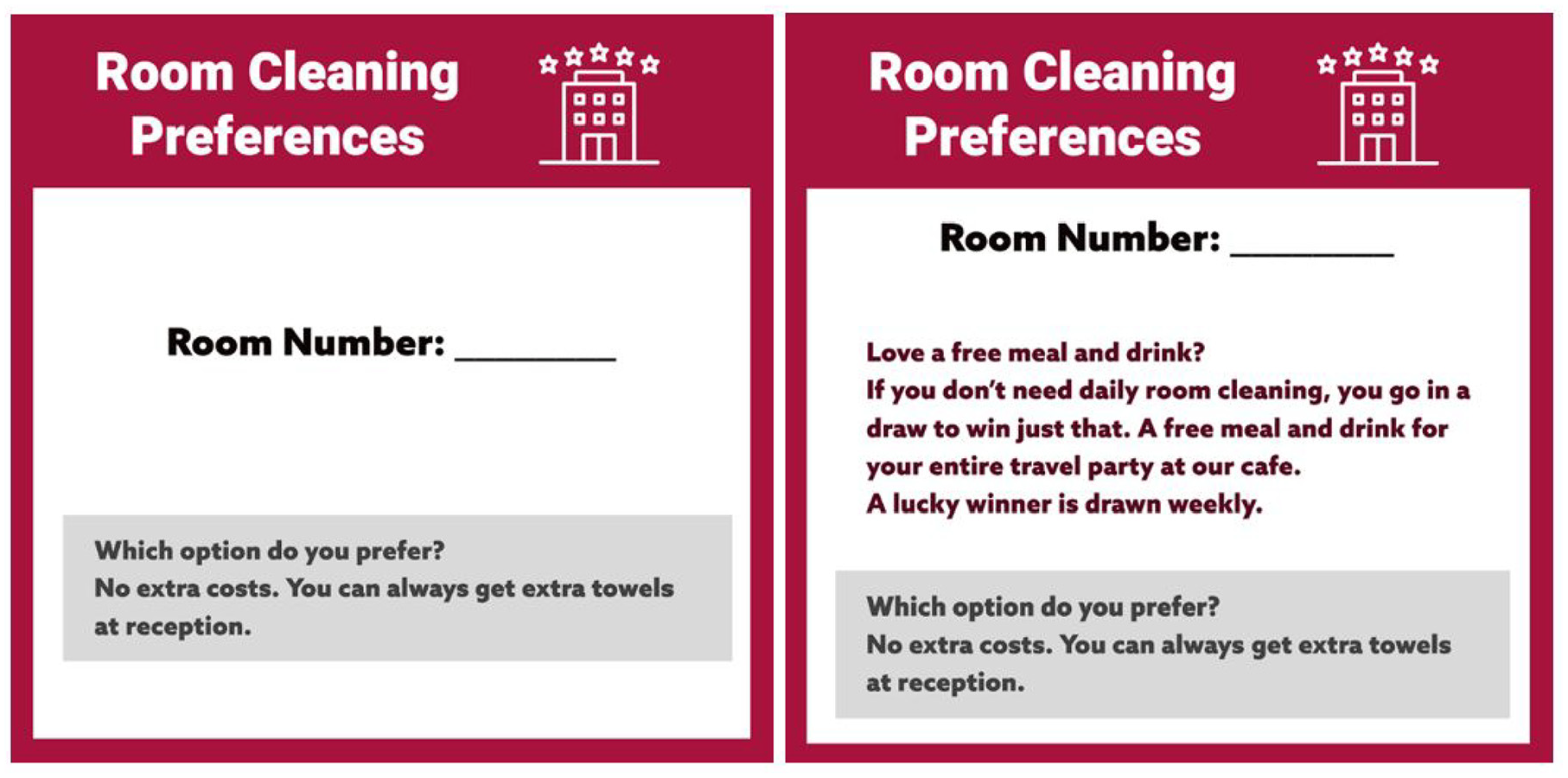
Room cleaning messages (control condition; enjoyment with incentive condition).
Measures and Materials
Intended Room Cleaning Choices
The behavioral intention to waive daily room cleans was assessed through the room cleaning option participants selected as part of the hotel check-in scenario. For the main analysis, the four available options were categorized into daily room clean versus no daily room clean (including complete opt-out, room cleaning every 3 days and cleans upon request only).
Emotional Reaction
Individuals expressed their feelings toward the messages and the associated cleaning options with an adapted version of the Positive and Negative Affect Schedule (PANAS; Watson et al., 1988). Participants were asked to “Now remember the room cleaning options and message you saw. How did it make you feel?”. They were then given a list of eleven emotions [six negative emotions (e.g., annoyed, guilt) and five positive emotions (e.g., excited, enthusiastic)] which they rated from 0 (not at all) to 100 (extremely). The order of the listed emotions was randomized. Watson et al. (1988) suggest that positive and negative affect are independent, and not simply polar opposites on a continuum, and thus, individual scores should be calculated separately. Alongside individual emotions, we calculated composite scores of positive and negative reactions by averaging item scores on each subscale. Both subscales had excellent internal consistency (negative affect, α = .84; positive affect, α = .87). As expected, positive and negative emotional reactions are largely independent of one another (r = −.06; p = .12).
Theory-based Messages and Underlying Theoretical Construct
Below we outline the selection of the specific theory-based messages (see Table 1) and how the related constructs were assessed. To avoid survey fatigue (see e.g., Herzog & Bachman, 1981) we measured the underlying theoretical constructs with pre-established one-item measures where possible. Additional exploratory items which were included for potential future analyses are summarized in the supplementary materials.
Beliefs Perspective
The messages which fall under the beliefs perspective (Stern et al., 1999) were closely based on previously used environmental appeal messages (e.g., Kneževič Cvelbar et al., 2021; Dolnicar et al., 2019). To distinguish between the different value-belief-norm theory constructs, one message emphasized the exact costs to the environment calculated in electricity and liters of water and chemicals used per room clean (awareness of consequences); another message did not outline the specific costs but instead emphasized that guests can actively prevent environmental harm caused by room cleaning (ascription of responsibility); the combined message included both the exact cost calculations and emphasized on the role of the guests in preventing environmental harm.
We measured the underlying value-belief-norm theory constructs (Stern, 2000) using adapted versions of Kaiser et al.’s (2005) items “It would be advantageous for the environment if I chose not to have my room cleaned daily at this hotel” (awareness of consequences) and “I can take responsibility for the environment by choosing not to have my room cleaned daily at this hotel” (ascription of responsibility). All questions were responded to on a visual analogue scale ranging from −50 (disagree) on the left to +50 (agree) on the right.
Identity Perspective
We tested two messages which fall under the identity perspective. One message—leveraging descriptive social norms—was closely based on similar messages used to increase towel reuse by Goldstein et al. (2008); see also Cialdini et al. (1990). It mentioned that most other guests at the hotel (75%) do not request daily cleans and encouraged participants to act like their fellow guests. The second message targeted participants’ environmental self-identity. The newly developed message was based on the pro-environmental self-identity strength of identification items from Fielding et al. (2008). The message included questions which asked participants whether they care about the environment and pro-environmental behavior to make their environmental self-identity salient.
Social norms were assessed with the item: “Most guests at this hotel choose not to have their rooms cleaned daily” (adapted from Han & Hyun, 2018) responded to on a visual analogue scale ranging from −50 (disagree) to +50 (agree). To assess identity salience (see e.g., Hackel et al., 2018) we included an item which captured the extent to which people thought of themselves as being someone who is sustainable during the study. This was done by randomly presenting an item as part of the PANAS items which asked participants to indicate from 0 (not at all) to 100 (extremely) whether the message made them feel “sustainable.”
Hedonic Perspective
Two messages fell within the hedonic perspective (e.g., Cabanac, 1992; Kahneman et al., 1999). One included an incentive similar to the drink voucher intervention by Dolnicar et al. (2019). Specifically, in the present study, the incentive consisted of a free meal and drink that could be won as part of a draw amongst all guests who waived daily cleans. The other message was created to test whether enjoyment could be leveraged without an incentive (and hence costs to the hotel). It outlined to guests that they could enjoy more privacy and avoid disruptions by not having their rooms cleaned daily—hence underlining enjoyable outcomes of the targeted behavior.
We measured enjoyment with the items: “How enjoyable would it be for you to skip daily room cleans at this hotel?”. We also included the exploratory items: “How enjoyable would it be for you to have your room cleaned daily at this hotel?” (opposite behavior) and “How enjoyable would it be for you to win a free meal and drink for everyone in your travel party at this hotel?” (prize draw condition only). All questions were responded to on a slider scale from 0 (not enjoyable at all) to 100 (extremely enjoyable).
Path of Least Resistance
We created two new messages to leverage habit (e.g., Wood et al., 2002) and effort (e.g., Hart & Staveland, 1988). The habit message reminded participants of home habits (not typically cleaning rooms daily) and asked them to keep up this habit whilst on vacation. The effort message emphasized effortful aspects of daily room cleans—having to schedule holiday activities around those cleans.
We included a measure of home habits and habit transfer (based on MacInnes et al., 2022): We informed participants that “a habit is defined as a settled or regular tendency or practice, one that is automatic” and asked “At home, would you say it is a habit to clean each room in your house daily?” 0 (no, not a habit at all), to 100 (yes, a very strong habit) and “When thinking about how likely you are to request daily room cleans at this hotel, did you transfer your room cleaning habits from home?” 0 (not at all), to 100 (very much so). For the main analysis, we focused on the activation of habit with habit transfer added as an exploratory item (as it likely builds on the activation of the home habit as a first step). Effort (based on Hart & Staveland, 1988) was measured with two items: “While at this hotel, how much effort would it be for you to work your holiday activities around daily room cleans?” and While at this hotel, how much effort would it be for you to give up daily room cleans?” (exploratory as it was not directly addressed by the message). Participants responded on a slider scale from 0 (none at all) to 100 (a huge amount).
Results
The data was analyzed using IBM SPSS Statistics (IBM Corp, 2021). Figure 4 shows the results for Hypotheses 1 to 3. Since we conducted individual testing (separately for each messaging approach) even within the overarching joint hypothesis, we did not correct for multiple testing (Rubin, 2021). Throughout we report Cohens d (Cohen, 1988; judged as: 0.2 = small effect, 0.50 = medium effect, 0.80 = large effect). The number of participants might differ across hypotheses due to missing data for specific items.
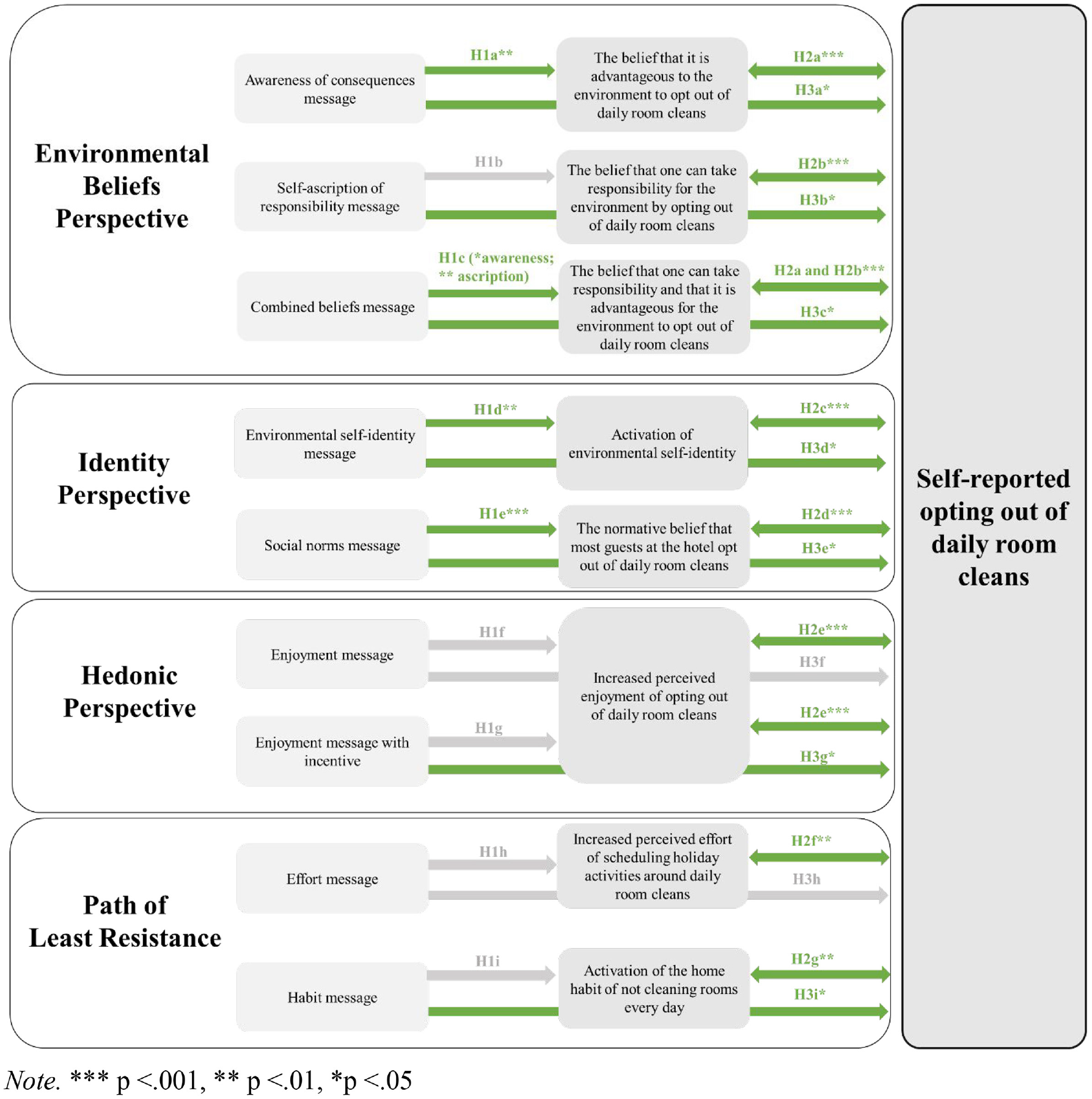
Overview of results for Hypothesis 1 to 3.
Effect of Message on Theoretical Construct (Manipulation Check; H1a–i)
First, we tested whether each theory-driven message invoked the main targeted theoretical construct(s) (manipulation check). We compared scores between the control group and the experimental groups on their leveraged theoretical constructs using independent sample t-tests, only including groups that are relevant to that construct (Table 2).
Manipulation Checks.
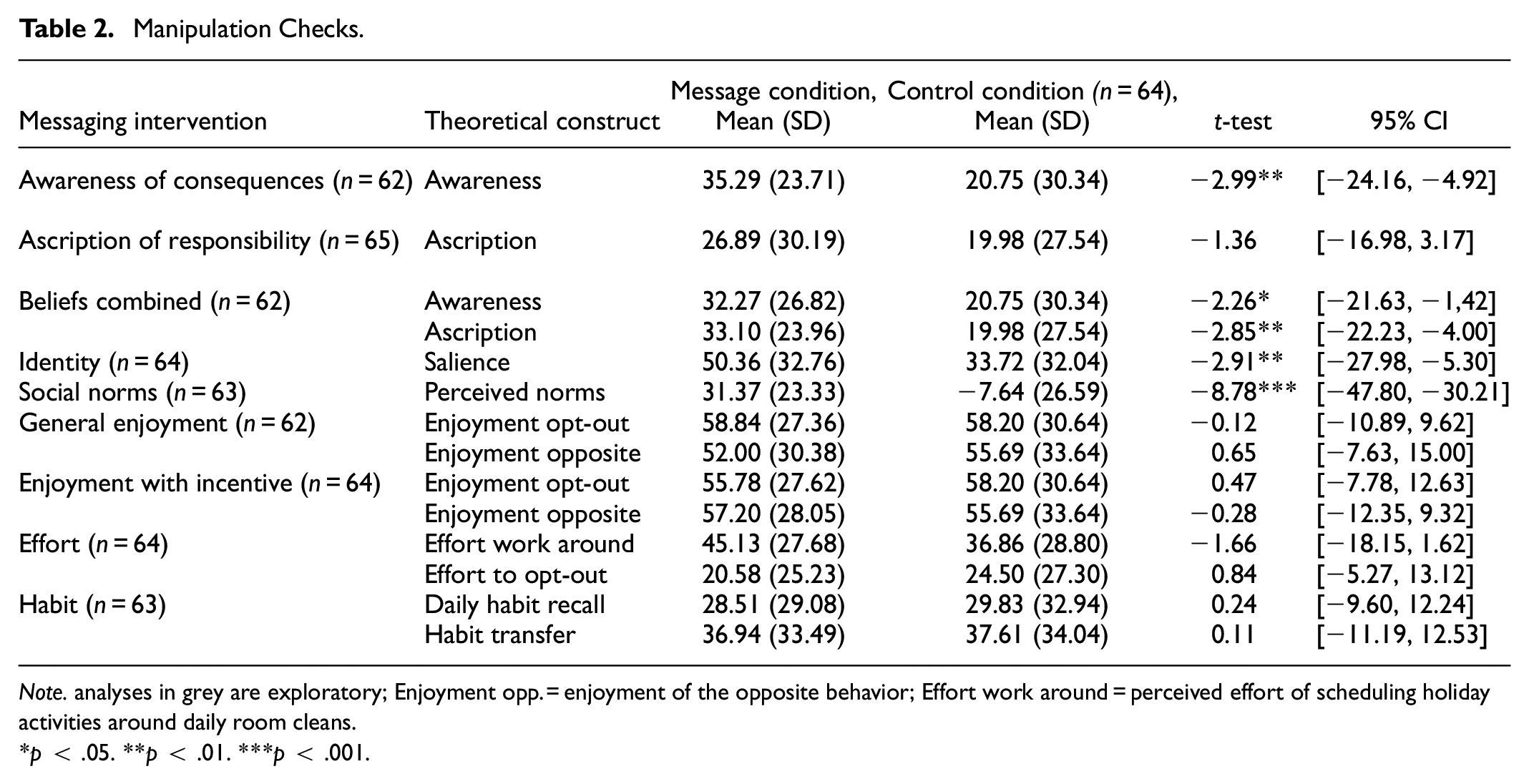
Note. analyses in grey are exploratory; Enjoyment opp. = enjoyment of the opposite behavior; Effort work around = perceived effort of scheduling holiday activities around daily room cleans.
p < .05. **p < .01. ***p < .001.
People who received the awareness of consequences message (d = .53) agreed more strongly that it was advantageous for the environment not to have their hotel room cleaned daily at this hotel compared to the control group, therefore, passing the manipulation check (H1a). The ascription of responsibility group did not show significant differences to the control group on the ascription item (d = .24), thus, not passing the manipulation check (H1b). The combined beliefs message activated both awareness of consequences (d = .40) and ascription of responsibility (d = .51) and thus passed the manipulation check (H1c).
The environmental self-identity message (H1d) and social norms message (H1e) passed the manipulation check. The environmental self-identity message resulted in higher scores on the salience item (d = .51) compared to the control group. People who received the social norms message agreed more strongly that most guests in the fictitious hotel chose not to have their rooms cleaned daily compared to those who received no message (d = 1.56).
Compared to the control group, people in the general enjoyment message did not report significantly higher levels of enjoyment in skipping daily room cleans (d = .02). Therefore, it did not pass the manipulation check (H1f). 67% of participants who saw the prize draw (incentive) enjoyment message indicated with a score of 75 or more out of 100 that it would be enjoyable to receive the incentive. However, the incentive message did not significantly increase enjoyment of skipping room cleans compared to the control (d = .08) and thus also did not pass the manipulation check (H1g). Exploratory analysis showed that there was no significant effect of either enjoyment intervention on the opposite item—enjoyment of requesting daily cleans (message only: d = .12; message with incentive: d = .05).
The group that saw the effort message did not report that it would be more effortful to work holiday activities around daily cleans compared to the control group (d = .29), thus not passing the manipulation check (H1h). Exploratory analysis showed that there were no group differences in the effort to give up daily cleans (d = .15). The message asking participants to transfer their home habits did not pass the manipulation check (H1i) with no significant differences in reported home habits compared to the control group (d = .04) and exploratory analyses showing no difference on habit transfer (d = .02) compared to the control.
Predictive Ability of Theoretical Construct (Hypotheses 2a–g)
To investigate the predictive ability of the underlying theoretical construct, we ran point-biserial correlations to test for an association between the theoretical constructs and opting out of daily room cleans. Importantly, this test was run irrespective of whether the message interventions were successful in eliciting the corresponding construct. We found that all main theoretical constructs were weakly to moderately associated with self-reported opt-out (for the strength of associations and exploratory constructs see Table 3). All constructs showed the expected positive associations apart from the recall of daily habits which showed the expected significant negative association (with lower scores indicating daily cleans not being something habitually done at home, and this being linked to a higher intended opt-out). Based on this, we found support for Hypotheses 2 and all sub-hypotheses (a–g). Of the exploratory constructs, enjoyment of the opposite behavior and effort to opt out of room cleaning were associated with self-reported opt-out but habit transfer was not.
Point-biserial Correlations Between Theoretical Constructs and Room Clean Opt-out.
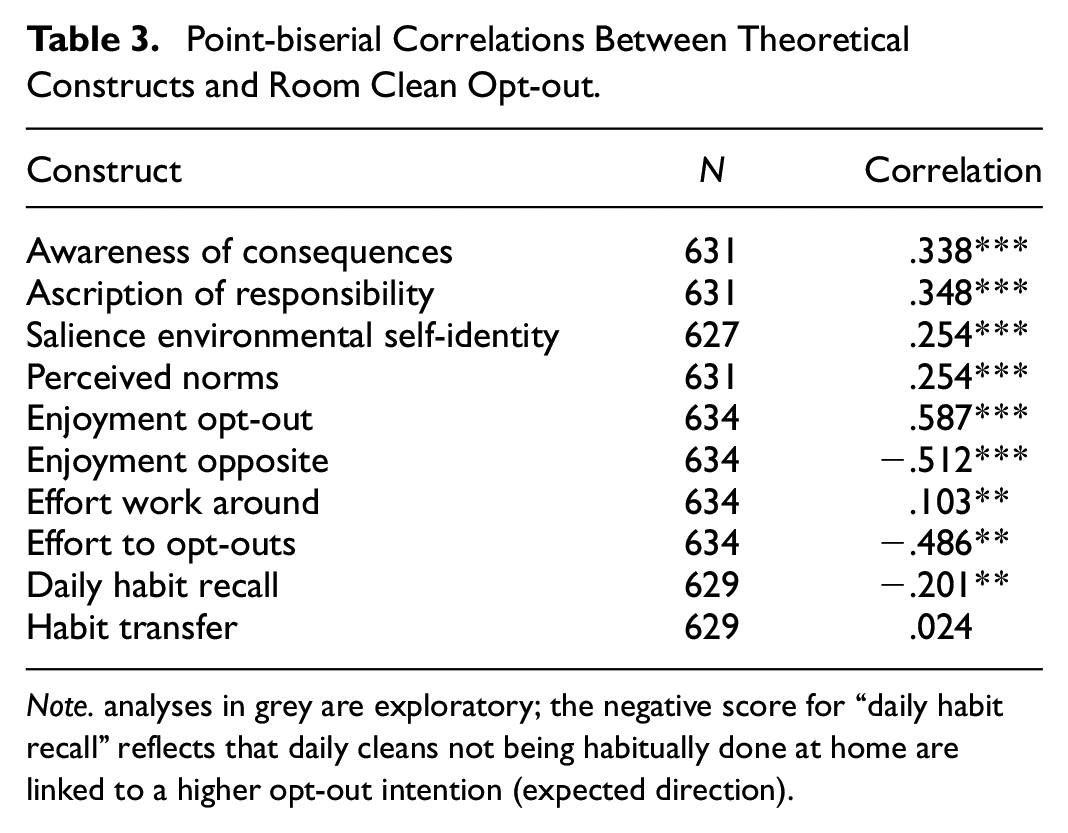
Note. analyses in grey are exploratory; the negative score for “daily habit recall” reflects that daily cleans not being habitually done at home are linked to a higher opt-out intention (expected direction).
Effect of Intervention on Self-reported Opt-out (Hypotheses 3a–3i)
Importantly, not all messages were found to elicit the corresponding theoretical construct (therefore, in the following we use the framing “aiming to leverage”). However, we were still interested whether each message—whether it was through the expected construct or not—affected the intended room cleaning choice. To measure group differences in the proportion of people who intended to opt-out of daily room cleaning, we conducted a Pearson’s chi-squared test using choice (binary) by group interaction (ten groups including the control groups). We then compared opt-out rates for experimental groups with the control group using independent sample proportions tests (Wald). The proportion of individuals who opted for daily room cleans compared to one of the alternative cleaning options is illustrated in Figure 5 for all groups. There were significant differences between groups (χ2 (9) = 24.32, Cramer’s V = .17, p = .004). All groups apart from the messages aiming to leverage general enjoyment and effort, had a significantly higher proportion of people opting out of daily room cleans compared to the control (see Supplemental Appendix A for detailed statistics including the selections of each specific cleaning option). All significant effects were above d = .40, indicating if choices in this survey experiment represent real-world behavior these effects would be of practical significance.
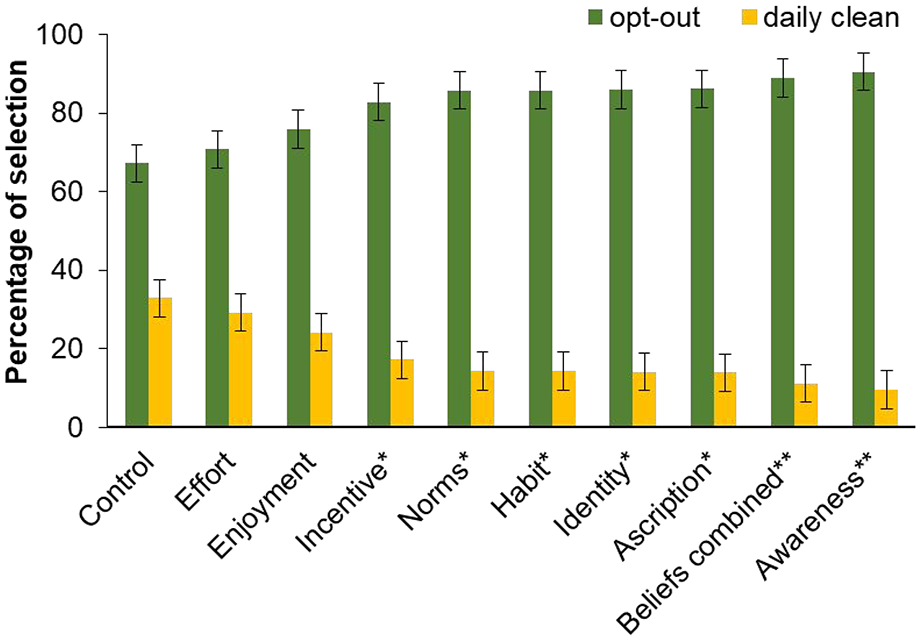
Comparative intended opt-out versus daily clean selections across conditions.
Exploratory analyses showed that when distinguishing the specific choices of people who did not opt for a daily room clean, choice patterns were relatively consistent across groups (see Supplemental Appendix A). Of the people who did not opt for daily cleans (n = 521, 82% of all participants), no room clean at all was the least favored option with only 15% of people choosing it (12% of all participants). The most favored option of people who did not choose daily cleans was cleaning on demand (51% of participants who did not select daily clean, 42% of all participants). 34% of participants who selected no daily clean opted for automatic three-daily cleans (28% of all participants).
Emotional Reactions to Intervention Materials (Hypotheses 4a and 4b)
We ran between subjects ANOVAs to test for differences in positive and negative affect between the experimental groups and the control group. For messages that showed significant differences to the control group in positive or negative affect we explored differences in specific emotions. The comparative positive and negative emotional affect across conditions is illustrated in Figure 6 (see Supplemental Appendix B for detailed test statistics). There were significant differences between groups in relation to their negative feelings toward the messages (F [9, 626] = 2.37, p = .012). The messages leveraging awareness of consequences (d = .59), combined beliefs (d = .39), habit (d = .57), and effort (d = .42) were evaluated more negatively than the control group. Specifically, compared to the control, people who received the message leveraging awareness of consequences or combined beliefs felt significantly more upset (d = .54(awareness), d = .41(combined)), distressed (d = .38(awareness), d = .36(combined)), guilty (d = .65(awareness), d = .36(combined)), and ashamed (d = .43(awareness),d = n.s.(combined)). For the messages leveraging habit and effort (compared to the control) people did not feel significantly more guilty but felt more annoyed (d = .48(habit),d = .40(effort)), irritable (d = .53(habit),d = .41(effort)), and upset (d = .50 (habit),d = .47(effort)). People who saw the habit-based message also felt more distressed (d = .41(habit)) and ashamed (d = .36 (habit)).
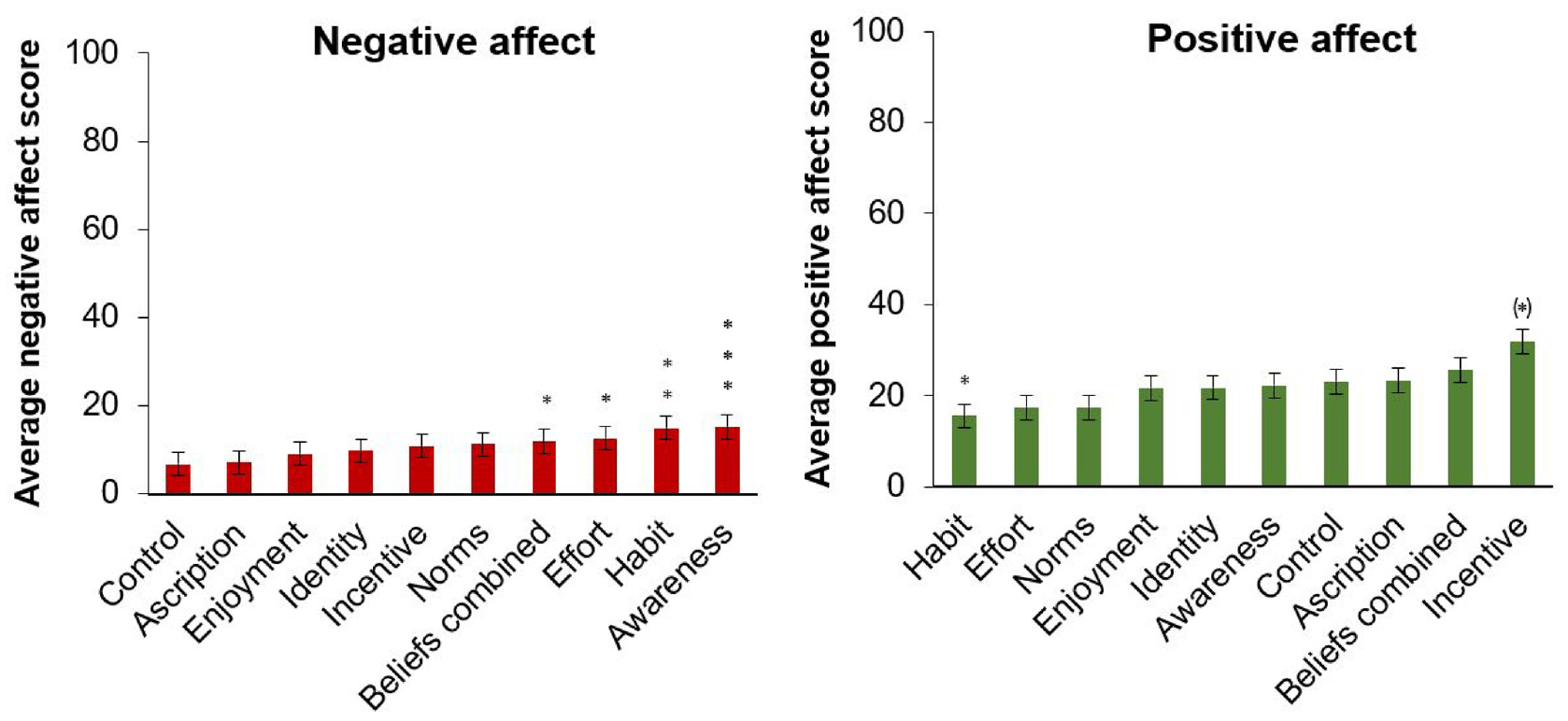
Positive and negative affect across conditions.
There were also significant differences between groups on their positive feelings toward the messages and the options (F [9, 626] = 3.04, p = .001). The habit-based message received significantly fewer positive reactions (d = −.36) with people feeling less interested (d = −.38 (habit)), and less inspired (d = −.38 (habit)) compared to the control. The prize draw group (d = .35; borderline significance, p = .051) was more positively evaluated than the control; people were more entertained by the message (d = .50 (prize)).
Discussion
The main aim of this study was to outline and illustrate the value of an extended pre-testing protocol in the lead-up to field studies. Our proposed protocol (1) disentangles (a) whether an intervention triggers a specific theoretical construct; (b) whether the theoretical construct is linked to behavioral intentions; (c) whether the intervention affects behavioral intentions; and (2) tests for emotional reactions caused by intervention materials. The aim of this protocol is to ensure that interventions which progress into the field are promising concerning their effect on intentions, have clear underlying theoretical mechanisms, and do not have an unintended effect on emotional reactions.
To illustrate and test this protocol, we focused on the example of interventions aiming to reduce daily hotel room cleans. Specifically, we tested different messaging interventions to support a soft intervention. In our study, all tested theoretical constructs were associated with opt-out intentions (1b). However, only awareness of consequences, beliefs combining awareness and ascription, environmental self-identity and social norms could be leveraged by the corresponding messaging intervention (1a). The messages which were intended to leverage self-ascription, enjoyment (with an incentive) and habit did show an effect on opt-out intentions (1c) but did not activate the expected theoretical construct. Messages based on awareness of consequences, the combined beliefs message, effort and habit significantly increased negative affect (2). Generally, messages based on social norms and pro-environmental self-identity emerged as most promising in this context by passing all stages of the pre-test (1a-c and 2).
Theoretical and Practical Implications
This study holds important theoretical and practical implications by illustrating the importance of an extended experimental pre-testing protocol. In our study, all key theoretical constructs showed a predictive ability but not all constructs could be leveraged through messaging intervention. These nuances would have not been picked up on by commonly used manipulation checks which predominantly focus on the effect of the intervention on the theoretical construct only. It highlights that, while theoretically all the tested theories could be supported, practically some might be more difficult to leverage than others. Hence, different interventions might be better suited to activate certain theoretical constructs and lead to behavioral change. For example, constructs in line with the path of least resistance might be more effectively triggered by actual changes in the environment that align with people’s habits or change the effort of specific behaviors. An example of this is a successful field study in which the effort of opting for daily room cleans was increased by guests having to request each clean rather than receiving automatic daily cleans (e.g., Kneževič Cvelbar et al., 2021). Meanwhile, a message telling guests that a certain behavior decreases or increases effort might not be sufficient. Habit is also difficult to prompt through a message as habits are highly automated and non-conscious (Wood & Rünger, 2016). Similarly, enjoyment is likely a construct which is difficult to elicit through a message alone or through an imagined incentive. The distinction between the predictive power of a theory and the practical ability to leverage it can only be disentangled through experimental pre-tests in addition to field research. Those findings extend and lend support to the recommendations made by van Valkengoed et al. (2022).
Another important finding is the negative reaction to some of the presented messages. This is especially interesting as the underlying intervention did not decrease participants’ choices. Practically, results from our study suggest that some frequently used messaging approaches (such as environmental beliefs messaging) might be effective in changing consumer behavior but might do so with the risk of causing negative emotional reactions. It could be argued that numerically the reported negative reactions remained low in all conditions. But in the specific context of our study, hotels would most likely not want to risk even a small change in negative reactions given that other effective interventions might not come with this risk. Integrating an assessment of emotional reactions into pre-tests allows for an informed decision on whether the potential effectiveness of an intervention and context outweighs the risk of causing negative reactions. Being able to openly share emotional reactions to proposed materials with the industry is an important step in increasing trust and transparency and ensuring that those materials can be implemented widely and without upsetting guests.
The results further contribute to the state of knowledge on pro-environmental behavior in tourism. The study directly compares messaging approaches from four key perspectives: the beliefs perspective; the identity perspective; the hedonic perspective; and the path of least resistance. In this specific context, we found that messages from the identity perspective (social norms and environmental self-identity message) showed the most promise. This is in line with previous findings in different contexts (e.g., Goldstein et al., 2008; Van der Werff et al., 2014) and lends further support to theories such as social identity theory (Tajfel & Turner, 1979) and identity theory (e.g., Stryker, 1968). In line with recent reviews (e.g., Greene et al., 2023), we found mixed results concerning the beliefs-based messages. Importantly, our findings also revealed that messages from this perspective might elicit negative unwanted emotional reactions. This adds to previous research by highlighting a potential further weakness of belief-based messages. Our study is limited in its contribution to the hedonic perspective (e.g., Cabanac, 1992; Cabanac & Bonniot-Cabanac, 2007; Kahneman et al., 1999) and path of least resistance (e.g., Kneževič Cvelbar et al., 2021). For those two perspectives, the tested messages did not show an effect on the expected constructs (enjoyment, effort, and habit). This means that, while our findings do not contradict previous research by Dolnicar et al. (2020) or MacInnes et al. (2022), eliciting enjoyment, effort, or habits through messages alone or imagined intervention scenarios might be less promising.
Practically, by following the proposed pre-testing protocol, our study provides guidance on which messaging interventions would be most promising to test in the field. Rather than testing all nine interventions, which would be time and cost-intensive, researchers can focus on the most promising ones. In our study, the social norms and pro-environmental self-identity messages showed the best overall results. This does not mean that the remaining interventions won’t be effective in the field, but rather that they might have drawbacks such as eliciting unwanted negative emotions (e.g., the beliefs message in our study) or might prove effective but without researchers knowing which underlying mechanism explains the effectiveness (e.g., the enjoyment message in our study). Importantly, the proposed protocol is not meant to limit researchers in testing interventions in the field but to provide important additional information to reach an informed decision on which interventions to include in field research. As mentioned earlier, some interventions might still be suitable for the field although they elicit some negative emotions. Other interventions might be suitable after additional pre-testing to capture the specific underlying theoretical construct. In addition to providing key information to the researcher, the results of the pre-testing protocol can also be presented to industry partners to increase trust and transparency.
Next to testing the proposed pre-testing protocol, our study also puts forward a soft intervention which (once confirmed in field studies) can be easily and widely implemented. The combination of theory-informed messaging approaches and a soft intervention is promising as our results point toward messages that do not increase negative reactions whilst increasing opt-out rates. For instance, displaying the identity-based message more than halved the number of participants who selected daily cleans (from 33% in the control group to 14% in the pro-environmental identity group). One of the major barriers to implementing interventions in hotels is the cost of the intervention materials and staff burden (Khatter et al., 2021). The tested interventions only require a short conversation with the guest at check-in to ask them to choose their preferred room cleaning option, and the printing of materials (which hotels could avoid by e.g., using a tablet).
Limitations and Future Research
In our study, each construct was only tested using one or two specific messages. For messages that did not pass the manipulation check, further research is required to test if different messages can activate these theoretical constructs. We also found that some messages were effective in influencing the intended opt-out but did not trigger the corresponding theoretical constructs. For these messages, it will be an important future step to determine which underlying construct drives their effectiveness.
The proposed protocol focuses on testing underlying mechanisms and the potential of different interventions. It does, however, not test the effect on real behavior. Studies following the pre-testing protocol will in most instances fall into the category of survey experiments. While this is the most common category of quantitative empirical studies in tourism with 41% of all papers in 2022 in the three leading tourism journals being survey experiments, the results can support causality but no conclusions about real behavior (Dolnicar et al., 2024). A recent review (Greene et al., 2024) found that—in the same journals and timeframe—47% of articles made some form of inaccurate claim about the type of measure (behavioral vs. intentions). While the proposed protocol offers a guideline, it will rest on the individual researchers to ensure that the findings are communicated accurately and to minimize the intention-behavior gap survey experiments often face by taking active steps to decrease social desirability and increase the realism of the experiments (see e.g., Nieto-García et al., 2024). Further, while not the focus of the current study or proposed protocol, a natural next step will be to test promising interventions at real hotels (or e.g., as part of mega studies). If possible, guest satisfaction should be measured to test whether this reflects our findings concerning emotional reactions. We would expect that if a pre-tested intervention does not increase negative affect—as measured in detail in this study—it should also not decrease guest satisfaction in the field. This next step will move the research from knowledge creation and theory development (achieved through the pre-test) toward creating direct impact in tourism (Tribe & Paddison, 2024).
Conclusion
This paper illustrates the value of an extended experimental pre-testing protocol in aiding knowledge creation as well as the selection of interventions to test in the field. Our findings underline the need to disentangle underlying theoretical mechanisms as, for instance, not all constructs linked to specific behaviors can be easily leveraged. Further, assessing emotional reactions helps to detect any unintended negative reactions to intervention materials. Practically, this protocol supports well-informed recommendations for field interventions by identifying interventions with high potential, clear theoretical underpinning, and low risk of causing unintended negative reactions. Finally, we acknowledge that the proposed pre-testing protocol is not exhaustive, and we invite extensions and discussion of the proposed protocol.
Supplemental Material
sj-docx-1-jtr-10.1177_00472875241266617 – Supplemental material for An Extended Pre-testing Protocol in the Lead-up to Field Studies
Supplemental material, sj-docx-1-jtr-10.1177_00472875241266617 for An Extended Pre-testing Protocol in the Lead-up to Field Studies by Anna K. Zinn, Danyelle Greene, Csilla Demeter and Sara Dolnicar in Journal of Travel Research
Footnotes
Appendices
Declaration of Conflicting Interests
The author(s) declared no potential conflicts of interest with respect to the research, authorship, and/or publication of this article.
Funding
The author(s) disclosed receipt of the following financial support for the research, authorship, and/or publication of this article: This work was supported by the Australian Research Council (FL190100143).

Data Availability Statement
The data and materials to support the findings are openly available on OSF [osf.io/usrq8/].
Supplemental Material
Supplemental material for this article is available online.
Author Biographies
References
Supplementary Material
Please find the following supplemental material available below.
For Open Access articles published under a Creative Commons License, all supplemental material carries the same license as the article it is associated with.
For non-Open Access articles published, all supplemental material carries a non-exclusive license, and permission requests for re-use of supplemental material or any part of supplemental material shall be sent directly to the copyright owner as specified in the copyright notice associated with the article.
