




Abstract
The aim of this study is to investigate the complex effects of animosity and affinity on travel intentions. In so doing, we draw from a sample of 400 Greek holidaymakers and use complexity theory to examine the chaordic influence of animosity and affinity on their intentions to potentially travel to Russia in the near future. Contrary to previous studies on animosity and affinity which adopted a linear analytic approach, we use fuzzy-set Qualitative Comparative Analysis (fsQCA) for the examination of the derived complex configurations. The results reveal three pathways that can influence travel intentions: (i) affinity and animosity, (ii) destination characteristics, and (iii) risk perceived animosity. Overall, the study adds to extant literature on travel decision-making at times of crisis as it examines animosity and affinity concurrently, revealing the complexity underpinning travel decisions. The study also enables destination planners to improve their crisis management and resilience plans.
Introduction
In recent years, a rise in socio-political instability and conflict has been noted around the world, threatening global peacefulness (Farmaki & Stergiou, 2021). Although most conflicts recorded since World War II represent civil conflicts emerging primarily in Africa and the Middle East (UCDP/PRIO, 2018), the threat of interstate conflict has begun to become more apparent in the Western world especially following the advance of Russian military into Ukraine in February 2022. Labeled a special military operation targeting the liberation of the Donbas region—where a large number of ethnic Russians live—from Ukrainian government forces (Kirby, 2022), the Russian Federation’s decision was highly criticized by global leaders who viewed it as a violation of international law and responded by imposing several sanctions on the country. For example, the imports of Russian oil and gas were prohibited as were flights of Russian airplanes in the U.S. and the EU whereas Russian banks were removed from the Swift payment network (BBC, 2022). The private sector retaliated too with Western companies, like McDonalds, exiting the Russian market (Euronews, 2022a). Within days, Russia became the most sanctioned country worldwide (Shapiro, 2022) and the conflict evolved into a key political and economic conflict between the West and Russia which is expected to greatly impact global stability (Cordesman, 2022). Indeed, as a result of the sanctions imposed on Russia, gas prices have skyrocketed plunging the European Union into a fuel crisis (Euronews, 2022b) which is likely to take a heavy toll on economic life in the near future.
The effects of the sanctions imposed on the country are particularly noticeable within the travel and tourism context. For instance, the increase in fuel prices negatively impacted the aviation industry as costs have increased considerably (Schaper, 2022), discouraging the much-anticipated recovery of international travel post-COVID. In addition, as the sanctions included the blockage of east-west flight routes, travel from and to Russia has been restricted (Karadima, 2022), yielding significant impacts on destinations relying on the Russian tourist market segment. Among the noticeable immediate effects of the conflict is the rising tide of animosity against Russians which goes beyond the boycott of the country’s products, extending to civilians in fields like research, science, arts, and sports as indicated by the ban of athletes and artists from international events (Fielder, 2022; Munjal, 2022). Even though one may argue that animosity against Russians is likely to subside in the future, there have been reports in past studies that animosity can be long-lasting (Yu et al., 2020). Likewise, feelings of affinity to Russia have been expressed by individuals and/or countries that have refused to impose sanctions such as Serbia and China. Considering that interstate wars lasting longer than a year tend to extend over a decade on average (Jensen, 2022), the Ukraine–Russia conflict may very well continue to preoccupy the world and exert adverse impacts on a global scale, further fueling anti-Russia or-pro Russia sentiments.
In this context, animosity against Russians or affinity to Russians is bound to influence people’s intentions to travel to the country. On the one hand, animosity—conceptualized as the “anger related to previous or ongoing military, economic or diplomatic events” (Klein et al., 1998, p. 90)—has been found to have a profound effect on travel behavior as it interacts with destination image and tourist perceptions, ultimately, influencing visitation intention (Abraham & Poria, 2020a; Loureiro & Jesus, 2019; Sanchez et al., 2018; Stepchenkova et al., 2020). On the other hand, affinity to a country is recognized as a factor positively influencing tourist decision-making and behavior including word-of-mouth (Josiassen et al., 2022). In the tourism and travel literature, animosity has attracted most of the academic attention with a burgeoning number of studies beginning to accumulate. Drawing from consumer animosity theory, pertinent studies consider destinations as products which people may select or not, depending on their animosity toward a destination (Campo & Alvarez, 2019). Despite the valuable insights offered by these studies, they are limited in at least two aspects. First, they adopted a linear approach in investigation attempting to examine several antecedents of animosity and subsequent consequences on travel intentions. However, the relationship between animosity and travel-related behavior is far more complex, as animosity in tourism develops and expresses itself in various ways as a result of multiple factors (Farmaki, 2024). Second, pertinent studies have focused on animosity ignoring its counterpart—affinity—which is understood to represent feelings of connection to a destination. Derived largely from social identity theory, consumer affinity has started to attract attention in the marketing literature in an attempt to explain why consumers are drawn to buying products from certain countries; thus, complementing consumer animosity research which analyzes why consumers refuse to buy products from specific countries. In relation to tourism, there is only a handful of relevant studies examining affinity identifying cultural similarity, collective memory, and emotional links with the destination as a potential driver of affinity to destinations (Asseraf & Shoham, 2017; Josiassen et al., 2022). Hence, examining affinity to a destination concurrently with animosity may help to better explain travel-related decisions. In the context of the Ukraine and Russia conflict, Farmaki (2024) identified both animosity and affinity attitudes toward Russians in light of the Ukrainian crisis, indicating that the two constructs might be distinct but co-exist and influence travel decision-making accordingly. Josiassen et al. (2023) also found that both animosity (against Russia) and affinity (to Ukraine) drive place solidarity and impact hospitality outcomes in the Ukrainian–Russian context.
Evidently, the behavioral patterns of tourists related with affinity and animosity lie in a complex decision-making. Moreover, tourism on its own is characterized by high levels of complexity (Farmaki et al., 2021) while it is also very vulnerable to periods of crisis and instability, which further increase its complexity patterns (Coskun & Ozceylan, 2011; N. Pappas, 2018). As it is highlighted by Fitzgerald and Van-Eijnatten (2002), the increase of the complexity leads to a less straight-forward ability to predict systemic behavioral patterns. Consequently, in order for research to be able to examine the complexity aspects of animosity and affinity, it has to progress beyond the dominant linear analysis adopted in the tourism literature and employ other analyses, which are more able to encapsulate the full potential of the complexity and the derived chaordic systems.
Against this background, this study aims to investigate the complex effects of animosity and affinity on travel-related behavior and especially travel intentions. More specifically, the research evaluates the complex decision-making of holidaymakers willing to visit Russia in the near future, providing alternative pathways (solutions) able to lead to the targeted outcome. In doing so, the study first examines the existence of general asymmetry (through a correlational evaluation of the examined simple conditions) in order to have the ability to employ asymmetric analysis. It then progresses to the identification of alternative pathways that can lead to the same outcome (travel intention). It also establishes the existence of necessary conditions for the derived sufficient complex configurations. Given that the two constructs of animosity and affinity are distinct yet have interactive effects on consumer decision-making (Papadopoulos et al., 2017), albeit at different stages of the decision-making process (Wongtada et al., 2012), this study contributes to extant literature by highlighting the complex relational effects (the complex relationships and potential combinations of the examined simple conditions in terms of the holidaymakers’ decision making) of the antecedents on travel behavior. As such, the study responds to numerous research gaps in relation to consumer animosity and affinity research. First, our study considers both constructs concurrently as evidence exists which indicates that animosity against an individual or group may fuel affinity toward another (e.g., Josiassen et al., 2023). Extant literature within the marketing and tourism domains has insofar considered one construct or the other separately, failing to capture the complex interplay between them. Second, the majority of studies focused on consumer animosity with its counterpart—affinity—receiving less attention, especially within tourism research. What’s more, existing studies have focused primarily on countries that are traditional enemies, overlooking contexts wherein country relations are characterized by favorable conditions. According to a review of consumer affinity studies by Serrano-Arcos et al. (2022), there is only one study conceptualizing affinity with the rest focusing on scale development and replication scales, drawing from various theories (e.g., social identity theory, cognitive dissonance, etc.). The authors called for more research to be conducted on the construct, particularly of quantitative nature. In response to these gaps, we draw from a sample of Greek holidaymakers and use complexity theory and fuzzy-set qualitative comparative analysis (fsQCA), thus promoting a mixed methods approach in investigation, to examine the influence of animosity and/or affinity on their intentions to travel to Russia. The choice of the sample is warranted for two reasons. First, Greece and Russia have historic and cultural ties that led to the gradual development of positive bilateral relations between the two countries (Kokkinidis, 2022). Second, as a European Union and NATO member, Greece has followed the directive of the alliances and enforced sanctions on Russia in light of the Ukrainian crisis, which inevitably has complexified the countries’ relations (Fotaki, 2022).
Overall, this study makes significant contributions. Apart from the methodological contribution that highlights the passage from the reductionist Newtonian (parametric) approach in research to an asymmetric (non-parametric) perspective, to the best of the authors’ knowledge this is also the first study that examines the complexity aspects of animosity and affinity not only in tourism but also in the wider service spectrum. Most past studies have focused on the examination of animosity, especially in the tourism research domain where affinity has received minimal attention. Our study offers a simultaneous examination of both animosity and affinity which allows for better understanding of the conditions under which they emerge, evolve, and interact as evidence suggests that one influences the other. In addition, the study adds to extant literature as it does not examine animosity and affinity between countries that are not traditional “enemies,” offering an interesting context. As such, the study advances theoretical knowledge on the travel decision-making process at times of crises. The study may also offer important insights to destination planners on how to improve their crisis management and resilience plans, especially in relation to political conflicts.
Study Context
The bilateral relations between Greece and Russia are characterized by complexity. According to Triantafyllou (2015), the relationship between the two countries is one of affinity regarding religion, history, and culture but also one of conflicting interests and alliance obligations. On the one hand, both countries are Orthodox nations whose history has been inextricably linked. For instance, the Greek War of Independence from the Ottomans in 1821 was conceived in Russia which was hostile toward the Ottoman Empire at the time (Kokkinidis, 2022). Leaders of the Greek resistance held high-ranked positions in the Imperial Russian Cavalry whereas the first governor of the then new Greek state, Ioannis Kapodistrias, was a Foreign Minister in the Russian Empire (Triantafyllou, 2015). According to Frary (2015), Russia played an important role in the making of Greece’s modern identity especially in the early years of the formation of the Republic of Greece. Since, the bilateral relations between Greece and Russia have been consolidated by a series of Treaties and Agreements on issues like military support and tourism. On the other hand, the relations between the two countries began to deteriorate following the annexation of Crimea by the Russian Federation in 2014 when Greece condemned the Russian intervention. As a member of NATO and the European Union, Greece’s foreign policy has evolved toward Europeanization and Westernization (Christou, 2011) rendering the country’s relations with Russia rather volatile. Although it was once described as Russia’s Trojan horse in Europe (Polyakova et al., 2016), Greece’s turn to its NATO and European partners became particularly evident following the 2018 allegations of Russian meddling in Greek politics (Bechev, 2018). Indeed, Tziampiris (2010) stated that cultural affinities between the two nations do not determine or greatly influence modern Greek foreign policy. There are various media reports that illustrate the worsening of Greek–Russian relations especially following the Ukrainian conflict, which saw the Greek government siding with western powers and imposing sanctions on Russia to which the Russian Federation retaliated accordingly (e.g., Chartoftaki, 2022; Fotaki, 2022).
Even so, a large majority (68%) of the people of Greece have criticized the stance of the Greek government with regard to its decision to impose sanctions on Russia (Vachtsevanou, 2022). Criticism arose in particular to Greece’ decision to send weapons to Ukraine, with Greek politicians seeing this as a military weakening of the Greek islands given its continuous dispute with Turkey (Sideris, 2022). Russia has broadly had a positive image in Greece (Filis, 2017) and this pro-Russia sentiment remained persistent among many Greek civilians even after Russia’s military advancement in Ukraine. Public opinion surveys, for example, show that 34% of Greeks understand Russia’s decision, with 17% blaming the USA while a 15% expressing their support toward Russia (Sotiropoulos, 2022). Nonetheless, another survey illustrates that 60% of Greeks are not accepting the act of Russia with 29% blaming Russia for the situation in Ukraine (Sotiropoulos, 2022). After all, ethnic Greeks living in southeastern Ukraine have suffered devastating losses due to the war (Karagiannis, 2023). These survey results point toward a complex perceptual context and highlight the need to examine Greeks’ animosity and affinity toward Russia. Given the presence of contradicting perceptions among Greeks, complexity theory provides an appropriate lens for investigating the intricacy underpinning attitudinal constructs like animosity and affinity (Farmaki et al., 2021) as these evolve in a context of crisis (N. Pappas, 2018).
Theoretical Context
Animosity and Affinity
Research on animosity within a consumer behavior context first emerged two decades ago when studies began to investigate the effect of events on consumers’ country evaluations and, subsequently, their impact on the purchasing decisions of consumers (e.g., Ettenson & Kelin, 2005; Heslop et al., 2008). This effect was examined under the scope of animosity which was found to decrease the inclination of consumers to purchase products originating from an offending country (Klein et al., 1998; Shoham et al., 2006). Although animosity is generally understood to represent a feeling rather than a behavior due to the presence of cognitive and affective elements (Jung et al., 2002), within consumer research it appears to manifest behaviorally. Indeed, Fetscherin (2019) proposed that in cases of anger against certain brands consumers respond by either switching brands (known as flight strategy) or exerting direct and/or indirect vengeance (known as fight strategy), which is expressed publicly or privately. Overall, extant literature concludes that animosity is a multidimensional construct, made up of three components (Brummett et al., 1998; Jung et al., 2002; Leong et al., 2008). The first is the cognitive aspect which represents the beliefs of people. The attitudinal element is the second dimension of animosity and refers the negative emotions one may feel toward others while the third aspect is hostility that manifests behaviorally either through verbal or physical acts of aggression (Brummett et al., 1998). In any case, animosity includes behavioral intentions and is directed toward someone (Klein et al., 1998) since it is retaliating and often emerging as a defensive mechanism (Baron and Richardson, 1994). Relevant literature also posits that animosity may be situational or stable. Situational animosity is of temporary nature, emerging due to specific events whereas stable animosity is prolonged and the result of ongoing antagonism between individuals or countries (Jung et al., 2002). On a similar note, the literature argues that animosity may be of a personal nature, emerging due to the personal experiences of an individual (Ang et al., 2004) or national felt by members of a nation due to the historical background between countries (Jung et al., 2002).
Much of consumer behavior literature attempted to examine the causes and consequences of animosity. In relation to the causes, Klein et al. (1998) initially identified economic, political, and military antecedents to animosity, yet subsequent studies acknowledged other causes including historical events (Nakos and Hajidimitriou, 2007), social interactions with the people from a country (Nes et al., 2012) as well as cultural or religious differences between countries (Riefler and Diamantopoulos, 2007). After reviewing the literature, Yu et al. (2020) concluded that there are six types of animosity including military, economic, political, social, religious, and cultural animosity (Table 1). Some of these types (e.g., economic animosity) are related to current events and seem to be more prevalent nowadays while other types such as military animosity tend to be more historical in nature while emerging more sporadically (Riefler and Diamantopoulos, 2007). Likewise, studies have attempted to examine the consequences of animosity on consumer decisions and behavior, suggesting that consumer animosity may exert adverse effects on the purchase intentions and word-of-mouth for a product originating from an offending country (Harmeling et al., 2015; Lee et al., 2020).
Types of Animosity.

More recently, the concept of consumer affinity entered marketing literature being described as an influence on the willingness to purchase products from a country for which consumers feel positively (Oberecker et al., 2008). As such, consumer affinity is understood as a favorable feeling of sympathy and attachment toward a foreign country (Oberecker & Diamantopoulos, 2011). Nes et al. (2014) argued that the theoretical roots of consumer affinity lie in the Social Identity Theory proposed by Tajfel (1982). People distinguish their personal self from their social selves, behaving differently in terms of in-groups and out-groups. In the context of affinity toward a country, people may consider themselves as part of the in-group if there is cultural closeness between the person’s culture and a country’s culture or if they identify with the country in relation to their social identity. Therefore, affinity is a country-specific in-group bias which manifests as an affective attraction directed to a specific group (Papadopoulos et al., 2017). A review of research on consumer affinity by Serrano-Arcos et al. (2022) reveals that most studies drew from social identity theory (e.g., Papadopoulos et al., 2017; Wongtada et al., 2012) in their attempt to develop a relevant scale with several researchers adopting other theories, often complementarily, such as attitude theory (Kock et al., 2019; Oberecker et al., 2008), appraisal theory (Nes et al., 2014), cognitive dissonance theory (Asseraf & Shoham, 2017; Cakici & Shukla, 2017), and emotional attachment theory (Bernard & Zarrouk-Karoui, 2014; Halim & Zulkarnain, 2017).
Overall, based on the rationale of intergroup biases, the literature places affinity as a form of attraction toward a country that stands opposite animosity, which entails a feeling of repulsion against a country (Josiassen, 2011). This relationship has been depicted on the attraction–repulsion framework whereby people are attracted to a country that is similar to theirs (Rosenbaum, 1986) and repulsed by one that is dissimilar to theirs (Chen & Kenrick, 2002). In line with past studies (Kock et al., 2019; Oberecker & Diamantopoulos, 2011), it has been concluded that affinity consists of three related affective dimensions: (a) sympathy, (b) admiration, and (c) attachment. Sympathy refers to feelings of liking, admiration relates to respect while attachment reflects the emotional bond between a person and a country (Josiassen et al., 2023).
Consumer affinity may stem from a variety of factors and, in general, has positive effects on consumer behavior. A foray into pertinent literature (e.g., Asseraf & Shoham, 2017; Oberecker et al., 2008) reveals that both macro and micro level antecedents to affinity are recognized including the lifestyle, scenery and culture at the affinity country, political and economic factors related to the country, its residents’ quality of life and country image (macro level drivers) as well as personal experiences and contact with the country, travel and cultural similarity with the affinity country (micro level drivers). Likewise, consumer affinity positively influences consumer decision-making as it encourages the purchase of products by reducing purchase risk (Halim & Zulkarnain, 2017) whilst reinforcing trust, willingness to pay for products from an affinity country, and positive word-of-mouth (Bernard & Zarrouk-Karoui, 2014; Eguchi & Yamashita, 2016; Guo et al., 2018; Papadopoulos et al., 2017). Evidently, affinity is an important construct to study alongside animosity as it helps to position the products of certain countries but also deepens our understanding of how to counteract the effects of negative attitudes, namely animosity (Asseraf & Shoham, 2017; Serrano-Arcos et al., 2022).
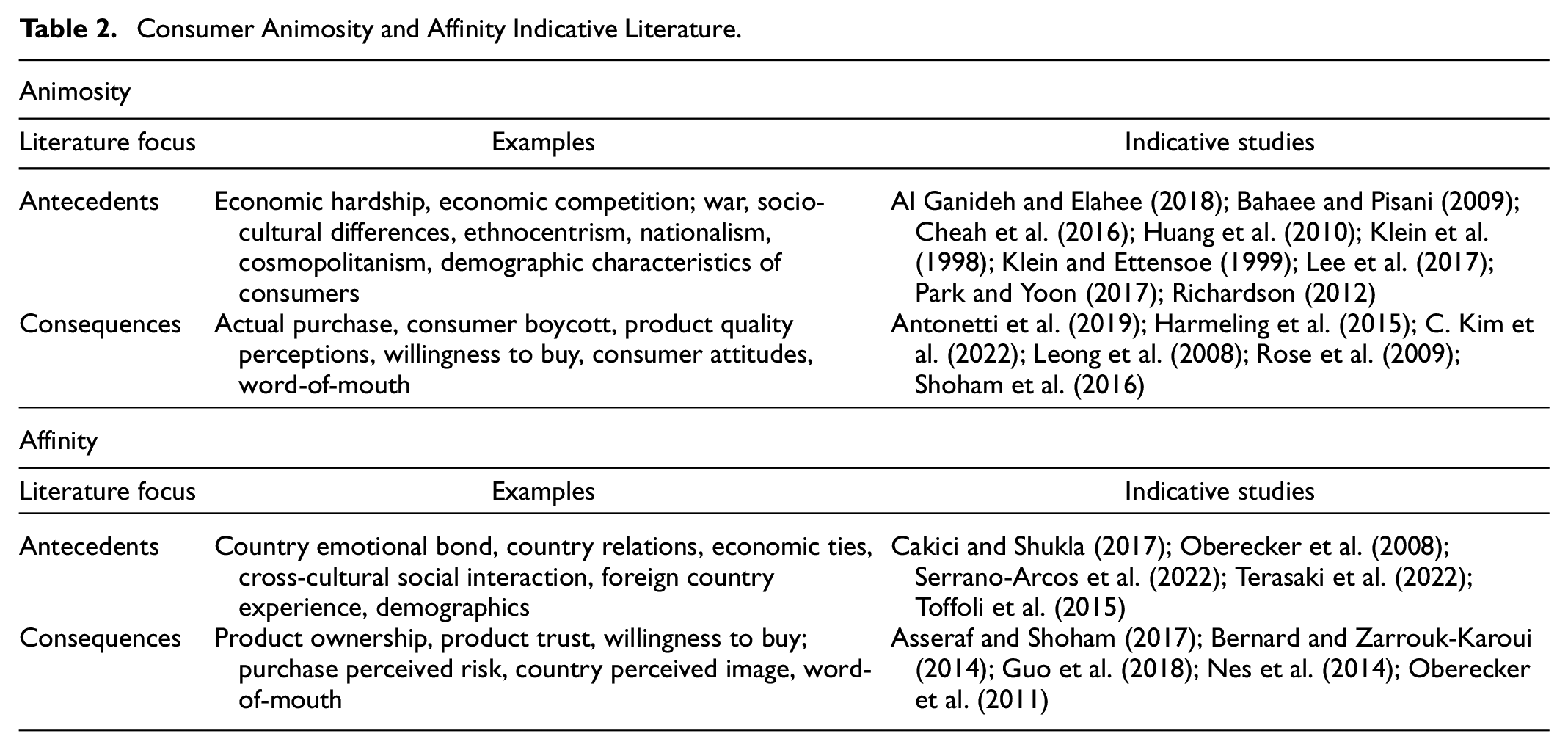
Although affinity is assumed to be the mirrored image of animosity, the constructs have mostly been studied separately as they have interactive yet distinct effects on decision-making (Papadopoulos et al., 2017). According to Wongtada et al. (2012), affinity and animosity are different constructs that relate to different stages in the decision-making process, however they co-exist as consumers often have mixed emotions and do not look at attitudinal objects in terms of black and white. Table 2 shows some examples of studies on consumer animosity and affinity and although the list is not exhaustive due to the large number of studies on the topic, it provides an indication of the nature of research on consumer animosity and affinity.
Consumer Animosity and Affinity Indicative Literature.
Animosity and Affinity in Tourism
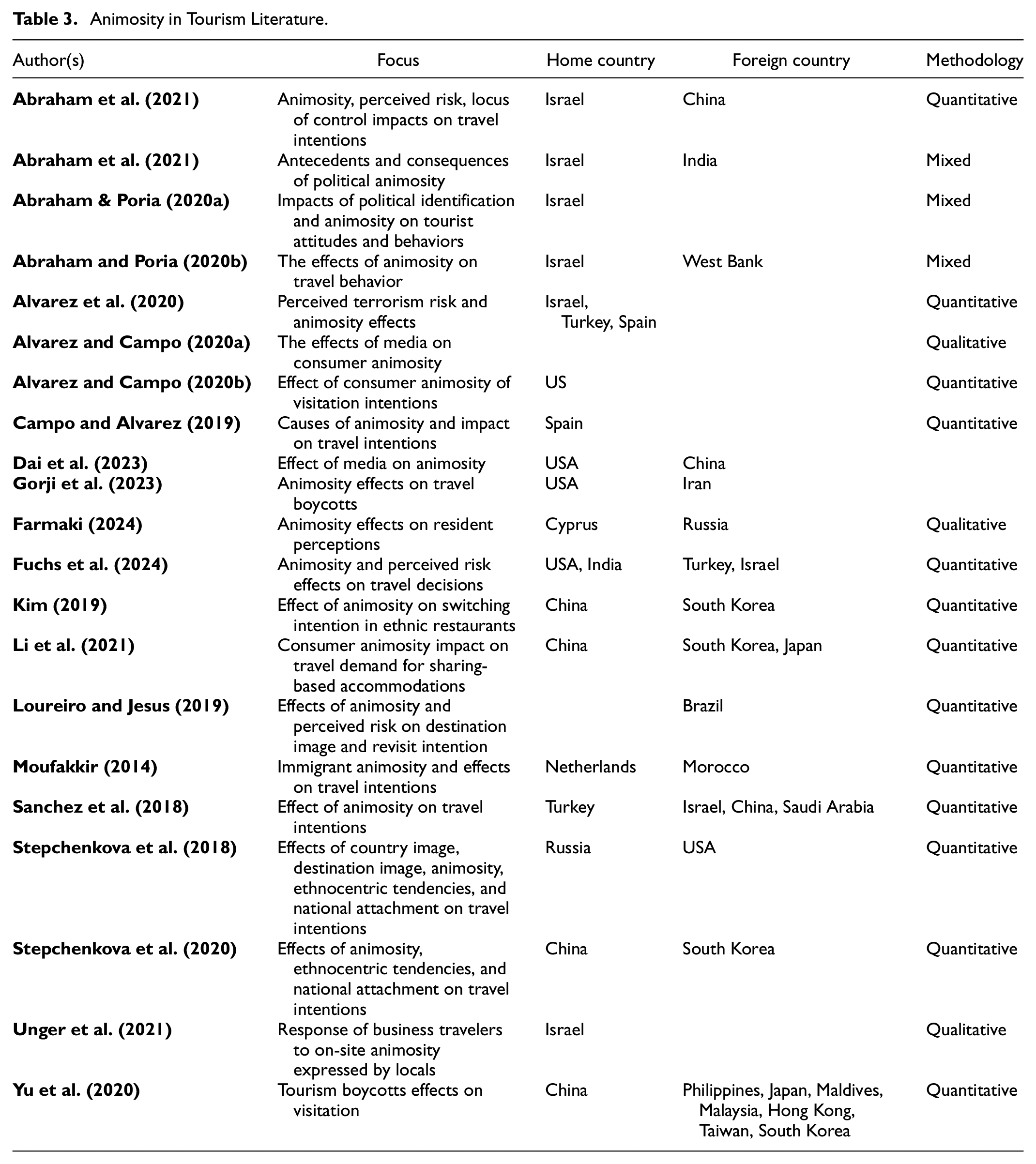
Animosity began to attract the attention of tourism scholars fairly recently. The majority of studies adopted a consumer animosity perspective, considering destinations as products that tourists select (Campo & Alvarez, 2019) and examined the impact of animosity on tourist decision process and particularly travel intentions (e.g., Alvarez & Campo, 2020; Stepchenkova et al., 2020). Studies drew from a variety of settings to examine animosity created by a range of events including terrorism, health crises, and political as well as economic conflict and its effects on destination image and willingness to visit a destination (e.g., Abraham et al., 2021; Alvarez et al., 2020; Stepchenkova et al., 2019). These studies confirm the adverse effects of animosity on travel intentions (Table 3), drawing two main conclusions. First, the influence of different types of animosity on travel intentions varies. For example, Yu et al. (2020) noted that political animosity has lasting effects on travel behavior unlike other types of animosity which tend to be short-lived. Equally, Sanchez et al. (2018) recognized political and social animosity as exerting a greater influence on travel behavior than economic, religious, or war animosity. Second, several factors were recognized as impacting animosity including media representations of an event, perceived risk, a country’s political system or even leader, political identification, and country perceived image (Abraham et al., 2021; Abraham & Poria, 2020a; Alvarez & Campo, 2020b; Dai et al., 2023; Stepchenkova et al., 2018).
Animosity in Tourism Literature.
Although considerable research on animosity in tourism is beginning to accumulate, its counterpart—affinity—has received scant attention. A foray into relevant literature reveals that there are only two studies examining tourism affinity. The first, conducted by Josiassen et al. (2022), reports a positive effect of tourism affinity on tourism-related outcomes such as willingness to visit a destination and word-of-mouth. The second study by Josiassen et al. (2023) examined tourism animosity and affinity concurrently in terms of their effects on solidarity in a hospitality context. Arguably, there is a rich body of scholarly research in tourism which examines travel intentions in relation to constructs related to affinity. For instance, studies looked at emotional solidarity (Joo & Woosnam, 2022) which represents the sense of closeness that exists between individuals due to shared values, activities, and relations (Durkheim, 1995). There are also studies that investigated cultural similarity and destination familiarity as factors influencing the intentions to visit a particular destination (Guan et al., 2022). However, affinity is a more powerful construct as it denotes the attachment to a destination without socio-cultural ties between a tourist and the destination being necessarily present. Indeed, Farmaki’s (2024) investigation of Cyprus’ resident perceptions of Russian tourists following the Ukraine crisis revealed both animosity and affinity being present, strengthened largely from media reports of the situation as well as the political ideology held by residents. In line with consumer animosity and affinity literature, the author concludes that animosity and affinity represent complex constructs as they evolve and manifest diversely, in response to multiple factors that may influence their duration, intensity, and behavioral effect. Evidently, a simultaneous examination of both constructs may be valuable in deepening our knowledge of travel-related decision-making, especially at times of a crisis.
Research Rationale and Theory
This study aims to investigate the effects of animosity and affinity on travel-related behavior and specifically travel intentions. In doing so, we aspire to contribute to extant literature on tourism animosity and affinity by studying the two constructs concurrently; thus, revealing the dynamics shaping travel intentions at times of a crisis. Drawing from Greek potential holidaymakers, we examine the interactive effects of animosity and affinity on their travel intentions to Russia—a country that has close cultural ties with Greece yet in recent years the world has witnessed the bilateral relations between the two countries deteriorating (Bechev, 2018). The bilateral relations between Greece and Russia seem to have further worsened following Greece’s support of Ukraine in the Ukraine–Russia conflict (Sideris, 2022). Specifically, we focused on both affinity which we conceptualize for the purposes of this study as “people evaluation” and animosity defined as “country evaluation.” In other words, while the “people evaluation” construct reflects the affinity Greek people feel toward Russians stemming primarily from the sympathy, admiration, and attachment of Greeks to Russians (Josiassen et al., 2022, Moufakkir, 2014), the “country evaluation” construct represents the animosity (Campo & Alvarez, 2019) felt against Russia by Greeks, reflecting largely the military and political animosity being relevant to the Ukraine–Russia current situation. In addition, we consider “destination evaluation” as the participants were asked of their travel intentions to Russia in the context of leisure tourism, entailing a need to focus on how they might evaluate the country as an attractive destination (Moufakkir, 2014). Not with standing, how potential tourists evaluate a destination plays an integral role in their choice of destination (Ross, 1993) and especially their travel intentions (Stepchenkova et al., 2020).
Moving on, we also considered “perceived safety” as well as “perceived risks” due to the fact that the current political situation between Ukraine and Russia may carry additional risks in terms of travel. Indeed, sanctions (e.g., removal from SWIFT payment network) have been imposed on Russia by most countries in the European Union as punitive measures following the advance of the Russian military to Ukraine (BBC, 2022) which pose as potential barriers to travel to the country. At times of crises, perceived safety and perceived risk emerge as important determinants of travel intentions (Reisinger & Mavondo, 2005). According to Simpson et al. (2016), safety at a destination is a key concern for tourists whereas perceived risk is heightened when a crisis is ongoing at the destination (N. Pappas, 2019). In addition, we considered the level of education of participants and their political ideology as both constructs have been found to influence animosity and affinity perceptions in consumer behavior (Cui et al., 2022; Jost, 2017) especially in a tourism context (Abraham & Poria, 2020a).
Generally speaking, the dynamics shaping travel decision-making are complex (Farmaki et al., 2021) and, in light of the study’s aim to examine the contrarian concepts of animosity and affinity concurrently, complexity is further likely to be present. To capture this complexity, we examine the effect of Greek potential holidaymakers’ animosity and affinity on their intentions to travel to Russia using chaos and complexity theory and fuzzy-set qualitative comparative analysis (fsQCA) as a method of analysis; hence, departing from previous investigations of tourism animosity/affinity which adopted a linear approach in research.
Chaos and complexity
Reference to chaos theory as a lens for studying human behavior can be traced back to 1963. Since, it has been widely used to analyze complex systems that consist of many components which are dynamically interrelated including behavior. Chaos theory rests on the assumption that behavior is difficult to predict long-term because even small differences can yield varying results (Kellert, 1994). In this aspect, those systems were labeled as chaordic for the moment that the behavior that emanates from those components’ interactions creates structures that are new (M. Schneider & Somers, 2006). These new structures are unpredictable yet expressing a pattern; hence, they are characterized by both chaos and order (Olmedo, 2011). The systems in reference, thus, tend to change and form new configurations as they are influenced by changing dynamics (Olmedo & Mateos, 2015). Out of chaos theory derived the complexity theory as researchers began to realize that the world we live in is a complex place consisting of aspects and phenomena that cannot necessarily be interpreted and explained by relationships under the rationale of cause-and-effect (N. Pappas, 2019). Complexity theory is used to describe asymmetric and dynamic interactions of components to explain the way that the combinations of the antecedents under evaluation can offer multiple solutions that are associated with phenomena characterized by high levels of complexity (Woodside, 2017). Complexity theory is based on the rationale that on their own the single conditions do not have the ability to effectively lead to the prediction of an outcome and, hence, take under examination the interactions that exist between the evaluation of specific causal antecedents (Woodside, 2017).
Complexity theory has been recently introduced to tourism literature as the most versatile lens to examine the complexity of tourism phenomena such as travel decision-making and the tourist behavior (e.g., Farmaki et al., 2021; N. Pappas, 2021). Travel behavior is characterized as complex since multiple factors interact to influence a combination of outcomes. Indeed, travel decision-making relies on numerous criteria (Farmaki et al., 2021) and becomes further complexified when undertaken in a context of crisis (N. Pappas, 2018). Specifically, we used fuzzy-set qualitative comparative analysis (fsQCA) which allows the examination of causal recipes, in other words the effects generated from the combination of the predictors. In this case, the theory of complexity is useful for the evaluation and the explanation of the contrarian role of the constructs of animosity and affinity and their effects on travel behavior. Several mainstream business studies highlight the complexity of animosity and affinity as attitudinal constructs predicting consumer behavior that simultaneously rely on multiple dimensions (e.g., Leonidou et al., 2019; Nes et al., 2012; Oberecker et al., 2008). Considering the complexity characterizing tourism decision-making, complexity theory becomes apt in studying the attitudinal constructs of animosity and affinity, as these constructs evolve and manifest varyingly, depending on multiple factors that may influence their behavioral effects (Farmaki, 2024).
Study Tenets
The research in tourism and services conceptualized the term “tenet” in a format of a testable precept in order to be able to identify conditions including significant levels of complexity (Papatheodorou and Pappas, 2017). When we progress to the examination of such conditions, the statistical hypotheses and the related metrics of consistency are not important as the outcome scores are used for the adequacy establishment of the configurations which are characterized by complexity (Wu et al., 2014). Following the configuration theory, different outcomes are likely to be derived from the examination of the same set of causal factors (Ordanini et al., 2014). The current research evaluates the effects of Greeks’ animosity and affinity on their intentions to travel to Russia. In this context, the configurational presence or absence of the examined combinations of the binary sets is evaluated through the confirmation (or not) of the tenets presented below:
T1: The same attribute is likely to signify a different way that tourism decisions are undertaken by the holidaymakers in terms of the way it will interact with the rest of the examined attributes.
T2: Recipe Principle: When we have the inclusion of at least two of the examined simple conditions within the same configuration (generation of a complex condition), the generated outcome is possible to have a consistently high score.
T3: The generated complex pathways can possibly influence the effects of animosity/affinity upon travel intentions.
T4: When the examined simple conditions are combined differently they can have a positive or negative animosity/affinity influence on travel intentions.
T5: Equifinality principle: In is not necessary to have an adequate effect of animosity/affinity related with the examined travel intentions when having in parallel a high score of outcome.
T6: When we have high Y scores, a recipe provided for the animosity/affinity effects upon the examined travel intentions cannot be considered as relevant for all the examined cases.
Methods
Respondents
The study was conducted from November to mid-December 2022 at the International Airport “Eleftherios Velizelos” in Athens, Greece. The respondents were Greek adult holidaymakers that were considering Russia as one of the tourism destinations they would like to visit sometime in the future. The study has randomly selected its participants, using a self-administered questionnaire. The average duration for the completion of each questionnaire was less than 10 minutes. For partially completed questionnaires, the method of listwise-deletion was followed (exclusion of the questionnaire from further analysis) since this is perceived as the most versatile method for the cases of missing data handling and the subsequent reduction of research bias (Raghunathan, 2020).
Sample Size
The perspectives of the Greek holidaymakers were not known. For this reason the most conservative response approach (50/50) was undertaken, hypothesizing that 50% of the respondents will express agreeable perceptions and the remaining 50% will not. According to Sekaran and Bougie (2020) and Akis et al. (1996), Z (cumulative probability) is 1.96, and the maximum confidence level should be 95%. Subsequently the statistical error should not exceed 5%. The estimation of the sample size is:

Kumar et al. (2020) suggest that the sample size is independent from the total population, because the estimated statistical error is the one that determines the size of the sample. The research rounded the sample size to 400 respondents, and concluded when this number of useful responses were collected. In total, 504 holidaymakers were approached in order to participate in the study and fill in the questionnaires, generating a response rate at 79.4%.
Measures
The research tool (questionnaire) consists of 35 Likert scale statements (1: strongly disagree; 5: strongly agree) derived from previous studies. More specifically, the statements concerning people evaluation (affinity measures) were adopted from the studies of Josiassen et al. (2022) and Moufakkir (2014). The items dealing with country evaluation (animosity measures) were taken from Campo and Alvarez (2019). The statements focusing on destination evaluation derived from Moufakkir (2014). The perceived safety items were adopted from the studies of Huerta-Alvarez et al. (2020) and Simpson et al. (2016). The items related with perceived risks were adopted from the study of N. Pappas (2019). Finally, the related statements with travel intentions were derived from the study of Stepchenkova et al. (2020). Based on previous research, the study also includes two socio-demographic questions examining the level of education (Josiassen et al, 2022) and the political ideology (Abraham & Poria, 2020a; Cui et al., 2022; Jost, 2017) of the respondents. In terms of political ideology, the study of Abraham and Poria (2020a) suggests that it can affect decision-making on several aspects including animosity. Furthermore, Cui et al. (2022) adopted a 7-point scale for measuring the extent between conservatism (right) and liberalism (left) in political ideology. Finally, Jost (2017) relates political ideology with affinity aspects. One more question as an exclusion factor was included evaluating the perspective of holidaymakers for considering Russia as one of the tourism destinations they would like to visit.
The complex statements were evaluated by using fsQCA (fuzzy-set Qualitative Comparative Analysis). This method was selected since it is perceived as the most versatile when examining the chaordic systems derived by complex phenomena (Olya & Al-Ansi, 2018; Ordanini et al., 2014). fsQCA is perceived as a mixed method. This is due to the fact that it includes quantitative data, whilst its analysis employs qualitative inductive reasoning (Longest & Vaisey, 2008). The study also evaluates the existence or not of a specific condition (defined as negated sets, Woodside & Zhang, 2013) and uses the symbol “∼” for highlighting the absence of the condition in reference.
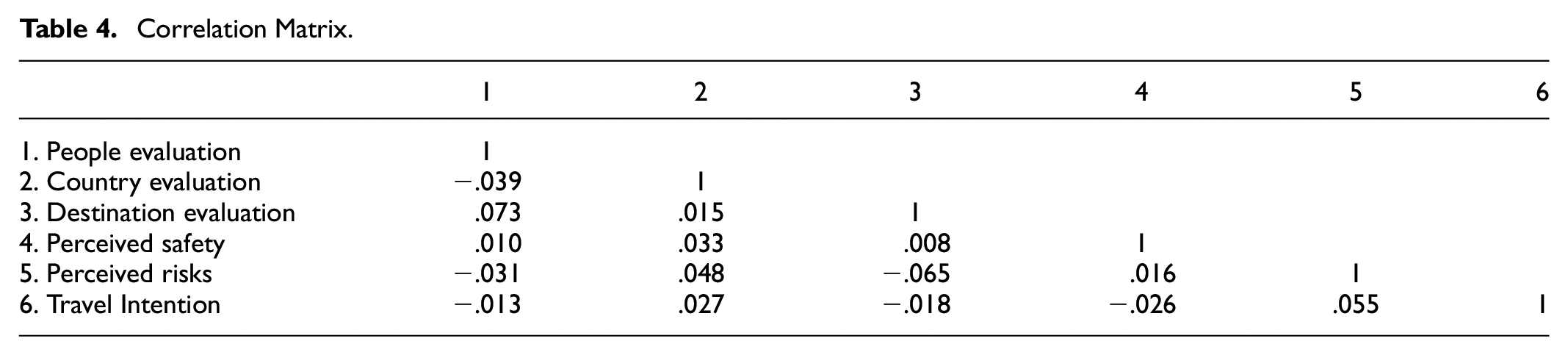
In order to select the analysis method of a research (parametric vs. asymmetric), we have to identify whether it is characterized by general asymmetry or not. According to Skarmeas et al. (2014), this aspect is identified through the generation of a correlation matrix where (for general asymmetry) all values should be lower than 0.60. Only then fsQCA should be employed. In the literature, most of the parametric researches do not employ such analysis, hence there is a lack of evidence whether the analysis should progress under a symmetric (e.g., Structural Equation Modeling) or an asymmetric (e.g.: fsQCA) perspective. In our research, all the generated correlations (presented in Table 4) are lower than the designated threshold of 0.6, meaning that the different combinations of the simple conditions under evaluation are likely to finally lead to the generation of the same outcome (Woodside, 2013). The study examines the animosity and affinity aspects of Greek holidaymakers in terms of their future travel intentions for visiting Russia for tourism purposes. Therefore, the study evaluates the causal recipes that can be generated from the simple conditions of: (i) people evaluation, (ii) country evaluation, (iii) destination evaluation, (iv) perceived safety, and (v) perceived risks. It also considers the socio-demographics of: (i) level of education and (ii) political ideology.
Correlation Matrix.
Algorithms
The research used 35 individual cases for its calibration. Following Ragin (2008), the membership for each causal condition was defined between zero (implies non-membership) and one (implies full membership), also establishing the thresholds of non-membership, the point of cross-over, and the full membership. According to the suggestions of Xie and Wang (2020) and as initially defined by Ragin (2008), for non-membership the set original value was 5%, for crossover point 50%, and for full membership 95%.
Following the study of I. O. Pappas and Woodside (2021), 2, 3, and 4 values were selected as thresholds as the study measures the perceptions through the use of a five-point Likert scale. Accordingly, all the values of the examined socio-demographics (level of education; political ideology) (ranging in 0, 1) have been included. Fuzzy-set calibration was selected since it prevents the loss of information implied by the crisp sets (Wagemann et al., 2016). Following the study of Xie and Wang (2020), the study examined the robustness by changing the full non membership by the addition of 0.25 and a subsequent extraction of 0.25 for the full membership, and then progressed to the same extraction and addition (0.25) to the crossover point. However, in terms of the final solution none of the results were significantly different from the initial set. Hence, the findings are perceived as robust. The travel intentions “f_ti” for the Greek holidaymakers were evaluated through the fuzzy-sets of level of education “f_e,” political ideology “f_pi,” people evaluation “f_pe,” country evaluation “f_ce,” destination evaluation “f_de,” perceived safety “f_ps,” and perceived risks “f_pr.”
Findings
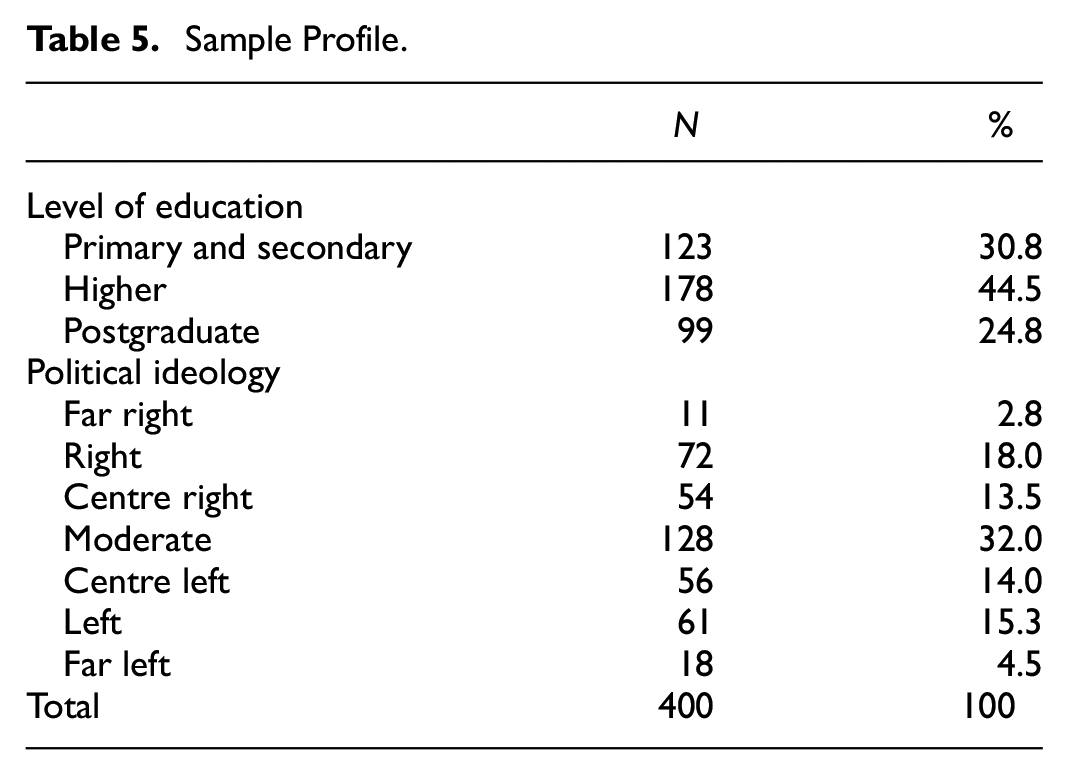
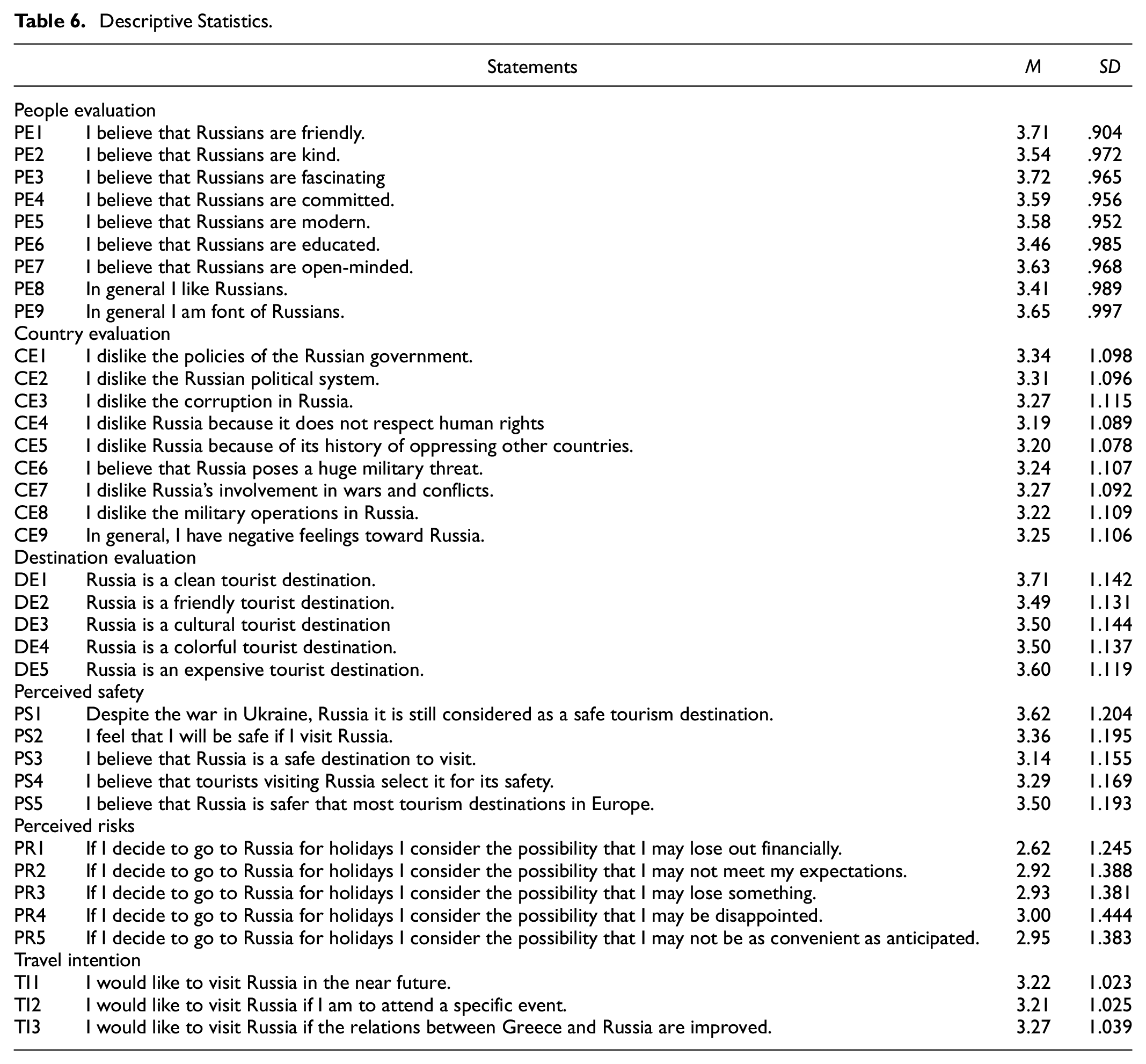
The socio-demographic profile of the sample is presented in Table 5. Moreover, Table 6 illustrates the items used (per simple condition) and the descriptive statistics of the study.
Sample Profile.
Descriptive Statistics.
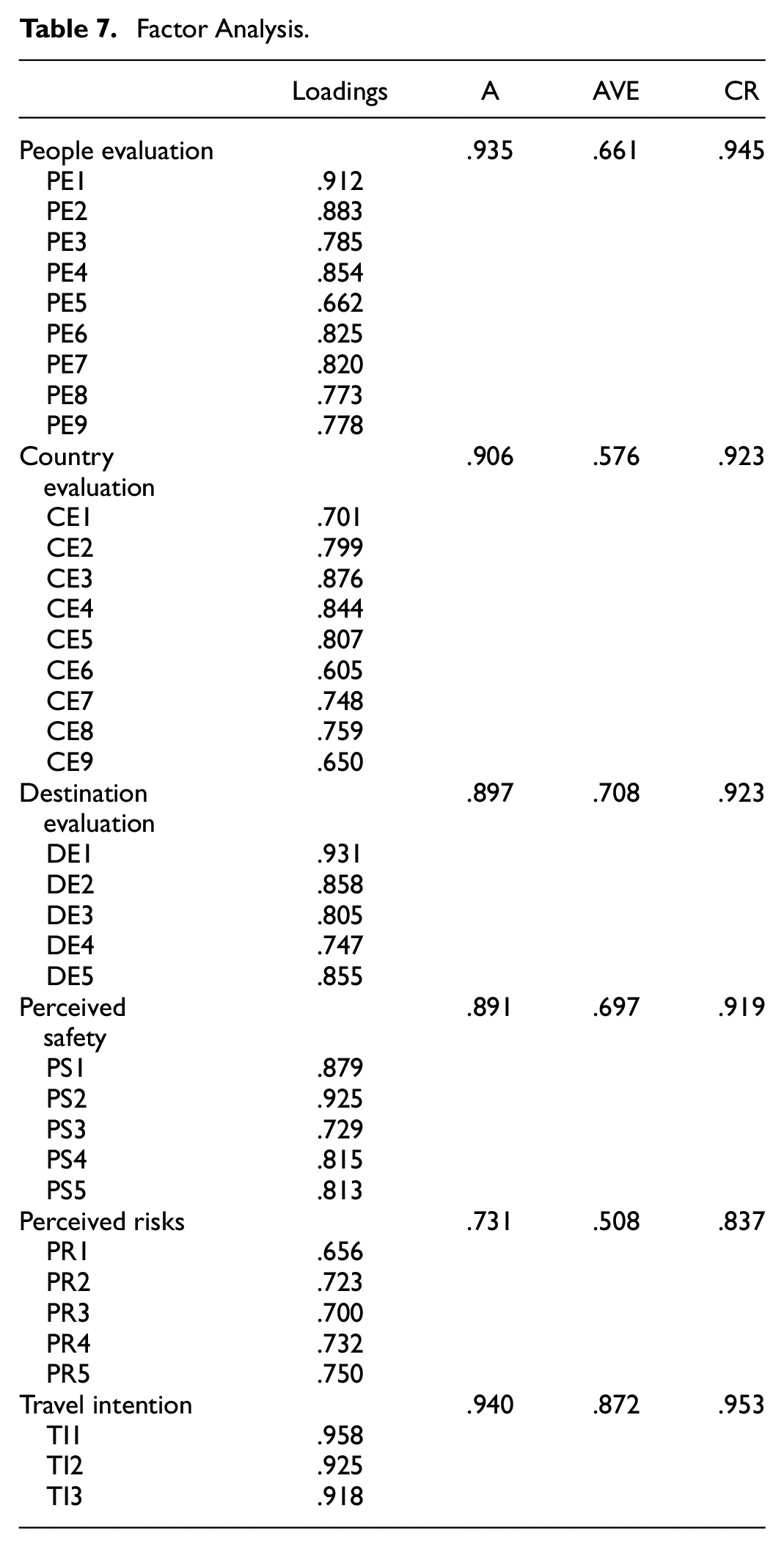
As it was presented above, all the items generated from previous studies. Thus, CFA (Confirmatory Factor Analysis) was employed. The loadings of all the items were higher than the minimum acceptable threshold of 0.4 (Norman & Streiner, 2008), hence all of them have progressed to further analysis (Table 7). In terms of internal consistency, in all cases Cronbach’s Alpha (A) was higher than the minimum acceptable value (A > 0.7) (Nunnally, 1978). Moreover, as suggested by J. H. Kim (2014), the generated convergent validity was sufficient since AVE (Average Variance Explained) has exceeded .5 (AVE > 0.5). Accordingly, following the suggestion of Huang et al. (2013), in all cases AVE was lower than CR (Composite Reliability). All the above findings showcase that the levels of internal consistency (A), validity (AVE), and reliability (CR) are acceptable.
Factor Analysis.
Complex Configurations
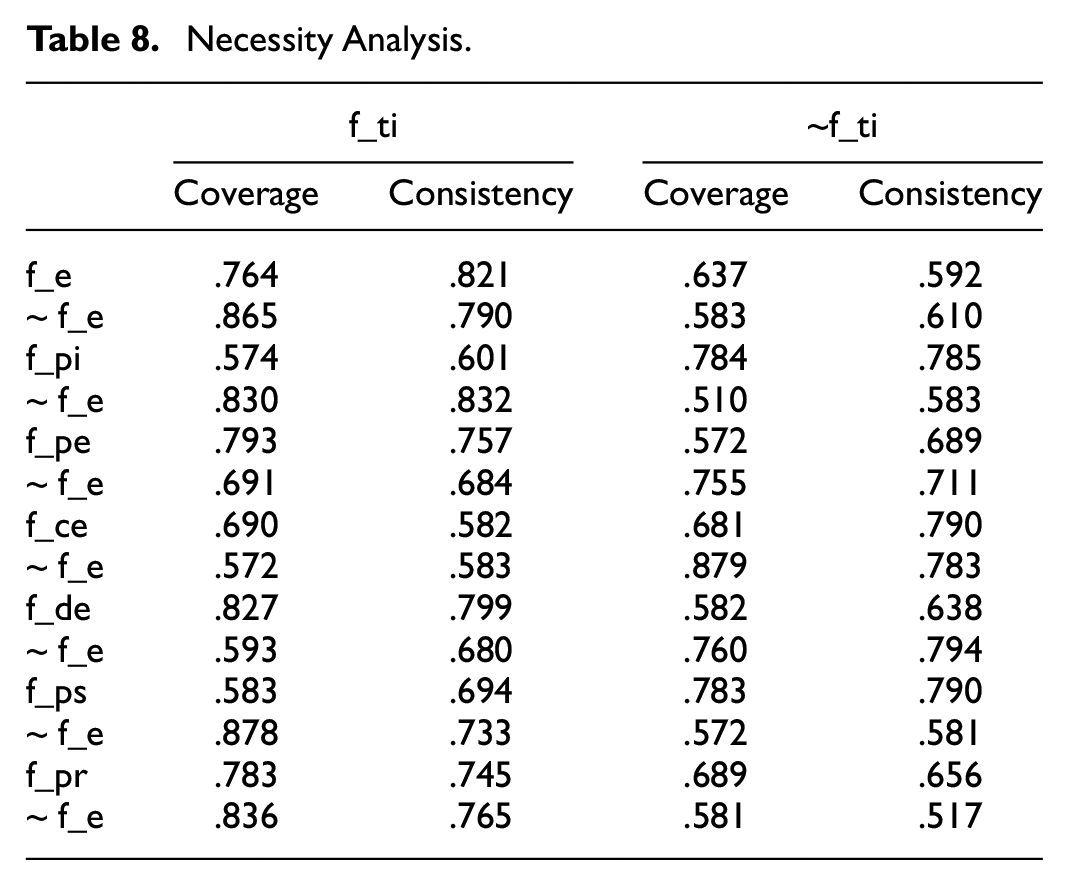
As it is also suggested by the study of C. Q. Schneider and Wagemann (2010), a necessity analysis (presence or absence of the examined conditions) should be provided prior the examination of complex configurations. If the coverage and consistency of the examined conditions is lower than 0.9 this implies that the variables of the conditions are not able to fully explain the resulting variable, and further combination analysis of the configurations is necessary (Xie and Wang, 2020). As it is illustrated in Table 8, both coverage and consistency of the examined conditions are lower than the designated threshold of 0.9, hence further configurational analysis is needed.
Necessity Analysis.
The examination of complexity has generated three pathways (Table 8). The first solution (f_e,f_pi,f_pe,f_ce,~f_de ~f_ps,~f_pr) includes both of the socio-demographics under evaluation (level of education; political ideology) and generated high outcome scores for people (affinity statements) and country (animosity statements) evaluation. This appears to be the configuration with the highest consistency level (.84928). Moreover, it generates the lowest raw coverage (.39039) and the highest unique coverage (.11472) of all three configurations. The second sufficient pathway (~f_e,f_pi,~f_pe,~f_ce,f_de,f_ps,f_pr) includes political ideology and the simple conditions of destination evaluation, perceived safety, and perceived risks. This solution has the lowest unique coverage (.08375) and in parallel the highest raw coverage (.41826). The third pathway (~f_e,~f_pi,~f_pe,f_ce,~f_de,~f_ps,f_pr) generates high scores of outcome for country evaluation and perceived risks. This solution has the lowest consistency (.80287)
Predictive Validity
In travel and tourism research, the vast majority of studies use model fit indices (Gigerenzer and Brighton, 2009) in order to make sure that their data are able to formulate the grounds between the examined factors and the observed variables (Papatheodorou & Pappas, 2017). Therefore, only a few researches actually employ predictive validity (N. Pappas, 2018), proposing that model adequacy does not have to be dependent on the good fit observations (Gigerenzer & Brighton, 2009). Following the studies of Olya and Altinay (2016) and Wu et al. (2014), the research tested travel intention by using two equal parts, a holdout and a modeling subsample. The configural models related with the holdout sample were examined by the modeling subsample. The holdout sample algorithm was similar with the fsQCA one, and then the modeling subsample has examined the holdout sample. The findings generated a consistency of 0.814 (C1 is higher than the minimum acceptable of 0.74, Skarmeas et al., 2014) and the overall coverage was 0.409 (varying between the acceptable range of 0.25 and 0.75, Skarmeas et al., 2014). As a result, the predictive validity of the model is good.
Discussion
Sufficient Solutions
As it is illustrated in Table 9, the first sufficient pathway concerns the importance of animosity and affinity for the formulation of travel intentions, something which is also highlighted in previous studies (e.g., Josiassen et al., 2022; Sánchez et al., 2018).
Complex Configurations.
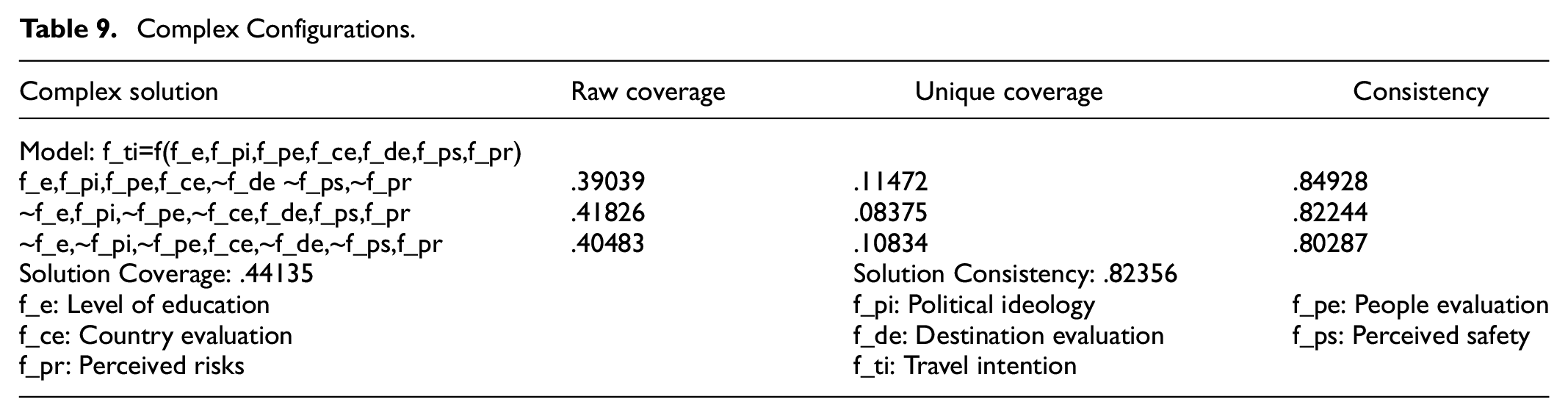
The simple conditions of people (affinity statements) and country evaluation (animosity statements) combined with the examined socio-demographics (level of education; political ideology) appear to be vital for the decision-making of holidaymakers when they select tourism destinations. The second generated solution focuses on the destination characteristics. As it is apparent from the findings the destination evaluation, perceived safety and the perceived risks’ aspects influence the travel intentions of tourists. In the case of Russia (following the escalation of the Russia–Ukraine conflict), the inclusion of political ideology of the respondents affects their decision related with travel intentions. The third sufficient configuration concerns the risk-oriented animosity, since it includes the simple conditions of country evaluation (animosity statements) and perceived risks. This finding highlights the connection of animosity with risks and, possibly, the magnification of the latter due to the existing animosity perceptions. The solution in reference also provides evidence for the formulation of travel intentions regardless the examined socio-demographics (level of education; political ideology) of the respondents.
Confirmation of Tenets
All the set tenets were confirmed by the findings. More specifically, although each generated solution is actually a different pathway leading to the same outcome (in our case travel intentions), each examined simple condition is included in at least one solution. These findings confirm the first tenet (T1). Moreover, at least two simple conditions are included in each sufficient configuration, leading to the confirmation of the recipe principle and, subsequently, the confirmation of the second set tenet (T2). The generated pathways focus on: (i) affinity and animosity, (ii) destination characteristics, and (iii) risk-oriented animosity. Since different complex configurations can lead to the same outcome, the findings also confirm the third tenet (T3). The study uses contrarian case analysis (a simple condition cannot be present in all generated pathways) and the findings reveal that even if all simple conditions are present in at least one of the generated solutions, none of them is present in all three of them. This confirms the fourth set tenet (T4). The sufficient configurations appear not to have a high outcome score although they lead to the same outcome. This is consistent with the principle of equifinality, leading to the confirmation of the fifth tenet (T5). Finally, the results suggest a raw coverage variation less than 1 (ranging from 0.390 to 0.418), revealing that none of the pathways includes all cases. These findings lead to the confirmation of the sixth set tenet (T6).
Conclusion
This study adopted complexity theory to evaluate the chaordic effect of both animosity and affinity on Greeks’ intentions to travel to Russia, which following the Russia–Ukraine conflict is regarded as the most sanctioned country in the world (Shapiro, 2022). Specifically, our fsQCA results help to explain the conditions under which affinity and animosity impact travel intentions. The results reveal three pathways that can influence travel intentions: (a) affinity and animosity, (b) destination characteristics, and (c) risk-oriented animosity. As such, the study carries important theoretical and practical implications.
Theoretical Implications
This study makes several theoretical contributions. To begin with, to the best of our knowledge, this study is the first to examine the complexity aspects of animosity and affinity not only in tourism but also in the wider service spectrum. In relation to this point, the study makes a methodological contribution as it highlights the passage from the reductionist Newtonian (parametric) approach adopted in past research to an asymmetric (non-parametric) perspective, which captures more effectively the complexity characterizing the constructs of animosity and affinity in service contexts such as tourism. Indeed, tourism related decision-making has been argued to represent a complex process relying on multiple criteria (Farmaki et al., 2021), further complexifying at times of crises (N. Pappas, 2018). The examination of complexity and its derived chaordic systems through the use of fsQCA actually provides the means to the decision-makers to better comprehend tourism complexity and be able to identify multiple pathways that can lead to the desired outcome (in our case travel intention). Past tourism research identified the complexity underpinning the constructs of animosity and affinity in destinations (Farmaki, 2023) as these evolve and manifest varyingly among tourists. Yet, as the majority of tourism research examined the constructs separately, the complexity characterizing the travel decision-making has not been explored up to now, since the previous research was actually approaching those aspects under a linear perspective (indicatively please read Abraham & Poria, 2020a; Cui et al., 2022). As such, our study results inform extant literature of the complex conditions present during times of conflict-related crises, which impact travel intentions in varying ways whilst animosity and affinity interact with socio-demographic factors including political ideology.
In so doing, our study also contributes to the wider consumer animosity and affinity literature by considering both constructs concurrently. Pertinent literature has insofar examined each construct separately, failing to consider the complex interplay between the constructs; a surprising omission as evidence suggests that animosity against an individual or group may encourage affinity toward another (Josiassen et al., 2023). While the constructs are mirrored concepts they are, nonetheless, distinct with interactive effects of decision-making (Papadopoulos et al., 2017); thus, worth examining concurrently as they have varying influence at different stages of the decision-making process (Wongtada et al., 2012). By considering both animosity and affinity it is also possible to better understand the conditions under which they emerge, evolve, and interact. For instance, Serrano-Arcos et al. (2022) argued that consumer affinity can reduce negative attitudes such as animosity. Also, a consideration of affinity adds to extant literature as an overview of pertinent studies reveals that most have focused on animosity, especially within a tourism research context where the concept of consumer affinity is yet to be sufficiently examined (Farmaki, 2024).
Another theoretical contribution is that the study focuses on countries that are not traditional “enemies.” Past consumer studies on animosity and affinity have looked at cases of current or prior political instability and tensions including South Korea and Japan (C. Kim et al., 2022) and Israel and Egypt (Papadopoulos et al., 2017). This tendency is also reflective in tourism studies where the focus was largely on destinations with prior political tensions such as China and South Korea (Stepchenkova et al., 2020), US and Russia (Stepchenkova et al., 2018), and Jewish visiting Germany (Abraham & Poria, 2020a). An examination of the animosity and affinity perceptions between countries whose bilateral relations have been historically favorable despite their deterioration in recent years (Tziampiris, 2010) offers potentially interesting insights in relation to the dynamics shaping cognitive and affective behavioral aspects. In the midst of political conflict, these include political and historical ties between countries, political ideologies, and safety and risk perceptions as shaped by media communication among others.
Practical Implications
Apart from examining tourism-related animosity and affinity aspects, this study highlights the importance for evaluating tourism complexity and its derived chaordic systems. Instead of offering just a reductionist (parametric) approach that can only offer a single orientation (i.e., use of a Structural Equation Modeling), it provides multiple pathways that can lead to the same outcome trough an asymmetric analysis (Geremew et al., 2023; Olya et al., 2018). Considering that tourism is characterized by high complexity levels (Ordanini et al., 2014; N. Pappas, 2021), any decision-making analysis is advisable to take under consideration different ways of thinking and examine their respective potential variations. From a practical perspective, the study highlights the importance of the examination of chaordic (complex) systems in order to better and further encapsulate the decision-making realities of the holidaymakers, and provide a more holistic investigation for the examined aspects, actually progressing from the current parametric research dominance to asymmetric futures.
Destination planners and travel and tourism companies (i.e., tour operators) can employ one of the provided pathways or a combination of them as a guide for the improvement of their advertising, marketing and promotional strategies, especially during times of crises which often impact travel intentions negatively (Abraham et al., 2021; Alvarez et al., 2020; Stepchenkova et al., 2019). Through the use of multiple pathways, they can practically approach more market segments and better serve their requests and expectations, ultimately increasing their market share and further develop their market competitiveness. Although the complexity characterizing travel behavior during crises cannot be undermined, destination planners and travel and tourism companies can prepare more effectively and maximize their resilience as they attempt to mitigate the negative effects of conflict-related crises on tourist decision-making. In this case, the adoption of fsQCA and the proposal of specific pathways can help decision-makers and policymakers to make more informed decisions regarding their marketing strategies. The proposed configurations that this study makes can be used in accordance with the resources and the strategic goals of destinations and tourism companies in the following ways.
First, destination marketers and travel and tourism companies can use the first sufficient configuration which prescribes the dual influence of affinity and animosity on holidaymakers’ travel intentions. Specifically, they can incorporate in their marketing campaigns more affinity elements to target potential tourists with affinity toward Russia whilst trying to diminish the animosity potentially present as expressed by their political ideology and/or education level. Likewise, destination marketers and tourism companies can opt for the second solution and highlight destination characteristics that positively impact travel intentions. In other words, decision-makers in the public and private tourism sectors can select those destination attributes deemed desirable and attractive to target potential tourists motivated to visit the destination due to its characteristics, a factor that interacts with political ideology and safety and risk perceptions. In addition, destination marketers and travel and tourism companies can attempt to reduce the risk perceptions of potential tourists to Russia, as these interact with animosity, using promotional campaigns accordingly. Overall, the proposed solutions can be utilized to achieve a more targeted marketing approach that will safeguard both destinations and travel and tourism companies at times of conflict-related crises.
Limitations and Suggestions for Further Research
Despite the contributions this study offers, it is not free of limitations. First, as the use of fsQCA is rather new in tourism further research is needed in order to encapsulate the potential combinations of solutions offered by this method. Also, the results yielded with this mixed method analytical approach need to be compared with qualitative research; as it stands, the results of this study which relied only on fsQCA must be carefully generalized. Another limitation is that our study focused on Greek holidaymakers. It needs to be highlighted that the generated findings might not be applicable for tourists of other countries because the relation of a country with another is like a unique story which has its own exclusive norms, values, and nuances. Therefore, future research may be conducted in other settings in Europe and beyond to allow for a wider consideration of tourist characteristics. Finally, the research was held during the period of the Russian–Ukrainian conflict when tensions were considerably high. Although the findings may encapsulate a degree of those tensions, relevant research after the end of the conflict may generate different findings.
Footnotes
Declaration of Conflicting Interests
The author(s) declared no potential conflicts of interest with respect to the research, authorship, and/or publication of this article.
Funding
The author(s) received no financial support for the research, authorship, and/or publication of this article.
