




Abstract
Grounded on the concept of ethnicity, this paper explores the travel consumption and decision-making behaviors of ethnic minority travelers through the lens of psychological empowerment. Employing a quantitative-dominant concurrent nested mixed-methods approach, 951 surveys (404 white and 547 ethnic minority participants), 6 focus groups, and 10 semi-structured interviews (with ethnic minority travelers) were conducted in the UK. The findings reveal the existence of prejudices and discrimination experienced by ethnic minorities during international and domestic travel, with ethnicity being a key factor. The paper identifies the need to adopt a multi-level empowerment approach, where psychological empowerment is found to be key to understanding how negative experiences and perceived risks are accepted, feared, and/or transformed into sources of interactional and intrapersonal empowerment. This has significant positive impacts on international and domestic travel intentions of ethnic minorities. The theoretical, methodological, and management implications of the study are discussed.
Introduction
Travel behavior is the result of a cognitive decision-making process which is determined by travelers’ attributes or personality traits (Li et al., 2020), and their perceptions of the social environment, wherein they are based (Boavida-Portugal et al., 2017). Travel decision-making regarding destination choice is always a negotiation process between tourists’ needs and what the destinations offer (Bekk et al., 2016). While research on travel decision-making behavior and destination choice abounds, it is mostly focused on white travelers, with an extant body of work examining Asian travelers (e.g., Cha et al., 1995; Girish et al., 2021; M. J. H. Yang et al., 2020), particularly Chinese travelers, and only a handful examining the travel decision-making process of ethnic minority travelers.
Extant literature on travel behaviors of ethnically diverse groups (e.g., Benjamin & Dillette, 2021) remains limited in scope and impact and is mostly US-focused. Ethnic minorities have been studied primarily as part of the tourism product, that is, exoticized objects of the tourist gaze (Urry, 1990), as locals in entertainment roles (Buzinde et al., 2006), in relation to the precarity of their roles as employees in the industry (e.g., Baum et al., 2007), or their representation in media (e.g., Tucker et al., 2023). Although few studies have highlighted the role of tourist typology based on decision-making variables (e.g., Decrop & Snelders, 2005) and the importance of considering ethnic minority identities in informing the tourism experience (Klemm, 2002), the ethno-racial dimension has largely been overlooked in tourism literature, particularly in the UK context.
It is evident that the travel decision-making styles (DMS), perceived risks, experiences of discrimination, and negotiation processes of tourists from non-white ethnic minority backgrounds are diverse. However, research on these critical domains is scarce. Different types of risks are faced by ethnic minority travelers where issues of racism, marginalization, and discrimination impact their travel behaviors and experiences (A. K. Dillette et al., 2019; Tucker & Deale, 2018). Yet, little is known about how these are negotiated and addressed and calls for a need to remove the “white gaze” as the only or dominant way to observe tourists (Stephenson & Hughes, 2005) have not been followed through. Empowerment, especially psychological, has been found to significantly influence behavior (C. Fuchs & Schreier, 2011; H. W. Kim & Gupta, 2014) and has the potential to address negative emotions, limited resource access, and overcome different types of risks (Gutierrez, 1995). However, the role of psychological empowerment in negotiating different perceived risks in travel, and its influence on travel decision-making and behavioral intention has received little attention. Due to this lack of understanding and acknowledgment of the heterogeneous nature of travel, the “whitewashed” and near homogenous nature of travel and tourism marketing has failed in creating an inclusive industry as genuine representations of Black individuals and other minority groups are scant (D. Burton & Klemm, 2011; Buzinde et al., 2006; Chio et al., 2020).
This study responds to longstanding and overdue calls (Klemm & Kelsey, 2004) for more research on non-white travelers with ethnic minority backgrounds as potential consumers. Specifically, this study aims to develop a better understanding of the travel motivations, influences, and DMS of tourists from ethnic minority backgrounds in the UK. It also demonstrates the need to put ethnicity at the center of tourism research and consider ethnic identities beyond just a demographic variable. Using a mixed methods approach, the study developed two interlinked objectives: (1) to examine different travel DMS and the role of perceived risk and psychological empowerment on travel intention; and (2) to explore the travel decision-making processes, motivations, constraints, and negotiating strategies of ethnic minorities in the UK.
This paper underpins its discussions on the concepts of ethnicity, race, and social identity, with a focus on “ethnic minority groups.” This is led by the researchers’ aspiration to recognize and appreciate the challenges faced by ethnically diverse minorities, who would typically be non-white groups in Western contexts. A critical challenge here is to define the terms of reference, given the continuing lack of theoretical frameworks or universally agreed concepts around ethnicity and race (e.g., J. Burton et al., 2010; Floyd, 1998). The relationship between race and ethnicity has been inexhaustibly debated within socio-psychological research, with suggestions to combine them into a single construct (Phinney, 1996), re-label race as socioracial and psychoracial to recognize the interpersonal, societal, and intrapsychic dynamics of the social construction of race (Helms & Richardson, 1997). Helms and Talleyrand (1997) argued for the need to distinguish ethnicity from race, particularly when studying sociocultural and psychocultural influences. Though widely debated, the concept of race broadly includes physically discernible characteristics that connect individuals to specific racial groups (Haslanger, 2000).
Ethnicity or ethnic identity, on the other hand, is multi-dimensional and inherently fluid, encompassing both physical and invisible dimensions. Betancourt and López (1993) described ethnicity as the ethnic quality or affiliation of a group, where members of an ethnic group interact with each other and are usually characterized in terms of a common nationality, culture, dress, religious identity, language, etc. Weber (1978) contended that what is central to the definition of ethnic groups is “a subjective belief in their common descent.” This group identity leads people to develop related positive and negative psychological characteristics including belonging and emotional bonds (Phinney, 1996), internalized racism & poor self-esteem, ethnic identification, and perceived discrimination (Betancourt & López, 1993). To understand the representations of group identity and the psychological effects of minority membership, it is imperative to consider identity in relation to the dominant majority. We thus feel that ethnic minority identity is a more suitable lens for this study, directing our focus to explore the experiences of ethnic minority groups, informed by race, culture, and social identity and consistent with the UK Government’s approach to defining ethnic groups (https://www.ethnicity-facts-figures.service.gov.uk/style-guide/writing-about-ethnicity).
Intersectionality, although recognized, does not form the main study focus, to avoid the danger of diluting the challenges faced by ethnic minority groups. Christoffersen and Emejulu (2023) contended that generic intersectionality which is designed to benefit all often fails to deliver to marginalized and disadvantaged groups. It is, therefore, more impactful to focus on specific groups including gender, disability, race, and ethnicity. The additional challenge of methodological constraints in studying this inherently complex and fluid phenomena requires a focused approach as reflected in our research and study design. By examining and unpacking the travel decision-making behaviors and motivations of travelers from ethnic minority backgrounds in the UK, this is the first comprehensive large-scale mixed methods study (cf., Klemm, 2002; Stephenson, 2006) that provides novel insights into understanding the determinants of travel intention of ethnic minority travelers, examining different travel DMS. Methodologically, this is one of the first studies to apply the propensity score weighting scheme within tourism literature to identify the causal effect of being an ethnic minority traveler on travel intentions. Furthermore, the study develops evidence-based research, practice, and industry recommendations, enabling destination management organizations (DMOs), hospitality and tourism marketers, and developers to understand the importance of incorporating equity, diversity, and inclusion (EDI) in the (re)design and delivery of (new and existing) products and services. The next sections develop the theoretical framework followed by a description of the study methods, after which the findings and discussion, and conclusions are presented.
Literature Review
Overview of Ethnic Minority Travel
In the tourism literature, ethnic minority groups, frequently regarded as outsiders, are often portrayed as tourism products and exotic objects of the tourist gaze (Urry, 1990) rather than as holidaymakers (Klemm, 2002). Although several studies have examined the motivations, perceptions, and behavior of tourists who participate in ethnic tourism (Moscardo & Pearce, 1999; L. Yang & Wall, 2009), there is surprisingly little research on tourism experiences and decision-making behavior of ethnic minority tourists. This is, in part, due to stereotypical (mis)perceptions of ethnic minorities as economically and politically marginalized and engaging mainly in visiting friends and relatives (VFR) tourism. They are consequently not perceived as a valuable and profitable consumer segment by travel companies (Klemm & Kelsey, 2004). This perception is buttressed by Washburne’s (1978) marginality and ethnicity hypotheses to explain the differences in tourism and leisure participation between black and white travelers in the USA. According to the marginality hypothesis, ethnic minorities are unable to enjoy the same leisure and recreational opportunities as the majority due to limited incomes, transportation, and knowledge about recreational facilities (Johnson et al., 1997; Washburne, 1978). In contrast, the ethnicity hypothesis claims that traveling behavior is determined by individuals’ upbringing and cultural identity, not by their socioeconomic position in society (Johnson et al., 1997; Washburne, 1978).
Washburne’s theories have been criticized for their limited focus on subcultures in explaining leisure behavior rather than examining the systems and structural reality of racism (which creates anxiety and fear of discrimination) as drivers of leisure consumption and ergo ignoring the critical role of leisure in racializing populations (Floyd, 1998; Mowatt, 2018). This notwithstanding, the few existing studies on ethnic minorities’ travel behavior in the UK (Klemm, 2002) and the US (Williams & Chacko, 2008) found evidence supporting the ethnicity hypothesis, in addition to racism and discrimination (cf., A. K. Dillette et al., 2019), in establishing differences in travel behavior because of a preference for culturally relevant marketing and promotion of tourism products as opposed to socioeconomic factors. Ethnicity, however, does not work in isolation; it is informed by the experiences of individuals, groups, and their networks. Carter (2008) and Mowatt (2018) suggested that ethnic tourists’ prior experiences with racial discrimination (structural and institutional), anxieties, and a nation’s negative ethnic minority context prevent them from participating in travel activities. Evidence of this discriminatory treatment can be found in studies where African travelers complain of “ethnic profiling” in Chinese airports (Bodomo, 2015) or where travel marketers engage in “social sorting” of visitors to define who is most culturally acceptable in brochures and magazines (D. Burton & Klemm, 2011). Tourism experiences and opportunities can thus be perceived to be limited for different disadvantaged and minority groups and individuals as a range of intrinsic and extrinsic factors influence and inform their decision-making.
Multidimensional identities including personal and socio-cultural factors that inform tourism choice and experience are integral (Bond & Falk, 2013). However, traditional explanations of marginalization and ethnicity from most extant studies treat ethnic minorities as a homogeneous group, primarily focusing on US Black travelers (e.g., Benjamin & Dillette, 2021). The heterogeneity of ethnic groups, such as the perspectives of Black, Asian, and other ethnic minority groups in a multicultural context has been overlooked in the earlier studies. In response to this, the first industry-based survey (Kimbu et al., 2021) reported the experiences and perceptions of Black, Asian, and other ethnic minority traveler segments in both the UK’s domestic and international travel markets, which confirmed the importance of ethno-racial differences toward informing travel DMS and destination choice.
Travelers’ Decision-Making Style
A tourist’s decision-making process is inherently complex mostly due to the experiential nature of tourism products (Smith, 1994) and the multiple decision-making stages (Sirakaya & Woodside, 2005) that tourists go through before, during, and after visiting a destination. In an early attempt to incorporate decision-making variables (e.g., culture, gender, generation/age) into tourist DMS, Reid and Crompton (1993) developed a taxonomy of five decision-making paradigms based on tourists’ level of involvement and ability to differentiate between attributes of service alternatives. A decade later, through a longitudinal naturalistic study, Decrop and Snelders (2005) proposed a tourist typology with six traveler segments based on their DMS: rational, habitual, constrained, opportunistic, hedonic, and adaptable travelers.
Condensing the traveler segments from earlier studies, Atadil et al. (2018) examined the relationships among the five DMS (Table 1) and grouped them into three clusters: rational decision-makers, adaptive decision-makers, and daydreamers. These DMS are grounded in a complex process approach (Smallman & Moore, 2010), and they reflect both cognitive and affective heuristic processes as well as socio-psychological motivations for travelers’ intention to visit (Crompton, 1979). For example, rational and pragmatic decision-makers use cognitive heuristics to evaluate alternative opportunities and cost-cutting alternatives (Sirakaya & Woodside, 2005); impulsive tourists prompted by their positive emotions make travel plans (Liu et al., 2022); whereas adaptive and socially adjusted tourists recognize that most decisions are made collectively and adopt a socially constructed view of tourist decision-making (Woodside et al., 2004). Worth noting is that these DMS can be influenced by travelers’ culture, gender, ethnicity, and other socio-demographic variables. For example, Correia et al. (2011) found that tourists from collectivist cultures are more likely to base decisions on brand, price, and alternatives (rational), whereas those from individualist cultures make decisions on their own criteria (adaptive, pragmatist). Given the lack of research, studying ethnic minority travelers’ DMS could reveal interesting insights into how their heterogeneous and extensive decision-making process influences their intention to travel, especially when traveling abroad, and thereby extend the knowledge and data on what factors determine the travel intentions of ethnic minority travelers.
Travelers’ Decision-Making Styles.
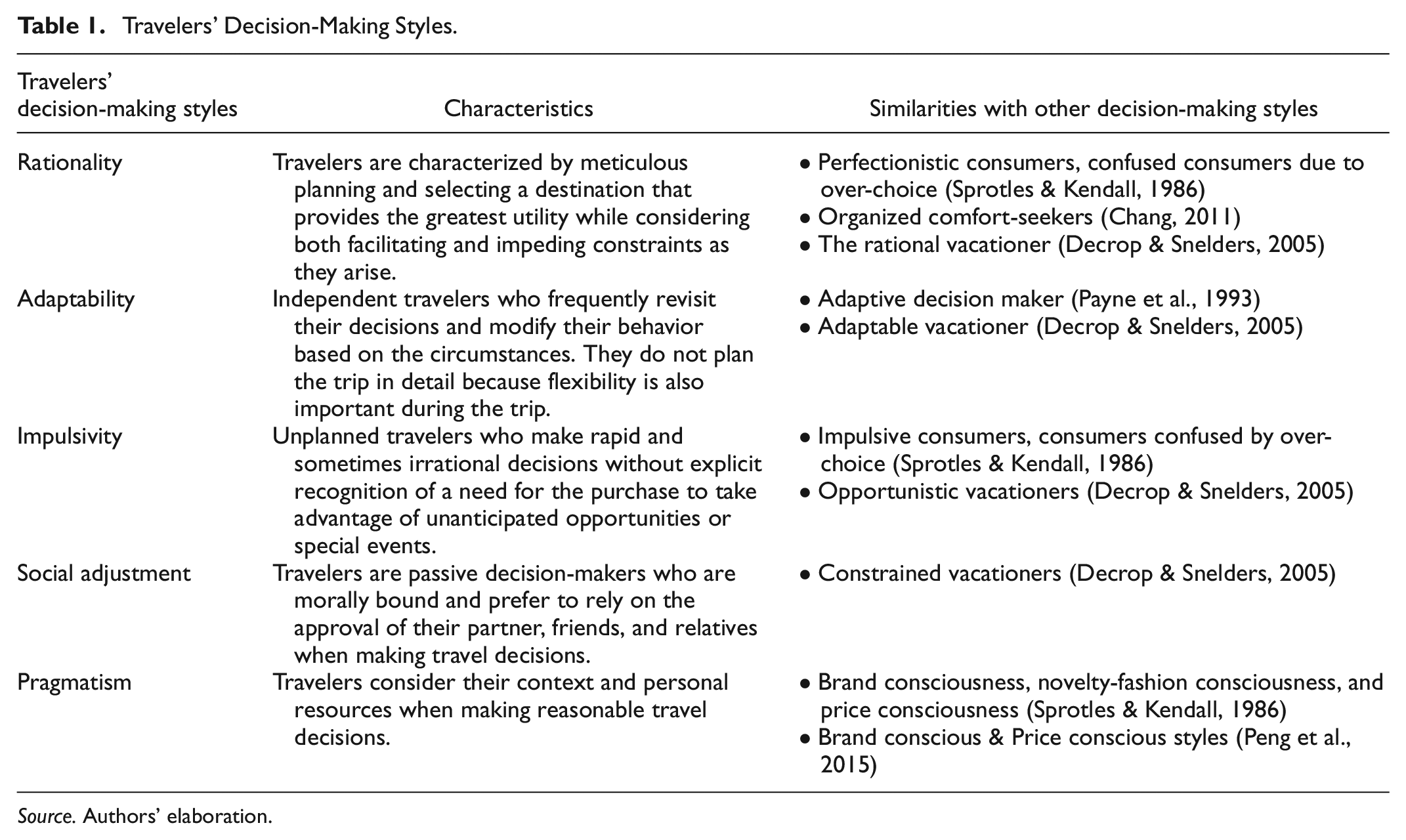
Source. Authors’ elaboration.
The five DMS identified by Atadil et al. (2018) provides a useful overarching framework to study ethnic minority travelers’ decision-making process for at least three reasons. Firstly, the DMS was derived from Decrop and Snelders (2005), which views the “ontology of decision-making as a process” (Smallman & Moore, 2010, p. 397). This dynamic process is crucial in understanding the critical incidents and concerns of diverse ethnic minority travelers (Benjamin & Dillette, 2021). Secondly, unlike the previous tourist typologies, the DMS are not mutually exclusive, allowing diverse tourists to be placed across categories, as well as recognizing the crucial role of context in decision-making. Finally, the DMS incorporates empirically validated decision-making variables within the context of broader socio-demographic and socio-psychological criteria, which aids in practically (rather than descriptively) predicting the travel intentions of ethnic minority travelers.
In relation to travel intention, these five DMS can have different implications. Ethnic minority travelers who exhibit rational DMS are likely to engage in extensive information search and comparison of alternatives (Sirakaya & Woodside, 2005), which may imply that they are more likely to identify destinations and experiences that align with their specific needs and preferences, leading to significant travel intentions. Travelers who are adaptive can adjust their preferences and choices based on changing circumstances or new information. This flexibility might be particularly relevant for ethnic minority travelers who often navigate complex socio-cultural dynamics (e.g., A. K. Dillette et al., 2019). For ethnic minority travelers, impulsiveness might involve impromptu travel decisions driven by a desire for adventure, escape, or cultural exploration. Such spontaneity and emotional drive can positively influence travel intentions, possibly due to the excitement and novelty associated with such travel experiences (Kimbu et al., 2021). Socially adjusted DMS can lead ethnic minority travelers to choose destinations or activities that are popular within their community or recommended by their social circle. This social influence can play a significant role in shaping their travel intentions, as it provides a sense of belonging and validation within their cultural context. Yet, pragmatic DMS may lead to prioritizing destinations that are easy to access, offer value for money, or meet specific practical needs. This can lead ethnic minority travelers to make choices that are sensible, convenient, and aligned with their practical constraints and requirements, depending on their socio-cultural needs. Thus, the following hypotheses are proposed:
Hypothesis 1a: Rational DMS has a positive impact on travel intention of ethnic minority travelers.
Hypothesis 1b: Adaptable DMS has a positive impact on travel intention of ethnic minority travelers.
Hypothesis 1c: Impulsive DMS has a positive impact on travel intention of ethnic minority travelers.
Hypothesis 1d: Socially adjusted DMS has a positive impact on travel intention of ethnic minority travelers.
Hypothesis 1e: Pragmatic DMS has a positive impact on travel intention of ethnic minority travelers.
Perceived Risk
Perceived risk refers to an individual’s perceptions of the uncertainty and negative consequences of engaging in a particular activity or adopting a particular lifestyle (Reisinger & Mavondo, 2005). Perceived risk is central to the travelers’ decision-making process and can even alter rational decisions regarding travel or destination selection (Sönmez & Graefe, 1998). A growing body of research has explored travel-related risk perception with its multiple dimensions, including physical, financial, psychological, social, health, terrorism, and political instability at the destinations (e.g., Karl & Schmude, 2017; Roehl & Fesenmaier, 1992).
Recent studies have, however, focused on examining the effect of specific risks on travel intention and tourism demand. These, for instance, include the threat of terrorism (Walters et al., 2019), political instability (Tasci & Sönmez, 2019), and the recent outbreak of pandemics (Sánchez-Cañizares et al., 2021). Nevertheless, the debate on which risk types are most salient in influencing the decision-making process and travel intentions remains. In response, Karl et al. (2020) found that this depends on the decision maker, risk type, and destination. For example, risk-resilient respondents will not alter their travel plans despite a high probability of risk and prefer high-risk destinations (Hajibaba et al., 2015), whereas risk-averse respondents will primarily consider safe destinations for their present and future travels (Karl et al., 2020). This risk tolerance level also varies by national culture, with Money and Crotts (2003) observing that tourists from low-uncertainty avoidance cultures (e.g., Singapore, UK) are generally more comfortable with situations involving uncertainty and risk than tourists from high-uncertainty avoidance cultures (e.g., Greece, Japan).
Although limited studies have examined and listed the perceived risks faced by ethnic minority travelers, recent research indicates that travel attitudes, behaviors, and experiences are still linked to issues of marginality, racism, and discrimination (A. K. Dillette et al., 2019; Tucker & Deale, 2018). E. C. L. Yang et al. (2018) and Bodomo (2015) reiterate the importance of racialized risk, which is the risk of being stereotyped, treated unfavorably, subjected to discrimination, and receiving social disapproval and often intersects with gender. For example, Black Travel Movement leaders’ narratives reveal that discrimination, bias, racism, and inequities are pervasive and continue to produce hostile and toxic touristic experiences and landscapes for Black individuals and other people of color (A. Dillette & Benjamin, 2022). This racial risk can also be conceptualized as an ethnic minority risk, given that the social distance between racial groups is frequently based on perceptions of cultural or ethnic characteristics, and thus racial groups are considered a subset of ethnic groups (Phinney, 1996). When traveling to any destination, ethnic minority travelers face physical risk in the form of racial violence and microaggressions (Duffy et al., 2019). Since the July 2005 London bombings, Black, Asian, and minority ethnic Londoners have faced increased threats to their personal safety and are more likely to face hate crimes and racist abuse even when traveling domestically, while Asian Londoners and some Muslims have felt stereotyped as terrorists (Transport for London, 2018, 2019).
These negative experiences, and/or (perceived) racial and physical risks, make some destinations incompatible with ethnic minority tourists’ self-image and disapproval of reference groups (G. Fuchs & Reichel, 2006). This mismatch between the tourist’s self-image and the destination’s risk perceptions is more likely to induce perceived socio-psychological risk (Roehl & Fesenmaier, 1992) and negative attitudes toward visiting a destination. Consequently, this sense of social disapproval and exclusion also affects travel satisfaction, resulting in financial risks because ethnic minority tourists may perceive little potential benefit and value-for-money spent in traveling to destinations with racialized boundaries and no respect for diversity. Relatedly, Chew and Jahari (2014) found evidence that perceived socio-psychological and financial risks influence both cognitive and affective destination images, which ultimately have a negative effect on tourists’ visit intentions. Several other studies have found that perceived risk affects travel intention by eliciting negative emotions like uncertainty and fear (e.g., Pappas, 2021).
Based on these arguments, hypotheses are proposed as follows:
Hypothesis 2a: Physical risk has a negative impact on travel intention of ethnic minority travelers.
Hypothesis 2b: Financial risk has a negative impact on travel intention of ethnic minority travelers.
Hypothesis 2c: Sociopsychological risk has a negative impact on travel intention of ethnic minority travelers.
Hypothesis 2d: Racial risk has a negative impact on travel intention of ethnic minority travelers.
The Role of Psychological Empowerment
Empowerment is both a process and an outcome (Zimmerman, 1995) that enables individuals, organizations, and communities to gain control over their own fate and the decisions that impact their lives (Aghazamani & Hunt, 2017; Rappaport, 1987). Despite being understudied, psychological empowerment has primarily been theorized as a process leading to varying levels of outcomes (Zimmerman, 1995) and can be argued to be the mechanism for explaining the relational nature of other dimensions of empowerment. Psychological empowerment is defined as individual-level empowerment that includes a sense of personal control, a proactive way of living, and a critical awareness of one’s socio-political context (Zimmerman, 1995). Given the aim here is to understand the interplay between ethnicity and perception of experiences in informing ethnic minority travel behavior, understanding the role of psychological empowerment in informing this is paramount.
Zimmerman (1995) developed a nomological network (interlocking system of relationships) for psychological empowerment that consists of three components: intrapersonal, interactional, and behavioral. Intrapersonal empowerment refers to the self-perceptions that give individuals the initiative to engage in behaviors that influence desired outcomes (Zimmerman, 1995). The component includes three sub-dimensions: perceived control, self-efficacy, and perceived competence (Hur, 2006). The interactional component entails a belief or awareness of the options available for achieving goals and an understanding of the norms and values of a specific context and social environment (Speer, 2000). This critical awareness leads to the development of decision-making and problem-solving skills, that empower individuals to become independent, take charge of their lives, and become their best advocates (Kieffer, 2008). Finally, the behavioral component refers to empowered actions that affect outcomes (Zimmerman, 1995). Since this study explores the process of psychological empowerment toward behavioral intention to travel (rather than behavioral empowerment), it will primarily focus on the impact of intrapersonal and interactional empowerment on tourism DMS.
Several studies have found that psychological empowerment is particularly significant for members of ethnic minority groups since it has the potential to address the issues of negative emotions, depression, limited access to resources, and positive well-being (Gutierrez, 1995; Molix & Bettencourt, 2010). While studies have explored psychological empowerment, few have delved into the mechanisms underlying the intrapersonal and interactional aspects in the context of ethnic minority travelers. Interpersonal empowerment in this context involves developing critical awareness of stereotyped tourism environments, allowing ethnic minority travelers to interact effectively, acquire decision-making skills, solve problems, and exhibit leadership. A. Dillette and Benjamin (2022) found that Black travelers, despite being aware of racialized experiences in travel, mobilize their resources for social change, leading to the development of self-efficacy, consciousness-raising, and resource mobilization. Similarly, Tucker and Deale (2018) observed that ethnic minority travelers, despite facing discrimination and travel restrictions, view travel as integral to their lives and intend to continue. Asian solo female travelers also experience empowerment and gender identity transformations by negotiating risk and power relations (E. C. L. Yang et al., 2018).
These studies provide compelling evidence for the role of psychological empowerment as a cognitive mechanism for internalizing ethnic minority identity, stimulating a strong sense of self-efficacy and personal control in decision-making, and a transforming process of constant negotiation, with both interactional and intrapersonal factors influencing travel decision-making behavior. Various studies have identified the positive influence of psychological empowerment on behavior (C. Fuchs & Schreier, 2011), and the increased likelihood of travel by empowered individuals (Mendes-Filho et al., 2018). For instance, H. W. Kim and Gupta (2014) confirmed that psychological empowerment is a significant determinant of consumers’ intention to engage in new system usage. In addition, psychological empowerment has been long recognized as a reliable indicator of local residents’ support for tourism (Boley et al., 2018).
Yet, our study contends that psychological empowerment as a negotiating mechanism has been overlooked in the literature on tourism and ethnic minorities. The influence of psychological empowerment as a moderating factor on travel decision-making behavior is still unknown. When the level of psychological empowerment is high, travel DMS can change as travelers become empowered to make rational or impulsive decisions on their travel. Intrapersonal empowerment can enhance the impact of rational and adaptable DMS travelers as they are likely to use their logical and analytical skills to inform their travel decisions and also have the confidence to adapt to potential changes in their travel. Similarly, interactional empowerment can enable travelers to better leverage social networks, increasing the travel intentions of socially adjusted DMS travelers. The moderating role of psychological empowerment has been studied in relation to employment and organizational behavior, with evidence of significant moderation of psychological empowerment on innovative behaviors of leaders identified (Pieterse et al., 2010). Yet, travelers can also feel empowered to make travel decisions that can alter their DMS and consequently determine their intention to travel; this study aims to evidence this.
Similarly, as E. C. L. Yang et al. (2018) contend, psychological empowerment can also help travelers negotiate perceived risks related to travel and thus influence their travel intentions. While previous research on the North American Black travel movement context emphasized the role of self-efficacy (part of intrapersonal empowerment) as a catalyst (A. Dillette & Benjamin, 2022), our use of psychological empowerment adds to the literature by providing a multilevel empowerment approach (Zimmerman, 1995) encompassing diversity and power dynamics in the ethnic minority context. Ethnic minority travelers with high levels of intrapersonal empowerment might feel more confident in managing and coping with potential physical and financial risks, thereby reducing the deterrent effect of such risks on their desire to travel. Intrapersonal empowerment could also help travelers maintain a strong sense of self-worth and resilience (A. Dillette & Benjamin, 2022), diminishing the impact of social or psychological risks on their willingness to travel. Interactional empowerment might enable ethnic minority travelers to effectively engage in dialogs, seek allyship, and navigate racially sensitive environments, helping them mitigate the negative impact of racial risks on their travel intentions by fostering a sense of community and support. Thus, it can be argued that the degree to which ethnic minority travelers feel psychologically empowered influences their DMS and perceived risks, which in turn influences their intention to travel to any destination. Thus, we hypothesize that:
Hypothesis 3a: Intrapersonal empowerment has a significant impact on travel intention of ethnic minority travelers.
Hypothesis 3b: Interactional empowerment has a significant impact on travel intention of ethnic minority travelers.
Hypothesis 4a: Intrapersonal empowerment has a significant moderating impact on hypotheses 1a-e.
Hypothesis 4b: Interactional empowerment has a significant moderating impact on hypotheses 1a-e.
Hypothesis 5a: Intrapersonal empowerment has a significant moderating impact on hypotheses 2a-d.
Hypothesis 5b: Interactional empowerment has a significant moderating impact on hypotheses 2a-d.
Based on the reviewed theoretical and empirical literature and proposed hypotheses, the conceptual model is presented in Figure 1.
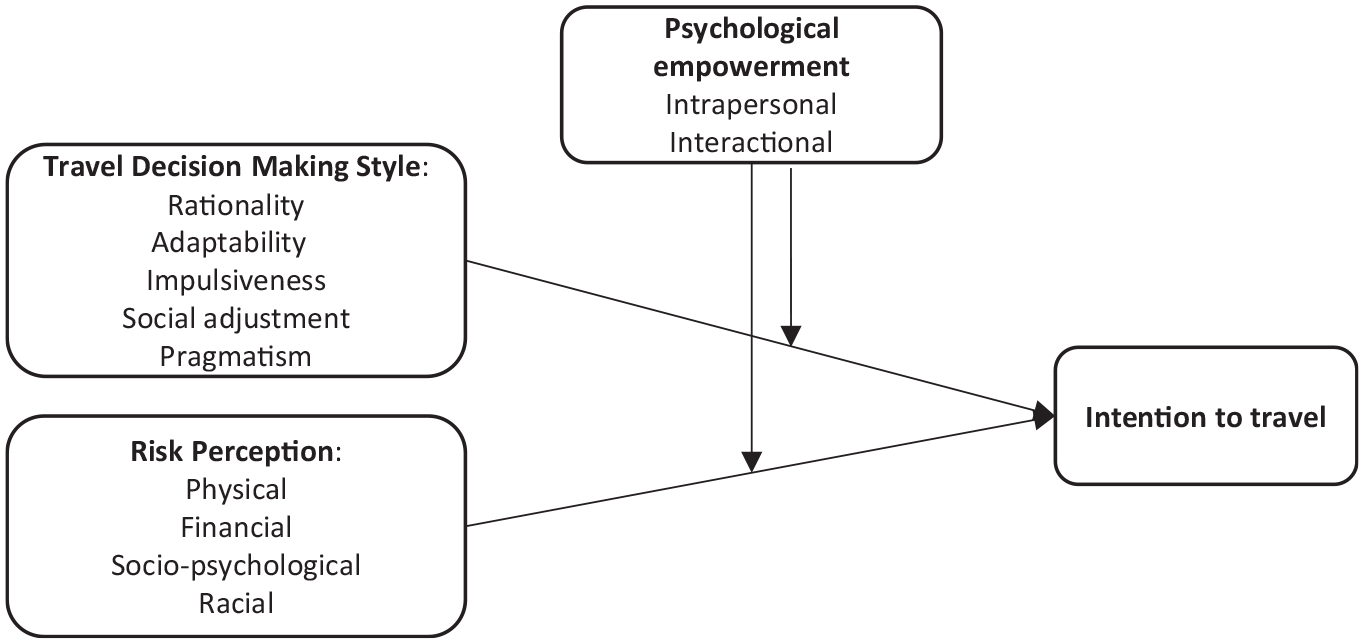
Conceptual model.
Study Context: The United Kingdom
The UK is a multiracial and culturally diverse country with a substantial population of non-White ethnic groups. The ONS (2021) indicates that ethnic minorities now constitute almost 17% of the UK population and had an annual disposable income of £4.5 billion in 2021 (Backlight, 2022). The Greggor-Smith Report (GOV.UK, 2017) indicated that in 2016, 14% of the UK’s working-age population were from ethnic minority backgrounds and was forecasted to rise to 21% by 2051. The report further contends that unlocking the full potential of ethnic minority representation across the labor market could bestow an annual value of £24 billion, equating to 1.3% of GDP. The increasingly diverse makeup of the UK workforce automatically impacts their contribution and participation in leisure experiences. As more people from ethnic minority backgrounds become more economically empowered, they are more likely to engage in travel and tourism experiences as per the marginality hypotheses.
In contrast to the US, where comprehensive data on travel behaviors and spending patterns among ethnic minorities is collated, revealing Black US travelers’ expenditure of over $100 billion in 2019, insights are lacking in the UK, despite the emergence of a growing middle class within ethnic minorities, primarily consisting of tech-savvy, young, second and third generation immigrants without deep-rooted ancestral ties. This demographic can create huge opportunities for travel brands, destinations, tourism marketers, and businesses (Koroma, 2015). Very little is, however, known about the travel motivations, decision-making, and choices of travelers from this population group as the few comprehensive reports (cf., Commission on Race and Ethnic Disparities, 2021) do not contain information on the travel and tourism decision-making process and preferences of these groups. Ethnic minorities in the UK are consequently poorly understood as existing datasets only capture the number of trips taken to the country of origin or ancestral homeland, ergo reinforcing the stereotypical view that non-white UK residents mainly engage in VFR travel (Klemm & Kelsey, 2004).
Following the UK Government guidelines and common practice within surveys (GOV.UK, 2022), we have used ethnicity and not race as the focus of our study. In line with the ONS (2022), the current study categorizes ethnic groups into five: White, Black (e.g., African, Caribbean, British, Others), Asian (e.g., Bangladeshi, Chinese, Indian, Pakistani, Other Asians), Mixed ethnicity, and other ethnicities. Mirroring the ONS surveys, for comparisons with “white groups,” we use “all other ethnic groups combined” or “ethnic minorities (excluding white minorities).” We do not use the term “BAME” which can be seen to focus on certain groups, whilst excluding others (Commission on Race and Ethnic Disparities, 2021). In this study, the term “ethnic minority” is used from a UK context, which includes the above categories.
Methodology
The study adopted a concurrent nested mixed methods design involving both quantitative (Study 1) and qualitative (Study 2) approaches to concomitantly collect the data (Figure 2). The use of mixed methods was essential for achieving a comprehensive and pluralistic understanding of the travel decision-making behaviors among ethnic minority travelers. This approach involved integrating both quantitative and qualitative findings, enhancing the trustworthiness and generalizability of the conclusions (see e.g., Dayour et al., 2019; Kimbu et al., 2023). Despite the quantitative and qualitative approaches being simultaneously used, the quantitative lens was dominant as it included a comprehensive sample of all UK population groups (white and ethnic minority groups) with the availability of a priori measure on tourist travel motivations and decision-making behaviors (Atadil et al., 2018; e.g., G. Fuchs & Reichel, 2006). Notwithstanding that, the peculiarities of travel behavior, motivations, and decision-making processes of ethnic minority travelers warranted the incorporation of qualitative insights that could not be captured using quantitative data alone. This provided more refined explications of decision-making processes, motivations, constraints, and negotiating strategies of ethnic minority travelers. The development of the qualitative interview guide was not based on the analysis of the quantitative data collection, as typically seen in a sequential mixed-method design. Instead, priority was given to the quantitative perspective due to the pre-existing measures on travel DMS and psychological empowerment. Quantitative data were collected through a questionnaire survey, while focus group discussions (FGDs) and in-depth semi-structured interviews generated the qualitative data. By corroborating quantitative and qualitative findings, we not only increased the credibility of our findings but also the generalizability and transferability of the conclusions (Decrop, 2004; Lincoln & Guba, 1985).
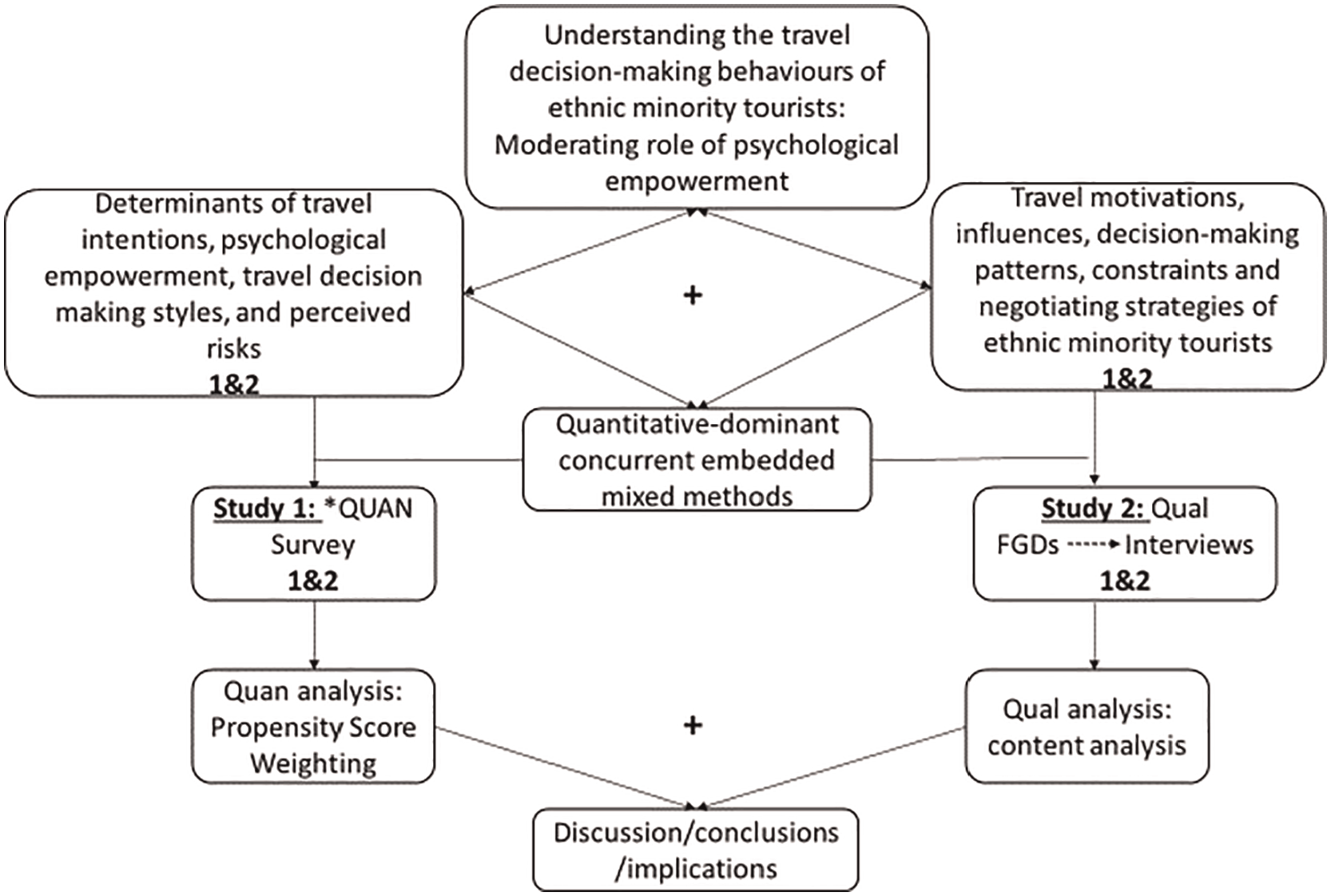
Mixed methods approach adopted in the study.
Study 1—Quantitative Approach
Research Design and Procedure
Study 1 aims to investigate the determinants of intention to travel and the moderating role of psychological empowerment on the impact of travel DMS and perceived risk on intention to travel of ethnic minority tourists in the UK. The quantitative data was collected via self-reported online surveys between July and August 2021. There were two surveys: one for international travel and another for domestic travel as the literature argues that travel DMS and perceived risk in travel are different between international and domestic settings. A non-probability sampling approach was employed on a sample of UK residents of age at least 18 years old. Respondents were recruited by two leading data analytics firms based in the UK. 2,620 respondents completed the survey (White = 1,210; Ethnic minorities = 1,410), of which 951 (White = 404; Ethnic minority = 547) respondents were qualified as eligible respondents based on our eligibility criteria and attention check question. Missing data was treated as invalid responses and was removed. It is important to note that despite the study’s focus on ethnic minority tourists, the White comparison group was also considered and analyzed to demonstrate the statistical difference in their travel DMS, perceived risks, and psychological empowerment and how they inform travel intention differently. To reduce selection bias and possible endogeneity issues, the propensity score weighting (PSW) method (see Section 3.1.3) was used to statistically confirm that the difference in travel intention is due to ethnicity, that is, ethnic minority versus majority (White individuals).
Survey Design and Instruments
Despite there being two separate surveys, both had the same survey design and instruments. The survey begins with questions on travel preferences and behavior and ends with demographic questions. The main component of the survey aims to measure the respondents’ travel DMS, risk perception, psychological empowerment, and travel intention. The survey items and their descriptive statistics have been presented in the Supplemental Material. The measurement of travel DMS was adapted from Atadil et al. (2018). Perceived risk has different definitions and scales in different disciplines. Most of the measurements of perceived risk (physical, financial, and socio-psychological) used in this study are from G. Fuchs and Reichel (2006) and additional perceived risks related to physical/sexual assault and racial conflict were adapted from Shinew et al. (2004) and Simpson and Siguaw (2008). The measurement of psychological empowerment was adapted from Speer (2000) and Li (2016), measuring intrapersonal empowerment (self-efficacy, perceived competence, control) and interactional empowerment (collective action and interpersonal relationships). Items related to travel DMS and perceived risk used a five-scale Likert scale (1 = Strongly disagree; 5 = Strongly agree), whereas a seven-scale was used to measure empowerment (1 = Strongly disagree; 7 = Strong agree) which is consistent with the original literature. Although the application of constructs with various scale dimensions could not be compared directly in the descriptive statistics, it forced respondents to evaluate scores independently across constructs which limited the common method variance bias (Y. R. Kim & Liu, 2022).
Data Analysis: Propensity Score Weighting
The current study aims to estimate the potential effect of a condition (ethnic minority travelers), which cannot be randomized, on an outcome (travel intention). First, confirmatory factor analysis was conducted to derive the factor loadings presented in Table S6 under the Supplemental Material. All the factors passed the Bartlett’s test for sphericity at the 99% significance level and using principal-component factor analysis with promax rotation was conducted. For DMS and perceived risk, all 17 and 21 items were used, respectively, and for psychological empowerment, one item was dropped. Then, the PSW method was used to isolate the treatment effect on the dependent variable. PSW can make those with the condition (i.e., an ethnic minority traveler) look similar to those without the condition (i.e., a White traveler) based on observed background characteristics (i.e., gender, age, education, British/EU passport holder, employment, and income). This isolates the effects of the condition on the outcomes, separate from any other differences. This can address the potential endogeneity issue from the selection bias in non-probability sampling; hence, the PSW scheme (Rosenbaum & Rubin, 1983) was used in the analysis. After weighting, observations in treatment and control groups will have similar conditional probabilities; in other words, the two groups will have similar covariates. Then if there is a significant difference in the dependent variable, the difference can only be caused by the treatment effect and thus a causal relationship between the treatment and the dependent variable will be established (Viglia & Dolnicar, 2020). After the propensity scores were estimated, the weighted regression analysis was conducted to test the hypotheses.
Study 2—Qualitative Approach
Research Design and Procedure
To demonstrate the diversity of ethnic minority travelers and capture the pluralistic nature of their travel motivations, influences, decision-making patterns, constraints, and negotiating strategies, participants from ethnic minority backgrounds with both local and international travel experiences were selected from the main ethnic minority groups in the UK (Black, Asian). Based on these guidelines and using a list of ethnic minority actors provided by our strategic industry partner (Women in Travel CIC), we purposively selected key informants (Patton, 2002). Key informants provide valuable expertise and insights into the root causes of problems. We, therefore, tapped into the knowledge, experience, and expertise of selected ethnic minority travelers from a variety of socio-demographic groups with a professional interest in travel and tourism. Our industry partner then introduced the researchers and the research whereupon the email contacts and consent of those who agreed to participate in the FGDs and be interviewed were obtained and meetings scheduled. Consequently, we conducted six focus groups in June 2021 with an average of 3 to 6 participants in each group. Each focus group was attended by two research team members and lasted between 70 and 90 min.
The FGDs were followed by 10 semi-structured interviews with selected ethnic minority informants drawn from the researchers’ and strategic partner’s networks in July and August 2021. The interviews, each lasting about 60 min, provided an opportunity to delve deeper and clarify key issues and claims raised and explored during FGDs. Interviews were stopped after data saturation (cf., Kimbu et al., 2021). Both the FGDs and interviews were conducted online through the Zoom platform and recorded with consent from the participants (see Tables S1 and S2 in Supplemental Material for the socio-demographic profile of interviewees and FGD participants).
Data Analysis
The recorded interviews and FGDs were transcribed and manually coded via an inductive (grounded analysis) coding technique and the content was analyzed (Patton, 2002). Two levels of coding were undertaken. Analysis of the survey findings informed the first level of coding, providing predictions of the concepts or variables and patterns of interests and the relationships among them (e.g., the role of ethnicity, prior travel experience, empowerment, finance, and psychology in travel decision-making, destination choices and impacts of travel experience, etc.) thus helping to determine the initial coding scheme (Hsieh & Shannon, 2005). The second level of coding then involved keenly exploring this data using the scheme, to pinpoint details of these themes, the relationships and patterns within the transcripts (cf., Kimbu et al., 2021) that could be employed to explain the complex factors that influence the travel motivations, and behaviors of UK tourists from ethnic minority backgrounds. Pertinent segments of transcripts were separated and used as direct quotes to reinforce the empirical analysis (cf., Kimbu & Ngoasong, 2016).
We validated our data analysis using Lincoln and Guba’s (1985) four criteria for trustworthiness: credibility, dependability, transferability, and confirmability. First, to assess creditability and dependability, we applied “member checking” and peer debriefing methods (ibid.) by contacting seven (3 interviewees and 4 focus group discussants) participants to validate the data by providing them with the codes to determine and confirm their relevance with their lived experiences as tourists from ethnic minority backgrounds and our interpretation of their stories. Second, by combining FGDs and interviews, which all involved at least two authors in each case, researcher bias was clarified, and a “thick description” was provided, whilst further ensuring that any overlapping data was cross-validated (Ngoasong & Kimbu, 2016). In terms of transferability, the adoption of a mixed methods approach consisting of purposive FGDs and interviews in combination with a quantitative survey exposes our findings to external appraisals and its potential adoption and use in other similar settings. To guarantee participants’ anonymity, pseudonyms (e.g., FGD1A, P1, etc.) have been used to report the data.
The ethnic minority background of the authors and that of the participants likely influenced the course of this research and allowed for the input of personal insights and empathy of travel experiences and encounters that added value to the discussions and connected with different participants’ experiences. Though ethnicity was the focus of the study, we recognized the relevance of intersectional influences on travel experiences. Diversity in age, education, and gender was achieved among others within the team and in the selection of the FGD and interview participants. The team took extensive notes and had regular meetings to avoid bias and any preconceptions throughout the data collection and analysis process. Our qualitative findings, supported by selected illustrative quotes, are presented and discussed hereafter in combination with the quantitative findings following the research design (Figure 2). Further supporting quotes are available in Table S3 of the Supplemental Material section.
Findings and Discussion
Descriptive Statistics
The sample size for international and domestic travel was 476 (White = 212; Ethnic minority = 264) and 475 (White = 192; Ethnic minority = 283), respectively. The demographics of the respondents can be found in Table S4 in the Supplemental Material. It is noted that the demographics were considered as the covariates of travel intention in the inference analysis. The proportion between males and females was nearly equal for the White ethnic group, but there was a significant proportion of females in the Ethnic minority sample. This was due to the collaborative nature of this study with our strategic partner, which is important to acknowledge as one of the limitations of this study. Yet, the distribution of other demographic variables was reasonable. The White sample was older compared to the Ethnic minority and both groups had at least an undergraduate degree and the majority had a full-time job, indicating reasonably high educational levels. Similarly, all the participants of the qualitative study were also high achievers, with many empowered women who had traveled extensively around the world for work and leisure.
“I refer to myself as a world traveler, so I’ve visited about 60-plus countries, mostly solo travel, …I enjoy the act of solo traveling.” (FGD1A)
These participants might not have been the norm, but considered themselves as trendsetters, travel advocates, and increasingly part of the norm, helping redefine the narratives around travel intentions.
“I wrote a book about how to travel well for those who travel often, and that has led me to become a travel wellness advocate, to help people maintain wellness while they travel so they can deliver, whether it’s for business, performance or pleasure.” (FGD1C)
However, the income range was diverse for both sample groups which could be due to the COVID-19 pandemic. The range of ethnicities within the ethnic minority group shows that Black travelers were dominant followed by Asians for the domestic travel sample and mixed ethnicity/biracial for the international travel sample. Participants were very aware of their ethnic identity, particularly in destinations not traditionally popular with ethnic minority travelers with feelings of being different during their travel experiences: “I definitely think that my blackness plays a part in places that I’ve been, even places that you would assume to be a bit more welcoming. We’re always different I find, whether that’s a positive thing or a negative thing or a challenge or a blessing, it’s just something that I am cognizant of.” (FGD 1E)
The descriptive statistics for the variables related to travel behavior and preference also present interesting findings (Table S5 in the Supplemental Material). Travel frequency ranged from 1 to 6 times on average per year and most respondents preferred self-guided tours rather than packaged tours. This could suggest that travelers are more independent in their travel behaviors and decision-making, indicating their rational and adaptive nature in travel planning and experience (Atadil et al., 2018). White travelers tended to travel with their families (71% in international travel; 74% in domestic travel) possibly due to the higher proportion of middle-aged respondents, whereas ethnic minority travelers tended to travel with their friends, as the sample was younger compared to the White travelers, in the contexts of both international (42%) and domestic travel (54%). This interestingly portrays changes in the travel behavior of ethnic minority travelers over time as in the past they preferred VFR and family holidays (Williams & Chacko, 2008) to familiar destinations where they felt safer and had less risk of discrimination and racism. The average nights stayed when traveling abroad was 5 to 7 nights compared to 2 nights when traveling domestically, as expected (Tyler & Rhodes, 2019). Travel spending per head on average was £501 to 1,110 when traveling abroad but at most £500 when traveling domestically.
Participants in the qualitative study also shared that traveling had been a part of their upbringing, with frequent holidays to familiar and new destinations, and a sense of being empowered through travel early on in life. Travel meant more than leisure, with strong aspirations to travel the world to establish identity and belonging (Tucker & Deale, 2018). Participants frequently quoted the need to explore destinations that do not traditionally have many non-White travelers as indicated by the following quotes: “But yeah, why do I travel, I would say basically because I can and because I believe that, the world is there to be explored and there is nowhere where we don’t belong and we should be able to see and meet as many different people, as many different things as possible.” (FGD1D)
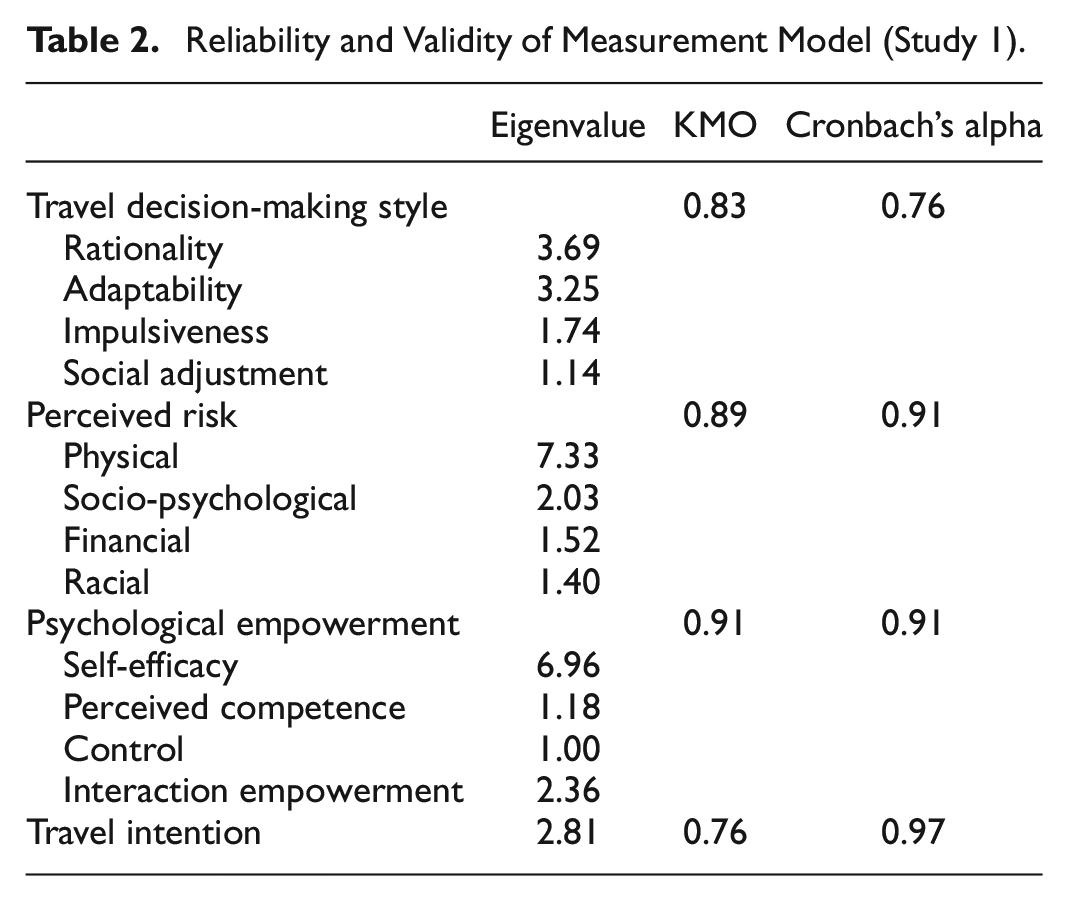
Lastly, Table 2 presents the reliability and validity of the measurement model. The KMO and Cronbach’s alpha statistics both confirm the reliability and validity of the company and the mean scores and factor loading of each measurement item can be observed in the table. Table S6 (see Supplemental Material) presents the details of the survey items, including their mean score and factor loadings.
Reliability and Validity of Measurement Model (Study 1).
The Effects of Travel DMS and Perceived Risk on Travel Intention and the Moderating Impact of Psychological Empowerment
The PSW was estimated using the average treatment effect. The effect of the weights on the magnitude of difference between the White and Ethnic minority groups on each covariate was analyzed. For both international and domestic travel, the effect sizes significantly reduced after applying the PSW, which balanced out the covariates. This means that the only difference between the two groups is being an ethnic minority. The covariate balance check after weighting also confirmed the balance between the White and Ethnic minority groups. This informed that a significant difference in the dependent variable (i.e., travel intention) meant that the difference could only be caused by the treatment (i.e., ethnicity), thus inferring that a causal relationship between the treatment and the dependent variable was established (Viglia & Dolnicar, 2020).
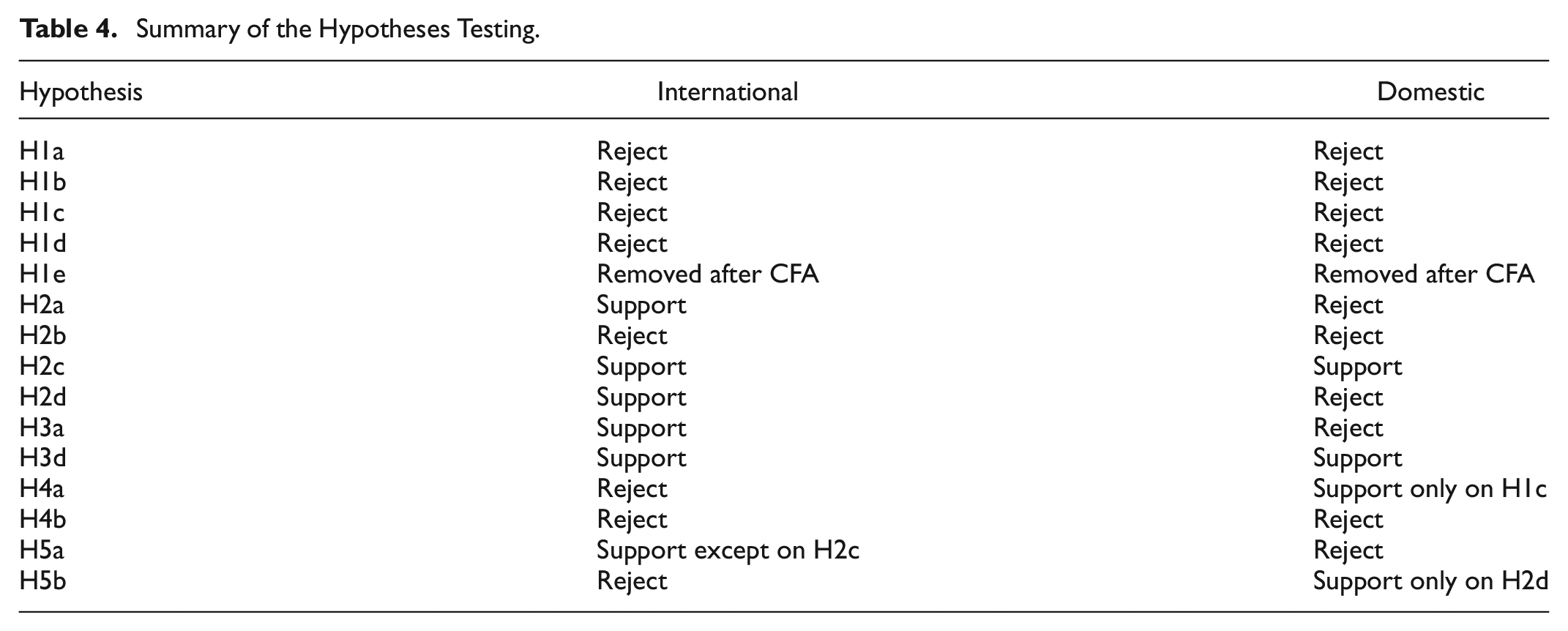
A weighted regression analysis using the estimated propensity scores was conducted to examine the effects of travel DMS and perceived risk on travel intention and the moderating impact of psychological empowerment on travel intention. Table 3 presents the regression estimations based on the PSW scheme. Models 1 and 6 estimate the impact of the treatment (ethnicity) on the dependent variable (travel intention) for both international and domestic travel. Being an ethnic minority shows higher intentions to travel compared to a White traveler, which confirms the causal relationship between ethnicity and travel intention. Models 2, 4, 7, and 9 estimate the direct effects of the explanatory variables on the dependent variable, and Models 3, 5, 8, and 10 estimate both the direct and moderating effects of psychological empowerment on the direct relationship between the explanatory and dependent variables. To test the research hypotheses, the analysis will focus on Models 5 and 10—the hypothesis tests are summarized in Table 4. Furthermore, qualitative findings, that solely focus on ethnic minority travelers, will also be integrated into the analysis to delve deeper into the perceptions, intentions, and behavior of this group toward travel.
Regression Estimation.
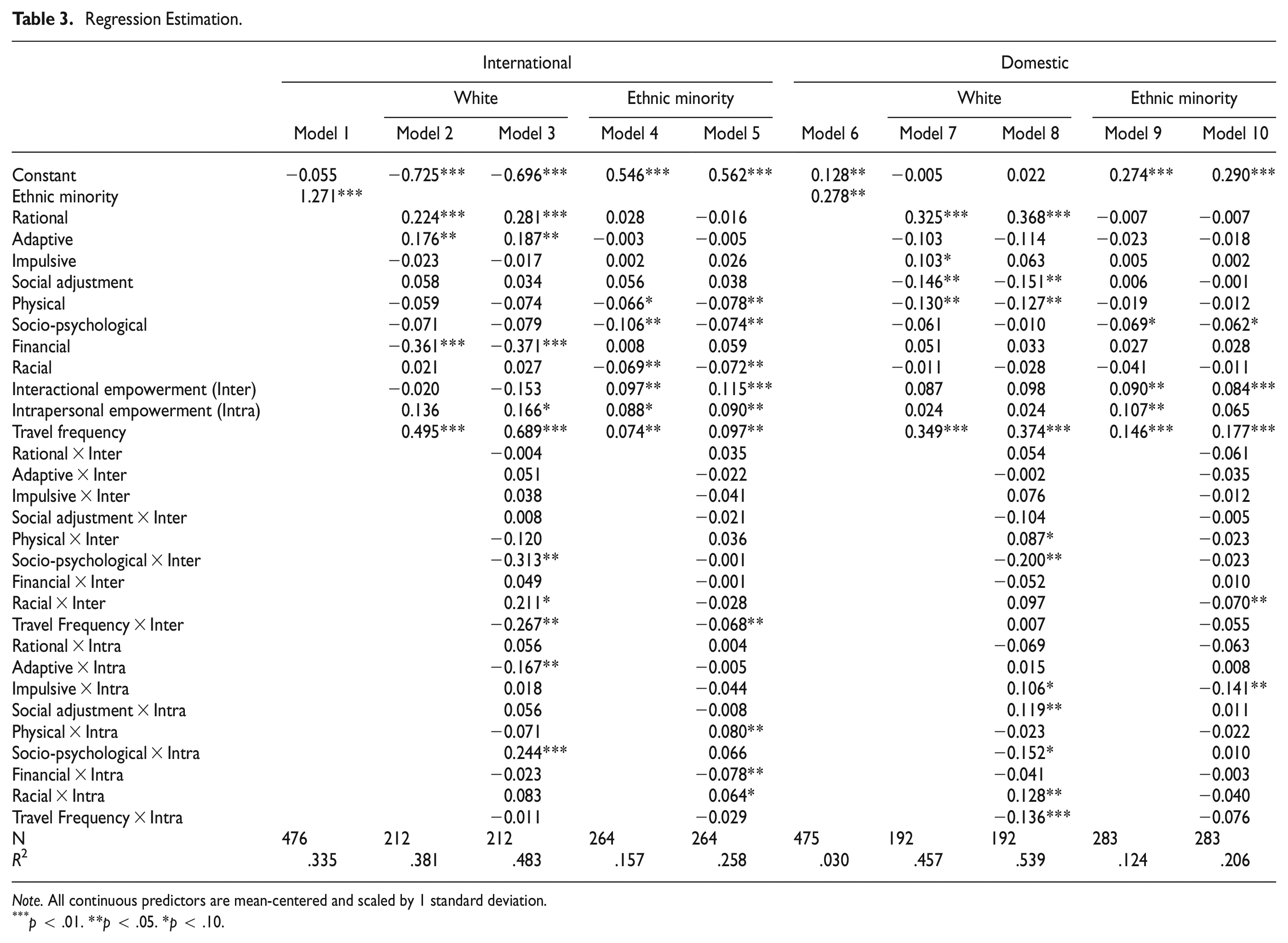
Note. All continuous predictors are mean-centered and scaled by 1 standard deviation.
p < .01. **p < .05. *p < .10.
Summary of the Hypotheses Testing.
Travel Decision-Making Style
Table 3 shows that travel DMS did not significantly affect the travel intentions of ethnic minority travelers in the contexts of both international and domestic travel. This was also evident in the qualitative findings where a huge appetite for travel no matter what the DMS was, with research and realism being very important in choosing destinations rather than limited socioeconomic resources as posited by Washburne (1978) in his marginality hypothesis. There was an inherent awareness of risks in destination choice, with respondents resigned and realistic that their ethnicity (along with their gender) would negatively impact their travel experience (A. Dillette & Benjamin, 2022) “So I don’t typically start out by kind of looking at whether it’s safe for me as a black traveler, which is quite idealistic because I know that the world is generally not safe, you know, for black people and black women … But I also feel that if I were to do that I probably would not step outside my front door; so I try to nurture my curiosity about the world in general.” (FGD2A)
and their choice of rationally selecting new destinations that are perceived to be more inclusive.
“I remember when I went to America one time they [customs] really interrogated you… a lot of my Asian friends have stopped traveling to America for that very reason because they experience such acute racism at the borders it’s just not worth it, they’re like there are so many other places that welcome us.” (FGD6B)
In contrast, for White ethnic travelers, rational (coefficient of .224—note: hereby numbers in brackets refer to coefficients in Table 3) and adaptive (0.176) DMS underpinned their travel intentions for both international and domestic travel. It is expected that travelers read and search for detailed information about their travel destination and plan ahead for their international travel. Similarly, domestic travel intentions were higher for travelers with a rational (0.325) and impulsive (0.103) DMS. Interestingly, given domestic travel is more familiar, White travelers tended to be more impulsive in their domestic travel decision-making (Miao et al., 2021).
It can be argued that the travel DMS does not matter for ethnic minority travelers but rather, perceived risks from previous events and experiences from peers have a great influence on their travel intention and decision-making for both international and domestic travel (Karl et al., 2020). Rational travelers go beyond destination information search whilst adaptive or realistic travelers compare and contrast alternative information sources and destinations before making a choice (Atadil et al., 2018). Participants felt the need for specific culturally relevant information pertinent to their ethnic groups above and beyond generic information available in mainstream data sources (Kimbu et al., 2021; Williams & Chacko, 2008), ergo confirming Washburne’s (1978) observations of the importance of ethnicity in shaping travel decision making and behavior as opposed to socioeconomic factors alone.
Perceived Risk
Significant negative effects of physical (−0.066), sociopsychological (−0.106) and racial (−0.069) risk on travel intentions were inferred by ethnic minority travelers, especially when traveling internationally, affirming observations made by A. K. Dillette et al. (2019) and Tucker and Deale (2018) in their study of Black US travelers, whilst only sociopsychological risks (−0.069) were noted as significantly reducing travel intention in the context of domestic travel. These different risk factors engendered fear and anxiety among ethnic minority travelers. As stated by FGD3B:
“I have felt unsafe in Paris when I went there for a trade show and then there was an incident that happened in the train station and the army came out of nowhere and I felt unsafe in that environment.”
Risk through perceptions of fear was a running theme in the qualitative findings and this influenced travel intentions across individuals with distinct DMS. The phrase “for someone like me” was often used to demonstrate this sense of being the disadvantaged “other”: “I hear a lot from my [family and friends] … mum and my older generation…, I’ve heard a lot of people talk about this fear, like the fear of the unknown, [with destinations], but really that means they’re not traveling because they don’t know whether they’re going to be fine in this particular destination.” (FGD3E) “Sometimes I’ve seen other people stopped from going to experience a destination, [because] of fear of the unknown as to what to expect when you get there… like they’re oh, I’m not going there because, you know….” (FGD4C)
The awareness of the different fear and anxiety engendering risk factors as evidenced in the above quotes enabled ethnic minority travelers to have a heightened critical awareness of their socio-political environments (interactional empowerment). This awareness motivated them to develop avoidance-seeking behaviors (Bandura, 1982) and visit only destinations that fulfilled their safety concerns (psychological empowerment).
Psychological Empowerment
Both interactional and intrapersonal empowerment have significant positive (direct) impacts on international (0.097 and 0.088) and domestic (0.090 and 0.107) travel intentions of ethnic minority groups, implying that empowerment increases their travel intentions (Speer, 2000). The moderations of intrapersonal empowerment were more significant compared to interactional empowerment for the ethnic minority group; intrapersonal empowerment significantly moderated the relationship between physical (0.080), financial (−0.078), and racial (0.064) risk and international travel intention. The positive moderation of physical and racial risk implies that an increase in intrapersonal empowerment will reduce the negative direct effects on travel intention, meaning that it increases their intention to travel. When traveling domestically, significant moderation of interactional empowerment was observed in the relationship between racial risk and travel intention. Thus, findings suggest that empowerment can reduce the effect of perceived risk, particularly physical and racial risk.
In Study 2, participants, on the whole, were quite empowered, confident travelers, keen to explore new destinations that ticked their safety concerns, ergo confirming C. Fuchs and Schreier (2011) and Mendes-Filho et al.’s (2018) observations that intrapersonal empowerment was an important influence on travel intentions, particularly to new destinations. A strong sense of self-identity and self-belief meant that they were likely to be more confident than less experienced travelers from their own groups who were more risk averse. This sense of intrapersonal empowerment comes with experience in travel, with many attributing their love for travel to childhood holidays and support from family (A. Dillette & Benjamin, 2022).
“It’s always been a part of my life growing up, my parents used to just put me on planes and send me to family all across Europe when I was younger, and… there was never a limit put on me by my parents saying okay, there’s nowhere you can’t go because you’re black…I always felt free to move wherever, whenever.” (FGD1D)
Interestingly, confidence in their ability to access resources and influence their environment was not very evident, with fear of physical and racial risks (cf., Bodomo, 2015) having a stronger impact on travel intentions. There was little evidence of interactional empowerment with a feeling of frustration in not being able to challenge incidences of racism and microaggressions: “…Usually, disassociation and avoidance. Say I’m in a hostel and for some reason I think it’s a violent place or I’m really not enjoying the environment, I’ll just move hostels, simple as that. …if I’m in a hotel or on a trip somewhere and something is not working out, I just kind of step back, analyze what’s going on if I can. And if I do realize it and come to that conclusion, something is not working out and I am there to have a good time, I may as well just leave. So, I will try and take action. Action is definitely a big part of me.” (P5)
Such avoidance behaviors do not reflect the participants’ lower perceived control of the situation; rather, they reveal critical awareness of the biased tourism environment and lack of institutional support for ethnic travelers, which limits their ability to exercise self-competence.
For White travelers, significant moderations of interactional and intrapersonal empowerment were also evident, that is, on the relationship between sociopsychological (−0.313) and racial (0.211) risk and travel intention. Intrapersonal empowerment reduced the negative relationship between sociopsychological risk and international travel intention (0.244) whereas interactional empowerment increased the negative relationship (−0.313)—see Model 3. Thus, our findings contribute to existing literature affirming that intrapersonal empowerment can play a more important role in increasing travel intentions compared to interactional empowerment. Similarly, significant moderating effects of intrapersonal and interactional empowerment were evident in the context of domestic travel—see Model 8. The positive moderating effects of social-psychological and racial risk imply that it reduces the negative effect of such risks on travel intention. Direct effects of racial risk and travel intention were insignificant for White travelers yet intrapersonal empowerment seemed to affect the relationship between racial risk and travel intention.
For both ethnic groups, intrapersonal empowerment played a significant moderating role in risk and travel intention. Empowerment seemed to have a stronger influence in the context of international travel since travelers, regardless of ethnicity, perceived higher levels of risk, as could be observed by the greater magnitude in the direct effects of risk on travel intention in Models 2 to 5 compared to Models 7 to 10 but also supported by past literature (Boley et al., 2018; A. Dillette & Benjamin, 2022; Mendes-Filho et al., 2018).
Conclusion
This study contributes to novel understandings of the determinants of travel intention of ethnic minority travelers, examining different travel DMS and perceived risk and the role of psychological empowerment on travel intention using a mixed-methods approach. Findings reveal a substantial travel demand and potential market for ethnically diverse tourists who are mostly young, financially independent, and adventurous, yet their travel decision-making and intentions have rarely been investigated. Whilst white travelers are identified to be more rational and adaptive to their circumstances, the DMS of ethnic minority travelers did not significantly impact their travel intentions. Yet, significant perceived physical, socio-psychological, and racial risks are highly associated with ethnic minority travelers, reducing their travel intentions. Herewith the study makes five important contributions to tourism theory and practice.
First, we unpack the travel decision-making behaviors and motivations of travelers from ethnic minority backgrounds in the context of the UK. To the best of our knowledge, this is the first comprehensive large-scale mixed methods study focusing on ethnically diverse travel groups in the UK. Our conceptual framework draws on tourist behavior, perceived risk, and psychological empowerment theories, in addition to enabling factors such as socioeconomic, institutional, and structural discrimination, which have been identified as critical in the travel decision-making process but have not been studied together until now. Our study ergo contributes to existing research on tourism and ethnic minorities and their different characteristics and behaviors in travel (cf., Stephenson, 2006; Williams & Chacko, 2008).
Second, the current study also evidences how psychological empowerment has a significant and positive impact on travel intention for both white and especially ethnic minority travelers. Empowerment is found to play an important role in negotiating physical, racial, and socio-psychological risks around travel decision-making and intention, which the qualitative findings echoed, extending the literature of psychological empowerment and travel decision-making of ethnic minorities in particular (C. Fuchs & Schreier, 2011; Mendes-Filho et al., 2018). Although a greater sense of intrapersonal empowerment is found to play a more significant role, the narratives reveal participants’ critical awareness of the dominant structural inequities and discrimination based on ethnicity, as well as the need for institutional support for ethnic minority groups to overcome these travel barriers. Thus, this study contributes to the identification of the nascent phase of a social movement for ethnic minority travel in which individual empowerment is taking place, but organizational and community levels are stagnant, preventing the transition from individual agency to collective action. Yet, it is noted that a gap in institutional support is increasingly being filled by the collective actions of social movement organizations like the Black Travel Alliance (2023) and the Black Travel Movement (Benjamin & Dillette, 2021; A. Dillette & Benjamin, 2022) that provide support structures, networks, and research on black travelers, though predominantly from the North American context. In addition to the existing research, the current study provides novel insights into the importance of understanding the nexus between tourism behavior and psychological empowerment to reduce travel barriers for marginalized groups (Mendes-Filho et al., 2018) in both theory and practice.
There is potential for future inquiry into the ways gender and ethnicity intersect within the context of empowerment when making travel decisions. Current literature suggests that in ethnic minority communities, men are more empowered. It may, however, be that such widely held gendered assumptions are not tenable under certain contexts, whereby the risk-averse nature of women (Figueroa-Domecq et al., 2022) is recognized as influencing their travel motivations ergo making them more empowered and key decision-makers when it comes to making travel related decisions within ethnic minority communities. In addition, this study grouped ethnic minority travelers as one group, which can undermine the idea that ethnic groups are heterogeneous, and thus future research is recommended to consider the heterogeneous nature of ethnic groups and how travel DMS and intentions differ by the different ethnic travel groups.
Third, methodologically, the study’s quantitative-dominant concurrent nested mixed methods design that applies a PSW scheme makes it one of the few studies to have applied the PSW scheme in the tourism literature to identify the causal effects of being an ethnic minority traveler on travel intention. This not only demonstrates methodological rigor as the PSW provides accurate estimates on travel intentions of different ethnic travel groups (i.e., ethnic minority vs. White) but by mixing methods, we also provide a pluralistic understanding of travel motivations, intentions, and decision-making behaviors of both ethnic minority and white travelers, ergo corroborating quantitative and qualitative findings and increasing the generalizability of the conclusions (Kimbu et al., 2021).
Nevertheless, whilst providing insights into the travel intentions and behaviors of ethnic minority and white travelers in the UK, the (qualitative) narratives presented here are limited in their focus on the experiences of experienced Black and Asian travelers that might be different from those of less well-heeled travelers. Moving beyond the context of experienced Black and Asian minority travelers to explore travel intentions, motivations, and decision-making within specific subgroups of the broader ethnic minority population, taking into consideration the influence of gender and culture, would most likely provide more complexity and variation, and require further exploration.
Fourth, the study develops evidence-based research, practice, and industry recommendations, that will enable DMOs, hospitality and tourism marketers, and operators to understand the importance of adopting an integrated and inclusive approach by collaborating/partnering with experienced ethnic minority travelers and content creators in the creation, (re)design and delivery of tourism, travel and hospitality experiences, products and services that are appealing and can cater to the needs of diverse groups of travelers within these demographics. This could, for example, be through the provision of suitable accommodation options, leisure activities, and appealing food and drink. Furthermore, DMOs and tourism companies should increase the representation of ethnic minority travelers in tourism-related marketing and media content, as well as increase the representation of different communities in senior leadership positions within their organizations. To make tourists feel better protected and safe, more institutional support is required. For example, local authorities should implement and enforce tougher regulations and punishments for race-related crimes in destinations which will increase the confidence of ethnic minority tourists as well as their access to destinations without fear of physical and racial risks. It is also important to note that harsher punishments without education and conscientization are, on their own, insufficient, and persistent race-related crimes can deter ethnic minorities from visiting unsafe destinations. Risk-averse ethnic minority travelers will prefer to visit safe destinations where race-based crimes do not occur or persist. Actively engaging with local communities (Tucker et al., 2023) will contribute to developing effective strategies that are required to create safe destinations and positively respond to growing concerns of racism, inequality, diversity, and lack of inclusion in tourism from both demand and supply side perspectives.
Addressing these concerns will not only go a long way in changing and lowering the risk perception of certain destinations (Pappas, 2021) among ethnic minority travelers but will equally contribute to making them feel more psychologically empowered (Zimmerman, 1995) when choosing and consuming tourism products and services before and during the tourism experience. However, as there are very few government and industry statistics and literature on the size, traveling patterns, and volume of expenditure in the tourism sector by UK ethnic minority travelers, our consistently parallel aim is to initiate the process of collecting quantitative data and qualitative narratives to shine the spotlight on this important but largely neglected travel segment.
Finally, with many tourism-related policies within the UK and beyond remaining focused on recovery from the COVID-19 pandemic, identifying ways to better mainstream and empower ethnic minority travel especially the educated, tech-savvy, worldly, and economically well-to-do adventurous second- and third-generation migrants is imperative. Such travel groups negotiate their risks through intrapersonal empowerment which can be facilitated via new forms of media and user-generated content, sharing travel stories and experiences and gaining new and authentic information about destinations from fellow travelers. Failing to do so will not only be a lost economic opportunity for tourism sector actors but also indicate a limit to their commitment to enhancing EDI in the sector.
Supplemental Material
sj-docx-1-jtr-10.1177_00472875241245407 – Supplemental material for Understanding the Travel Decision-Making Behaviors of Ethnic Minority Tourists
Supplemental material, sj-docx-1-jtr-10.1177_00472875241245407 for Understanding the Travel Decision-Making Behaviors of Ethnic Minority Tourists by Yoo Ri Kim, Albert Nsom Kimbu, Sumeetra Ramakrishnan and Prosanjit Saha in Journal of Travel Research
Footnotes
Correction (June 2024):
Article updated to add additional affiliation University of Surrey, Surrey, UK for the author Yoo Ri Kim.
Declaration of Conflicting Interests
The author(s) declared no potential conflicts of interest with respect to the research, authorship, and/or publication of this article.
Funding
The author(s) disclosed receipt of the following financial support for the research, authorship, and/or publication of this article: This research was funded by the University of Surrey SME Innovation Voucher Scheme 2021 in collaboration with Women in Travel CIC.

Supplemental Material
Supplemental material for this article is available online.
Author Biographies
References
Supplementary Material
Please find the following supplemental material available below.
For Open Access articles published under a Creative Commons License, all supplemental material carries the same license as the article it is associated with.
For non-Open Access articles published, all supplemental material carries a non-exclusive license, and permission requests for re-use of supplemental material or any part of supplemental material shall be sent directly to the copyright owner as specified in the copyright notice associated with the article.
