



Abstract
Following the recent rise of digital nomadism, this study explores changing patterns of travel and work among highly mobile individuals. We draw on liquid modernity theory to analyze data from Reddit’s r/digitalnomad subreddit over 3.5 years. Fifteen topics and seven clusters capture the rich discussions. The most discussed topic was Destination review and recommendation, followed by Emotional needs and lifestyle choice. Regulatory issues also emerged as a significant concern. The pandemic influenced sentiment fluctuations over time, but the tone of topics remained mostly neutral. Our research provides nuanced insights into digital nomads’ habits, concerns, and lifestyle choices, showing how travel-related aspects feature front and center. For the tourism industry, our findings offer actionable suggestions to cater to this dynamic and economically powerful traveler group. Finally, and as a theoretical contribution, the study enhances our understanding of the role of global disruptive events, such as pandemics, in liquid modernity.
Keywords
Introduction
Frequently appearing on social media and sharing enticing articles about their experiences, “digital nomad” (DN) has become one of the buzziest terms of the moment. Though seemingly novel, the term DN was coined by Makimoto and Manners (1997) more than two decades ago. With the development of technology, increased connectivity, and globalization, we see more and more people defining themselves as DNs (Cook, 2023; Willment, 2020). DNs are forerunners in the wave of chasing personal ambitions and resisting long-standing norms of behavior (Wang et al., 2018), extensively documenting their experiences on social media by posting about their professional and spiritual growth (Bonneau & Aroles, 2021; Mancinelli, 2020). As an indicator of the continued popularity of digital nomadism, searches for “digital nomad” on Google have experienced constant growth (Google Trends, 2023). The total number of DNs is reported to be 35 million worldwide and 16.9 million in the United States alone (MBO Partners, 2022). Even during the past 4 years, the COVID-19 pandemic, instead of hindering the prevalence of digital nomadism, has provided DNs with multiple opportunities (De Almeida et al., 2021). Importantly, the COVID-19 pandemic has led to a proliferation of more flexible work arrangements and resulted in a wider acceptance of work from anywhere (WFA) policies. As a prominent example, Airbnb CEO Brian Chesky announced recently that the company would move indefinitely to a “Live and work anywhere” model (Airbnb, 2022). Current statistics show that while activities such as online shopping and travel have returned to pre-pandemic levels, office presence has not rebounded to the same extent, meaning that these changes in work arrangements are likely here to stay (Bloom, 2023). Additionally, governments increasingly recognize the economic importance of DNs, trying to attract them to their destinations through attractive visa policies (Sánchez-Vergara et al., 2023). DNs are highly educated, have substantial incomes, and often work in sought-after industries such as software development, entrepreneurship, and consulting (Nomadlist, 2023). They are also relatively young, lead active lives and frequently engage in leisure activities that can benefit the local tourism and hospitality sector (e.g., eating out). Thus, they are an attractive group for the tourism sector.
Despite the growing popularity of digital nomadism, research about them is still in its infancy, especially in travel and tourism scholarship, where few publications on the topic exist (Hermann & Paris, 2020, and the associated special issue on digital nomadism, is an exception). Accordingly, Assaf et al. (2022), in a recent letter to the editor in the Journal of Travel Research, called for more research on “the emergence of new forms of tourism because of the flexibility of workplaces (e.g., digital nomads)” (p. 456). Similarly, Chevtaeva and Denizci-Guillet (2021) highlighted that “[d]igital [n]omadism fits an under-explored and under-theorized phenomenon in contemporary tourism” (p 2). Recent studies on DNs address aspects such as loneliness (Miguel, Lutz, Majetić, Perez Vega, & Sánchez-Razo, 2023), the use of social (Bonneau et al., 2023), or the importance of coworking spaces (De Loryn, 2022), but they remain phenomenon-oriented. While such research is undoubtedly valuable, a more theoretically grounded approach would lead to a deeper and more holistic understanding of digital nomadism. To make a rich theoretical contribution, we adopt Bauman’s (2000) theory of liquid modernity. This allows us to situate digital nomadism more comprehensively, including some imminent tensions and barriers of this highly liquefied way of life at the intersection of travel, leisure, and work (Orel, 2023). Specifically, we address the following research questions: What are the key topics and issues of interest among digital nomads? How have these key topics and issues of interest evolved over time? How do digital nomads perceive regulatory challenges while pursuing their mobile lifestyle? What insights for tourism can be derived from digital nomads’ discussions, so that the industry can better cater to this traveler group?
To answer our research questions and advance tourism scholarship on digital nomadism from a theoretically informed perspective, we conducted a comprehensive analysis of the r/digitalnomad subreddit. We used structural topic modeling and sentiment analysis on conversational data that spans 3.5 years (February 2019–September 2022), thus providing a unique long-term perspective that lets us observe temporal shifts. Fifteen distinct topics that are nested within seven larger clusters were uncovered, with travel- and tourism-oriented aspects featuring strongly and more prominently than work- and infrastructure-related ones. Specifically, topics such as Destination review and recommendations and Emotional needs and lifestyle choice are more heavily discussed than work-related or infrastructural topics such as Remote job and hard skills and Banking and payment. However, the analysis points to the increasing blurring of travel, leisure and work, a prominent development highlighted in the DN literature (Orel, 2023). One of the salient topics we discovered includes controversial and divisive rhetoric such as hate speech and pejorative language. This shows some of the under-explored dark sides of digital nomadism. The analysis also spans distinct phases of the COVID-19 pandemic, revealing how DNs coped with unseen levels of uncertainty.
Overall, our research contributes to scholarship on emerging forms of tourism and travel, connecting it to the future of work discourse through a nuanced temporal perspective. Three contributions stand out specifically. Firstly, we add to the tourism literature by spotlighting this socially and economically important group, which has not received the attention it deserves in tourism and travel research (Assaf et al., 2022; Chevtaeva & Denizci-Guillet, 2021). By highlighting aspects that DNs particularly care about, we provide important insights for travel policy and destination management in volatile and dynamically changing environments (Gössling & Higham, 2021). Secondly, and in contrast to earlier work that has analyzed DN communities on social media (e.g., Bonneau et al., 2023; Gretzel & Hardy, 2019; Miguel, Lutz, Majetić, Perez Vega, & Sánchez-Razo, 2023; Miguel, Lutz, Majetić, & Perez Vega, 2023), our computational approach features a more comprehensive and generalizable picture. Scholarship on the mobilities of work and leisure, including research on remote work, boundary management, and work-life balance, might be particularly interested in our findings (e.g., Cohen et al., 2015). However, our conceptual and methodological approach might also be helpful for the sub-field of information technology and tourism, where many open questions exist on how technology enhances or constrains travel modalities (Assaf et al., 2022). Finally, we also contribute theoretically by showing the usefulness and limits of liquid modernity theory and by complicating the central figure of the nomad.
Literature Review
In the literature review section, we will first introduce liquid modernity theory as the primary theoretical framework. This sub-section contains a concise overview of the key tenets of the theory as well as a justification why we think it is highly suitable to study DNs. In the second sub-section, we will describe the phenomenon of digital nomadism in more depth, especially the central figure of the digital nomad, drawing on liquid modernity theory. Finally, and in the last sub-section of the literature review, we will discuss the temporalities of digital nomadism and the impact of the COVID-19 pandemic on DNs.
Liquid Modernity
According to Zygmunt Bauman’s (2000) theory of liquid modernity, established social norms and structures are weakened in today’s liquid modern era. Bauman (2000) contrasts this contemporary liquidity with the solidity of earlier times, outlining several developments. In working life, for example, long-term contracts and corporate careers give way to more short-term and precarious forms of work, with less loyalty to a specific employer. Tied to this, the rise of the digital economy, with its emphasis on entrepreneurship and innovation, constitutes an important aspect of liquid modernity. In social and romantic life, traditional families are increasingly complemented or replaced by other life forms such as same-sex relationships, unmarried couples, single households, and patchwork families. Similarly, people’s values and attitudes change, emphasizing individual and personal development rather than the community or nation-state. “Let there be no mistake: [. . .] individualization is a fate, not a choice” (Bauman, 2000, p. 34).
These transformations lead to uncertainty and instability. Liquid modernity is likewise characterized by increased flexibility and mobility, where individuals must frequently adapt to changing circumstances, for example by looking for new forms of meaning and security. Shopping and consumption constitute increasingly salient ways of identity construction and expression in liquid modernity, with the responsibility squarely on individuals for both their successes and failures. Bauman (2000) sees the nomad (in general) as the metaphor for liquid modernity, devoting several book passages to this figure. “Above all, nomads [. . .] need to grow used to the state of continuous disorientation, to the traveling along roads of unknown direction and duration, seldom looking beyond the next turn or crossing; they need to concentrate all their attention on that small stretch of road which they need to negotiate before dusk” (p. 209).
As an important aspect of liquid modernity, consumer attitudes and behaviors change as well, ushering in the advent of liquid consumption (Bardhi & Eckhardt, 2017). Compared to traditional solid consumption, which focuses mostly on material possessions and their signaling value, liquid consumption is more ephemeral, access-based, and dematerialized. Sharing economy services such as Airbnb and Uber represent typical examples of liquid consumption, providing a liquid marketplace for DNs that gives them a certain sense of security (Atanasova et al., 2023).
Liquid consumption comes with benefits, such as the avoidance of overconsumption and the potential for more sustainable lifestyles, but it also has downsides such as economic instability and professional precarity. Solid and liquid consumption co-exist, and consumption patterns can re-solidify (i.e., change from liquid to solid). Both Bauman (2000) and Bardhi and Eckhardt (2017) are critical of certain aspects of liquid modernity and liquid consumption. “It remains unclear how consumers will establish security in the long run without ownership, possessions, or safety nets, or how they will live with enduring insecurity” (p. 593).
Digital Nomad
It is not easy to categorize DNs, considering that many of them defy external attributions (Bonneau et al., 2023; Sutherland & Jarrahi, 2017). Hannonen (2020, p. 2), in a synthesizing overview, defines DNs as “a rapidly emerging class of highly mobile professionals, whose work is location independent” and who “work while traveling on (semi)permanent basis and vice versa, forming a new mobile lifestyle” (p. 12). We follow this definition, acknowledging Reichenberger’s (2018) and Cook’s (2023) point that digital nomadism constitutes a heterogenous phenomenon with different levels of commitment. At the same time, Hannonen’s (2020) definition and other widely used definitions concur that travel and mobility are essential to digital nomadism (Chevtaeva & Denizci-Guillet, 2021). It thus makes sense to approach the topic from a travel and tourism angle. Many DNs are young, single, well-educated, self-employed Western professionals who work in knowledge-intensive sectors (Ehn et al., 2022; Nash et al., 2018; Nomadlist, 2023; Reichenberger, 2018). However, with the COVID-19 pandemic, a heightened sense of risk and uncertainty, and the mainstreaming of the lifestyle, digital nomadism increasingly includes older and demographically mixed groups such as retired couples and people from non-Western countries (Atanasova et al., 2023).
As a symbol of liquid modernity (Atanasova et al., 2022, 2023; Bardhi & Eckhardt, 2017; Thompson, 2021), DNs are always “on the move,” choosing destinations based on their preferences instead of being sent to a particular place for business purposes (Cook, 2023). Such flexibility in selecting destinations can be partly attributed to their “strong” passports (Thompson, 2019). As such, destinations DNs prefer are generally low-cost, tourist-friendly, and with good technological infrastructure, for example, Bali, Chiang Mai, Lisbon, and Mexico City (Nomadlist, 2022). Thanks to their privileged nationalities and innate geo-arbitrage, DNs frequently rely on a “visa run” mechanism to make this process sustainable (Green, 2015). On the one hand, DNs practice unique travel patterns (Putra & Agirachman, 2016). On the other hand, they often alienate themselves from local communities and seldom deviate from the typical tourist routes (Bonneau et al., 2023). Consequently, local communities frequently accuse DNs of being a root cause of affecting the local economy negatively, for example by increasing housing prices and leading to gentrification (Holleran, 2022; Thompson, 2018).
Even though digital nomadism is frequently mentioned together with individualism (Bozzi, 2020), DNs hinge heavily on social communities, both online and offline (Hardy & Robards, 2015). DNs use social media to commodify and brand their lives because of their entrepreneurial ethos (Bonneau et al., 2023; Mancinelli, 2020). Many DNs also regularly experience loneliness, fear of missing out, social isolation, and precariousness (Hermann & Paris, 2020; Miguel, Lutz, Majetić, Perez Vega, & Sánchez-Razo, 2023; Reichenberger, 2018). Sympathizing with each other, they are active on social media and in co-living places, fostering network linkages and organizing meetups (Nash et al., 2018) through which they can achieve a solitude-sociality balance (Liegl, 2014).
While the literature on DNs is mostly exploratory, phenomenological, and not very theoretical, liquid modernity has emerged as a fruitful theory in this space (Atanasova et al., 2023; Thompson, 2021). DNs embody many fundamental aspects of liquid modernity and can be seen as among the most liquefied individuals. Several studies on DNs explicitly draw on liquid modernity theory. For example, Atanasova et al. (2022) look into the status value of time, showing through qualitative interviews how DNs enjoy temporal privilege, which is a new form of distinction. DNs are not only able to follow their own schedule and work flexibly, but they also strive to (and many manage to) minimize working time through strategies such as passive income generation. By doing so, DNs create more spare time that can be used for self-actualization, especially in the form of traveling. Aufschnaiter et al. (2021) problematize the notion of (hyper)liquidity among DNs, showing how they are anchored both spatially and temporally. This anchoring happens in the present through physical and virtual embodied anchoring (e.g., reconnecting with friends and family back home through physical visits, letters, and social media communication). However, it also occurs in relation to the past and future through imagined anchoring (e.g., reminiscing in childhood memories, wanting to settle down and starting a family in the future). Finally, Thompson (2021), in her book-length in-depth ethnography of 38 digital nomads, uses liquid modernity theory to discuss the tensions of digital nomadism. She touches on aspects such as the economic precarity of many DNs, having to rely on poorly paid and unstable platform work, the lack of interest in and interaction with local communities, and the marginalization of minorities within the DN community. Moreover, she analyzes the disruption COVID-19 has caused in the community and the prevalence of individualistic and motivational discourses, as exemplified by Tim Ferriss’ The 4-Hour Workweek and positive psychology more generally (a theme that is also taken up by Bauman, 2000). DNs are described as “canaries in the digital coalmine,” highlighting “the vulnerabilities of future employment models for the next generations” (p. 1) and—one might add—in highly liquefied societies. Taken together, these studies show how liquid modernity theory offers a useful lens through which to study DNs, especially their inherent tensions.
COVID-19 and Digital Nomadism
With the outbreak of COVID-19 in early 2020, governments worldwide had to actively respond to the health emergency, introducing social distance guidelines and border control requirements to reduce widespread transmission. One of the most widely implemented strategies is to study and work from home. The large-scale use of ICTs thus advances virtual collaboration and communication (Hermann & Paris, 2020). Because DNs, in most cases, work location-independently as beneficiaries of ICT (Mouratidis, 2018), they were not primarily affected by the pandemic under the WFH mandate. Instead, DNs leverage the WFA phenomenon (Choudhury et al., 2019) and can effectively capture and forecast future working patterns (Hemsley et al., 2020).
However, there is no doubt that travel, which is at the heart of digital nomadism, has been dramatically impacted. Borders were closed, and strict entry requirements were introduced, meaning DNs would have to remain at the same location longer than planned (Barbieri et al., 2021; Bozzi, 2020). They, therefore, generalized these precautionary measures, namely lockdowns and travel bans, as another indicator of bureaucratic decision-making (B. Xiang, 2020).
Research has demonstrated that the pandemic can provide opportunities for DNs, stimulating them to look for new sources of income, for example on gig economy platforms (De Almeida et al., 2021). Facing risks discreetly, DNs examine a wide range of sources of risk information when making decisions (Wong & Lockie, 2018). For example, they conscientiously avoid fixed income streams and embrace challenges with creativity, adapting flexibly to public health emergencies like COVID-19 (Ehn et al., 2022). In the vein of the pandemic, DNs have increasingly become an attractive revenue source for destinations, with travel and visa policies catering specifically to this group (Sánchez-Vergara et al., 2023). As briefly mentioned, DNs have considerable purchasing power due to their contextually high incomes and often work in sought-after knowledge-intensive industries such as software development (Nomadlist, 2023). Moreover, DNs present an attractive traveler group for destinations that have reached saturation among more conventional tourists, thus allowing these destinations to diversify their revenue streams (Foley et al., 2022). Not surprisingly, many countries have introduced DN visas and such visas are particularly prominent among countries that rely heavily on tourism, including several Caribbean nations such as Antigua and Barbuda, the Bahamas, Barbados, and Dominica, as well other island countries such as Malta, Mauritius, and the Seychelles (see Sánchez-Vergara et al., 2023 for an analysis of the DN visa policies of 20 countries, 3 British Overseas Territories and the Dutch Constituent Country of Curaçao; see also Visaguide, 2023 for an updated list of countries issuing DN visas). Thus, the political and economic dimensions of digital nomadism should not be under-estimated.
Methods
Social Media Analysis and Digital Nomadism
The social distancing and WFH regulations introduced with the pandemic forced people to stay inside and spend more time on social media, which offers scholars much data to analyze. Social media analysis is often based on big data analytics (Ghani et al., 2019). Researchers can comprehend online communities and public emotions by applying natural language processing (NLP), including frequent terms extraction, topic modeling, and sentiment analysis. As a result, text data from social media is now extensively analyzed in the social sciences (Hannigan et al., 2019; Ramage et al., 2009). Tourism researchers have also started to use such computational methods, advancing both theory and practice, for example when it comes to word of mouth and tourist preferences (Kirilenko et al., 2021; Minazzi, 2015; Z. Xiang et al., 2017).
Looking into the organic content created by DNs allows to identify the key issues of discussion and concern among DNs during different phases of the pandemic, with varying mobility constraints. With this data, we can also analyze how DNs’ emotions resonate with certain topics through time. We applied topic modeling and sentiment analysis to portray an authentic and comprehensive image of DNs, thus laying a solid theoretical basis for pertinent stakeholder to formulate policies.
Data Source
To gain a thorough understanding of the DN community, including the main topics they discuss and the sentiments they express, we collected a large amount of textual data from Reddit, which now has 430 million monthly active users (Wise, 2023). The subcommunities on Reddit are called subreddits, where users can submit (new) submissions, comment on submissions, and reply to comments. This study focused on the subreddit r/digitalnomad, which currently has 1.8 million subscribers and ranks 362nd out of 3.4 million on the platform (Subredditstats.com, 2022). Using the Pushshift Reddit API, all three types of threads, namely submissions, comments, and replies created from February 2019 to September 2022 were collected. In addition to the title and body of each thread, we also factored in the date of creation to enhance our temporal understanding of the dataset.
Our raw data has 353,278 threads created by 53,005 unique authors, consisting of 13,066 submissions (3.70%), 127,564 comments (36.11%), and 212,648 replies (60.19%). Wrycza and Maślankowski (2020), when analyzing online users’ opinions about remote work during the pandemic, concluded that the role of remote work has evolved in three stages: pre-COVID, COVID, and post-COVID. Since there are no commonly agreed dates for different COVID-19 stages, in the same manner as Wrycza and Maślankowski (2020), we parsed the dates into three phases.
While the share of three types of threads remained broadly stable over 44 months, the stacked bar chart (Figure 1a) reveals a fluctuating rise in the number of published threads per month and highlights a steep rise in the post-COVID phase. Subsequently, we merged the title and body text to form a new column called content, whose length was measured for each phase (Figure 1b). Although organic submissions make up only 3.70% of all threads and are less noticeable in Figure 1a, as the parents of all comments and replies, they are the originators of all subsequent conversations, and they are on average three times longer than other two types, providing us with more information and perspectives (Table 1). The length of each type has been getting progressively shorter over time.
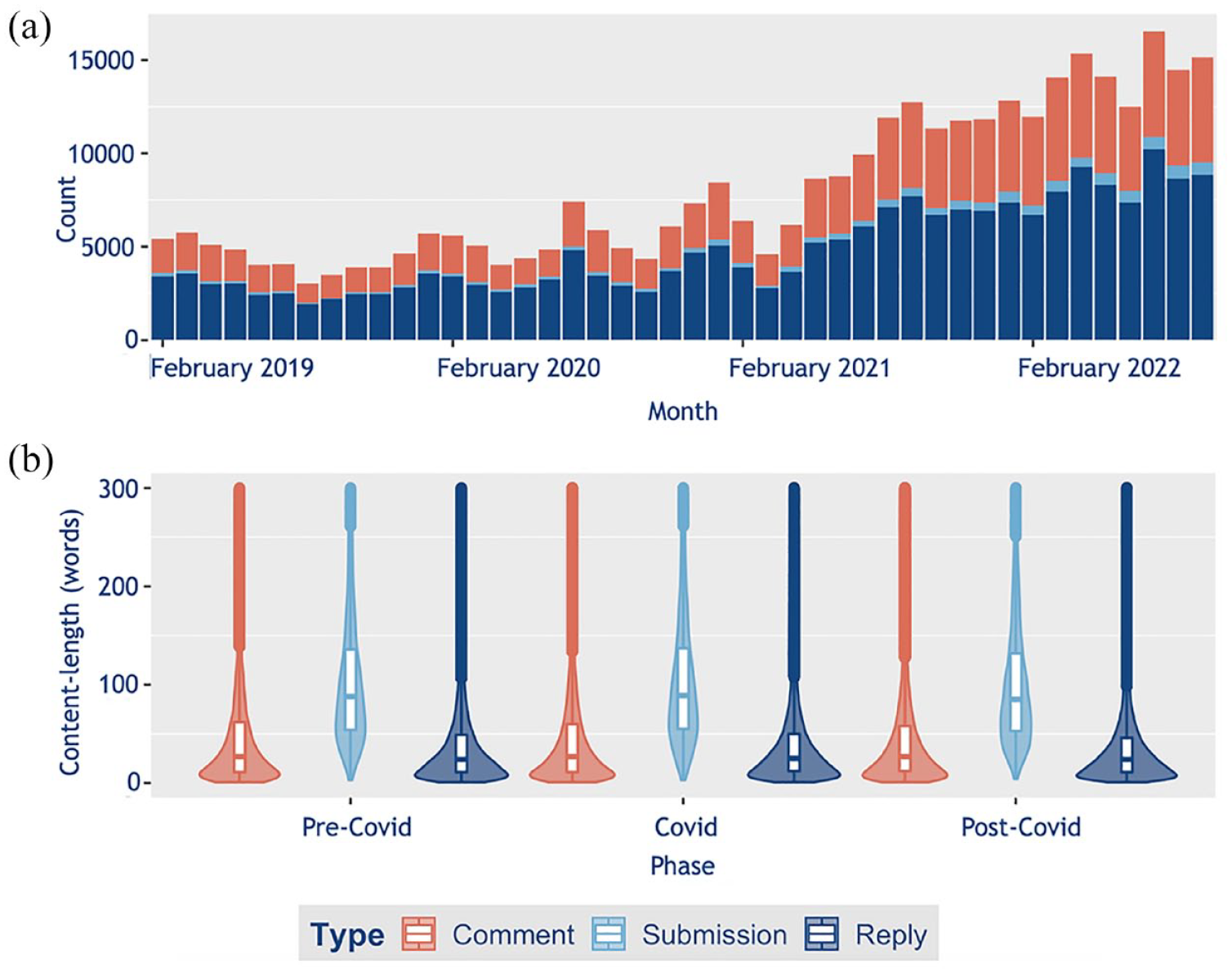
Statistics per thread type over time: (a) number of threads per month and (b) distribution of content-lenth per phase.
Original Data Statistics.
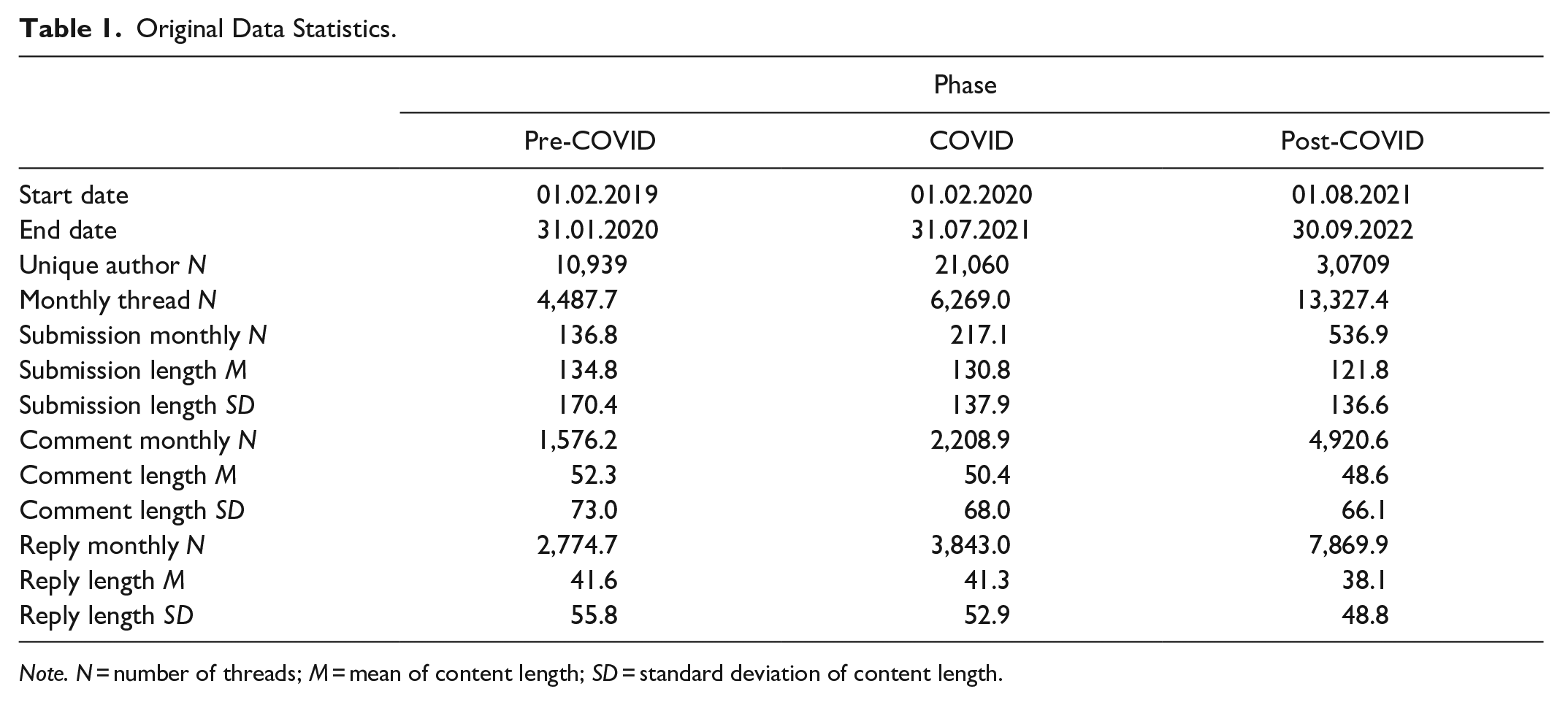
Note. N = number of threads; M = mean of content length; SD = standard deviation of content length.
Data Analysis
The data analysis was conducted using R (version 4.1.2), relying on packages such as dplyr, tidytext, tidyverse, and stringr for the data processing and statistical analysis and ggplot2, ggradar, and wordcloud2 for the visualization process. Figure 2 demonstrates the workflow. At the outset, the data was thoroughly cleaned, after which we applied three NLP techniques to structure the data for a deeper understanding of DNs. In between, package STM v1.3.6 (M. Roberts et al., 2020) was used to conduct topic modeling, and sentimentr v2.9.0 (Rinker, 2021) was used for sentiment analysis.
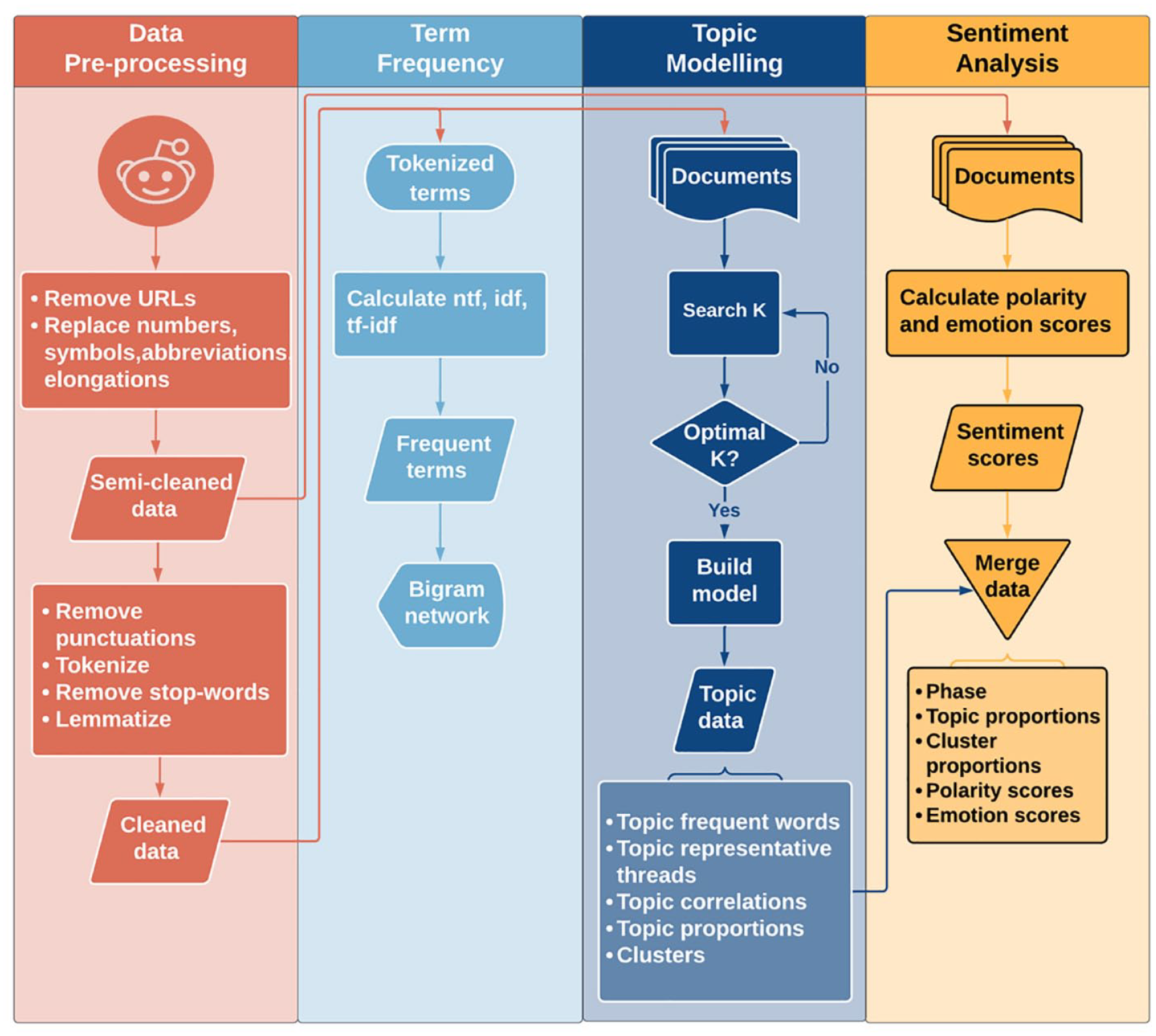
Data analysis workflow.
Data Preprocessing
Given that most of the text is in English (96.25%), we first filtered out threads written in other languages, such as Spanish (0.11%), Portuguese (0.04%), and German (0.02%), and those that could not be detected (3.34%). We then transformed the content, including removing URLs and punctuations and replacing numbers, symbols, contradictions, abbreviations, and elongations. Next, the content was tokenized as unigrams and anti-joined with English stop words generated by stop_words() from the package tidytext. These stop words are of limited value for the topic modeling and sentiment analysis. The remaining words were then further lemmatized to the base form. In this way, we reduced the dimension of our dataset and simultaneously improved the accuracy of the analysis. In the end, we had 163,917 documents in the corpus.
Term Frequency
Term frequency serves as an initial measure of how frequently a term appears within a document and provides a foundational basis for our subsequent analysis. These terms can encompass single words (unigrams), two-word combinations (bigrams), or even longer phrases (n-grams). By calculating normalized term frequency (ntf) and term frequency-inverse document frequency (tf-idf), we were able to not only highlight dominant words on a broader scale but also unveil words that gain prominence only within specific phases. These two statistical measures were computed through the following process:



where t, d, and N denote term, document, and the total number of documents, respectively; a is a smoothing term and generally set to 0.4 (Manning et al., 2008).
Topic Modeling
Topic modeling is an unsupervised machine learning technique to identify intrinsic patterns and potential correlations in natural language. It organizes, understands, searches, and summarizes text (Blei, 2012), extracting actionable insights in the process (Ramage et al., 2010). There are mixed memberships in topic models, so that each document consists of a mixture of corpus-wide topics, and each topic is a distribution over the terms. Consequently, the underlying structure is revealed by downsizing all the documents to a limited number of topics.
The most well-known and frequently used approach for topic modeling is Latent Dirichlet Allocation (LDA). It assumes that the order and role of the terms in a document are unessential (bag of words), and most importantly, that topics are uncorrelated. However, the same word can concurrently appear in multiple topics, and each document may incorporate various topics. Therefore, our goal is to create clusters by merging semantically related topics for broader exploration. This approach allows us to subsequently compare these clusters with the established body of literature regarding the portrayal of digital nomadism, thereby enhancing the credibility of our findings.
As a result, to mitigate LDA’s limitation in treating topics as uncorrelated and to integrate temporal considerations into our analysis, we employed the Structural Topic Model (STM) approach, which incorporates metadata in the analysis (M. E. Roberts et al., 2014). Within a STM, each document may belong to a mixture of the designated K topics, the proportions of which can be influenced by a covariate X through a regression model. Topical prevalence covariates explain how much a document is linked with a certain topic and allow metadata to influence the frequency. Because the study sought to investigate the temporal changes, the covariates were: (1) the categorical phases of COVID and (2) the number of days since the beginning, estimated with a numeric spline.
Sentiment Analysis
Sentiment analysis measures the tonality of a piece of text such as an article, column, or a social media thread. It can be performed in various ways, such as lexicon-based, machine-learning approaches, or an amalgamation of both (Dhaoui et al., 2017), classifying textual data into sentiment categories such as positive, neutral, and negative. Thus, sentiment analysis yields valuable insights into the emotion of social media threads. Understanding the sentiments DNs try to convey through online discussions helps us detect their psychological state throughout time and displays their attitudes toward a particular topic.
Taking one step further, sentiment analysis can also classify text along broader categories such as Ekman’s (1992) six basic emotions (joy, sadness, anger, fear, disgust, and surprise) and potential other emotions experienced by DNs (Mohammad & Turney, 2013).
This study analyzed the sentiment of each Reddit thread as the sum of the individual words. Since tokenizing the text to word level does not consider the qualifiers in front of a unigram, for example, not happy, we went beyond to sentence level. The sentimentr package considers valence shifters, including negators, amplifiers, de-amplifiers, and adversative conjunctions. To evaluate the opinion of the threads, we used the sentiment_by() function with its default setting plus three sentiment lexicons, including AFINN, BING, and NRC. While BING and NRC categorize words in a binary fashion, AFINN assigns words with values between −5 and 5. Therefore, the ranges of the distribution of polarity differ. The sentiments for different phases and their temporal changes were examined.
Results
Frequent Terms
After the text was pre-processed and cleaned, we computed the ntf and tf-idf to screen the most frequent words in the corpus. While the words that emerged salient through ntf can provide a general idea of the themes, focusing merely on ntf neglects words that play significant roles in their own phase. The discriminative power of tf-idf helps emphasize essential words under specific scenarios because it avoids the bias of longer documents. Supplemental Figure A shows the notable surge in pandemic-related words. While pre-COVID terms cover diverse topics such as online banking, local markets, and cities, COVID and post-COVID terms are closely linked to the unexpected health emergency, including lockdowns, PCR, and Omicron, among others. Importantly, these terms exhibit a decline in importance during the post-COVID phase, indicating a diminished focus on the pandemic.
Figure 3 maps a network of word combinations (bigrams) extracted from the Reddit threads, highlighting popular hubs for DNs such as Costa Rica, Chiang Mai, and Mexico City. These word combinations align closely with DN’s daily agendas and echo the conceptual framework by Nash et al. (2018) on DN work typology, covering digital work (e.g., video call), gig work (e.g., customer service), nomadic work (e.g., living abroad), and global adventure work (e.g., world travel). Besides uncovering some potential central topics which will emerge in a later stage, the plot also offers insights that transcend the scope of individual topics. For instance, a closer examination of the largest cluster positioned at the center reveals a predominant temporal granularity corresponding to monthly intervals, rather than daily or yearly ones. This monthly perspective aligns with the temporal parameters associated with short-term rentals and legal residency in countries offering visa on arrival (VOA) or visa-free entry options.
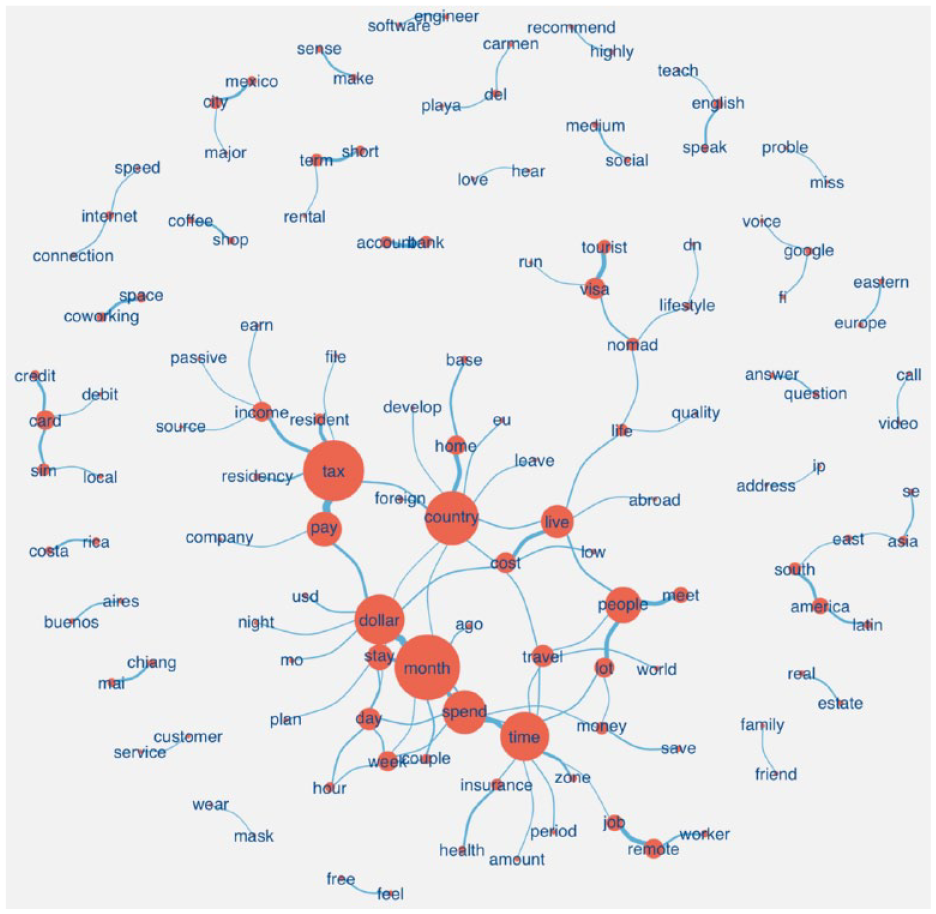
Frequent word combinations (bigrams).
Topic Modeling
Topics
Calling the function searchK(), we built models with the parameter K ranging from 5 to 30. In Supplemental Figure B, we plotted the exclusivity, held-out likelihood, and semantic coherence to assess the power, robustness, and statistical soundness of our outcomes (M. E. Roberts et al., 2014; see also Hu et al., 2019; Park et al., 2021; Stamolampros et al., 2018). Afterward we selected candidate models with K ranging from 9 to 16, based on the semantic coherence-exclusivity “frontier,” meaning that “no model strictly dominates another in terms of semantic coherence and exclusivity” (M. E. Roberts et al., 2014, p. 1070). In line with M. E. Roberts et al.’s (2014) suggestions, we evaluated symbolic threads of each topic with human judgment and chose the model with 15 topics for its commendable statistical fitness and ability to yield meaningful topics aligning with existing literature.
Among the four available statistics in the STM package, we mainly used FREX and Lift. FREX measures words in terms of both frequency and exclusivity. Lift capitalizes on word frequencies and exhibits words that appear less frequently in other topics, thus differentiating the topics from each other with the aid of the other two indices (Table 2).
The Proportion, Dominating Words, and Name of Each Topic.
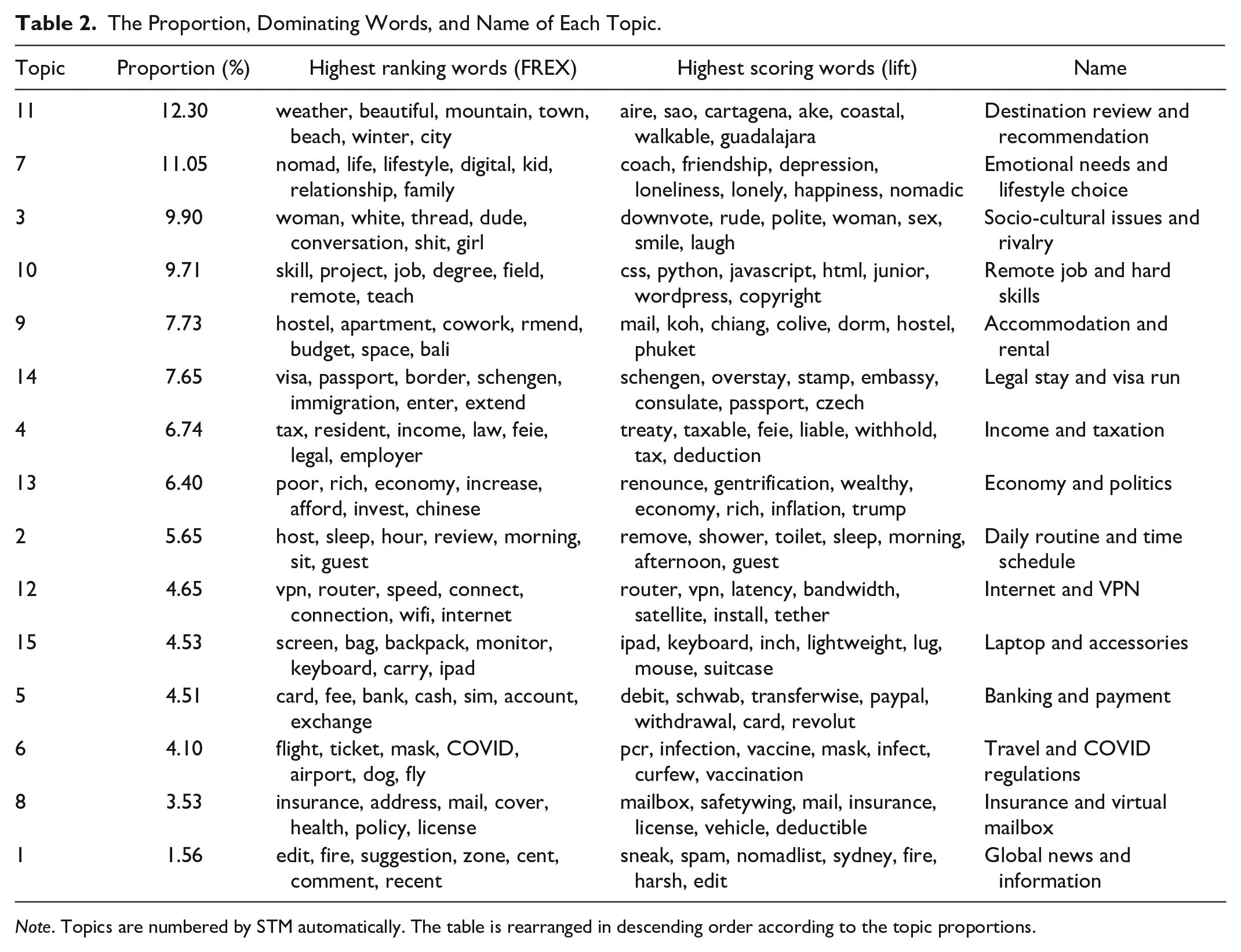
Note. Topics are numbered by STM automatically. The table is rearranged in descending order according to the topic proportions.
While Table 2 provides us with a limited range of salient words that are both frequent and exclusive to the assigned topic, Supplemental Figure C (word cloud of each topic) provides a broader conceptualization and visualization of each topic, encompassing more associated words. It is important to underscore that, within the STM framework, inter-topic correlation is permitted. Consequently, it is common to encounter specific words that manifest across multiple topics, albeit with differing probabilities and degrees of significance, for example, “book” in Topic 2 (later named as Daily routine and time schedule), Topic 6 (Travel and COVID regulations), and Topic 9 (Accommodation and rental). The combined insights from Table 2 and Supplemental Figure C serve as a foundation to name the topics.
To incorporate a more qualitative dimension of human judgment into our analysis, transcending from word level to document level, we validated the results with the theta (θ) matrix, which allowed us to extract the original threads characterized by the most pronounced proportions of a topic. The three representative threads below are provided as examples only. The complete set of symbolic threads of each topic can be found in Supplemental Table A.
The following original thread joyfully expresses the author’s affection for Mexico and willingness to recommend it to other DNs. Furthermore, it showcases the positive sharing practice within the community, making it 93.45% of Topic 11. Threads encompassed within this topic primarily comprise subjective reviews offered by DNs who have firsthand experience visiting popular destinations, providing practical guidance and advice to assist others. Thus, we have named this topic as Destination review and recommendation.
“I was surprised to (see) so many Mexican cities in this list but Mexico is awesome. As someone who spent over a year there this is what I have to say: Oaxaca and Merida are awesome spots. Definitely check them out and get to know their surrounding areas/cities. [. . .] All-in-all Mexico is a fantastic place to visit.”
The thread with an 89.24% proportion for Topic 7 (later named as Emotional needs and lifestyle choice) is from a single DN. It highlights one of the vital issues mentioned by many DNs, namely serious relationships. The proportion data shows that the top threads within this topic cover more than just family, friendship, and marriage, but also loneliness and depression.
“I’m a 33 yo single Digital Nomad and really, really love my lifestyle. I’ve been nomading since the pandemic started and have gotten experiences that I always wanted, but at the back of my mind, I keep thinking that the window for a more ‘traditional’ life is closing, i.e, wife and kids. [. . .] So people who are in similar situations, what are you thinking long term, if at all? Is the plan to do this for a while and then settle somewhere? Try to find the ideal partner on the road? Any success stories? Ideally I’d stop doing this when I want to, but I’m also afraid of missing out.”
The following thread pertains to racism and exhibits a proportion of 85.24 % for Topic 3, which encompasses fervent discussions on subjects such as gender, race, nationality, and religious matters. In contrast to other topics, threads allocated to Topic 3 tend to manifest a heightened degree of contentiousness and intensity.
“The fact that you can’t recognise that as racism is just pure ignorance. It’s no different than someone saying they avoid Indians because they’re cheap, or avoid black people to avoid crime. If you feel that you are within your right to avoid an entire race because some of them might be racist, you cannot criticise someone who avoids your race because some of your race have qualities that person wants to avoid. Most white people are not racist, yet you are avoiding white people to avoid potential racism. That is textbook racism, it is precisely what racism is.”
By looking into the threads with a significant proportion of a specific topic, we managed to go beyond words as unigrams, putting them into documents and parsing meanings to them, which helped us reaffirm the topic’s name or make some adjustments when needed. For example, Topic 3 was initially named Dating because it included frequent words such as woman, dude, conversation, girl, and talk. However, after reading through several top threads of salient proportions, we detected a strong sense of rivalry, allowing us to modify the name to Socio-cultural issues and rivalry.
Clusters
Topics of a pronounced degree of correlation are frequently represented within a network diagram, where linkages between topics signify a comparably stronger correlation, whereas topics exhibiting lower or negative correlation are visually isolated from one another (Figure 4). Based on semantic coherence, we further narrowed down the 15 topics into 7 clusters: Cluster 1 Trends and issues, Cluster 2 Travel itinerary, Cluster 3 Economy and politics, Cluster 4 Emotional needs and lifestyle choice, Cluster 5 Regulation, Cluster 6 Facilities and tools, and Cluster 7 Remote job and hard skill.
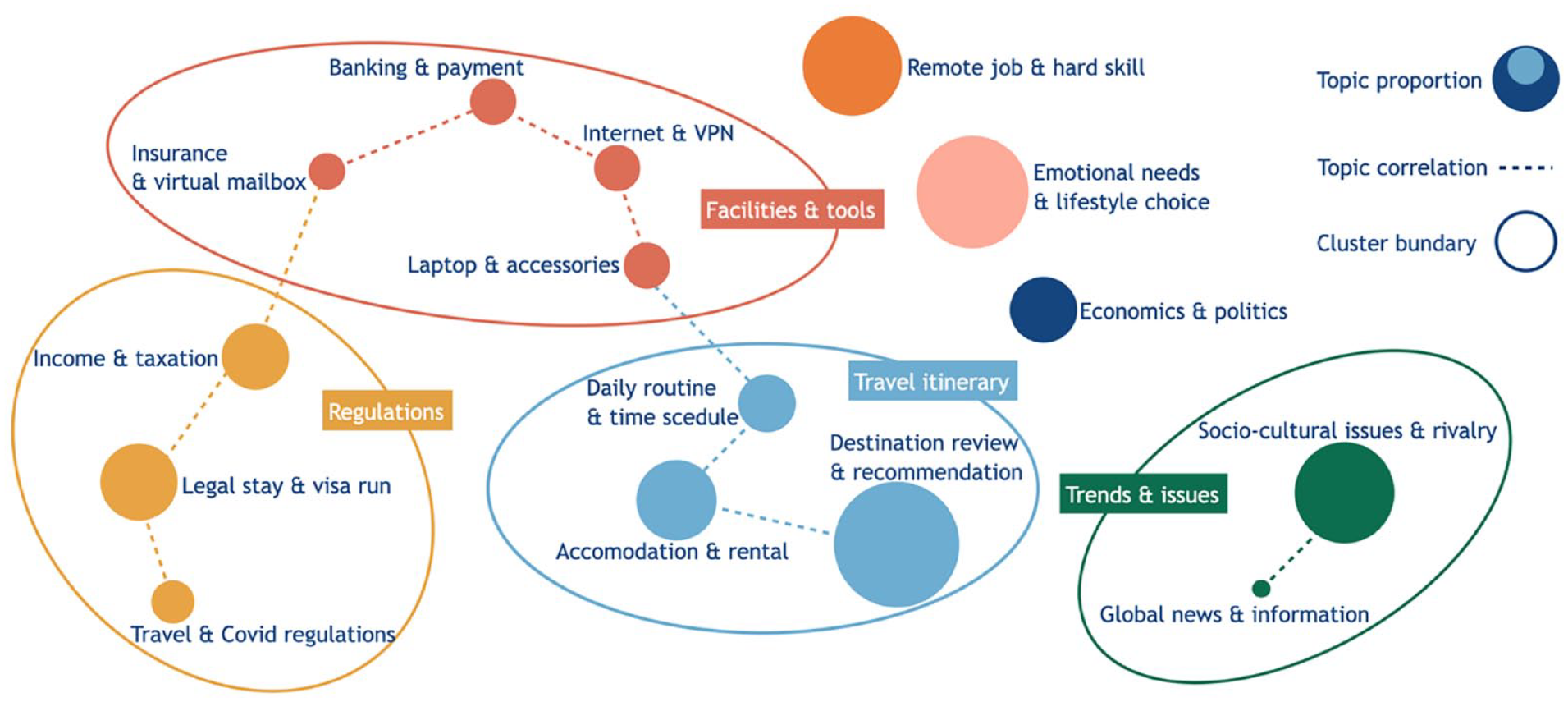
Topic correlation network and cluster components.
Proportions and Temporal Changes
The time covariate estimated by a spline, s(day), revealed the smoothed topic proportion fluctuations, thereby enabling us to discern the evolving popularity associated with each topic over time (Supplemental Figure D). While many topics experienced gradual change or remained flat, among all 15 topics, Legal stay and visa run showed the most turbulent fluctuations (Figure 5). These fluctuations correspond with the peak tourism season in the Northern hemisphere and demonstrate a consistent relationship with the trajectory of confirmed COVID-19 cases in the United States, a significant origin of digital nomads. Thus, besides the effect of traditional tourism, the health situation (of the home country) exerts a discernible influence on individuals’ inclinations to extend or modify their stays abroad.
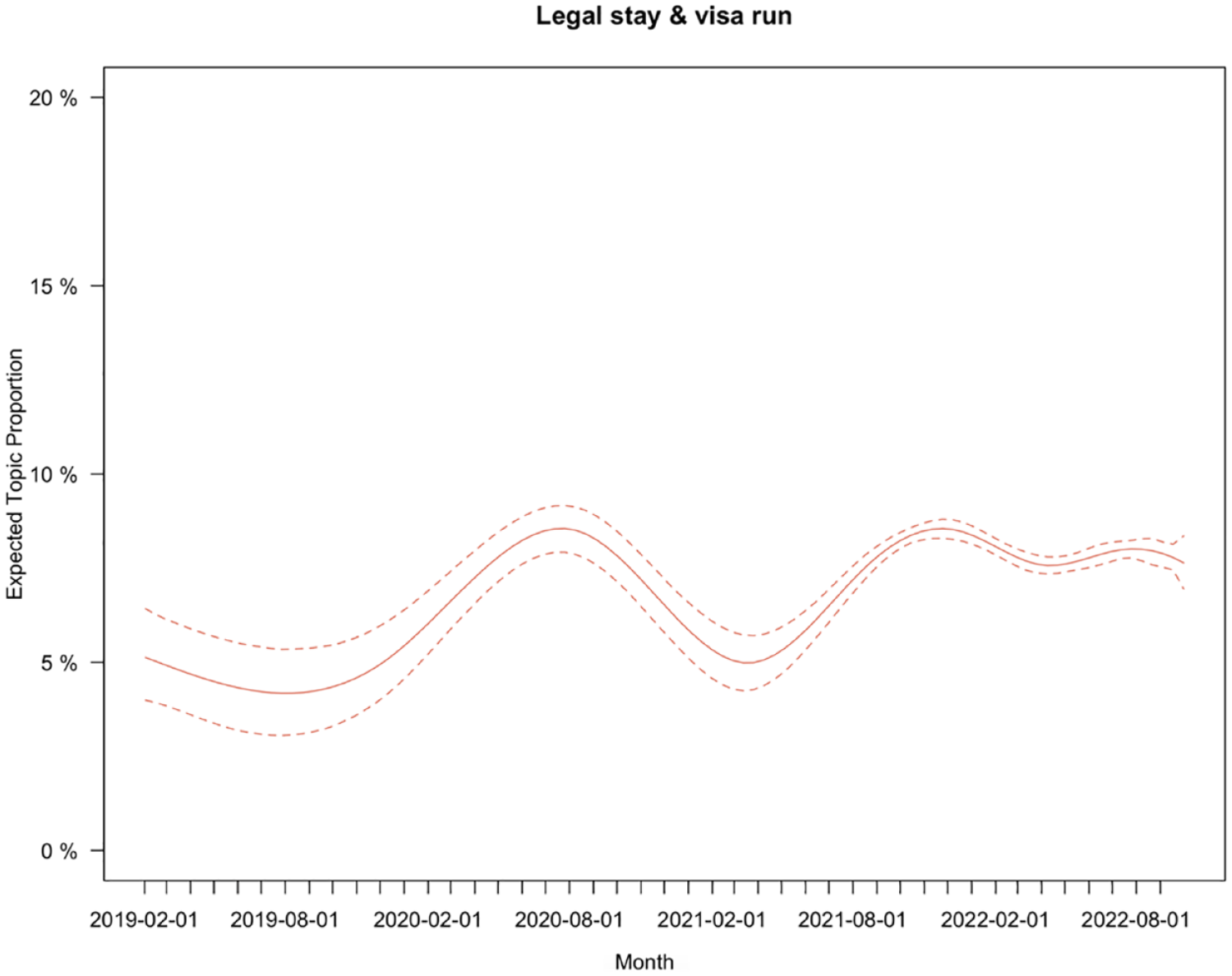
Temporal prevalence of a representative topic.
Shifting our scope to three phases, Figure 6 exhibits the proportions of each topic and cluster in each phase. While changes appeared minor for some topics, substantial temporal shifts were identified in Income and taxation, Travel and COVID regulations, Remote job and hard skills, Destination review and recommendation, and Legal stay and visa run.
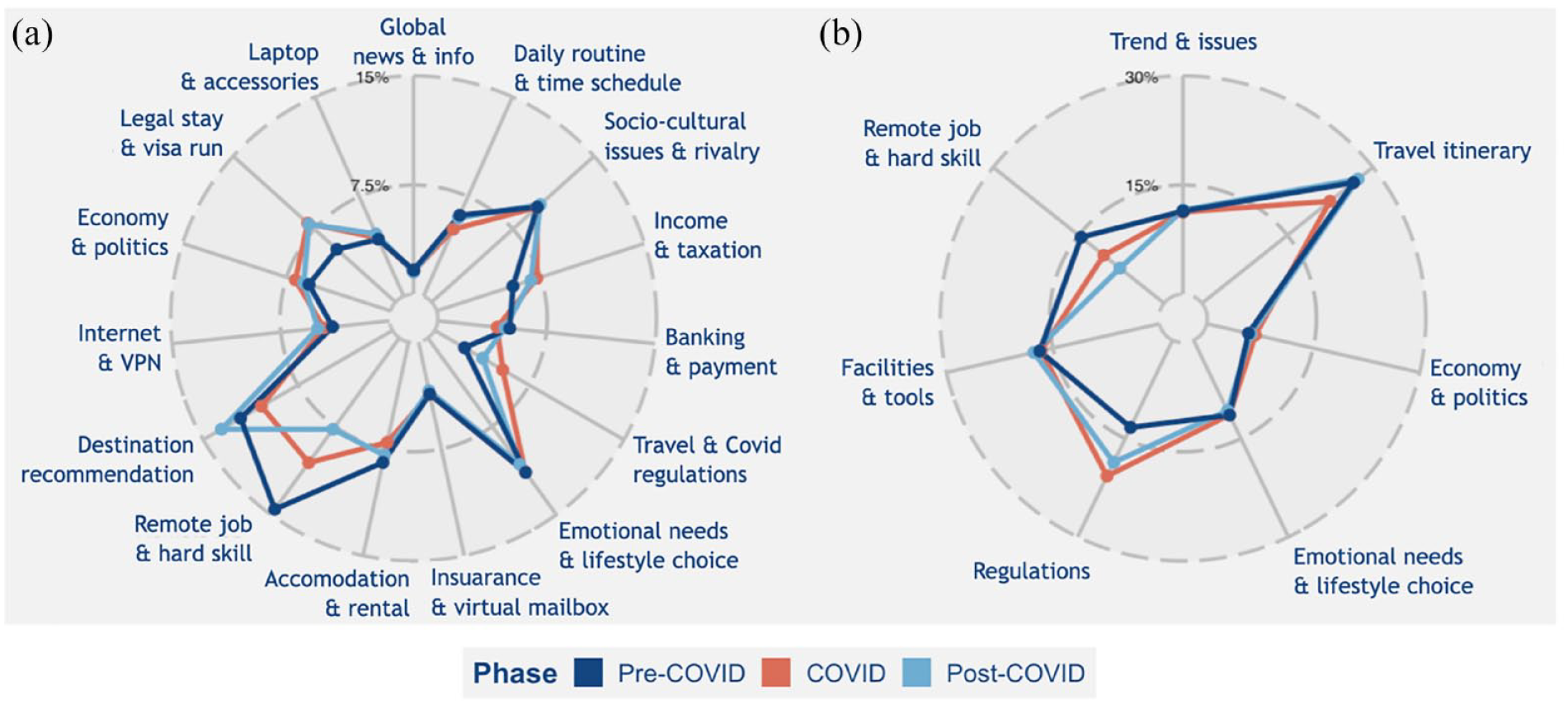
Topic and cluster proportions per phase: (a) topic proportion per phase and (b) cluster proportion per phase.
The increasing proportion of Income and taxation is noteworthy as it indicates a heightened focus on tax regulations. This sheds further light on the concept of “Tax Nomad,” a term coined by Vlcek (2017). Tax nomads strategically harness the digital economy to mitigate, if not entirely evade, their tax responsibilities across multiple jurisdictions. This pursuit enables them to attain an elevated level of mobility for both themselves and their assets (Tyutyuryukov & Guseva, 2021; Vlcek, 2017).
While many topics went through a rebounding process during the 2 years, the most frequently discussed topic before COVID-19, Remote job and hard skills, was the only one that diminished phase-over-phase. Although the absolute number of threads kept increasing (4818,6775, and 6,991 for pre-COVID, COVID, and post-COVID, respectively), it could not keep up with the growth of other mobility-related topics. Because the top words of Travel and COVID regulations correlate closely to the pandemic, it is comprehensible that the proportions went up during the pandemic and down when restrictions were eased; conversely, the topic of Destination review and recommendation, characterized by unique experiences in certain places, saw reduced interest during COVID-19 but attracted more attention in the later phase. Besides, as one of the most heatedly mentioned topics, Emotional needs and lifestyle choice remained stable over the three phases, suggesting that DNs highly valued their connections, and the pandemic did not break the social linkages.
To generalize in terms of clusters, the top three priorities of DNs were Travel itinerary (25.68%), Regulation (18.49%), and Facilities and tools (17.22%). Our findings underscore the prominence of travel-related discussions among DNs, especially the importance of destination. Moreover, they point to the importance of meta-work associated with digital nomadism, often referred to as “the work that enables work” (Palen & Salzman, 2004, p. 2). In addition to documenting captivating travel experiences and underscoring the pivotal role of travel in their lives, DNs actively participate in discussions regarding settling down and confirming legal status. This aligns with the findings of Aroles et al. (2023), who emphasize resource mobilization and migration work as predominant themes. In response to regulations constraining DNs’ conduct and behavior (Cook, 2022), the respective proportion increased by 43.88% during the COVID phase and maintained popularity post-COVID. Apart from Remote job and hard skills, the proportions of other clusters remained generally stable over time. Despite job-related discussions being prominent, their significance diminishes when grouped into clusters. This suggests that, while employment is crucial, the digital nomadic lifestyle is multifaceted, with factors beyond work playing a pronounced role in sustaining this way of life, particularly issues related to travel and destinations (Miguel, Lutz, Majetić, & Perez Vega, 2023).
Sentiment Analysis
Sentiment Score
Comparing the sentiment scores calculated by different dictionaries and parameters, we found the score distribution provided by the default setting of sentiment_by() the most reasonable (Supplemental Figure E). The sentiment scores average around 0.10 for all three phases. Overall, when aggregating all topics, sentiments across all phases are generally neutral with slight positive tendencies; and fluctuations are small, indicating relative stability.
Figure 7a shows a sharp drop when COVID-19 broke out in early 2020, and the lowest two points happened during summer and Christmas 2020 when people usually have a break and go on vacation. We saw a gradual recovery during the COVID phase. However, after it stabilized, the direction shifted downwards again since the beginning of post-COVID. Phase-wise, even though Figure 7b shows that the distributions of sentiment scores of the three phases resemble each other, Kolmogorov-Smirnov tests suggested that the distribution of pre-COVID was significantly different from COVID and post-COVID. Previous research has substantiated the profound negative influence of pandemics on the emotional well-being of individuals, especially in this age of social media (Kumar & Nayar, 2020; see also Yang & Ma, 2020). Furthermore, it has shown that as individuals gradually accumulate knowledge about the pandemic, there is a discernible positive correlation with heightened levels of emotional well-being (Yang & Ma, 2020), which serves as a plausible explanation for our observed slightly higher sentiments during the post-COVID phase compared with COVID.
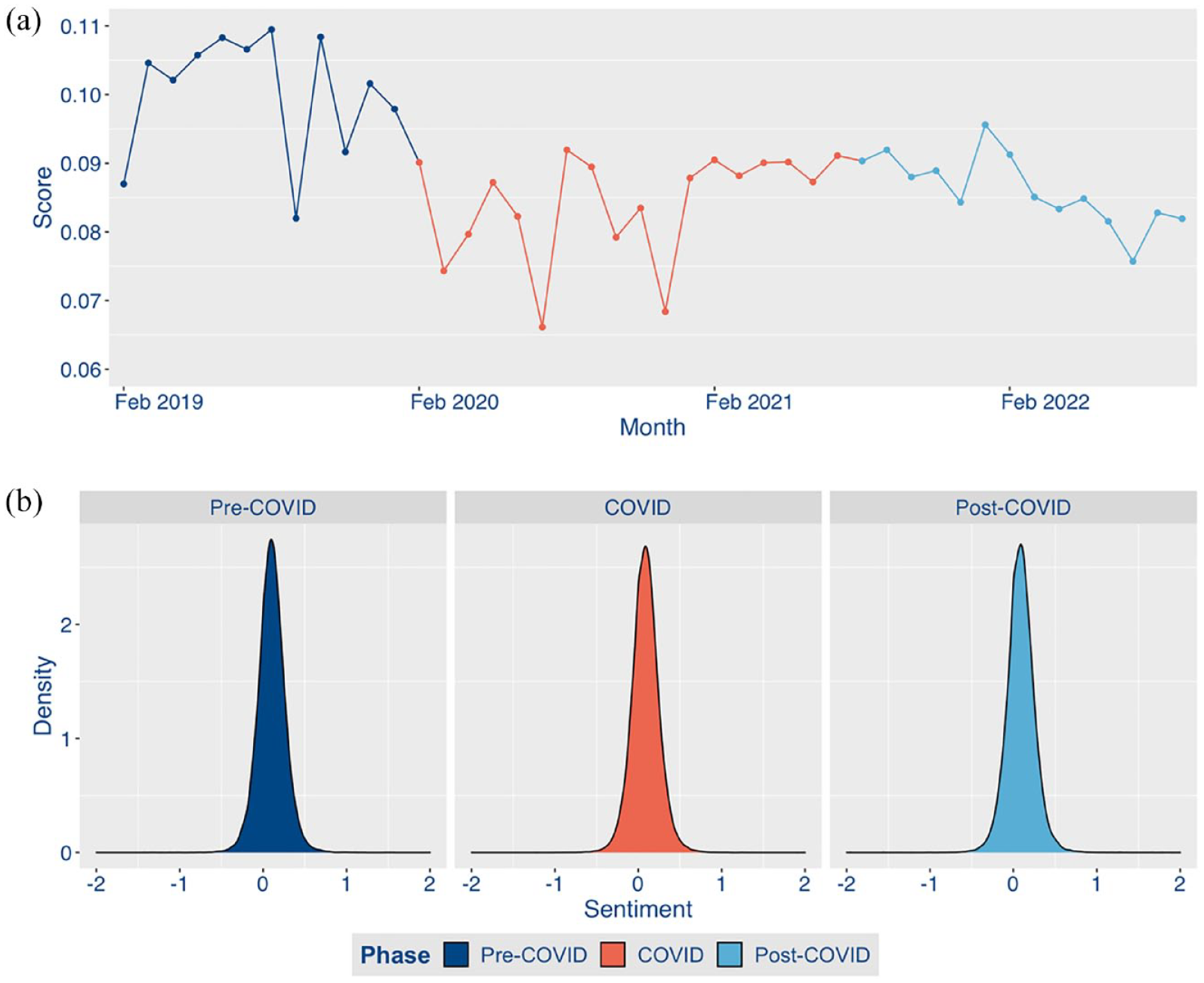
Sentiment score distribution and emotion proportion per phase: (a) sentiment score mean per month and (b) sentiment score distribution per phase.
To refine our sentiment analysis, we incorporated Ekman’s (1992) six basic emotions, augmented by the inclusion of two emotions intimately linked to digital nomadism, namely, freedom (Ehn et al., 2022; Holleran 2022; Reichenberger, 2018) and loneliness (Hermann & Paris, 2020; Miguel, Lutz, Majetić, Perez Vega, & Sánchez-Razo, 2023; Thompson, 2018). Rather than relying on the generic NRC lexicon, we constructed a corpus by referencing Merriam-Webster (n.d.) and selecting synonyms that exhibited a high degree of relevance to our context.
As shown in Figure 8, our analysis demonstrates that the digital nomad lifestyle engenders freedom and loneliness, ranked first and third in their category. Moreover, when compared with pre-COVID, the post-COVID phase saw a discernible shift. Negative emotions, including fear, loneliness, and anger, notably increased by 14.79%, 10.92%, and 10.65%, respectively. Conversely, all positive emotions decreased, with happiness experiencing the greatest drop (-20.12%).
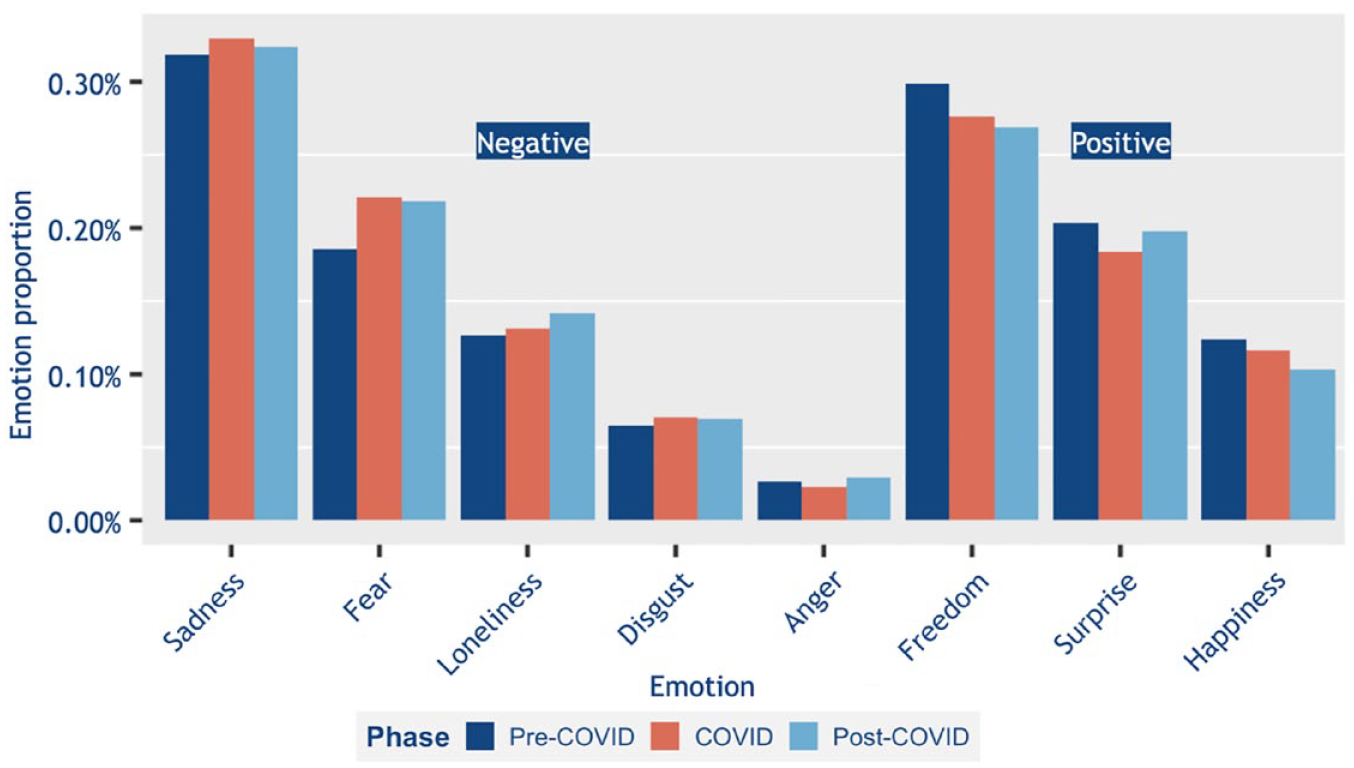
Emotion proportion per phase.
Topic Sentiment Trend
By assigning each thread to a topic based on the highest proportion, we calculated average sentiment scores for each topic. Figure 9 illustrates sentiment differences among topics and phases. Notably, Travel and COVID regulations and Global news and info underwent significant changes due to the pandemic. Travel sentiment dropped by 78.84% when COVID-19 broke out, and global news was the sole topic with a negative score. Both topics rebounded in the post-COVID phase, indicating a potential recovery in the global situation and the resumption of DNs’ nomadic lifestyle.
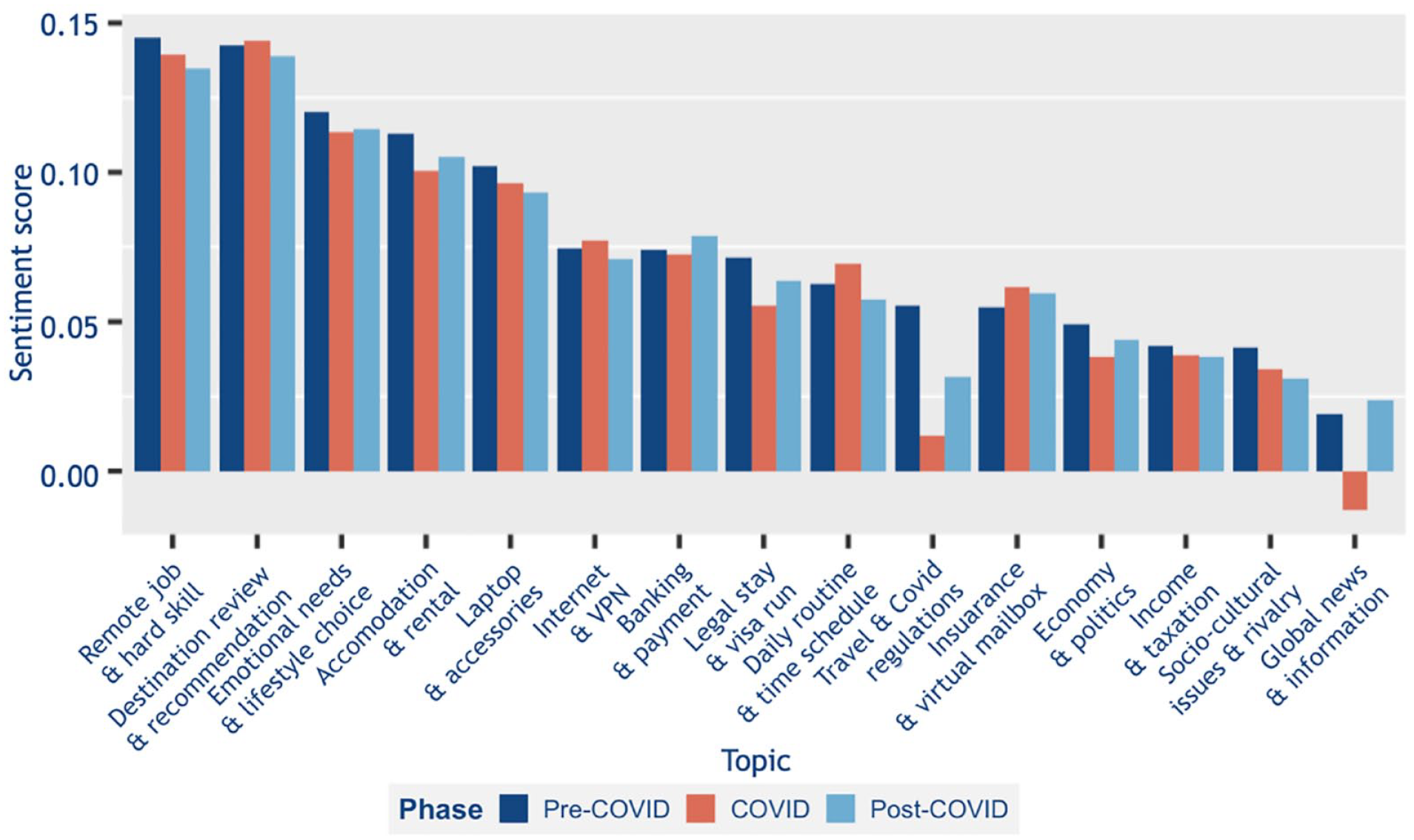
Sentiment score per topic.
Remote job and hard skills and Destination review and recommendation achieved the highest sentiment scores, while Global news and information, Socio-cultural issues and rivalry, and Income and taxation had the lowest scores. During COVID, sentiments for 11 topics showed a decline, with Travel and COVID regulations, Global news and information, and Legal stay and Visa run experiencing the most significant decreases, all related to mobility. In contrast, sentiments for Daily routine and time schedule, Destination review and recommendation, Insurance and virtual mailbox, and Internet and VPN increased, potentially due to expressed satisfaction with living conditions and promising promotions from relevant stakeholders among DNs.
Discussion and Conclusion
Summary
Previous research has investigated various aspects of digital nomadism, including how the DN concept should be defined (Hannonen, 2020), the motivations of DNs (Reichenberger, 2018), workplace and spatial considerations (Nash et al., 2021), their identities (Cook, 2020), the promotion and romanticization of the DN lifestyle (Bonneau et al., 2023), and dark sides such as loneliness and fear of missing out (Miguel, Lutz, Majetić, Perez Vega, & Sánchez-Razo, 2023). However, extant scholarship has primarily focused on work practices, mostly neglecting consumption patterns such as those relating to travel and tourism (Atanasova et al., 2023). Moreover, previous research has approached the topic conceptually (e.g., Bozzi, 2020; Wang et al., 2020) or with qualitative methods that rely on small and selective samples, mostly through interviews (e.g., Reichenberger, 2018; Thompson, 2018). We lack generalizable evidence, especially on the temporal trajectory of issues that are discussed within the DN community and that matter to DNs. Big data-based analyses of online trace data over a long period of time allow to grasp such changes and dynamics. Relying on liquid modernity theory (Bauman, 2000), our study analyzed the topics discussed on Reddit r/digitalnomad. The 15 topics extracted highly matched the nuclei of DN’s nomadic life.
To differentiate DNs from leisure travelers, Cook (2020) asserted that DNs focus more on work duties. However, DNs are also distinct from business travelers as the latter are sent to a certain location by their company, whereas DNs can choose their destination (Cook, 2023). Such blurring of travel, leisure, and work is paradigmatic for DNs (Orel, 2023) and makes them somewhat hard to grasp. In our analysis, the interstitial and fluid nature of DNs is shown in the relative plurality of different topics. None of the topics dominated completely in terms of frequency (see Figure 4). Remote work and hard skills was an important topic but not as prominent as Destination review and recommendation or Emotional needs and lifestyle choice, two more travel- and leisure-oriented topics. Importantly, regulations are of great significance to DNs, ring-fencing various aspects of their lives, such as whether their passports give them the right to cross the border freely, and whether they can obtain permission to work during their stay (Ehn et al., 2022; Sánchez-Vergara et al., 2023). Beyond that, loopholes in regulations become their shelters where they can enjoy their geo-arbitrage and geo-hacking, for example how they can (not) pay the tax preferably (Cook, 2020, 2022; Hermann & Paris, 2020; Woldoff & Litchfield, 2021). Compared with the job and work, DNs seem to care more about the fun part of this lifestyle, including where to go for dinner, appreciate nature, and book the best accommodations. Regarding work-related issues, internet connection, and banking service are two vital components (Nash et al., 2021), with the former enabling them to enjoy the WFA mechanism and the latter making it possible to have money in smoothly. Jobwise, words like “CSS,” “Python,” and “Javascript” emerged as prominent, proving the presence of highly skilled professionals in the community.
From the temporal analysis, although most topics experienced fluctuations throughout COVID-19, we did not discern many big shifts. The trend of visa discussions resembled that of confirmed COVID-19 cases, which shed light on establishing the regulations accordingly. One of the most marked contrasts was between Emotional needs and lifestyle choice on the one hand and Economy and politics on the other. After the pandemic broke out in early 2020, Emotional needs and lifestyle related discussions soared by about 25% while those of Economy and politics dropped by 40%, which indicates that DNs spent more time fostering personal relationships than reflecting on their impact on the outer world. Taxation gained more popularity during COVID-19, almost doubling from February 2020 to September 2022. This denotes that taxation is of vital significance in the discussion.
The overall sentiment on the r/digitalnomad community was neutral (M = 0.08) and we recognized the emotional downturn from pre-COVID to the later phases. DNs tended to use more positive vocabularies than negative ones, while the topics varied in sentiment. Whereas Remote job and hard skills and Destination and review recommendation exhibited relatively high average sentiment scores, Economy and politics, Income and taxation, and Socio-cultural issues and rivalry fell behind. On the one hand, DNs were reassured about their career choices and what different destinations had to offer; on the other hand, the lower sentiment scores of Economy and politics, Income and taxation, and Socio-cultural issues and rivalry reflect the less favorable macro social environment, with the global economy, local gentrification, and political problems being of particular concern. However, as suggested by the even higher sentiment toward Destination and review recommendation and Daily routine and time schedule during COVID-19, the significant drop in Travel and COVID regulations might stand for excellent opportunities after the pandemic, not just for DNs but also for countries that rely heavily on tourism.
Implications
Theoretical Implications
Our analyses show how the discussions and priorities of DNs align well with liquid modernity theory (Bauman, 2000), a useful and timely approach for tourism and travel research (Zhang, 2023; Zhang & Xiao, 2021). Following up on recent research that has relied on this theory (Atanasova et al., 2022, 2023; Aufschnaiter et al., 2021; Thompson, 2021), but differentiating ourselves through our methodological approach, we show how several key aspects of liquid modernity are captured by the analyses. Specifically, liquid modernity theory highlights the uncertainty and instability of individuals in contemporary societies, including a strong push toward individualization, self-responsibilization, and self-actualization (occurring especially through leisure and consumption) and the dissolution of established institutions, norms, and routines (Bauman, 2000). Our analyses show that the discussions among DNs capture this liquidity and uncertainty throughout different phases of the COVID-19 pandemic. Several topics exhibited turbulence and fluctuations over time (see Figure 5 and Supplemental Figure D), indicating liquidity (see also Pita et al., 2022). Moreover, the qualitative inspection of typical data points (see Supplemental Table A) shows that the narrative tone, even around seemingly solid topics, is strongly personalized and individualized, highlighting personal experiences and opinions. Similarly, the prominence of consumption-oriented terms such as “Dollar,” “Spend,” and “Cost” (Figure 3) connects to the importance liquid modernity theory assigns to the role of the consumer, as opposed to the role of the producer (Atanasova et al., 2023; Bauman, 2000). While the exact spending patterns cannot be identified based on the data, the co-associated terms such as “Travel” and “Live” suggest that DNs primarily discuss ephemeral and access-based—and thus liquid—modes of consumption rather than solid consumption (Bardhi & Eckhardt, 2017). Thus, our findings also heed the call by Assaf et al. (2022) to focus on changing consumer norms and behavior in tourism research during/after the COVID-19 pandemic, including the important aspect of uncertainty.
However, in line with Thompson (2021) and Aufschnaiter et al. (2021), who problematize aspects of liquid modernity theory in the context of DNs, we find solidity and stability too. Even among DNs, who are in many ways prototypical of liquid modernity, established institutions and a sense of community prove important. The interest in established institutions, associated with seemingly boring topics such as visa policies and tax law, is potentially more by force and necessity than choice, and partly also an artifact of the data. As Cook (2022) shows, many DNs are highly critical of the nation state and instead favor borderless societies. However, in practice, “digital nomads often end up in practical and unglamorous negotiations with state bureaucracies, undermining this ideal of freedom from the social contract” (p. 307). Regarding the sense of community, the prominence of the Emotional needs and lifestyle choice topic, being the second most frequent topic after Destination review and recommendation (Table 2), a finding that resonates well with Atanasova et al.’s (2023) concept of liquid consumer security.
The findings also suggest that the COVID-19 pandemic had an impact on the priorities of DNs, with work becoming less important and regulation becoming more important. Liquid modernity theory is relatively vague in specifying how historic events such as pandemics affect the transformation from solid to liquid forms of sociality. Our results show that disruptive events can re-solidify certain aspects (e.g., lowering mobility, imposing new barriers) while accelerating the liquefication of other aspects (e.g., heightened importance of access-based and ephemeral consumption; Bardhi & Eckhardt, 2017). The overall increasing interest and activity in digital nomadism from 2021 on, as reflected in the strong surge in content even compared to pre-pandemic levels (see Figure 1), suggests that shifts can occur in relatively short intervals of time. Our research thus contributes to liquid modernity theory by highlighting the importance of historical ruptures.
Practical Implications
Beyond these theoretical implications, our findings have practical implications for different stakeholders. For DNs themselves, the nuanced overview of topics, clusters, and sentiments will be useful to reflect on their own lifestyle, including their travel patterns. It shows how digital nomadism is a complex practice that is holistically discussed on social media, providing useful knowledge for those interested in becoming a DN, novices to this highly flexible way of living and working, as well as experienced DNs (Cook, 2023). Particularly, the theoretical background of liquid modernity might help DNs see the bigger picture and contextualize their own role in ongoing societal transitions.
Destination managers can leverage the results to target DNs as an important customer group. To create an attractive destination image for DNs and given the importance of Destination review and recommendation as a topic, destination managers can highlight their region’s unique natural and cultural attractions. They could also promote efforts to improve the infrastructure and services for digital nomads, such as co-working spaces, reliable internet access, and affordable accommodation. The creation of spaces for exchange between the local community and DNs, especially in locations where DNs are seen as an issue such as in Lisbon (Holleran, 2022), emerges as a further suggestion. DNs can be sensitized to local concerns and encouraged to participate in cultural events such as regional festivities and customs. Locals, and especially those with limited knowledge about DNs, could be proactively informed about this emerging group of travelers, including their values, priorities, and habits. Destination managers can listen to and reach DNs on social media, either through paid promotion or, even better, through organic engagement and interest in DN Facebook groups or the r/digitalnomad subreddit. There, they could communicate the attractiveness of their specific location for DNs, being careful not to oversell what they have to offer.
Policymakers might also be interested in our findings given the economic importance of DNs and the recent push to attract them (Sánchez-Vergara et al., 2023). Spain, for example, is in the process of establishing a DN visa, having passed the necessary legislation in December 2022 (Compton, 2023) and following other countries such as Brazil, Cost Rica, Antigua and Barbuda, Croatia, and Italy. This visa would allow non-EU/EEA citizens to stay in Spain for up to 1 year, with the potential to extend it for up to 5 years. The results from the topic model show how DNs do care about seemingly boring topics such as regulation and taxation. Creating unbureaucratic and easy-to-understand policies, both in terms of visa and taxation, and communicating those concisely to DNs should therefore be an important imperative for policymakers.
Limitations and Outlook
Due to the lack of location information from Reddit threads, we could not discriminate spatial differences in the topics. We expected to see arguments from different angles, including DNs located in Western and Non-Western countries. Future studies should incorporate such location data, studying not only the temporality of communication among DNs but also its spatiality, for example, where the community members are most active and influential. Moreover, such research could focus on internal discussions among DNs in hubs such as Chiang Mai, Lisbon, and Bali and complement the findings with external perceptions of DNs among local residents (e.g., through interviews and survey data) as well as specific local policies about DNs, thus reaching a holistic picture. This could aid in better decision-making and more sustainable and successful DN destination management.
Besides, this study used solely textual data from one online community. However, as Reddit is not the only online hub for DNs and text is not their only means of expression, further study with visual material from other platforms, such as Instagram and nomadlist.com, can be expected. Mixed methods research that combines digital trace data with self-reported data from interviews or surveys is particularly promising.
Supplemental Material
sj-docx-1-jtr-10.1177_00472875231224242 – Supplemental material for Wayfarers in Cyberspace: A Temporal Investigation of Digital Nomads Based on Liquid Modernity Theory
Supplemental material, sj-docx-1-jtr-10.1177_00472875231224242 for Wayfarers in Cyberspace: A Temporal Investigation of Digital Nomads Based on Liquid Modernity Theory by Yunhao Xiao and Christoph Lutz in Journal of Travel Research
Footnotes
Declaration of Conflicting Interests
The author(s) declared no potential conflicts of interest with respect to the research, authorship, and/or publication of this article.
Funding
The author(s) disclosed receipt of the following financial support for the research, authorship, and/or publication of this article: The second author was generously supported by the Research Council of Norway (Norges Forskningsråd grants number 275347, 299178).

Supplemental Material
Supplemental material for this article is available online.
Author Biographies
References
Supplementary Material
Please find the following supplemental material available below.
For Open Access articles published under a Creative Commons License, all supplemental material carries the same license as the article it is associated with.
For non-Open Access articles published, all supplemental material carries a non-exclusive license, and permission requests for re-use of supplemental material or any part of supplemental material shall be sent directly to the copyright owner as specified in the copyright notice associated with the article.
