




Abstract
In recent years, consumers have been confronted with the proliferation of package bundling (i.e., marketing multiple products or services together in a single package at a discounted price) in the tourism industry. This paper aims to investigate how different discount framing strategies affect consumers’ purchase intention of a vacation package. Through four experimental studies, this paper reveals that the perceived heterogeneity of a component influences the effectiveness of different discount framing strategies. In particular, consumers prefer the vacation package in which the high-heterogeneity component is not discounted, while the low-heterogeneity component is discounted. The effect of perceived heterogeneity on purchase intention can be explained by the perceived quality of the component. Therefore, the effect is mitigated when quality assurance cues are present.
Introduction
Consumers often engage in pre-trip planning by arranging a combination of travel services. This practice has become increasingly prevalent, particularly with the advent of online travel services and dynamic pricing strategies. A typical travel package, often including transportation, accommodation, and tourist activities, is offered at a discounted price. Prepaying for these bundled services offers several advantages: it allows travelers to save money (Kim et al., 2018, 2020), streamlines the search process (Harris & Blair, 2006a; Naylor & Frank, 2001; Tanford et al., 2012), and reduces uncertainty (Harris & Blair, 2006b).
As a result, travel packaging has gained significant traction in the tourism market. Such packages usually offer two or more separate products bundled together (Kim et al., 2009, 2018; Tanford et al., 2012). This bundling strategy aligns with the concept of price bundling, as defined by Guiltinan (1987), which involves marketing multiple products or services together in a single package at a discounted rate. Bundling serves as an effective business strategy, appealing to a diverse consumer base by offering multiple products or services at a reduced price (Adams & Yellen, 1976; Yadav, 1995). This approach attracts a larger customer base and generates higher revenue compared to selling items individually at full prices (Guiltinan, 1987; Janiszewski & Cunha, 2004; Stremersch & Tellis, 2002). Components of travel packages may include air and ground transportation, accommodations, meals, and entrance fees to tourist attractions (Abraham & Hamilton, 2018; Jin et al., 2012).
To enhance the appeal of travel packages, firms may employ various discounting strategies. These discounts can manifest in several forms: as a percentage reduction, a fixed monetary amount, or the provision of a complimentary component. Additionally, the discount can be framed either as a gain to be realized upon purchase or as a loss to be incurred if the opportunity is not seized. The framing may also specify which particular component within the package is subject to the discount. For a travel package that includes multiple services, labeled as Service A and Service B, would it be more effective to describe the discount as being based on the overall package (derived from A + B), or should it be attributed to individual components (derived from either A or B) to enhance the package’s appeal?
Previous research indicates that consumers are highly sensitive to the framing of price information in bundled offers (Janiszewski & Cunha, 2004). This sensitivity is particularly pronounced when consumers are required to pay in advance and may harbor uncertainties about the product’s quality (Kwon & Jang, 2011). Consequently, the manner in which prices and discounts are presented significantly influences the evaluation of bundle offers (Choi & Mattila, 2018; Tanford et al., 2012, 2019).
Much of the existing literature is grounded in Prospect Theory, focusing on how discount framing affects consumers’ perceptions of economic value or discount depth (e.g., Janiszewski & Cunha, 2004). Due to the framing effect of discounts, consumers’ perceptions are influenced by their cognitive reference points, capturing the steeper part of the expected utility curve and thereby amplifying the perceived discount (Kaicker et al., 1995; Mazumdar & Jun, 1993). R. Thaler (1985) and R. H. Thaler (1999) posits that it is more effective to assign a price discount to a product that would otherwise have a negative valuation at its current offer price, as the value function for losses is steeper than that for gains.
However, the practical applicability of these theories is questionable because businesses often find it challenging to assess consumers’ reference points during decision-making (Hamilton & Srivastava, 2008). This issue is particularly salient in the tourism industry, where services like travel and accommodation are highly heterogeneous and consumer demands are equally diverse. Consequently, designing discount frameworks for travel packages becomes complex due to the difficulty in pinpointing consumers’ specific reference points.
Prior studies have attempted to study the discount framing effect based on the characteristics of the bundled components. For example, Yadav (1995) suggests that discounts should be applied to the more important components of the bundle. A weighted additive model predicts that the impact of a price discount on the overall evaluation of the bundle will be greater when the discount is assigned to the more important product (Yadav, 1995). Hamilton and Srivastava (2008) confirm that consumers are more sensitive to the price of components with low perceived benefits than to those with high consumption benefits. Khan and Dhar (2010) argue that customers are more inclined to purchase a varied product bundle if the discount is framed as a saving on the hedonic component, rather than the utilitarian part or the entire bundle. Song et al. (2023) suggest that when the core product is hedonic in nature, consumers are more likely to engage in heuristic processing and show a greater willingness to purchase bundles with a discount on the entire package rather than on individual components.
However, travel packages present a unique challenge: the components included in the bundle are often equally important to consumers (e.g., both accommodation and activities are crucial) or are both hedonic in nature (e.g., both lodging and activities serve leisure purposes during a vacation). Extending previous research, this study aims to examine how perceived heterogeneity can be strategically utilized in designing discount framing for travel packages. In this context, we argue that the heterogeneity of a component in a travel package can significantly influence the effectiveness of a discount framing strategy.
Travel packages inherently involve greater complexity and uncertainty compared to traditional product bundles, often necessitating advance payment and thereby engendering less consumer confidence in product quality (Ding & Keh, 2016; Holm et al., 2017; Kwon & Jang, 2011). In this context, the framing of prices and discounts serves as a important cue for consumers in evaluating the value of the package (Choi & Mattila, 2018; Tanford et al., 2012, 2019). The advent of the internet has further complicated this landscape by enabling consumers to access electronic word-of-mouth (eWOM) and user-generated content (UGC), thereby informing them about the standardization and price variation among local service providers. Consequently, consumers develop perceptions about the degree of heterogeneity in local tourism services, which in turn influences their purchasing decisions. Within this framework, each product in the bundle has a price referent that is compared to an offer price for valuation. We propose that consumers do not uniformly rely on the “original price” information in the offer to assess the true value of the discount. For highly standardized and low-heterogeneity products like standardized hotel services, establishing a price referent is relatively straightforward, facilitating easy comparisons with offer prices. Conversely, for highly differentiated and heterogeneous travel products, such as a diverse range of restaurants with varying quality, establishing a reliable price referent becomes considerably more challenging, leading consumers to question whether the “original price” truly reflects a fair market value.
Although heterogeneity is an important factor influencing consumers’ purchase decision-making, extant literature has largely overlooked the impact of perceived heterogeneity in the context of price bundling. To address this gap, the present study aims to investigate how perceived heterogeneity in a component influences consumers’ preferences for service packages under varying price bundling strategies. Responding to the calls for research by Kim et al. (2018) and Han and Bai (2022), this study enriches our understanding of the framing effects of discount strategies in travel packages. By doing so, it offers valuable insights for businesses in the tourism industry to design more effective discount framing strategies.
Conceptual Background and Hypotheses Development
Bundling and Discount Framing in the Tourism Industry
A growing body of literature has investigated the effectiveness of price bundling in the tourism industry. Consumers often save money when purchasing bundled travel services through online platforms, with these savings being particularly significant in the luxury hotel category (Kim et al., 2009). Bundles also simplify the search process and reduce uncertainty (Harris & Blair, 2006a, 2006b). However, the attractiveness of such packages diminishes if they fail to meet the “all-inclusive” expectation, thereby affecting their perceived value (Naylor & Frank, 2001). Tanford et al. (2012) further explored how the presentation of pricing information in travel packages influences consumer choices, revealing a preference for transparent pricing that clearly outlines individual package elements and discounts, as it alleviates ambiguity and simplifies decision-making.
Given that bundling typically results in a lower aggregate price (Kim et al., 2009), extant research has endeavored to discern optimal practices for pricing and discount framing. Discount framing pertains to the strategic articulation of discounted prices within promotional messages (Janiszewski & Cunha, 2004), and its various manifestations exert considerable influence on consumer behavior in the tourism and hospitality sectors.
Levin et al. (1998) delineated two principal types of framing: attribute framing and goal framing. Attribute framing involves manipulating a single attribute of a decision option to influence consumer behavior. For instance, in the context of discount framing, attribute framing could involve presenting discounts as a percentage-off, dollars-off, or one-component-off. The focus is on how a single characteristic of the product or service is framed to affect consumer perceptions and choices. For instance, Lim and Ok (2022) ascertained that the efficacy of percentage-off versus one-component-off promotions is contingent upon pricing contexts and consumer emotions. Discounts can also be anchored on the leftmost digit of the price, a strategy proven effective in influencing consumer perceptions (Thomas & Morwitz, 2005; Zou & Petrick, 2021). On the other hand, goal framing focuses on manipulating the relationship between behaviors and goal attainment. In terms of goal framing, discounts can be presented with either negative or positive valence and framed as either a loss or a gain. Shan et al. (2020) found that negative framing, such as “Don’t miss out on $10 savings,” engenders more favorable consumer attitudes than its positive counterpart. Moreover, the potency of gain- versus loss-framed messages is subject to external conditions like weather, with gain-framed messages resonating more on inclement days (Yang & Mattila, 2020).
In travel bundles, discounts can also be framed either as a reduction on the total package or on specific components. Khan and Dhar (2010) probed into the conditions under which different discount framing strategies in a bundle can augment purchase intentions. Their findings suggest that consumers are more inclined to purchase a varied product bundle if the discount is portrayed as a saving on the hedonic component, as opposed to the utilitarian component or the entire bundle. This paper aims to contribute to this field by examining how discounts on individual components with different heterogeneity levels within a travel package influence consumer perceptions and choices.
How Bundling and Discount Framing Work
Many companies strategically frame discounts within bundles to optimize consumer perception and choice. To understand this dynamic, Yadav’s (1994) Weighted Additive Model suggests that consumers assign varying importance to individual products in a bundle, affecting how they perceive discounts. Consumers often focus on a particular product, giving it more weight, particularly if it has a higher reservation price (Hamilton & Srivastava, 2008; Yadav, 1995). However, this model has limitations in predicting which product gets more weight and assumes constant utility. This is especially true for travel packages, where it is challenging to determine the relative importance of various components like transportation, accommodation, and dining.
Furthermore, past studies (e.g., Janiszewski & Cunha, 2004) on the appeal of bundled discounts often rely on Prospect Theory, which encompasses concepts like reference dependence, diminishing sensitivity, and loss aversion (Kahneman & Tversky, 1979a, 1979b; Tversky & Kahneman, 1991). Within this theoretical framework, consumers are thought to construct a reference price or value to evaluate the attractiveness of discount framing. In particular, Prospect Theory (Tversky & Kahneman, 1991) argues that people judge alternatives relative to a reference point. This model accounts for diminishing sensitivity and loss aversion, suggesting that people prefer bundles that assign the price discount to the product that they value less. As the size of the discount increases, a bundle with the less valued product discounted should become more attractive. However, it is challenging to anticipate the price reference for any given prospect, and individual differences in the subjective valuation of a product at a given offer price also complicate the model’s predictions (Janiszewski & Cunha, 2004).
Drawing on previous theories, Janiszewski and Cunha (2004) found that bundle discounts affect how consumers perceive a bundle’s value. Consumers assign subjective values to individual products and evaluate the bundle based on these. Discounts are more valued when applied to products priced above the consumer’s reference price. However, the complexity of travel packages, often involving unfamiliar destinations and services, complicates predicting a consumer’s reference price or value.
While existing research advises strategic discount allocation in bundles, its applicability to the tourism industry is limited. Studies like Khan and Dhar’s (2010) focus on tangible products and overlook the hedonic and utilitarian aspects prevalent in travel packages. For travel packages, the component of a bundle is generally more hedonic-focused (e.g., the sauna in the hotel) and may to some extent include utilitarian value (e.g., the bed in the room). Hamilton and Srivastava’s (2008) work does not consider the complexity and variability (heterogeneity) of services, which makes consumer evaluation difficult, especially for unfamiliar destinations. Additionally, Janiszewski and Cunha (2004) assume consumers have a set reference price, a notion less applicable to services due to different mental processing and lack of price clarity.
It is crucial to investigate consumer reactions to price bundling across various contexts, such as services. For instance, travel packages often combine products and experience-based services like flights and hotel stays. One key distinction between services and products is their evaluability (Zeithaml et al., 1985). Services, especially experiential ones, are harder to evaluate due to their inherent heterogeneity (Darby & Karni, 1973; Zeithaml, 1981). A typical example includes a vacation offering that encompasses the experience of hotel accommodation and resort entertainment (Greenleaf et al., 2016), each of which has its own price despite both being components of an experience service. Given the unique evaluability of services compared to products, existing research may not fully apply to the service or tourism industry.
The Influence of Perceived Heterogeneity on the Effectiveness of Price Bundling in Experience Services
If consumers lack clear reference prices for a service component, its perceived value remains ambiguous (Melis & Piga, 2017). This ambiguity is influenced by the service’s heterogeneity, a key factor in discount framing strategies for bundled prices. Services differ from physical goods in four key characteristics: intangibility, inseparability, perishability, and heterogeneity (Grove et al., 2003; Lovelock & Gummesson, 2004; Zeithaml et al., 1985). These traits help categorize services into search, experience, or credence services, each with varying degrees of heterogeneity and thus different evaluation cues (Darby & Karni, 1973; Iacobucci et al., 1995; Liebermann & Flint-Goor, 1996; Zeithaml, 1981).
Experience service, such as vacations or dining, can be defined as one where consumers form judgments through firsthand experience (Keh & Pang, 2010). These services are high in experience qualities but low in price-evaluability due to inherent uncertainties (Bertini & Wathieu, 2008; Nelson, 1970). One distinguishing characteristic of experience services is their non-standardization. The labor-intensive nature, variations in location, and personalized consumer perceptions contribute to a high level of heterogeneity in service delivery (Lovelock & Gummesson, 2004; Steven White et al., 1998; Vargo & Lusch, 2004). Further, the intangibility and perishability of these services add layers of complexity, often requiring consumers to pay in advance for experiences they have yet to consume (Ainscough, 2005; Kim et al., 2020). This leads to a large financial commitment from the consumer side, further elevating the stakes and uncertainties around quality (Holm et al., 2017).
Most research on discount framing in bundling assumes that consumers have clear reference prices and can easily differentiate losses from gains (e.g., Hamilton & Srivastava, 2008; Janiszewski & Cunha, 2004). This focus is more relevant for products or services where consumers have a clear understanding of benefits and see price as an indicator of loss (Lattin & Bucklin, 1989).
Prior research shows value perception is positively linked to perceived benefits and negatively to costs (Monroe, 2003). Price is not just a monetary loss but also can signify quality, especially when the service value is unclear (Zeithaml, 1988). The role of price thus varies depending on the context (Bornemann & Homburg, 2011). In this paper, we assert that in bundled experience services, perceived component heterogeneity shapes their adoption of the “original price” as a reference and consequently consumer value perception. When perceived heterogeneity is low, consumers are more likely to use the “original price” as a reference, thereby enhancing the perceived benefits of discounts. However, when perceived heterogeneity is high, consumers struggle to determine the true “original price” and may even become concerned about the quality of the discounted items.
Specifically, when a package component exhibits low market heterogeneity, consumers generally perceive both quality and pricing in the market as stable. Standardization among similar products is high, and quality differences are minimal (e.g., Ritzer, 2011). Therefore, consumers are more inclined to accept the original price offered in the package as their reference price. In such cases, discounts on low-heterogeneity components are well-received and are unlikely to be interpreted as sacrifices in quality (Chua et al., 2015).
In contrast, when a package component has high market heterogeneity, consumers face more uncertainty regarding quality. The correlation between price and quality is unclear, and it is common for individuals to pay different prices for fundamentally the same service (Haws & Bearden, 2006). As a result, consumers find it difficult to assess an “appropriate” market price, reducing the likelihood of using the provider’s “original price” as a reference.
Signaling theory (Spence, 1973) explains the effective use of signals in the interaction of individuals and organizations. According to signaling theory, when consumers are not able to evaluate the performance of the service, they will rely on external cues, such as a price, to make the purchase decision. In other words, if a product has a high price, it may be perceived as being of higher quality compared to similar products with lower prices. Discounts on high-heterogeneity components become difficult to evaluate and may even be interpreted as indicative of lower quality. Research has shown that consumers often rely on heuristic thinking when making quality judgments in this context, such as price-quality signaling (Klein & Melnyk, 2016). High prices are often seen as markers of high-quality services and vice versa (Ainscough, 2005; Bornemann & Homburg, 2011; Kim & Jang, 2013; Murray, 1991; Zeithaml, 1981). When a product is offered at a reduced price, consumers may wonder if compromises were made during its production to enable the discount. Additionally, discounts are commonly employed to sell off inventory, particularly for items that are not selling well. This may create the impression among consumers that these discounted items are undesirable or of inferior quality. Therefore, discounts on high-heterogeneity components are generally less effective.
Accordingly, in cases such as confronting different experience service packages, consumers are more likely to choose the package where a relatively high-heterogeneity part is not discounted, or the price of a relatively low-heterogeneity part is discounted. On the basis of the preceding discussion, we hypothesize the following:
We expect this effect can be explained by perceived quality. In experience services, consumers’ uncertainty about the quality can be influenced by perceived heterogeneity of the services. On the one hand, given that standardized service is often of relatively low perceived heterogeneity and varies little across retailers, consumers can be less uncertain about the quality of this type of service. Therefore, they tend to select a lower-priced option. For example, when a consumer, Liam, needs to have his hair cut short (regular haircut services) and the performance across different barbershops nearby is quite similar. In this case, he is more certain about the quality of getting a haircut service if he randomly goes to a barbershop. He is more likely to choose an economical barbershop because he expects no significant difference regarding a simple haircut service in his neighborhood. For him, the price of a haircut just means a monetary loss. In this case, a high-priced barbershop seems not to be a good bargain for Liam. On the other hand, however, those services with high heterogeneity can greatly differentiate the different providers and heavily hinge on the performance of the individuals involved. Consumers are inclined to infer quality and service performance from price level because they find it hard to locate a certain reference point and judge the anticipated service output. In other words, a discounted, high perceived heterogeneity service elicits more consumers’ concerns with regard to its service quality. For example, when another consumer, Samantha, decides to receive hairstyling services and maybe even beauty treatments at an exclusive hair salon, she should prefer a relatively highly-priced salon relative to an underpriced one, justifying herself that only a salon with a higher price can signal assurance for quality service and therefore satisfy her needs. Iacobucci et al. (1995) also found that people perceived higher risks and paid lower attention to price for credence services than they did for experience services. This supports our expectation that if the component with high heterogeneity is discounted, consumers will feel uncertain about the quality of the service, which in turn will lead to lower purchase intention of the service package. However, if the component with low heterogeneity is discounted, consumers will not worry about quality. We, therefore, put forward a second hypothesis:
The effect delineated in our study is predicated on the assumption that consumers are uncertain about the quality of a component characterized by high heterogeneity. In such a context, consumers are posited to rely more heavily on price as a heuristic cue to assess quality. This conceptualization aligns with the economic theory of information asymmetry, wherein the price serves as a signal to the consumer about the quality of the product or service (Spence, 1973). These signals can range from price to other quality assurance cues such as positive user ratings, money-back guarantees, or a best-seller label (Yu et al., 2018a, 2018b). As a result, when such quality assurance cues are present, they serve as alternative signals that can reduce consumer uncertainty about the quality of a highly heterogeneous service component.
Therefore, in the presence of these alternative quality cues, the signaling role of price may be attenuated. Consumers may not rely solely on price to evaluate the quality of the service, thereby mitigating the negative impact of applying a discount to the heterogeneous component. Therefore, we can expect that the effect will be attenuated when quality assurance cues are present, as summarized in our third hypothesis:
Given the above hypotheses, our conceptual framework is shown in Figure 1. Four experimental studies were conducted in China to test these hypotheses. Study 1 manipulated consumers’ perception of perceived service heterogeneity to test its effect on consumers’ choices. Study 2 tested the underlying mechanism of perceived heterogeneity that affected consumers’ evaluation of the experience service package; moreover, in Study 2, consumers were in a single rather than a joint evaluation context. Study 3 tested the moderating role of user ratings to see if the effect disappears when service quality is assured.
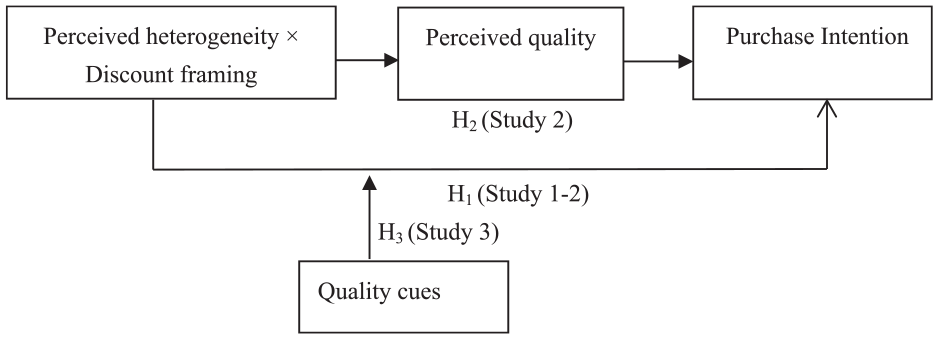
Research framework.
Study 1A
Study 1A was a single factor between-subject (high vs. low heterogeneity) experimental design. We manipulated perceived heterogeneity and examined how perceived heterogeneity affects consumers’ selection of experience service packages with different discount framing.
Method
From prior investigation on service heterogeneity it can be concluded that if a service is described as standardized, then it can readily be interpreted to be highly homogeneous by consumers; in other words, to have low heterogeneity (Lovelock & Gummesson, 2004; Zeithaml et al., 1985). Consistent with this conclusion, in study 1, we used the word standardized to manipulate consumers’ perception of a service’s heterogeneity. We expected that a standardized service could lead to decreased perceived heterogeneity. Next, we provided consumers with an either/or choice context and the total amount of the two alternatives was exactly the same.
We targeted 100 participants and eventually collected 103 complete responses from an online panel called Credamo in China. 1 Participants’ mean age was 30.60 years (SD = 7.35), whereof 37% of the participants were male, and 63% were female. Participants were randomly assigned to one of two groups: heterogeneous resort accommodation or heterogeneous hot spring amusement.
Participants were asked first to imagine that “You have recently moved into a new city. Now, you plan to go on a vacation to a hot spring resort with your family, which includes resort accommodation and hot spring amusement. Given that both accommodation and amusement are of great importance to your family and that you currently still have insufficient knowledge regarding resorts in this city, you decide to turn to your friend for a resort recommendation.”
Immediately afterward, participants in the heterogeneous resort accommodation group were told by the friend that the accommodation in that area was lowly standardized and the hot spring is of high standardized level. Participants in the heterogeneous hot spring amusement group were recommended to the contrary (see the appendix for the stimuli).
Afterward, participants rated the perceived importance (i.e., “I think the condition of the accommodation/amusement in the service package is very important”) and perceived heterogeneity of the resort accommodation and hot spring amusement (i.e., “I think the condition of the hotel/amusement park in the service package will provide great variability in its service”), respectively, on a seven-point Likert-type scale.
Next, participants were told that after searching and comparing, they have screened out other alternatives and decided to choose one hot spring resort of the remaining two, Resort A and Resort B. Next, they were all at once shown two images containing detailed information regarding Resort A and Resort B. The information shown was obtained from dianping.com, yelp’s Chinese counterpart (see Appendix for the stimuli). The original price was 600 and 398 Yuan after the discount. Resort A and Resort B had the same total price (600 Yuan) and discounted price (398 Yuan) but varied in the discount framing. To be specific, for Resort A, we indicated the discount on the total price was due to a price reduction in the hotel (Original price: 300 Yuan, Discounted price: 98 Yuan). For Resort B (control condition), we did not indicate this piece of information. All other information and the layout, were held constant across the two images shown. After viewing the two images, participants made a choice between Resort A and responded to demographic questions.
Results
We first ran analyses of variance (ANOVAs) to perform manipulation checks. The results showed that the two groups have no significant difference in the perceived importance of accommodation (F(1, 101) = 0.12, p = .73, η2 < 0.001), and amusement (F(1, 101) = 0.01, p = .92, η2 < 0.001). Participants in the heterogenous resort accommodation group perceived higher heterogeneity of accommodation than those in the hot spring amusement group (Maccommodation = 5.98, SD = 1.29, Mamusement = 2.98, SD = 1.97, F(1, 101) = 83.58, p < .001, η2 = 0.45). Participants in the heterogeneous hot spring amusement group perceived heterogeneity of the amusement higher than those in heterogeneous accommodation group (Maccommodation = 2.84, SD = 1.91, Mamusement = 5.96, SD = 1.22, F(1, 101) = 97.76, p < .001, η2 = 0.49). As such, perceived heterogeneity was successfully manipulated.
The results of a chi-square test also demonstrate the significant effect of perceived heterogeneity on the choice (χ 2 = 8.46, df = 1, p = .005, Cramer’s V = 0.29), revealing that most participants (75%) in the heterogeneous amusement group chose Resort A (discount in the accommodation component) and only 25% of the participants in this group chose preferred Resort B (discount in the total price). Additionally, for the heterogeneous accommodation group, there were slightly more participants choosing Resort B (discount in the total price) (53%) than those who chose Resort A (discount in the accommodation component) (47%).
Discussion
These results are in line with our expectations. Consumers are more likely to select a travel package wherein the low perceived heterogeneity component is discounted. In this study, we compare two packages with different discount framing: a discount on the total price versus a discount on the accommodation component. In Study 2, we aim to replicate the findings of Study 1 by comparing a discount on the total price and a discount on the amusement component.
Study 1B
Method
Study 1B was a single factor between-subject (high vs. low heterogeneity) experimental design. The design of Study 1B is identical to Study 1A except for the dependent variable (See Appendix for detailed stimuli). In Study 1B, after viewing the stimuli, participants were asked to make a choice between the following two resorts. Similar to Study 1A, Resort A and Resort B had the same total price (600 Yuan) and discounted price (398 Yuan). We only modified the discount framing.
In particular, for Resort A, we showed that the discount was on the amusement park (Original price: 300 Yuan, Discounted price: 98 Yuan). For Resort B (control condition), we only indicated the discount on the total package. We collected 99 participants via the Credamo panel in China. The mean age was 30.6 (SD = 7.35). The number of the male participant was 27 (27%).
Results
The results of the manipulation check suggested that people in both conditions perceived the accommodation (F(1, 97) = 0.80, p = .37, η2 = 0.008) and amusement park (F(1, 97) = 0.78, p = .38, η2 = 0.008) as equally important. Furthermore, people in the heterogeneous accommodation condition perceived the accommodation in that area as more heterogenous than those in the heterogeneous amusement condition (Maccommodation = 6.14, SD = 1.00, Mamusement = 3.29, SD = 2.13, F(1, 97) = 73.58, p < .001, η2 = 0.43). Similarly, participants who were in the heterogenous amusement condition perceived the amusement park in that area to be more heterogeneous than those in the heterogeneous accommodation group (Maccommodation = 3.51, SD = 2.24, Mamusement = 6.08, SD = 0.92, F(1, 97) = 54.70, p < .001, η2 = 0.36). As such, the manipulation was successful.
The results of a chi-square test showed that perceived heterogeneity influences people’s choice of the resort (χ 2 = 4.37, df = 1, p = .044, Cramer’s V = 0.21). In particular, people were more likely to choose Resort A (discount on the amusement) than Resort B (discount on the total package) when the accommodation was perceived as heterogeneous (66.7%vs. 33.3%). In contrast, people tended to select Resort B over Resort A when the amusement was perceived as heterogeneous (54.2%vs. 45.8%).
Discussion
Study 1B successfully replicated the findings of Study 1A. People prefer a package wherein the heterogeneous component is not discounted. In this case, a discount on the total price or a discount on the lowly heterogeneous component is a better option. However, another alternative explanation may still compete with our findings: participants in this study 1 viewed different images regarding resorts at the same time. In other words, they were all in a joint evaluation (JE) mode. Consequently, participants may over-predict the difference of an attribute (Hsee & Zhang, 2004) such as price. Therefore, Study 2 attempted to rule out these concerns to substantiate the internal validity of our findings.
Study 2
Our primary goal in study 2 was to test our full theoretical model, including the interaction effect of perceived heterogeneity and discount framing, and the mediating effect of perceived quality on consumers’ evaluation of an experience service package. Study 2 was a single evaluation context designed to rule out the competing explanation that the contrast effect may intensify consumers’ perception of the price difference. We did not expect a significant difference in consumers’ evaluation even in the single evaluation (SE) mode.
Method
Study 2 employed a 2 (perceived heterogeneity: heterogenous accommodation vs. heterogenous amusement) × 2 (discount framing: discount on the accommodation vs. discount on the amusement) between-participant design. Participants were randomly assigned to one of the four conditions. To satisfy the study requirements, 200 students from a large and diverse university in Beijing were recruited 2 ; however, 41 failed to complete our study, leaving an effective sample of 159. Participants’ mean age was 26.87 years, and 45% of the participants were male while 55% were female.
Participants first read a paragraph about their recent plan to vacation with their family in a hot spring resort, in a similar scenario as used in the preceding study. Their perception of heterogeneity was manipulated by a friend’s recommendation as before. Afterward, they rated the perceived importance and heterogeneity of resort accommodation and hot spring amusement, respectively, on a seven-point Likert-type scale.
Participants were then shown an image related to the Resort. Participants across the four groups viewed almost the same image, except that the discount framing was different. In the discounted accommodation condition, the total price was reduced because of a discount on the accommodation. In the discounted amusement condition, the discount was on the amusement component (see Appendix for the stimuli).
Next, participants responded to the perceived quality of the accommodation (i.e., “I think the quality of the hotel is good”) and amusement (i.e., “I think the quality of the amusement park is good”), rated their purchase intention (i.e., I am likely to book it), and evaluated whether the pricing strategy of the package was normal and common on a seven-point Likert-type scale. Finally, they reported their previous experience in a hot spring resort as well as responded to demographic questions.
Results
Manipulation Checks
First, we ran several ANOVAs to perform manipulation checks. The results showed that the heterogeneous accommodation condition and heterogeneous amusement condition have no significant difference in terms of resort vacation experience (F(1, 155) = 0.08, p = .78, η2 = 0.001) and no significant difference in the perceived importance of amusement (F(1, 155) = 0.30, p = .59, η2 = 0.002) and perceived importance of accommodation (F(1, 155) = 0.22, p = .64, η2 = 0.001). Participants in the heterogeneous amusement condition perceived higher amusement heterogeneity (Mhetero-amusement = 4.21, SD = 0.69, Mhetero-accommodation = 2.65, SD = 1.20, F(1, 155) = 109.1, p < .001, η2 = 0.41) and lower accommodation heterogeneity (Mhetero-amusement = 2.71, SD = 1.17, Mhetero-accommodation = 4.0, SD = 0.89, F(1, 155) = −62.0, p < .001, η2 = 0.29) than those in the heterogeneous accommodation condition. Thus, perceived heterogeneity was successfully manipulated.
Purchase Intention
Second, we examined the interaction effect of perceived heterogeneity and price on purchase intention. We then performed an analysis of variance, with perceived heterogeneity and price as independent variables, purchase intention as the dependent variable. The results demonstrated that the main effect of the heterogeneity difference was not significant (F(1, 155) = 3.20, p = .08, η2 = 0.02). The main effect of price was also not significant (F(1, 155) = 0.03, p = .87, η2 = 0.001); however, the interaction effect of the two was significant (F(1, 155) = 24.12, p < .001, η2 = 0.14). For people who were in the heterogeneous accommodation condition, a discount on the accommodation decreased the purchase intention of the package than a discount on the amusement (Mdiscounted accommodation = 3.67, SD = 1.20, Mdiscounted amusement = 4.60, SD = 1.08, F(1, 155) = 12.77, p < .001, η2 = 0.08). Similarly, for participants in the heterogeneous amusement condition, a discount on the amusement reduced the purchase intention (Mdiscounted accommodation = 4.90, SD = 1.32, Mdiscounted amusement = 4.03, SD = 1.03, F(1, 155) = 11.37, p < .001, η2 = 0.07) (See Figure 2 for the detailed interaction effect). As such, H1 was supported.
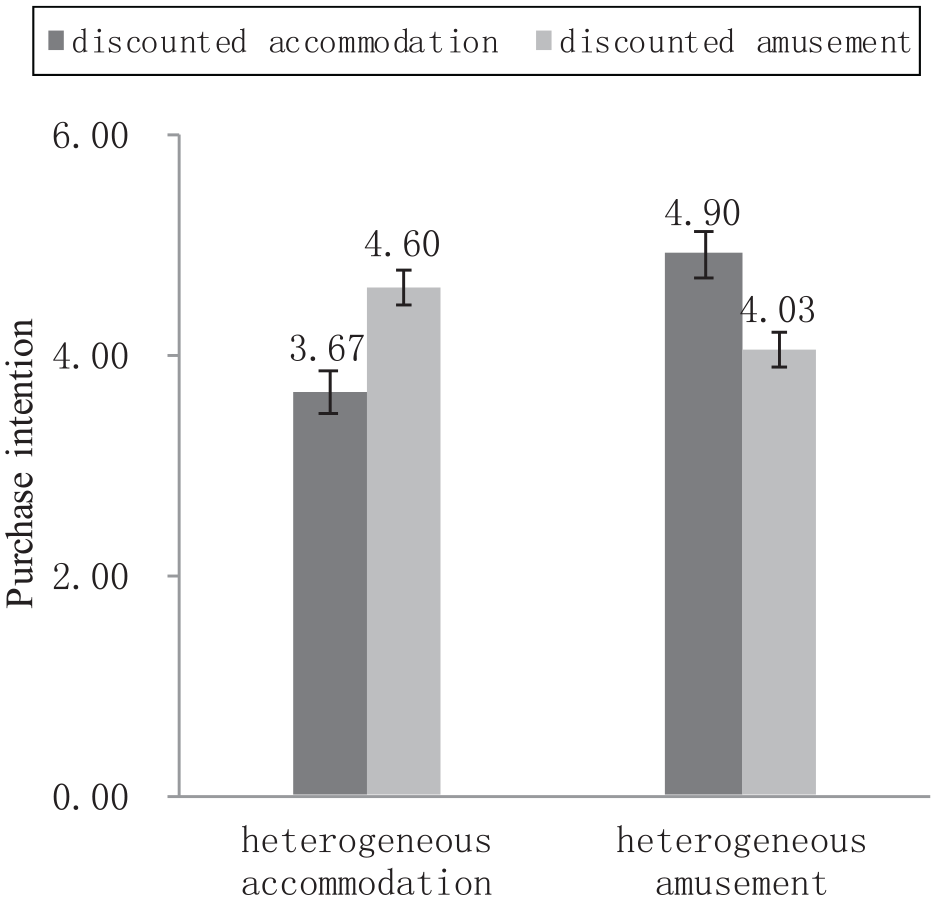
The interaction effect of perceived heterogeneity and price on purchase intention.
Perceived Quality of the Accommodation
We observed a significant two-way interaction effect of heterogeneity and price (F(1, 153) = 15.2, p < .001, η2 = 0.09). For people who were in the heterogeneous accommodation group, a discount on the accommodation led to lower perceived quality of the accommodation than a discount on the amusement (Mdiscounted accommodation = 2.97, SD = 1.09, Mdiscounted amusement = 4.70, SD = 1.32, F(1, 153) = 32.55, p < .001, η2 = 0.18). Additionally, there was no significant effect of a discount on perceived quality for the heterogeneous amusement condition (F(1, 153) = 0.06, p = .80, η2 = 0.001). This was consistent with our expectations (see Figure 3).
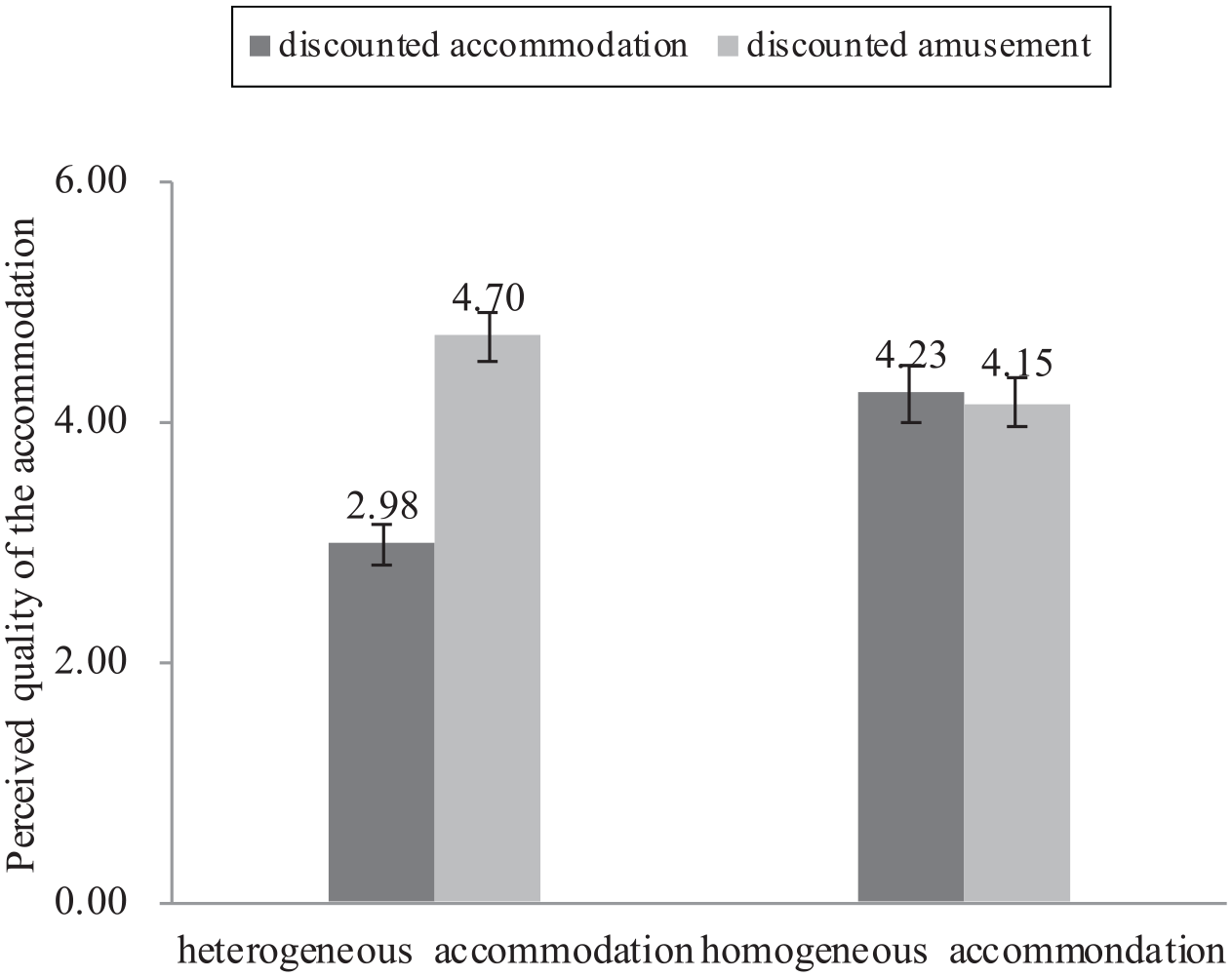
The interaction effect of perceived heterogeneity and price on the perceived quality of the accommodation.
Perceived Quality of the Amusement
In line with the previous step, there was a significant interaction effect of heterogeneity and discount framing (F(1, 155) = 5.01, p = .03, η2 = 0.03). For participants in the heterogeneous amusement group, a discount on the amusement decreased the perceived quality of the amusement (Mdiscounted accommodation = 4.75, SD = 1.43, Mdiscounted amusement = 3.60, SD = 1.43, F(1, 155) = 11.83, p < .001, η2 = 0.07). In accordance with our expectation, there was no significant difference of perceived quality of the amusement for people who were in the heterogeneous accommodation condition (F(1, 155) = 0.07, p = .79, η2 = 0.001) (See Figure 4).
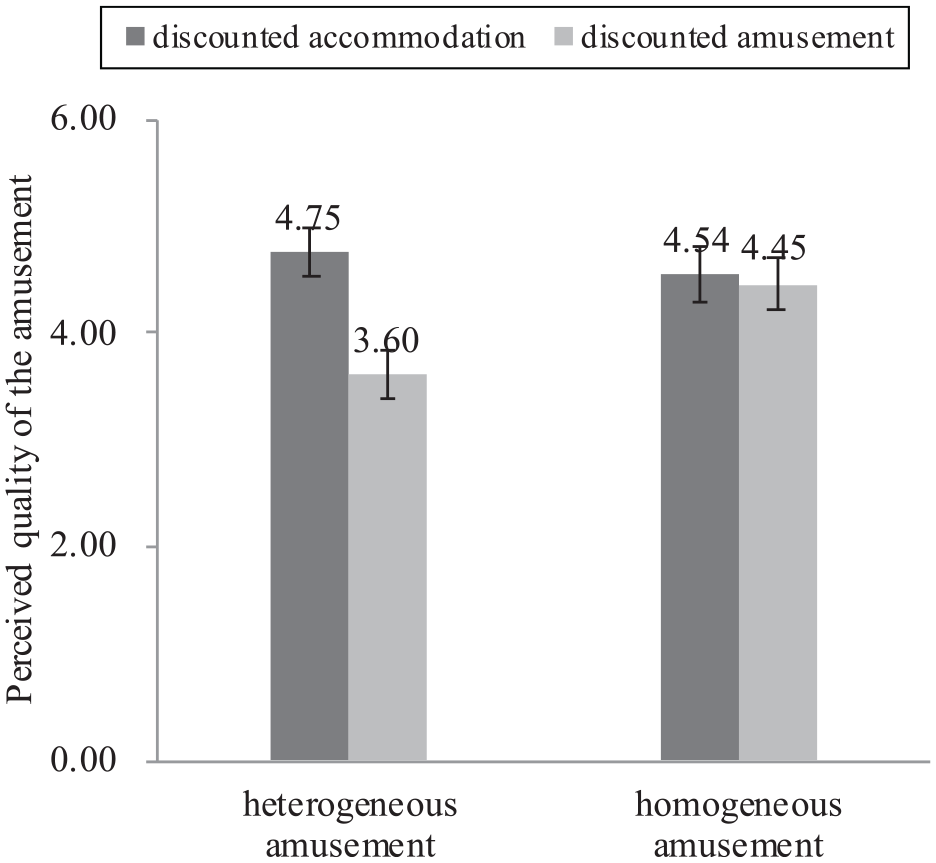
The interaction effect of perceived heterogeneity and price on the perceived quality of the amusement.
Moderated Mediation Analysis
Lastly, we conducted the moderated mediation test for the effect of perceived quality on consumer preferences for the service package. We adopted procedures developed by . As shown in Figure 5, perceived quality of the accommodation mediated the interaction effect of perceived heterogeneity and discount framing on purchase intention (b = −0.76, SE = 0.22, 95% CI [ −1.22, −0.35]). In particular, for the heterogenous accommodation group, a discount on the price of the accommodation (vs. amusement) resulted in a lower level of purchase intention due to lower perceived quality of the accommodation (b = −0.79, SE = 0.18, 95% CI [−1.16, −0.47]). However, for the heterogeneous amusement group, such indirect effect was not significant (b = −0.03, SE = 0.15, 95% CI [−0.33, 0.25]).
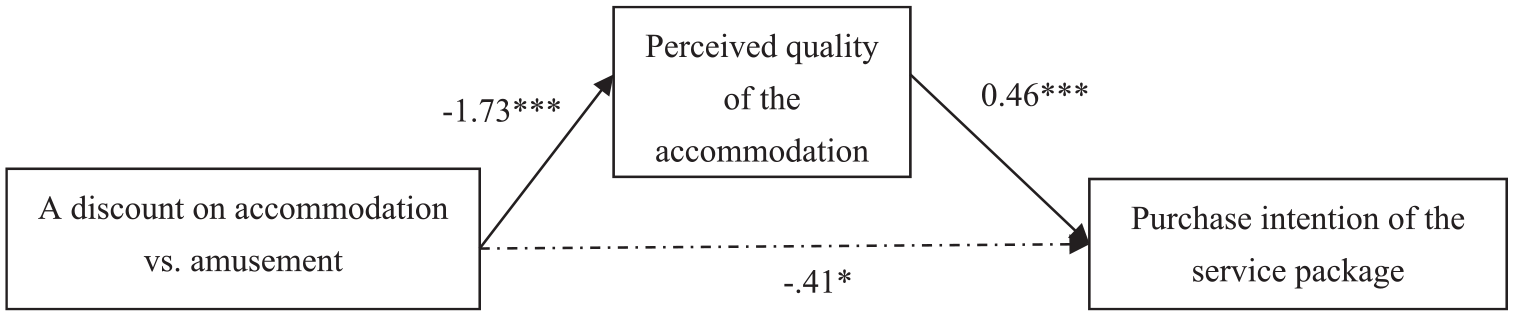
Mediation model 1: Heterogeneous accommodation.
Furthermore, perceived quality of the amusement also mediated the moderation effect (b = −0.53, SE = 0.24, 95% CI [−1.01, −0.05]). More specifically, for the heterogeneous amusement group, a discount on the price of the amusement (vs. accommodation) reduced the purchase intention because of lower perceived quality of the amusement (b = −0.57, SE = 0.16, 95% CI [−0.89, −0.26]). However, for the heterogeneous accommodation group, the indirect effect was not significant (b = −0.04, SE = 0.17, 95% CI [−0.37, 0.31]). Therefore, the third hypothesis was supported (See Figures 5–8 for the moderated mediation effect).
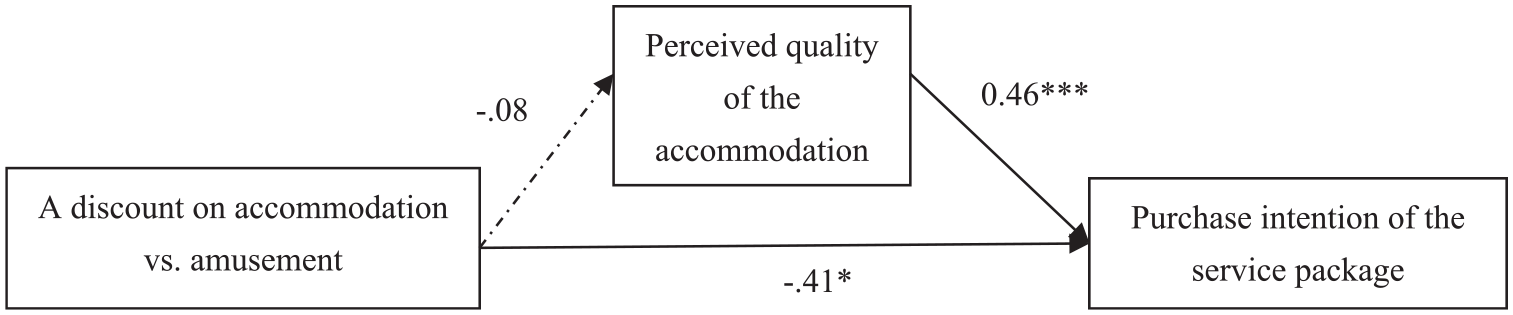
Mediation model 2: Heterogeneous amusement.
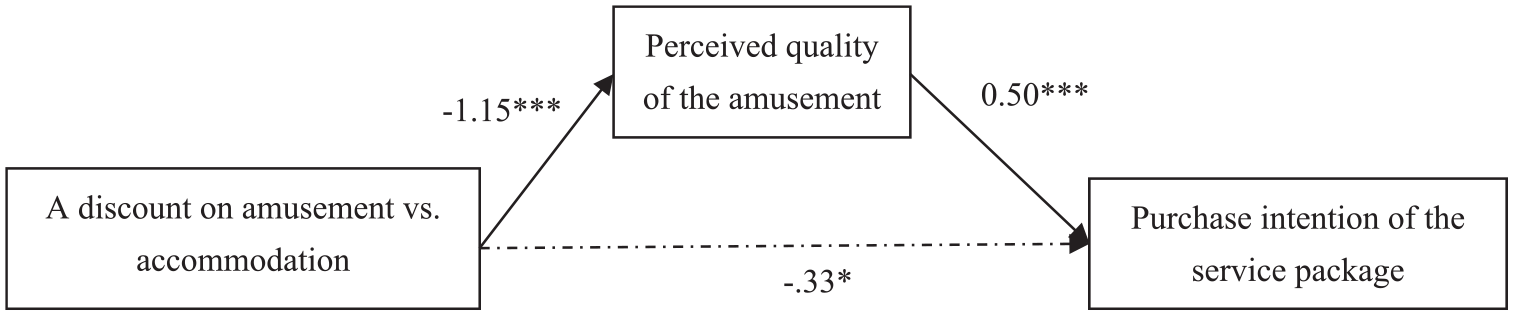
Mediation model 3: Heterogeneous amusement.
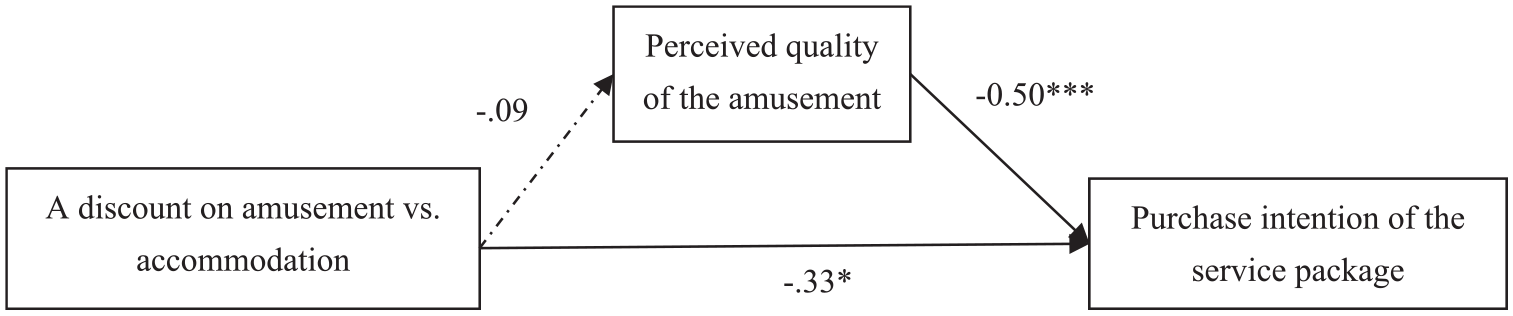
Mediation model 4: Heterogeneous accommodation.
Discussion
The results suggest that perceived quality mediated the interaction effect of perceived heterogeneity and discount framing on consumers’ purchase intention toward an experience service package. In addition, Study 2 supported our expectation that even in the SE scenario, the effect of perceived heterogeneity on the experience service package still held strongly.
Study 3
As a type of quality assurance cue, travel agencies or platforms often provide user ratings for consumers. In view thereof, Study 3 took user rating into account. We expected the presence of user ratings would mitigate the effect of perceived heterogeneity on consumer preferences.
Method
Study 3 was a 2 (perceived heterogeneity: accommodation vs. amusement) × 2 (quality assurance cue: present vs. absent) between-subject factorial design. The perceived heterogeneity manipulation was consistent with the manipulation in study 2. In this study, we only focused on the package with discounted accommodation and undiscounted amusement. We expect that in most cases, people will be in favor of this package if the amusement (vs. accommodation) was perceived as heterogeneous. This difference will be mitigated when quality assurance cues about the package were present. Two hundred complete responses were collected through an online panel (Credamo) 3 . Credamo (2023) is an opt-in online panel service with a total number of 1.5 million registered samples in China. Participants’ mean age was 27.56 years and 41% of the participants were male while 59% were female.
Participants were asked first to imagine choosing a hot spring resort to spend a vacation with their family as in Study 1 (See Appendix for the stimuli). Afterward, they viewed the advertisement for the vacation package with user ratings (presence of quality assurance cues) or without user rating (absence of quality assurance cues). Next, participants rated the perceived heterogeneity of resort accommodation and hot spring amusement respectively, on a seven-point Likert-type scale. Finally, they reported their purchase intention as well as responded to demographic questions.
Results
At the outset, we ran analyses of variance (ANOVAs) to perform manipulation checks. Results showed that participants in the heterogeneous hot spring amusement group perceived higher heterogeneity of amusement than those in the heterogeneous accommodation group (Mhetero-accommodation = 2.38, SD = 1.38, Mhetero-amusement = 6.31, SD = 0.88, F(1, 198) = 577.1, p < .001, η2 = 0.75). In contrast, participants in the heterogeneous accommodation condition perceived higher heterogeneity of accommodation than those in the heterogeneous amusement condition (Mhetero-accommodation = 6.23, SD = 0.96, Mhetero-amusement = 2.19, SD = 1.29, F(1, 198) = 633.4, p < .001, η2 = 0.76). Furthermore, participants who saw the vacation package with user ratings believed that the package’s quality was more assured than those who saw the one without user ratings (Mquality cue = 4.87, SD = 1.24, Mno quality cue = 2.17, SD = 1.06, F(1, 198) = 274.0, p < .001, η2 = 0.58). Thus, both perceived heterogeneity and quality assurance were successfully manipulated.
Next, we examined the interaction effect of perceived heterogeneity and quality assurance on purchase intention. We performed an analysis of variance, with perceived heterogeneity and quality assurance as independent variables, purchase intention as the dependent variable. The results demonstrated that the main effect of the heterogeneity difference on purchase intention was significant (Mhetero-accommodation = 5.37, SD = 1.42, Mhetero-amusement = 5.74, SD = 0.98, F(1, 196) = 5.15, p = .02, η2 = 0.03). The main effect of quality assurance on purchase intention was also significant (Mquality cue = 6.27, SD = 0.69, Mno quality cue = 4.84, SD = 1.24, F(1, 196) = 105.4, p < .001, η2 = 0.35); Furthermore, the interaction effect of the two was significant (F(1, 196) = 8.19, p < .01, η2 = 0.04). In particular, the results suggested that when quality assurance cues were absent, perceived heterogeneity of the accommodation led to lower purchase intention of a vacation package with the discounted accommodation component (Mhetero-accommodation = 4.50, SD = 1.37, Mhetero-amusement = 5.21, SD = 0.97, F(1, 98) = 8.94, p < .01, η2 = 0.08). However, when quality assurance cues were present, such an effect disappeared (Mhetero-accommodation = 6.31, SD = 0.69, Mhetero-amusement = 6.23, SD = 0.70, F(1, 98) = 0.34, p = .56, η2 = 0.003). H3 was supported (See Figure 9).
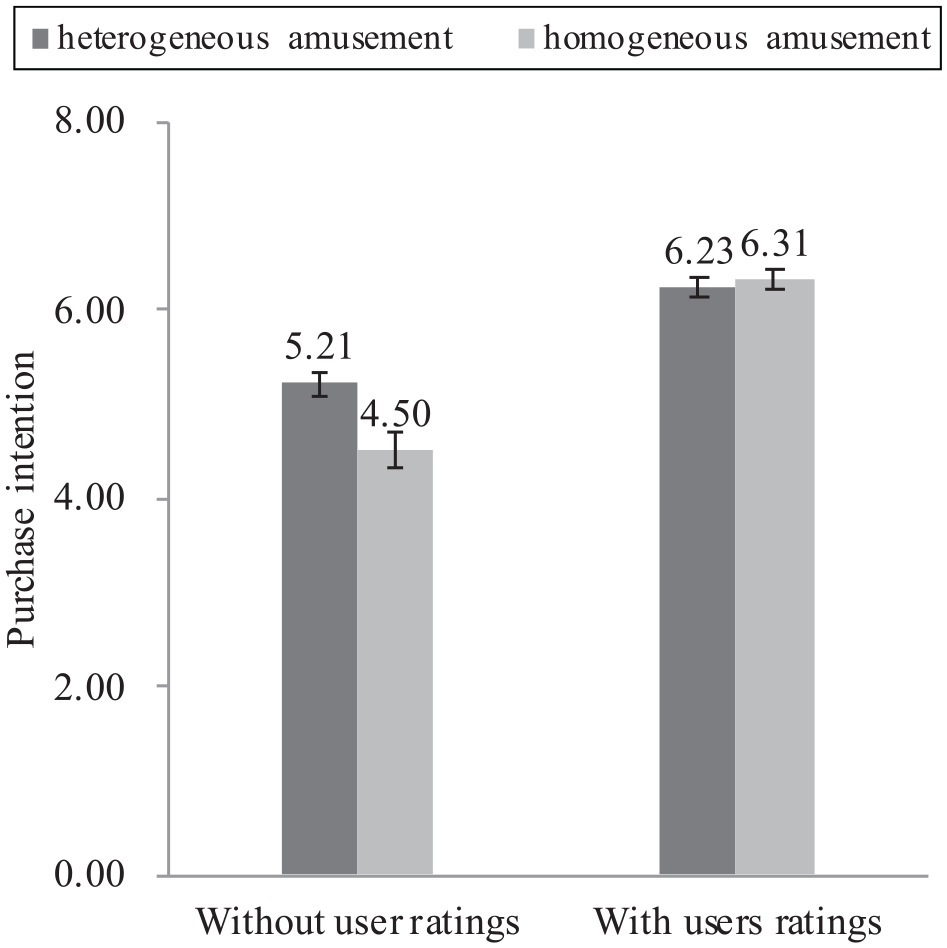
The interaction effect of perceived heterogeneity and user ratings on purchase intention.
Discussion
Study 3 further confirms the underlying mechanism of how perceived heterogeneity affects consumers’ purchase intention of travel packages. When quality assurance cues (i.e., user ratings) are absent, perceived heterogeneity of the accommodation leads to lower purchase intention of a vacation package with a discounted accommodation component. When quality assurance cues are present, such an effect is attenuated. This implies that a discount in the heterogeneous component reduces the perceived quality when quality assurance cues are absent.
General Discussion
Through conducting four experiments, we investigate the impact of discount framing on consumers’ inclination to purchase a travel package. The results indicate that the framing of discounts in package bundling should be approached strategically. Specifically, consumers show a preference for a package where the component with high heterogeneity is not discounted, while the price of the component with low heterogeneity is discounted. This preference can be attributed to perceived quality. More specifically, when a component with a higher level of heterogeneity is discounted, it generates a lower perception of quality compared to a discounted component with a low level of heterogeneity. However, when quality assurance cues are present, and consumers have confidence in the package’s quality, this observed effect disappears.
Theoretical Implications
We challenge the status quo by investigating consumers’ reactions to components in a bundle that differ in the level of perceived heterogeneity. First, the findings of the present study fill a void in the literature and, thus, contribute to academic research concerning different ways of discount framing. This is accomplished by empirically testing the effect of perceived heterogeneity of a component in an experience service package on consumer preferences. Most of the literature on price bundling builds on Prospect Theory. The findings of these studies may not be applicable in the field of experience service where the reference price is sometimes vague, and the performance of the service is not guaranteed. We extend this extant literature by proposing an essential way in which the perceived heterogeneity of a component in an experience service package can influence consumers’ decisions.
Second, this study examines the effect of different framing of the same discount on consumer purchase intention in travel packages. This provides a more nuanced understanding of how different ways discount framing can have different effects. Also, the findings of this study may also be valid for partitioned pricing where the total price of a product or service is divided into smaller, perceptually distinct components (Abraham & Hamilton, 2018; Hamilton & Srivastava, 2008; Xia et al., 2004). In contrast to price bundling, partitioned pricing breaks down the price into separate elements or units that are individually priced instead of presenting a single, lump-sum price. Hamilton and Srivastava (2008) suggested that consumers tend to react more positively to partitions in which the price of the low-benefit component is lower. The findings extend their studies by introducing the influence of perceived heterogeneity on the effect of different pricing strategies on different components.
Third, we identify the mediating role of perceived quality. For the highly heterogeneous component in a travel package bundle, consumers may be uncertain about the quality. A discount on the high-heterogeneity component may signal bad quality and, therefore, reduce the overall purchase intention in the package. However, when quality assurance cues are present, consumers rely less on the discount to evaluate the quality. Thus, applying a discount for a high-heterogeneity component is detrimental. Our research enriches signaling theory by showing how multiple signals interact in complex services and suggests that the signaling effect of price can be moderated when alternative quality cues are present.
In light of our study’s findings, it is important to consider the potential implications in the context of dynamic pricing. Dynamic pricing, which involves adjusting prices in real-time based on market demand and supply has been widely used in the tourism sector (Abrate et al., 2012; Abrate & Viglia, 2016). The price can drop as a result of lower demand. However, as the price is considered as an important indicator of quality (Zeithaml, 1988), dynamic retargeting may be less effective under certain conditions, especially when consumers primarily use price as an indicator of quality or the performance heterogeneity of the service is high. Our study suggests that consumers perceive a lower quality when a component with high heterogeneity is discounted. This perception could potentially be amplified in a dynamic pricing scenario, where frequent price changes might lead consumers to question the quality of the product or service.
Practical Implications
Bundling is an effective strategy to make the overall price of the product or service appear more affordable to consumers. From a managerial perspective, marketers should strategically frame the discount of a travel package bundle. This can allow marketers to tailor their promotion strategies to consumers.
Our findings contribute insight into how companies can optimize their discount framing in a bundle to persuade consumers to choose their services. First, marketers should first identify high and low heterogeneous components in their bundle. Second, marketers should frame the discount in a way that the discount is caused by a price reduction in the low heterogeneous component. This discount framing is more effective than simply applying the discount to the total package. Third, marketers should avoid applying the discount to the high heterogeneous component. For instance, in a travel package that includes both transportation and a spa, marketers can offer a discounted price for the transportation (low heterogeneity) while maintaining the spa price (high heterogeneity) to enhance perceived quality and consumer appeal.
Marketers can even prime consumers to perceive a discounted component as less heterogeneous. For example, if a discount is applied to the hotel component of a travel package, salespeople can emphasize the standardization of the hotel market when talking to their customers. In addition, our findings also imply that marketers should provide necessary contextual cues (e.g., user ratings, money-back guarantee, customer testimonials, or certifications) to help consumers relieve uncertainty when making decisions for a highly heterogeneous experience service. When quality assurance cues are present, marketers can alleviate concerns and doubts regarding the discounted component.
However, marketers should be ethical about price bundling by providing clear and accurate information about the bundled products or services, their individual prices, and the rationale behind the bundled pricing. Marketers can communicate openly about the value and benefits customers can expect from the bundled offer and comply with legal and regulatory standards. Notably, there has been a rise in the regulation of promotion in the European Union (Bray, 2022). As a result, regulatory and legislative measures to safeguard consumers concerning price bundling have been enhanced. For example, in the Europe Union, the prices advertised for products and services must be inclusive of all mandatory charges under consumer protection laws (European Commission, 2006). Nonetheless, companies can still provide an explanation regarding how the overall price is calculated. Importantly, whenever a price drop is declared, it is mandatory for retailers also to display the previous price of the products (Bray, 2022).
Limitations and Future Directions
This study has some clear limitations, which point, in turn, to avenues for future research. First, this research focuses only on experience services, in particular, vacation packages, whereas future studies might examine whether the findings hold across different types of services, such as search and credence services. Secondly, perceived heterogeneity in components of a bundle can be manipulated in a more diverse way. For example, a vacation package can consist of train tickets and hotel accommodations. Generally speaking, “train tickets” should be considered to be less heterogeneous than “hotel accommodations.” In this case, researchers may use different types of services to represent different levels of heterogeneity. Furthermore, even for the same service, different consumers may have different perceptions of heterogeneity based on their own experiences. Therefore, future studies may also use consumers’ subjective perception of heterogeneity as an independent variable. Researchers may use a wide variety of manipulations to determine the effect of perceived heterogeneity, which can enhance the generalizability of the findings. Thirdly, heterogeneity not only entails a more ambiguous reference price but also implies a higher level of variability and uncertainty of service quality. Future studies may investigate further the factor influencing the effectiveness of discount framing in bundling. For example, researchers can directly manipulate the precision of the reference prices to see if the ambiguity of the reference price influences consumers’ preferences.
Footnotes
Appendix 4
Acknowledgements
Please note that some sentences in the text were proofread by large language models (LLMs). In addition, LLMs were not used directly in generating contents.
Declaration of Conflicting Interests
The author(s) declared no potential conflicts of interest with respect to the research, authorship, and/or publication of this article.
Funding
The author(s) disclosed receipt of the following financial support for the research, authorship, and/or publication of this article: This work was supported by the National Natural Science Foundation of China [grant numbers 71772129, 72102151] and the Guangdong Planning Office of Philosophy and Social Science Project [grant number GD19CGL39].
