




Abstract
This paper develops a novel Bayesian heterogeneous panel vector autoregressive model (B-HP-VAR) that quantifies the impact of geopolitical risk shocks on the tourism industry of 14 emerging market and developing economies (EMDE). We find that increasing geopolitical tensions have a persistent negative effect on tourism demand in most of these countries, as shown by our impulse response estimates. Furthermore, evidence from forecast error variance decomposition reveals that geopolitical risk shocks in many EMDE economies constitute the main driver of tourism demand. Analysis from historical decompositions demonstrates that geopolitical tensions have been particularly influential in driving tourism demand in Ukraine, Russia, Turkey, China, Indonesia, Thailand, Colombia, and Mexico. Our main findings are robust to several perturbations to the benchmark specification. Our results have several important implications for policymakers in their efforts to strengthen the ability of the tourism industry to absorb shocks from geopolitical tensions.
Introduction
The COVID-19 pandemic had a significant impact on the entire travel and tourism industry, resulting in the loss of 62 million jobs and nearly $4.9 trillion in losses in 2020. However, according to a recent report by the World Travel and Tourism Council (n.d), the tourism sector is showing resilience and is set to grow by an average of 5.8% annually between 2022 and 2032, outpacing the growth of the overall economy. This recovery of the tourism sector highlights the importance of understanding the factors that influence international tourism demand, as it will continue to shape travelers decisions in a post-pandemic world.
One crucial factor that plays a pivotal role in influencing tourism flows is geopolitical risk, encompassing aspects such as political stability, safety, and security. Instances of wars, conflicts, terrorism, and human rights violations, escalate geopolitical risk, which in turn significantly influences tourists’ decisions regarding their destinations, leading to a decline in tourism in affected countries. This effect is particularly pronounced in emerging and developing economies (EMDE), where political instability and terrorism exert a significant negative influence on tourist inflows (Kozak, 2007; Lanouar & Goaied, 2019; Muzindutsi & Manaliyo, 2016).
In the field of tourism research, there is a significant gap pertaining to the influence of geopolitical risk on tourist demand. Specifically, the existing evidence falls short in examining the individual effects of geopolitical risk on several countries when they are jointly considered within a comprehensive model. Our study aims to address this research gap by employing a novel econometric approach. We seek to investigate the extent to which geopolitical risk affects tourism demand in various EMDE and explore potential variations in this relationship over time, and across countries. By shedding light on this issue, our study aims to provide valuable perspectives for tourism policymakers and practitioners and help them make informed decisions in a rapidly changing global environment.
Employing a state-of-the-art Bayesian heterogeneous panel vector autoregressive model (B-HP-VAR), our study bridges the existing research gap by estimating country-specific impacts of adverse geopolitical risk shocks on tourist arrivals. In order to achieve this, we advance the existing literature by deviating from the use of standard pooled mean group estimator panel VARs and introduce a novel and sophisticated version that adeptly incorporates the heterogeneity among countries and delivers cross-country impulse responses. These features enable us to investigate the contribution of geopolitical tension shocks to short and medium-term effects in tourism demand, thereby providing insights into the cross-country persistence of the shock. 1
Although VAR models have been employed to some extent in tourism research, our study stands out as the first to use a panel VAR structure to uncover the impact of geopolitical risk on tourist inflows. Therefore, our paper represents a pioneering contribution to tourism studies, employing a panel VAR with heterogeneous features to beneficially complement the existing literature.
Additionally, our panel VAR structure, treating all variables as endogenous and allowing them to interact with each other, allows us to consider simultaneously the interdependent and dynamic relationship between tourism demand, its main macroeconomic determinants that has been noted in the literature (Song et al., 2012; Wong et al., 2006), and geopolitical tensions. By jointly examining these factors, we can acquire a comprehensive understanding of the respective contributions of geopolitical shocks and macroeconomic shocks to fluctuations in tourism demand.
Another gap in the tourism literature lies in the absence of methodological advancements that effectively estimate panel VAR models. To address this gap, we introduce the utilization of Bayesian methods for the estimation of our panel VAR. Traditional VARs and panel VARs estimated either by least squares or maximum likelihood often require many lags to improve the in-sample fit, leading to a significant loss of degrees of freedom with adverse consequences for structural analysis (Bańbura et al., 2010). Bayesian shrinkage helps to overcome this problem by imposing a prior that concentrates more around zero for higher lags hence reducing the number of lags and limiting the over-parameterization issue. Moreover, considering the relatively short data-span compared to the number of parameters, estimation of objects of interest, such as impulse responses can become imprecise. By incorporating prior information into the estimation process, our study provides more precise and reliable estimates compared to traditional methods, compensating for the short sample size (Jarociński, 2010). Additionally, the utilization of Bayesian simulation methods allows us to obtain efficient point estimates and characterize the uncertainty surrounding those estimates through confidence bands for our impulse responses.
Our paper explores the influence of geopolitical risk shocks on tourism demand in 14 EMDEs. The classification of the 14 countries we consider in our paper is based on the World Bank’s classification system. 2 We use the news-based index of adverse geopolitical events and associated risks of Caldara and Iacoviello (2022) as a measure of geopolitical risk. In addition, our study incorporates the following endogenous variables, real GDP, relative consumer price index (RCPI), and tourist arrivals. We also consider oil prices and a measure of global economic conditions as control variables. The selection of variables is in line with economic theory and empirical evidence from previous studies on the drivers of tourism demand (Assaf et al., 2019; Cao et al., 2017; Kim et al., 2012).
Our study demonstrates that in the majority of the EMDE countries examined in our sample, geopolitical tension shocks have had a significant and medium-term negative impact on tourism inflows. The detrimental impact of geopolitical shocks in the tourism industry becomes quickly apparent, that is, within a year following the shock. Our findings also reveal that in countries such as China, Indonesia, Thailand, Colombia, Mexico, Brazil, Russia, and Ukraine, geopolitical shocks explain over 20% (Brazil) and up to 77% (Ukraine) of movements in tourism demand over a 4-year horizon. Furthermore, we find that historically, geopolitical tension shocks have been the main drivers of tourism demand in many EMDE countries, rather than income shocks (as proxied by real GDP).
Last, a rich sensitivity analysis is also conducted to ensure that our main findings are robust to alternative specifications of our baseline model.
The remainder of the paper proceeds as follows. Section 2 reviews the related literature. Section 3 presents the methodology and discusses the data. The empirical results are discussed in Section 4. Section 5 concludes and offers some reflections on policy implementation.
Literature Review
Theoretical Foundation
The factors that influence tourism demand and demand forecasting are widely researched areas in tourism literature (Song et al., 2012) and are of central importance to both researchers and policymakers. 3 There is a plethora of studies focusing on the drivers of tourism demand, most of them use macroeconomic variables, in particular income, which is usually measured by GDP, relative consumer price indices of the destination country, and the unemployment rate (Halicioglu, 2010; Oh, 2005; Seetaram et al., 2016; Smeral, 2012).
Another strand of literature has highlighted the importance of non-macroecomomic variables as determinants of tourism demand. Goh et al. (2008) examine the US and UK tourist arrivals to Hong Kong using macroeconomic and non-macroeconomic drivers of tourism demand. The authors suggest that climate and leisure time play a more important role in driving tourism arrivals than standard macroeconomic factors. In a similar vein, Cazanova et al. (2014) demonstrate that non-economic factors as approximated by weather, wildfires and the 9/11 events, exert significant influences on tourism demand in the US. Other non-economic factors that have been employed in the empirical literature include advertising (Kronenberg et al., 2016), consumer sentiment (Dragouni et al., 2016), and immigration (Seetaram & Dwyer, 2009).
Our paper is related to the strand of literature that examines the impact of geopolitical risk on the demand side of tourism using either tourist arrivals, or tourist expenditure, or overnight stays, to gage tourism demand. 4 The prospect theory of risky decision-making comprises the theoretical foundation of our study. Prospect theory (Kahneman & Tversky, 1979) was inspired by the inability of the traditional expected utility theory to provide a descriptive model of choice under risk. Kahneman and Tversky’s (1979) experiments capture a pattern of risk attitudes which differ from utility maximization. Particularly, choices involving gains indicate a risk averse agent while choices involving losses are linked to a risk lover agent. When this theory is applied to touristic decisions involving episodes of geopolitical risk such as wars, terrorist acts and political instability, prospects are depicted by potential travel destinations. Therefore, agents’ perception of geopolitical risk influences the attractiveness of destinations being considered. Risk averse tourists will probably choose destinations perceived as safe while risk seekers are likely to be less worried about choosing destinations based on safety factors.
Prospect theory also provides us with the notion of loss aversion, that is, individuals tend to be more sensitive to losses than to similar sized gains in utility. This means that loss is more worthy avoiding than an equivalent gain. Applied to our framework, the framing effect, which is influenced by exposure to media coverage and word-of-mouth regarding geopolitical tensions, can elicit a more extreme response to possible losses than to possible gains in individuals. As a result, potential tourists are more likely to choose a destination that is perceived as less dangerous.
Furthermore, prospect theory asserts that economic agents do not evaluate outcomes in terms of absolute levels, but rather, they evaluate the deviation from a particular benchmark level. When this concept is applied to tourism, that reference point can be a past or current experience of tourism. For example, if you had a good experience in one resort last year, you would expect the same good experience this year. In this sense, tourists, even if they perceive a higher level of geopolitical risk in that destination next year, they may still visit the same resort.
Empirical Studies on Geopolitical Risk and Tourism Demand
Various empirical studies have examined aspects of geopolitical risk in isolation, such as the effects of conflicts, terrorism, political instability, and security, on tourism demand. Lanouar and Goaied (2019) using a Markov switching model investigate the impact of terrorist attacks and political violence on the number of tourist arrivals and overnight stays in Tunisia. They find that local shocks have a more important impact than international shocks in influencing tourism activity. Moreover, they show that the effects of terrorist shocks have a long duration compared to political violence shocks of which the impact on tourism was evident in the short term. 5 Muzindutsi and Manaliyo (2016) use an autoregressive distributed lag (ARDL) model which they apply to data in South Africa. As opposed to Lanouar and Goaied (2019), they show that political risks have a long-run effect on real revenue from the tourism industry but there was no empirical evidence supporting the short-run relationship. Bassil et al. (2019) using a seemingly unrelated regression (SUR) model examine the impact of domestic and transnational terrorism on tourism demand to Lebanon, Turkey, and Israel. They find that terrorism significantly affects visitor arrivals within the country, as well as evidence of spillover effects. Tiwari et al. (2019) use a wavelet analysis to examine the impact of geopolitical risks on tourist arrivals in India. The authors conclude that the influence of geopolitical risks is stronger and long-lived as opposed to the impact of economic policy uncertainties which is short lived. Ming and Liu (2021) investigate the political uncertainty in China’s tourism industry using the country’s anti-corruption campaign as an exogenous shock and conclude that political uncertainty does affect the tourism industry. In the US, Hailemariam and Ivanovski (2021) examine the impact of geopolitical risk on tourism and find a significantly negative relationship.
The previous literature focuses on examining the effect of different kinds of geopolitical tensions on tourism demand in a single or a few countries. Empirical studies that consider a much larger set of countries include Neumayer (2004), who employs two estimation techniques, a fixed panel estimator and a dynamic generalized method of moments to test the impact of various forms of political violence on tourism. Both models evidence that human rights violations, conflicts, and other politically motivated violent events, affect tourist arrivals. Harb and Bassil (2020) use a gravity model to investigate the impact of terrorism on bilateral tourism flows within the Organization for Economic Co-operation and Development (OECD) economies. They show that after reaching a certain threshold, terrorism negatively impacts tourist arrivals. This non-linear relation seems to be determined by the share of immigrants in the country of destination: when the share of immigrants in a country is relatively high, the positive impact of immigration on tourist flows would counterbalance the adverse impact of terrorism on tourist arrivals. Saha et al. (2017) examine the impact of political and economic freedom on inbound tourism for more than 110 countries using panel country fixed-effects techniques. The authors show that freedom measures are positively and significantly associated with inbound tourism.
Saha and Yap (2014), using a panel of 139 countries analyze the effects of interaction between political instability and terrorism on tourism development. Although their findings reveal that the effect of political instability on tourism is severe, the effects of one-off terrorist attacks are not. Instead, they find that terrorist attacks increase tourism demand for the low- to moderate-political-risk countries. A similar result is found in Liu and Pratt (2017) who consider a panel data on 95 countries. The authors do not find evidence of a long run effect of terrorism on international tourism demand; the short run effect is also quite limited, implying that international tourism is resilient to terrorism. Saha and Yap (2015) suggest that although country risk is a robust and significant determinant of tourist arrivals, an increase in the corruption index does not have an adverse impact on tourist arrival, particularly for those countries that have historical heritage. Ghaderi et al. (2017) reach to a similar conclusion in a panel of 45 developing economies. They find that low security levels in the destination country, not only did not lead to low visitation, but significantly increased tourist arrivals. Last, Balli et al. (2019) find that the impact of geopolitical risk is not homogeneous for every country, some countries are affected heavily by geopolitical tensions and others are mostly immune to these shocks. Overall, although most of the studies find that geopolitical crises adversely impact tourism flow, the evidence is not conclusive.
VAR Models in Tourism Research
From a methodological perspective, although VAR models have been heavily used in the macroeconomic literature, they have not been widely applied in tourism research. Chatziantoniou et al. (2013) and Cheng et al. (2013) use structural VARs to investigate the relationship among oil price shocks, tourism variables and economic indicators (the former study) and between exchange rates and tourism (the latter study). Hailemariam and Ivanovski (2021), previously mentioned, also use a structural VAR to examine the impact of geopolitical risk on tourism in the US. On the other hand, Gunter and Önder (2016) and Wong et al. (2006) use Bayesian VARs to evaluate their ability in forecasting tourism demand.
Another strand of literature uses Global VAR (GVAR) models, either to forecast tourism demand (Assaf et al., 2019), or to measure the impact of geopolitical risk on tourism demand (C. Lee et al., 2020), or to estimate the impact of a negative income shock in China’s economy to a large group of major economies (Cao et al., 2017). Although GVARs are appealing because they intuitively capture important features of a panel, while trying to maintain a simple structure which allows them to be easily estimated, they come with two serious limitations. First, since the weights are country specific and typically a-priori determined by the investigator, a GVAR imposes a specific structure on the interdependencies in the data, based for example on trade flows or financial considerations, and forces the same dynamics on all the variables belonging to all countries. However, it is hard a-priori to know whether weak or strong cross-sectional dependence characterizes the countries under consideration (Canova & Ciccarelli, 2013). Second, as several studies that employ GVARs admit (Cao et al., 2017; Dees et al., 2007; Galesi & Lombardi, 2009), the confidence bands of impulse responses contain zero in most cases, which essentially means that the results are insignificant.
Uncovering the Impact of Geopolitical Risk Through Panel VAR Models
Our work substantially differs from the existing literature in the following aspects. First, in contrast to the majority of studies that examine aspects of geopolitical risk individually, such as terrorism or political risk, our study focuses specifically on geopolitical risk as a distinct concept. Geopolitical risk is broader in scope and encompasses a wider range of political, economic, and social factors that can influence tourism demand. As per Caldara and Iacoviello’s (2022) definition of geopolitical risk, who construct the variable that we use in our paper, “geopolitical risk is defined as the threat, realization, and escalation of adverse events associated with wars, terrorism, and any tensions among states and political actors that affect the peaceful course of international relations.” Thus, geopolitical risk can have a more significant and far-reaching impact on the tourism industry than political risk. Our paper considers all these factors that fall under the umbrella of geopolitical risk in order to provide a comprehensive understanding of the joint impact of these complex events on tourism demand.
Second, this is the first study to employ a panel VAR structure augmented with heterogeneities in the tourism literature. Panel VARs are widely used in the context of macroeconomic (mainly) and microeconomic analysis. In macroeconomics, panel VARs have been used to study fiscal multipliers (Corsetti et al., 2012; Ilzetzki et al., 2013), the transmission of monetary policy shocks (Goodhart & Hofmann, 2008; Jarociński, 2010), and external shocks to macroeconomic aggregates across countries (Canova, 2005; Raddatz, 2007). In microeconomics, panel VARs have been used to examine the dynamics of earnings and hours worked among workers (Vidangos, 2009), or financial development and firm behavior (Love & Zicchino, 2006). 6 We use this sophisticated method to provide a rich structural analysis of the drivers of tourism demand, consisting of impulse responses, forecast error variance decompositions (FEVD), as well as historical decompositions (HD), with a focus on the impact of geopolitical risk shocks. Importantly, our study is the first in the literature to provide insights on the cross-country heterogeneity of the impact of geopolitical risk on tourism demand, by constructing individual responses for each country and across time.
Econometric Set-Up and Data
Econometric Set-Up
Bayesian Heterogeneous Panel VAR ModellingModeling
The general form of the Panel VAR for the country

where

where,
This reformulates in vectorized form as:
We examine how tourism demand in each country responds to geopolitical risk shocks by introducing cross-country heterogeneity, essentially allowing our model to obtain a domestic VAR for each country. We introduce this property by assuming that for each country

with

which implies that the Panel VAR coefficients will differ across countries but they are drawn from a normal distribution with shared mean and variance. We derive the posterior distribution of

That is, the full posterior distribution is equal to the product of the data likelihood function
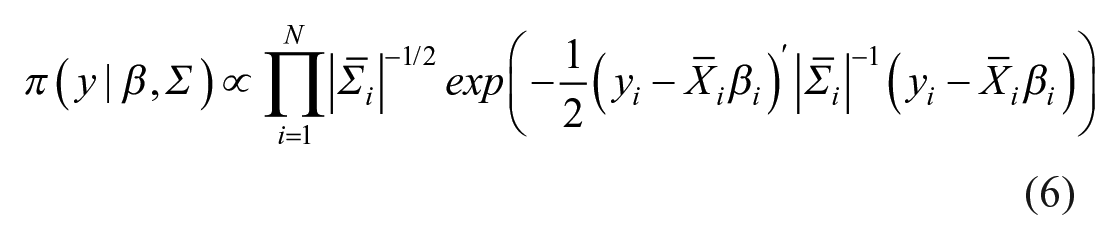
Priors
The prior distributions of all parameters are set as follows. Start with
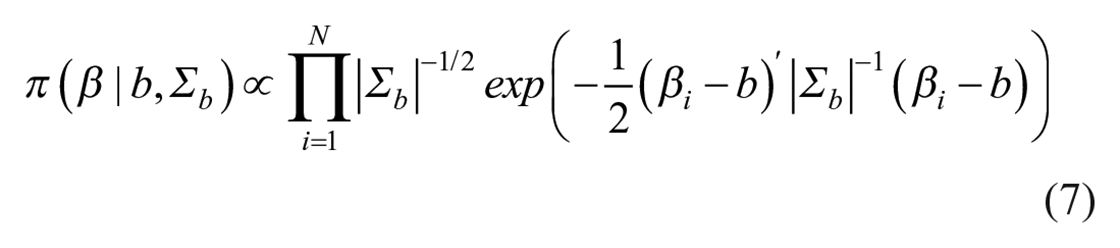
Next, the prior distribution for
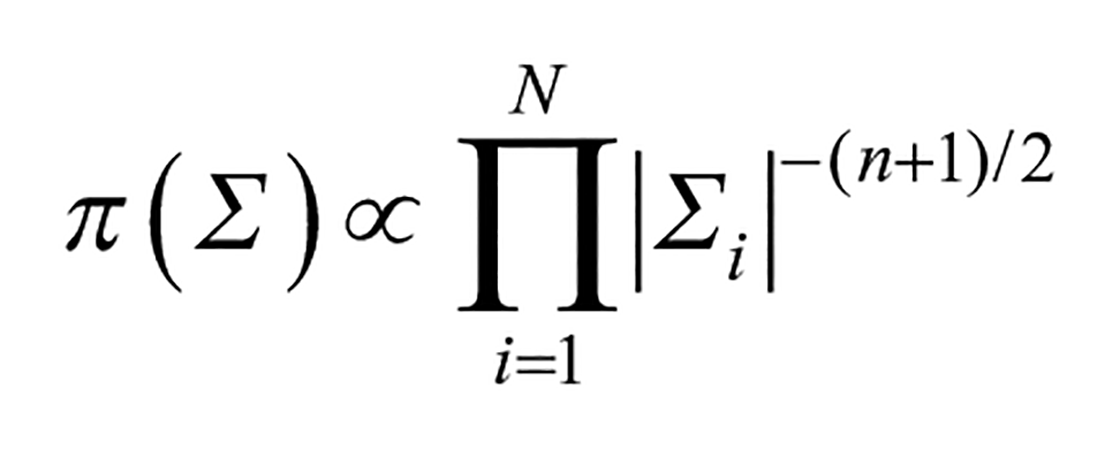
Similarly, for the hyperparameter

Last, for the hyperparameter
Regarding,

where very low values for
Having all priors in hand and substituting into (5), one is able to obtain the full posterior distribution. The conditional conjugacy of the priors implies that all conditional posteriors are also normal, inverted gamma or inverted Wishart, which enables us to use a Gibbs sampling algorithm to approximate the posterior distributions of each of the model parameters (see further details below).
Posterior Distributions
We start with the posterior of

where

where
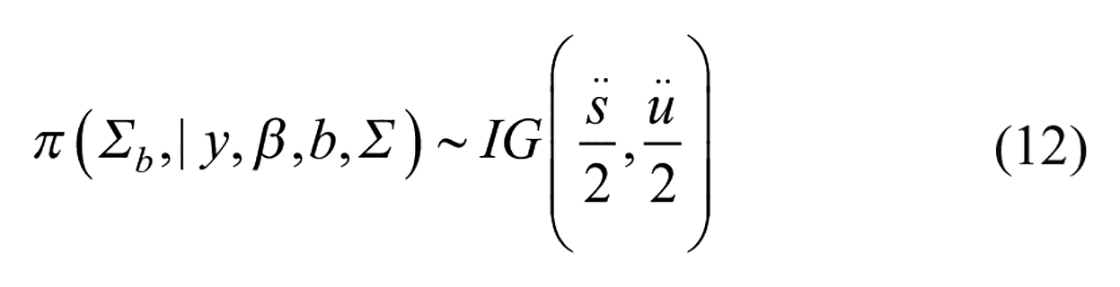
where

where T denotes the degrees of freedom and
Estimation Algorithm
Having all these elements in hand, we apply the following Gibbs algorithm to derive the model parameters. We first define starting values for
Impulse Responses and Identification
To allow for meaningful interpretation of the impulse responses we identify the B-HP-VAR through Cholesky decomposition. This decomposition consists of obtaining an upper triangular matrix
Second, in terms of the rest of the variables of the system, that is, real GDP, RCPI and tourism demand, we order them as follows. Real GDP is ordered second after the geopolitical index, followed by RCPI, while tourism demand is ordered last in the vector of endogenous variables. This identification strategy implies that a real GDP shock which can be interpreted as a change in economic conditions has a contemporaneous effect (i.e., within the year) on both prices and tourism demand, but inflation and tourism demand cannot affect real GDP contemporaneously. The ordering of the tourism variable after GDP is consistent with economic evidence and the literature implying that a shock in GDP has an influence on the tourism variable within the year (Chatziantoniou et al., 2013; Massidda & Mattana, 2013). Likewise, the ordering of the macroeconomic variables that we use in this paper, that is, inflation is ordered after GDP, follows the broader literature of VAR modeling in a macroeconomic context (Christiano et al., 1999; Eichenbaum & Evans, 1995; Evgenidis & Malliaris, 2020).
Producing impulse responses with the B-HP-VAR model is aided by its imposed structure, as the model ultimately results in the estimation of a set of N independent VAR models, one for each country. Moreover, the Bayesian framework that we adopt makes it possible to integrate the impulse responses calculation into the Gibbs sampling algorithm described above. In particular, we calculate the impulse responses functions by obtaining the predictive distribution
Data
Our main variable of interest is the geopolitical risk index in EMDE economies which is sourced from Caldara and Iacoviello (2022). The countries are selected on the basis of their availability on data on geopolitical risks. 10 We consider the following 14 EMDE: Argentina, Brazil, China, Colombia, India, Indonesia, Malaysia, Mexico, Philippines, Russia, South Africa, Thailand, Turkey, Ukraine. Based on the statistics from Tourism Highlights (UNWTO, 2018, 2019; World Tourism Organization [UNWTO], 2017, note we exclude the covid years), all 14 countries considered are either consistently among the top 10 tourism destinations worldwide or among the top tourism destinations in their region. The geopolitical index for EMDE is available for 18 countries, which means that we have dropped four of these due to their lack of sufficient historical data on one or more variables. The geopolitical indexes of the 14 EMDE countries considered in this study are plotted in section Figure A.1 in the Appendix.
In line with previous tourism demand literature, we use annual data on the following variables that enter as endogenous together with the geopolitical risk index in the vector
Finally, the VAR is augmented by adding two control variables (or exogenous variables in the Panel VAR terminology), that is, this is the vector
Results
Figure 1 illustrates the median (red solid line) responses of tourism arrivals for each country in our sample, to a positive 1-standard deviation shock on geopolitical risk (GEO) that is interpreted as an increase in geopolitical risk. 11
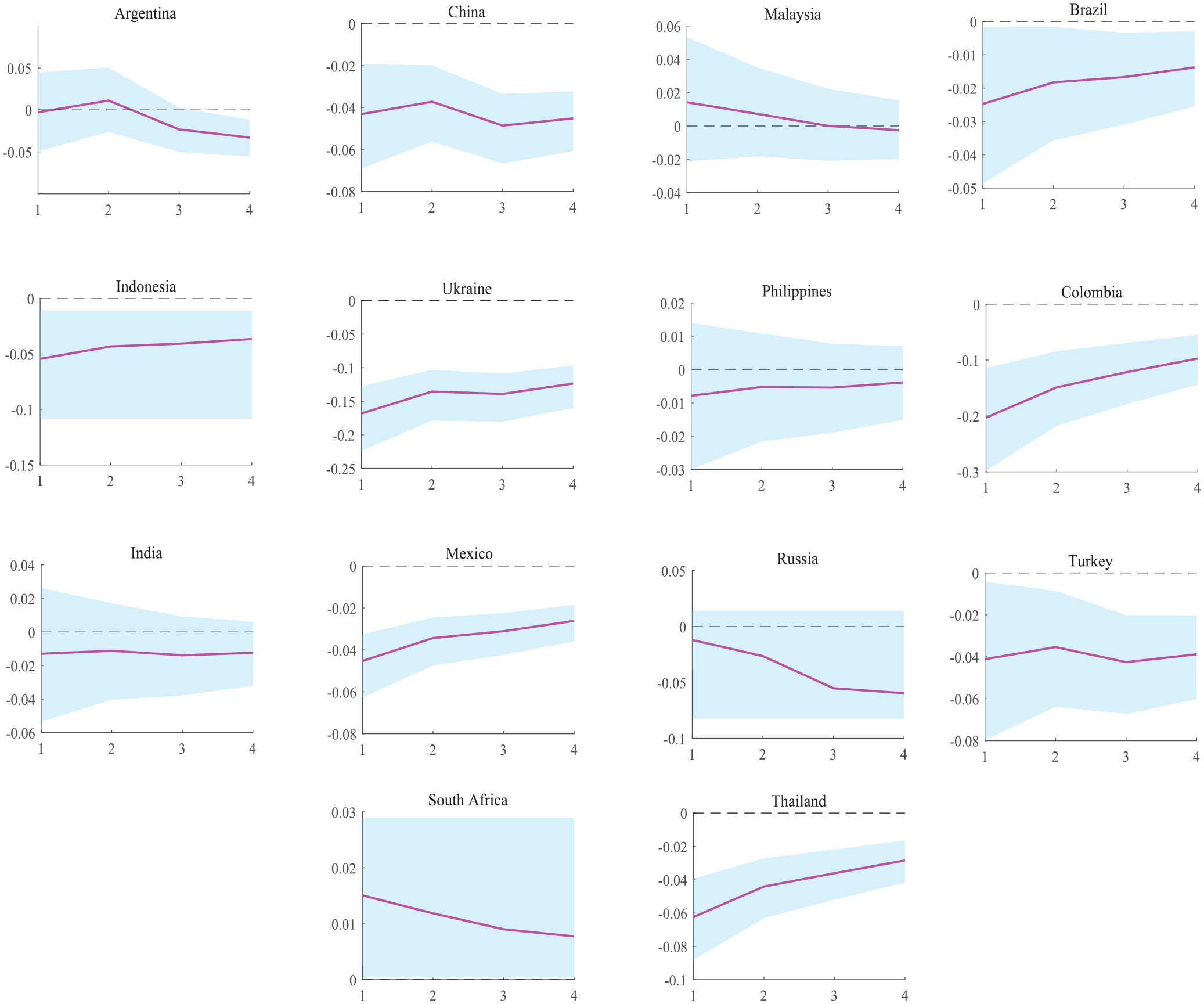
Responses of tourism demand to geopolitical risk shocks.
The vertical axis depicts the effect of the GEO shock on tourism demand in percentage terms and the horizontal axis shows the number of years after the shock. The shaded light blue area represents the 68% error bands. 12 The impact of the shock is significant if both error bands are either below (if the effect is negative), or above the zero line (if the effect is positive). If the error bands contain zero, then the result is not significant for this specific year/s. The following results emerge from Figure 1.
First, when geopolitical tensions increase, the majority of the EMDE experience a persistent negative impact on their tourism demand, up to 4 years after the shock. Specifically, a positive GEO shock triggers a statistically significant and immediate negative response (i.e., within the year) of tourism demand in China, Thailand, Indonesia, Ukraine, Turkey, Colombia and Mexico. The negative impact of the GEO shock in the tourism industry of Russia becomes apparent after the second year. Furthermore, although the positive shock on the GEO indices of Argentina and Brazil triggers negative responses on their tourism demand, the responses are either weaker in terms of statistical significance (Argentina) or marginally significant with wide error bands (Brazil).
Our results provide support for prospect’s theory proposition that individuals’ evaluations and attractiveness of choices are influenced by their perceptions of risk. Exposure to negative media and word-of-mouth related to geopolitical tensions can create a framing effect. Consequently, individuals who perceive international tourism as a potential geopolitical risk may prioritize safety as the deciding factor when choosing a vacation destination, leading them to avoid places perceived as more dangerous. Empirically, our results are in line with the empirical studies of Neumayer (2004), Harb and Bassil (2020), Bassil et al. (2019), and Lanouar and Goaied (2019), who find that various forms of geopolitical tensions across a large number of countries negatively affect their tourism demand.
Second, the detrimental impact of GEO shocks on tourism demand across all countries is persistent, as the responses do not die away up to 4 years ahead of the shock. This result echoes the findings of Tiwari et al. (2019) and Hailemariam and Ivanovski (2021), who highlight the longer-term implications of geopolitical risk on tourist arrivals for India and the US respectively, that could cause severe economic impediments in medium term.
Last, it is worth highlighting the positive response of South Africa suggesting that the GEO shock increases tourism demand in the country. This can be reasonably explained when we look at the GEO series of South Africa (Figure A.1). In contrast to the other countries’ geopolitical risk indices, South Africa’s index remains at very low levels throughout the sample period, meaning that the country did not experience severed geopolitical events and threats. Our finding is also explained by prospect’s theory proposition that tourists evaluate their choices based on deviations from a particular reference point. This means that even if tourists think that a destination is less safe, they may still visit the same vacation resort next year if they had positive previous experiences. Empirically, our finding corroborates the evidence by Muzindutsi and Manaliyo (2016) who conclude that tourism revenue in South Africa continued to grow, even during periods of increasing geopolitical risk. This finding is also in line with empirical studies that have concluded that country risk and geopolitical tensions not only did not lead to lower tourism demand, but also positively affected it (Ghaderi et al., 2017; Liu & Pratt, 2017; Saha & Yap, 2014, 2015). These positive effects could be explained by the strong influence of other factors, including a higher real GDP per capita, a depreciation of the domestic currency, tourist attraction, as well as the inquisitiveness among the people (Saha & Yap, 2014).
Figure 2 presents the forecast error variance decomposition (FEVD) for our estimated Panel VAR. 13 FEVD shows the percentage of explained variance of tourist arrivals attributed to all four structural shocks. As in Figure 1, the forecast horizon that we consider runs from year 1 to 4 years ahead. The bars show the average effect over the 4-year forecast period. Each color represents a different shock, that is, the blue bar shows the effect of GEO shocks to the forecast error variance of tourist arrivals, the red bar depicts the effect of GDP shocks, the green bar depicts shocks to the relative price index and the purple bar shows the effect of tourist arrivals shocks to the forecast error variance of itself.
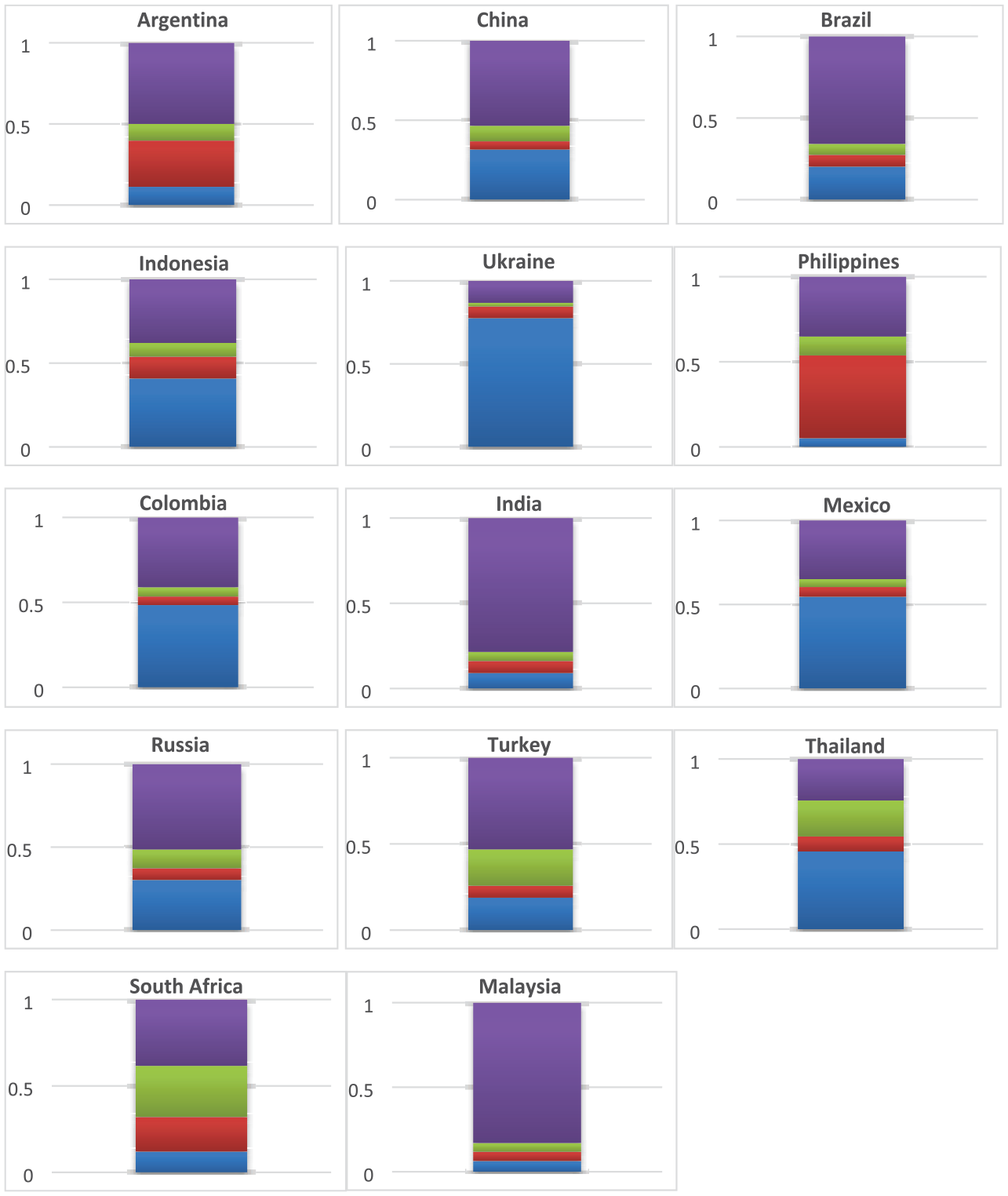
Forecast error variance decompositions (FEVD).
We observe that many EMDE countries are exposed to geopolitical tensions that can explain a high percentage of the variance in their tourist arrivals. On average, over a 4-year horizon, geopolitical risk shocks in the following countries: China, Brazil, Indonesia, Ukraine, Colombia, Mexico, Russia and Thailand explain over 20% (Brazil) and up to 77% (Ukraine) of movements in their tourism demand. Apart from the contribution of the tourist arrivals shock to the forecast error variance of itself, the remaining part of tourism demand dynamics in these countries is driven by GDP shocks (red bar). In addition, in most cases, inflation differential shocks (green bar) play a minor role compared to the impact of GEO shocks. Furthermore, GEO shocks explain a smaller but still noticeable percentage of the variance in tourism demand in South Africa, India, and Argentina (around 10% of total variance).
When we compare the relative contribution of the two macroeconomic shocks, the results are mixed. In some countries such as Argentina, Philippines and Indonesia, GDP shocks are more important than inflation shocks, in line with the literature on the macroeconomic determinants of tourism demand which finds GDP per capita to be the most important determinant and the effect of relative prices to be almost negligible (Martins et al., 2017; Song et al., 2016). In some other economies such as Thailand and Turkey, the effect of prices dominates the effect of GDP shocks.
The results from the FEVD have important policy implications, especially for the countries that rely heavily on the tourism industry. Our findings suggest that in many EMDE economies, whenever we attempt to forecast tourist demand, a large portion of the forecast error occurs because geopolitical risk shocks push tourism demand above or below the predicted value. This means that policymakers in these countries should consider the impact of geopolitical tensions when modeling and forecasting tourism demand to help tourism businesses reduce the risks of decision failures and the costs of attracting travelers.
Our results so far suggest that geopolitical risk has a significant impact on tourism demand and can be detrimental to tourism industry gains in many emerging economies. While impulse responses and FEVD assess the magnitude of the responses to average shocks, the effects of historical episodes of geopolitical risk shocks on tourism demand are not necessarily limited to one-time shocks. Rather, they can involve a series of geopolitical risk shocks which could appear with different signs and magnitude, at different points in time.
This motivates the next step of our empirical analysis which is to uncover the individual cumulative contribution of each shock, that is, GEO shocks, GDP shocks and RCPI shocks, to the movements in tourism demand, over the whole sample period. Historical decompositions show what portion of the deviation of the tourist arrivals variable from its unconditional mean is due to the shock of the endogenous variable n.
Figure 3 presents the results. The black line corresponds to the sum of median contributions of all structural shocks and the colored bars highlight the fraction of the tourism demand series that is explained by each of the three shocks and its own shock. 14 We should also highlight that when interpreting the historical contributions of the shocks, positive (negative) values of the series reflect positive (negative) contributions that favorably (adversely) impacting tourism.
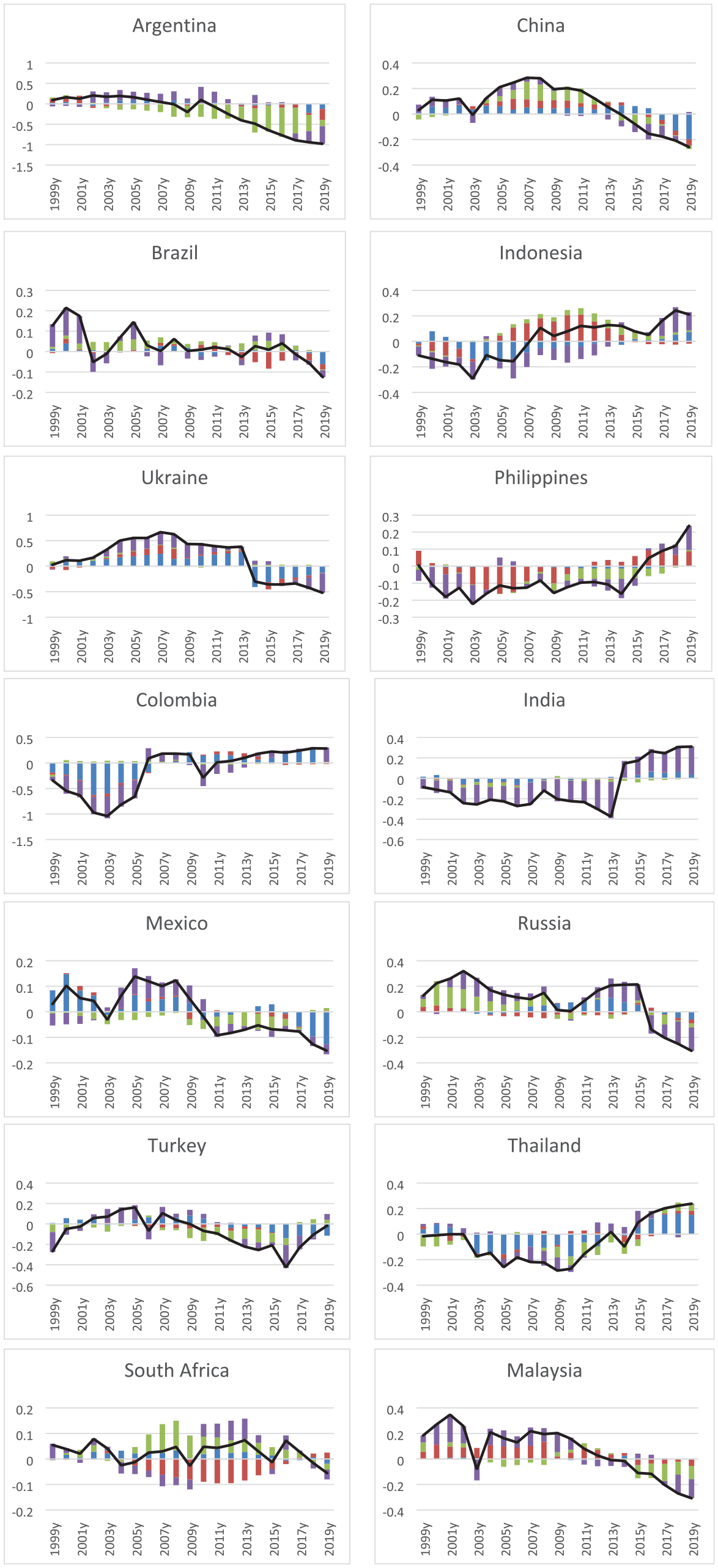
Historical decompositions.
Focusing on GEO shocks, we observe that historically GEO shocks (blue bar) are particularly important in driving tourism demand in the following countries: China, Indonesia, Thailand, Colombia, Mexico, Ukraine, Russia and Turkey. For example, note that GEO shocks in Ukraine are the main drivers of the negative impact on tourism demand from 2014-onward. This period coincides with Russian’s response to the Maidan revolution that ended with Mr. Viktor Yanukovych fleeing in February 2014, by swiftly annexing Crimea and stoking a separatist war in Ukraine’s east.
Similarly, the contributions of GEO shocks across Turkey and Thailand tend to play a dominant role in the drop of tourist arrivals from 2016 onward, and during 2004 to 2013, respectively. The former coincides with the military coup attempt in Turkey in 2016. The latter is linked to the long period started in 2004, where Thailand experienced a national political crisis leading to intermittent violence, regular street protests and unstable governance. During this period, political tensions were high and national politics were deeply polarized, something that is accurately reflected in our results. GEO shocks also appear to play a decisive role in driving tourism demand in Indonesia during 1999 and 2007. Once again, our historical decomposition successfully captures a period of increased geopolitical uncertainty in the country, characterized by several severe and long-lasting ethnic conflicts following the fall of Suharto in May 1998, including the anti-Chinese riots in Jakarta and Dayak and the Madurese conflict in Kalimantan, as well as ethno-religious conflicts in Ambon, Poso, and Sambas that revealed a radical change in Indonesian ethnic relations.
In Colombia, we observe that geopolitical risk is the main determinant of the adverse impact on tourism demand in the 1990s and the first half of 2000s. Indeed, this is a period during which the armed conflict in the country escalated, a consequence of both the increasing ferocity of the paramilitary and guerrilla groups, and the brutal military counterinsurgency policy that resulted in extraordinary numbers of civilian victims, including from massacres, extra-judicial executions and forced displacement. 15 In addition, geopolitical tension appears to be the driving force behind the recent plunge of tourism demand in Mexico, that is, from 2017 onward. The increased role of GEO shocks that we observe during this period is aligned with the deteriorating security situation that Mexico was facing with unprecedented levels of criminal and drug-related violence and a record number of homicides.
Last, it is worth highlighting the result for China, especially in the most recent period. The Figure shows the increasingly important role of geopolitical events in the reduction of tourism inflows in China from 2018 onward, which could be largely attributed to the rising geopolitical tensions stemming from the trade disputes between China and the United States in 2018 and 2019.
Robustness Checks
We implement a rich sensitivity analysis to ensure that our main findings are robust to alternative specifications of our baseline model. We report the results of the sensitivity tests in Figures A.2 to A.9 in the Appendix 1.
First, we examine potential sensibility of our results to the prior selection. Particularly, we consider a “looser prior” to reflect a higher degree of uncertainty in terms of our prior beliefs. We accommodate this by increasing the value of
As figures show, the results from all the additional models described above are very similar to the benchmark case (Figure 1). The only slight difference is that some alternative specifications find the effect of the shock in Argentina and Brazil to be muted, suggesting that the result for these two countries is not totally decisive. This is expected as the baseline specification produces marginally significant responses for both countries. Overall, the evidence presented in our extensive sensitivity analysis is broadly supportive of the main conclusion on the damaging impact that a rise in geopolitical risk has on the tourism demand of emerging economies.
Conclusion
This study estimates and models the impact of geopolitical risk shocks in tourism industry of 14 EMDE, by implementing a state-of-the-art Bayesian panel VAR model which allows variations among different countries, for the first time in the tourism literature. Our results show that when geopolitical tensions increase, the majority of the EMDE countries experience a persistent negative effect on their tourism demand, up to 4 years after the shock.
Furthermore, our findings reveal that geopolitical risk shocks in many economies explain a sizeable portion of their variance in tourism demand. In particular, geopolitical risk shocks in Indonesia, Thailand, Colombia and Ukraine explain about 40%, 45%, 50%, and 77% of movements in the countries’ tourism arrivals, respectively. This is a particularly important finding as it suggests that in many EMDE countries, geopolitical fluctuations rather than standard macroeconomic factors in the tourism literature (namely GDP shocks and inflation differential shocks) constitute the main driver of tourism demand. Our empirical analysis also allows us to obtain insights on the evolution of the impact of geopolitical shock on tourism demand, over time. We find that historically, geopolitical tensions have been particularly influential in driving tourism demand in China, Indonesia, Thailand, Colombia, Mexico, Ukraine, Russia, and Turkey.
Theoretically, our research advances the application of the prospect theory to tourism demand into several ways, with important policy implications. First, we establish a robust empirical relationship between tourism demand and geopolitical tensions that is essential given the importance that governments and destination management organizations are attributing toward the growth of the tourism sector.
Second, as illustrated in Figure 1, an escalation of geopolitical tensions can significantly harm the tourism industry in EMDE countries emphasizing the need for a supranational approach to destination management. This involves prioritizing geopolitical stability and developing effective policies and recovery plans to cope with the impact of tensions. Our research underscores the importance of such measures in supporting the longer-term sustainability of the tourism industry amid geopolitical tensions.
Our suggestions are not purely theoretical but are based on real-world examples of countries that have successfully implemented similar measures. For instance, in 2014, Thailand faced a major geopolitical shock when the military took over the government in a coup. This led to a significant drop in tourist arrivals, which in turn had a negative impact on the country’s economy. The government responded by implementing a comprehensive tourism recovery plan, which included measures such as enhancing security measures and launching a “Discover Thainess” campaign to promote the country’s unique culture and traditions. These measures helped to alleviate the negative impact of the coup on tourism demand, and tourist arrivals have since rebounded country’s GDP.
Similarly, in recent years Turkey has experienced a series of geopolitical shocks, including political instability, terrorist attacks, and tensions with neighboring countries. These shocks have had a significant negative impact on the country’s tourism industry, which is a major contributor to the economy. However, the government has addressed the situation by implementing a series of activities as part of a tourism recovery plan. These include improving security measures, offering financial incentives to tour operators, and launching a marketing campaign to promote the country’s attractions. These measures have helped to mitigate the negative impact of the shocks on the tourism industry, and tourist arrivals have started to recover.
We should note however that these activities may not always be effective in mitigating the impact of geopolitical shocks on tourism, especially in the face of more severe geopolitical shocks. In such cases, a comprehensive approach to risk management is necessary, which includes not only marketing activities, but also measures to address the underlying causes of geopolitical tensions. This might include efforts to promote political stability and reduce tensions between countries, as well as policies to address economic inequalities that help to create a more stable and prosperous environment for the tourism industry to operate in.
Third, our results reveal that the tourism industries of neighboring or border-sharing countries (namely, Thailand and Indonesia, and Brazil and Colombia) are highly vulnerable to geopolitical shocks. This finding suggests that these countries should closely monitor their neighboring countries’ tourism development and work together to develop recovery plans to enhance the decrease in tourism competitiveness due to the detrimental impact of geopolitical risks.
Fourth, the importance of geopolitical risk in driving tourism demand across countries, and over time, signifies that econometric models on the drivers of tourism demand should not exclude geopolitical risk variables. This is necessary to obtain reliable and robust inference on tourist numbers or tourism revenues, especially in the presence of political instability, wars, and terrorist acts. Fifth, our results also signify that policymakers should consider incorporating the impact of geopolitical risk in their forecasting models to produce more accurate forecasts of tourism demand and revenues. This will enable them to plan and implement effective recovery strategies for the development of the tourism industry.
One limitation is that the EMDE countries are selected based on their availability of tourism and geopolitical data. Therefore, as an interesting avenue for future research we suggest the use of disaggregated tourism data as they become available, and the expansion of the number of countries considered in the sample, as the geopolitical risk database grows. Our proposed B-HP-VAR has plenty of further potential for tourism research. First, future studies could continue to explore the impact of geopolitical risk on tourism demand across individual countries, by focusing on more specific shocks, such as wars, terrorism, and human right violations. Second, our empirical approach could be applied by future studies to offer evidence on how the tourism industry is affected by other types of shocks that go beyond the macroeconomic and geopolitical realm. These could include people’s mood and sentiment shocks, as well as natural disaster shocks. Third, our approach could also be used to provide robust forecasts of tourism demand across a range of countries to help the tourism industry reduce the risks of decision failures and the costs of attracting and serving tourists. Last, the panel VAR could be augmented by applying time-varying parameter techniques. These time-varying parameters can be modeled using a first-order random walk process, thus allowing both a temporary and a permanent shift in the parameters (Primiceri, 2005). This technique would enable researchers to capture possible changes in the underlying structure of the economy in a flexible and robust manner thus uncovering how the impact of geopolitical shocks on tourism demand may have changed at each point in time.
Footnotes
Appendix
Descriptive Statistics.
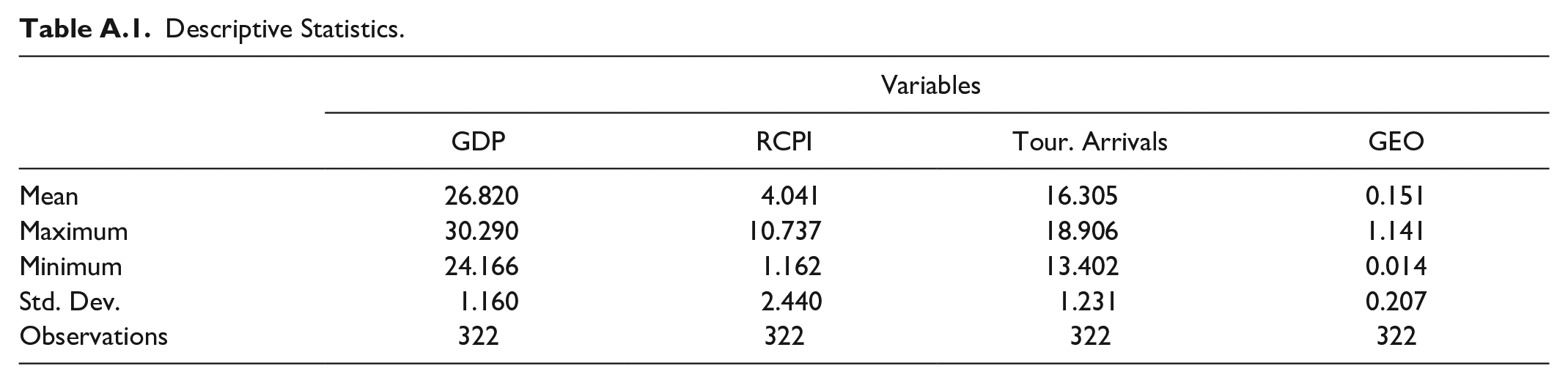
| Variables | ||||
|---|---|---|---|---|
| GDP | RCPI | Tour. Arrivals | GEO | |
| Mean | 26.820 | 4.041 | 16.305 | 0.151 |
| Maximum | 30.290 | 10.737 | 18.906 | 1.141 |
| Minimum | 24.166 | 1.162 | 13.402 | 0.014 |
| Std. Dev. | 1.160 | 2.440 | 1.231 | 0.207 |
| Observations | 322 | 322 | 322 | 322 |
Declaration of Conflicting Interests
The author(s) declared no potential conflicts of interest with respect to the research, authorship, and/or publication of this article.
Funding
The author(s) received no financial support for the research, authorship, and/or publication of this article.
