



Abstract
Unpredictable external shocks exacerbate the negative effects usually attributed to cyclical seasonality. Two such recent shocks, the Global Financial Crisis and the COVID-19 pandemic, shifted debates from crisis management toward concerns for greater resilience in visitor economies. Social tourism is an effective stimulus to destination economies and ameliorates some negative effects of seasonality, but there is little evidence on its contributions to greater destination resilience. Furthermore, resilience, a relatively new concept, is poorly defined. We establish a conceptual link between seasonality and resilience through a holistic multivariate analysis of supply, demand and employment patterns. An empirical study examines resilience longitudinally using municipal-level data, applying multivariate analysis and innovative visualization techniques, and assesses how, where and to what degree the Imserso social tourism program has contributed to the greater resilience of Spanish destinations, demonstrating its effectiveness in contributing to resilience in those which are more vulnerable due to high seasonal imbalances.
Keywords
Introduction
Tourism can be considered a complex adaptive system, made up of many independent elements constantly evolving to new conditions or disturbances, which makes it highly unpredictable and difficult manage (Farrell & Twining-Ward, 2005). Tourism destinations are characterized by general seasonal fluctuations in demand and supply, which are largely predictable, and vulnerability to external events such as crises and disasters, which are less so. Even for those countries at the forefront of international demand, where the tourism sector is highly competitive, seasonal changes in demand present real costs, and this remains an intractable challenge (J. A. Duro, 2018; Song et al., 2019). As we argue below, these structural cyclical fluctuations in demand and supply weaken the long-term resilience of destinations, leaving them more vulnerable to the effects of less predictable external shocks. Policymakers and the industry must enact policies that ameliorate the negative effects of general seasonality and plan for greater general resilience in times of crisis, making an analysis of these issues imperative.
Seasonality has many implications not solely for the economy of the destination but also for its social and environmental systems (Baron, 1975). Both too much and insufficient (seasonal) demand can lead to inefficient use of tourism resources, the damaging effects of unstable pricing (high peak rates alternating with heavy discounting), labor market problems, environmental damage, and negative attitudes among residents. In terms of unexpected external shocks, debate has shifted from a focus on vulnerability toward understanding resilience, with a recognition that it is unwise to rely on general assumptions concerning how and why systems are capable of adaptation to new realities (Hall et al., 2017).
Spain epitomizes the complexity of the issues wrought by seasonality. In 2019, it received the second highest number of international tourism arrivals globally, at 83.5 m (World Tourism Organization, 2020). The tourism sector is the engine of the Spanish economy. Yet 61.74% of Spain’s tourist demand is concentrated in the Mediterranean coastal destinations, the Islas Canarias and the Islas Baleares (Instituto Nacional de Estadística, 2019). Resilience to external shocks such as the recent global pandemic is also highly asymmetric, with greater dependency on tourism contributing to lesser resilience in some regions but to greater resilience in others (Almeida et al., 2021; Boto-García & Mayor, 2022). Such regional disparities lead to a lack of coordination in activities and a need to consider that a one-size-fits-all approach would not be appropriate (Almeida et al., 2021).
A conventional approach has been for hotels to close entirely or drastically cut services in the low season to save labor costs, leading to significant unemployment during the winter months. Conversely, there are labor shortages in the peak months (as well as in the post-pandemic rebound in demand). At the macro level, the Spanish government has for many years pursued a stimulus approach to counter seasonal variations in tourism demand through a Social Tourism initiative aimed mostly at senior citizens. This is implemented via the Institute for the Social Services and the Elderly (Instituto de Mayores y Servicios Sociales, or Imserso) and consists of subsidized package breaks largely at coastal destinations between September and May; these are popularly known as “Imserso trips.” The scheme contributes to the maintenance of employment and economic activity during the low season, alleviating the negative economic impacts that seasonality produces (Instituto de Mayores y Servicios Sociales [Imserso], 2021a).
Yet, there is little evidence to indicate whether these benefits actually materialize, or on how they might change over time, particularly at times of crisis or pressure on the fiscal system, or whether the scheme contributes to greater destination resilience. In the only known study of the impact of the Imserso trips on counter-seasonality effects, Cisneros-Martínez et al. (2018) examined regional differences in the impact of the program on jobs and the relative marginal effects in combatting seasonal imbalances. They identified various factors that produce counter-seasonal effects, such as a higher intensity of international than of domestic demand and the concentration of both international and domestic demand on the specific regions in question. Extra-cyclical crises, such as the Global Financial Crash (GFC) and the COVID-19 pandemic, pose existential threats to the tourism industry globally, presenting significant challenges for tourism-dependent countries such as Spain. However, we have little understanding of how counter-seasonal measures affect resilience to crises.
Therefore, the aim of the current study is to examine the conceptual links between seasonality and resilience and to propose new statistical techniques to assess these links. We achieve this through an analysis of the role that the Imserso domestic tourism stimulus program plays in counter-balancing seasonal commercial demand, thus reducing vulnerability and increasing adaptive capacity. The study also proposes a new combination of multivariate techniques that can be applied to many other destinations. The approach is to explore the role of Imserso trips on Spanish coastal tourism resorts at times of crisis, and to assess both the stimulus program’s effectiveness in ameliorating the major negative effects of general seasonal variations and the resilience of destinations to crisis.
Conceptually as well as methodologically, our understanding of resilience and seasonality are still evolving. Much of the previous research has been based on destinations at the aggregate level (countries or regions). Few countries collect data at the micro-level that is available to researchers to facilitate a more disaggregated analysis. New methods of data processing, integration, analysis, and visualization offer opportunities to provide a more granular understanding of seasonal patterns of demand, supply and employment at the level of municipalities. In this paper, among other techniques, we analyze the temporal changes in destinations using a Self-Organized Map (SOM) as a visual representation of instability resulting from an external shock, combined with a clustering technique that accounts for structural differences. This enables a more localized and holistic assessment of seasonal patterns within tourism resorts, and an ability to track the effects of counter-seasonal policies in a more targeted way to understand its effects on resilience. The results can be used to inform policy making and business decisions at the local as well as national level. For some resorts, counter-seasonal policy interventions, such as social tourism, help them to become more resilient, and to provide more sustainable employment and a better quality of life for residents, whereas for resorts such policy interventions may be less suitable.
Destination Resilience, Seasonality, and Social Tourism
In the wake of the global shut-down of the tourism industry brought about by the COVID-19 pandemic, the focus of much academic research has shifted from a concern with strategies to cope with crises and disasters, toward an interest in understanding resilience in a broader sense. Resilience has its roots in systems theory in ecology (Holling, 1973), specifically in as a conceptualization of the vulnerability of a system to shocks but importantly also, its ability to adapt and recalibrate to a new reality on an ongoing basis. In other words, social-ecological systems are never fixed but constantly evolving. The theory emphasizes the inter-connectedness between the environment, society and economy, and the complexity of large systems, which makes it especially relevant to tourism destinations and to sustainability (Cochrane, 2010; Farrell & Twining-Ward, 2005; Tyrrell & Johnston, 2008). Systems are conceived as more or less stable domains that have adaptive capacity, meaning that the self-organizing system is able to adapt (to some degree, depending on the type and conditions of the steady state), whereby the degree of resilience is measured as the length of time required to return to the original position.
If a system is exposed to an unpredictable and largescale event, it may cause a shift beyond the usual adaptability tolerance and be propelled into a new domain state altogether, requiring fundamental change to reach a new steady state (Cochrane, 2010). Watson and Deller (2022) identify three different approaches to understanding resilience; “engineering resilience (ability to resist a shock), ecological resilience (amount of disturbance a system can withstand without changing form), and adaptive/evolutionary resilience (ability to function despite changes).” These highlight the conceptual differences between resilience and crisis/disaster frameworks as well as the great variations in approaches to the concept (Hall et al., 2017).
There are generally considered to be two dimensions which contribute into an overarching concept of resilience: vulnerability to externalities and adaptive capabilities (Bec et al., 2016). Vulnerability refers to a system’s sensitivity to shocks, its exposure and capacity to respond in such a way that the structure is maintained. The adaptive capacity refers to a system’s ability to recover, whereas resilience, alongside its overarching meaning, is sometimes conceived as an ability to build capabilities that enable the system to recalibrate (Bec et al., 2016). Yet, the concept is still emerging in the social sciences, as much of the previous work has been done in ecology. To date, there is not a universally recognized definition of or approach to resilience in the field of tourism; instead, a range of related concepts (including economic stability and robustness) add further complications, and different approaches are available as measures, making it a malleable concept to explore possible applications (Hall et al., 2017).
Many studies have adapted the concept for different contexts. Bec et al. (2016) apply it to develop a conceptual model of community resilience. Much of the previous research has emphasized business resilience in tourism (Dahles & Susilowati, 2015), whereas studies on the macro-economic level are only just emerging. For example, Watson and Deller (2022) explored the impacts of the COVID-19 lockdowns, not in terms of the vulnerabilities of different destinations (US county-level data), but of their resilience, their ability to adapt to the changing circumstances imposed by the pandemic. Their analysis demonstrated that at a general level, a high tourism dependency was consistent with greater effects of the pandemic, while at the local level, areas with high local and regional demand proved much more resilient economically. Other studies focusing on the resilience of destinations to the pandemic also found great variations based on local structure of supply and demand dynamics (Almeida et al., 2021; Boto-García & Mayor, 2022; J. Duro et al., 2022). In addition, there are also recent papers dealing with resilience of tourism organizations and firms (Chowdhury et al., 2019; Prayag, Jiang et al., 2023), and the tourism workforce (Kimbu et al., 2023; Prayag, Muskat, & Dassanayake, 2023).
The catastrophic effects of the pandemic on the tourism industry amplified previous shocks such as the GFC. However, the extent and duration of the impact are unique to each event and distinctly heterogeneous since effects vary and events are managed in different ways (Visser & Ferreira, 2013). Perles-Ribes et al. (2016) analyzed how a group of tourism municipalities located on the Mediterranean coastal destinations, the Islas Canarias and the Islas Baleares, coped with the GFC better than others, thus revealing their adaptive capacity. Therefore, it is important to understand supply and demand differences at the local level. Destinations are unique complex systems requiring different strategies to optimize impacts and to improve resilience in bespoke ways that improve the economic performance of the whole tourism system (Baggio et al., 2010).
Seasonality is a consistent feature of the tourism sector, being defined by Butler (1994) as a temporal imbalance between tourism demand and supply factors and by Allcock (1994) as the concentration of tourist flows into shorts periods of the year. It is a widely accepted facet of the industry but also one of the most intractable issues affecting economic sustainability (e.g., Baum & Lundtorp, 2001). Negative impacts of seasonality include unstable employment, leading to skills, training and retention issues (Ashworth & Thomas, 1999), income instability, which affects investment decisions (Butler, 2001), and constraints to capital access and volatility of returns on investment (Alvarez et al., 2022). Seasonality causes inefficient use of tourism resources, including overcrowding and a lack of capacity in the peak seasons, leading to price increases and potential negative perceptions of the value of tourism experiences (Butler, 2001). During cyclical periods of low demand, seasonality has economic, environmental and socio-cultural impacts (Deery et al., 2012). These negative effects are usually connected with vulnerability and are generally viewed in the literature as factors that negatively affect destination resilience, as discussed below.
However, others have noted some potential benefits of seasonality in terms of allowing time for rest and recuperation for owners/employees, maintenance of facilities and recovery for the environment (Higham & Hinch, 2002). These positive effects have been emphasized mainly from the fields of ecology and sociology according to Chung (2009), who includes the possibility for destinations to take advantages from the predictability of seasonal flows as an additional benefit. Residents also understand the advantages of the low season, even if they are aware of the benefits that tourism brings (Butler, 1998). Nevertheless, despite these positive effects, the literature on destination resilience mostly considers seasonality as a factor of vulnerability.
There are relevant strands of the literature: vulnerability from climate change research and challenges in responding to crises and disasters. High seasonality is one of the four factors that are usually cited in both streams. Calgaro et al. (2014) identified seasonality as one of 12 factors affecting vulnerability to shocks. They included seasonality in their destination sustainability framework (DSF) as a tourism-specific sensitivity. Calgaro (2010) previously argued a low seasonality level as a factor that heightens destination resilience to coastal hazards (along with longer destination histories, strong destination market identity, varied tourist market-base and tourist products and a loyal repeat client base). This model was also applied by van der Veeken et al. (2016), who found that seasonality plays an important role as a vulnerability factor. In highly seasonal destinations, residents, and businesses dependent on tourism activity are especially vulnerable to shocks that hinder tourism flows in the high season.
Pyke et al. (2021) use a modified version of the DSF model for two Australian destinations and maintained that seasonality is one of the key vulnerabilities of tourism-specific factors. In an earlier work, Pyke et al. (2018) applied the model in a nature-based destination, mentioning low seasonality as a key resilience factor. Others have reasoned that seasonality can amplify the effects of other vulnerability factors, like tourism dependence (Batista E Silva et al., 2018) or financial viability of tourism businesses (Alvarez et al., 2022).
The way that high levels of seasonality can affect the vulnerability of tourism destinations to external shocks is usually recognized in relation to several negative effects of the seasonal concentration of demand, supply and employment. Among others, Calgaro et al. (2014) mention that high seasonality heightens the financial dependence of tourism businesses on the peak season, which could be endangered by external shocks. This can cause losses for households, communities and businesses (Calgaro, 2010). Moreover, in terms of employment, Pyke et al. (2021) state that in highly seasonal destinations, businesses rely on seasonal workers, who need to be hired and trained each season, and who may also be affected by high rental prices in the peak season. As Batista E Silva et al. (2018) mention, seasonality determines fluctuations of revenue, employment, as well as under- and over-utilization of infrastructure, services and resources, these being factors of vulnerability. Furthermore, in general, recovery after an external shock can be faster in destinations with greater financial, economic and social stability (Calgaro, 2010).
Despite being the focus of much research for decades, there is a growing recognition that large variations are apparent at the local level and that previously aggregated analyses mask a highly nuanced picture, making generalizations difficult. Ferrante et al. (2018), for example, argued that despite the wealth of research on seasonality, factors vary in nature and intensity across different regions and localities.
Although previous studies have examined the causes and consequences of seasonality and its effects on policy and decision making (Koenig-Lewis & Bischoff, 2005), and the types of seasonal variations and patterns (Ferrante et al., 2018), none has sought to link more general seasonal patterns and trends of tourism demand and supply with more unpredictable, external macro socio-economic or geo-political events, such as GFC and the current COVID-19 global pandemic. But, at this point, it is worth noting that we can find some rationale for this link between seasonal patterns in demand in tourism destinations and resilience to external shocks such as COVID-19 or the GFC from the literature on tourism resilience mentioned above, which underscores the role of seasonality as a factor determining vulnerability to external shocks and stressors.
This brings into focus the concept of vulnerability to such events, and how the responses are connected to a destination’s ability to cope with and to adapt to the general structural trends in demand and supply. Related research has shown that some types of tourism are more or less sensitive to large, structural changes such as the GFC than others. Bronner and de Hoog (2016) found that the Dutch tourism market prioritized shorter, more local breaks over longer, international holidays during the great recession. Yet, the pent-up demand for such experiences led to a very rapid recovery. The COVID-19 pandemic has highlighted the heterogeneous nature of the impacts, which depend on a range of factors such as dependency on international demand and resilience of destinations (J. A. Duro et al., 2021).
One strategy that has been used effectively both to promote the inclusion of domestic markets in tourism participation and to counterbalance the negative effects of peak seasonality of demand and supply has been social tourism. One example is the Imserso program, which enables Spanish senior citizens to participate in a discounted (subsidized) holiday in the low season, mostly at Mediterranean coastal resorts that are characterized by strong seasonality. An important aim of the scheme is to contribute to economic and social sustainability in the visitor economy. Minnaert et al. (2011) define social tourism as providing opportunities for economically weak or disadvantaged sections of society to participate in tourism. The majority of research on social tourism has focused on the demand side, particularly the benefits accruing to people who have been supported in terms of health and wellbeing and social inclusion (McCabe & Qiao, 2020; Minnaert, 2012; Vento et al., 2020;). In the case of the Imserso trips, the overall degree of traveler satisfaction is higher than 90% and it produces a favorable social impact to promote intergenerational solidarity (Imserso, 2021b), suggesting that the social justice aims of the program are met. However, there is a lack of literature on the contribution that these programs have in reducing seasonality and unemployment in destinations (McCabe & Qiao, 2020), with a recent exception being the study of Rico et al. (2021). One study examining the contribution of social tourism to reducing seasonality was undertaken by Cisneros-Martínez et al. (2018) through a quantitative analysis of the seasonal impact that Imserso trips have on the Spanish economy. In addition to the reduction of seasonality and the creation of employment, the program constitutes a very efficient stimulus mechanism that entails zero cost to the Spanish public administration (Imserso, 2020).
Therefore, conceptually, we propose that destination resilience is linked to vulnerability to external shocks, capabilities to absorb changes in supply and demand, and the ability to adapt to new conditions. Seasonal fluctuations associated with structural demand patterns in tourism markets affect supply and employment, contributing to vulnerability by weakening adaptive capacity. In addition, seasonality does not operate in isolation; there are possible interactions with other factors, such as tourism dependence, that can accentuate the vulnerability effects (Batista E Silva et al., 2018). We argue that “spillover” effects could result, where seasonal concentrations are exacerbated by an external shock, feeding a vicious cycle of negative effects, increasing vulnerability, further reducing capacity to adapt and so on, due to the dynamic nature of the process (Calgaro et al., 2014).
The presence of the social tourism stimulus program should strengthen the adaptive capacity of the destination since it offsets some of the vulnerabilities associated with general cycles of demand and supply and enables greater capacity to respond to largescale unpredictable shocks and quicker return to the previous levels and hence greater overall resilience. The main way this effect is achieved is through reducing seasonality of demand, which is itself a vulnerability factor. Yet, there are other features of this program that may contribute to destination resilience. It can develop a loyal and stable demand in the low season, that reduces the variability not only between seasons, but also longitudinally over a longer timeframe. Moreover, this program supports domestic demand, which is seen as more resistant to crises (Boto-García & Mayor, 2022; Cafiso et al., 2018). Finally, the Imserso program is a centralized scheme, with a unified design for the whole country, that can be easy to adapt if needed to respond to external shocks.
Material and Methods
Methods
Our aim was to develop an approach that could assess destination vulnerability to external shocks over time that accounted for both regular and extraordinary events and at the local, destination level and the role played by a counter-seasonal stimulus program in contributing to resilience. We analyzed the effects of the GFC over the period 2008 to 2019 and measured resilience by means of the stability of destinations sharing similar trajectories of outcomes and the length and depth of the effects of the crisis on destinations across a range of indicators.
To account for complexity associated with large adaptive systems such as tourism destinations, we applied a multivariate analysis approach, consisting of a range of variables that can capture different aspects of the system. We chose case variables related to the hotel sector in coastal destinations in Spain because this is the most important and predominant sector. The variables included seasonal concentration of demand, seasonal variation of supply, seasonal variation in employment, employment importance in the hotel sector, hotel average size, and presence of Imserso trips.
Regarding seasonality, we used the Gini concentration ratio to measure the annual seasonal concentration of demand variables (monthly number of travelers and overnight stays). Previous studies have assessed the various approaches to measurement of seasonality and its effects, including their advantages and disadvantages, such that a reprise of those debates is not necessary here. While there are a range of sources of concentration indices, such as the Theil index and the coefficients of variation (De Cantis et al., 2011; J. A. Duro & Turrión-Prats, 2019; Rosselló & Sansó, 2017) and more recently an index based on the transportation approach (Ferrante et al., 2018; Lo Magno et al., 2017), we chose the Gini approach to measure the concentration of seasonal demand as it is still commonly used in the analysis of tourism seasonality (Lau & Koo, 2022; Vergori & Arima, 2022) and suitable for our research aims. Thus, we obtained the yearly Gini indexes of the overall (GN), domestic (GND) and international (GNI) stays, and numbers of domestic (GTD), international (GTI), and total tourists (GT) (see Appendix 1). Demand variables, such as number of arrivals at hotels or overnight stays in hotels, are widely used in the analysis of tourism destinations, and particularly in the study of the resilience of tourism sector and/or destinations to external shocks. For example, Cafiso et al. (2018) and Benítez-Aurioles (2020) use tourist arrivals and Cellini and Cuccia (2015), and Andraz and Rodrigues (2016) use overnight stays to analyze the impact of the GFC on diverse aspects of tourism resilience; Khalid et al. (2020) also use tourist arrivals to analyze the effects of economic and financial crises; and papers such as J. Duro et al. (2022), Falk et al. (2022a), or Boto-García and Mayor (2022) use overnight stays for the analysis of the tourism resilience to COVID-19.
For the occupancy rate, employment in hotels and number of hotels, we use simpler indicators of seasonal variation. For the occupancy rate, we used the maximum difference in monthly occupancy rates in a year (ORV), and for the employment rate and number of hotels remaining open, the maximum relative difference between all monthly data in a year (ERV and HRV, respectively). To evaluate the changes over time, the research team hand-collected monthly data from the INE. The INE collects hotel supply and demand data at the level of puntos turísticos, which are municipalities where the tourism supply in the hotel sector is significant (Instituto Nacional de Estadística, 2019). The puntos turísticos located in regions where Imserso trips take place are analyzed regardless of whether they actually offer Imserso tripsa. 1 Therefore, we have destinations with and without Imserso trips in the sample, allowing us to observe the effects of the GFC in both cases in a wide variety of circumstances, for example those with low and high seasonality.
Additionally, to help with managing with the observed variability between destinations, we created groupings of destinations according to the local characteristics of tourist demand, hotel sector, and their relevance in terms of the presence of Imserso trips. Such an analysis of highly localized data that is difficult to source and manipulate, offers exceptional insight particularly as it comprises longitudinal datasets. The grouping, which is the first step of our multivariate analysis, consists of a hierarchical cluster analysis that was performed applying the Ward algorithm to the matrix of Euclidean distances of the standardized variables.
In the second step of this analysis, to assess the adaptive capacity of destinations (e.g., tolerance to adapt to new conditions), we analyze the changes in the groupings and the stability of the clusters over the period through the use of self-organized maps (SOM). This AI technique uses an unsupervised artificial neural network approach to represent the n-dimensional input information in an output space of a lower dimensionality (frequently, as in our case, a two-dimensional space), preserving the topological relationships in the representation. This technique was developed by Kohonen and has been applied in a very wide range of fields (Kohonen, 2001), including a few applications in tourism (cf: Bigné et al., 2020). The results of a SOM analysis are usually visualized by means of two types of graphics, the SOM mapping, and the component plane mappings. The former shows all the nodes of the network. In the latter, an individual map of the distance matrix is generated for each segmenting variable. In our application, we used a topology consisting of a lattice of 12 × 12 neurons (the Euclidean distance metric) the network was trained with a pool of 2019 and 2008 data (together in one aspect with 2013 data). This enables an interpretation of which destinations (and clusters) are more stable and incur fewer changes in their evolution throughout the crisis effects.
Finally, to facilitate the interpretation of the multiple individual temporal trajectories of the indicators between 2008 and 2019, we used the seasonal concentration of the total demand (the number of hotel nights) and the employment in the hotel sector to study the depth and length of the GFC impact. The latter is one of the key indicators of the local economy related to the tourism sector that can proxy the effects of the GFC, while the former helps to reveal if there was an effect over the seasonality levels, which are themselves vulnerability factors. Contour plots showing the estimated non-parametric bivariate densities of indicator and year, using a bivariate normal kernel estimator, are utilized to create a visualization of the general trends and differences between destinations. Due to the limitations of the data on Imserso trips at the local level, we used destinations with no Imserso trips as counterfactual scenarios to study the contribution of Imserso trips to the resilience against the GFC effects. We also used the composition in the identified clusters to get a better understanding of the observed differences in the individual trends.
Data Sources
As mentioned previously, we drew on hand-collected monthly variables available from the INE at the local municipal level of puntos turísticos (Instituto Nacional de Estadística, 2019). The Imserso data were calculated from information contained in Imserso Annual Reports (Imserso, 2020) and from a database prepared by the authors from quarterly reports that were provided by the sub-directorate of the Imserso (Imserso, 2019), and the number of hotels with Imserso supply by coastal municipalities was provided by Mundiplan (2019). The specific datasets used are explained in the results section. Apart from the demand variables mentioned earlier, the indicator used to account for the importance of the hotel sector in local employment is the monthly average employment in hotels per inhabitant (EAP). Other important features of the hotel sector in the destinations are approximated by indicators including the average number of bed-places by hotel (BPA), the maximum monthly occupancy rate (ORM), the share of domestic travelers in hotels (STD) and the share of overnight stays of domestic travelers in hotels (SND) (see Appendix 1).
Results
Evolution of the Imserso Program
Firstly, we present general figures of Imserso activity across all puntos turísticos in coastal destinations to have a general framework for the subsequent analysis of its contribution to resistance to shocks produced by the GFC.
As a result of a previous increasing trend, in the 2009/2010 season, 1.02 million Imserso trips were taken, the highest number recorded in the history of this program. However, in the following season there was the largest inter-annual decrease (−25.2%), but this stabilized in the following years remaining consistent until the 2018 to 2019 season, prior to the COVID-19 crisis, with figures above 740,000 trips each year. In the case of the number of overnight stays, the effects of the GFC were felt from the first season after the beginning of the crisis, 2009 to 2010. Between the 2009–2010 and 2012–2013 seasons there was a progressive decrease in the numbers of overnights, from 9.2 to 6.8 million due to cuts in budgets to all public administrations in Spain, including the Imserso. From then on, there were inter-annual decreases the following seasons, reaching the minimum at 5.6 million nights in 2015 to 2016.
The number of direct jobs generated or maintained in hotels in the destinations is highly influenced by the number of Imserso trips and overnight stays. Therefore, the direct employment in hotels went from 11.4 thousand jobs in the 2011 to 2012 season to 9.5 thousand in the following season subsequently, gradually recovering to the level of 2008 to 2009. In 2020, the COVID-19 crisis led to the program being cancelled for the 2020/2021 season by decree of the Spanish Government. Consequently, 372,495 trips were cancelled (Imserso, 2020). Alongside the pandemic recovery in the program was reactivated for the 2021 to 2022 season, offering 816,029 places of which 673,926 were in destinations on the peninsular and Island coasts (Imserso, 2021b).
Regional and Local Dynamics
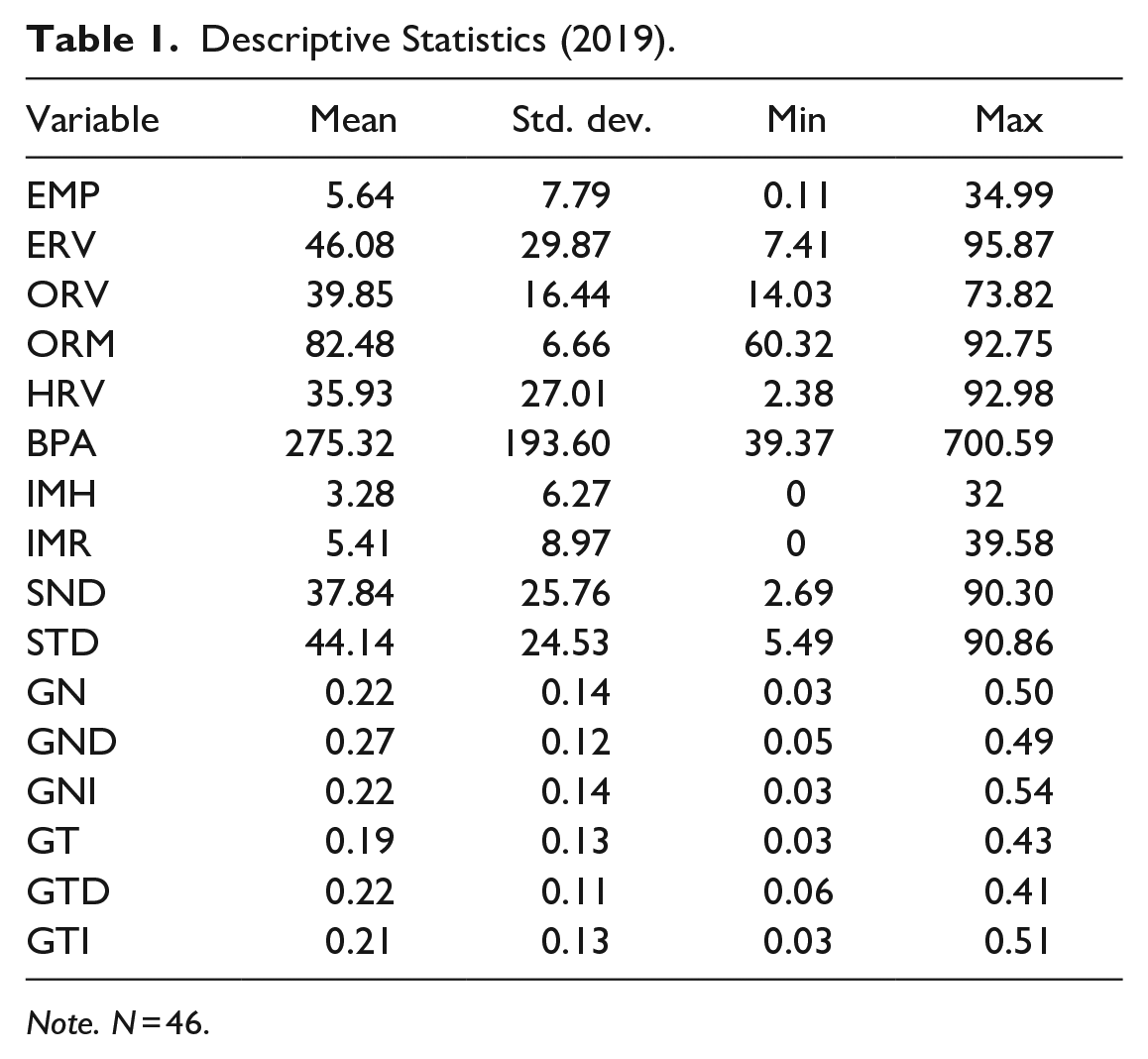
Imserso trips take place in six Spanish coastal regions: Andalucía, Murcia, Comunidad Valenciana and Cataluña, located in the peninsular Mediterranean coastal, and Islas Baleares and Islas Canarias which are island regions. A first analysis of all the coastal puntos turísticos in these regions reveals an important heterogeneity in general, even within regions. Table 1 shows descriptive statistics of the indicators in 2019. Additionally, motivated by an interest in the potential for Imserso to contribute to destination resilience, we initially mapped changes in the statistics for these variables in 2008 in addition to 2019, and found only minimal differences, therefore we focus only on the 2019 data here.
Descriptive Statistics (2019).
Note. N = 46.
The distribution of hotels participating in the Imserso program is not uniform across all the destinations in each region. Maps in Figure 1 shows their distribution in 2008 and 2019. Indeed, up until this point it has been difficult to understand the impact of social tourism programs such as this at the local level. The figures suggest a notable level of concentration of participating hotels, slightly higher in 2019 than in 2008. On the one hand, for 2019, 57% of the destinations have no participating hotels, while 50% of the participating hotels are located in a small fraction of destinations (9%): for example, Benidorm, Puerto de la Cruz, Lloret de Mar and Salou. The first two account for 34% of the participating Imserso hotels in our sample.
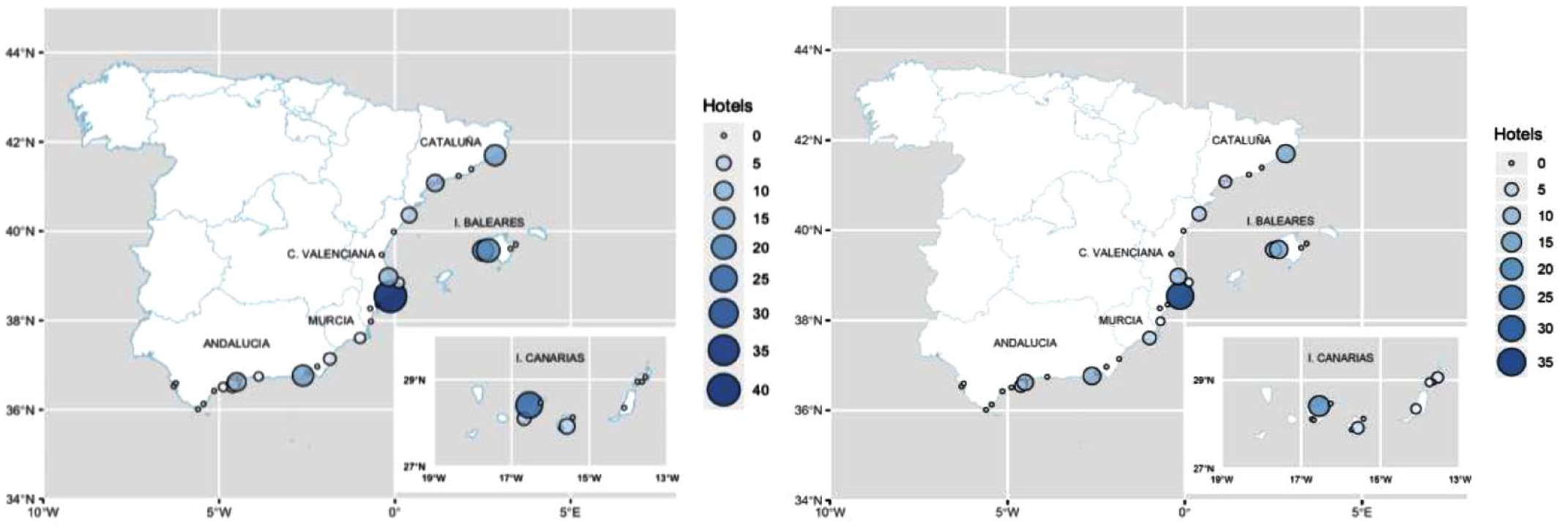
Number of hotels participating in the Imserso trips by destinations in 2008 (left) and in 2019 (right).
The hotel sector also shows important differences between puntos turísticos within regions. We identified destinations with an average number of bed-places by hotel (BPA) below 100 and others above 500 in three regions, Andalucía, Cataluña and Islas Canarias. Similar findings are obtained for the market composition. The domestic overnights share (SND) ranges from 20% to 81% in Andalusian destinations, 34% to 90% in Comunidad Valenciana and 7% to 59% in Islas Canarias. These differences can have an important effect over the resilience of each destination, recent studies have pointed out that a focus on domestic markets should result in higher resilience (J.Duro et al., 2022; Falk et al., 2022b).
The importance of employment in the hotel sector, measured by its percentage in relation to the total resident population (EMP), shows a general range from 0.1% to 35%, with large differences in regions including Islas Canarias (0.2%–23.8%) or Baleares (1.4%–35.0%). But there are destinations where the hospitality sector plays a key role in the local economy through its importance in employment, such as Sant LLorenç (35%), Pájara (24%), Yaiza (21%), or Capdepera (21%). All of these have resident populations below 60,000, some even below 10,000 (Sant Llorenç). It is in these destinations where Imserso trips can contribute significantly to maintaining employment in the low season, alleviating the vulnerability derived of the combined effects of a high seasonal demand with a high intensity and dependence of the tourism activity (Batista E Silva et al., 2018). Seasonality also shows a very important degree of variation across the puntos turísticos, a more detailed analysis of the seasonality indicators follows (section 4.4).
Multivariate Analysis of the Puntos Turísticos
The previous analysis depicts a complex set of indicators with a notable degree of heterogeneity which can be studied using multivariate techniques to obtain more complete and more useful results for analysis. In a first step, by means of a hierarchical cluster analysis, we develop a natural grouping of the puntos turísticos. This was performed with the 2008 and 2019 dataset and suggests that a six-group solution could represent the destinations, supported by the Calinski-Harabsz criterion and the Duda/Hart statistic.
Regarding seasonality, clusters 5 and 6 represent destinations with higher seasonal concentration indexes. In both clusters most destinations have hotels with Imserso supply. Destinations in cluster 6 show very high employment in hotels per capita (EMP) ratios (with an average of 13.9%), while this ratio is moderate in cluster 5 destinations (an average of 4.1%). Moreover, cluster 5 shows the highest domestic demand share (an average of 67.5% SND) and high Gini indexes for domestic demand, while destinations in cluster 6 exhibit low SND (11.6% on average) and higher seasonal concentration of international demand than domestic (averagtourism in European regions, with high levels e Gini index of 0.452 vs. 0.366).
In contrast, cluster 4 is comprised of destinations with the lowest Gini indexes, which are located in Islas Canarias (see Appendix 2), and with a low presence of Imserso trips. They show very high EMP (14% on average), are mainly focused on the international market, with a SND average of only 9.7%, and show a high average number of bed-places by hotel, BPA (an average of 597). Destinations in clusters 1 and 3 show low or moderate seasonality indexes, respectively, with almost no presence of Imserso trips in the former (only in one destination) and a mixed presence in the latter (7 out of 12). In cluster 1, we find large coastal cities including Barcelona, Málaga or Valencia, as well as two cities in Islas Canarias. In addition, these destinations show very low values of EMP (0.2% on average), as well as low average BPA (113). On the other hand, destinations in cluster 3 exhibit moderate to high seasonality indexes (an average GN of 0.240) and intermediate domestic market share (an average SND of 45.3%). Finally, cluster 2 is a special case, comprised of only 2 destinations (Benidorm and Puerto de la Cruz). They have the largest number of hotels participating in the Imserso scheme in our sample. Both destinations show high EMP (8.6% on average) and low seasonal concentration Gini indexes (an average GN of 0.099).
In a second step, the results of the cluster analysis are incorporated into the SOM technique. Although we trained the SOM with the datasets of 2008 and 2019, Figure 2 shows the destinations mapped according to the best matching units in 2019 for simplicity (different colors are assigned to each cluster). Most clusters show a relatively compact distribution of the destinations in the estimated map, apart from cluster 3, which includes greater diversity in destinations.
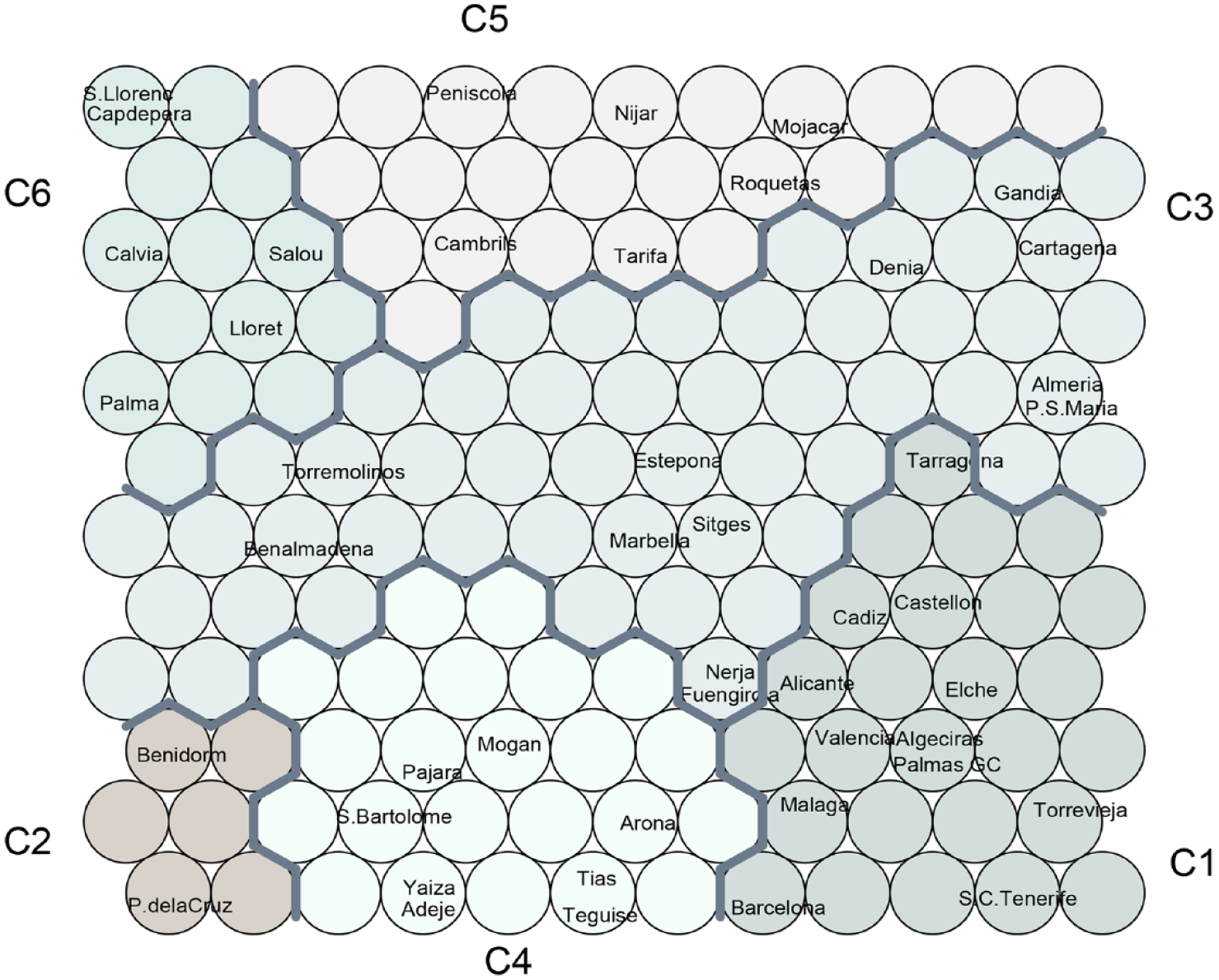
Destination SOM mapping and clusters (2019).
The position of each destination in the SOM map (Figure 2) is determined by the composition and value of its variables. To get a better understanding of the location of the destinations in the SOM map, we provide Figure 3, the SOM component planes, according to a gradient that goes from blue (low values) to red (high values).
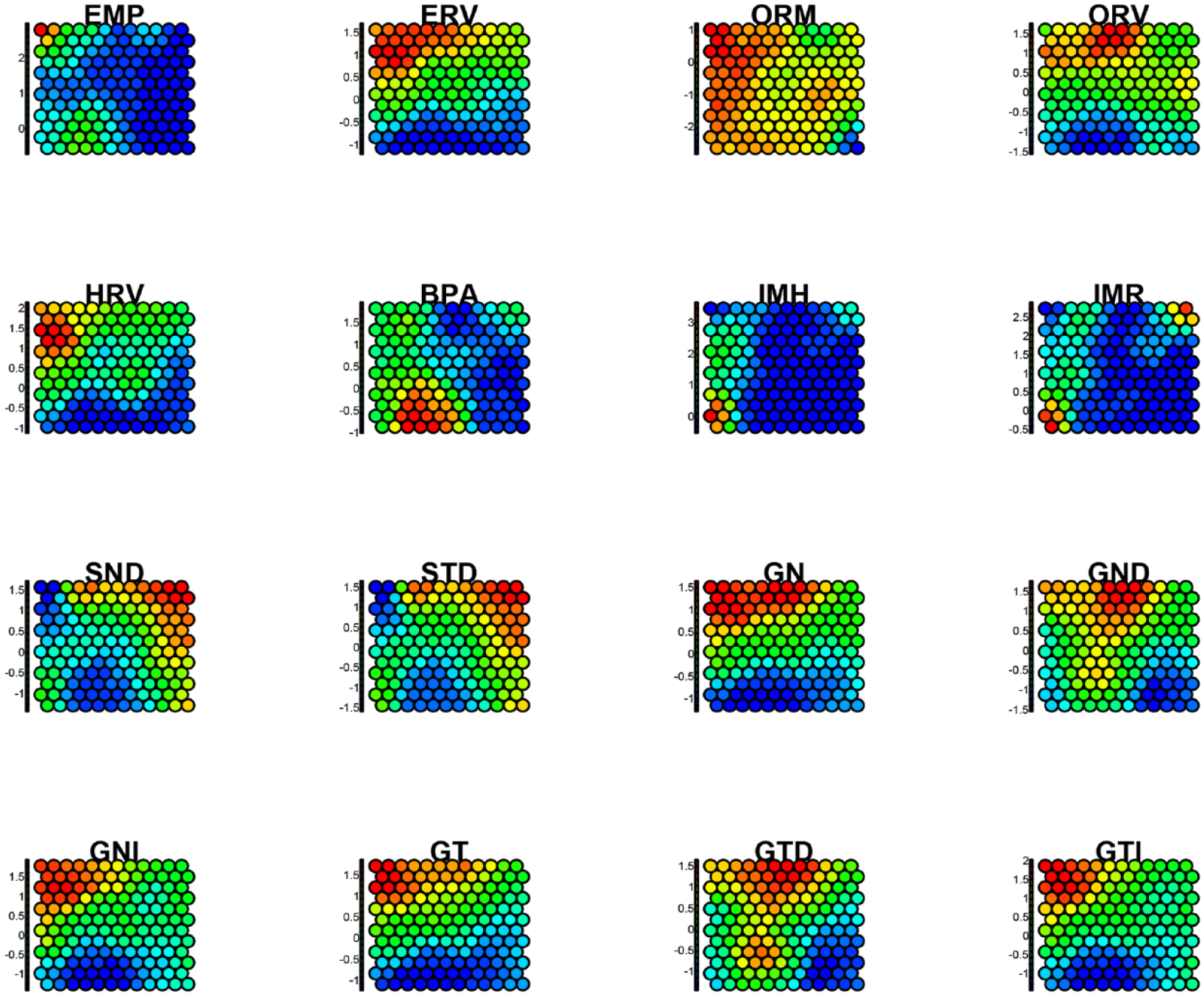
SOM component planes.
The highest Gini indexes, our main measures of demand seasonality, tend to be located in the upper-left corner nodes, marked with red color in their respective planes in Figure 3. But, for the domestic market (GND, GTD), the location is more on the top center area. Hence, destinations in the upper left or upper center part of the SOM map, like S. Llorenc or Peñiscola, are associated with high estimated international or domestic Gini indexes, respectively, which are distinctive of clusters 6 and 5. Conversely, the lowest estimated Gini indexes, with blue color in their respective planes in Figure 3, are located in neurons in the lower part of the map, especially on the right for the domestic market (cluster 1), like Barcelona or Tenerife, and more in the center and left for the international market (clusters 4 and 2), like Adeje or Puerto de la Cruz. The ERV variable (and, though to a lesser extent, HRV and ORV) has a map very similar to GN and GT.
The ratio of employment in hotels (EMP) shows an important concentration in the upper left corner (especially in some destinations in cluster 6), and in the lower left corner (cluster 2 and part of cluster 4). Variables of market composition (SND and STD) show, as expected, very similar component maps, displaying minimum values in the area where the cluster 4 is located, for its predominant international demand and maximum values in the upper right corner of the map, associated to some destinations of cluster 3 with a specialization in the domestic market.
Finally, the variables linked with the importance of Imserso participating hotels, IMH and IMR, show the highest values in the lower-left corner, but also in the upper-right corner in relative terms (IMR). This finding is consistent with the high concentration of hotels with Imserso supply among destinations. The only two destinations in cluster 2 show the highest values in absolute and relative terms in our sample.
The last step of this analysis consisted of obtaining the trajectory of the destinations in the SOM mapping, comparing their positions in 2008, 2013, and 2019 (Figure 4), as an indication of their stability during the period. Each destination appears with three points (except for four municipalities that were puntos turísticos in 2019, but not in 2008 and 2013) connected by an arrow, where blue indicates the puntos turísticos with Imserso trips in 2008 and red those without them. In general, we note that most of the destinations stayed in the same cluster. But there are some differences in the magnitude of their position changes. Destinations in clusters 2 and 4 are the most stable, showing only small movements. Puntos turísticos in these clusters are included in the Imserso program with only one exception. In contrast, the greatest instability occurred in cluster 1 with most of the longest movements. All the destinations in this cluster did not have Imserso trips at the beginning of the period, the instability of their positions in the topology is an indicator of the difficulty they faced in absorbing the impact of the GFC shock.
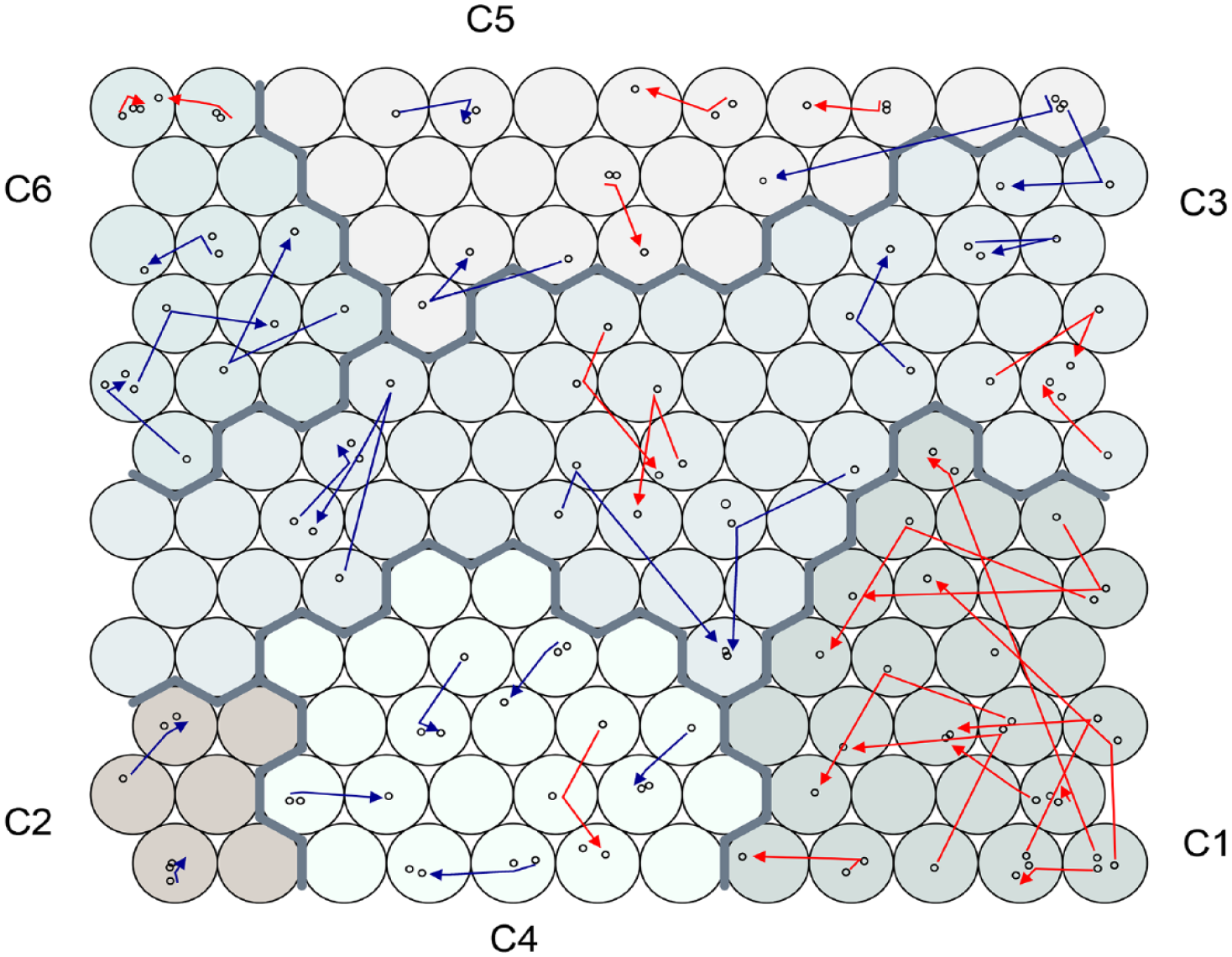
Destination SOM mapping trajectories 2008–2013–2019.
In the remaining clusters, 3, 5, and 6, we found a more diverse temporal behavior with variable changes within clusters. However, it seems that there is certain proximity between those puntos turísticos with Imserso trips in the SOM map, as well as between those without them.
Seasonality in the puntos turísticos
Understanding the magnitude of the seasonality of demand is useful to assess the possible impact that the Imserso program has and the effect over time following external shocks. Firstly, we examine the level of seasonal demand concentration in the puntos turísticos for 2019, secondly, the trends of the main indicator, the Gini concentration index of hotel nights for all the destinations between 2008 and 2019. The distribution by destination of the Gini index of the 2019 monthly series of tourists (GT) and hotel nights (GN) is shown in Figure 5. In general, there is little difference between both indicators, which are slightly higher for nights than for tourists. As noted, there are some regions with a homogenous distribution of the overall seasonality indexes, like Islas Canarias with Gini indexes below 0.2 in all their destinations or Islas Baleares with GN and GT above 0.3. However, there are also two regions, Andalucía and Cataluña, where the differences between seasonal concentration of demand is remarkable. Both regions include destinations with high GN, above 0.4, and other destinations with Gini indexes around 0.10.
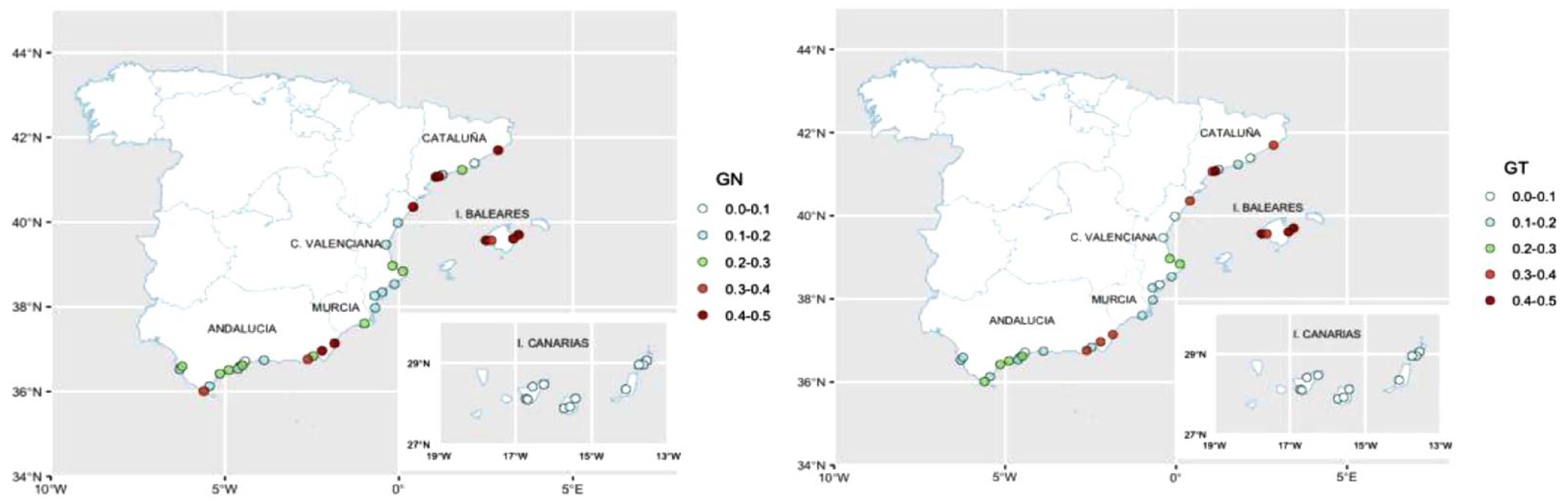
Seasonality of overnight stays (GN) (left) and travelers (GT) (right), 2019.
There are also important differences in the indicator for hotel supply seasonal variation, HRV (Table 1). The highest values are in destinations with a severe lack of demand in the low season. All destinations with a Gini index of overnights (GN) greater than 0.3 experience hotel closures at a rate of at least 48%, this being especially acute in Lloret, Calviá, Salou and Sant Llorenç (cluster 6), with closures above 80%. Moreover, almost half of the destinations (46%) show seasonal variations in the monthly figures for employment in hotels, ERV, above 50%, and there is even a group of eight municipalities in clusters 5 and 6 with ERV greater than 80%. Destinations in this group which also have a high rate of employment in hotels per capita may find this an aggravating problem for their local economies. In contrast, there is also a set of destinations with ERV below 20%, mainly in Islas Canarias and cities including Barcelona and Valencia.
A second aspect of this analysis is to obtain a clearer understanding of the possible effects of the GFC on the seasonal concentration in the puntos turísticos, based on the trends of the main seasonality indicator used, the Gini index of overnight stays, GN, from 2008 to 2019. We considered it relevant to know if the level of seasonality, generally assumed as a vulnerability factor, could be itself affected by the external shock. In which case, the effects would be amplified into a negative feedback loop, and, whether the presence of Imserso trips ameliorated those impacts.
As a general depiction of the evolution of these trends, Figure 6 shows the contour plots of the densities of the trajectories of all puntos turísticos (2008–2019), by the presence or absence of Imserso activity. The brighter colors indicate areas with more density, that is, where there is more concentration of individual trends. These plots suggest a general effect, demonstrating an increase in GN of varying duration and intensity that is reverted toward the end of the period. In the case of destinations receiving Imserso trips, the higher densities, that is, the more frequent trajectories, show an increasing trend between 2010 and 2014 with a decline afterward, although with a lower density, since some trajectories seem to maintain an increasing trend. Additionally, a secondary maximum in the lower part of the plot demonstrates a very stable path of low GN for the whole period. The destinations without Imserso trips show a somewhat different pattern. In this case, the higher densities show a less intense effect, over a longer duration. These trajectories contain lower GN values than the destinations with Imserso trips. But again, we find a secondary maximum of paths with high GN values in the higher part of the plot.
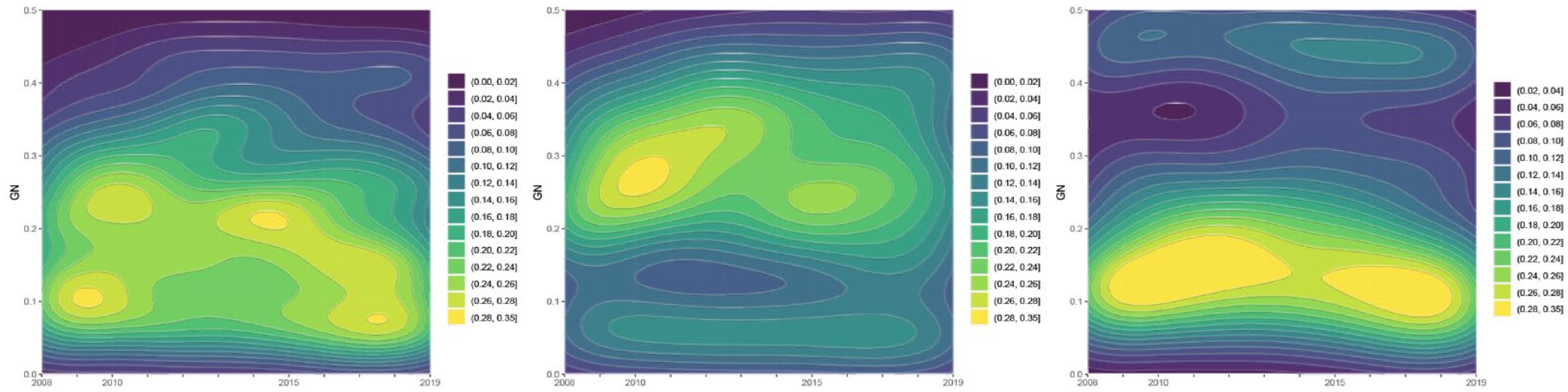
Contour plots of the densities of the trajectories of GN for all puntos turísticos. Total (left), with Imserso trips (middle) and without Imserso trips (right).
We can use the classification obtained with the cluster analysis to discover a more detailed interpretation of the effects over GN. Hence, the individual patterns of each destination are shown in Figure 7, classified (i) by presence or absence of Imserso trips in 2008, and also (ii) by the clusters.
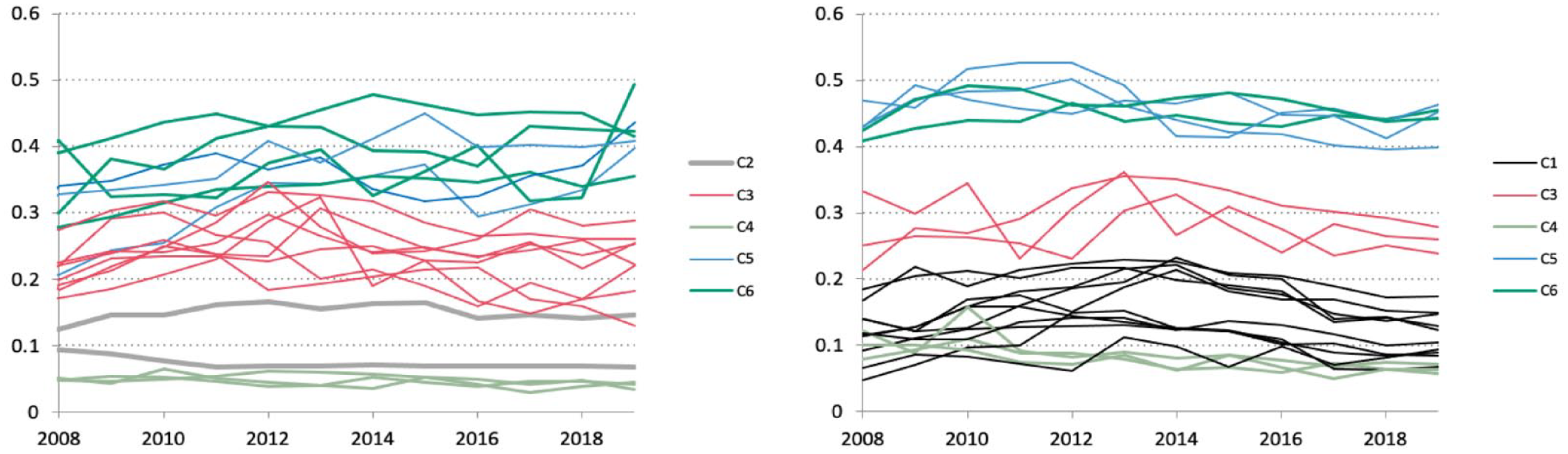
Gini index of number of nights (GN) evolution of puntos turísticos by cluster. Destinations with Imserso trips (left) and destinations without Imserso trips (right).
The puntos turísticos in clusters 5 and 6 without Imserso trips are those with highest GN, which also show an increase following 2008. In contrast, the destinations with Imserso trips in general exhibit a slowly increasing trend through the whole period, since the program could initially attenuate the effects of the GFC in comparison with similar destinations without Imserso trips, but the result of budget cuts in the program possibly reduced its counter seasonal impact over time. Most of the municipalities in cluster 3 are included in the program, but in general these destinations, with intermediate GN levels, experienced increases after 2008 followed by a decline in seasonal concentration 4 or 5 years later. This second trend is relatively more delayed in the group without the program. Regarding cluster 1, all its destinations (without Imserso in 2008), also show the same pattern, reaching the maximum around 2014, with the only exceptions Málaga and Barcelona, which began earlier to decrease their Gini indexes. Finally, the destinations with the lowest seasonality indexes, all of those in cluster 4 and two in clusters 1 and 2 have had very little variation in their seasonality levels along the period of analysis.
Effects on Employment
To facilitate the analysis of the effects of the GFC on employment in the hotel sector, we use the index that measures the percentage of change of employment in hotels every year with respect to that of 2008, IE08. The contour plots (Figure 8) show that, in general terms, the decrease in employment levels after 2008 is less acute in the destinations involved in the Imserso program in 2008 than those not, indicating a greater resilience to the impacts in the employment levels in those destinations. In addition, there is more dispersion in the group of destinations which do not have Imserso trips. These data could be interpreted with some caution, as during this period an explosion of disruptive innovation in the accommodation sector via the widespread introduction of peer-to-peer accommodation sharing platforms was witnessed. However, the subsequent recovery of employment in the hotel sector after 2014 seems to support this link to resilience. Additionally, Imserso trips consist almost exclusively of discounted package holidays in 3- and 4-star hotel accommodation.’
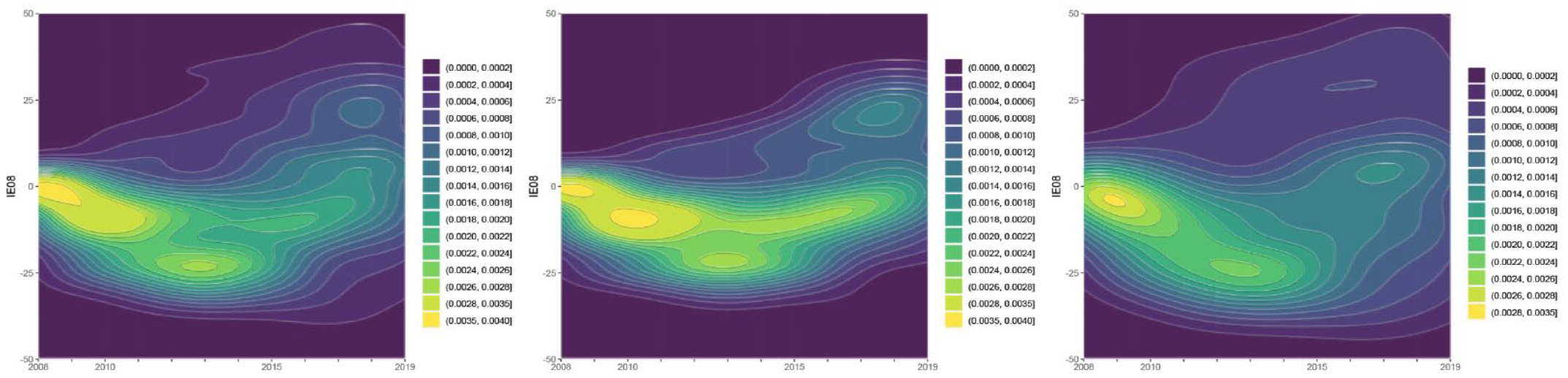
Contour plots of the densities of the trajectories of IE08 for all puntos turísticos. Total (left), with Imserso trips (middle) and without Imserso trips (right).
Some additional findings are observed analyzing the individual trends according to the clustering (Figure 9). Firstly, there is a group of a few municipalities that showed a very limited negative effect on employment, of only 1 year with very fast recovery rates. These are four small municipalities in cluster 4 in Islas Canarias, two with Imserso program hotels and two without, together with the biggest urban destination in our database, Barcelona. All of them show very low levels of seasonality (Gini indexes below 0.1). The Imserso program does not play a relevant role in these particular cases in terms of the differential effects on employment, possibly because the dominant effect is due to the low seasonal demand. Conversely, comparing the trends of puntos turísticos in cluster 3, with moderate seasonality indexes, a deeper and longer effect is observed in those not receiving Imserso tourists. In addition, the destinations in cluster 6, with high seasonal demand patterns, show in general a less deep effect than most of the municipalities in clusters 1 and those in cluster 3 without Imserso trips, with the exception of Capdepera. These cases in clusters 1, 3, and 6, along with the two destinations in cluster 2, both with Imserso, help clarify the general observation obtained with the contour plots of a greater resilience indicated by the impact on employment in puntos turísticos which participate in the Imserso scheme. Finally, in municipalities in cluster 5, with high seasonality indexes, there is not a clear distinction in the effect on employment made by the presence of the social tourism program.
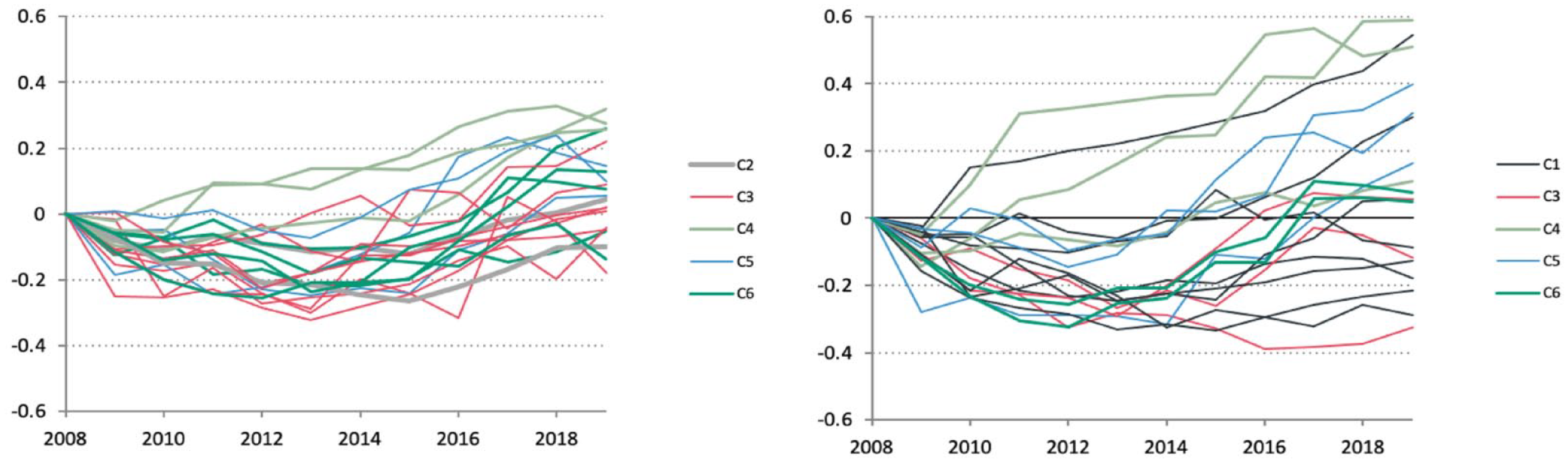
Evolution of IE08 for the puntos turísticos by cluster. Destinations with Imserso participation (left) and destinations without Imserso participation (right).
Discussion
The use of novel clustering techniques to identify destinations with similar structural conditions provides more nuanced analysis of the differential effects of external shocks in combination with the role of the stimulus program in protecting destinations from vulnerabilities. Thus, by creating groupings of destinations accounting for local characteristics of tourist demand, hotel supply, and their relevance in terms of the presence of Imserso trips, we provided detailed insights on the value of these types of stimulus programs for the first time. The use of highly localized demand data that is difficult to source and manipulate offers an exceptional analysis, particularly as it comprises longitudinal datasets capable of assessing the changes in impact over time through periods of crisis, which we argue is essential to understanding resilience.
Imserso trips are concentrated in coastal destinations in six Spanish regions, where they normatively have a positive impact in local economies, alleviating seasonality effects and helping to maintain local employment over the low season, contributing to greater capacity in those destinations to absorb and respond to changes both in the program and that exerted by general market conditions in times of crisis, and hence resilience (J. A. Duro et al., 2021). However, there are important differences in local destinations within regions regarding the importance of the hotel industry (especially as an employer) and the seasonal concentration of tourism supply and demand. These differences have to be accounted for in order to estimate the real impact of the Imserso trips and to understand how the program might contribute to greater resilience. While regions such as Islas Canarias show little seasonality in all destinations, the Islas Baleares reveal exclusively high seasonality indicators, and yet other regions such as Andalucía or Cataluña exhibit an important internal variability between destinations. High levels of seasonality are generally associated as factor of vulnerability in tourism destinations. For example, Calgaro et al. (2014) includes seasonality as a tourism specific sensitivity in their destination sustainability framework, coming from both crises and disasters and climate change resilience literature, that affects the markets attracted by destinations, as well as the financial stability of tourism businesses. Similarly, Ntounis et al. (2022) found that a key factor negatively affecting the tourism business resilience in UK destinations (towns) was related to demand temporality, especially seasonality.
A similar picture emerges in terms of the importance of employment in the hospitality sector to the local economy. This corresponds with the findings of Watson and Deller (2022) whereby tourism dependency, as well as supply and demand characteristics influenced local US municipalities resilience to the pandemic. Romão (2020) also links high share of employment in tourism in European regions, with high levels of vulnerability in recession periods, suggesting that specializing in tourism supply based on labor-intensive but low value-added activities, results in more vulnerability. Furthermore, in destinations exhibiting a combination of high seasonality (which may cause hotel closures and seasonal unemployment in the low season) and high proportion of employment in the hospitality sector, can provoke a difficult situation which, if detected, could lead to policy objectives to target Imserso activity in the future. Special destination marketing programs linked to the scheme could actively contribute to stronger performing, more sustainable and resilient destinations. Indeed, studies including Batista E Silva et al. (2018) directly identify the combination of high seasonality and high intensity in tourism in European regions as a specific policy relevant characteristic of tourism destinations which they call regional vulnerability to tourism.
However, in line with ideas of resilience being specific to conditions of a complex adaptive system (Hall et al., 2017), a notable finding is a high degree of heterogeneity between the destinations which accommodate Imserso tourists, even between those of the same region, which makes it especially important to use the municipality level as the spatial data reference. In addition, we found that Imserso supply is highly concentrated in some destinations. On the one hand, in the six regions we analyzed, there are destinations without Imserso supply (or with a small supply), whereas others show a very high number of participating hotels (e.g., Benidorm and Puerto de la Cruz absorb 34% of the hotels with Imserso supply).
Even despite this heterogeneity, it was possible to identify six clusters with a satisfactory degree of internal similarity, offering a valuable contribution to the analysis of the distribution and potential impacts the Imserso program. There is an important incidence of Imserso trips in four of the six clusters: in destinations with high seasonality (clusters 5 and 6), but also in clusters with low seasonal concentration (clusters 2 and 4). Regarding clusters 5 and 6, they include destinations with high levels of seasonality and in cluster 6 also high levels of employment per capita in the hospitality sector. In these destinations, the Imserso activity may still have a key role alleviating the seasonality and seasonal unemployment.
In contrast, the presence of these programs in destinations grouped in clusters with low seasonality (2 and 4) raises the question whether the potential counter seasonal effects have been exhausted. However, even among these clusters, it is worth noting that a reduction in the presence of Imserso activity, a very stable and permanent segment, could cause a reversion of this effect, inducing an increase of the seasonality of the demand, and potentially significant seasonal unemployment in some destinations of cluster 2, which show the highest levels of employment per capita in the hospitality sector. The effects on resilience of loyal segments of demand have been pointed out by Calgaro and Lloyd (2008) thus, a reduction in loyal visitor segments could lead to potential vulnerability. A special case in this group is Benidorm, the destination with the highest number of hotels participating in the program, which may be the primary factor behind a low level of seasonality.
Furthermore, the SOM analysis with temporal layers facilitated a visual representation of the changes of the destinations over the period 2008 to 2019. The main finding is that the classification in the clusters of destinations shows a great degree of stability, with very few changes between groups. Moreover, within the groups, the lower mobility in the position of the destinations in the SOM topology is found in cluster 2 (the group with the two destinations with more hotels participating in the Imserso trips) and cluster 4 (a group of destinations in the Islas Canarias with low seasonality and frequent presence of the Imserso trips). The visualization also shows how the destinations in a specific group (cluster 1), which have no Imserso trips, exhibited the greatest instability over the period of the study, being a possible indicator that the lack of a stimulus program at least in this group, worsens the resilience to the external shocks experienced by the industry generally. This should represent a positive signal to policy makers of the effectiveness of the social tourism scheme in smoothing out some of the worst effects of external crises, and thus it can be considered to contribute to greater resilience and therefore as a useful tool for the wider tourism sector.
Regarding seasonality of demand, there have been some remarkable changes in the years following the GFC. However, due to the notable degree of heterogeneity between the different destinations, it is difficult to find a general explanation. The cluster analysis offered a useful tool to disentangle these effects. While the destinations in groups with low seasonality showed little variation, those in groups with higher concentration indexes were affected by increases in their seasonality indexes, which in most cases had reverted by the end of the period. In most of these cases, those with Imserso activity had lower initial effects than those without it, due to the mitigation effects that Imserso program initially brought. Yet, these effects were greater several years after, provoked by the budget cuts in the program that began 2 years after the GFC and which have become “baked in” to the system subsequently.
In terms of the impact on employment in the tourism (hotel) sector, we noted some ambiguity of findings. The general decrease of employment in the sector after the GFC took longer to recover than demand levels and showed different depths and durations among the destinations. This finding is consistent with other studies, like Mazzola et al. (2019) whose results imply notably different results in employment and GDP resilience in European islands in depth, or Fingleton et al. (2012) that show that in general regional employment downturns in recessionary periods tend to be higher than drops in GDP. This also corresponds with the current post-pandemic difficulties in recovery in the sector due to shortages of staff in the face of high levels of demand.
In those destinations with the lowest seasonality indexes we observed, in general, little impact on the employment in the hotel sector in terms of depth and length was observed. And in destinations with moderate or high seasonality we found that those puntos turísticos with an Imserso presence in groups 2, 3, and 6 showed more resilience with a shorter and/or less deep effect than those without Imserso program in groups 1 or 3. However, this cannot be generalized to all destinations, since there is a set of destinations in cluster 5 where this trend is not observed.
Conclusions
Targeted stimulus programs were widely introduced in the tourism and hospitality sector in the wake of the COVID-19 global pandemic to build recovery in the industry. Yet it is unclear if and how such schemes contribute to greater resilience for tourism destinations. This study provides evidence to support those initiatives, using novel methods which provide a high degree of granularity of the differential effects the Imserso program had in individual destinations. The research confirms the links between these interventions and destinations’ vulnerability to external shocks and, conversely, their ability to absorb the effects of such shocks—that is, their resilience. Recent studies (Falk et al., 2022b) have noted the importance of the asymmetric nature of (domestic in their case) tourism demand resilience in European regions during the pandemic. They found that the most vulnerable regions were French areas with high economic activity and Spanish destinations with intensive tourism sectors. Cellini and Cuccia (2015) also found important differences between regions in Italy regarding the degree of economic resilience to the GFC. Those specialized in seaside tourism faced the deeper effects. However, in our study we found that even at a regional level there is a high degree of heterogeneity between the destinations in some regions.
The performance of the tourism industry is marred by its proneness to external events beyond its control. While research on risk factors and approaches to managing crises is mature, recent events including the global COVID-19 pandemic have shifted the focus onto the factors which can help the industry attain greater resilience. There is limited agreement on the conceptual structure of resilience in a tourism context. We argued that the methods generally used to measure broad seasonality effects can be used to study vulnerability, in terms of capacity to absorb shocks of less frequent, unpredicted external crises. Our focus on a long-established, large-scale domestic tourism stimulus program with a unique dataset at the local level of municipalities facilitates a better understanding of the possible contributions that such policy levers offer to governments and destinations in trying to build a more resilient tourism sector.
We show how resilience can be linked to seasonality, which as an important factor of destination vulnerability can affect adaptive capacities. More research is needed on understanding the interaction between different factors affecting destination vulnerability as the main variables underpinning capacity to overcome shocks and enhance resilience. Market strategies, particularly the support for the domestic tourism market are important components that can help ameliorate vulnerabilities and stimulus policies in conjunction with market strategies can provide avenues for destination resilience. Therefore, we contribute to a greater understanding of resilience based on economic theories as opposed to ecosystems or management approaches. We also contribute to knowledge in social tourism by highlighting the role that Imserso trips can play in destination resilience, through its influence on several vulnerability factors, and also assumed that relationships in the model are not unidirectional. Previous research has affirmed the role social tourism programs have played in counterbalancing seasonal demand, yet our analysis demonstrated the interaction between different local factors that can influence the potential of this type of stimulus.
From a methodological point of view, we add to the current tools to measure destination resilience and through the combination of different multivariate statistical methods and visualizations show how useful insights into tourism destination resilience can be gained. Particularly, the visualization of trajectories of destinations in a SOM map revealed their stability shown as a visual indicator of resistance or resilience to external shocks (GFC in our case). Additionally, for highly detailed data, the combination of the maps with clustering techniques resulted in a fruitful method to disentangle the effects in a set of non-homogenous destinations.
As for the empirical contributions of this paper, regarding the stability of SOM trajectories as an indication of resilience, we found that a low level of seasonality does not always yield stable trajectories. The greatest instability is found in a group of destinations, cluster 1, all of them without Imserso trips, even though some of them have low seasonality. In contrast, the remaining destinations with low seasonality showed more stability, especially those with a greater amount of Imserso tourists. The role of Imserso stimulus activity at this point seems to be a factor that enhances the resilience of those destinations in terms of stability, especially in situations of low seasonality.
We also demonstrate that, apart from being a factor of vulnerability, seasonality itself can also be affected by external shocks, indicating spillover effects, which could lead to a vicious cycle of low resilience. In our study, those destinations with low seasonality saw very little effect of the GFC over their seasonality indexes. But destinations with moderate and high seasonality experienced temporal increases, which were deeper and longer in destinations without Imserso trips. In general, in destinations with moderate or high seasonality, the presence of the Imserso program seemed to attenuate the impact of the GFC on seasonality levels, allowing for smaller negative feedback into the process. Additionally, seasonality has been found a relevant factor explaining impacts on tourism employment in our study. Several destinations with very low seasonality experience very small GFC impact on employment in the hospitality sector. On the contrary, those with moderate or high levels of seasonal concentration showed a variable effect, which was found, in general, to be deeper and longer in destinations without Imserso trips.
The results also suggest that the generally accepted efficacy of the Imserso social tourism scheme tends to gloss over significant heterogeneity at the destination level. Though the general positive impact in reducing seasonality and generating employment is confirmed, it could be strengthened by identifying those destinations with more vulnerability to external shocks and intensifying the Imserso supply in those destinations. This could be of great interest in municipalities with a combination of current high seasonal demand, high hotel employment share and/or high hotel employment per inhabitant, which are mostly classified in our grouping in clusters 5 and 6. The results show the relevance of social tourism as a policy tool to help strengthen destination resilience by increasing stability in the workforce, evening out the peaks of supply and demand and enabling a more adaptive and responsive system (Hall et al., 2017). This is a remarkable implication from a strategic point of view to destinations managers, especially those in more vulnerable situations, but also for the Imserso, as the main agency in the process, as awareness of these significant differential effects on destinations could be valuable in shaping the future design of the program.
At this point, we cannot forget that the main goals of the Imserso trips are to facilitate access to a holiday break for elderly Spanish people and contribute to their wellbeing, the impact on local economies being a subsidiary goal. Consequently, targeting the program to selected destinations also requires matching the demand, which is not homogenous in this market (Alén et al., 2017). However, another implication of this study is that it if were possible to match demand with supply in some of the target destinations such as those in clusters 5 and 6 that currently are not in the program, or increasing the supply in those already included, could have very positive effects in enhancing destination resilience.
As for the limitations, firstly, the fact that the data are quite specific to the Spanish context, which is unique both in terms of its very high dependence on sun and sand beach resort-based tourism within Europe and for the huge scale and long-running social tourism program. Secondly, regarding data, the numbers of Imserso overnights (or the number of visitors) in each destination were not available, as Imserso did not provide them. This prevented a comparative analysis with total hotel nights. A future line of research, if this information could be obtained, would be a deeper study of the role of Imserso into the whole hotel demand evolution and concentration.
Another limitation comes from the fact that some smaller Imserso destinations are not included in our study, because they are not considered by INE as “puntos turísticos” since their tourism activity level does not reach the minimum to be considered significant in statistical terms. An additional future avenue of research could be to examine the possible effects of the huge transformation in accommodation supply and demand brought about through the onset of the sharing economy (peer to peer accommodation platforms for example) on employment and vulnerability to external shocks at a destination level and the impact of the stimulus program on counter-seasonal effects. However, further research using the approaches outlined here will expand the possibilities for this important area of research.
Footnotes
Appendix
Clustering of Puntos turísticos (2019).
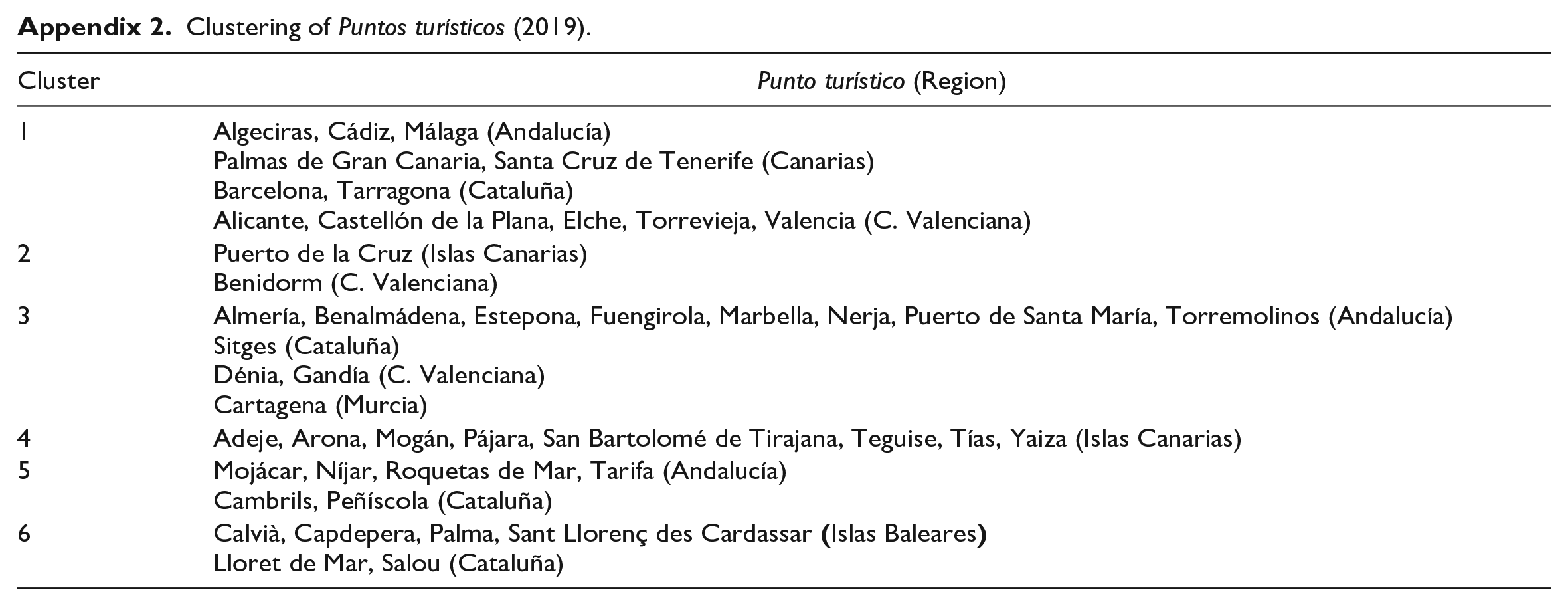
| Cluster | Punto turístico (Region) |
|---|---|
| 1 | Algeciras, Cádiz, Málaga (Andalucía) Palmas de Gran Canaria, Santa Cruz de Tenerife (Canarias) Barcelona, Tarragona (Cataluña) Alicante, Castellón de la Plana, Elche, Torrevieja, Valencia (C. Valenciana) |
| 2 | Puerto de la Cruz (Islas Canarias) Benidorm (C. Valenciana) |
| 3 | Almería, Benalmádena, Estepona, Fuengirola, Marbella, Nerja, Puerto de Santa María, Torremolinos (Andalucía) Sitges (Cataluña) Dénia, Gandía (C. Valenciana) Cartagena (Murcia) |
| 4 | Adeje, Arona, Mogán, Pájara, San Bartolomé de Tirajana, Teguise, Tías, Yaiza (Islas Canarias) |
| 5 | Mojácar, Níjar, Roquetas de Mar, Tarifa (Andalucía) Cambrils, Peñíscola (Cataluña) |
| 6 | Calvià, Capdepera, Palma, Sant Llorenç des Cardassar Lloret de Mar, Salou (Cataluña) |
Declaration of Conflicting Interests
The author(s) declared no potential conflicts of interest with respect to the research, authorship, and/or publication of this article.
Funding
The author(s) disclosed receipt of the following financial support for the research, authorship, and/or publication of this article: This work was supported by the British Academy [SRG18R1\180504].

1.
From west to east, the puntos turísticos (regular) located in the Spanish regions (bold) where the Imserso trips take place are detailed below (Mundiplan, 2019):