




Abstract
Tourism generates 8% of all greenhouse gas emissions. One way of reducing emissions is to deploy behavioral change interventions that entice tourists to behave in more sustainable ways. In search of the most effective approaches, we conducted a meta-analysis of 118 interventions tested in field experiments in the tourism context. Most studies targeted beliefs and focused on towel reuse, food waste, or resource use. Changing choice architecture (d = 1.40) and increasing pleasure (d = 0.66) emerge as the most effective approaches. Imposing penalties for unsustainable behavior (d = −0.12) and leveraging social norms to trigger sustainable behavior (d = 0.18) have limited effectiveness. Future work should re-direct attention from designing interventions that modify beliefs toward interventions that change choice architecture or increase the pleasure associated with the desired behavior, and aim at changing a wider range of behaviors, including green transportation and the avoidance of single use plastics.
Introduction
The tourism industry contributes significantly to greenhouse gas emissions (Lenzen et al., 2018), the loss of biodiversity (Hall, 2010), ozone layer depletion (Sáenz-de-Miera & Rosselló, 2013), waste generation (Arbulú et al., 2015; Filimonau & Tochukwu, 2020), and the pollution of air (Roe et al., 2014) and water (Gössling & Peeters, 2015). Optimally, tourism would develop in a sustainable way which “productivity can be sustained over the long term for future generations” while “preserving essential ecological processes” and protecting biodiversity (Bramwell & Lane, 1993, p. 2). While we do note that the theoretical definition of sustainable tourism refers to all the three dimensions (pillars) of sustainable development (UNEP, 2005)—economic, social sustainability and environmental—and we acknowledge that is important to focus on all these key aspects to ensure a balanced development, this meta-analysis focuses on interventions that aim to trigger pro-environmental behaviors in the tourism context—(the environmental pillar). Focusing on one pillar allows for direct and comprehensive comparisons of solutions that aim to achieve that pillar.
Moving toward environmentally sustainable tourism development requires the tourism industry to monitor its negative environmental impacts and implement preventive or corrective measures to reduce it (United Nations World Tourism Organization [UNWTO,], 2022). Mitigation strategies that advance the environmental sustainability of the tourism industry can be developed at the level of all stakeholders involved: government, business, and tourists (Bramwell, 2012). Policy makers, for example, can set environmental quality standards for business processes or activities (Freeman & Kolstad, 2006) or implement direct regulatory approaches that are legally binding, such as the ban of single-use amenities in California. Businesses can proactively engage in both product- and process-driven initiatives (McLennan et al., 2013; Warren et al., 2017). They can choose to use environmentally friendly products, implement energy and water-saving measures, and/or install environmentally friendly devices like solar systems (McLennan et al., 2013). Implementing greener infrastructure however can be difficult and complicated, as these technologies are often too expensive and require time, and technical and financial support (UNWTO, 2022). Tourists, therefore, play an important role in increasing the environmental sustainability of the tourism industry. They can be enticed to behave in more environmentally friendly ways at their destination through interventions that target environmentally significant behaviors (Dolnicar, 2020; Nisa et al., 2017).
An environmentally significant behavior “changes the availability of materials or energy from the environment or alters the structure and dynamics of ecosystems or the biosphere itself” (Stern, 2000, p. 408). Environmentally significant tourist behaviors include waiving unnecessary daily hotel room cleans (Knezevic Cvelbar et al., 2021), choosing locally produced foods (Cozzio et al., 2020), eating up all the food taken from a buffet (Dolnicar et al., 2020), avoiding unnecessarily long showers (Günther et al., 2020), not running heating or cooling when it is not needed (Idahosa & Akotey, 2021), taking public transport or cycling around the destination instead of hiring a car (Thøgersen, 2006), avoiding single use plastics (Lange et al., 2021), and not littering (Cingolani et al., 2016). All these behaviors and more have direct implications on resource and energy consumption (Esparon et al., 2014; Gössling et al., 2011; Lee et al., 2013). Behavioral change interventions represent a good starting point to reduce the enviromental footprint of tourism as they can be implemented relatively quickly.
Changing tourist behavior requires the development of interventions that are informed by an understanding of why tourists behave in certain ways—by theories of human behavior. Several behavioral theories have served as the basis for intervention development, each positing a specific set of drivers of behavior. As a result, interventions developed and tested in the past leverage different theoretical constructs, including beliefs, attitudes (Ajzen, 1985), moral obligations and social norms (Cialdini et al., 1991; Schwartz, 1977; Stern, 2000). Interventions aimed at changing beliefs typically provide relevant information, such as highlighting adverse environmental outcomes of wasting food at the buffet (Dolnicar et al., 2020) or of showering for too long (Günther et al., 2020). Interventions aimed at leveraging social norms usually communicate the typical behavior of others or behaviors others approve; or they use public commitments to make people feel obliged to behave in an environmentally sustainable way (Cialdini et al., 1991).
Theories such as self-determination theory (Ryan & Deci, 2000) and hedonic psychology (Kahneman et al., 1999) highlight the role of intrinsic and extrinsic motives of behavior, such as the desire to experience enjoyment and to avoid penalties. Enjoyment -focused interventions aim to make pro-environmental behavior more appealing by making them more enjoyable. Successful implementations include a stamp collection game to motivate families to not leave uneaten food at the buffet (Dolnicar et al., 2020), and offering drink vouchers to hotel guests who voluntarily waive a daily room clean (Dolnicar et al., 2019). In contrast, penalty-based interventions aim to make the environmentally unfriendly behavior unappealing, for example, by charging more money for higher-emission wines (Soregaroli et al., 2021) or charging patrons if they leave behind uneaten food (Chang, 2022).
Some researchers (e.g., Thaler & Sunstein, 2009) emphasize external factors that might prompt behavior. Thaler and Sunstein (2009) suggest that every environment is characterized by its choice architecture, which subtly influences people’s behavior. Nudges alter the choice architecture of the environment in a way that makes a specific option more likely to be chosen without compromising freedom of choice. Interventions have often been mislabeled as nudges, when they are not nudges, and in fact involve high levels of cognitive processing (Mols et al., 2015). We only classify interventions as changes to choice architecture when they attempt to heighten the chance of a person choosing the preferred option without conscious processing. Altering choice architecture includes changing defaults, such as asking guests to opt-in to have their room cleaned (Knezevic Cvelbar et al., 2021) or providing guests with smaller plates to avoid them taking more from the buffet then they can eat (Kallbekken & Sælen, 2013). Altering choice architecture—as opposed to changing beliefs—may trigger more sustainable behaviors without tourists intentionally choosing the more sustainable behavioral option.
Theoretical arguments by Dolnicar (2020) suggest that belief-based and norm-based interventions, particularly environmental appeals, have negligible effects in the tourism conetxt because informational strategies are only predicted to be effective when the behavior is convenient, requires little effort, and in environments free of constraints (Steg & Vlek, 2009). On holiday these circumstances are not achieved as people are away from home and are typically focusing on relaxation and enjoyment. Although social norms have shown to increase environmentally significant behavior, these effects are typically small when compared to interventions that aim to increase pleasure or change defaults or infrastructure. Pleasure-focused approaches are theoretically promising in tourism because they aim to maximize enjoyment in an inherently enjoyment-focused context. Similarly, changes to defaults—such as providing smaller plates at breakfast buffets (Kallbekken & Sælen, 2013)—do not increase effort or decrease holiday enjoyment but can lead to more environmentally friendly behaviors from tourists (Dolnicar, 2020). Dolnicar (2020) does not include penalties in their framework. However, a recent systematic review (Demeter et al., 2023) found that penalties have limited success in the holiday context. Theoretically, the penalty (e.g., a small cash penalty) for behaving in an environmentally unfriendly way might not outweigh the enjoyment of engaging in that behavior (e.g., having fresh towels daily).
Tourism managers need to understand which interventions work to be able to choose the most effective ones to deploy at their businesses. Tourism researchers need to understand which interventions work and why to be able to develop and empirically test the most promising new types of behavioral change interventions. Because of this urgent need to understand the comparative effectiveness of different intervention mechanisms, several reviews and meta-analyses have been conducted. Some include only a limited set of environmentally significant tourist behaviors or theoretical frameworks (Nisa et al., 2017; Scheibehenne et al., 2016), others are comprehensive and include many different behaviors and intervention mechanisms (e.g., 53 field experiments reviewed by Demeter et al., 2023). While these existing comparative studies offer valuable insights, they ultimately fail to quantify comparative effectiveness across multiple behavioral change intervention mechanisms because they do not conduct a meta-analysis or are limited to one behavior and/or intervention mechanism. Meta-analyses have greater power than narrative literature reviews because they quantify the results of each intervention by the effect-size index in a standardized form (Rosenthal & DiMatteo, 2001). Unlike systematic reviews, meta-analyses can statistically test for sources of variance across effect sizes, such as moderators in a meta-regression (Baker et al., 2009). Meta-regressions help generate hypotheses about factors and contexts that could reduce or increase the effectiveness of behavior change interventions (Baker et al., 2009).
Our study has a different purpose to Demeter et al. (2023). We note that Demeter and colleagues aimed at developing a detailed roadmap for future field experimentation for sustainable tourism. Their review of prior field experiments does comment on significance of effect of various interventions but does not report effect sizes. This is a major shortcoming because a pooled effect size for individual mechanisms cannot be derived, nor can effect sizes across mechanisms be compared. Effect size is more informative than statistical significance, because effect sizes are not influenced by sample size. Solely relying on statistical significance can be particularly misleading when a study is overpowered (Brysbaert, 2019). Effect sizes smaller than d = 0.40, even if significant are considered of little interest in behavioral and psychological sciences (Brysbaert, 2019) as it is more cost-effective to implement strategies that have a larger impact on real behavior. From a theoretical perspective, the larger the effect size the stronger the evidence for the predictive utility of that theoretical mechanism on behavior. Significance rates only inform us to whether a theoretical mechanism is effective at changing behavior and not how effective it is at changing behavior (Brysbaert, 2019). For example, many pleasure-focused interventions might be effective (100% success rate; Demeter et al., 2023), but this is of little practical or theoretical significance if pleasure-focused interventions have small effects. Further, architectural changes might have a lower binary success rate compared to pleasure-focused interventions (82% success rate; Demeter et al., 2023) but from this we cannot conclude that, on average, that pleasure interventions have larger effects than choice architecture interventions. For example, the 82% of successful choice architecture studies could have larger effects on behavior than the 100% successful pleasure-focused interventions. Furthermore, even the non-significant interventions could have reasonably large effects that were simply not detected through significance testing due to low power. The present study fills this gap by conducting a meta-analysis that investigates intervention effectiveness while correcting for variation in target behavior and location specifically for the context of tourism and hospitality.
This meta-analysis covers only interventions targeted at consumers in tourism and hospitality and aims to: (1) quantify the effectiveness of interventions designed to change environmentally significant behavior, and (2) compare intervention effectiveness across a wide range of intervention mechanisms. We expect that all intervention mechanisms except the imposing of penalties will result in significant increases in pro-environmental behavior. In line with the conceptual arguments put forward by Dolnicar (2020) and the empirical insights reported by Demeter et al. (2023), we predict the following order of effectiveness across intervention mechanisms: altering choice architecture (most effective), increasing pleasure, leveraging social norms, changing beliefs, and imposing penalties (least effective). Finally, (3) we determine the circumstances under which specific intervention mechanisms are more or less effective in influencing behavior.
The theoretical contribution of this paper lies in contrasting the validity of competing theories of pro-environmental behavior. Many theories aim to explain and predict the occurrence of pro-environmental behaviors. The ultimate empirical test of their validity, however, is to systematically compare contrasting interventions and observe which is more effective at changing behavior. A meta-analysis goes beyond whether a theory is able to change behavior to how well a theory can change behavior. This is what we achieve with this meta-analysis. Findings are of instant practical benefit: managers of tourism businesses and tourism destinations can identify the most effective behavioral interventions to prompt tourists behave in more sustainable ways and implement them. In so doing, they contribute directly to the achievement of the United Nations Sustainable Development Goal 12—to ensure sustainable consumption and production patterns.
Method
Data Screening and Preparation
The studies reported in the most comprehensive recent literature review of field experiments on environmentally sustainable tourist behavior (Demeter et al., 2023) served as starting point. Demeter et al. (2023) searched English peer-reviewed articles published before the end of August 2021 using the key words “tourism OR hotel OR camping OR restaurant OR hospitality” AND “energy OR water OR waste OR emission OR sustain* OR environment*” AND “experiment* OR intervention” AND “natural OR field” within the title, abstract, and key words search fields. We updated the searches to include articles published up until the 30th of November 2022.
To be included studies had to be field interventions in enjoyment-focused contexts such as hotels and restaurants, which aim at changing a specific environmentally significant behavior of consumers. Studies that did not take place in the field (e.g., survey experiments and laboratory studies) and/or an enjoyment-focused context (e.g., school, work, or university cafeterias) were excluded. As were studies that did not target consumers (e.g., managers) or environmentally significant behaviors (e.g., health outcomes). One hundred forty-six intervention groups (experimental conditions) across 53 studies met these criteria (Demeter et al., 2023). We excluded 13 intervention groups that had no clear control group or baseline measurement, and 23 intervention groups because key aspects of the data were unavailable. We located an additional three articles and eight intervention groups in the updated search. The final sample consists of 118 intervention groups.
We converted all effect sizes to Cohen’s d, a standardized mean difference between intervention groups that allows comparison of effects despite differences in how the original authors reported them. Cohen’s d allows effect sizes to be derived from different types of input data, including binary proportions, means and standard deviations (see Table 1 in Supplemental Materials for details). We used the “Practical Meta-Analysis Effect Size Calculator” (Wilson, n.d.) to calculate Cohen’s d, calculating the standard error of each effect size using the following formula (Hedges & Olkin, 2014) where n1 is the number of observations in the experimental group and n2 is the number of observations in the control/baseline group.

Positive effect sizes indicate that an intervention was more effective than the control/baseline. Most interventions were compared against complete controls that involved no intervention; some were compared against active controls, such as environmental appeals. We tested whether the control being active or inactive had an influence on effect size using moderator analyses (i.e., meta-regression) in JASP. Whether the control was active or inactive did not account for variance in the overall pooled effect (β = −.18, 95% CI [−0.46, 0.11], p = .225).
Across many studies, multiple experimental groups were compared to a single control group, creating considerable overlap in observations in the computation of effect sizes and standard errors (i.e., non-independence of effect sizes; López-López et al., 2017). Non-independence leads to underestimation of standard errors on the pooled effect and gives studies contributing multiple effect sizes increased and undue influence toward the pooled effect (Borenstein et al., 2021; López-López et al., 2017). To account for this error, we reduced the sample size of the comparison group (i.e., the shared group) by the number of comparisons made with it for standard error calculations. If four comparisons were undertaken, for example, the sample size of the control was divided by four. This procedure adjusts the confidence intervals around non-independent effect sizes, reducing their weight in the pooled effect size. We adjusted standard errors separately for each pooled effect (e.g., change of choice architecture, change beliefs), with reference to sample overlap of observations within that category. This method is outlined in the Cochrane Handbook for Systematic Reviews of Interventions (Higgins et al., 2019). Traditional approaches such as averaging the effect size per study or simply selecting one effect size, although good for correlational meta-analyses or studies that report on multiple groups for the same intervention or very similar interventions, are not appropriate for the current meta-analysis (Higgins et al., 2019). Many included studies tested multiple mechanisms. If an intervention had multiple dependent variables (e.g., signage targeting both water and power use), we averaged effect sizes across outcomes. We evaluated the size of the pooled effects using Cohen’s conventions with 0.20 = small effect, 0.50 = moderate effect, and 0.80 = large effect (Cohen, 1988).
We coded all data points by intervention mechanism, target behavior, and study venue. We used an established categorization of intervention mechanisms (Dolnicar, 2020) with the addition of penalties as follows: (1) changing beliefs interventions attempt to alter beliefs by providing information created to initiate the pro-environmental behavior. This can include supplying information about the harmful environmental outcomes of engaging in a specific behavior (e.g., requesting new towels daily) and/or activating the belief that the individual can play a role in limiting those harmful outcomes (Steg & Vlek, 2009). (2) Social norm-based interventions highlight the typical behavior of others or their approval of a specific behavior, they can also use public commitments so that people feel obliged to partake in a behavior (Cialdini et al., 1991). For example, Goldstein et al. (2011) leveraged social norms to trigger towel reuse by notifying customers that 75% of guests reuse their towels. (3) Pleasure-focused interventions aim to trigger pro-environmental behaviors by increasing enjoyment. This might be through providing a discount for displaying the pro-environmental behavior (e.g., leaving no plate waste; Chang, 2022) or attaching the pro-environmental behavior to a game such as using a stamp collection book to encourage customers to leave no plate waste at the buffet (Dolnicar et al., 2020). (4) Penalty-focused interventions aim to discourage unsustainable behavior by charging guests for behaving in such ways (e.g., leaving uneaten food at the buffet; Chang, 2022). (5) Choice architectural changes attempt to prompt behavior by changing the external environment in which guests make decisions without restricting their freedom. This could include altering the physical environment such as switching from a buffet to an a la carte service to reduce food waste (Chang, 2022) or changing defaults (e.g., opting into room cleans; Dolnicar et al., 2019).
We acknowledge that an intervention does not always fall into one distinct category (Grilli & Curtis, 2021). For example, an intervention aimed at leveraging social norms may also—intentionally or unintentionally—modify beliefs. Further, an intervention (e.g., Dolnicar et al., 2019) might inform visitors about the environmental impact of room cleaning and provide drink vouchers to those who opt-out of room cleans. Such interventions were coded under two or more categories.
We categorized behaviors into: (1) reuse and recycling behaviors (reusing towels, takeaway boxes, and bedsheets, and reuse/reduce use of plastic bags), (2) reducing waste (reducing plate waste and food waste), (3) minimizing resource emissions (reducing water, gas, or electricity use and choosing low emissions foods and drinks), and (4) directly environmentally damaging behaviors (littering, leaving the trail, and damaging corals). We coded studies by intervention context as: (1) eatery (restaurant and hotel buffet), (2) accommodation (hotel room, motel, guest cottage), and (3) vacation activity (swimming and walking). For all moderators, including intervention mechanisms, we dummy coded interventions as; 0 = does not belong to the category, and 1 = belonging to the category. Interventions that manipulated more than one mechanism were coded under multiple categories.
Data Analysis
All analyses were conducted in JASP (JASP Team, 2022). We used Hedges’ random effects estimator to calculate all meta-analytic results (Hedges & Olkin, 2014). A random effects model is most appropriate for the current data because it is suitable when sources beyond sampling error can account for heterogeneity in effect sizes between interventions. This is the case for the current data because many parameters vary across intervention (e.g., intervention mechanism, target behavior), making it poor practice to run a fixed-effects model (Borenstein et al., 2021). In addition, a random effects model provides the most accurate estimate of effect size when effect sizes greatly vary between studies (Hedges & Olkin, 2014), which is evident in the current literature. Further, to support the results of the random-effects model, we conducted a Robust Bayesian meta-analysis with model averaging over a set of 12 models (see Maier et al., 2023), of which eight account for publication bias. The predictive quality of the two competing hypotheses (i.e., effect vs. null-effect) is assessed with Bayes factors (BF10; van Doorn et al., 2021). Bayes factors greater than 10 suggest strong evidence, between 3 and 10 suggest moderate evidence, and factors less than three are considered weak evidence for the proposed hypothesis (Jeffreys, 1998). Whereas Bayes factors of one-third—1 suggest weak evidence, between one-third—1/10 suggest moderate evidence, and less than one-tenth indicates strong evidence for the null hypothesis.
Cochran’s Q and I2 served as indicators of the level of heterogeneity. I2 is the proportion of variance across effect sizes that is due to heterogeneity and not chance (Higgins et al., 2019). An I2 of 60% or greater is considered high, requiring the calculation of meta-regressions to identify sources of heterogeneity (Baker et al., 2009). We also evaluate the evidence for or against heterogeneity using the Bayes factors computed through the Robust Bayesian meta-analysis. We computed individual pooled effect sizes for each of intervention mechanisms, expecting variance between and within intervention mechanisms in line with the conclusions drawn by Demeter et al. (2023). To test for significant differences in effect size between intervention mechanisms, we ran a meta-regression on all effect sizes with the intervention mechanism variables serving as moderators. We made pairwise comparisons between intervention mechanisms by comparing confidence intervals. If confidence intervals of two pooled effects do not overlap, one effect size can be said to be statistically larger than the other. If they do overlap no definite conclusions can be made (Schenker & Gentleman, 2001).
For any pooled effect size which had significant levels of heterogeneity, and sufficient power (at least ∼10 with large sample sizes; López-López et al., 2017) we ran a meta-regression to investigate whether intervention mechanism (where applicable), location, and target behavior could account for a proportion of the variation within each mechanism. Lastly, we had sufficient data for the following specific behaviors and contexts to compute individual pooled effect sizes and run meta-regressions: towel reuse, reducing food waste, choosing low emissions food and drink, limiting resource use, eateries, and accommodation. Through our Robust Bayesian Meta-Analysis, we evaluate the evidence for and against publication bias using the aforementioned rules of thumb for Bayes factors. This method is superior to methods such as Egger’s test and the PET-PEESE method when the number of studies is small (i.e., less than 20) and there are high levels of heterogeneity (Bartoš et al., 2022). This is true for many of our pooled effects.
Results
Overview of Study Characteristics
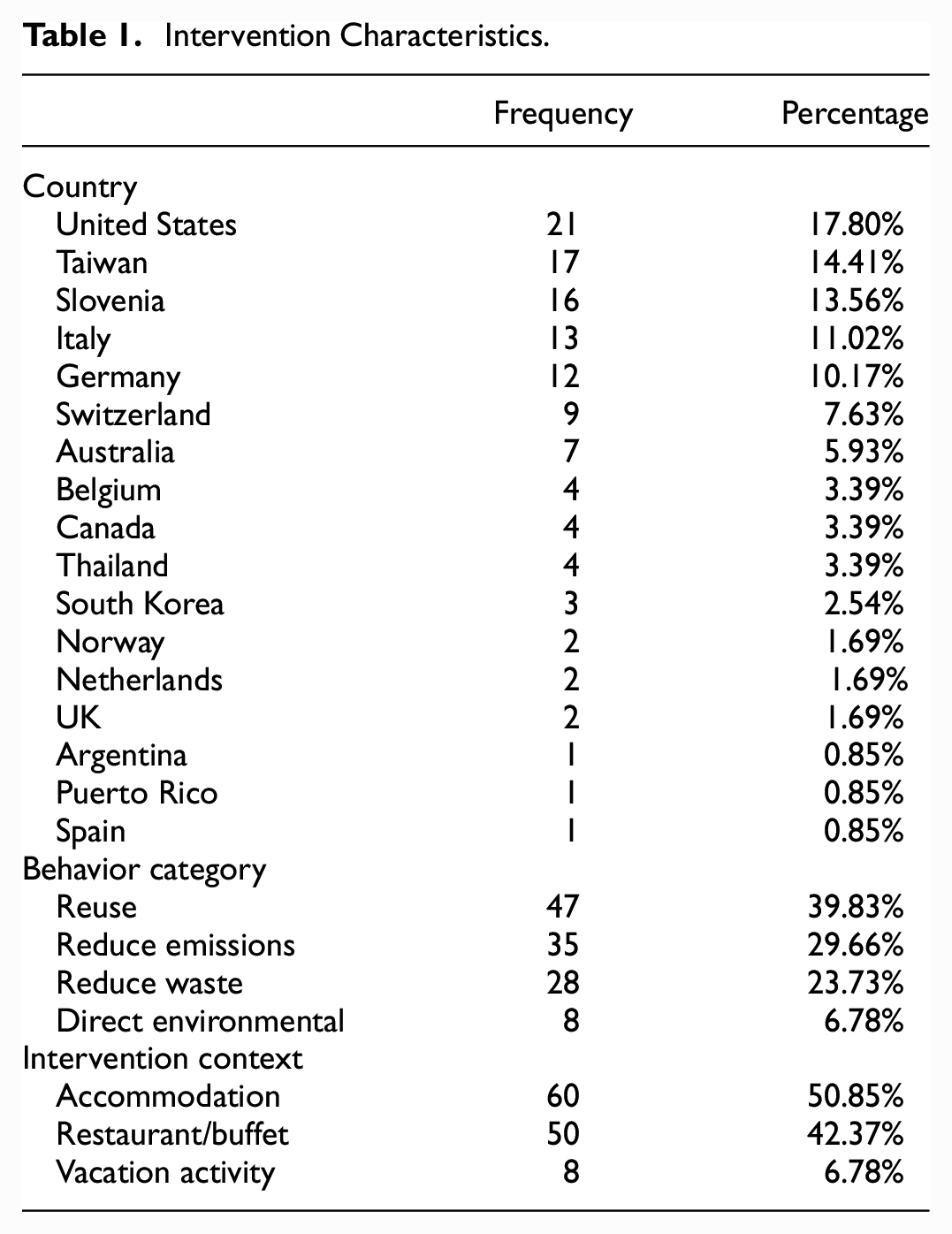
Most of the 118 interventions (95 interventions; 80.51%) aimed to change behavior by modifying beliefs as the sole intervention mechanism or in combination with another mechanism (50.52% of belief-based interventions). The number of intervention groups for the other mechanisms are as follows: leveraging social norms (n = 35), increasing pleasure (n = 16), altering choice architecture (n = 12) and imposing penalties (n = 8). Interventions were evaluated in 17 different countries, most frequently in the USA (17.80%; Table 1). The most studied target behavior was reusing resources/items (39.93%). Few studies (6.78%) focused on behaviors that caused immediate environmental harm, including touching corals or littering. Most interventions were evaluated at tourist accommodations (50.85%) or in restaurants (42.37%), with limited attention directed toward vacation activities such as swimming at the beach or walking on trails (6.78%; Table 1). The Supplemental Materials contain detailed study characteristics and individual effect sizes computations split by study and intervention group.
Intervention Characteristics.
Comparative Effect Sizes of Intervention Mechanisms
All studies included 74,266 observations in total (Table 2) with an overall small-moderate effect across all interventions (pooled d = 0.46, 95% CI [0.33, 0.60], p < .001). As expected, heterogeneity across interventions was substantial (Q (117) = 1464.87, p < .001, I2 = 98.17%(pre)). We computed pooled effects for each intervention mechanism. Results show that, on average, interventions involving penalties and leveraging social norms have limited success, with pooled effect sizes non-significant to very small (d = −.12 to 0.18; Table 2; Figure 1). Interventions aimed at changing beliefs had a small-moderate effect (d = 0.42) and increasing pleasure showed moderate effects (d = 0.66). Whether the belief intervention was implemented in isolation or combined with another intervention had little impact on the pooled effect (Table 2). Altering choice architecture exhibited a large, pooled effect (d = 1.40; Table 2). The Robust Bayesian meta-analysis supports these results with the same interpretation of effect size across all outcomes with moderate-strong evidence for an effect across beliefs, social norms, pleasure, and choice architecture interventions and moderate evidence for a null effect for penalty-based interventions (Table 2).
Number of Studies (K) Observations (N), Pooled Effect Sizes, Heterogeneity, and Publication Bias Across Intervention Categories, Behaviors and Locations.
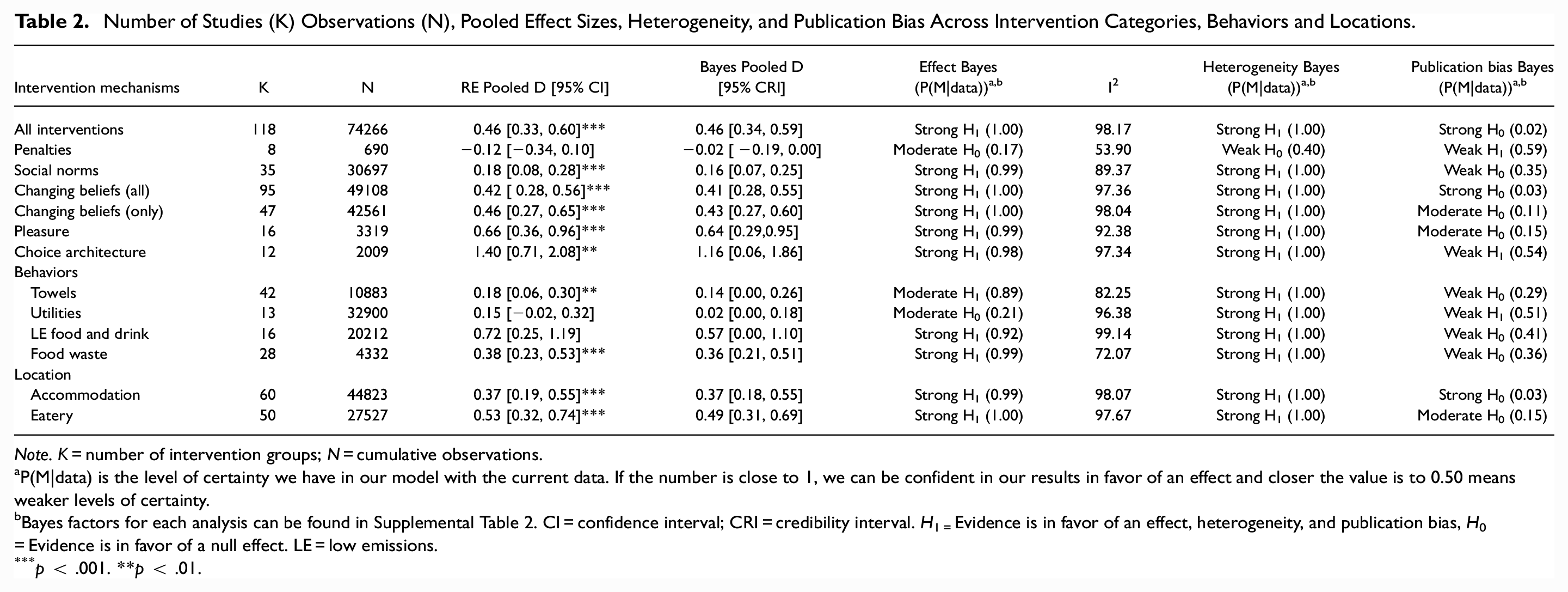
Note. K = number of intervention groups; N = cumulative observations.
P(M|data) is the level of certainty we have in our model with the current data. If the number is close to 1, we can be confident in our results in favor of an effect and closer the value is to 0.50 means weaker levels of certainty.
Bayes factors for each analysis can be found in Supplemental Table 2. CI = confidence interval; CRI = credibility interval. H1 = Evidence is in favor of an effect, heterogeneity, and publication bias, H0 = Evidence is in favor of a null effect. LE = low emissions.
p < .001. **p < .01.
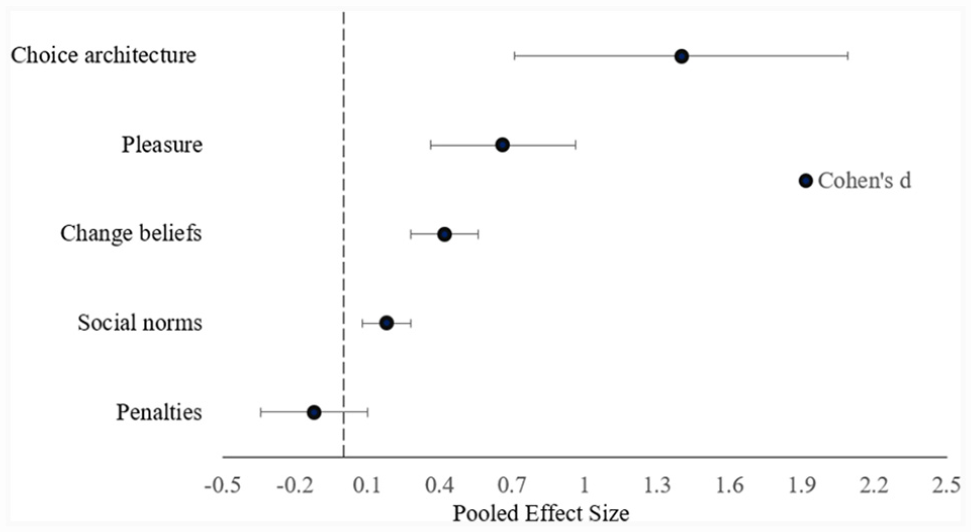
Overview of pooled effect sizes (univariate) for each intervention type with 95% confidence intervals, arranged from largest (top) to smallest (bottom) effect size. Note change beliefs represents both combined and not combined change belief interventions.
Figure 1 summarizes the individual effects of intervention mechanisms using a forest plot with pooled effects with 95% confidence. As can be seen, the initial prediction of altering choice architecture being most effective, followed by increasing pleasure is confirmed, as is the prediction that imposing penalties is least effective. Contrary to the initial prediction, beliefs emerge as a slightly more effective theoretical target construct for interventions than social norms. Cumulatively, only altering the choice architecture has significantly larger average effect sizes than the average of other intervention mechanisms (β = .98, 95% CI [0.51, 1.45]; Table 3). Pairwise comparisons of confidence intervals shows that both increasing pleasure and changes to choice architecture have larger effects than inducing penalties and leveraging social norms. Architectural changes also have a larger effect than changing beliefs. Likewise, the pooled effect for changing beliefs can be considered larger than imposing penalties as their confidence intervals do not overlap (Figure 1).
Meta-Regression With Intervention Mechanism as a Moderator Across All Intervention Types.
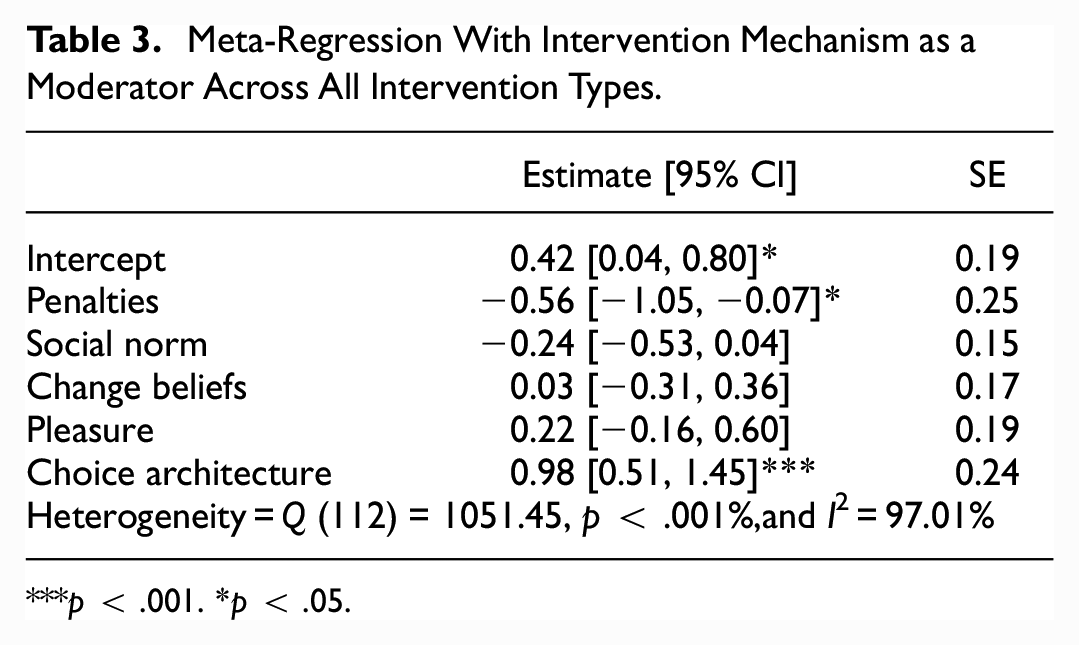
p < .001. *p < .05.
Intervention mechanism did not account for substantial variance (∼1%) in the pooled effect (I2 = 97.01% (post)), suggesting considerable heterogeneity between effect sizes within each intervention mechanism (Table 2). There was moderate-strong evidence in favor of the absence of publication bias for changing beliefs and pleasure interventions (Table 2). For penalties, social norms, and choice architecture interventions, the evidence for or against publication bias was inconclusive. Therefore, we can draw no conclusions on publication bias for these outcomes.
Situational Influences on the Effectiveness of Intervention Mechanisms
Sufficient data points were available to run meta-regressions for four intervention mechanisms: changing beliefs, leveraging social norms, increasing pleasure, and architectural changes. Change belief interventions with a component involving the alteration of choice architecture achieved significantly higher effect sizes than other belief-based interventions (Table 4). Conversely, interventions involving a penalty component resulted in significantly smaller effect sizes than those that did not. However, even after accounting for these moderators, heterogeneity across effect sizes remained high (I2 = 97.36% (pre) vs. 94.70% (post)). None of the tested moderators accounted for significant variance in effect sizes across social norm interventions (Table 4). Pleasure interventions that targeted reusing products/items or limiting waste typically reported significantly smaller effect sizes than interventions that aimed to limit resource use (Table 4). However, even after accounting for these moderators, heterogeneity remained high (I2 = 92.38% (pre) vs. 84.65% (post)). Choice architecture interventions that targeted reusing products/items or limiting waste typically reported smaller effect sizes than interventions that aimed to limit resource use (Table 4). Choice architecture interventions taking place in the hotel context reported larger effect sizes than those implemented in eateries. Although heterogeneity was substantially reduced it was still high (I2 = 97.34% (pre) vs. 79.02% (post)).
Meta-Regressions for Change Beliefs, Social Norms, Pleasure, and Choice Architecture.
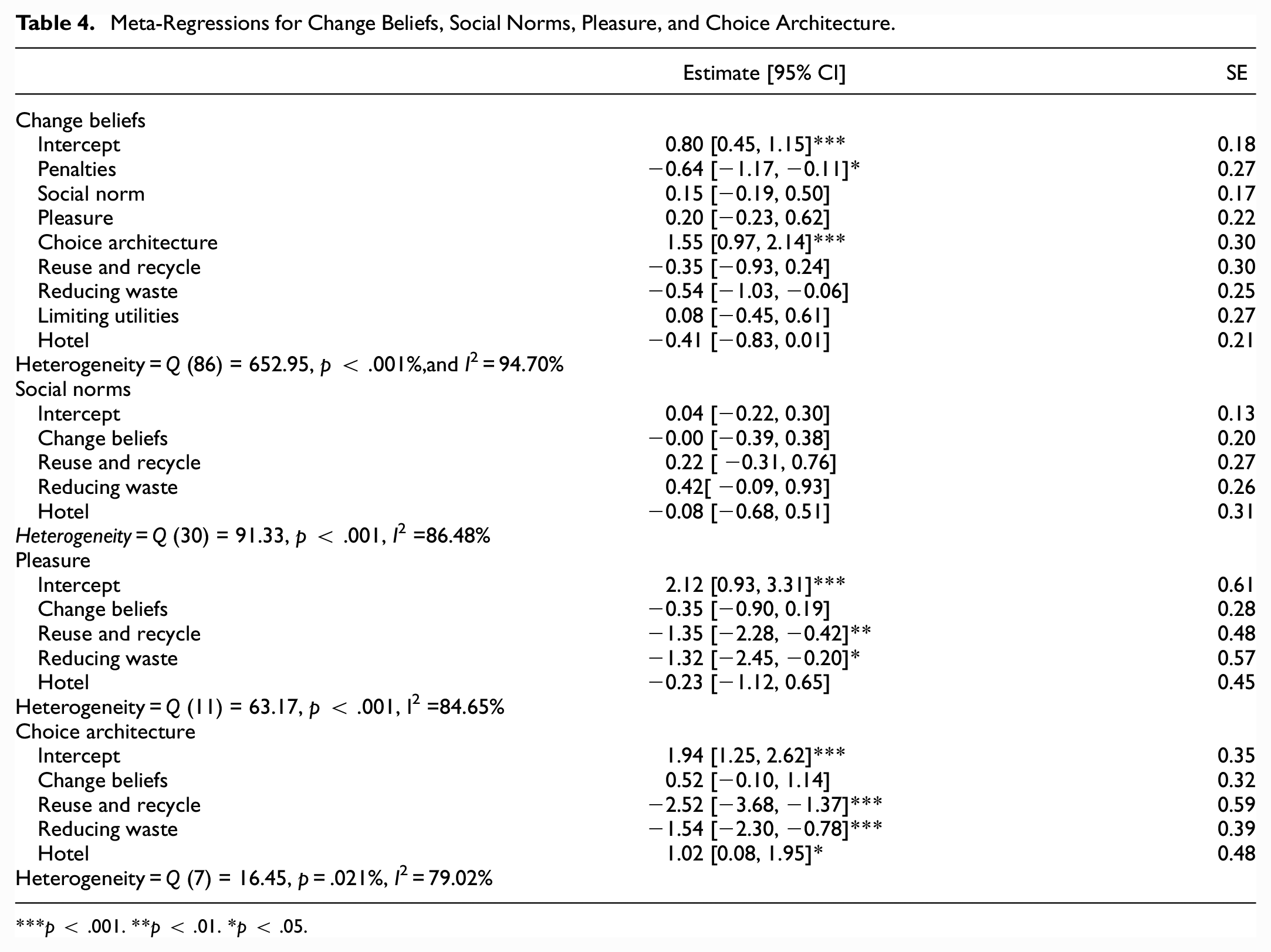
***p < .001. **p < .01. *p < .05.
Effectiveness of Intervention Mechanisms on Specific Behaviors
Interventions focused on reusing towels yielded a small but significant pooled effect (Pooled d = 0.18 95% CI [0.06, 0.30], p = .004) with Bayesian analyses showing moderate support for an effect. Heterogeneity among effects was high (Q (41) = 125.30, I2 = 82.25%(pre)). Evidence for publication bias was ambiguous with Bayesian results indicating only weak evidence in favor of the absence of publication bias. The deployed intervention mechanism(s) did not account for any of the variance in the effect sizes (Table 5; I2 = 83.04%(post)). Overall, this indicates that towel reuse is a tourist behavior that is not easy to influence.
Meta-Regressions for Towels Reuse, Choosing Low Emissions Food and Drink and Limiting Food Waste.
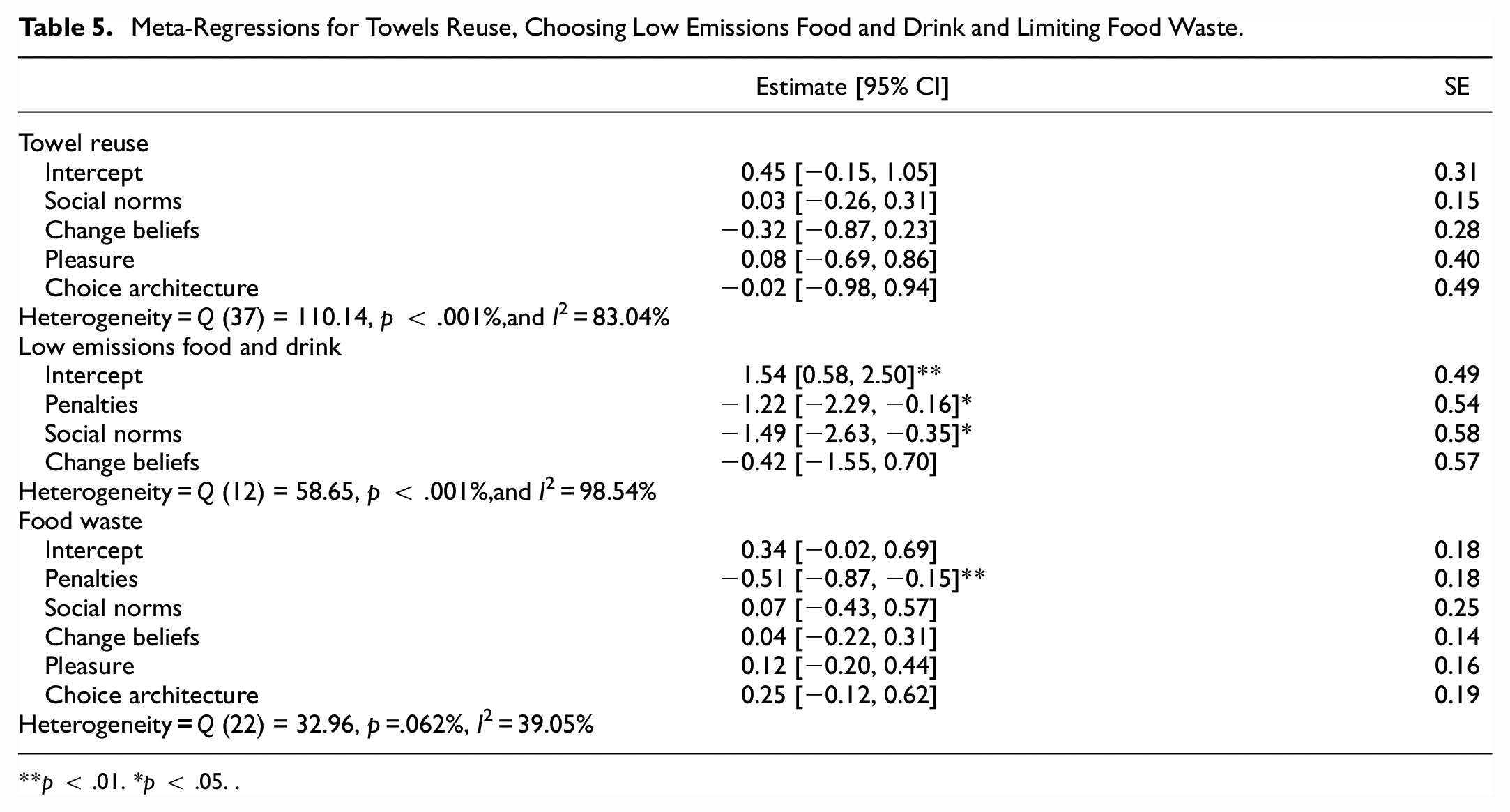
p < .01. *p < .05.
Interventions aiming to reduce food waste had a small-moderate significant pooled effect (Pooled d = 0.38, 95% CI [0.23, 0.53], p < .001) with Bayesian analyses indicating strong support in favor of an effect. Heterogeneity among studies was moderate (Q (27) = 65.95, I2 = 72.07%(pre)). Evidence for publication bias was ambiguous with Bayes factors only indicating weak evidence in favor of the absence (Table 2). Some of the variance in effect size was explained by intervention mechanism, with penalty-based interventions producing significantly smaller effect sizes than other intervention types (Table 5). After accounting for moderators, heterogeneity was considerably reduced (I2 = 39.05%(post)). These results indicate that tourists can be influenced to reduce the food waste they generate, but the effectiveness of such interventions depends on the intervention mechanism used.
Interventions focused on choosing low-emissions food or drinks yielded a medium-large pooled effect (Pooled d = 0.72 95% CI [0.25, 1.19], p = .002), that had high heterogeneity (Q (15) = 103.47, p < .001, I2 = 99.14%(pre)). Bayesian analyses indicated strong support for a more conservative medium effect (pooled d = 0.57). Evidence for publication bias was ambiguous with Bayesian results only indicating weak evidence in favor of the absence of publication bias (Table 2). Norm-based interventions and interventions including a penalty component, on average, had significantly smaller effect sizes than belief-based and choice architecture interventions. However, variance across effect sizes was still high (I2 = 98.54%(post); Table 5). Overall, this indicates that tourists can be influenced to choose low-emissions foods, but the effectiveness of such interventions depends on the intervention mechanism used.
Interventions aiming to minimize the use of resource utilities (water, gas, and electricity) were mostly belief based and were implemented in the accommodation context; thus, we did not run meta-regression. The pooled effect size was non-significant, (Pooled d = 0.15 95% CI [−0.02, 0.32], p = .075) and had high heterogeneity (Q (12) = 69.38, I2 = 96.38%). Consistent with this finding, Bayesian analyses indicated moderate support in favor of a null effect. There was little evidence for or against publication bias (Table 2). These results indicate the use of resource utilities could be a tourist behavior that is not easy to influence by belief-based interventions.
Effectiveness of Intervention Mechanisms in Specific Contexts
In the accommodation setting the pooled effect size was small (pooled d = 0.37, 95% CI [0.19, 0.55], p < .001) and characterized by substantial heterogeneity (Q (59) = 817.08, I2 = 98.07%(pre)). Bayesian analyses provided strong support of this effect. There was strong evidence in favor of the absence of publication bias (Table 2). Interventions involving alterations to choice architecture and interventions that increased pleasure achieved significantly larger effect sizes than other types of interventions (Table 6). Further, those targeting reuse and recycling behaviors reported significantly larger effect sizes that those targeting utility use. Heterogeneity was still high (I2 = 95.91%(post)). This means that the effectiveness of interventions tested at tourist accommodations was modest overall. This result is explained by the fact that most interventions tested at accommodations relied on beliefs and social norms. Using more effective mechanisms such as altering choice architecture and increasing pleasure is still promising within the tourist accommodation setting.
Meta-Regressions for Accommodation and Restaurant/Hotel Buffet.
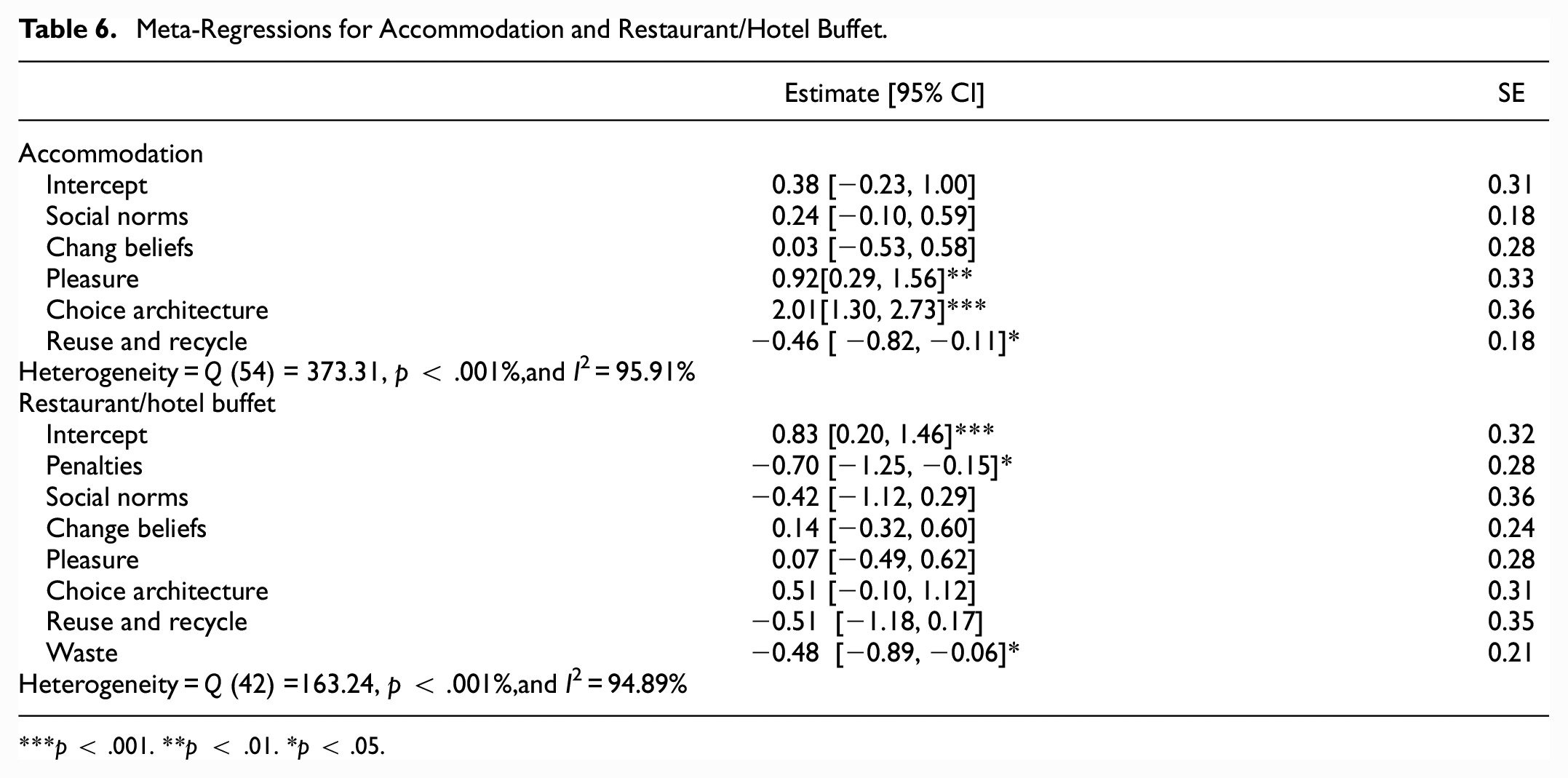
p < .001. **p < .01. *p < .05.
The pooled effect size for interventions tested in the restaurant and hotel buffet context (eatery) was medium in size (pooled d = 0.53, 95% CI [0.32, 0.74], p < .001), with substantial heterogeneity (Q (49) = 360.01, I2 = 97.67%(pre)). Bayesian analyses indicated strong evidence in favor of an effect. There was moderate evidence in favor of the absence of publication bias (Table 2). Interventions that had penalties for behaving in an environmentally harmful way had smaller effects than other types of interventions (Table 6). Studies that aimed to reduce food waste generally reported smaller effect sizes than studies aimed at influencing other behaviors. Heterogeneity was still high (I2 = 94.89%(post)).
Discussion
In this study, we quantified intervention effectiveness on pro-environmental behaviors in the tourism and hospitality context and compared intervention effectiveness across five intervention mechanisms. We anticipated that all intervention mechanisms except penalties would result in significant increases in pro-environmental behavior (Demeter et al., 2023; Dolnicar, 2020). This expectation was confirmed with behavioral interventions achieving a moderate positive effect on pro-environmental behaviors among tourists overall. The variance in effect size across behavioral interventions was substantial. Our study revealed differences across intervention mechanisms. Altering choice architecture and increasing pleasure emerged as the most effective intervention mechanisms. Imposing penalties and leveraging social norms achieved the least success.
Our results are mostly in line with previous conceptual and qualitative literature reviews, which suggest that altering choice architecture and increasing pleasure might be the most effective pathways to achieving behavioral change (Demeter et al., 2023; Dolnicar et al., 2020). However, conclusions drawn from the literature review approach (Demeter et al., 2023) are diametrically opposed to those in the present meta-analysis with respect to the promise each of those two approaches holds. The literature review by Demeter and colleagues suggests that pleasure-focused interventions are more promising (100% success rate) than making changes to choice architecture (82% success rate). Our meta-analysis concludes the opposite: The pooled effect size for pleasure-focused interventions is moderate (d = 0.66) of choice architecture changes is large (d = 1.40). This material difference in conclusions is important for other researchers as well as industry. If guided by the literature review, the focus of intervention development would have to be on pleasure-focused approaches. But the meta-analysis shows that, in fact, efforts should be directed primarily toward changes in choice architecture. Where this is not possible, pleasure-focused interventions represent the next best choice.
Imposing penalties proved to be ineffective. However, with only eight interventions across four studies, we cannot draw meaningful conclusions about the effectiveness of penalty-based interventions in the tourism context. Future work aiming to test the effectiveness of such interventions needs to consider the way penalties are implemented and communicated. Punishing undesirable behaviors with disincentives could result in psychological reactance because behavioral freedoms are threatened (Brehm & Brehm, 1981). Reactance has the potential of undermining the moral obligation of tourists to behave in environmentally friendly ways (Bolderdijk et al., 2018). Penalties, therefore, are often counter-productive because they can lead to a reduction, rather than an increase, in the desired behavior (Bolderdijk et al., 2018). They are also difficult to implement in service settings where consumers pay for a service and expect maximum service; they are unlikely to tolerate being financially punished for any kind of behavior in such a context. In everyday contexts, such as the implementation of fines for leaving uneaten food at a university buffet, penalties did prove to be successful in prompting pro-environmental behaviors (Kuo & Shih, 2016). A potential explanation for the higher success rate of penalties in the university context might be that many students do not have large disposable incomes so fines can be particularly burdensome. Students who have little disposable income would likely engage in the pro-environmental behavior to avoid fines compared to tourists who typically have more disposable income.
Most of the studies included in this meta-analysis focused on changing beliefs, followed by leveraging social norms. Although both mechanisms show good results under some circumstances, for example when asking people to stay on designated trails (Bradford & McIntyre, 2007), reusing towels (Bohner & Schlüter, 2014), offering customers who commit to reusing their towel with a lapel pin (Baca-Motes et al., 2013), leveraging social norms have only small effects overall, and changing beliefs have small-moderate effects. These findings contradict a previous meta-analysis that concluded that social norm interventions have a moderate effect on environmental behavior and are more effective than belief-based messages (Poškus, 2016). In contrast to the present meta-analysis, this study also included intervention experiments conducted in laboratories and field experiments conducted in the home context (Poškus, 2016). Social norm interventions might be particularly effective in familiar situations, like a person’s everyday life, where the person knows what others do and what normative expectations they have (Cislaghi & Heise, 2018). In the vacation context, especially in private settings like hotel rooms, such behavioral points of reference are not available. Norm compliance may also be eroded by tourists witnessing people they know or people whose opinions are important to them acting non-compliant with norms (Cislaghi & Heise, 2018). As opposed to private settings, social norms could be more effective in settings where people behave in the expected way without even being prompted to do so. Manipulating the environment by having actors cleaning a littered area to make the social norm salient, for example, successfully reduced littering (Kallgren et al., 2000). To draw meaningful conclusions related to the effectiveness of social norms in natural environments, more interventions that promote pro-environmental behavior in a non-coercive way, and without prompting people to consciously change behavior, need to be tested.
Of the belief-only interventions, approximately three quarters had significant effects. Only a quarter of the interventions had a large effect (28%, d > 0.80), 8% had a medium effect (d = 0.50–0.79), while 64% had a small effect (d < 0.50), with 60% of these considered less than a small effect size (d < 0.20). The studies that had large or at least medium effect sizes aimed to change personal beliefs about the sources or causes of the behavior attributing responsibility to the person performing the behavior (Bradford & McIntyre, 2007; Brown et al., 2010; Joo et al., 2018). The interventions with a small effect were more likely to use subtle signs and messages characterized by persuasion and information that draw attention on the severity of the problem or provide general educational information on how people can help save the environment (Goldstein et al., 2011; Günther et al., 2020). While prompts and general messages function as reminders or make the pro-environmental behavior salient, in enjoyment focused contexts individuals are distracted, do not have the time to or are unmotivated to read the signs and would rather maximize enjoyment than behaving rationally (Dolnicar, 2020).
We found a moderate-large effect size in our meta-analysis for pleasure interventions. Although still effective, reward-based interventions in the home context proved less effective (pooled d = 0.36; Maki et al., 2019). Considering the hedonic nature of tourism activities, these results are not surprising. When on vacation, people have increased pleasure-seeking tendencies, and their level of enjoyment is higher than at home (Demeter et al., 2022). Pro-environmental behaviors are not typically enjoyable in their own right, but they can be actively associated with enjoyment by attaching them to a game or incentive (Berdychevsky & Gibson, 2015; Berdychevsky et al., 2013; Dolnicar, 2020; Gössling, 2018; Malone et al., 2014). Increased enjoyment of the desired behavior, in turn, increases the likelihood of engaging in the behavior. Using a stamp collection game for families to play at a hotel-based all-you-can-eat buffet, for example, reduced plate waste by 34% (Dolnicar et al., 2020). Other successful interventions include providing a financial incentive for not wasting food (Chang, 2022) or making a charitable donation for avoiding the use of plastic bags to take leftover food home (Lange et al., 2021). These results have immediate practical implications, as hotels can confidently implement these specific successful solutions.
Only 12 interventions tested the effectiveness of altering choice architecture. These interventions promoted behavior change with the pooled effect size more than two times larger than the next most effective intervention types. Altering the choice architecture by decreasing plate size at buffets to reduce plate waste (Hansen et al., 2015; Kallbekken & Sælen, 2013), for example, reduced plate waste by preventing overfilling of plates without limiting the freedom of patrons to eat as much as they want. This initiative can be immediately and with confidence implemented by hotels. Altering choice architecture is effective in the tourism and hospitality context because the decision maker does not need to dedicate cognitive resources to evaluating their choice options, offering instead a cognitive shortcut in determining the most desirable option (Dinner et al., 2011). The vacation setting is also characterized by uncertainty. Tourists are less familiar with the environment, or the services offered. When uncertainty is high, a person is more open to accepting recommendations, such as those presented to them by default options (Peters et al., 2016). Despite the effectiveness of interventions that alter choice architecture overall, significant variation in effect sizes exists across specific interventions. Contexts might explain much of this variation (Carlsson et al., 2021). A valuable future line of inquiry would be the evaluation of the effectiveness of altering choice architecture in dependence of the specific setting, for example, restaurants, hotel rooms, or vacation activities.
Practical Implications
Tourism is explicitly mentioned by the United Nations as a sector that can contribute to the achievement of the Sustainable Development Goals (SDGs; United Nations [UN,], 2021). Understanding the effectiveness of various practical interventions in reducing the environmental impact of tourist behaviors can guide the development and implementation of the United Nations policies that intend to change undesired tourist behaviors. Under the pressure of consumer demands and the ample market competition, tourism businesses need to increase the environmental sustainability performance of their business operations. In many instances, improving environmental sustainability is also in their financial interest, as many of the resources wasted unnecessarily cost tourism businesses money. This meta-analysis enables tourism operators to select and implement the most effective intervention strategies to encourage tourists to behave in more environmentally friendly ways. Choice-architecture-based interventions are attractive because they are often not even noticed by tourists. Interventions that increase enjoyment are attractive because they have the potential to add to the vacation pleasure, rather than asking tourists to sacrifice it in the name of environmental protection.
Some argue that the social responsibility of a business is to boost earnings and it is not their sole job to address an overall market failing such as environmental pollution (Croson & Treich, 2014). Typically, business owners will not know how to implement environmental strategies themselves. Following this argument, it is the responsibility of state and federal governments to implement policies and legislation to solve market failings. The current study supports the legislated implementation of green changes of choice architecture in the tourism context (Croson & Treich, 2014). Considering that changing choice architecture does not restrict freedom, it represents a suitable intervention mechanism for governments to ensure businesses do not decrease customer satisfaction, whilst increasing pro-environmental behavior and potentially saving them money. It is paramount that the most effective scientifically proven change of choice architecture is implemented.
Limitations of the Meta-Analysis
Our study identified substantial unexplained variance in effect sizes across all intervention types, except penalties. Examining estimates of variance for effect sizes using moderator categories such as combining an intervention mechanism with another mechanism, the target behavior or location (e.g., accommodation or restaurant) did not account for much variance in the pooled effect size. One possible reason might be that the quality of the studies included in the review vary. Most of the studies did not include baseline differences between control and experimental conditions. It is important to note that for some study designs it is difficult to measure baseline difference; it is not practical to measure baseline differences in customers, for example, at a restaurant, where the outcomes relate to sales data. Another explanation might be that studies did not control for extraneous variables (such as guest parties, number of guests in the room) or had insufficient sample sizes (e.g., 14 data points across 14 days). When conducting field experiments authors could include baseline differences across groups or locations, and/or control for relevant extraneous variables where possible (Viglia & Dolnicar, 2020). Authors could conduct power analyses to ensure the sample size is large enough to detect the hypothesized effect size (Cohen, 1992). The differences in techniques used (changing default vs. increasing visibility) or message framing strategies (e.g., no standard messaging used for changing beliefs or social norms interventions) adopted could also lead to variance in effect sizes. Future meta-analyses focusing on specific intervention types, for example, changing of choice architecture could conduct in-depth coding that includes every aspect of the interventions implemented to account for all factors that might increase the effectiveness of the intervention.
Another limitation of the current meta-analysis is that we extracted effect sizes from published peer-reviewed data only. Due to the increased chance of significant findings to be published by journals, effects might be inflated by publication bias (Kicinski et al., 2015). Across many outcomes and behaviors, the evidence for or against publication bias was inconclusive. Future meta-analyses could search for unpublished studies on pre-print servers, the gray literature or contact lead authors in the field for unpublished data (Kicinski et al., 2015).
Similarly, not publishing null findings means that we are potentially losing valuable information about what interventions do not work for increasing pro-environmental behaviors among tourists. This can be detrimental for both the tourism sector and for research in general. Resources and money might be wasted testing the same interventions repeatedly or managers implementing strategies that do not work (Axford et al., 2022). We understand it is a big task to shift bias away from significant results. A potential solution could be to publish null studies alongside significant interventions in the same topic area. Researchers might also choose to publish the results of null studies in an online repository.
Limitations of the Literature and Future Directions
The 118 interventions included in our analysis studied fewer than 20 behaviors. Most tried to influence towel reuse, resource use, food waste generation and the consumption of low emissions foods. Considering the wide adoption of towel reuse programs in hotels and the many effective interventions to encourage towel reuse (e.g., discount for towel reuse; Morgan & Chompreeda, 2015) future work may best be directed toward less researched behaviors including nature-based activities. Very few studies have investigated nature-based vacation activities (e.g., swimming, hiking), and those that have, concentrated on changing beliefs with varying success. While change belief interventions were successful for reducing damage to coral (Webler & Jakubowski, 2016) and getting people to stay on designated trails (Bradford & McIntyre, 2007), they were less successful in reducing littering at tourist destinations (Cingolani et al., 2016). Key areas for future research include the development and testing of interventions that associate enjoyment with the desired pro-environmental behaviors and alter choice architecture. In the nature-based activities context, possible interventions may include providing tourists with an incentive for picking up rubbish while on a walking trail, or nudging people toward correct rubbish disposal by improving the accessibility of rubbish bins throughout the walking trail. Changing modes of transport among tourists can make the greatest contribution to reducing carbon emissions (Lenzen et al., 2018). To date, no studies investigated increasing the use of public transport or cycling among tourists. Future research could increase pleasure by providing incentives, such as a public transport loyalty card that makes every fifth ride free. A choice architecture approach could involve locating electric bike and scooter stations close to hotel entrances.
The current meta-analysis points behavioral scientists toward developing and testing a wider set of theoretical constructs to change tourist behavior. Our findings reveal an overreliance on cognitive constructs, that have small effects overall compared to constructs that rely less on cognition. Behavioral scientists could increase the pleasure of the desired behavior (Kahneman, 1999) or increase the transfer of pro-environmental habits—such as reusing plastic bags and cutlery and drinking from reusable drinking containers—from the home to the vacation context (MacInnes et al., 2022). At home, for example, people are in the habit of using keep cups and reusable water bottles. But they rarely bring them along when they go on vacation. Hotels could try to reactivate these positive home habits by providing reusable drinking containers for the duration of the stay or as a vacation souvenir. With plastic waste from tourists being a big contributor to environmental damage (United Nation World Tourism Association, 2021), such interventions have the potential to make a material difference to the waste generated by the tourism sector.
For all future studies it is critically important to develop and test only interventions that do not reduce guest satisfaction. Most studies conducted to date did not measure customer satisfaction. Future interventions might assess whether tourists have positive perceptions of the intervention and whether the intervention will deter them from returning to the hotel/restaurant or recommending it to others.
It is difficult to draw conclusions related to the long-lasting effect of interventions, whether they spill over to similar choices into new settings, such as from one hotel to another, or from one pro-environmental behavior to another. The meta-analysis demonstrates that—within specific settings and in guiding immediate behavioral decisions—choice architecture changes are highly effective. It is not clear, however, if removing driving factors, such as the guest visiting another hotel where daily room cleans are the default rather than opt-in, will yield temporal spillover of the behavioral change (Lehner et al., 2016). Future research could further explore the conditions under which the effects of choice architecture on behavioral change are sustained over time and across similar contexts. Considering that nudged choices are often made without people being aware of the influence of nudges on their choices, it is unlikely that changes in choice architecture lead to changes in attitudes. Effective changes in choice architecture or default changes, however, can form the basis of substantive structural changes across the industry and governance levels. One such structural change could be to make opt-in to daily routine room cleaning the compulsory default service setting for hotel managers to implement.
While the UN 2030 Sustainable Development Agenda references all the three traditional core pillars of sustainability (economic, social, and environmental; UN, 2023), the aim of this meta-analysis was to evaluate the effectiveness of interventions aimed at increasing the environmental sustainability of the tourism industry. It would be of value if future studies would investigate field experiments that tested interventions aimed at economic and social sustainability as well.
Supplemental Material
sj-docx-1-jtr-10.1177_00472875231183701 – Supplemental material for The Comparative Effectiveness of Interventions Aimed at Making Tourists Behave in More Environmentally Sustainable Ways: A Meta-Analysis
Supplemental material, sj-docx-1-jtr-10.1177_00472875231183701 for The Comparative Effectiveness of Interventions Aimed at Making Tourists Behave in More Environmentally Sustainable Ways: A Meta-Analysis by Danyelle Greene, Csilla Demeter and Sara Dolnicar in Journal of Travel Research
Footnotes
Declaration of Conflicting Interests
The author(s) declared no potential conflicts of interest with respect to the research, authorship, and/or publication of this article.
Funding
The author(s) disclosed receipt of the following financial support for the research, authorship, and/or publication of this article: This work was supported by the Australian Research Council (ARC, FL190100143).
Supplemental material
Supplemental material for this article is available online.
Author Biographies

References
Supplementary Material
Please find the following supplemental material available below.
For Open Access articles published under a Creative Commons License, all supplemental material carries the same license as the article it is associated with.
For non-Open Access articles published, all supplemental material carries a non-exclusive license, and permission requests for re-use of supplemental material or any part of supplemental material shall be sent directly to the copyright owner as specified in the copyright notice associated with the article.
