



Abstract
Although consumer air travel reduction has important societal, economic, and environmental implications, knowledge about the determinants of consumers’ decisions to reduce air travel is sparse. Therefore, the present study develops and empirically tests a model of consumers’ intentions to reduce air travel. To understand the determinants of consumers’ intentions to reduce air travel through this model, we build on anticonsumption theory, which we extend by integrating social dilemma and behavioral reasoning theory. The findings from a survey conducted among air travelers (n = 1,263) reveal that consumers’ decisions to reduce air travel are the result of cognitively weighing the benefits and sacrifices of air travel that are oriented either toward the self (e.g., perceived health risks) or others (e.g., perceived environmental concerns). In addition, the results of a multigroup analysis provide segment-specific implications for practitioners and public policy.
Keywords
Introduction
Current reports reveal that consumers are reducing air travel for leisure and personal travel (i.e., touristic air travel) despite the lifting of travel restrictions (Ahmad et al., 2022; Bréchemier et al., 2021). Even though the COVID-19 pandemic and its related mobility restrictions have pushed consumer air travel reduction onto the agenda of public debate, reports about a consumer reduction in air travel were already available before the pandemic. For example, in a consumer survey conducted in 2014, over 80% of respondents indicated their willingness to support policies that reduce air travel (Le Quéré et al., 2015). Other examples from Sweden demonstrate that, following public discussion, consumers significantly reduced air travel by 23% in 2018 (WWF, 2019).
Understanding a consumer’s decision to reduce touristic air travel 1 is of utmost importance, as consumer air travel reduction has important implications for the environment, the economy, and society at large. First, air travel accounts for 2.1% of global CO2 emissions and contributes 4.9% to global warming (UNFCC, 2020). Hence, an individual’s reduction in air travel can help to reduce CO2 emissions and, ultimately, global warming. Second, reduced air travel is likely to threaten the socioeconomic development of numerous travel destinations, especially when other modes of transport are unavailable (Dimitrios & Maria, 2018; Mak, 1989).
Despite the relevance of a consumer’s decision to reduce air travel, only limited research is available that tackles the topic of consumer air travel reduction. Further, the few existing works on consumers’ decisions to reduce air travel lack (1) empirical insights (Gössling & Dolnicar, 2023) or (2) a broad view of consumer’s decisions to reduce air travel (Culiberg et al., 2023). So far, research has provided insight into consumers’ intentions to reduce air travel for environmental reasons and thus has not provided insight into the relative importance of environmental reasons in comparison to other factors that might reduce air travel (Culiberg et al., 2023).
Against this background, this research aims to develop a broad and systematic understanding of the determinants of consumers’ intentions to reduce air travel. As such, this research sheds light on the general tendency of consumers to reduce air travel. Developing knowledge in this regard is important to describe and shape the prevalence of consumers’ rational and planned pathways to air travel reduction. Finally, this knowledge can be used to understand and direct situational decisions and behaviors. Previous research has shown that intentions are key correlates of an individuals’ behavior (for an overview, see Morwitz & Munz, 2021). Therefore, research studying travel from a consumer’s perspective has focused on behavioral intentions (S. Li et al., 2022; Maghrifani et al., 2022; Woosnam et al., 2022). For this research, we define the intention to reduce air travel as the degree to which a consumer resolves to reduce air travel. With this conceptualization, we acknowledge that a reduction or mitigation of air travel can be achieved in different ways (e.g., avoidance of air travel) (Gössling & Dolnicar, 2023).
To develop an understanding of the determinants of consumers’ intentions to reduce air travel, we build on anticonsumption theory (Zavestoski, 2002). Air travel reduction can be understood as an example of anticonsumption. Anticonsumption has many faces, of which temperance or reduced consumption of goods and services (e.g., air travel reduction) is the most common (Huang & Rust, 2011; Sheth et al., 2011). Although the extant literature has indicated that anticonsumption has different psychological sources (e.g., Karl et al., 2021; Makri et al., 2020; Wu & Lau, 2022), an integrated understanding of the drivers and inhibitors of anticonsumption is still unavailable.
Thus, to shed light on the determinants of consumers’ intentions to reduce air travel, this research builds on the anticonsumption literature and integrates social dilemma theory (R. M. Dawes, 1980) and behavioral reasoning theory (Westaby, 2005a, 2005b). We hypothesize that a consumer’s decision to reduce air travel is determined by self-oriented benefits (e.g., hedonic benefits) and sacrifices (e.g., health risks), as well as by other-oriented benefits (e.g., prosocial benefits) and sacrifices (e.g., environmental concerns) related to air travel. Furthermore, we hypothesize that the relevance of these determinants is different when consumers decide whether to increase compared to reduce air travel. To test our research model, we used a survey that we conducted in September 2021 among a sample of 1,263 German air travelers and analyzed the data with structural equation modeling.
This study’s findings provide, for the first time, empirical insights into how consumers decide to reduce air travel. In this way, this research advances the theory of anticonsumption by explaining it through the integration of social dilemma and behavioral reasoning theory. In other words, this research shows that fully understanding anticonsumption requires a perspective on self-oriented and other-oriented factors, as well as a perspective on benefits and sacrifices. With this research, we raise awareness of the prevalence of consumers’ intentions to reduce air travel, and we generate important implications for those who aim to reduce consumer air travel (e.g., nongovernmental organizations) and for those who aim to maintain or even increase air travel (e.g., aviation industry). These interest groups can learn from this study’s findings about the factors they should emphasize in, for instance, their communications about air travel directed toward consumers.
Theoretical Background and Literature Review
Anticonsumption
Anticonsumption is multifaceted and describes consumers’ decisions and actions against consumption (Cherrier et al., 2011). It covers a broad range of consumer practices that differ in their level of intensity (Iyer & Muncy, 2009; Makri et al., 2020), and it involves “cutting, lowering, and limiting consumption” (M. Lee et al., 2011, w.p.). In their framework, Iyer and Muncy (2009) understand consumers’ inherent interest in reducing the level of consumption as higher intensity levels of anticonsumption, while consumers’ selective engagement in anticonsumption (i.e., reducing specific brands or product categories) relates to anticonsumption at lower intensity levels. Accordingly, one can deduce that the intensity level of anticonsumption practices depends on consumers’ baseline consumption intensity. Reducing, cutting, lowering, or limiting consumption implies that some people lower the number of goods and services consumed, while others do not consume at all (e.g., avoidance, rejection). Examples of these anticonsumption practices are brand or product avoidance (Kuanr et al., 2022; M. Lee et al., 2011), downshifting (Nelson et al., 2007; Shankar et al., 2006), voluntary simplification (Balderjahn et al., 2021; Huneke, 2005; Peyer et al., 2017), and temperance in consumption (Lasarov et al., 2019; Sekhon & Armstrong Soule, 2020).
Research distinguishes between micro-level (or individual) and macro-level (or collective) determinants of anticonsumption (Iyer & Muncy, 2009; Makri et al., 2020). At the individual level, consumers engage in anticonsumption for personal or selfish reasons, to increase their well-being (Huneke, 2005; M. S. W. Lee & Ahn, 2016; Seegebarth et al., 2016) or fulfill their personal goals (Iyer & Muncy, 2009). These determinants are psychological (e.g., beliefs, values, personality, etc.) and nonpsychological (e.g., sociodemographics, social norms, cultural differences) (see Makri et al., 2020; Maseeh et al., 2022 for overviews). By contrast, anticonsumption has also been found to be driven by factors that go beyond the self (i.e., other-oriented) and relate to doing something for the greater good, such as consumer concerns regarding the negative impact of one’s behavior on society (Chatzidakis & Lee, 2013) or the environment (Richetin et al., 2012; Sudbury-Riley & Kohlbacher, 2018), as well as general ethical or moral concerns (Makri et al., 2020; Maseeh et al., 2022). Furthermore, while knowledge has accumulated on the enablers of anticonsumption, research on factors inhibiting anticonsumption is scarce (Makri et al., 2020).
Consumer Touristic Travel Reduction
Although research on consumer travel behavior has accumulated over the last decade (Backhaus et al., 2023; Dryhurst et al., 2020; Sönmez & Graefe, 1998; Tan & Li, 2021; Verplanken et al., 1994), knowledge about consumer travel reduction is still incomplete, and its determinants, especially, require further attention. A review of the literature on consumer travel reduction shows that there are conceptual (e.g., Gössling & Dolnicar, 2023) and empirical (Davison et al., 2014; Kazeminia et al., 2015; McDonald et al., 2015) studies. To substantiate our quantitative research, Table 1 summarizes the quantitative research studies available on consumer travel reduction.
Literature Review of the Determinants of Consumer Touristic Travel Reduction.
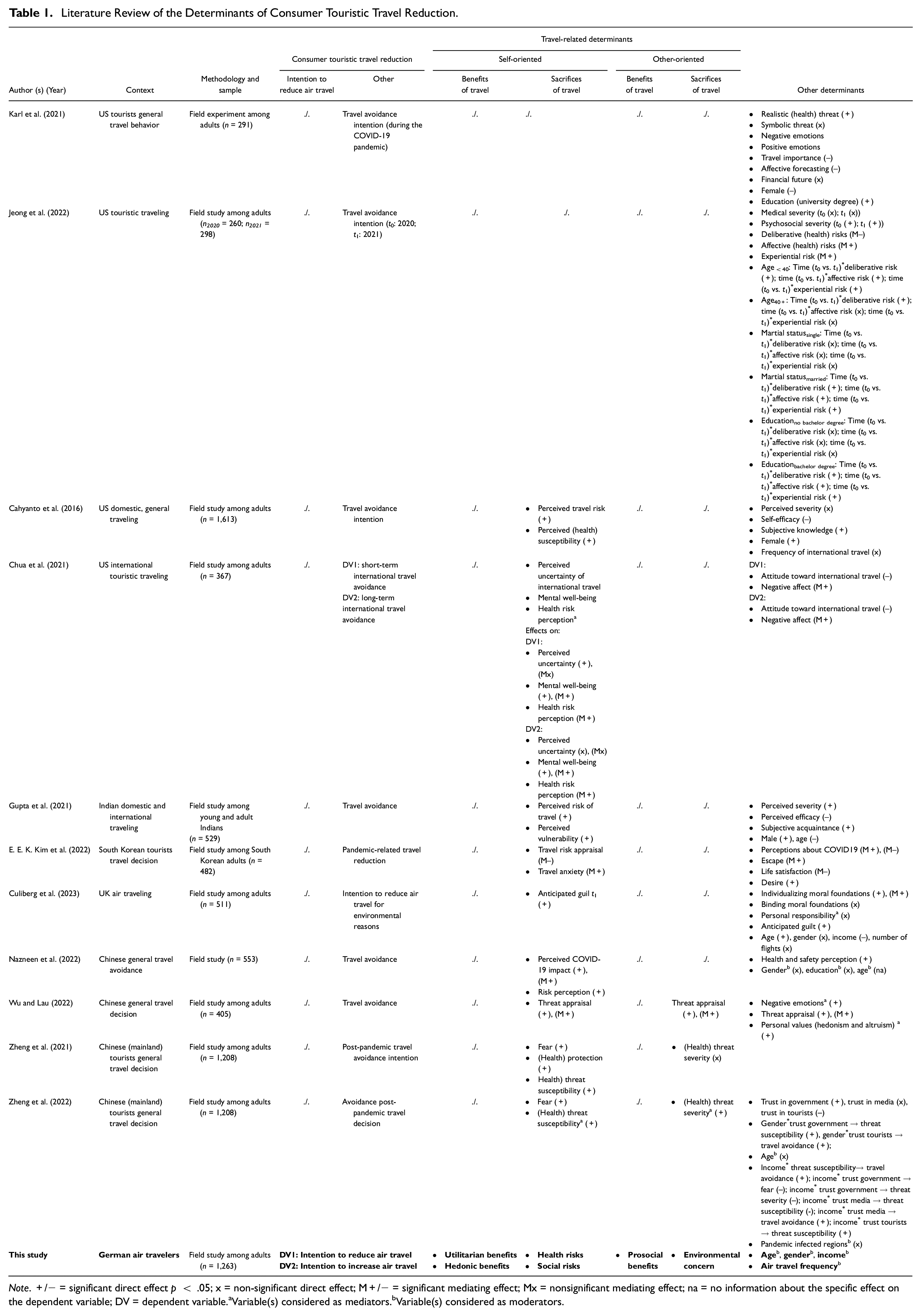
Note. +/− = significant direct effect p < .05; x = non-significant direct effect; M+/− = significant mediating effect; Mx = nonsignificant mediating effect; na = no information about the specific effect on the dependent variable; DV = dependent variable. a Variable(s) considered as mediators. b Variable(s) considered as moderators.
Research on consumer travel reduction has looked at consumer travel reduction from angles such as travel avoidance (intention) (e.g., Jeong et al., 2022; Karl et al., 2021; Nazneen et al., 2022) and the intention to reduce air travel for environmental reasons (Culiberg et al., 2023). The available literature identifies different determinants of consumer travel reduction. While evidence exists that consumers’ decisions to reduce travel are shaped by psychological (e.g., life satisfaction) and nonpsychological (i.e., gender, age, education) factors (Jeong et al., 2022; Karl et al., 2021; Kim et al., 2022) that are unrelated to travel, research has also emphasized that consumers seem to decide about travel reduction based on their beliefs about travel. In this realm, consumers’ perceived sacrifices related to travel are particularly relevant (e.g., perceived risk of travel) (e.g., Nazneen et al., 2022). While much of this research has focused on self-oriented enablers of travel reduction, only three works have considered other-oriented enablers of travel reduction (e.g., perceived health threats to others). Moreover, only a handful of studies have provided evidence for the simultaneous influence of self- and other-oriented sacrifices on consumer travel reduction (Wu & Lau, 2022; Zheng et al., 2021, 2022), which is needed to understand their relative importance in a consumer’s decision about travel reduction.
Surprisingly, knowledge of the inhibitors of consumer air travel reduction is sparse. While Cahyanto et al. (2016), for example, revealed that consumers’ self-efficacy for health-prevention measures mitigates consumer travel reduction, no research is available on how the perceived benefits of travel relate to consumers’ decisions to reduce travel. Knowledge of the perceived benefits of travel would help in judging the relative importance of the perceived sacrifices of travel for a decision on travel reduction.
Finally, insights into the boundary conditions of the determinants of consumer travel reduction are still in their infancy. For instance, scholars have provided evidence of the amplifying effect of income on the relationship between (health) threat susceptibility and travel avoidance (Zheng et al., 2022).
Hypotheses
Consumers’ air travel behavior resulting from consumers’ decisions for or against air travel can be framed as a social dilemma (Y. K. Lee et al., 2014; McDonald et al., 2015). Social dilemma theory argues that an overall defection by each individual leads to a lower payoff for everyone compared to if individuals cooperated toward the collective goal (R. M. Dawes, 1980; Hardin, 1968). In other words, self-gain resulting from a selfish choice is detrimental to the collective, and the collective harm outweighs the benefits for the individual (Kollock, 1998). For the individual consumer, air travel can mean a social dilemma because air travel is “(…) located between two powerful social narratives: flying is normal; and flying is damaging the environment” (McDonald et al., 2015, 1507). In other words, when people are faced with the decision of whether to engage in air travel, they need to weigh the consequences of their behavior, which is beneficial for them but harmful to the environment when participating in air travel or helps to sustain the environment when reducing air travel (Culiberg et al., 2023). Accordingly, reducing consumer air travel provides benefits and sacrifices for both the self and others. In addition to social dilemma theory, our conceptual framework draws on the behavioral reasoning theory (BRT) introduced by Westaby (2005a). Reasons for or against performing a specific behavior are conceptualized as “specific factors people use to explain their anticipated behavior” (Westaby, 2005b, p. 571) and comprise an underlying psychological mechanism explaining why individuals perform or do not perform a specific behavior. In turn, these drivers (e.g., attitudes) serve as predictors of individual behavior and behavioral intentions (Westaby, 2005a, p. 98). In this research, self- and other-oriented benefits and sacrifices represent the reasons for or against performing a specific behavior, and consumer attitudes toward air travel relate to motivational disposition (i.e., attitudinal). In turn, the latter is converted into behavioral intentions, as emphasized in BRT, which are reflected in this research by the intention to reduce and the intention to increase air travel. Anticonsumption research in general has applied BRT and found support for the mediating role of attitudes between determinants and consumer behavior (see Maseeh et al., 2022 for a literature review). More specifically, attitudes impact travel behavior (Chua et al., 2021; Gardiner et al., 2013; Jordan et al., 2018), and air travel mitigation behavior, in particular, has been supported in empirical research (Gössling & Dolnicar, 2023).
By integrating BRT and social dilemma theory, we assume that self- and other-oriented benefits negatively influence consumers’ intentions to reduce air travel and positively affect consumers’ intentions to increase air travel through their attitudes toward air travel. Conversely, we propose that self- and other-oriented sacrifices positively influence consumers’ intentions to reduce air travel and negatively affect consumers’ intentions to increase air travel through their attitudes toward air travel. Figure 1 visualizes the conceptual model.
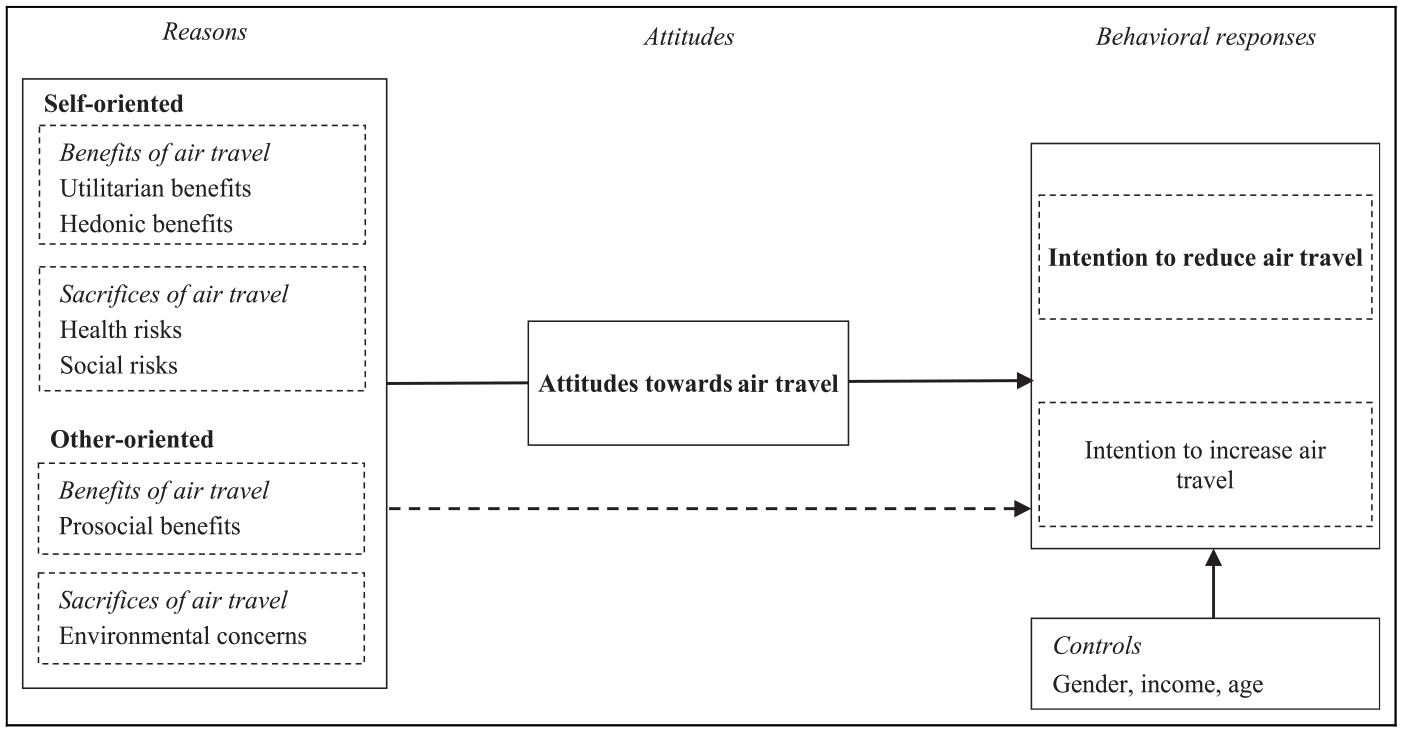
Conceptual model.
The Role of Self-Oriented Benefits and Sacrifices
Consumer benefits can be understood as the subjective value that individuals derive from services, including cognitive and affective elements (Boksberger & Melsen, 2011). At the individual level, utilitarian benefits are understood as cognitive responses and are defined as “the functional, instrumental, and practical benefits of consumption offerings” (Chitturi et al., 2008, p. 49). Hedonic benefits, by contrast, are “aesthetic, experiential, and enjoyment-related benefits” (Chitturi et al., 2008, p. 49). A plethora of literature exists with empirical evidence for positive relationships between benefit perceptions and attitudes, as well as between benefit perceptions and (intentional) behavior, especially in the context of tourism (Chen & Petrick, 2016; Gardiner et al., 2013; Kim et al., 2022; Wong et al., 2018). While these benefits work as promoters of consumers’ decisions to travel, they are also obstacles to travel reduction. Cognitive reasons, such as convenience, comfort, costs, and duration of the journey, are strong barriers to travel reduction (Higham et al., 2014; McDonald et al., 2015). Similar support has been empirically provided for the impact of affective factors (e.g., anxiety, frustration, distress, happiness) in shaping anticonsumption attitudes (Taylor & Todd, 1995; Zavestoski, 2002) and behavior (Wu & Lau, 2022). Taking this together, we hypothesize the following:
Perceived sacrifices in the context of services “include monetary and non-monetary costs of a service experience” (Boksberger & Melsen, 2011, p. 231), and they reduce the likelihood of performing a behavior. Sacrifices or perceived risk, terms that are used interchangeably, have a long research tradition in the tourism literature (Cahyanto et al., 2016). Yet, several studies have confirmed that risk perceptions are a major concern for peoples’ travel decisions and thus support the notion that perceived risks impact the tourism industry negatively (Law, 2006; Nazneen et al., 2022; Sönmez & Graefe, 1998). Based on the significant role of perceived risks as stressors for individuals’ travel decisions, this research considers health and social risks at the individual level as antecedents to understanding consumer air travel reduction and increase.
At the individual level and in a broad sense, health risks refer to issues endangering travelers’ physical health, safety, and security (Shin & Kang, 2020; Wilks, 2006). Health risks are pivotal factors in consumers’ travel decisions (Jonas et al., 2011; Shin & Kang, 2020). Health risk perceptions have recently been acknowledged as a crucial driver of consumers’ travel reduction (Chua et al., 2021; Gupta et al., 2021; Karl et al., 2021; Nazneen et al., 2022). Accordingly, and drawing on BRT, we assume that health risks influence consumers’ attitudes toward air travel and are, in turn, likely to impede consumers’ intentions to increase, and enhance their intentions to reduce, air travel.
Social risks refer to the influence of relevant others (i.e., family, and friends) on an individual’s behavior (Taylor & Todd, 1995). Social risks are similar to the concept of injunctive social norms, which reflect how individuals ought to act based on beliefs about what other people would consider as a morally acceptable or unacceptable behavior (Cialdini et al., 1991). Following the theory of planned behavior (Ajzen, 1991), social pressure to behave in a socially approved way is a key predictor of both the attitude–behavior relationship (Fishbein & Yzer, 2003) and behavioral intentions (Ajzen, 1991). Studies in the field of tourism have shown that social norms or social risks can have a significant effect on consumer travel decisions (Davison et al., 2014; Doran & Larsen, 2016; Tan & Li, 2021). Doran and Larsen (2016) discovered that social norms positively predicted the choice of ecological travel options. Research supports the idea that social norms induce consumers to reduce their air travel frequency (Davison et al., 2014; Gössling et al., 2020). Furthermore, high levels of social pressure to travel lead people to increase their air travel (Oswald & Ernst, 2021). Taking this together, we hypothesize the following:
The Role of Other-Oriented Benefits and Sacrifices
At the collective level, anticonsumption research has considered benefits and sacrifices by looking at social and ecological reasons (García-de-Frutos et al., 2018; Makri et al., 2020; Maseeh et al., 2022). Prosocial benefits reflect that the choice of products or services supports the collective good of society (van Doorn & Verhoef, 2011) and therefore captures the social dimension of engaging in air travel. In the field of anticonsumption, evidence about the impact of prosocial concerns is consistent, emphasizing that individuals who are concerned about the harmful impact of their or others’ actions are more likely to engage in anticonsumption practices (Makri et al., 2020; Maseeh et al., 2022). On the other hand, scholars have indicated that social reasons, such as positive perceptions about living standards, negatively influence anticonsumption (e.g., Auger et al., 2008). Tourism research additionally supports the positive relationship between prosocial benefits, in terms of concerns about developing the local community, and attitudes toward tourism development (Ko & Stewart, 2002). Thus, we hypothesize:
Environmental concerns refer to individuals’ awareness of harmful consequences for the environment (Schultz, 2001). According to anticonsumption research, environmental concerns have been found to be a key driver of consumers’ engagement in anticonsumption activities (García-de-Frutos et al., 2018; Makri et al., 2020), such as boycotting (Hoffmann et al., 2018), voluntary simplification (Huneke, 2005), or reduced or rejected purchases (Sudbury-Riley & Kohlbacher, 2018). For example, Sudbury-Riley and Kohlbacher (2018) confirmed that consumers’ behavioral intentions to avoid purchasing products that are harmful to the environment are induced by ecological concerns. A study in the tourism context showed that ecological concerns are directly linked to attitudes toward using sustainable travel solutions, which, however, translates into intentions to use sustainable travel solutions only for specific consumer segments (de Groot & Steg, 2007). Hence, we hypothesize:
Empirical Study
Methodology
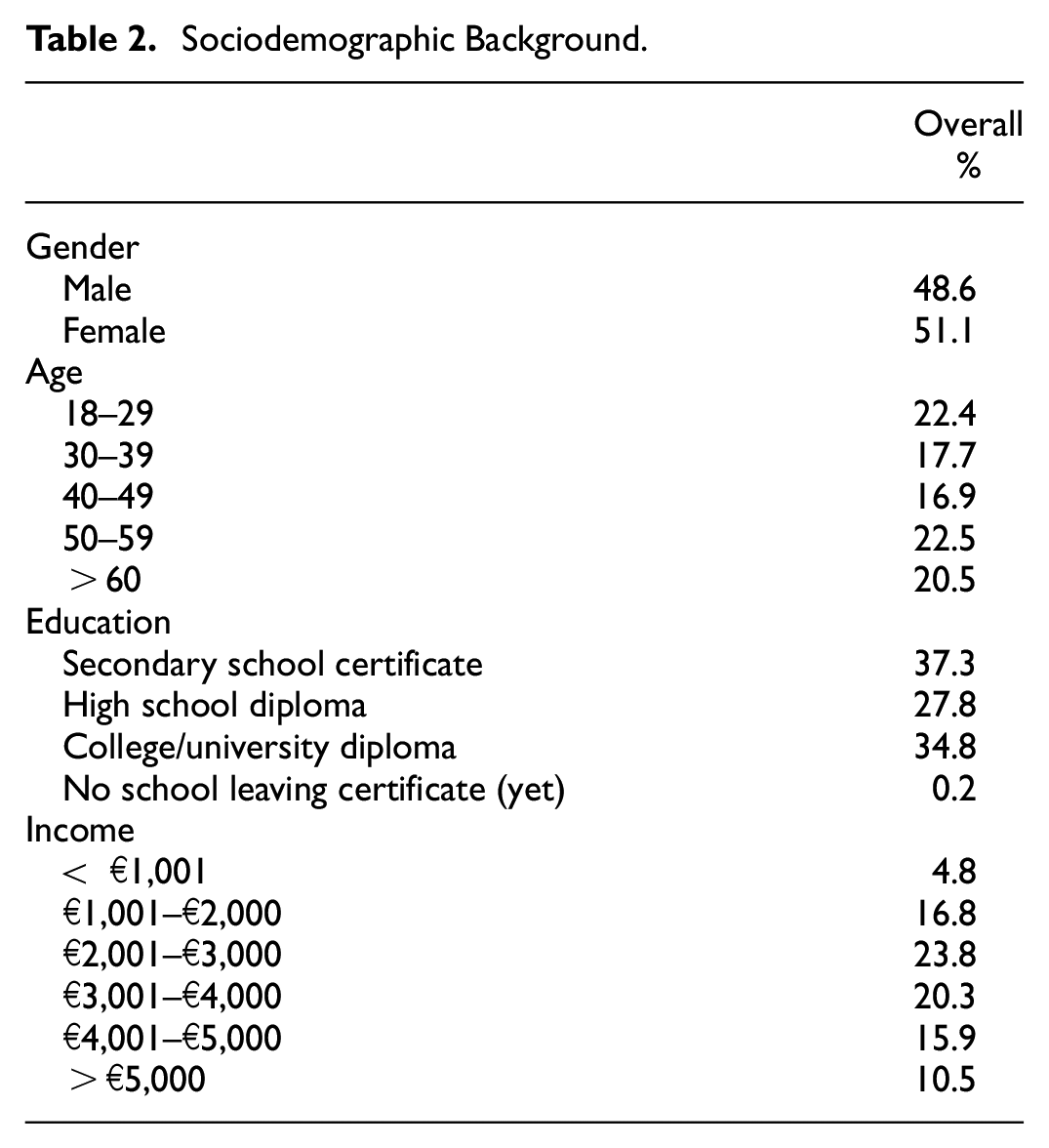
To test the hypotheses, we surveyed consumers by purchasing access to a consumer panel of German air travelers from a German market research company in September 2021. We analyzed data for 1,263 respondents who were experienced in touristic air travel (i.e., a minimum of one touristic air travel event before data collection). These data were representative of touristic air travelers in Germany in terms of gender and income (Rubik et al., 2019). However, consumers from the age group “older than 60 years of age” were marginally underrepresented in our data set, while consumers with a high school diploma were marginally overrepresented. Table 2 summarizes the sociodemographic profiles of the analyzed data.
Sociodemographic Background.
Participants were administered the survey through an online questionnaire that was divided into different parts. Before evaluating the major constructs, we asked participants to indicate their sociodemographic background and reveal information about their air travel behavior (e.g., air travel during the COVID-19 pandemic).
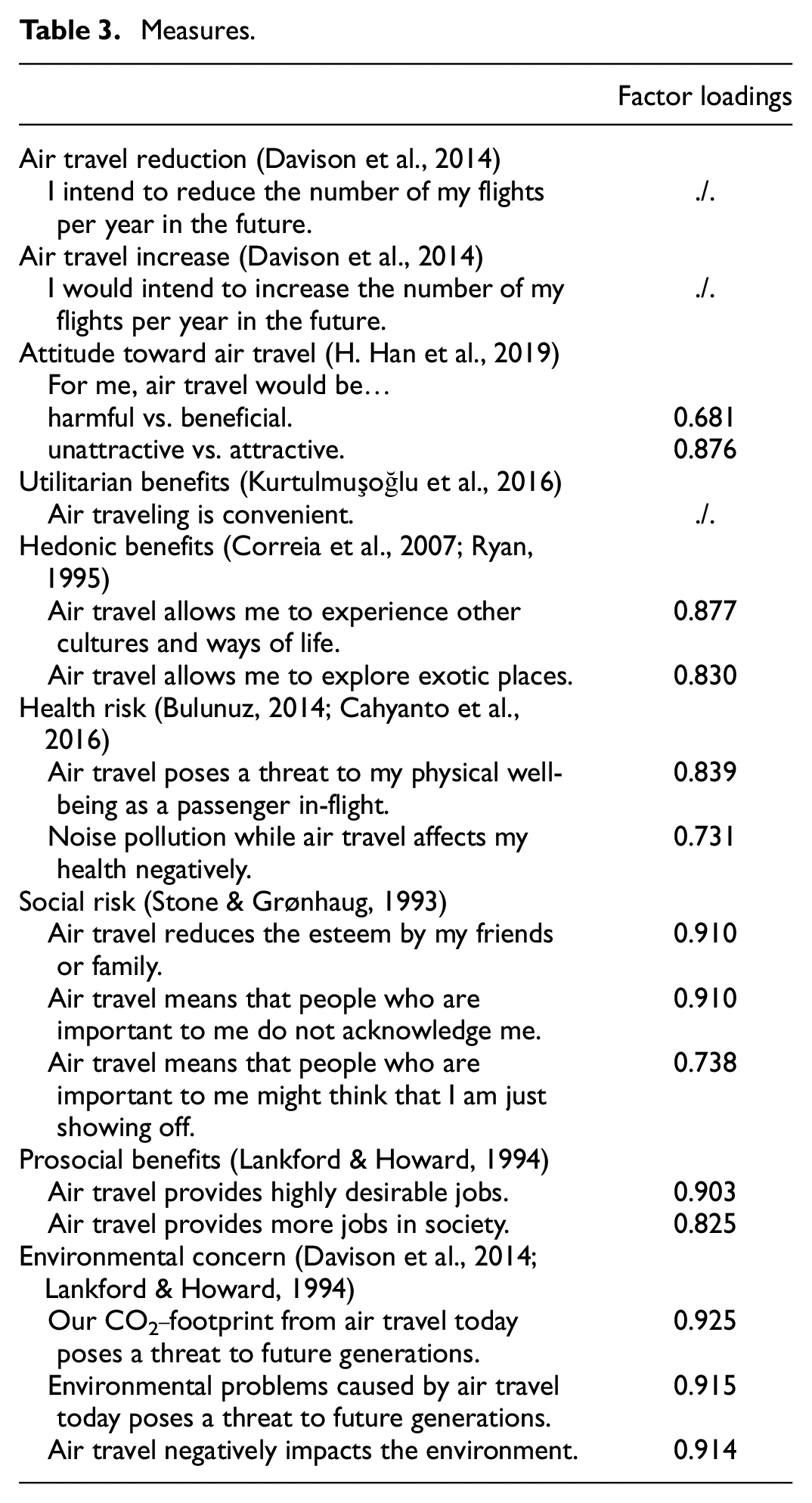
To measure the constructs in our research model, we drew on measures established in the literature (Table 3). Respondents were asked to indicate their intention to reduce air travel and their intention to increase air travel using a single item adapted from Davison et al. (2014). Further, we measured respondents’ attitudes toward air travel with a scale by H. Han et al. (2019) and utilitarian benefits with a single item adapted from Kurtulmuşoğlu et al. (2016). Hedonic benefits were measured with two items from scales provided by Correia et al. (2007) and Ryan (1995). Respondents rated health risks on two items adapted from Bulunuz (2014) and Cahyanto et al. (2016), social risks on three items adapted from Stone and Grønhaug (1993), prosocial benefits on two items from Lankford and Howard (1994) scale, and environmental concern on three items adapted from Davison et al. (2014) and Lankford and Howard (1994). The questionnaire also captured the extent of social desirability (Fischer & Fick, 1993), which was used to test for a potential common method bias, as this concept is theoretically unrelated to other concepts (Lindell & Whitney, 2001; Podsakoff et al., 2012). All items were measured on 7-point Likert-type scales (ranging from “1: strongly disagree” to “7: strongly agree”), as this scale type yields more reliable and valid results than other options, such as 5-point scales (J. Dawes, 2008).
Measures.
Sociodemographic variables were used as control variables in our model because they were found to explain anticonsumption (García-de-Frutos et al., 2018; Makri et al., 2020) and travel behavior (Culiberg et al., 2023; Gupta et al., 2021). In addition, they were used to uncover whether the effects of self- and other-oriented benefits and sacrifices on both consumers’ intentions to reduce and consumers’ intentions to increase air travel differed between consumer segments.
To test our measurement models and the structural model, we used structural equation modeling (SEM) and, more specifically, the Mplus software package (Muthén & Muthén, 1998) with the maximum likelihood procedure with robust standard errors (i.e., MLR) implemented. With SEM, we can estimate the strength of the path (β) between an exogenous and an endogenous construct in a system of different regression-like equations. For instance, an equation in the structural model with two exogenous constructs (X1 and X2) causally related to the exogenous construct (Y1) and considering an error term (ξ), as well as a constant term (α), can be stated as follows:

Details on the estimation of the path can be found in Hair et al. (2010, pp. 681). With statistical inference tests, we can assess the probability that the estimates for the paths are unequal to zero (i.e., statistically significant, as revealed by the p value) (Hair et al., 2010).
In the first step, we used confirmatory factor analysis (CFA) to assess the reliability and validity of the measures employed. The results of the CFA indicated that the proposed measurement model fit the empirical data well because fit indices met the recommended thresholds (Steenkamp & Baumgartner, 1995) (root mean square error of approximation (RMSEA) = 0.026, comparative fit index (CFI) = 0.988, Tucker-Lewis index (TLI) = 0.980, standardized root mean square residual (SRMR) = 0.017). All scales exhibited satisfactory psychometric properties (Cronbach’s alpha (α) ≥ .749, average variance extracted (AVE) ≥ 0.616, composite reliability (CR) ≥ 0.759; Tables 3 and 4). Discriminant validity was met following the Fornell Larcker criterion, given that the lowest AVE exceeded the highest squared interconstruct correlation (Table 4). Following the procedure of Lindell and Whitney (2001), common method bias did not represent a major impact on the results of this study because all correlations between the marker variable and all remaining measurement models ranging from .065 to .168 were below the recommended threshold of .3.
Convergent and discriminant validity (n = 1,263).
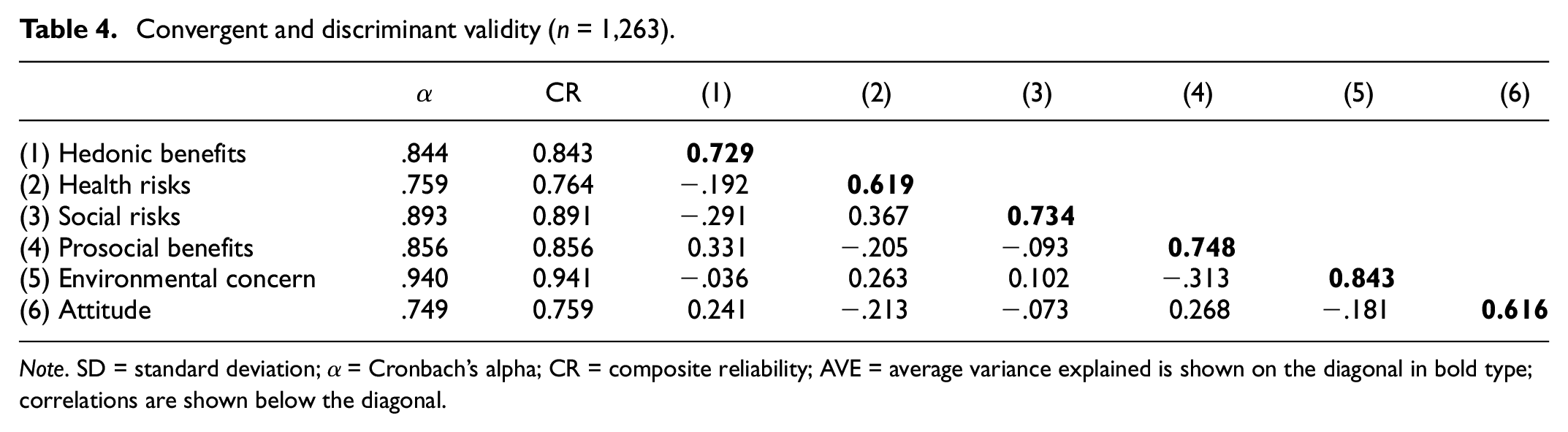
Note. SD = standard deviation; α = Cronbach’s alpha; CR = composite reliability; AVE = average variance explained is shown on the diagonal in bold type; correlations are shown below the diagonal.
Results
We used path analysis and an implemented bootstrapping algorithm with 5,000 subsamples to test the structural model and hypotheses (Preacher et al., 2007). The structural model showed a good overall fit (RMSEA = 0.036, CFI = 0.967, TLI = 0.952, SRMR = 0.034).
The results 2 revealed that attitudes 3 were influenced by hedonic benefits (β HB-A = .180, p = .000), health risks (β HR-A = −.137, p = .002), and prosocial benefits (β P-A = .168, p = .000). However, utilitarian benefits (β U-A = −.043, p = .397), social risks (β S-A = .063, p = .100), and environmental concerns (β E-A = −.049, p = .164) did not exert a statistically significant effect on attitudes. While income affected attitudes marginally and positively (βincome-A = .055, p = .072), gender 4 (βgender-A = −.039, p = .224) and age (βage-A = .049, p = .131) did not influence attitudes.
Further, the results illustrated that the intention to reduce air travel was shaped by hedonic benefits (β HB-R = −.127, p = .000), health risks (β HR-R = .097, p = .006), environmental concerns (β E-R = .465, p = .000), and attitudes (β A-R = −.063, p = .031). As the results suggested, utilitarian benefits (β U-R = .008, p = .816), social risks (β S-R = .036, p = .196), and prosocial benefits (β P-R = .006, p = .850), in turn, did not influence the intention to reduce air travel. While female respondents showed a higher intention to reduce air travel (βgender-R = .042, p = .095), income (βincome-R = .011, p = .278) and age (βage-R = .028, p = .278) did not influence attitudes.
The results indicated that the intention to increase air travel was influenced by social risks (β S-I = .176, p = .000), prosocial benefits (β P-I = .075, p = .038), environmental concerns (β E-I = −.237, p = .000), and attitudes (β A-I = .099, p = .004). However, utilitarian benefits (β U-I = .014, p = .332), hedonic benefits (β HB-I = .022, p = .510), and health risks (β HR-I = .041, p = .261) did not influence the intention to increase. The considered control variables exerted a statistically significant effect on the intention to increase (gender: βgender-I = −.068, p = .016; income: βincome-I = .052, p = .049; age: βage-I = −.244, p = .000).
An analysis of the indirect effects was used to test the hypotheses. First, we found that the indirect effects of utilitarian benefits on the intention to reduce (βU-A-R = .003, 95% CI [−0.004, 0.011]) and the intention to increase (βU-A-I = –0.004, 95% CI [−0.010, 0.069]) were nonsignificant. Hence, H1a and H1b cannot be supported. In support of H2a and H2b, hedonic benefits affected the intention to reduce (βH-A-R = –.011, 95% CI [−0.026, −0.004]) and the intention to increase air travel (βH-A-I = .018, 95% CI [0.007, 0.037]), through attitudes. As expected, health risks influenced the intention to reduce (βHR-A-R = .009, 95% CI [0.002, 0.020]) and the intention to increase (βHR-A-I = –.014, 95% CI [−0.027, −0.006]) indirectly, through attitudes. Hence, H3a and H3b are supported. However, the indirect effects of social risks on the intention to reduce (βS-A-R = –.004, 95% CI [−0.011, 0.000]) and on the intention to increase (βS-A-I = .006, 95% CI [0.001, 0.015]) were nonsignificant. Hence, H4a and H4b had to be rejected. In support of H5a and H5b, prosocial benefits showed a statistically significant and negative effect on the intention to reduce (βP-A-R = –.011, 95% CI [−0.025, −0.004]) and a positive effect on the intention to increase (βP-A-I = .017, 95% CI [0.008, 0.034]). Finally, environmental concerns had no indirect effect either on the intention to reduce (βE-A-R = .003, 95% CI [0.000, 0.010]) or on the intention to increase (βE-A-I = –.005, 95% CI [−0.014, 0.000]). Thus, H6a and H6b cannot be supported.
Additional Results
Our data allowed us to explore how the determinants of the intention to reduce (vs. increase) air travel differed between consumer segments and, more specifically, between consumer groups differing in age (younger air travelers (18–35 years of age) versus middle-aged air travelers (36–54 years of age) versus older air travelers (+55 years of age)), gender (males vs. females), income (air travelers with a lower net income (less than 3,000 EUR) versus air travelers with higher income (above 3,000 EUR)), and air travel frequency (low-frequency air travelers (1–2 times a year) versus high-frequency air travelers (more than twice a year)). Prior to testing structural invariance across groups, we assessed group invariance and thus followed the procedure by Steenkamp and Baumgartner (1995).
Invariance of the Measurement Models
Configural invariance could be confirmed because all models yielded a good fit (Young travelers: RMSEA = 0.026, CFI = 0.988, TLI = 0.980, SRMR = 0.026; middle-aged travelers: RMSEA = 0.025, CFI = 0.991, TLI = 0.985, SRMR = 0.021; older travelers: RMSEA = 0.028, CFI = 0.989, TLI = 0.981, SRMR = 0.026; men: RMSEA = 0.032, CFI = 0.984, TLI = 0.975, SRMR = 0.022; women: RMSEA = 0.022, CFI = 0.992, TLI = 0.987, SRMR = 0.020; income low: RMSEA = 0.033, CFI = 0.982, TLI = 0.970, SRMR = 0.026; income high: RMSEA = 0.019, CFI = 0.994, TLI = 0.991, SRMR = 0.019; low-frequency air travelers: RMSEA = 0.027, CFI = 0.988, TLI = 0.980, SRMR = 0.017; high-frequency air travelers: RMSEA = 0.028, CFI = 0.987, TLI = 0.979, SRMR = 0.030).
Metric invariance was assessed by constraining all factor loadings to be equal across groups and comparing the models in a simultaneous analysis of the data (Ueltschy et al., 2004). The results of a χ2-difference test between this model and the configural model indicated that the metric invariant model was not significantly worse than the configural model (Δχ2(28) age = 24.96, p > .1; Δχ2(14) gender = 20.08, p > .1; Δχ2(14) income = 13.80, p > .1; Δχ2(14) air travel frequency = 22.94, p > .05). Hence, metric invariance was met.
Invariances of the Multigroup Comparison
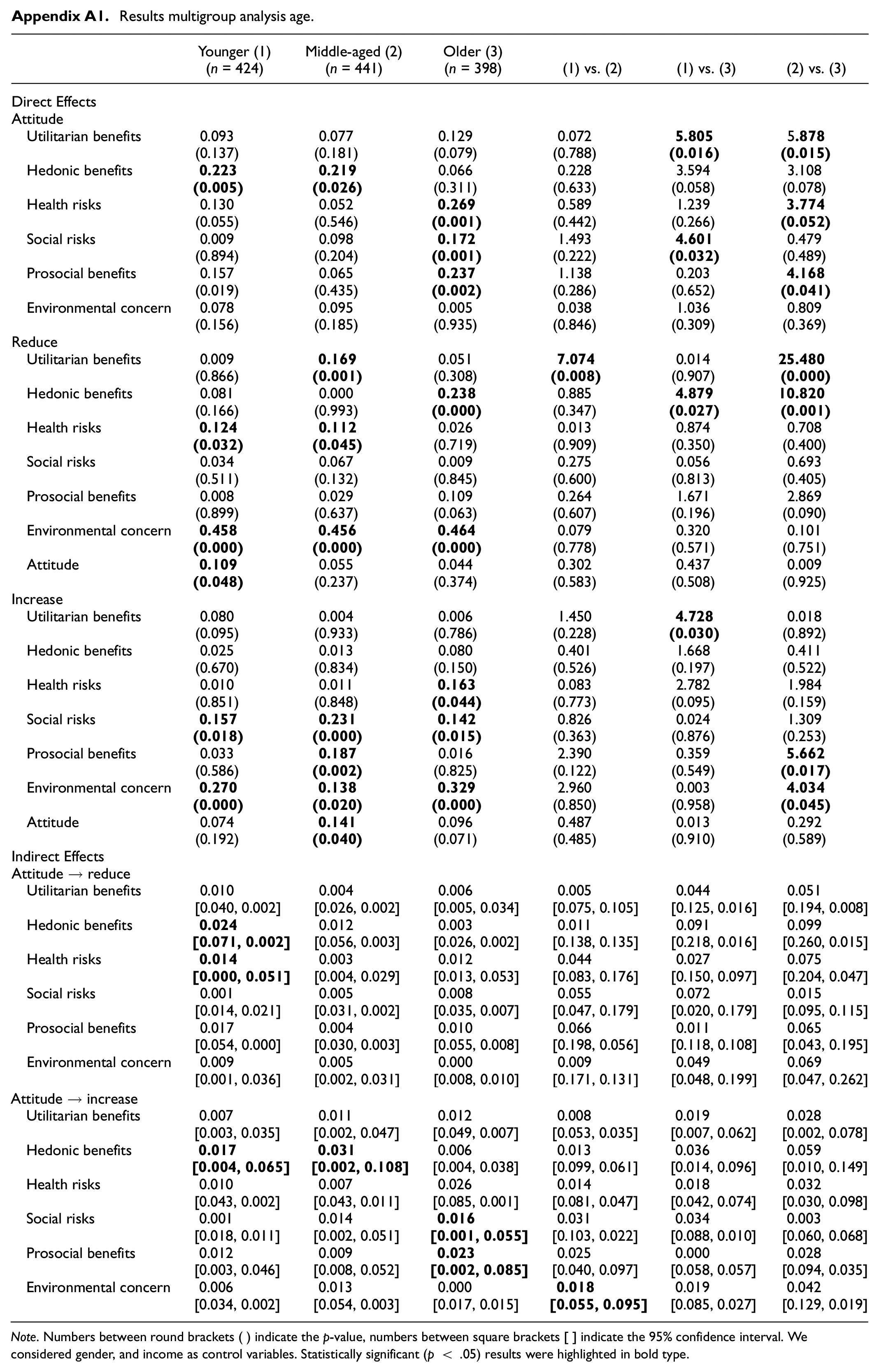
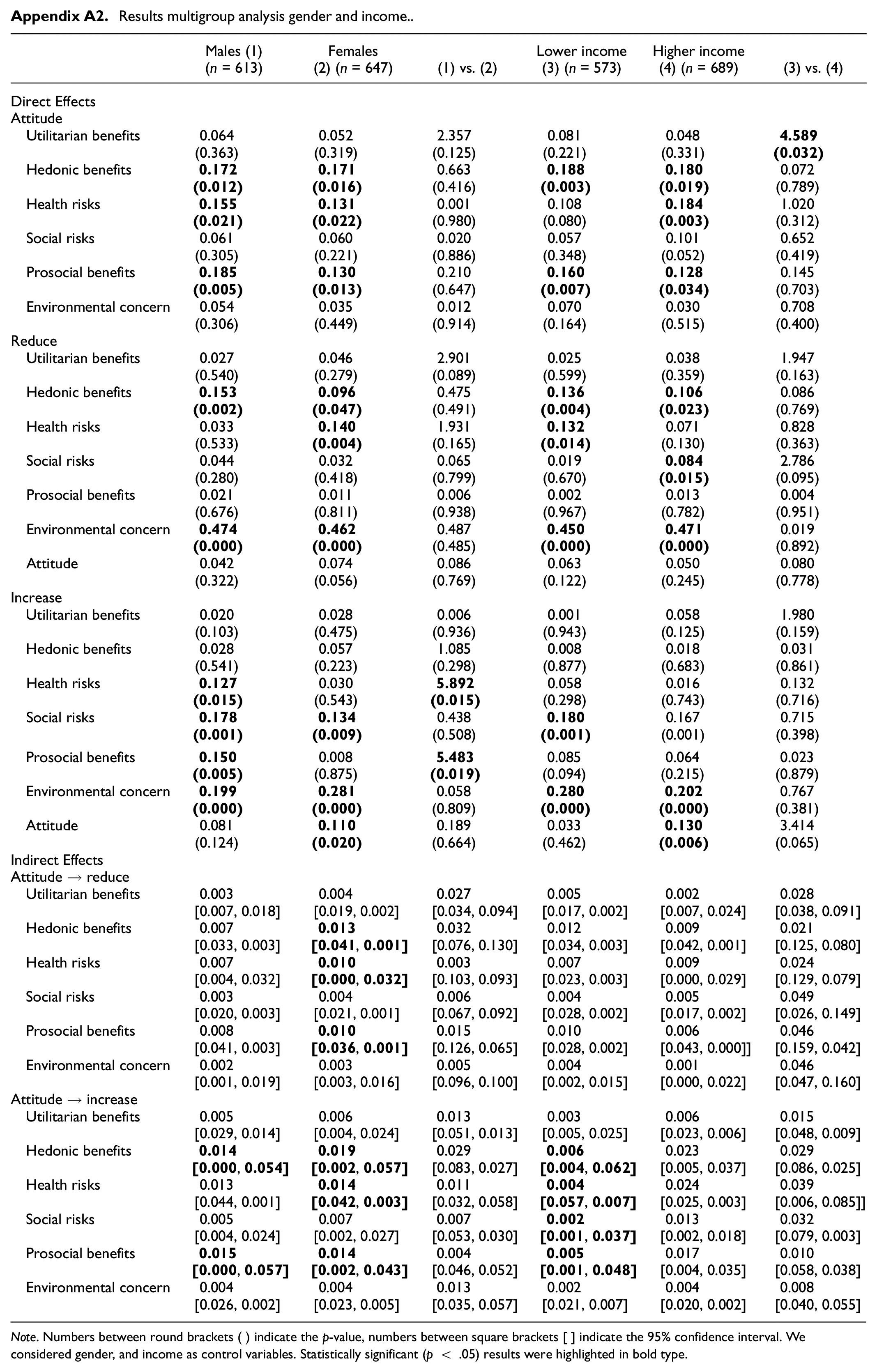
The results of the multigroup analyses are depicted in Appendix A1 (age), Appendix A2 (gender and income), and Appendix A3 (air travel frequency). Age was found to moderate individual effects in the structural model. For instance, the negative effect of utilitarian benefits on the intention to reduce air travel was stronger for middle-aged as compared to younger and older consumers. By contrast, the negative effect of hedonic benefits on the intention to reduce air travel was stronger for older as compared to both younger and middle-aged consumers. With respect to gender, the findings showed differences in the strength of determinants of the intention to increase. For instance, the negative effect of health risks on the intention to increase was stronger for males than for females. In addition, the positive effect of prosocial benefits on the intention to increase was stronger for males than for females. When looking at differences between income groups, we found a marginally stronger effect of social risks on the intention to reduce for higher-income as compared to lower-income groups. Finally, the findings showed that the intention to increase air travel was more strongly driven by prosocial benefits and environmental concerns for consumers with higher as compared to lower air travel frequency.
Conclusion
Discussion
Understanding consumers’ intentions to reduce air travel is highly relevant, as this consumer decision has important societal, environmental, and economic consequences. This research is the first to develop a model of consumer intention to reduce air travel by integrating inhibitors and enablers of this decision and contrasting the decision to reduce air travel with the decision to increase air travel. By analyzing data collected from German air travelers, this study tested the newly developed model.
The results demonstrate that consumers’ decisions to reduce air travel are the result of a cognitive weighing of the benefits and sacrifices of air travel that are oriented toward both the self (e.g., perceived health risks) and others (e.g., perceived environmental concerns). Specifically, the results illustrate that perceived hedonic benefits (i.e., self-oriented benefits) and perceived prosocial benefits (i.e., other-oriented benefits) of air travel decrease the intention, while environmental concerns (i.e., other-oriented sacrifices) and health risks (i.e., self-oriented sacrifices) of air travel increase the intention to reduce air travel. Hence, the findings reveal that consumers face a social dilemma (self- vs. other-oriented sacrifices) and psychological conflicts (benefits vs. sacrifices) when deciding to reduce air travel.
Moreover, the findings underline the pivotal role of consumer attitudes toward air travel in consumers’ decisions to reduce air travel. In support of our hypotheses, these attitudes were found to mediate the relationship between beliefs about air travel (i.e., reasons) and the intention to reduce air travel (i.e., behavioral responses). In this way, consumer-perceived prosocial benefits of air travel, for instance, have been found to inhibit the intention to reduce air travel.
Compared to other determinants of the intention to reduce air travel (i.e., health risks, hedonic benefits, prosocial benefits of air travel, attitude), the results show that consumers’ perceived environmental concerns—as an example of the other-oriented sacrifices of air travel—occupy the most influential role in shaping consumers’ intentions to reduce air travel. Hence, consumers seem to strongly relate an air travel reduction to the environment. This finding corroborates previous studies showing that a consumer’s intention to reduce consumption positively correlates with environmental activism (Culiberg et al., 2023). Furthermore, this finding reflects the intensified discussion about air travel and its environmental impact during the COVID-19 pandemic. In general, COVID-19 might have shifted consumers toward a reduction in touristic travel. With the mobility restrictions implemented during the pandemic, consumers were forced to change their travel habits. From these experiences, they might have learned that travel reduction can also benefit their lives.
Furthermore, the findings of this study suggest that perceived social risks lack salience for a consumer’s decision to reduce air travel, which supports previous findings (Davison et al., 2014). It can be suggested that decisions to reduce air travel are acceptable in society and do not involve a loss of social status. Furthermore, the results indicate that the perceived utilitarian benefits of air travel do not inhibit the intention to reduce air travel. Consumers sometimes do not have, or feel that they do not have, another option than using a plane to get to their desired destination. The related utilitarian benefits of air travel might be seen as situation-specific and, as such, might be less likely to predict the more fundamental decision of air travel reduction.
When comparing the determinants of consumers’ intentions to reduce air travel with the determinants of their intentions to increase air travel, the results reveal two important differences in the psychological origins of these decisions. First, the perceived social risks of air travel have been found to enable the intention to increase air travel, while they are unrelated to the intention to reduce air travel. This finding corroborates previous studies, which acknowledged that social factors are key to consumers’ resistance to changing air travel behavior (Gössling & Dolnicar, 2023). Further, this finding can be interpreted as an indicator of a boycott and might be a response to governmental travel restrictions during the COVID-19 pandemic. An increased (and temporarily suppressed) desire to travel leads people to compensate for missed travel in postpandemic times (Kim et al., 2022). Thus, when consumers face social risk because of air travel, they might be more motivated to engage in air travel as a way to rebel against social pressure. Second, the results reveal that environmental concerns about air travel exert—directly and indirectly—a stronger effect on the intention to reduce than on the intention to increase air travel. This finding implies that consumers strongly relate air travel reduction to their beliefs about environmental concerns. The public discussion and current initiatives in the aviation industry (e.g., compensation for air travel–related threats to the environment) put these topics on the agenda and might thus facilitate these associations in consumers’ minds.
The findings of this study additionally demonstrate that a consumer’s background (age, gender, income, air travel frequency) influences the relationships between determinants and intentions to reduce air travel. Previous research has also underlined the relevance of a consumer’s background in understanding the nuances of the psychological origins of consumer touristic travel reduction (Jeong et al., 2022). For instance, this study’s findings elucidate that age moderates the negative effect of utilitarian benefits on the intention to reduce air travel. This effect was stronger for middle-aged as compared to younger and older consumers. By contrast, the negative effect of hedonic benefits on the intention to reduce air travel was stronger for older as compared to both younger and middle-aged consumers. These findings support existing research showing that hedonic benefits or emotionally meaningful outcomes are particularly important to older travelers (Kazeminia et al., 2015; Sangpikul, 2008). With respect to gender and income, the findings indicate that males and females, as well as consumers with lower and higher incomes, use similar reasons to reach a decision to reduce air travel. This finding is supported by research on consumer touristic travel reduction, showing that a consumer’s sociodemographic background does not shape the relevance of the individual psychological origins of travel reduction (Culiberg et al., 2023). However, the findings reveal that, for males more than females, risk perceptions and prosocial benefits relate positively to an increase in air travel. This is in line with consumer research showing, for instance, that males are more willing to take risks than females (Cui et al., 2016; Dryhurst et al., 2020).
Finally, the findings showed that the intention to increase air travel was more strongly driven by prosocial benefits and environmental concerns for consumers with a higher as compared to a lower air travel frequency. Occasional air travelers will hardly be able to reduce the number of flights in the future, and relative to frequent air travelers, they will see themselves as less responsible for causing air pollution. In contrast, frequent air travelers potentially have more flights that can be subjected to a reduction decision and, as such, might have a greater perceived responsibility to adapt their behavior.
Theoretical Implications
With this study’s findings, the present research adds to the literature on travel reduction and anticonsumption, as it uses the theoretical lens of anticonsumption to understand consumer intention to reduce air travel. Specifically, this research provides theoretical implications for the existing knowledge about anticonsumption, as it integrates social dilemma and behavioral reasoning theory for the first time to develop an understanding of the determinants of anticonsumption. Researchers who have investigated the psychological sources of anticonsumption have focused on either self-oriented or other-oriented factors and thus overlooked providing knowledge about the relative importance of these factors for a consumer’s decision in terms of anticonsumption. Furthermore, existing knowledge of the determinants of anticonsumption builds on the enablers of anticonsumption and thus neglects to provide insights into the inhibitors of anticonsumption (Makri et al., 2020). Most importantly, this study’s findings contribute to research on consumer travel reduction by developing an understanding of consumer air travel reduction by providing a broad, nuanced, and empirically validated picture of the determinants of consumer intention to reduce air travel. Specifically, this research identifies that the integration of self- and other-oriented beliefs about the benefits and sacrifices of air travel is indispensable to fully understanding a consumer’s decision to reduce air travel. Furthermore, this research elucidates the psychological mechanisms underlying the effect of consumer beliefs (i.e., reasons) about air travel on the decision to reduce air travel.
Managerial Implications
The key finding of our research is that consumers, in their role as tourists, are considering a reduction in their air travel. In total, 39.8% of the respondents reported that they intend to reduce air travel. First, for the tourism industry, this means that other destinations might be of increasing interest to consumers—namely, those that do not require air travel. This means, for instance, that nearby options would need to adapt their infrastructure to welcome an increasing number of tourists. Second, this key finding means that the tourism industry must identify alternative transportation modes to enable tourists to get to their destinations. However, if air travel is the only option to get to a destination, the tourism industry is well advised to reduce, among others, consumers’ environmental concerns about air travel, as these concerns most strongly prompt the intention to reduce air travel. This can be achieved, for example, by using, and communicating the use of, more sustainable airplanes (e.g., based on sustainable fuel and constructed with sustainable raw materials). According to this study’s findings, another way to encourage air travel is to reduce the health risks associated with air travel. This can be achieved when airlines heighten hygiene standards (e.g., the use of sanitizers outside of a pandemic) and make consumers aware of these higher hygiene standards. The findings of this research also provide anchors for developing segment-specific strategies. For instance, while it is important to manage the health risks of air travel for females, it is irrelevant for males (Table 5).
Managerial implications for specific consumer segments.
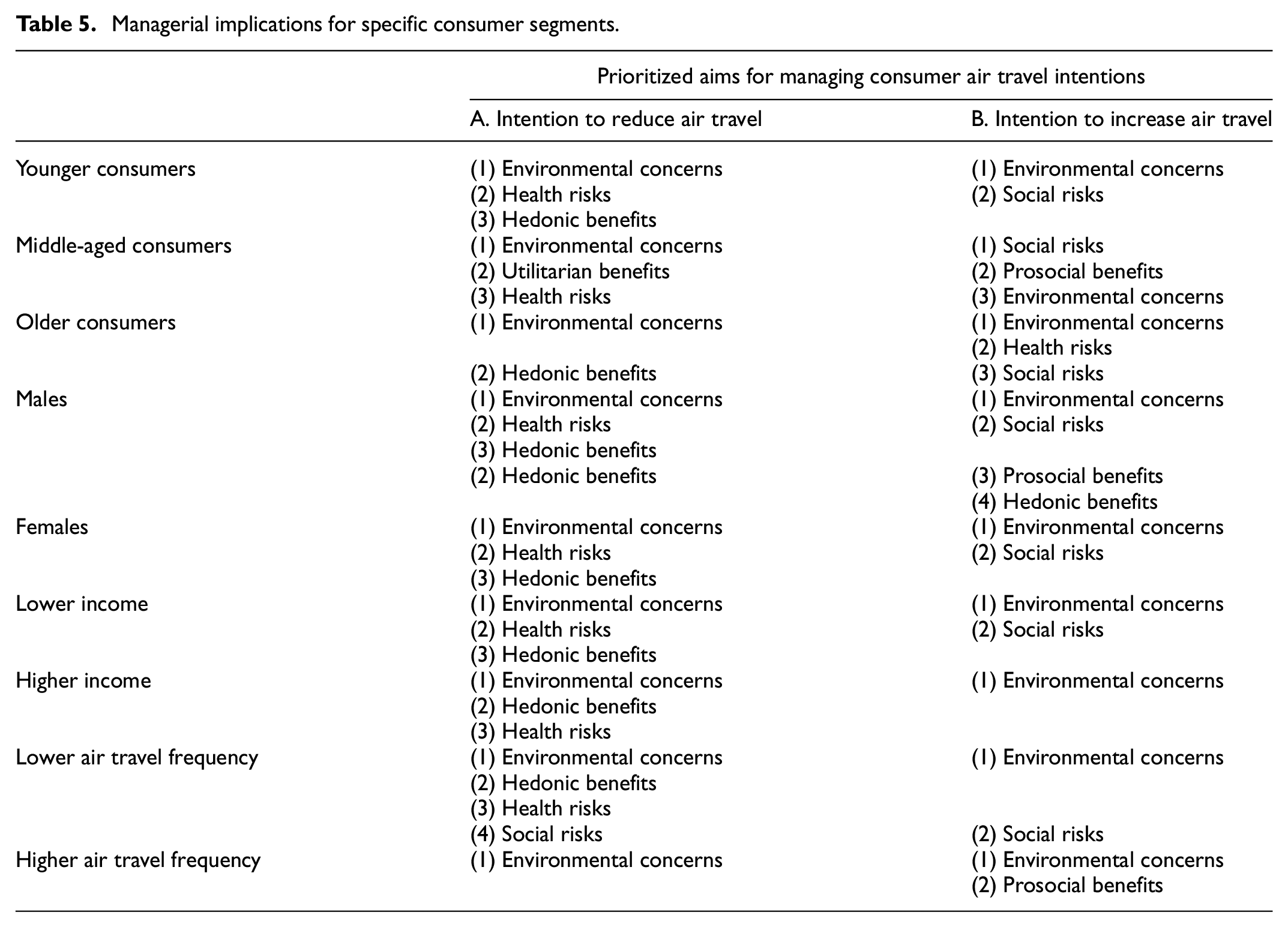
With this research, we also generated important implications for those stakeholders who pursue the aim of reducing consumer air travel (e.g., nongovernmental organizations). According to this study’s findings, this aim can be achieved by raising a consumer’s environmental concerns, which can be realized by making consumers aware of the negative environmental impact of air travel (e.g., using labels that indicate the nonenvironmental friendliness of air travel). Further, the aim of facilitating a consumer’s intention to reduce air travel can be achieved by lowering consumers’ perceived hedonic benefits of air travel, which can be achieved by increasing the monetary costs of air travel (e.g., introducing a CO2 tax for air travel) or by establishing more controversial communications about air travel. Finally, decreasing the perceived prosocial benefits of air travel can also help reduce consumers’ intentions to reduce air travel. A possible way to achieve this is to highlight the prosocial benefits of other transportation modes or to reduce subsidies for air travel-related prosocial efforts.
Limitations and Future Research
While this research provides an understanding of consumers’ intentions to reduce air travel, it is not without limitations. First, we focused on specific concepts to explain the intentions, and thereby might have overlooked other concepts that are essential in this context. For instance, future research should consider additional sacrifices, such as social concerns (Makri et al., 2020). Second, this research used consumer beliefs about air travel to explain a consumer’s intention to reduce air travel and thus provided no evidence of the instruments and strategies that might shape these beliefs. Hence, future research should elucidate how organizations can effectively shape these impactful consumer beliefs. Third, the aim of this research was to explain consumers’ intentions to reduce air travel. Future research can contribute to a nuanced understanding of consumers’ decisions to reduce air travel by studying different dimensions of the behavioral indicators of air travel reduction, such as the intention to compensate for air travel (e.g., by paying a tax) (Gössling & Dolnicar, 2023). Although it has been particularly beneficial to study intentions during a pandemic that restricted consumer air travel through regulations, we encourage future researchers to extend our research by examining the effects of air travel reduction intention on actual air travel reduction. This would also require understanding when the translation of intentions into behavior is strongest. In this regard, it might be particularly valuable to understand how the beliefs about air travel considered in this study moderate that translation. Fourth, we empirically tested the model during a global health crisis (i.e., the COVID-19 pandemic). This might have strengthened the relevance of individual beliefs, such as the perceived health risks of air travel. Thus, we encourage researchers to validate our research findings in another empirical study and develop an in-depth understanding of how contextual factors (e.g., an economic vs. a health crisis) affect the outcomes of this research. Finally, in this research, we studied the moderating role of consumer age, gender, income, and air travel frequency. Future research is well advised to include variables that deepen the understanding of individual differences, such as consumers’ consciousness of climate change.
Footnotes
Appendix A1
Results multigroup analysis age.
| Younger (1) (n = 424) | Middle-aged (2) (n = 441) | Older (3) (n = 398) | (1) vs. (2) | (1) vs. (3) | (2) vs. (3) | |
|---|---|---|---|---|---|---|
| Direct Effects | ||||||
| Attitude | ||||||
| Utilitarian benefits | 0.093 (0.137) | 0.077 (0.181) | 0.129 (0.079) | 0.072 (0.788) |
|
5 |
| Hedonic benefits |
|
|
0.066 (0.311) | 0.228 (0.633) | 3.594 (0.058) | 3.108 (0.078) |
| Health risks | 0.130 (0.055) | 0.052 (0.546) |
|
0.589 (0.442) | 1.239 (0.266) |
|
| Social risks | 0.009 (0.894) | 0.098 (0.204) |
|
1.493 (0.222) |
|
0.479 (0.489) |
| Prosocial benefits | 0.157 (0.019) | 0.065 (0.435) |
|
1.138 (0.286) | 0.203 (0.652) |
|
| Environmental concern | 0.078 (0.156) | 0.095 (0.185) | 0.005 (0.935) | 0.038 (0.846) | 1.036 (0.309) | 0.809 (0.369) |
| Reduce | ||||||
| Utilitarian benefits | 0.009 (0.866) |
|
0.051 (0.308) |
|
0.014 (0.907) |
|
| Hedonic benefits | 0.081 (0.166) | 0.000 (0.993) |
|
0.885 (0.347) |
|
|
| Health risks |
|
|
0.026 (0.719) | 0.013 (0.909) | 0.874 (0.350) | 0.708 (0.400) |
| Social risks | 0.034 (0.511) | 0.067 (0.132) | 0.009 (0.845) | 0.275 (0.600) | 0.056 (0.813) | 0.693 (0.405) |
| Prosocial benefits | 0.008 (0.899) | 0.029 (0.637) | 0.109 (0.063) | 0.264 (0.607) | 1.671 (0.196) | 2.869 (0.090) |
| Environmental concern |
|
|
|
0.079 (0.778) | 0.320 (0.571) | 0.101 (0.751) |
| Attitude |
|
0.055 (0.237) | 0.044 (0.374) | 0.302 (0.583) | 0.437 (0.508) | 0.009 (0.925) |
| Increase | ||||||
| Utilitarian benefits | 0.080 (0.095) | 0.004 (0.933) | 0.006 (0.786) | 1.450 (0.228) |
|
0.018 (0.892) |
| Hedonic benefits | 0.025 (0.670) | 0.013 (0.834) | 0.080 (0.150) | 0.401 (0.526) | 1.668 (0.197) | 0.411 (0.522) |
| Health risks | 0.010 (0.851) | 0.011 (0.848) |
|
0.083 (0.773) | 2.782 (0.095) | 1.984 (0.159) |
| Social risks |
|
|
|
0.826 (0.363) | 0.024 (0.876) | 1.309 (0.253) |
| Prosocial benefits | 0.033 (0.586) |
|
0.016 (0.825) | 2.390 (0.122) | 0.359 (0.549) |
|
| Environmental concern |
|
|
|
2.960 (0.850) | 0.003 (0.958) |
|
| Attitude | 0.074 (0.192) |
|
0.096 (0.071) | 0.487 (0.485) | 0.013 (0.910) | 0.292 (0.589) |
| Indirect Effects | ||||||
| Attitude → reduce | ||||||
| Utilitarian benefits | 0.010 [0.040, 0.002] | 0.004 [0.026, 0.002] | 0.006 [0.005, 0.034] | 0.005 [0.075, 0.105] | 0.044 [0.125, 0.016] | 0.051 [0.194, 0.008] |
| Hedonic benefits |
|
0.012 [0.056, 0.003] | 0.003 [0.026, 0.002] | 0.011 [0.138, 0.135] | 0.091 [0.218, 0.016] | 0.099 [0.260, 0.015] |
| Health risks |
|
0.003 [0.004, 0.029] | 0.012 [0.013, 0.053] | 0.044 [0.083, 0.176] | 0.027 [0.150, 0.097] | 0.075 [0.204, 0.047] |
| Social risks | 0.001 [0.014, 0.021] | 0.005 [0.031, 0.002] | 0.008 [0.035, 0.007] | 0.055 [0.047, 0.179] | 0.072 [0.020, 0.179] | 0.015 [0.095, 0.115] |
| Prosocial benefits | 0.017 [0.054, 0.000] | 0.004 [0.030, 0.003] | 0.010 [0.055, 0.008] | 0.066 [0.198, 0.056] | 0.011 [0.118, 0.108] | 0.065 [0.043, 0.195] |
| Environmental concern | 0.009 [0.001, 0.036] | 0.005 [0.002, 0.031] | 0.000 [0.008, 0.010] | 0.009 [0.171, 0.131] | 0.049 [0.048, 0.199] | 0.069 [0.047, 0.262] |
| Attitude → increase | ||||||
| Utilitarian benefits | 0.007 [0.003, 0.035] | 0.011 [0.002, 0.047] | 0.012 [0.049, 0.007] | 0.008 [0.053, 0.035] | 0.019 [0.007, 0.062] | 0.028 [0.002, 0.078] |
| Hedonic benefits |
|
|
0.006 [0.004, 0.038] | 0.013 [0.099, 0.061] | 0.036 [0.014, 0.096] | 0.059 [0.010, 0.149] |
| Health risks | 0.010 [0.043, 0.002] | 0.007 [0.043, 0.011] | 0.026 [0.085, 0.001] | 0.014 [0.081, 0.047] | 0.018 [0.042, 0.074] | 0.032 [0.030, 0.098] |
| Social risks | 0.001 [0.018, 0.011] | 0.014 [0.002, 0.051] |
|
0.031 [0.103, 0.022] | 0.034 [0.088, 0.010] | 0.003 [0.060, 0.068] |
| Prosocial benefits | 0.012 [0.003, 0.046] | 0.009 [0.008, 0.052] |
|
0.025 [0.040, 0.097] | 0.000 [0.058, 0.057] | 0.028 [0.094, 0.035] |
| Environmental concern | 0.006 [0.034, 0.002] | 0.013 [0.054, 0.003] | 0.000 [0.017, 0.015] |
|
0.019 [0.085, 0.027] | 0.042 [0.129, 0.019] |
Note. Numbers between round brackets ( ) indicate the p-value, numbers between square brackets [ ] indicate the 95% confidence interval. We considered gender, and income as control variables. Statistically significant (p < .05) results were highlighted in bold type.
Appendix A2
Results multigroup analysis gender and income..
| Males (1) (n = 613) | Females (2) (n = 647) | (1) vs. (2) | Lower income (3) (n = 573) | Higher income (4) (n = 689) | (3) vs. (4) | |
|---|---|---|---|---|---|---|
| Direct Effects | ||||||
| Attitude | ||||||
| Utilitarian benefits | 0.064 (0.363) | 0.052 (0.319) | 2.357 (0.125) | 0.081 (0.221) | 0.048 (0.331) |
|
| Hedonic benefits |
|
|
0.663 (0.416) |
|
|
0.072 (0.789) |
| Health risks |
|
|
0.001 (0.980) | 0.108 (0.080) |
|
1.020 (0.312) |
| Social risks | 0.061 (0.305) | 0.060 (0.221) | 0.020 (0.886) | 0.057 (0.348) | 0.101 (0.052) | 0.652 (0.419) |
| Prosocial benefits |
|
|
0.210 (0.647) |
|
|
0.145 (0.703) |
| Environmental concern | 0.054 (0.306) | 0.035 (0.449) | 0.012 (0.914) | 0.070 (0.164) | 0.030 (0.515) | 0.708 (0.400) |
| Reduce | ||||||
| Utilitarian benefits | 0.027 (0.540) | 0.046 (0.279) | 2.901 (0.089) | 0.025 (0.599) | 0.038 (0.359) | 1.947 (0.163) |
| Hedonic benefits |
|
|
0.475 (0.491) |
|
|
0.086 (0.769) |
| Health risks | 0.033 (0.533) |
|
1.931 (0.165) |
|
0.071 (0.130) | 0.828 (0.363) |
| Social risks | 0.044 (0.280) | 0.032 (0.418) | 0.065 (0.799) | 0.019 (0.670) |
|
2.786 (0.095) |
| Prosocial benefits | 0.021 (0.676) | 0.011 (0.811) | 0.006 (0.938) | 0.002 (0.967) | 0.013 (0.782) | 0.004 (0.951) |
| Environmental concern |
|
|
0.487 (0.485) |
|
|
0.019 (0.892) |
| Attitude | 0.042 (0.322) | 0.074 (0.056) | 0.086 (0.769) | 0.063 (0.122) | 0.050 (0.245) | 0.080 (0.778) |
| Increase | ||||||
| Utilitarian benefits | 0.020 (0.103) | 0.028 (0.475) | 0.006 (0.936) | 0.001 (0.943) | 0.058 (0.125) | 1.980 (0.159) |
| Hedonic benefits | 0.028 (0.541) | 0.057 (0.223) | 1.085 (0.298) | 0.008 (0.877) | 0.018 (0.683) | 0.031 (0.861) |
| Health risks |
|
0.030 (0.543) |
|
0.058 (0.298) | 0.016 (0.743) | 0.132 (0.716) |
| Social risks |
|
|
0.438 (0.508) |
|
0.167 (0.001) | 0.715 (0.398) |
| Prosocial benefits |
|
0.008 (0.875) |
|
0.085 (0.094) | 0.064 (0.215) | 0.023 (0.879) |
| Environmental concern |
|
|
0.058 (0.809) |
|
|
0.767 (0.381) |
| Attitude | 0.081 (0.124) |
|
0.189 (0.664) | 0.033 (0.462) |
|
3.414 (0.065) |
| Indirect Effects | ||||||
| Attitude → reduce | ||||||
| Utilitarian benefits | 0.003 [0.007, 0.018] | 0.004 [0.019, 0.002] | 0.027 [0.034, 0.094] | 0.005 [0.017, 0.002] | 0.002 [0.007, 0.024] | 0.028 [0.038, 0.091] |
| Hedonic benefits | 0.007 [0.033, 0.003] | 0.032 [0.076, 0.130] | 0.012 [0.034, 0.003] | 0.009 [0.042, 0.001] | 0.021 [0.125, 0.080] | |
| Health risks | 0.007 [0.004, 0.032] | 0.003 [0.103, 0.093] | 0.007 [0.023, 0.003] | 0.009 [0.000, 0.029] | 0.024 [0.129, 0.079] | |
| Social risks | 0.003 [0.020, 0.003] | 0.004 [0.021, 0.001] | 0.006 [0.067, 0.092] | 0.004 [0.028, 0.002] | 0.005 [0.017, 0.002] | 0.049 [0.026, 0.149] |
| Prosocial benefits | 0.008 [0.041, 0.003] | 0.015 [0.126, 0.065] | 0.010 [0.028, 0.002] | 0.006 [0.043, 0.000]] | 0.046 [0.159, 0.042] | |
| Environmental concern | 0.002 [0.001, 0.019] | 0.003 [0.003, 0.016] | 0.005 [0.096, 0.100] | 0.004 [0.002, 0.015] | 0.001 [0.000, 0.022] | 0.046 [0.047, 0.160] |
| Attitude → increase | ||||||
| Utilitarian benefits | 0.005 [0.029, 0.014] | 0.006 [0.004, 0.024] | 0.013 [0.051, 0.013] | 0.003 [0.005, 0.025] | 0.006 [0.023, 0.006] | 0.015 [0.048, 0.009] |
| Hedonic benefits | 0.029 [0.083, 0.027] | 0.023 [0.005, 0.037] | 0.029 [0.086, 0.025] | |||
| Health risks | 0.013 [0.044, 0.001] | 0.011 [0.032, 0.058] | 0.024 [0.025, 0.003] | 0.039 [0.006, 0.085]] | ||
| Social risks | 0.005 [0.004, 0.024] | 0.007 [0.002, 0.027] | 0.007 [0.053, 0.030] | 0.013 [0.002, 0.018] | 0.032 [0.079, 0.003] | |
| Prosocial benefits | 0.004 [0.046, 0.052] | 0.017 [0.004, 0.035] | 0.010 [0.058, 0.038] | |||
| Environmental concern | 0.004 [0.026, 0.002] | 0.004 [0.023, 0.005] | 0.013 [0.035, 0.057] | 0.002 [0.021, 0.007] | 0.004 [0.020, 0.002] | 0.008 [0.040, 0.055] |
Note. Numbers between round brackets ( ) indicate the p-value, numbers between square brackets [ ] indicate the 95% confidence interval. We considered gender, and income as control variables. Statistically significant (p < .05) results were highlighted in bold type.
Appendix A3
Results multigroup analysis air travel frequency..
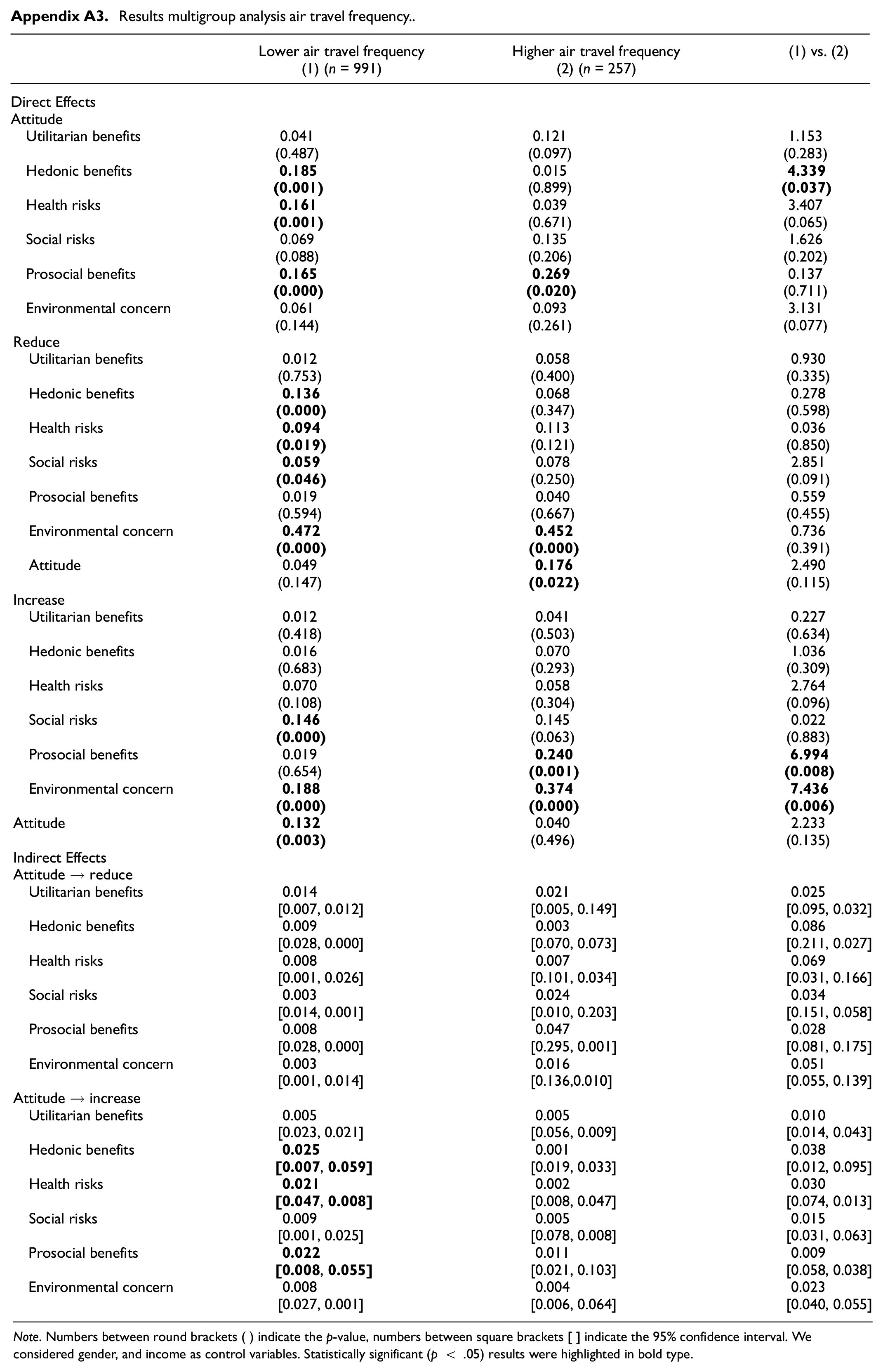
| Lower air travel frequency (1) (n = 991) | Higher air travel frequency (2) (n = 257) | (1) vs. (2) | |
|---|---|---|---|
| Direct Effects | |||
| Attitude | |||
| Utilitarian benefits | 0.041 (0.487) | 0.121 (0.097) | 1.153 (0.283) |
| Hedonic benefits |
|
0.015 (0.899) |
|
| Health risks |
|
0.039 (0.671) | 3.407 (0.065) |
| Social risks | 0.069 (0.088) | 0.135 (0.206) | 1.626 (0.202) |
| Prosocial benefits |
|
|
0.137 (0.711) |
| Environmental concern | 0.061 (0.144) | 0.093 (0.261) | 3.131 (0.077) |
| Reduce | |||
| Utilitarian benefits | 0.012 (0.753) | 0.058 (0.400) | 0.930 (0.335) |
| Hedonic benefits |
|
0.068 (0.347) | 0.278 (0.598) |
| Health risks |
|
0.113 (0.121) | 0.036 (0.850) |
| Social risks |
|
0.078 (0.250) | 2.851 (0.091) |
| Prosocial benefits | 0.019 (0.594) | 0.040 (0.667) | 0.559 (0.455) |
| Environmental concern |
|
|
0.736 (0.391) |
| Attitude | 0.049 (0.147) |
|
2.490 (0.115) |
| Increase | |||
| Utilitarian benefits | 0.012 (0.418) | 0.041 (0.503) | 0.227 (0.634) |
| Hedonic benefits | 0.016 (0.683) | 0.070 (0.293) | 1.036 (0.309) |
| Health risks | 0.070 (0.108) | 0.058 (0.304) | 2.764 (0.096) |
| Social risks |
|
0.145 (0.063) | 0.022 (0.883) |
| Prosocial benefits | 0.019 (0.654) |
|
|
| Environmental concern |
|
|
|
| Attitude |
|
0.040 (0.496) | 2.233 (0.135) |
| Indirect Effects | |||
| Attitude → reduce | |||
| Utilitarian benefits | 0.014 [0.007, 0.012] | 0.021 [0.005, 0.149] | 0.025 [0.095, 0.032] |
| Hedonic benefits | 0.009 [0.028, 0.000] | 0.003 [0.070, 0.073] | 0.086 [0.211, 0.027] |
| Health risks | 0.008 [0.001, 0.026] | 0.007 [0.101, 0.034] | 0.069 [0.031, 0.166] |
| Social risks | 0.003 [0.014, 0.001] | 0.024 [0.010, 0.203] | 0.034 [0.151, 0.058] |
| Prosocial benefits | 0.008 [0.028, 0.000] | 0.047 [0.295, 0.001] | 0.028 [0.081, 0.175] |
| Environmental concern | 0.003 [0.001, 0.014] | 0.016 [0.136,0.010] | 0.051 [0.055, 0.139] |
| Attitude → increase | |||
| Utilitarian benefits | 0.005 [0.023, 0.021] | 0.005 [0.056, 0.009] | 0.010 [0.014, 0.043] |
| Hedonic benefits | 0.001 [0.019, 0.033] | 0.038 [0.012, 0.095] | |
| Health risks | 0.002 [0.008, 0.047] | 0.030 [0.074, 0.013] | |
| Social risks | 0.009 [0.001, 0.025] | 0.005 [0.078, 0.008] | 0.015 [0.031, 0.063] |
| Prosocial benefits | 0.011 [0.021, 0.103] | 0.009 [0.058, 0.038] | |
| Environmental concern | 0.008 [0.027, 0.001] | 0.004 [0.006, 0.064] | 0.023 [0.040, 0.055] |
Note. Numbers between round brackets ( ) indicate the p-value, numbers between square brackets [ ] indicate the 95% confidence interval. We considered gender, and income as control variables. Statistically significant (p < .05) results were highlighted in bold type.
Declaration of Conflicting Interests
The author(s) declared no potential conflicts of interest with respect to the research, authorship, and/or publication of this article.
Funding
The author(s) disclosed receipt of the following financial support for the research, authorship, and/or publication of this article: This project is funded by the Cluster of Excellence SE2A - EXC 2163
