




Abstract
The risks inherent in booking travel destinations include natural disasters, economic conditions, diseases, terrorism, and war. In times of uncertainty, peoples’ beliefs, biases, and attitudes influence decisions between competing choices. This research examined how affective and behavioral priming influence travelers’ responses to valence and risk cues within online reviews. The risk avoidance principle of prospect theory, in conjunction with the asymmetry effect of positive and negative information, underpinned the studies. The results revealed that different primes influenced responses to review risk content as a function of valence. Behavioral priming increased the impact of positive risk content, whereas negative affective priming amplified the effect of negative risk content. This study builds on the extant body of knowledge by using video to prime emotions and establishing the viability of multiple concurrent primes. The research provides practical suggestions for navigating risk- and affect-related travel influences during times of uncertainty.
Keywords
Introduction
Safety and health-related issues have long been a concern among travelers and have influenced booking decisions (Dolnicar, 2007). Scholars have identified six broad categories that encompass the risks associated with bookings: physical risk, psychological risk, financial risk, time risk, satisfaction risk, and equipment risk (Roehl & Fesenmaier, 1992). Perceptions of risk may be heightened during times of uncertainty. One of the steps customers take to decide between competing choices is to gather information (Keller et al., 2020). The recent Covid-19 pandemic exemplifies the way in which uncertainty can profoundly influence the hospitality industry. While the pandemic has subsided, it demonstrates how decision-making can change dramatically as a function of situational factors that increase risk. Moreover, travelers are likely to seek information related to risk when choosing between travel options, as health risks are one component of the myriad types of risk evaluated in travel booking decisions.
The effect of reviews on hospitality decision-making is well documented (e.g., Book et al., 2018; Kim et al., 2021; Noone & McGuire, 2014; Xu, 2019). During times such as these, risk and safety of hospitality products are bound to be key topics in customer reviews. A perusal of review websites such as TripAdvisor confirms this. Such risk-related content can be positive or negative depending on the experience of the writer. Research demonstrates a negativity effect, such that negative reviews tend to carry more weight (Chen & Lurie, 2013). Given the powerful impact of reviews, it is essential for operators to understand how risk content in reviews affects decision-making in times of uncertainty.
Travelers are exposed to internal and external factors that influence their responses to review valence and risk cues. Priming is the general phenomenon whereby certain information within stimuli is highlighted, subsequently becoming more accessible and influential in decision-making (Janiszewski & Wyer, 2014). Affective priming can temporarily elevate or deflate mood, increasing the accessibility of content with the same affective tone (Bower, 1981). Therefore, affective priming could make consumers more susceptible to positive or negative review valence. For example, after watching a short advertisement that elicits positive or happy emotions, customers are more likely to focus on positive than negative reviews.
Behavioral priming can increase the impact of review content related to the primed attitudes (Kim et al., 2021). For example, exposing participants to a list of words describing risk activates a mental construct associated with risk, which subsequently influences behavior. As individuals vary in their levels of risk tolerance (Burton et al., 1998), activating risk-related attitudes through priming could make consumers more attentive to risk content within the reviews. By understanding the roles of the two types of priming, operators can predict and manage consumer responses to online reviews as a function of primed affect and attitudes.
When travelers evaluate hospitality products online, they select from a list of lodging options. As such, the decision involves a tradeoff between the pros and cons of different hotels. Prospect theory explains that people are risk-averse, placing more weight on negative versus positive outcomes (Kahneman & Tversky, 1979). This tradeoff was demonstrated when consumers made choices between hotels, such that they were more likely to avoid a hotel with negative reviews than to seek a hotel with positive reviews (Tanford & Kim, 2019). When the reviews themselves signal risk, the risk avoidance principle of prospect theory is likely to occur.
This research reports two experiments that evaluate how review valence and risk content affect intentions to book a resort when choosing between alternatives. It examines how affective and behavioral priming influence responses to valence and risk cues within reviews. Prospect Theory is the theoretical framework used to predict and explain the tradeoff between lodging options.
The influence of the pandemic on the hospitality industry is unprecedented. It provides a unique opportunity to evaluate the psychological processes that affect hospitality decision-making in times of uncertainty. The current research breaks new ground by using multiple primes and incorporating risk content into reviews. Its investigation of the established principles of decision-making in a novel context that is highly relevant for consumers and businesses provides an additional, unique contribution. Ultimately, the study seeks to uncover (1) if the use of video stimuli is impactful, (2) how the use of multiple primes will influence decisions, and (3) which primes are more impactful toward decision-making. The findings will help operators be better prepared for future unforeseen events that heighten perceptions of risk and uncertainty among travelers.
Literature Review
Risk and Travel Decisions
Risk and uncertainty are inherent in tourism due to the intangible nature of travel experiences (Williams & Baláž, 2015). Some studies cite financial, psychological, social and time as the risks inherent in influencing decision-making, while others have identified crimes and violence, natural disasters, disease and hygiene, and health concerns as influential factors (Richter, 2003; Sönmez & Graefe, 1998, 1998). Sociocultural and situational factors that heighten perceptions of risk also influence travel to destinations affected by them (Rittichainuwat & Chakraborty, 2009). For example, the SARS crisis caused many travelers to avoid Asian destinations due to perceptions that they were unsafe (McKercher & Chon, 2004). Similarly, risk perceptions related to travel and safety were key determinants of intentions to travel following the 9/11 terrorist attacks (Reisinger & Mavondo, 2005). Research has examined the impact of previous health factors such as Ebola (Cahyanto et al., 2016) and H1N1 (Leggat et al., 2010) on risk perceptions and travel decisions. Like previous historical events, recent research demonstrated that perceptions of travel risk from the COVID-19 pandemic were primary predictors of intentions to travel (e.g., Neuburger & Egger, 2021; Sánchez-Cañizares et al., 2021).
Prospect theory
Prospect theory (Kahneman & Tversky, 1979) explains how risk perceptions and attitudes affect travel decisions in response to risk cues. Prospect theory asserts that when consumers make decisions, the risk of a loss carries greater weight than the benefit of a gain (Kahneman & Tversky, 1979). When making decisions during uncertain times, prospect theory maintains that peoples’ beliefs, biases, and attitudes play a role in their decisions (Sitkin & Pablo, 1992). Although people tend to be risk-averse, individuals have different levels of risk tolerance, which influence their decision-making strategies (Burton et al., 1998; Faqih, 2013). Leisure travel evokes pleasure and enjoyment along with risks and threats (Williams & Baláž, 2015). The extent to which the individual is averse to or tolerates risks can influence the relative weight assigned to these countervailing forces (Karl, 2018; Williams & Baláž, 2013). Leveraging the tenets of prospect theory, it is likely that situational factors can heighten individuals’ risk aversion tendencies during times of crisis.
Rather than deterring travel altogether, risk threats may cause travelers to select one destination over another (McKercher & Chon, 2004). In hospitality purchase decisions, prospect theory operates in the tradeoff between different lodging options with varying amounts of risk and benefit. For example, business travelers may avoid lodge-sharing accommodations, such as Airbnb, because potential unknown risks are weighted more heavily than corresponding benefits (Kreeger et al., 2021). Research demonstrates that consumers weigh negative attributes more heavily than positive attributes when selecting a particular room in a hotel (Masiero et al., 2016). The recent pandemic highlights the tradeoff between health risks of travel and the expectations of a positive or negative travel experience. Prospect theory can explain how internal and situational factors affect the weight assigned to different sources of risk and benefit in the travel purchase environment.
Online Reviews and Travel Decisions
Consumer-generated electronic word-of-mouth (eWOM) can have a profound influence on travel purchase decisions (Serra Cantallops & Salvi, 2014). Online customer reviews are pervasive forms of eWOM that are important in travel-related judgments (Filieri & McLeay, 2014). Research demonstrates that online reviews influence pre-purchase evaluations, booking intentions, and willingness to pay (Book et al., 2016, 2018; Kim et al., 2021; Noone & McGuire, 2014; Xu, 2019). Reviews have been shown to be more influential than price, hotel options, location, and brand familiarity in driving hotel booking decisions (Book et al., 2016, 2018; Noone & McGuire, 2014; Tanford & Kim, 2019; Wen et al., 2021). Thus, a key finding in the extant literature is that reviews supersede other factors that are considered important in hotel purchase decisions.
Asymmetry effect
A well-documented finding is that asymmetry effects are consistently observed in online consumer reviews, with negative reviews proving more influential than positive reviews (Chen & Lurie, 2013; Filieri et al., 2021; Park & Nicolau, 2015). Numerous hospitality/tourism studies demonstrate the asymmetry effect and support the proposition that negative reviews are more influential than positive reviews (Book et al., 2016, 2018; Kim et al., 2021; Noone & McGuire, 2014; Tanford & Kim, 2019). For example, hotel guests will not book a negatively reviewed hotel even when a steep discount is provided. However, they are less likely to book a positively reviewed hotel as price increases (Book et al., 2016). Likewise, research suggests that consumers will drive any distance to avoid a negatively reviewed resort but are less favorable toward a positively reviewed resort as distance increases (Tanford & Kim, 2019). Another study found that brand familiarity increased booking intentions with positive but not negative reviews (Wen et al., 2021).
Dual processing theories provide a framework to understand the relative weight assigned to reviews as a function of valence. The Elaboration Likelihood Model (Petty et al., 1983) suggests that online reviews can be processed by central or peripheral routes, depending on their content (Filieri & McLeay, 2014). Similarly, the heuristic-systematic distinction (Kahneman, 2011) indicates that the amount of cognitive effort used to process reviews can differ (Zhang et al., 2014). The asymmetry effect reflects the negativity bias, which asserts that negative cues elicit immediate emotional responses that lead to automatic processing (Taylor, 1991). Consumer research suggests that automatic processing is more likely to occur if review valence is consistent with prior beliefs, whereas systematic processing will operate if the two are incongruent (Filieri et al., 2021).
Prior studies linking prospect theory to the asymmetry effects focused on the risk of negative reviews versus the reward of positive reviews (e.g., Kim & Tanford, 2019; Tanford & Kim, 2019). In uncertain times such as the pandemic, reviews regarding risk-related content may be negative or positive. For example, a customer may have had a positive experience with the risk-related protocols, and would patronize the establishment again (e.g., Song et al., 2022). Conversely, a negative risk review could emphasize lack of adherence to protocols and unsafe conditions. There is a paucity of research examining how risk content in reviews influences customers’ purchase intentions. Research suggests that risk-averse individuals find negative reviews more useful than positive reviews (Casaló et al., 2015). However, the research did not examine the impact of the risk content in the reviews themselves.
In this research, the asymmetry effect can manifest in two ways. The first is the predominant valence of the reviews, which is negative or positive. The second is the content of the reviews with the opposing valence, which can be risk or non-risk related. Priming is the trigger to shift the weight assigned to each element and affect the loss-gain tradeoff predicted by prospect theory.
Priming
Priming explains the phenomenon that irrelevant information intervenes in the process of understanding focal information (Minton et al., 2017). Customer attitudes and behaviors in cognitive tasks are swayed due to the initially processed content, which is subject to priming stimuli (Janiszewski & Wyer, 2014). The psychological framework activates a certain idea, emotion, or knowledge, and alters consumer judgments by increasing the accessibility of the associated information (Cameron et al., 2012; Janiszewski & Wyer, 2014).
In the hotel booking situation, the purchase decision is determined by information associated with a hotel, such as hotel features, price, and customer reviews (Wen et al., 2021). However, situational information that sequentially connects, but is not relevant to, the primary task can affect consumer judgment (Cameron et al., 2012). Priming can result from situational cues that customers can face while considering a hotel reservation (e.g., Kim et al., 2021; Tanford et al., 2020).
While a single priming method is prevalent, research with a “multiple-prime paradigm” can investigate their reciprocal influences (Janiszewski & Wyer, 2014, p. 113). For example, a study found that a series of sequential primes (vs. single prime) or multiple prime stimuli with consistent content (vs. inconsistent) strengthen the priming effect (Jáskowski et al., 2003). However, multiple primes that reflect situational cues from different sources may activate incongruent ideas, in which case the prime most directly related to the judgment will dominate (Janiszewski & Wyer, 2014).
Affective priming
Affective priming focuses on how changes in emotions influence decisions (Janiszewski & Wyer, 2014; Minton et al., 2017). The use of “affect-loaded stimuli” produces the emotions to elicit the desired responses (Minton et al., 2017, p. 311). Polarized stimuli using words, music, and images can arouse changes in emotions represented by memory (Storbeck & Clore, 2008). Previous research demonstrated the effect of affective priming, whereby manipulated pre-consumption mood showed a strong impact on customer attitudes toward a restaurant (Yang & Hanks, 2016). A hotel study found that social media posts presenting positive or negative environmental images evoked corresponding affective states, which in turn influenced hotel booking intention (Tanford et al., 2020).
Visual information produces instant and intuitive emotional responses more effectively than text-based sources (Pittman & Reich, 2016). While previous studies examined the effect of words, pictures, color, and symbols as priming tools (Minton et al., 2017), the effect of video-based content has been understudied in previous research. Short videos are a common information dissemination tool that are available on social media (Alaimo, 2018). Emotions triggered by the video motivate individuals to share those videos with others (Nikolinakou & King, 2018). Considering that people stay on social media before, during, and after main tasks (Suciu, 2021), video content can intervene in the judgment process. Therefore, the current research applies a short video as a novel form of affective priming to investigate the effect of emotions on the hotel booking process. Positive priming is expected to elevate overall mood and thereby influence judgments (Storbeck & Clore, 2008).
H1. Booking intentions (i) and evaluations (ii) will be higher with positive affective priming versus negative affective priming.
Behavioral priming
Behavioral priming targets change in subsequent behaviors or intentions (Minton et al., 2017). Semantic content implying a certain meaning or experience indirectly activates behavioral priming, thereby increasing the accessibility of the associated content and triggering prime-related behaviors (Janiszewski & Wyer, 2014; Minton et al., 2017). Similarly, a cue from an attitude scale made customers conscious of their environmental self-perception, leading to pro-environmental behaviors (Cornelissen et al., 2008). A meta-analysis provided strong evidence of priming’s impact on the association between attitudes and behaviors (Cameron et al., 2012).
Research demonstrates that priming risk-seeking or risk-avoidance perceptions can influence a variety of risk-related decisions including financial investments (Gilad & Kliger, 2008), holiday travel, betting on horse races, and buying a car (Erb et al., 2002). In a similar vein, this research evaluates whether primed risk attitudes can alter evaluations of a hotel corresponding to the presence of risk cues in the available online reviews. As a form of behavioral priming, research demonstrates that priming consumers with an environmental attitude scale influences their responses to positive or negative environmental content in online hotel reviews (Kim et al., 2021). In a restaurant setting, priming customers with a positive or negative review prototype increased sensitivity to review content that had the same valence as the prototype (Kim & Tanford, 2019). Similarly, beginning a set of identical reviews with either two positive or two negative reviews provided a form of priming and produced judgments in the direction of the primed valence (Sparks & Browning, 2011).
In this research, participants evaluate a neutral resort that remains constant and a target resort that manipulates review valence and content. In study 1, target review valence is predominantly negative and positive reviews contain risk or non-risk content. When reviews are predominantly negative, the asymmetry effect predicts that review valence will dominate unless there are cues that heighten the impact of the positive content. Behavioral priming using a risk tolerance scale is expected to increase the accessibility of risk content in reviews, leading to a 2-way interaction between behavioral priming and positive review content.
H2a. Without behavioral priming, there will be no effect of positive review content on booking intentions (i) or evaluations (ii).
H2b. With behavioral priming, booking intentions (i) and evaluations (ii) will be higher with positive risk content than with positive non-risk content.
Prior research demonstrates that consumers will prefer a neutral resort to a negatively reviewed resort unless there are strong enough cues to offset the negativity bias (Book et al., 2016; Kim & Tanford, 2019). Based on prospect theory (Kahneman & Tversky, 1979), behavioral priming is expected to affect the tradeoff between resorts by reducing perceptions of risk when positive reviews are risk related.
H3. Booking intentions (i) and evaluations (ii) will be higher for a base resort with neutral reviews versus a target resort with negative reviews unless there is behavioral priming accompanied by positive risk content.
The effect of affective priming on responses to customer reviews has not been investigated. However, research has demonstrated the role of affect in online reviews. One study found that a negative emotional state influenced responses to hotel reviews (Tan et al., 2018). Emotional content within reviews can influence perceptions of review trustworthiness (Baker & Kim, 2019) and helpfulness (Ahmad & Laroche, 2015). A content analysis revealed that positive and negative affective content within reviews influenced conversion rates on Amazon sales (Ludwig et al., 2013). In this research, affective priming is an external cue designed to elicit an emotional state prior to reading the online reviews. Therefore, it is expected to magnify the effect of review valence with the same affective tone.
In study 2, reviews are mostly positive, and a single negative review is either risk or non-risk. In this case, the asymmetry effect is not apparent, since positive reviews do not outweigh other information. Behavioral priming is relevant to the risk content in reviews, whereas affect is related to review valence. With multiple primes, direct behavioral priming has greater diagnostic value toward the judgment than indirect affective priming that affects mood (Janiszewski & Wyer, 2104). Therefore, behavioral priming is expected to increase the impact of negative review risk. Without behavioral priming, affective priming is the only external cue. Positive affect is consistent with the predominant review valence, and therefore not expected to influence responses to the risk content of negative reviews. Conversely, negative affective priming creates an emotional reaction, which can evoke the negativity bias (Taylor, 1991) and increase the impact of negative review risk. Research demonstrates that the asymmetry effect may be triggered by priming in consumer decision-making and introduce a negativity bias, just as the negative review content itself does (Shen & Wyer, 2008). Therefore, a 3-way interaction is hypothesized between behavioral priming, affective priming, and negative review content.
H4a. With behavioral priming, booking intentions (i) and evaluations (ii) will be lower with negative risk content versus non-risk content.
H4b. With no behavioral priming and positive affective priming, there will be no effect of negative review content on booking intentions (i) or evaluations (ii).
H4c. With no behavioral priming and negative affective priming, booking intentions (i) and evaluations (ii) will be lower when a negative review contains risk versus non-risk content
When choosing between properties, consumers are more favorable toward a hotel with positive versus neutral reviews. However, a single negative review can reduce booking intentions and evaluations (Book et al., 2016, 2018). Negative affect will cause individuals to focus on the negative information (Taylor, 1991), thereby making them more aware of risk content within a negative review and reducing preferences for the target resort.
H5. Booking intentions (a) and evaluations (b) will be higher for a base resort with positive reviews versus a target resort with neutral reviews unless there is no behavioral priming accompanied by negative risk reviews and negative affective priming.
Conceptual Framework
Figure 1 displays the conceptual framework of this research. Priming is adopted through two situational cues in the form of an emotional video (affective priming) and a risk tolerance scale (behavioral priming). These two situational cues activate a certain mood and increase peoples’ awareness of their risk-related attitudes. The activated mood and risk perception increase accessibility of the related content presented in online reviews, which in turn influences judgments. As a result, the effects of online reviews on purchase decisions differ as a function of situational cues.
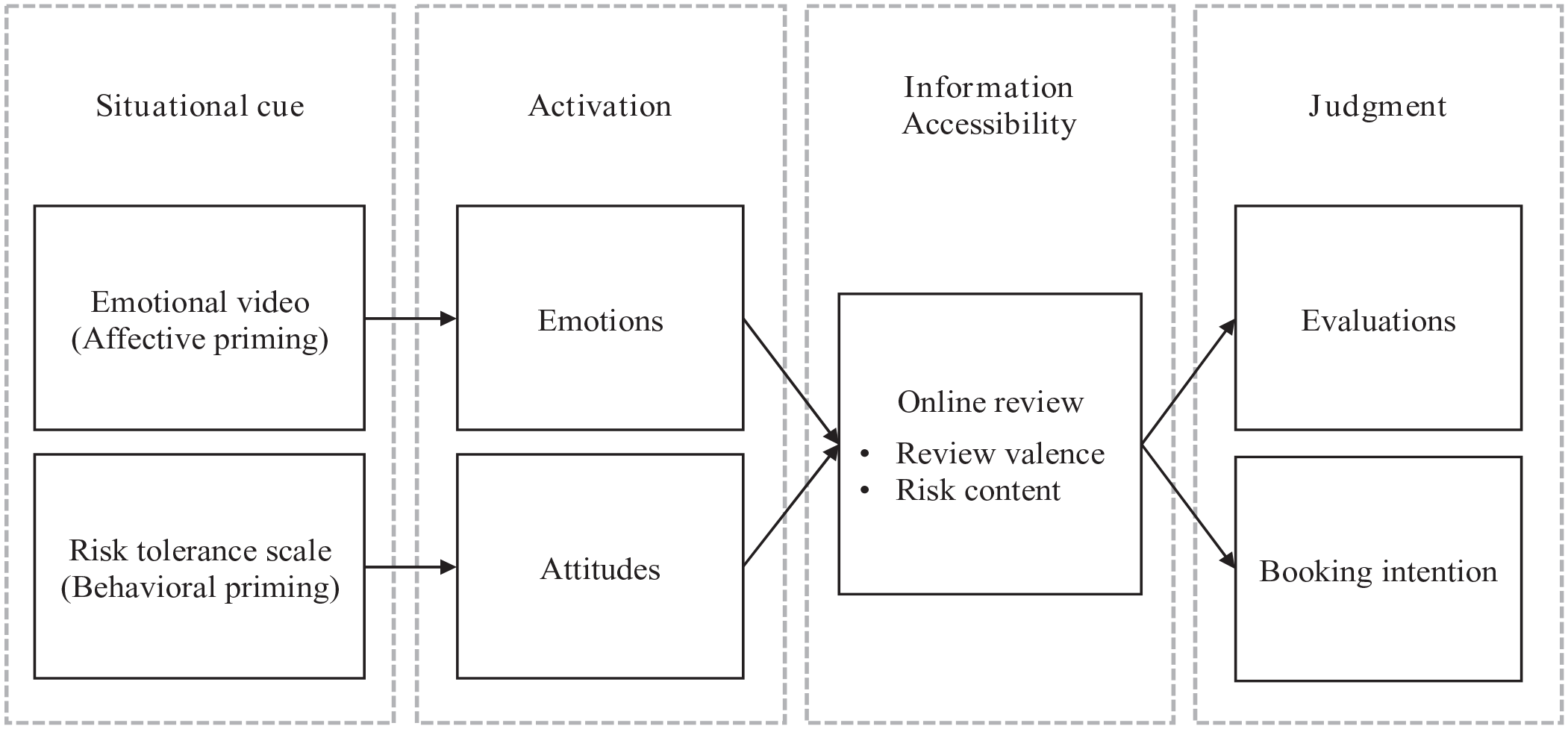
Conceptual framework.
Methodology
Subjects
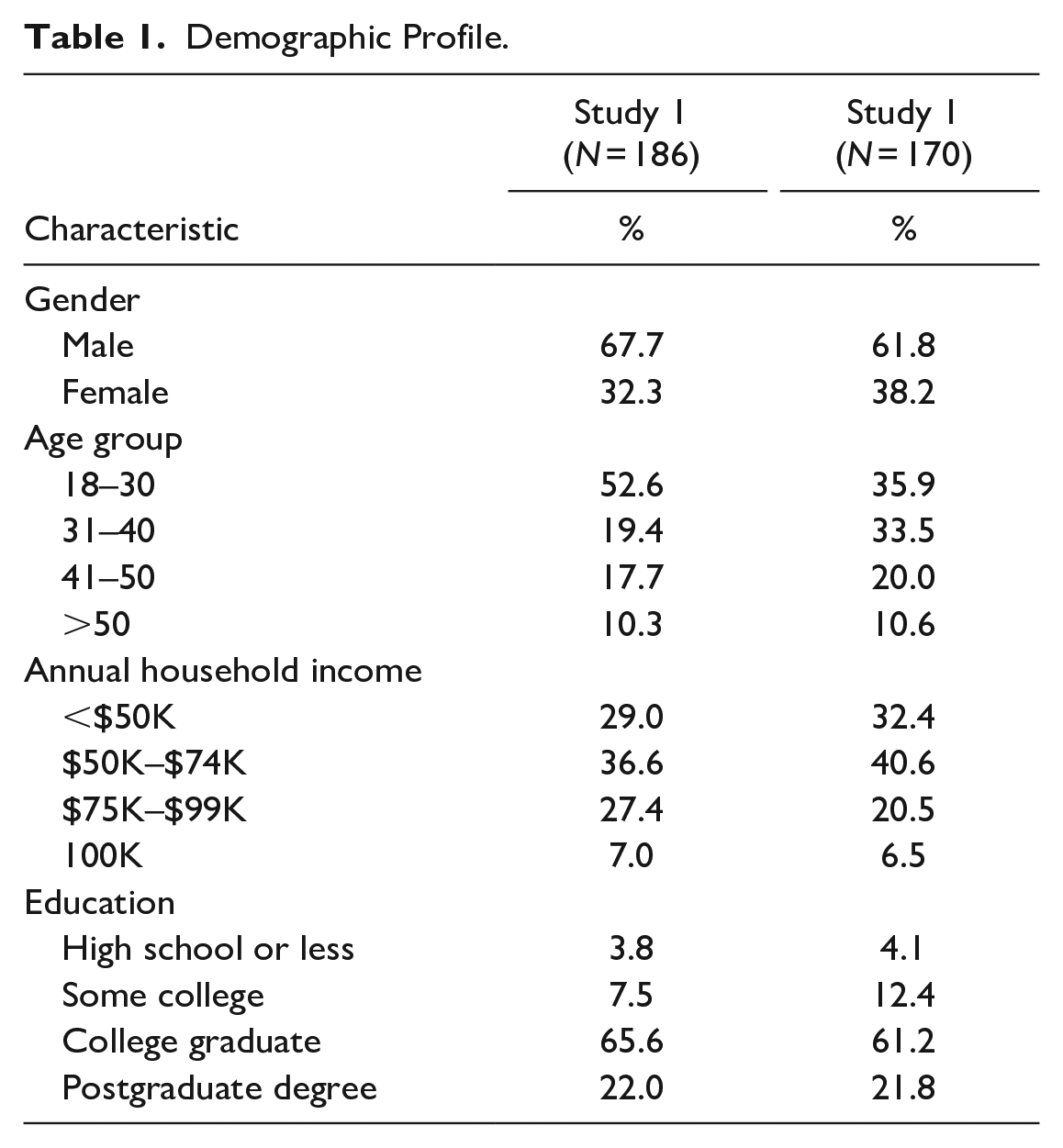
The target sample was recruited from Amazon MTurk using an online survey. As 93% of all customers rely on online reviews to make informed purchase decisions (Kaemingk, 2020), the MTurk sample was appropriate and representative of the population of interest. Participants were qualified if they had used an OTA within the past 12 months and were over 18 years old. A total of 186 responses for study 1 and 170 for study 2 was collected. The sample demographics are presented in Table 1.
Demographic Profile.
Study Design and Stimuli
Two studies used a 2 (affective priming: positive vs. negative) × 2 (behavioral priming: no priming vs. priming) × 2 (review content: non-risk vs. risk) factorial design. Affective priming refers to a situational cue to arouse emotional responses using a video distributed through social media. The video consisted of an animated short film (5–7 minutes) that was unrelated to the hotel booking task. Positive priming was intended to induce positive feelings, such as happy and calm. Negative priming was designed to generate negative emotions, such as sad and angry. Behavioral priming manipulated the accessibility of risk-related information by having participants complete a risk tolerance scale before (priming) or after (no priming) the main stimuli, thereby activating their risk-related attitudes.
Stimuli consisted of photos of two resorts side-by-side, followed by five customer reviews for each resort. A base resort was included as a control that remained constant, while a target resort contained the review content manipulations. The target resort for study 1 consisted of three negative reviews (N) and two positive focal reviews, where risk content was manipulated. The risk condition included positive risk-related information (PR), such as comments about a hotel’s safety protocols during the pandemic. The non-risk condition (P) displayed general positive comments about the lodging experience. The target resort for study 2 had four positive reviews (P) and a single negative focal review with non-risk (N) or risk (NR) content. A single negative review was used in study 2 (vs. two positive reviews in study 1) so that the negativity bias would not obscure other effects. The base resort contained a set of five neutral reviews (O), which were identical in both studies. Table 2 displays the research design and the order of five customer reviews in stimuli. The target reviews for study 2 are in parentheses. A sample of the stimuli is presented in Figure 2.
Study Design.
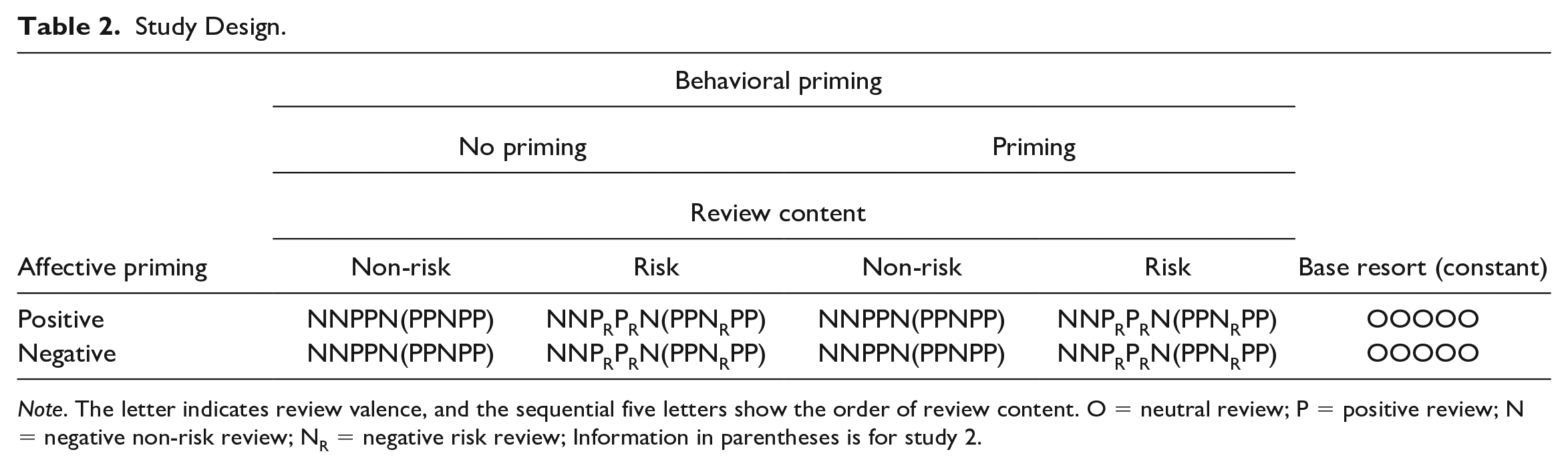
Note. The letter indicates review valence, and the sequential five letters show the order of review content. O = neutral review; P = positive review; N = negative non-risk review; NR = negative risk review; Information in parentheses is for study 2.
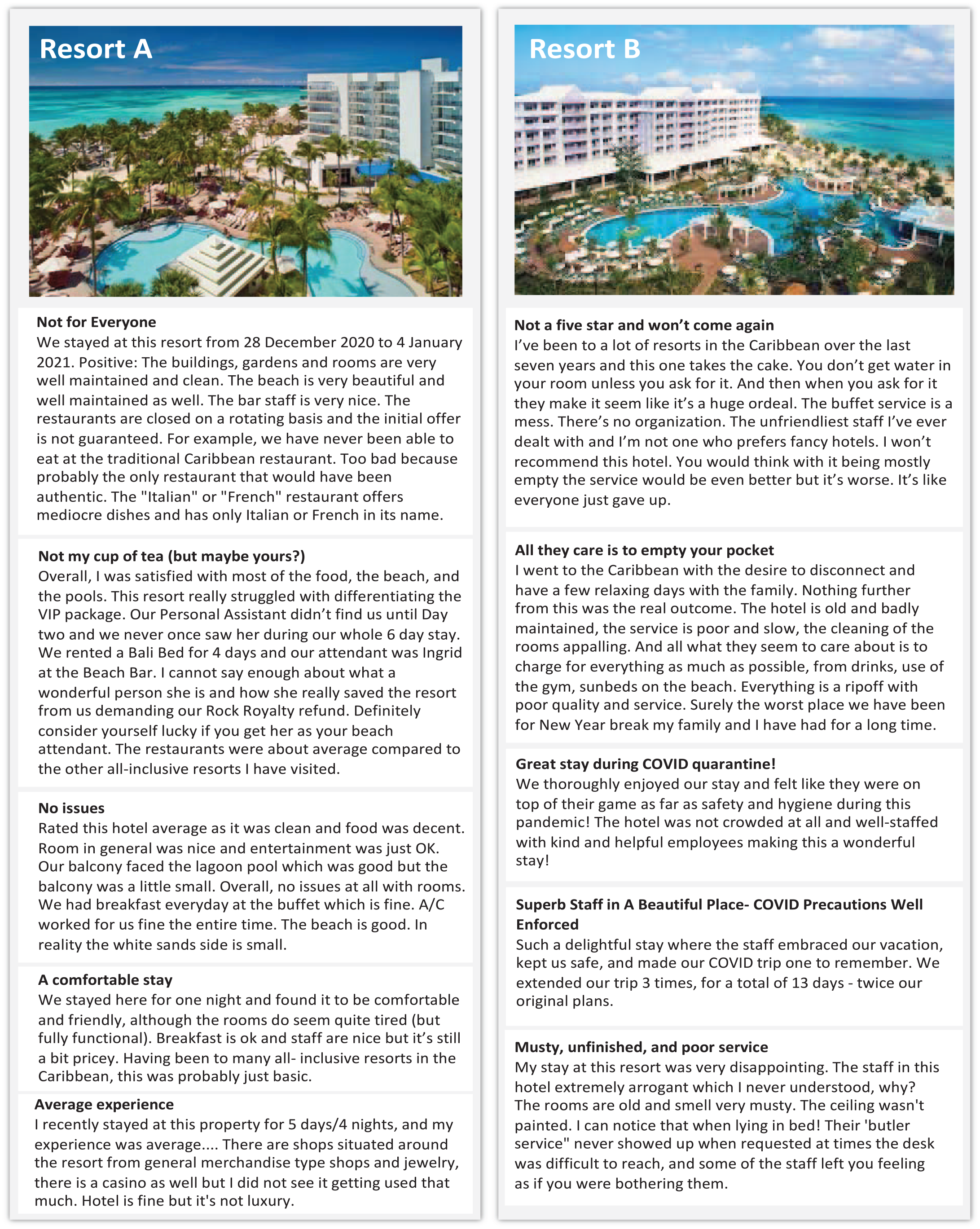
Stimuli sample for Study 1 (negative valence, positive risk).
Pretesting
Prior to the main studies, three pretests were conducted to choose effective levels of review risk content, affective priming stimuli, and resort images. Six images were examined to choose a target and base resort that were not significantly different from each other, so as to minimize the influence of the resort image. The two selected resorts were equivalent in ratings of appealing (Mbase = 5.45, Mtarget = 5.35) and likelihood to select (Mbase = 5.23, Mtarget = 5.15) measured with 7-point Likert scales (F < 1). To select affective priming stimuli, four positive and four negative videos were tested with four items of emotion on 7-point bipolar scales anchored by bad-good, sad-happy, angry-calm and irritated-satisfied (Kim et al., 2012). As a result, two videos were selected with an average rating of 6.08 for positive priming and 4.03 for negative priming (F4,53 = 31.20, p < .001, ηp2 = 0.702). For customer reviews, 52 reviews adapted from OTA websites were rated on valence (negative-positive, unfavorable-favorable) and degree of risk (unsafe-safe, low risk-high risk). In terms of valence, mean ratings for the selected reviews were 4.13 for neutral, 5.43 for positive, and 2.55 for negative. Two positive risk reviews (M = 5.48) and one negative risk review (M = 2.69) were selected based on ratings of risk and safety. Table 3 presents a sample of reviews used and their mean ratings from the pretest.
Review Content Sample.
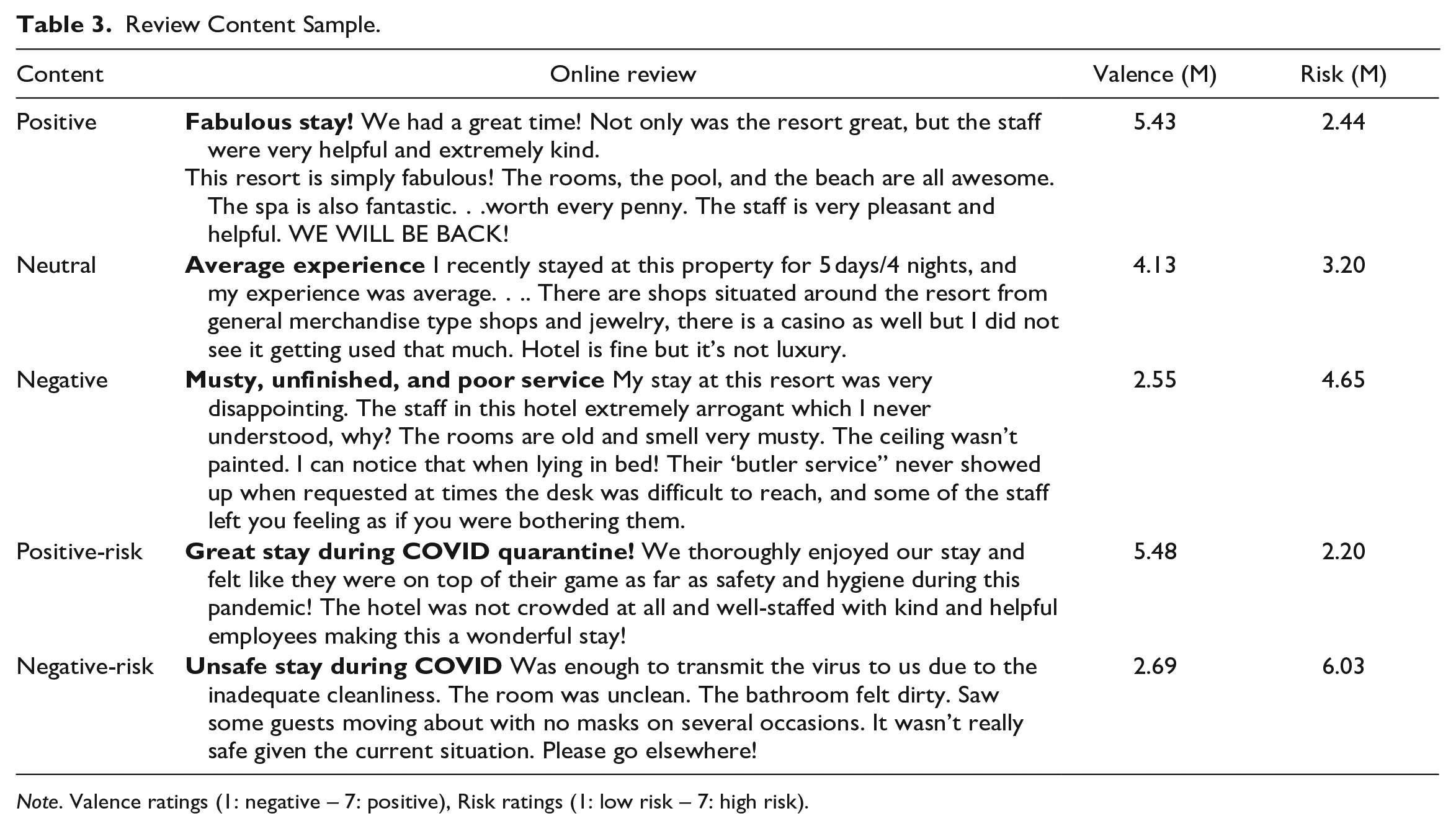
Note. Valence ratings (1: negative – 7: positive), Risk ratings (1: low risk – 7: high risk).
Procedure
Qualified participants were randomly assigned to one of the eight experimental conditions within each study. Affective priming stimuli using a short video were presented prior to the main stimuli and questions. Immediately following the video, participants completed the 4-item affect scale (Kim et al., 2012). Next, participants in the behavioral priming condition received a risk tolerance scale (Burton et al., 1998) to prime risk accessibility. Participants in the no behavioral priming condition completed the scale at the end of the questionnaire. The main stimulus was displayed with a scenario to book a resort for a Caribbean vacation through OTA websites. The main measures followed the stimuli. Demographics and manipulation checks concluded the survey. Figure 3 presents the survey procedure.
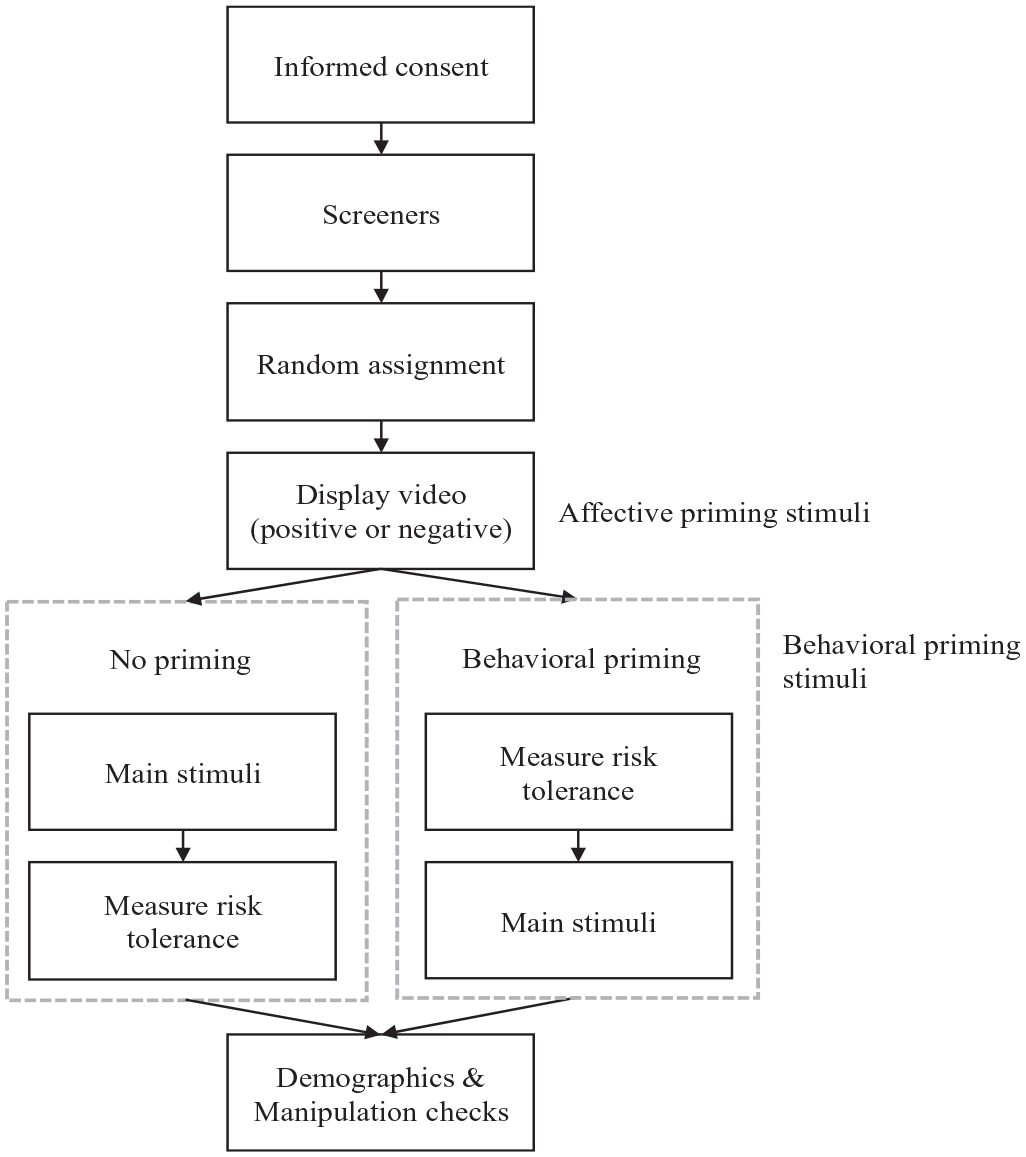
Survey procedure.
Measures
This study used overall evaluation and booking intention as dependent variables. The overall evaluation consisted of three items, “resort X is appealing to me,” “resort X is a good choice for my vacation,” and “I have a positive impression of resort X,” with 7-point Likert scales from strongly disagree to strongly agree, adopted from previous research (Book et al., 2018). Booking intention included three items, “the likelihood of booking Resort X is,” “the probability that I would consider booking Resort X is,” and “my willingness to book Resort X is,” rated from low to high with 7-point bipolar scales (Tsao et al., 2015). Risk tolerance was adopted from previous research (Burton et al., 1998), consisting of four items, “I like to take risks,” “compared to most people I know, I like to gamble on things,” “compared to most people I know, I like to live on the edge,” and “I have desire to take unnecessary chances on things” with 7-point Likert scales from strongly disagree to strongly agree. Manipulation checks consisted of ratings of review valence and review risk.
Study 1 Results
Manipulation Checks
For the affective priming manipulation, a one-way ANOVA was performed on the mean of four affect ratings (α = .801). The analysis revealed a significant effect of priming, F1,267 = 36.60, p < .001, ηp2 = 0.121, with means of 4.96 for negative and 5.77 for positive. Effect size (ηp2) values of 0.01, 0.06 and 0.14 represent small, medium, and large effects respectively (Cohen, 1988). Although the difference is medium-large and significant, the mean for the “negative” priming condition is above the midpoint. Response frequencies for the “sad-happy” rating, which is the key intended emotion, revealed that 63 participants in the negative condition rated above the midpoint, while 22 participants in the positive condition rated at the midpoint or below. To provide an accurate test of the affective priming hypotheses, data from those participants were eliminated from the experimental analyses. The resulting sample of 186 was determined to have sufficient power (0.923) to detect a medium-sized effect at the 0.05 level using the G*Power application. A subsequent manipulation check revealed a very large difference between negative (M = 2.52) and positive (M = 6.04) priming on the “sad-happy” measure, F1,184 = 624.38, p < .001, ηp2 = 0.772 and on the means of the four affect ratings (α = .817), F1,184 = 202.60, p < .001, ηp2 = 0.524 (M = 4.16 for negative and 6.04 for positive).
For positive risk content, the means of two ratings of risk (α = .690 base, 0.785 target) were analyzed for the base and target resorts. For the neutral base resort, in which review content was not manipulated, the effect was not significant. The target resort was rated significantly safer with positive risk reviews (M = 5.13) versus positive non-risk reviews (M = 4.40), F1, 185 =12.74, p < .001, ηp2 = 0.065. Considering that the manipulation involved two of the five reviews, whereas ratings were for the reviews as a whole, a medium-sized effect was satisfactory. Since the behavioral priming manipulation consisted of a measurement scale, a manipulation check was not appropriate. Therefore, all the manipulations were effective on the reduced sample.
Primary Analysis
The effects of affective priming, behavioral priming, and positive risk content were analyzed for the target resort, which contained the manipulations. Three-way ANOVAs were performed on the mean of the three booking intention items (α = .887) and the three evaluation items (α = .888). For booking intention, there was a significant main effect for affective priming, F1,178 = 15.54, p < .001, ηp2 = 0.080. Booking intention was higher with positive affect (M = 4.84) versus negative affect (M = 4.31). The main effect of affective priming supports Hypothesis 1.
There was a 2-way interaction between behavioral priming and risk content, F1,178 = 7.26, p = .008, ηp2 = 0.039, which was further examined with the simple effect of risk content at each level of behavioral priming. With no behavioral priming, the effect of risk content was not significant (F < 1) with means of 4.57 for non-risk and 4.40 for risk. With behavioral priming, the effect of risk content was significant, F1,85 = 9.57, p = .003, ηp2 = 0.101, with means of 4.05 for non-risk and 4.99 for risk. The interaction is displayed in Figure 4. Findings support hypothesis 2a and 2b and demonstrate that behavioral priming increases the impact of positive risk content.
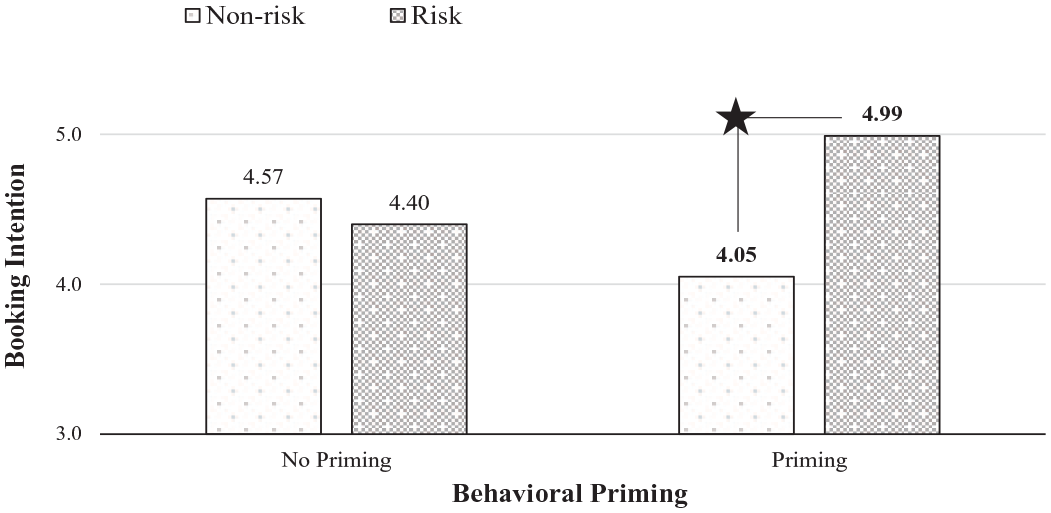
Effect of behavioral priming and risk content on booking intention (study 1).
Similar effects were obtained for the evaluation measure. There was a main effect of affective priming (F1,178 = 15.59, p < .001, ηp2 = 0.081) with means of 5.11 for positive and 4.25 for negative priming, supporting Hypothesis 1. There was again a 2-way interaction between behavioral priming and risk content, F1,178 = 4.61, p = .033, ηp2 = 0.025. With no behavioral priming, the effect of risk content was not significant (F < 1) with means of 4.81 for non-risk and 4.77 for risk. With behavioral priming, there was a significant effect of risk content (F1,85 = 9.10, p = 003, ηp2 = 0.097) with means of 4.33 for non-risk and 5.23 for risk. This obtained interaction supports Hypothesis 2a and 2b.
Base Resort Comparisons
Three-way ANOVAs for the base (control) resort with neutral reviews revealed effects for affective priming on booking intention (F1,178 = 3.91, p = .05) and evaluation (F1,178 = 5.91, p = .016). Booking intention (Means = 5.37 vs. 5.03) and evaluation (Means 5.49 vs. 5.07) were higher with positive versus negative priming. There were no effects of behavioral priming or risk content, which was expected since the base resort remained constant and did not manipulate risk. However, the more important comparison was the tradeoff between the base resort with neutral reviews and the target resort, which was predominantly negative (three of five reviews) and had two positive reviews that contained risk or non-risk content. Therefore, the base resort was included in a follow-up analysis to evaluate how the two risk cues influence this tradeoff.
A 3-way mixed ANOVA was performed on booking intention and evaluation, with two between-subjects factors (behavioral priming and risk content) and one repeated measure (resort). The analysis revealed a significant 3-way interaction on booking intention (F1,182 = 7.69, p = .006, ηp2 = 0.041) and evaluation (F1,182 = 8.55, p = .004, ηp2 = 0.045). Without behavioral priming, participants were more likely to book the base resort (M = 5.19) versus the target resort (M = 4.49), (F1,97 = 16.02, p < .001, ηp2 = 0.142). Likewise, they evaluated the base resort more favorably (M = 5.34) than the target resort (M = 4.79), (F 1,97 = 10.36, p = .002, ηp2 = 0.096). With behavioral priming, there was a 2-way resort × risk content interaction for booking intention (F1,85 = 7.93, p = .006, ηp2 = 0.085) and for evaluation (F1, 85 = 7.67, p = .007, ηp2 = 0.083). When risk was primed, booking intention (F1,42 = 18.85, p < .001, ηp2 = 0.310) and evaluation (F1,42 = 13.40, p < .001, ηp2 = 0.242) were greater for the base resort than the target resort with positive non-risk content. However, positive risk content increased the value of the target resort, thereby equalizing booking intention and evaluation (Fs<1) with the base resort. The means for the 2-way interaction are displayed in Table 4. They demonstrate that the base resort is preferred except when behavioral priming elevates the impact of positive risk content. When this behavioral priming elevates the impact of positive risk content, it essentially equalizes the tradeoff between the two resorts despite the presence of negative reviews. This finding supports Hypothesis 3.
Base Versus Target Resort Ratings with Behavioral Priming (Study 1).
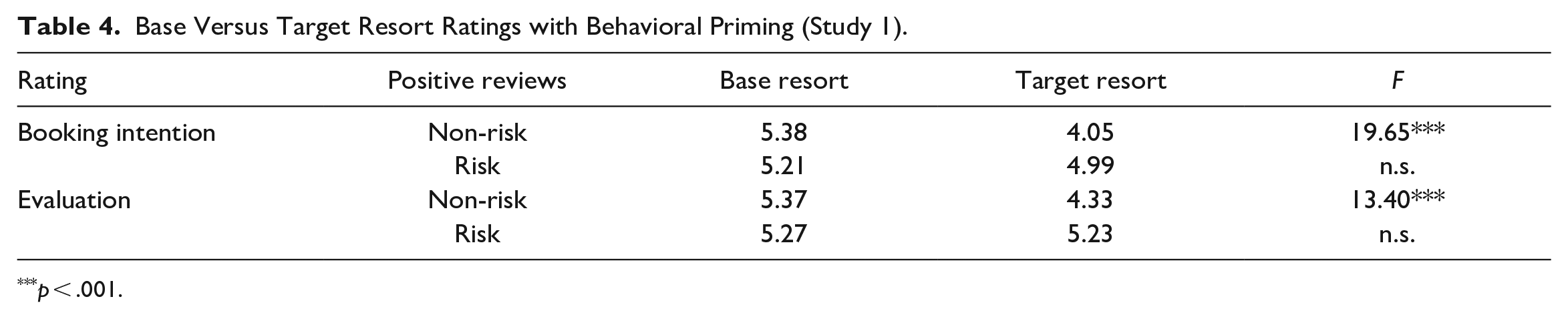
p < .001.
Study 2 Results
Manipulation Checks
Preliminary analysis again revealed that mean affect ratings were above the midpoint for the negative affective priming condition. Therefore, the same procedure was followed to remove cases with ratings of 5 and above on the “sad-happy” rating in the negative priming condition (n = 76) and ratings of 4 and below in the positive priming condition (n = 22). The resulting sample of 170 participants had sufficient power (0.90) to detect medium-sized effects at p < .05. Ratings on the “sad-happy” rating were significantly different at p < .0001, (F1,168 = 731.98, ηp2 = 0.813), with means of 6.17 for positive priming and 2.29 for negative priming. A one-way ANOVA on the mean affect rating (α = .849) revealed higher ratings for positive priming (M = 6.11) versus negative priming (M = 3.83), (F1,168 = 260.88, p < .001, ηp2 = 0.608). Analysis of risk ratings (α base = 0.717, α target = 0.859) revealed that the target resort was perceived as less safe with negative risk content (M = 4.76) than with negative non-risk content (M = 5.38), (F1,160 = 7.42, p = .007, ηp2 = 0.042). Since there was only one risk-manipulated review, the effect size was adequate. The manipulations did not affect risk perceptions for the neutral base resort. Therefore, the manipulations were effective on the reduced sample.
Primary Analysis
A 3-way ANOVA on booking intention for the target resort (α = .885) obtained a significant effect of negative risk content (F1, 162 = 4.49, p = .036, ηp2 = 0.027), a 2-way interaction between affective priming and risk content (F1, 162 =5.54, p = .040, ηp2 = 0.022), and a 3-way interaction with behavioral priming (F1, 162 = 4.70, p < .032, ηp2 = 0.028). It is appropriate to break down the effects of the highest-order interaction to determine its source. Two-way ANOVAs were performed to analyze the effect of affective priming and risk content at each level of behavioral priming. With behavioral priming, there were no significant effects. Without behavioral priming, there was a main effect for risk content (F1,83 = 4.78, p = .031, ηp2 = 0.055) and an interaction between affective priming and risk content (F1,83 = 10.49, p = .002, ηp2 = 0.112). A follow-up analysis was conducted to examine the 2-way interaction with no behavioral priming. One-way ANOVAs were performed on negative risk content at each level of affective priming. With positive priming, the effect of risk content was not significant, (F1,58 = 1.25, p = .269). With negative priming, there was a large and significant effect on negative risk content, (F1,25 = 6.72, p = .016, ηp2 = 0.212). Booking intention was lower with negative risk content (M = 4.44) versus non-risk content (M = 6.07). The interaction is depicted in Figure 5.
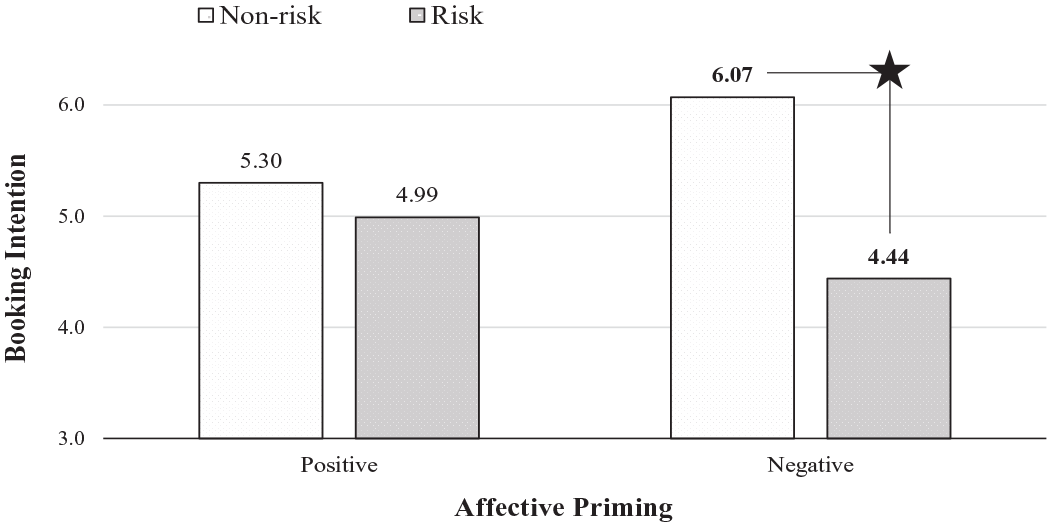
Affective priming × negative risk content without behavioral priming (study 2).
For the target resort evaluation (α = .840), there was no effect for behavioral priming. There was a significant main effect for risk content, (F1,162 = 10.31, p = .002, ηp2 = 0.060) and a 2-way affective priming × risk content interaction, (F1,162 = 8.76, p = .004, ηp2 = 0.051). The 3-way interaction including behavioral priming that was observed for booking intention was marginally significant for evaluation, (F1,162 = 3.015, p = .084, ηp2 = 0.018). Therefore, simple effects analyses were performed to break down the 2-way interaction to examine the effects of risk content at each level of affective priming. Like booking intention, risk content did not affect evaluation with positive priming (F < 1) with respective means of 5.32 and 5.28 for non-risk and risk content. With negative priming, evaluation was more favorable with non-risk content (M = 5.85) versus risk content (M = 4.69), (F1,56 = 8.95, p = .004, ηp2 = 0.138).
For both ratings, negative affective priming increased the impact of negative risk content. Behavioral priming on the other hand, had limited effects on either measure. Thus, the results do not support the 3-way interaction hypothesized in H4. Conversely, the interaction between affective priming and risk content supports the hypothesis that negative affective priming elevates the impact of negative risk content. It offers some support for the hypothesis that the effect of indirect affective priming will only manifest in the absence of direct behavioral priming, which was obtained for booking intention but not evaluation. Whereas in study 1, behavioral priming increased the impact of positive risk content; in study 2, negative affective priming increased the impact of negative risk content. Possible explanations for these differences are provided in the discussion.
Base Resort Comparisons
For study 2, the tradeoff was between a neutral resort with no risk content or a positive resort that contained negative non-risk or risk reviews. Follow-up analyses were conducted to compare resort ratings for the 2-way interaction between affective priming and review risk. Mixed 3-way resort × affective priming × behavioral priming ANOVAs were performed on booking intentions and evaluations. For booking intention, the analysis revealed significant effects for a resort (F1,166 = 10.64, p = .001, ηp2 = 0.060) and resort × affective priming (F = 8.14, p = .005, ηp2 = 0.047) and a marginally significant effect for resort × behavioral priming (F = 3.56, p = .061, ηp2 = 0.021) and their 3-way interaction (F = 2.97, p = .087, ηp2 = 0.018). For evaluation, all results were significant: resort (F1,166 = 8.85, p = .003, ηp2 = 0.021), resort × affective priming (F = 4.04, p = .046, ηp2 = 0.024), resort × behavioral priming (F = 5.88, p = .016, ηp2 = 0.034), and their 3-way interaction (F = 5.71, p = .018, ηp2 = 0.033). Although the 3-way interaction was only marginal for booking intentions, it was broken down for both variables to obtain comparable results.
Resort × risk content ANOVAs were performed at each level of affective priming. With positive priming, there were no significant effects on either measure (Fs < 1). With negative priming, there was a significant effect of risk content (F1,56 = 10.28, p = .002, ηp2 = 0.155) and a marginal resort × behavioral priming interaction (F = 3.58, p = .064, ηp2 = 0.060) on booking intention. Both effects were significant on evaluation ratings: resort (F = 6.31, p = .015, ηp2 = 0.155) and resort × behavioral priming (F = 5.89, p = .019, ηp2 = 0.095). Follow-up analysis in the negative priming condition revealed lower booking intention for the neutral base resort (M = 3.89) versus the positive target resort (M = 5.64) with non-risk content, (F1,23 = 13.43, p = .001, ηp2 = 0.369). Negative priming accompanied by negative risk content equalized the tradeoff between the base (M = 4.29) and target (M = 4.745) resorts (F1,33 = 0.93). The same result occurred for evaluation, with lower ratings for the base (M = 4.15) versus target (M = 5.85) resorts with non-risk content (F1,23 = 10.63, p = .003, ηp2 = 0.316) and no difference between the base (M = 4.66) and target (M = 4.69) resorts with negative risk content (F1,33 = 0.004). Therefore Hypothesis 5 is supported. Table 5 displays the means for the effect of review risk on resort comparisons with negative affective priming.
Base Versus Target Resort Ratings with Negative Affective Priming (Study 2).
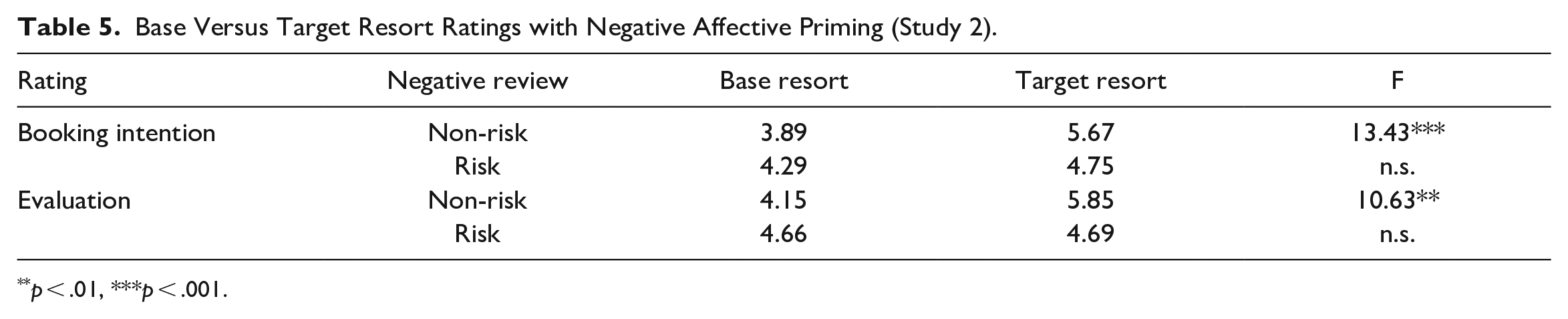
p < .01, ***p < .001.
Discussion
This research examined how multiple primes and online review risk influence travel purchase decisions during times of uncertainty. Two experiments were conducted in which participants evaluated a neutral resort and a target resort that varied in review valence and risk-related review content. Three principles were operating to influence the results: prospect theory (Kahneman & Tversky, 1979), the asymmetry effect of customer reviews (Park & Nicolau, 2015) and the activation level of multiple primes (Janiszewski & Wyer, 2014).
Comparing the tradeoff between resorts in study 1 and study 2, a striking distinction is observed between the two situations. In study 1, behavioral priming amplifies the effect of positive review risk when reviews are predominantly negative, thereby equalizing the tradeoff with a neutral resort that is preferred otherwise. In study 2, negative affective priming increases the effect of negative review risk when reviews are predominantly positive, thereby equalizing the tradeoff with a neutral resort that is otherwise less desirable.
In study 1, the target reviews were primarily negative, and the manipulated risk content was positive. As hypothesized in H1, ratings were somewhat higher with positive versus negative affective priming. Positive affective priming creates mood elevation effects that influence subsequent judgments (Janiszewski & Wyer, 2014, p. 102). Review risk did not influence ratings unless accompanied by behavioral priming, supporting the interaction hypothesized in H2. The finding supports the negativity effect of online reviews (Chen & Lurie, 2013) and adds risk content to the list of factors including price (Book et al., 2016; Noone & McGuire, 2014) and location (Tanford & Kim, 2019) that cannot be overcome by negative reviews in isolation. The interaction can be explained by the risk-avoidance principle of prospect theory (Kahneman & Tversky, 1979). Without behavioral priming, participants seek to avoid the risk of a negative experience based on the majority of reviews. Behavioral priming shifts attention to the positive review risk, such that participants seek to avoid the risk of an unsafe experience. Consistent with this reasoning, the results revealed that the neutral resort was rated more favorably unless there was a positive review risk accompanied by behavioral priming. These findings supported H3.
In study 2, reviews were primarily positive, with a single negative review that manipulated risk. With negative affective priming, judgments were lower with negative risk reviews versus non-risk reviews as hypothesized. With behavioral priming, ratings were hypothesized to be lower when negative reviews were risk related versus non-risk related. This result did not occur. The findings can be explained by the negativity bias, which is the result of an emotional response to negative information (Taylor, 1991). As a form of cognitive priming, behavioral priming did not activate negative emotions, whereas affective priming did.
The above explanation supports the tradeoff between the base and target resort that was obtained. The positively reviewed target resort was rated more favorably unless there were multiple consistent cues (negative affective priming, negative risk), which served to equalize the two options, supporting H5. The finding is consistent with previous research showing that a single negative review can decrease perceptions of a positively reviewed hotel (Book et al., 2016, 2018). This suggests that negative affect amplifies the effect of negative review risk (Taylor, 1991).
Due to the asymmetry effect, the results of study 1 and study 2 were not mirror images, nor were they expected to be. The key difference is that study 1 had primarily negative valence and positive review risk, whereas study 2 had predominantly positive valence and negative review risk. Interestingly, in study 1, behavioral priming heightened the effect of positive risk content, whereas in study 2, affective priming increased the influence of negative risk content. This finding suggests that the process in study 1 was direct behavioral priming, whereby two risk cues (priming and positive risk) were necessary to overcome the negativity effect from the majority of reviews. In study 2, the process was indirect affective priming, whereby two negative cues (negative priming and negative risk) were sufficient to overcome the positive reviews.
Theoretical Implications
This research emphasizes the importance of situational cues to understand decision processes in the hotel booking environment. Prospect theory highlights unbalanced perceived value between losses and gains, suggesting that the negative impacts of losses outweigh the benefits of gains (Kahneman & Tversky, 1979). The research exemplifies the application of prospect theory in hotel booking decisions during times of uncertainty. The findings confirmed that individuals are averse to inherent risk from primarily negative reviews and are likely to employ a risk-avoidance strategy unless there is a cue to ensure a safe choice (Kahneman, 2011). The finding supports prior research that risk attitudes activated by the priming process can increase the impact of reviews related to those attitudes (Kim et al., 2021). Without the risk-cue activation, the effect of primarily negative reviews dominates the judgment such that the risk-avoidance tendency remains.
To the best of our knowledge, this research is the first to investigate the effects of multiple primes on the decision-making process in a hospitality setting. Although priming with a single stimulus is often utilized to observe how irrelevant information alters primary judgments, an application of multiple primes is a relatively novel way to examine the reciprocal influence of complex intervening events in the process of understanding focal information (Janiszewski & Wyer, 2014). This research provides evidence that a dominant prime overrides a less potent priming effect. It also reveals that dominance is determined by focal information.
This research is the first to our knowledge to examine principles of asymmetry and prospect theory in the presence of multiple primes. In study 1, behavioral priming shifted the risk avoidance principle of prospect theory from negative valence reviews to positive risk content. In study 2, negative affective priming activated the negativity bias and shifted focus from positive review valence to negative risk content. This research suggests that a “priming-shift” effect can transfer the asymmetry of positive and negative information and the risk avoidance principle of prospect theory from one stimulus to another. Additionally, this study builds on our understanding of the impact of risk-related content generated in online reviews, and its impact on the decision-making process. It is suggested that physical and health risk be added to the myriad types of risk (Bahtar & Muda, 2016) assessed during the purchase decision process, and provides valuable information regarding the impact of risk-related review content during times of uncertainty.
This research also provides empirical evidence on the use of video content as affective priming stimuli. Unlike the frequent adoption of words and pictures (Janiszewski & Wyer, 2014; Minton et al., 2017), video-based content has not been applied to initiate affective priming. Considering the enormous amount of time consumers spend on social media (Suciu, 2021), coupled with the fact that video-based content is a prevalent source of information across many social media channels, such as Snapchat and Instagram (Alaimo, 2018), it is noteworthy that the effect of intervening information from social media can be replicated with affective priming using a short video. This research confirms that irrelevant video stimuli play a role in manipulating emotions, which in turn influence consumer decision-making.
Practical Implications
Hotel website content managers need to highlight that proper protocols, safety and hygiene are being followed in times of uncertainty, as individuals are more aware of these issues and are likely to have been primed through external stimuli like news sources (Kim et al., 2021). Additionally, if the hotel receives positive messaging surrounding its protocols, it behooves the organization to prime customers by highlighting these positive reviews in prominent text or with video content. This study shows that when customers write positive reviews that include information about risk, drawing attention to these reviews positively influences consumers’ decision-making and increases likelihood to book.
This study demonstrates customers’ decision-making processes are influenced by both relevant and irrelevant content. Thus, it is important for companies to control the media content (e.g., pop-up banners, video ads) shown to customers. While poignant videos may seem touching, content that elicits sad emotions may inadvertently deter booking decisions to by drawing attention to the negative content in the online reviews posted. Accordingly, practitioners should ensure positive media is consistently presented across their web-based channels and could utilize focus groups to verify that the videos are prompting the desired emotions. Ultimately, managers are advised to ensure that media and website content conveys a positive message to avoid the negativity bias and asymmetry effect.
Limitations and Future Research
These studies were conducted during the height of the pandemic. Thus, participants may have been more sensitive to risk-related content due to the ubiquity of news and media coverage on the issue. This may have served to influence their sensitivity to risk-related content more than it would in less risky times, ultimately affecting the relative importance of affective and behavioral priming. Future research should test the “priming shift” when these risks are not as pervasive in the news or under different risk-related situations. Additionally, as the risk-related content was related to the pandemic and associated protocols, which have proven polarizing among the US population, it would be beneficial to replicate the study using a sample from outside of the US. Moreover, a study testing the “priming shift” and the importance of focal stimuli to influence decision-making across other risk-related scenarios (e.g., natural disasters, terrorist attacks) is strongly encouraged.
As the data were gathered during the pandemic, funds for data collection and access to participants were limited. Thus, the sample was collected via Amazon’s MTurk. Researchers have aptly raised concerns about the use of online survey panels as the participants may not be participating in the way that was planned (Viglia & Dolnicar, 2020). However, as the study was on risk perceptions during a time of uncertainty, this concern was curtailed in this study as the sample represented the population of interest. Future research should replicate the study using other samples from different data collection platforms or from resort guests during times of uncertainty, and specific to areas that are affected (e.g., in hurricane season, during epidemics, etc.). During uncertain times, perceptions of risk are critical determinants of consumers’ travel choices. Hospitality businesses should strive to overcome the negativity in the news through positive affect and reviews resulting from the service experience. Adopting a “risky business” model may help operators navigate current and future situations in which risks from travel are at the forefront.
Footnotes
Declaration of Conflicting Interests
The author(s) declared no potential conflicts of interest with respect to the research, authorship, and/or publication of this article.
Funding
The author(s) disclosed receipt of the following financial support for the research, authorship, and/or publication of this article: This research was supported by Florida International University.
