




Abstract
A management framework for destination attributes is critical for the reasonable allocation of resources. However, existing management frameworks for destination attributes estimate the management value of attributes by calculating their contribution to cognitive satisfaction, which deviates from the “cognition-affection” relationship in psychology. In this scenario, destination attachment is an important concept reflecting the emotional values of attributes. This study proposes an attachment-based management framework for destination attributes based on the appraisal theories of emotion in the context of the progressive development of Hangzhou, China, as a typical mature destination. A networking method is applied to develop the management framework. This is the first study to establish an emotion-based management framework for destination attributes from a psychological perspective. Implications regarding the framework development method and destination attribute management are also provided.
Keywords
Introduction
Attributes (e.g., landscapes, amenities, narratives) are the fundamental factors that make a place a tourist destination and distinguish it from other destinations. They significantly affect visitors during different tourism periods (pre-, on-, and post-trip). In particular, the effects of destination attributes on satisfaction and/or loyalty have been extensively supported (e.g., Eid et al., 2019; Eusébio & Vieira, 2013; Moon & Han, 2018; Schlesinger et al., 2020). Therefore, the effective management of destination attributes is of paramount importance for destinations to maintain their advantages in the competitive market.
Studies have developed management frameworks for destination attributes based on the traditional cognitive paradigm, which considers tourists as rational individuals seeking to maximize the utility of attributes (Guzman-Parra et al., 2016). These frameworks calculate the contribution of attributes to cognitive satisfaction as the attribute value by assuming a linear or nonlinear relationship between the performance of the attributes and overall satisfaction (e.g., Albayrak et al., 2018; Dueñas et al., 2021; Lee & Choi, 2020; Park et al., 2020). However, according to the appraisal theories of emotion in psychology, the effects of destination attributes on satisfaction and loyalty are not solely cognitively-driven phenomena but are emotional responses (Moors et al., 2013). Cognition enables the emergence of and regulates emotions. As a largely irrational driving force, emotions have a more significant impact than cognition on the satisfaction of tourists’ hedonic needs, which dominate the tourism experience (Bagozzi et al., 1999). In their appraisals, tourists use the “affect-as-information” approach for cognitive processing to produce high-level motivational affects (Prentice, 2006). These affects are more deeply encoded in the consumer’s mind than cognition and are less subject to counterarguments (Oliver et al., 1997). However, the development of management frameworks for destination attributes from an affective perspective has been unexplored, resulting in a research gap.
The concept of destination attachment represents a new research perspective, given the traditional assumption that it is difficult for destinations to establish relationships with tourists due to the heterogeneity of tourism products (Dwyer et al., 2019). Because destination attachment is essentially an emotional representation, it necessitates the interpretation of the psychological formation mechanism based on emotion appraisal. The appraisal theories of emotion explain the motivational components of emotion, inspiring the definition of destination attachment dimensions from a reflective perspective. This enables the integration of diverse connotations of existing reflective dimensions of destination attachment and the reflection of the progressively intensive process of emotional attachment development from a psychological perspective. Attributes are the basis of “people-place interactions” to form a mental representation of destination attachment (Stedman, 2003). They are important connectors for different types of information in the attachment memory network. The different emotion-triggering (i.e., attachment-triggering) capacities of attributes determine the priority of their storage, consolidation, and activation in the network (Harley, 1996), enabling the evaluation of their management value. Consequently, this study develops an attachment-based management framework for destination attributes of mature destinations. We use the appraisal theories of emotion as the theoretical basis to investigate attachment-triggered attributes. Hangzhou, China, is used as a case study to analyze the progressive development of a mature destination.
The affective value of attributes is especially relevant to mature destinations. The reason is that mature destinations depend more on repeat tourists to remain sustainable and are in desperate need of transforming first-time tourists into repeat tourists via relationship establishment (Kozak & Martin, 2012). The general development trend of tourism destinations is characterized by a short start-up and growth period, followed by a long period of maturity (Qu et al., 2021). The mature period provides an economic lifeline for the survival and revitalization of a destination. Therefore, mature destinations are the most suitable for the current study due to better generalization ability. This study contributes to improving the framework for destination attribute management and destination attachment by applying a psychological rationale to fill the affection-related research gap.
Literature Review
Cognition-Based Management Frameworks for Destination Attributes
Destination attributes draw people to a certain destination and are used by tourists to compare different destinations to maximize benefits (Karasakal & Albayrak, 2022; Kim, 2022). Therefore, destination officials emphasize the identification and effective management of attributes critical to destination visits and loyalty. Several attribute management frameworks have been developed. These frameworks are characterized by detailed attribute evaluations based on cognitive satisfaction. Their implicit logic is that the satisfaction impact of attributes determines the expectancy disconfirmation that reflects the congruence between the attributes’ performance and tourists’ comparison standards; this level of expectancy disconfirmation determines whether tourists can achieve their utilitarian goals and the management value of the attributes.
The satisfaction impact of attributes is either symmetric or asymmetric; thus, two popular management frameworks have been developed: importance-performance analysis (IPA) and the three-factor model. The former assumes a linear relationship between the attributes and overall satisfaction. Thus, when the performance of an attribute increases, the overall satisfaction increases, and vice versa (Park et al., 2020). Thus, attributes are analyzed from two dimensions, that is, importance and performance, and are then divided into four quadrants requiring different management strategies, namely “keep up the good work,” “concentrate here,” “low priority,” and “possible overkill” (Pratt et al., 2020). The asymmetric effect means that the attribute performance has a different influence on the overall satisfaction, and the influence of some attributes is more significant, for example, the positive performance of an attribute may have a greater impact on overall satisfaction than its negative performance and vice versa (Lee & Choi, 2020). Therefore, the three-factor model classifies attributes into basic factors (extremely dissatisfactory if not present, but the satisfaction does not increase when the attribute is present), performance factors (similar to the symmetric effects), and excitement factors (a superior level of satisfaction occurs if present, but consumers are not dissatisfied if it is not present) (Fajriyati et al., 2020). Some scholars have also integrated the advantages of the two methods and utilized an asymmetric IPA (e.g., Caber et al., 2013; Dueñas et al., 2021; Ji et al., 2020).
Tourists pursue hedonic gratuities; thus, the sole optimization of information and choice is insufficient to result in satisfaction and loyalty (Lim et al., 2021). Providing emotional experiences and establishing long-term attachment relationships with tourists represent an effective alternative to achieving loyalty (Liu et al., 2020). This is particularly true for mature destinations, which face the challenges of resource degradation and the low cost-effectiveness of marketing. It is crucial to maintain the enthusiasm of “hardcore loyalists” in the short term to maintain sustainability and to reposition and revitalize the destination by developing new attachment-triggered attributes in the medium and long term (Plog, 2001). The attraction of attached repeat visitors is of paramount importance in this process of shifting the strategy from “transactional” to “relational” (Kozak & Martin, 2012). Therefore, these destinations require an attribute management framework that reflects the differences in the emotional values of attributes. For these reasons, this study has a relatively narrow perspective to equate successful mature destinations with attached destinations with abundant attached tourists. Expectancy-disconfirmation frameworks do not sufficiently distinguish satisfaction from perceived quality, thus deviating from the essential connotation of satisfaction as an emotional state that results from a consumption experience (Oliver, 1980). The estimation of the management value of destination attributes from the emotional perspective represents a significant research gap.
Appraisal Theories of Emotion
Oliver (1993) posited that affect directly drives satisfaction before cognitive processing or augments cognitive variables to mediate the relationship between cognition and satisfaction. This understanding of the “cognition-affect” relationship coincides with the appraisal theories of emotion in psychology, which assume that affect is the cause and terminus of cognition. Appraisal theories regard emotions as “adaptive responses which reflect appraisals of features of the environment that are significant for the organism’s well-being” (Moors et al., 2013, p. 119). Compared with other approaches to emotions, appraisal theories address the following three issues: (1) the underlying environmental characteristics that are appraised; (2) which, if any, emotions are experienced as a result of this appraisal process; (3) the behavioral responses to the experienced emotions (Watson & Spence, 2007). The first issue is the most critical. It is a psychological black box eliciting emotions and using them to exert behavioral control. The evaluated characteristics derive from the interaction between the underlying motivational and evaluative roots of emotions and the environment. They operationalize into various concrete criteria (e.g., outcome desirability, agency, fairness, certainty, coping potential) to output the appraisal values that reflect the satisfaction or obstruction of human concerns (e.g., needs, attachments, values, current goals, benefits) regarding the environment (Frijda, 2007; Moors et al., 2013). Initially, appraisal values were thought to be linked to discrete emotions. However, appraisals have recently been theorized to cause other emotion components (e.g., action tendency, autonomic response, and motor expression) that are incorporated into the person’s feelings, emerging as an emotion (Lange et al., 2020; Scherer & Moors, 2019). Despite differences in the details, the similarity of appraisal theories can be synthesized into the following three seamless cyclic processes.
The first state is the primary process of emotions (pre-perceptual and non-cognitive), which is sensory in nature and cannot yet guide behavior. The secondary stage is the process of learning and memory (image-like prototypes of emotional situations, conceptualized memories of emotional experiences). This is the first step in the cognitive process and elicits the behavioral drivers of emotion. The tertiary stage is the process of higher cognitive functions (reflecting upon, abstracting, and drawing conclusions about the environment and the related emotional responses), which makes the emotion more pronounced, affecting behavior (Leventhal & Scherer, 1987; Panksepp & Solms, 2012). This is a “bottom-up” process driven by homeostatic and sensory emotion processing to form high-level emotions. It leads to a bias of one’s behavioral inclination via cognitive regulation and learned control stimulated by psychological/physiological changes, indicating a “top-down” process (Tyng et al., 2017). Thus, cyclic processes of the appraisal of emotions occur, as shown in Figure 1.
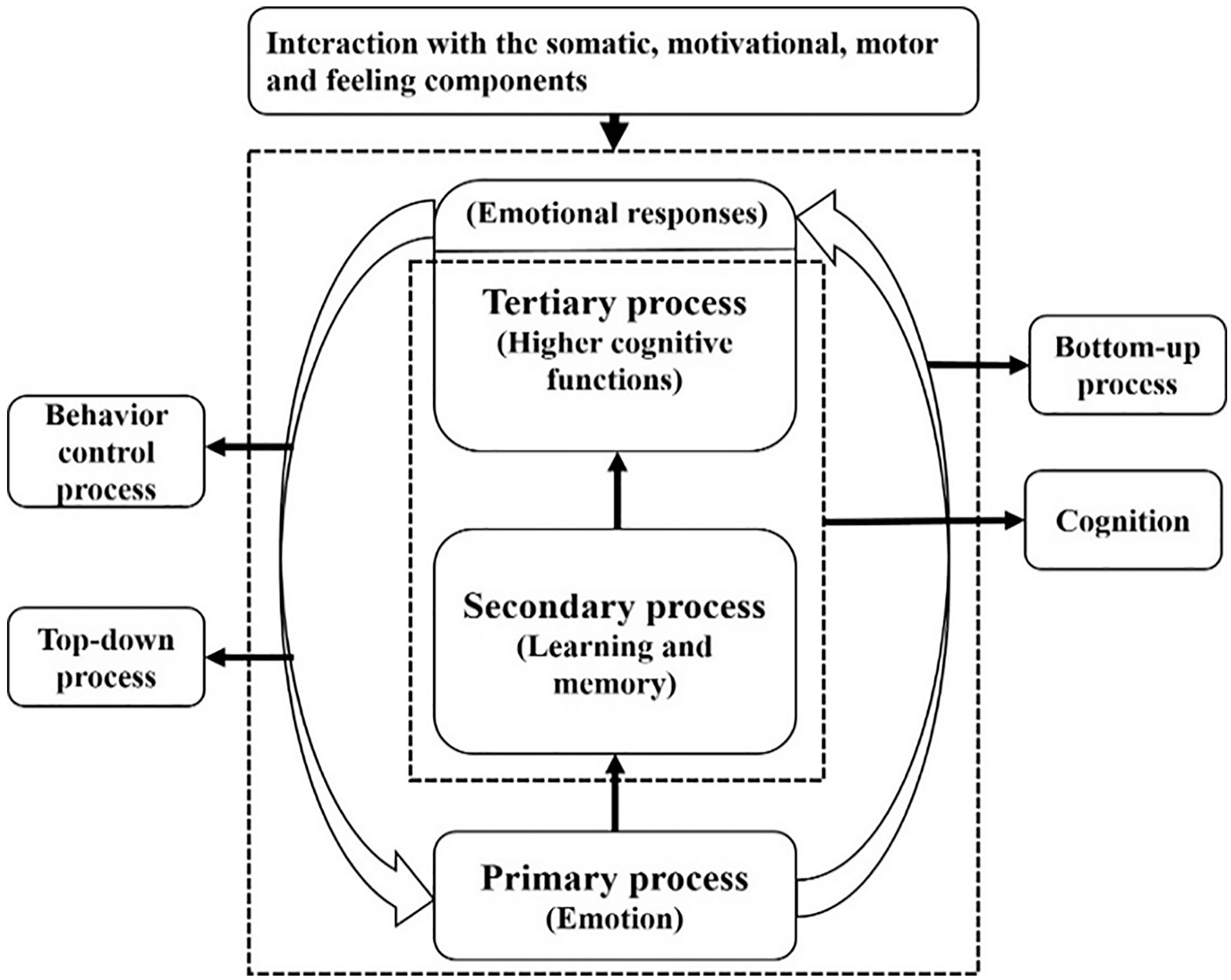
The processes of the appraisal of emotions. Adapted from Tyng et al. (2017).
Therefore, the appraisal theories of emotion guide the current study in the following aspects (see Figure 2). (1) Given the “cognition-affection” relationship in the theories, they inspire the higher reliance of management on the emotional value of destination attributes. Therefore, an emotion-based management framework for destination attributes is developed. It requires the identification of emotion-dominant destination attributes. The evaluation of the emotional value of attributes must be based on a specific emotional concept. Destination attachment is selected in this study. (2) The theories provide a theoretical framework for understanding the psychological process of the constructs of an emotional nature. The psychological process of destination attachment is constructed, according to which the attachment dimensions are reconstructed. The attributes that contribute to different dimensions of destination attachment are identified. The results of analyzing the two aspects are combined with the real needs during different periods to develop the management framework. Therefore, the following two research questions (RQs) are proposed.
RQ1: What are the emotion-dominant destination attributes of Hangzhou?
RQ2: What are the attributes critical for management in the different development periods (short, medium, and long term) of Hangzhou?
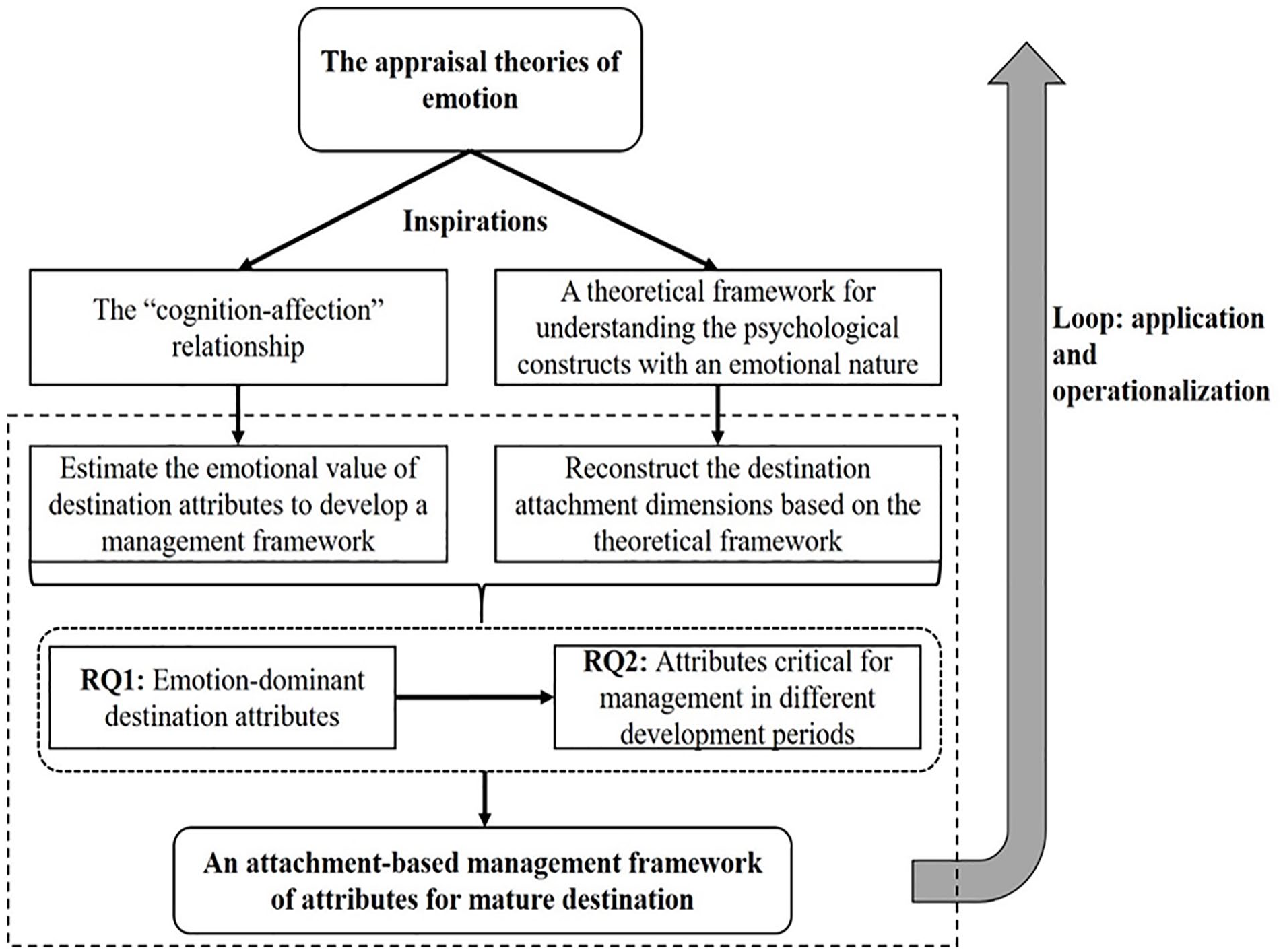
How the appraisal theories guide the current research.
The Emotional Nature of Destination Attachment
This section explains why destination attachment is used to evaluate the emotional value of attributes. The explanation involves interpreting the connotation and psychological process and reconstructing the dimensions of destination attachment to develop the management framework. The concept of destination attachment derives from the “people-people” attachment in psychology, which is defined as the emotional connection between tourists and a destination (Hidalgo & Hernández, 2001). Bowlby (1982) initially explained the attachment phenomenon via the attachment behavioral system that infants are born with (involving proximity-seeking to an attachment figure to obtain physical and mental health), which affects later relationships with other figures. Based on this, Morgan (2010) described children’s place attachment as repeated enactments of “arousal-interaction-pleasure” with the environment, thus explaining the transition from “people-people” attachment to “people-place” attachment and its balance. Tests of these theoretical ideas in adults have generally focused on a person’s attachment style, which is a systematic pattern of relational expectations, emotions, and behaviors conceptualized as residuals of particular attachment histories (Fraley & Shaver, 2000). According to the variable nature of a person’s mental representation of attachment (i.e., how attachment figures react to one’s needs), different attachment styles (secure, anxious, and avoidance) and attachment strategies (security-based, hyperactivating, and deactivating) are formed (Mikulincer et al., 2002).
Attachment security is a type of representation that is the most beneficial for individuals to maintain emotional equanimity and stability and promote personal development. Individuals believe that the attachment figure is different and irreplaceable and commit to continuous emotional investment (Mikulincer & Shaver, 2005). Destination attachment refers to a type of attachment security characterized by feelings of safety, trust, happiness, identification, empathy, and fascination (Tsai, 2012). When the attachment system is activated under internal and external stimuli, tourists desire to revisit the destination. Revisiting further reinforces attachment security and consolidates the security-based strategy of affect regulation (i.e., considering revisiting again) (Shaver & Mikulincer, 2002). People may feel frustrated when there is no access to the destination for some reason. At the height of this feeling, a person may even employ the hyperactivating attachment strategy to experience extraordinary nostalgia and desire for the destination.
Except for a few one-dimensional definitions that generally have not been confirmed and accepted (Williams & Vaske, 2003), the number of existing dimensions of destination attachment ranges from two to six (Cao et al., 2021) (see Table 1). Scholars have used different combinations of similar dimensions to explain the formation of place attachment, confounding our understanding of this phenomenon (Chen, Dwyer et al., 2014). Thus, the components are considered either attitude-based or interaction-based components to enable their integration. The former considers place attachment as the outcome of an individual’s perception and attitude toward a place based on his/her knowledge of this particular place (place dependence, place affect, place rootedness, place familiarity, place memory, place expectation, place exploration, and place recovery). The latter reflects the meanings an individual ascribes to a place through “people-people/place interactions” (place identity, social attachment/bonding, place belongingness, place symbol, and place support) (Cao et al., 2021; Chen, Dwyer et al., 2014; Hammitt et al., 2006; Hidalgo & Hernández, 2001; Kyle et al., 2005; Ramkissoon et al., 2013; Vaske & Kobrin, 2001).
Existing Dimensions of Place Attachment Applied to Tourism.
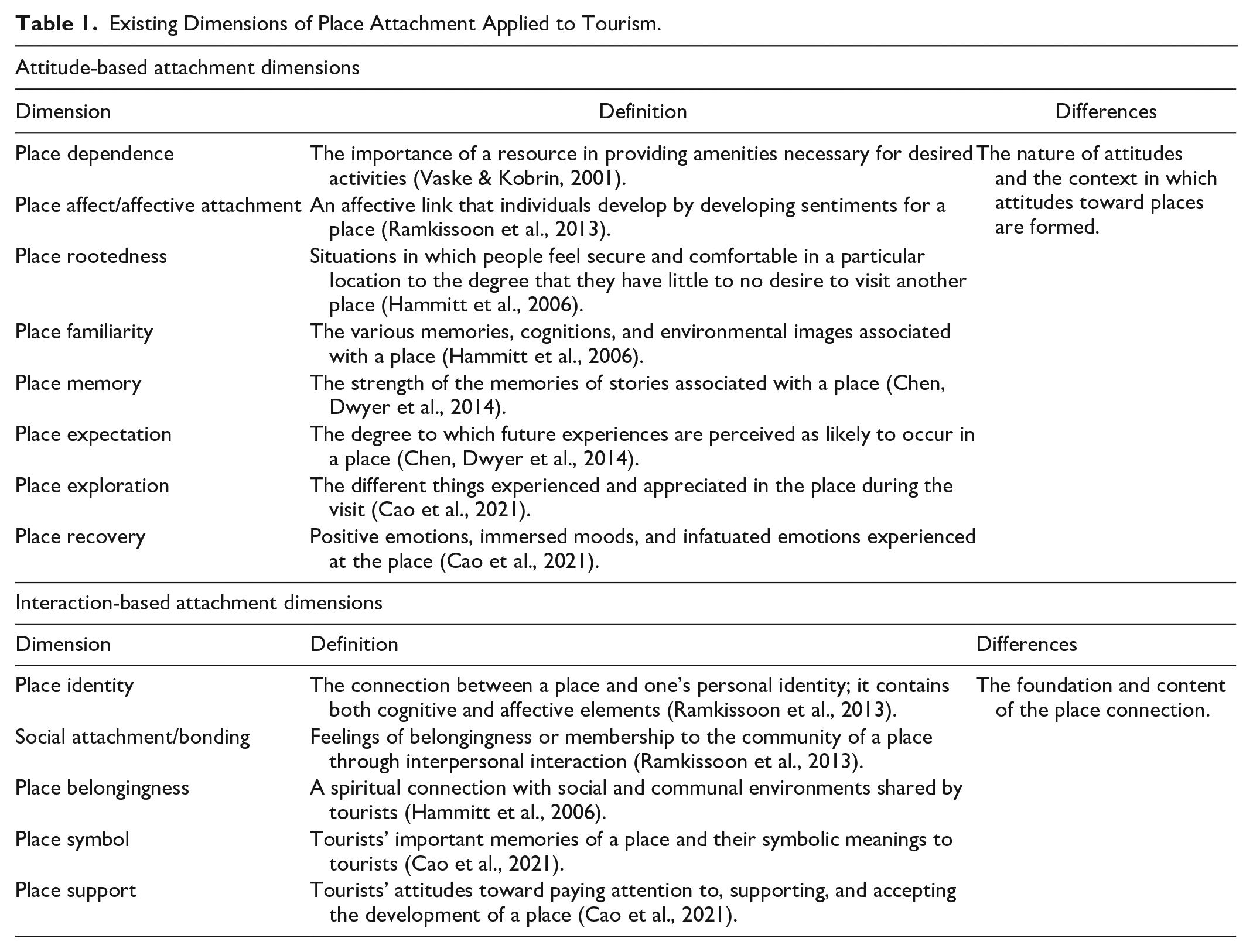
Due to the emotional nature of destination attachment, this taxonomy echoes the three aforementioned processes of the appraisal of emotions. Therefore, it is necessary to reclassify destination attachment into three dimensions: destination dependence, destination connection, and destination affect. Destination dependence and destination affect are attitude-based. Destination dependence includes the primary sensory emotions underlying the knowledge of and familiarity with a location as the optimal amenity provider of desired activities (Pan, 2014). Destination connection is interaction-based and is the cognition of all personal connections with the place resulting from tourists, the community, and culture (Raymond et al., 2010). Destination affect includes the “core” emotions that are elicited and reflect the feelings of being completely at home, secure, and comfortable, resulting from the tight schematic structuring of the environment (Jorgensen & Stedman, 2001).
The ranking of the intensity of these three dimensions from lowest to highest is destination dependence, destination connection, and destination affect. This ranking is supported by progressive appraisal processes in psychology. Many place attachment studies have shown that attachment develops and intensifies over time (e.g., Gerwitz, 1991; Hammitt et al., 2006; Kohlberg & Diessner, 1991; Pan, 2014; Tuan, 1974). However, each attachment dimension is also the product of the combination of the three appraisal processes because they represent different attachment stages (see Figure 3).
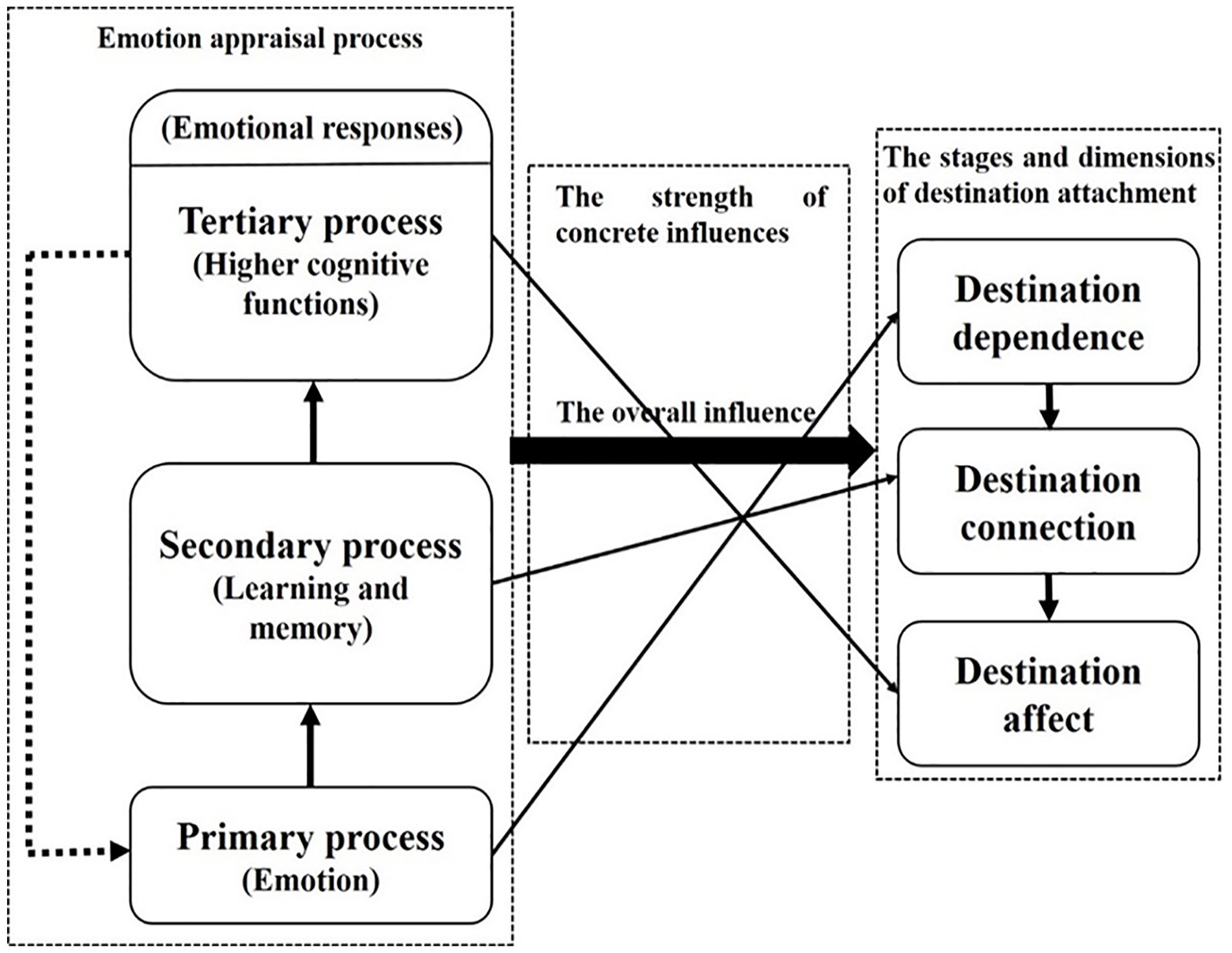
The relationships between the destination attachment dimensions and emotion appraisal.
Attachment Memory Representation and Core-Periphery Structure
This section explains how the representation of destination attachment is organized around the attribute nodes in the mind to explain our use of the method to identify the dominant emotional attributes, which are subsequently described. Destination attachment is a memory representation of unique emotional experiences generated between people and the environment (Rubinstein & Parmelee, 1992). Since tourists interact with a destination only for short periods, this representation depends more on the quality than the length of the experience (Zerubavel, 1996). It is mainly autobiographical (Ratcliffe & Korpela, 2016), which highlights the role of the self, connects with past associated events to create a personal history, and guides current and future behavior to serve social and emotional functions (Fivush, 2011). It is a schematic network representation of self-experience about what resources were used, what activities were carried out, what feelings were obtained, and what impact was produced in a particular time, location, and scene (Giuliani, 1991). Declarative and non-declarative memories or cognitive and affective memories are mixed because the representation is affected by two separate but interacting systems, namely the hippocampus-based “cool cognitive system” (fast-learning and symbolically encoded) and the amygdala-based “hot emotional system” (slow-learning and reflects personal idiosyncrasies) (Tyng et al., 2017). The appraisal of the environment in terms of personal concerns is highly related to the latter.
Destination attributes are critical for linking the representations since they significantly impact the emotional experiences of tourists at destinations (e.g., quality of service experiences, memorable tourism experiences, romantic travel experiences) (e.g., Kim, 2014; Li et al., 2021; Moon & Han, 2018; Raimkulov et al., 2021; Schlesinger et al., 2020). They are nodes that are encoded, stored, and retrieved as an associative memory network (Anderson & Bower, 1974). The retrieval of the attribute nodes follows a spreading activation principle, that is, the activation of an original node in the network by a cue spreads to the activation of other nodes in the order of the strength of node connectivity (Anderson, 1983). This reflects the core-periphery structure of the attributes, that is, closely connected core nodes are more likely to be activated. Both single core-periphery pairs and multiple core-periphery structures of destination image attributes have been empirically supported (Lai & Li, 2012; Su et al., 2020; Wang et al., 2018). The involvement of the amygdala (an emotion processor) focuses on the memory of emotion-triggered attributes as the closely connected cores via attention and consolidation biases, which maximizes rewards while minimizing punishments to enhance survival (Tyng et al., 2017). Therefore, the coreness of image attributes in the network reflects the size of their emotional value.
Materials and Methods
Hangzhou, China, was selected as a case study. It is the capital of Zhejiang Province and a central city in East China and the Yangtze River Delta. Hangzhou is a famous domestic and international tourist destination known as “heaven on earth” (Wang, Wu et al., 2019). This case can be generalized to a wide range of mature destinations for three reasons. First, Hangzhou is a banner and leader in terms of the scale, status, and tourism development level among China’s well-known mature destinations (Lu et al., 2013). Its development model is typical and can be used as a model for other destinations. Second, Hangzhou has rich natural and cultural tourism resources of many types. Therefore, research on Hangzhou can be extended to mature destinations based on various types of resources. Third, market demand is the core issue of many mature destinations (Plog, 2001); thus, the situation faced by Hangzhou is representative and worth exploring. Since 2011, the growth rates of domestic tourists and tourism revenue in Hangzhou have witnessed stagnation and saturation, a signal of maturity (Plog, 2001). Similar to most Chinese destinations that lack the management experience that comes with maturity, Hangzhou officials have not yet realized the necessity of the transformation from “transactional” to “relational” and are still actively courting first-time tourists. Therefore, it is necessary to evaluate the destination attributes from the perspectives of their current and long-term attachment-triggering ability to form a systematic attachment-based attribute management framework that conforms to the formation of destination attachment. Therefore, Hangzhou is a typical mature destination that should be investigated from the affective marketing perspective because it has reference value on many levels.
Data Sources and Processing
The contents of flattering blogs of attached tourists that explicitly reflect attachment memory can be used to identify attachment-triggered attributes. Although the general attachment representation may have different styles (Mikulincer et al., 2002), the destination representation of attached tourists is solid, reflecting positive feelings and love for the destination. Flattering blogs most vividly reflect the characteristics of this mental representation. China’s three largest blog platforms, namely Qunar, Mafengwo, and Ctrip, were chosen based on the weighted aggregation of the rankings of visibility, popularity, and size (Marine-Roig, 2014) of websites in China that host travel blogs. This objective evaluation process was designed to ensure that only high-quality blogs meeting the standards of objectivity, completeness, and immediacy were obtained. The representative blogs were searched using the keyword combination “Hangzhou tourism + attachment dimension token words.” The three emotion appraisal-associated dimensions of destination attachment were used (e.g., for the destination dependence dimension, the dependency token words included “nostalgia,” “yearning,” “perfect experience,” “coming back again,” and “not wanting to leave”).
Because the blogs were posted in Chinese, the keywords are direct translations of Chinese words. These were checked by a bilingual scholar. The development of the attachment token words involved three stages. First, the initial word pool was identified by the first author via a literature review and online interviews with 30 of Hangzhou’s attached tourists (divided equally by gender) obtained by the snowball method. In the interview, the token words of each attachment dimension were extracted from an open-ended question. For example, for destination dependence, the attached tourists were asked to use at least three words or phrases to describe their sense of dependence on Hangzhou. The person’s understanding of each dimension was carefully checked by matching it with the definition of the dimension in the relevant literature. Modifications were made according to customary expressions in the blogs. Second, the word pool was presented to five experts who have published destination attachment-related articles for approval. Words with 70% acceptance and above were retained, which is Churchill’s (1979) standard for retaining items when developing measures of marketing concepts. Finally, the content validity of the attachment token words was reconfirmed by in-depth interviews with 10 other attached tourists to associate the words with their actual attachment experience. During the interviews, tourists were required to connect the word pool with the concept of destination attachment and match different words to different attachment dimensions. All words were retained after this process.
The time span was from January 2018 to January 2022. Further specification of the identified blogs was performed according to the following criteria: (1) the number of page views or clicks was more than 1,500; (2) the number of words was more than 2,000; (3) marketing articles with an advertising nature were excluded; (4) the blog contained the expression of at least three positive emotions (e.g., pleasure, love, and surprise); (5) blog contents with negative opinions or emotions were removed; (6) the relevance of the destination attachment blogs was double-checked by checking the attachment point of the blogs in the original text. The first two criteria were used according to the actual average number of views/clicks or words to ensure the meaningfulness and richness of the blog content. The third criterion was used to prevent the blogs from being affected by advertising information. The last three criteria were chosen to ensure the attachment theme of the blogs. In total, 628 blogs were retained.
Although it seems unreasonable to merge data from the COVID-19 pandemic period (i.e., 2020, the peak period of the epidemic in China) and non-pandemic periods, the reasons for doing so include the following. First, the blog data of Hangzhou in 2020 were carefully compared with the blog data before and after the epidemic using three randomly selected blogs in each period. Content analysis was performed to ensure consistency in the contents and functions of the image attributes in the blogs during the three periods. Second, this finding was verified via online interviews with bloggers who had revisited the destination. Four bloggers (two men and two women) who posted information on tourism blogs about Hangzhou in 2020 and at other times were chosen. During the interview, they were asked to elaborate on tourism motivations, experiences, and their satisfaction rating with the two visits (in the pandemic and non-pandemic periods, respectively). The interview transcripts were analyzed using grounded theory. The overall satisfaction rating with Hangzhou, as well as the identified concepts, subcategories, and main categories for the two visits, did not deviate significantly. The bloggers’ attitudes supported the merging of the blog data. In line with the decrease in actual visits, the number of blogs posted was low during the pandemic. However, proportionate sampling was not employed. Although there was no substantial difference in the blog content, the strict prevention and control strategies implemented during the pandemic may have caused subtle changes in tourists’ psychology and behavior, which may have influenced the information expressed in the blogs. The expression of the degree of tourist involvement and engagement may have been primarily affected. Therefore, if the pandemic data had an impact on the validity and importance of current research, the effect was primarily in degree, not in nature.
Data Analysis
Social network analysis (SNA) is an application of graph theory in which individuals or other social actors are represented by points and connected by lines (Hanneman & Riddle, 2011). SNA enables the counting, mapping, and analyzing of the structural properties of a tourism system and improves the level of understanding of the observed phenomena pertinent to the supply or demand domain (Liu et al., 2017) to facilitate regional development, knowledge transfer, industry clustering, tourism movements, and marketing projections. The examination of the attachment network belongs to the tourist demand domain.
The analysis of points, connections, and lines in a social network provides the significant advantage of identifying the core-periphery structure of image attributes (Ye et al., 2013). This method is similar to the implicit association test (IAT), which is most commonly used to detect an individual’s implicit attitude. The association network hypothesis of the human information structure is the common theoretical basis of the two methods (Lee & Kim, 2017). In addition, the two concur on important features, namely implicitness, difference, and association (Haines & Sumner, 2006). In terms of implicitness, SNA can reveal the subconscious action mechanism of the human information network, which is similar to determining the automatic responses in the IAT to predict the attitude of individuals. In terms of difference, nodes with different importance levels in the network are assigned different numerical values by the SNA indices. This process is similar to detecting the bias in the strength of the association between two target concepts and their valences in the IAT. In terms of association, the strength of the association between the target and the attribute is a central construct in both methods. Therefore, the centrality of attributes identified by SNA is largely implicit, unlike the explicit importance of self-reporting by tourists (Choi et al., 2015).
Because there is always a relationship between attachment-triggered attributes (i.e., nodes/points) in the same blogs, the strength of this relationship can be expressed by the co-occurrence frequency. A 22 × 22 multi-value matrix (i.e., 1 represents the co-occurrence of two different attributes, while 0 is the opposite) was established for network index analysis. The co-occurrence number and structure determine the role and status of an attribute in the network. Thus, centrality analysis (degree centrality and betweenness centrality) and subgroup analysis were respectively conducted to identify the single and multiple core-periphery structures of the attributes. Degree centrality reflects the power of a node based on the number of connections it has in the network, while betweenness centrality reflects the bridging ability of a node and is the number of shortest paths between different pairs of nodes (Wasserman & Faust, 1994). The two indices, respectively, reveal the absolute and relative centrality of nodes. The higher the two indices, the greater the ability of an attribute node to be activated and spread to elicit the attachment memory of individuals.
Subgroup analysis reveals the internal structure of the network via the identification of significant local networks. The CONCOR iterative algorithm in UCINET 6 software was implemented. It divides the network into multiple closely connected subgroups based on structural equivalence. The differences in the coreness of the nodes in the individual subgroups reflect the multiple core-periphery structures of the attributes. Because each subgroup represents a group of attributes with aggregated attractive potential, a series of cross-tabulations of the subgroups and the dimensions of destination attachment were constructed to conduct χ2 tests. The frequency in the cell represents the direct association between the attributes in a subgroup and the representational content of each destination attachment dimension in the blogs. If the co-occurrence of the nodes existed in one subgroup with one destination attachment dimension without important nodes in other subgroups, it was denoted as frequency = 1. The different contributions of the different attribute groups to the different destination attachment dimensions were reflected. The materials and methods are illustrated in Figure 4.
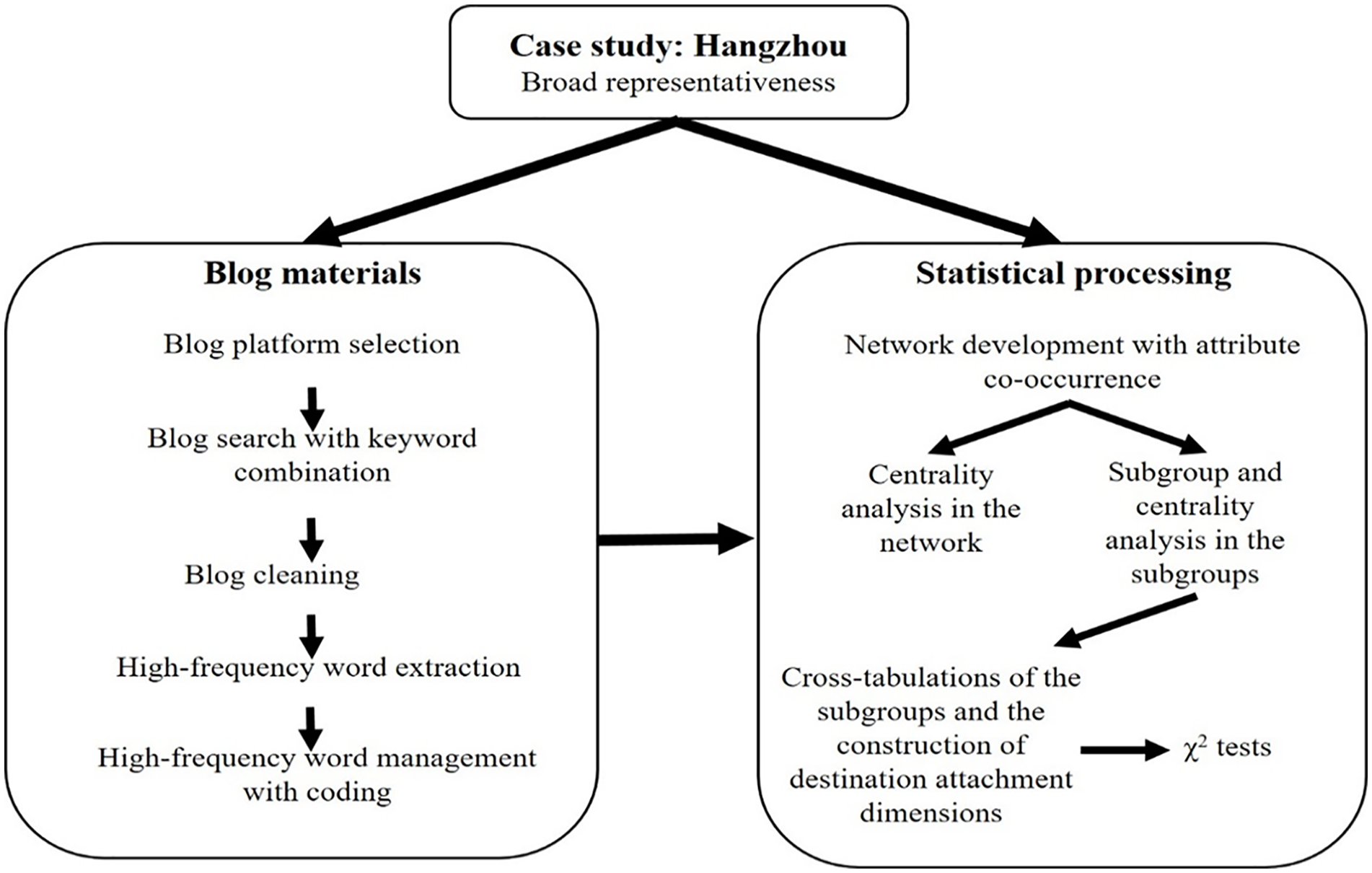
Materials and methods.
Results
Identification of the Single Core-Periphery Structure
The power of attachment-triggered attributes was divided into the following three types based on the mean values of the degree centrality and betweenness centrality (see Figure 5): (1) core nodes (both indices were higher than the average); (2) semi-core nodes (one index was higher than the average, while the other was lower than the average); (3) peripheral nodes (both indices were lower than the average). There were five core nodes located in quadrant I. Lakes and mountains occupied a primary position in the network and were critical to elicit attachment memories of tourists. This is understandable because West Lake is the top destination in Hangzhou. Lakes and mountains were closely followed by tea garden scenery. Longjing Village is noted for its tea garden scenery. It is located in the West Lake area; thus, a connection exists. As a culturally prosperous city, Hangzhou has a wealth of ancient buildings and intangible cultural heritage. The ancient buildings cause tourists to think about history, while the attractiveness of intangible cultural heritage, such as traditional Chinese medicine and paper-cutting art, has continued to increase recently. In addition, food is also a core factor contributing to the attachment of tourists.
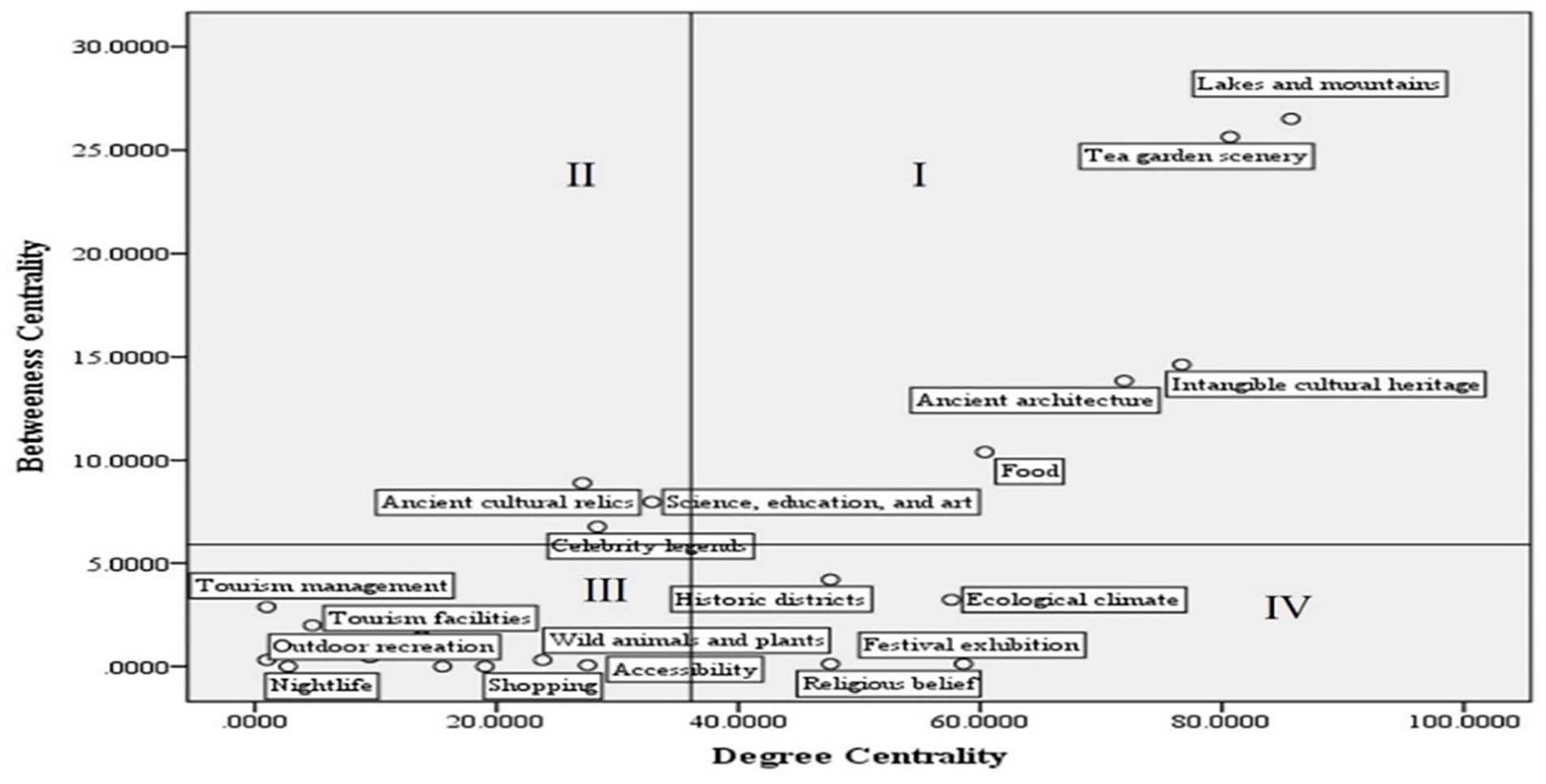
The classification of nodes in the single core-periphery structure.
Seven attributes located in quadrants II and IV were classified as semi-core nodes. These were represented by the wetland system and pleasant climate, popular festival performances such as “The Romance of the Song Dynasty,” the holy place of Lingyin Temple, the famous historic district of Qinghefang, the abundant achievements of science, education, and art, celebrity legends, and important ancient cultural relics, such as the Liangzhu culture and the Beijing-Hangzhou Grand Canal. The 10 peripheral nodes located in quadrant III included wild animals and plants, lifestyle, shopping, characteristic villages, accessibility, outdoor recreation, tourism facilities, nightlife, service quality, and tourism management.
Identification of the Multiple Core-Periphery Structures
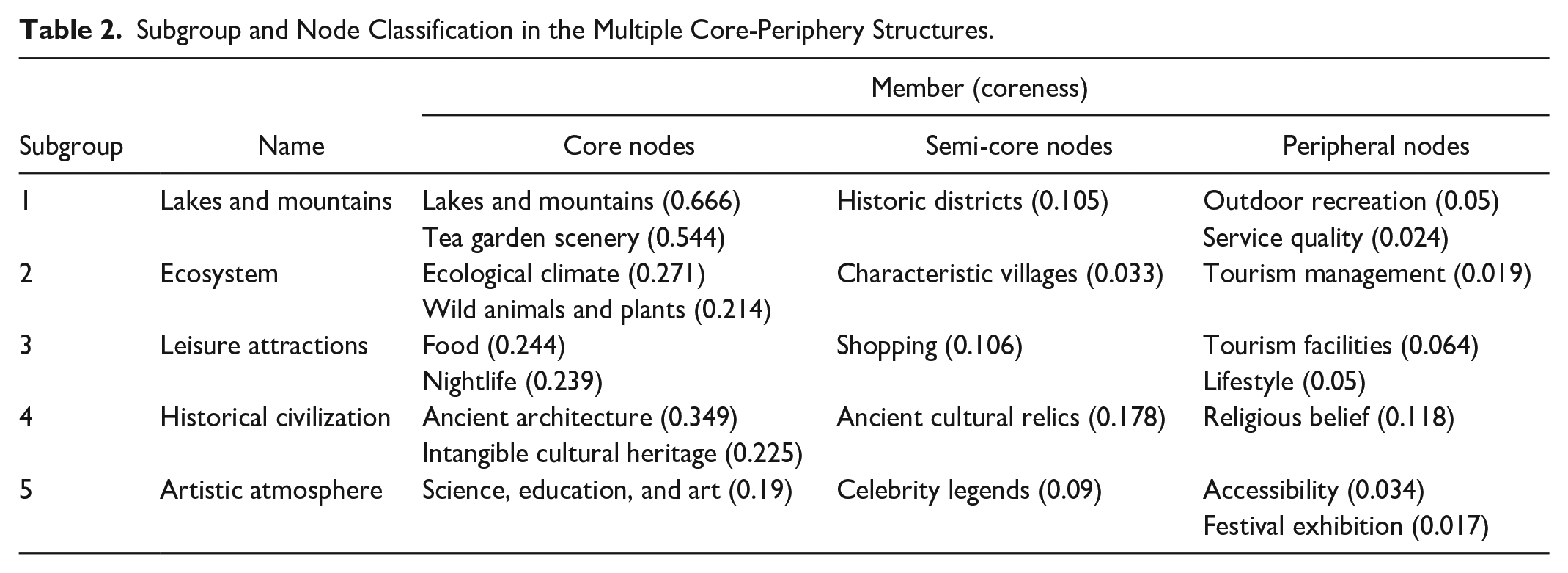
The network generated 5 subgroups according to the significant nodes, namely “Lakes and mountains,” “Ecosystem,” “Leisure attractions,” “Historical civilization,” and “Artistic atmosphere.” The maximum node size of the subgroup was 5 (2 subgroups), and the smallest was 4 (3 subgroups). The tightly connected pattern of the network nodes was relatively uniform (see Table 2 and Figure 6). The coreness of the nodes differed in individual subgroups, suggesting a core-periphery structure within each subgroup. According to the coreness of each node, the attributes in each subgroup were divided into three categories: core nodes, semi-core nodes, and peripheral nodes. Subgroup 1 was dominated by the landscapes of lakes and mountains and tea garden scenery. The core nodes in Subgroup 2 were the ecological climate, wild animals, and plants that highlight the ecological endowments of the destination. The unique leisure activities of food tasting and nightlife constituted the core nodes of Subgroup 3. Subgroup 4 was culture-related, and the leading nodes were ancient architecture and intangible cultural heritage. Subgroup 5 had only one core node: science, education, and art. The five core nodes in the entire network acted as core nodes in the subgroups. Although ecological climate and science, education, and art were semi-core nodes in the overall network, they demonstrated high importance in Subgroups 2 and 5. In addition, the role of nightlife was promoted from a peripheral node to a core node in Subgroup 3. Together with the results of the single core-periphery structure, emotion-dominant attributes were identified, answering RQ1.
Subgroup and Node Classification in the Multiple Core-Periphery Structures.
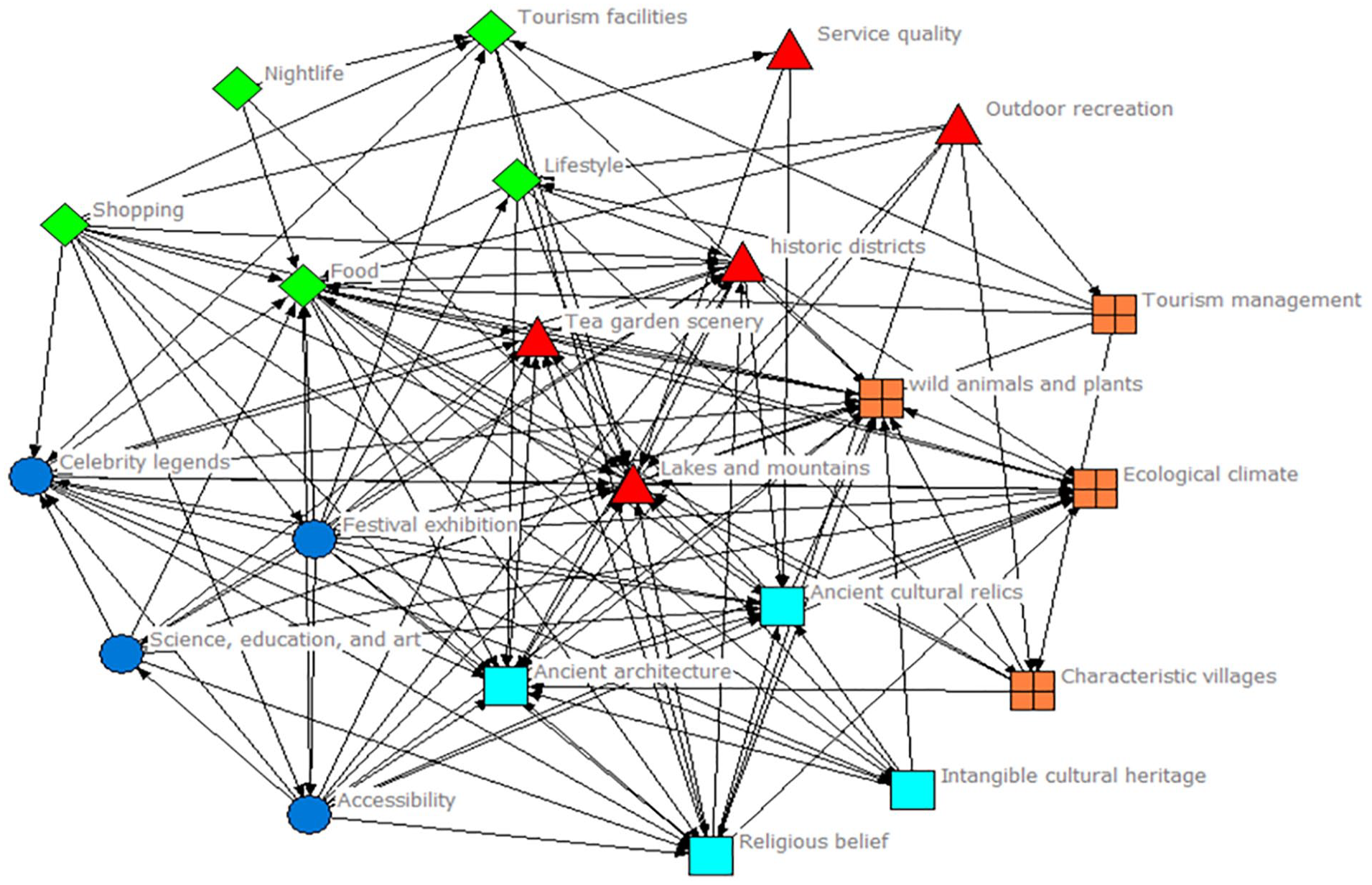
The subgroup partitioning results.
The Attachment-Based Attribute Management Framework
Table 3 reports the χ2 test results of the relationships between the attribute subgroups and destination attachment dimensions. The influence of each attribute subgroup on the three types of destination attachment dimensions differed significantly at the level of 0.000. The attribute groups with high predictive power for destination dependence were “lakes and mountains” and “artistic atmosphere,” which formed 126 and 94 links, respectively. The attribute groups that explained the formation of destination connection were “ecosystem,” “historical civilization,” and “leisure attractions,” with 96, 92, and 78 links, respectively. The only attribute group closely associated with the formation of the destination effect was “leisure attractions,” which had 110 links.
The Relationships Between the Aattribute Subgroups and Destination Attachment Dimensions.
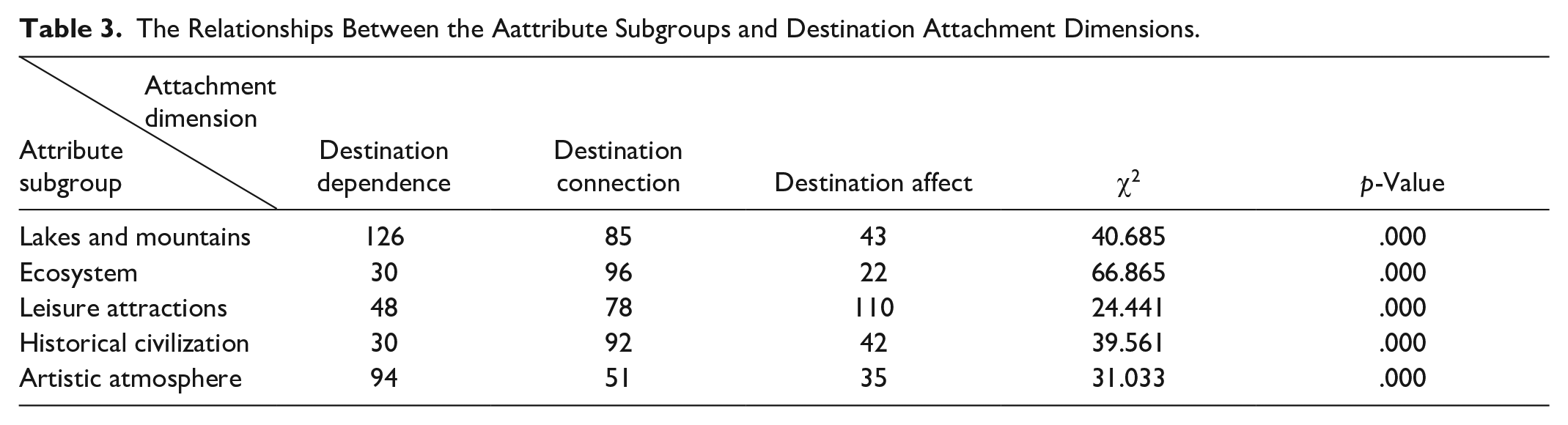
As mentioned previously, each destination attachment dimension represents a different level of attachment, which increases in each stage (corresponding to the formation of attachment over time). Different types of emotion appraisal dominate in different stages. According to the increase in attachment strength and the development characteristics of mature destinations, the attributes can be grouped according to short, medium, and long-term marketing strategies of destinations. We propose a systematic attribute management framework (Figure 7). In the short term, the destination should acknowledge that it is in the mature period to maximize the solicitation of existing attached groups (i.e., hardcore fans). Moreover, the destination should try to cultivate the attachment of tourists in other markets to diversify the market sources for future development. Therefore, the management focus should be on the core nodes in the network (to target the existing attached population) and the core nodes in the destination dependence-driven attribute groups (to cultivate the primary attachment of tourists in other markets). In this study, these attributes include lakes and mountains, tea garden scenery, intangible cultural heritage, ancient architecture, food, and science, education, and art.
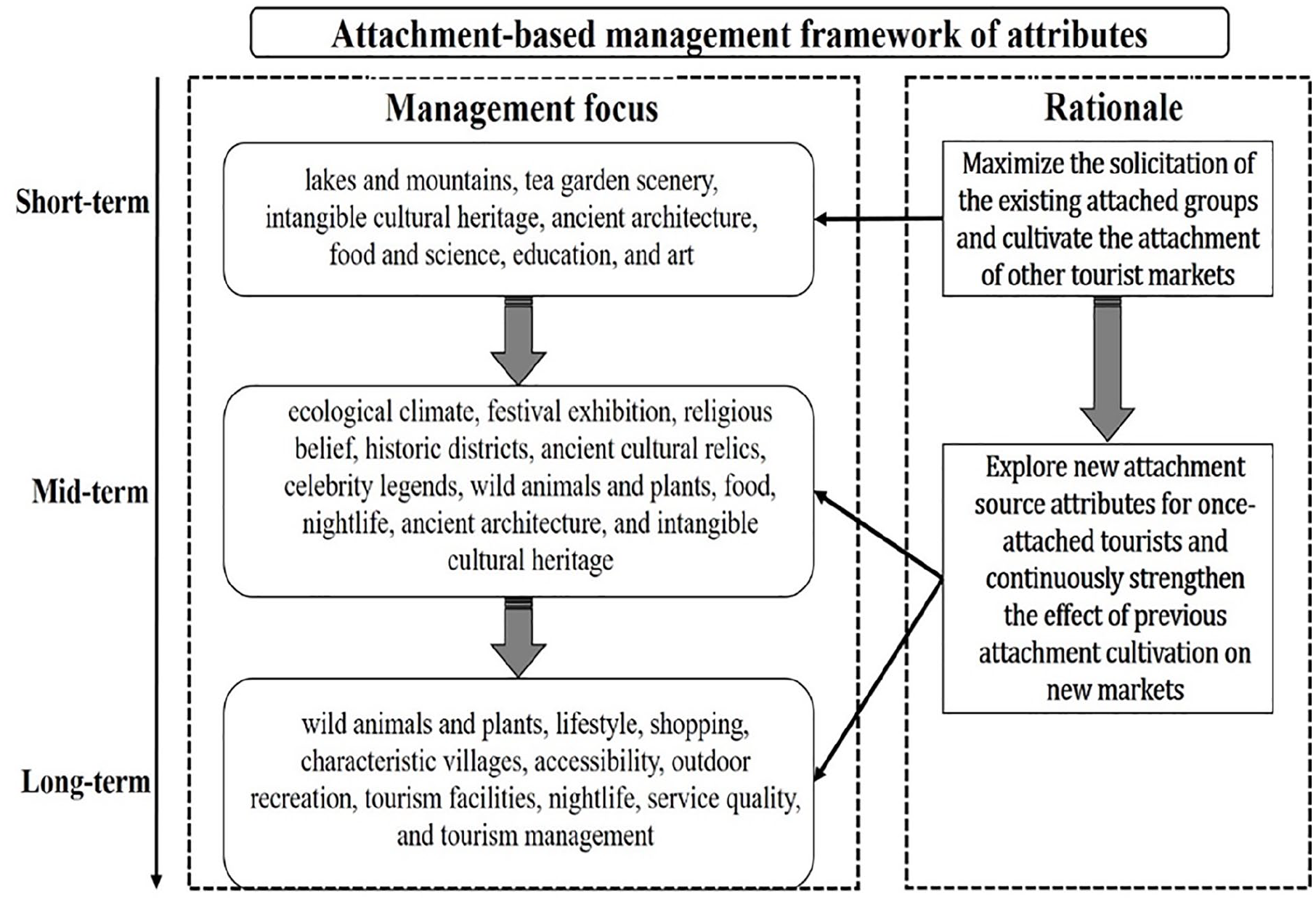
The management framework for the destination attributes of Hangzhou.
In the medium and long term, officials must consider the revitalization and transformation of destinations as hardcore loyalists disappear (Plog, 2001). In this stage, destinations must explore new attachment source attributes for once-attached tourists and continuously strengthen the effect of previous attachments on new markets. Therefore, the management focus in the medium term should be on the semi-core nodes in the network (standby attachment-triggered attributes) and the core nodes in the destination connection-driven attribute groups (to improve the effect of previous attachments on new markets). In this study, these attributes included the ecological climate, festival exhibition, religious belief, historic districts, ancient cultural relics, celebrity legends, wild animals and plants, food, nightlife, ancient architecture, and intangible cultural heritage. The long-term management focus should be on the peripheral nodes in the network (second-level standby attachment-triggered attributes) and the core nodes in the destination affect-driven attribute group (to enhance the effect of previous attachments on new markets). In the present study, these attributes included wild animals and plants, lifestyle, shopping, characteristic villages, accessibility, outdoor recreation, tourism facilities, nightlife, service quality, and tourism management. There may be an overlap of the attributes in different periods. The overall strategic goal of attribute management is the cultivation of attachment in various markets based on multiple attribute sources. Thus, RQ2 has been answered.
Discussion
This study established an attachment-based management framework for the attributes of mature destinations, considering destination attachment as an emotional representation. Two RQs were proposed and answered through the following process. Hangzhou was used as a typical mature destination. SNA and χ2 tests were performed on data obtained from flattering blogs of attached tourists. The extracted attributes with different coreness values in the network and network subgroups were matched with the development needs of the destination in different stages and the attachment formation process to develop a strategy for the tourism management of Hangzhou in the short, medium, and long terms.
Theoretically, this study contributes to the current literature in two ways. First, this study creatively developed a management framework for destination attributes from the perspective of the emotional value of attributes based on appraisal theories of emotion in psychology. Previous studies generally proposed an attribute-cognitive satisfaction hypothesis to evaluate the management value of attributes from the cognitive perspective. This approach deviates from the real “cognition-affection” mechanism and the unique effect of emotion in this mechanism. It also is not in accordance with the reality that tourism is dominated by nonutilitarian needs (Zacharia & Spais, 2017). Thus, existing management frameworks for destination attributes are not accurate and have marginal value.
We recognize the essential connotation of satisfaction as an emotional state and consider the roles of cognition and affection in human psychological processing. Thus, we examine the mechanism of emotion appraisal. The cyclical appraisal path of “emotion → cognition → affect” was established to reveal the critical role of affect as the origin, terminal, and re-starting point of psychological processes. The nature and content of cognitive appraisal are initially driven by the pre-perceptual primary emotion. Subsequently, two processes of cognitive assessment with different conceptualization levels are experienced, and the core affect with behavioral guidance is formed. The core affect then serves as the psychological basis for the re-capture of the primary emotion via attentional bias. The “cognition-affection” mechanism provides a new perspective for the management of destination attributes, research on the influence mechanism of destination attributes on tourist behavior, and the modeling of “cognition-affection”-associated behavior. Concrete studies can be inspired accordingly, such as evaluating the emotional value of attributes, the influence mechanism of emotional attributes on tourist behavior, and the “cognition-affection” interaction in the image-driven destination loyalty model.
Second, by considering the emotional nature of destination attachment, this study provided new definitions of the reflective dimensions of destination attachment and explained the relationships between these dimensions and the increasing intensity from a psychological perspective. Although existing reflective explanations of destination attachment agree that the concept includes an emotional connection, they have failed to develop a unified integration framework with a profound emotion-related theoretical basis; most existing frameworks are geography-based (Cao et al., 2021). They differentiate attachment representations with a common psychological sense into different perceptions of recreation, resulting in diverse dimensions of destination attachment. Moreover, current definitions of destination attachment dimensions are not based on a psychological rationale.
This study used a psychological perspective to define destination attachment dimensions based on the appraisal theories of emotion. In other words, destination dependency represents primary emotion processing, destination connection represents all “people-place” connections that can be integrated by the cognition process, and destination affect represents high-level emotions with a behavioral driving force. Thus, different appraisal processes play a different role in the different stages of attachment levels when affecting the formation of destination attachment although they exert a collective effect. Although reflective in nature, the current notion provides a perspective to connect the dimensions of destination attachment with its formation. Although most existing dimensions of destination attachment are cross-sectional phenomena, some reveal an evolutionary process (e.g., Hammitt et al., 2006). The current definition combines the two ideas to explain the psychological “black box” of the formation of destination attachment at the cross-sectional and evolutionary levels. For the former, the unique and interactive psychological senses of different dimensions were provided; for the latter, the precedent relationships of the dimensions were interpreted. Thus, research on destination attachment can be integrated into the attachment theory, which explains the source and influence of attachment.
This study also provided a new method for establishing a management framework for destination attributes. This method extracts high-frequency words from blogs related to destination attachment using a network approach, followed by SNA to identify the single and multiple core-periphery structures of these attributes. Then, the coreness of the attributes and their correlation with the destination attachment dimensions are respectively used to determine the routine and context-sensitive attachment-triggered attributes (i.e., different attachment dimension-driven attribute groups). Finally, different management models of the two types of attributes are established for different contexts by considering the development needs of destinations (see Figure 8).
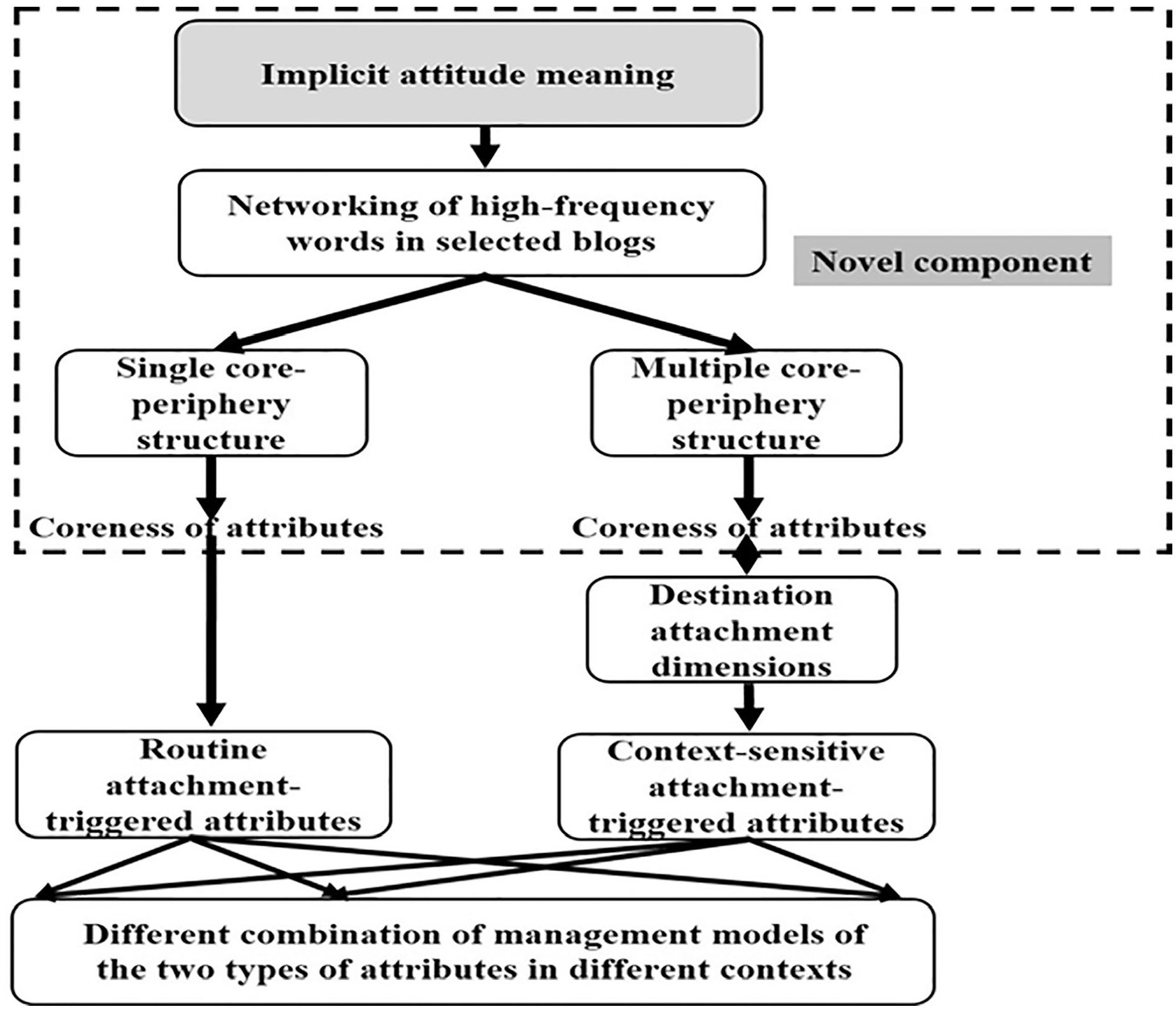
The proposed method.
The use of a network approach to analyze the blog information to identify the different coreness values of the attributes is a novel component of the proposed method. In previous studies, the importance of the attributes was determined by the tourists’ explicit attitudes using self-reporting. In contrast, this study used network modeling and attribute centrality identification to determine the importance because the attributes reflect the implicit attitude of tourists (Choi et al., 2015). The reason is the similarity between SNA and implicit measures such as IAT and the relationship between attribute centrality and “top-of-mind association” (Su et al., 2020). Explicit attitudes tend to predict behaviors based on conscious thought and deliberation, while implicit attitudes tend to predict behaviors that are spontaneous and emotion-driven (Dempsey & Mitchell, 2010). The convergence or divergence of the two attitudes depends on the specific context (Gawronski & Bodenhausen, 2006). In the hedonic tourism context, the derived explicit attitude may be the same as the endogenous implicit attitude (reflecting tourism motivation) because there are no significant social norms to initiate cognitive reasoning. Therefore, the current method of identifying important attributes is more in line with the context. Scholars can follow the outlined procedure to replicate this study or extend it. In particular, the current case of Hangzhou, a mature destination, is representative on many levels and may provide many valuable findings for similar studies.
This study has managerial applications. It provides a simple and reproducible method to establish an attachment-based management framework for destination attributes, enabling the management of attributes and facilitating resource allocation for mature destinations. Destination officials can develop a clear direction and rationale for the transformation of their marketing strategy to develop an “attached destination.” Strategic planning (short-, medium-, and long-term) and resource management is based on the combination of routine attachment-triggered attributes and context-sensitive attachment-triggered attributes. This concept gives attributes different management values in different periods according to the ability of attributes to attract attached tourists and the driving force of attributes in a specific attachment dimension. In the short term, attributes with the strongest ability to attract attached tourists and those that are most conducive to establishing destination dependence (primary attachment level) in other markets should be combined in a two-pronged strategy. This strategy can also be used in the medium and long term. In other words, the standby attributes, whose ability to attract attached tourists declines, must be combined with attributes most conducive to destination connection (moderate attachment) and destination affect (high attachment) in other markets in the medium and long terms, respectively. The management resources of the destination should focus on these different attributes in different stages. In addition, as the destination market and resource conditions change in the mature period, destinations should adjust their dependence on the two types of attributes (i.e., routine and context-sensitive) and ascertain the optimal attraction size of repeat tourists generated by each attribute type. This approach requires a careful assessment of a destination’s ability to attract attached tourists of different levels and with different motivations.
Limitations and Future Research
The research concept used in this study was characterized by the following three limitations. First, instead of using rigorous community detection algorithms, we used the UCINET procedure to generate subgroups. This procedure is easy to use but may not result in high accuracy and the generation of detailed subgroup information. In the future, scholars should use modularity-based algorithms or Factions algorithm to extract meaningful subgroups by confirming the existence of a community and identifying its optimal number, as demonstrated by Wang et al. (2018) and Su et al. (2020). This process allows for assigning multiple connotations to the subgroups based on different detection criteria and integrates the advantages of different procedures.
Second, three reflective dimensions of destination attachment were constructed from the perspective of emotion appraisal. Although this facilitated the integration of the dimensions under the existing reflective paradigm based on the psychological rationale, it did not involve the development of formative dimensions. Formative dimensions are mental representations of how individuals interact with a place to form destination attachment. They are the complex memory of attachment experience, reflecting the unique interactions between an individual and a place. This problem has only recently stimulated academic research on tourism (e.g., Zhang, Chen et al., 2021), although it has a long research history in psychology. However, the vivid memory, rather than the common reflective elements, is the key to exploring the influential strength and manner of attachment in human behavior. Therefore, subsequent research should explore the rich contents of attachment representation based on the formative perspective.
Third, an ideal attachment-based management framework for the attributes of mature destinations was constructed; however, its effectiveness in attracting attached repeat tourists via periodical management must be verified. Future studies can use Hangzhou as a reference to test the applicability of this framework for achieving short-, medium-, and long-term strategic goals of the destination using a longitudinal study design. In addition, the external validity of the proposed framework is based on the broad representativeness of Hangzhou as a mature destination, which lacks empirical support. It is necessary to refine the method by applying it to other mature destination scenarios to enable the comparison of the results.
Footnotes
Declaration of Conflicting Interests
The author(s) declared no potential conflicts of interest with respect to the research, authorship, and/or publication of this article.
Funding
The author(s) disclosed receipt of the following financial support for the research, authorship, and/or publication of this article: This research was funded by the Fundamental Research Funds for the Provincial University of Zhejiang. No. 3091JYN9921002G-215.
