




Abstract
Despite the growing interest that scholars have paid to animosity in tourism settings, pertinent research draws mostly from tourist perspectives to examine the effects of animosity on travel-related decision-making. The aim of this study is to explore the animosity perceptions of residents against Russian tourists who, following the Russia-Ukraine conflict and the sanctions imposed on Russia, are likely to experience intense animosity when traveling abroad. The study draws from interviews with residents based in Cyprus, a well-known island destination in the Mediterranean that is popular among Russian tourists. The study concludes that animosity within tourism settings represents a complex construct as it evolves and manifests varyingly, depending on multiple factors including media representations, passage of time from occurrence of event, previously held attitudes toward tourists, political or cultural affinity and subjective norms. The study offers a classification of resident animosity/affinity which provides theoretical and practical insights.
Introduction
On the 24th of February 2022, millions of people worldwide watched in dismay as the Russian military made its way into Ukraine in what was called a special military operation, aiming to liberate the Donbas region (Kirby, 2022). Donbas has a large percentage of ethnic Russians who the Russian authorities claim have been suffering abuse from Ukrainian government forces ever since the 2014 Euromaidan movement. Euromaidan refers to a series of protests by the Ukrainian people driven by their president’s rejection of an agreement with the European Union (EU) and which eventually led to a change in government and the subsequent anti-government rallies organized by pro-Russia groups in Ukraine (BBC, 2014; Trevelyan & Winning, 2022). Since 2014, the relations between the two countries have turned hostile, intensifying following the new Ukrainian government’s desire to join the western defensive alliance NATO (Kirby, 2022) which eventually resulted into Russia’s military advance into Ukraine. While for the government of Russia this was an act of self-defense, the rest of the world saw it as an invasion and a violation of international law (Bellinger, 2022). The events that followed were tragic as in any conflict situation. Casualties were reported on both sides whilst millions of Ukrainians were either displaced within the country or fled Ukraine seeking refuge in Europe (UNHCR, 2022).
Consequently, and following international outcry, Russia became the most sanctioned country in the world within days (Shapiro, 2022) turning the Russian-Ukrainian conflict into a “war” between Russia and the West. As the world demonstrated its support toward Ukraine providing humanitarian aid to the millions of refugees as well as military weapons to the government of Ukraine, Western countries imposed numerous economic sanctions against the Russian Federation including the ban of Russian oil and gas imports, the freezing of Russian millionaire’s assets abroad and the removal of Russian banks from the Swift international payment network (BBC, 2022; Blenkinsop, 2022). Additionally, the air space of the United States and the EU closed to Russian airplanes whereas Western companies (e.g., McDonalds, IKEA, Apple) decided to temporarily suspend their operations in Russia (Euronews, 2022; Rapoza, 2022), making it rather obvious that worldwide authorities questioned the decision made by Russia and the country was heading toward political and economic isolation (at least from the West).
While solidarity toward Ukraine arose rapidly in different parts of the world, animosity against Russia escalated to unprecedented levels. Even though the boycott of products from a hostile country during conflict was previously noted (e.g., Cheah et al., 2016; Klein et al., 1998), this time round there were growing pressures in the international community to boycott Russian civilians in fields like research, science, arts, and sports. For example, Russia was banned from participating in the 2022 Eurovision contest whereas Russian athletes were prohibited from taking part in the Paralympic Winter Games taking place in Beijing in the same year (Fielder, 2022; Munjal, 2022). Such sanctions inevitably impact the global tourism industry, with the effects being estimated to last for several years (Globaldata Travel and Tourism, 2022). For instance, serious ramifications are imposed on the aviation industry due to an increase in fuel prices and the blockage of east-west flight routes (Karadima, 2022). The effects of the sanctions are anticipated to be particularly noticeable among countries that are popular for outbound Russian tourists such as Turkey, Greece, Cyprus, and Spain among others (Karadima, 2022). Indeed, with a population of 144.1 million, Russia represents a lucrative tourist market. Russia is one of the largest outbound tourist markets in the world with 19.2 million trips having been undertaken in 2021 by Russians. In fact, Russia had the sixth highest tourism expenditure worldwide in 2019 which amounted to US$36.2 billion (Statista, 2022). Following the sanctions imposed on their country, Russian tourists will not only be unable to fly in the short-term but will also face economic challenges due to the sharp decline of the rouble (Tan & Turak, 2022). Most importantly, though, in the long-term Russians will have to deal with the rising magnitude of animosity against them. Although one may argue that the anti-Russian sentiment is likely to subside in the near future, evidence suggests that animosity can have enduring effects (Yu et al., 2020) yielding implications for destinations relying on the Russian tourist market.
Against this background, this paper attempts to examine the potential animosity felt by residents of a destination against Russian tourists. Animosity is well examined in tourism settings; however, most studies draw from a consumer animosity perspective investigating tourist perceptions and responses to animosity (e.g., Abraham & Poria, 2020a; Alvarez & Campo, 2020b; Stepchenkova et al., 2020). In other words, tourism scholars have largely viewed destinations as products selected by tourists (Alvarez & Campo, 2020) examining the effects of animosity perceptions on travel decision-making. To date, there is no study investigating resident perceptions of the animosity felt and expressed against a certain group of tourists. This is a surprising omission given that host-guest relations are part and parcel of the tourist experience and a key determinant of tourist satisfaction (Farmaki et al., 2019) as well as resident support for tourism which, consequently, determine destination success. Equally, favorable perceptions of a destination (i.e., safety) are important not only to tourists but also to tourism suppliers like tour operators (Cavlek, 2002; Zou & Meng, 2020) as these contribute to a positive destination image and destination selection (Wang & Lopez, 2020). Evidently, the need to examine animosity of the host community against a group of tourists is important. To this end, this study focuses on resident perceptions of the animosity that has arisen against Russians and which, by extent, impacts the Russian outbound tourist market.
The rest of the paper is structured as follows. First, a review of the literature on animosity is provided with specific focus on animosity examinations within tourism. Then, the methodology adopted is described and justified. Following, the findings of the study are presented and discussed. Theoretical and practical implications emerging from the study are drawn as conclusions.
Literature Review
Animosity Conceptualization
A foray into animosity literature reveals that the construct is treated as a multi-dimensional one. Animosity is loosely defined as a “strong dislike or unfriendly feeling” toward someone (Cambridge Dictionary, 2022). According to Kubany et al. (1995), it represents an emotional inclination toward resentment, defiance and alienation. Many scholars have conceptualized animosity as being feeling-based rather than behavior-based (Jung et al., 2002) due to its cognitive and affective components. Hoverer, Brummett et al. (1998) explained that animosity comprises in fact of three components: (a) the cognitive aspect that involves beliefs of others, (b) the attitudinal element referring to negative emotions toward others, and (c) hostility which is behavioral in nature and may transpire through verbal or physical acts of aggression. Nonetheless, the existence of animosity may not necessarily lead to behavioral actions; in other words, a person may have animosity perceptions and feelings toward an individual or a nation but not necessarily act upon these, especially when mutual gains are expected between the two parties. Specifically, the concept of reciprocal altruism which suggests that the symbiosis between two actors may be possible when there are expectations of a return favor (Fennell, 2006) is relevant in this case as it explains why animosity may not openly manifest. Even so, animosity involves behavioral intentions and is typically directed toward a specific entity (Klein et al., 1998). Animosity in fact is believed to emerge as a result of provocation from the instigating party (Federn, 1985); hence, it may be argued that animosity is of a retaliating nature as it is enacted for defensive purposes while frequently it is used to manage impressions (Baron & Richardson, 1994).
Our understanding of animosity emanates from studies rooted in various cultural, political and demographic contexts which identify several types of animosity. Yu et al. (2020) reviewed pertinent literature and concluded that there are six types of animosity: (a) war/military animosity which refers to hostile feelings emerging from military actions by one nation against another, (b) economic animosity which represents feelings of economic exploitation or dominance toward a country, (c) political animosity that forms due to nation-level conflict based on political ideology or resource competition, (d) social animosity referring to the dislike of the social values, norms or mentality of the people from a specific country, (e) religious animosity stemming from intolerance of a person or a nation due to religious differences, and (f) cultural animosity emerging from antipathy toward a person or a nation on the basis of cultural differences.
Jung et al. (2002) identified two dimensions of animosity. The first relates to the sources of animosity, recognizing that there is a situational form of animosity arising temporarily from specific events and a stable form of animosity, which typically results from military, economic or political antagonism between individuals or nations. The second dimension relates to the locus of animosity manifestation and encompasses national animosity (antagonism felt at the national level due to sufferings from another nation) and personal animosity (emanating from provocations at the individual level). Evidently, national animosity can be stable when it arises from a general historical background or situational when it is caused by specific events. Equally, personal animosity can be situational involving temporary negative feelings triggered by specific events or stable characterized by hostility toward someone due to personal experiences (Ang et al., 2004). Animosity has also been classified as also historical and contemporary, with research suggesting that certain types of animosity such as war animosity are historical in nature while others (i.e., economic animosity) tend to be tied to current events (Lee & Tae Lee, 2013). In relation to this point, it was argued that some animosity types like economic animosity are easily triggered as economic problems are more frequently encountered nowadays compared to other animosity types (e.g., war animosity) that occur less often (Riefler & Diamantopoulos, 2007).
Much of the studies on animosity adopted a consumer animosity stance, examining consumer perceptions toward the products from a specific country and associated purchase behavior. Consumer animosity theory, specifically, suggests that consumers with animosity feelings toward a country will have reduced willingness to buy the products of that country (Klein et al., 1998). The measurement of consumer animosity includes war and economic animosity as well as overall animosity against a country and their impact on consumer willingness to buy a country’s products. Understood as “the remnants of antipathy related to previous or ongoing military, political, or economic events which affect consumer purchase behavior in the international marketplace” (Klein et al., 1998, p. 90), consumer animosity represents the main focus of most tourism studies.
Animosity in Tourism
A burgeoning number of studies examining animosity has accumulated in the tourism research field (Table 1) whereas more recently its opposite, known as affinity (understood as feelings of connection), attracted academic attention. These studies consider destinations as products selected by tourists and, drawing from consumer animosity theory, assume that the presence of animosity among tourists impacts travel decision-making (Campo & Alvarez, 2019). Pertinent research is based on various case studies and focuses on specific segments of travelers such as Chinese tourists visiting South Korea at a time of tensions between the two countries (Stepchenkova et al., 2020), Israeli business travelers’ responses to on-site animosity experienced at a destination (Unger et al., 2021) and Dutch travelers’ intention to visit Morocco due to animosity against Moroccan immigrants (Moufakkir, 2014). Generally speaking, tourism animosity research confirms the adverse effects of animosity on tourist perceptions and attitudes, especially in relation to perceived destination image and travel intentions (e.g., Abraham & Poria, 2020a; Alvarez & Campo, 2020b; Stepchenkova et al., 2020) and highlights the varying influence of different types of animosity. For instance, Yu et al. (2020) note that political animosity has enduring effects on travel behavior unlike non-political animosity which tends to have short-term effects. Likewise, Sánchez et al. (2018) identified political and social animosity as having a greater effect on travel behavior than other types of animosity (i.e., economic, religious or war animosity). In relation to political animosity, the duration and type of the conflict between two hostile nations was found to influence travel intentions (Farmaki et al., 2019; Khalilzadeh, 2018). Other factors recognized in the literature as influential on animosity perceptions are media representations of a situation, a country’s political system or even leader, political identification as well as the country image held by travelers (Abraham & Poria, 2020; Alvarez & Campo, 2020a; Pizam et al., 1991; Stepchenkova et al., 2018).
Indicative Literature.
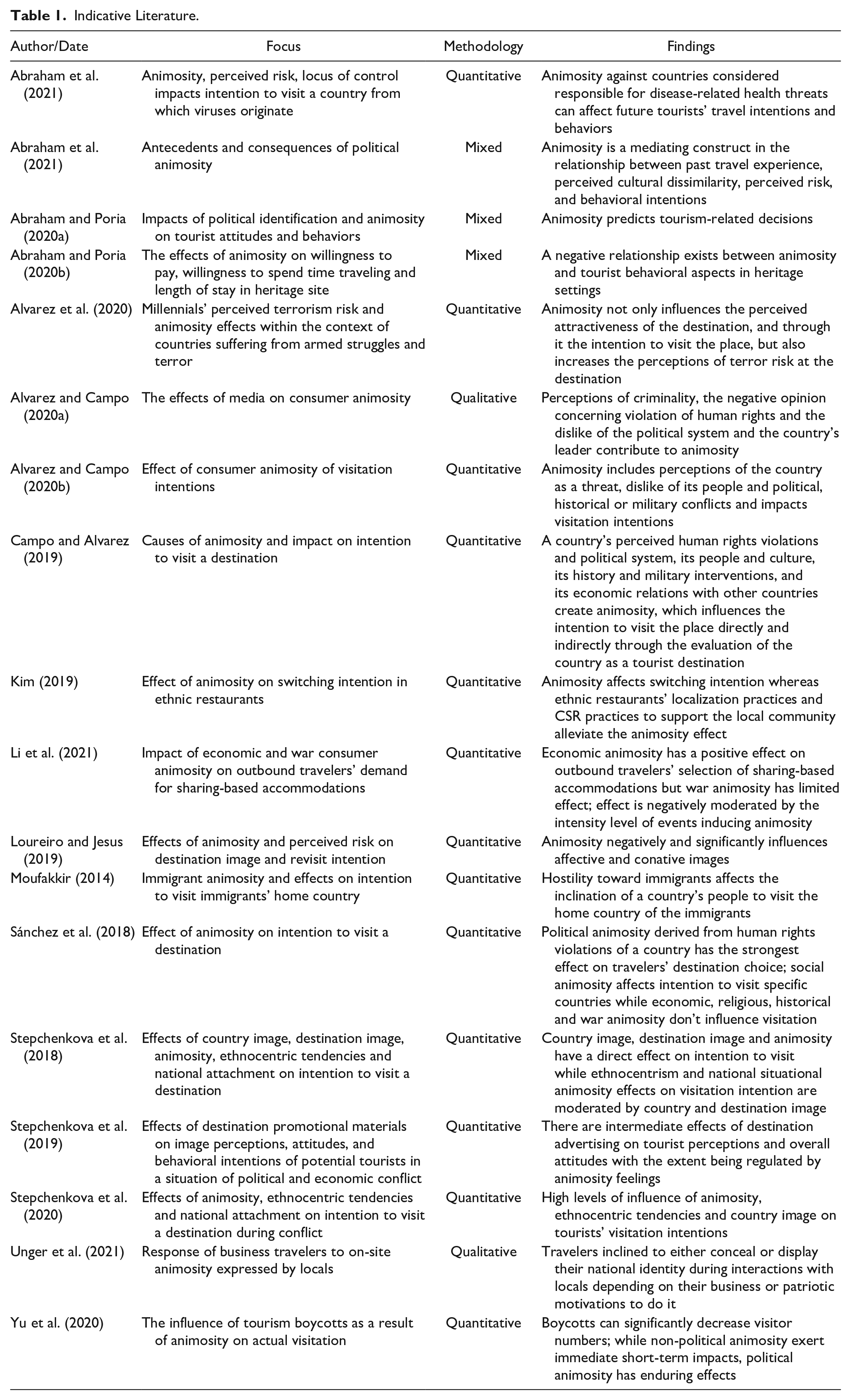
Despite the valuable insights offered by extant literature, to date there is no study examining the animosity felt and expressed against a specific group of tourists by residents. This omission is somewhat surprising considering the importance of favorable host-guest relations for the formulation of a positive tourist experience and the attainment of tourist satisfaction (Farmaki et al., 2019) which, in turn, enhances destination success. Generally, there is a vast pool of scholarly work examining resident perspectives which may be divided into two categories (Chen et al., 2018). First, studies focusing on resident perceptions and attitudes in relation to tourism development and perceived tourism impacts (e.g., Almeida-García et al., 2016; Gannon et al., 2021; Lee & Jan, 2019), concluding that residents will demonstrate support for tourism if they perceive they may have more benefits than costs (Lee, 2013; Nugroho & Numata, 2020). In this context, various models like Doxey (1975) have been used to explain resident-tourist relations. The model suggests that residents will become irritated as the number of tourists at the destination increases, eventually antagonizing them. However, the model is limited in that it assumes that resident irritability stemming from the problems tourism brings to the host community is the main cause for potential hostility between residents and tourists. The second category includes investigations on host-guest relations which highlight interactions between residents and tourists as important for the formulation of tourist experience satisfaction and destination image (e.g., Luo et al., 2015; Stylidis, 2020).
In relation to the second category of studies, recently a line of research examining residents’ tourist stereotyping emerged in an attempt to unpack the attitudes and behaviors of residents against specific groups of tourists further (e.g., Chen & Hsu, 2021; Tse & Tung, 2022; Tung et al., 2020). These studies inform us that residents’ stereotypes of tourists may be positive or negative, active or passive resulting in facilitation or harm toward tourists (Tse & Tung, 2022) with residents’ tourist stereotyping being able to change over time through the use of communicative messages that may reduce bias against tourists (Tung, 2021). While these studies are informative of the influence of residents’ cultural or psychological features in the formulation of their perceptions and attitudes toward tourists, they are less helpful in understanding animosity in tourism as the two concepts are different. Stereotypes refer to the view held by a person of individuals belonging to a particular group (based on demographic factors like gender, age, nationality, social class etc.) that often leads to unconscious biases or prejudice (Hinton, 2017). Animosity, on the other hand, represents the conscious feelings of hostility or hatred toward a social group emanating from political, economic, socio-cultural or military antagonism between nations or individuals (Yu et al., 2020). Although the concepts are closely related with animosity often treated as a form of stereotypical perceptions (e.g., Stepchenkova et al., 2019), animosity is a more affective construct and, as such, regarded as a more suitable predictor of behavioral intentions (Josiassen et al., 2022).
Other terms have been used in tourism studies to denote cognitive and affective aspects similar to animosity or affinity, particularly in terms of residents’ perspectives (e.g., Thyne et al., 2018; Woosnam, 2012). For instance, “social distancing” which refers to the level of physical and emotional closeness an individual may feel toward another individual from an out-group due to socio-cultural factors (Bogardus, 1940). Likewise, “emotional solidarity” which represents the sense of closeness that is created between individuals as a result of shared beliefs, behaviors and interaction (Durkheim, 1995). Animosity has also been closely linked to ethnocentrism which refers to perceptions that one’s ethnicity is superior to others (Jung et al., 2002). However, the concept of animosity differs from these constructs in several aspects. First, animosity does not necessarily co-exist with ethnocentrism as one can have animosity toward another without the need for the individual to have ethnocentric tendencies (Jung et al., 2002). Second, while social distance and emotional solidarity may regulate residents’ sympathetic understanding of tourists impacting resident attitudes toward tourism (Thyne et al., 2022; Woosnam, 2012), animosity is a more powerful feeling that encompasses enmity and which may arise even in the presence of socio-cultural closeness between residents and tourists due to other factors (i.e., political, economic). In this regard, animosity is worth studying in terms of resident perceptions as these impact host-guest relations, tourist satisfaction and ultimately destination attractiveness (Wang & Lopez, 2020). Understanding animosity among residents of a destination can more effectively direct attempts to strengthen resident support for tourism as well as minimize the social impacts of tourism on the host community.
In view of the lack of academic attention on residents’ animosity, this study aims to examine the potential animosity of residents living in Cyprus against Russians tourists which have been facing increasing levels of animosity following the Russian-Ukraine conflict. Cyprus, a well-known island in the Mediterranean region with a strong affiliation to Russia. Not only Russians do make up almost 20% of the island’s tourist arrivals (Statistical Service of the Republic of Cyprus, 2020), but there is a large Russian community living and working in Cyprus, many of whom have obtained Cypriot passports under the “Golden Visa” scheme that gave foreigners a passport in exchange for large investments in the country (Al Jazeera, 2020). Thus, Cyprus provides an interesting context for studying resident perceptions of animosity against Russian tourists.
Methodology
An exploratory qualitative research approach was followed which allowed the researcher to gain a deeper understanding of the perceptions and emotions of participants (Sutton & Austin, 2015). As such, the study contributes to pertinent literature on animosity in tourism as most studies adopted a quantitative or a mixed methods approach. Specifically, interviews were performed during March 2022 with residents in Cyprus ensuring that Cypriots with direct involvement in the tourism industry (i.e., employees) as well as those with indirect involvement in tourism were included in the sample. The inclusion of both residents with direct and indirect involvement in the industry was deemed important as generally it is accepted that tourism employment favorably influences perceptions and attitudes toward tourists (Stylidis, 2020). According to Pizam et al. (2000), tourism employees are among the first to type of residents that tourists will interact with; thereby, their perceptions and attitudes toward tourists are integral for the tourism experience.
Participants were selected using convenience sampling wherein the researcher targeted residents that were easily accessible and willing to participate in the study. Convenience sampling is frequently used in exploratory research even though it carries the risk of including individuals in the sample who don’t fully represent the population (Cochran, 1997). Indeed, its voluntary nature entails that individuals with strong feelings of the issue under study may be included in the sample, therefore influencing research outcomes (Moore, 2001). Yet, the researcher attempted to maintain diversity in the sample in terms of gender, age and involvement in the tourism industry (Ritchie et al., 2014) in order to ensure that the sample adequately represented the population. Before recruitment of participants, ethical approval was obtained from the institution of the researcher. The researcher informed the participants that their anonymity would be maintained at all times, highlighting that they could refuse to answer a question or even exit the interview process at any given time in an attempt to make the interviewees feel comfortable to answer questions in a truthful manner. Acknowledging that potential bias on behalf of the interviewees may arise, the researcher ensured not to interfere with participants’ answers, allowing them to express themselves freely without interruptions. Data saturation was reached at 33 participants whereby no new information emerged from the data (Fusch & Ness, 2015). Table 2 illustrates the profile of the participants.
Profile of Interviewees.
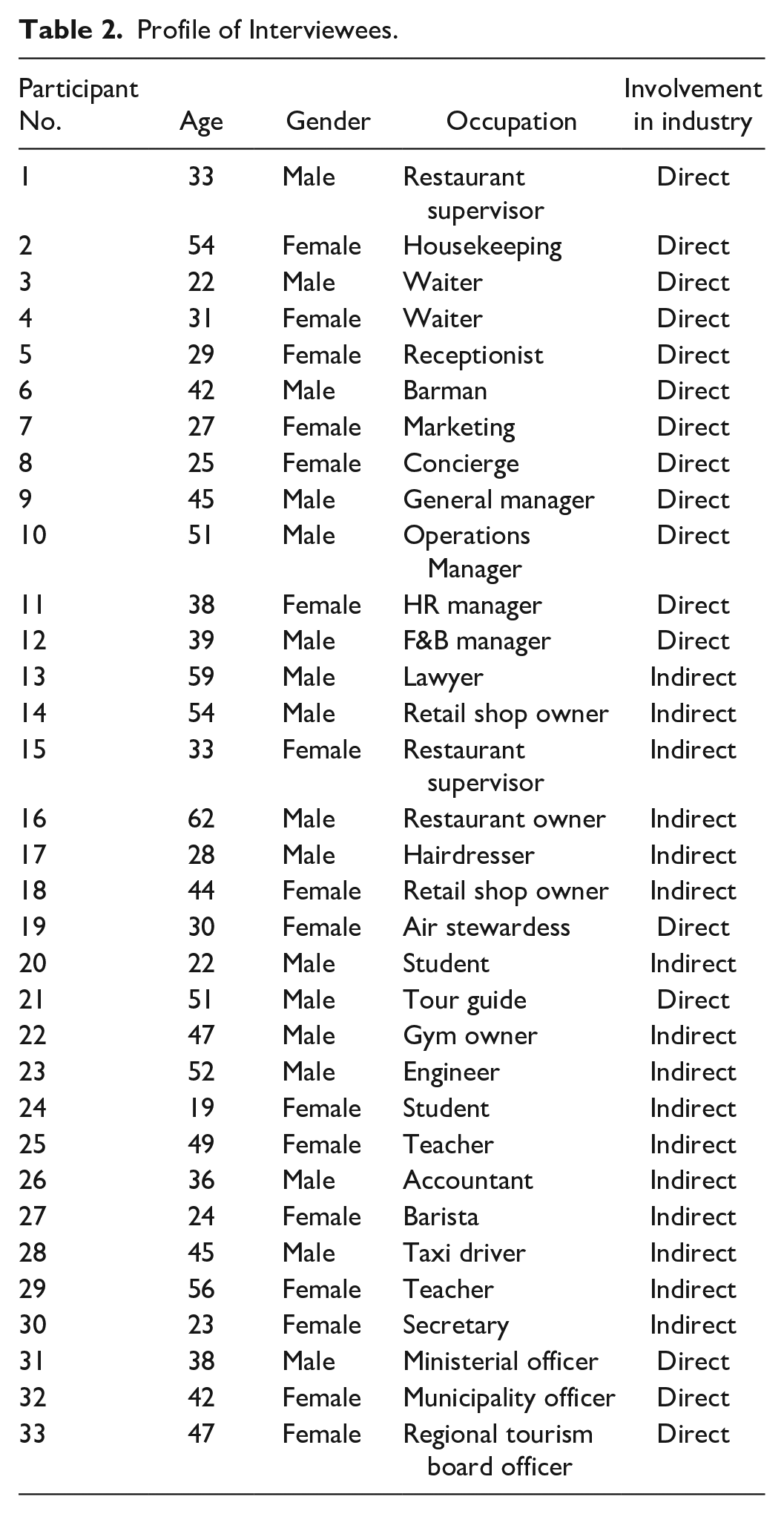
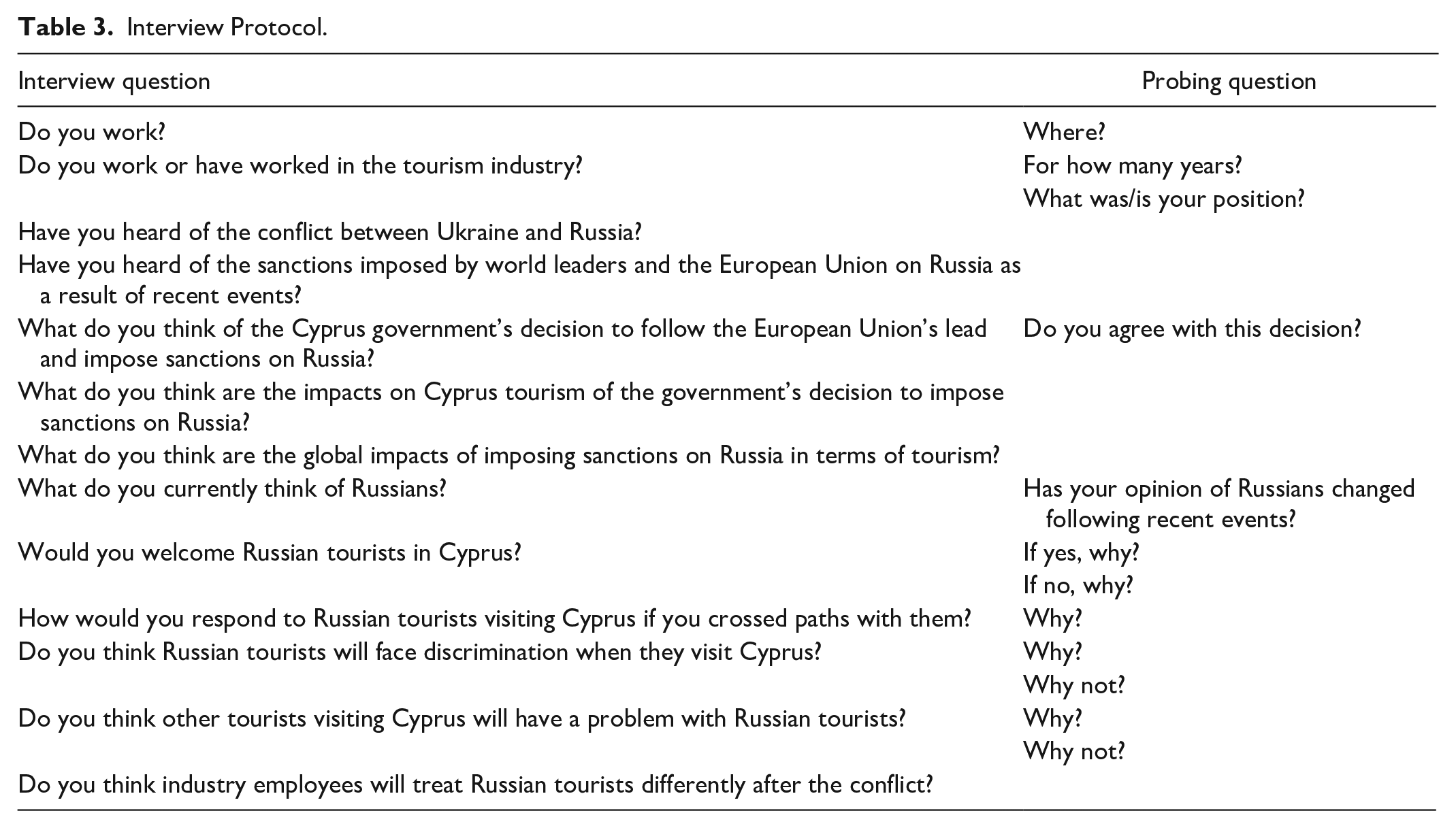
The interviews lasted approximately 30 minutes and were conducted face-to-face and on a one-to-one basis, which maximized the comfort level of the participants in terms of answering. Prior to each interview the researcher informed the participants that the data is confidential. The interviews, which were held at a place and time of convenience to the participants, were conducted in Greek and translated by the researcher into English. Each interview started with a series of general questions aiming to break the ice and establish the profile of the participant before moving on to the topic of: (a) perceptions over the impacts of the Russia-Ukraine conflict and, specifically, of the sanctions imposed on Russia on Cyprus tourism, (b) potential feelings of animosity toward Russians, and (c) potential responses toward Russian tourists due to animosity. The questions were developed based on the literature on animosity and the study context. Table 3 illustrates the questions asked.
Interview Protocol.
Data were analyzed using thematic analysis (Braun & Clarke, 2006) following Gioia et al.’s (2013) analysis suggestion resulting into three rounds of coding. At first, the researcher read through the transcripts carefully and numerous times to detect key themes, generating several first-order indicators. These were then organized and grouped in a second round of coding (second order concepts) into interrelated themes to refine and expand thematic categories and sub-categories (Goulding, 1999). Once a workable set of codes was obtained, the researcher attempted to extract the emergent second-order concepts even further into “themes” to validate relationships and further clarify thematic categories (Strauss & Corbin, 1990) in order to elaborate on key issues (Hennink et al., 2010). This process led to the emergence of three overarching themes, namely “perceptions of impacts of the conflict on tourism,” “animosity perceptions and ‘animosity responses’. Figure 1 illustrates the data structure. In order to ensure reliability of data, evaluative rigor was maintained in the data collection and analysis phases (Kitto et al., 2008) such as by showing the transcripts to the participants and asking them to validate them and including thick verbatim descriptions of participants” narrative to support the findings.
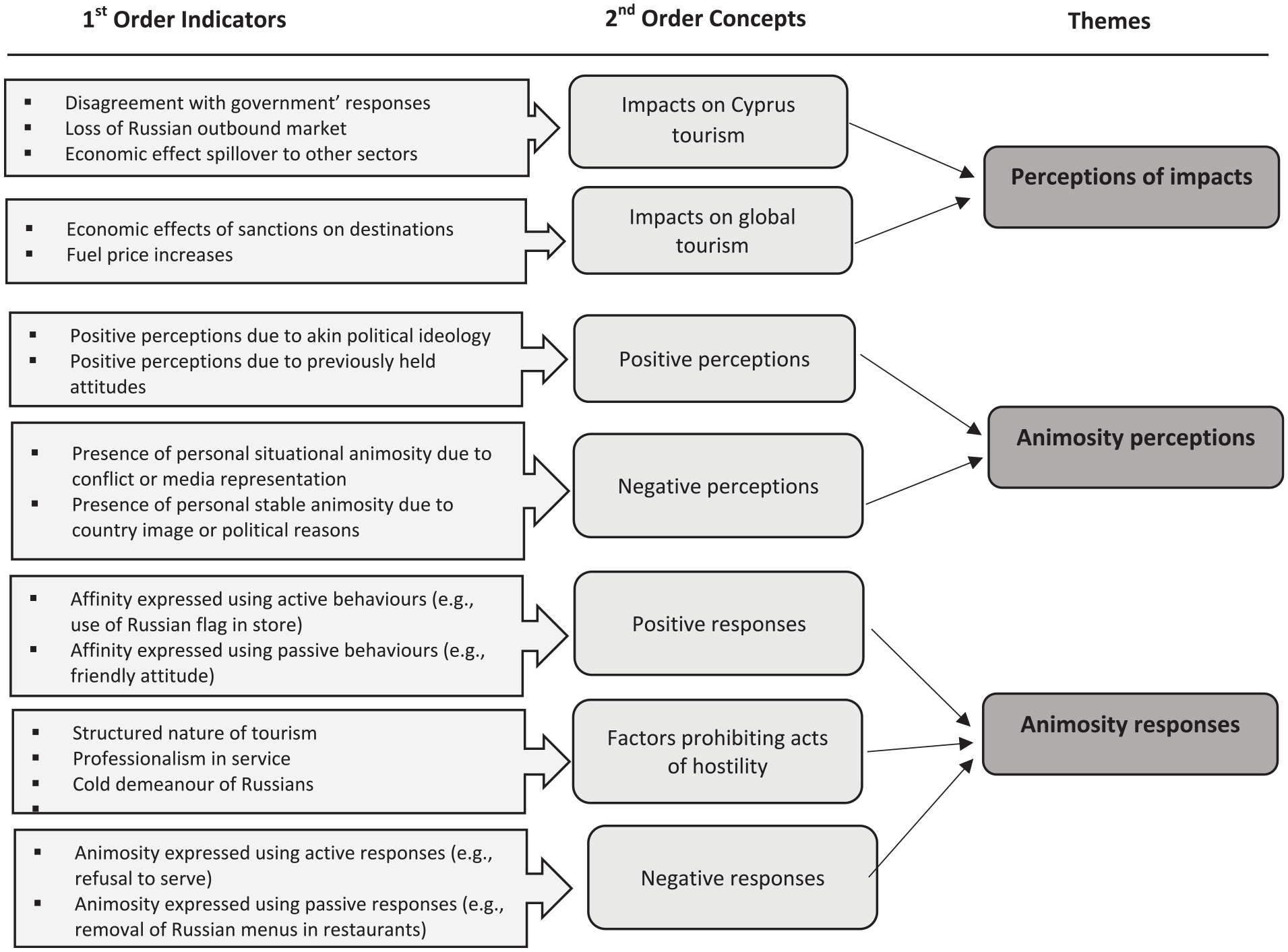
Data structure.
Findings
In this section, the findings from the analysis are presented in accordance to the themes identified in the analysis process. First, the perceptions of the impacts of the conflict on tourism are explained before animosity perceptions against Russians and associated responses toward Russian tourists are discussed.
Perceptions of Impacts of the Conflict on Tourism
Firstly, participants were asked of their opinions of the impacts of the conflict on tourism. All residents with direct involvement in the industry highlighted the dire situation of Cyprus tourism as a result of the conflict and especially the sanctions imposed on Russia. “Speaking to (foreign) tour operators, it seems that this summer will be extremely difficult. . .even if the war finishes, we will not see the numbers initially expected” explained a participant [P9]. Other participants shared these concerns, questioning the tourism authorities’ targeting strategy and the tourism development direction the industry on the island has traditionally followed. These concerns are summarized in the extracts below: That’s what you get when you put all of your eggs in one basket. Tourism authorities in Cyprus have always done this (focus on limited tourist segments). . .first with the British, then with the Germans, lately with the Russians. If something goes wrong with a key market, you are in trouble. It’s time this strategy changes. . . [P33] The problem is that most of our tourists, especially those from Russia and Ukraine, are coming through tour operators. We rely so much on them (tour operators) that if something happens, we end up in trouble because they don’t bring one or two tourists, they bring thousands! Now both of these markets are gone, the Ukrainians will not travel for some time and the Russians. . .well we shall see what decisions the tour operators make and what instructions they will receive from their government after we (Cyprus government) decided to punish them. [P10]
Indeed, several participants with direct involvement in the industry commented on the decision of the Cyprus government to follow the EU’s stance and condemn Russia’s military advance into Ukraine as well as impose sanctions suggested by the EU on the Russian Federation, labeling these tactics as “dangerously damaging for Cyprus itself” [P32]. According to participants, the decision to participate in EU imposed sanctions carries the risk of the potential anger of Russian authorities which may cut ties with Cyprus; thereby, influencing the financial as well as the tourism sectors of the island’s economy. Lamenting on the seriousness of the situation a participant [P21] claimed that “we have taken out our eyes by ourselves [. . .] rather than think of what is best for Cyprus.” In relation to the anticipated adverse effects on Cyprus tourism, participants working in the industry commented on how the Cyprus tourism authorities are trying to tackle the situation. As one participant stated, “we can’t do much now as we are a month away from the summer season commencing but we will try to recover the lost arrivals (from Russia) using digital marketing. . .” [P31].
Residents with no direct involvement in the industry have also acknowledged the seriousness of the situation, arguing that it is not just the tourism industry that is at stake but the entire economy of the island. In the words of a participant [P18], “this is catastrophic! As if the pandemic was not enough, now this. Our economy will be destroyed. . ..” The participant then raised the following questions over potential accountability regarding the expected impacts: Who will pay for the small businesses’ losses, for the people that will be unemployed because Russian companies will leave (from Cyprus)? The government that has made this decision? Did it ask the people whether they wanted to impose sanctions on Russia?
Other participants agreed, highlighting that the impacts will not only be felt in Cyprus but in Europe and the world in general. As a participant [P15] stated, “economy in Europe will face great challenges” as a result of fuel prices rising and the disruptions in trade following the sanctions imposed on Russia.
Animosity Perceptions Against Russians
The discussion then moved to the topic of animosity against Russians, with participants expressing varying views. On the one hand, there are participants who expressed positive opinions of and attitudes toward Russians at this moment in time due to akin political ideology and, specifically, economic loathing felt toward Western countries. “The capitalists of the West are evil and had to be stopped!” said a participant [P16] in justification of his support toward Russians during the current conflict. Another participant [P28] shared similar views, commenting that “the US are using NATO as an excuse to grow more powerful . . . thank God there is one country [Russia] that rose up against them before the West takes over the world!.” In addition, this study identifies previous attitudes as reinforcing resident affinity toward tourists as there were participants who stated that they know many Russians living in Cyprus and they are kind-hearted people who should not be subjected to aggression. In the words of a resident [P30], “Russia always supported Cyprus politically and economically, we have the same religion and similar mentality. . ..” In this context, a few participants (primarily industry stakeholders expressed sadness over the situation recognizing that the Russian market was an important one for Cyprus tourism, which will be inevitably impacted by the conflict and the sanctions imposed on Russia.
On the other hand, the majority of participants expressed animosity against Russians with the animosity among Cypriots being of personal nature, albeit of different types. For example, for most participants animosity emerged as a result of the conflict; thus, represents military animosity that is situational and likely to be short-lived. In such cases, animosity seems to build up due to news and images depicted in the media which influences people’s views as well as a result of solidary given the fact that Cypriots had also undergone a conflict situation in the past. The following extracts illustrate these sentiments: “Watching on the news those women and children trying to escape. . .my heart aches for them. How could they [Russians] do this in today’s era?” [P17] “It brings memories back from what happened to Cyprus. We [Cypriots] know what it feels like so we should support the victims [Ukrainians] in their fight of the oppressor.” [P14]
However, in some cases the anti-Russian sentiment expressed by a few participants seemed to stem long before the current conflict arose. As a participant [P22] said, “Russians were always bullies, we can’t support their bullying by embracing them. . ..” Another participant [P45] added that “communists can’t do what they want nowadays.” Such arguments reveal the presence of political animosity stemming from dislike of a country’s political system, leader or country image. Specifically, this study highlights the presence of stable political animosity among residents of a destination as a result of prior negative perceptions held against the country of origin of tourists on political grounds. Consequently, animosity and/or acts of hostility stemming from stable political animosity seem to be either exacerbated or justified in the presence of a military event that leads to military animosity emergence.
Animosity Responses Toward Russian Tourists
With regard to animosity responses against Russian tourists, residents gave varying answers illustrating the potentiality of either active or passive resident behaviors. For instance, some residents who expressed affinity toward Russians claimed that they would “welcome Russians with open arms” [P16] with a few business owners stating that they display signs (i.e., Russian flag) in their business as a symbol of their support to the country. Other participants who expressed affinity toward Russians seem to exhibit more passive behaviors such as being friendly if a Russian tourist asked them for directions or help. Generally, many participants believed that when travel bans are lifted Russians will not face any incidents of animosity at least in Cyprus. “Cyprus is a hospitable place” claimed a resident [P20] while others suggested that people will understand that civilians are not responsible for their government’s actions and incidents of aggression should not expected. In relation to this point, there were participants who identified the passage of time as an alleviating factor on people’s current animosity of Russians.
When asked about potential animosity behaviors by other tourists, residents with direct involvement in the industry argued that tensions between Russian and European tourists are unlikely as “Russians are generally ‘cold’ and don’t interact much with others” [P10]. Such statements indicate the presence of stereotypical perceptions of Russians that may not necessarily reflect the reality (Hinton, 2017). In addition, residents working in the industry noted that as many Russian tourists travel in an organized manner through tour operators and stay in all-inclusive resorts, it will be easy to limit their interaction with others; hence, prevent potential acts of hostility toward them. Participants noted that if any incidents do occur it will be in cheaper resorts where “most of the customers are younger and of a lower socio-economic status who may drink a bit too much” [P12].
Contrary, there were several participants who believed that animosity against Russian tourists will be inevitable. Several locals claimed to have witnessed acts of hostility toward Russians residing on the island since the conflict with Ukraine began, suggesting that tourists will be most likely treated the same way. “I don’t think it will get better in the next few years but that depends on the media and how they will present the situation” said a participant [P25]. Within this context, the role of the media was both highlighted and questioned by participants as contributing to animosity, with “propaganda” tactics being recognized as detrimental. “We don’t know what to believe anymore but with access to Russian media being restricted we only get to hear one side of the story I guess” said a participant [P9].
In this context, both active and passive behaviors were equally noted among the participants who expressed animosity against Russians. For example, there were participants (primarily business owners) who claimed that, as a result of the actions of the Russian government in Ukraine, they refuse to serve Russian customers. Some even use various tactics such as displaying a sign explicitly stating refusal to serve Russians or using more subtle ways including removing pricelists/menus written in Russian. Although no employee interviewed suggested refusal to serve Russian customers it was pointed out by participants that issues may arise between Ukrainian staff and Russian tourists. As a participant argued [P5], “several of my colleagues are Ukrainians and their blood boils at the moment. Luckily, we currently don’t have any Russian clients but when they do come, I don’t know how things will be.”
Employee behaviors against Russian customers was a concern highlighted by industry stakeholders who commented on the importance of service in spite of personal beliefs. In the words of a participant [P11], “(hotel management) will not tolerate any disrespect to customers of any race, religion or ethnicity and the employees are recruited accordingly and trained to reflect proper behavior.” Another participant [P1] agreed, adding that any poor treatment of Russian customers means that they will not return so “employees should do their job regardless of who they like or not.” In relation to this point, several industry employees expressed doubt over how to act toward Russian customers. As a participant [P3] explained, “I always like them (Russians), they are good tippers but I don’t know what my colleagues will think if I am courteous and friendly towards them,” highlighting the influence of subjective norms.
Discussion
What the findings tells us is that the residents in Cyprus are particularly critical of their government’s decision to impose sanctions on Russia. The reasons behind residents’ concerns are the potential impacts on Cyprus tourism as well as the country’s economy in general. Residents working in the tourism industry, in particular, expressed a concern as the sanctions essentially imply that there will be travel restrictions for Russian outbound tourism which represents an important market for Cyprus. Evidently, the lack of arrivals from Russia entails reduced tourism revenue as well as implications on tourism employment. Likewise, the imposition of the sanctions is likely to impact other sectors of the Cyprus economy beyond tourism. For example, Cyprus is a renowned financial center that has attracted many Russian companies over the years which operate on the island, as it is regarded as a “tax haven” (Tognini, 2022). Hence, this study concurs with past research that identifies direct and indirect effects of sanctions on tourism (e.g., Seyfi & Hall, 2020), highlighting the dual effect of sanctions in terms of travel as not only tourists from the sanctioned country are affected but also the destination imposing the sanctions. Another effect of the sanctions that informants identified is the anticipated increase in fuel prices and the disruptions in trade, concerns that have also been raised in the global media (Karadima, 2022).
With regard to animosity perceptions, this study identified polarized views. On the one hand, there are residents that agree with Russia’s advance into Ukraine expressing affinity to Russians either for political or social reasons. In this context, residents working in tourism underlined the economic ties between Cyprus and Russia given that there are several Russian companies on the island which is visited by a large number of Russian tourists every year. In relation to this point, it is worth mentioning the concept of emotional solidarity (Durkheim, 1995) that seems to transpire through informants’ comments. Indeed, shared socio-cultural characteristics and regular interaction between Cypriots and Russians seems to play a role in forming resident attitudes toward Russian tourists which remain positive regardless of recent events. On the other hand, most informants expressed animosity against Russians with the animosity among Cypriots being of personal nature and representing either military animosity or political animosity. There are residents, for instance, who expressed situational military animosity that arose due to the conflict and is likely of temporary nature (Jung et al., 2002), rather being fueled by Western media representations of the situation than previously held attitudes. Many residents, though, seem to have animosity against Russians for political reasons. Indeed, previous research acknowledged that political ideology is an influencing factor on animosity within tourism (Campo & Alvarez, 2019) whereas several other studies exist indicating the effect of a disagree with the country’s political system, leader or country image as influential on animosity development (Abraham & Poria, 2020; Alvarez & Campo, 2020a; Stepchenkova et al., 2018). As this study shows, the hostile affections against Russians expressed by residents of Cyprus are long-standing, representing stable political animosity, yet appear to be exacerbated in the presence of military action as in the case of the Ukraine-Russian conflict.
Despite the presence of either affinity or animosity toward Russians, it seems that such corresponding affective aspects are not always manifested in residents’ behaviors. This study found that residents who expressed affinity toward Russians demonstrate such feelings either actively or passively. Active affinity expressions may include placing a Russian flag inside a business owner’s store whilst passive affinity expressions may resort to simply being friendly to Russians. In a similar note, residents with animosity affections toward Russians express these actively, such as by refusing to serve Russians, or passively in the form of removing menus in Russian from their place of business. While previous research identified resident attitudes toward tourists as influential on host-guest relations (e.g., Doxey, 1975), this study acknowledges that potential hostility may arise not due to tourism-related factors (i.e., over tourism) but as a result of political aspects as well as previously held negative perceptions of the country of origin of the tourists rooted on political reasons (Yu et al., 2020). Notwithstanding, several residents questioned whether Russian tourists visiting Cyprus will face discriminatory behaviors identifying the passage of time as influential on the shaping of animosity. Thus, while past studies (Farmaki et al., 2019; Khalilzadeh, 2018) recognized the influence of the duration of the conflict on animosity perceptions, this study highlights the timing of the conflict as another factor shaping animosity endurance. In relation to this point, it’s worth mentioning the impact that media has on animosity as constant reminders of an event (e.g., conflict) may very likely continue to shape public opinion (Alvarez & Campo, 2020a).
Informants also discussed the role of employees in a potential discriminatory behavior against Russian tourists, citing professionalism in service as a deterring factor for manifestations of employees’ potential animosity. Correspondingly, employees wanting to express affinity to Russians may feel discouraged to do so given fears of being judged by colleagues. According to Maher and Mady (2010), subjective norms play a role in regulating behavior as beliefs that others may disapprove of a particular behavior are highly influential. In this context, Fennell’s (2006) suggestion that reciprocal altruism may formulate host-guest relations becomes relevant. Although expectations of a mutual exchange of benefits are likely to prevent the manifestation of animosity toward Russians especially in service settings (i.e., hotels), this study identified potential animosity responses even on behalf of tourism stakeholders interacting with Russian tourists. As such, findings confirm that animosity is a complicated notion that evolves and manifest varyingly.
The findings of the study led to the development of a classification of resident animosity/affinity (Figure 2), which identifies four categories of stakeholders based on their feelings and behavior. Locals who feel and intend to express affinity toward Russian tourists actively are labeled “allies” whereas those who feel affinity but display it in a passive manner are called “supporters.” Contrary, those with feelings of animosity against Russian tourists who actively display them are labeled “enemies” with residents passively displaying animosity being referred to as “opponents.”
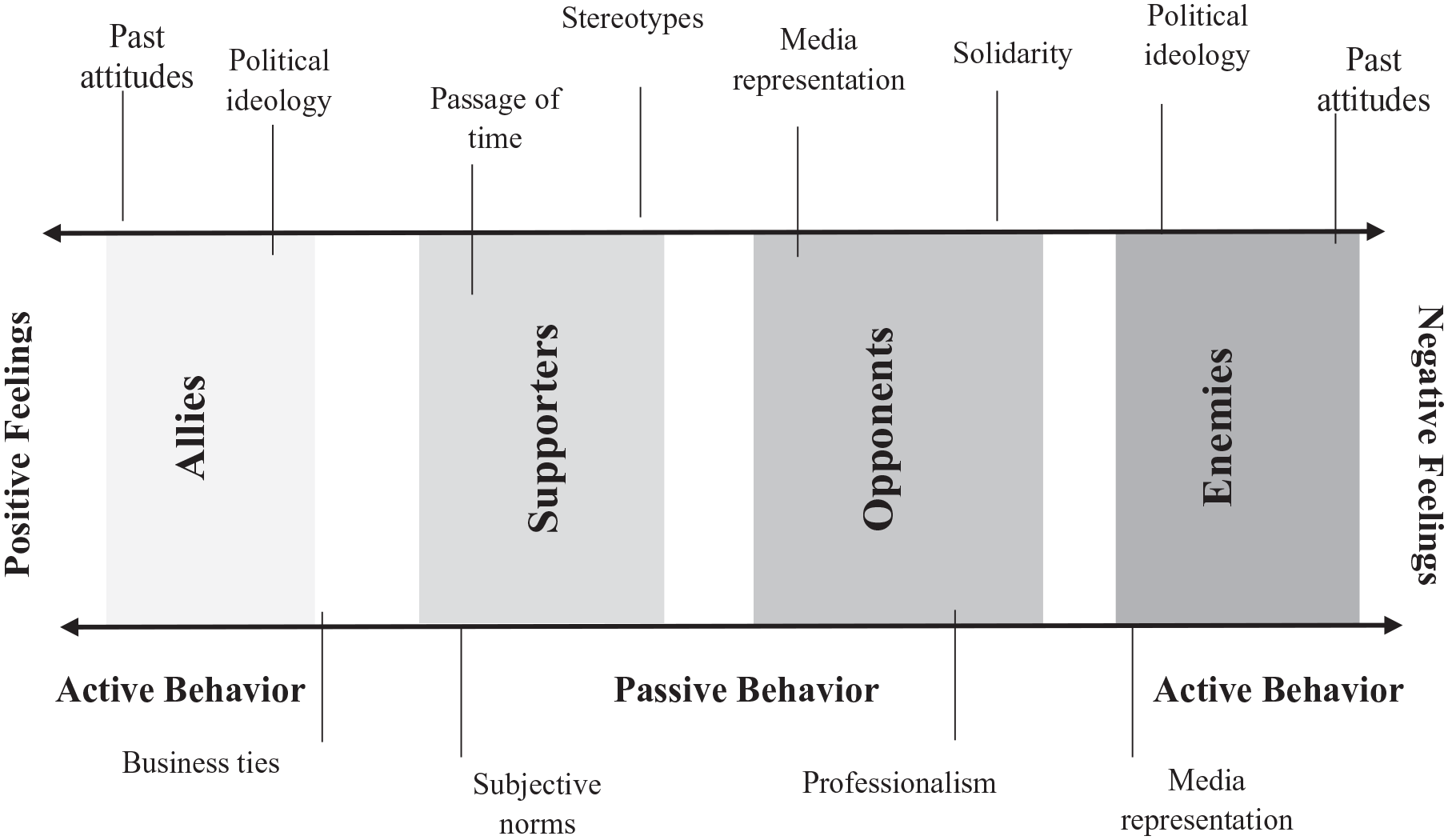
Classification of residents’ animosity/affinity.
In this context, this study uncovered several factors that seem to influence the affective inclination and behaviors of residents in Cyprus. For instance, “allies” expressed affinity toward Russians due to akin political ideology and favorable past attitudes brought about by economic and socio-cultural ties between Cypriots and Russians. Likewise, involvement in the tourism industry and business ties led to a supportive behavior toward Russian tourists. “Supporters” expressed affinity toward Russians albeit a more passive behavior toward tourists, stating that passage of time will improve animosity feelings across the island. Interestingly, subjective norms seem to regulate the behavior of residents working in the industry as they don’t want to be judged by others for being friendly toward Russian tourists whereas stereotypical perceptions of Russians (i.e., they are cold-hearted) seem to influence residents’ opinions of potential animosity acts against them. “Opponents” expressed animosity against Russians, stemming primarily from media representation of the conflict and solidarity felt due to the conflict situation Cyprus is undergoing for years, but a more passive behavior toward tourists. Residents working in the tourism industry, especially, highlighted the importance of professionalism in serving customers regardless of their nationality. On the other end of the spectrum, “enemies” have animosity against Russians due to different political ideology held and negative past attitudes against their country, intensified due to media representation of the situation.
Conclusions and Implications
The aim of this study was to examine resident’ animosity felt and expressed against a certain group of tourists; a topic that has received scant academic attention given that the majority of animosity studies in tourism focused on tourist perspectives. This study draws from the views of residents in Cyprus with regard to their potential animosity against Russian tourists following the Russia-Ukraine conflict that erupted in February 2022 and which led to unprecedented levels of animosity against Russians. Overall, this study generates the three main conclusions. First, a military conflict has immediate and direct adverse effects on the tourism industry of a destination (when the tourist generating country is involved) not only by influencing tourism patterns and demand but also due to the sanctions imposed by the international community. Indeed, residents in Cyprus acknowledged the negative short-term effects of the Russia-Ukraine conflict on Cyprus tourism as well as on global tourism in general. Past studies confirm the negative effects of economic sanctions imposed on the tourism industry of the country instigating the conflict (Seyfi et al., 2022); yet, this study highlights that destinations imposing the sanctions can also become disadvantaged particularly when the country on which sanctions are imposed represents a key tourist market.
Second, animosity within tourism settings appears to represent a complex construct as it evolves and manifests varyingly depending on multiple factors. As this study found, resident feelings of Russian tourists range from positive to negative, revealing the presence of either affinity or animosity. Likewise, different anticipated responses toward Russian tourists are uncovered varying from positive or negative active to positive or negative passive behaviors. Specifically, the study identifies four categories of residents based on their animosity or affinity perceptions and behaviors including ‘allies and “supporters” which express affinity toward Russian tourists with the first manifesting it actively and the second passively as well as “opponents” and “enemies” which refer to residents expressing animosity against Russian tourists while demonstrating it either passively or actively.
The third conclusion of this study is that different animosity types of a personal nature seem to be present among residents. While for “enemies,” for instance, animosity held against Russians tends to be of a stable political nature shaped long before the recent events, with associated behavior being triggered by the Russia-Ukraine conflict whereas for “opponents” the conflict led to the development of military animosity that is most likely to be situational and of a temporary nature. Interestingly, this study identified participants labeled as “allies” and “supporters” who expressed affinity toward Russians amidst the situation, partly triggered by the political animosity felt for Western dominant countries (e.g., USA) or due to previously held positive attitudes toward Russians. In relation to this point, it is worth mentioning the economic motive influencing residents’ behaviors toward Russian tourists due to expectations of mutual benefits in a commercial exchange (Fennell, 2006). Evidently, personal animosity against a certain group of tourists—or affinity for that matter—is neither felt nor expressed equally among the host community. In light of these conclusions, this study offers significant theoretical and practical implications.
By drawing from an exploratory, qualitative research approach, the study recognizes that animosity in tourism need to be conceptualized alongside its opposite—affinity—as the interplay between the two constructs is complex with perceptions, attitudes and associated behavior being regulated by various factors. While some of these factors such as the role of media and country image were previously recognized in pertinent literature (which consists mostly of quantitative studies) as influential on animosity among tourists (e.g., Alvarez & Campo, 2020a; Stepchenkova et al., 2018), this study highlights the existence of multiple, overlapping factors shaping the extent, the duration and the manifestation of animosity (or equally affinity). Specifically, this study underlines that tourism has a socio-cultural, economic and political character (Farmaki & Stergiou, 2021) that complexifies the manifestation of animosity. Thus, the presence of animosity does not necessarily imply expression of animosity toward a specific entity (Klein et al., 1998). To this end, this study offers a classification of resident animosity/affinity which can be used as a basis for further examination of the construct in terms of resident animosity/affinity toward a specific group of tourists.
The study also carries practical implications. By identifying the importance of affinity, findings may help policymakers and industry practitioners to improve host-guest relations and, thereby, tourist satisfaction and resident support for tourism. Tourism affinity has been found to not only positively influence tourist decision-making and behaviors but also contribute to resident support toward specific groups of tourists (Josiassen et al., 2022). Affinity felt through sympathy, admiration or cultural connection (Oberecker et al., 2008) may, thus, lead to improved stronger host-guest relations and, hence, greater benefits for both the host community and the tourists. The typology offered, for instance, may enlighten policymakers and practitioners of the varying range of perceptions and responses against Russian tourists present in the host community. As such, policymakers may need to reflect on their segmentation and targeting strategies while businesses could deliberate their recruitment processes and human resource management should a market against which animosity is felt by locals (e.g., Russia) remains a priority to them. As perceptions of a safe destination are important for ensuring tourism demand and tour operator cooperation (Cavlek, 2002; Zou & Meng, 2020), informative campaigns with locals directly involved in the tourism industry as well as the general public may ensure the reduction of the possibility of acts of hostility against certain groups of tourists.
Although this study draws from a single case, it is axiomatic that it may serve as a stepping-stone for further enquiry into animosity within tourism whilst offering valuable lessons to destinations relying on the Russian market for inbound tourism. Future research could, for example, compare and contrast resident animosity/affinity to tourist animosity/affinity to get a better understanding of demand and supply issues related to conflict incidents. Likewise, researchers could examine the perspectives of different stakeholders (i.e., tour operators, employees) in handling potential animosity expressions against a group of tourists. Future research should also focus on investigating the intricate relationship between animosity or affinity perceptions and behaviors beyond conflict settings. Quantitative studies in particular are invited to measure animosity from a resident point of view. Last, investigations of different types of animosity should be examined and paralleled to different forms of affinity among tourist groups and the local community in order to better evaluate the sources and outcomes of the emotions driving tourist decisions and host community behaviors.
Footnotes
Declaration of Conflicting Interests
The author declared no potential conflicts of interest with respect to the research, authorship, and/or publication of this article.
Funding
The author received no financial support for the research, authorship, and/or publication of this article.
