




Abstract
Tourism is one of the most vulnerable industries to disasters, and empirical studies on disaster preparedness have been surprisingly sparse. Drawing on the theory of planned behavior, this study sheds light on the unexplored mediating role of strategic decision-makers’ (SDMs) disaster cognition along with their attitude to explicate how and why learning influences disaster planning. Hypotheses were tested using two-phase survey data collected from 301 SDMs of Sri Lankan accommodation establishments. Clarifying previous inconsistent findings regarding the role of learning, this study demonstrated that training and past disaster experience indirectly influenced SDMs’ planning intentions via their disaster cognition and attitude toward disaster planning. In this regard, past experience was found to regulate the relationship of training with both cognition and attitude, implying that disaster training programs may be more influential for encouraging disaster planning intentions of lesser experienced SDMs by stimulating their disaster cognition and attitude.
Keywords
Introduction
In the pre-COVID-19 era, tourism established itself as a fundamental source of income, employment, and social advancement for many emerging economies (United Nations World Tourism Organization (UNWTO), 2019). However, given the perishable nature of its service, tourism industry has been found to be more prone to be hit by disasters than other industries (Chowdhury et al., 2019; Jiang & Ritchie, 2017). A disaster can be defined as “unpredictable catastrophic change that can normally only be responded to after the event, either by deploying contingency plans already in place or through reactive response” (Prideaux et al., 2003, p. 478). In recent years an increasing number of tourist destinations and organizations have been adversely affected by natural disasters and epidemics (Novelli et al., 2018; Ritchie & Jiang, 2019), including the significant impact of COVID-19 (Jiang et al., 2022). According to the latest data from the United Nations World Tourism Organization (UNWTO) (2020), the massive drop in tourism owing to the COVID-19 pandemic in 2020 has resulted in a loss of US$ 935 billion in export revenues from international tourism, US$ 1.1 trillion in international tourism receipts, and an economic loss of US$ 2 trillion in world GDP.
Previous studies show that most firms cannot endure major disasters (Ballesteros & Sonny, 2015), particularly in the tourism accommodation industry, which has had less formal disaster management planning than other industries (Wang & Ritchie, 2012). For instance, a recent study conducted in Kenya (Odhiambo et al., 2020) highlighted that many tourism small-and medium-sized enterprises (SMEs) across the value chain may be the last to recover from the impact of COVID-19, and many may not survive at all. Hence, tourism firms, particularly in the accommodation sector (Wang & Ritchie, 2012) of emerging economies (Asgary et al., 2020; Prasad et al., 2015), which are found to be vulnerable owing to lack of effective planning and resources, need to prioritize disaster management planning to recover from disasters swiftly and build resilience (Mair et al., 2016; Ritchie & Jiang, 2019).
However, most tourism accommodation SMEs, which constitute a significant proportion of this industry (Mair et al., 2016), may consider disaster planning to be useless because it does not produce returns in the short run (Sheffi, 2015; Wang & Ritchie, 2012). This thought may be attributed to the managers blindly following mainstream management theories, which place undue emphasis on maximizing shareholder value through greater profits (Ghoshal, 2005) and follow a predominantly structuralist, functionalist, and mechanistic approach toward decision-making (Brodbeck, 2011; Joullié, 2018, 2020). Such an ideology-driven approach with an inherently pessimistic vision of society can prevent managers from playing a positive role in the society (Ghoshal, 2005). Therefore, disaster planning becomes a difficult investment decision.
The immediate and long-term impact of disasters can be extremely severe and unprecedented, endangering human lives and livelihoods. Disaster planning, as a socially desirable activity, helps prepare organizations mitigate potential detrimental impacts of disasters. This study is believed to be inherently transformative in nature (see Gretzel et al., 2020) as the conditions that propel managers to adopt disaster management planning—a socioeconomically beneficial outcome not identified with short-term commercial benefits—are explored. Disaster planning involves all actions taken proactively for disaster management to help organizations become prepared for disasters, such as scenario planning, forecasting, drills or simulations (Ritchie, 2009). Therefore, the role of a strategic decision-maker (SDM) is critical in this context.
In tourism micro-enterprises, particularly family-owned businesses, family members may play different roles in sharing entrepreneurial and decision-making responsibilities (Smith, 2014), and this may further depend on both the level of family involvement (i.e., ownership control, relative number of family managers, and tenancy on boards of directors) and members’ willingness to use the influence derived from their involvement (Long & Mathews, 2011). In this regard, Long and Mathews (2011) pointed toward the importance of ethics in SMEs as moral codes and reciprocally cooperative behaviors are key to a stable and cohesive coalition characterized by the pursuit of transgenerational sustainability, shared vision, non-economic goals, and strong interpersonal ties, which transcend profitability. Prior literature suggests that SDMs’ choices can be influenced by psychological factors, particularly their attitudes, which are argued to be an important determinant of disaster management planning (Elsubbaugh et al., 2004; Wang & Ritchie, 2012).
However, theoretically grounded empirical studies that understand factors influencing disaster planning and preparedness have not only been scant (Aliperti et al., 2019; Mair et al., 2016; Ritchie & Jiang, 2019) but also limited in at least three key aspects. First, prior tourism research understanding the influence of various modes of learning (e.g., experience, training, and education) has been argued to be largely conceptual and descriptive (e.g., Ritchie, 2009; Ritchie & Jiang, 2019). Because the influence of learning may be complex, as tourism management phenomena are highly context-dependent (Fuchs & Sigala, 2021), empirical studies are limited as well as mixed (Muttarak & Pothisiri, 2013; Wang & Ritchie, 2012), with some studies purporting a relationship (Jiang & Ritchie, 2017; Wang & Ritchie, 2012; Zhang et al., 2018) while others finding no relationship at all (Heller et al., 2005; Kim & Kang, 2010). Research is likely required to examine potential mediating mechanisms to better understand the processes by which learning may influence planning behavior, particularly individual psychological approaches, as these may create barriers to planning (Ritchie & Jiang, 2019; Wang & Ritchie, 2012). In particular, while training and experience can be influential in raising awareness and knowledge on disasters (Muttarak & Pothisiri, 2013; Ritchie, 2009), little tourism research has investigated the underlying psychological mechanisms through which disaster-related training and past disaster experience may influence SDMs’ disaster planning behavior for instance, via cognition, attitude, and subsequent planning intention.
Second, previous studies have emphasized the importance of disaster cognition for planning (Comfort, 2007; Sun et al., 2017). However, the role and influence of disaster cognition on the attitude and planning intentions of SDMs in the tourism context have not been investigated. Third, despite the recognition that different modes of learning may interact (Sun et al., 2005), studies that examine their interplay in shaping disaster preparedness are highly limited (Muttarak & Pothisiri, 2013). In particular, it is believed no prior tourism study has investigated how disaster-related training and past disaster experience may interact to influence SDM cognition and attitude, which, in turn, influence disaster planning.
Drawing on the theory of planned behavior (TPB) (Ajzen, 1991), this study addresses the above-noted gaps in the tourism literature by developing and testing a conceptual framework (see Figure 1) to systematically examine and elucidate the influence of two key modes of learning—disaster management training and past disaster experience—on disaster planning intention. This study hopes to make three significant contributions to the tourism literature. First, this study attempts to better understand how and why disaster management training and past disaster experience encourage disaster planning behavior of SDMs by shedding light on the key underlying psychological mechanisms. In this respect, this study investigates the unexplored mediating role of disaster cognition along with the attitude to gain new understanding of the psychological processes underlying disaster planning behavior of SDMs in the tourism accommodation industry. Second, disaster training (e.g., Karanci et al., 2005) and prior disaster experience (e.g., Wang & Ritchie, 2012) have been mainly studied in isolation by tourism researchers. This study is believed to be the first that simultaneously examines their direct as well as joint effects to develop a comprehensive understanding of how different modes of learning (e.g., experience and training) may influence disaster planning. Finally, this study addresses calls in the tourism literature for more research to understand factors influencing disaster planning in the accommodation sector (Wang & Ritchie, 2012) of emerging economies (Asgary et al., 2020; Novelli et al., 2018; Prasad et al., 2015) by testing the current study’s framework in the Sri Lankan tourism accommodation sector. Sri Lanka has been fast emerging as a favored tourism destination in South Asia. In addition, Sri Lanka is a destination that has witnessed a series of disasters in the past, including the 2004 tsunami, a three-decade-long civil war, and now the COVID-19 pandemic, which places Sri Lanka in a severe risk category given its high GDP dependency on tourism in the South Asian Region (Twining-Ward & McComb, 2020). Hence, it is believed this study provides both tourism researchers and accommodation managers with important insights into the processes influencing disaster planning in the tourism accommodation industry.
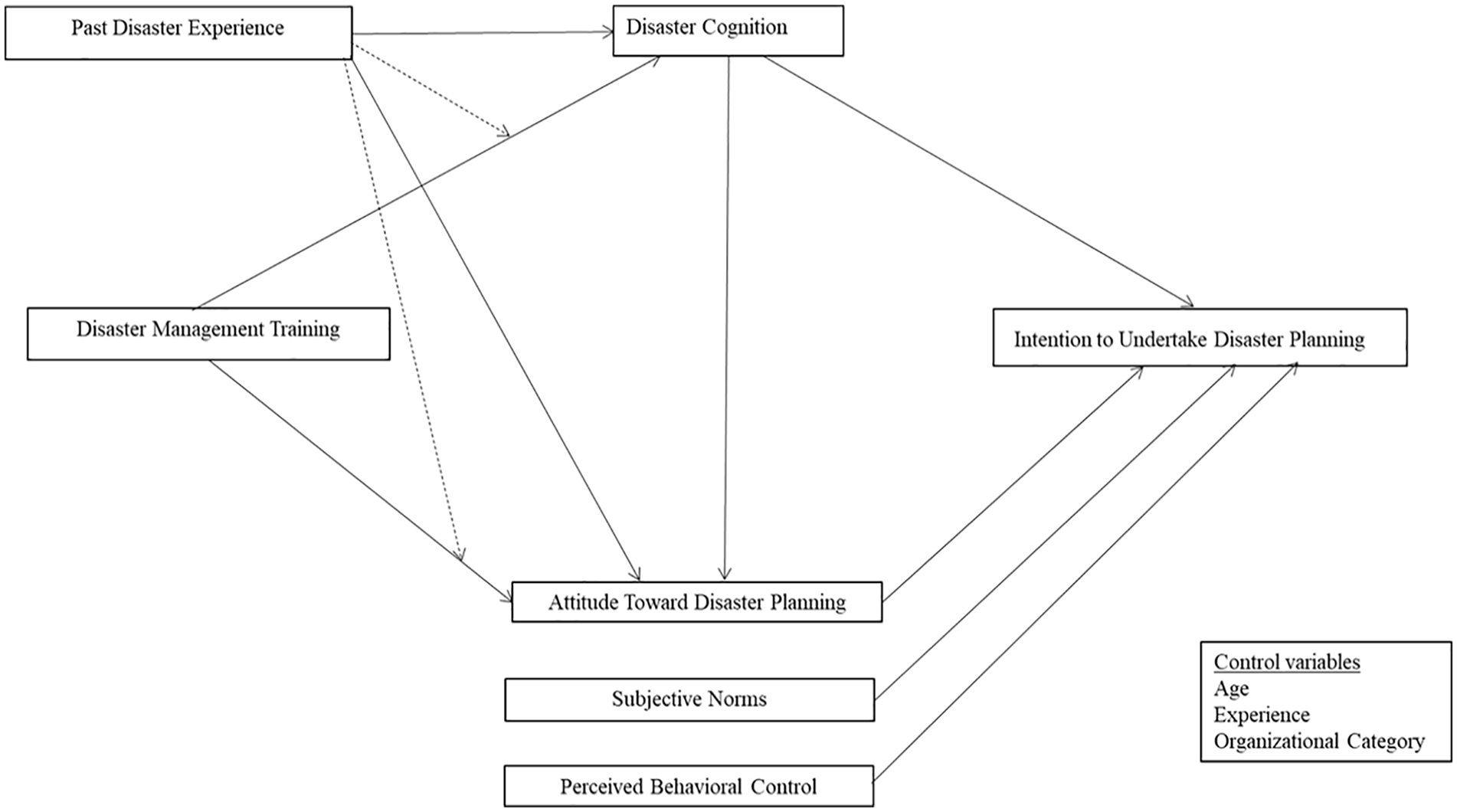
Conceptual model.
Literature Review and Conceptual Framework
The TPB has been known for its strengths in predicting intentions and behaviors, and has been employed across several contexts, including tourism (Woosnam et al., 2022). The TPB posits attitudes, subjective norms, and perceived behavioral control influence intentions, which in turn influence behavior (Ajzen, 1991). Disaster planning intention in tourism refers to SDMs’ anticipation to implement disaster planning activities. The intention to undertake disaster planning has been mostly studied as a proxy measure of disaster planning behavior (see also Wang & Ritchie, 2012). While intention has been found to be a proximal precursor of behavior (Ajzen, 2012), intention may not always manifest in behavior (Park & Lin, 2020). Perceived behavioral control refers to an individual’s perception of the degree to which one is free to enact a behavior. Subjective norms refer to an individual’s beliefs regarding acceptable standards of behavior approved by members of a group. Attitudes refer to an individual’s overall evaluation of the behavior and have been found to significantly predict future behavior, as attitudes that individuals hold determine what they do (Ajzen, 2012).
Although a limited number of studies in the tourism industry applied the TPB to assess intentions (e.g., Quintal et al., 2010; Wang & Ritchie, 2012), none have extended it to incorporate disaster cognition and training as predictors of disaster planning in the accommodation industry. The TPB has often been criticized, as it does not consider any cognitive influences that lead to changes in behavior (Sniehotta et al., 2014). As such, the possibility of adding additional constructs has been repeatedly suggested to improve the predictive ability of the model (Ajzen, 1991; Zaremohzzabieh et al., 2019). In this respect, it is argued that to understand a person’s intentions, decisions and actions, one needs to establish their way of thinking, that is, cognition (Sparrow, 1998). As reasons and judgment underpin intentions to prepare for disasters (Paton, 2003), TPB models have been suggested to accommodate cognitive influences toward attitudes and behavioral intentions (Wolff et al., 2011). Thus, extending the TPB, this study incorporates disaster cognition, which refers to the capacity to perceive potential emerging risk and act accordingly, as a key determinant of planning intention in addition to attitude in the conceptual framework.
A recent meta-analysis on social entrepreneurial intention (Zaremohzzabieh et al., 2019) has further suggested that the TPB should be extended by incorporating education and experience, which are shown to indirectly influence intentions via the TPB constructs (e.g., attitudes). Specifically, more TPB-based studies are called for that incorporate training as a key predictor (Hodge et al., 2017) because “if a change in behavior is likely following training, then a change in the components of the Theory of Planned Behavior should be evident” (p. 107). Hence, the TPB may provide a sound theoretical basis for understanding the effects of training on behavior (Hodge et al., 2017). However, few studies have been conducted in the tourism literature in this respect, although past disaster experience has been incorporated in some tourism studies as a major determinant in the TPB models that predict disaster planning intentions (e.g., Wang & Ritchie, 2012). Accordingly, this study extends the TPB by incorporating disaster management training and past disaster experience as major determinants in the conceptual framework (see Figure 1), positing their indirect effects on planning intention via cognition and attitude in addition to the direct effects of subjective norms and perceived behavioral control on intention.
Research Hypotheses
Disaster cognition
Disasters comprise natural disasters, such as earthquakes, tsunamis, floods, hurricanes, cyclones, and landslides, and human-induced disasters, such as terrorist activities, mass shootings, suicide bombings, civil unrest, war, political instability, and economic disasters (Ritchie & Jiang, 2019). Health-related disasters or epidemics, such as swine flu, severe acute respiratory syndrome (SARS), Ebola, Zica, and coronavirus (COVID-19), have also gained attention in tourism research (Jiang et al., 2022; Novelli et al., 2018). Disaster cognition has been defined as “the capacity to recognize the degree of potential emerging risk to which a community may be exposed and to act on that information” (Comfort, 2007, p. 189). Disaster cognition encompasses risk perception related to potential disasters in a destination and estimation of the impact level of such potential disasters. Studying disaster cognition may be important because cognition allows managers to focus and narrow down disaster planning strategies according to specific requirements, which can help ensure that such strategies are successful and effective (Comfort, 2007).
Several studies in the extant literature have highlighted the importance of disaster-related cognition and awareness in emerging disaster situations (Comfort, 2007; Sun et al., 2017; van Manen, 2014). Comfort (2007) analyzed the record of operations during Hurricane Katrina and found that the failure to effectively manage this catastrophic event was not just due to lack of communication but rather the level of cognition regarding the risk posed by the storm. Comfort (2007) pointed the importance of cognition in disaster management and proposed that cognition be added as a fourth condition to the pre-existing three Cs (communication, coordination, and control) of emergency management. Furthermore, Sun et al. (2017) concluded that communities could reduce the damage from disasters by having sensible disaster risk cognition, which influenced the adoption of appropriate disaster mitigation measures. Hence, disaster cognition seems to be a key factor that influences disaster planning yet has not been examined in a tourism context.
Attitude toward disaster planning
In addition to cognition, a positive attitude toward disaster planning may influence disaster planning intentions. According to Ajzen (2012), attitude refers to a person’s outlook to respond favorably or unfavorably to an object, person, institution, or event. An individual’s attitude tends to be constant over a period and can predict an individual’s behavior (Ajzen, 2012). Attitude toward behavior could be positive or negative. The TPB posits that positive individual attitudes toward behavior influence positive behavioral intention and, therefore, encourage actual behavior, and vice versa (Ajzen, 2012). Previous studies have demonstrated a causal association between attitude and behavioral intentions (Wang & Ritchie, 2012; Wolff et al., 2011). This study conceptualizes attitude toward disaster planning based on Wang and Ritchie’s (2012) conceptualization of SDM’s overall evaluation of behavior (i.e., adopting disaster planning activities for the organization).
Disaster experience, disaster management training, cognition, and attitude
Learning can be achieved through implicit (non-declarative) and explicit (declarative) systems (Sparrow, 1998). These two separate learning processes in individuals have been highlighted in the literature (Keele et al., 2003). Implicit learning refers to non-episodic learning of complex information in an incidental manner, without awareness of what has been learned (Seger, 1994). On the other hand, explicit learning occurs consciously, and the individual is aware of what is being learned (Reber, 1976). The relationship between learning and disasters is based on the assumption that a better understanding of the causes, damaging consequences, their likelihood of appearance, related risks of disasters, and opportunity to learn from previous disasters could help in effective disaster preparedness (see also Antonacopoulou & Sheaffer, 2014). In this study, past disaster experience (implicit) and disaster management training (explicit) are studied as two key modes of learning that may influence SDMs’ disaster planning.
Past disaster experience
Prior literature on the TPB suggests that previous experiences are not likely to influence intentions directly (Ajzen, 1991). This is because intentions to act are not influenced by perceptions of one’s relevant knowledge. Rather, the conclusions that are inferred from these perceptions are likely to influence one’s intention or action (Ernst, 2011). Therefore, this study posits that past disaster experience may influence SDMs’ intentions to plan for disasters by influencing their disaster cognition. Disasters, which are considered traumatic experiences, leave the exposed individuals with a plethora of complex learning cues and stimuli (Öhman & Mineka, 2001). Thus, exposure to previous disaster creates lasting experiences that can unconsciously lead to experiential knowledge (Chacowry et al., 2018). Such experiential knowledge has been associated with holistic images or patterns of a situation: vivid, associative thinking, and perception (Bussing & Herbig, 2003). An individual changes his or her perception about a particular aspect of his or her view of the world owing to the experience of a critical event (Burgoyne & Hodgson, 1983). Previous studies have shown how risk perceptions are driven by personal experiences. For instance, Zhang et al. (2018) have shown how past disaster experience propelled greater disaster risk perceptions (i.e., cognition among public transit agency managers in the USA). Thus, it is hypothesized:
Hypothesis 1: Past disaster experience positively influences disaster cognition.
Previous TPB-based research suggests that past experience is a key determinant of attitude (Ernst, 2011) because perceived knowledge gained from experience in an area directs individuals to perceive behavior in that area as more attractive. Accordingly, this study posits that past disaster experience may directly influence SDMs’ attitudes toward disaster planning, as subliminal, unconscious beliefs can shape attitudes (Krosnick et al., 1992). In this regard, Bandura (1974) explained how awareness about the contingent occurrence of two stimuli leads to attitude formation about specific objects or stimuli. As a disaster brings in its wake significant disruption and devastation, individuals exposed to disasters are expected to be aware of the contingent occurrence of disasters and extreme devastation, leading to a state of “attitudinal conditioning” (Anderson, 1990), which can potentially lead to stronger attitude toward adopting disaster preparedness and planning. Hence, it is hypothesized:
Hypothesis 2: Past disaster experience positively influences attitude toward disaster planning.
Disaster management training
The role of training in disaster management and mitigation has been highlighted in several studies (e.g., Newnham et al., 2019; Nguyen et al., 2016). According to Bland (1995), there are six major components of disaster management training for organization: (1) theoretical training to understand the nature and types of disasters; (2) brainstorming to understand various types of disasters and how to respond to them; (3) planning that involves writing plans and developing a disaster manual; (4) media training, which involves training media spokespeople for disaster interview techniques; (5) disaster simulations, which are a useful way to assess the strengths and weaknesses of the team and keep them aware of the potential threat of disasters; and (6) audits, which involve checking individual awareness of disaster procedures and ensuring that data and manuals are kept up to date by a crisis auditor (see also Ritchie, 2009).
A training needs analysis may help assess training requirements based on the levels of planning, preparation, and industry attitudes (Ritchie, 2009). For instance, training with scenarios can be useful for preparing managers and staff for disasters. Scenario planning workshops (see Yeoman et al., 2007) can be conducted by developing realistic disaster scenarios that may be pre-circulated to workshop attendees. A scenario-thinking methodology, whereby participants face up to the disaster and its potential impact on their organizations, can be used to assess the impact of possible actions or scenario responses. Scenario-based training programs can help with decision-making, communication, avoiding panic, and coordination of resources with the state or local tourism authorities (Ritchie, 2009).
Simulations are also popular and have been considered superior to scenario planning because they involve implementing plans and learning from the success or failures of such plans (Ritchie, 2009). Disaster simulation has been noted to be an effective and innovative experiential learning approach (Loke et al., 2021). Holding disaster drills, rehearsals, and simulations can help prepare managers and staff for any possible disasters. For instance, senior management may conduct simulation exercises or role-plays based on scenarios, such as tornadoes, blast injuries, chemical leaks, and potential outbreak of influenza (Loke et al., 2021).
Besides SDMs, general staff should be trained to operate during a disaster situation by making them aware of risk and evacuation policies and procedures. All-hazard approaches that cover risk reduction, disaster preparedness, response actions, and recovery activities (WHO/Europe, 2020) could be utilized. Competency-based education programs have also been found to be useful for training managers, whereby lists of competencies are used as references for developing the content to be included and measured as learning and training outcomes (Loke et al., 2021).
Disaster-related training has been recommended as an important means to encourage SDMs to undertake disaster planning (Wang & Ritchie, 2010), as it may create a positive change in their attitude toward disaster preparedness. Previous studies that extend the TPB have found that attitudes directly influenced skills, education, and knowledge (e.g., Ernst, 2011; Zaremohzzabieh et al., 2019). Training has been suggested to be a key predictor of attitudes because if training is expected to change behavior, it is likely that one’s attitude toward the behavior will change (Hodge et al., 2017). In a similar vein, one’s way of thinking (i.e., cognition) that influences one’s intentions and actions would also likely change as a direct result of the training experience. Hence, aside from attitudinal outcomes (Taylor et al., 2005), previous studies have shown that training and development programs can lead to cognitive outcomes (e.g., Salas et al., 2008). Disaster management training has been found to influence managerial cognition in terms of how managers perceive and assess risks and how they process risk-minimizing information and estimation of the impact of potential disasters (Kato & Charoenrat, 2018; Muttarak & Pothisiri, 2013). Accordingly, it is hypothesized:
Hypothesis 3: Disaster management training positively influences disaster cognition.
Hypothesis 4: Disaster management training positively influences attitude toward disaster planning
Interplay between disaster management training and past disaster experience in shaping cognition and attitude toward disaster planning
In line with the extant literature, which suggests that different types of knowledge may interact in complex ways (Muttarak & Pothisiri, 2013; Sun et al., 2005), this study argues that the effect of training programs may not manifest equally among all SDMs. In particular, relatively inexperienced SDMs may gain more from training initiatives than experienced SDMs. This is because experience facilitates forward reasoning (Klopping & McKinney, 2006). More experienced individuals typically utilize deep clues of the nature of the problem to classify events and reason from symptoms to hypotheses compared to lesser experienced individuals who are thought to use more superficial features and work backward from hypotheses (Klopping & McKinney, 2006; Richman et al., 1996).
Previous studies argue that the benefits of actual experience are greater than that of other learning experiences, such as training (Shanteau, 1992), as experienced individuals are likely to base their behavior more on their direct experiences. For example, in the consumer behavior literature, Lin and Ding (2005) have suggested that detailed guidance provided by frontline staff may be more influential in the formation of attitudes of inexperienced customers who encounter difficulties than that of experienced customers. In addition, inexperienced salespeople have been shown to display stronger reactions to work-related variables, such as leadership, than more experienced salespeople (Johnston et al., 1989). Accordingly, past disaster experience may help SDMs develop a better understanding of disaster management. Past experience can help make knowledge more accessible in memory (Regan & Fazio, 1977) and increases wisdom for identifying clues to quickly diagnose situations (Klein, 1993), which may enhance one’s ability to match problems and solutions (Richman et al., 1996).
Previous exposure to disasters may also make low probability events more salient (Ajzen & Fishbein, 1980), helping them to be accounted for in the formation of cognition and attitudes, which can result in enhancing planning, reasoning, and monitoring (Klopping & McKinney, 2006). Hence, such SDMs may rely more on their direct experiences, which may significantly shape their disaster cognition and attitudes. On the other hand, inexperienced managers may heavily rely on formal training programs, as they have limited knowledge and skills for disaster planning management. Consequently, training is likely to become more important for such SDMs. Hence, it is hypothesized:
Hypothesis 5: Past disaster experience moderates the relationship between disaster management training and disaster cognition in such a way that the relationship will be more pronounced when past disaster experience is low rather than high.
Hypothesis 6: Past disaster experience moderates the relationship between disaster management training and attitude toward disaster planning in such a way that the relationship will be more pronounced when past disaster experience is low rather than high
Disaster cognition and attitude toward disaster planning
Significant empirical research has established the relationship between cognition and attitude formation (Wegener & Carlston, 2005). Disaster cognition involves recognizing disaster probabilities and risk perceptions. According to Sun et al. (2017), risk perception includes the decision-maker’s estimation of the probability of disaster. For instance, even if SDMs are aware of the disaster, they may not be willing to prepare if they believe that the probability of the disaster that affects them is low. Hence, estimating the probability of a disaster helps SDMs personalize the risk of disasters (see Tierney, 1993). An individual’s perception of disaster is then cognitively evaluated through situational awareness appraisal, which is the knowledge about what is happening in the environment, both immediately and in the near future, to identify the potential threat of disaster. The final recognition of the degree of emerging risk of potential disaster completes an individual’s disaster cognition. As such, SDMs’ recognition of the degree of emerging risks of potential disasters to which their organizations may be exposed can be construed as a concern about potential risks of disasters, which can influence their attitude toward disaster planning (e.g., Bamberg, 2003). Comfort (2007) also pointed out the importance of cognition in disaster management and highlighted that disaster-related cognition can be a cognitive trigger of subsequent changes in attitudes, behavioral intentions, and actions. Thus, it is hypothesized:
Hypothesis 7: Disaster cognition positively influences attitude toward disaster planning.
Disaster cognition and the intention to undertake disaster planning
This study extends the TPB by including cognition, as it has been suggested to influence behavioral intentions (Wolff et al., 2011). Because individuals react to what they infer (Ernst, 2011), conclusions deduced, or one’s way of thinking can directly influence one’s actions and intentions (Sparrow, 1998). Paton (2003) also showed the importance of studying reasons and judgments that underpin the intention to prepare for disasters. Perception of risk has been argued to be the first cognitive step that triggers disaster planning and mitigation behavior (Sun et al., 2017). Although limited studies directly examine the association between disaster-related cognition and the intention to plan, studies have demonstrated a positive association between disaster cognition and behavior (Comfort, 2007; Mendonça et al., 2014). For instance, Comfort (2007) found that failure to manage the disastrous event of “Hurricane Katrina” was due to low level of cognition regarding the emerging risks of the hurricane. Mendonça et al. (2014) examined the cognition and behavior of police personnel who responded to the 1995 bombing in Oklahoma City and the 2001 attack on the World Trade Center and found that police personnel demonstrated a clear reasoning process when conventional behavior was associated with cognitive processes. Hence, it is hypothesized:
Hypothesis 8: Disaster cognition positively influences the intention to undertake disaster planning.
Attitude toward disaster planning and the intention to undertake disaster planning
According to the TPB, attitudes tend to influence intention by increasing the motivation to engage in a particular behavior (Ajzen, 1991). Previous TPB studies in the tourism disaster management literature have also demonstrated a causal association between attitude and behavioral intentions (Wang & Ritchie, 2012). Accordingly, it is hypothesized:
Hypothesis 9: Attitude toward disaster planning positively influences the intention to undertake disaster planning.
Mediating role of disaster cognition and attitude toward disaster planning
While not much empirical research has been done to validate the simultaneous effects of both past disaster experience and training on intentions in a single study in the tourism literature, previous studies on the TPB suggest that perceptions of one’s knowledge and skills are not likely to affect one’s intention or action directly (Ajzen, 1991). Instead, the conclusion or evaluation derived from these perceptions influences intentions and actions (see Ernst, 2011). “It is likely that having developed relevant knowledge and skills in an area, action in that area becomes more attractive, as more information is possessed and insights lead to enthusiasm” (Ernst, 2011, pp. 113–114). As such, disaster-related learning is likely to develop insights, such as critical awareness of the disaster, assessing the probability of the occurrence of a disaster, gaging risk perceptions including hazard anxiety, and situational awareness appraisal (Paton, 2003). Such insights are likely to enthuse SDMs to undertake disaster planning initiatives to mitigate the impact of any future disasters. For instance, Karanci et al. (2005) found that community members who attended disaster training programs demonstrated a higher level of disaster-related cognitive traits than those who did not attend the training program. Furthermore, Mishra and Suar (2007) found that individuals who undertook disaster management training demonstrated enhanced risk perceptions of a disaster. A recent meta-analysis (Zaremohzzabieh et al., 2019) also demonstrated that previous experience and education indirectly influenced intentions via the TPB constructs (e.g., attitude). Accordingly, based on the TPB, it is hypothesized:
Hypothesis 10a: Disaster cognition mediates the relationship between disaster management training and the intention to undertake disaster planning.
Hypothesis 10b: Disaster cognition mediates the relationship between past disaster experience and the intention to undertake disaster planning.
Hypothesis 11a: Attitude toward disaster planning mediates the relationship between disaster management training and the intention to undertake disaster planning.
Hypothesis 11b: Attitude toward disaster planning mediates the relationship between past disaster experience and the intention to undertake disaster planning.
As theoretical underpinnings for the mediating effects of disaster cognition and attitude and moderating effects of past disaster experience on the relationships between training and cognition and between training and attitude were developed, the theoretical rationale behind these hypotheses suggests that past disaster experience influences the strength of indirect relationships, thereby suggesting a pattern of moderated mediation. Hence, it is hypothesized:
Hypothesis 12: Past disaster experience moderates the indirect relationship between disaster management training and the intention to undertake disaster planning through disaster cognition, such that the indirect relationship is stronger when past disaster experience is low rather than high
Hypothesis 13: Past disaster experience moderates the indirect relationship between disaster management training and the intention to undertake disaster planning through attitude toward disaster planning, such that the indirect relationship is stronger when past disaster experience is low rather than high
The TPB suggests that subjective norms influence an individual’s intention to perform specific behavior (Ajzen, 2012). Subjective norms refer to a person’s “own estimate of the social pressure to perform or not perform the target behavior” (Francis et al., 2004, p. 9). Previous studies have also demonstrated that subjective norms influenced behavioral intentions (e.g., Woosnam et al., 2022; Zaremohzzabieh et al., 2019). Accordingly, this study postulates that perceived pressure from reference groups can influence SDMs’ planning behavior. When SDMs believe that their important referent groups (e.g., colleagues, business partners, agents, customers, and shareholders) consider disaster planning to be important and want them to conduct disaster planning activities, they are more likely to implement disaster planning strategy, and vice versa. Accordingly, it is hypothesized:
Hypothesis 14: Subjective norms positively influence the intention to undertake disaster planning.
Perceived behavioral control refers to “one’s perception of how easy or difficult it is to perform the behavior” (Eagly & Chaiken, 1993, pp. 186–187). Perceived behavioral control has been suggested to influence intentions and behaviors in the TPB model because factors such as perceived ability, willpower, and dependence on others can impair or influence an individual’s behavior (Ajzen, 2012). According to Ajzen (2012), a person who has a high degree of control over a particular behavior has a higher intention to perform that behavior and, therefore, is most likely to perform the behavior. For example, because of the complexity in the environment and difficulty in accurately predicting possible emerging disasters, disaster planning can be considered as an activity that may not be under complete volitional control. As such, SDMs who are confident about implementing disaster planning and do not consider it to be difficult are more likely to undertake disaster planning. Accordingly, it is hypothesized:
Hypothesis 15: Perceived behavioral control positively influences the intention to undertake disaster planning.
Methodology
The conceptual model was tested using survey data collected from SDMs in the accommodation sector in Sri Lanka. Data were collected from December 2018 to March 2019. Hence, COVID-19 had no impact on the results of this study. The sample frame for the study comprised accommodation providers listed in the Sri Lankan Tourism Development Association (SLTDA) database. Approximately 1,900 establishments listed under SLTDA were grouped into seven geographical areas. Due to time and resource constraints, only accommodation establishments listed in three areas, such as Colombo City, Greater Colombo, and South Coast, were considered in the study. Furthermore, homestays were excluded in the sample, considering the size and scope of their operations. Of the 704 accommodation establishments in this area, 350 agreed to participate in this study after a short phone call by one of the researchers.
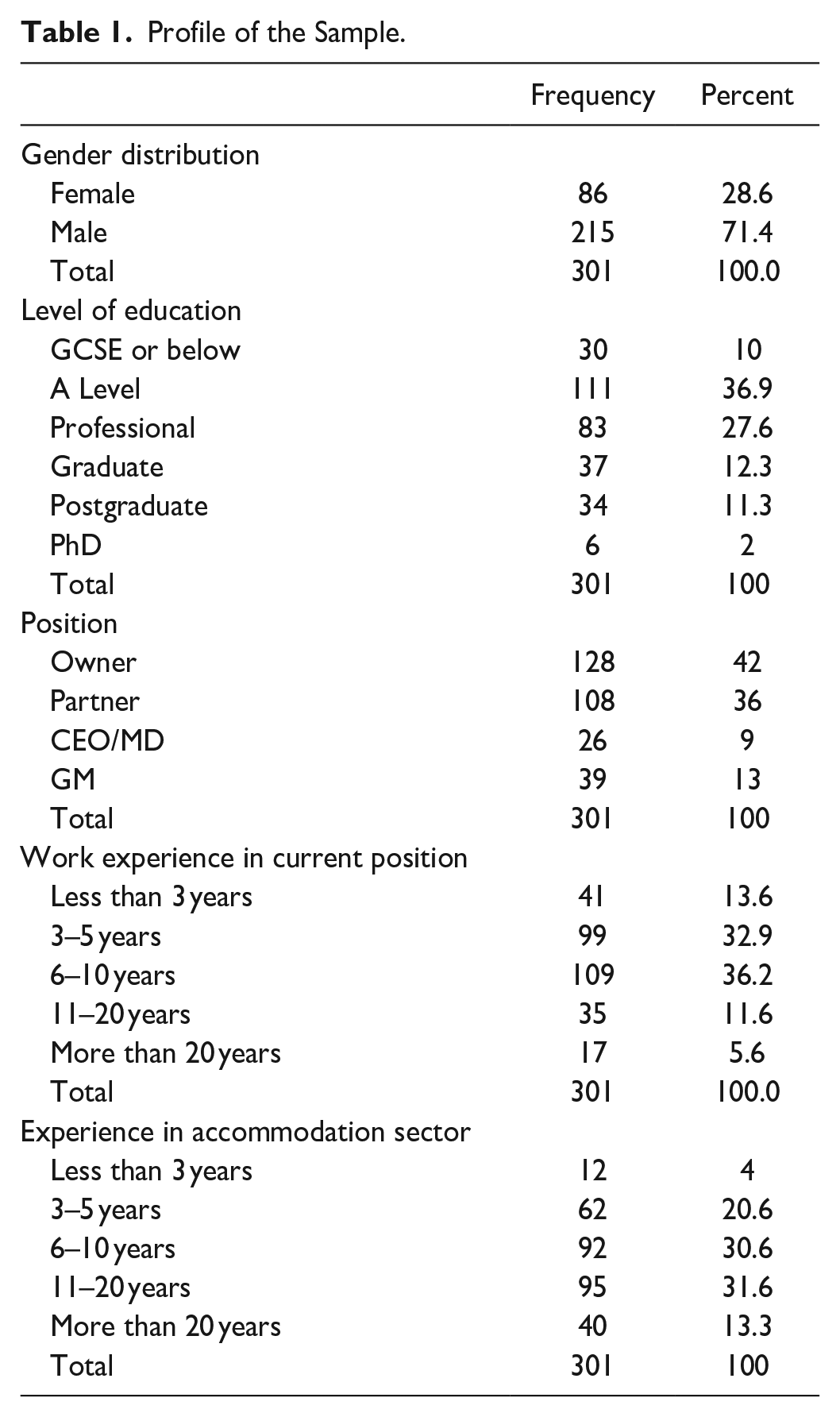
Questionnaires were personally distributed in two phases to reduce common method bias (Podsakoff et al., 2003). A total of 308 matched questionnaires (first and second phases) were obtained from SDMs. Of these, seven questionnaires with several missing values were eliminated from further analysis, resulting in 301 useable questionnaires. The sample size calculation was based on the methodology suggested by Christopher Westland (2010) and Soper (2017). Considering the number of latent constructs to be used in the model (p = 7), the expected number of observed variables (q = 30), effect size (0.1), statistical power (0.8), and significance level (0.05), the minimum sample size recommended for analyzing the resultant model structure = 90 (Soper, 2017). Hence, a sample size of 301 was considered adequate. Table 1 provides details about the profile of the respondents.
Profile of the Sample.
Construct Measurement
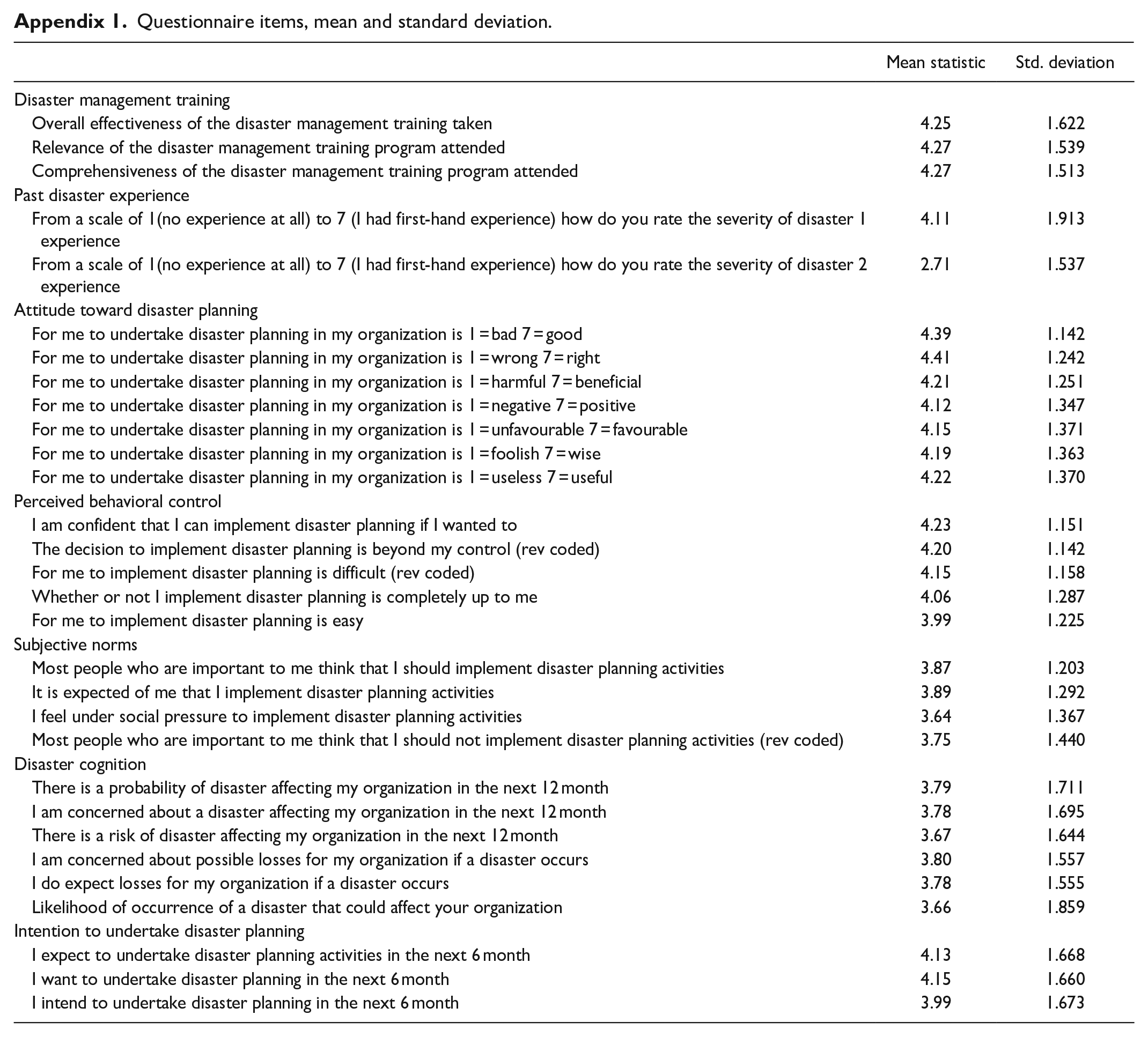
Except for disaster cognition, disaster management training and past disaster experience, all the constructs used in the study were adapted from the extant literature. Items used for measuring the constructs, their means, and standard deviation are shown in Appendix 1.
Disaster management training
Disaster management training was measured with three items related to the effectiveness, relevance, and comprehensiveness of the disaster management training programs attended by the SDMs based on the suggestions of Giangreco et al. (2009) and Khorram-Manesh et al. (2015) using seven-point Likert-type scale ranging from extremely effective to extremely ineffective, extremely relevant to extremely irrelevant, and not comprehensive to extremely comprehensive. SDMs who never attended a disaster management training program received a score of 0. The scale items were presented to an expert panel comprising two industry experts and eight SDMs who were also informed about the objectives of the study and definition of the construct. The panel found the items to be appropriate to measure the construct and confirmed adequate face validity.
Past disaster experience
Three items were used to measure past disaster experience of SDMs based on Wang and Ritchie (2012). The items proposed to measure past disaster experience were also presented to the expert panel comprising two industry experts and eight SDMs. The panel found the items to be appropriate to measure the construct and confirmed adequate face validity. Questions included listing up to three disasters experienced and the level of experience of each disaster. A seven-point Likert-type scale was used, ranging from “no experience at all” to “I had a first-hand experience.” However, the third item that asked about experience of a third disaster was left unfilled by most respondents (possibly, as they may not have experienced more than two disasters). Hence, this third item was excluded.
Attitude toward disaster planning
Attitude toward disaster planning was measured using eight semantic differential rating questions based on the scale used by Wang and Ritchie (2012). The questions asked the SDMs to use bipolar adjectives to the statement “For me to undertake disaster planning in my organization is. . ..” One of the items —“desirable-undesirable”—was excluded because of poor factor loading (0.40).
Intention to undertake disaster planning
Based on Francis et al. (2004) and Ajzen (2002), intention to undertake disaster planning was measured using three items. A seven-point Likert-type scale was used, which ranged from strongly agree to strongly disagree.
Perceived behavioral control
Perceived behavioral control was measured using five items based on Francis et al. (2004). A seven-point Likert-type scale was used, which ranged from strongly agree and strongly disagree.
Subjective norms
Subjective norms were measured using four items based on Francis et al. (2004) and Wang and Ritchie (2012). A seven-point Likert-type scale was used, which ranged from strongly agree to strongly disagree.
Disaster cognition
As disaster cognition does not have any established measurement scale, this construct was measured using a scale specifically developed for this study. This study followed Churchill’s (1979) prescribed procedure to develop the measurement scale. Based on the definition provided by Comfort (2007) as well as preliminary discussions with SDMs in Sri Lanka, 20 items were developed. These items were presented to five academics and five SDMs for feedback regarding their suitability and appropriateness to measure disaster cognition. Based on their feedback, six items were retained in the final scale (e.g., “There is a probability of disaster affecting my organization in the next 12 months”; “I am concerned about a disaster affecting my organization in the next 12 months”). The responses were captured using a seven-point Likert-type scale, which ranged from strongly agree to strongly disagree.
Control Variables
Previous studies suggest that variables, such as SDMs’ age, gender, work experience, and type of organization, may also influence disaster planning decisions (Muttarak & Pothisiri, 2013; Wang & Ritchie, 2012). Hence, for more rigorous tests of the hypotheses, key variables were included as controls in the analysis.
Results
Measurement model validation
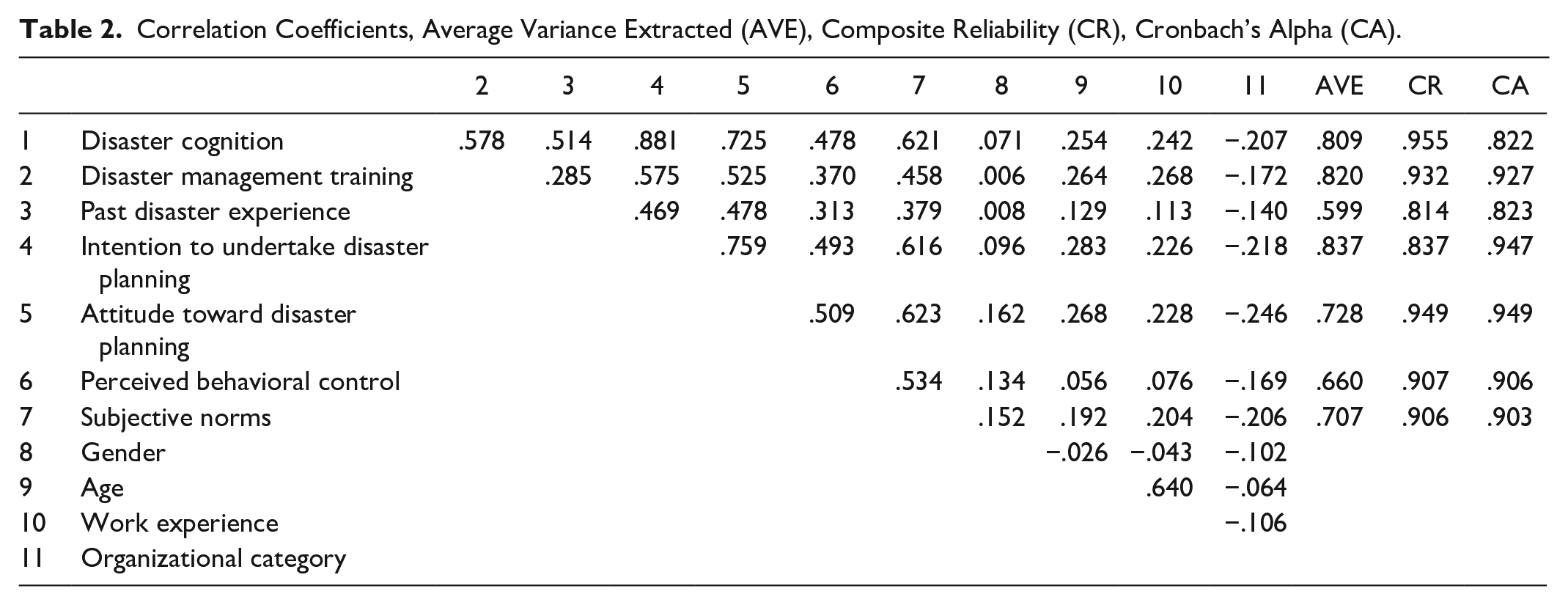
To validate the measurement model, a confirmatory factor analysis was conducted, including all the observed variables and latent constructs. The measurement model was found to provide a good fit to the data (χ2/df = 2.164; CFI = 0.949; IFI = 0.95; RMSEA = 0.062), as values for CFI and IFI were >0.90 and the value for RMSEA was <0.07 (Iacobucci, 2010; Nunkoo & Ramkissoon, 2012; Steiger, 2007). All the observed variables were found to load significantly on their designated latent constructs, with standardized loadings above 0.50. The AVE values for all constructs were above 0.50, thereby suggesting convergent validity (Fornell & Larcker, 1981). The composite reliability and Cronbach’s alpha values were above .70, thus providing evidence for the reliability of the constructs (see Table 2). Discriminant validity was assessed using Bagozzi and Phillips’s (1982) method, where the chi-square differences between restricted and un-restricted CFA models between pairs of constructs were calculated. The chi-square differences were significant for each of the 21 pairs of constructs, suggesting discriminant validity.
Correlation Coefficients, Average Variance Extracted (AVE), Composite Reliability (CR), Cronbach’s Alpha (CA).
Results from path analysis
The conceptual model was tested using covariance-based structural equation modeling. The control variables were included in the path model. The path analysis model was found to demonstrate a good fit to the data (χ2/df = 2.89; CFI = 0.90; IFI = 0.90; RMSEA = 0.079). Figure 2 presents the empirical model of the study and Table 3 presents the analysis results. The direct paths between past disaster experience and disaster cognition (β = .76, p < .01) as well as attitude toward disaster planning (β = .19, p < .01) were found to be significant. Hence, Hypotheses 1 and 2 were supported. Similarly, Hypotheses 3 and 4 were supported as disaster management training was found to be significantly related with both disaster cognition (β = .65, p < .01) and the intention to undertake disaster planning (β = .17, p < .01). Disaster cognition showed a positive relationship with attitude toward disaster planning (β = .12, p < .1) and the intention to undertake disaster planning (β = .74, p < .01). Thus, Hypotheses 7 and 8 were supported.
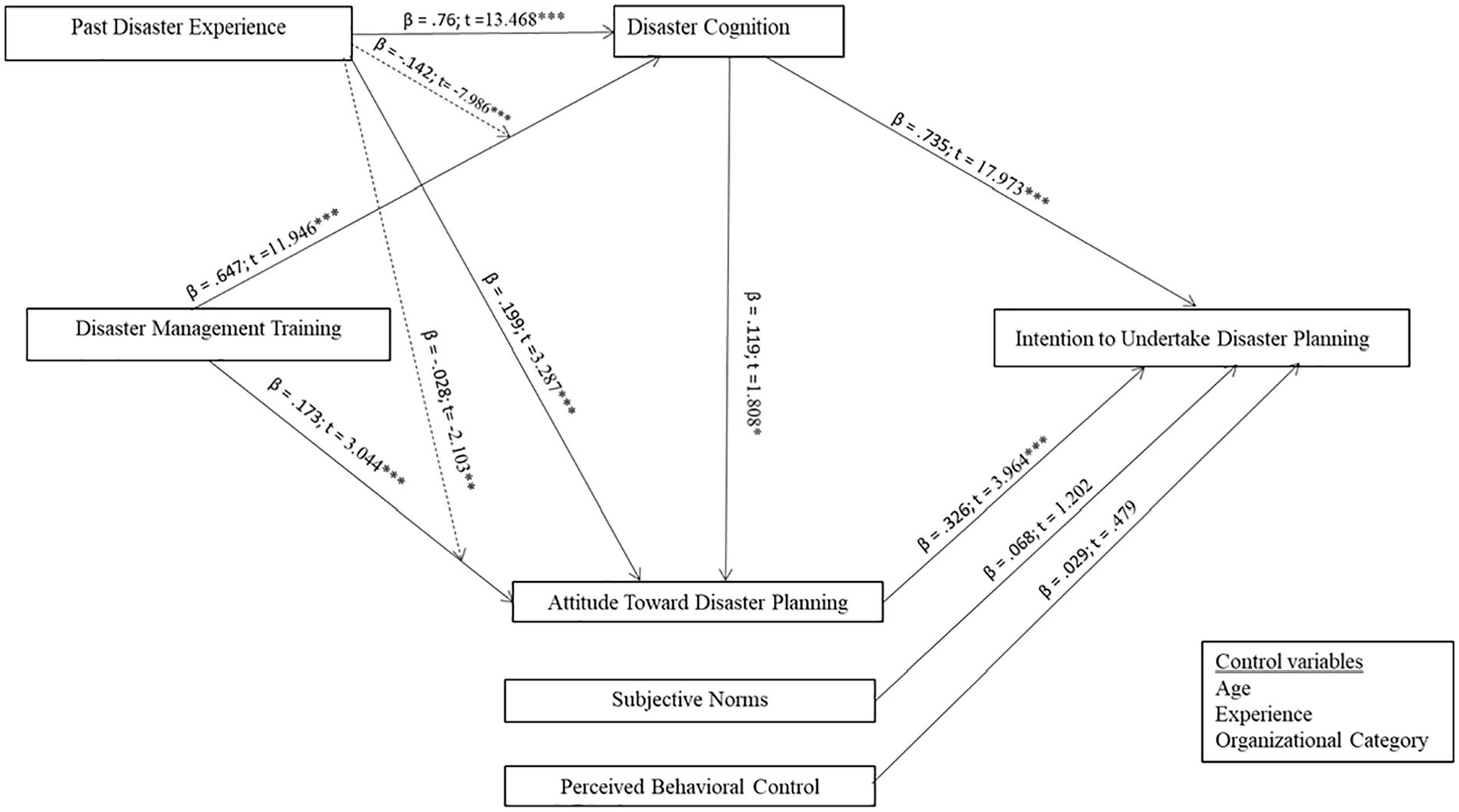
Empirical model. ***p < .01. **p < .05. *p < .1.
Path Analysis Results—Direct and Moderating Effects.
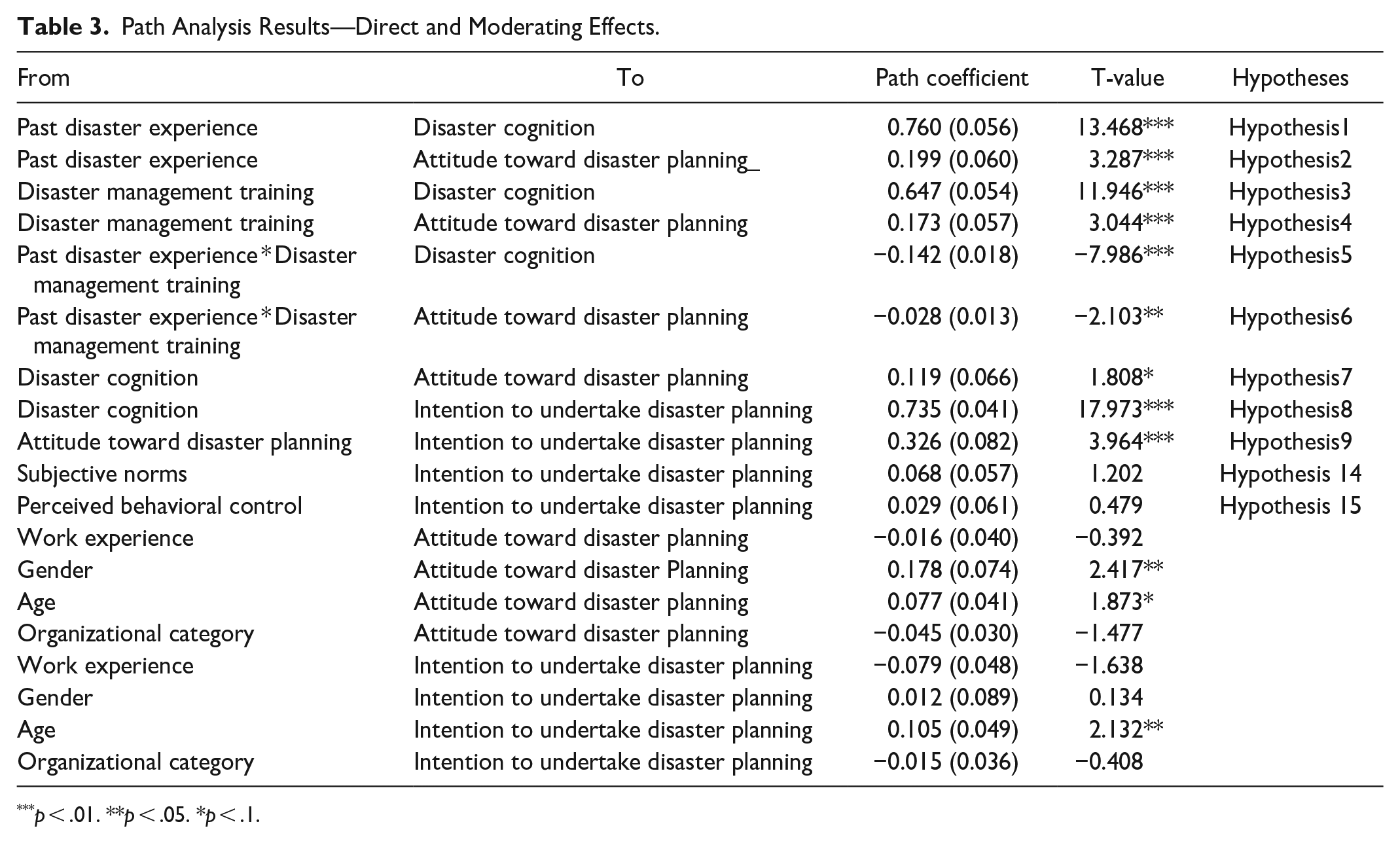
p < .01. **p < .05. *p < .1.
The relationship between attitude toward disaster planning and the intention to undertake disaster planning was found to be significant (β = .33, p < .01), thus supporting Hypothesis 9. However, both subjective norms (β = .068, p > .1) and perceived behavioral control (β = .029, p > .1) were not found to be related to the intention to undertake disaster planning. Thus, Hypotheses 14 and 15 were not supported. The model explained 78% of variance in the intention to undertake disaster planning (R2 = 0.78), 62% in the attitude toward disaster planning (R2 = 0.62), and 49% in disaster cognition (R2 = 0.49).
As expected, the interaction between past disaster experience and disaster management training on disaster cognition was found to be negative and significant (β = −.142, p < .01). Thus, the relationship between disaster management training and disaster cognition was found to be stronger when past disaster experience was low. Furthermore, the interaction between past disaster experience and disaster management training on attitude toward disaster planning was found to be negative and significant (β = −.028, p < .01).
To explore the actual impact of the interactions, the interaction effects were plotted. The plots are shown in Figures 3 and 4. As the direction of the plots show, past disaster experience was found to have a dampening effect on the relationship between disaster management training and cognition as well as on the relationship between training and attitude. Hence, Hypotheses 5 and 6 were supported.
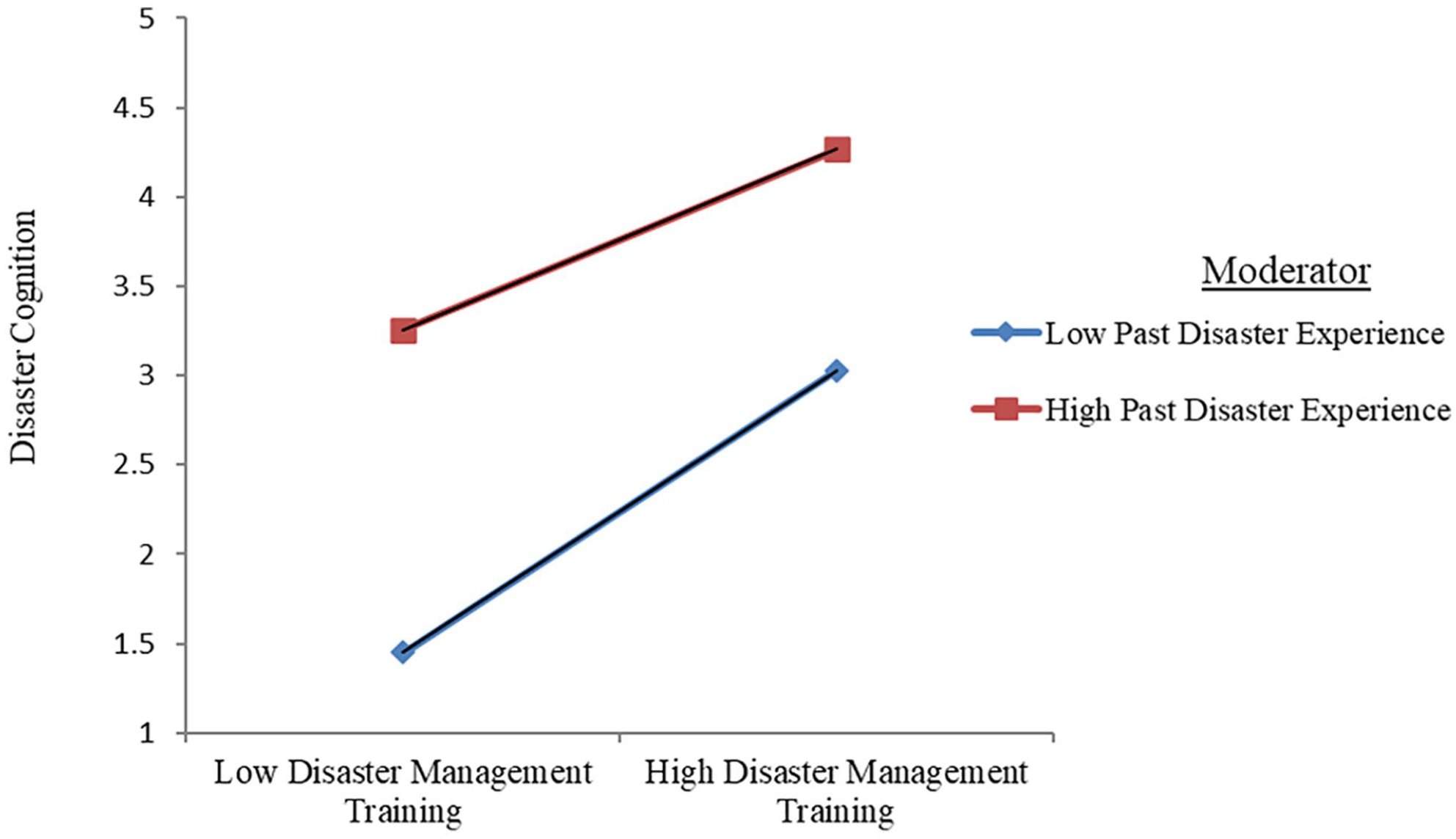
Moderating effect of past disaster experience on the relationship between disaster management training and disaster cognition.
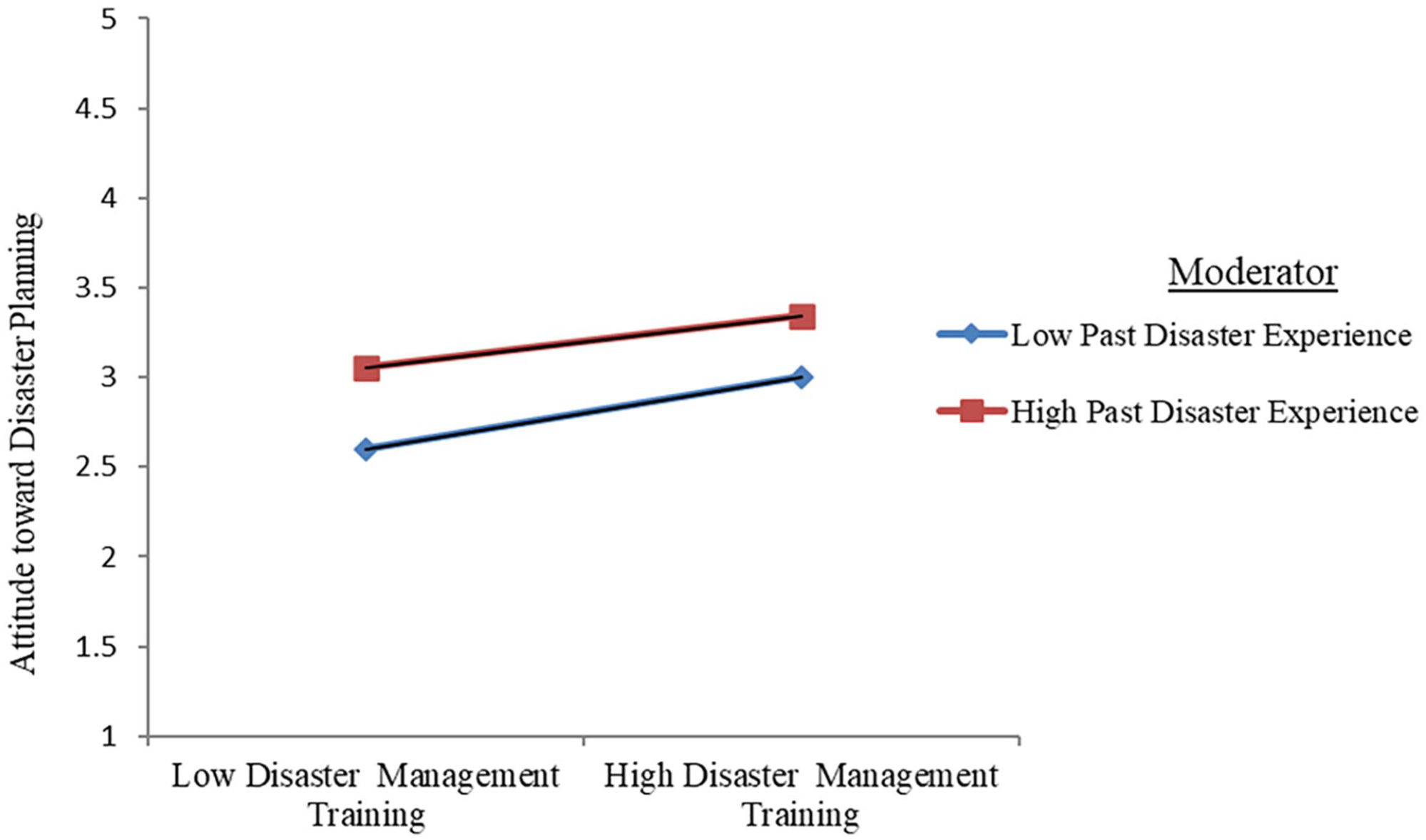
Moderating effect of past disaster experience on the relationship between disaster management training and attitude toward disaster planning.
Results from the mediation analysis
Mediation analysis was conducted using Model 6 in PROCESS Macro (Hayes, 2019), with 5,000 bootstrap samples. Results showed that the direct relationship between past disaster experience and the intention to undertake disaster planning was not found to be significant. However, the indirect relationships through disaster cognition (β = .19, ULCI = 0.26, LLCI = 0.12) as well as through attitude (β = .025, ULCI = 0.047, LLCI = 0.007) were found to be significant. Thus, Hypotheses 10a and 10b were supported. Serial mediation through disaster cognition and attitude toward disaster planning (i.e., past disaster experience → cognition → attitude → intention) was also found to be significant (β = .027, ULCI = 0.045, LLCI = 0.014).
While the direct relationship between disaster management training and the intention to undertake disaster planning was not found to be significant, the indirect effects through disaster cognition (β = .14, ULCI = 0.187, LLCI = 0.09) and through attitude toward disaster planning (β = .013, ULCI = 0.028, LLCI = 0.001) were found to be significant. Thus, Hypotheses 11a and 11b were supported. Serial mediation through disaster cognition and attitude toward disaster planning (i.e., training > cognition > attitude > intention) was also found to be significant (β = .02, ULCI = 0.03, LLCI = 0.01). Hence, both disaster cognition and attitude toward disaster planning were found to be the key mediating mechanisms in the relationship between training and intention and between past disaster experience and the intention to undertake disaster planning.
Analysis of the moderated mediation effects
To test the validity of the moderated mediating relationships, analysis was conducted using PROCESS Macro (Hayes, 2019). Two separate moderated mediation analyses were run, one through disaster cognition and the other through attitude toward disaster planning. The moderated mediation Model 7 from the PROCESS Macro template was adopted using a bootstrap sample of 5,000. The control variables used in the previous analysis were retained for exploring the moderated mediation analysis.
The level of SDM’s past disaster experience was found to negatively moderate the indirect relationship between disaster training and the intention to undertake disaster planning. At the lower value of past disaster experience, the relationship was found to be significant (β = .229, ULCI = 0.293, LLCI = 0.164). However, at the higher value, the relationship was found to be insignificant (β = .058, ULCI = 0.127, LLCI = −0.006). Furthermore, the index of moderated mediation was found to be significant (index value = −0.042, ULCI = −0.0191, and LLCI = −0.065). Thus, Hypothesis 12 was supported. Figure 5 shows the moderated mediation effect.
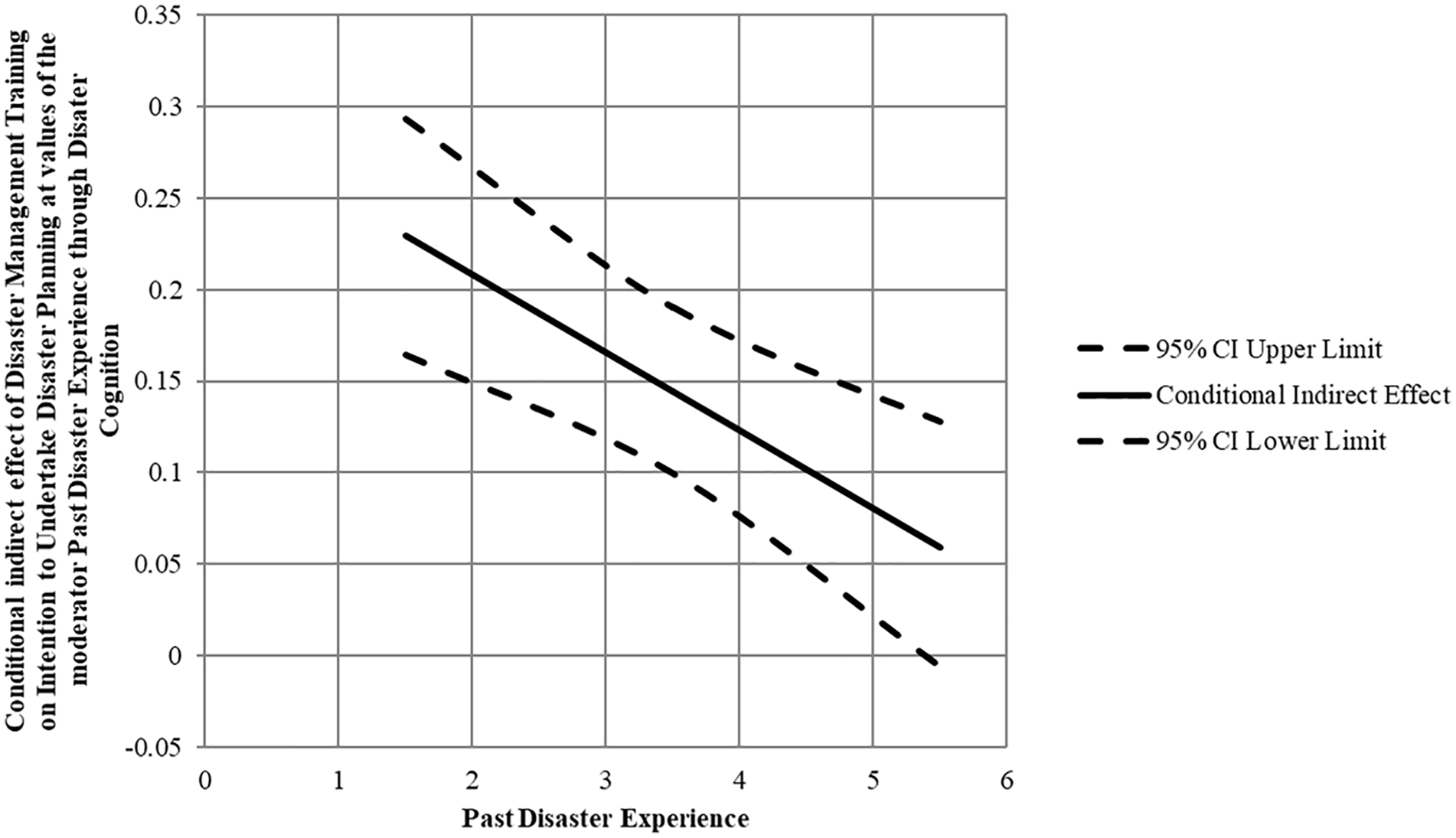
Moderation effect of past disaster experience on the indirect effect of disaster management training on intention to undertake disaster planning through disaster cognition.
The second moderated mediation analysis—the mediation path through attitude toward disaster planning—was not found to be significant, as the index of moderated mediation was not found to be significant (index value = −0.0139, ULCI = 0.0037, LLCI = −0.030). Hence, Hypothesis 13 was not supported.
Competing models testing
To test whether the hypothesized model was the most optimum model, competing models were developed and tested. In both competing models, the relationships based on the TPB were retained and only the relationship structure of the three constructs, that is, disaster management training, past disaster experience and disaster cognition, was reconceptualized. The two competing models were compared with the hypothesized model (Model A) using the Akaike’s information criterion (AIC) and Bayesian information criterion (BIC) (Lin et al., 2017). In the first competing model (Model B), the paths from disaster management training and past disaster experience to attitude toward disaster planning were removed. In the second competing model (Model C), the paths from disaster management training and past disaster experience to disaster cognition were removed. In the three models, attitude, perceived behavioral control, and subjective norms were related to the intention to undertake disaster planning, consistent with the TPB. The hypothesized model, Model A, was found to be the most optimum model with the lowest AIC and BIC values (AIC value = 1803.84, BIC value = 1838.477) compared to Model B (AIC value = 1810.84, BIC value = 1844.616) and Model C (AIC value = 1994.692, BIC value = 2028.512).
Discussion and Implications
Previous studies on understanding the role of different modes of learning for disaster planning intentions have been largely descriptive (e.g., Ritchie, 2009; Ritchie & Jiang, 2019), and the limited empirical evidence remains equivocal (Muttarak & Pothisiri, 2013). This study, which is based on the TPB, helps explain previous inconsistent findings in the tourism literature by uncovering the underlying mediating mechanisms to explicate how and why disaster management training and past disaster experience influence disaster planning intentions of accommodation SDMs in Sri Lanka. Thus, this study responds to calls in the tourism literature for more theoretically grounded empirical research examining factors that influence disaster planning and preparedness (Aliperti et al., 2019; Ritchie & Jiang, 2019) in developing economies (Novelli et al., 2018).
In particular, neither past disaster experience nor disaster management training was found to directly influence disaster planning intention. Rather, disaster cognition and attitude toward disaster planning were found to be the two key psychological mechanisms that accounted for the relationships of disaster management training and past disaster experience with SDMs’ intentions to plan. This implies that only when managers perceive a risk and positively evaluate the value of disaster planning behavior, disaster-related training and experience stimulate them to initiate disaster preparedness. Moreover, part of the effect of cognition was found to be mediated by attitude in series. Thus, cognition and attitude were found to mediate the influence of training and past disaster experience on planning intention in a series, whereby training and experience influenced cognition, which influenced attitude, which, in turn, influenced intention.
While previous tourism studies based on the TPB underscore the significance of attitudes for positively influencing disaster planning intention (Wang & Ritchie, 2012), little has been done to understand how these attitudes develop. This is believed to be the first study that extends the TPB by incorporating disaster management training, past disaster experience, and SDM’s disaster cognition as key factors that influence attitude. While previous studies have mainly established direct effects of training and experience on attitude (e.g., Wang & Ritchie, 2012; Zaremohzzabieh et al., 2019), this study has found disaster cognition as another explanatory mechanism that elucidated the relationships of disaster-related training and experience with attitude. This implies that SDMs realize the significance of disaster planning and positively evaluate disaster planning behavior, that is, form positive attitude toward disaster planning because disaster management training and past disaster experience enhance SDMs’ risk perceptions and enable them to better comprehend the extent of the deleterious impact of disasters.
Reinforcing and extending prior research that highlights the importance of training and experience for disaster preparedness (Kato & Charoenrat, 2018; Muttarak & Pothisiri, 2013; Zhang et al., 2018), the findings of this study revealed that studying past disaster experience and disaster management training as distinct learning mechanisms and simultaneously examining their effects in the context of a single study provided meaningful insights into their roles in shaping preparedness behaviors. This study contributes to the tourism literature by providing a better understanding of the distinct as well as joint effects of disaster management training and past disaster experience, which have not been previously tested.
While past disaster experience and disaster management training were found to positively relate to both disaster cognition and attitude toward disaster planning, past disaster experience was also found to regulate the relationship of disaster management training with cognition as well as with attitude. This study extends previous research, which suggests an interplay between different modes of learning for shaping disaster preparedness behaviors (Muttarak & Pothisiri, 2013), to the context of tourism accommodation by empirically demonstrating the moderating role of past disaster experience (Figures 3 and 4). As expected, SDMs with past disaster experience relied more on their direct experiences. Thus, formal disaster management training programs greatly benefited relatively inexperienced SDMs, as the relationship between training and cognition and between training and attitude was found to be stronger when past disaster experience was low. This was further corroborated by the moderated mediation analysis results. The indirect relationship between disaster management training and planning intention via cognition was found to be stronger for lesser experienced SDMs (Figure 5). This implies that training programs are more likely to stimulate planning intentions of relatively inexperienced SDMs by raising their awareness and knowledge of disasters than those of relatively experienced SDMs.
Contrary to the findings in the tourism literature (e.g., Woosnam et al., 2022), subjective norms and perceived behavioral control were not found to be significantly related to SDM intention. According to Wolff et al. (2011), the lack of social pressure in a particular domain could be the reason behind subjective norms not influencing intention. Influence of norms may also vary across different cultures (Wang & Ritchie, 2012). Furthermore, Wang and Ritchie (2012) argued that perceived behavioral control may add little to the accuracy of prediction and may not be realistic in situations “when the individual has little information about the behavior, when requirements or available resources have changed, or when new and unfamiliar elements have entered into the situation” (p. 1065). Therefore, future studies may further examine the role of social norms and perceived behavioral control in the context of accommodation disaster planning.
Managerial Implications
With COVID-19 showing vulnerability of the tourism industry to disasters (Jiang et al., 2022), the importance of disaster planning seems to be on top of the agenda of policy-makers and governments globally, particularly in South Asia. South Asia has been severely affected because of its already strained economic conditions (Rasul et al., 2021) and its high dependency on travel and tourism as a generator of jobs (Twining-Ward & McComb, 2020). This study, which is conducted in Sri Lanka, may have implications for other developing nations in the South Asian region in terms of addressing a key and persistent problem in the tourism industry: the lack of disaster management planning. This study provides policy-makers, tourism authorities, and top management with a better understanding of how disaster planning initiatives can be encouraged in the tourism accommodation sector to boost internal dynamic capability of managing disasters.
Specifically, this study sheds light on the underlying psychological processes, as both training and experience were found to be indirectly associated with SDMs’ planning intentions via disaster cognition and attitude toward disaster planning. Hence, a notable finding of this study is that the relationships of disaster-related training and past experience with planning intention may not be as straightforward as commonly assumed, which has important implications. First, whether training programs influence disaster planning depends on whether participants experience a change in the way they perceive risk and their attitude toward planning. Thus, to be effective, training programs should be carefully designed and targeted at enhancing SDMs’ disaster risk perceptions (i.e., cognition) because only when they perceive a risk, they are likely to develop positive attitude and eventually plan. For instance, training programs may benefit when valid, realistic planning scenarios are developed based on sound risk assessments about the disasters, their likely severity, recurrence periods, and loss potential (Tierney, 1993). Also, training programs that combine online, on-site, virtual, and hands-on simulation in disaster scenarios may be designed to enhance disaster awareness and develop leadership and disaster response skills (Loke et al., 2021). Virtual reality technology or virtual social network platforms could also be adopted in disaster simulation exercises to increase SDMs’ knowledge and skills in disaster management. For instance, Telegram (a virtual social network software) has been shown to significantly increase nurses’ knowledge of disaster preparedness (Najafi Ghezeljeh et al., 2019).
Second, SDM disaster cognition was found to directly influence both attitude and disaster planning intention. As such, effective and continuous risk communication may be essential to enable SDMs understand and seriously consider the potential hazards and take action to reduce their vulnerability (Tierney, 1993). In this regard, government authorities may proactively create a robust disaster risk assessment framework whereby information regarding potential disasters is shared not only with relevant disaster management authorities but also with SMEs in the tourism accommodation sector. Disaster management authorities could partner with tourism development authorities for maintaining contact and updating SDMs about potential disaster threats and insights on a regular basis to stimulate disaster cognition among SDMs. Media engagement may also help in terms of emphasizing the risks of not planning for disasters to enhance disaster cognition, which may improve the effectiveness of training programs. Tourism authorities may partner with the government to conduct regular awareness campaigns using diverse range of communication channels and social media platforms. For instance, fear appeals could be used in both mass-media programs and targeted programs designed for tourism accommodation SMEs (Tierney, 1993) to enhance disaster cognition of SDMs.
Third, training programs could incorporate mentoring sessions by more experienced SDMs to share their experiences about past disasters, which may help reinforce risk perceptions and positive evaluation of disaster planning behaviors, as past disaster experience was found to positively relate to both disaster cognition and attitude. Presenting case history episodes about actual disaster incidents and what SDMs actually did to minimize their vulnerability may be useful. This could be supplemented with table-top exercises to enhance decision-making skills, followed by extensive debriefing, re-evaluation, and reflection on the learning experience (see Loke et al., 2021).
Finally, while disaster management training may provide the basis of disaster-related knowledge and skills, this study has found that SDMs who had little or no disaster exposure have gained more from training programs. Hence, enrollment of such SDMs in disaster-related training programs may be prioritized. As such, governments and tourism authorities may proactively invest in providing training programs to accommodation SMEs and micro firms who often lack resources to train and plan (Asgary et al., 2020), particularly in areas not prone to disasters and where SDMs have little experience in managing disasters. Education ministries could work with higher education institutions to offer disaster management planning-based executive education programs for capacity building through knowledge sharing.
Limitations and Future Research
This study is not without limitations. The study focuses on the accommodation sector in Sri Lanka, which may restrict generalizability of results. The conceptual model could be replicated in other developing countries to test its generalizability. While this study obtained data in two phases to mitigate common method bias, future studies should apply a longitudinal design.
Furthermore, the study could be extended to understand whether disaster management planning influences organizational resilience, as there is a lack of empirical research on practices that promote organizational resilience, particularly the micro-processes associating SDM planning behavior with organizational resilience (see also Branicki et al., 2019). As disasters entail all types of risks, such as social, political, environmental, health-related, and economic, tourism SMEs may benefit by prioritizing disaster management planning to respond to and recover from disasters by building resilience. For instance, COVID-19 has had a huge impact on political, social, and economic systems through travel bans, lockdowns, mandatory quarantines, and other business specific restraints (Gretzel et al., 2020). In addition to organizational resilience, planning initiatives for building destination resilience, in terms of the innovative ability of tourism stakeholders in destinations to shape a clear socio-ecological championship in and after times of disasters from destination management perspective (Traskevich & Fontanari, 2021), are warranted. Moreover, technology has become a major factor in building resilience in tourism, particularly during the COVID-19 pandemic (United Nations World Tourism Organization (UNWTO), 2020). Hence, the growing use of technology (e.g., traveler screening, case and contact tracking) for evolving travel and tourism as a socio-economic activity in the post-COVID-19 era calls for a more critical and transformative e-tourism research (see Gretzel et al., 2020), and places further emphasis on learning and disaster management planning activities of SDMs.
More studies are likely needed to understand the true impact of disaster planning on other key outcomes, such as post-disaster recovery of SMEs in the accommodation sector to justify investments in training activities and other interventions to promote disaster management planning. While this study extends the TPB by incorporating learning and cognition, contextual factors such as lack of confidence in disaster planning or lack of institutional support can be considered, as these may regulate the effects of psychological mechanisms (cognition or attitude) on disaster planning intentions of managers. For instance, institutions can play a pivotal role in change processes. Aside from written rules, institutions entail informal rules, norms, and practices, including restraints and opportunities for political preferences and actions (Mellon & Bramwell, 2018). Thus, institutions can impede the system’s ability to change or adapt by restricting access to resources, limiting investment, and reducing autonomy (McLennan et al., 2014).
While past experience has been shown to influence crisis planning intention (Wang & Ritchie, 2012), Ajzen (2011) argued that past behavior fails to meet the requirement to “constitute a causal antecedent of intention” (p. 1120). Hence, in a TPB-based model, past behavior may take up the variance that other causal antecedents, which have the potential to elucidate the reasons for a particular behavior, can explain (see also Kor & Mullan, 2011). Future research may explore the influence of other factors such as regulatory context, institutional pressure, and firm resources on disaster planning.
Footnotes
Appendix
Questionnaire items, mean and standard deviation.
| Mean statistic | Std. deviation | |
|---|---|---|
| Disaster management training | ||
| Overall effectiveness of the disaster management training taken | 4.25 | 1.622 |
| Relevance of the disaster management training program attended | 4.27 | 1.539 |
| Comprehensiveness of the disaster management training program attended | 4.27 | 1.513 |
| Past disaster experience | ||
| From a scale of 1(no experience at all) to 7 (I had first-hand experience) how do you rate the severity of disaster 1 experience | 4.11 | 1.913 |
| From a scale of 1(no experience at all) to 7 (I had first-hand experience) how do you rate the severity of disaster 2 experience | 2.71 | 1.537 |
| Attitude toward disaster planning | ||
| For me to undertake disaster planning in my organization is 1 = bad 7 = good | 4.39 | 1.142 |
| For me to undertake disaster planning in my organization is 1 = wrong 7 = right | 4.41 | 1.242 |
| For me to undertake disaster planning in my organization is 1 = harmful 7 = beneficial | 4.21 | 1.251 |
| For me to undertake disaster planning in my organization is 1 = negative 7 = positive | 4.12 | 1.347 |
| For me to undertake disaster planning in my organization is 1 = unfavourable 7 = favourable | 4.15 | 1.371 |
| For me to undertake disaster planning in my organization is 1 = foolish 7 = wise | 4.19 | 1.363 |
| For me to undertake disaster planning in my organization is 1 = useless 7 = useful | 4.22 | 1.370 |
| Perceived behavioral control | ||
| I am confident that I can implement disaster planning if I wanted to | 4.23 | 1.151 |
| The decision to implement disaster planning is beyond my control (rev coded) | 4.20 | 1.142 |
| For me to implement disaster planning is difficult (rev coded) | 4.15 | 1.158 |
| Whether or not I implement disaster planning is completely up to me | 4.06 | 1.287 |
| For me to implement disaster planning is easy | 3.99 | 1.225 |
| Subjective norms | ||
| Most people who are important to me think that I should implement disaster planning activities | 3.87 | 1.203 |
| It is expected of me that I implement disaster planning activities | 3.89 | 1.292 |
| I feel under social pressure to implement disaster planning activities | 3.64 | 1.367 |
| Most people who are important to me think that I should not implement disaster planning activities (rev coded) | 3.75 | 1.440 |
| Disaster cognition | ||
| There is a probability of disaster affecting my organization in the next 12 month | 3.79 | 1.711 |
| I am concerned about a disaster affecting my organization in the next 12 month | 3.78 | 1.695 |
| There is a risk of disaster affecting my organization in the next 12 month | 3.67 | 1.644 |
| I am concerned about possible losses for my organization if a disaster occurs | 3.80 | 1.557 |
| I do expect losses for my organization if a disaster occurs | 3.78 | 1.555 |
| Likelihood of occurrence of a disaster that could affect your organization | 3.66 | 1.859 |
| Intention to undertake disaster planning | ||
| I expect to undertake disaster planning activities in the next 6 month | 4.13 | 1.668 |
| I want to undertake disaster planning in the next 6 month | 4.15 | 1.660 |
| I intend to undertake disaster planning in the next 6 month | 3.99 | 1.673 |
Declaration of Conflicting Interests
The author(s) declared no potential conflicts of interest with respect to the research, authorship, and/or publication of this article.
Funding
The author(s) received no financial support for the research, authorship, and/or publication of this article.
