




Abstract
This study aims to examine the effect of tourists’ perceptions of residents’ emotional solidarity with tourists on their trip satisfaction and word-of-mouth intentions toward a destination, taking into consideration the moderating effect of visitation frequency. It also aims to compare the impacts of tourists’ perceptions of residents’ emotional solidarity and the impacts of tourists’ perceptions of their emotional solidarity with residents. The results indicate that residents’ welcoming nature and emotional closeness as perceived by tourists have significant effects on tourists’ satisfaction and word-of-mouth intentions, while perceived residents’ sympathetic understanding does not. Visitation frequency significantly moderates the effects of perceptions of residents’ welcoming nature and emotional closeness on satisfaction. For tourists’ emotional solidarity, their sympathetic understanding has a significant effect on word-of-mouth intentions, and no moderating effect exists. This study has implications for exploring the differences in how tourists both receive from and offer to residents in terms of emotional solidarity.
Keywords
Introduction
Solidarity is regarded as a sense of identification between a person and another person that helps to strengthen bonds between one another (Wallace & Wolf, 2006). In tourism research, emotional solidarity is used to examine the degree of intimacy or closeness in a relationship between residents and tourists (Woosnam, 2012; Woosnam & Aleshinloye, 2013). Woosnam and colleagues initially developed the emotional solidarity model (which consists of three dimensions: welcoming nature, emotional closeness, and sympathetic understanding) to examine residents’ feelings toward tourists (e.g., Erul et al., 2020; Woosnam, Maruyama et al., 2016). Then, they measured tourists’ emotional solidarity with residents (e.g., Woosnam & Aleshinloye, 2013; Woosnam, Dudensing et al., 2015). From the tourists’ perspective, however, the feelings tourists receive from residents can be measured by tourists’ perceptions of residents’ emotional solidarity with them. For the service industry, there is no doubt that customer satisfaction depends on the services that customers get from the retailer’s employees, such as those related to frontline employees’ competencies (Lucia-Palacios et al., 2020). In the travel industry, tourists’ satisfaction with guide services is rooted in their perceptions of tour guides’ professional competencies, and accordingly satisfied tourists are more likely to have high levels of word-of-mouth intention (Hwang & Lee, 2019). In addition, visitors’ perceptions of service quality provided by attraction service providers will affect their satisfaction and intention to revisit the attractions (Oriade & Schofield, 2019). So, it is reasonable to infer that tourists’ perceptions of residents’ emotional solidarity with them may affect their attitudes and behaviors toward a destination. However, existing emotional solidarity research involving tourists did not include this aspect, namely tourists’ perceptions of residents’ emotional solidarity with them.
In the research on tourists’ emotional solidary with residents, Joo et al. (2019) recently found that repeat tourists rated higher mean scores with regard to their emotional solidarity with residents. Thus, if tourists visit a destination more, they may observe a higher level of residents’ emotional solidarity with tourists; they may feel more satisfied with the trip and be more willing to provide good word-of-mouth recommendations. Therefore, the first aim of this study is to examine the effect of tourists’ perceptions of residents’ emotional solidarity (with tourists) on their trip satisfaction and word-of-mouth intentions toward a destination, taking into consideration the moderating effect of the number of visits.
Previous studies have confirmed the effects of tourists’ perceptions of emotional solidarity with regard to residents on their attitudes and behaviors (Patwardhan et al., 2020; Ribeiro et al., 2018). However, if the effects of tourists’ perceptions of residents’ emotional solidarity (with tourists) on their trip satisfaction and word-of-mouth intentions are significant, are there any differences between these effects and the effects of tourists’ emotional solidarity with residents? Therefore, the second aim of the study is to compare a research model in two different contexts; one examines tourists’ perceptions of residents’ emotional solidarity (with tourists) and the other examines tourists’ perceptions of their emotional solidarity with residents.
This study contributes to emotional solidarity theory in tourism research by showing a new way of using emotional solidarity to measure tourists’ perceptions of resident-tourist relationships. Previous studies have explained how the experience of tourists’ emotional solidarity influences their attitudes and behaviors toward a destination (Woosnam & Aleshinloye, 2013). This study tests how tourists’ perceptions of residents’ emotional solidarity influence their attitudes and behaviors toward a destination. Although previous studies have indicated that residents’ emotional solidarity is important for the tourism development of a destination (e.g., Erul et al., 2020), these studies center around emotional solidarity overall rather than studying the impacts of its individual dimensions. This study provides us with an understanding of the roles of three dimensions of residents’ emotional solidarity in influencing tourists’ attitudes and behaviors. In addition, it explores the difference in terms of emotional solidarity between tourists’ receiving from and offering to residents. It helps us understand the mechanism by which tourists and residents form emotional solidarity with each other because tourists’ attitudes should be influenced by their perceptions of residents’ attitudes toward them. In tourism marketing, understanding how to satisfy frequent and less frequent travelers helps destination marketers formulate appropriate strategies to persuade residents to show their welcoming nature, emotional closeness, and sympathetic understanding to tourists. It also helps destination governments to do internal marketing to build a close resident-tourist relationship. In addition, the literature on emotional solidarity reveals that emotional solidarity studies involving tourists are relatively rare, especially in Asian countries (Wang et al., 2021). This study encourages and facilitates researchers to study tourists’ attitudes and behaviors from different perspectives under the emotional solidarity theory.
Literature Review
Emotional Solidarity Research in Tourism
Durkheim ([1912], 1995) posited that the most basic religion has elementary attributes (shared beliefs and shared behavior) that help achieve solidarity among members. Later, Collins (1975) argued that shared beliefs, shared behavior, and interaction create the affective bonds of emotional solidarity that emerge in individuals. Woosnam et al. (2009) interviewed 31 participants in Beaufort County, South Carolina, and found that residents believe that their relationships with tourists lie beyond financial transactions. The researchers adopted Durkheim’s framework and argued that once residents shared beliefs and interacted with tourists, their bond of emotional solidarity (sympathetic understanding for tourists and degree of interaction intimacy [perceived emotional closeness] with tourists) is established. Then, Woosnam and Norman (2010) developed a scale to measure residents’ emotional solidarity, and researchers applied this scale to research the resident-tourist relationship.
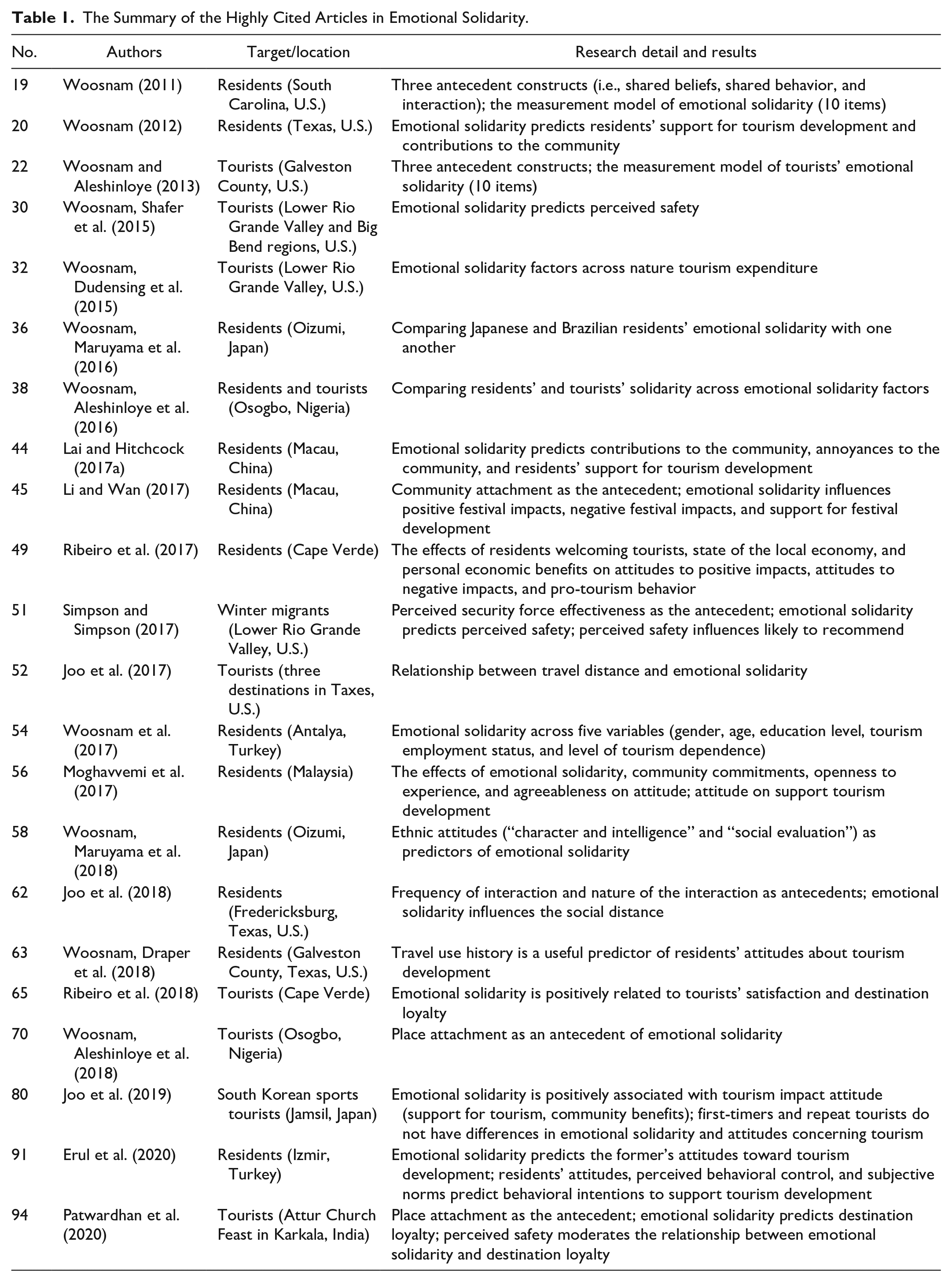
To effectively review the literature, the HistCite software package was used to identify the significant articles retrieved from the Web of Science and to visualize the development of emotional solidarity research in tourism. On 3 Sept 2021, 126 papers were retrieved, among which there were 22 highly cited articles (Local Citation Score, LCS) that directly applied the concept of emotional solidarity were identified. Of the 22 articles, seven were published in the Journal of Travel Research, and six were published in Tourism Management. Woosnam and his colleagues contributed 19 studies. From the hotspot diagram (see Figure A1 in the Appendix), emotional solidarity research in tourism is rooted in Woosnam’s (2011) study in Beaufort County, South Carolina, U.S. Then, the research was divided into two research themes: residents’ emotional solidarity and tourists’ emotional solidarity. Table 1 shows the summary of the 22 articles.
The Summary of the Highly Cited Articles in Emotional Solidarity.
Studies of Residents’ Emotional Solidarity
After developing the scale of residents’ emotional solidarity, Woosnam (2011) confirmed that shared beliefs, shared behavior, and interaction were significant predictors of residents’ emotional solidarity. Shared behavior showed the greatest effect on creating emotional solidarity, followed by shared beliefs and interaction. Among the three dimensions, the reflective loadings of welcoming nature, emotional closeness, and sympathetic understanding were 0.81, 0.61, and 0.99, respectively. This implies that sympathetic understanding was the major source of residents’ emotional solidarity.
According to the hotspot diagram, the next important study on this theme was Woosnam’s (2012) study in Galveston County, Texas. He found that, among the three dimensions of emotional solidarity, emotional closeness does not affect the support of tourism development. Then, the differences between residents’ emotional solidarity and tourists’ emotional solidarity were examined at a UNESCO world heritage site, Osun Osogbo Sacred Grove, and the results indicated that the level of tourists’ emotional solidarity was higher than that of residents in terms of emotional closeness and sympathetic understanding (Woosnam, Aleshinloye et al., 2016). At the same time, Woosnam, Maruyama et al. (2016) compared Japanese and Brazilian residents’ emotional solidarity with one another in Oizumi and found that the latter felt closer to the former. Lai and Hitchcock (2017a) and Li and Wan (2017) were early researchers besides Woosnam in studying emotional solidarity. Coincidently, these two studies were conducted in Macau. It reflects that Macau has the role of an evangelist in the dissemination of academic theories on tourism in the East and the West, as in the past, Macau was the first place where Western missionaries came to China. Li and Wan (2017) integrated social exchange theory (SET), emotional solidarity theory, and community attachment to explain residents’ support for festival development. Lai and Hitchcock (2017a) extended the emotional solidarity scale by adding two items to measure emotional closeness to improve its reliability and tested residents’ support for tourism development by considering a negative factor, annoyances to the community. Meanwhile, in the Lower Rio Grande Valley of Texas, Simpson and Simpson (2017) examined the mediating role of emotional solidarity on the effect of destination security force effectiveness on perceived safety and found that only being welcomed affected the perceived safety of both residents and tourists. As shown in the hotspot diagram and Table 1, the remaining studies covered a range of locations, demographic groups, and tourism segments. These studies applied the original scale to measure residents’ emotional solidarity from the perspective of residents.
In summary, early studies focused on tourism development regarding residents’ emotional solidarity (e.g., Woosnam, 2012) followed by work examining the support for tourism development based on residents’ personal characteristics and interests (including economic benefits). Researchers are most recently integrating other theories into different research settings, but few studies have tested the mediating roles of the three dimensions of emotional solidarity. Consequently, there is a trend, particularly in Eastern countries, to do more research on this theme.
Studies of Tourists’ Emotional Solidarity
In studying the tourists’ emotional solidarity, Woosnam and Aleshinloye (2013) revised the measurement items and examined the effects of shared beliefs, shared behavior, and interaction on tourists’ emotional solidarity from the perspective of tourists. Shared belief showed the greatest effect on tourists’ emotional solidarity, followed by shared behavior and interaction. The highest reflective loading of tourists’ emotional solidarity was still sympathetic understanding (0.83), followed by emotional closeness (0.73), and feeling welcomed (0.68). Therefore, similar to the results of residents’ emotional solidarity with tourists, sympathetic understanding was the major source of tourists’ emotional solidarity with residents.
According to the hotspot diagram, the next important study on this theme was Woosnam, Shafer et al.’s (2015) examination of the emotional solidarity scale among tourists in relation to perceived safety. They found that only feeling welcomed revealed a significant effect on perceived safety in two border regions. Then, another study found that feeling welcomed has a significant effect on travel expenditures in restaurants and bars, retail merchandise, and entertainment (Woosnam, Dudensing et al., 2015). By applying Tobler’s law, Joo et al. (2017) found that tourists who were physically closer had the highest degree of emotional solidarity. Then, research on tourists’ emotional solidarity was extended to Africa and Asia. At the Osun Osogbo Festival in West Africa, Woosnam, Aleshinloye et al. (2018) tested the effect of place attachment on building emotional solidarity. In Cape Verde, Coast of Africa, Ribeiro et al. (2018) found that three dimensions of emotional solidarity affected satisfaction, but emotional closeness did not affect loyalty. In South Korea, Joo et al. (2019) found that repeat tourists reported higher mean scores for emotional solidarity than first-time tourists did in supporting sports tourism. In India, at the Attur Church Feast in Karkala, Patwardhan et al. (2020) found that emotional solidarity mediates the effect of place attachment on loyalty to the festival, and perceived safety moderates the effect of emotional solidarity on loyalty.
Tourists have always been the main object of tourism research, as shown in Table 1, more studies on tourists’ emotional solidarity were conducted in 2018 and later, and research on this theme was diverse and has been extended to different regions. Researchers early focused on perceived safety, perceived security, and tourism expenditure, and then they integrated the emotional solidarity framework with different theories and different constructs to assess their impact on tourists’ attitudes and behaviors. Researchers have treated emotional solidarity as a second-order construct and have tested its mediating effects, but less attention has been paid to studying the individual effects of each dimension of emotional solidarity in tourists. However, knowing the roles of individual dimensions can help destination governments to develop appropriate strategies to improve tourist-resident relationships, especially for tourists from different countries.
Perceptions of Residents’ Emotional Solidarity
Trip satisfaction and word-of-mouth have been widely studied in tourism (e.g., Hwang & Lee, 2019; Lai, 2020; Oriade & Schofield, 2019). Satisfaction is the overall contented feeling that a tourist experiences from visiting a destination (Phillips et al., 2013). Word-of-mouth is a source of information for tourists from friends and family (Ring et al., 2016) and is considered a powerful marketing tool to influence tourists’ choice of destination (Hernández-Méndez et al., 2015). In this study, word-of-mouth is informal communication with others about a destination. Previous studies have indicated that the tourism experience has a direct effect on tourists’ satisfaction (Su et al., 2020; Wong & Lai, 2021) and word-of-mouth referrals (Taheri et al., 2021). Thus, if tourists perceive a high degree of residents’ emotional solidarity with them, they may be satisfied with the experience of the trip and willing to provide positive word-of-mouth recommendations about the destination.
From the resident’s perspective, the elements underlying emotional solidarity include residents’ welcoming nature, emotional closeness, and sympathetic understanding. The welcoming nature is an expression of residents seeing themselves as the hosts of tourists (Woosnam & Norman, 2010). This is also an expression of the appreciation of tourists for their social and economic contributions to the community (Woosnam, 2012). Do Valle et al. (2011) compared tourists’ attitudes and behaviors in four municipalities of Portugal and found that in the municipalities where residents acted as welcoming hosts, tourists expressed higher levels of satisfaction with their touristic experience and higher levels of loyalty to destinations. In this case, if tourists receive a welcoming nature from residents when visiting a destination, they will feel happy about the experience of the trip and may be willing to provide positive word-of-mouth recommendations about the destination.
Hypothesis 1: Tourists’ perceptions of residents’ welcoming nature are positively related to their (a) trip satisfaction and (b) word-of-mouth intentions.
Emotional closeness is another dimension of emotional solidarity, which presents the degree of closeness that residents perceive as commonalities with tourists (Woosnam & Norman, 2010). When tourists are visiting a tourist destination, if they feel residents perceive a sense of closeness with them, this feeling may narrow their personal space (social distance) from residents and motivate their (informal and occasional) interactions with residents (Joo et al., 2018). Researchers have found that the resulting contact has the power to influence visitors’ travel satisfaction (Fan et al., 2017). Stylidis (2022) recently found that resident-tourist interaction has an impact on tourists saying positive things about a tourist destination. Therefore, feeling residents’ close interaction may make tourists satisfied with the experience of the trip and willing to provide positive word-of-mouth recommendations about the destination.
Hypothesis 2: Tourists’ perceptions of residents’ emotional closeness are positively related to their (a) trip satisfaction and (b) word-of-mouth intentions.
Sympathetic understanding is the empathy residents’ affective feel toward tourists (Woosnam, 2012) and also the residents’ realization that they are not entirely different from tourists (Woosnam et al., 2009). Moufakkir (2011) stated that when two groups of people (residents and tourists) know each other well, they will expect each other to behave according to a set of common rules, norms, and values. From the tourists’ perspective, if tourists are aware that residents understand them and find that residents behave in common with them a lot, they will feel that residents are helpful and friendly (Ying & Norman, 2017). They thus may be more satisfied with the travel experience and willing to provide positive word-of-mouth recommendations about the destination.
Hypothesis 3: Tourists’ perceptions of residents’ sympathetic understanding are positively related to their (a) trip satisfaction and (b) word-of-mouth intentions.
The influence of tourists’ trip satisfaction on their word-of-mouth communication has been confirmed in many previous studies (e.g., Hwang & Lee, 2019; Lai & Hitchcock, 2020). Tourists who are more satisfied with their destination are more willing to provide additional positive word-of-mouth communication regarding the destination (Phillips et al., 2013). In this study, a tourist who is satisfied with the experience of the trip may be willing to provide positive comments about the destination.
Hypothesis 4: Tourists’ trip satisfaction positively influences their word-of-mouth intentions.
Since new and repeat visitors to a destination have different experiences, expectations, and motivations (Weaver & Lawton, 2011), these differences affect their satisfaction judgments (Lai & Hitchcock, 2017b) and travel behavior (Matzler et al., 2019). Researchers have examined the moderating role of tourists’ level of experience (first-time tourists versus repeat tourists) on perceptions, attitudes, and behaviors. For example, Hsieh et al.’s (2016) study on the relationship between young Taiwanese travelers attitudes and behavioral intentions, and González-Mansilla et al.’s (2019) study on the effect of hotel brand equity on satisfaction. However, Joo et al. (2019) found that even though repeat tourists have a high level of emotional solidarity with residents, first-timers and repeat tourists do not have differences in the relationship between emotional solidarity and attitudes concerning tourism. Therefore, this study investigates whether visitation frequency plays a moderating role in the relationship between emotional solidarity, satisfaction, and word-of-mouth intentions.
Hypothesis 5: The number of visits moderates the relationship between tourists’ perceptions of residents’ emotional solidarity with them ([a] welcoming nature, [b] emotional closeness, and [c] sympathetic understanding) and their trip satisfaction.
Hypothesis 6: The number of visits moderates the relationship between tourists’ perceptions of residents’ emotional solidarity with them ([a] welcoming nature, [b] emotional closeness, and [c] sympathetic understanding) and their word-of-mouth intentions.
In association with the above hypotheses, the conceptual research model of this study is proposed, as shown in Figure 1.
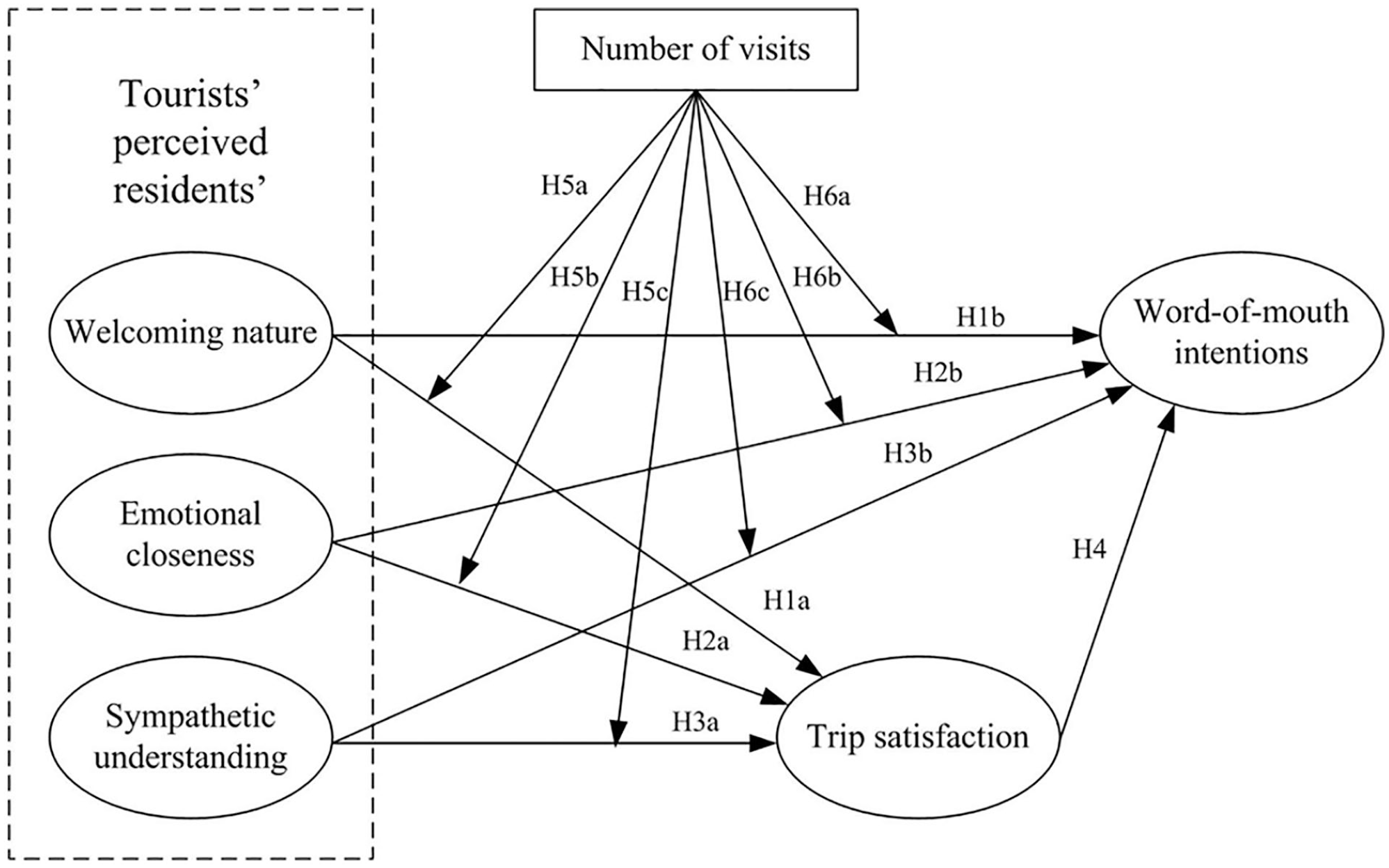
Research model.
Research Methods
Research Site
The literature reveals that most studies of tourists’ emotional solidarity have been conducted in Western countries, and it follows that more studies should be conducted in Eastern countries to generalize the theory of emotional solidarity. To extend the application of the emotional solidarity theory in Asia, this study selected Macau as the tourist destination for the study.
As one of the most popular tourist destinations for mainland Chinese tourists, Macau is the only city in China to operate commercial gambling, and it has the largest casino industry in the world, with around USD 37 billion in 2019 (DSEC, 2020a). Its economy is largely based on gaming tourism. Macau is located on China’s southern coast. It is one of the most densely populated places in the world, and it also has the highest ratio of local inhabitants to visitors (1:50) (Lai & Hitchcock, 2017a). Although it was a former Portuguese colony, almost all residents are ethnic Chinese, born on the mainland or in Macau. Most Macau residents speak Cantonese. They can communicate with mainland Chinese in Putonghua but are not very fluent in speaking it. Macau has also been listed as a World Heritage Site (WHS) since 2005 and has been selected as a UNESCO Creative City of Gastronomy since 2017 (MGTO, 2021). With a mixture of Eastern and Western culture and various entertainment elements, Macau attracted over 27.9 million mainland Chinese tourists in 2019 (DSEC, 2020b).
Macau is a small city with a high visitor-resident ratio (Lai & Hitchcock, 2017a, 2017b), so it is almost unavoidable for Macau residents not to encounter visitors in their daily life (Lai et al., 2021). Therefore, three previous studies have claimed that Macau is an ideal location for emotional solidarity research involving residents (Lai & Hitchcock, 2017a; Lai et al., 2021; Lai & Hitchcock, 2017b; Li & Wan, 2017). On the other hand, the famous Portuguese buildings and cultural heritage are all close to residents’ living places such as Ruínas de São Paulo, where tourists will encounter residents during their visits. Since Macau is an appropriate place to study residents’ emotional solidarity with tourists, it should also be a place suitable for researching tourists’ perceptions of residents’ emotional solidarity with tourists. In addition, according to the literature, we know very little about Chinese tourists with respect to emotional solidarity with residents. The results of this study can also be compared with those of previous studies to understand whether there is a gap between Macau residents’ emotional solidarity with Chinese tourists and Chinese tourists’ perceptions of Macau residents’ emotional solidarity. This comparison adds value to this study. Therefore, Macau was chosen as the research site.
Instrument
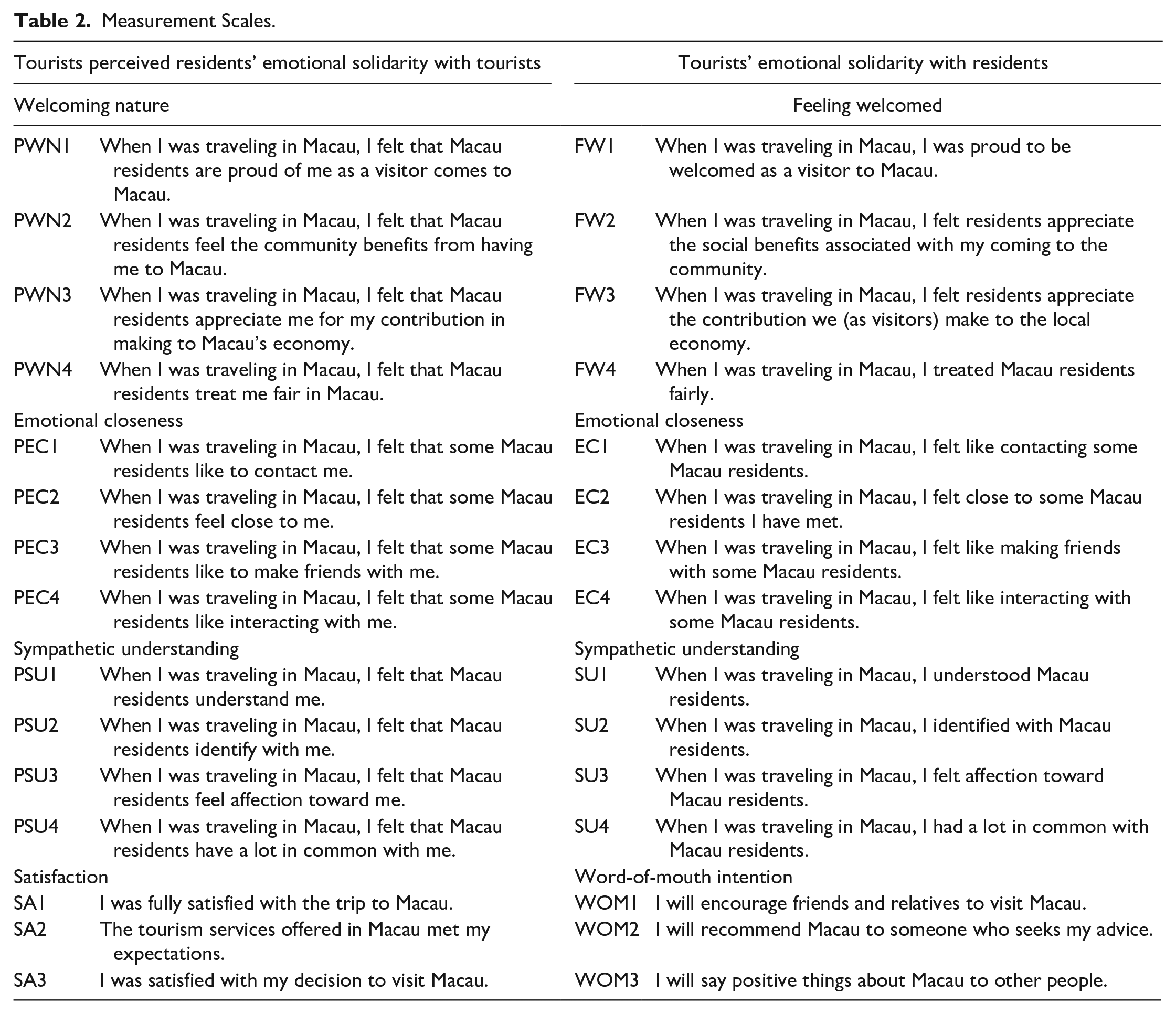
To measure tourists’ perceptions of residents’ emotional solidarity with tourists, this study revised the residents’ emotional solidarity scale by Lai and Hitchcock (2017a) because the scale provides four measurable items for emotional closeness, which can support the calculation of Cronbach’s alpha. For the welcoming nature dimension, the original item “I am proud to have visitors come to Macau” was revised to “As a tourist, I feel that Macau residents are proud of my visit to Macau.” For the sympathetic understanding dimension, the item “I understand visitors in Macau” was revised to “As a tourist, I think Macau residents understand me.” For the emotional closeness dimension, the item “I like to contact visitors in Macau” was revised to “As a tourist, I think Macau residents like to contact me.” In total, there were 12 items for the three dimensions of emotional solidarity involving tourists. The measurable items of satisfaction (three items) and word-of-mouth (three items) were borrowed from Bloemer and Odekerken-Schröder (2002) and Babin et al. (2005). This study also measured tourists’ emotional solidarity with residents. These measurable items were borrowed from Woosnam, Shafer et al. (2015). To address the issue in computing Cronbach’s alpha, two items of emotional closeness were added referring to Lai and Hitchcock (2017a). These measurement scales were sent to two professors in tourism to verify their content. Since the targets were Chinese tourists who had just completed a trip to Macau, a professor suggested adding “when I was traveling in Macau” to reflect the feeling of traveling at that time. Therefore, the measurable items were revised to “When I was traveling in Macau, I thought Macau residents like to contact me.” Table 2 lists the 30 measurable items for the eight constructs.
Measurement Scales.
Questionnaire Design
To determine whether or not respondents qualified, we asked the filter question “are you a Chinese tourist who has just returned from Macau?.” Following this, the first section employed a 6-point Likert scale to measure satisfaction. The second section utilized a 7-point Likert scale to measure tourists’ perceptions of residents’ emotional solidarity with them. The third section used a 6-point Likert scale to measure word-of-mouth intention. The fourth section used a 7-point Likert scale to measure tourists’ emotional solidarity with residents. The final section included questions regarding respondents’ background information. This format and use of Likert scales with different response categories were designed to reduce common method bias (Podsakoff et al., 2012). To address the question order bias, this study measured travel satisfaction at the beginning of the questionnaire. This can avoid the emotional solidarity questions influencing the respondents’ answers to the travel satisfaction questions. The questionnaire was designed in English and was translated into Chinese by a professional translator. Back translation was performed by another translator to prevent translation bias. A pre-test was conducted with 30 tourists at the border gate where visitors wait to travel from Macau back to the mainland. The respondents completed the questionnaire in roughly 5 to 10 minutes.
Data Collection
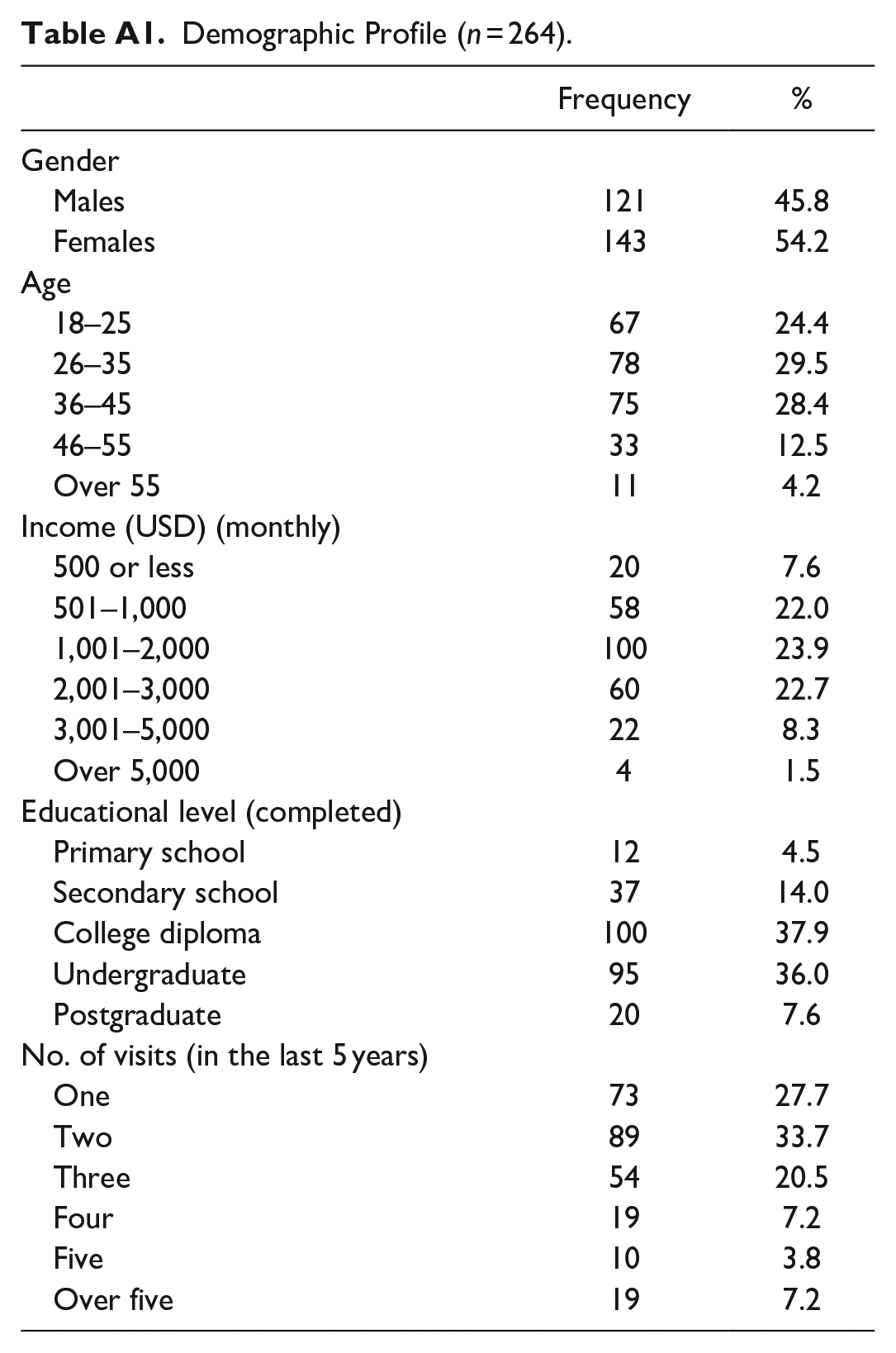
To minimize the sampling bias and non-sampling bias, data were collected in two locations. The first location was the border gate on the Macau side. The second location was in the Zhuhai high-speed railway station (on the China side). Because some of the passengers returning to the mainland were relatively hurried, this allowed them enough time to answer the survey while waiting for the train at the station. The questionnaire collection was administered by two well-trained interviewers and was conducted in April 2019 through convenience sampling. The research design aimed to capture the passenger’s feelings when they were closest to completing the journey, so it was difficult to implement simple random sampling since the target population size is huge and we do not have a complete list of the target population (Ghauri et al., 2020). Therefore, convenience sampling has usually been applied in emotional solidarity studies involving tourists in recent years (e.g., Joo et al., 2019; Li et al., 2021). Data were collected from 150 individuals at each of the two locations. Some quotas were set for the face-to-face survey to ensure the representativeness of the population distribution of Chinese tourists to Macau. Data were collected from only 20 participants in each location every day. Furthermore, the ratio of males to females and the ratio of different age groups were set. Daily quotas for men and women were equal, 10 and 10, respectively. For each gender group, daily quotas for the 18 to 25, 26 to 35, 36 to 45, and 45+ age groups were 2, 3, 3, and 2, respectively. This setting was relatively simple and practical for interviewers to operate. The results were relatively consistent with the characteristics of Chinese tourists to Macau; however, because the age group relied on visual inspection, there was a slight gap between the data received and the quotas. After data cleaning (removing similar rating data), a total of 264 data were used for data analysis. Table A1 in the Appendix lists the sample profiles. Of these samples, 54.2% were females, with 29.5% in the 26 to 35 age group and 28.4% in the 36 to 45 age group. Nineteen respondents (7.2%) had visited Macau over five times in the past 5 years. In the past 5 years, 27.7%, 33.7%, 20.5%, 7.2%, and 3.8% had visited Macau one to five times, respectively.
Findings
This study aims to test a research model in two different contexts: the first that focusses on tourists’ perceptions of residents’ emotional solidarity with tourists is referred to as Model A; the second focuses on tourists’ perceptions of emotional solidarity with residents and is referred to as Model B. Each research model included 18 indicators. Therefore, the sample size met the minimum 1:10 ratio requirement for performing structural equation model (SEM) analysis (Hair et al., 2017). Since this study compares the impacts of tourists’ perceived residents’ emotional solidarity with the impacts of tourists’ emotional solidarity, partial least squares (PLS) analysis was adopted because it offers a multiple-group analysis (MGA) function (Hair et al., 2017). In addition, PLS-SEM is suitable for estimating the moderating effect (Becker et al., 2018). This study examines the moderating effect of the number of visits; therefore, SmartPLS (v.3.3.3) was used (Ringle et al., 2015). In addition, compared to covariance-based SEM, as Joo et al. (2021) justified the use of PLS-SEM in their emotional solidarity research involving residents, PLS-SEM is appropriate when the research objective is to identify the key predictors (e.g., three dimensions of emotional solidarity) to predict a target construct (e.g., travel satisfaction) (Hair et al., 2011). Before evaluating the outer model, an independent samples t-test was performed to test for any differences between data collected at the border gate and the station. The results of the independent samples t-test showed that the population means of these two groups of data were not significantly different, confirming that there was no potential non-response bias. A two-sample z-test was further conducted to compare the distributions of the two samples. All the values of the z-statistic were less than 1.96, indicating that data collected in two locations could be merged.
Measurement Model
The normality of data was tested by running skewness and kurtosis tests. As shown in Table 3, the range of skewness was from −0.494 to 0.425, less than the cutoff absolute value of 3.0. The range of kurtosis was from −1.137 to 0.483, less than the cutoff absolute value of 7.0. Data were considered to be normally distributed (Hair et al., 2011). Composite reliability (CR) for the eight constructs ranged from 0.823 (perceived residents’ welcoming nature) to 0.893 (word-of-mouth intention), exceeding the threshold (0.70), and all average variance extracted (AVE) estimates surpassed the critical value (0.50), ranging from 0.537 to 0.735 (see Table 4). The factor loadings for the 30 indicators ranged from 0.705 (PWN1) to 0.865 (WOM1) (>0.70) (see Table 3). All correlations were lower than the square root of each AVE, and all the values of the heterotrait-monotrait ratio (HTMT) were lower than 0.85. According to Hair et al.’s (2017) recommendations, this provides support for reliability, convergent validity, and discriminant validity.
Mean, Standard Deviation (S.D.), and Factor Loading of Measurable Items.
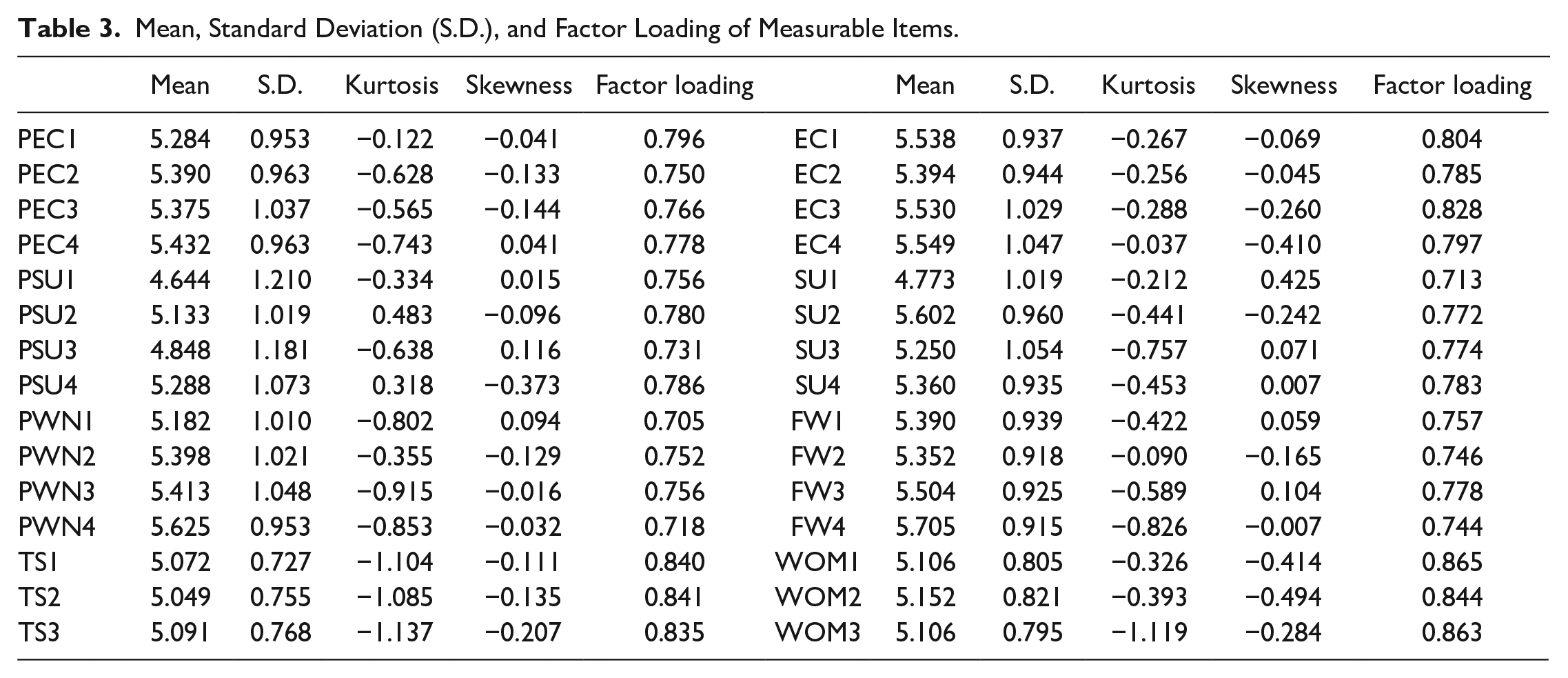
Reliability and Validity.
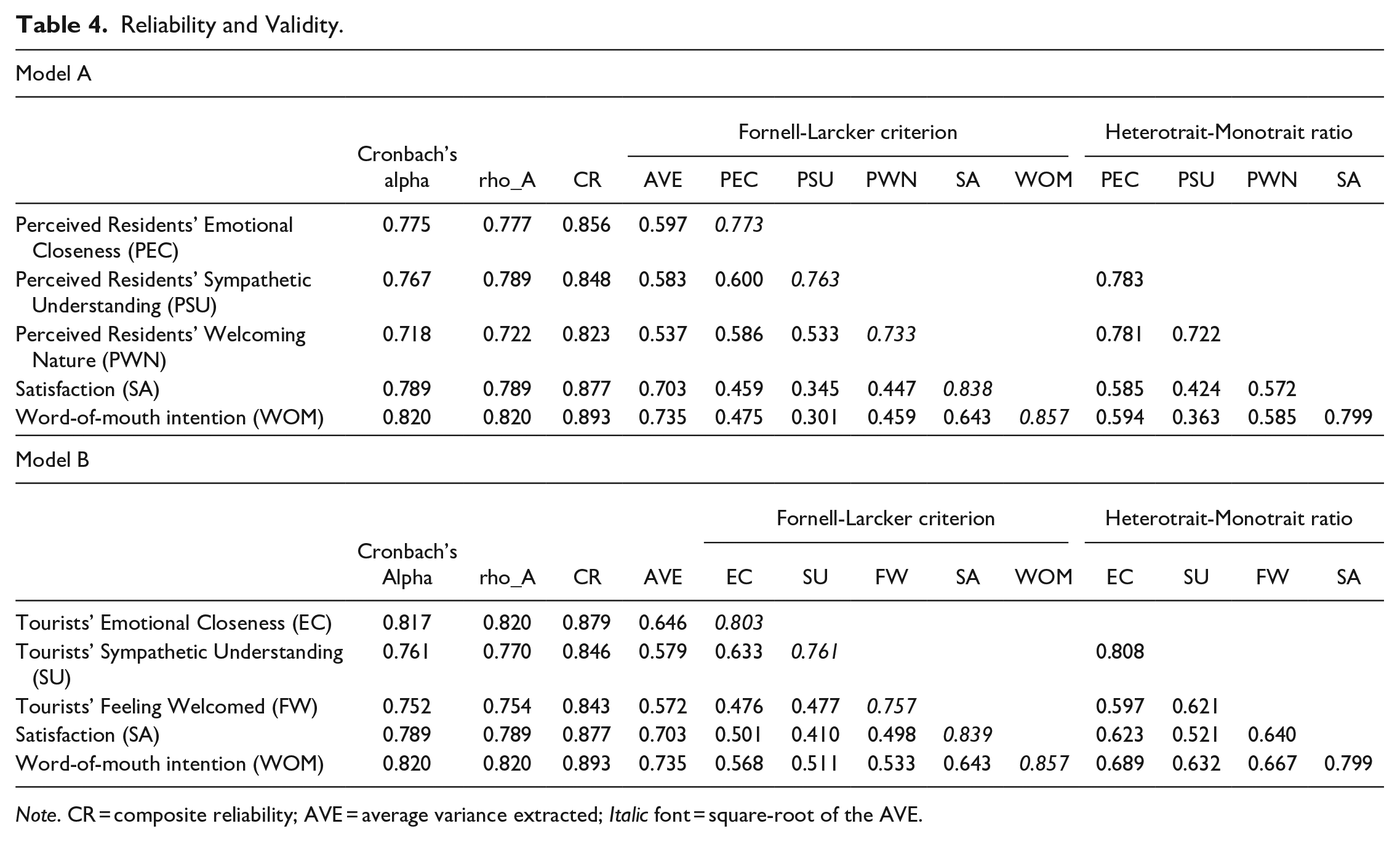
Note. CR = composite reliability; AVE = average variance extracted; Italic font = square-root of the AVE.
Structural Path Model
Table 5 shows the results of the PLS-SEM analysis of Model A and Model B. For Model A, perceived residents’ welcoming nature had a significant effect on satisfaction (β = .264, p < .001) and word-of-mouth intention (β = .158, p = .006). Perceived residents’ emotional closeness had a significant effect on satisfaction (β = .258, p = .001) and word-of-mouth intention (β = .180, p = .013). But perceived residents’ sympathetic understanding did not show any significant effect on satisfaction (β = .047, p = .427) and word-of-mouth intention (β = −.068, p = .300). Satisfaction significantly affected word-of-mouth intention (β = .530, p < .001). The number of visits significantly moderated the effects of perceived residents’ welcoming nature (β = .145, p = .012) and emotional closeness (β = −.212, p = .010) on satisfaction. The values of f-square for significant paths exceeded 0.02 (Hair et al., 2017). The effect sizes for the R-square of satisfaction and word-of-mouth intention were 0.301 and 0.478, respectively. These R-square values were adequate for a minimum R-square value of 0.25 (Hair et al., 2011). Therefore, H1, H2, and H4 were supported. H3 and H6 were not supported. H5 was partially supported.
Results of PLS-SEM Analysis.
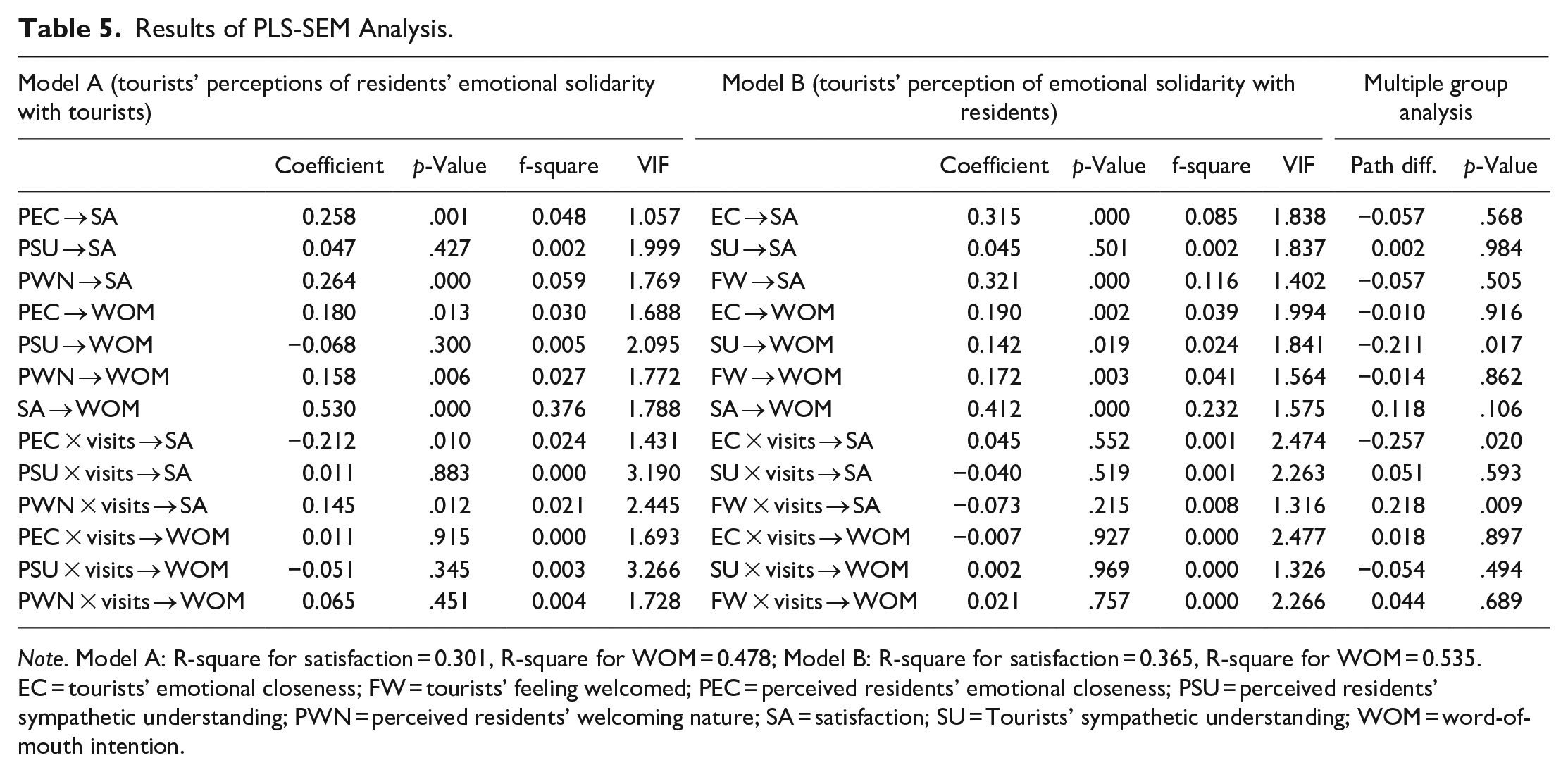
Note. Model A: R-square for satisfaction = 0.301, R-square for WOM = 0.478; Model B: R-square for satisfaction = 0.365, R-square for WOM = 0.535. EC = tourists’ emotional closeness; FW = tourists’ feeling welcomed; PEC = perceived residents’ emotional closeness; PSU = perceived residents’ sympathetic understanding; PWN = perceived residents’ welcoming nature; SA = satisfaction; SU = Tourists’ sympathetic understanding; WOM = word-of-mouth intention.
Simple Slope Analysis
Figure 2 shows the results of two simple slope analyses. The moderating effect of visitation frequency between perceived residents’ welcoming nature and satisfaction was positive (see Figure 2a). For the frequent tourists, when they perceived a high level of perceived residents’ welcoming nature shown by residents, their satisfaction was higher than that of tourists who visited Macau less frequently. On the other hand, the frequent tourists who perceived a low level of perceived residents’ welcoming nature were more dissatisfied with the trip than those who visited Macau less frequently.
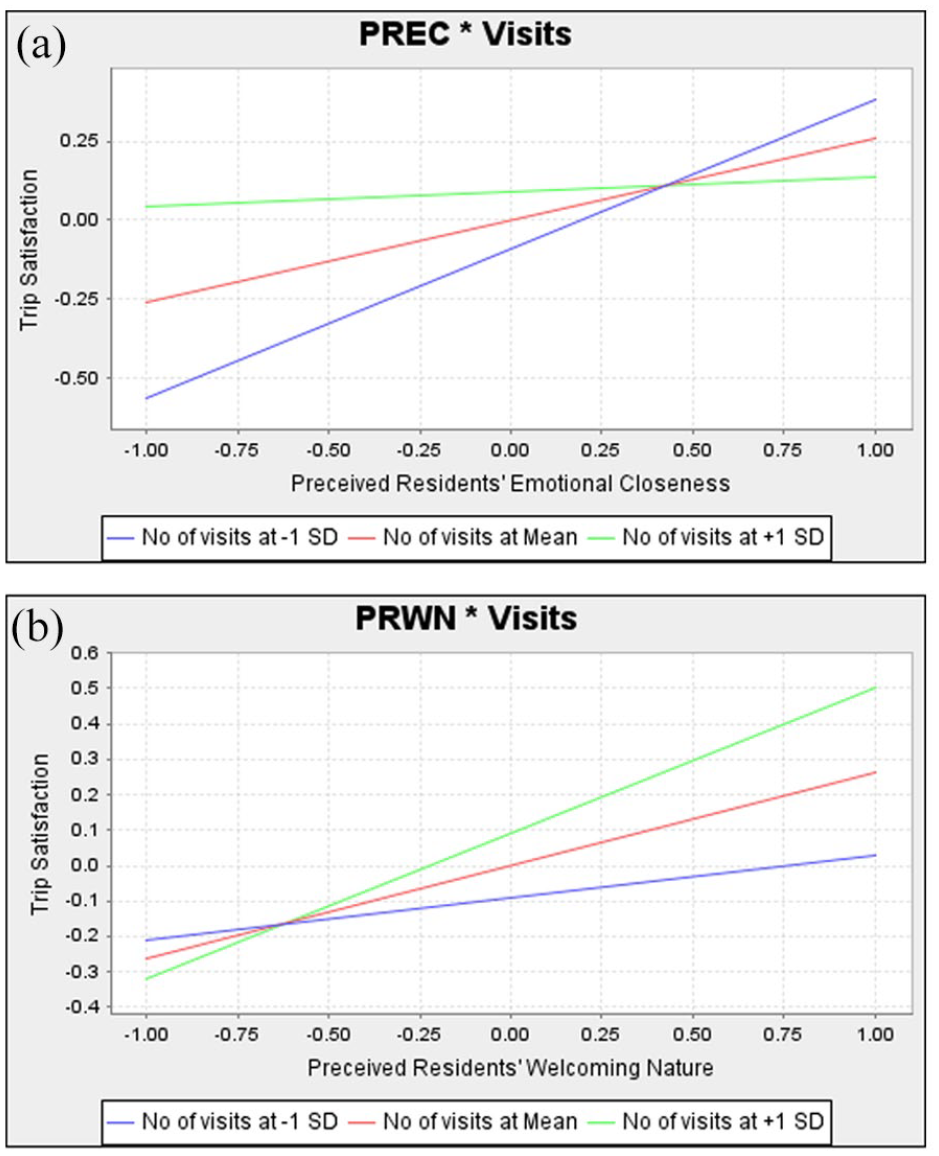
Simple slope analysis.
The moderating effect of visitation frequency between perceived emotional closeness and satisfaction was negative (see Figure 2b). When tourists perceived a high level of emotional closeness shown by residents, the tourists who visited Macau less frequently were more satisfied with the trip than those who visited Macau frequently. On the other hand, for those who did not observe residents’ emotional closeness during travel to Macau, less frequent tourists were more dissatisfied with the trip than frequent tourists.
Model Comparison
For Model B, tourists’ emotional closeness and feeling welcomed had a significant effect on satisfaction (βEC = 0.315, p < .001; βFW = 0.321, p < .001), but tourists’ sympathetic understanding did not have a significant effect on satisfaction (βSU = 0.045, p = .501). The three dimensions of emotional solidarity and satisfaction had a significant effect on word-of-mouth (βEC = 0.190, p = .002; βSU = 0.142, p = .019; βFW = 0.172, p = .003; βSA = 0.412, p < .001). The number of visits, however, did not show any moderating effects. The values of f-square for significant paths exceeded 0.02 (Hair et al., 2017). The effect sizes for R-square of satisfaction and word-of-mouth intention were 0.365 and 0.535, respectively. These R-square values were adequate for a minimum R-square value of 0.25 (Hair et al., 2011). The values of SRMR for Model A and Model B were 0.069 and 0.067, respectively. Both values were lower than 0.08, indicating a good fit for the models (Henseler et al., 2016).
In summary, the results of significant paths of Model B were similar to those of Model A, except the effect of tourists’ sympathetic understanding of residents on word-of-mouth intention was significant, and two moderating effects (EC × visits, FW × visits) were not significant (p > .05). However, the effect (path coefficient) of satisfaction on word-of-mouth intention had a greater impact on Model A than on Model B. Therefore, an MGA was performed to assess any path differences between the two models. The results of the MGA confirm three significant path differences (PSU/SU → WOM, PEC/EC × visits → satisfaction, and PWN/FW × visits → satisfaction), as shown in Table 5.
Assessing Common Method Variance
The questionnaire consisted of 30 measurable items for eight constructs. The variance for Harman’s single factor for these 30 items was 35.253%, which was much less than the threshold value of 50% (Podsakoff et al., 2012). As shown in Table 5, all the inner Variance Inflation Factor (VIF) values ranged from 1.057 to 3.266, and the outer VIF values ranged from 1.192 to 1.947. Both the inner and outer VIF values were less than 3.3, which indicates the absence of possible multicollinearity issues (Hair et al., 2017). The results of the above ex-post statistical analysis confirm that common method variance does not exist.
Conclusions and Discussion
Discussion of the Results
The results of this study indicate that, in terms of the effects of the three emotional solidarity dimensions on tourists’ satisfaction, there is no difference between the two perceptions of emotional solidarity from the perspective of tourists. It may imply that in terms of short-term attitudes, the outcomes of tourists’ emotional solidarity (with residents) and tourists’ perceptions of residents’ emotional solidarity are similar. However, this study finds that Chinese tourists’ sympathetic understanding of Macau residents affects their word-of-mouth intentions. This result is quite significant as it shows that the willingness to provide word-of-mouth is due to Chinese tourists’ view of Macau residents as “we” rather than “they.” But Chinese tourists do not need to feel that residents have a sympathetic understanding of them to provide word-of-mouth. Chinese tourists do not care whether Macau residents “put themselves in others’ shoes.” In fact, in Lai and Hitchcock’s (2017a) study, Macau residents rated the lowest mean scores on their sympathetic understanding dimension. Li and Wan (2017) even indicated that sympathetic understanding has no effect on residents’ support for festival activities. In conclusion, Chinese tourists do not care how residents understand them, and accordingly, residents’ sympathetic understanding that they perceived does little to contribute to their attitudes and travel behaviors.
Being a major source of tourists to Macau, mainland Chinese tourists understand that if they go to Macau more, the greater their contribution to Macau’s economy. Since frequent tourists make greater contributions, they expect residents to express gratitude. This means that when frequent tourists feel that the residents welcome them, they will be more satisfied with their trip to Macau. In Lai and Hitchcock’s (2017a) study, Macau residents rated the highest mean scores for the welcoming nature dimension. A Chinese proverb states that welcoming a friend from afar gives one great delight (有朋自远方来,不亦乐乎), so frequent Chinese tourists pay more attention to the feeling of being welcomed. Therefore, the number of visits has a profound effect on satisfaction due to a high level of perceived residents’ welcoming nature on the part of tourists. On the other hand, since Macau is a special administrative region of China, Chinese tourists feel close to Macau residents and expect Macau residents to reciprocate. However, comparing the mean score in emotional closeness in this study with that of Lai and Hitchcock (2017a), the score of tourists (5.370) is much higher than that of residents (4.547). It may imply that Chinese tourists have a stronger sense of closeness to Macau residents than Macau residents do toward Chinese tourists. Repeat tourists are destination-familiar tourists (McKercher et al., 2012); they have a better sense of the destination and its community (Caldeira & Kastenholz, 2018). But less frequent tourists may be surprised and dissatisfied with a trip if they do not feel a closeness with Macau residents. The resulting dissatisfaction is attributed to a travel experience that does not meet expectations (Ziegler et al., 2012); therefore, the number of visits may have the power to reduce dissatisfaction caused by tourists’ perceptions of residents’ low emotional closeness.
Conclusions
This study revealed that residents’ welcoming nature and emotional closeness perceived by tourists have significant effects on tourists’ trip satisfaction and word-of-mouth intentions. However, residents’ sympathetic understanding as perceived by tourists does not affect tourists’ trip satisfaction and word-of-mouth intentions. In addition, this study has also revealed that tourists’ feeling welcomed and emotional closeness with residents have significant effects on their trip satisfaction and word-of-mouth intentions, and their sympathetic understanding also does not affect their trip satisfaction. However, their sympathetic understanding has a significant effect on word-of-mouth intentions. Tourists’ trip satisfaction has a significant effect on their word-of-mouth intentions. In general, it could be concluded that emotional solidarity (whether tourists’ perceptions of residents’ emotional solidarity or tourists’ emotional solidarity with residents) positively influences trip satisfaction, and that satisfaction positively influences word-of-mouth intentions, consistent with the results of Ribeiro et al. (2018). However, when comparing the effects of each dimension, there are differences with Ribeiro et al.’s (2018) results in Cape Verde. Although Macau and Cape Verde were previously colonies of Portugal, most tourists to Cape Verde were from Europe. Because tourists’ distance traveled to a destination is related to the perceived degree of emotional closeness (Joo et al., 2017), it is, therefore, reasonable to assume that European tourists do not have as high a level of closeness with residents in Cape Verde as mainland Chinese tourists do with residents in Macau.
This study has also examined the moderating effect of the number of visits. Given similarly high levels of perceived residents’ welcoming nature, tourists who visited Macau more indicated a higher degree of satisfaction with their trip to Macau than tourists who visited Macau less. However, given similarly high levels of residents’ emotional closeness, less frequent tourists were more satisfied than frequent tourists. Therefore, the number of visits shows a positive moderating effect between perceived residents’ welcoming nature and trip satisfaction and a negative moderating effect between perceived residents’ emotional closeness and trip satisfaction.
Theoretical Implications
Since the viewpoints between the hosts and the guests have certain differences, tourists may consider their feelings about residents’ attitudes toward them more than their attitudes toward residents. Therefore, the measurement of tourists’ perceptions of residents’ emotional solidarity (with tourists) is important for studying tourists’ attitudes and behaviors toward a destination. As Woosnam (2011) stated, further examinations should be performed with new populations and settings to ensure the generalizability of the emotional solidarity theory. This study contributes to emotional solidarity research by introducing the concept of tourists’ perceptions of residents’ emotional solidarity with them. Therefore, researchers can design future work incorporating this concept into other theories such as place attachment to evaluate tourists’ attitudes and travel behaviors in different tourism contexts.
Since less attention has been given to exploring the effects of individual dimensions of emotional solidarity on tourists’ attitudes and behaviors, this study has investigated and discussed these impacts, especially from the Chinese tourist perspective. Compared to the results of Ribeiro et al.’s (2018) and Patwardhan et al.’s (2020) studies, which were from a Western tourist perspective, the results of this study reflect the differences between Chinese and Western tourists’ cultures. Since the application of emotional solidarity is largely ignored or almost non-existent in the literature outside of Western cultural contexts, especially in an Asian setting (Wang et al., 2021), this study provides a meaningful contribution to the tourists’ future behavior literature by providing a clearer understanding of the roles of the individual dimensions of emotional solidarity in influencing Chinese tourists’ future behaviors.
By comparing the two tourists’ perceptions, this study explores the differences between tourists’ feelings of receiving from and offering to residents in terms of emotional solidarity. According to the theoretical framework of emotional solidarity, interaction, shared beliefs, and shared behavior between residents and tourists are predictors of the emotional solidarity experienced (Woosnam & Norman, 2010). When tourists perceive that some residents like to interact, the feeling is likely mutual; in essence, this implies the notion of interaction. When tourists perceive that residents are proud of them, they will be honored to be welcomed. This is comparable to sharing beliefs. However, tourists’ understanding of residents does not simply come from residents’ understanding of tourists. Woosnam and Aleshinloye (2013) explained that tourists’ understanding of residents comes from their participation in common activities with residents. Through the comparison of the two perceptions, we can learn more about the common points of the mechanism by which tourists and residents form emotional solidarity with each other.
This study finds that the moderating effect of visitation frequency only depends on tourists’ perceptions of residents’ emotional solidarity with them but not on their emotional solidarity with residents. Compared with less frequent tourists, frequent tourists are more satisfied when they experience certain positive responses (e.g., strong welcome) from residents. On the other hand, they may be less dissatisfied when they experience certain negative responses (e.g., being less close) from residents. The factors increasing satisfaction and reducing dissatisfaction differ; this study contributes to tourism marketing research by indicating the moderating effect of visitation frequency on increasing trip satisfaction and reducing trip dissatisfaction. These findings encourage researchers to further investigate tourists’ responses from residents or tourism services that contribute to increasing the satisfaction of frequent visitors while also decreasing their dissatisfaction.
Practical Implications
In both cases of tourists’ perceptions, emotional closeness is an important driver of travel satisfaction and word-of-mouth recommendations. In the past, many tourist destinations only strategically focused on creating a “welcoming” vibe, such as launching “smile city” signage. Therefore, for internal marketing, destination marketing organizations (DMOs) should emphasize offering the potential to feel close to and welcomed by residents. To put this into practice, local businesses such as souvenir shops should encourage their staff to interact more with tourists. Tourists feel close to residents through interactions (Woosnam & Norman, 2010). For example, almond biscuits are very famous in Macau. The staff can explain the history of almond biscuits in Macau, demonstrate the process of making almond biscuits, and show tourists how to taste almond biscuits with oolong tea. The DMOs could also organize more events suitable for both locals and tourists to create interactive opportunities such as the Macau Food Festival. It provides energetic live entertainment for both parties, such as playing fun games together and participating in beer competitions.
Further, sympathetic understanding with residents is a source for tourists to provide word-of-mouth even though they do not perceive residents’ sympathetic understanding. In the U.K., museums and art galleries are plentiful. In Macau, at the Macao Grand Prix Museum, tourists can have a deeper understanding of the evolution of Macau. Thus, destination governments can build museums and art galleries with different themes. In addition, when promoting Macau tourism activities in mainland China, DMOs can show content concerning the daily life of Macau residents. Many tourists search for local information on the Internet before visiting a destination. Some short videos can be posted on social media about the cultures and lives of Macau residents. This can increase tourists’ familiarity with residents when visiting. These suggestions are not limited to Macau but are applicable to other tourist destinations also.
Frequent tourists interact more with residents over time and feel their enthusiasm and hospitality, thereby increasing their trip satisfaction. However, first-time tourists usually stay in a destination for short periods. Therefore, DMOs need to develop various promotion programs for first-time tourists. For example, the Macau government can subsidize the second night of lodging for first-time tourists, motivating them to stay an extra day to experience Macau. The tourism industry should provide a “welcome offer” for first-time tourists. In practice, tourists are only required to claim that they are first-time tourists; hotels do not need to undertake a serious check to verify that they are first-time tourists. This would demonstrate a greater sense of feeling welcomed. The Macau government receives substantial income from the gaming industry, which is enough to provide subsidies. This arrangement can further increase the time tourists spend in Macau, and surely the casino resorts would be happy to make more concessions over subsidies.
Limitations and Further Studies
This research is not free of limitations. For instance, citation and co-citation analysis can be somewhat problematic. Eight articles shown in the HistCite hotspot diagram did not directly apply the concept of emotional solidarity, and some recent significant studies may be missed. Second, the use of convenience sampling and a small sample size are limitations of this research design. Future studies using probability sampling of a large number of samples in multiple destinations to test the generalizability of the research results are recommended. Third, this study tested the moderating effect of visitation frequency and indicated that frequent tourists have a higher level of emotional solidarity with residents. However, the geographic (travel) distance may be a constraint that limits the frequency of visitations. Researchers can consider this kind of constraint in their further studies. In addition, researchers can study tourists who have a high travel history to foster the development of the emotional solidarity theory within a tourism context, especially among tourists in destinations within Asia.
Footnotes
Appendix
Demographic Profile (n = 264).
| Frequency | % | |
|---|---|---|
| Gender | ||
| Males | 121 | 45.8 |
| Females | 143 | 54.2 |
| Age | ||
| 18–25 | 67 | 24.4 |
| 26–35 | 78 | 29.5 |
| 36–45 | 75 | 28.4 |
| 46–55 | 33 | 12.5 |
| Over 55 | 11 | 4.2 |
| Income (USD) (monthly) | ||
| 500 or less | 20 | 7.6 |
| 501–1,000 | 58 | 22.0 |
| 1,001–2,000 | 100 | 23.9 |
| 2,001–3,000 | 60 | 22.7 |
| 3,001–5,000 | 22 | 8.3 |
| Over 5,000 | 4 | 1.5 |
| Educational level (completed) | ||
| Primary school | 12 | 4.5 |
| Secondary school | 37 | 14.0 |
| College diploma | 100 | 37.9 |
| Undergraduate | 95 | 36.0 |
| Postgraduate | 20 | 7.6 |
| No. of visits (in the last 5 years) | ||
| One | 73 | 27.7 |
| Two | 89 | 33.7 |
| Three | 54 | 20.5 |
| Four | 19 | 7.2 |
| Five | 10 | 3.8 |
| Over five | 19 | 7.2 |
Declaration of Conflicting Interests
The author(s) declared no potential conflicts of interest with respect to the research, authorship, and/or publication of this article.
Funding
The author(s) received no financial support for the research, authorship, and/or publication of this article.
