




Abstract
When people make travel decisions, they consult their imagination, considering how they would feel in the respective travel situation. Both, researchers who examine this phenomenon and practitioners executing it, commonly hold the vague assumption of an evaluative cognitive process that enables tourists to factor such information into their decision-making process. The nature and functioning of such a process is largely unknown. The authors suggest that travelers, often subconsciously, mentally simulate future hotel stays and predict future feelings to inform their decision-making, a process referred to as affective forecasting. Executing an experimental design, the authors show that actively engaging in episodic future thinking to trigger affective forecasting increases travelers’ intentions toward holiday accommodations. This effect is mediated by hotel trust and risk perception, demonstrating that affective forecasting is an effective way for regaining tourists’ trust and reducing their perceived risk during a pandemic. Contributions to theory and practical implications are discussed.
Keywords
Introduction
Hotels’ communication to potential guests often focuses on providing impressions on how a visit to the respective hotel will be. This is done by creating potentially immersive content like appealing pictures of rooms and the hotels’ facilities, as well as teasers on the experience that guests can expect when visiting. This content allows the potential guest to “pre-experience” a visit at the respective hotel. In a related vein, travelers actively seek information that enable them to approximate how a visit to a specific hotel may turn out, especially by searching hotel reviews and travel reports online. Indeed, as tourism products are intangible and unavailable for testing (i.e., a credence good), pre-experiencing is at the heart of the service and tourism industry. Both, researchers who examine this phenomenon and practitioners executing it, commonly hold the vague assumption of an evaluative cognitive process that enables tourists to factor such information into their decision-making process. However, the nature and functioning of such a process is largely unknown, thus leaving the literature with a “black box”—a lack of visibility of how tourists mentally pre-experience their hotel stays and how this impacts their decision-making.
We ground our research in the seminal literature of episodic future thinking (Atance and O’Neill 2001; Bulley and Schacter 2020) and affective forecasting (Wilson and Gilbert 2003) to suggest that “forecasting one’s feelings” by pre-experiencing a situation is a vital psychological activity that travelers often engage in to imagine a future hotel stay. Predicting future feelings and hedonic consequences of future events based on mental simulations is an ability unique to humans (Gilbert and Wilson 2007; Miloyan and Suddendorf 2015). It helps people to make decisions about the future, plan future events or emotionally prepare for negative and positive future consequences of their decisions (Barsics, Van der Linden, and D’Argembeau 2016). Since travel decisions are primarily hedonic and idiosyncratically manifest in experiences which will take place in the future (Kock, Josiassen, and Assaf 2018), affective forecasting is naturally suited to explain why tourists choose a certain destination, activity or accommodation for their next holiday. Only recently, researchers (Karl et al. 2021) have started to examine this phenomenon in tourism, demonstrating its considerable importance for understanding and altering travel behavior in a pandemic. However, to date, no study has examined the potentially very relevant and insightful role of affective forecasting in holiday accommodation decision-making. This dearth is, both from an academic and managerial perspective, surprising because the decision-making involved in planning and booking a holiday accommodation lends itself well to the application of affective forecasting.
In summary, we propose that future thinking and affective forecasting may play a considerable role in shaping tourists’ predispositions toward holiday accommodation booking. By conceptually introducing affective forecasting in hospitality research and empirically validating how engaging in future thinking to trigger affective forecasting impacts decision-making in the hospitality context, we set out to enhance the current understanding on travelers’ accommodation decision-making. We employ the COVID-19 pandemic as a proof of concept for explaining the potential transformative impact of affective forecasting on tourists’ perceptions and hotel decision-making. Specifically, we test the role of trust toward hotels and perceived coronavirus-infection risk when traveling to and staying at hotels to shed some light on the underlying mechanism of future thinking and affective forecasting in travel decision-making.
Given that COVID-19-related predispositions have an important impact on tourists’ behavioral intentions (Kock et al. 2020), and given the urgent need for hotels to understand how to win back tourists once the pandemic starts retreating, testing the role of affective forecasting in this context is of high relevance both for researchers and tourism managers. Indeed, hotels and other holiday accommodations face severe and ongoing headwinds from the pandemic (Le and Phi 2021), and thus our examination on how to reignite travelers’ booking behavior is most relevant and timely, both for researchers and practitioners.
The aims of this study are as follows: (1) to introduce the conceptual underpinnings of affective forecasting, what it is and how existing research has examined it; (2) to provide conceptual arguments for the role and importance of affective forecasting for tourism management, in particular hotel management, in order to argue from a theoretical perspective how affective forecasting can shape tourists’ predispositions toward booking hotels during or in the aftermath of a pandemic; (3) to develop an experimental design to empirically test if affective forecasting triggered by future thinking can increase travelers’ intentions to book a holiday accommodation and positively influences their travel plans; (4) to explore the role of hotel trust and risk perception in the affective forecasting mechanism to shed light on the black box of travel decision-making in times of a pandemic; and (5) to test whether all people are equally influenced by future thinking and affective forecasting in their decision-making process, specifically focusing on the factors vulnerability and travel importance. To achieve these goals, we review existing accounts on the role of anticipated emotions in tourism and position our contribution within it.
Affective Forecasting in Travel Research
Future Thinking and Affective Forecasting
Future thinking, also referred to as prospection, is a capability unique to humans, allowing them to mentally represent the future (Bulley and Schacter 2020). The mental representations can take two different forms based on memory and knowledge types: semantic and episodic (Szpunar, Spreng, and Schacter 2014). Under semantic conditions, people simulate more abstract and general events or conditions that may arise in the future. Under episodic conditions, people simulate autobiographical events in their own future and mentally pre-experience the future. In daily life, people often use future thinking to plan their activities, guide their decisions and set goals for the immediate and long-term future (D’Argembeau, Renaud, and Van der Linden 2011). For example, people mentally envision the future outcomes of different purchase decisions in order to inform that decision. In fact, research found that people think about 60 times per day about their personal future and two-thirds of these thoughts are emotionally charged (D’Argembeau, Renaud, and Van der Linden 2011). While semantic and episodic future thinking can guide decision-making, episodic future thinking is particularly suitable for affective forecasting (Bulley and Schacter 2020).
Episodic future thinking is characterized by a high level of vividness and sensorial and contextual detail of the imagined event or situation. For example, when tourists consider booking an accommodation, they may, consciously or subconsciously, imagine themselves being in that particular accommodation (such as by imagining lying on the comfy bed on the picture or looking over the city’s skyline from the window). When people engage in episodic future thinking they experience the future from a field perspective (i.e., as if they are part of it; Bø and Wolff 2019) rather than an observer perspective. An important condition for episodic future thinking is a high personal relevance of the future event (Bulley et al. 2019; D’Argembeau and Van der Linden 2004; Scoboria et al. 2020). A future event that is perceived as unimportant or happening in the remote future will more likely be simulated in form of semantic future thinking, that is, through an observer perspective with lower details on sensory, contextual, and emotional circumstances (D’Argembeau and Van der Linden 2004).
Affective forecasting describes the process of predicting future feelings which includes several steps (Wilson and Gilbert 2003). First, using episodic future thinking people construct a mental representation of the future event using details from their own experiences in similar situations (Schacter and Addis 2007) and the spatial context in which the event will take place as a scaffold in which memorial details are integrated (Hassabis and Maguire 2007). Based on the mental representation, people then predict their emotional responses, including the valence and specific combination of emotions (e.g., pride, happiness, sadness) as well as the intensity and duration of the emotional experience that they are expecting to feel in the future event (Wilson and Gilbert 2003). Studies measuring brain activity during gain and loss anticipation provide physiological evidence of affective forecasting (Knutson and Greer 2008).
Two distinct forms of emotions can occur during the affective forecasting process and distinguishing them is crucial: anticipatory and anticipated emotions (Barsics, Van der Linden, and D’Argembeau 2016). Anticipatory emotions are currently experienced emotions when people think about a future event (Baumgartner, Pieters, and Bagozzi 2008). For example, people may feel actual anxiety when they think about entering a crowded hotel lobby during the pandemic. In contrast, anticipated emotions are emotions that people expect to feel during the respective future event (Baumgartner, Pieters, and Bagozzi 2008). For example, people may anticipate to experience joy or and relaxation when entering their private hotel room. Hence, anticipatory emotions may be felt during the process of affective forecasting, and anticipated emotions can be understood as the end-result of the affective forecasting process. According to the emotion-as-feedback theory by Baumeister et al. (2007), people’s behavior is primarily guided by the anticipated emotions that are predicted during affective forecasting. They argue that emotions influence people’s behavior indirectly (i.e., via cognitive processing) instead of understanding emotions as a direct cause of behavior.
An important aspect of affective forecasting, which is the focal point of many studies in psychology, is the inaccuracy or bias of affective forecasting. Affective forecasting errors can be defined as the over- or underestimation of the anticipated hedonic impact of future events (Buechel, Zhang, and Morewedge 2017). In most cases, people are not able to accurately predict how they will be feeling in the future and tend to overestimate the intensity and duration of future emotions (i.e., impact bias) (Kermer et al. 2006; Morewedge, Gilbert, and Wilson 2005; Wilson and Gilbert 2005). Hence, people may predict that a hotel stay in a specific accommodation may make them feel happier than when they are actually staying this this hotel. Nevertheless, at the time when the person decides whether or not to stay in this specific accommodation the only feelings that influence this decision are the predicted ones—even if they are biased. In the end, it is the affective forecast, regardless of its accuracy, which will motivate a person’s behavior (Miloyan and Suddendorf 2015).
Relevant Research in the Tourism and Hospitality Literature
While affective forecasting as a cognitive process has been investigated in psychology, other disciplines, including marketing (e.g., Bagozzi et al. 2016) have studied the impact of anticipated emotions on attitudes and behavior. To date, most research in tourism measures anticipated and anticipatory emotions without consideration of affective forecasting as the underlying cognitive process involved in creating these feelings. We now turn to a review and discussion of these endeavors as they highlight the importance of affective forecasting for hospitality research and practice.
Emotions are main drivers of behavior in tourism and hospitality and prior research has examined the role of anticipated emotions. For example, studies have examined the role of anticipated emotions in driving hotel brand performance (Casidy, Wymer, and O’Cass 2018), to predict tourists’ intentions for eco-cruises (Han et al. 2019) and to predict intentions of visitors toward festivals (Song et al. 2012, 2014). Further, research has examined the effect of anticipated indulgence on subsequent food choice (Oh 2020) or toward eco-friendly restaurants (Kim, Njite, and Hancer 2013), the role of anticipated pleasure in healthy eating (Hur and Jang 2015), or satisfaction with theme park visitation (Ma et al. 2017). More recently, one study (Foroudi, Tabaghdehi, and Marvi 2021) examined anticipated emotions as a response to a succeeded restaurant visit in times of the COVID-19 pandemic. These studies demonstrate that researchers have started to consider and examine anticipated emotions as playing a crucial role in shaping attitudes and behavior. Specifically, they hint that the affective pre-responses to the performance of a behavior (e.g., visiting a hotel or a festival) may indeed shape their behavioral intentions.
Yet, these studies conceptually consider and empirically treat anticipated emotions as mere attitudinal states that are conditional to a future decision of the individual. Specifically, respondents in those studies are not instructed to actively engage in episodic future thinking as a part of affective forecasting but are asked to rate how much pleasure they would feel in a specific hypothetical situation. In this way, respondents are unlikely to actually experience a feeling but merely report a descriptor of a potential emotion (i.e., a cognitive task). In order to overcome this shortcoming, this study follows a different methodological approach and conceptual foundation, as we discuss in more detail below.
Conceptual Framework: The Role of Affective Forecasting in Hotel Decision-Making
The role of risk perceptions in travel decision-making is frequently examined (Karl 2018; Reisinger and Mavondo 2005). Yet, the COVID-19 pandemic has given even more impetus to research on risk perceptions because of the surging importance of risk assessments in travel decision-making (Kim, Seo, and Choi 2021; Zenker and Kock 2020; Zhang, Hou, and Li 2020). This view is corroborated by recent research (Assaf, Kock, and Tsionas 2022) that identifies tourists’ risk perceptions and coping behavior as an important future research path. Indeed, research documents how disruptive the effects of a pandemic on tourist behavior can be. Contagious diseases preceding COVID-19 (like Ebola) have changed tourists’ risk perceptions (Novelli et al. 2018), leading to the avoidance of certain destinations or travel altogether (Cahyanto et al. 2016). Researchers examining the COVID-19 pandemic suggest that it impacts people’s travel risk perceptions and changes how they will travel in the future (Zenker and Kock 2020). Going beyond conceptual insights, a growing number of research provides empirical evidence that COVID-19 changes tourists’ behavior in various ways (Kock et al. 2020). Further, in an experimental study, Zhang, Hou, and Li (2020) demonstrate how an increased perceived COVID-19 threat can amplify risk aversion and affect tourists’ emotional response to price inequality when purchasing travel products. This stream of research is corroborated by additional conceptual research that discusses the psychological roots of these behaviors and their impacts on tourism (Miao et al. 2021). In a related vein, air-travelers’ concerns during a pandemic manifest in mixed and unpredictable feelings toward air travel and compensation strategies of airlines (Piccinelli, Moro, and Rita 2021).
These studies provide compelling evidence of the impacts of the pandemic on tourist behavior and their psyche, with many of them impairing travel intentions. Indeed, the research highlights the urgency of identifying and developing potential alleviations and counters to this inconvenient state. While alleviations to this problem are potentially manifold, we identify the challenges of mitigating travelers’ risk perceptions and regaining their trust as vital to the restart of tourism activity. Against this background, the purpose of our experimental study is to investigate the psychological processes of episodic future thinking and affective forecasting as means to lower risk perception and increase trust, and subsequently influence people’s decision-making in a positive way.
Existing research comprehensively documents that actively engaging in episodic future thinking to trigger affective forecasting can have considerable effects on the forecaster’s attitudes, decisions and behavior, including their environmental (Lee et al. 2020) and health behavior (Sze et al. 2017). Bø and Wolff (2019) suggest that episodic future thinking can reduce tourists’ perceived level of risk. Their empirical study, however, does not support this hypothesis. Attributing this null result to the low level of emotional response (i.e., affective forecasting has likely not taken place because the cues did not trigger emotional responses), Karl et al. (2021) empirically demonstrate that engaging potential travelers in affective forecasting can indeed lower their risk perceptions. Specifically, participants who are asked to mentally simulate a future travel situation are more likely to travel. While Karl et al. (2021) provide initial empirical evidence for the effectiveness of affective forecasting, they do not examine why affective forecasting can increase tourists’ propensity to travel, that is, the psychological pathways. The present study builds on these initial findings by examining how (i.e., through which mechanisms) affective forecasting triggered by episodic future thinking can shape travel-related attitudes, and also whether the hotel industry is a fruitful context to apply affective forecasting approaches.
Putting these notions into practice, we set out to engage people in the concrete mental simulation of their next hotel stay, with the purpose of generating positive affective forecasts that will in turn positively impact their psychological predispositions toward the respective hotel stay. Specifically, we suggest two conceptually and managerially important pathways through which affective forecasting could influence tourists’ decision-making: first, by lowering their risk associated with the simulated future hotel stay, and second by increasing the trust that they entail to hotels. Both lowering risk perceptions and increasing trust are potentially powerful means to gain back travelers’ confidence in hotels during and after a pandemic. In particular when decisions have to be made under conditions of uncertainty, such as travel decisions during the COVID-19 pandemic, trust becomes highly relevant. We refer to trust as tourists’ reliance on the competence and benevolence of the hotel to perform as promised. Williams and Baláž (2021, 2) emphasize the relationship between trust and uncertainty. They consider “trust to be a response to uncertainty involving a trustor’s willingness to accept vulnerability based on having positive expectations about the benevolence and competence of the trustee.” Furthermore, existing research documents that the mental simulation of a potentially stressful future event can lower perceived stress and risk associated with it (Taylor et al. 1998). An explanation may be that mental simulation makes the future situation less abstract and hence easier to comprehend. Indeed, people tend to overestimate risks that are difficult to understand and imagine (Slovic 1987). In a related vein, we suggest that mentally simulating a future event increases the familiarity with the psychological objects in that simulation. As we outline now, this contention is substantiated through various seminal theories.
First, according to the mere exposure effect (Bornstein and D’Agostino 1992; Zajonc 1968), we propose that individuals who have mentally simulated the hotel stay perceive a higher familiarity with it, consequently leading to higher trust entailed to the hotel. In a related vein, sociologists argue that trust has to be achieved within a familiar world, and changes may occur in the familiar features of the world which will have an impact on the possibility of developing trust (Luhmann 2000). Since trust is generated from experiences rather than knowledge (Williams and Baláž 2021), mental simulations of a hotel stay may help tourists recollect memories of past experiences and thus increase trust. In tourism research, trust has already been established as one important construct associated with travel avoidance in the context of COVID-19 (Zheng, Luo, and Ritchie 2022) and familiarity is known to impact travel decision-making in the context of risk in general (Karl 2018). Second, according to the availability heuristic (Tversky and Kahneman 1973) people judge events that come to mind more easily as more likely happening in the future. When people simulate a future hotel stay before an accommodation decision is made, they may elicit such an event more easily during the actual decision-making process and hence perceive it as happening more likely—which will positively impact their decision. In the following, we put forward that the affective forecasting of a hotel stay, triggered by actively engaging in episodic future thinking of that stay, can shape tourists’ attitudes and behavioral intentions in various ways. Figure 1 displays our hypotheses; while hypotheses 1.1 and 1.2 constitute the main effect of affective forecasting on the outcomes hotel booking and avoidance intention, hypotheses 2.1–3.2 explain the mediating pathways through which affective forecasting shapes these outcomes.
Hypothesis 1.1: Affective forecasting of a hotel stay increases individuals’ willingness to book a hotel.
Hypothesis 1.2: Affective forecasting of a hotel stay decreases individuals’ avoidance of hotel stays.
Hypothesis 2.1: Affective forecasting effects on willingness to book are positively mediated by individuals’ trust entailed to the hotel industry.
Hypothesis 2.2: Affective forecasting effects on travel avoidance are positively mediated by individuals’ trust entailed to the hotel industry.
Hypothesis 3.1: Affective forecasting effects on willingness to book are negatively mediated by individuals’ risk perceptions associated with the hotel stay.
Hypothesis 3.2: Affective forecasting effects on travel avoidance are negatively mediated by individuals’ risk perceptions associated with the hotel stay.
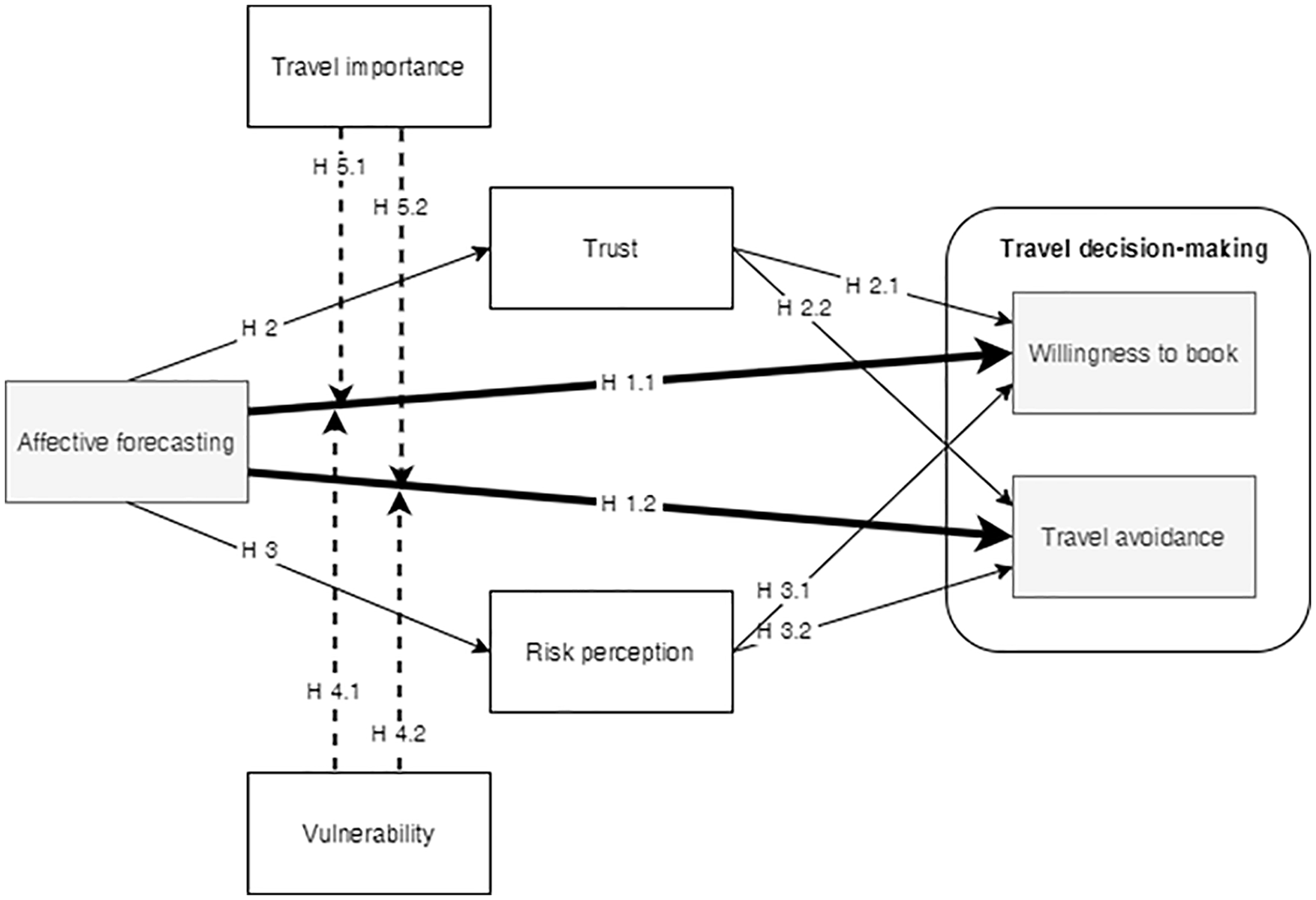
Conceptual framework of hypothesis 1–5.
In addition, we set out to empirically test whether affective forecasting is especially effective among those travelers who consider themselves particularly vulnerable to contracting the coronavirus. Indeed, these vulnerable tourists are likely the ones who attribute a high risk to travel and staying in hotels during the pandemic. It follows that the effect of affective forecasting on lowering risk perceptions should be stronger for those individuals who feel vulnerable. Examining this interaction effect is also managerially relevant because winning back risk-averse tourists is a particular challenge but also constitutes an opportunity for hotels. We thus hypothesize:
Hypothesis 4.1: Perceived vulnerability moderates affective forecasting effects on individuals’ willingness to book.
Hypothesis 4.2: Perceived vulnerability moderates affective forecasting effects on individuals’ travel avoidance.
Further, we suggest that for those travelers who attribute a high importance to holidays, affective forecasting effects are strengthened because people are more likely to create strong episodic future thoughts—the prerequisite of affective forecasts—if the future event is important to them (Bulley et al. 2019; D’Argembeau and Van der Linden 2004; Scoboria et al. 2020). We thus hypothesize:
Hypothesis 5.1: Travel importance moderates affective forecasting effects on individuals’ willingness to book.
Hypothesis 5.2: Travel importance moderates affective forecasting effects on individuals’ travel avoidance.
The developed conceptual framework is shown in Figure 1. Hypothesis 1 tests the main relationship, hypotheses 2 and 3 test the mediating relationships, and 4 and 5 test interaction (i.e., moderating) relationships.
Methodology
We developed a between-subjects experimental design to examine whether affective forecasting triggered by episodic future thinking is capable of reviving tourists’ intentions to book hotel accommodation and reducing their travel avoidance during a pandemic. The design experimentally manipulated episodic future thinking which is known to initiate affective forecasting to isolate its effects on these intentions, as well as the mediators increased trust toward hotels and mitigating risk perceptions associated with a hotel stay.
Data Collection and Sampling
We collected data using a standardized questionnaire among a sample of US respondents that we recruited from the Amazon’s Mechanical Turk (MTurk) online panel. MTurk, like other crowdsourcing online panels, is characterized by a large number of diverse respondents and research indicates that it is of equal or higher data quality than student samples or street intercepts (Goodman and Paolacci 2017). As an incentive for participating in this study, respondents were paid a base rate of 0.50 US$ (i.e., standard hourly payment on MTurk) and a bonus payment of another 0.50 US$ if the imagination task of the manipulation was completed adequately (i.e., valid description of a hotel stay). Only respondents 18 or older, with sufficient travel funds (annual household income > $30,000) and who have traveled significant distances before (>70 miles in the last two years) were invited to proceed to the questionnaire (Boley et al. 2018). Data for the main study was collected between the 1st and 4th of February 2021 at a time when around 157,000 new cases and 4,800 deaths were reported in the United States according to data from the World Health Organization on the 1st of February 2021.
We interspersed two intentional manipulation checks (e.g., “Please select agree as the answer here”; 7-point ordinal scale) throughout the questionnaire to detect and prevent satisficing, straight-lining or other biasing response behavior (Barber, Barnes, and Carlson 2013). We deleted respondents from the sample who provided a wrong answer to the manipulation check questions as well as those who failed our content validation check for the manipulation descriptions (i.e., those who did not fill in the descriptions or clearly did not describe a hotel stay/their environment). Of 318 collected questionnaires, a total of 267 valid responses were used in the analysis. A sample description of the experimental and control groups can be found in Table 3.
Manipulation
For the experimental manipulation, participants were randomly assigned to either the control or episodic future thinking condition when entering the online questionnaire. The designs of the experimental manipulations for both conditions are outlined in Table 1. Participants in the affective forecasting condition were encouraged to engage in episodic future thinking of their next hotel stay using instructions from previous research (Bulley et al. 2019; Bø and Wolff 2019) because this type of future thinking is particularly suitable to trigger affective forecasts (Bulley and Schacter 2020). Afterward, respondents were asked to describe their mental simulation which intensifies the construction of a mental picture of the future hotel stay and allows us to validate the mental simulation, for instance in terms of content or emotionality. Since we used these descriptions to validate if participants seriously and actively participated in the study, we included a neutral and non-temporal description task that was unlikely to trigger emotional responses in the control group. Control group participants were therefore asked to look around them and then describe their surroundings in a few sentences.
Instruments of the Experimental Manipulation and Manipulation Checks.
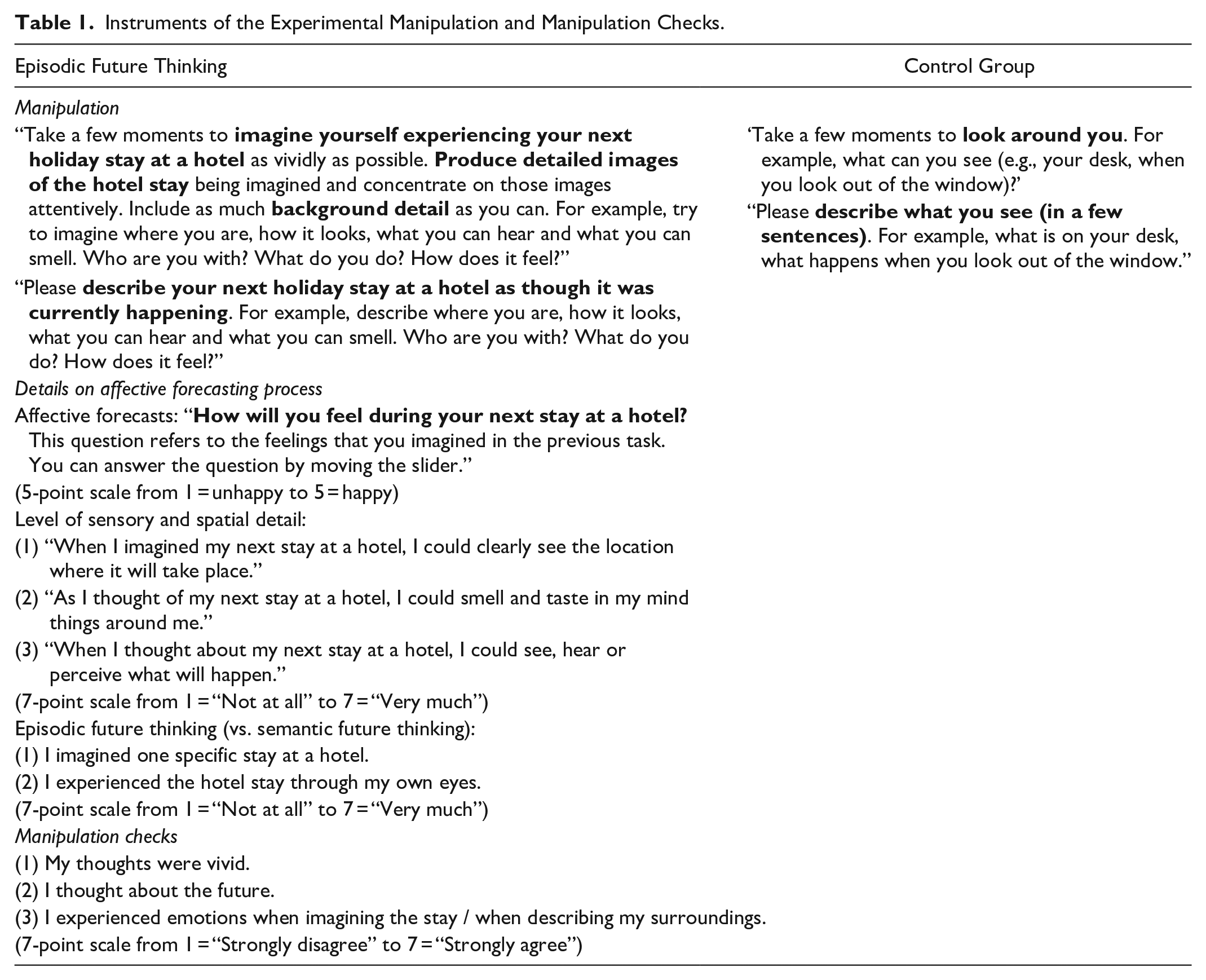
To ensure that the mental simulation has created an emotional response with a positive valence, we captured affective forecasts directly after the description of the simulation with an emoticon scale (Roberts et al. 2015). We asked participants how they will feel during their next stay at a hotel by selecting one of five emoticon faces, ranging from an unhappy to a happy smiley face. This approach overcomes issues of forced verbalization, therefore allowing a more intuitive way of expressing affect. The participants in the affective forecasting condition were also asked to self-evaluate the spatial and sensory detail of the simulation (Scoboria et al. 2020) and their episodic future thinking experience (Bø and Wolff 2019; D’Argembeau and Van der Linden 2004).
We included three manipulation checks to measure the effectiveness of our episodic future thinking manipulation. Following existing research (Bulley et al. 2019; Bø and Wolff 2019), we asked participants to rate the vividness and level of future-orientation in the previous imagination or control task. To ensure that an affective forecasting process has not taken place in the control group, participants in both conditions were asked if they had emotional experiences in the previous task.
Measures
The employed measures were first tested in an online experiment with 60 participants using the same data collection procedures as in the main study (i.e., data collection through MTurk, selection criteria of age, household income and travel experience, basis payment and bonus payment as incentives). All measures performed as predicted and we hence continued with the data collection without making any amendments. The multi-item scale evaluation in the pre-study was satisfactory, with all composite reliabilities being above 0.7, and all average variances extracted being above 0.5. No changes were made after the pre-test and data collection continued while retaining all data from the pre-test. The evaluation of the multi-item scales in the main sample was also satisfactory (Table 2). All employed scales and their respective items are shown in Table 2.
Evaluation of the Employed Measures.
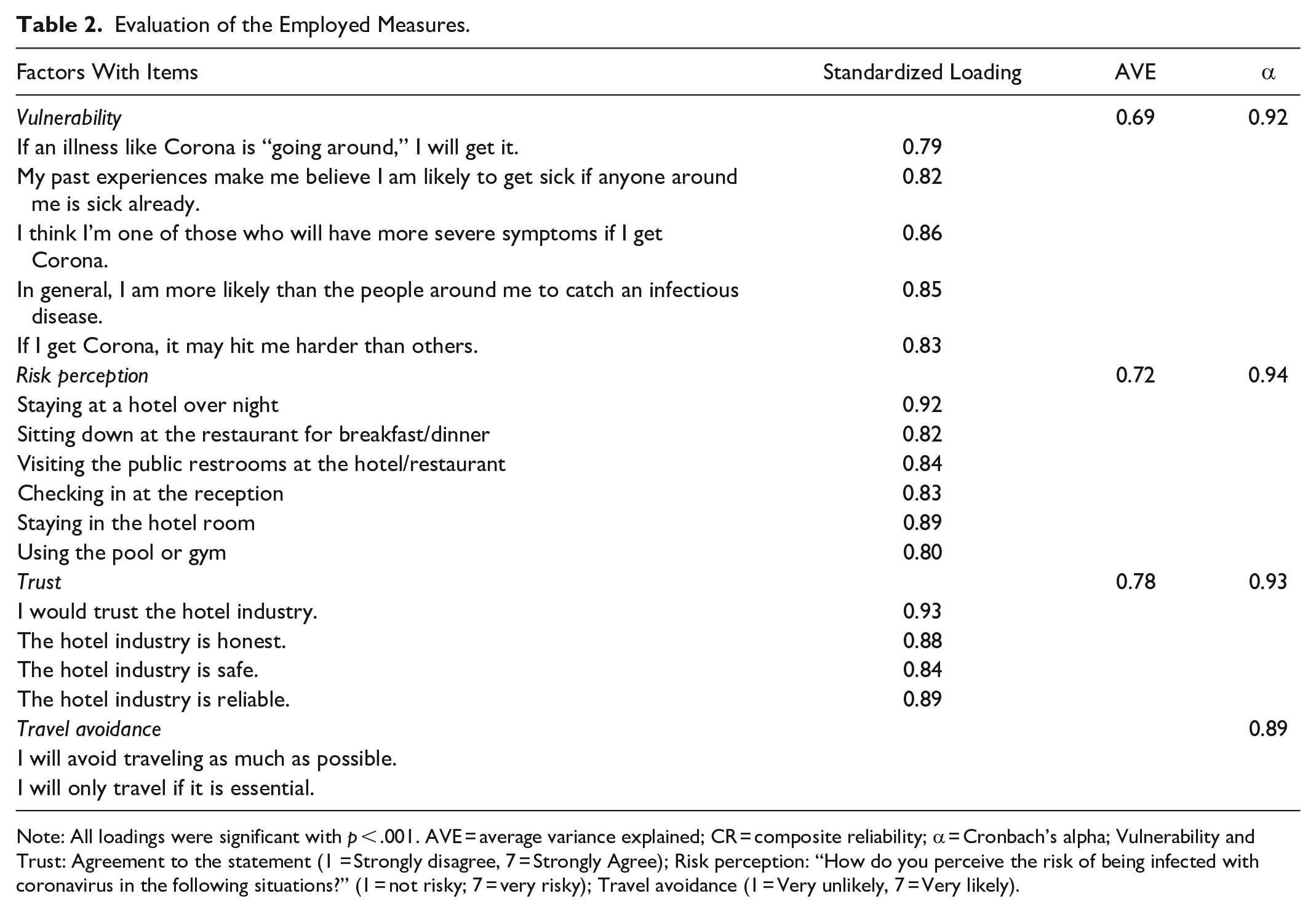
Note: All loadings were significant with p < .001. AVE = average variance explained; CR = composite reliability; α = Cronbach’s alpha; Vulnerability and Trust: Agreement to the statement (1 = Strongly disagree, 7 = Strongly Agree); Risk perception: “How do you perceive the risk of being infected with coronavirus in the following situations?” (1 = not risky; 7 = very risky); Travel avoidance (1 = Very unlikely, 7 = Very likely).
Independent variable
The experimental condition is a binary variable with (1) respondents who were engaging in episodic future thinking which is triggering affective forecasts (i.e., affective forecasting group) and (2) respondents who were not engaging in episodic future thinking (i.e., control group).
Dependent variables
We measured risk perception of a hotel stay following the recommendations for risk perception operationalization in tourism (Wolff, Larsen, and Øgaard 2019). Participants were asked to rate how they perceive the risk of being affected with coronavirus in six different situations that can occur during a hotel stay (7-point scale from 1 = “not risky” to 7 = “very risky”) (Table 2). We measured hotel trust with four items by adapting established trust measures (Chaudhuri and Holbrook 2001; Ladhari and Michaud 2015) to the domain of hotels (Table 2).
People’s future travel behavior after the travel restrictions related to the coronavirus were lifted was measured as the willingness of booking a vacation hotel in the next 12 weeks. To capture future travel behavior, participants were also asked to rate their likelihood of avoiding to travel or only travel if it was essential after the restrictions are lifted. The mean value of these two items created a travel avoidance factor for the further analysis. All future travel behavior items were measured on a 7-point scale (1 = “Very unlikely” to 7 = “Very likely”).
Moderator variables
We adapted the measure of perceived vulnerability to contagious diseases (Ackerman, Tybur, and Mortensen 2018) to the context of COVID-19. Since COVID-19 is a contagious disease, we excluded the germ aversion subscale from the original scale and adapted items from the infectability subscale, resulting in five items (Table 2). Participants were asked to rate how much they agreed with each vulnerability statement on a 7-point scale (1 = “Strongly disagree” to 7 = “Strongly agree”). Affective forecasting results can also be influenced depending on how meaningful or relevant a future event is perceived by the forecaster (Hoerger et al. 2010). To control for this aspect, we included perceived travel importance as a measure for the subjective significance of traveling because we assumed that people who perceive traveling as more important will have stronger positive affective forecasts. We applied one item from Chen and Petrick’s (2016) scale: “How important is taking vacations to your life?” (7-point scale from 1 = “Not important at all” to 7 = “Very important”).
Control variables
Emotions experienced prior to an affective forecasting process can influence the effectiveness thereof (Wilson and Gilbert 2003). As such, at the beginning of the questionnaire, participants were asked to rate their current emotions using an 5-point emoticon scale (Roberts et al. 2015) ranging from an unhappy to a happy smiley face. In addition to sociodemographic information (i.e., gender, age in years, educational level), participants were asked to rate their health situation (Hall, Rapp, and Eikemo 2019) and evaluate their financial situation in a year (5-point scale from 1 = “Much worse than today” to 5 = “Much better than today”). The health and financial situation can be important factors of a travel decision in times of a pandemic.
Reliability and Validity of Employed Measures
To evaluate the employed measures, we used confirmatory factor analysis with a maximum likelihood estimation. As can be seen in Table 2, the scores had acceptable reliability (Composite reliability and Cronbach’s Alpha ≥ 0.9) and validity (Average Variance Explained ≥ 0.7) and all items loaded with at least 0.8 on the factors. The travel avoidance score is no comprehensive scale but a two-item measurement. For the further analysis, scores were calculated as mean values from the respective items in each factor.
Data Analysis
We used the regression-based Hayes method (Hayes 2017) to estimate the effect of affective forecasting on willingness to book a hotel stay and travel avoidance. Motivated by the fact that affective forecasting might not only have a direct effect on the latter response variables, but also an indirect effect through the mediator variables trust and risk perception, the Hayes method estimates multiple linear regression models with changing effect structures to get a clearer picture of these complex association structures. The individual regression models with the binary variable for the experimental condition (i.e., episodic future thinking triggering affective forecasting) as the main independent variable are identical to the estimation of individual ANOVA models (e.g., Fahrmeir et al. 2013). To quantify the impact of the experimental manipulation from each regression model, we controlled for baseline emotional experience, travel importance, and the sociodemographic variables gender, age and educational level. We also included self-assessed health and financial prospect as control variables because we expected that people in precarious health or financial situations are less likely to travel in the near future. The variables experimental condition, gender and educational level (i.e., enrolled at university, university degree, no university degree) were dummy-coded predictors; the variables vulnerability and travel importance, both measured on a Likert scale, were centered.
To understand the underlying mechanism of affective forecasting influencing decision-making, we report the results of (I) a main model with these explanatory variables and without mediator variables, and (II) a mediator model additionally including both mediators trust and risk perception as independent variables. All these models were estimated twice for the two response variables as well as twice for including an interaction between the experimental condition and one of the two mediator effects vulnerability and travel importance. Additionally, we estimated (III) reverse mediation models with the mediation variables as response for fully describing the observed association structures. These latter models are listed in Appendix 1. This overall statistical approach allows to explore the direct and indirect effects of our manipulation on the response variables.
The models had the following structure:

where the response variable y (i.e., either willingness to book, travel avoidance, risk perception or trust) is modeled by the experimental condition and the further listed explanatory variables added as control variables.
Since personal attitudes often change nonlinearly over age, we first estimated the age effect nonlinearly, based on a P-spline representation with 10 basis functions. For all models, age did not show a nonlinear effect and we accordingly calculated pure linear regression models (LM) for all response variables as part of the Hayes method (Fahrmeir et al. 2013).
We evaluated the regression models by visually examining the residual structure, calculating the R² values and the variance inflation factor (VIF). The residual structures showed no substantial deviation from the model assumptions. VIF values were below 2, indicating that multicollinearity was no concern in the linear regression models. The overall fit (see Table 5) of the mediation models was acceptable for both response variables and for the main models with response variable “willingness to book” (R² values between 0.2 and 0.3). The main models with response “travel avoidance” (R² value of 0.1) should accordingly be interpreted with care.
We used the open source software R (R Core Team 2020) for data analysis, including the packages “psych” (Revelle 2019), “lavaan” (Rosseel 2012) and “mgcv” (Wood 2011). Regression models were estimated with the function “lm” and the confirmatory factor analysis with function “cfa.” The full reproducible R script can be found in the Supplementary Material. The Hayes method was estimated with SPSS (Version 28) with the PROCESS macro (Hayes 2017).
Results and Discussion
Sample Descriptions and Comparison
The sociodemographic profile of the control and affective forecasting samples, including the emotions and perceived vulnerability to COVID-19 which were measured before the manipulation, are displayed in Table 3. We found no significant differences in sociodemographic variables across the experimental conditions.
Sample Description With Test Results for Sample Differences.
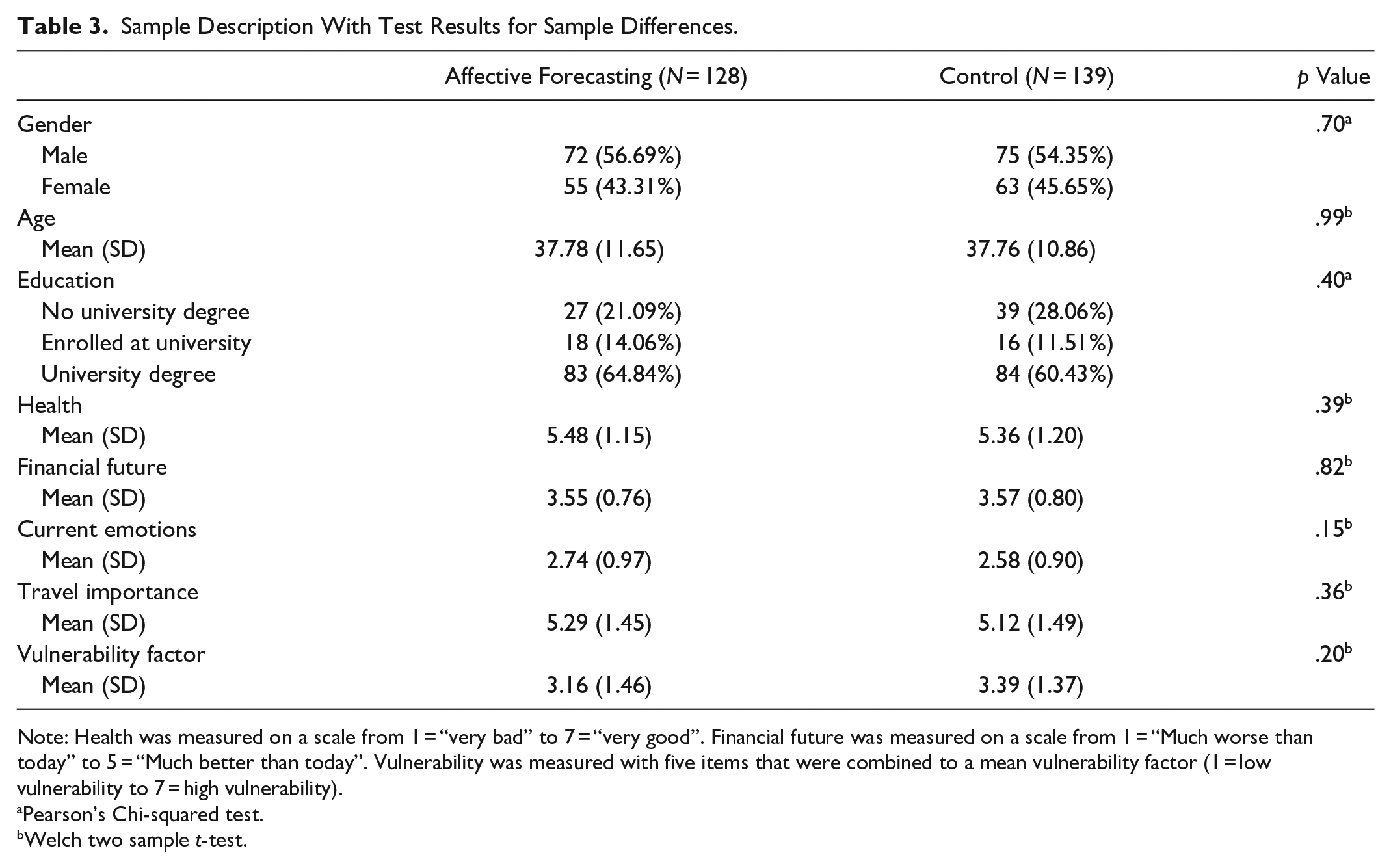
Note: Health was measured on a scale from 1 = “very bad” to 7 = “very good”. Financial future was measured on a scale from 1 = “Much worse than today” to 5 = “Much better than today”. Vulnerability was measured with five items that were combined to a mean vulnerability factor (1 = low vulnerability to 7 = high vulnerability).
Pearson’s Chi-squared test.
Welch two sample t-test.
AF Group Description and Manipulation Checks
Respondents in the affective forecasting group reported after the imagination task that they could clearly see the location where the hotel stay would take place (arithmetic mean M = 6.06, standard deviation SD = 1.22), could smell and taste in their mind things around them (M = 5.73, SD = 1.40), and could see, hear or perceive what would happen in their next hotel stay (M = 6.08, SD = 1.11). They mainly imagined one specific hotel stay (M = 5.71, SD = 1.52). Their affective forecasts were slightly positive (M = 4.60, SD = 0.62). These aspects are also reflected in the descriptions of the hotel stay imaginations, ranging from broader destination to specific hotel or hotel room descriptions:
Example 1: “We are in Key West on the Florida Keys. I am there with my wife. We are on a beachfront resort and can smell the fresh sea air. We mainly putter around and relax for a few days, checking out the whole island. It feels peaceful and happy.”
Example 2: “My hotel is not a chain hotel. It is rustic with comfortable furniture and lots of wood around - wood bar, wood walls, wood rafters, wood furniture. I hear laughter from the lounge. I smell pine trees from outside. I’m with my best friend and tomorrow we’re going exploring.”
Example 3: “I’m at a hotel room that is one room with a bathroom and it has a nice clean hotel-like smell that you usually smell when entering one. It has a big screen TV in front of the queen sized bed. The sheet on the bed are a dark gray with a big dark gray comforter on top of it to keep warm. The AC is fairly large and placed by the window that overlooks the four floors below me. I can hear some muffled construction noise outside but it’s very faint and not bothersome. I’m with my girlfriend and we both just lay down on the bed together with the AC cranked up and it feels so relaxing. We are just enjoying the moment together in the hotel room.”
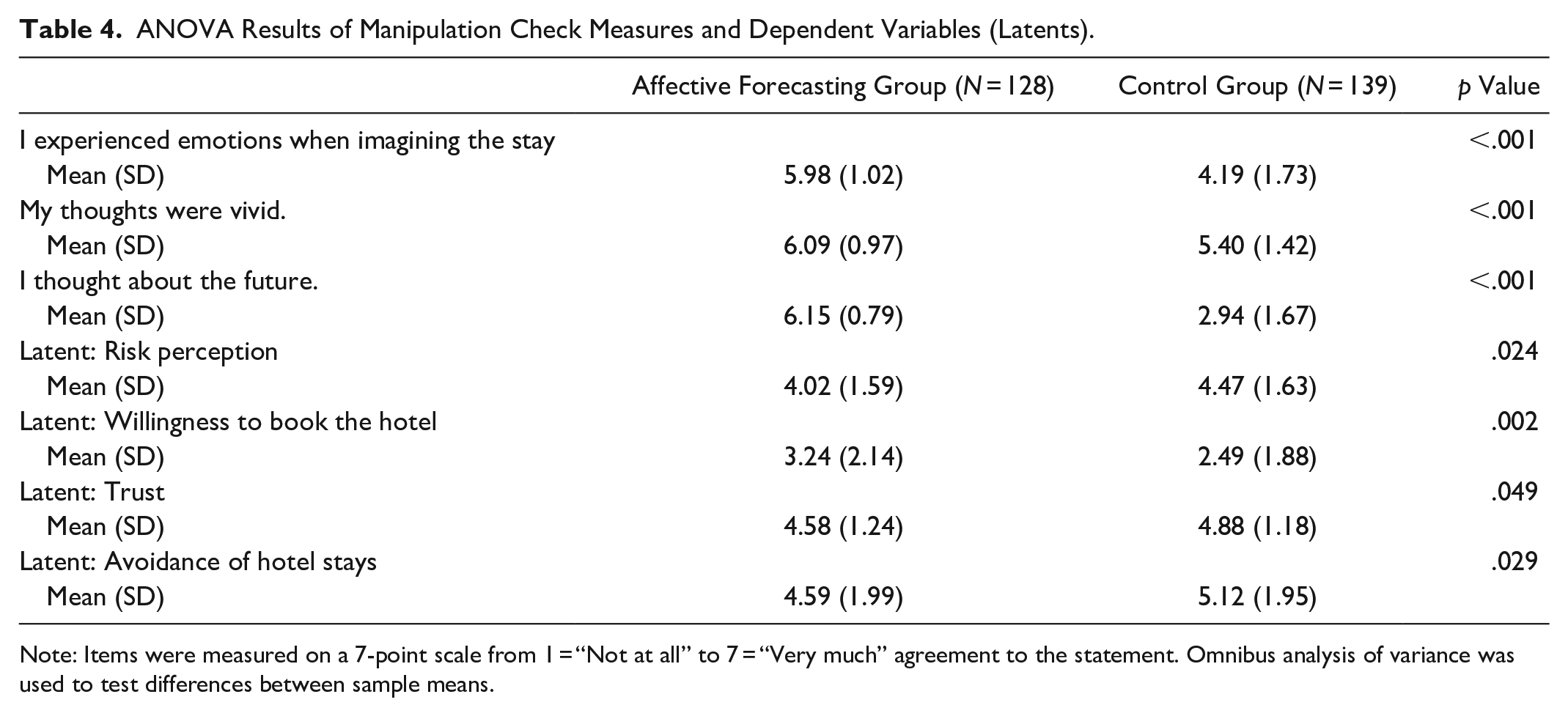
As can be seen in Table 4, affective forecasting respondents had stronger emotional experiences, more vivid thoughts and a stronger future orientation during the imagination task than control group respondents. All differences between both samples were significant (Table 4), suggesting that the manipulation worked.
ANOVA Results of Manipulation Check Measures and Dependent Variables (Latents).
Note: Items were measured on a 7-point scale from 1 = “Not at all” to 7 = “Very much” agreement to the statement. Omnibus analysis of variance was used to test differences between sample means.
Before we turn to our actual hypothesis testing, we conduct several analyses of variance (ANOVAs) in order to gather a first, big picture understanding on differences in the dependent variables between the two groups. The means, standard deviations (SD) and obtained p-values are shown in Table 4, and document that all four dependent variables (i.e., risk perception, willingness to book the hotel, trust and avoidance of hotel stays) show statistically significant differences between the two conditions. These results provide a first, encouraging indication for our, now to be tested, hypotheses.
Effect of Affective Forecasting on Willingness to Book and Travel Avoidance
First, in order to test hypothesis 1, we set out to test whether affective forecasting increases people’s willingness to book a hotel reduces their avoidance of travel. Respondents in the affective forecasting (AF) group had considerably higher willingness to stay in a hotel as soon as they could (AF: M = 3.88, SD = 2.08; Control: M = 3.10, SD = 1.92) and lower travel avoidance (AF: M = 4.59, SD = 1.99; Control: M = 5.12, SD = 1.95) than the control group respondents. Affective forecasting respondents were also more likely to book a hotel stay in the next 12 weeks than control group respondents (AF: M = 3.24, SD = 2.14; Control: M = 2.49, SD = 1.88). At the same time, AF respondents had lower risk perception (AF: M = 4.02, SD = 1.59; Control: M = 4.47, SD = 1.63) and higher trust in the hotel industry (AF: M = 4.88, SD = 1.18; Control: M = 4.58, SD = 1.24). Figure 2 displays the distribution of the main variables in the affective forecasting and control group with median (i.e., line in the boxplot) and means (i.e., point and value).
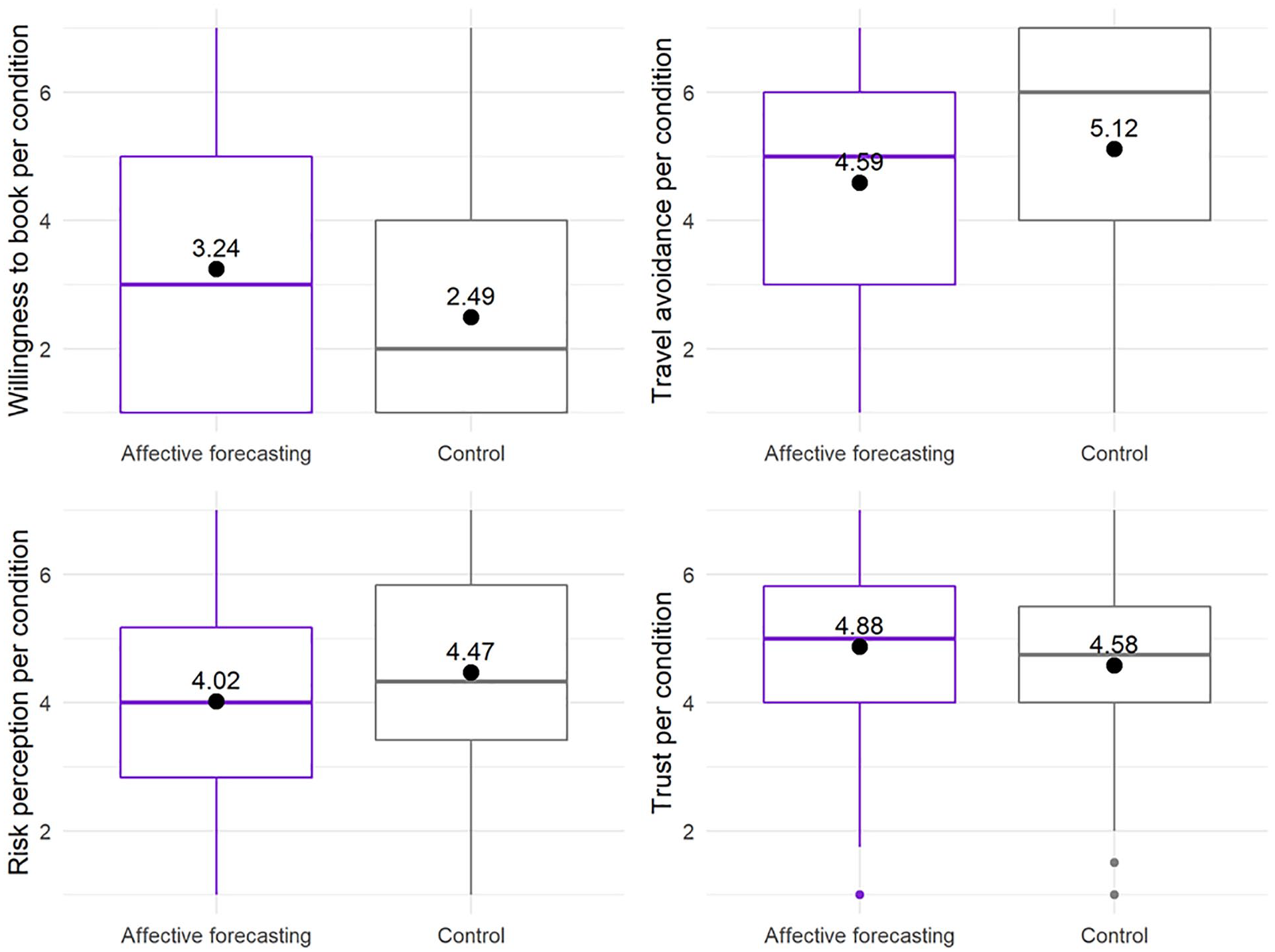
Comparison of the distribution of the main variables between the affective forecasting and control group with mean values.
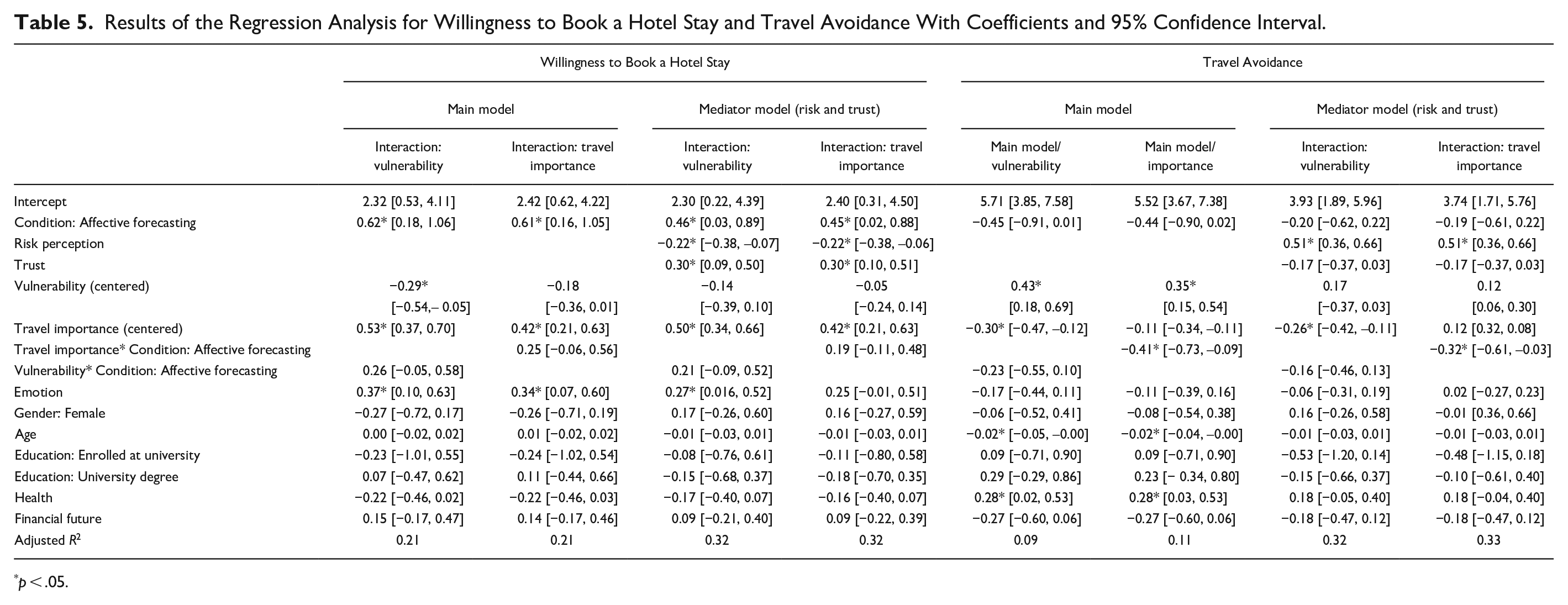
The aim of the regression analysis was to extract the main effect of the manipulation on willingness to book a hotel stay and travel avoidance. In the following sections, we discuss the results of the regression analysis focusing on the main variables of interest: the experimental condition; risk perception and trust as potential explanatory variables; the interaction effects between the experimental condition and vulnerability or travel importance. The detailed results of all regression models, including the control variables, are displayed in Table 5.
Results of the Regression Analysis for Willingness to Book a Hotel Stay and Travel Avoidance With Coefficients and 95% Confidence Interval.
p < .05.
As state-of-the-art statistical practice, our interpretations follow the American Statistical Association’s statement on the use of p-values (Nuzzo 2014; Wasserstein and Lazar 2016). Accordingly, we use p-values and confidence intervals with a significance level of 0.05 to evaluate the certainty or uncertainty of the effects, but not as an evaluation of the “relevance” of the effect sizes. The main focus lies on the effect strength, measured based on the coefficient value rather than the p-value. We use the terms “association” (i.e., effect is of relevant size and CI does not clearly cross 0), “tendency” (i.e., effect is visible but CI may include 0) or “marginal” (i.e., effect is small and CI includes 0) to describe the results.
Overall we found strong evidence that episodic future thinking and associated affective forecasting increases people’s willingness to book a hotel stay (β = 0.61–0.62, 95% confidence interval CI [0.16–0.18, 1.05–1.07]) and strong evidence that it reduces people’s travel avoidance during a pandemic (β = −0.44 to −0.45,95% CI [−0.91 to −0.90, 0.01–0.02]). Hence, our main hypothesis 1.1 and 1.2 are supported.
As can be seen in Figure 3, the affective forecasting effect on willingness to book a hotel stay was reduced from 0.6 to 0.5 in the mediation model with risk perception and trust. The regression model results also show an association between willingness to book and risk perception or trust. Hence, people with higher risk perceptions were less willing (β = −0.22, 95% CI [−0.38, −0.07 to −0.06]) and those with higher trust were more willing (β = 0.30, 95% CI [0.09–0.10, 0.50–0.51]) to book a hotel stay. Taken together the results from the different models indicate that episodic future thinking and affective forecasting increases people’s willingness to book a hotel stay partially by reducing risk perception and increasing trust. This supports hypothesis 2.1 and 3.1.
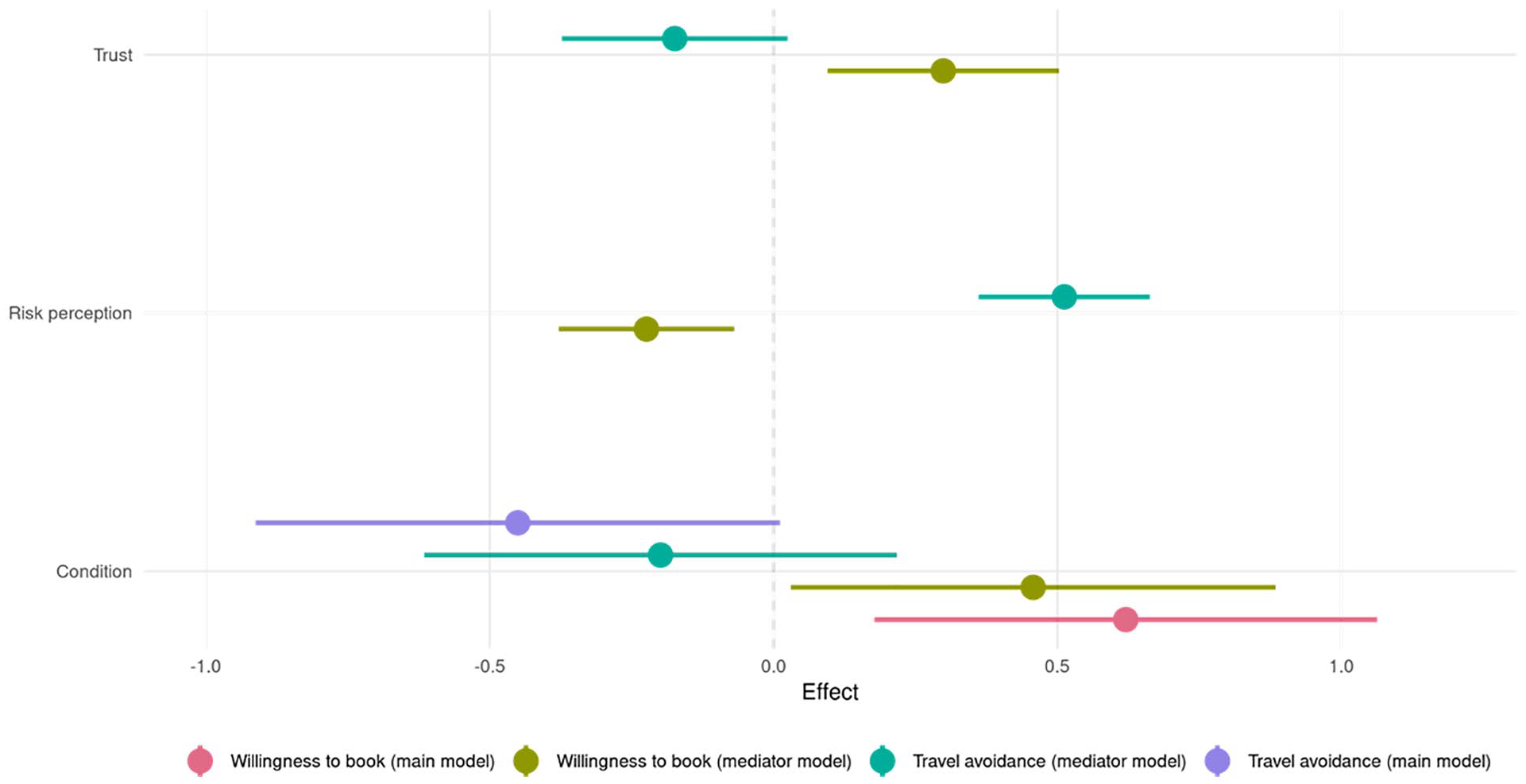
Estimated effects with 95% confidence interval of the three predictors “Risk perception,” “Trust,” and “Condition” for the evaluated models (interaction effect: vulnerability).
The results from the travel avoidance analysis mirror the ones from the willingness to book analysis. Introducing risk perception and trust as additional predictors reduced the affective forecasting effect from −0.4 to −0.2 (Figure 3). However, a clear association was visible for the main model whereas the effect in the risk perception and trust models was only a tendency. Similar to the willingness to book model, people with higher risk perceptions were more likely to avoid traveling (β = 0.51, 95% CI [0.36, 0.66]) whereas people with higher trust in the hotel industry were less likely to avoid it (β = −0.17, 95% CI [−0.37, 0.03]). In summary, the results indicate that engaging people in a mental simulation of a future hotel stay that triggers positive affective forecasts resulting in a lower travel avoidance because of the reduction in risk perceptions, and to a lesser degree due to the growing trust in the hotel industry. Hypotheses 2.2 and 3.2 are supported.
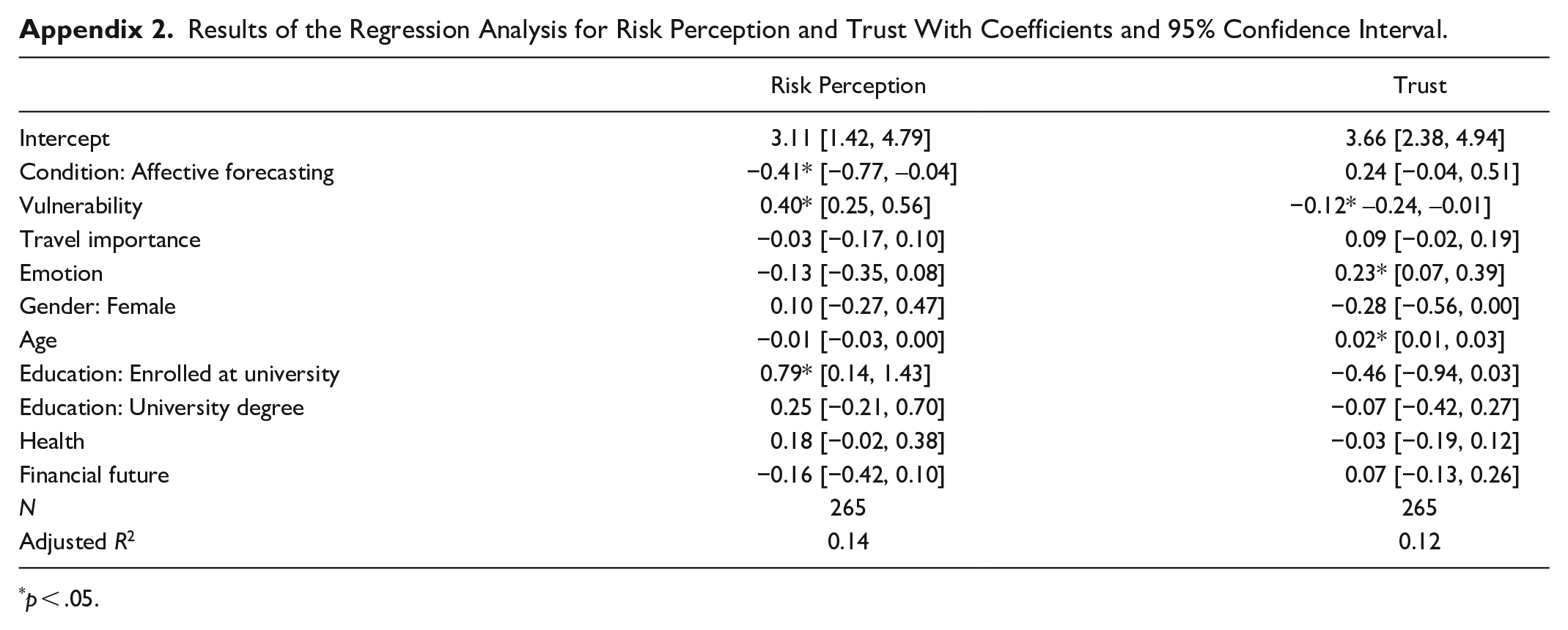
We also estimated separate models with risk perception and trust as dependent variables to estimate the impact of affective forecasting on these additional predictors (Appendix 2). The results revealed that affective forecasting reduces risk perceptions significantly (β = −0.41, 95% CI [−0.77, −0.04]) and that trust in the hotel industry tends to increase through affective forecasting (β = 0.24, 95% CI [−0.04, 0.51]).
Interaction Effect of Vulnerability and Travel Importance on Affective Forecasting
The interaction effect models showed that travel importance strongly moderates the impact of affective forecasting on travel avoidance and to some degree willingness to book whereas vulnerability only has a certain tendency to affect the impact of affective forecasting.
Willingness to book a hotel stay
The interaction effect of vulnerability and the experimental condition was positive but not significant in the main model at the 95% confidence level (β = 0.26, 95% CI [−0.05, 0.58]) and the mediator models with risk perception and trust (β = 0.21, 95% CI [−0.09, 0.52]) as additional factors (Figures 4 and 5). Hence, there is a tendency that people who feel more vulnerable in regard to COVID-19 are more likely to be influenced by mentally simulating a future hotel stay and experiencing affective forecasts in their booking decisions (Hypothesis 4.1 can be supported).
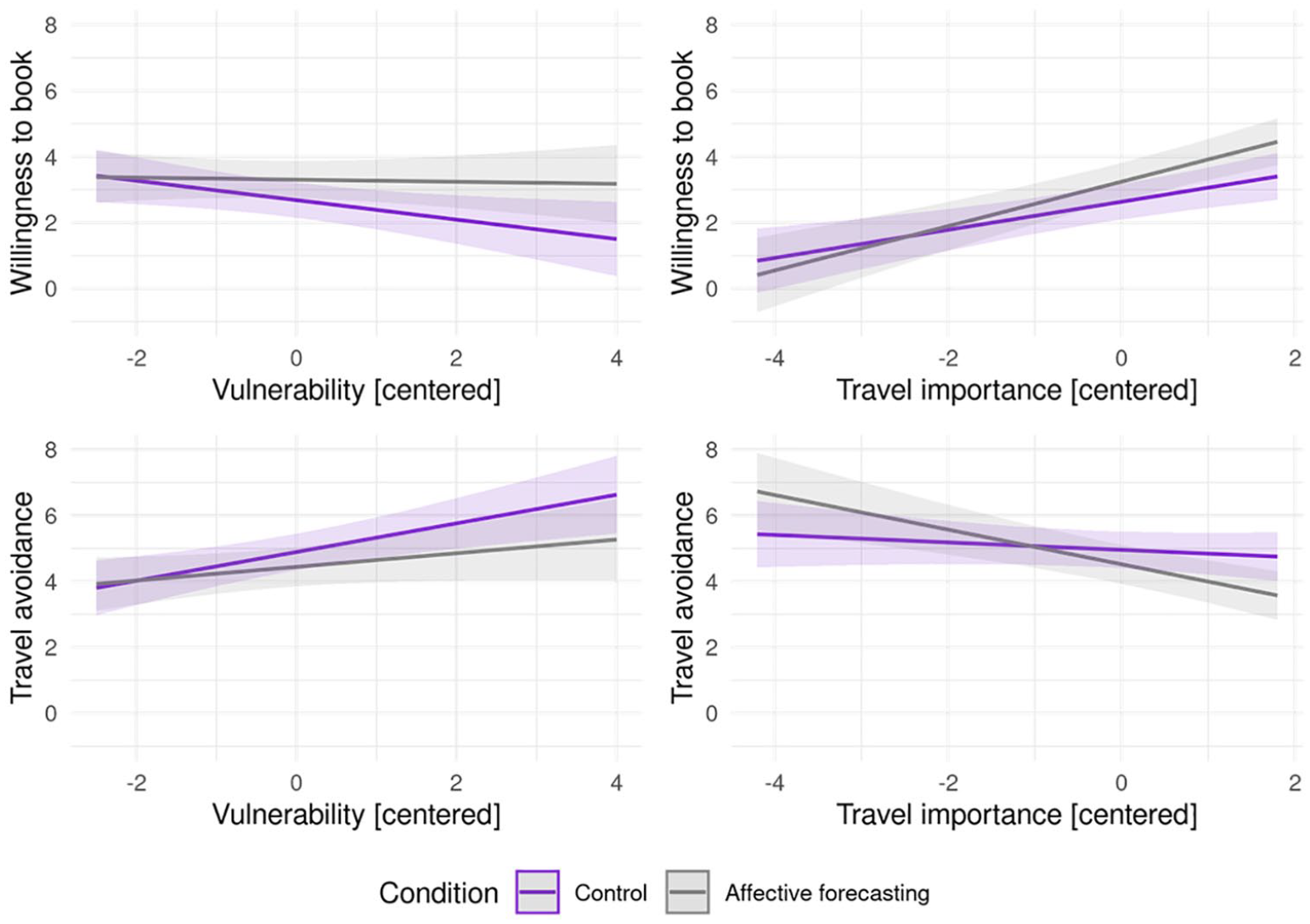
Interaction effects of vulnerability and travel importance with experimental condition in the main models, including 95% confidence interval.
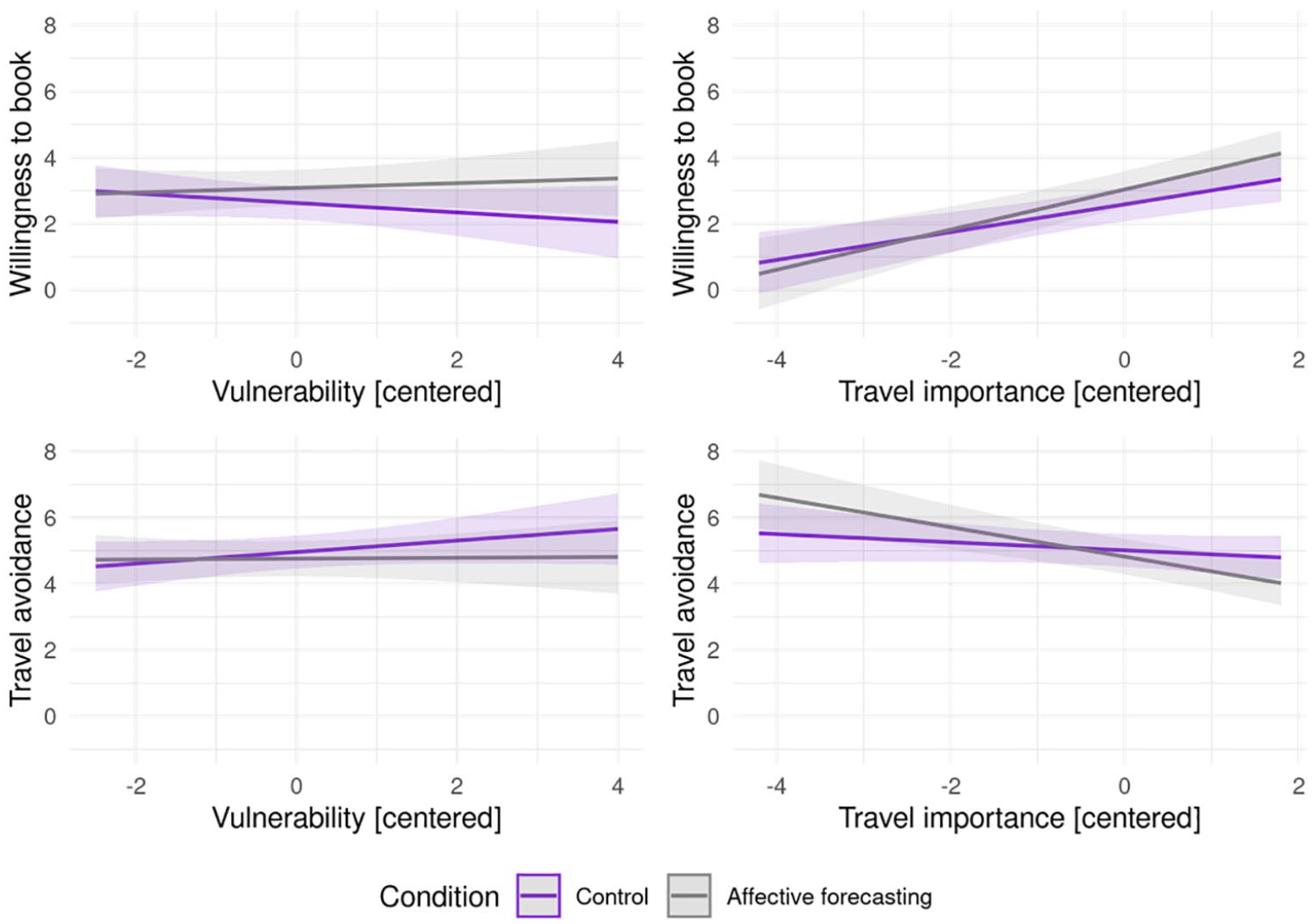
Interaction effects of vulnerability and travel importance with experimental condition in the mediator models with risk perception and trust as additional factors, including 95% confidence interval.
The interaction effect of travel importance and the experimental condition was positive but not significant in the main model (β = 0.25, 95% CI [−0.06, 0.56]) and the mediator model with risk perception and trust (β = 0.19, 95% CI [−0.11, 0.48]) as additional factors. This means that there is a tendency for people who perceive traveling as more important to be more likely impacted by mentally simulating a future hotel stay and affective forecasting and hence more willing to book a hotel stay (Hypothesis 5.1 is not supported).
Travel avoidance
The interaction effect of vulnerability and the experimental condition was negative but not significant at the 95% confidence level in the main model (β = −0.23, 95% CI [−0.55, 0.10]) and the mediator model with risk perception and trust (β = −0.16, 95% CI [−0.46, 0.13]) as additional factors (Figures 4 and 5). Hence, there is a certain tendency that people who perceive to be more vulnerable are more impacted by mentally pre-experiencing a future hotel stay and affective forecasting (Hypothesis 4.2 is not supported).
The interaction effect of travel importance and the experimental condition was negative and significant in the main model (β = −0.41, 95% CI [−0.73, −0.09]) and the mediator model with risk perception and trust (β = −0.32, 95% CI [−0.61, −0.03]) as additional factors (Hypothesis 5.2 is supported). Similar to the willingness to book models, the effect of the experimental condition is strengthened for people who perceive traveling as important because of a more intense episodic future thinking process—which is an important prerequisite for affective forecasting (Bulley and Schacter 2020).
Conclusion
How can hotels win back tourists’ trust and lower their travel risk perceptions? This question is of utmost importance in a post-pandemic world, and present research conceptually develops and experimentally validates a novel way to answer it. Our research experimentally demonstrates that engaging potential travelers in the mental simulation of a future hotel stay increases their intention to do so. This finding is substantial, particularly in times of a pandemic as well as in a post-pandemic era where hotel managers are facing the huge challenge of attracting tourists. In particular, we demonstrate that engaging potential travelers in the episodic future thinking of a hotel stay triggers their positive emotions (i.e., affective forecasting), increases their trust in hotels and lowers their risk perceptions associated with the hotel stay. In turn, these psychological predispositions increase their willingness to book a hotel and decreases their travel avoidance.
Theoretical Implications
Our study substantially contributes to existing research in various ways. A key theoretical implication is that we contribute both a new conceptual and methodological dimension to existing research endeavors that examine the important role of anticipated emotions in understanding tourist behavior. Going beyond studies that examine merely descriptive anticipated emotions (by asking respondents how they would feel in a stated situation), we experimentally induce and measure anticipatory emotions through the novel approaches of episodic future thinking and affective forecasting. By doing so, we build on initial exploratory efforts of understanding affective forecasting in the domain of tourism research. In particular, our research is the first to shed light on the psychological pathways through which affective forecasting can shape tourist behavior. We find, in line with the mere exposure effect and familiarity bias, that affective forecasting decreases travelers’ perceived risk with a hotel stay and increases their trust in the hotel industry. In turn, the mediators impact behavioral intentions. This insight goes beyond existing research that found that affective forecasting can elicit desirable behavioral outcomes (Karl et al. 2021).
We shed further light on this important mechanism by identifying amplifiers thereof. First, our results are in line with the literature on episodic future thinking which suggests that high subjective relevance of an event will lead to more intense episodic future thinking (Bulley et al. 2019; D’Argembeau and Van der Linden 2004; Scoboria et al. 2020). People who perceive traveling as less important may not experience an episodic but a semantic and more abstract simulation of the future event, and those simulations do often have lower levels of sensory, contextual and emotional details (D’Argembeau and Van der Linden 2004). Further, we find that affective forecasting has stronger effects among those participants who feel vulnerable toward COVID-19. This finding allows for the important interpretation that affective forecasting is indeed a means to counter COVID-19-induced anxieties because it is more effective among those individuals.
Managerial Implications
A big picture implication for tourism and hotel managers is that engaging potential travelers in affective forecasting has direct effects on their attitudes and behavior, especially in times of a pandemic. A substantial strength of affective forecasting is that it can be directly translated into managerial actions because most destination or hotel managers have access to communication means that can trigger episodic future thinking. Consider the following example: A hotel manager is concerned with how to win back tourists’ trust in the respective hotel in the aftermath of the pandemic. This manager may adhere to traditional trust-building marketing techniques such as offering money-back guarantees, displaying quality certificates or communicating its hygiene concept and engaged employees. While these activities are generally worthwhile, they can be expensive and are unlikely to provide the hotel with any competitive edge. In contrast, engaging potential travelers in affective forecasting is a novel way to win back trust, and our research indicates that it works well. Hotel operators could employ it by motivating visitors to its webpage through a text-based narrative (as we did in this research), through stimulating images or even short video clips. Indeed, this approach is not only effective, easy to implement but may also outperform traditional communication techniques and also be cost effective.
Limitations and Future Research
This study is using an online experiment approach with stated intentions that only give first indications on actual behavior. Human behavior is often unpredictable and changes due to a variety of different factors. Hence, what people predict to be doing in the future or intend to be doing on their next hotel stay may not be what they actually decide in the end. It also has to be noted that affective forecasting is influenced by external factors (e.g., current moods) and prone to bias. In this study, the focus was on a better understanding of how affective forecasting—whether biased or accurate—impact people’s decision-making prior to traveling. Yet, how people think they may feel during a hotel stay while making plans does not necessarily represent how they will actually feel during the hotel stay itself. Due to the limited amount of variables that can be included in online experiments in order to avoid respondent fatigue, we had to focus on selective influencing factors and were not able to capture additional factors that may influence travel avoidance and willingness to book a hotel stay.
Future studies need to validate the findings in a field experiment that measures tourists’ actual choices. Future studies could include messages that trigger a mental simulation of the hotel stay to explicitly test how affective forecasting as a marketing strategy impacts actual decisions. Virtual reality could be used to enhance the mental simulation, thus, strengthening the effect of affective forecasting on tourists’ choices. Physiological research methods, such as electroencephalogramphy (EEG), could provide more insights on affective forecasting and the impact of communication techniques on decision making. While affective forecasting biases have been explored extensively in the field of psychology, biases in affective forecasting in the tourism and hospitality context are another important research topic for future studies. Since this study has been conducted during the COVID-19 pandemic and focusing on accommodation choices of a certain population (i.e., American participants), we call for future studies that investigate the role of affective forecasting in a post-pandemic time and using different contexts and populations as a proof-of-concept in order to further evaluate the concept of affective forecasting as a decisive element of tourists’ decision-making.
Footnotes
Appendices
Results of the Regression Analysis for Risk Perception and Trust With Coefficients and 95% Confidence Interval.
| Risk Perception | Trust | |
|---|---|---|
| Intercept | 3.11 [1.42, 4.79] | 3.66 [2.38, 4.94] |
| Condition: Affective forecasting | −0.41* [−0.77, –0.04] | 0.24 [−0.04, 0.51] |
| Vulnerability | 0.40* [0.25, 0.56] | −0.12* –0.24, –0.01] |
| Travel importance | −0.03 [−0.17, 0.10] | 0.09 [−0.02, 0.19] |
| Emotion | −0.13 [−0.35, 0.08] | 0.23* [0.07, 0.39] |
| Gender: Female | 0.10 [−0.27, 0.47] | −0.28 [−0.56, 0.00] |
| Age | −0.01 [−0.03, 0.00] | 0.02* [0.01, 0.03] |
| Education: Enrolled at university | 0.79* [0.14, 1.43] | −0.46 [−0.94, 0.03] |
| Education: University degree | 0.25 [−0.21, 0.70] | −0.07 [−0.42, 0.27] |
| Health | 0.18 [−0.02, 0.38] | −0.03 [−0.19, 0.12] |
| Financial future | −0.16 [−0.42, 0.10] | 0.07 [−0.13, 0.26] |
| N | 265 | 265 |
| Adjusted R2 | 0.14 | 0.12 |
p < .05.
Declaration of Conflicting Interests
The author(s) declared no potential conflicts of interest with respect to the research, authorship, and/or publication of this article.
Funding
The author(s) received no financial support for the research, authorship, and/or publication of this article.
